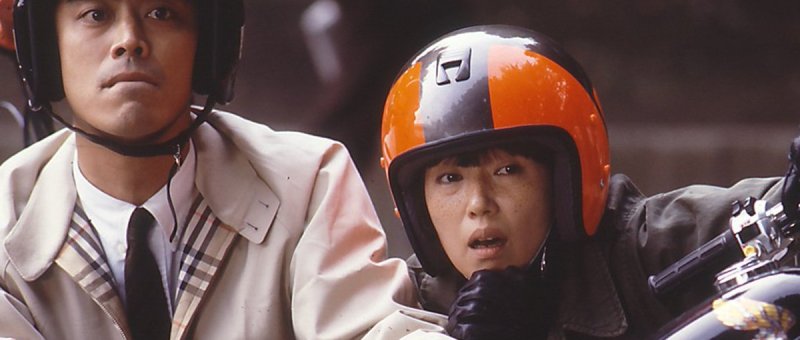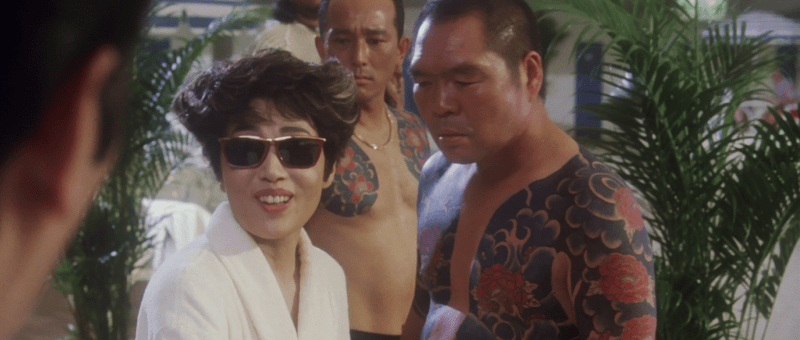
Minbo, or the Gentle Art of Japanese Extortion (ミンボーの女, Juzo Itami, 1992)

“Yakuza are vain, treat them politely,” the heroine of Juzo Itami’s 1992 comedy Minbo, or The Gentle Art of Japanese Extortion (ミンボーの女, Minbo no Onna) instructs a hapless pair of hotel employees trying to solve the organised crime problem at their hotel, but it’s a lesson Itami would go on to learn himself after he was attacked by gangsters who slashed his face and neck with knives. Itami in fact died in fairly suspicious circumstances in 1997 having fallen from the roof of a high-rise building leaving a note behind him explaining his “suicide” was intended to prove his innocence in regards to an upcoming newspaper story alleging an affair with a young actress. Given Itami’s films had often made a point of skewering Japanese traditions and that taking one’s own life is not the way most would choose to clear their name, it has long been suggested that his death was staged by yakuza who’d continued to harass him ever since the film’s release. 

It’s true enough that Minbo may have touched a nerve in undercutting the yakuza’s preferred image of themselves as the inheritors of samurai valour standing up for the oppressed masses against a cruel authority. Of course, that isn’t really how it works and getting the yakuza on your side in a civil dispute may be a case of out of the frying pan into the fire. It’s the yakuza themselves who are the oppressive authority ruling by fear and intimidation. Even so, the yakuza as an institution were in a moment of flux in the early ‘90s following the collapse of the bubble economy during which they’d shifted further away from the street thuggery of the post-war era into a newly corporatised if no more respectable occupation. This change is perhaps exemplified by “minbo”, a kind of fraud in which gangsters get involved in civil disputes underpinned with the thinly veiled threat of violence. 

The yakuza who plague the Hotel Europa, for example, pull petty tricks such as “discovering” a cooked cockroach in the middle of a lasagne, or claiming to have left a bag of cash behind which is later handed back to the “wrong” person by the front desk who probably should have asked for ID. Itami frames the presence of the yakuza as a kind of infestation, suggesting that if you do not tackle it right away it soon takes over and cannot be removed. Dealing with the problem directly may cause it to get worse in the short term, but only by doing so can you ever be rid of them once and for all. At least that’s the advice given by forthright attorney Mahiru (Nobuko Miyamoto) who demonstrated that the only way to deal with yakuza is to show them that you aren’t afraid because at the end of the day the law is on your side. 

Part of the “woman” cycle in which Itami’s wife Nobuko Miyamoto stars as a sometimes eccentric yet infinitely capable woman solving the problems of contemporary Japan through old-fashioned earnestness and everyday decency, Minbo finds its fearless heroine explaining that the yakuza themselves are a kind of con. In general they won’t hurt civilians because then they’re much more likely to be arrested. Going to prison is incredibly expensive and therefore not likely to prove cost effective. She knows that if she can catch them admitting they’ve committed a “crime” then they can’t touch her, and they won’t. They do however go after the rather more naive hotel boss Kobayashi (Akira Takarada) whom they try to frame for the rape of a bar hostess, drugging him after he unwisely agreed to meet them alone to hand over blackmail money. Then again, the hotel isn’t entirely whiter than white either. Kobayashi admits they can’t pull strings with the health ministry over the cockroach incident because they previously used them to cover up a previous instance of food poisoning. 

In any case, the yakuza end up looking very grubby indeed. It’s hard to call yourself a defender of the oppressed when you’re pulling petty stunts no better than a backstreet chancer. Yet like any kind of irritating insect, they too begin to evolve gradually developing a kind of immunity to Mahiru’s tactics in themselves manipulating law only they aren’t as good as she is and they are after all in the wrong. She’s a little a wrong too in that if pushed too far the yakuza will indeed stoop to physical violence against civilians, but she also knows that they thrive on fear and that to beat them she may have to put her safety on the line to prove they have no power over her. It seems Itami felt something similar issuing a statement shortly after his attack to the effect that “Yakuza must not be allowed to deprive us of our freedom through violence and intimidation, and this is the message of my movie”. As gently humorous as any of Itami’s movies and no less earnest, Minbo paints the yakuza as a plague on post-bubble Japan and suggests that it’s about time they were shown the door. 


Trailer (no subtitles)
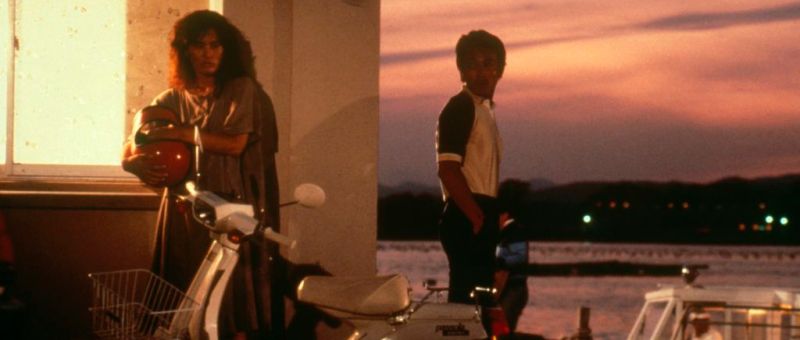
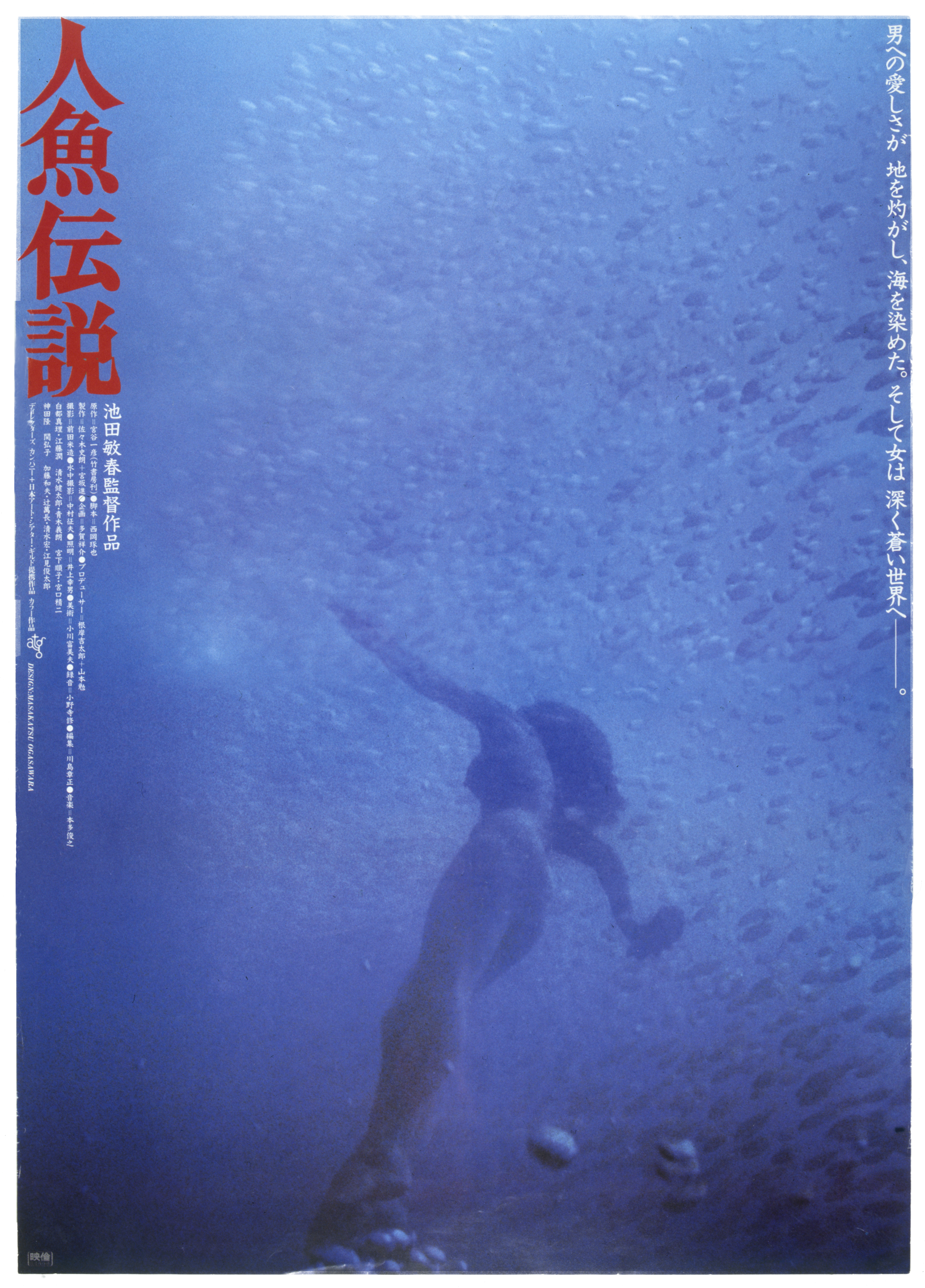
Mermaid Legend (人魚伝説, Toshiharu Ikeda, 1984)

“Even if someone kills you, you wouldn’t die,” a drunken husband somewhat sarcastically replies having pledged to come back and haunt his wife if he died and she married a man who didn’t drink. His words take on a prophetic quality given that the heroine of Toshiharu Ikeda’s Mermaid Legend (人魚伝説, Ningyo Densetsu) takes on a quasi-supernatural quality as an embodiment of nature’s revenge after someone tries, and fails, to kill her having already killed her husband for witnessing their murder of another man who’d tried to resist their plans of buying up half the town to build a nuclear plant. 

By the mid-1980s, Japan’s economy had fully recovered from post-war privation and was heading into an era of unprecedented prosperity which is to say that the coming of a power plant was not welcomed with the same degree of hope and excitement as it may have been in the 1950s when it was sold not only as a new source of employment for moribund small towns but an engine that would fuel the new post-war society. Several industrial scandals such as the Minamata disease had indeed left those in rural areas fearful of the consequences of entering a faustian pact with big business, which is one reason why the guys from Kinki Electric Power sell it as an amusement park project though even this has the locals wary not just of the disruption it will bring to their lives and potential ruin of their livelihoods which are dependent on the protection of the natural environment but that what is promised simply won’t be delivered. Fisherman Keisuke (Jun Eto) says as much when lamenting a previous aquaculture programme which didn’t pan out and caused lasting damage to marine life. 

In any case, as others say there’s no money in going out to sea anymore and its clear that the old-fashioned, traditional way of life practiced by Keisuke and his newlywed wife Migiwa (Mari Shirato) is no longer sustainable. Migiwa is an abalone diver working without modern equipment but using heavy weights to dive deep enough to reach the shells. As such she’s dependent on her husband to pull her back up to the boat when she tugs the rope. She must put her life entirely in his hands though in truth, he does not seem to take his responsibility all that seriously. The couple bicker relentlessly and not even she really believes him when he says he witnessed a murder which might be understandable given the extent of his drinking. All of which is further evidence against her when she manages to escape from the assassination plot and runs straight to the nearest policeman who thanks her for turning herself in implying he believes she is responsible for Keisuke’s death. 

The possible collusion of the policeman hints as a further sense of distrust in authority which has become far too close to corporate interests. Shady industrialist Miyamoto (Yoshiro Aoki) ropes in both the mayor and the head of the fishing association in his talks with Kinki Electric Power along with Shimogawa from the local tourist board who evidently opposes the plans as he is the man Keisuke witnesses being murdered. As Miyamoto says “sometimes your hands get a little dirty” though he never “directly” involves himself matters such as these. The situation is complicated by an unresolved love triangle between Miyamoto’s spineless son Shohei (Kentaro Shimizu), a sometime photographer, who is resentful of Keisuke and in love with Migiwa complaining that Keisuke always outdrinks him and gets the girl too hinting at his sense of wounded masculinity. Isolated by his class difference, he appears not to approve of his father’s actions but later does little to stop them and eventually sides with corporate interest over his feelings for Migiwa who in any case seems to have become more attached to Keisuke following his death which she vows to avenge. 

There is there is something quite strange in the prophetical quality of Keisuke’s words also predicting the “black sweat” of the Jizo on the beach and the mystical storm which does eventually sweep everything clean destroying the signs for the new nuclear power plant already installed on the beach. In this way, Migiwa becomes a vengeful force of nature taking up arms against those who wilfully ravage and pollute the natural environment while damaging the lives of those who lived on its shores such as herself and Keisuke. She takes revenge not only for the murder of her husband by corrupt capitalists but against that corruption itself even as she laments that “no matter how many I kill, they just keep coming.” “Don’t worry, maybe all this was just a dream,” Keisuke once again prophetically intones though it’s difficult to know if it’s defeating the capitalist order that is a fantasy or the maintenance of the idealised rural life to which Migiwa seemingly finds her way back swimming into an unpolluted sea surrounded by the floating barrels of ama divers and clear blue skies, a creature of nature once again.


Mermaid Legend screened as part of this year’s JAPAN CUTS.

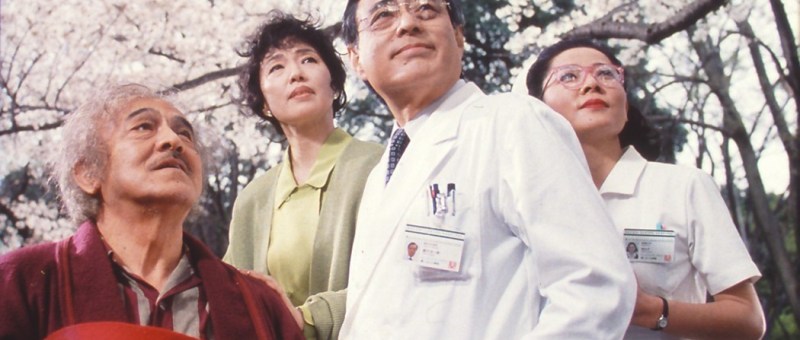
The Last Dance (大病人, Juzo Itami, 1993)

A self-involved film director gets a lesson in what it is to live when he discovers that he has terminal cancer in a lighthearted melodrama from Juzo Itami, The Last Dance (大病人, Daibyonin). Itami was apparently inspired by his own stay in hospital after being attacked by yakuza offended by his previous film Minbo and like his debut The Funeral the film has a few questions to ask about the nature of death along with the functioning of the medical system. 

That’s partly because film director Buhei Mukai (Rentaro Mikuni) is not initially told of his diagnosis. His well-meaning doctor, Ogata (Masahiko Tsugawa) a old university friend of his wife, elects to tell him only that he has a stomach ulcer in keeping with an old-fashioned policy that worries patients may lose hope and give up too easily on discovering the extent of their illness. Buhei meanwhile continues to obsess about his condition, convinced it must be cancer and that his wife, Mariko (Nobuko Miyamoto), and the medical staff are lying to him, at one point pretending to be his own uncle in order to tease the truth out of Ogata over the phone and attempting suicide when he accidentally implies that Buhei may not have long left. 

His distress is compounded by the irony that in the film he was working on when he became ill he was starring as a composer with advanced cancer whose wife has also been diagnosed with a more aggressive form of the disease. Whatever we might think about Buhei, it’s fair to say that the film’s sexual politics have not aged well. Not only was he having an affair with the actress playing his wife, but continues to flirt inappropriately with the medical staff and at one point even tries to force himself on his wife who was in the process of leaving him when he was first diagnosed. His lechery seems primed to appeal to men of a similar age while hinting at his virility and desire for life, but is nevertheless crass and often uncomfortable. Nevertheless, as Mariko says he’s like a child inside cheekily joking with the doctors about his drinking and smoking habits while running away from anything unpleasant and trying to get out of having to undergo treatment. 

Itami had often remarked on the weaknesses of Japanese men who “can’t stand loneliness, can’t make decisions alone, can’t face anyone who disagrees with them and can’t accept responsibility for their mistakes,” Buhei seemingly possessing all four. In part regretting her decision to keep the seriousness of his illness from him, Mariko reflects that in the end all they did was leave Buhei alone in his fear and anxiety as the only one who didn’t know the truth, engineering a kind of conspiracy as they cheerfully told him to “soldier on” knowing there was no hope. Yet during his time in the hospital, Buhei is also confronted by the ethical dilemmas of medical treatment on witnessing doctors desperately try to resuscitate a man who was miserable, in pain, bedridden, and unable to communicate, just waiting for the end. As even his grieving wife calls out to the doctors to let him go, Buhei wonders if it’s right to preserve life at all costs especially when the patient has not been given a choice in his treatment and may not have been informed that they have no possibility of recovery. 

Coming to a new realisation he challenges Ogata’s conviction that death is his enemy, telling him that he should see it less as defeat than acceptance reflecting on the irony that he never felt so alive as when dying. Whimsical if occasionally maudlin, Itami throws in a surrealist dream sequence in which Buhei approaches the other side and comes to realise that death might not be so frightening after all even as he watches himself from above in an out of body experience witnessing the accidental violence inflicted on his body by those trying to save it. In some senses, Buhei is fairly unredeemed, winking at his indifferent mistress even on his death bed, but is in others humbled as he looks back on his life with its regrets and unfulfilled promises, repairing his relationship with his long suffering wife while admitting that under different circumstances he and Ogata might have become good friends. Offering a sometimes critical view of medical practice and ethics, Itami’s poetic meditation on what it is to die loses none of his ironic humour even in its unfolding tragedy. 


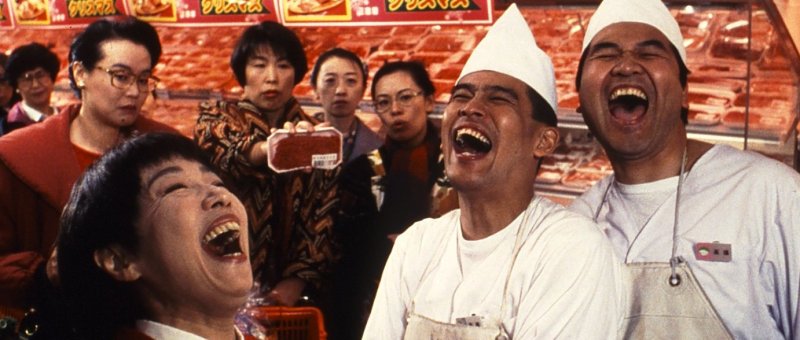
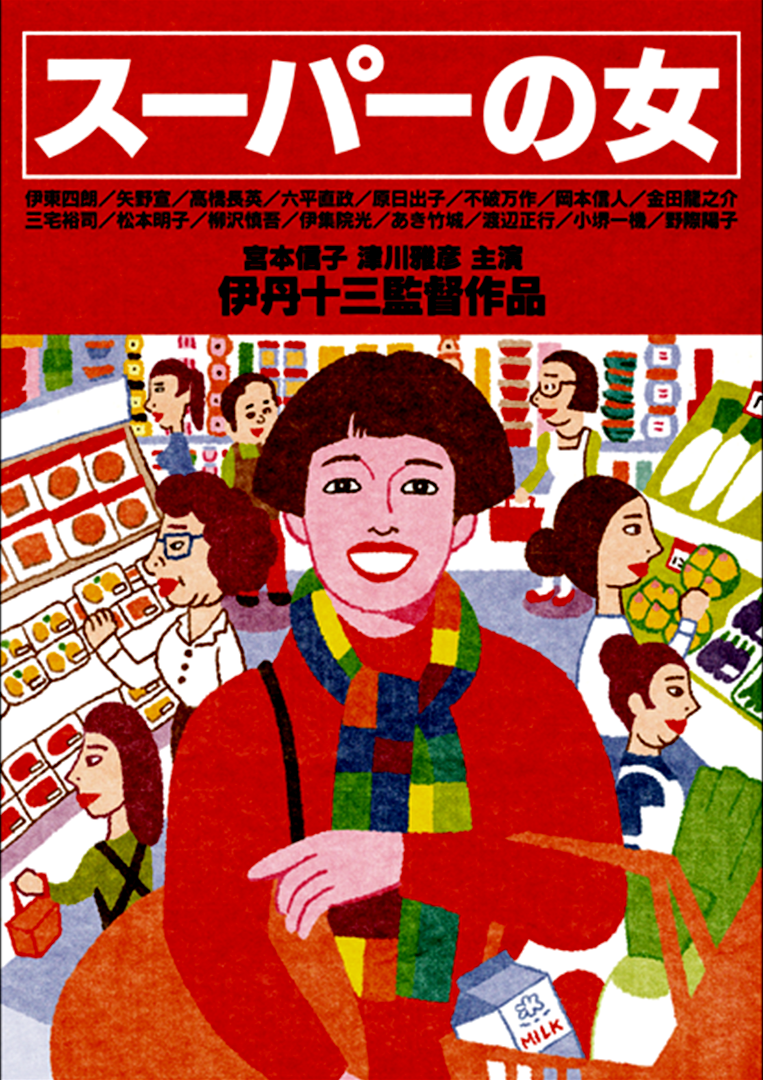
Supermarket Woman (スーパーの女, Juzo Itami, 1996)

By 1996 Japan had entered an extended period of economic stagnation which signalled the end of post-war aspiration but for many at least the false promises of the Bubble era proved hard to dispel. In what would be his penultimate film, Supermarket Woman (スーパーの女, Supa no Onna), Juzo Itami turns his attentions to the insular world of the nation’s family-held, independent supermarkets to ask a few questions about integrity in business which cut straight to the heart of what kind of society post-Bubble Japan intended to be given yet another opportunity to make itself anew. 

As the opening text crawl explains, this is a story not about giant supermarket chains but your friendly indie local. “Honest Mart” is a family-owned, mid-range supermarket in a declining industrial area nominally run by absentee CEO Goro (Masahiko Tsugawa) who was bequeathed the place by his father but is a melancholy drunkard delegating responsibility to his manager. The store has a huge problem in that a rival has recently re-opened under the new name “Discount Demon” and seems primed to steal all their business. On a stakeout of the new place, Goro runs into a childhood friend, Hanako (Nobuko Miyamoto), who is now a widow returning to the area. With her lifelong experience as a veteran housewife, Hanako knows a few things about supermarkets and she’s not very impressed with Discount Demon, doing a few quick calculations to realise the supposed discounts aren’t as enticing as they seem while common gimmicks like the all pervasive red glow that makes their meat look fresher than it really is only irritate her. Goro asks her for a “professional” opinion on Honest Mart without telling her who he is, only to discover she’s even less impressed with them, certain that his place is on the way out thanks to its dated decor, uninviting atmosphere, and low quality produce. 

The irony is Honest Mart is not much better than Discount Demon, both stores are subject to the same industry standards in which a certain degree of obfuscation is permissible. “In business honesty doesn’t pay” Hanako is told by the onsite butcher after she questions his tendency to mix meats to pass them off as more expensive cuts, while she later discovers that the store engages in the practice of repackaging unsold meat and fish with new expiration dates and is not very particular about its suppliers when it comes to buying in ready-made products. Brought on board to save the store, Hanako breezes in with a new mission to win the hearts and minds of her customers, and she can’t do that if she can’t have confidence in her stock. In any case, her the customer is always right policy quickly brings her into conflict with the store manager, an older more conservative man who actively resists innovation and resents having his authority undercut by an interloping woman. 

Meanwhile, we can also see that customer attitudes have changed. There’s a problem with availability of trolleys because, perhaps unusually for Japan, customers are just abandoning them willy-nilly in the carpark instead of retuning them to the trolley point like responsible shoppers. One man is even for some reason intent on stealing a large number of shopping baskets, caught by Hanako loading them into his car. Everybody wants cheap, which is understandable especially given the economic situation, and they might even be a little underhanded when it comes to getting it, but they also expect a reasonable level of quality and to be able to trust that the food they’re buying is safe to feed their families. Hanako is most alarmed that the ladies who work in the kitchen area, who are obviously wives and mothers themselves, do not shop at Honest Mart because they know what goes on at the store and they don’t trust it. 

“A housewife knows” Hanako is fond is saying. Her revolution is in essence a vindication of “the housewife”, perhaps the most maligned and dismissed figure of the mid-90s society, putting to good use all of her veteran experience both of running a home and of working a series of part-time jobs including those in supermarkets which she claims to love. Approaching the problem from the point of view of a consumer, she attempts to help Goro achieve his dream of making Honest Mart number one in Japan not through making it the most financially successful but the most loved by listening to women like her in the form of a focus group of local aunties some of whom had previously been serial complainers. 

Then again, some of her decisions are in a sense contradictory as she attempts to streamline the business along classically capitalistic lines in suggesting that the store doesn’t really need its overqualified butcher and fishmonger because the part-timers could be trained to do a “good enough” job. “Good enough” is in a sense her business philosophy, only not in the sense that somewhere like Discount Demon which falsely advertises regular steak as discount Wagyu means it, rather that her customers are after an everyday level of produce and so it’s not surprising that premium meats don’t sell. She wants to get rid of the butcher, who turns out to be on the fiddle, and the melancholy fishmonger disappointed no one wants his top quality seafood, because their “artistic temperament” is disruptive to the flow of the store and their presence is perhaps emblematic of the bloated, pretentious management style which is holding it back. 

Positioning the “housewife’s choice” as the ultimate seal of approval, Supermarket Woman advocates for a return to wholesome, small-town values, prioritising a sense of integrity as Honest Mart projects itself as a corporate force their customers can trust, perhaps anticipating a trend in dedicating itself to providing good quality fresh produce at fair prices in direct opposition to Discount Demon and its underhanded trickery. “Honest Mart keeps its word” Goro assures, pledging to honour a mistaken ad which promised eggs at prices so good it caused minor riot. In the end, it’s all about trust and integrity. If you don’t have that, you don’t have anything and the housewives of post-Bubble Japan will it seems vote with their feet. 


Currently available to stream in the US via Criterion Channel.

Original trailer (no subtitles)

Woman in Witness Protection (マルタイの女, Juzo Itami, 1997)

woman in witness protection posterJuzo Itami’s fearless taste for sending up the contradictions and hypocrisies of his home nation knew no bounds, eventually bringing him into conflict with the very forces he assumed so secure it was safe to mock – his 1992 film Minbo led to brutal attack by a gang of yakuza unhappy with how his film portrayed the world of organised crime. Woman in Witness Protection (マルタイの女, Marutai no Onna), continuing the “Woman” theme from previous hits A Taxing Woman and the more recent Supermarket Woman, would be Itami’s final feature as he died in mysterious circumstances not long after its completion and like Minbo it touched an open nerve. In 1997, crazy cult violence was perhaps no laughing matter nor as ridiculous as it might have seemed a few years earlier, yet Itami makes the actions of brainwashed conspirators the primary motivator of a self-centred actress’ gradual progress towards accepting the very thing his previous films might have satirised – her civic duty as a Japanese woman.

Itami breaks the film into a series of vignettes bookended by title cards beginning with the first which introduces us to our leading lady – Biwako Isono (Nobuko Miyamoto). Biwako is currently in rehearsals for an avant-garde play about giving birth (“a woman’s moment of glory”) during which she reduces her assistant to tears prompting her resignation, decrying Biwako’s self-centred bitchiness as she goes. Chastened, Biwako spends the evening doing vocal exercises outside her apartment which is how she comes to witness the botched murder of a lawyer by a crazed cultist (Kazuya Takahashi) during which she is almost murdered herself and only survives because the killer’s gun jams. As the only witness Biwako suddenly becomes important to the police which works well with her general need for attention but less so with her loathing for hassle. Seeing as Biwako is a famous actress, her involvement also precipitates increased press interest for the murder and accidentally threatens the ongoing police investigation not least because Biwako likes to play up for the camera and isn’t quite sure how best to deal with her divided responsibilities. With the killer still at large, the police decide to give Biwako protection in the form of two detectives – Chikamatsu (Yuji Murata), a cultured man who’s a big fan of Biwako’s stage career, and Tachibana (Masahiko Nishimura), a rather stiff gentleman who never watches films and rarely indulges in entertainment.

Bringing up cult violence in 1997 just two years after Japan’s only real terrorist incident perpetrated by a crazed cult, might be thought taboo but taboo was not something that Itami had ever run away from. Crazed cults had also popped up during A Taxing Woman’s Return though back then they mostly represented the hypocrisy of the new yakuza as a front for organised crime that thought nothing of bleeding vulnerable people dry while feeding them a lot of semi-religious claptrap to make them feel a part of something bigger while the bubble economy continued its puffed up attempts to make them feel inadequate. This time around our cultists are less well drawn but clearly a collection of unlucky people duped into believing the strange philosophies of the “Sheep of Truth” which teach that the world can only be saved by its followers dividing the world into white sheep and black sheep. Like the policeman and later Biwako, the killer believes he is only doing “that which must be done” in the best interests of the world. He is unaware of the cult’s shadiness and shocked when their lawyer threatens his family in an effort to convince him not to talk once the police have managed to break his programming, ironically through exactly the same methods – manipulating his feelings towards his wife and son.

The cult is however merely background to Biwako’s ongoing character drama. Despite experiencing emotional trauma from witnessing a murder and then being threatened herself, Biwako enjoys being the centre of the attention with the police as well as the warm glow she feels in being able to help them with their enquiries, but balks at the additional hassle of having to be involved in the trial (even if she would be given quite a sizeable platform as a witness in a high profile court case). She resents having the two policemen follow her around – especially as she has quite a busy schedule which includes an affair with her married manager. Nevertheless she gradually allows them into her life with Tachibana even making his stage debut as spear carrier in a production of Anthony and Cleopatra. Tachibana’s steadfast defence of her person even at the risk of his own life begins to teach Biwako a few things about civic responsibility and the importance of duty, even if her final moment of realisation is another of her staged set pieces in which she conjures a poignant monologue from the accidentally profound mutterings of Tachibana, a little of Cleopatra, and the earlier line from the maternity play repurposed as she affirms that testifying against the cultists will be her “moment of glory”.

Rather than end on Biwako’s sudden moment of enlightenment, Itami cuts to an ironic epilogue in which a police detective watching the movie we have just seen complains about its authenticity while emphasising that no one in protective custody has ever been attacked. A little tongue in cheek humour from Itami that is followed by the more usual disclaimer before the credits resume, but perhaps anticipating another dose of controversy from both law enforcement and cult devotees. Lighter in tone and noticeably less surreal than some of Itami’s earlier work, Woman in Witness Protection is the story of a vacuous actress learning the purpose of her stage as her particular brand of artifice meets that of the less innocently self-centred cultists head on and eventually becomes the best weapon against it.


Original trailer (no subtitles)

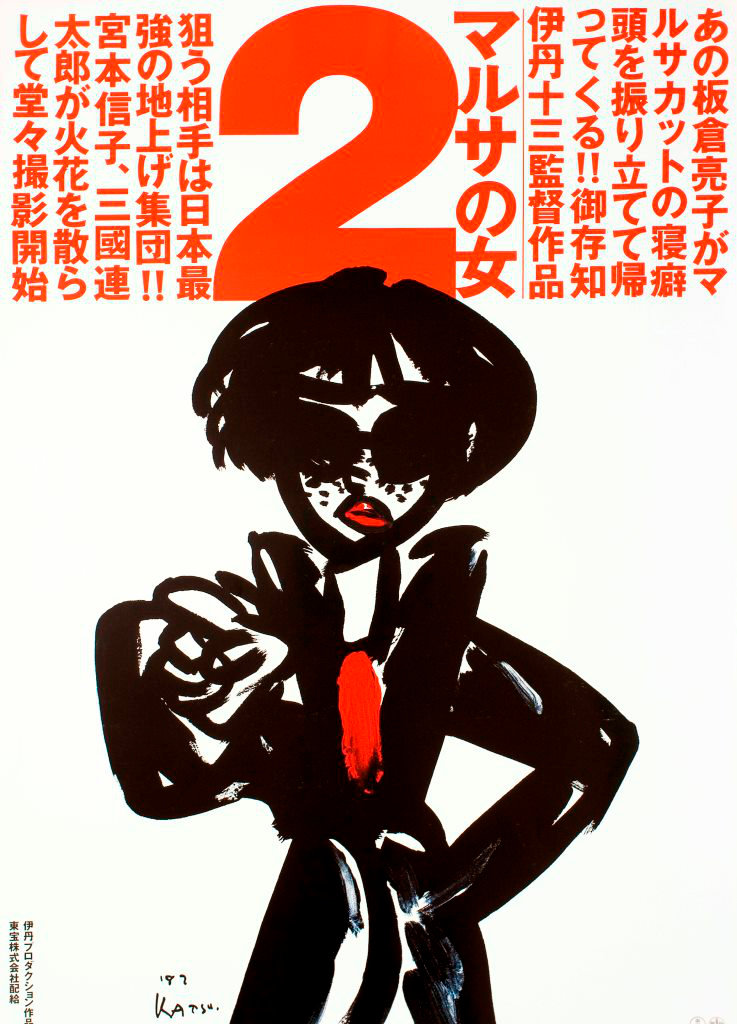
A Taxing Woman’s Return (マルサの女2, Juzo Itami, 1988)

Taxing Woman 2 posterA Taxing Woman introduced us to Ryoko Itakura (Nobuko Miyamoto) – an oddball detective working as an insurance inspector who met her Irene Adler in a tax dodging corporate gangster with a limp. A year later she’s back, still the only woman working with the tax inspectorate and apparently still a dogged pursuer of those who would seek to defraud the Japanese government of its rightful earnings. Ryoko may have been a stickler for the rules who applied the same dog with a bone approach to a mom and pop store chowing down on its own supplies as to a dodgy yakuza led conspiracy, but she also believed in justice – something which stands her in good stead when she rubs up against a dodgy cult which, again, is a yakuza front but adds insult to injury by deliberately manipulating the vulnerable.

The action opens with some kids poking at the dead body of a “landshark” floating in a pond before flashing to a meeting of officials sucking crab meat from the shell and wondering what they’re going to do about this land they need cleared now their heavy is out of the picture. The corrupt politician from the first film, Urushibara (Takeya Nakamura), is apparently still involved in semi-legal land deals but palms the assignment off on a colleague. The big wigs need to empty a dated housing complex on some valuable land so they can build a vanity skyscraper – office space apparently being scarce in mid bubble Tokyo.

To do this they enlist the services of dodgy cult leader Onizawa (Rentaro Mikuni) and his troop of yakuza goons. Most of the tenants have already signed but they have three key holdouts – a diner owner clinging on to the family legacy, a stubborn paparazzo, and an intellectual professor who heads up the housing association. Unlike the yakuza of Taxing Woman, these guys have not reformed – they are the new/old style of lawless thugs who are perfectly prepared to threaten women and children to get their own way. Making it impossible for the tenants to stay through intimidation and noise torture, they stoop to blackmail to seal the deal.

Despite arriving only a year after A Taxing Woman, Taxing Woman’s Return (マルサの女2, Marusa no Onna 2) takes place in a much darker, though more obviously comedic, world. Whereas the earlier film adopted a noticeably ambivalent attitude to the tax inspectors and the enterprising gangsters, the villains of A Taxing Woman’s Return are so heinous and morally bankrupt as to be entirely indefensible even if the inspectorate takes a turn for the bumbling to compensate. The “cult” is, of course, merely a convenient money laundering front and tax dodge for the yakuza – religious organisations are exempt from taxation in the vast majority of cases which may be why the local tax office records hundreds of registered “religious bodies” in its jurisdiction alone. That doesn’t mean it doesn’t have its loyal followers, often vulnerable people looking for spiritual fulfilment but being bled dry by the money hungry cultists while the leader’s wife swans around in sables costing more than the average annual salary. A desperate devotee in need of a loan puts his own teenage daughter up as collateral only to see her raped by Onizawa, eventually becoming pregnant by him at only 16 years of age and thereafter becoming his devoted concubine in a bizarre instance of Stockholm Syndrome.

Yet for all the background darkness of weird cultists and nasty yakuza backed up by corrupt and venial politicians, Itami ups the cartoonish sense of the absurd with our hero Ryoko clambering over rooftops to listen in to the bad guys while her boss throws himself down flights of stairs and has to battle piercing sirens to get into the villains’ secret vault. It is however a dark humour as the opening makes plain with its troupe of little children staring at the strange shape floating in the water – a motif later repeated when a yakuza is gunned down in the street only for another group of children to pour over him as he expires, a single tear rolling down his cheek. The original spongy white body gives way to the businessmen sucking spongy white crab out its shell while insensitively discussing the late land shark, and the yakuza are unafraid to deploy a maggot infested severed hand (thankfully a fake picked up from a friend who makes horror movies) to convince the tenants they mean business.

At the end of A Taxing Woman, the gangster and the inspector reached something of a truce but one which came down, broadly, on the side of right. This time things aren’t quite so simple. The conspiracy is bigger and deeper, stretching all the way into the Diet and about more than just office space in still developing Tokyo. Onizawa, regarding himself as public servant, tries to say he did it all for his country, that if someone didn’t get their hands dirty Tokyo would be eclipsed by Hong Kong or Seoul. A post-war justification for a bubble era problem, but one that takes us straight back to the first film in Onizawa’s second proposition that only through money does he truly feel “immortal”. He may be a liar and a cheat, but he’s only a symptom of rapidly spreading infection, one which Ryoko and her team are powerless to cure, trapped on the wrong side of the fence while the bad guys build monuments to economic hubris, indulging in vanity in an era of bad faith which is about to be brought to a rather abrupt close.


Currently available to stream in the US/UK via FilmStruck.

Original trailer (no subtitles)

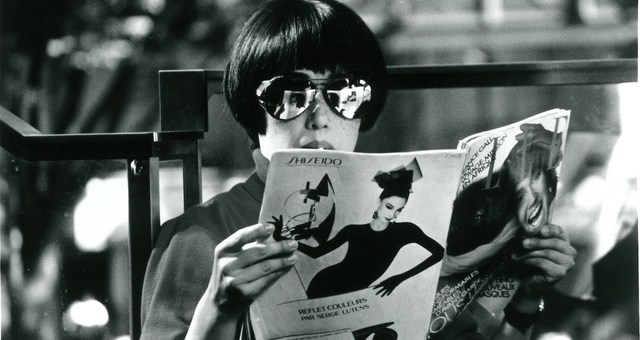
A Taxing Woman (マルサの女, Juzo Itami, 1987)

A Taxing Woman posterIn bubble era Japan where the champagne flows and the neon lights sparkle all night long, even the yakuza are incorporating. Having skewered complicated social mores in The Funeral and then poked fun at his nation’s obsession with food in Tampopo, Juzo Itami turns his attention to the twin concerns of money and collective responsibility in the taxation themed procedural A Taxing Woman (マルサの女, Marusa no Onna). Once again starring the director’s wife Nobuko Miyamoto, A Taxing Woman is an accidental chronicle of its age as Japanese society nears the end of a period of intense social change in which acquisition has divorced mergers, and individualism has replaced the post-war spirit of mutual cooperation.

Ryoko Itakura (Nobuko Miyamoto), a single mother and assistant in the tax office, has a keen eye for scammers. She demonstrates this on a stakeout with a younger female colleague in which she keeps a shrewd eye on the till at her local cafe and comes to the conclusion that they’ve been running a system where they don’t declare all of their cheques. Running her eyes over the accounts of a mom and pop grocery store, she notices some irregularities in the figures and figures out the elderly couple feed themselves from the supplies for the shop but don’t “pay” themselves for their own upkeep. That might seem “perfectly reasonable” to most people, but it’s technically a small form of “embezzlement” and Ryoko doesn’t like figures which don’t add up. Seeing as the couple probably didn’t realise what they were doing was “wrong” she lets them off, this time, as long as they go by the book in the future. A more complicated investigation of a pachinko parlour finds a more concrete form of misappropriation, but Ryoko is fooled by the owner’s sudden collapse into inconsolable grief after being caught out and leaves him in the capable hands of his confused accountant.

Nevertheless, Ryoko may have met her match in sleezy corporate yakuza Hideki Gondo (Tsutomu Yamazaki). Dressing in a series of sharp suits, Gondo walks with a pronounced limp that hints at a more violent past but as his rival from the Nakagawa gang points out, violence is a relic of a bygone era – these days gangsters go to jail for “tax evasion” as means of furthering their “business opportunities” and facilitating ongoing political corruption. Gondo’s business empire is wide ranging but mainly centres on hotels, which is how he arouses Ryoko’s interest. She looks at the numbers, does a few quick calculations, and realises either the business isn’t viable or the correct figures aren’t being reported. Ryoko doesn’t like it when the books don’t balance and so she sets her sights on the seedy Gondo, but quickly discovers she has quite a lot in common with her quarry.

Itami was apparently inspired to make A Taxing Woman after the success of Tampopo shoved him into a higher tax bracket. Given Japanese taxes (at the time) were extremely high, getting around them had become something of a national obsession even if, in contrast to the preceding 30 years or so, there was plenty of money around to begin with. More than the unexpected tendency towards civil disobedience the times seemed to cultivate, Itami homes in on the increasingly absurd desire for senseless acquisition the bubble era was engendering. Thus Gondo who owns a large family home well stocked with symbols of his rising social status, also occupies a bachelor pad where he keeps a mistress which reflects the gaudy excess of the age right down to its random stuffed hyena. Nevertheless when one of the tax clerks asks for some advice as to how to have it all, Gondo replies that that’s easy – to save money, you simply avoid spending it. Gondo lets his glass run over and delights in licking the edges. It’s all about delayed gratification, apparently, and having a secret room full of gold bars to gaze at in order to relieve some of that anxiety for the future.

Gondo, like many of his ilk, has “diversified” – yakuza are no longer thuggish gangsters but incorporated organisations operating “legitimate” businesses through “illegitimate” means. Thus we first find him using a nurse who allows herself to be molested by an elderly, terminally ill client whose identity they will steal to found a company they can quickly dissolve when he dies to shift their assets around and avoid the tax man. Later he pulls another real estate scam by pressing a desperate family but his real focus is the love hotels, whose slightly embarrassing existence ensures that not many come poking around. Ryoko, however, is unlikely to let such a large scam slide and delights as much in closing loopholes as Gondo does in finding them. Noticing a kindred spirit, Gondo quite openly asks his new tax inspector “friend” what she’d think if he married his mistress, gave her all his money, and divorced her – divorce proceeds are after all tax free. Sounds great, she tells him, as long as you trust your wife not to skip town with all the doe.

Ryoko, a modern woman of the bubble era, single and career driven, is a slightly odd figure with her officious approach to her job and unforgiving rigour. Unlike her colleague who dresses in the glamorous and gaudy fashions of the times, Ryoko wears dowdy suits and her mentor boss is always reminding her about her “bed hair”, meanwhile she stays late at the office and offers instructions to her five year old son over the phone as to how to microwave his dinner. Though there is another woman working with her at the tax office, when she’s finally promoted to full tax inspector status she finds herself in a room full of guys who apparently hardly ever go home. On her first job she’s only really brought along because she’s a woman and they want to threaten a mob boss’ mistress with a strip search to find a missing key for a safety deposit box. The mistress, however, tries to throw them off the sent by publicly stripping off and encouraging them to check her “cavity” if they’re so keen to find this key, only for Ryoko to find it under the sink while all the guys are busy being shocked. Ryoko’s methods are occasionally as underhanded as Gondo’s and, like his schemes, built on gaming the system but she’s certainly a force to be reckoned with for those considering defrauding the Japanese government.

Gondo’s schemes excel because they aren’t entirely illegal, only clever ways of manipulating the system, but they’re also a symptom of a large conspiracy which encompasses improprieties right up the chain as banks, corporations, and politicians are all part of the same dark economy managed by a corporatising yakuza. Gondo takes frequent calls from a local representative who often “helps him out”. Later the same representative tries to put pressure on the tax office to back off, but Ryoko’s boss points out that he doesn’t need to because the press are already on the story so he should probably get started on his damage control rather than bothering public servants. Gondo and Ryoko, perhaps as bad as each other, lock horns in a battle wills but discover a strange degree of respect arising between them in having discovered a worthy adversary. There’s something undeniably absurd in Ryoko’s firm determination to catch out struggling businesses and the confused elderly with the same tenacity as taking on a yakuza fronted conspiracy, and there’s something undeniably amusing in Gondo’s attempts to beat the man by playing him at his own game, but the overall winner is Itami who once again succeeds in skewering his nation’s often contradictory social codes with gentle humour and a dispassionate, forgiving eye.


Currently available to stream in the US/UK via FilmStruck.

Original trailer (no subtitles)