Kakashi (案山子, Norio Tsuruta, 2001)

There’s a village in Japan that’s mostly inhabited by scarecrows. One of the last remaining residents began creating them to replace something that had been lost, fashioning effigies of those who had passed away and immortalising them as if clinging to a distant past long before the shadows of rural depopulation were cast over the village. In a way, it’s an expression of grief or at least a lament for a loss of community and a sense of increasing loneliness and isolation. 

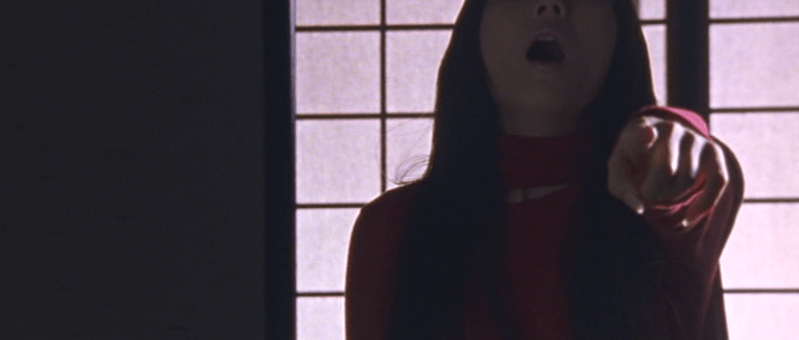
Adapted from Junji Ito’s manga, Norio Tsuruta’s Kakashi is also in its way about grief and the way in which it can consume those left behind so that they too have no more desire to live. Dr Miyamori (Kenzo Kawarasaki) later explains that in the village they co-exist with death and he returned to his home town in the hope that he could save his daughter, Izumi (Ko Shibasaki), through its peculiar magic of resurrecting the deceased as human scarecrows. As he freely admits, he could not accept his daughter’s death and so has chosen to stay here in the village though alive himself rather than attempt to remake his life without her.

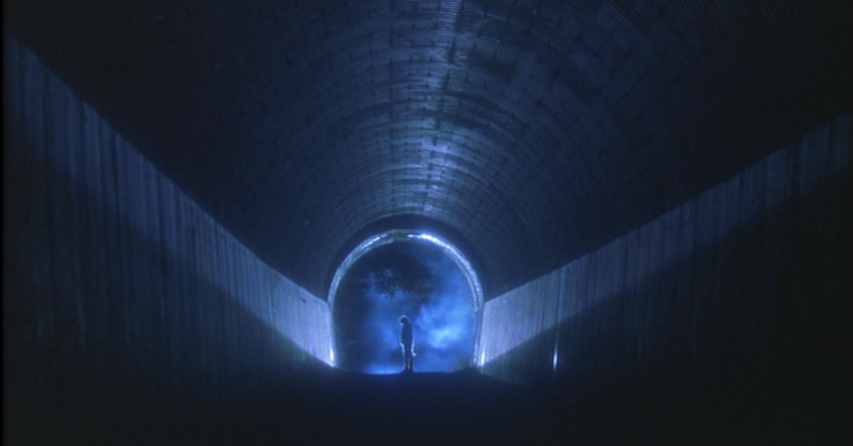
The village itself appears to exist slightly outside of the mortal realm as Kaoru (Maho Nonami) discovers on encountering the long tunnel that leads to its entrance. Her car breaks down half-way through signalling her liminal status as one who does not yet belong on either side. It’s not quite grief that’s brought her here but still a nagging sense of foreboding in that she’s come in search of her missing brother, Tsuyoshi, after discovering a letter from an old school friend, Izumi, next to his telephone. Kaoru appears confused as to why the letter should be there and travels to the village hoping for answers, assuming that Tsuyoshi (Shunsuke Matsuoka) may have travelled there in search of Izumi.

As the landlady lets her into his empty flat, Kaoru explains that she is his only family and there’s a suggestion that her attachment to him is unnatural, bordering on the incestuous. A policeman taking a look at the photo Kaoru hands him remarks that they look like a couple, which they do, leading her to stuff the photo back in her pocket as if she were embarrassed. To that extent, she’s come to reclaim Tsuyoshi, not just from death, loneliness, grief, and depression, but from Izumi or at least the spectre of her. In life, she feared that Izumi would take him away from her and at least in Izumi’s mind frustrated their romance out of romantic jealously. Dr Miyamori implies it was this sense of despair that contributed to her death and it’s clear that Izumi’s mother also blames Kaoru while Izumi accuses Kaoru of being forever in her way.

But then again, she did not bring Kaoru to the village and is not targeting her personally out of vengeance. Rather, she has moved beyond that as she finally’s about to become “herself” thanks to the village’s dark magic and the following day’s scarecrow festival, and therefore no longer needs to care about the resentments of her mortal life even if her father says that her evil spirit has empowered the town. There is definitely something quite creepy in this weird village with its shades of the Wicker Man in its strange ritual and humanoid effigies where improbable numbers of children softly blow pinwheels under a large windmill that seems to be moving time itself. Tsuruta even borrows a particularly eerie shot from Don’t Look Now and emphasises the liminal qualities of the village in Dr Miyamori’s advice that Kaoru leave as soon as her car is fixed otherwise she may no longer wish to.

The village is apparently full of those like him who are trapped but wilfully so because they no longer desire to leave. Kaoru attempts to help one of them, a young living woman from Hong Kong unable to let go of the memory of her late father whose scarecrow eventually tells her to go. It’s a place for those who have no other place to go to because they cannot let go of their grief and despair. Thus Kaoru is pulled towards the edge of the tunnel, not so much to free her brother as, in a way, herself by allowing her grief to consume her and consenting to live this empty life alongside death rather than allow herself to accept her loss.


Trailer (no subtitles)
The Last Dance (大病人, Juzo Itami, 1993)

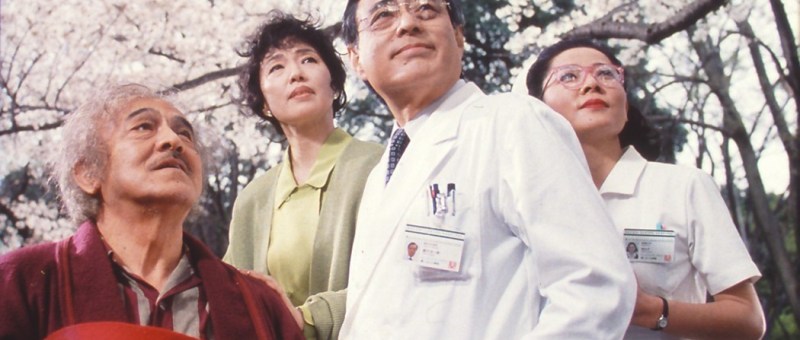
A self-involved film director gets a lesson in what it is to live when he discovers that he has terminal cancer in a lighthearted melodrama from Juzo Itami, The Last Dance (大病人, Daibyonin). Itami was apparently inspired by his own stay in hospital after being attacked by yakuza offended by his previous film Minbo and like his debut The Funeral the film has a few questions to ask about the nature of death along with the functioning of the medical system. 

That’s partly because film director Buhei Mukai (Rentaro Mikuni) is not initially told of his diagnosis. His well-meaning doctor, Ogata (Masahiko Tsugawa) a old university friend of his wife, elects to tell him only that he has a stomach ulcer in keeping with an old-fashioned policy that worries patients may lose hope and give up too easily on discovering the extent of their illness. Buhei meanwhile continues to obsess about his condition, convinced it must be cancer and that his wife, Mariko (Nobuko Miyamoto), and the medical staff are lying to him, at one point pretending to be his own uncle in order to tease the truth out of Ogata over the phone and attempting suicide when he accidentally implies that Buhei may not have long left. 

His distress is compounded by the irony that in the film he was working on when he became ill he was starring as a composer with advanced cancer whose wife has also been diagnosed with a more aggressive form of the disease. Whatever we might think about Buhei, it’s fair to say that the film’s sexual politics have not aged well. Not only was he having an affair with the actress playing his wife, but continues to flirt inappropriately with the medical staff and at one point even tries to force himself on his wife who was in the process of leaving him when he was first diagnosed. His lechery seems primed to appeal to men of a similar age while hinting at his virility and desire for life, but is nevertheless crass and often uncomfortable. Nevertheless, as Mariko says he’s like a child inside cheekily joking with the doctors about his drinking and smoking habits while running away from anything unpleasant and trying to get out of having to undergo treatment. 

Itami had often remarked on the weaknesses of Japanese men who “can’t stand loneliness, can’t make decisions alone, can’t face anyone who disagrees with them and can’t accept responsibility for their mistakes,” Buhei seemingly possessing all four. In part regretting her decision to keep the seriousness of his illness from him, Mariko reflects that in the end all they did was leave Buhei alone in his fear and anxiety as the only one who didn’t know the truth, engineering a kind of conspiracy as they cheerfully told him to “soldier on” knowing there was no hope. Yet during his time in the hospital, Buhei is also confronted by the ethical dilemmas of medical treatment on witnessing doctors desperately try to resuscitate a man who was miserable, in pain, bedridden, and unable to communicate, just waiting for the end. As even his grieving wife calls out to the doctors to let him go, Buhei wonders if it’s right to preserve life at all costs especially when the patient has not been given a choice in his treatment and may not have been informed that they have no possibility of recovery. 

Coming to a new realisation he challenges Ogata’s conviction that death is his enemy, telling him that he should see it less as defeat than acceptance reflecting on the irony that he never felt so alive as when dying. Whimsical if occasionally maudlin, Itami throws in a surrealist dream sequence in which Buhei approaches the other side and comes to realise that death might not be so frightening after all even as he watches himself from above in an out of body experience witnessing the accidental violence inflicted on his body by those trying to save it. In some senses, Buhei is fairly unredeemed, winking at his indifferent mistress even on his death bed, but is in others humbled as he looks back on his life with its regrets and unfulfilled promises, repairing his relationship with his long suffering wife while admitting that under different circumstances he and Ogata might have become good friends. Offering a sometimes critical view of medical practice and ethics, Itami’s poetic meditation on what it is to die loses none of his ironic humour even in its unfolding tragedy. 


All Under the Moon (月はどっちに出ている, Yoichi Sai, 1993)

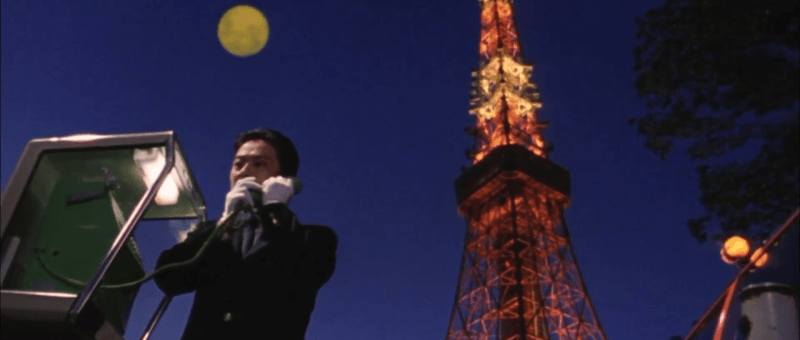
Throughout Yoichi Sai’s All Under the Moon (月はどっちに出ている, Tsuki wa Dotchi ni Dete iru), an earnest taxi driver, Anbo (Akio Kaneda), repeatedly calls in to despatch to inform them that he’s become lost and has no idea where he is despite rocking up next to such prominent landmarks as Tokyo Tower and Mount Fuji. His confusion reflects that of the changing post-Bubble society in which those like him struggle to reorient themselves and find new direction just as the nation appears slow to recognise itself and adjust to a new reality. 

It does seem that many of the drivers at Kaneda Taxi have themselves lost direction in their lives and are living very much on their margins while their rather deluded boss Sell is behaving like it’s still the Bubble dreaming of building a golf course and then a hotel to accommodate 2000 people. The Korean loan shark working with him alternately tells fellow Zainichi taxi driver Chun (Goro Kishitani) that he’s acquiring wealth to use for the reunification of Korea, and Sell that they are all children of capitalism, “Damn Reunification!”. At the wedding Chun attends, the guests take phone calls to deal with business and each remark on the precarious economic situation while one suggests that the North Korean association he represents is probably on the brink of failure joking that he fears they may sell their school and pocket the money. 

Yet despite the economic turbulence, the country has been slow to accept the presence of workers from outside Japan and many, including those at the taxi firm, still face discrimination as does Chun himself by virtue of his Korean heritage. One Japanese employee also seems to face a good deal of stigmatisation simply because he has a speech impediment, while an older mechanic with a limp insists on calling an Iranian colleague by a similar sounding Japanese name while baselessly accusing him of theft. Hoso (Yoshiki Arizono), a man with mental health issues provoked by his previous career as a professional boxer in which he accidentally killed an opponent during a bout, is fond of saying “I hate Koreans, but I like you” while otherwise fixating on Chun as a dependable big brother figure and resentful enough when he starts dating a Filipina hostess, Connie (Ruby Moreno), who works at his mother’s bar to pound down the door of her flat and demand to be let in. 

Chun himself is at least problematic and especially by the standards of today as he tries a series of crass pickup lines on Korean women at the wedding and then eventually forces a kiss on Connie not to mention physically striking her during a heated argument. He also insensitively tells her about his family’s tragic history in the war emphasising that citizens of Korea were abused for slave labour while seemingly unaware of the history of the Japanese occupation of the Philippines. Meanwhile, he also lies that his father was killed by the Japanese and that all his brothers died of malnutrition whereas they are (presumably) alive if possibly not so well in North Korea. His hard as nails mother (Moeko Ezawa) points out that she came to Japan at 10, while Connie counters that she came at 15, though their experiences have perhaps been very different leaving them somewhat at odds rather than sharing a kind of solidarity as otherwise echoed in the marginal status of each of the migrants who are similarly othered as merely not Japanese yet largely left to fend for themselves while facing possible exploitation and deportation. 

Divisions exist even within the Korean population with guests at the wedding complaining that there have been too many long and boring speeches along with North Korean propaganda songs, claiming that it is discriminatory against South Koreans and finally being allowed to sing a South Korean folksong instead which is at least a good deal more lively. The gangsters leverage the idea of reuinifaction to carry out their scams while later claiming that they have been scammed by their Japanese backer who turned out to be more racist than they had first assumed. Yet as Chun says during one of his cheesy pickup attempts, what really has reunification got to do with them, the younger post-war generation who know no other homeland than Japan? He too flounders, caught between a series of names from “Tadao Kanda” to “Chun”, to the name which appears on his taxi license “Kang” the Korean pronunciation of character read “ga” Japanese which is only otherwise used in the word for ginger as pointed out by a slightly racist fare who goes on to remark that he doesn’t see the point of the “comfort women issue”. Chun has to grin and bear it while technically powerless despite being in the driver’s seat. Predictably, the prejudiced passenger also attempted to make a run for it rather than actually pay Chun his money. “I was born after the war too” Chun reminds him, “but we say after the liberation.”

Sai introduces us to the world of Kanda Taxis through a roving long shot around the carpark travelling from one employee to another before drifting up to management on the second floor. He returns to a similar scene near the film’s conclusion as the remaining workers playfully hose each other with water while literally watching their world burn. Yet for some at least it may be liberating experience, Chun finally gaining the courage to choose his own destination and go after something that he wants, even if it he does it in a characteristically problematic way, seemingly no longer worrying about where it might be taking him but content to simply drive in the direction of the moon. 


Original trailer (no subtitles)

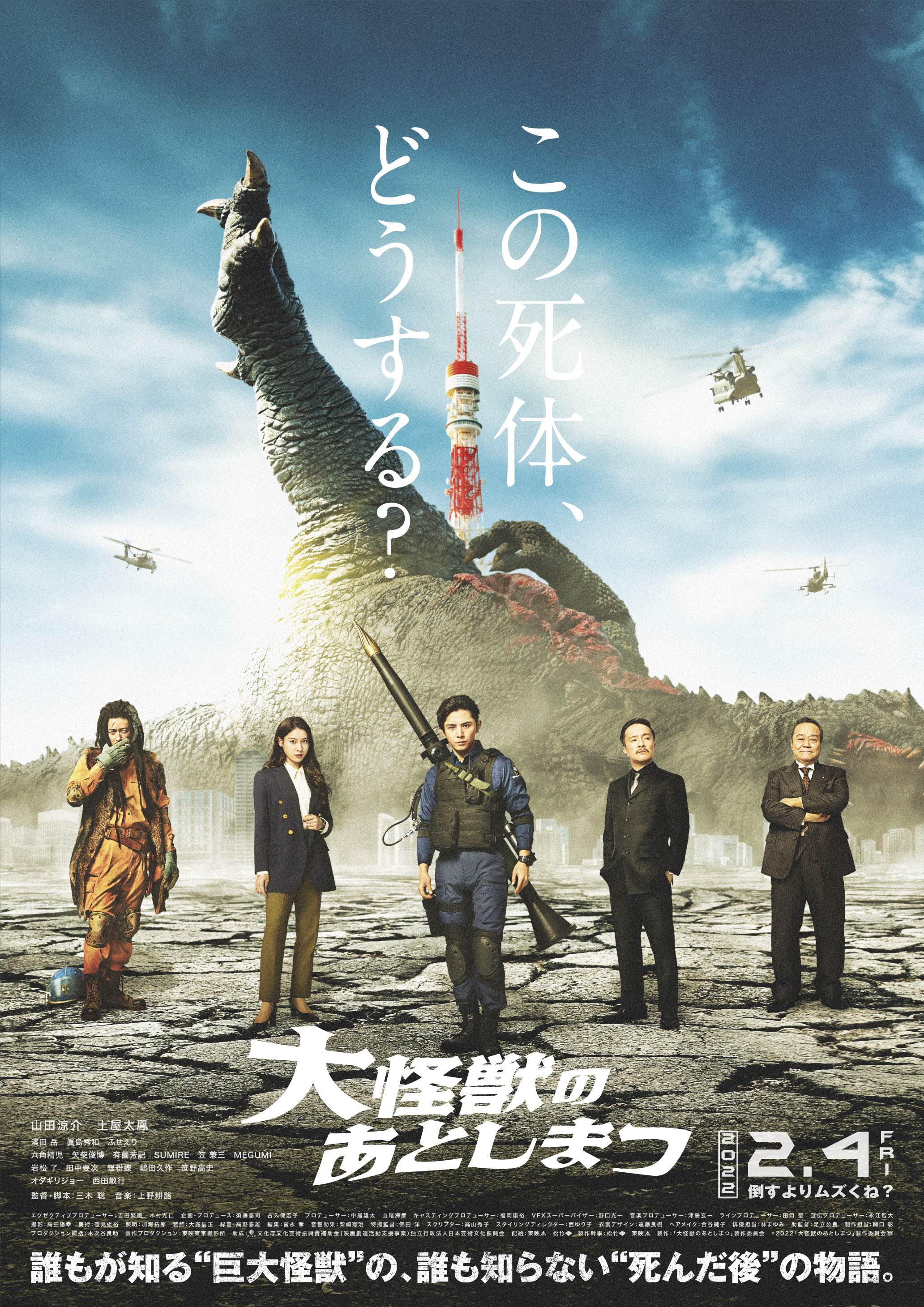
What to Do With the Dead Kaiju? (大怪獣のあとしまつ, Satoshi Miki, 2022) [Fantasia 2022]

The sudden appearance of a deus ex machina is usually where a story ends. After all, that’s the point. Whatever crisis is in play is suddenly ended without explanation. But what happens then? Satoshi Miki’s What to Do With the Dead Kaiju? (大怪獣のあとしまつ, Daikaiju no Atoshimatsu) steps in to wonder what it is that comes next after a giant monster has been defeated. Someone’s going to have to clean all that up, and in a surprising twist a fair few people are keen to take on the burden. Like Hideaki Anno & Shinji Higuchi’s Shin Godzilla, which the film is on one level at least attempting to parody, Miki’s kaiju comedy is a government satire this time casting shade on the nation’s pandemic response, though with considerably less nuance. 

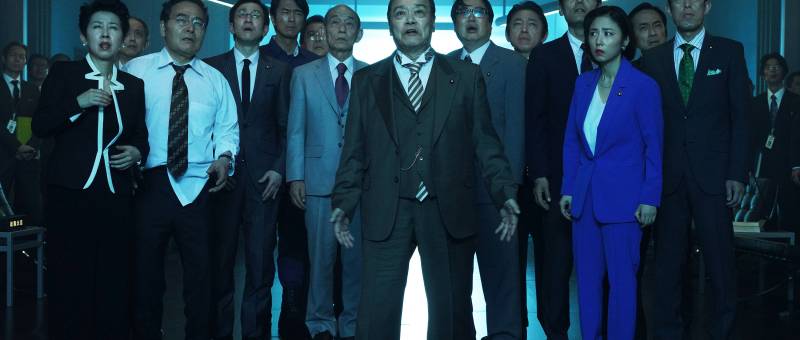
As the opening onscreen text, a nod to Shin Godzilla, and accompanying voiceover tell us Japan had been plagued by a kaiju but it suddenly died after being engulfed by a mysterious ball of light. While attempting to comedown from the constant state of anxiety under which they’d been living, the prime minister (Toshiyuki Nishida) is at a loss for what to do next especially as no-one really knows if the kaiju corpse is safe. While trying to ascertain whether or not the fallen kaiju might explode, spread dangerous radiation, or present some other kind of threat, government departments start fighting amongst themselves about whose responsibility the clean up effort must be all of them wanting the glory but not the work or expense. 

Some suggest turning the kaiju’s body into a massive tourist attraction and are therefore less keen on anything that involves destroying it while others think it should be preserved and put in a museum. The government has placed the SJF, a militarised science force set up after a terrorist incident, in charge but isn’t listening to much of what they’re saying. Meanwhile, evil moustachioed staffer Amane (Gaku Hamada) is playing his own game behind the scenes which also involves his wife, Yukino (Tao Tsuchiya), who was previously engaged to the leader of the SJF Taskforce, Arata (Ryosuke Yamada), before he abruptly disappeared after being swallowed by a mysterious ball of light three years previously. 

The political satire largely revolves around the indecisive PM, who at one point says he has no control or responsibility for what the other ministers do, and his anarchic cabinet meetings in which politicians run round in circles and insult each other like children. Not exactly subtle, much of the humour is indeed childish and scatological while one minister’s running gag is making sleazy sexist remarks even at one point accidentally playing a saucy video instead of displaying the latest kaiju data on the communal screen. The government experiences a public backlash in deciding to name the kaiju “Hope” which lends an ironic air to its rampage not to mention the necessity of its destruction, while the decision to declare the body safe for political reasons despite knowing it probably isn’t (“protecting the people’s right not to know”) casts shade on the pandemic response among other crises as do the constant refrains about getting back to normal now the crisis is over. 

Then again, there’s something a little uncomfortable going on with the film’s geopolitical perspectives, throwing up an angry politician on the screen with a mangled name who insists that the kaiju originated on their territory and must be returned to them in what seems to be an awkward allusion to Japan’s ongoing territorial disputes with Korea even while it’s suggested that the Americans wouldn’t mind getting their hands on the corpse either for purposes of experimentation and research. On the other hand it also becomes apparent that the Japanese military have deliberately destroyed civilian homes and cost lives in a reckless attempt to stop the kaiju which obviously failed. 

The closing scenes hint we may have been in a slightly different franchise than the one we thought we were dealing with, another deus ex machina suddenly arriving to save the day after the villains almost cause accidental mass destruction. The film’s problem may be that it’s the wrong kind of silly, relying on lowbrow humour while otherwise trying to conform to a blockbuster formula in which the kaiju corpse becomes the new kaiju but the battleground is bureaucracy. Ultimately the film’s prognosis is bleak. Even when the PM has achieved sufficient growth to realise he should make some kind of decision he makes the wrong call leaving everything up to a lone hero while fundamentally failing to come to any conclusion on what to do with a dead kaiju save trying to ensure it does not blow up in his face. 


What to Do With the Dead Kaiju? screened as part of this year’s Fantasia International Film Festival.

Original trailer (English subtitles)

The New Morning of Billy the Kid (ビリィ★ザ★キッドの新しい夜明け, Naoto Yamakawa, 1986)

“Isn’t this style called surrealism?” a little girl asks, watching a WWII GI giving John Ford’s Monument Valley a post-modern makeover depicting John Lennon and a Martian in preparation for a live concert by hip girlband ZELDA. Arriving at the beginning of the Bubble era, Naoto Yamakawa’s 35mm commercial feature debut The New Morning of Billy the Kid (ビリィ★ザ★キッドの新しい夜明け, Billy the Kid no Atarashii Yoake) was the first film to be produced by the entertainment arm of department store chain Parco (along with record label Vap) which also distributed and draws inspiration from several stories by genre pioneer Genichiro Takahashi who at one point appears on screen proclaiming singer-songwriter Miyuki Nakajima, a version of whom appears as a character, as one of the three greatest Japanese poets of the age. What transpires is largely surreal, but also a kind of post-modern allegory in which the world is beset by the “anxiety and destruction” of salaryman society. 

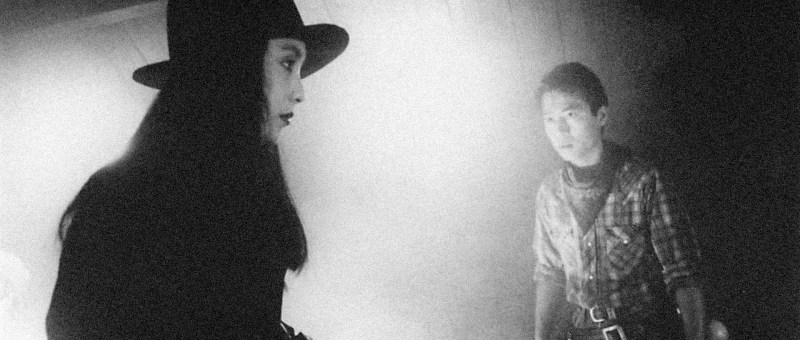
Yamakawa opens in black and white and in Monument Valley in which only the figure of a young man in a cowboy outfit is in vivid colour while a voiceover from the American President warns that a savage band of gangsters is currently holding the world to ransom. Yet “Monument Valley” turns out to be only an image filling the wall of Bar Slaughterhouse, the cowboy, Billy the Kid (Hiroshi Mikami) stepping out of the painting having lost his horse and apparently in search of a job. The barman (Renji Ishibashi) is reluctant to give him one, after all he has six bodyguards already ranging from the legendary samurai Miyamoto Musashi to an anthropomorphism of Directory Enquiries, 104 (LaSalle Ishii). Nevertheless, after threatening to leave (through the front door) Billy asks for a job as a waiter instead in return for food and board while collecting the bounty for any gangsters he kills in the course of his duties. 

The bar is in some senses an imaginary place, or at least a space of the imagination, the sanctuary of “construction and creation” where half-remembered pop culture references mingle freely. In that sense it stands in direct opposition to the salaryman reality of Bubble-era Japan where everyone works all the time and the only interests which matter are corporate. Billy takes a liking to a young office lady, “Charlotte Rampling” (Kimie Shingyoji), who complains that she’s overcome with a sense of anxiety in the crushing sameness of her life, often woken by the sound of herself grinding her teeth that is when she’s not too tired to fall asleep. The “gangsters” which eventually crash in (literally) are businessmen and authority figures, one revealing as he raids the till that he’s a dissatisfied civil servant who determined that in order to become the best of the salarymen you need an “interesting” hobby so his is being in a gang. Another later gives a speech remarking again on this sense of inner anxiety that in their soulless desk jobs they’re moving further and further away from this world of “creation and construction”, and that the sacrifice of their individuality has provoked the kind of violent madness which enables this nihilistic “terrorist” enforcement of the corporatist society against which Miyuki (Shigeru Muroi), another of the bodyguards dressed as a retro 50s-style roller diner waitress, rebels through her poetry. 

Envisioned as a single set drama (save the bookending Monument Valley scenes apparently filmed on location in Arizona) Yamanaka’s drama is infinitely meta, in part a minor parody of Seven Samurai featuring a Miyamoto Musashi inspired by Kurosawa’s Kyuzo who was himself inspired by Miyamoto Musashi as the seven pop culture bodyguards stand guard over a saloon-style cafe bar beset by the forces of “order” turned modern-day bandits intent on crushing the artistic spirit in order to facilitate the rise of a boring salaryman corporate drone society. Yet for all of its absurdist humour, Harry Callahan (Yoshio Harada) telling a strange story about being a race horse, there is something quietly moving in Yamakawa’s ethereal transitions, the camera gently pulling back as a little girl who wanted to travel is suddenly surrounded by snow or the face of anxious young office lady fading into that of a prairie woman telling a bizarre tale of her life with a venomous snake. Equally a vehicle for girlband ZELDA whose music recurs throughout, the first stage number a hippyish affair set in a summer garden and the second an emo goth aesthetic more suited to what’s about to happen, Yamakawa’s zeitgeisty, post-modern drama is an advocation for the importance of the creative spirit if in another meta touch itself a rebellion against the corporate and consumerist emptiness of Bubble-era Japan. 


The New Morning of Billy the Kid streams worldwide 3rd to 5th December with newly prepared English subtitles alongside two of Yamakawa’s earlier shorts courtesy of Matchbox Cine.

Original trailer (English subtitles available via CC button)

Miyuki Nakajima’s debut single, Azami-jo no Lullaby (1975)

ZELDA’s Ogon no Jikan

Woman in Witness Protection (マルタイの女, Juzo Itami, 1997)

woman in witness protection posterJuzo Itami’s fearless taste for sending up the contradictions and hypocrisies of his home nation knew no bounds, eventually bringing him into conflict with the very forces he assumed so secure it was safe to mock – his 1992 film Minbo led to brutal attack by a gang of yakuza unhappy with how his film portrayed the world of organised crime. Woman in Witness Protection (マルタイの女, Marutai no Onna), continuing the “Woman” theme from previous hits A Taxing Woman and the more recent Supermarket Woman, would be Itami’s final feature as he died in mysterious circumstances not long after its completion and like Minbo it touched an open nerve. In 1997, crazy cult violence was perhaps no laughing matter nor as ridiculous as it might have seemed a few years earlier, yet Itami makes the actions of brainwashed conspirators the primary motivator of a self-centred actress’ gradual progress towards accepting the very thing his previous films might have satirised – her civic duty as a Japanese woman.

Itami breaks the film into a series of vignettes bookended by title cards beginning with the first which introduces us to our leading lady – Biwako Isono (Nobuko Miyamoto). Biwako is currently in rehearsals for an avant-garde play about giving birth (“a woman’s moment of glory”) during which she reduces her assistant to tears prompting her resignation, decrying Biwako’s self-centred bitchiness as she goes. Chastened, Biwako spends the evening doing vocal exercises outside her apartment which is how she comes to witness the botched murder of a lawyer by a crazed cultist (Kazuya Takahashi) during which she is almost murdered herself and only survives because the killer’s gun jams. As the only witness Biwako suddenly becomes important to the police which works well with her general need for attention but less so with her loathing for hassle. Seeing as Biwako is a famous actress, her involvement also precipitates increased press interest for the murder and accidentally threatens the ongoing police investigation not least because Biwako likes to play up for the camera and isn’t quite sure how best to deal with her divided responsibilities. With the killer still at large, the police decide to give Biwako protection in the form of two detectives – Chikamatsu (Yuji Murata), a cultured man who’s a big fan of Biwako’s stage career, and Tachibana (Masahiko Nishimura), a rather stiff gentleman who never watches films and rarely indulges in entertainment.

Bringing up cult violence in 1997 just two years after Japan’s only real terrorist incident perpetrated by a crazed cult, might be thought taboo but taboo was not something that Itami had ever run away from. Crazed cults had also popped up during A Taxing Woman’s Return though back then they mostly represented the hypocrisy of the new yakuza as a front for organised crime that thought nothing of bleeding vulnerable people dry while feeding them a lot of semi-religious claptrap to make them feel a part of something bigger while the bubble economy continued its puffed up attempts to make them feel inadequate. This time around our cultists are less well drawn but clearly a collection of unlucky people duped into believing the strange philosophies of the “Sheep of Truth” which teach that the world can only be saved by its followers dividing the world into white sheep and black sheep. Like the policeman and later Biwako, the killer believes he is only doing “that which must be done” in the best interests of the world. He is unaware of the cult’s shadiness and shocked when their lawyer threatens his family in an effort to convince him not to talk once the police have managed to break his programming, ironically through exactly the same methods – manipulating his feelings towards his wife and son.

The cult is however merely background to Biwako’s ongoing character drama. Despite experiencing emotional trauma from witnessing a murder and then being threatened herself, Biwako enjoys being the centre of the attention with the police as well as the warm glow she feels in being able to help them with their enquiries, but balks at the additional hassle of having to be involved in the trial (even if she would be given quite a sizeable platform as a witness in a high profile court case). She resents having the two policemen follow her around – especially as she has quite a busy schedule which includes an affair with her married manager. Nevertheless she gradually allows them into her life with Tachibana even making his stage debut as spear carrier in a production of Anthony and Cleopatra. Tachibana’s steadfast defence of her person even at the risk of his own life begins to teach Biwako a few things about civic responsibility and the importance of duty, even if her final moment of realisation is another of her staged set pieces in which she conjures a poignant monologue from the accidentally profound mutterings of Tachibana, a little of Cleopatra, and the earlier line from the maternity play repurposed as she affirms that testifying against the cultists will be her “moment of glory”.

Rather than end on Biwako’s sudden moment of enlightenment, Itami cuts to an ironic epilogue in which a police detective watching the movie we have just seen complains about its authenticity while emphasising that no one in protective custody has ever been attacked. A little tongue in cheek humour from Itami that is followed by the more usual disclaimer before the credits resume, but perhaps anticipating another dose of controversy from both law enforcement and cult devotees. Lighter in tone and noticeably less surreal than some of Itami’s earlier work, Woman in Witness Protection is the story of a vacuous actress learning the purpose of her stage as her particular brand of artifice meets that of the less innocently self-centred cultists head on and eventually becomes the best weapon against it.


Original trailer (no subtitles)

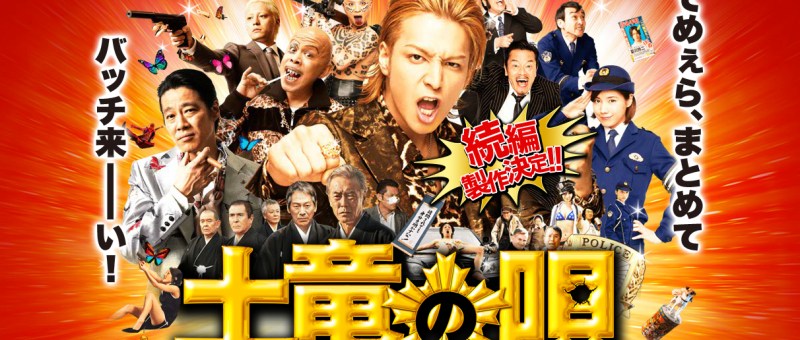
The Mole Song: Undercover Agent Reiji (土竜の唄 潜入捜査官 REIJI, Takashi Miike, 2013)

mole song under cover agent reiji poserYakuza aren’t supposed to be funny, are they? According to one particular lover of Lepidoptera, that’s all they ever need to be. Scripted by Kankuro Kudo and adapted from the manga by Noboru Takahashi, Takashi Miike’s The Mole Song: Undercover Agent Reiji (土竜の唄 潜入捜査官 REIJI, Mogura no Uta: Sennyu Sosakan Reiji) is the classic bad spy comedy in which a hapless beat cop is dragged out of his police box and into the field as a yakuza mole in the (rather ambitious) hope of ridding Japan of drugs. As might be assumed, Reiji’s quest does not quite go to plan but then in another sense it goes better than anyone might have hoped.

Reiji Kikukawa (Toma Ikuta) is, to put it bluntly, not the finest recruit the Japanese police force has ever received. He does, however, have a strong sense of justice even if it doesn’t quite tally with that laid down in law though his methods of application are sometimes questionable. A self-confessed “pervert” (but not a “twisted” one) Reiji is currently in trouble for pulling his gun on a store owner who was extracting sexual favours from high school girls he caught shop lifting (the accused is a city counsellor who has pulled a few strings to ask for Reiji’s badge). Seizing this opportunity, Reiji’s boss (Mitsuru Fukikoshi) has decided that he’s a perfect fit for a spell undercover in a local gang they suspect of colluding with Russian mafia to smuggle large amounts of MDMA into Japan.

Reiji hates drugs, but not as much as his new best buddy “Crazy Papillon” (Shinichi Tsutsumi) who is obsessed with butterflies and insists everything that happens around him be “funny”. Reiji, an idiot, is very funny indeed and so he instantly gets himself a leg up in the yakuza world whilst forming an unexpectedly genuine bond with his new buddy who also really hates drugs and only agreed to join this gang because they promised him they didn’t have anything to with them.

Sliding into his regular manga mode, Miike adopts his Crows Zero aesthetic but re-ups the camp as Reiji gets fired up on justice and takes down rooms full of punks powered only by righteousness and his giant yakuza hairdo. Like most yakuza movies, the emphasis is on the bonds between men and it is indeed the strange connection between Reiji and Papillon which takes centerstage as Miike milks the melodrama for all it’s worth.

Scripted by Kankuro Kudo (who previously worked with the director on the Zebra Man series), Reiji skews towards a slightly different breed of absurdity from Miike’s patented brand but retains the outrageous production design including the big hair, garish outfits, and carefully considered colour scheme. Mixing amusing semi-animated sequences with over the top action and the frequent reoccurrence of the “Mole Song”, Miike is in full-on sugar rush mode, barely pausing before moving on from one ridiculous set piece to the next.

Ridiculous set pieces are however the highlight of the film from Reiji’s early series of initiation tests to his attempts to win the affections of his lady love, Junna (Riisa Naka), and a lengthy sojourn at a mysterious yakuza ceremony which Reiji manages to completely derail through a series of misunderstandings. At 130 minutes however, it’s all wearing a bit thin even with the plot machinations suddenly kicking into gear two thirds of the way through. Nevertheless, there’s enough silly slapstick comedy and impressive design work at play to keep things interesting even if Reiji’s eventual triumph is all but guaranteed.


Screened as part of the Japan Foundation Touring Film Programme 2018.

Screening again:

  • Queen’s Film Theatre – 21 February 2018
  • Phoenix Leicester – 24 February 2018
  • Brewery Arts Centre – 16 March 2018
  • Broadway – 20 March 2018
  • Midlands Arts Centre – 27 March 2018
  • Showroom Cinema – 28 March 2018

Original trailer (English subtitles)

The Crazy Family (逆噴射家族, Sogo Ishii, 1984)

crazy family posterThe family drama went through something of a transformation at the beginning of the 1980s. Gone are the picturesque, sometimes melancholy evocations of the transience of family life, these families are fake, dysfunctional, or unreliable even if trying their best. Morita’s The Family Game, released in 1983, kick started this re-examination of the primary social unit through attacking it Teorema-style as the family’s tutor rips through their generic middle-class existence by adopting each of their pre-defined social roles in turn. One year later Sogo Ishii’s The Crazy Family (逆噴射家族, Gyakufunsha Kazoku) turns the director’s punk aesthetic to a similar theme but this time the family destroys itself in its earnestness to live the Japanese dream in the increasing economic possibility of the pre-bubble era. The Kobayashis are the perfect example of the “typical” aspiring family, but what is the “sickness” that the family patriarch is so afraid of, who (or what) is it that is sick, and if it is possible to be “cured” what would such a cure look like?

Mr and Mrs Kobayashi have achieved their dream – getting out of the danchi and into a suburban house that they own (or will own, once the mortgage is paid off) outright. Mr. Kobayashi, Katsukuni (Katsuya Kobayashi), is a typical salaryman while his wife Saeko (Mitsuko Baisho) stays at home to look after their two children – middle schooler Erika (Yuki Kudo) and her older brother Masaki (Yoshiki Arizono), currently a “ronin” studying to retake his university entrance exams determined to get into the prestigious Tokyo University.

Blissfully happy, the family are adapting well enough to their new home but there’s always that lingering feeling of impending doom, as if all this is too good to be true. Sure enough, Masaki’s adoption of a stray dog alerts the family to a more serious problem – termites. Suddenly terrified that something is literally trying to eat his house out from under him, Katsukuni goes on a fumigating rampage but the termites are not the only source of tension. Turning up right on time, grandpa arrives for a visit after falling out with Katsukuni’s older brother with whom he’d been living. The Kobayashis moved so that the kids could finally have their own rooms (and mum and dad some privacy) but grandpa shows no signs of leaving meaning Katsukuni is sharing with his dad and Saeko has been relegated to Erika’s room.

The house is what the family has always dreamed of – owning one’s own home is no mean feat for those raised in the post-war era, but it’s still a small environment for five people even if much nicer than their tiny city flat. More than just a structure it represents everything the ordinary family dreams of – peace, prosperity, harmony and a life lived in tune with the social order. Katsukuni’s fears that a mysterious “sickness” is plaguing his loved ones is a sign of his discomfort with this ordered way of living. Despite their stereotypical qualities, there is something not exactly right about each of his “ordinary” family members – mum stripteases for grandad’s friends, precocious teenage daughter Erika is not sure if she wants to be a pro-wrestler or an idol and spends all of her time “idolising” her favourite stars, and son Masaki has become a proto-hikikomori so obsessed with studying that he’s taken to stabbing himself in the leg every time he starts to nod off so that he can keep hitting the books rather than the hay.

Yet for all that it’s Katsukuni himself who is the most “sick” in his inability to reconcile himself to social conformity. Despite being apparently successful, he has deep seated feelings of inadequacy which convince him that something is going to go wrong with the family he feels a duty to protect. Wanting to be a good husband and father, Katsukuni thinks he has to “cure” his family of their strange behaviours and make them the sort of people who live in nice houses in the suburbs, but only succeeds in driving himself out of his mind.

Grandpa’s antics have the other family members well and truly fed up but Katsukuni feels just as much filial piety as he does responsibility towards his own children and cannot bring himself to tell his father to go and so he hits on an extreme solution – he’s going to dig a basement, by hacking up the living room floor and pushing downwards, towards hell. Surprise, surprise, his dream home is atop a nest of termites, the bugs are literally working their way in but, ironically enough, Katsukuni is the biggest termite of them all as his very own “hill” begins to appear just in front of the sofa while he tries to find a space for the older generation in a modern home.

Grandpa is an unwelcome manifestation of the inescapable past. When everything goes to hell and the house becomes a battlefield, grandpa manages to dig out his wartime uniform complete with a sword and attempts to assume command by dividing the house into sectors before capturing and trussing his own granddaughter whom he then threatens to rape and torture, apparently eager to revisit his Manchurian military service and all of its implied cruelties. When Katsukuni believes that all is lost and his family can’t be saved he opts for the most culturally appropriate solution – group suicide, but his family won’t play along. Paranoid and delusional, they turn on each other, defending themselves with icons of their respective roles, venting their frustrations and long held grudges in one prolonged battle of violent madness.

When the air finally clears there is only one solution – the house has to go. The desire for a “conventional life” or the feeling of not achieving it is, in that sense, “the sickness” which has infected the Kobayashi family. The finale sees them finally living happily once again but literally “outside” of the mainstream, in a totally open world where there is space for everyone – all quirks embraced, all extremes born. Everyone has their place but the family remains whole, freed from the burden of chasing an unrealisable dream.


A short musical clip from the film