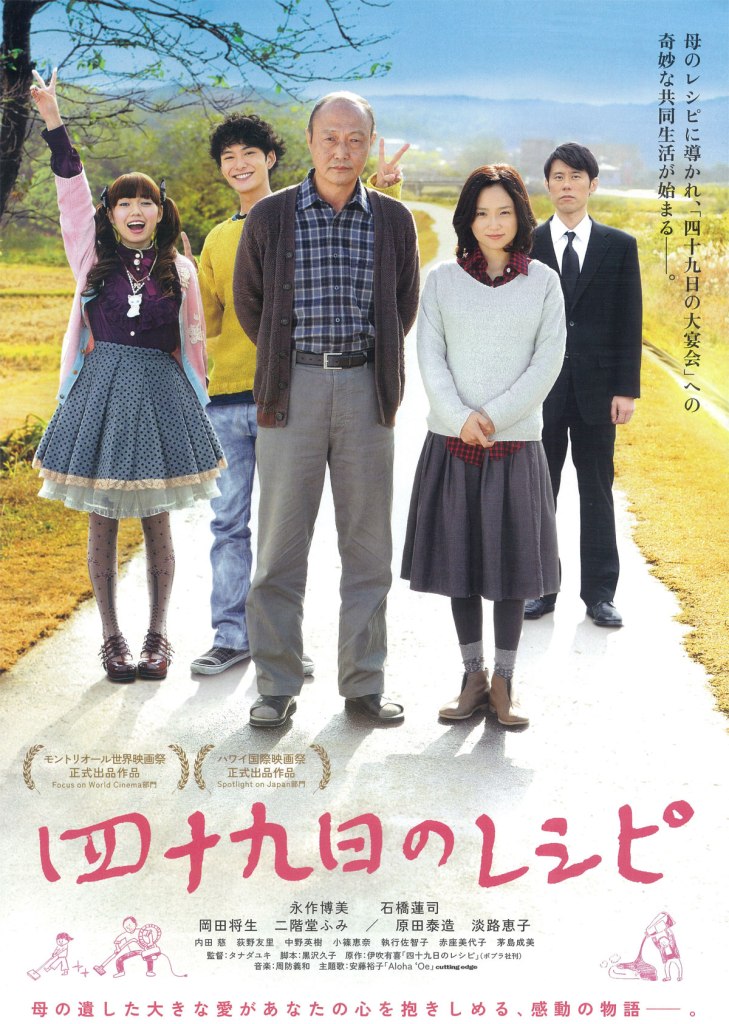
 When everything goes wrong you go home, but Yuriko, the protagonist of Yuki Tanada’s adaptation of Yuki Ibuki’s novel might feel justified in wondering if she’s made a series of huge mistakes considering the strange situation she now finds herself in. Far from the schmaltzy cooking movie the title might suggest, Mourning Recipe (四十九日のレシピ, Shijuukunichi no Recipe) is a trail of breadcrumbs left by the recently deceased family matriarch, still thinking of others before herself as she tries to help everyone move on after she is no longer there to guide them. Approaching the often difficult circumstances with her characteristic warmth and compassion, Tanada takes what could have become a trite treatise on the healing power of grief into a nuanced character study as each of the left behind now has to seek their own path in deciding how to live the rest of their lives.
Beginning in pitch darkness, housewife Yuriko (Hiromi Nagasaku) answers the phone to the voice of another woman requesting that she separate from her husband who is apparently the father of her unborn child. This double sting hits Yuriko hardest as the couple had been trying for a baby for quite sometime with little success. Thinking a divorce is for the best, Yuriko packs her bags, leaves the papers and her ring on the table, and heads for her father’s house. When she gets there she finds an oddly bubbly young girl, Imoto (Fumi Nikaido), washing her father’s back. Apparently, Imoto has been charged with looking after the house during the 49 day mourning period for Yuriko’s step-mother, Otomi – the upcoming memorial service something Yuriko had forgotten all about in the midst of her personal crisis. When Imoto presents the pair with a book that Otomi illustrated before she died listing everything they should do to prepare for the big party she wants everyone to enjoy rather than solemnly chanting sutras for her 49th day memorial, it prompts Yuriko and her father into a reconsideration of themselves, their pasts and futures, and who exactly should be making those decisions for them.
Yuriko’s position may seem like a straightforward one, betrayed by her husband her decision to leave seems inevitable but it’s complicated by the intricate web of duties and obligations Yuriko feels herself to be a part of. Reconsidering various turning points of her life, Yuriko makes plain that her marriage to the mild mannered salaryman Hiroyuki (Taizo Harada) had been under considerable strain due to the couple’s difficulty conceiving a child. Owing to the intense pressure placed on women to bear children, Yuriko internalises a sense of shame at having failed in this most basic of wifely tasks, leading her husband (she believes) to replace her with a model more fit for purpose. This point of view is rammed home by Yuriko’s insensitive aunt who continues to interrogate her about her lack of children and encourage her to return home to her husband and fix the problem rather than “giving up” and settling for the “shameful” option of divorce as young people are want to do. Aunt Tamako (Keiko Awaji) also points out that neither of her daughters bothered with university or work or any of that nonsense and now have fulfilled their duties by bearing bright and bonny grandchildren with no trouble at all. Heartbroken and blaming herself, Yuriko has to listen to the ongoing lecture whilst keeping her composure right until its gloomy conclusion.
Motherhood becomes the film’s biggest theme as mothers, non-mothers, and bad mothers swirl around the childless Yuriko, still trying to find her place in the world if the path society seems determined to set her on has been well and truly blocked off. Yuriko’s biological mother died when she was only little but happily her father fell in love with and married Otomi – a truly good woman who, like Yuriko, had no children of her own, but lived her life trying to make a difference and help other people to be happy. Little Yuriko didn’t always see it that way and found it difficult to bond with her new mother, settling for the nickname “Okka” – a combination of Otomi’s name and the word for mother, rather than straightforward “mum”.
Reinvestigating Otomi’s life in order to plan for her 49th day memorial, Yuriko truly gets to know her step-mother for the first time, discovering just how big of a difference she made in the lives of those around her. Imoto is just one of the young people Otomi went out on a limb for volunteering at a local rehabilitation centre for young people experiencing problems with addition. She then introduces them to a young Brazilian/Japanese migrant (Masaki Okada) who found himself feeling all alone in a foreign land until Otomi handed him the keys to her car and insisted he get out and about and meet new people. Otomi might not have had children of her own, but she became a mother to the world, reaching out and helping those who most needed it, becoming the springboard so that they could fly far away from her happier and healthier than before.
In learning from Otomi’s book, Yuriko regains her sense of self and a desire to find her purpose, knowing that the ability to bear children is not the be all and end all of a woman’s existence. Indeed even if a woman can give birth to a child, that’s not to say she’ll be a good mother as Imoto points out in reference to the toxic relationship she has with hers which feeds back into the insensitive way Hiroyuki’s mistress talks about her plans in front of her young son.
Given all of these epiphanies and mini realisations, Yuriko’s final decision may seem like an odd one, sending her back into a conservative world bound by all of the same duties and obligations the film spent so long undermining. Nevertheless, Yuriko emerges from her 49 days of mourning with a better understanding of herself and the way she should be living her life. Filled with wit and warm humour, Mourning Recipe neatly skirts its melodramatic nature to present a genuinely moving examination of the true nature of family, motherhood, and the necessity of individual freedom. Otomi’s final springboard action was for the ones she left behind, even if, once again, she won’t be able to see them fly.
Original trailer (English subtitles)
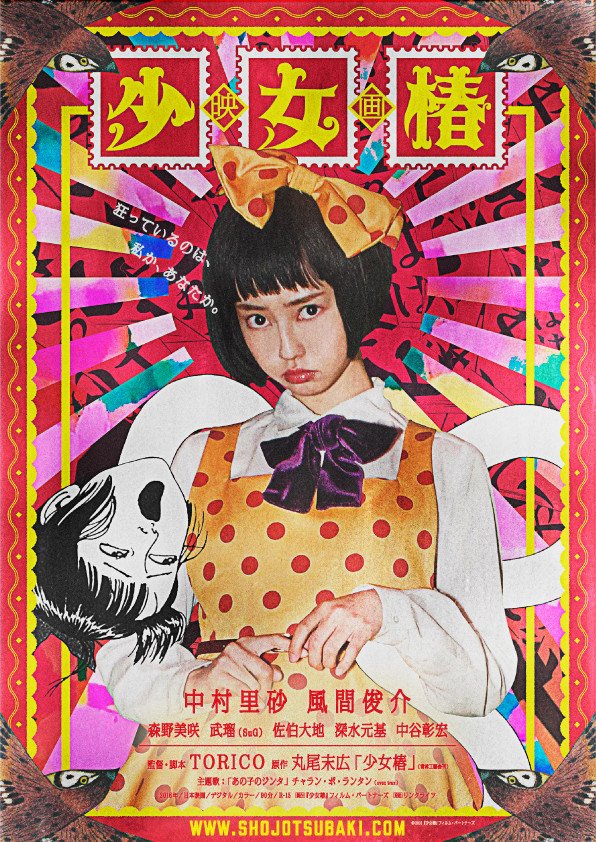 Picking up on the well entrenched penny dreadful trope of the tragic flower seller the Shoujo Tsubaki or “Camellia Girl” became a stock character in the early Showa era rival of the Kamishibai street theatre movement. Like her European equivalent, the Shoujo Tsubaki was typically a lower class innocent who finds herself first thrown into the degrading profession of selling flowers on the street and then cast down even further by being sold to a travelling freakshow revue. This particular version of the story is best known thanks to the infamous 1984 ero-guro manga by Suehiro Maruo, Mr. Arashi’s Amazing Freak Show. Very definitely living up to its name, Maruo’s manga is beautifully drawn evocation of its 1930s counterculture genesis – something which the creator of the book’s anime adaptation took to heart when screening his indie animation. Midori, an indie animation project by Hiroshi Harada, was screened only as part of a wider avant-garde event encompassing a freak show circus and cabaret revue worthy of any ‘30s underground scene.
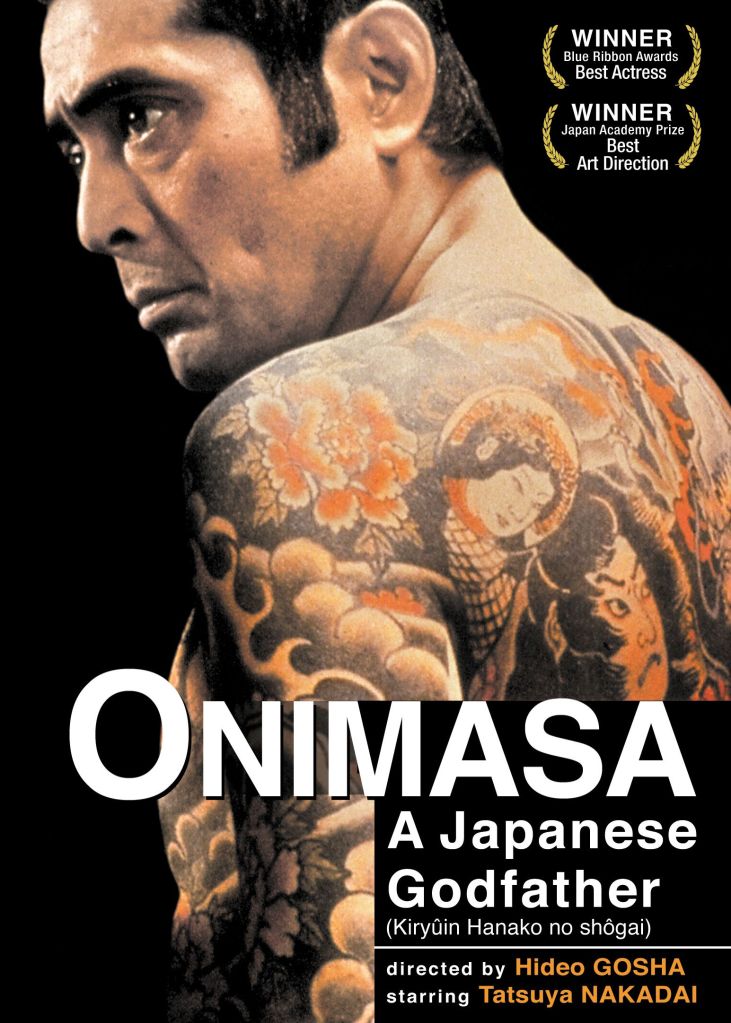 When AnimEigo decided to release Hideo Gosha’s Taisho/Showa era yakuza epic Onimasa (鬼龍院花子の生涯, Kiryuin Hanako no Shogai), they opted to give it a marketable but ill advised tagline – A Japanese Godfather. Misleading and problematic as this is, the Japanese title Kiryuin Hanako no Shogai also has its own mysterious quality in that it means “The Life of Hanako Kiryuin” even though this, admittedly hugely important, character barely appears in the film. We follow instead her adopted older sister, Matsue (Masako Natsume), and her complicated relationship with our title character, Onimasa, a gang boss who doesn’t see himself as a yakuza but as a chivalrous man whose heart and duty often become incompatible. Reteaming with frequent star Tatsuya Nakadai, director Hideo Gosha gives up the fight a little, showing us how sad the “manly way” can be on one who finds himself outplayed by his times. Here, anticipating Gosha’s subsequent direction, it’s the women who survive – in large part because they have to, by virtue of being the only ones to see where they’re headed and act accordingly.
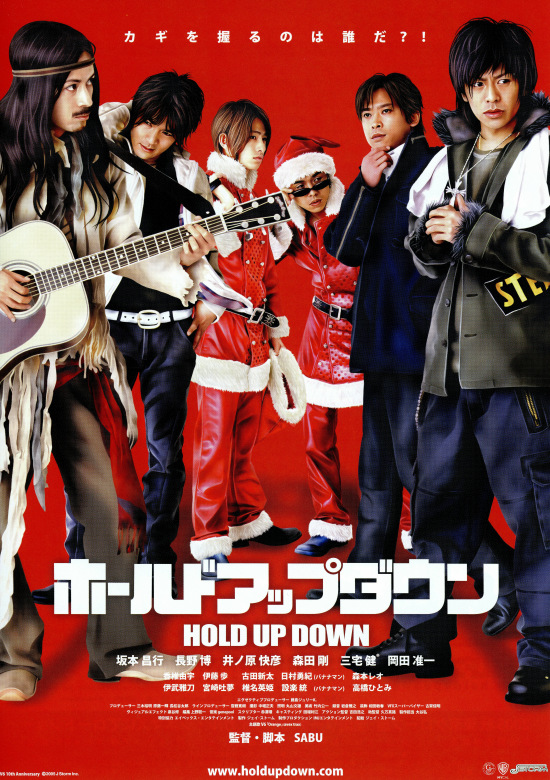 Reteaming with popular boy band V6, SABU returns with another madcap caper in the form of surreal farce Hold Up Down (ホールドアップダウン). Holding up is, as usual, not on SABU’s roadmap as he proceeds at a necessarily brisk pace, weaving these disparate plot strands into their inevitable climax. Perhaps a little shallower than the director’s other similarly themed offerings, Hold Up Down mixes everything from reverse Father Christmasing gone wrong, to gun obsessed policemen, train obsessed policewomen, clumsy defrocked priests carrying the cross of frozen Jesus, and a Shining-esque hotel filled with creepy ghosts. Quite a lot to be going on with but if SABU has proved anything it’s that he’s very adept at juggling.
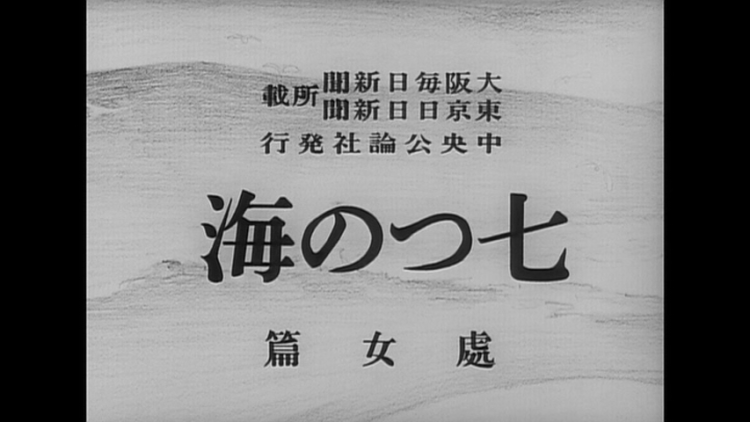 Hiroshi Shimizu is best remembered for his socially conscious, nuanced character pieces often featuring sympathetic portraits of childhood or the suffering of those who find themselves at the mercy of society’s various prejudices. Nevertheless, as a young director at Shochiku, he too had to cut his teeth on a number of program pictures and this two part novel adaptation is among his earliest. Set in a broadly upper middle class milieu, Seven Seas (七つの海, Nanatsu no Umi) is, perhaps, closer to his real life than many of his subsequent efforts but notably makes class itself a matter for discussion as its wealthy elites wield their privilege like a weapon.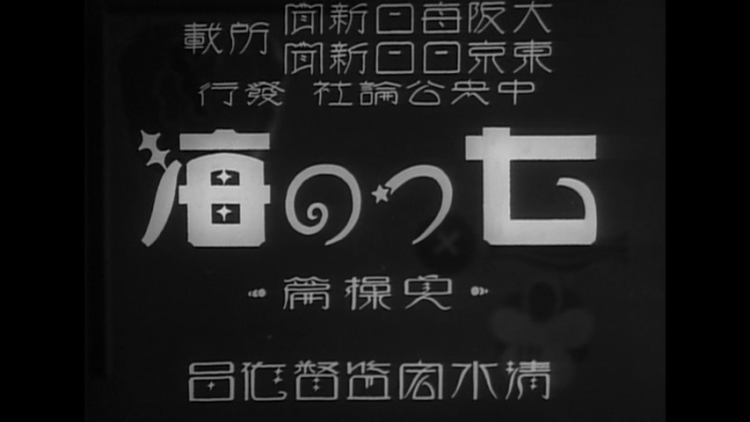
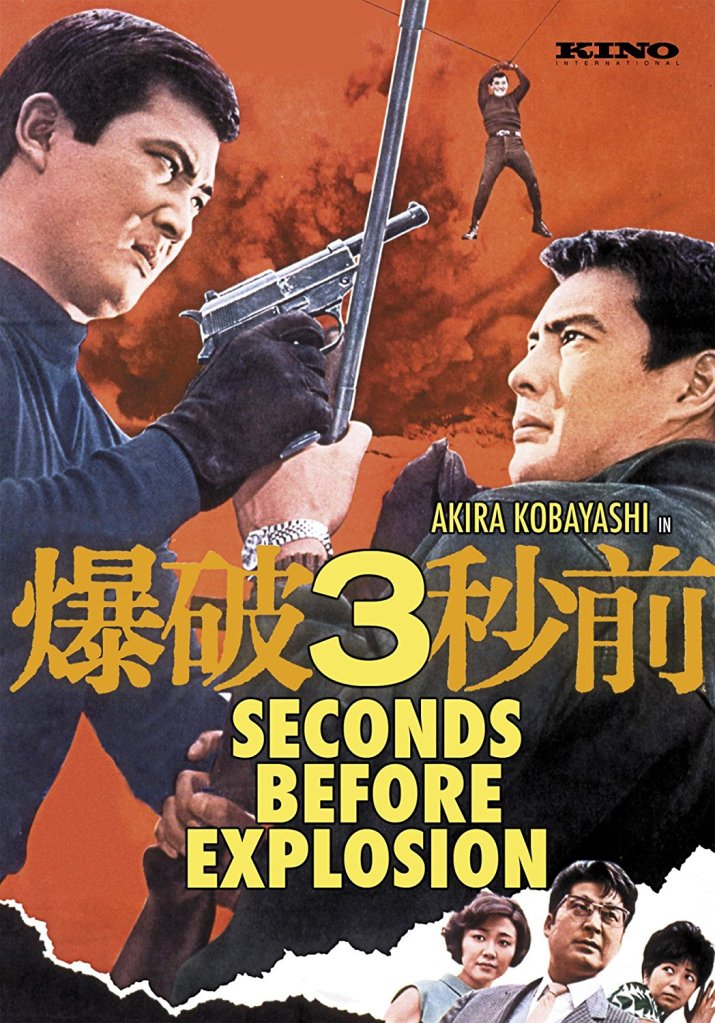 If Nikkatsu Action movies had a ringtone it would probably just be “BANG!” but nevertheless you’ll have to wait more than three rings for the Kaboom! in the admittedly cartoonish slice of typically frivolous B-movie thrills that is 3 Seconds Before Explosion (爆破3秒前, Bakuha 3-byo Mae). Once again based on a novel by Japan’s master of the hard boiled Haruhiko Oyabu, 3 Seconds Before Explosion is among his sillier works though lesser known director Motomu Ida never takes as much delight in making mischief as his studio mate Seijun Suzuki. What he does do is make use of Diamond Guy Akira Kobayashi’s boyish earnestness to keep things running along nicely even if he’s out of the picture for much of the action.
 If
If 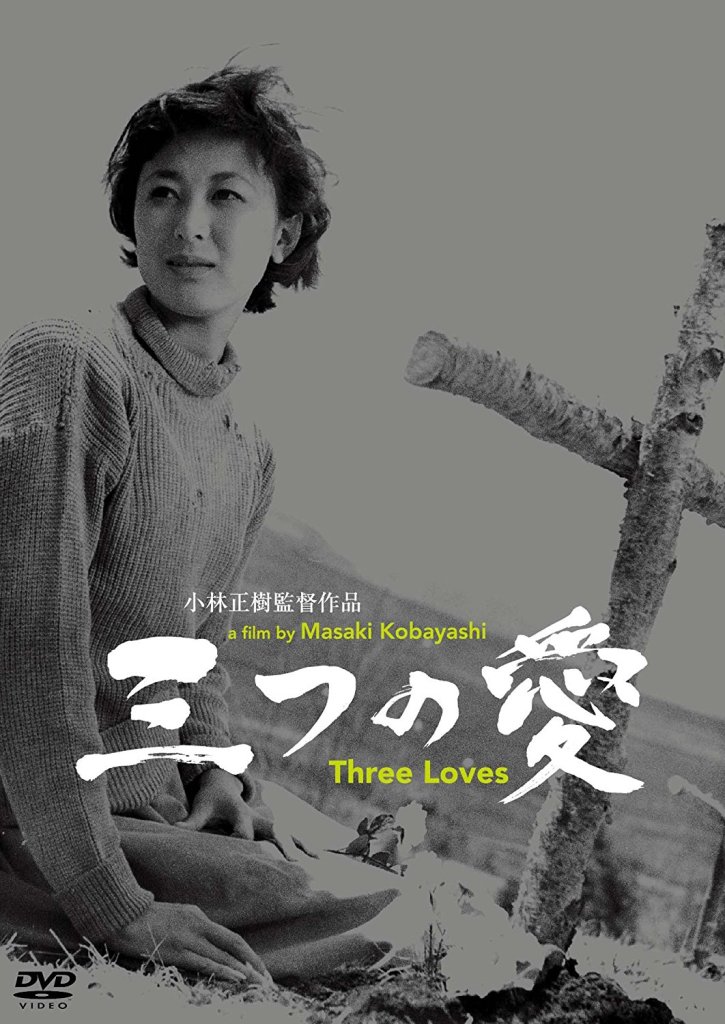 Masaki Kobayashi had a relatively short career of only 22 films. Politically uncompromising and displaying an unflinching eye towards Japan’s recent history, his work was not always welcomed by studio bosses (or, at times, audiences). Beginning his post-war career as an assistant to Keisuke Kinoshita, Kobayashi’s first few films are perhaps closer to the veteran director’s trademark melodrama but in 1953 Kobayashi struck out with a more personal project in the form of
 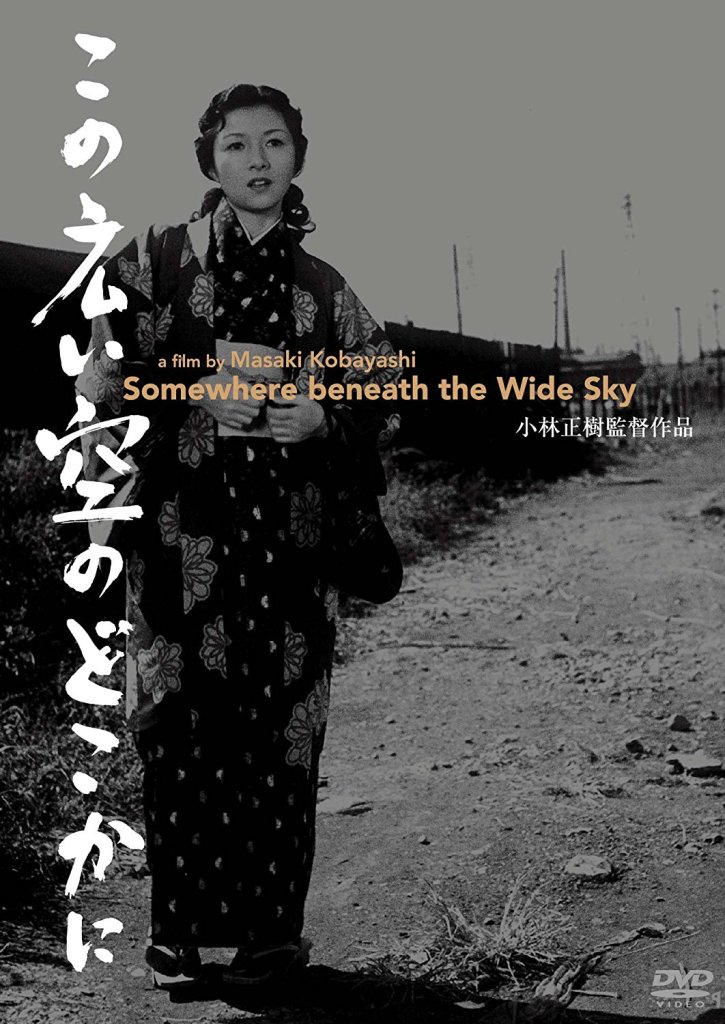 Of the chroniclers of the history of post-war Japan, none was perhaps as unflinching as Masaki Kobayashi. However, everyone has to start somewhere and as a junior director at Shochiku where he began as an assistant to Keisuke Kinoshita, Kobayashi was obliged to make his share of regular studio pictures. This was even truer following his attempt at a more personal project –
 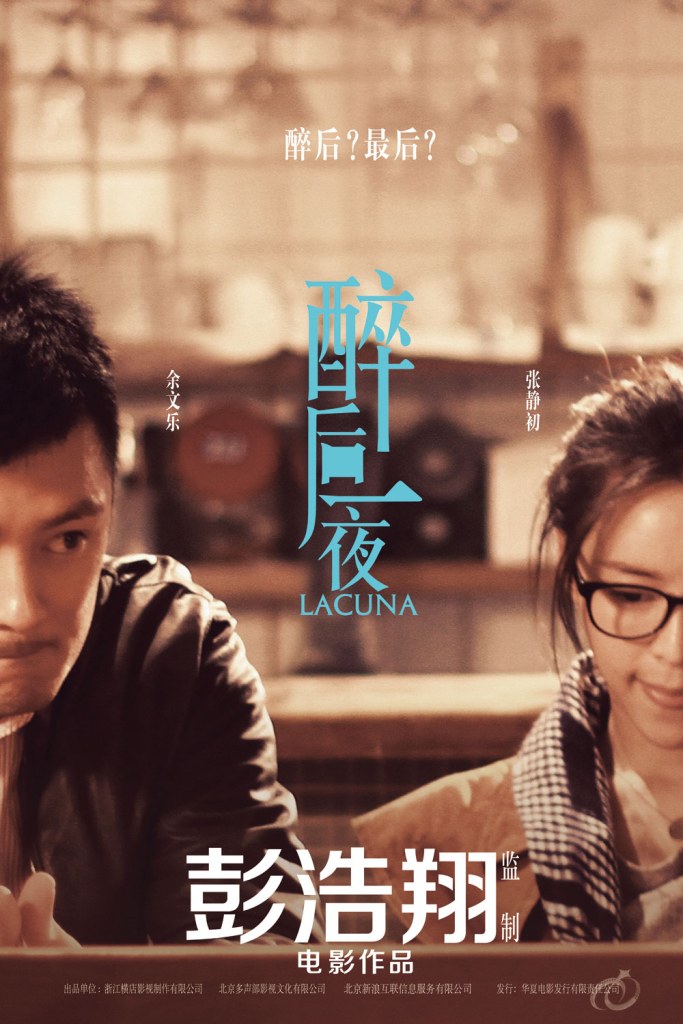 Waking up in a strange place with absolutely no recollection of how you got there is bad enough. Waking up next to a total stranger is another degree of awkward. Waking up not in someone else’s apartment but in a department store furniture showroom is another kind of problem entirely (let’s hope the CCTV cameras were on the blink, eh?). This improbable situation is exactly what has befallen two lonely Beijinger’s in Derek Tsang and Jimmy Wan’s elegantly constructed romantic comedy meets procedural, Lacuna (醉后一夜, Zuì Hòu Yīyè). An extreme number of unexpected events is required to bring these two perfectly matched souls together, but the love gods were smiling on this particular night and, once the booze has worn off, romance looks set to bloom .
 Windows on Worlds