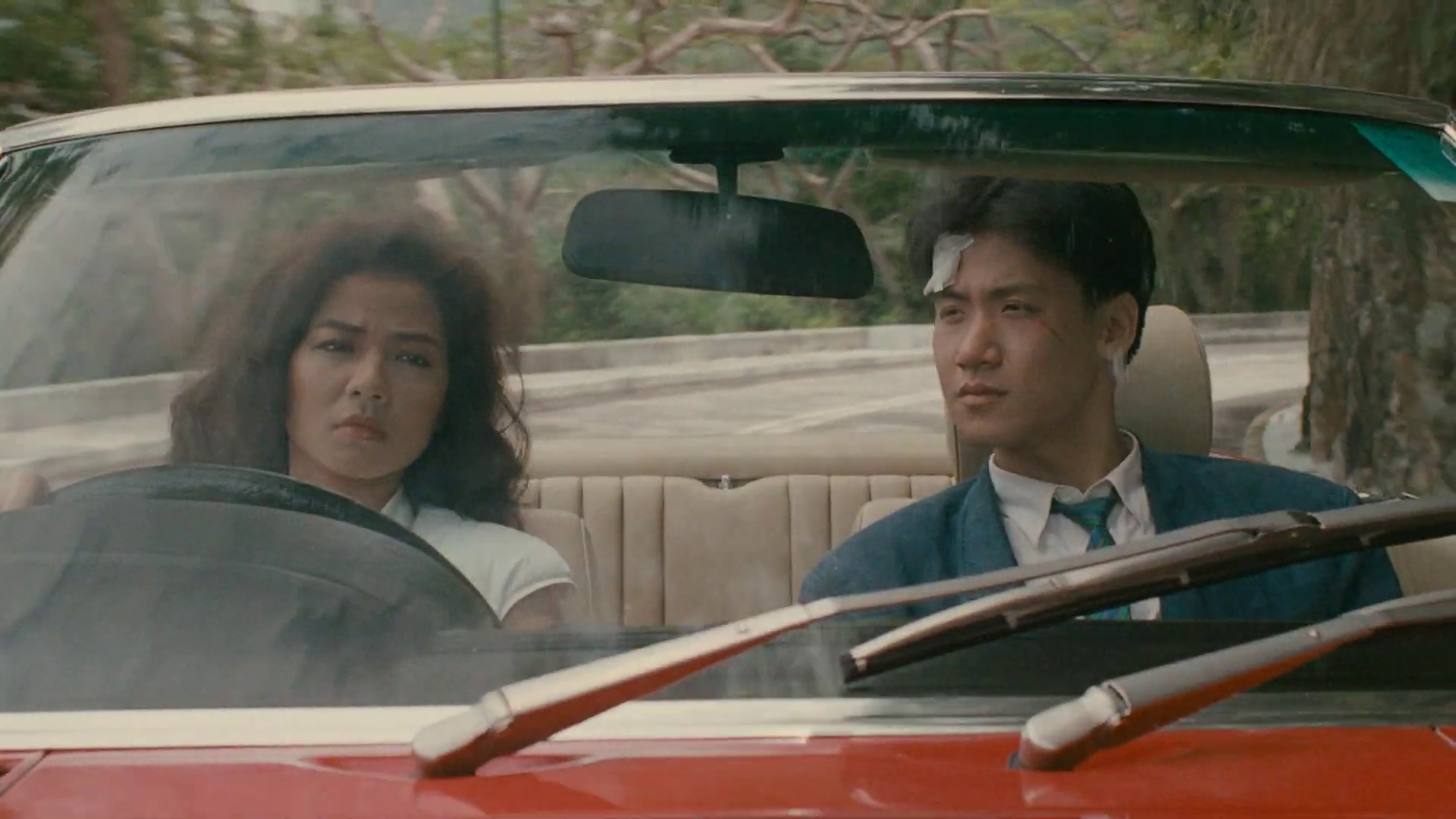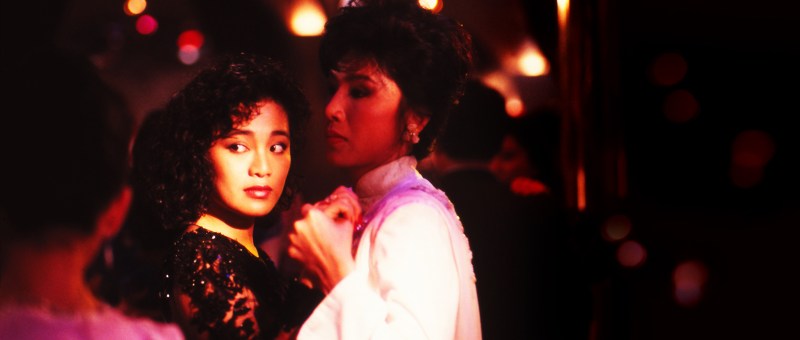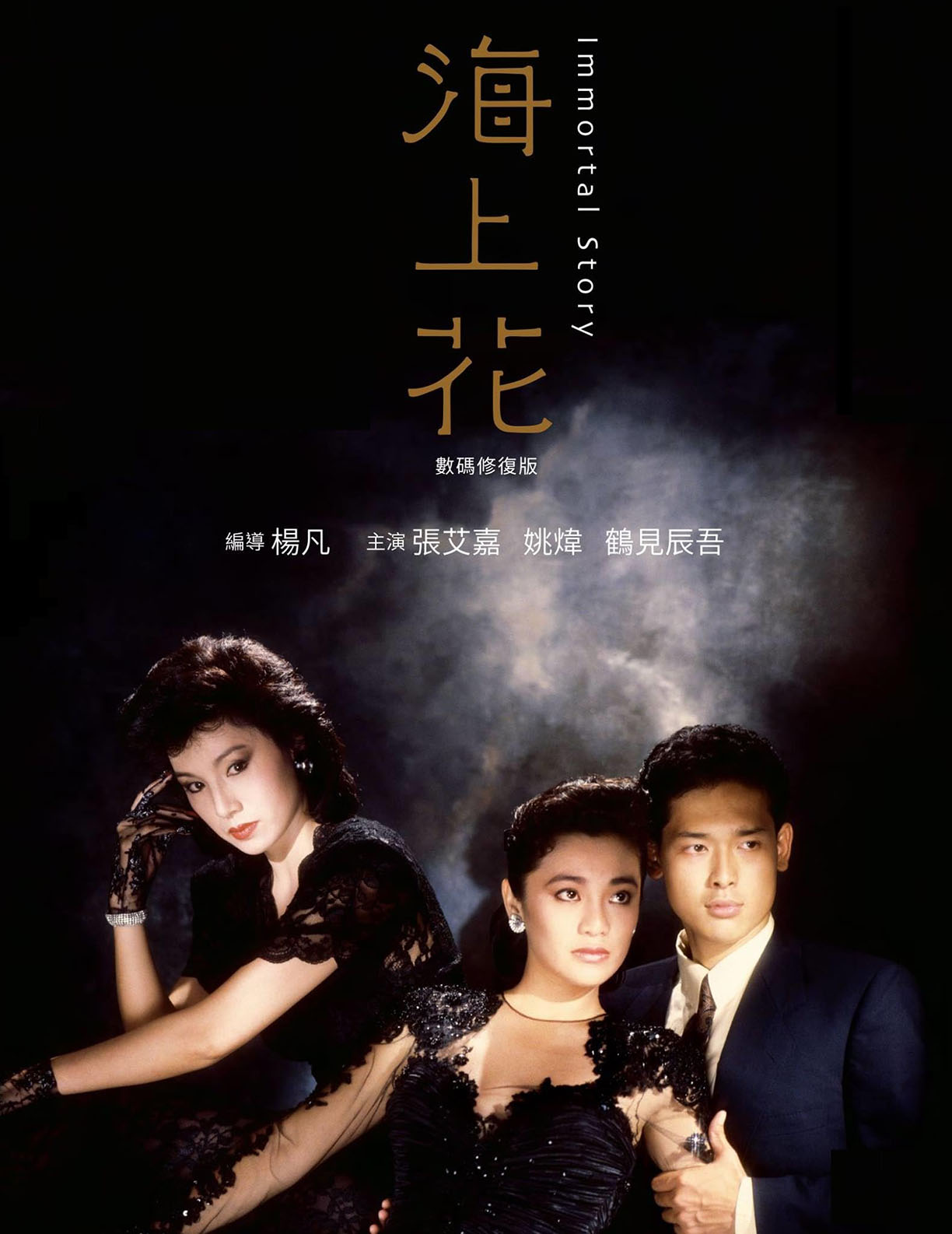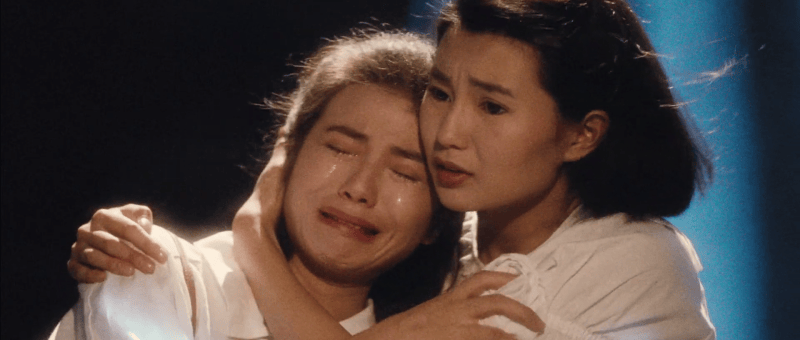
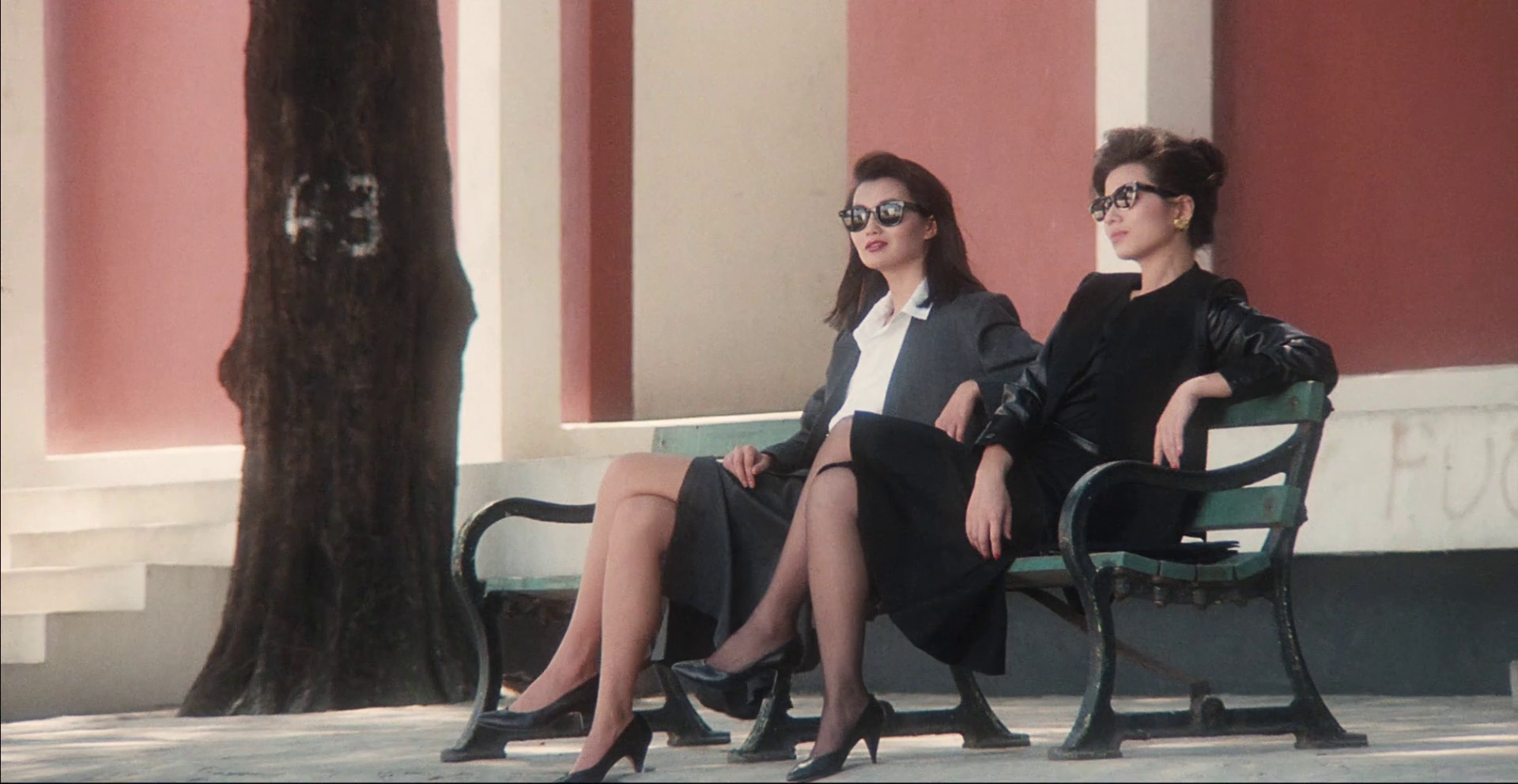
The close friendship between two women is disrupted when they fall for the same boy in Yonfan’s poignant melodrama Last Romance (流金歲月). Adapted from a novel by Yi Shu, the film takes place in the shadow of the Handover leaving each of the protagonists in a kind of limbo state uncertain of the future and afraid to strike out while longing to return to a bygone past of innocence and possibility.
Nancy (Maggie Cheung Man-yuk) first meets So So (Cherie Chung Cho-Hung) close to the end of high school and describes herself as being struck by her vivaciousness and openness that gave her a feeling of intimacy. Yet when she wanted to look at her again, she’d disappeared like a sun shower. This opening monologue hints at Nancy’s repressed longing for her friend which may in itself be romantic. Into adulthood, Nancy appears to be to some extent queer coded, dressing in androgynous fashions except for the one occasion when she meets up with fellow childhood friend Ga Ming (Shingo Tsurumi), who has since become a journalist based in Hong Kong, for a date in a stunning dress and makeup that has even her parents wondering where she’s going.
It may be a little strong to call Ga Ming a childhood friend seeing as the girls only seem to actually hang out with him on a couple of occasions while otherwise playfully joking about which of them will get to date him. As 17-year-olds, they enjoyed a day out at Ocean Park which appears to have stayed with Ga Ming in the intervening years as he continues to dream that the three of them might one day meet up there again. For him it’s become a kind of touchstone of his innocent youth that is bound up with his own feelings of rootlessness and abandonment as a Japanese-Chinese young man raised in an orphanage. He appears to have valued the girls’ friendship in part simply because he no one else pays him very much attention and he has no other friends. Meanwhile, he is struck by So So in the same way that Nancy was, remarking that he’s never met anyone like her. But at the same time, he says that for him, Nancy and So So have become one entity that is destined to come as pair.
By her late 20s, Nancy has begun to resent this. She wants to be her own person, and also to fight for Ga Ming’s affections, betraying So So by choosing not to tell her that she’s been spending time with him alone rather than risk So So stealing her spotlight. So So, meanwhile, is equally rootless in having first gone to live with her aunt while her father went to sea to earn money and then being displaced again when he passes away and she begins to feel unable to stay due to the unwanted attention shown her by her slightly creepy cousin. Unwanted male attention seems to be something that plagues So So while she only really chases the ghost of her absent father. She says that she wants security and pursues older men, becoming a bar hostess and later mistress of wealthy businessman Mr Li (Kenneth Tsang), while essentially using them for money without being able to feel much affection for the various men she associates herself with. In an echo of the city’s rapidly rising economic prosperity and her own continual displacement, she is forever moving to new and more impressive living spaces reflecting her new financial standing.
Nancy, by contrast, lives a much more stable and middle-class life after becoming a designer at a fashion company. Nevertheless, she is strictly told that “no individualism is allowed” as she’s encouraged to copy more prominent designers’ designs and reminded that everything she does should be for the company even as her sexist boss has her buying plane tickets and making arrangements for his son’s piano lessons. Thus Nancy is encouraged to keep part of herself hidden in order to be accepted by this capitalistic society and also later experiences unwanted male attention from a younger colleague who appears to be infatuated with her. She seems to find this a little disturbing, to begin with, but eventually tries to initiate romantic intimacy with him after So So and Ga Ming get together only to be unable to go through with it. It may be that her affection for Ga Ming is only a displacement activity for her unrealisable yearning for So So by seeking to become close to the man who loves her and whom So So loves but feels she cannot have.
Likewise, So So’s inability to accept genuine romantic connection with Ga Ming may be partly motivated by her repressed desire for Nancy or else her feelings of inferiority and internalised shame over her life as a sex worker whose personal wealth was made thanks to the financial investment and tutelage of Mr Li. It’s also Mr Li who helps Nancy’s father with his financial portfolio, helping him to purchase stocks and get into real estate when the market booms yet warning him that he should sell quickly with a crash imminent on the upcoming negotiations on the Handover. The brief clip of Margaret Thatcher falling down some steps hints at the coming fall of the old regime along with the implosion of the nation’s nascent capitalist rise.
Realising that all his assets are now worth nothing, Nancy’s father dies of a heart attack implying that men like him cannot really enter coming post-Handover society while Mr Li is also ruined thanks to his association with So So having heavily invested in the shipping company belonging to the family of the man she married for money who never really accepted her. In an ironic way, it’s Mr Li who becomes the father figure that So So was always looking for and for it’s for him that she later sacrifices herself and her dream of love by agreeing to abroad and be the mistress of a man who disgusts her. This new Hong Kong has no space for her either. So So and Ga Ming are left behind with their only innocent memories of an idealised love of their youth and a yearning to return to an earlier time when such things seemed possible.
Trailer (English subtitles)