Lunana: A Yak in the Classroom (Pawo Choyning Dorji, 2019)

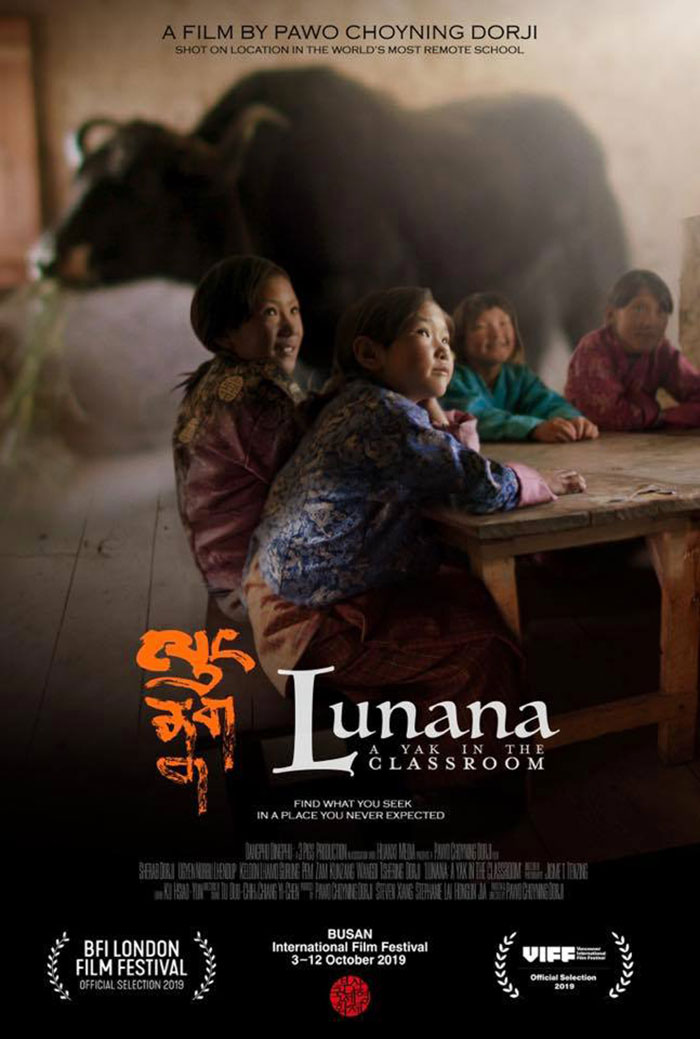
Lunana posterBhutan is, apparently, the happiest place on Earth so why would anyone want to leave it? The Gross National Happiness Project does not seem to have touched the hearts of the young in Pawo Choyning Dorji’s first directorial feature Lunana: A Yak in the Classroom. Highly Westernised and dreaming of consumerist success, these youngsters have their sights set on overseas, unimpressed with the kind of “happiness” packaged to them at home.

20-something Ugyen (Sherab Dorji) is a civil servant serving out his government contract as a teacher while hoping to emigrate to Australia and pursue his dreams of becoming a musician. Ugyen’s conservative grandma may think that a government job is its own kind of success, unable to understand why anyone would want to give it up when so many are striving for just that, but to Ugyen it’s a kind a kind of prison that wants to trap him in a life of dull conventionality. That might be why he’s currently rated among the worst teachers on the payroll with a little more than a year still to run on his term of service. To buck up his ideas, or maybe just as a kind of punishment, the local authority decides that Ugyen should be the one sent up the mountain to Lunana, one of the most remote villages in the country, where they are desperately in need of a new teacher. Ugyen doesn’t really have any choice but to go along with it, hoping that his visa will have come through by the time he gets back which will, after all, only be a few months because the school closes for winter during which the village is cut off by heavy snow.

Lunana is indeed a remote place. You can’t get there by train, or by bus, or even it seems by donkey. From the closet station it’s an eight day walk through rough mountain terrain and city boy Ugyen is not exactly one for hiking. He buys a fancy pair of walking boots, only for his guides to turn up in wellies and forge ahead with steadfast determination, while he ignores their roadside rituals and rolls his eyes at all of this untouched natural beauty. The villagers turn up to great him at a waypoint two hours out from the main settlement so they can all walk back together, and though he remains polite Ugyen cannot hide his resentment on arrival, flatly telling them that the village is even worse than he thought it would be and he wants to turn round and go straight back home.

With only 56 residents and a handful of children, the village runs along ancient rhythms but modernity penetrates even here and the children are enormously excited about the new teacher and how much they are going to learn now that the school will be opening again. Ugyen asks them what they want to be when they grow up and receives some surprising answers – one girl says she wants to be of service to the king, another wants to be a singer, and the lone boy professes that he wants to be a teacher because “teachers touch the future”. Not exactly a deep thinker and somewhat dismissive of his occupation, Ugyen is impressed and chastened by the boy’s answer. Disappointed by the “school’s” primitivism – essentially just an empty stone room, he enlists some of the adult villagers to craft a makeshift blackboard, figuring out how he can replicate chalk with charcoal, and getting a city friend to send some modern equipment such as colourful posters and a new ball for the kids’ improvised basketball court.

Unable to charge his iPod with the temperamental solar power, Ugyen begins to realise that he is in fact living in the world of song where the yak farmers value the ability to sing above all else. One of the village’s pretty young women, Saldon (Kelden Lhamo Gurung), is particularly famed for her rendition of a sad folksong about a yak farmer who has to say goodbye his beloved yak when it is decided it has to be sacrificed for the village. While learning how to live the traditional life – starting fires with dried yak dung and singing for the joy of it, Ugyen begins to see the advantages of simplicity. Life in the village is hard, but the people are kind and happy with what they have. Ugyen may not quite be able to let go of his Australian dream, even as he scrawls folksong lyrics over his prized leaflet, but takes something of Lunana with him in his new respect for his roots and the soulful contemplation of the mountains.


Lunana: A Yak in the Classroom was screened as part of the 2019 BFI London Film Festival.

Festival trailer (English subtitles)

37 Seconds (Hikari, 2019)

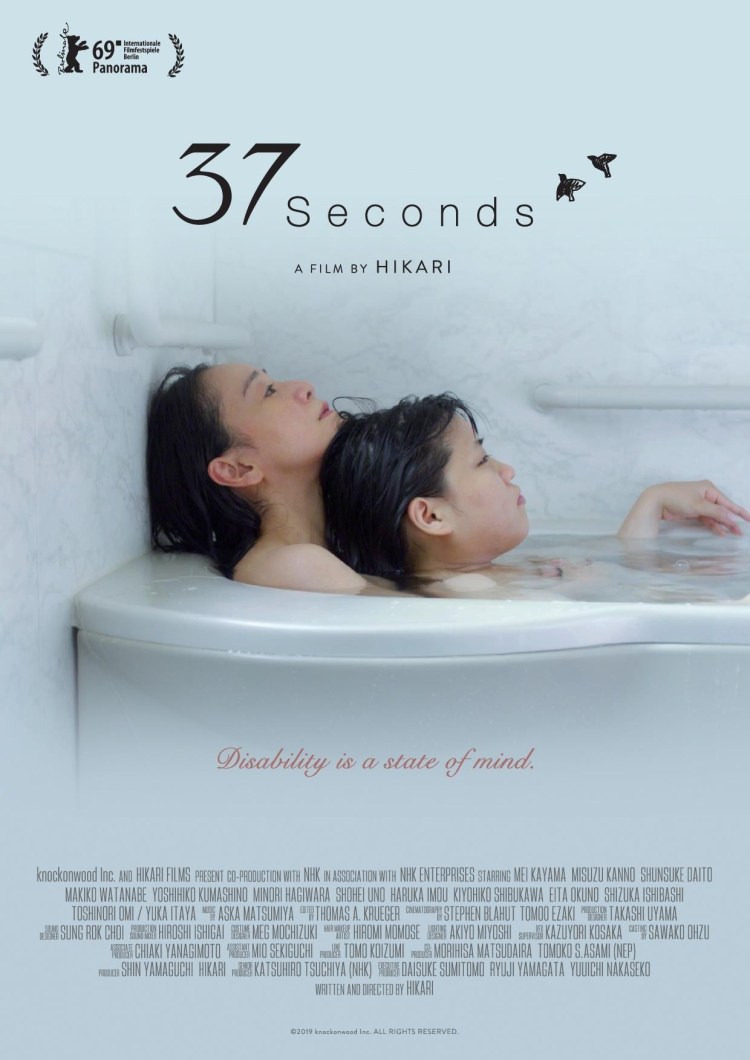
37 Seconds poster“We’re just like everybody else” the heroine of Hikari’s debut feature 37 Seconds replies in bemusement when a prospective date confesses he never thought he’d feel comfortable with “someone like” her. Quietly meditating on societal prejudice against disability, 37 Seconds takes its heroine on a journey of self discovery as a series of disappointments pushes her towards embracing a new side of herself as an individual in defiance of those who might feel they know what is best, or perhaps just most “appropriate”, for “someone like” her without bothering to consider how she might feel.

Softly spoken, 23-year-old Yuma (Mei Kayama) has cerebral palsy and uses a motorised wheelchair to get around. Although she has a degree of independence with a job as an assistant to a manga artist, her friend Sayaka now a giant YouTube star, to which she travels alone by train, Yuma otherwise has little life outside the home she shares with her increasingly overprotective mother Kyoko (Misuzu Kanno). Yuma’s dreams of becoming a manga artist in her own right are dealt a blow when she’s told that her style is too close to Sayaka’s, only Sayaka’s style is Yuma’s because Yuma is doing all the work while her friend steals the credit and gleefully gives interviews claiming she is 100% indie and has no assistants. Beginning to realise she’s being exploited, Yuma gets an idea when she spots some erotic manga abandoned in the park and starts ringing up magazines for work. One bites and likes her stuff but worries that her sex scenes lack authenticity because of her lack of experience. 

Though previously unbothered, Yuma decides to embrace her sexuality in the name of art but finds a series of obstacles in her way, not least among them her mother who continues to infantilise her claiming that she is too vulnerable to be allowed out alone because there are too many strange people in the world. Kyoko won’t let Yuma wear pretty dresses, or makeup, or go out in the same way other girls her age might, refusing to accept that her little girl has grown up and has the same desires as any other young woman including that to be independent. Unable to escape her mother’s control, Yuma begins lying to her to meet prospective dates but finds them all unsuitable until finally trying to hire a sex worker only for that to go horribly wrong too. It does however introduce her to the people who will change her life – empathetic sex worker Mai (Makiko Watanabe), and her assistant Toshiya (Shunsuke Daito), whom she meets in a love hotel corridor while waiting for a broken lift.

When Yuma first meets Mai, she’s in the company of another man with cerebral palsy using a wheelchair, Kuma – played by Yoshihiko Kumashiro, a real life activist raising awareness about sexuality in the disabled community whose life inspired Junpei Matsumoto’s 2017 feature Perfect Revolution. Seeing the warm and genuine relationship between Mai and Kuma gives Yuma a new hope that a different kind of life is possible, especially as Mai offers to take her under her wing. Having an older woman to confide in about things she could never discuss with her mother allows Yuma to explore her newfound desires with confidence knowing that there are people looking out for her and always ready to offer advice.

Not everyone, however, is quite so enlightened and Yuma’s problems are largely to do with the persistent social stigma she faces from the world around her as well as a resultant sense of internalised inferiority. Sayaka, her “friend”, views her as a kind of cash cow, taking advantage of her skills but denying her existence while Sayaka’s agent swings in the other direction by telling her she should go public because she’d get a lot of press once people know she employs a disabled woman as an assistant. The first place Yuma gets any kind of respect is the office of the erotic manga magazine where the boss treats her like any other prospective hire and offers her constructive advice. From the awful dates and bad faith friends to her mother’s well-meaning yet problematic attempts to trap her in childhood, Yuma struggles to find a sense of self-worth when everyone is telling her that her life is limited and she must conform to their stereotypical ideas of how “someone like” her should live.

Thanks to Mai and Toshiya, Yuma eventually gains the confidence to assert herself, but also the ability to accept that her mother’s actions, however misguided, came from a place of love tempered by regret and sadness she was unable to understand without engaging with her mother’s history. A beautifully empathetic exploration of a young woman’s gradual blossoming under the light of genuine connection, 37 Seconds is a unsubtle rebuke of a fiercely conformist society unwilling to accommodate difference but also a quiet hymn to defiance as its heroine learns to shake off the labels placed on her and claim her independence no matter what anyone else might have to say about it.


37 Seconds was screened as part of the 2019 BFI London Film Festival.

Festival trailer (English subtitles)
The House of Us (우리집, Yoon Ga-eun, 2019)

The world of us poster 2“People should eat with their families” a little girl points out dutifully declining an invitation to dinner, only to return home and dine alone. Hana (Kim Na-yeon), the heroine of Yoon Ga-eun’s The House of Us (우리집, Ulijib), is still young enough to think she can bend the world to her will but is about to discover that some things can’t, or perhaps shouldn’t, be changed only accepted. Meditating on the meaning of family in a changing society, Yoon’s World of Us followup finds its earnest heroine trying to escape familial disappointment through forging a home of her own but eventually realising home is not a house.

11-year-old Hana has just won the best classmate prize, but no one at home seems to be very excited for her, nor (perhaps strangely) does she seem to have many friends. In fact, despite her caring nature, she’s feeling intensely insecure because her family life is in disarray. Mum and dad are both busy and rarely home, but when they are they’re having blazing rows about how dissatisfying they each are as spouses while even going so far as to have retroactive arguments about the decision to have children while their kids are still in earshot. Hana can see her mum’s busy and she wants to help so she offers to do some of the cooking as part of her summer holiday “recipe book” project, but is flatly refused. Fearing that her parents are on the brink of divorce and longing to return to happier days, she pesters them about going on a trip, believing that would be enough to repair her fracturing family.

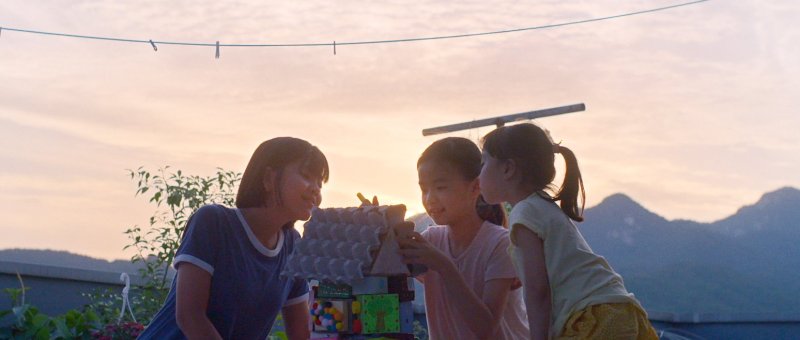
Wistfully staring at happy families wherever she goes, Hana ends up running into two little girls, nine-year-old Yoo-mi (Kim Shi-a) and her sister seven-year-old Yoo-jin (Joo Ye-rim), who are living more or less on their own while their parents are working away (an uncle checks in on them every now and then). Lonely as she is, Hana starts hanging out with the equally lonely sisters but takes on an oddly maternal rather than sisterly role, delighting in cooking for them the way her mother rarely does for her and would not allow her to do for their family. Generating an easy bond, the girls decide to build “the house of us” out of discarded cardboard boxes, declaring they’ll build it as high as they can.

Yet Hana, still a child herself, struggles with what it means to assume a parental role. She does to Yoo-mi and Yoo-jin the exact things that she most resented about her own parents – withholding information and making decisions which affect everyone without consulting anyone. Having moved around a lot, Yoo-mi and Yoo-jin are most anxious that their landlady says they’ll be moving but their parents haven’t told them anything. Hana vows to help them save their house while protecting her own home, but in reality she can do neither. The girls resort to a series of childish tricks to prevent prospective tenants from choosing to rent Yoo-mi and Yoo-jin’s apartment in the belief that that they could stay if no one wanted to move in, approaching the problem with innocent logic that makes perfect sense to a child but is little more than silliness to an adult.

Meanwhile, Hana struggles with twin discoveries of parental betrayal in finding her mother’s application for a transfer to Germany, and accidentally answering a call from a woman on her father’s phone that perhaps embarrasses her as she realises despite her young age that he has done something potentially destructive to their family. The less control she has in her family home, the more time she spends with Yoo-mi and Yoo-jin making a new one and trying to do it better. The sisters begin to look up to her as a little more than a big sister figure, allowing her to lead and expecting that she will know what to do even when she fails them.

Through her own failures, Hana begins to realise that her parents aren’t perfect and adults don’t always know what to do either. The girls accept that they belong to different families and can’t stay together, but discover that the “house” wasn’t what was important and that they’ll always be connected even if they’re far apart. No longer so insecure, Hana steps into herself and understands that her parents’ marriage is something they’ll sort out for themselves and if the family is scattered it’ll still be her family. A warm and empathetic, if melancholy, exploration of coming to terms with life’s disappointments, The House of Us finds serenity in the act of letting go as its heroine finds the strength to look forward rather than back towards a happy independence supported but not constrained by imperfect family.


The House of Us was screened as part of the 2019 BFI London Film Festival.

International trailer (English subtitles)
The Attorney (一级指控, Wong Kwok-fai, 2019)

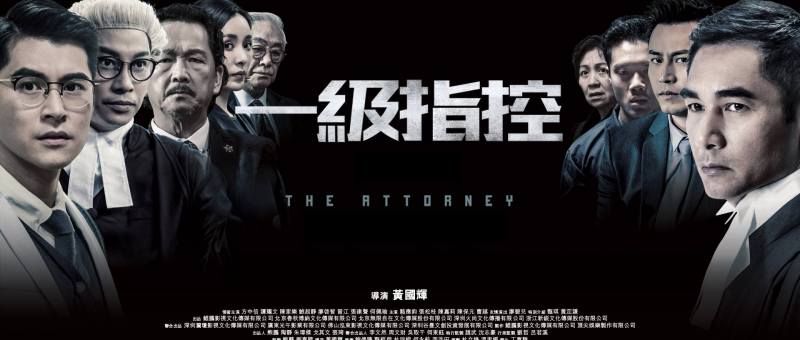
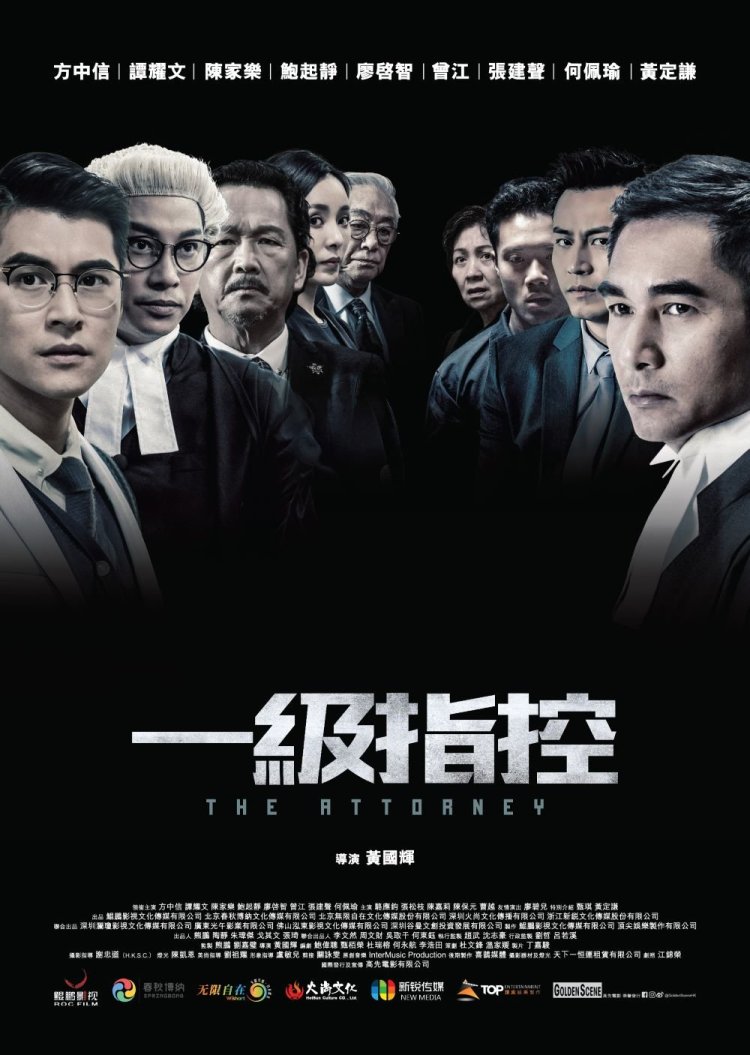
The Attorney poster 1What price justice? Wong Kwok-fai’s legal thriller The Attorney (一级指控) puts an unequal society on trial but discovers that to beat shadiness you might need to get a little shady and a healthy bit of deviousness may serve you well if it’s offered in service of a noble ideal. Then again, it’s a slippery slope towards the abyss if even the proponents of law aren’t above a little judicial finagling to ensure that “justice” gets done in a society which continues to defer to those with the biggest pockets rather than protecting those of meagre means.

We meet our two attorney heroes in the middle of their respective cases. Jaded hot shot Lei You Hui (Alex Fong Chung-sun) is defending a journalist who broke an important story about corruption in the competition for places at prestigious schools from a defamation charge, while the idealist rookie Kelvin (Carlos Chan) is defending a frail old woman held up on a charge of operating without a proper business licence. Lei wins his case, and Kelvin loses. Lei mocks Kelvin’s lack of success, and Kelvin has only contempt for Lei’s cavalier attitude towards the upholding of justice.

The action begins when a 25-year-old man, Lee, is found lying in a pool of blood next to the dead body of a young woman, Ka-yee, who is later discovered to be the daughter of a billionaire businessman, Kwok (Liu Kai-chi). The case seems open and shut. Lee claims he passed out and found the body when he woke up but the circumstantial evidence against him is overwhelming. His grandmother, Chu (Nina Paw Hee-ching), of course believes that he is innocent and enlists the best lawyers she can get access to, leading her to a solicitor who introduces her to Kelvin who is determined to see that the young man gets a fair trial. Lei, meanwhile, has a personal interest in the case in that his late wife was killed in a shopping mall collapse 10 years previously which also took the lives of Lee’s parents. Lei prosecuted a class action law suit, but lost. The shopping mall was constructed by Kwok’s company, which gives him an additional reason to want to help aside from trying to make things up to Lee and Chu whom he feels he failed all those years ago. 

Wong wastes no time in demonstrating that “justice” is a nebulous concept when society is necessarily set up to benefit the rich. Ka-yee’s body was discovered in a building belonging to a property magnate, Tsai Chi-wai (Patrick Tam), who is currently running for political office on a platform of equality for all. Chi-wai is, however, a member of the super rich elite who believes he can do as he pleases because he is protected by his wealth and privilege. Lee, by contrast, is a poor boy delinquent who ordinarily wouldn’t have access to a fancy lawyer to clear his name and most likely would have been torn apart by the elite prosecutor those with vested interests have ensured is attached to the case even though it’s a simple enough affair. 

Yet, as Lei discovers, the roots of corruption lie in the understandable desire to protect one’s children even when they’ve made terrible mistakes. Meeting with Chi-wai’s smarmy father, he discovers a man who talks up his youthful high ideals of union activities and working for the workers but later emphasises his hard won cynicism in insisting that no one with a brain seriously believes in things like truth and justice, only self interest. Tsai wants to protect his son at all costs, if only to protect himself by getting his boy into high office. Meanwhile, Kwok is left with questions about his own responsibility for his daughter’s death. If having literally billions in the bank can’t keep your little girl alive, then what use are they?

Then again, having billions in the bank is pretty useful leverage for getting your own way even if you eventually have a change of heart about enabling societal corruption. Chi-wai snarls that you need to be smart to survive, but according to Kelvin saving lives is more important than winning. Lei, who had given up his lofty ideals after being unable to get “justice” for his wife’s death begins to regain his faith in the law thanks to Kelvin’s influence and the accidental coincidence of getting a kind of revenge on Kwok by showing him the error of his ways in illuminating the truth behind his daughter’s death. To do that, however, he’ll have to bend the law a little which leaves him a compromised figure if for the best of reasons as he wilfully demonstrates the flaws in a legal system which is in itself inherently corrupt in its avowal that everyone is equal before the law while ignoring the fact that not everyone has access to the same level of “justice”. Wong’s conclusion may be a little rosy as even the most jaded of legal minds finds himself minded to rebel against the system, but there’s no denying his purpose as Lei decides to protect his daughter by protecting his society from the forces which threaten to blacken her future.


The Attorney screens in Chicago on Oct. 10 as the closing night gala of the ninth season of Asian Pop-Up Cinema. Actor Kenneth Tsang Kong, scriptwriter Frances To, and xxecutive producer Cherrie Lau will be in attendance for an introduction and Q&A.

Original trailer (English subtitles)
To the Ends of the Earth (旅のおわり、世界のはじまり, Kiyoshi Kurosawa, 2019)

To the Ends of the Earth poster 2“It’s like a little journey you can take without going too far from home” a bubbly variety TV presenter announces partway through To the Ends of the Earth (旅のおわり、世界のはじまり, Tabi no Owari Sekai no Hajimari), reporting from a rundown theme park the like of which she claims you hardly ever see in Japan anymore. It might as well encapsulate her life as the host of a TV travel programme directly aimed at people who prefer to take their pleasures vicariously. Kiyoshi Kurosawa’s long career has been, in an odd sense, moving into the light. Where death was once eternal loneliness, he now tells us love is what will save us in the end, if only we overcome our fear of each other.

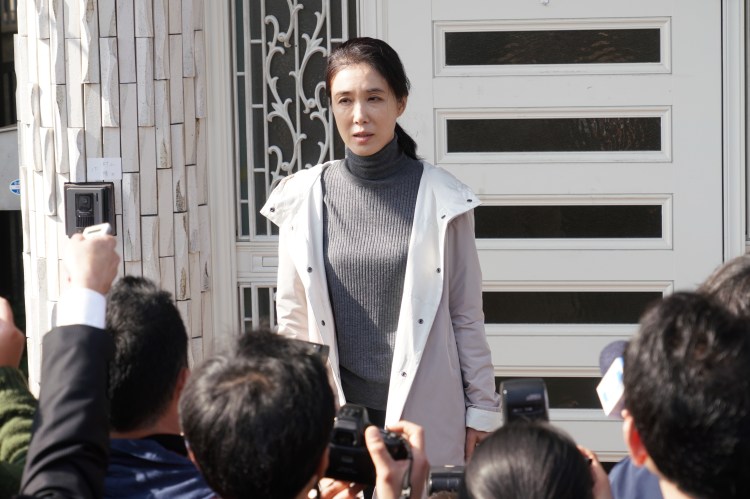
Yoko (Atsuko Maeda), a 20-something TV “reporter” for a variety show, is an intensely anxious young woman. In her postcards home to her firefighter boyfriend, she tells him that she feels “safe” now that they’ve arrived in a big, modern city, but, somewhat ironically, asks him to try and stay away from dangerous places. Currently shooting in Uzbekistan, she finds herself doubly isolated – both because she is a lone woman travelling with an all male crew, and because she is the star and therefore not included as a part of their team. Though they call her a “reporter”, it’s clear that the temperamental, insensitive director Yoshioka (Shota Sometani) does not value her editorial opinion and sees Yoko more or less as a kind of prop.

When we first meet her, Yoko is being forced to deliver a direct to camera speech from the middle of a “fake lake” which, as she explains, is more like a big puddle created by accident during a Soviet-era irrigation project that didn’t quite go to plan. During the course of the filming, we watch her effortlessly switch between the super “kawaii’ presenter who has to pretend the undercooked food she’s just been handed (that will probably make her ill) is the best meal she’s ever tasted, and the dejected young woman growing ever more resentful about her corrupted authenticity. Nervous and under-confident, she finds herself bullied by the demanding director, feeling as if she’s obliged to put up with whatever he asks her to do even if it compromises her safety.

Later, at the theme park, the owner of the ride Yoko is supposed to “enjoy” expresses concern, firstly claiming that it’s not suitable for women, and then apparently mistaking Yoko for a child. He doesn’t clarify if there’s actually a safety issue, that the ride is calibrated for a certain size and weight and might be dangerous for a slight woman as opposed to a beefy man, but in any case Yoko is made to ride it three times in quick succession. Akin to something they put astronauts and fighter pilots in to prepare them for coping with G-force fluctuation, it is not particularly fun but still Yoko is obliged to giggle like a giddy school girl every time before finally collapsing as if she’s about to go into nervous shock. A few moments later, however, she stands in front of the camera to give another cheerful speech about just how much fun she’s having.

Yet we also see her attempt to fight back against her sense of anxious powerlessness by actively asserting her independence. She leaves her hotel and takes a bus, a complicated affair when she doesn’t speak the language or understand where she’s going, visiting a local bazaar where she attracts not a little attention, some of the saleswomen even attempting to physically grab her in order to sell their wares. She feels the male gaze constantly upon her and though you’ll rarely find a woman who says that skirting round groups of men in darkened alleyways doesn’t make her nervous, there is something about the unfamiliarity of the environment which has Yoko on edge. Men peek in through the windows of the van where she changes costumes to make it look like they were in Uzbekistan longer than they were, and like the ride owner, a fisherman they’d enlisted to help them catch a giant fish grows progressively more irritated, claiming that the fish aren’t coming because they don’t like a woman’s smell.

Exploring the town, Yoko’s mind quietens only when she begins to hear music pouring out of a local opera house. She wanders inside and sits down, envisioning herself on stage performing Ai no Sanka, a Japanese rendering of Edith Piaf’s Hymne à l’amour, but her reverie is cruelly interrupted by a security guard who sends her anxiously reeling away. Another encounter with authority provokes a similar reaction when she’s stopped for filming in a prohibited area but instead of calmly presenting the camera, she panics and runs away. As a sympathetic detective later tells her, if you run from the police they have to chase you, it’s the law. The detective is a little offended. Why was she so afraid of Uzbek policemen? Did they seem excessively mean, what does she know about Uzbeks anyway? If only she’d tried to listen to what they were saying, all of this could have been avoided.

The detective, echoed through sympathetic translator Temur (Adiz Rajabov), avows that if we don’t talk then we’ll never understand each other. Temur became a translator after hearing about the Japanese prisoners of war who built the theatre in which Yoko heard the music, painstakingly crafting rooms dedicated to six areas of a country which had been their enemy. Moved by their generosity, he learned Japanese to give something back. Identifying herself with a captive goat she longed to free from constraint and isolation, Yoko gains confidence from his words. She confesses that she’s preparing to follow her dream of becoming a singer, but worries that she lacks the emotional authenticity required to make the song resonate. Through her cross-cultural adventure, brush with the law, and a personal crisis back home, Yoko begins to realise that the world isn’t such a scary place after all. Yoko sings the song of love, less for the uncommunicative boyfriend she unconvincingly claimed it was her hope to marry, than for herself and for the world, now as open as her heart in the limitless vistas of the Uzbek mountains.


To the Ends of the Earth was screened as part of the 2019 BFI London Film Festival.

Original trailer (English subtitles)

Ai no Sanka as performed by Hibari Misora

Öndög (恐龙蛋, Wang Quan’an, 2019)

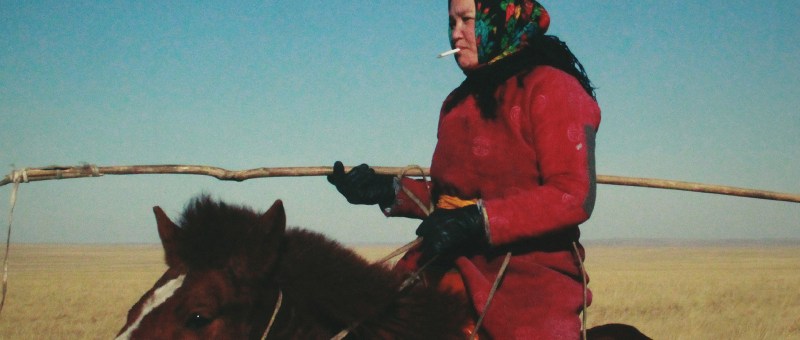
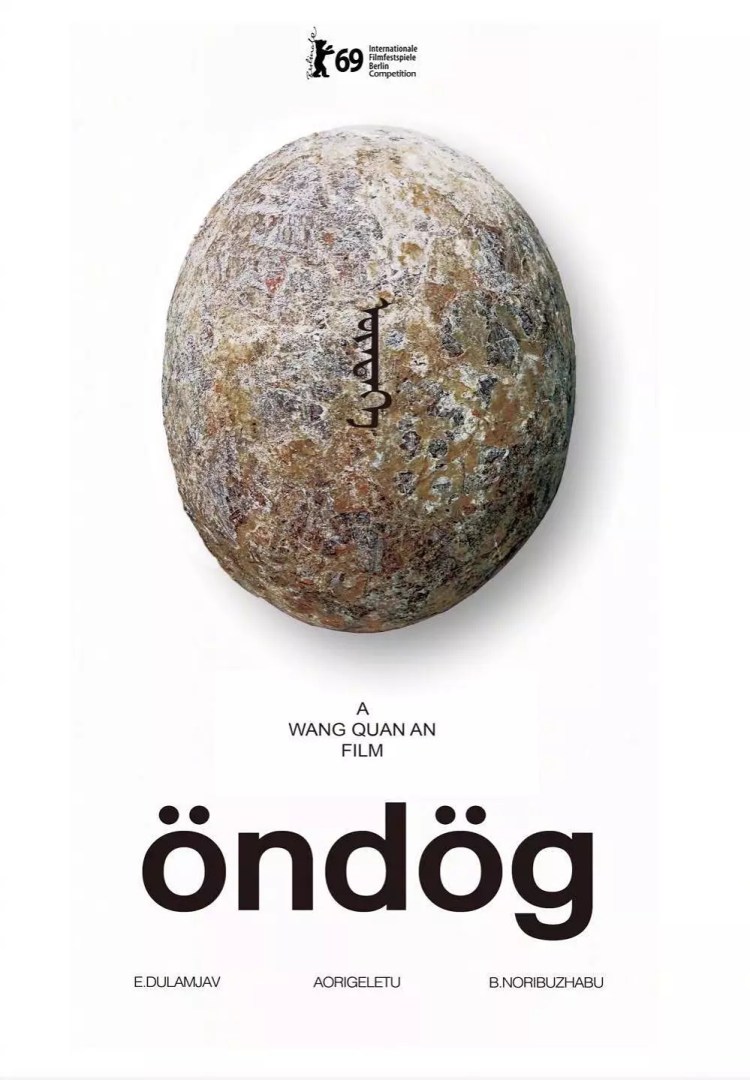
Öndög posterLife and death lie side by side in Wang Quan’an’s existential drama Öndög (恐龙蛋). Taking its name from that of a fossilised dinosaur egg, Wang’s Mongolian odyssey locates itself in a kind of perpetual, unchanging dreamspace where nothing is quite as it first seems. We think we’re here to solve a mystery, a unexpected death evidenced by an abandoned body, but what we witness is a rebirth, a woman returning to life after wilful isolation not weakened by love but perhaps fulfilled by it.

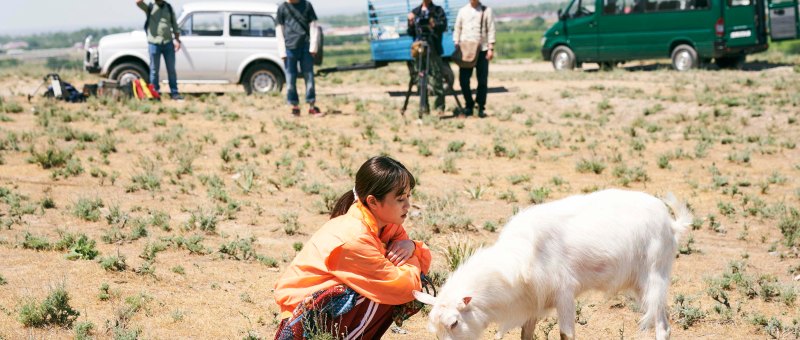
Wang opens with a lengthy sequence of two men driving through the desert and telling tales of huntsmen, who they say must hunt by instinct because the human eye is not as good a guide as good old fashioned intuition. You might think you see a wolf in the distance, but draw closer and it’s just a big grey dog. When the car’s lights illuminate a fallen body, one might initially think it to be one of the horses just seen rushing past but is in fact that of a young woman, naked and abandoned to the desert. As someone later puts it, if no one had found her she would have been returned to the earth, grass would grow over her, sheep would eat the grass, and men would eat the sheep. Now that the body has been discovered, however, it’s a problem for the local police, not exactly used to murder in the middle of the desert. Because they don’t have the proper resources and have to call for backup, they leave a young rookie (the only member of the team with no wife and family) to guard the body overnight, recruiting a local herdswoman to guard him.

The police, apparently, would rather have had a male herdsman but there aren’t any, so this middle-aged, camel riding, rifle toting, and almost totally self sufficient woman will have to do because she’s all there is. Known as the Dinosaur, the woman is perhaps the last of her kind, but acts with an almost maternal warmth towards the inexperienced policeman, reminding him to pull the flaps down on his hat to keep his ears warm, but also making fun of his obvious distress at being left alone (well, except for the wolves) in the desert with a dead body.

Later she returns and teaches him something else with that dead body still in the background. She asks him if he’s ever been in love. He says he hasn’t, too nervous. She tells him what he needs to do is forget that he’s a human, pretend to be a wolf, stare at her as if you want to gobble her up. Truth be told, it’s slightly dangerous advice, even if she later adds that he needs to stare in a loving way after he complains that he doesn’t want his potential love interest to be afraid of him, but soon enough a belly full of liquor to ward off the cold and an animal pelt seem to have done the trick and solved two problems to mutual satisfaction (in one sense at least).

The kid tries out his new found animal magnetism on the pretty intern from the city but remains somewhat nervous and permanently between the corpse and the killer while his boss serenades his crush outside. The woman died because she rejected a man who wanted her on the grounds she loved someone else. To counter that, the older policeman tells his own sad story, that he discovered his wife in fact married him on the rebound. The herdswoman, meanwhile, muses on her strange relationship with a motorbike-riding male friend, apparently a former lover from whom she separated after losing two children they conceived together. He would like to try again, she remains unconvinced despite his urgings that she needs to get herself a man and settle down. Though largely self-sufficient, she calls on him twice – first for death (butchering a sheep to feed the rookie policeman), and then for life (birthing a reluctant calf). He gives to her the Öndög of the title, reminding her that the Americans found the first dinosaur skeletons here in Mongolia, and so in a sense they are all descendants of dinosaurs, and will be succeeded by something else.

The extinct egg nevertheless carries life, in a spiritual sense at least, a perfect embodiment of beginning and end or, perhaps, frozen potential. Maybe the dinosaurs won’t die out after all, or at least, not just yet. From death comes life, and from life death. Set against the dreamlike eternity of the desert night sky, Öndög is the story of a woman hunting by instinct, finding fresh hope in new possibility and old love in an otherwise desolate landscape.


Öndög was screened as part of the 2019 BFI London Film Festival.

Festival trailer (dialogue free)

Office (華麗上班族, Johnnie To, 2015)

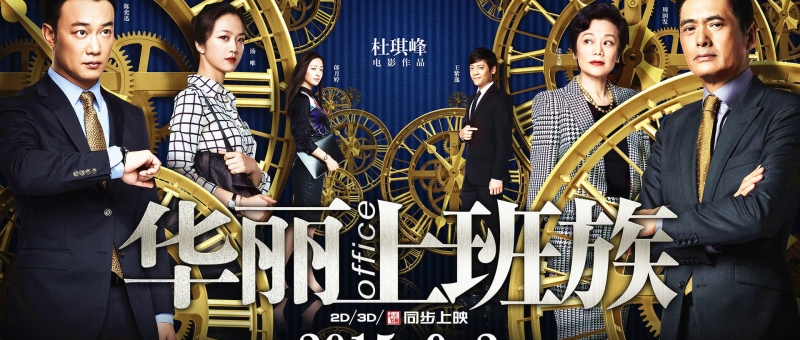
Johnnie To office poster 1Can love and capitalism walk hand in hand? Perhaps not, at least in Johnnie To’s beautifully choreographed musical exploration of high stakes finance and moral bankruptcy, Office (華麗上班族). Adapted from Sylvia Chang’s stage play, Office situates itself on the edge of an abyss as the 2008 financial crisis edges its way towards Hong Kong while enterprising businessmen try to figure out how to ride the waves even if that means standing on someone else’s shoulders as they sink deeper into the moral morass that is the modern economy.

Top Hong Kong trading company Jones & Sunn is about to go public. CEO Winnie Chang (Sylvia Chang) has long been running the show for her boss and lover, Chairman Ho (Chow Yun-fat), who has promised her a sizeable dividend once the floatation is complete. Meanwhile, two new interns have just joined the company, eager to make their marks in the corporate world and ensure they survive their three month probation. Bright-eyed and bushy-tailed Li Xiang (Wang Ziyi), “Lee like Ang Lee, Xiang like dream”, just wants to work hard and get rich so he can live a nice life, while his colleague Kat Ho (Lang Yueting) has just returned from studying economics at Harvard and appears to be slumming it in a lowly internship while (unconvincingly) pretending to be from a humble background. The funny thing is no one seems to pick up on the fact Kat has the same surname as the company’s owner, or they might have figured out she’s the boss’ daughter either forced to learn the trade from the ground up or working as a spy among the regular employees. In any case, Li Xiang is smitten.

Love, it seems, is the destabilising force at the centre of this great machine. CEO Chang, an all powerful woman in a male dominated industry, rules the office with a will of iron but allows herself to be manipulated by Ho with whom she has been having a longstanding affair. Ho has a wife in a coma, but neither of the pair object to the office gossip which brands Chang as “Mrs. Ho”, seeing it only as cutely romantic rather than a slight on Chang’s very real authority. Meanwhile, lonely in Ho’s lack of serious commitment, Chang has also been sleeping with her favourite underling, the feted David (Eason Chan), who in turn is getting fed up with feeling like a spare part who’s hit the peak of his career. Unbeknownst to Chang who may have taken her all-seeing eye off the ball, David has started playing with fire in gambling with company money and losing badly. As a counter measure, he’s begun romancing lovelorn accountant Sophie (Tang Wei), who unlike Chang, is still facing the work/home dilemma in that her fiancé back on the Mainland is pressuring her to give up work and settle down.

Li Xiang is very keen on following his “dreams” which in the beginning are charmingly naive – he wants a nice life for himself and the ability to pay off his friends’ debts (seemingly for entirely altruistic reasons, not as an excuse to show off). Slowly, however, his new world begins to corrupt him. He’s irritated that he’s not allowed to ride the executive elevator and badly wants in, but is still green enough to chivalrously cover up for Kat’s mistakes, while Kat is so clueless that she forgets turning up to work in designer outfits and in a chauffeur driven car is going to blow her cover. Li Xiang sees through her, but only to the nice part – it never really occurs to him she’s a mole or planning to betray Mrs. Chang who is kind of her step-mother. Chang isn’t blind to office politics. She sees Li Xiang take the blame for Kat and even likes him for it. She also likes his “originality” and plans to take him under her wing for her new expansionist plans but finds herself once again blindsided by all the difficult romantic drama bubbling under the surface of coldhearted capitalism.

David and Sophie decide they want to start a “love revolution”, but David has already gone to a dark place and his romantic confession is immediately followed by a manipulative request to get Sophie to help him with his nefarious plans. Meanwhile, Li Xiang’s gradual descent into corporatism begins to sour Kat who’d taken a liking to him because he wasn’t like everyone else. They didn’t mean to do it, but they’ve betrayed themselves and others in their relentless pursuit of conventional success. Drunken salarymen at a local bar ask themselves what all of this is for when their kids don’t recognise them and they barely recognise themselves, yet no one quite has the guts to get off the corporate train and go do something else.

In To’s elaborate set design, no one is ever truly able to leave the office. An elegant construction of neon and steel, the abstract theatricality of To’s artificial universe only underlines its essential meaninglessness – something the Office’s denizens eventually come to understand whether they choose to stay or not. As Chang quips, smart guys control money and stupid ones are controlled by it, but she herself is wise enough to know when the game is up and it’s time to move on. Did love destroy the system or did the system destroy love? Beautiful melodies telling us terrible things, To’s anti-capitalist musical crushes its earnest heroes under the wheel of progress while they dance blithely all the way over the edge.


Office screens in Chicago on Oct. 5 as part of Asian Pop-Up Cinema.

Original trailer (English subtitles)
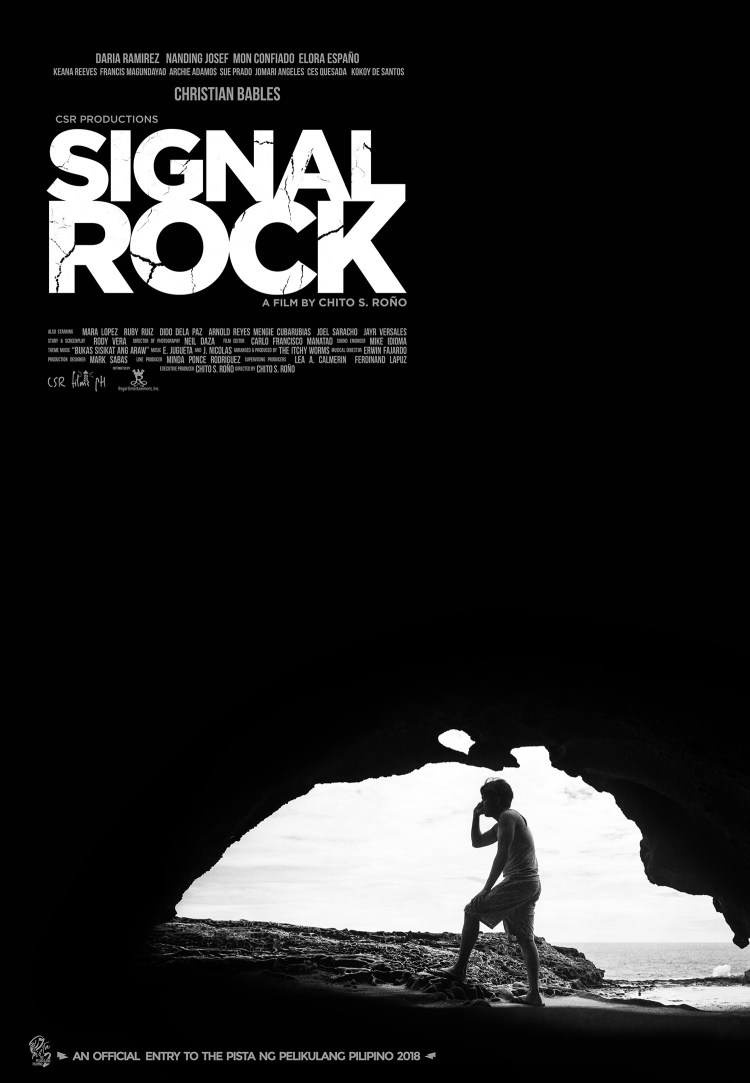
Signal Rock (Chito S. Roño, 2018)

kinopoisk.ru“Family is family, I can’t just say no” a young woman tells her boyfriend in response to his angry outburst on discovering that, like all the young women round these parts, she’s being dispatched to another part of the country to work in a bar. Inspired by true events in the ‘90s, Chito S. Roño’s Signal Rock situates itself in an idyllic fishing community left behind by the modern world like a lonely rock pool after the tide has pulled out. A microcosm of the nation itself, the island has become used to its transitory status as a conduit between two worlds, dependent on those who leave for its survival while the young men rendered incongruously obsolete have little more to do than battle their feelings of resentment and powerlessness.

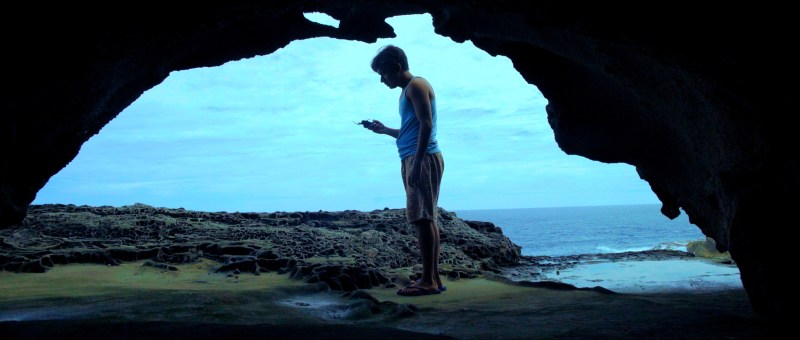
Our hero, Intoy (Christian Bables), is the youngest son of the Abakan family, charged like so many young men with responsibility over technical things – in this case, maintaining the mobile phone which is the only point of contact that they have with oldest daughter Vicky who is supporting them all while working overseas in Finland. Remote as it is, the only place you can get a signal on the island is by climbing to the top of a rocky outcrop so communication has to be carefully planned in advance. This becomes a particular problem when Intoy discovers that the reason the money from Vicky hasn’t been coming through is that her relationship with a Finnish man with whom she has a small daughter is falling apart because he is both abusive and adulterous. As her daughter Sofia was born in Finland, Vicky fears that her boyfriend will try to seize custody and prevent her returning home to her family. Intoy, a fiercely protective brother, is not about to let that happen and sets about mobilising the community to hatch a plan to ensure Vicky and Sofia come home safely.

Despite Intoy’s protective instincts, the rest of the family’s relationship with Vicky is ambivalent. Oldest son Joaquin (Arnold Reyes), one of many resentful middle-aged men left on the island with not much to do, endlessly complains about the lack of ready money from his sister which he claims he needs to buy a motorbike in order to work. Joaquin also resents the shame of Vicky’s out of wedlock pregnancy, while the parents are still a little put out about the financial sacrifices they had to make in order for Vicky to achieve her “dream” of going abroad.

In order to sell the fantasy that Vicky comes from a wealthy family in the Philippines which is perfectly well equipped to support herself and her daughter, the Abakans are forced to confront their longstanding family issues. Intoy’s parents have been estranged for some time with his father technically living in a shed outside the main house, apparently loathed by his wife who claims the youngest two children are a result of marital rape. Another product of the patriarchal society, Intoy’s parents apparently eloped at a young age so that his mother could escape a marriage arranged by her father, only for the relationship to sour when Intoy’s dad lost his job at an American-run factory causing his wife to become disillusioned with his ordinariness.

Little seems to have changed in the last 30 years in that the lives of women are still largely dictated by the whims of their fathers. Vicky may have made a free choice to go abroad, but seeing as work is easier to come by for women, it is the norm for girls of the island to be sent away while the boys remain home alone. While dealing with his sister’s plight, Intoy is also facing the inevitable heartbreak of losing his girlfriend Rachel whose father has arranged for her to work in a bar in the city. As Intoy points out, from the parents’ point of view bar work is a pathway to finding a rich foreign husband – like Gina, another young woman from the village, who is returning home to celebrate her marriage to an elderly German (official now that his divorce has come through). Hardly pausing at the dockside, Gina introduces her former lover as a “cousin” before whispering in his ear that her feelings haven’t changed and she hopes to bring him to Germany for a better life after the old man snuffs it.

Intoy makes a kind of living on the island running errands for older people and acting as an MC during village celebrations, but as there is no real work round here and all the girls are gone, the young men largely spend their time playing basketball and getting into fights. They resent being forced to live off their sisters and seeing the women they love promised to other men, but have no other option than to make uneasy peace with their lack of possibilities. Intoy battles against his baser emotions, remaining kind and cheerful as he convinces his friends and neighbours to help him forge documents that imply his sister owns property while cosying up to the local mayor who hopes to hang on to power at the next election by convincing his wife to stand as a candidate.

Intoy alone is desperate to preserve the integrity of his family, even when spread across continents, standing out on Signal Rock as a kind of beacon left behind solely to convey information from one point to another. Having helped his sister, however, he discovers the depths of her resentment in her embarrassment at the idea of returning home after receiving the help of so many people. He loses his temper, unable to understand his sister’s rejection of everything he has worked so to protect at great cost to himself. Even so, Intoy manages to maintain his cheerfulness and desire to help others, sinking back into island life with his customary stoicism even if mildly troubled by a bargain he may have committed to without fully comprehending its implications. An ambivalent depiction of idyllic island life built on the back of female exploitation and entrenched patriarchy, Signal Rock nevertheless finds finds hope in community spirit and in its hero’s essential goodness.


Signal Rock screens in Chicago on Oct. 3 as part of the ninth season of Asian Pop-Up Cinema where actor Christian Bables will be present for an introduction and Q&A.

Original trailer (English subtitles)
Bento Harassment (今日も嫌がらせ弁当, Renpei Tsukamoto, 2019)

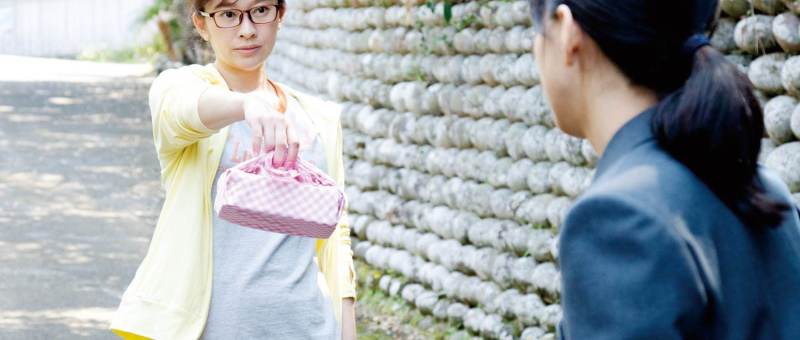
Bento harrassment posterChildhood’s a funny thing. Obviously lacking life experience and used to being the centre of someone’s universe, children can be curiously self-centred, little knowing the hard work their parents put in to try and make them happy until they suddenly realise years later that their mothers must have toiled through the night just to finish that costume for fancy dress that they didn’t really want to wear. Fed up with her teenage daughter’s sullen indifference, the heroine of Bento Harassment (今日も嫌がらせ弁当, Kyo mo Iyagarase Bento) comes up with an ingenious solution – increasingly elaborate lunchboxes designed to vent her frustration in a way that’s impossible for her daughter to ignore.

12 years previously Kaori (Ryoko Shinohara) was blissfully happy with her two little daughters, Wakaba (Rena Matsui) and Futaba (Kyoko Yoshine), but then her husband was killed in an accident and her life was turned upside down. Now she lives alone with her youngest daughter Futaba who has entered something of a rebellious phase, never directly talking to her mother but communicating through pithy, passive aggressive texts. In a bid to get her attention, Kaori decides to play her at her own game – by becoming so annoying that she’s impossible to ignore. From the day that Futaba enters high school she commits herself to making one “annoying” bento every day, eventually adding a message or two into the mix. Much to Futaba’s chagrin, her mother’s bento becomes a cause of daily excitement among her school friends who can’t wait to see how her mother has chosen to troll her on this particular day.

Perhaps tellingly, Kaori and her daughters live on a small island, Hachijojima, which is technically classed as “Tokyo” though in another sense almost as far from the bustling metropolis as it’s possible to get. There are no trains, or shopping malls, or convenience stores, just cows and wholesome wisdom. Caught between one thing and another, Futaba quits her after school athletics club to sit in a field and write angsty poetry about how she’s all alone in the universe. She doesn’t understand why her mum’s so extra and is confused by her attraction to a childhood friend (Kanta Sato) who has now become buff after developing an obsession with taiko drumming. Beginning to figure out why her daughter’s so moody lately, Kaori doubles down on the annoying bento plan but tries to put a little guidance in there too to push the indecisive Futaba towards making concrete decisions about her future.

Unlike the typically self-sacrificing mothers of “hahamono”, Kaori has her spiky side and never particularly looks for thanks or recognition from her daughters only basic civility. She works two jobs (one in a bento shop and another in a pub) and still makes time to devote herself to the petty art of annoying bento which she also posts online on a blog which becomes an instant hit with similarly stressed out parents looking for a little innocent revenge. Through the blog she finds herself bonding with Shunsuke (Ryuta Sato), a widowed father of a five-year-old boy who is struggling to perfect the art of bento though his aim is less revenge than trying to bond with his son who obviously misses his mum. Yet even “annoying” bento comes from a fundamental place of love – after all, you don’t spend all night cooking to send a passive aggressive message to someone you don’t like. Rising to the challenge, Futaba refuses to admit defeat and makes a point of eating all of the annoying bento without a word of complaint, allowing a kind of communication to arise between herself and her extremely patient mother.

Seeing all her dreams crushed on one extremely bad day, however, makes Futaba lose faith in her mother’s gentle wisdom. Kaori tries to convince her that nothing’s ever really “wasted” because even when things don’t work out the way you hoped they still teach you something else but that’s a hard lesson to learn when you’re young and unused to disappointment. Nevertheless, thanks to her mother’s relentless trolling and some careful words from her sister, she comes to realise just how much her mother has sacrificed on her behalf and understand her mother’s love. A warmhearted tale of mother daughter bonding and an ode to persevering through life’s various difficulties, Bento Harassment is a wholesome treat and inspirational tribute to living life without regrets.


Bento Harassment screens in Chicago on Sept. 27 as part of the ninth season of Asian Pop-Up Cinema.

Original trailer (English subtitles)
London East Asia Film Festival Announces Full Programme for 2019

Exit still 1The London East Asia Film Festival returns for its fourth edition on 24th October with a screening of Korean action drama Exit. This year the festival will host a special actor focus dedicated to Hong Kong star Aaron Kwok, as well as showcasing two films from North Korea, and paying tribute to the classic samurai movie.

Opening 

Exit banner

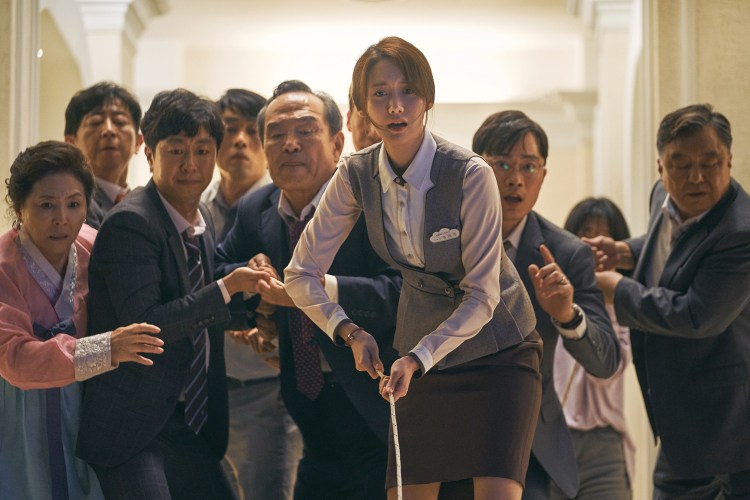
  • Exit – an unemployed rock climbing enthusiast finds himself in his element when his family is trapped by a mysterious white mist in a high rise restaurant he booked for his mother’s 70th birthday only because an old flame works there. Director Lee Sang-geun will be present for a Q&A.

China

The Crossing Banner

  • The Wild Goose Lake – Black Coal, Thin Ice’s Diao Yinan returns with another neo noir in which a smalltime mob boss tries to survive after he kills a policeman by mistake.
  • Balloon – Tibetan-language drama from Pema Tseden (Jinpa) following a sheep farming family.
  • Send me to the Clouds – a young woman diagnosed with ovarian cancer ends up writing a biography of an entrepreneur’s father and embarking on an existential journey.
  • Summer of Changsha – directorial debut from actor Zu Feng in which he also stars as a policeman investigating a possible murder after a severed arm is found in a river.
  • The Crossing – a teenage girl faces differing kinds of crossings as she finds herself embroiled in a world of crime smuggling phones across the Hong Kong/Shenzhen border. Review.

Hong Kong

Still human 1

  • Europe Raiders – third in the “Raiders” series in which two bounty hunters go on a search for the “Hand of God”.
  • G Affairs – gritty social drama in which a severed head exposes the unexpected connections between a disparate group of people. Q&A with Director Lee Cheuk Pan
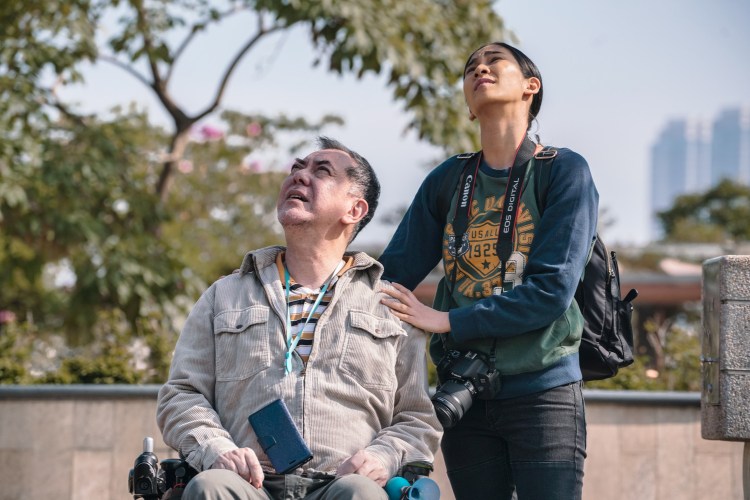
  • Still Human – touching drama in which a grumpy old man eventually bonds with his Filipina carer. Review
  • Three Husbands – latest from Fruit Chan in which a young woman lives a life at sea with her three husbands.
  • After This Our Exile – Aaron Kwok stars in Patrick Tam’s drama as a dejected husband and father who finds himself alone with his young son after his wife finally manages to leave.
  • Cold War – Aaron Kwok stars as an earnest ICAC agent trying to secure the release of kidnapped policemen. Plus talk with Aaron Kwok
  • Port of Call – Aaron Kwok stars as an eccentric detective investigating the death of a young girl in Philip Yung’s melancholy thriller. Review.
  • I’m Livin’ It – Aaron Kwok stars as a former finance worker rendered homeless. Closing gala with Kwok in attendance. 
  • Butterfly – a closeted lesbian married with a child falls for a younger woman in Mak Yan Yan’s sensitive drama.
  • Green Snake – Tsui Hark’s take on the classic Lady White Snake legend starring Maggie Cheung and Joey Wong.

Indonesia 

The Science of Fictions still 1

Japan

A girl missing still 1

  • A Girl Missing – Koji Fukada reunites with Harmonium’s Mariko Tsutsui who stars as a carer implicated in a crime.
  • To the Ends of the Earth – Kiyoshi Kurosawa reunites with recent muse Atsuko Maeda as a lost TV presenter goes searching for herself while filming in Uzbekistan. Review.
  • Erica 38 – a middle-aged woman seeks chases illusionary success after getting involved with large scale fraud. Review.
  • The Woman Who Keeps a Murderer – Horror from Ring’s Hideo Nakata in which a traumatised woman’s world gradually collapses.
  • Under Your Bed – stalker drama from Mari Asato starring Kengo Kora as a lonely man obsessed with a former uni classmate now married with a child.

Korea

Gangster Devil Sop still 1

  • Long Live the King – comedy in which a mob boss aims to become president to win the heart of a woman who constantly rejects him and also save his friend who has been sentenced to death!
  • Another Child – teenage girls bond in unexpected friendship when they find out their parents are having an affair. Review.
  • Divine Fury – An MMA fighter battles his demons while teaming up with an exorcist priest! Review.
  • Money – a cynical stockbroker gets in over his head with an unscrupulous fixer. Review. Q&A with Director Park Noo-ri & Actor Ryu Jun Yeol.
  • Ms Purple – Drama set in LA’s Koreatown in which Korean-American siblings attempt to reconnect in their father’s final days.
  • The House of Us – Yoon Ga-eun’s The World of Us followup in which a young girl trying to get her parents to patch things up becomes a big sister figure to two other kids. Review.
  • The Battle: Roar to Victory – drama starring Yoo Hai-jin and Ryu Jun-yeol in which Resistance fighters in 1920 attempt to get funds to the Independence Movement in exile in Shanghai.
  • The House of Hummingbird – a young girl’s perspective widens when she connects with her enigmatic Chinese teacher. Review.
  • Tune in for Love – Romantic drama from Jung Ji-woo set in the ’90s following a baker who likes to call in to a radio requests show. Q&A with Actor Jung Hae-in
  • Inseparable Bros – two best friends, one who has a physical disability and the other learning difficulties, meet a woman who encourages them out into the world.
  • Juror 8 – comedy drama inspired by Korea’s first jury trial in which a strange young man refuses to abide by the majority opinion. Review.
  • The Gangster, The Cop, The Devil – Ma Dong-seok stars as a gangster attacked by serial stabber who teams up with a rogue cop to trap a serial killer. Review.
  • My Name is Kim Bok-dong – documentary exploring the life of “comfort woman” Kim Bok-dong who passed away last year after decades of trying to gain acknowledgement for women like herself forced into sexual slavery by the Japanese during the Second World War.
  • Rivercide: The Secret Six – documentary focussing on the outcome of President Lee’s Grand Canal project.
  • The Culprit – a man’s wife is murdered and circumstantial evidence suggests his best friend did it. He teams up with his friend’s wife to search for the truth!

North Korea

The Story of Our Home

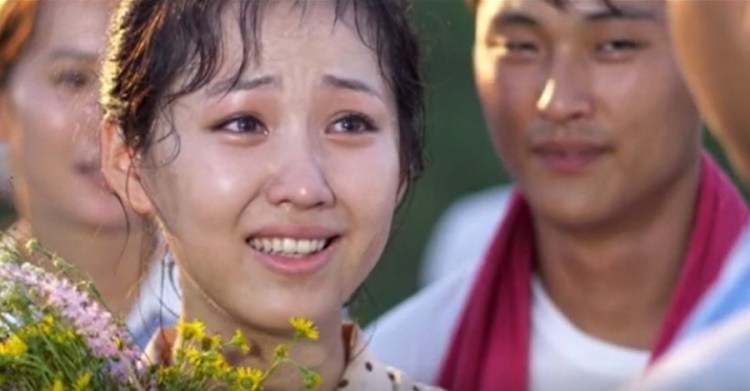
  • The Story of Our Home – propaganda drama about a teenage girl who adopts a series of orphans.
  • A Broad Bellflower – propaganda romance in which a man dreams of moving to the city while his wife wants to improve their town.

Philippines

Rainbow Sunset

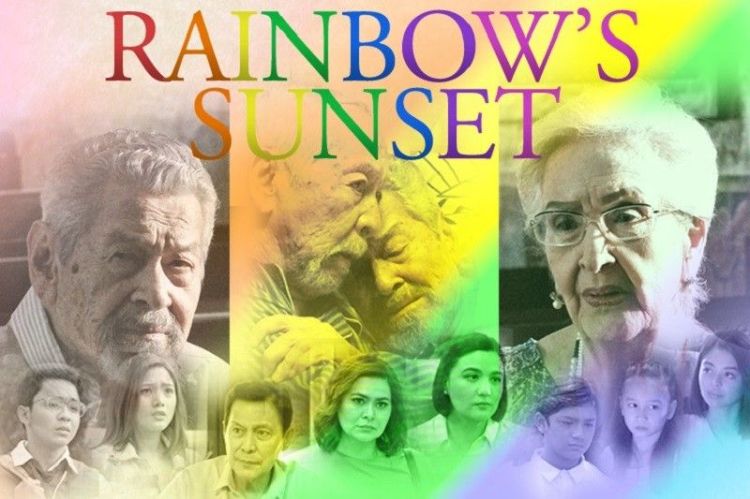
  • Rainbow’s Sunset – drama in which an 84-year-old man tells his family he is gay because he wants to care for his longterm lover in his final days.

Singapore

Wet season still 1

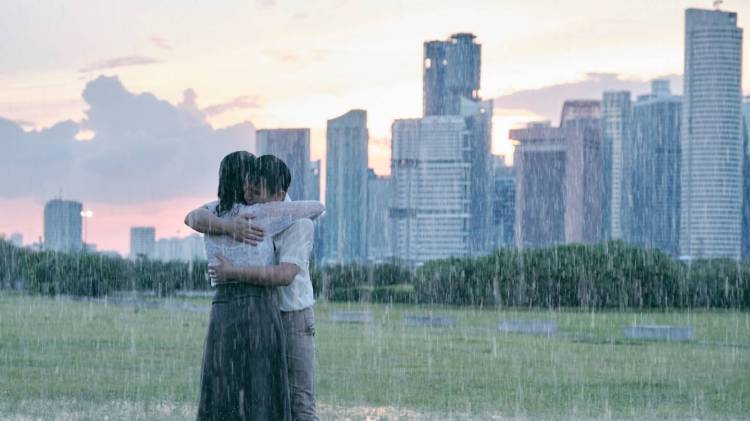
  • Wet Season – Ilo Ilo’s Anthony Chen returns with a monsoon tale in which a Mandarin language teacher is drawn to one of her students. Review.

Taiwan

Nina Wu still 1

  • Cities of Last Things – tripartite story which begins with the protagonist’s suicide and then moves back to examine the events which led to it.
  • Nina Wu – psychological drama from Midi Z in which an actress gets her big break but is forced into uncomfortable situations by a difficult director.
  • Deep Evil – a top plastic surgeon is a prime suspect when a headless corpse is discovered.
  • Heavy Craving – a lunch lady hoping to lose weight strikes up unexpected friendships with a deliveryman and cross-dressing student.
  • Millennium Mambo – Hou Hsiao-Hsien drama starring Shu Qi as a young woman living in turn of the century Taipei.
  • The Tag-Along: The Devil Fish – spin-off to the Tag-Along series inspired by another urban legend in which fishermen notice a human face in their fish as they’re grilling it.

Thailand

The Pool still 1

  • The Pool – A man ends up having to clean a disused pool after a film shoot but falls asleep on an inflatable raft. When he wakes up, he finds that the water level has fallen so low he can no longer climb out. He screams for help, but the only creature to hear him is a crocodile…

Samurai Season

Sword of doom still 1

  • 13 Assassins – Takashi Miike’s remake of the 1963 Eiichi Kudo classic in which 13 assassins go up against a corrupt lord.
  • Harakiri – Kobayashi classic from 1962 starring Tatsuya Nakadai as a ronin taking a principled stand against samurai corruption.
  • Lone Wolf and Cub: Sword of Vengeance – first in the Lone Wolf and Cub series which sees a noble samurai fall from grace and take to the road with his small son in tow. Review.
  • Lone Wolf and Cub: Baby Cart at the River Styx – The second film in the Lone Wolf and Cub cycle in which Ogami is hired to take down a corrupt manager. Review.
  • Sword of Doom – blistering drama from Kichachi Okamoto in which Tatsuya Nakadai stars as an amoral samurai.

The London East Asia Film Festival 2019 runs at various venues in Central London from 24th October to 3rd November. Full details for all the films as well as ticketing links will shortly be available via the official website, and you can keep up with all the latest news by following the festival on Facebook, Twitter, Instagram, and Flickr.