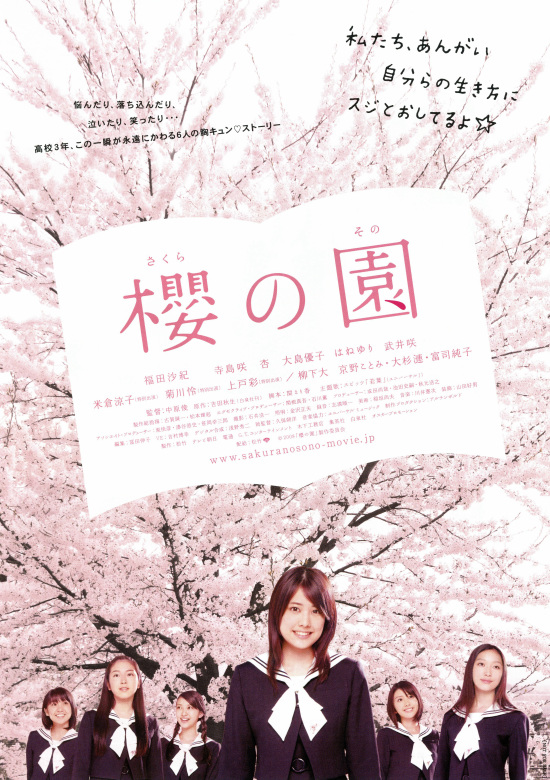
The Cherry Orchard (櫻の園, Shun Nakahara, 1990)

Cherry Orchard 1990 posterChekhov’s The Cherry Orchard is more about the passing of an era and the fates of those who fail to swim the tides of history than it is about transience and the ever-present tragedy of the death of every moment, but still there is a commonality in the symbolism. Shun Nakahara’s The Cherry Orchard (櫻の園, Sakura no Sono) is not an adaptation of Chekhov’s play but of Akimi Yoshida’s popular 1980s shojo manga which centres on a drama group at an all girls high school. Alarm bells may be ringing, but Nakahara sidesteps the usual teen angst drama for a sensitively done coming of age tale as the girls face up to their liminal status and prepare to step forward into their own new era.

The annual production of The Cherry Orchard has become a firm fixture at Oka Academy – even more so this year as it marks an important anniversary for the school. Stage manager Kaori (Miho Miyazawa) has come in extra early to prep for the performance, but also because she’s enjoying a covert assignation with her boyfriend whom she is keen to get rid of before anyone else turns up and catches them at it. Hearing the door, Kaori bundles him out the back way before the show’s director, Yuko (Hiroko Nakajima), who is also playing a maid arrives looking a little different – she’s had a giant perm.

Yuko’s hair is very much against school regulations but she figures they’ll get over it. Fortunately or unfortunately, Yuko’s hairdo is the least of their problems. Another girl who is supposed to be playing a leading role, Noriko (Miho Tsumiki), has been caught smoking and hanging out with delinquents from another school. She and her parents are currently in the headmaster’s office, and everyone is suddenly worried. The girls’ teacher, Ms. Satomi (Mai Okamoto), is going in to bat for them but it sounds like the play might be cancelled at the last-minute just because the strict school board don’t think it appropriate to associate themselves with such a disappointing student.

The drama club acts as a kind of safe space for the girls. Oka Academy is, to judge by the decor and uniforms, a fairly high-class place with strict rules and ideas about the way each of the young ladies should look, feel, and act. Their ages differ, but they’re all getting towards the age when they know whether or not those ideas are necessarily ones they wish to follow. As if to bring out the rigid nature of their school life, The Cherry Orchard is preformed every single year (classic plays get funded more easily than modern drama) but at least, as one commentator puts it, Ms. Satomi’s production is one of the most “refreshing” the school has ever seen, perhaps echoing the new-found freedoms these young women are beginning to explore.

Free they are and free they aren’t as the girls find themselves experiencing the usual teenage confusions but also finding the courage to face them. Yuko’s hair was less about self-expression than it was about catching the attention of a crush – not a boy, but a fellow student, Chiyoko (Yasuyo Shirashima). Chiyoko, by contrast is pre-occupied with her leading role in the play. Last year, in a male role, she excelled but Ranevskaya is out of her comfort zone. Tall and slim, Chiyoko has extreme hangups around her own femininity and would rather have taken any other male role than the female lead.

Yuko keeps her crush to herself but unexpectedly bonds with delinquent student Noriko who has correctly guessed the direction of Yuko’s desires. Sensitively probing the issue, using and then retreating from the “lesbian” label, Noriko draws a partial confession from her classmate but it proves a bittersweet experience. Predictably enough, Noriko’s “delinquency” is foregrounded by her own more certain sexuality. Noriko’s crush on the oblivious Yuko looks set to end in heartbreak, though Nakahara is less interested in the salaciousness of a teenage love triangle than the painfulness of unrequited, unspoken love which leaves Noriko hovering on the sidelines – wiser than the other girls, but paying heavily for it.

Chekhov’s play famously ends with the sound of falling trees, heralding the toppling of an era but with a kind of sadness for the destruction of something beautiful which could not be saved. Nakahara’s film ends with cherry blossoms blowing in through an open window in an empty room. The spectre of endings hangs heavily, neatly echoed by Ms. Satomi’s argument to the promise that the play will go ahead next year with the cry that next year these girls will be gone. This is a precious time filled with fun and friendship in which the drama club affords the opportunity to figure things out away from the otherwise strict and conformist school environment. Nakahara films with sympathetic naturalism, staying mainly within the rehearsal room with brief trips to the roof or empty school corridors capturing these late ‘80s teens for all of their natural exuberance and private sorrows.


Original trailer (no subtitles)

At the Terrace (テラスにて, Kenji Yamauchi, 2016)

At the TerraceEvery keen dramatist knows the most exciting things which happen at a party are always those which occur away from the main action. Lonely cigarette breaks and kitchen conversations give rise to the most unexpected of events as those desperately trying to escape the party atmosphere accidentally let their guard down in their sudden relief. Adapting his own stage play titled Trois Grotesque, Kenji Yamauchi takes this idea to its natural conclusion in At the Terrace (テラスにて, Terrace Nite) setting the entirety of the action on the rear terraced area of an elegant European-style villa shortly after the majority of guests have departed following a business themed dinner party. This farcical comedy of manners neatly sends up the various layers of propriety and the difficulty of maintaining strict social codes amongst a group of intimate strangers, lending a Japanese twist to a well honed European tradition.
Haruko (Kami Hiraiwa), a youngish middle-aged woman has stepped out onto the terrace to check her phone with a degree of privacy but she is shortly joined by a late arrival to the party, Tanoura (Hiroaki Morooka), who lets out a long sad sigh right alongside her. The party’s hostess, Kazumi (Kei Ishibashi), hears his small howl of exasperation and decides to make something of it. Embarking on a strange line of questioning, she gets Tanoura to admit not only to a fondness for the woman who was just on the terrace, but particularly for her shapely white arms. Tanoura fusses and backpedals but is pushed into a corner of defeat with relative ease by his more experienced host. Unfortunately he did not know that Haruko is the wife of a fellow guest – in fact, the guest of honour who has just delivered a speech at the dinner party (which he missed because he was late). Kicking off a late night challenge, Kazumi’s brazen questioning and subsequent decision to announce the results to the group at large proves the catalyst for visible crumbling of the bourgeoisie which is about to take place.

Even though everybody ought to be getting home, the guests linger and the atmosphere becomes increasingly tense and awkward. Insecure hostess Kazumi quickly begins a war with her attractive rival, Haruko, using the bizarre obsession everyone seems to have with her arms as the first round of fire. Haruko counters that she disagrees and thinks Kazumi is the more attractive because of her low cut dress designed to show off her ample bosom. This line of conversation makes the men feel very awkward, especially when asked for their opinion but someone then attempts to move to a higher level by discussing similar themes in the works of Kawabata and Tanizaki, though this flies over the heads of some of the guests prompting a return to the slightly unpleasant atmosphere of the earlier part of the evening.

If Kazumi is attempting to remain the dominant female at her own party, the men have various other concerns mostly bound up with their working relationships. Business and pleasure rarely mix, at least not at parties, and so there’s an immense amount of politeness and de-escalation involved in the way in which they talk to each other. Mr. Soejima (Kenji Iwaya) – Kazumi’s husband, the host, and the owner of this fine villa has organised the party as a networking event at which Haruko’s husband, Taro (Ryuta Furuta), delivered the keynote speech. Another company guest, Masato (Takashi Okabe), is known and not known as he’s recently lost an awful lot of weight thanks to gastric surgery which means no one quite recognises him and despite having been quite a drinker in the past he is now supposed to be avoiding alcohol altogether. While Masato spends most of the evening sitting quietly to the side, Tanoura seems to get dragged into arguments despite his attempts to remain neutral and polite, eventually bursting into tears as he thinks about the horrors of Syria – not a side of him this hard-nosed, business focused gathering is likely to find endearing.

Alcohol flows, secrets are revealed and flirting is embarked upon as pretty much everyone is after Haruko who is dismayed to find her husband either hardly notices or is actively allowing other men to flirt with her to increase his networking potential. The arrival of the Soejima’s son, Teruo, throws another kind of energy into the room as he reveals juicy details about his parents’ marriage and becomes the subject of a few barbed comments from his father. Teruo is young and handsome, becoming something of a mirror for the ways that Haruko has dominated the conversation despite his mother’s best efforts to remain in charge, even matching her in the beauty of his arms. As the evening finally draws to a close sex and death mingle across the crowded terrace filled with onlookers not sure in which direction to cast their gaze.

Yamauchi sticks to his one set conceit but shoots it from various angles to best capture the drama erupting amongst this group of not quite friends. The two women face off against each other while their husbands do the same only with tales of their masculine exploits. No one quite knows how to behave now that they’ve moved away from the business table, who they’re supposed to be and what their proper place is, leading to a dangerous destabilising of the established social order. Haruko, at least, is striking out to prove she’s more than her husband’s wife even if she was made to come to this party against her will and has wanted to go home for ages.

Opting for an appropriately surreal, retro edge, Yamauchi closes with a series of “you have been watching” portraits and the sight of an adorable small furry squirrel captured in the garden to remind you that not everything here is ugly and attempting to misrepresent itself to get the best out of a difficult social situation. Hilarious, if excruciating, At the Terrace neatly sends up the hypocrisy of the bourgeoisie as they lie, deflect, and sometimes spar in order to conform to their expected social roles only to inadvertently destroy them through improper application.


At the Terrace was screened at the Udine Far East Film Festival 2017.

Original trailer (no subtitles)

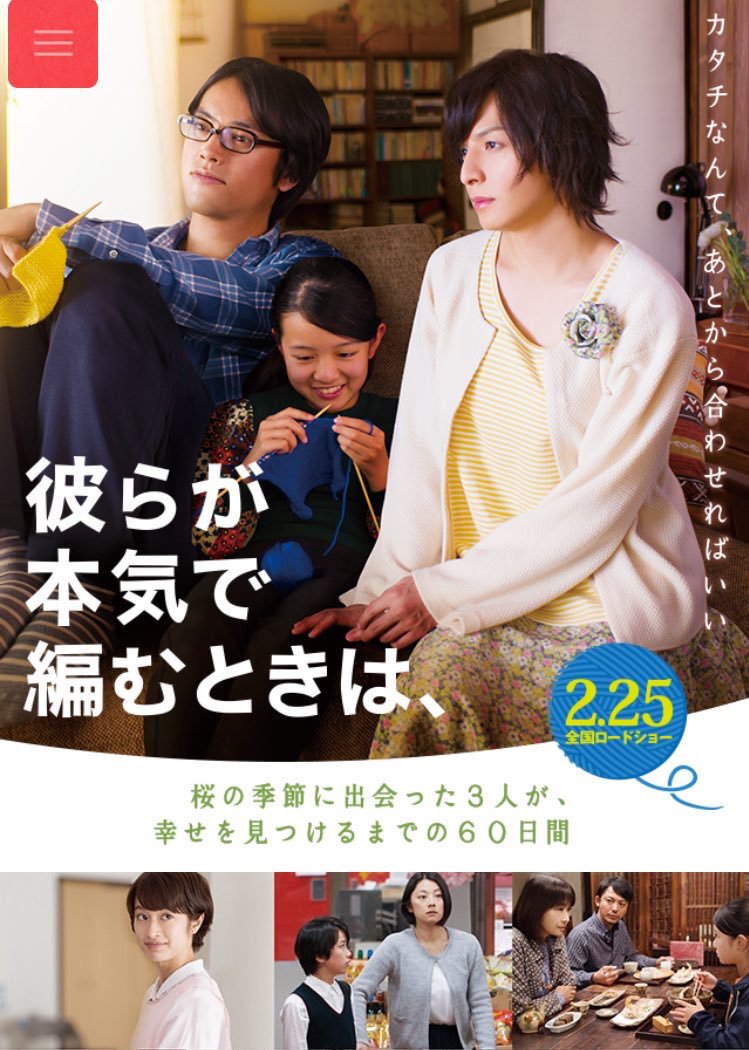
Close-Knit (彼らが本気で編むときは, Naoko Ogigami, 2017)

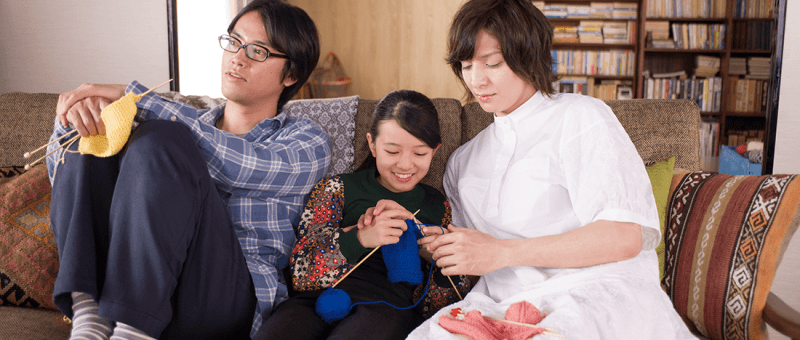
close knit posterWhile studying in the US, director Naoko Ogigami encountered people from all walks of life but on her return to Japan was immediately struck by the invisibility of the LGBT community and particularly that of transgender people. Close-Knit (彼らが本気で編むときは,  Karera ga Honki de Amu Toki wa) is her response to a still prevalent social conservatism which sometimes gives rise to fear, discrimination and prejudice. Moving away from the quirkier sides of her previous work, Ogigami nevertheless opts for a gentle, warm approach to this potentially heavy subject matter, preferring to focus on positivity rather than dwell on suffering.
11 year old Tomo (Rinka Kakihara) is home alone, again. Her mother rolls in late, dead drunk, and promptly flops down onto the futon next to Tomo’s still in her work clothes. A note left the next day explains that Tomo’s mother has quit her job and won’t be coming home for a while. This is not the first time she’s done this and the money she’s left is at least enough for a train ticket to visit uncle Makio (Kenta Kiritani). When Tomo slaps a collection of manga down in front of him at the bookstore where he works, Makio immediately realises what’s going on and is both infuriated with his sister and glad to take his niece in for a while until her mother comes to her senses.

There’s one potential problem. Makio now has a live-in girlfriend only she’s not quite what Tomo might be expecting. On meeting Rinko (Toma Ikuta), Tomo is indeed shocked but is soon won over by Rinko’s warm and loving nature. Rinko is a transgender woman who’s experienced her share of hardships in life but finally found fulfilment in her relationship with Makio though she has a lot of love to give and would dearly love a child of her own.

Used to being left to her own devices, Tomo is a tough and resourceful child but also one with a thick protective shell. Unused to being mothered, Tomo finds Rinko’s attempts to reach out to her difficult to bear, cycling back and forth through a pattern of affection and rejection. Where her mother left her only store bought onigiri (which she has come to hate) and cash, Rinko makes beautiful character bentos complete with octopus frankfurters and adorable panda faces. So touched is Tomo by this gesture that she can’t quite bring herself to eat it and eventually makes herself ill by finally deciding to enjoy it long after it’s past its best.

Nevertheless even if Tomo comes to bond with Rinko, there are still those who don’t approve of her existence. Tomo has a, well, not quite friend at school, Kai, who is somewhat ostracised by the other children who call him “gay” and write homophobic slurs on the classroom blackboard. Tomo, whilst sometimes hanging out with Kai who lives near to her outside of school, refuses to have anything to do with him in class lest she be rendered guilty by association. Growing closer to Rinko, Tomo also comes to an acceptance of and willingness to fight for Kai who has confided in her about his crush on another boy in their class. Kai’s mother (Eiko Koike), however, is not so understanding and so when she catches sight of Tomo in the supermarket with Rinko she offers to save her from the “weirdo” and later bans Kai from hanging out with his only friend in case he somehow catches “weirdness” from their atypical family setup. This attitude of hers eventually has potentially tragic consequences for her young son, left with nothing other than the prospect of maternal and later societal rejection eased only by Tomo’s firm insistence that there’s nothing wrong with him at all.

Unlike Kai’s mother, Rinko’s instantly understood and remained fully supportive of her child even whilst hauled into school for an explanation of why “Rintaro” has been skipping P.E.. Rinko’s mother not only goes out and buys lacy bras for her daughter, but even knits her a pair of fluffy pink breasts so she won’t feel so depressed about not developing in the same way as all the other girls. Tomo’s mother has a lot of problems of her own but many of these stem back to her own upbringing, unintentionally threatening to pass on some of these same qualities to her own daughter as she allows her to feel just as worthless and unloved as her mother did her. Yet, Ogigami’s camera remains resolutely unjudgemental in trying to understand each of these various facets of motherhood from the immense maternal love of Rinko as it finally finds an outlet in Tomo to the far less positive image of Kai’s mother who presumably thinks she’s doing the best for her son in trying to prevent him veering from the norm but only succeeds in making him feel his life is not worth living.

The title of the film, as grandly punned as it is, refers not just to the quickening family bonds among this idealised yet unusual family but also to Rinko’s favourite method of stress relief – knitting. Like the cooking she is often seen providing for the family, Rinko’s knitting is also largely about warmth in making something for a particular person which is tailor made to keep them warm in the cold, but it also works as a multilayered metaphor as she brings people together, binding them tightly with her own wamth and generosity of spirit. Rather than fighting back with angry words (or well aimed dish soap as a provoked Tomo eventually does), Rinko channels her frustrations into her knitting, using them to create something positive rather allowing negativity to overwhelm her. Ogigami’s film seems to want to do the same, arguing for tolerance, understanding, and acceptance as a pathway to a better world even if it’s clear the road is long and we’re not so far along it as we should be.


Close-Knit was screened as part of the Udine Far East Film Festival 2017

There’s also an interesting interview with director Naoko Ogigami and producer Kumi Kobata in the Nikkei Asian Review in which they discuss the casting of actor Toma Ikuta.

Original trailer (English subtitles)

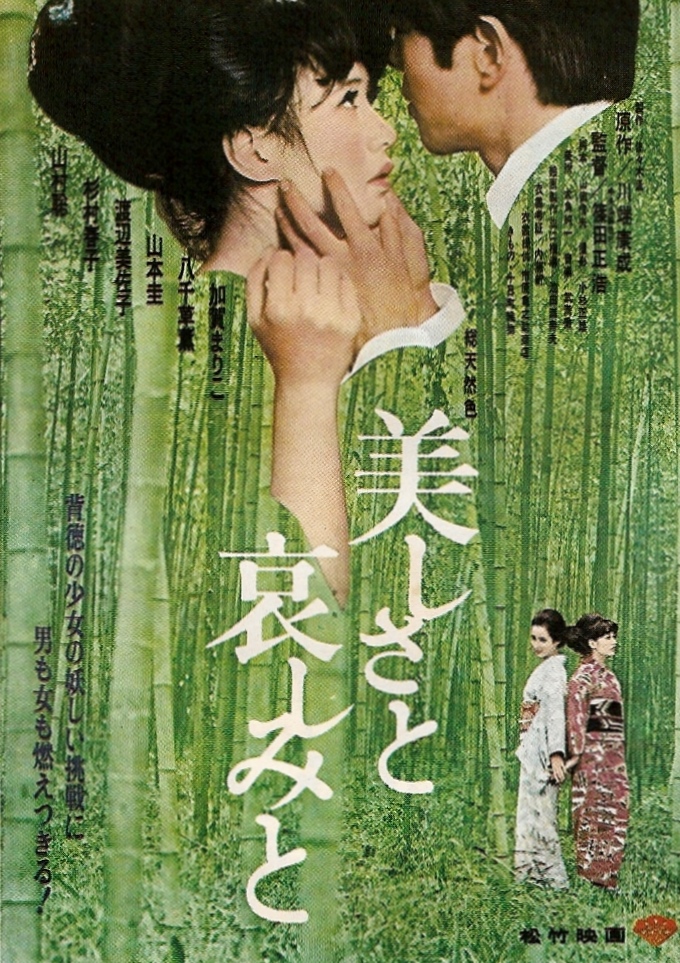
With Beauty and Sorrow (美しさと哀しみと, Masahiro Shinoda, 1965)

with beauty and sorrwMasahiro Shinoda, a consumate stylist, allies himself to Japan’s premier literary impressionist Yasunari Kawabata in an adaptation that the author felt among the best of his works. With Beauty and Sorrow (美しさと哀しみと, Utsukushisa to Kanashimi to), as its title perhaps implies, examines painful stories of love as they become ever more complicated and intertwined throughout the course of a life. The sins of the father are eventually visited on his son, but the interest here is less the fatalism of retribution as the author protagonist might frame it than the power of jealousy and its fiery determination to destroy all in a quest for self possession.
Middle-aged author Oki (So Yamamura) is making a trip to Kyoto in order to hear the New Year bells but whilst there he wants to reconnect with someone very dear to him whom he has not seen for a long time. 15 years previously, Oki, already around 40 and married with a young son, had an ill advised affair with 16 year old Otoko (Kaoru Yachigusa). Oki’s indiscretion was discovered after Otoko fell pregnant and gave birth to an infant who sadly died after just a few months provoking Otoko’s own suicide attempt. Oki turned the traumatic events into a best selling novel which made his name and has not seen Otoko during the intervening years. Now a successful painter, Otoko has remained unmarried, still traumatised by her youthful experiences, and is currently in a relationship with a female student, Keiko (Mariko Kaga).

Keiko, a beautiful though strange young woman, will be the cause of much of the sorrow resulting from Oki’s decision to visit Otoko after all these years. Angry on her lover’s behalf, Keiko takes it upon herself to exact revenge for the wrong which was done to Otoko at such a young age, ignoring her lover’s pleas to leave the situation well alone.

Perhaps surprisingly, Shinoda avoids the temptation to retain Oki’s central viewpoint by attempting to survey the various threads which bind and contain each of the protagonists, locked into a complex system of love, jealously, pain and obsession. Oki sows the seeds of his own downfall in his improper relationship with a teenager over twenty years younger than himself whom he has no intention of marrying seeing as he is already married and even has a child. Little is said about the original affair save for the effect it had both on Otoko and on Oki’s marriage which endures to the present time even though it appears Oki continues to pursue other women outside of the home. Not only does Oki turn his scandalous love life into a best selling novel, but he makes his wife, Fumiko (Misako Watanabe), type it up for him, forcing her to read each and every painful detail of his relations with another woman.

During the writing of the novel, Fumiko begins to become ill, depressed and listless, but not out of suffering or disgust – what she feels is jealousy but of a literary kind. Fumiko laments that Oki has written an entire book about Otoko, but never thought to write one for her. Even if depicted as some kind of harridan or vengeful, shrewish woman, Fumiko wanted to be Oki’s muse and was denied. Otoko, by contrast never wanted anything of the sort and has lived quietly and independently ever since her traumatic teenage love affair with a married, older, artist. Her feelings, complicated as they may be, are the motivation for the actions of her obsessive lover, Keiko, determined on taking “revenge” for pain Otoko is not entirely certain she feels. Keiko’s jealously has been roused by Oki’s return and the possibility that it may reawaken Otoko’s youthful romantic yearnings. Unwilling to surrender her beloved to another, she sets about destroying that which may come between them, perfectly willing to destroy both herself and the woman she claims to love in the process.

Oki is, after all, a novelist and therefore apt to ascribe a kind of narrative to his life which may ignore its more ordinary baseness. His equally sensitive son, Taichiro (Kei Yamamoto), brings up the subject of Princess Kazu and the glass panel and lock of hair which were discovered with her body and muses on whether these belonged to her husband, as is said, or her “true love” as seems to be suggested by the evidence at hand. Loves true and false are played off against each other but the forces at play are less grand romances than petty lusts and obsessions. Keiko wants to own her lover absolutely but her games of revenge cause Otoko only more pain and take her further away from that which she most loves towards the film’s dark and ambiguous conclusion in which the innocent are made to suffer for other people’s transgressions.

Otoko’s suffering is largely ignored by all concerned though it’s clear that the loss of her child is a deep wellspring of pain which has become the dominant force in her life. Misused and abandoned, Otoko has sought only quietness and solitude living independently and without the need for male contact. Keiko, whilst crying out that she hates men and is going to destroy the family of the man who has destroyed her lover, acts only out of selfishness, refusing to see how far her actions are wounding the woman she loves even as she sets out to make a weapon of her beauty and turn it on the male sex.

Shinoda films with his characteristic aesthetics adopting a position of slight distance as his protagonists gaze at reflections of themselves and talk through mirrors yet refuse the kind of introspection which a novelist like Oki would be expected to project. A final moment of high drama is offered in a series of freeze frames, as if the emotions are too big and complex to be understood as a whole but can only be grasped in painful fragments snatched from among the resultant chaos. With Beauty and Sorrow conjures the idea of nobility in romance, enhanced by the inevitability of its failure, but for all of its aesthetic pleasures and enduring sadness this is not the elegant coolness of romantic tragedy but the painful heat of love scorned as it festers and corrupts, spreading nothing other than pollution and decay.


Original trailer (no subtitles, NSFW)

Dead or Alive: Final (Takashi Miike, 2002)

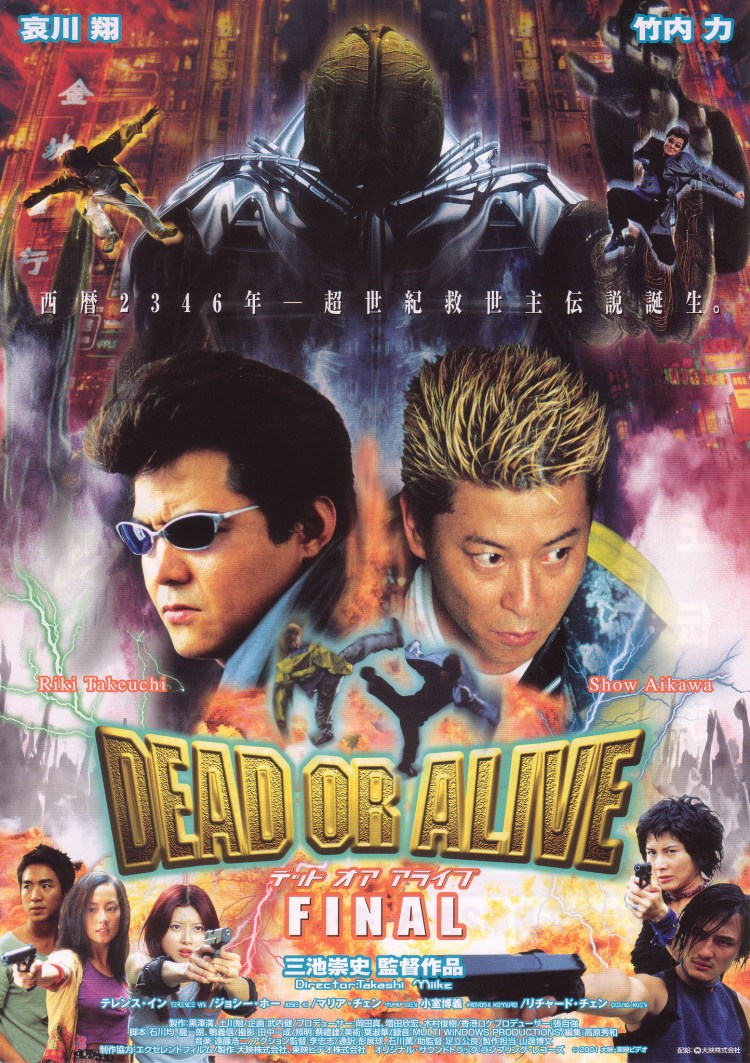
dead_or_alive_final_jap_chirashiThe Dead or Alive Trilogy began in a furious, drug fuelled hymn to violence in which a petty vendetta between the opposing forces of good and evil (mingled and bloody) eventually destroyed the entire world. Dead or Alive 2: Birds was an altogether more contemplative affair in which two orphaned boys rediscover each other as jaded hitmen and decide to put their talents to “good” use by donating the hit money to pay for medicinal drugs for impoverished children around the world. Strange and surreal, Birds moved beyond the first film’s absurd ending for an altogether more abstract approach to universe building but Final pushes the idea to its limit in a cyberpunk infused far future tale of rogue robots and sexual dictatorship.

Yokohama, 2346. A new society is being forged, a new social order has been created. All powerful Mayor Wu (Richard Chen) has decreed that the only true love is gay love and made heterosexuality taboo. Births are strictly controlled to maintain population numbers with contraception ruled mandatory. The heterosexual resistance has gone into hiding in a ruined part of the city, living in a free love commune in which the birth of children is a primary goal. Lead by Fong and his first lady Jun, the resistance aims to liberate the people from the yoke of the crazed dictator and create a better, freer world for the as yet unborn children of the future. Teaming up with a rogue “Replicant”, Ryo, (Sho Aikawa) the gang attempt to further their cause by kidnapping the young son of Wu’s chief of police, Honda (Riki Takeuchi), who later discovers some uncomfortable truths about his own existence.

The use of the world “Replicant” is a pointed one and an overt reference to Final’s key text – Blade Runner, though its intentions amount much more to a pastiche than an examination of the existential questions so central to the seminal cyberpunk classic. Online captions state the action is taking place in Yokohama – an industrial harbour town close to Tokyo, but is in reality a thinly disguised Hong Kong with a green tint. Nevertheless, Miike makes the most of rundown industrial complexes now overrun by nature and the symbols of historical hubris. Aside from the flying cars and other CGI touches, the dystopianism is all too real in its sense of economic and social failures which have allowed a man like Wu to run a strange fascist police state even in the absence of the necessary infrastructure.

In keeping with the Hong Kong setting the Yokohama of 2346 is largely Chinese with broad mix of intermingled languages. Once again the nature of family is called into question but this time more through a large scale change in the social order which sees birth strictly controlled through medical and cultural enforcement. The largely Cantonese speaking resistance movement want to create a world where children can be born and then grow up freely, neatly echoing the previous films’ preoccupation with the fates of children as considered by orphans. Aside from their idealism, the Resistance turns out not to be so far removed from the petty gangsters of the previous instalments as they ultimately turn on each other with deadly consequences.

Sho Aikawa and Riki Takeuchi face off once again with Aikawa playing a Rutger Hauer-esque android who proves his “humanity” through his affiliation with children. A “Replicant” from a long forgotten war, Ryo has superpowers which allow him to stop bullets in mid-air or send out sparks of energy but is also at home playing the clown as he brushes his teeth nonchalantly in the middle a fist fight or plays dead to entertain a little boy. Takeuchi’s Honda, by contrast, is the stereotypical gestapo inspired secret police chief whose family life is a hollow one devoid of genuine feeling and maintained solely for professional expectation.

If Miike has been playing Blade Runner all along, his finale jumps ship for Tetsuo: The Iron Man as the trilogy’s leading men relive the totality of their experiences across three different plains of existence before merging into one as a kind of angel of destruction. The cycle of violence has reached its apotheosis as the twin angels are sent to wreak revenge on those who have misused their authority. Shot on high grade video, Final makes the most of its more modest production values but can’t help suffering in comparison to its predecessors. The B-movie opening is a helpful clue to Miike’s intentions as he creates his own kind of sci-fi dystopia inspired by pop culture memories, but even if the overarching themes lack integrity, Final provides the perfect ending for this often frustratingly absurd series, defying rational explanations until the end of time.


Available now in UK from Arrow Video!

Original trailer (English subtitles)

Topless (トップレス, Eiji Uchida, 2008)

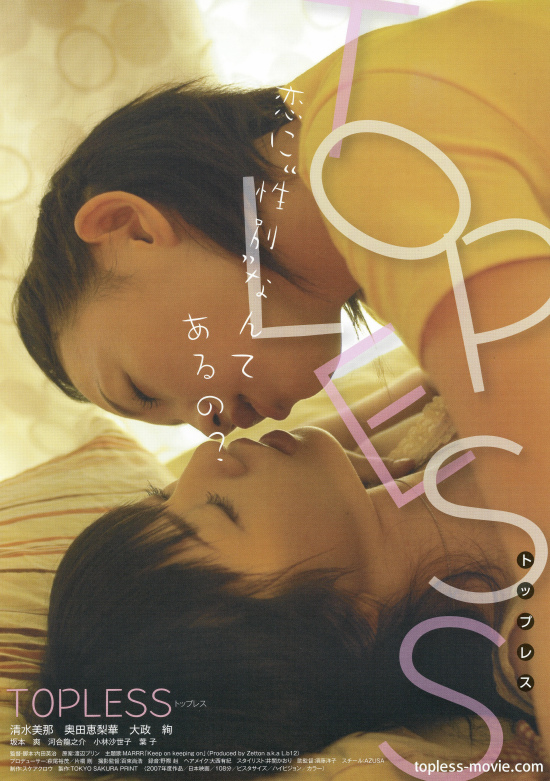
toplessFollowing the surreal horror film The Greatful Dead and cynical industry exposé Lowlife Love, Eiji Uchida is not generally known for straightforward naturalism but his 2008 movie Topless (トップレス) maybe among the most refreshingly straightforward, naturalistic depictions of lesbian life in modern Japan. Inspired by the writings of Pudding Watanabe, Topless, despite the title and suggestive poster, immediately jettisons preconceptions and sets about exploring the lives of young men and women in the city, just trying to make it in an often hostile society.

Forthright Natsuko (Mina Shimizu) splits up with her high school sweetheart Tomomi (Erika Okuda) but continues to pine after her even once Tomomi reveals that she’s got herself a boyfriend and plans to try the conventional life for a while. This heavy emotional blow provokes a kind of crisis in the otherwise certain Natsuko who finds herself musing on the fate on older lesbians and expressing sympathy for those who decide it’s just easier to enter a marriage of convenience than try to live alone. For the moment, Natusko lives with her understanding flatmate, Koji (So Sakamoto), who’s been nursing a long time crush on her even if he knows she’s gay and it’s impossible. A chance meeting with a high school girl, Kana (Aya Omasa), who’s come to Tokyo to find the mother who abandoned her to run off with a lesbian lover ten years ago only deepens Natsuko’s contemplative mood as she starts to wonder about where her life will take her if she chooses not to follow the accepted path.

Topless is less about romance than it is about acceptance and identity. Natsuko maybe a member of her university’s lesbian society but she’s about as far from a flag waver as it’s possible to be and just wants to live her life without thinking too much about the big stuff. Bar one woman (a new addition and not a student) the other girls are also just hanging round to have fun, aren’t particularly interested in activism and don’t feel themselves to be part of a movement defined by their sexuality. Natsuko certainly refuses to be defined by hers though her recent falling out with Tomomi has shaken her to the core and forced her into a consideration of her own hopes and desires for the future.

Tomomi claims to still love Natsuko but also that it “can’t be helped” because they’re both women and it’s just not possible. Natsuko tries to come to terms with her friend’s decision whilst nursing a broken heart but struggles to overcome her feelings of jealously towards Tomomi’s new boyfriend. Koji, Natsuko’s roommate, can’t understand why a lesbian would marry a man but being a man himself he can’t appreciate the societal necessities which make trying to live a life outside the mainstream particularly hard for women. As Natsuko points out, women earn less and living is expensive, it’s difficult to live out and proud in a hostile society, and then there’s the fear of growing old without children or an extended family network to fallback on. Though she sympathises with all of these factors on an intellectual level and then eventually even contemplates trying out life with a man herself,  it’s not something Natsuko could ever do and a part of her can never forgive Tomomi for doing it even if she does understand why someone might.

Kana’s quest for her long lost mother gets lost between the meatier subplots but proves enlightening in the unexpected bond between the troubled schoolgirl and the shaken if confident Natsuko. Still nursing deep scars from her abandonment, Kana claims to hate lesbians but grows to like Natsuko, the only person willing to help her track down her mother in a totally unfamiliar world. Despite Koji’s protestations that Natsuko will be angry if she hears any of Kana’s anti-gay sentiments, she listens patiently to Kana’s complaints stopping only to tell her she understands why she feels that way but that she also thinks she’s wrong. Trying to help Kana understand why her mother made the decisions that she did and see that there’s nothing wrong with two women loving each other, Natsuko changes hearts and minds just by being patient and kind.

In the conventional sense Topless offers no happy endings but it does advocate first and foremost for a kind of self acceptance and finally allowing old wounds to scar over, closed but not forgotten. Normalising lesbian life with ease, Uchida proceeds with a straightforward approach which sidesteps the obvious in order to provide a more nuanced portrait of life and love among the young people of Tokyo each trying to navigate the difficult process of learning to live as an independent person constrained by social conventions. Admittedly low budget but tastefully done and anchored by a standout performance from Mina Shimizu, Topless is a refreshingly down to earth look at gay life in the big city which refuses to give in preconceptions and expectations.


Short clip from the film (English subtitles)

West North West (西北西, Takuro Nakamura, 2015)

This area has a weird magnetic field, claims one of the central characters in Takuro Nakamura’s West North West (西北西, Seihokusei), it’ll throw you off course. Barriers to love both cultural and psychological present themselves with almost gleeful melancholy in this indie exploration of directionless youth in modern day Tokyo. Three young women wrestle with themselves and each other in a complex cycle of interconnected anxieties as they attempt to carve out their own paths, each somehow aware of the shape their lives should take yet afraid to pursue it. The Tokyo of West North West is one defined by disconnection, loneliness and permanent anxiety but it is not the city which is the enemy of happiness but an internal unwillingness to find release from self imposed imprisonment.
After beginning with the twilight scene of a city in fog, Nakamura cuts to Iranian student Naima (Sahel Rosa) leaving the visa bureau with something on her mind. An attempt to call a friend strikes out when she discovers her with her fellow Chinese students busily chatting away in a language she does not understand. Taking refuge in a coffee shop, Naima spots another similarly depressed woman silently crying at a table in the very back corner.

Striking up a conversation, the two women unexpectedly begin a tentative friendship but Kei (Hanae Kan) has problems of her own. Trapped in a toxic relationship with fashion model Ai (Yuka Yamauchi) whose possessive, jealous, and entirely self-centred behaviour have turned her into a nervous wreck, Kei is acutely preoccupied with her lack of forward motion, feeling as if she’s just been somehow pushed out into the world with no clear idea of what it is she’s supposed to be doing.

Kei and Naima have much more in common than it might at first seem. Culturally displaced, Naima is at odds with her surroundings despite her native level language abilities but she finds a kind of ally in the taciturn Kei when an emotional outburst in the cafe causes commotion with an unpleasant fellow customer who objects either to the “inappropriate” loudness of her phone call or that it’s in another language. Naima is a retiring sort and mortified to have caused a fuss but Kei, coming to her rescue, is bored with accepting other people’s intolerance. Having felt so alone, pushed away from her only other real friend by an impenetrable barrier of culture and language, someone arriving and actively taking her side is an almost miraculous development.

Bonding instantly in their shared melancholy, the two women share a deepening sense of recognition as Naima begins spending more time with Kei, sleeping on her sofa and getting her to look after the pet bird which she refuses to name so that it will hurt less when they are eventually forced to part. Kei’s prejudices and preconceptions are pushed by Naima’s fierce attachment to her religion, but her eventual decision to casually state that she has a girlfriend meets with only mild surprise rather than rejection or moral questioning. Attempting to clarify Kei’s vague reply, Naima asks directly if Kei is a “lesbian” only for her to irritatedly deny the label – it’s just that she only falls in love with women, she says. Naima’s reasoned response that that’s pretty much the definition of “lesbian” leads to Kei quickly exiting the scene in confusion, not wanting to pursue this line of thought any further though it perhaps sends Naima in exactly the opposite direction.

Kei’s intense insecurity regarding her sexuality is one reason she seems to find it so hard to break things off with high maintenance girlfriend Ai despite her obvious unhappiness with the relationship. Ai, a low level fashion model, has a series of intense insecurities of her own though these have less to do with sexuality and more with power and control. Having realised that Kei is not as attached to her as she is to Kei, Ai’s jealous rages have Kei in a permanent state of fear from which she attempts to hide at a local pool only to have a full blown panic attack on receiving an unexpected phone call from her girlfriend.

An awkward hospital waiting room conversation with Ai’s mother explains much of her behaviour as she begins to lay out the various failings of her child and desire for her to give up modelling and live a “normal” life. Ai had not shared the fact that her lover was another woman, leaving her mother to feign politeness even whilst feeling he need to voice her “disgust” that her child had “these kinds of feelings”. Indifferent to Kei’s ongoing discomfort, Ai’s mother has a few home truths for the woman who’s corrupted her daughter, advising her to break up with Ai as soon as possible seeing as the relationship is doomed to failure.

In principle, Ai’s mother might have offended Kei but she has to concede that she has a point. Kei is not happy with Ai, but Ai will not let her go. Ai’s jealousy is both the catalyst and barrier for Kei’s growing feelings for Naima as she seeks a kindred spirit and gentle soul in refuge from Ai’s emotional violence. An awkward dinner party between the two makes plain the degree to which they are ill suited when Ai berates the sullen Kei for a lack of emotional readability ironically missing that Kei needs someone to understand her feelings instinctively – a level of connection on which self-centred Ai is ultimately unwilling to engage.

Ai’s attempt to warn off Naima in a worryingly threatening “stay away from my girl” speech eventually forces her to confront her own feelings and what exactly Kei is to her. Both women are repeatedly asked to provide a definition of their relationship, faltering each time, but Naima’s crisis runs deeper as she’s forced to confront herself on a more profound level. A group job interview provokes an unexpected moment of introspection as she’s cruelly asked what exactly she’s learned during her time in Japan and is thrown into silence before admitting that she does not know. Naima may indeed have learned or perhaps confirmed a few things about herself, but if she has she is still unable to accept them.

Beautifully played by Sahel Rosa, Naima’s isolation is palpable in her pain filled eyes and longing looks as she finds herself captivated by the more certain yet diffident Kei. Hanae Kan’s Kei is equally trapped within herself, essentially kind yet reserved, afraid to break things off with the controlling Ai yet confused by her growing feelings for the increasingly conflicted Naima. Returning to the fog filled cityscape, Nakamura leaves things as he finds them, refusing resolution as each of the central characters compromises themselves in one way or another, settling for something that seems “right” but feels essentially wrong. The melancholy greyness of a wintery sunset descends once again, leaving each of the three women rudderless but with an added burden of self knowledge tinged with regret and sorrow.


Reviewed at BFI Flare 2017.

Original trailer (English subtitles)

If you happen to understand either Japanese or German there’s an interesting video interview with director Takuro Nakamura produced for the Munich Film Festival:

Schoolgirl Complex (スクールガール コンプレックス 放送部篇, Yuichi Onuma, 2013)

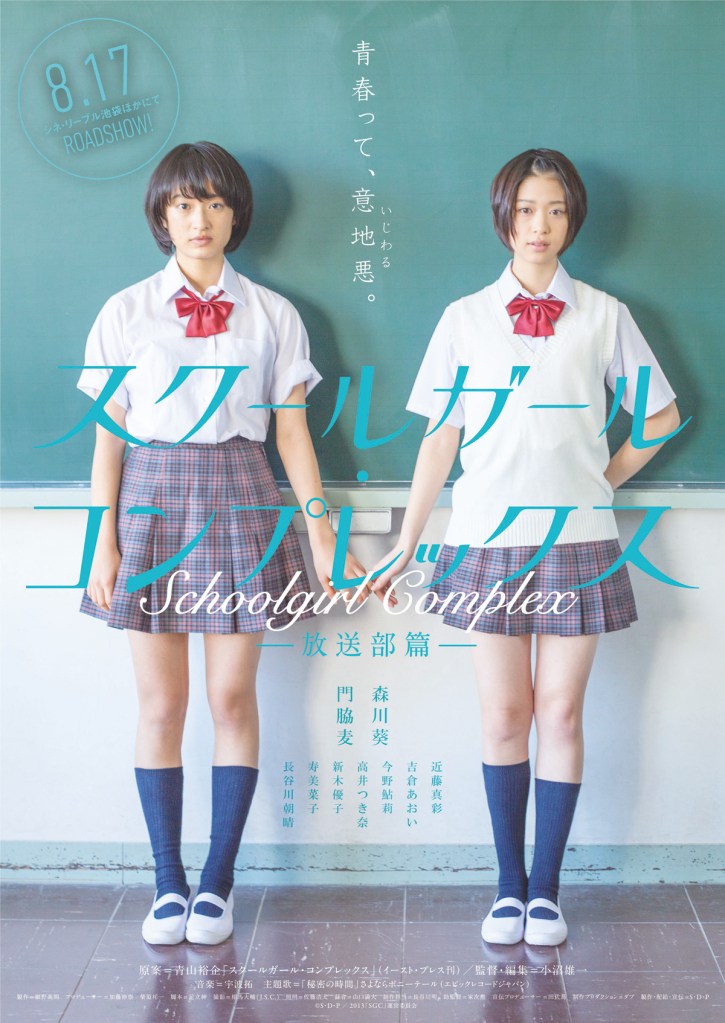
Schoolgirl Complex is a popular photo book featuring the work of Yuki Aoyama and does indeed focus on that most most Japanese of fixations – the school girl and her iconic uniform. Aoyama’s book presents itself as taking the POV of a teenage boy, gazing longly from a position of total innocence at the unattainable female figures who, in the book, are entirely faceless. Given a more concrete narrative, this filmic adaptation (スクールガール コンプレックス 放送部篇, Schoolgirl Complex Housoubu-hen) directed by Yuichi Onuma takes a slightly different tack in dispensing with high school boys altogether for a tale of self discovery and sexual confusion set in an all girls school in which almost everyone has a crush on someone, but sadly finds only adolescent suffering as so eloquently described by Osamu Dazai whose Schoolgirl informs much of the narrative.
About to become head of the broadcast club when the school leavers depart after the culture festival, Manami (Aoi Morikawa) has developed a fascination for Chiyuki (Mugi Kadowaki) whose mysterious figure she finds herself watching from hidden places even though they’ve never met. She is therefore both delighted and alarmed when Chiyuki suddenly joins her broadcast club but becomes flustered enough to tell her she doesn’t need to bother coming to any of the meetings if she doesn’t feel like it – much to the consternation of the other members. Neglecting her best friend Ai (Maaya Kondo), Manami grows closer to Chiyuki whose avoidance of a previous best friend and out of school troubles including a no good older boyfriend are all causes for concern when it comes to her growing feelings. Chiyuki, blowing hot and cold, continues to cause trouble both for herself and everyone else as she finds herself conflicted over who she is and what she really wants.

As in Dazai’s book, there’s a lot of hiding, waiting, watching and suffering at the heart of Schoolgirl Complex. Slightly unusually the school environment does seem to be a strangely progressive one in which same sex attraction is more or less normalised despite the shyness and confusion manifesting among the girls. Love is declared loudly and dramatically in the school corridors with no seeming consequences save perhaps embarrassment and heartbreak for the unlucky girl who finds herself rejected. There are a set of four girls with apparent crushes on each other, returned or otherwise, and there is no further mention of boys or dating outside of Chiyuki’s boyfriend who turns up to steal her away by car but also demands she bring him money. Aside from the general adolescent diffidence, there does not seem to be additional anxiety or personal angst around the idea of same sex love save for Chiyuki’s lament that she can’t make proper friends because everyone turns out to be a lesbian and wants more out the relationship than she can give them.

Rather than the teenage boy POV adopted by the photo book, Onuma’s camera is perhaps intended to capture that of Manami as she finds herself experiencing complicated feelings towards her classmate. Accordingly the camera lingers sensuously over sun beaten, sweaty flesh, and long legs under short skirts as Onuma explores Manami’s burgeoning desires but cannot avoid the tendency towards fetishisation which the title implies.

To its credit, Schoolgirl Complex is not the film which one might presuppose it to be. It’s no schoolgirls gone wild exploitation fest or a shy boy’s yearning for female contact, but its melancholy message that adolescence is difficult for everyone is a somewhat flat one even given its obvious triteness. During the climactic performance at the cultural festival a huge and very public declaration is made but gathers absolutely no reaction save an “I knew it!” from the control booth. Rejections all round seem to reinforce female bonding as the girls continue on in friendship with Dazai’s words that this will all seem funny when they’ve grown up ringing in their ears. The tone of total acceptance is a warm and refreshing one but perhaps a little unrealistic in its uncomplicated approach to a complicated area of personal development. Nevertheless, though Schoolgirl Complex’s attempt to redefine itself as a painful story of youth rings hollow its sympathetic treatment of its suffering teenage romantics is worthy of applause.


Original trailer (English subtitles)

Afternoon Breezes (風たちの午後, Hitoshi Yazaki, 1980)

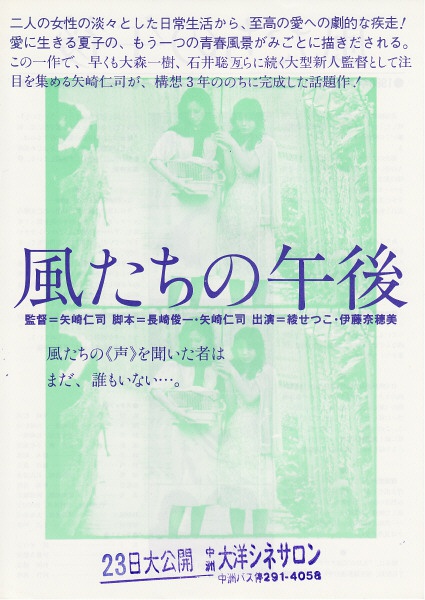
Even in the Japan of 1980, many kinds of love are impossible. Afternoon Breezes (風たちの午後, Kazetachi no gogo), the indie debut from Hitoshi Yazaki follows just one of them as a repressed gay nursery nurse falls hopelessly in love with her straight roommate. Based on a salacious newspaper report of the time, Afternoon Breezes is a textbook examination of obsessive unrequited love as its heroine is drawn ever deeper into a spiral of inescapable despair and incurable loneliness.

Nursery nurse Natsuko (Setsuko Aya) is in love with her hairdresser roommate Mitsu (Naomi Ito), who seems to be completely oblivious of her friend’s feelings. Mitsu has a boyfriend, Hideo (Hiroshi Sugita), and the relationship is becoming serious enough to have Natsuko worried. Hideo, unlike Mitsu, is pretty sure Natsuko is a lesbian and in love with his girlfriend but finds the situation amusing more than anything else. Beginning to go out of her mind with frustration, Natsuko tries just about everything she can to break Mitsu and Hideo up including introducing him to another pretty girl from the nursery, Etsuko (Mari Atake). Hideo is not exactly a great guy and shows interest in Etsuko though does not seem as intent on leaving Mitsu as Natsuko had hoped. Desperate times call for desperate measures and so Natsuko steels herself against her revulsion of men and seduces Hideo on the condition that he end things with her beloved Mitsu. He does, but the plan goes awry when Natsuko realises she is pregnant with Hideo’s child.

Less about lesbianism and more about love which can never be returned slowly eroding a mind, Afternoon Breezes perfectly captures the hopeless fate of its heroine as she idly dreams a future for herself which she knows she will never have. Natsuko buys expensive gifts for her roommate, returns home with flowers and courts her in all of the various ways a shy lover reveals themselves but if Mitsu ever recognises these overtures for what they are she never acknowledges them. Her boyfriend, Hideo, seems more worldly wise and makes a point of cracking jokes about Natsuko, asking Mitsu directly if her friend has a crush on her but Mitsu always laughs the questioning off. Mitsu may know on some level that Natsuko is in love with her, she seems to be aware of her distaste for men even if she tries to take her out to pick one up, but if she does it’s a truth she does not want to own and when it is finally impossible to ignore she will have nothing to do with it.

Despite Mitsu’s ongoing refusal to confront the situation, Natsuko basks in idealised visions of domesticity as she and Mitsu enjoy a romantic walk in the rain only to have their reverie interrupted by a passing pram containing a newborn baby. What Natsuko wants is a conventional family life with Mitsu, including children. After their walk, the pair adopt a pet mouse which Natsuko comes to think of as their “baby” but like a grim harbinger of her unrealisable dream, the mouse dies leading Mitsu to bundle it into a envelope and leave it on a rubbish heap along with Natsuko’s heart and dreams for the future.

When her colleagues at the nursery get stuck into the girl talk and ask Natsuko about boyfriends, her response is that she would not “degrade” herself yet that is exactly what she finally resorts to in an increasingly desperate effort to get close to Mitsu. After her attempts to get him to fall for another girl fail, Natsuko’s last sacrificial offering is her own body, surrendered on the altar of love as she pleads with the heartless Hideo to leave Mitsu for good. Though her bodily submission is painful to watch in her obvious discomfort her mental degradation has been steadily progressing as Hideo deliberately places himself between the two women, even going so far as to disrupt a seaside holiday planned for two by inviting himself along.

Yazaki perfectly captures Natsuko’s ever fracturing mental state through the inescapable presence of the dripping tap in the girls’ apartment which becomes a dangerous ticking in Natsuko’s time bomb mind. Occasionally gelling with clocks and doors and other oppressive noises, the internal banging inside Natsuko’s head only intensifies as she’s forced to endure the literal banging of Mitsu and Hideo’s lovemaking during her romantic getaway. Just as an earlier scene found Natsuko sitting on the swing outside embracing the flowers she’d brought for Mitsu only to find Hideo already there, Natsuko’s fate is to be perpetually left out in the cold, eventually resorting to rifling through her true love’s rubbish and biting into a half eaten apple in a desperate attempt at contact.

Natsuko’s love is an impossible one, not only because Mitsu is unable to return it, but because it is essentially unembraceable. In a society where her love is a taboo, Natsuko is not able to voice her desires clearly or live in an ordinary, straightforward way but is forced to act with clandestine subtlety. After Hideo unwittingly deflowers her and laughs about it, stating that she “must really be gay” Natsuko lunges at him with a knife, suddenly overburdened with one degradation too many. Though the prospect of the baby may raise the possibility of a happy family, albeit an unconventional one, the signs point more towards funerals than christenings, so devoid of hope does Natsuko’s world seem to be. Shot in a crisp 16mm black and white, Afternoon Breezes owes an obvious debt to the art films of twenty years before with its long takes, static camera giving way to handheld, and flower-filled conclusion, but adds an additional layer of youthful anxiety as its heroines find themselves moving into a more prosperous, socially liberal age only to discover some dreams are still off limits.


Shinjuku Triad Society (新宿黒社会 チャイナ・マフィア戦争, Takashi Miike, 1995)

shinjuku-triad-societyThese days Takashi Miike is known as something of an enfant terrible whose rate of production is almost impossible to keep up with and regularly defies classification. Pressed to offer some kind of explanation to the uninitiated, most will point to the unsettling horror of Audition or the audacity of the controversial Ichi the Killer whilst looking askance at the totally unexpected craziness of Yatterman or the child friendly Ninja Kids!!!. Before he was the gleefully unpredictable festival favourite, Miike, like many of his contemporaries, had made a name for himself in V-cinema, often with violent tales of modern day yakuza. Shinjuku Triad Society (新宿黒社会 チャイナ・マフィア戦争, Shinjuku Kuroshakai: China Mafia Senso) was Miike’s first venture into the mainstream theatrical world but retains his V-cinema focus with additional intent.

Set in the shady, sleazy, noir-tinted world of ‘90s Shinjuku, Shinjuku Triad Society opens with a voice-over from one of its central players telling us that this is a love story – sickening and sweet, as real love is. The action kicks off with this same character, a rent boy, Zhou, attempting to evade a police raid, slitting the throat of a regular street cop on his way out. Zhou is the lover of an unpredictable member of the Taiwanese mafia, Wang (Tomorowo Taguchi), who is creating several problems in the underground crime world both within Triad circles and with the local yakuza. Half Chinese policeman, Tatsuhito Kiriya (Kippei Shina), has been landed with the case but things begin to get personal when he discovers that his younger brother, Yoshihito, has been hired as a junior lawyer working directly for Wang’s gang.

Yakuza films often have a very strong homosocial atmosphere, emphasising the fraternal bonds between men but Shinjuku Triad Society is especially notable for its inclusion of explicit male homosexuality within the gangster underworld. If yakuza films are family dramas with funerals instead of weddings, Miike uses this intense male bonding as a comment on the wider nature of the family with an added focus on the place of the foreign in Japanese society. Wang and Tatsuhito are not so far removed in their desire to rebuild their own family unit, partly as a kind of protective measure against the world around them in which their Chinese heritage becomes a perpetual barrier. Wang has done this as the head of his own clan and with his lover Zhou at his side whereas Tatsuhito is intent on restoring his birth family by “rescuing” his brother from the clutches of the “Dragon’s Claw”.

Tatsuhito’s brother is, of course, a grown man who has the right to become a member of the underworld family, rejecting the blood ties to his policeman brother and doting parents if that is what he wants no matter what his brother might feel about it. Tatsuhito is disturbed to discover that Yoshihito has become Wang’s lover, even if he claims to be using him in order to progress his career. Both brothers threaten each other at gun point with Yoshihito exclaiming “if you don’t like the way I am, just kill me” which Tatsuhito refuses to do though it remains unclear if his brother’s sexuality is objectionable to him or merely a facet of his rejection of the values Tatsuhito holds dear.

Sexuality becomes a weapon as Zhou manoeuvres and manipulates through provoking and satisfying sexual desire. These are, however, consensual relationships even if a part of a wider, transactional game whereas anal rape is actively being employed as a police interrogation tactic (with a somewhat surprising spin). Even Tatsuhito, whose partner mocks him for a supposed dedication to being a “regular” cop, unwilling to take bribes or give in to corruption, himself engages in this behaviour anally raping a female prostitute from whom he wishes to extract information. Playing into the film’s darker themes of the interplay between sex, violence, and transaction, the prostitute instantly falls in love with him. Tatsuhito is clearly no saint even at the film’s beginning, but even so he continues to fall still further, seemingly outraged on discovering the true purpose of Wang’s “philanthropy” in his Taiwanese homeland, but doing relatively little about it other than adding it to the growing list of reasons why Wang must die. Eventually crossing the line from law enforcer to law breaker in the most taboo of ways, Tatsuhito finds himself rewarded even if his boss seems to be aware and in approval of what he’s done.

Tatsuhito may succeed in some of his aims, even if he has to exile himself from the family he was trying repair in the process though the closing voice over makes clear that he gains little in the long run and becomes nothing more than marginalia in the long, sad history of Shinjuku’s violent backstreets. Starting as he means to go on, Miike is entirely unafraid to step into some very uncomfortable areas, not least the way non-Japanese and those with partial Japanese heritage are regarded in the society of the time as well as the way these attitudes are filtered through recent Japanese history. Tatsuhito finds himself conflicted, choosing Japan in choosing the police but finding that it often fails to recognise him as its own son, whereas Yoshihito, in a sense, chooses China in associating himself with the Taiwanese gangsters. This central opposition of order and criminality is itself uncomfortable, but then undermined by the unorthodox nature of the local yakuza. Often strange and eerie, Shinjuku Triad Society takes place in a noirish world where there is no guiding morality – one to which Miike would often return though perhaps never with so much biting irony, where the absence of hope continues to imply its possibility.


Original trailer (English subtitles)