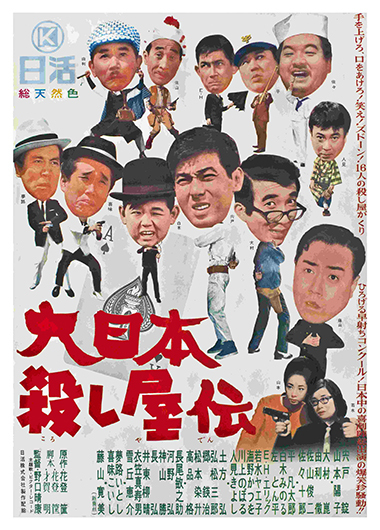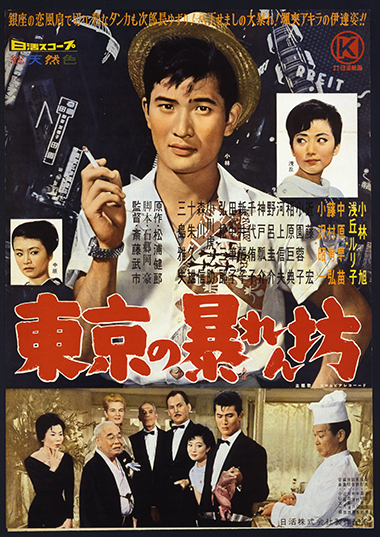
Tokyo Mighty Guy (東京の暴れん坊, Buichi Saito, 1960)

Tokyo Mighty GuyThe bright and shining post-war world – it’s a grand place to be young and fancy free! Or so movies like Tokyo Mighty Guy (東京の暴れん坊, Tokyo no Abarembo) would have you believe. Casting one of Nikkatsu’s tentpole stars, Akira Kobayshi, in the lead, Buichi Saito’s Tokyo Mighty Guy is, like previous Kobayashi/Saito collaboration The Rambling Guitarist, the start of a franchise featuring the much loved neighbourhood big dog, Jiro-cho.
In this first instalment, Jiro (Akira Kobayashi) has just returned from some overseas study in Paris where, rather than the intellectual pursuits that he planned, Jiro mostly wound up with a love of French cuisine. His parents have just opened a small French restaurant in fashionable Ginza and Jiro is now working there too despite the more lucrative paths that might be open for someone with a college education, language skills and overseas experience.

Jiro is also a hit with the ladies, and the daughter of the family that run a nearby bathhouse, Hideko (Ruriko Asaoka), has quite a crush on him though Jiro seems fairly oblivious to this fact despite her revealing to him that her family have received an offer of arranged marriage. After a high ranking official crashes his car into the family restaurant, Jiro becomes embroiled in a series of complicated local political and shady business plots which conflict strongly with his righteous and individual nature.

Tokyo Mighty Guy begins with a cute musical title sequence that would be much more at home in a glossy musical of the time than in a smalltime gangster flick which is what lurks around the edges of this feel good, youthful tale. Indeed, Kobayashi gets ample opportunity to show off those pipes as he sings to himself alone in the male side of the bathhouse and later repeats snatches of the song throughout the film. There’s a single being peddled here, but it’s being done in a fun, if unsubtle, way.

Jiro is very much a man of his age. He’s the big man in the neighbourhood – middle class, educated, studied abroad, likes the finer things such as foreign food and sharp suits, but he’s got the words social justice engraved on his heart so you know you can go to him with your troubles and he’ll help you figure them out. He doesn’t take any nonsense from anyone; he sends the yakuza protection mob packing and even convinces one of them to go straight with a trainee chef job in his restaurant. No wonder the animal loving former politician has taken such a liking to him – he’s the kind of man it’s hard not to like.

That’s not to say Jiro’s a saint, he’s out for himself just like everyone else. We can see how much distress there is for others when we venture into a rundown tenement filled with the genuine poor who have too many children and not enough resources. Actually, the film isn’t terribly kind about these people and treats them more or less as an embarrassing joke but it does demonstrate how the bigwigs have exploited the needs of the lower orders in more ways than one. Jiro, at least, won’t stand for this kind of deception and misuse of traditional social bonds but he will still use it as leverage to bring things to a fittingly ironic solution that is to the benefit of everyone aside from those that were originally in the wrong.

Cute and quirky is definitely the theme and even where there are darker elements, the cheerful atmosphere is tailor made to eclipse them. Saito doesn’t roll out any particularly impressive directorial tricks but allows the absurd humour of the script to do his work for him, highlighting it with surreal touches such as the face of an absent lover appearing in the moon or the celebratory feeling of hundreds of advertising leaflets dropping from the sky like confetti. Light and fluffy as it is, Tokyo Mighty Guy is time capsule from the socially mobile youth of Tokyo in 1960 who don’t want arranged marriages or to take over the family business. The world has opened up for them with a new vista of foreign culture and multicultural cool. The message is clear, the future belongs to guys like Jiro, and by extension to the Jiro wannabes lining up to watch him prosper from their cinema seats.


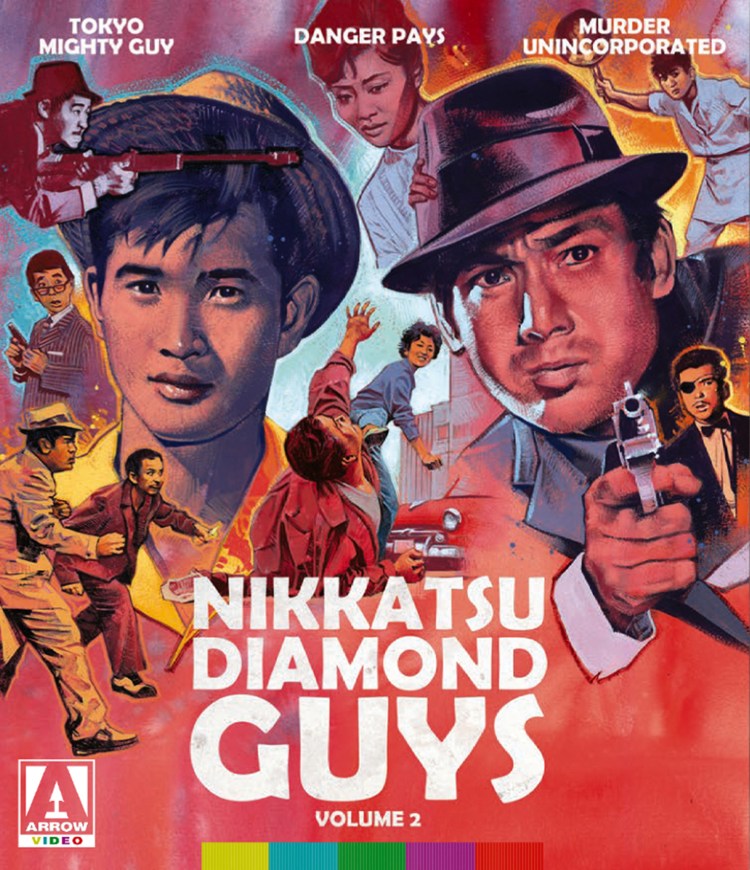
Tokyo Mighty Guy is the first of three films included in the second volume of Arrow’s Nikkatsu Diamond Guys box set.

Last Quarter (下弦の月 ラスト・クォーター, Ken Nikai, 2004)

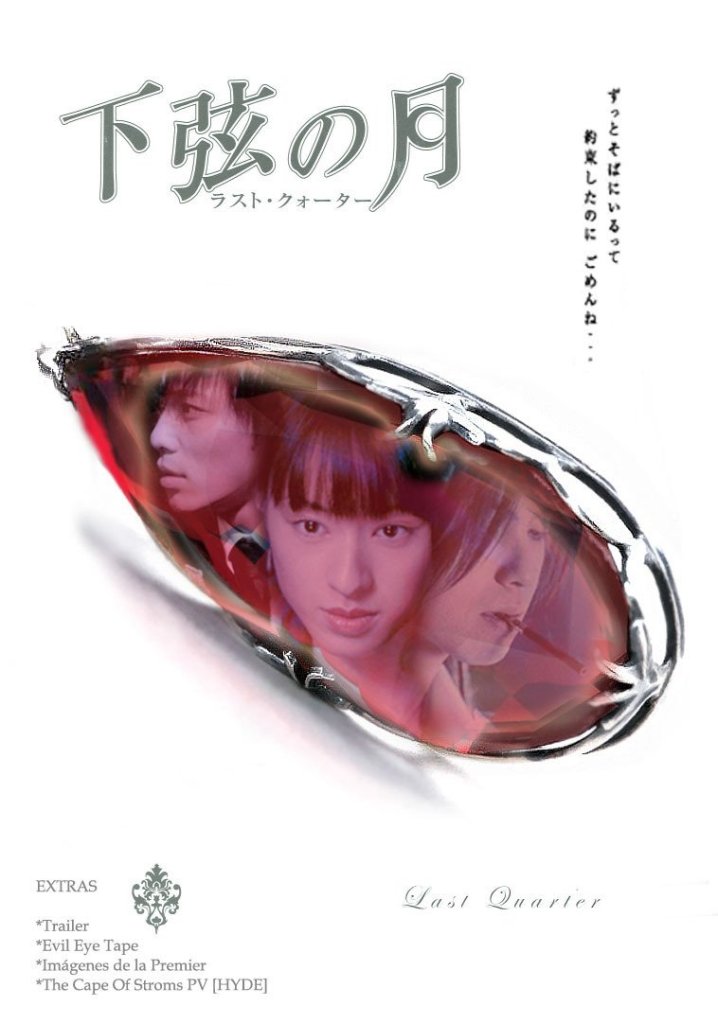
Last Quarter posterTo begin on a cynical note, Last Quarter (下弦の月 ラスト・クォーター, Kagen no tsuki Last Quarter) is a film with a wide variety of marketing hooks. The first being that it’s an adaptation of a much loved short manga series by the well respected mangaka Ai Yazawa (Paradise Kiss) so it has its shoujo pedigree firmly in place. Secondly, pop star HYDE of L’Arc-en-Ciel is central to the production as he both stars in the movie as the ghostly love interest/deathly spirit and repeatedly sings his own songs throughout the film including over the end credits. Thirdly, it also stars actress Chiaki Kuriyama well known to overseas audiences thanks to Kill Bill and Battle Royale. You’d think with all these high quality ingredients first time director Ken Nikai would be able to cook up quite a feast though he does somewhat over egg the pudding.
After a brief dream sequence, the action kicks off at the 19th birthday party of British rock obsessed Mizuki (Chiaki Kuriyama) which takes place in a Mod inspired bar. Unfortunately, her best friend gets very drunk indeed and takes this opportunity to show Mizuki a photo of herself and Mizuki’s boyfriend in a compromising position. Mizuki throws a shoe at the no good philanderer and walks out on her own party ending up at a mysterious Western style mansion occupied by a sad man playing a guitar. She hits it off with “Adam” and decides to jack in her unhappy family life with her father and step-mother to leave for England with him. Sadly, she gets hit by a car on her way home only to wake up trapped inside the house and having lost all memory of who she formerly was. Soon enough, another girl, Hotaru (Tomoka Kurokawa), turns up and, assuming she’s a ghost, decides to help her “cross over” , but it’s all a little more complicated than Hotaru and her team had bargained for.

Last Quarter takes on an oddly imbalanced feel as it veers into star vehicle territory putting HYDE and his title song centerstage at the expense of Mizuki who ought to be the protagonist of the story. Understandably, as she’s fallen under the curse of the house, Mizuki is a mostly passive force throughout the film, entirely reliant on the efforts of the gang of three who are trying to help her by figuring out what’s really going on. The mystery element itself is quite an intriguing one but is often frustrated by the importance placed on the supernatural romance. Stretching plausibility to the limit, the events in question span 30 years and two continents to spin a yarn of pure love enduring beyond the grave. Pure love and grudge movies aren’t usually allowed to mix and they don’t quite here although Last Quarter certainly has elements of both.

Last Quarter’s biggest failing is in its production values which are generally on the low side. Nikai aims for an urban gothic aesthetic and achieves something close to sense of European decadence but opts to avoid the darkness inherent in the genre for a fairytale atmosphere. The effects are very highly stylised and old fashioned but Last Quarter doesn’t even attempt to make that work in its favour so much as offering it at face value.

In essence, Last Quarter often feels like an overblown music video for its rock star actor even if he actually has a relatively small role. Director Nikai has often worked with the band before and (apparently) there is a degree of recurring symbolism here that long time fans will instantly pick up on but will leave the casual viewer a little confused. Very firmly aimed at a younger teen female audience, Last Quarter will play best to fans of non-threatening supernatural romance but even then they’d be best advised to avoid thinking any of this through and simply enjoy the ghostly shenanigans for the ridiculous rag tag narrative they are. An interesting mix of ‘60s mod rocker cool with its parkas and vespas, and full on gothic with byronic heroes sitting in decaying mansions in the middle of creepy forests singing about their broken hearts, Last Quarter is incoherent to say the least but fans of its rockstar leading man will likely find their perseverance rewarded.


Last Quarter is available with English subtitles on R1 DVD in the US courtesy of Geneon.

Unsubtitled trailer:

Shinjuku Swan (新宿スワン, Sion Sono, 2015)

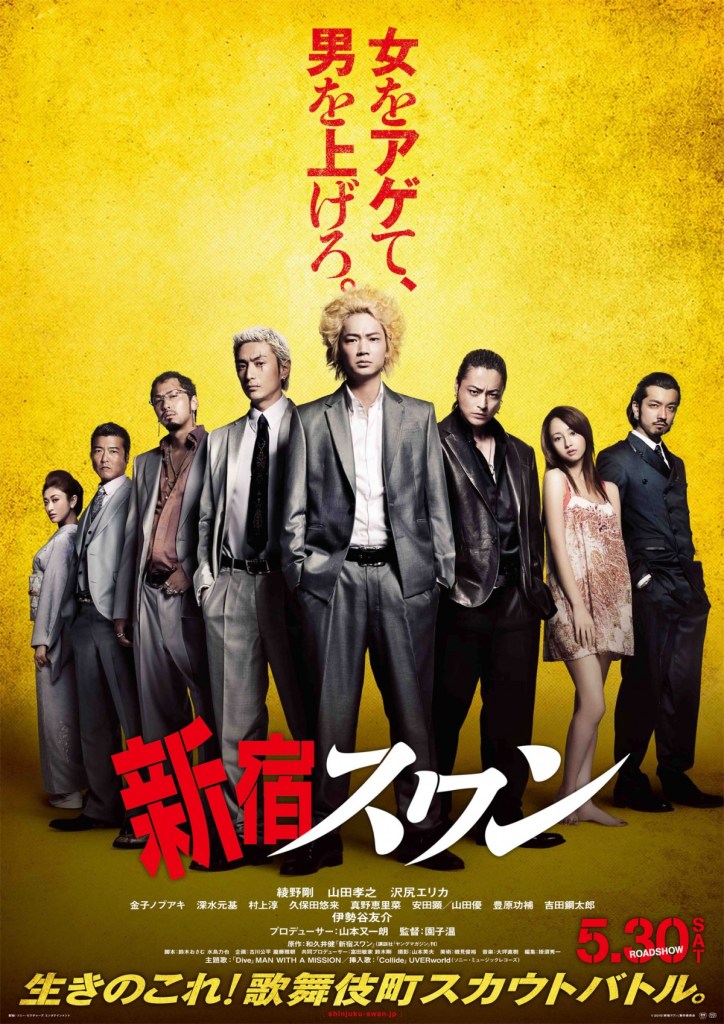
Shinjuku SwanEnfant terrible of the Japanese film industry Sion Sono has always been prolific but recent times have seen him pushing the limits of the possible and giving even Takashi Miike a run for his money in the release stakes. Indeed, Takashi Miike is a handy reference point for Sono’s take on Shinjuku Swan (新宿スワン) – an adaptation of a manga which has previously been brought to the small screen and is also scripted by an independent screenwriter rather than self penned in keeping with the majority of Sono’s directing credits. Oddly, the film shares several cast members with Miike’s Crows Zero movies and even lifts a key aesthetic directly from them. In fact, there are times when Shinjuku Swan feels like an unofficial spin-off to the Crows Zero world with its macho high school era tussling relocated to the seedy underbelly of Kabukicho. Unfortunately, this is somewhat  symptomatic of Sono’s failure, or lack of will, to add anything particularly original to this, it has to be said, unpleasant tale.

Our “hero” is down on his luck loser Tatsuhiko (Go Ayano) who’s come to Shinjuku to make it big. He’s here because it’s the sort of place you can make it happen with no plan and no resources. “Luckily” for him, he runs into low-level gangster Mako (Yusuke Iseya) who spots some kind of potential in him and recruits him as a “scout” for his organisation, Burst. Now dressed in a fancy suit, Tatsuhiko’s new job is stopping pretty girls in the street and trying to talk them into working in the sex industry….

Tatsuhiko is not the brightest and doesn’t quite understand what the implications of his work are. When he finally gets it, he feels conflicted but Mako convinces him that’s it’s OK really with a set of flimsy moral justifications. Before long, Tatsuhiko comes into conflict with a lieutenant, Hideyoshi (Takayuki Yamada), from the rival gang in town, Harlem, and a yakuza style territorial dispute begins to unfold destabilising the entire area.

Sono has often been criticised for latent misogyny and an exploitative approach to his material and Shinjuku Swan is yet more evidence for those who find his output “problematic”. Though based on a manga and scripted by a third party, Shinjuku Swan has an extremely ill-defined take on the sex industry and the people involved with it. After figuring out what happens to the girls he takes to Mako, Tatsuhiko has second thoughts but Mako tells him that the girls are happy and are in this line of work because they enjoy it (leaving out all the stuff about debts, drugs, and violence). So Tatsuhiko vows to make even more girls live happy lives inside the “massage parlours” of Kabukicho.

Noble heart or not, Tatsuhiko is a pimp. Not even that, he’s a middle man pimp. He’s earning his money from the suffering of the women that’s he conned, coerced, and finally exploited. Leaving aside the idea that, yes, some of these women may be perfectly happy with the arrangement, at least one of Tatsuhiko’s recruits displays evidence of previous self harm and is unable to cope with the demands of her new way of life. Another woman, Ageha (Erika Sawajiri), who becomes Tatsuhiko’s primary damsel in distress, escapes into a children’s fairytale picture book in which a prince with crazy hair just like Tatsuhiko’s comes to rescue the heroine from her life of slavery and takes her to a place of love and safety. Tatsuhiko “rescues” her by taking her to a “nicer” brothel…

Tatsuhiko may have convinced himself that he’s somehow a force for good, “helping” these women into employment and providing “protection” for them unlike the other guys from rival gangs who use drugs and violence to keep their girls in line, but his continued belief in his own goodness becomes increasingly hard to swallow as he learns more about how this industry really works. It’s difficult to believe in a “hero” who is so deluded about his own place in the grand scheme of things – he’s not stupid enough to be this oblivious, but not clever enough to be continually unseeing all of the darkness that surrounds the way he makes his living.

All of this is merely background to the central yakuza gang war which later ensues. Tatsuhiko ends up as a pawn in the tussle for territory between Burst and Harlem as double crosses become triple crosses and no one is to be trusted. Predictably, Tatsuhiko and Hideyoshi turn out to have a long standing connection though this revelation never achieves the dramatic weight it’s looking for and the gang war itself is, at best, underwhelming. Notable scenes including a classic battle in the rain could have been spliced in from Crows Zero and no one would have noticed. The main dramatic thread remains Tatsuhiko’s journey as he travels from clueless loser to, admittedly still clueless, assured petty gangster and smooth talking lady killer.

If there’s an overall feeling which imbues Shinjuku Swan, it’s lack of commitment. Though often beautifully photographed and featuring some interestingly composed sequences (including a few Carax-esque musical set pieces) the final effect is one of workman-like competence. Not bad by any means, but this feels like the work of a director for hire and lacks the sense of the personal that a would-be-auteur would usually seek to provide. Moral ambiguity can often be a film’s strong point, inviting comment and debate rather than pushing a pre-defined agenda but Shinjuku Swan takes too many incompatible approaches to the already unpalatable series of questions that it stops short of asking. Distinctly uneven, Shinjuku Swan ends on a note of anti-climax and though a perfectly serviceable, mainstream, commercial effort proves something of a disappointment from a director who has often managed to bring out a sense of mischievous irony in similarly themed work to date.


Unsubtitled trailer:

The Sea is Watching (海は見ていた, Kei Kumai, 2002)

The Sea is WatchingAkira Kurosawa’s later career was marred by personal crises related to his inability to obtain the kind of recognition for his films he’d been used to in his heyday during the golden age of Japanese cinema. His greatest dream was to die on the set, but after suffering a nasty accident in 1995 he was no longer able to realise his ambition of directing again. However, shortly after he died, the idea was floated of filming some of the scripts Kurosawa had written but never proceed with to the production stage including The Sea is Watching (海は見ていた, Umi wa Miteita) which he wrote in 1993. Based on a couple of short stories by Shugoro Yamamoto, The Sea is Watching would have been quite an interesting entry in Kurosawa’s back catalogue as it’s a rare female led story focussing on the lives of two geisha in Edo era Japan.
Throughout this tale of love bought and love lost, we mainly follow the kindly geisha Oshin (Nagiko Tono) who ends up helping a nervous young man one night when he crashes into her geisha house in an attempt to avoid being picked up by the police. It seems he’s been out drinking with friends for the first time and, after having drunk far too much, may have stabbed another customer (though he can’t quite remember). Oshin comes up with a plan by cutting off his topknot and passing him off as one of her regular customers but Funosuke (Hidetaka Yoshioka) is not a born dissembler and remains sitting bolt upright before heading home at the first light of day.

Something passes between the two in the night and Oshin unwisely begins to fall in love. Though she begs him not too, Funosuke repeatedly visits her claiming to enjoy her company. However, though the other girls at the geisha house are in favour of Oshin’s love across the class divides romance and go to great lengths to help her, Funosuke is just a feckless boy completely unaware of the way he’s been toying with people’s hearts. Later, Oshin meets another damaged man, Ryosuke (Masatoshi Nagase), and begins to fall in love again but can a put upon geisha ever believe the words of men who think they can trade money for love?

Kurosawa has sometimes had the charge of misogyny thrown at him, somewhat unfairly, as his films are often very masculine in nature. The Sea is Watching, conversely, is the story of two women, Oshin and her fellow geisha Okikuno (Misa Shimizu), who claims to have come from a wealthy samurai background. Oshin is still young, her kindness and softness have not yet been eroded by the often harsh and cruel world in which she lives. She contents herself with romantic dreams of finding a man who will rescue her from this unpleasant way of life. Okikuno, by contrast, is older, harder, more experienced in the ways of the world, and therefore more inclined to towards pragmatism. She finds her salvation in self deception about the past whereas Oshin’s fantasies are all focussed on her future. In many ways the women are mirrors of each other but they also have a tight, sisterly bond in which each seems to understand the other perfectly without the need for explanation.

Structurally, the film feels unbalanced as it focusses more heavily on Oshin in the early stages only to gradually shift through to Okikuno by the end. The thematic split between Oshin’s twin tales of love doesn’t quite help, though it does add a degree of pathos to the situation as Okikuno can see that Oshin’s happy ever after is an unlikely prospect, but still somehow wants to make it happen. Oddly, Kumai chooses not to emphasis the relationship between the two women until the very end, preferring to deal with each of their disappointments and dead end romances separately, but the film does finally come together when they are trapped alone in the geisha house following a freak flood.

In many ways, filming the unfinished work of a great director is an entirely thankless task – every fault is because you aren’t him and every success is down to the departed genius, but Kumai does what he can to both honour Kurosawa’s memory and put his own stamp on the material. There are frequent Kurosawa-esque compositions and the final, deliberately unreal scene of the geisha house underwater framed against the starry sky also has a suitably Kurosawan feeling. That said, something about The Sea is Watching never quite catches fire, its symbolism feels underworked and the final, climactic scene lacks the power it seems to want to have despite Misa Shimizu’s impressive performance. Not drowning, but waving, The Sea is Watching is an uneven experience but makes up for its tonal problems through the strong performances of its cast and powerful, expressionist imagery which allow it to successfully ride the waves of the emotional storms at its centre.


The Sea is Watching is available on DVD with English subtitles in the US and UK from Sony Pictures Entertainment.

US release trailer:

A Woman’s Story (女の歴史, Mikio Naruse, 1963)

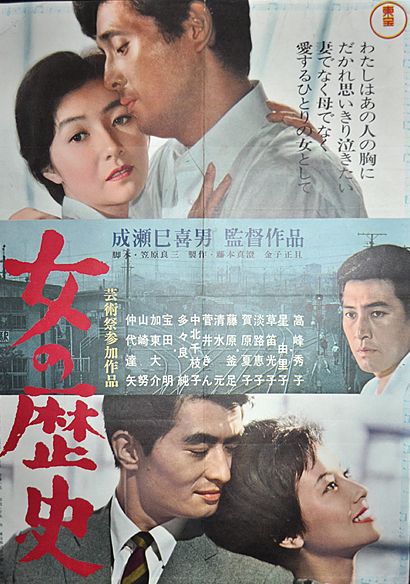
woman's storyMikio Naruse made the lives of everyday women the central focus of his entire body of work but his 1963 film, A Woman’s Story (女の歴史, Onna no Rekishi), proves one of his less subtle attempts to chart the trials and tribulations of post-war generation. Told largely through extended flashbacks and voice over from Naruse’s frequent leading actress, Hideko Takamine, the film paints a bleak vision of the endless suffering inherent in being a woman at this point in history but does at least offer a glimmer of hope and understanding as the curtains falls.
We meet Nobuko Shimizu (Hideko Takamine) in the contemporary era where she is a successful proprietor of a beauty salon in bustling ‘60s Tokyo. She has a grown up son who works as a car salesman though he’s often kept out late entertaining clients and has less and less time for the mother who gave up so much on his behalf. Her life is about to change when Kohei (Tsutomu Yamazaki) suddenly announces that he wants to get married – his lady love is a bar hostess to whom he’s become a knight in shining armour after saving her from a violent and persistent stalker. Needless to say, Nobuko does not approve both for the selfish reason that she isn’t ready to “lose” her son, and because of the social stigma of adding a woman who’s been employed in that line of work to the family.

All of this is about to become (almost) irrelevant as tragedy strikes leaving Nobuko to reflect on all the long years of suffering she’s endured up to this point only to have been struck by such a cruel and unexpected blow. An arranged marriage, her husband’s infidelity, the war which cost her home, possessions and also the entirely of her family, and finally the inescapable pain of lost love as the man who offers her salvation is quickly removed from her life only to resurface years later with the kind of pleasantries one might offer a casual acquaintance made at party some years ago. Life has dealt Nobuko a series of hard knocks and now she’s become hard too, but perhaps if she allows herself to soften there might be something worth living for after all.

Women of a similar age in 1963 would doubtless find a lot to identify with in Nobuko’s all too common set of personal tragedies. They too were expected to consent to an arranged marriage with its awkward wedding night and sudden plunge into an unfamiliar household. Nobuko has been lucky in that her husband is a nice enough man who actually had quite a crush on her though there is discord within the household and Nobuko also has to put up with the unwelcome attentions of her father-in-law. This familial tension later implodes though fails to resolve itself just as Japan’s military endeavours mount up and Nobuko gives birth to her little boy, Kohei. Husband Kouichi becomes increasingly cold towards her before being drafted into the army leaving her all alone with a young child.

All these troubles only get worse when the war ends. Though Kouichi’s former company had been paying his salary while he was at the front, they care little for his widow now. Left with nothing to do but traffic rice, Nobuko comes back into contact with her husband’s old friend, Akimoto (Tatsuya Nakadai), who wants to help her but is himself involved in a series of illegal enterprises. Nobuko is molested twice by a loud and drunken man who accosts her firstly on a crowded train (no one even tries to help her) and then again at a cafe where she is only saved by the intervention of Akimoto, arriving just in the nick of time. Nobuko sacrifices her chances at happiness to care for Kohei, caring about nothing else except his survival and eventual success.

Of course, Kohei isn’t particularly grateful and feels trapped by his mother’s overwhelming love for him. Nobuko’s sacrifices have also made her a little bit selfish and afraid of being eclipsed in the life of her son. It’s easy to understand the way that she later behaves towards Kohei’s new bride, but if she wants to maintain any kind of connection to the son that’s become her entire world, she will need to learn to allow another woman to share it with her.

Naruse is a master at capturing the deep seated, hidden longings that women of his era were often incapable of realising but A Woman’s Story flirts with melodrama whilst refusing to engage. The awkward flashback structure lends the film a degree of incoherence which frustrates any attempt to build investment in Nobuko’s mounting sorrows, and the voiceover also adds an additional layer of bitterness which makes it doubly hard to swallow. This is in no way helped by the frequently melodramatic music which conspires to ruin any attempts at subtlety in favour of maudlin sentimentality. The endless suffering of mid-twentieth century women is all too well drawn as grief gives way to heartbreak and self sacrifice, though Naruse does at least offer the chance to begin again with the hope of a brighter and warmer future of three women and a baby building the world of tomorrow free of bombs and war and sorrow.


Journey to the Shore (岸辺の旅, Kiyoshi Kurosawa, 2015)

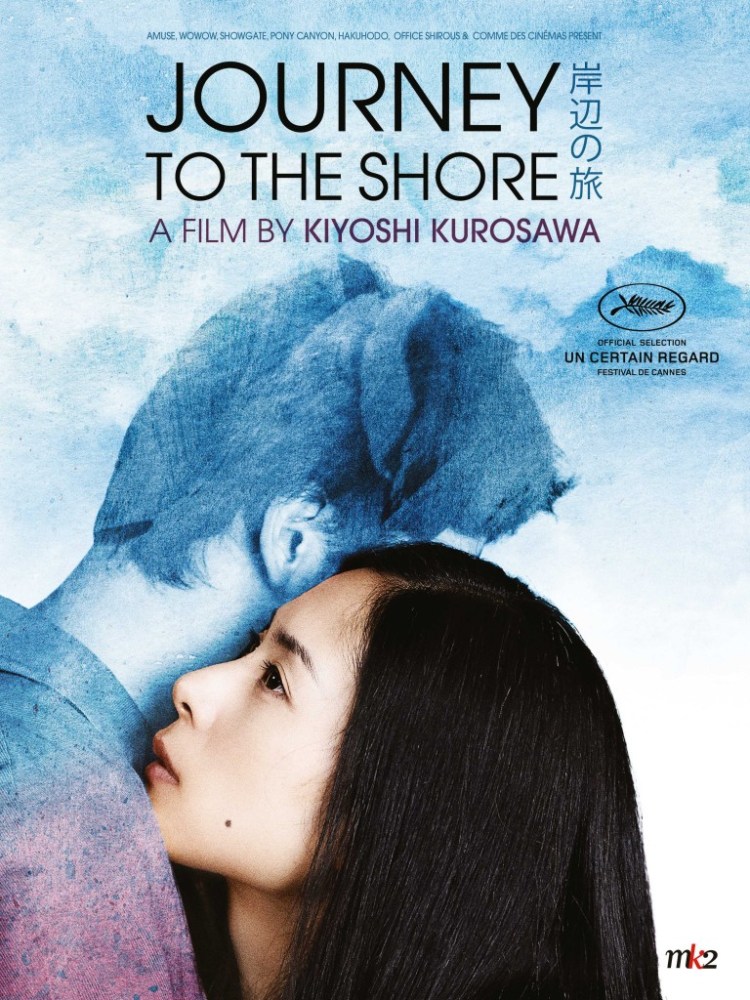
journey to the shoreTime is an ocean, but it ends at the shore. Kiyoshi Kurosawa neatly reverses Dylan’s poetic phrasing as his shoreline is less a place of endings but of beginnings or at least a representation of the idea that every beginning is born from the death of that which preceded it. Adapted from a novel by Kazumi Yumoto, Journey to the Shore (岸辺の旅, Kishibe no Tabi) takes its grief stricken, walking dead heroine on a long journey of the soul until she can finally put to rest a series of wandering ghosts and begin to live once again, albeit at her own tempo.
The film begins with three years widowed Mizuki (Eri Fukatsu) giving a piano lesson to a little girl whose mother goes on to enquire about her daughter’s progress. Wouldn’t it be better if she could learn something a little more cheerful once in a while? Reconsidering, the mother reflects that uptempo doesn’t quite suit Mizuki, and she’s right – it doesn’t. After impulse buying some flour and baking a few Japanese sweets at home, Mizuki receives an unexpected visit from her deceased husband, Yusuke (Tadanobu Asano), who drowned himself at sea.

Somehow unsurprised and pausing only to remind him to remove his shoes, Mizuki gives Yusuke some of the dumplings then retires to bed, only to wake up the next morning and wonder if she dreamt the strange events of the night before but, sure enough, Yusuke is still very much present. Promising to show her some of the beautiful places he discovered on his long odyssey home to her, Yusuke takes Mizuki on a reverse honeymoon in celebration and in mourning of all they once were to each other.

In each place they travel to, Mizuki and Yusuke help the people there deal with their own walking ghosts. Yusuke is not the only returnee as they discover with a lonely old newspaper seller who doesn’t appear to be aware that he died a long time ago. Walking dead in a realer sense than Mizuki or some of the other depressives they meet along the way who are still living but not exactly alive, Mr Shimakage is a spirit held in place by an inability to reconcile himself with the actions of his past and has brought his feelings of self loathing and regret with him into the afterlife.

Sometimes it’s the living that pin the dead, holding them close with guilt, regret, love or loneliness. If the film has a central tenet, it’s that the past has its place, and it’s not among the living. At one point Mizuki says that perhaps it’s better to leave some things unresolved. Yusuke asks her if she’s really OK with that, and she seems to reconsider but in the end that’s the way it has to be. There are no final solutions, the answers are not at the back of the book. In the end, the best you can do is try to understand and learn to be OK with everything you do and do not know about yourself and about those who are no longer here to tell their stories. Mizuki also says that she hated to practice piano as a child, but her teacher always told her to pay attention to her own rhythm. The music will always be lifeless, until you learn to hear your own song.

Kurosawa creates a beautifully ethereal world, held in a tension between the spirit realm and the everyday. Playing with lighting levels in extremely interesting ways, he allows the supernatural and natural to flow into each other, jostling and merging like waves and shore. Travelling from the grey, ordered and utilitarian city to the unruly nature of the countryside with its ancient, crashing waterfalls and beautiful, if lonely, coastlines we move from static and lifeless existence to a place of perpetual potential as we let go of one thing so that we might grasp another.

As much as Journey to the Shore is bound up with death, it necessarily speaks of life, too. During one of his strange lessons for the village folk, Yusuke delivers some meditations on science and philosophy to the effect that the world is built of nothingness but that nothingness does not lack meaning. He tells us that we are all dying, the universe was born billions of years ago and will end one day just as our species may end when the planet’s temperature exceeds that which we can endure or galaxies collide and take us down with them. For all of that, the universe is young, still growing, still expanding, and we are so lucky to have been born now when there is still so much ahead of us. This is a time of infinite beginnings. Starting again means letting go, but sooner or later you have to step off the shore of this self imposed purgatory and return to the great ocean which is life.


Journey to the Shore is availble on dual format DVD and blu-ray in the UK courtesty of Eureka Masters of Cinema.

Lowlife Love (下衆の愛, Eiji Uchida, 2016)

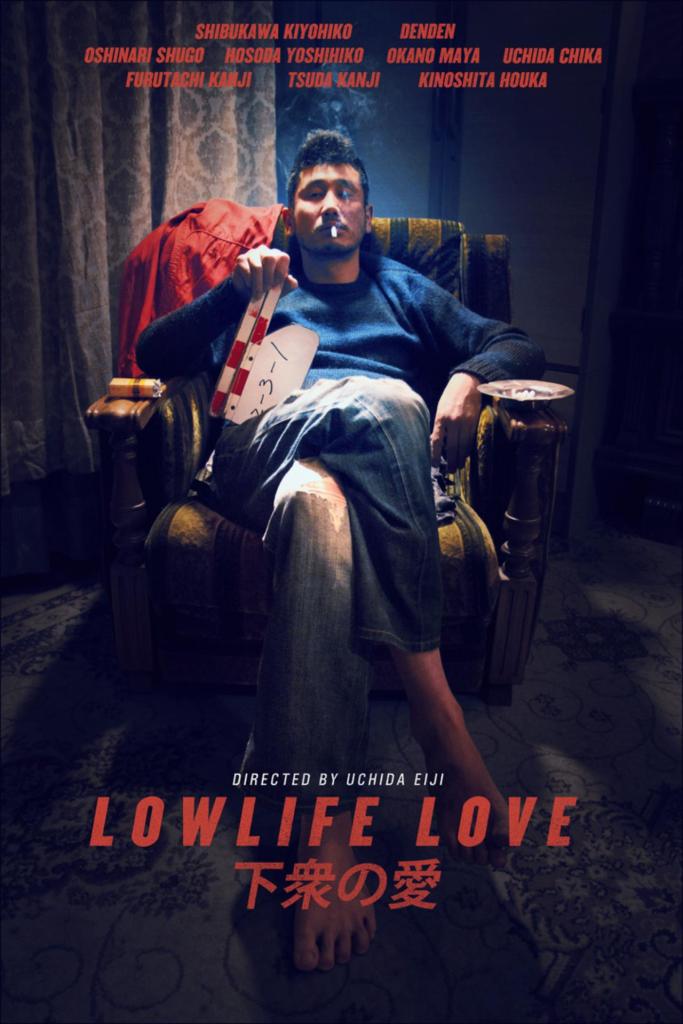
Lowlife Love“What would John do?” is a question Cassavetes loving indie filmmaker Tetsuo (Kiyohiko Shibukawa) often asks himself, lovingly taking the framed late career photo of the godfather of independent filmmaking in America down from the wall. Unfortunately, if Cassavetes has any advice to offer Tetsuo, Tetsuo is not really paying attention. An example of the lowlife scum who appear to have taken over the Japanese indie movie scene, Tetsuo hasn’t made anything approaching art since an early short success some years ago and mainly earns his living through teaching “acting classes” for young, desperate, and this is the key – gullible,  people hoping to break into the industry.
Despite ripping off the next generation, Tetsuo’s financial situation is not exactly rock solid as he still lives at home with his parents and younger sister and even resorts to stealing his elderly mother’s pension money all in the name of art. A low level sociopath, he bangs on about movies and artistic integrity whilst using his directorial authority to pull young and naive would be actresses onto the casting couch with promises to make them a star through the massively successful movie he’s supposedly about to make (but probably never will).

His world is about to change when he encounters two still hopeful entrants into the movie industry in the form of aspiring actress Minami (Maya Okano) and shy screenwriter Ken (Shugo Oshinari ). Ken’s script is good, and Minami shows promise as an actress but also a backbone as she’s unwilling to give in to Tetsuo’s clumsy pass at her through what actually amounts to an attempted rape in the (unisex) toilet of a seedy bar. And they say romance is dead!

Soon enough a rival appears on the scene in the form of a more successful director who abandoned the indie world long ago in favour of the golden cage of the studio system. Tetsuo calls him a sell out, but as his own world crumbles Tetsuo finally gets a much needed reality check that leaves him wondering how much “integrity” there is in his current life which is based entirely on exploitation yet produces nothing but cheap, instant gratification.

This is a film about a sociopathic, pretentious, and above all lazy “film director” who is being cast as a representation of a certain type of guy found the lowest edges of the indie film scene. Lowlife Love seeks to illuminate the inherent misogyny in the cinema industry and more particularly at the bottom of the ladder where the desperate masses congregate, each waiting for someone to extend a hand down to those below that will help them onto the higher rungs, but this is less about the subjugation of women and the way their lack of status is consistently used against them than it is about Tetsuo’s own fecklessness. Tetsuo probably could make a movie, but he doesn’t. He just talks about making movies. The system isn’t the problem here, Tetsuo is just a useless person with almost no redeeming features.

The successful director, Kano, and the ones that follow him are barely any better. Minami says at one point that directors are all crafty, filthy, bitter, and annoying – on the basis of these examples she is not wrong. Kano replies that filmmaking is like a drug, once you’re in there’s no out and you’ll do anything just to be allowed to stay. These guys are all hollow, desperate creatures, craving validation through “artistic success” but finding it through easy, loveless sex with “obliging” actresses equally eager to play this unpleasant game solely to avoid being thrown out of it or worse onto a lower stratum altogether.

Minami’s path is either one of growth or corruption depending on your point of view but the extremely shy, naive and innocent girl dreaming of becoming, not a star, but a successful actress, is gradually replaced by a manipulative dominatrix well versed in the rules of the game and unafraid to play it to the max. Whether her success is a fall or a victory is likewise a matter for debate but it contrasts strongly with the similar struggles of the veteran actress Kyoko (Chika Uchida) who even has a friend doing research on her targets so she can assess their usefulness before going all the way.

Unfortunately for her, even when she hits on a useful contact promises are easily broken, especially when you’ve already played your only bargaining chip and another, prettier player steps onto the field. A deleted scene features an embittered actress attempting to take her own life and uttering the final words that she never cared about stardom, she just wanted to keep on acting. This is an all too real response to an age old problem but one that Tetsuo and his like are much more willing to perpetuate than ease, even whilst mourning the loss of a friend to the unreasonable demands of their own industry.

Famously funded by a Kickstarter campaign and personal sacrifices of its producer, Lowlife Love features unusually high production values for an indie film and a fairly high profile cast including its leading actor, Kiyohiko Shibukawa, who has become something close to modern Japanese indie cinema’s most recognisable star. Performances are excellent across the board though the picture the film paints of the no budget indie world is extremely bleak and mean spirited. Porn, gangsters, exploitation, prostitution, and a lot of rubbish about creating art makes one wonder why anyone bothers in the first place but then we’re back to Kano’s conundrum and taking down our pictures of Cassavetes to ask what John would do. Sleazy, unpleasant and cynical, Lowlife Love’s cast of dreadful people in difficult situations yet, apparently, dreaming of the stars, is all too plausible if a little hard to watch.


Lowlife Love (下衆の愛, Gesu no Ai) was financed through a Kickstarter campaign run by Third Window Films and is currently shipping to backers with a regular retail release scheduled for a later date.

Lowlife Love will also be shown as part of the Edinburgh International Film Festival on 22nd and 23rd June 2016.

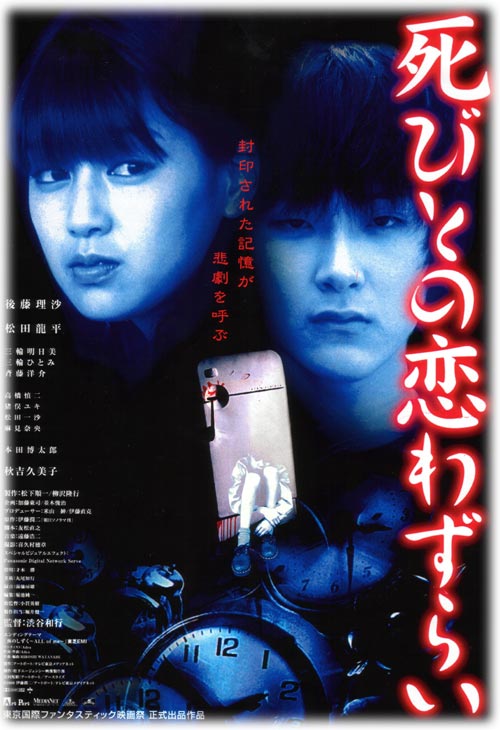
Love Ghost (死びとの恋わずらい, Kazuyuki Shibuya, 2001)

love ghost posterWhat is it about ghosts and high school girls? Maybe it’s shrines and graveyards mothers ought to be warning their daughters about rather than moody guys with motorbikes. Anyway, the somewhat salaciously titled Love Ghost (死びとの恋わずらい, Shibito no Koiwazurai) is not quite the film it claims to be, though it is haunted by the violent spirit of strong emotion. Innocent high school romance is suddenly infected with the cruel complications of adult love, mental illness, and suicide as a strange curse descends over a previously peaceful town.

Taking on the classic “mysterious transfer student” role, protagonist Midori (Lisa Goto) is about to set off for her first day in a new school after moving back to her home town ten years after her father left the family for another woman. Midori is frequently plagued by a recurring nightmare in which she indulges in the local practice of Tsuji-ura whereby girls wait near the temple and ask a passerby what they think their chances are with their current crush. Only, Midori’s visions have started to bleed into the real world and often end in a storm of fire and blood. For this reason she finds herself unable to enter the school building but is rescued by new classmate, Suzue (Asumi Miwa), who shows her another way in. On the way the pair meet clueless popular boy Kotaro (Takahashi Shinji) who is instantly smitten with the new girl, much to Suzue’s consternation.

Kotoro is, to put it mildly, a little on the dim side and either hasn’t noticed that the entire population of the school, including his good friend Suzue, is love with him or is just refusing to acknowledge it. Romance is the major occupation of the school girls who spend their break times reading tarot cards and talking about Tsuji-ura and the handsome boy dressed in black who often appears there, be he a force for good or ill. Midori isn’t really interested in her classmates but is captivated by the near silent boy at the back of the room whom everyone else is ignoring. She eventually recognises him as a boy she knew before she left and used to play with all the time. Meeting up on the roof, Ryusuke (Ryuhei Matsuda) reveals he’s been waiting for her to come back all this time. However, there is definitely something strange about this quiet boy, not to mention the ever expanding mould stain in Midori’s bathroom…

There’s a lot of obviousness in Love Ghost, but this is later revealed to be a master stroke undercutting the extreme reversals of the big reveals. Madness quickly takes hold in the school, fortunately it does not claim many victims though those who do succumb find themselves cutting their own throats out of sense of heartbroken helplessness unable to accept the fact that their romantic destinies are not the ones they would have chosen.

On the one hand there are Midori’s recurrent memories of her idyllic childhood playing with Ryusuke in beautiful green, sunlit forests which later gives way to tentative teenage romance – a perfectly natural development. However, that’s set against the increasing strangeness of the environment with its oddly ethereal atmosphere. The other girls are experiencing a dangerous kind of romantic madness turning to obsessive, unrequited love yet Midori’s own experience is seemingly a gentle and innocent one. Of course, there’s more to it than that, and Midori’s world is also “unreal” in a hundred other ways. As usual, her link to the curse is tied up with her long buried past which must once again be exposed to the light in order to move forward and finally bid goodbye to the ghosts of forgotten cruelty.

Love Ghost’s central curse is a little confused and never satisfactorily explains itself. There might be more to say about the way the intense emotions of adolescence don’t always dissipate on reaching adulthood in the way they are supposedly intended to, or about the obsessive preoccupation the schoolgirls have with romance, but Love Ghost isn’t interested in any of that. In fact, it’s a little confused what it is interested in but at heart its a series of intertwined ghost stories as Midori haunts herself whilst still alive with memories of the childhood cruelly ripped away from her by the selfish actions of a stranger which have also left her with a deep seated sense of unresolved guilt. An imperfect exercise, Love Ghost has little to recommend it aside from providing an early outing for later star Ryuhei Matsuda yet does offer a poetic, if poorly put together, take on a teen ghost story that is like to offer more to fans of supernatural romance than of J-horror gore.


Love Ghost is available on R1 US DVD from Tokyo Shock.

US release trailer:

The Music (音楽, Yasuzo Masumura, 1972)

The MusicIf the under seen yet massively influential director Yasuzo Masumura had one recurrent concern throughout his career, passion, and particularly female passion, is the axis around which much of his later work turns. Masumura might have begun with the refreshingly innocent love story Kisses, but later he dived deep into the depths of depravity in Blind Beast and of manipulation in Manji before cycling back around the intense freudian character study which is The Music (音楽, Ongaku) in 1972. Based on a novel by Yukio Mishima (Mishima and Masumura – a match made in heaven), The Music is the story of one woman’s corrupted sexuality caused by a series of inappropriate sexual encounters during her childhood.

The film begins with a symbolic title sequence in which a large pair of scissors opens and closes rhythmically before being superimposed over the body of a woman – Reiko, our protagonist. She has made an appointment with a psychiatrist because, she claims, she has strange symptoms including constant nausea which led her to believe she was pregnant though medical doctors can’t find the cause of her sickness. The other thing is she can’t hear music, she can hear voices and sound effects but if music starts playing it’s like she goes deaf. Her psychiatrist isn’t quite convinced by Reiko and can tell she’s misleading him.

Sure enough he asks her to come back and she admits not hearing music was a symbolic way of explaining that she derives no pleasure from sex. Her boyfriend is a good man and she loves him, she doesn’t think the problem is with him, but she simply feels nothing when he touches her and it’s causing a rift in the relationship. This is the “music” she was talking about and which will become a recurrent motif throughout the film. Later, Reiko finds that she is able to derive a kind of satisfaction from sexual acts with men who are either dying or impotent, but should they simply get better she again loses all interest in them.

As might be expected, the reasons for Reiko’s strange behaviour lie in her childhood. Her fascination with scissors derives from a game of rock paper scissors she once played with the boy to whom she was betrothed to marry when they came of age. Reiko is the only girl in the group and when she loses the boys suddenly declare she’ll have to have her “thing” cut off – only she’s a girl and never had one in the first place. This leaves her feeling disturbed, humiliated, and in some way inherently deficient. From this point on she develops a masculine sensibility symbolised by one side of the closing scissors which becomes her own “thing”, leaving her with a desire for both cutting and being cut.

We also discover that Reiko was assaulted at a young age and that she also experienced early sexual contact with a family member as well as witnessing her aunt engage in an inappropriate relationship which greatly disturbed her. In all, it’s not surprising that Reiko is experiencing such a degree of confusion given all of the traumatic events that have followed her since her youth. Involved in an obsessive, incestuous sexual relationship Reiko is unable to move on with a “normal” life until she addresses the true cause of all her problems.

The psychiatrist is wiley guy, he can spot a lie a mile off and he has Reiko’s number pretty quickly. Amusingly, she does our job for us of trying to diagnose herself with the obvious solutions that seems to emerge from the latest story she’s told, only for the doctor to remind her it’s not so simple and untrained people shouldn’t try to analyse themselves. This is a little ironic in some respects as a trained psychologist would probably give much of Mishima’s cod Freudianism short shrift, but it works well enough in the context of the film. Reiko is about as unreliable a narrator as it’s possible to find but it does seem at last that the truth has been uncovered and Reiko set free from her improper sexual desires.

There’s a degree of campness involved in The Music with its heavy atmosphere and overtly theatrical melodrama. Masumura films with a perverse eye, animating Reiko’s recollections like dreams complete with bizarre perspectives and symbolic imagery to complete his Freudian approach to filmmaking. The Music may not be his most accomplished work, but it is nevertheless interesting and a late career return to his most pressing concerns.


Unsubtitled trailer (NSFW):

The Suicide Song (伝染歌, Masato Harada, 2007)

Suicide Song US Tokyo Shock DVD Cover
US Tokyo Shock DVD cover

There comes a time in every director’s life when fate leads them down the strangely tempting path of the idol movie. In recent years, sweet and innocent is no longer quite enough to cut it and when your film stars a bunch of kids from AKB48, you’re going to need 48x the kawaii factor so even though the DVD cover is suitably macabre and The Suicide Song (伝染歌, Densen Uta) is marketed as a J-Horror movie, there’s quite a lot more singing and dancing than might be reasonably expected.

In true idol star horror movie fashion, the film begins with some cutesy high school scenes before one student, Kana (Atsuko Maeda), starts in on her teacher who basically wants to skip a whole bit of the text book because it’s not on the exam. The potentially irrelevant teaching matter concerns famous Japanese playwright Chikamatsu whose big thing was, you guessed it, double suicides. Shortly after this, Kana is heard singing a weird song and then cuts her own throat with a kitchen knife right in front of her friend and classmate, Anzu (Yuko Oshima). It seems there has been a spate of these spontaneous suicides of teenage girls which occur after singing this particular song so skeevy newspaper guys Macasa, led by occult obsessed Riku (Ryuhei Matsuda ) and his ex-military buddy Taichi (Yusuke Iseya), decide to do some “investigative journalism”. Anzu and some of the other kids wind up helping out too, eventually coming under threat of that very same curse….

The idea of a “suicide song” isn’t a new one. Gloomy Sunday – a 1930s Hungarian folk song which achieved widespread acclaim thanks to an English language cover version recorded by Billie Holiday in 1941 became an urban legend after numerous suicides were linked to the doleful track and its extremely bleak lyrics. This time around, it’s AKB48’s inoffensive Boku no Hana which apparently drives anyone who tries to sing it to their deaths. Like Gloomy Sunday, the song features extremely nihilistic lyrics which echo the existential confusion and romantic disillusionment that many of its young listeners are undoubtedly experiencing. A perfectly rational explanation for why so many young women might be taking their lives with this particular song on their lips, yet Suicide Song is not particularly interested in exploring the various real world pressures which might push high school students towards death when their lives ought to be just beginning.

It’s not long before the curse makes the leap to supposedly solid adult males. Later, one character tries to weaken the importance of the song by suggesting that it just opened a door for the suppressed feelings that were already there. That each of the victims already wanted to die and and simply allowed themselves to make use of this real world meme to give themselves permission to end it all. This is an interesting idea in some ways, though comes close to victim blaming and conveniently lets the central characters off the hook for failing to save their friends who have already fallen for what is either a curse or mass hysteria. In any case, like most Japanese horror movies and mysteries, the real villain is a circle of buried secrets. The traumatic past must be faced, brought out into the light and then given a proper burial to end the ongoing chaos.

Harada is playing a very strange game. He adds in generic J-horrorisms such as odd jump cuts, stuttering, power outages and possessed video footage as well as a good deal of shadiness in the form of the low rent newspaper guys and the investigation turning up something as dark as a teenage gang competing to see how many kids they can get to kill themselves using the song as a marker. Yet, he generally keeps things cute and light just like your average teen idol romance movie. We’re even treated to a very special AKB48 performance at their club in Akihabara (“Japan’s Most Sophisticated Show” !) where they sing Aitakatta for a room full of devoted middle aged guys who are their biggest fans. There are also frequent cinematic quotations from such Hollywood classics as Vertigo and The Lady From Shanghai (not to mention a completely shoehorned in paintball sequence using Ride of the Valkyries a la Apocalypse Now) which seem to hint at some kind of greater plan, but whatever it is never quite materialises.

Whatever Harada’s intentions may have been, Suicide Song is a strange beast which veers widely in tone from wacky comedy to supposed horror film. In actuality there are very few real scares despite the J-horror aesthetic and the comedy never amps itself up to the level of parody. If the intention was to create some kind of weird, subversive genre hybrid, the punches have been well and truly pulled. Watched as a horror movie Suicide Song is prone to disappoint, though its moments of absurd comedy and cute schoolgirl drama prove enjoyable enough for those able to adjust their expectations on the turn of a dime.


The Suicide Song is available with English subtitles on R1 US DVD from Tokyo Shock.

English subtitled trailer (aspect ratio is slightly stretched):