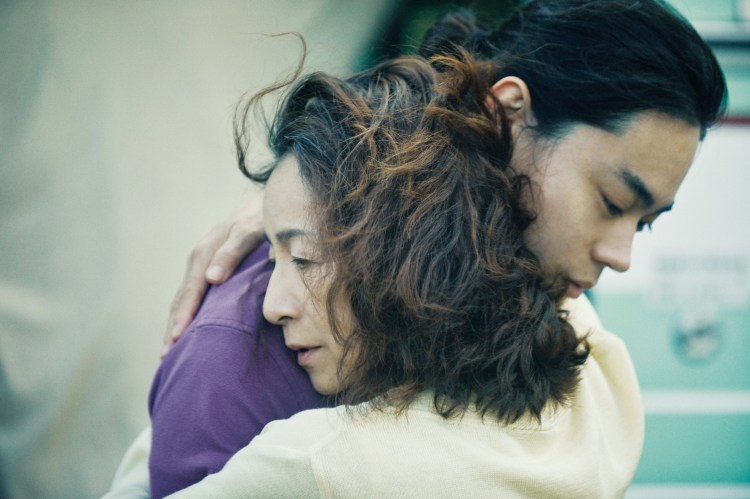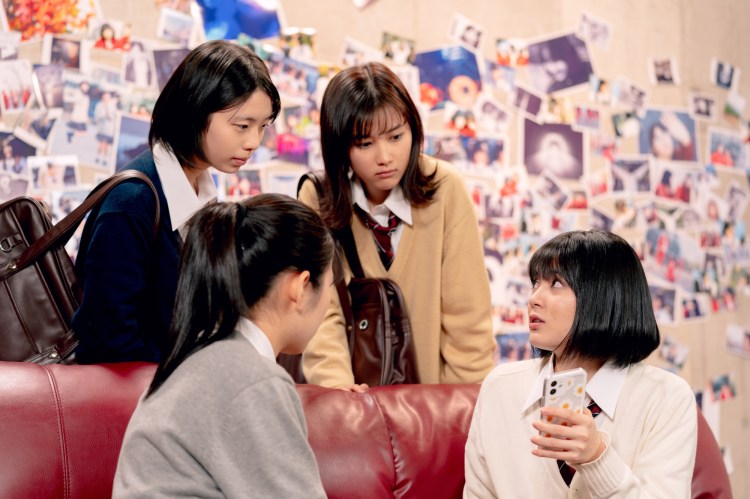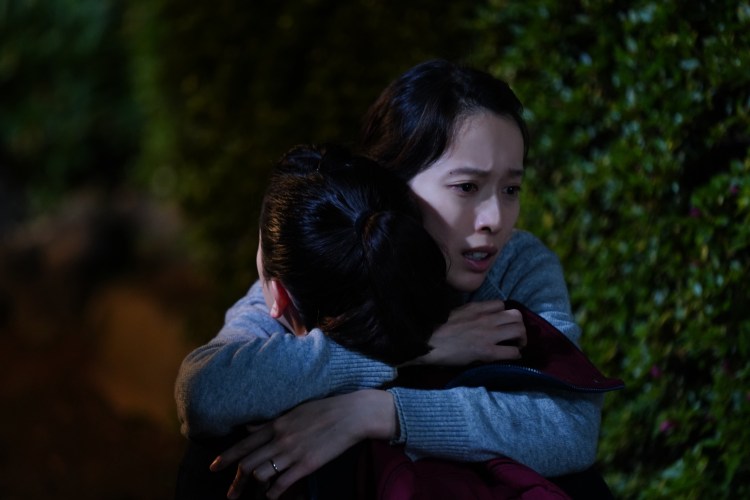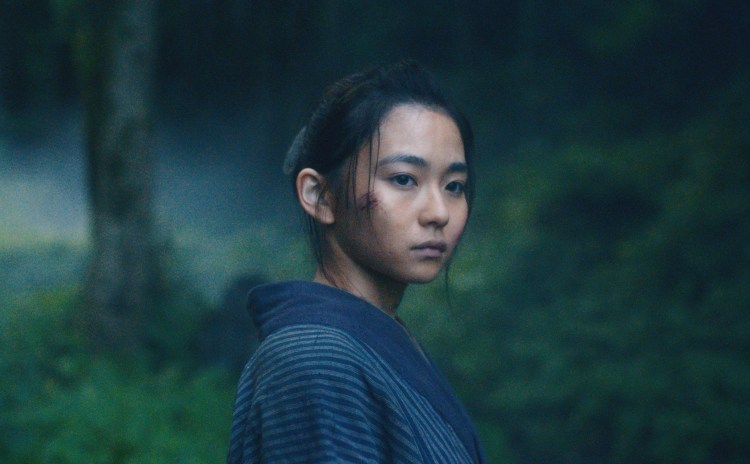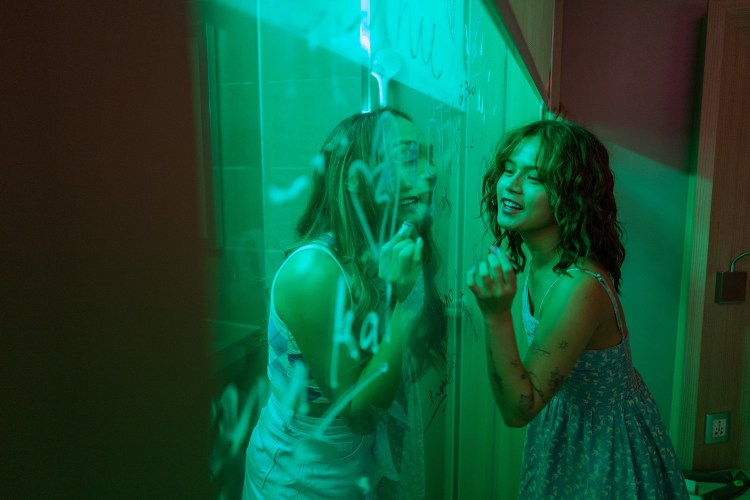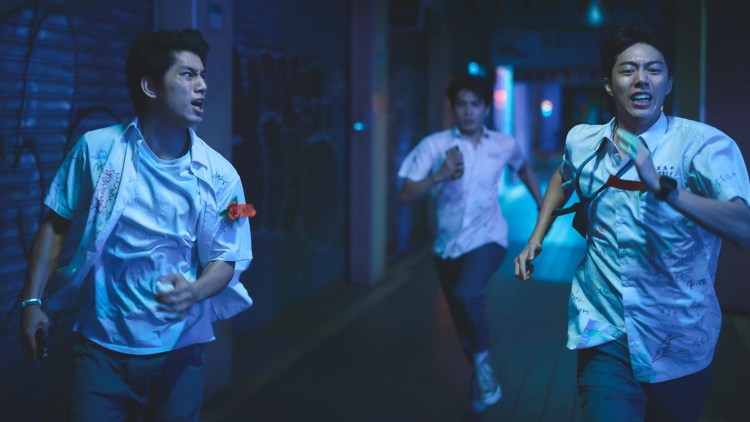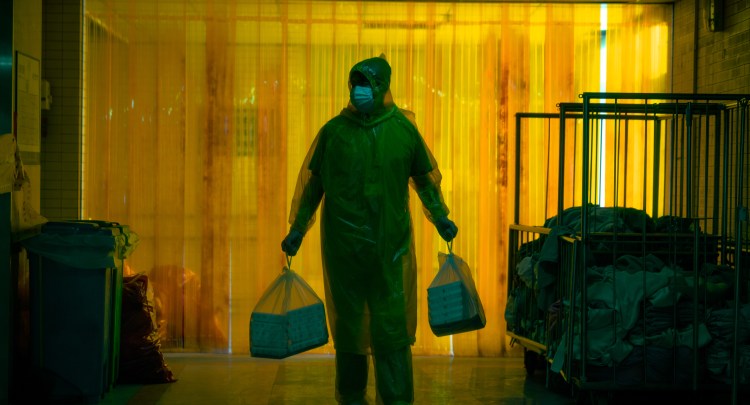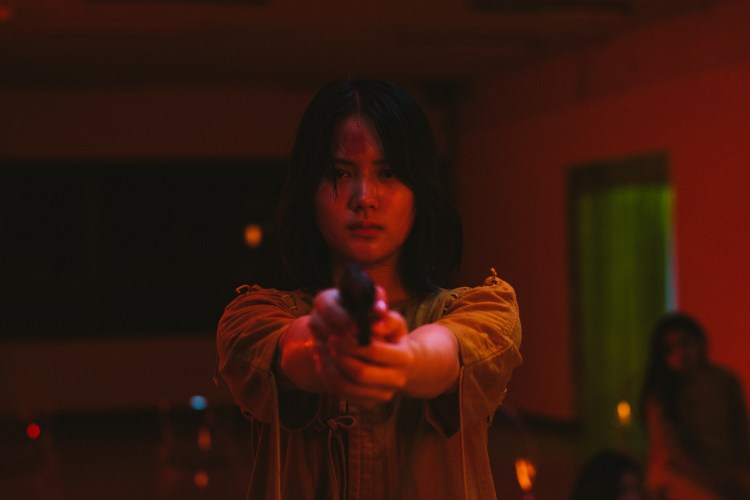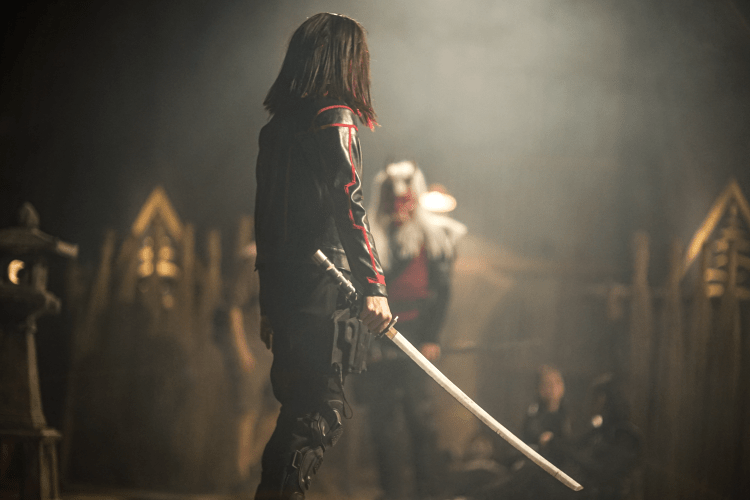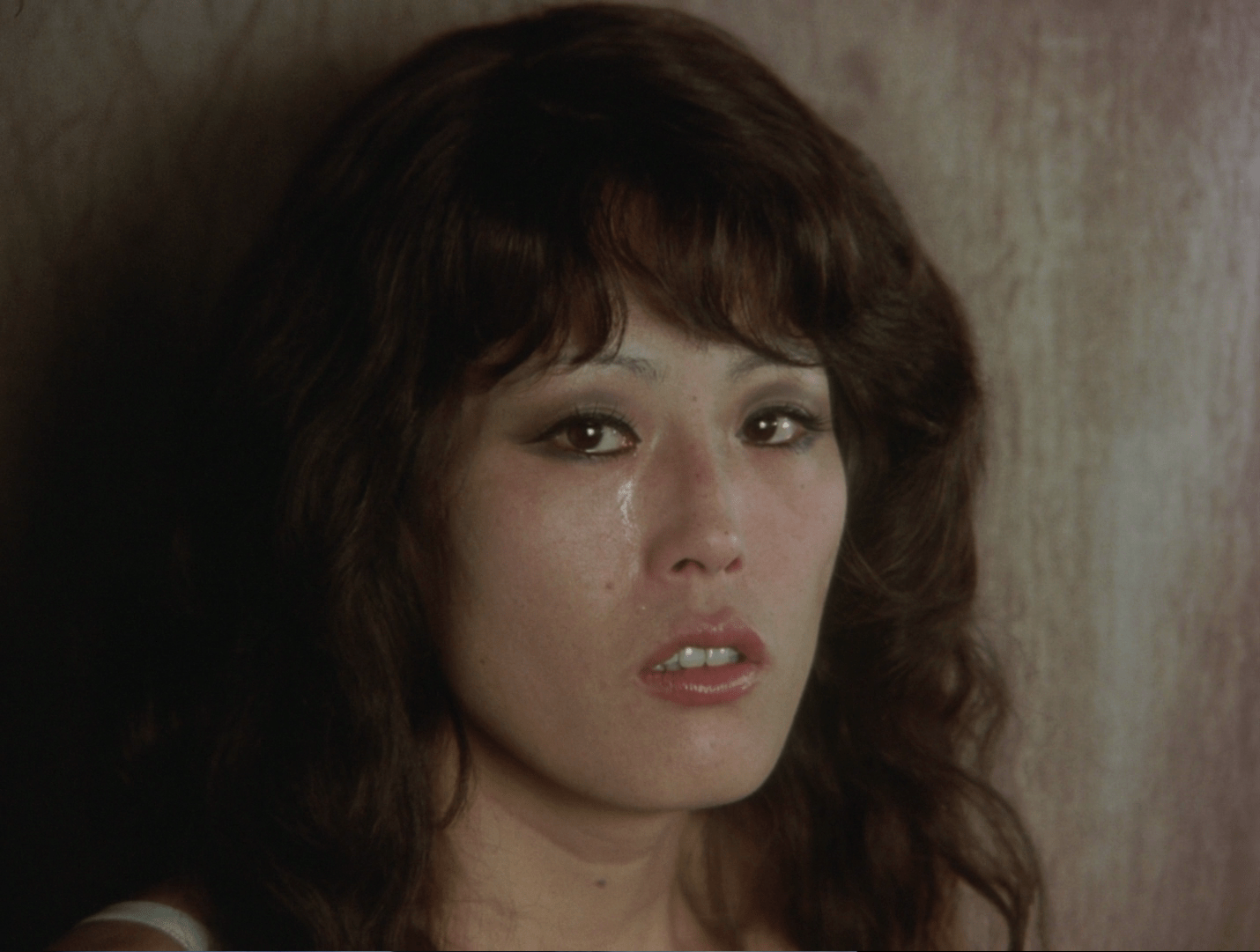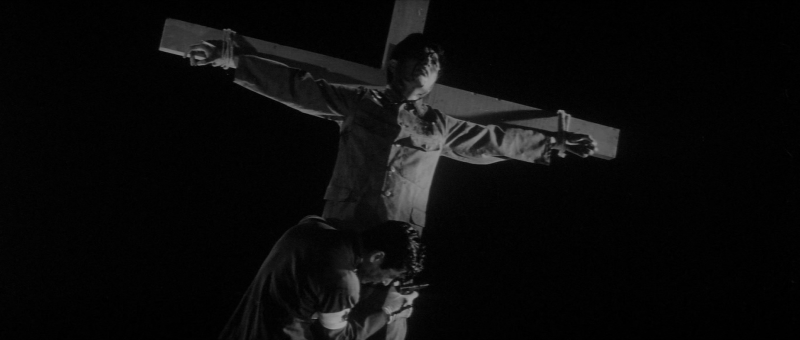
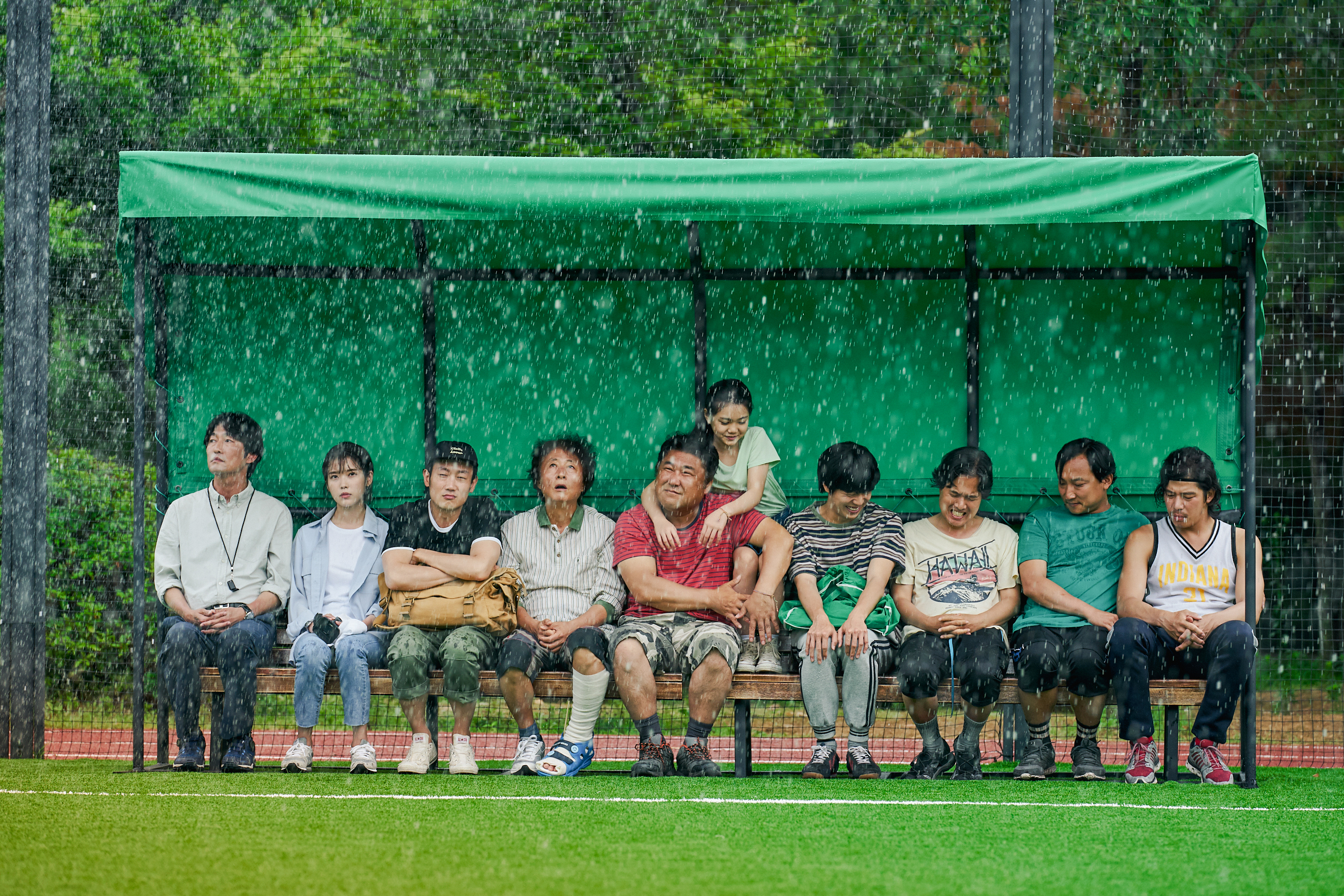
Dream (드림, Lee Byeong-heon, 2023)

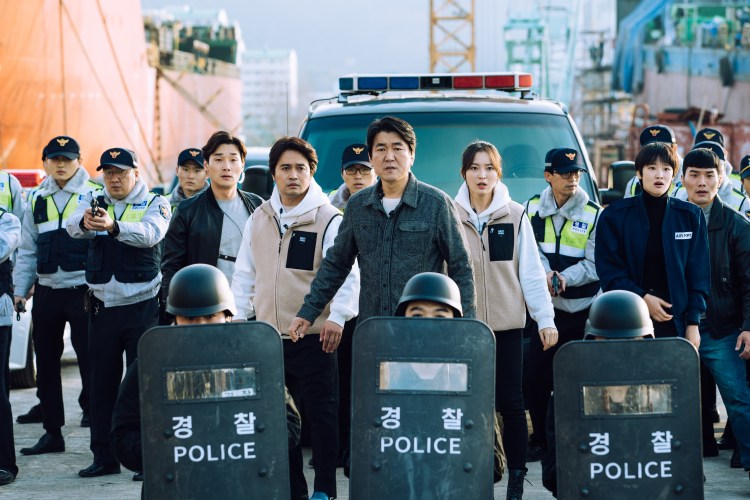
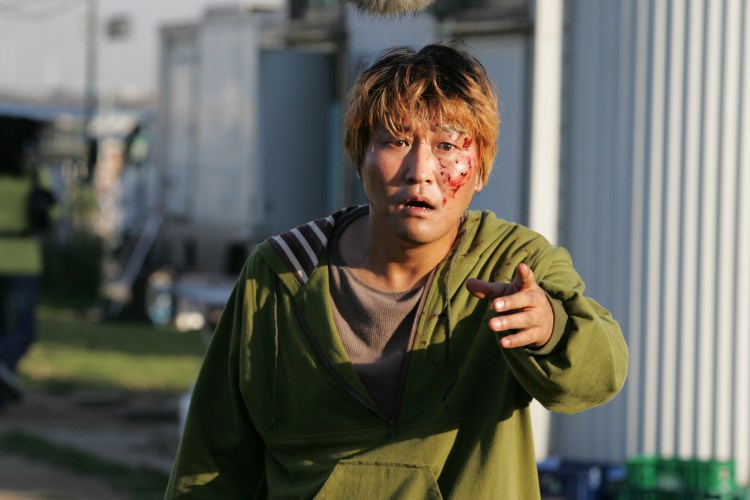
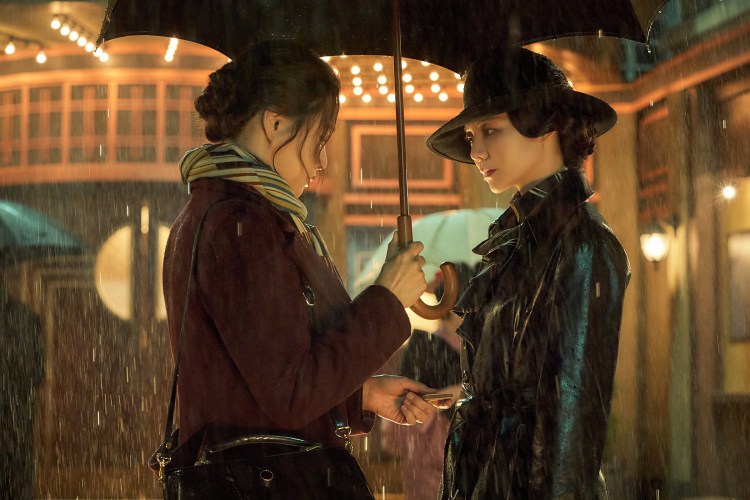
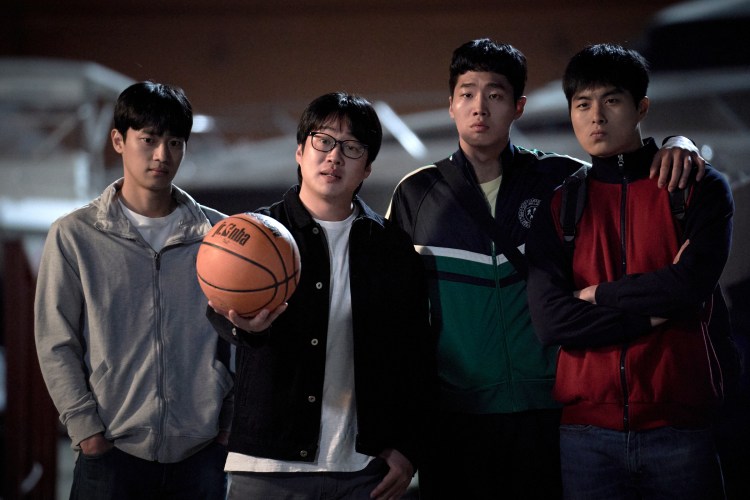
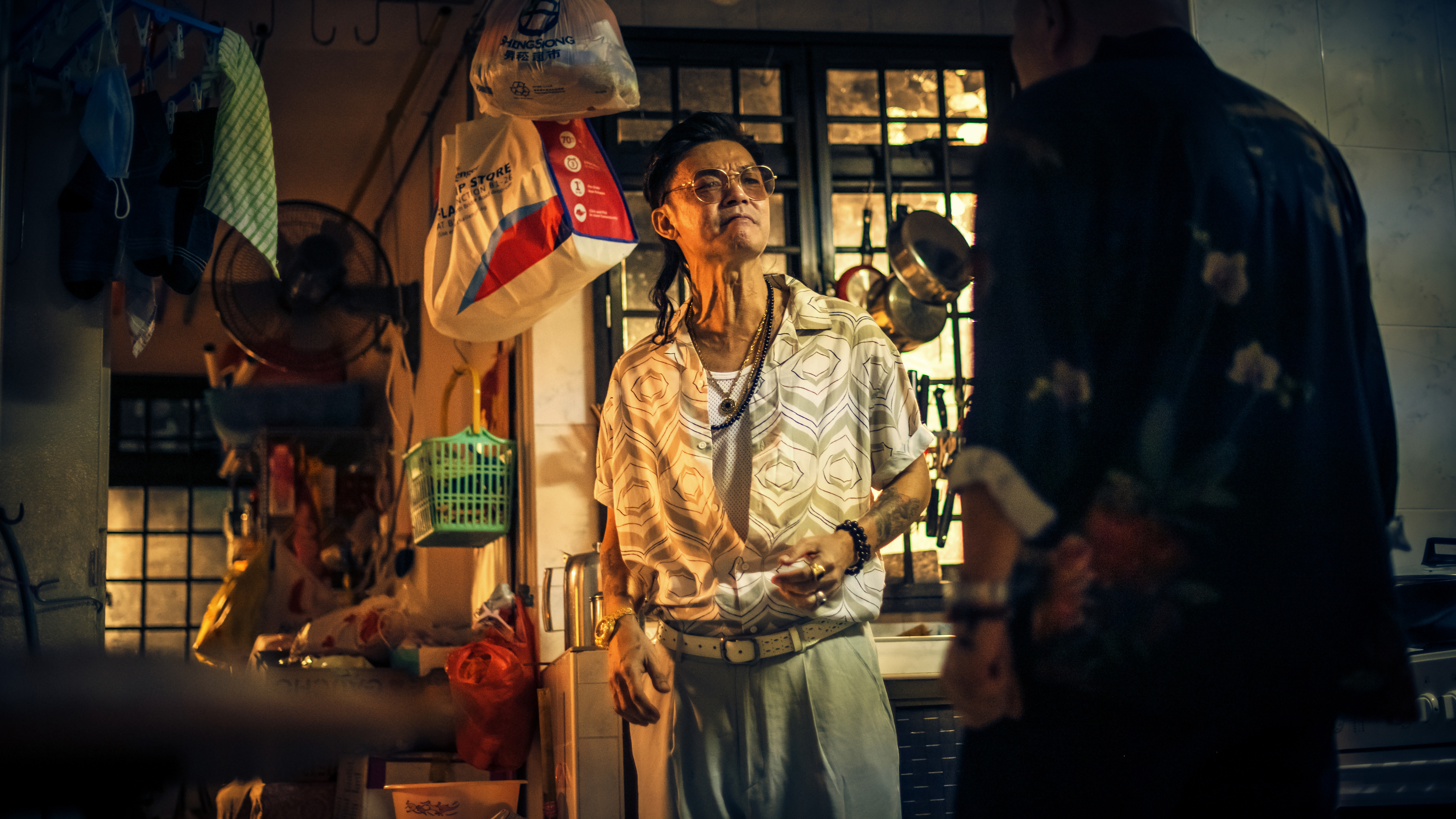
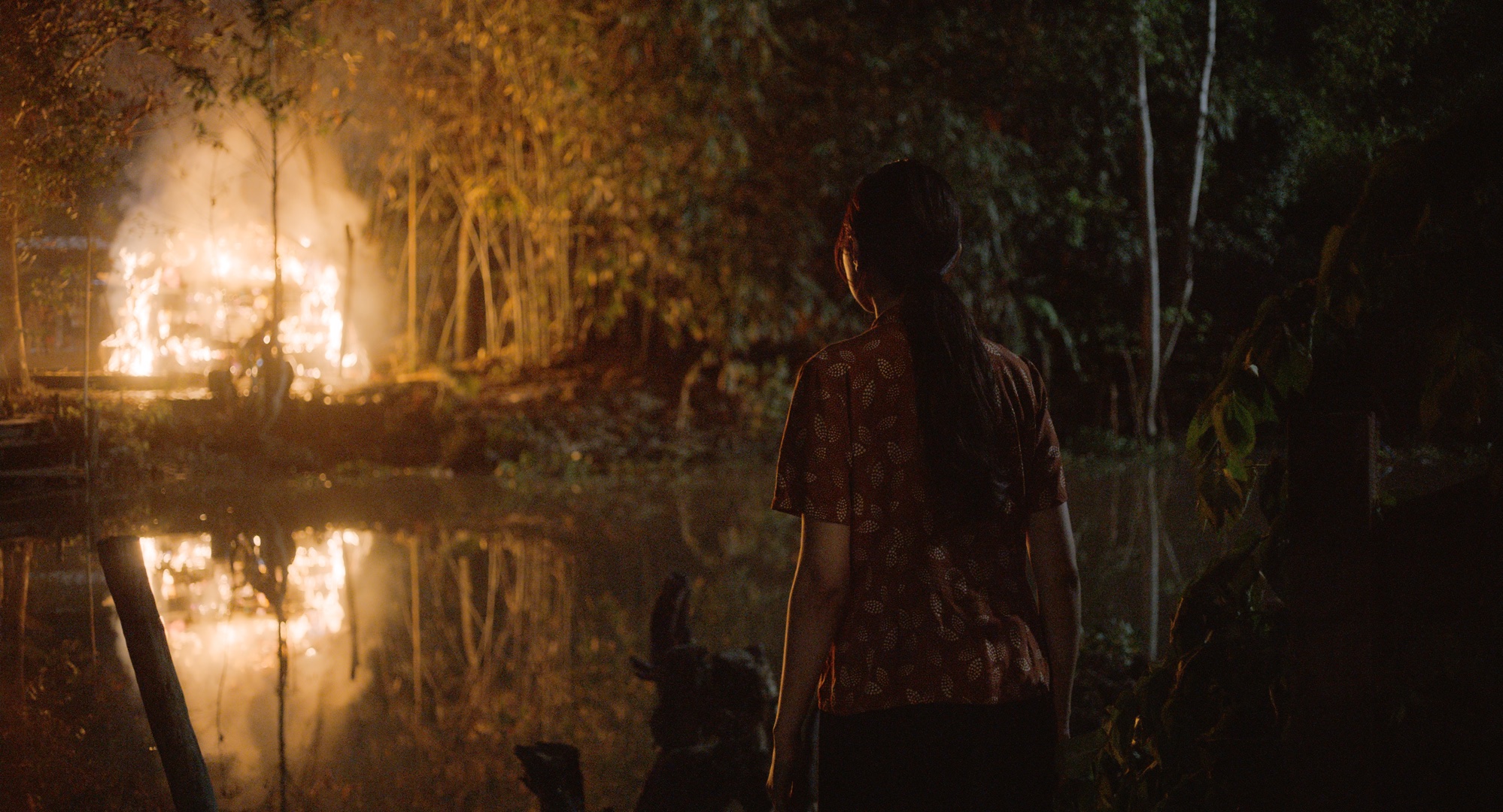
A disgraced football player gets a shot at redemption after agreeing to coach a team hoping to take part in the Homeless Olympics in Lee Byeong-heon’s sporting drama, Dream (드림). The Homeless Olympics was founded in order to advocate for the end of homelessness while combatting discrimination and stigma and takes place annually with teams of homeless people from all over the world taking part. Set in 2010 and inspired by the first Korean delegation to participate, the film is essentially an underdog sports drama in which the act of scoring a single goal is the same as an overall victory.

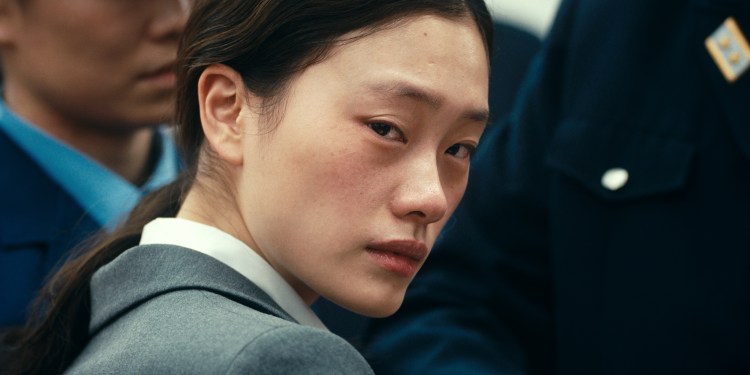
It is also, meanwhile, heavily critical of celebrity and sensationalist media each of which have a habit of latching onto popular causes in order to further their own careers. Hong-dae (Park Seo-jun) was a popular footballer insecure in his talents, but gained notoriety after poking an obnoxious reporter in the eyes when he repeatedly brought up the topic of his mother who happens to be a fugitive from justice. Deciding to retire from the game, Hong-dae is picked up by a talent agency who want to make him a star and is convinced to become the coach of the homeless football team in order to improve his personal brand while documentarian So-min (Lee Ji-eun) hopes to do something much the same by producing a semi-scripted reality show following the team’s fortunes.

Accordingly, So-min instructs Hong-dae to let her “cast” the key players on the basis of their touching backstories rather than their sporting ability. She comes up with a selection of people who have each for various reasons ended up on the streets but are looking for a way to turn their lives around and repair fractured relationships with family members. One man turned to booze and women while riding high but found himself out of luck when the Asian Financial Crisis ruined his business, while another claims that he’s not really homeless just lying low for a while, and a third was scammed by a friend and saddened by the impending exit of his ex-wife and daughter who will shortly be moving to Australia with her new husband. The film strays into more interesting territory in exploring the story of 44-year-old Beom-su (Jung Seung-gil) who ended up on the streets after a workplace accident left him with a chronic illness he did not have the money to treat, but otherwise falls into the same trap as So-min’s documentary in taking a fairly superficial view of homelessness. By the end of the film many of the players have thankfully moved into stable accommodation but do so largely without explanation aside from having apparently managed to save up for a deposit. 

Positioning their battle for sporting success as a means of reclaiming their self-esteem might also uncomfortably suggest that the reason they’re on the streets is a matter of mental attitude while ignoring other systemic issues that led them there or prevented them from moving on (assuming that they wish to do so). Aligning their struggles with Hong-dae’s and to a lesser extent So-min’s might do something similar while they too are also battling cynicism and self-esteem issues, Hong-dae continuing to blame his mother for his problems complaining that he was born to be second place because she never put him first. As Hong-dae later points out, So-min is also to an extent exploiting the homeless in trying to create an inspirational narrative for her TV show before she like everyone else realises there are other ways to win besides the literal. 

The final message is more one of never giving up as the team finally travel to the Olympics and find themselves out of their depth before deciding to give it everything they have even if it’s very unlikely they will win. There had indeed been discrimination in Korea, a sponsor pulling out describing the homeless as “smelly and disgusting” and expressing a degree of squeamishness about involving them with their brand, but at the Olympics they become the most popular team despite their lack of skill purely because of their charismatic perseverance. One player’s late in the game announcement that he is gay but has now come to accept himself in the knowledge that the problem lies with the world that will not accept him also makes the case for a greater equality if perhaps clumsily conflating two different issues. Nevertheless, IU’s lively performance and the film’s warmhearted tone help to overcome any mild sense of discomfort in its otherwise genial tale of never giving up and regaining your self-esteem even if you feel as if the world has already abandoned you. 


Dream screens July 17 as part of this year’s New York Asian Film Festival.

International trailer (English subtitles)

Images: © 2023 PLUS M ENTERTAINMENT & OCTOBER CINEMA INC. ALL RIGHTS RESERVED.

Lost in the Stars (消失的她, Cui Rui & Liu Xiang, 2023)

A desperate husband with five days left on his visa finds himself at the mercy of a foreign police department when his wife suddenly disappears into thin air during their honeymoon in a fictional South East Asian nation in Liu Xiang & Cui Rui’s hugely entertaining mystery thriller Lost in the Stars (消失的她, xiāoshī de tā). Produced and co-scripted and produced by Detective Chinatown’s Chen Sicheng, the film draws inspiration from the 1990 Russian drama Trap for a Lonely Man which was itself adapted from a 1960 French play, Piège pour un homme seul, which Alfred Hitchcock had once been interested in adapting. 
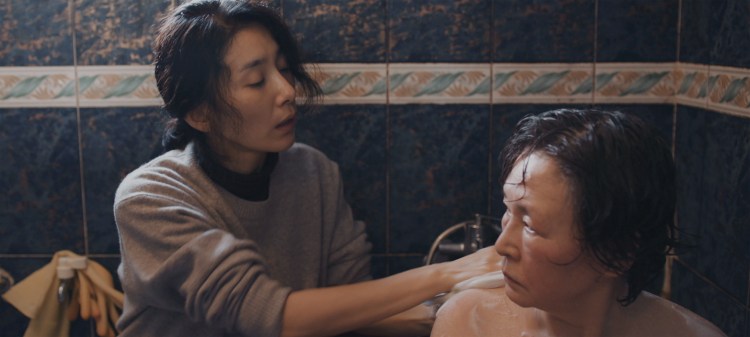
It’s not difficult to see why seeing as the film revolves around a classic “wrong man” in frantic husband He Fei (Zhu Yilong) who like so many Hitchcock heroes is left feeling like the only sane man in an insane world when he wakes up next to a woman who claims to be his missing wife only he’s never seen her before and is adamant that something untoward must be going on though all the evidence points to the contrary and no one really believes him. The film never really entertains the possibility that the “fake” wife (Janice Man) is indeed telling the truth and Fei is undergoing some kind of psychotic break but does leave a question mark over his mental state and credibility on revealing that he is suffering from a neurological condition caused by his work as a diving instructor for which he is on serious medication. 

In any case, the film opens with him bursting into a local police station exasperated with their lack of interest in his wife’s disappearance. In something of a trope in recent Mainland cinema, the action takes place in a fictional South East Asian nation which has shades of Thailand and Indonesia where the implication is the authorities don’t really care very much about a missing tourist. A Chinese policeman, Zheng (Du Jiang), eventually admits as much confessing that the police department is massively understaffed and only investigates “criminal” cases which they don’t believe his wife’s to be, rather that she most likely got fed up with Fei and has gone off of her own accord. Their lack of concern echoes a persistent theme in mainstream Mainland movies that the safest place for Chinese citizens is at home, an idea only reinforced by the film’s melancholy conclusion and the implications of Chen Mai (Ni Ni), a top international lawyer Fei meets by chance, who suggests that his wife may have been taken by an international trafficking ring. 

Nevertheless, in its various twists and turns the film also has a few things to say about class disparities in contemporary China in which as someone later says money may even buy the Devil’s soul. With his visa running out, Fei insists that he won’t leave without finding out what’s happened to his “real” wife and what’s going on with the “imposter” who soon drops any pretence and openly admits that she’s out to get Fei for reasons he finds unclear though assumes to be financial. Then again, we start to realise that perhaps he hasn’t been a hundred percent honest even with the information he’s giving Mai who is the only person interested in helping him find his wife who may or may not be at the mercy of vicious international gang backed by important people against whom an ordinary tourist like Fei or even an international figure like Mai has little power. 

While the film noticeably carries a strong anti-gambling message perfectly in tune with the censors’ sensibilities, it also has a surprising queer subtext in the quite obviously coded persona of super lawyer Mai who makes a dramatic motorbike entrance and then more or less steals the film as she tries to ascertain the whereabouts of Fei’s missing wife. Nothing is quite as it first seems, subterfuge piles on on subterfuge along with altered realities and personal myth making though the film’s title takes on a poignant note in the closing moments in which another starry image is presented in an attempt to evoke an emotional reaction from an otherwise heartless villain. Boasting excellent production values and elegant production design, the film is careful never to lose itself in its various twists and reversals before quite literally dropping the curtain on its extremely satisfying conclusion in which we discover just how far some are willing to go in pursuit of the stars.


Lost in the Stars is in UK cinemas now courtesy of CineAsia.

Trailer (Simplified Chinese / English subtitles)

Party 7 (Katsuhito Ishii, 2000)

“This shit’s for real.” according to the front desk guy at Hotel New Mexico, an out of the way spot just perfect for those looking to lay low for a little while. Like a lot of Katsuhito Ishii’s work, Party 7 is essentially a series of self-contained vignettes which eventually collide following a series of bizarre coincidences revolving around some money stolen from the mob, a two-way mirror in a regular hotel room, and the receptionist’s tendency to almost literally shoot the shit. 

Following a brief prologue, Ishii opens with striking animated sequence which introduces each of the main players with an arcade game aesthetic and explains that Miki (Masatoshi Nagase) has stolen money from the mob and is currently on the run which is why he’s turned up at the infinitely weird Hotel New Mexico. The running gag is that Miki thinks he’s holed up somewhere no one will find him, but sure enough a series of “friends” soon turn up in part thanks to a loose-lipped travel agent. The fact that people can find it so easily dampens the impression of the Hotel New Mexico as some kind of interstitial space. It’s not so much existing in a weird parallel world as a bit run down and staffed by a series of eccentrics. It does however have a “peep room” hidden behind a two-way mirror where “Captain Banana” (Yoshio Harada) is attempting to pass his knowledge on to the young Okita (Tadanobu Asano), the son of a recently deceased friend who has been repeatedly arrested for voyeurism. 

Captain Banana’s insistence on his surreal superhero suit is in a way ironic, if perhaps hinting at the super empowerment of accepting one’s authentic self. “It’s your soul,” he tells Okita, “it’s screaming ‘I want to peep’.’” Meanwhile, Miki gets into an argument with his ex-girlfriend Kana (Akemi Kobayashi) who has turned up in the hope of reclaiming money that he owes her. Kana too seems to be less than rigorous with the truth if perhaps emotionally authentic. She’s now now engaged to a nerdy guy having somewhat misrepresented herself as the innocent girl next-door type. Her refusal to let her fiancé into her apartment perhaps hints at a more literal barrier to intimacy or at least that she is intent on preventing him from seeing her true self. What she doesn’t know is that her fiancé hasn’t been completely honest either, in part because he thinks she’s out of his league and is insecure in their romance. 

Miki too maybe somewhat insecure, having run off with the gang’s money after hearing them bad mouth his associate Sonoda (Keisuke Horibe) who has now been charged with killing him and getting the money back. But Sonoda too has reasons to doubt the boss’ affection for him after Miki and the others point out that gifts he thought were so valuable are really just cheap knock offs that suggest the boss thinks very little of him at all. Okita’s psychiatrist tells him that there are “no rules in making friends”, and maybe in a strange way that’s what everyone is trying to do. Kana wanted the money to overcome her anxiety about having no friends or family to invite to the wedding, while all Sonoda wanted was the boss’ approval and though Miki had deliberately gone somewhere he thought no one would find him nevertheless attracts a series of followers. 

Even the receptionists seem to be desperate for human contact with their strange stories of poo falling from the sky and bizarre approach to hospitality. “The point is whether you believe it or not,” one tells the other after spinning what sounds like a yarn but then again might not be. Ishii’s zany world has its own surreal logic culminating in a piece of cosmic irony and defined by coincidence as the otherwise unrelated stories begin to come together and slowly find their way to Hotel New Mexico but seems to suggest the point is in the serendipity of the meeting and its concurrent authenticity even if a literal shot in the arm is a less than ideal way of brokering a friendship.


Party 7 is released in the UK on blu-ray on 17th July as part of Third Window Films’ Katsuhito Ishii Collection.

Original trailer (English subtitles)

New York Asian Film Festival Confirms 2023 Lineup

New York Asian Film Festival returns for its 22nd edition with another packed programme of recent East Asian cinema hits screening at Lincoln Center & Barrymore Film Center July 14 – 30. This year the festival will pay tribute to director Zhang Wei, while Junji Sakamoto will receive the Screen International Star Asia Lifetime Achievement Award, Ryohei Suzuki the Screen International Rising Star Asia Award, and Louis Koo the Extraordinary Star Asia Award. 

China

  • Art College 1994 – A collection of art students mull over the big questions while floundering in the complicated mid-90s society in Liu Jian’s nostalgic animation. Review.
  • The Cord of Life – a folktronica musician embarks on a roadtrip with his mother after learning she has Alzheimer’s.
  • Flaming Cloud – whimsical romantic fantasy in which a young man is cursed causing all who kiss him to fall into a deep sleep.
  • A Woman – dramatisation of Zhang Xiuzhen’s semi-autobiographical novel charting a woman’s life through the cultural revolution into the new China of the 1980s.

Filmmaker in Focus: Zhang Wei

  • Empty Nest – drama in which an elderly woman bonds with a young man selling healthcare products.
  • Factory Boss – drama following the owner of a toy factory contending with economic crisis.
  • Redemption with Life – drama from Zhang Wei in which the friendship between three bikers is tested by a series of get-rich-quick schemes.
  • The Rib (Director’s Cut) – drama in which a transwoman contends with her conservative father whose signature she needs in order to get confirmation surgery. Review.

Hong Kong

  • A Light Never Goes Out – a mother and a daughter take very different paths in trying to come to terms with grief in Anastasia Tsang’s poignant drama. Review.
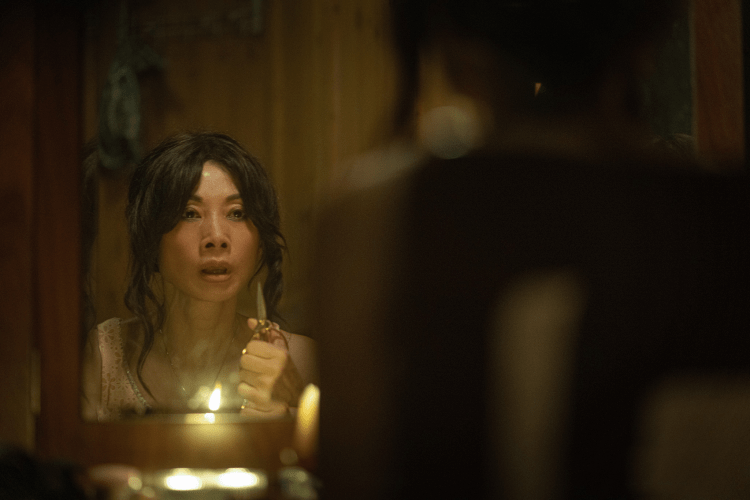
  • Back Home – folk horror in which a young man returns from Canada when his estranged mother falls into a coma.
  • Everyphone Everywhere – zeitesty drama in which three middle-aged friends reunite 25 years after high school as one prepares to go abroad.
  • In Broad Daylight – drama in which an investigative journalist goes undercover at a home for the disabled.
  • Mad Fate – mad cap supernatural noir in which a fortune teller and “born psychopath” team up to solve a murder.
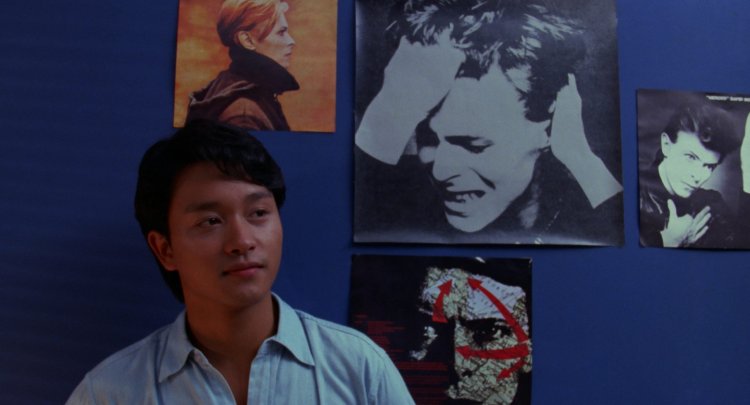
  • Nomad – Heavily censored on its release, Patrick Tam’s 1982 classic stars a young Leslie Cheung as an aimless young man from a wealthy family who spends his time hanging out with friends at the beach until his cousin’s romance with a fugitive from the Japanese Red Army threatens to upset their idle days. Review.
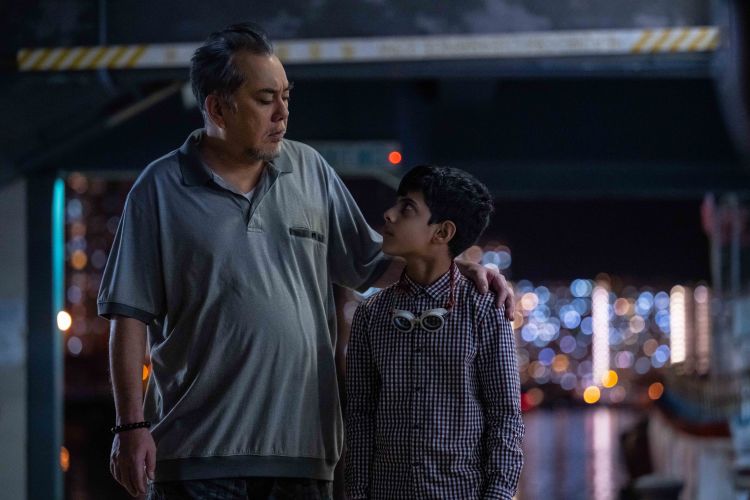
  • The Sunny Side of the Street – An embittered taxi driver is forced to reflect on his prejudices and relationships after getting into a vendetta with a refugee in Lau Kok-rui’s melancholy drama. Review.
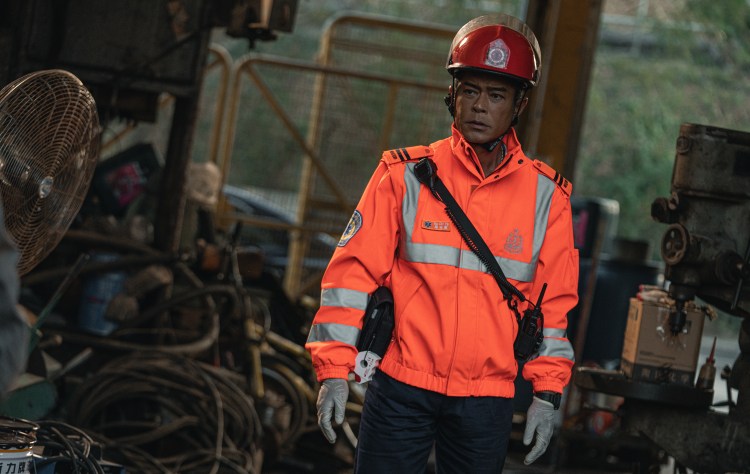
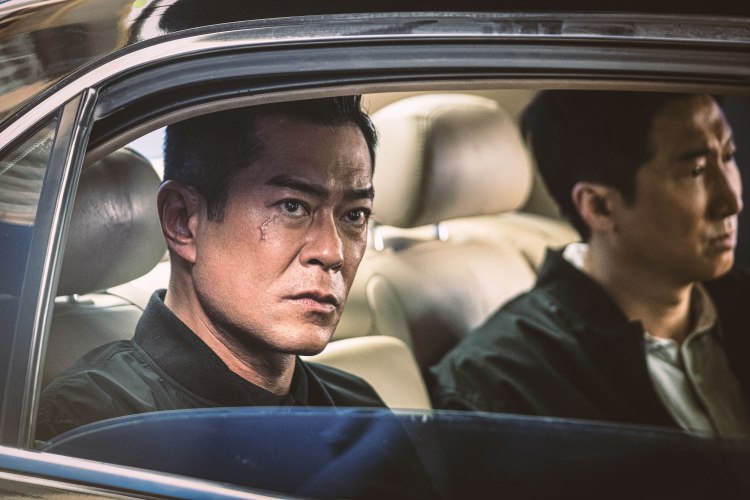
  • Vital Signs – drama starring Louis Koo as an earnest paramedic.
  • The White Storm 3: Heaven or Hell – the third installment in Herman Yau’s thematic series starring Louis Koo, Aaron Kwok, and Lau Ching-Wan.

Japan

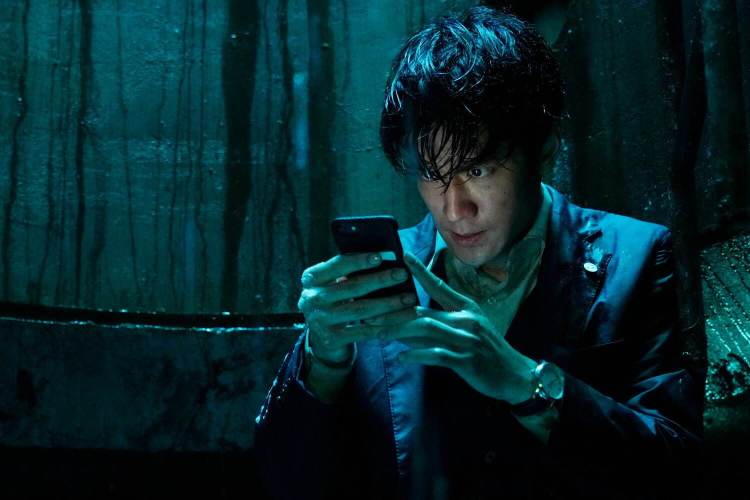
  • #Manhole – a salaryman’s moment of triumph is disrupted when he falls down a manhole the night before his wedding in Kazuyoshi Kumakiri’s unhinged B-movie thriller. Review.
  • December – Bereaved parents are confronted by the unresolved past when the woman who killed their daughter appeals her sentence in Anshul Chauhan’s empathetic courtroom drama. Review.
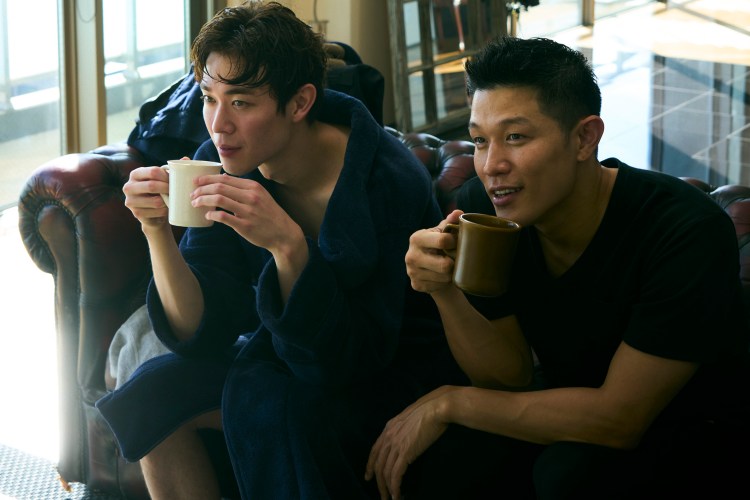
  • Egoist – a fashion editor reflects on the nature of love after falling for a personal trainer in Daishi Matsunaga’s deeply moving romantic drama. Review.
  • A Hundred Flowers – An expectant father finds himself confronted with paternal anxiety and past trauma on learning that his mother has been diagnosed with Alzheimer’s in Genki Kawamura’s adaptation of his own novel. Review.
  • In Her Room – eerie drama in which a shy dentist falls for a mysterious woman.
  • Mayhem Girls – pandemic-era drama in which a group of high school girls suddenly develop superpowers.
  • Motherhood – Ryuichi Hiroki adapts the Kanae Minato novel revolving around the complicated relationship between a mother and a daughter.
  • Mountain Woman – a young woman walks into the mountains to die but unexpectedly discovers what it is to feel truly human in Takeshi Fukunaga’s bleak folk tale. Review.
  • Okiku and the World – a samurai’s daughter falls for a lowly manure man in a city on the brink of change in Junji Sakamoto’s touching dramedy. Review.

Malaysia

  • Abang Adik – drama centring on the relationship between two orphaned young men.

Philippines

  • 12 Weeks – drama in which a woman attempts to secure a safe abortion in a fiercely pro-life culture.
  • I Love You, Beksman – a flamboyant hairdresser scandalises his family when he comes out as straight after falling for a beauty queen in Percival M. Intalan’s ironic comedy. Review.
  • Where Is the Lie? – drama in which a transwoman is targeted by cyberbullies.

South Korea

  • Bear Man – surreal comedy in which two bears managed by the North Korean Institute of Technology disappear one day.
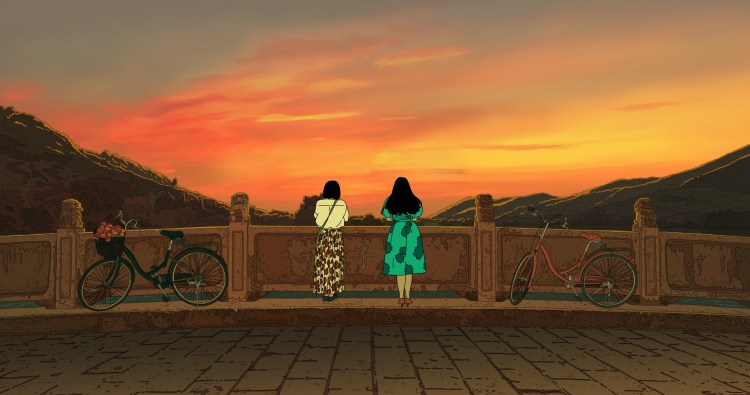
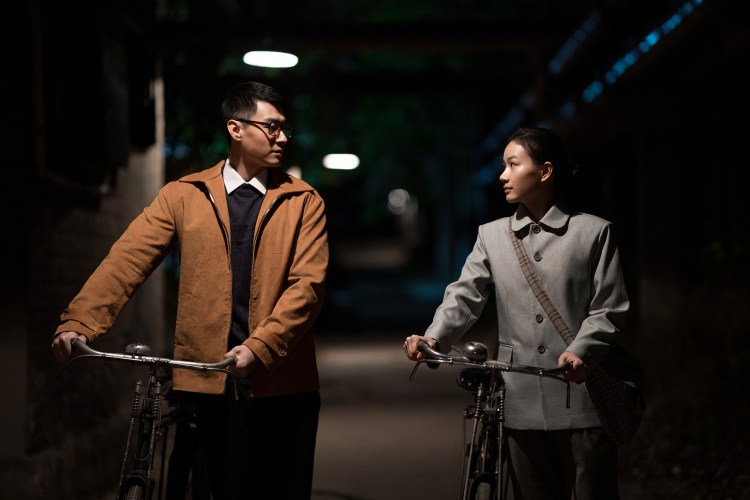
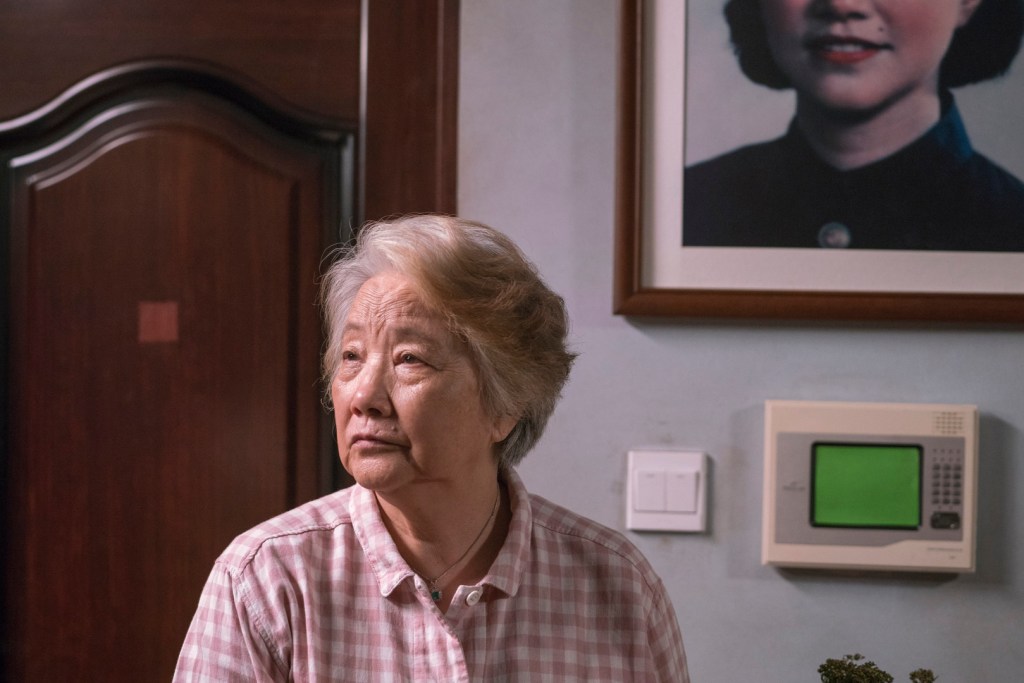
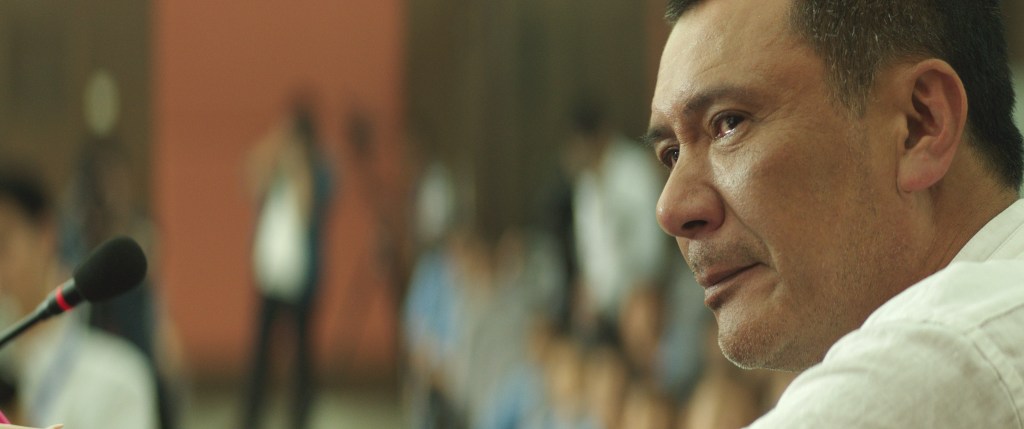
  • Dream – inspiration sporting drama in which a washed up footballer agrees to coach a team of homeless men.
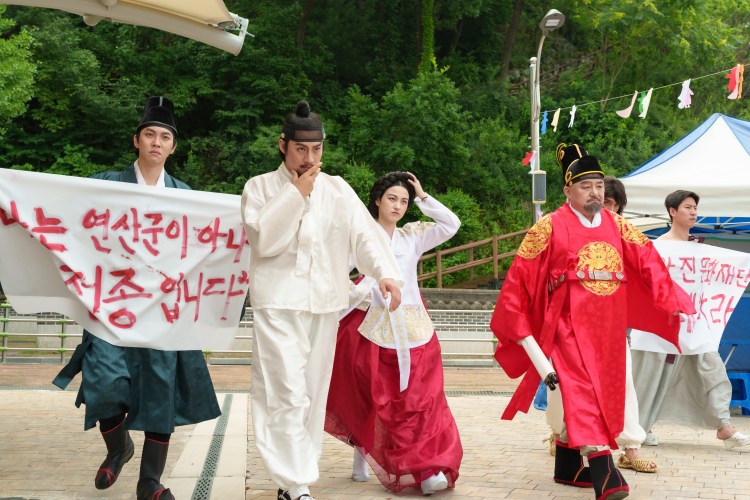
  • Extreme Festival – the CEO of a small events planning firm finds herself in the firing line after agreeing to organise the local cultural festival.
  • Greenhouse – gritty drama starring Kim Seo-hyung as a woman pushed to impossible extremes.
  • Hail to Hell – black comedy in which a young couple planning to take their own lives decide to get revenge on their bully instead.
  • The Host – Bong Joon Ho’s classic monster movie.
  • Killing Romance – madcap comedy in which a former star (Lee Ha-nee) teams up with a student (Gong Myoung) to kill her husband (Lee Sun-kyun).
  • Phantom – Colonial Era spy thriller meets drawing room mystery in this masterful drama from Lee Hae-young.
  • Rebound – inspirational sporting drama in which a moribund high school basketball team make their way towards championship glory.
  • A Tour Guide – a North Korean defector becomes a guide for Chinese tourists in the South while searching for her missing brother.

Singapore

  • Geylang – crime drama in which a series of cosmic coincidences conspire against residents of Singapore’s red light district.

Taiwan

  • The Abandoned – horror in which a grieving policewoman investigates a series of murders of migrant workers.
  • Bad Education – a night of post-graduation celebration goes awry when teenage boys unwisely assault a gangster in the directorial debut from actor Kai Ko.
  • Gaga – an indigenous family finds its relationships strained when the oldest son decides to run for mayor in Laha Mebow’s warmhearted dramedy. Review.
  • Eye of the Storm – a doctor investigates a mysterious virus.
  • Marry My Dead Body – a police officer discovers a red wedding envelope but soon realises the proposal comes from the other side and it is the ghost of a murdered man who wants to marry him!
  • Miss Shampoo – quirky rom-com from Giddens Ko in which a gangster falls for a hairstylist after she hides him from bad guys.

Thailand

  • Faces of Anne – existential drama in which a woman wakes up on a weird island where her face changes every few minutes.
  • Kitty the Killer – comic book action comedy in which a rookie teams up with a band of female assassins to take revenge for their mentor’s death.
  • You & Me & Me – millennial drama in which the relationship between a pair of twins is disrupted when they fall for the same boy.

Vietnam

  • Glorious Ashes – poetic drama focussing on the lives of three of three women in a poor coastal village.

The New York Asian Film Festival runs from 14th June to 30th July. Full details for all the films are available via the official website where you can also find screening times and ticketing information. You can also keep up with all the latest festival news via the official Facebook Page and Twitter account.

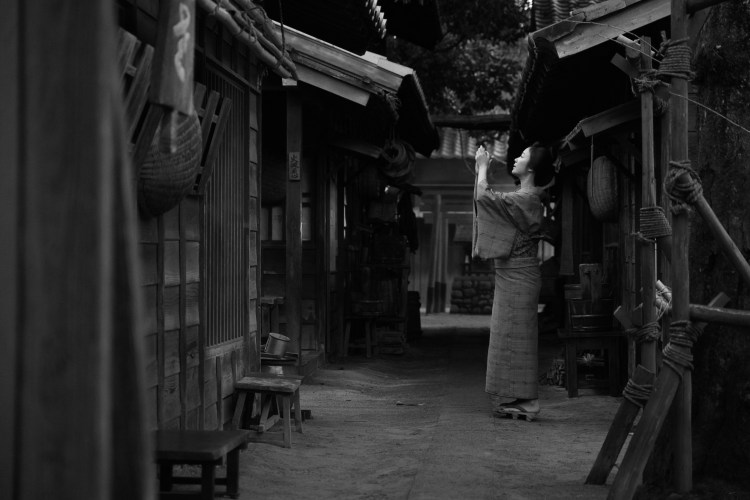
Nomad (烈火青春, Patrick Tam, 1982)

In his 1982 New Wave classic Nomad (烈火青春), director Patrick Tam had intended to reflect on Nietzsche’s Joyful Wisdom along with the concept of the wanderer, a heroic ideal of the emancipated mind which necessitates permanent exile in which it is no longer possible to call any place “home”. It was also he claims a critique of the “mindless embrace of foreign culture” by Hong Kong youth then obsessed with David Bowie and Japan. 

The film’s English title refers to the boat owned by the hero’s father which becomes a symbol of the yearning for escape and for the foreign among the young, but is also imbued with an essential irony thanks to its design which recalls the “black ships” that sailed into the bay of Edo and forced Japan to reopen its doors to the world after 200 years of isolation. The original Chinese title, meanwhile, translates as something like “Burning Youth” and strongly recalls Japan’s Sun Tribe movies of the late 1950s which similarly critiqued aimless post-war youth and the corruptions of pervasive American pop culture as embodied by Coca-Cola and jazz music. Tam makes frequent visual reference to Japanese New Wave youth movies such as Nagisa Oshima’s Cruel Story of Youth while the shocking ending (which was not shot by Tam who had envisioned a bloodier showdown aboard the Nomad) also has shades of Ko Nakahira’s seminal chronicle of post-war ennui, Crazed Fruit. 

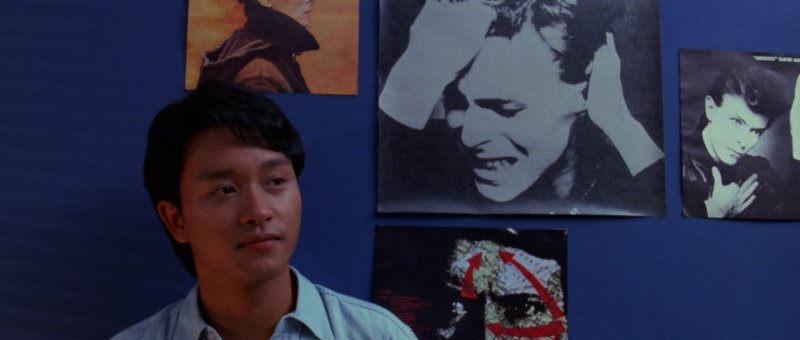
Nomad similarly focusses on a collection of aimless youngsters struggling to find direction in pre-Handover Hong Kong. Louis (Leslie Cheung Kwok-Wing) continues to long for his absent mother and often listens to recordings she once made introducing classical music on the radio while a model of the Nomad sits prominently on a shelf in his room. He has posters of David Bowie on the wall, while his cousin Kathy (Pat Ha Man-Jik) puts on the robes of a Japanese Miko and performs a traditional fan dance. Louis is one of the few young people who does not speak the language, but is later fascinated by the work of a Japanese fashion designer featuring swords and samurai armour that he says, in a moment of foreshadowing, only make him think of ritual suicide. 

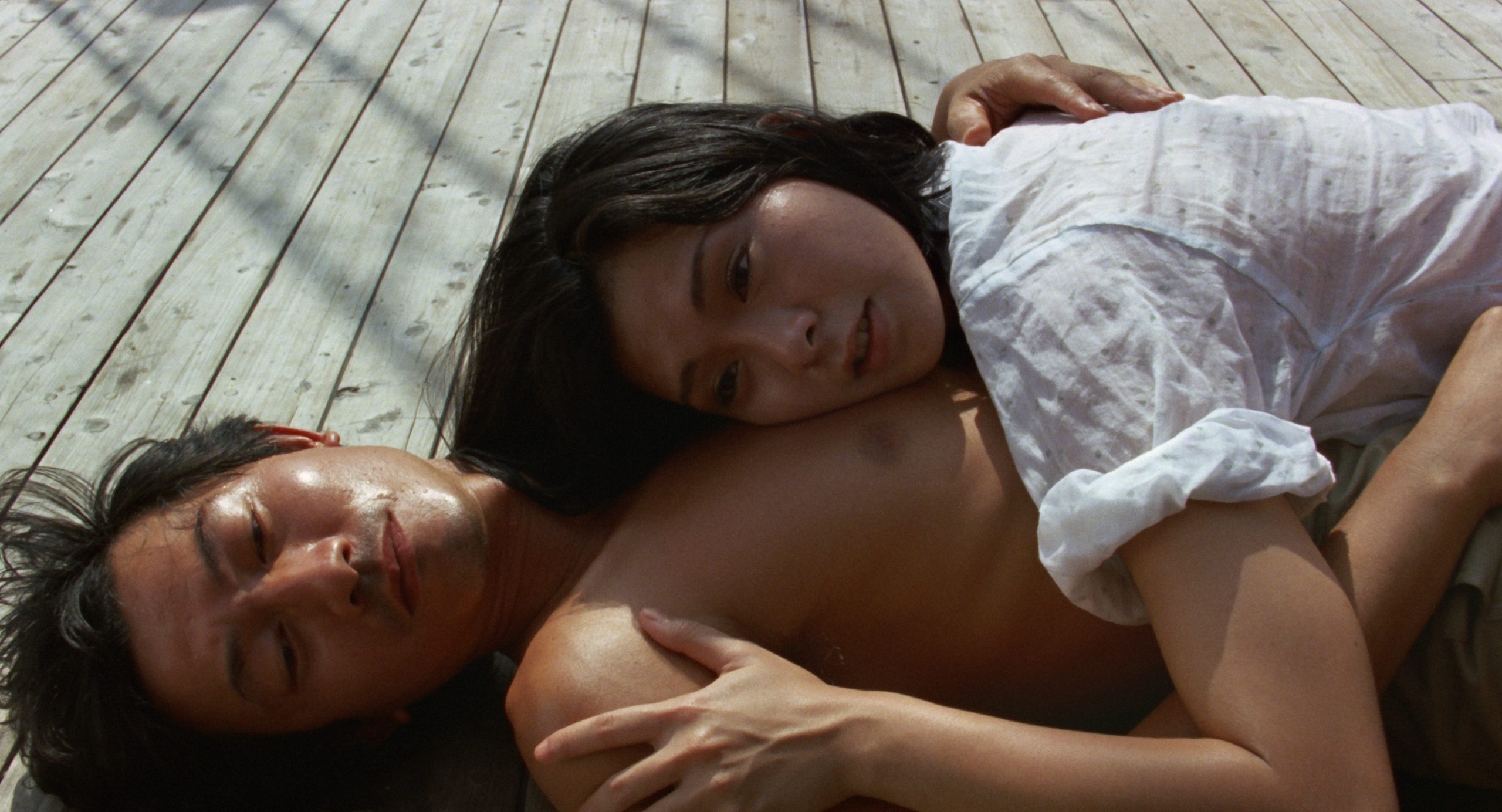
His life is directly contrasted with that of Pong (Kent Tong Chun-Yip), a young man from a poor family who works as a lifeguard at the local pool which is how he ends up meeting Kathy who in turn fascinates him with her rich girl sense of confidence and invincibility. The desire to find a place of their own is emphasised by the constant frustration their repeated attempts to make love in Pong’s family apartment which everyone has generously agreed to vacate so he can bring a girl home only for his younger brother to prank him and his dad to come home early inviting half the neighbourhood over for mahjong. The couple eventually have sex on the empty top deck of a tram, another symbol of transience, and then repeatedly in several other public locations until the relationship is disrupted by the return of Kathy’s former boyfriend, Shinsuke (Yung Sai-Kit), who has deserted the Japanese Red Army and is now a fugitive ironically looking for safe harbour while on the run.

The Japanese Red Army was a far-left terrorist organisation most active in the Middle East though Shinsuke’s decision to leave it seems to be less to do with a disillusionment with communism than a reawakening of his humanity in which he has decided he can no longer be a part of its bloodiness and violence. Nevertheless, while holed up aboard the Nomad, he explains that he cannot join the other youngsters in their romantic dream of sailing to Arabia because he has rejected exile and is determined to return home and meet his certain death in Japan. The destructive forces have however followed him in the form of an assassin posing as an assistant to a fashion designer, which seems to be allusion a little too on the nose even if it quickly descends into a strange pastiche of samurai ideology otherwise at odds with that of the JRA in which they track Shinsuke down and then instruct him to commit seppuku with the sword he has been carrying all along. 

In an earlier fight that led Pong and Louis becoming friends, some young women had needled him that he should try to protect Kathy though she needed no protection in this situation and he was unable to provide it anyway. Something similar happens on the beach though he turns out to be surprisingly adept with a samurai sword when he’s unexpectedly rescued by Tomato (Cecilia Yip Tung), a young woman he met in a cafe after he overheard her desperately trying to dump one boyfriend and not be be dumped by another over two different telephones, who suddenly reemerges with a harpoon gun. It’s Tomato, who had kept a copy of Nietzsche’s The Antichrist given to her by a boyfriend but apparently not read it, that finally remarks on their aimlessness, “we do nothing for society”, only to be countered by Louis who answers, “what society? We are society.”

Briefly at the beach they may find the kind of utopia they’re looking for, lighting the cottage with lanterns and sleeping piled one on top of another under a communal mosquito net in the open air, but just as quickly find that dream shattered by the intrusion of a political reality. This nomadic youth finds itself exiled from its home, dreaming of an impossible escape, caught between the colonial present and a colonial future with half an eye on an old coloniser and fast losing sight of its own identity. Abandoned on a blood-soaked shore, all youth can do is look out in shock and confusion bereft even of hope in a liminal space at once transient and permanent. 


Nomad screens at the BFI Southbank on 15th July in its new 4K Director’s Cut as part of Focus Hong Kong.

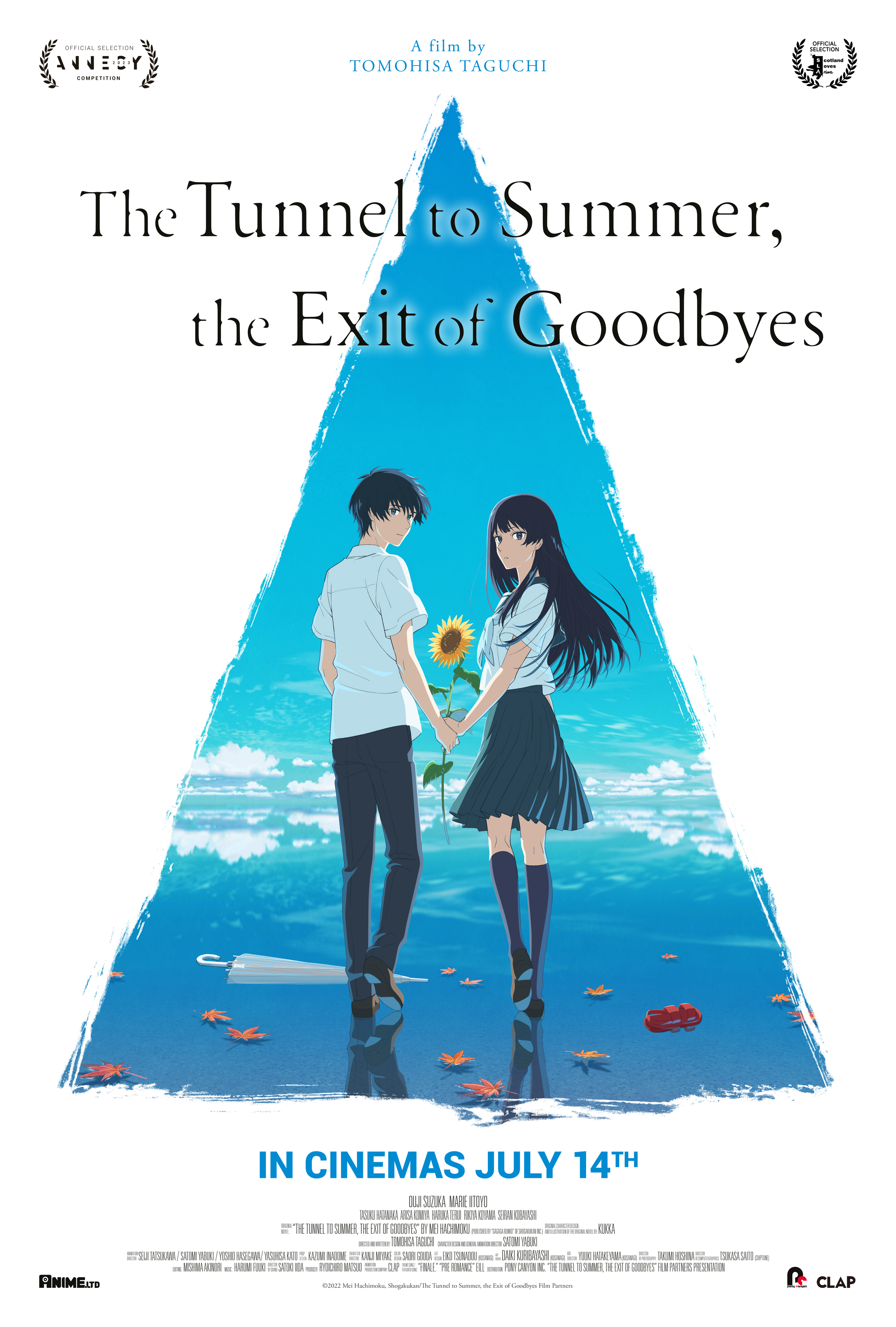
The Tunnel to Summer, the Exit of Goodbyes (夏へのトンネル、さよならの出口, Tomohisa Taguchi, 2022)

A pair of lonely teens begin to find direction in their lives while investigating a mysterious phenomenon in Tomohisa Taguchi’s The Tunnel to Summer, the Exit of Goodbyes (夏へのトンネル、さよならの出口, Natsu e no Tunnel, Sayonara no Deguchi). Adapted from the series of light novels by Mei Hachimoku, the film asks if it’s worth sacrificing the present to reclaim the past for an uncertain future, but also has a few things to say about grief and guilt and the necessity of moving on even if in this case a little further ahead than most. 

The mysterious “Urashima” tunnel is so named in reference to the classic folk hero who spends a few days with a princess at the Dragon Palace and then returns home to find that it is 100 years later and everyone he knew is dead. The princess gave him a box telling him never to open it but of course he does and suddenly becomes an old man. As high schoolers Kaoru (Oji Suzuka) and Anzu (Marie Iitoyo) discover, the tunnel works in much the same way. A few seconds inside is hours out, though they say that if you reach the end your wishes will be granted. Each desiring something, the pair team up to investigate together and gradually fall in love but are also divided by the contradictory nature of their quests. 

Reluctant to reveal the reasons behind her interest in the tunnel, Anzu fears that her desires are trivial in comparison to those of Kaoru who is trying to restore his family by bringing back his little sister Karen (Seiran Kobayashi) who was killed falling from a tree. Kaoru claims that he wants to see the kind of world that Karen had envisaged where everyone was happy, but is also trying to deal with his grief and guilt and looking for the restoration of a sense of stability he once had in his family. Anzu, meanwhile, is insecure in her gifts as an artist and has been rejected by her parents for her desire to make manga like her penniless grandfather. Kaoru tries to convince her that she has talent already but Anzu seems to believe that she needs once in a generation flair in order to be able to make her mark even if they get stuck in the tunnel and emerge hundreds of years later into a world in which manga no longer exists. 

But as Kaoru later finds out, the tunnel only lets you take back something you’d lost. It does not grant wishes for something that never belonged to you. Kaoru never really stops to think about the practicalities of his quest such as the increased age difference between himself and Karen or how he’d explain her sudden resurrection, while Anzu doesn’t really reflect on the how meaningless her success would be if didn’t come from her own efforts even as they work together to solve the mystery of the tunnel as a way of working through their individual anxities. Though their first meeting had been frosty, the pair soon bond in their shared loneliness and fractured families but like most teenagers don’t quite have the confidence to say the big things out loud. 

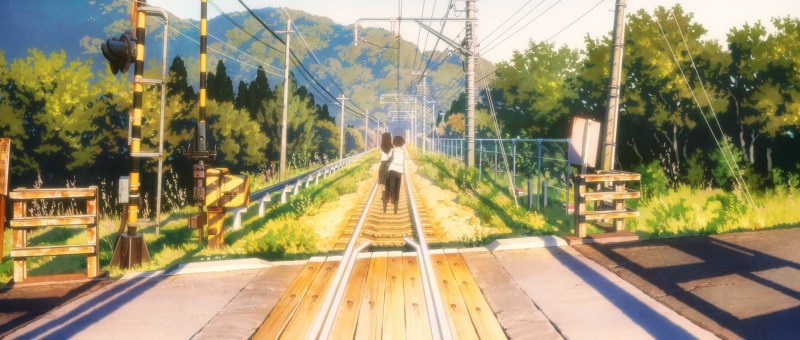
Taguchi makes the most of his summer countryside setting capturing the vibrancy of his surroundings from the cool blue sea to the bright yellow sunflowers near the train station while also hinting at the “boring” nature of small-town life in which there’s not much else to do than create your own adventure. Set in 2005, the film also has a meta time slip quality with its flip phones and minidisc players seemingly taking place in a more innocent age if also emphasising that the reason the teens can disappear for three days researching a tunnel is that their respective adults aren’t very bothered about what they’re doing or where they are. Each of them discover what it is they really wanted out of their mystical journey, if otherwise out of sync, as they learn to deal with their grief and insecurity before discovering the exit from the eternal summer of their youth into a less certain adulthood that no longer scares them but instead offers new opportunities amid the newfound solidarity of their togetherness.


The Tunnel to Summer, the Exit of Goodbyes opens in UK cinemas on 14th July courtesy of All the Anime.

International trailer (English subtitles)

Images: ©2022 Mei Hachimoku, Shogakukan/The Tunnel to Summer, the Exit of Goodbyes Film Partners

Let It Ghost (猛鬼3寶, Wong Hoi, 2022)

A collection of conflicted souls find themselves haunted by the ills of their society in the directorial debut from Wong Hoi, Let it Ghost (猛鬼3寶). Very much in the tradition of Hong Kong horror comedy, the three-part anthology takes pot shots at everything from hypocritical, narcissistic TV stars, and chauvinistic, homophobic men, to familial displacement caused by rampant gentrification while asking questions about who is haunting who in a society which seems to be constantly eroding around the edges.

The hero of the first chapter, Lark, is a self-centred actor currently playing the lead in the hit TV show Incarcerated Detective in which he has the nonsensical catchphrase “Justice will always stand on the side of Justice”. Though playing a figure of moral authority onscreen, Lark is privately anything but and is becoming fed up with the show because it’s getting in the way of his burgeoning movie career. Wong makes some subtle digs at how the entertainment industry works with Lark kept out at a drinking party with useful people he clearly doesn’t like but has to get along with while needing to get back for night shoots. When he gets pulled over by a cop, he panics because he’s been drinking but it turns out the guy was just a fan who wants an autograph. The policeman’s failure to investigate him turns deadly when a sleepy Lark ends up running over a young woman and then pushing her body down a mountain to conceal the crime. 

Lark finds himself quite literally haunted by the spectre of his guilt when he realises that the young woman he killed was the guest actress for the episode in which she was supposed to be playing a ghost. Taking method acting to extremes, she turns up anyway prompting some ironic comments from the director about representation and the Hong Kong spirit before he makes full use of her now unkillable body to get exactly the effect he wants for the scene. A late twist hints at Lark’s self-obsession and insecurity if also perhaps the mutability of stardom in which no one is ever really irreplaceable. 

Like Lark, the hero of the second chapter, Kwan, is also somewhat insecure but mostly in his lowly status as a taxi driver while his materialistic girlfriend appears resentful that he can’t give her a standard of life to match that of her snotty rich girl friends. In a recurrent motif, Kwan keeps making a point that he isn’t “homophobic” but several times makes homophobic remarks and later tells a young woman that the boys love manga she’s reading “defies the Chinese values of man and wife”, while titles of books in his cab include “cute wife, obey me tonight” and “Domineering Driver and the Dainty Wife”. An attempt to impress his girlfriend with a cheap “staycation” backfires when she is possessed by a “horny ghost” whose insatiable appetites eventually become more than he can handle. The film walks a fine line between satirising Kwan’s toxic masculinity and patriarchal views and accidentally endorsing them, potentially spilling over into homophobia in the punchline of its possession gag. 

In part three meanwhile, the venue is a moribund shopping mall where a young woman runs a bridal shop inherited from her mother. The half-shuttered mall already has a ghostly quality, as Fong points out no one goes to malls anymore, and it could in a sense be she and her friends that are haunting it though there is a more literal ghost of an abandoned child as a kind of symbol of the “orphans” of gentrification displaced from their homes and left with nowhere to go. Fong and her friend Edward decide to look for a nice couple to look after the ghost, Kat, who would then be reincarnated as their child but struggle with unexpected interference from a kung fu exorcist working for security who want to get rid of Kat so the building can be sold. 

There is quite a lot of haunting going on, be it the grim spectres of celebrity culture, sexism, or the gradual erasure of the old society which brings about its own ghosts in the eerie sense of emptiness with which abandoned buildings are imbued. Cynical humour and a thick slice of irony lend each of these ghostly tales a satirical quality hinting at the unreality of the everyday marked by a sense of displacement and emptiness in a disappearing Hong Kong. 


Let It Ghost screens at the BFI Southbank on 14th July as part of Focus Hong Kong.

Original trailer (English subtitles)

No Life King (ノーライフキング, Jun Ichikawa, 1989)

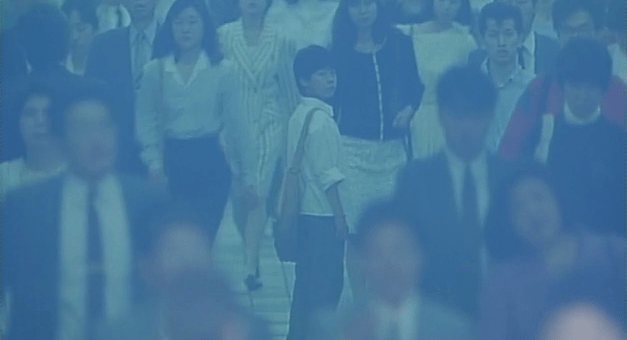
Taking place at the tail end of the Bubble era and on the eve of a technological revolution, Jun Ichikawa’s No Life King (ノーライフキング) in many ways anticipates the world we have today in which much of our communication has already become digitised. The cult-like speech of the next-gen guru who pops up towards the film’s conclusion may have eerie ring to it, but he has a kind of point in his talk of “new children” who will become “new adults” in a new digital world that was then only just becoming a reality. 

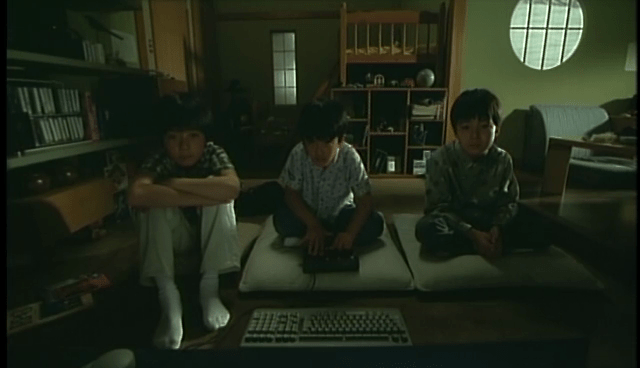
As someone later says, “the problem is not video games” though many seem to assume it is. The hero, Makoto (Ryo Takayama), whose name means “truth”, is one of a group of five boys obsessed with Nintendo console gaming. A game series known as Life King has become so popular that hundreds of youngsters camped out all night waiting for the release of the fourth instalment. The only problem is that the game seems to be unbeatable, and Makoto’s young friends begin to hear rumours that some of the cartridges are “cursed” with an alternate “No Life King” version that means death for players who cannot finish the game. 

The “curse” reflects a confusion that is beginning to emerge over what is “real” and what is “virtual” in an era of rapid technological development. The kids begin to worry that if you die in the game you die for real, while otherwise becoming obsessed with all kinds of urban legends relating to mysterious deaths and conspiracy theories such as that of the actor who plays tokusatsu hero Pris secretly being dead and that all the collectible Pris pencil erasers you can get from gachapon machines are cursed with the resentment he felt as he died. Some would be keen to dismiss this kind of thing as silly things kids say, but then Makoto’s mother also suggests that cakes from the bakery the family of his classmate Noriko owns are “cursed” as customers have been coming down with food poisoning after eating them. According to the guru’s assistant Mizuta (Neko Saito), the rumours are having a serious economic impact and have led to delays in product launches and construction projects in addition to provoking a politician’s resignation. 

Then again, the film seems to wonder if it’s the Bubble-era economy which is the enemy. While Makoto plays video games on his own but chats to his friends doing the same thing via telephone headset, his mother often works late into the night staring at a computer screen in their home. Makoto attends a summer cram school where all of the work is done via computers linked via a primitive version of the internet. The teacher is present but cannot actually see any of the children and they can’t see him. Questions are asked and answered via the interface rather than directly, though the computer network of cram school students does eventually allow Makoto to get in touch with other “new children” who are just as worried about the cursed game as he and his friends are while the adults respond by taking their consoles away which of course denies them the ability to lift the curse by beating the game. 

The “curse” itself may symbolise mortality, though obviously the children will still someday die regardless of whether they beat Life King IV because life itself is an unwinnable game. “The problem is…” the opening text crawl explains, “the battle has begun. It is unlikely to end until you die.” The same words are uttered by Makoto’s principle only he substitutes “video games” for the second part of the sentence before dramatically falling backwards just like the stricken king of the game while Makoto and the other kids are lined up almost identically to the ranks of soldiers amassed in front of him. This moment of symmetry links back to a line from the guru Akiyuki Mori who hints at a new world in which life and death exist simultaneously. It is this new world that “new children” must learn to adapt to as they grow with technology.

“It’s scary, but we’ll die if we can’t lift the curse” Makoto tells one of his online buddies and eventually becomes an accidental folk hero with the other kids looking to him to free them by beating the game. Graffiti tags go up all over the city reading, “hang in there, Makoto”, while he becomes preoccupied by the nature of the “real” as related to him by Mori and his assistant Mizuta who begin to view him as something like a prophet or at least the first of the “new children” to enter the “new real” in which the distinction between the “real” and “virtual” has disappeared. Fearing for his mortality, Makoto saves himself in the digital space by writing a bio and saving it to floppy disc much as a hero who died in the game was immortalised in stone so that no one would ever forget that he existed. 

By the film’s conclusion, “real life” has become a kind of game as evidenced by the advice of Makoto’s cram school tutor that he try and raise his score by 20 points to increase his chances of getting into a higher level institution. The mysterious boy somewhere on another computer tells him to go and look around outside at which point he wanders through the contemporary city and sees it with new eyes. “It is all real” he concedes, catching sight of Mori and his assistants in the crowd just as we start to wonder if this really is “reality’ after all. Then again, perhaps the best lesson the boys learn is from one of their grandfathers who simply “kept living until he died”. Ichikawa captures a sense of technological anxiety in the uncanny eeriness of the “real” world around the boys but is perhaps less pessimistic about the new age that awaits them in the solidarity that exists between the “new children” despite the seeming indifference of the adults incapable of understanding the anxiety that engulfs them.


The Sea of Genkai (任侠外伝 玄海灘, Juro Kara, 1976)

Juro Kara was an avant-garde playwright and theatre practitioner whose work was a part of the Little Theatre Movement which rejected conventional naturalism and prioritised the physicality of the actor over text and dialogue. Though he performed as an actor in films by other avant-garde filmmakers such as Shuji Terayama and Nagisa Oshima, he directed only one film. By these standards, the The Sea of Genkai (任侠外伝 玄海灘, Ninkyo Gaiden: Genkai Nada), a co-production with the Art Theatre Guild, may seem surprisingly conventional, but is also highly unusual not only in ATG’s filmography but also in its subversions of the yakuza film. 

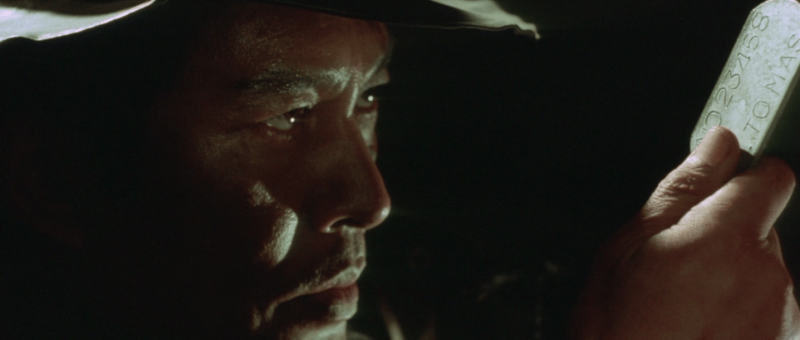
The Japanese title is prefaced by “ninkyo gaiden” which makes it sound like a spin-off to a ninkyo eiga or chivalrous gangster movie, which turns out to be incredibly ironic because there is no chivalry or honour here only cruelty and exploitation. Set in the port of Shimonoseki where boats leave for Korea, the film follows dejected petty yakuza Kondo (Noboru Ando) as fate finally catches up with him. He and his boss Sawaki (Jo Shishido) were once students together and took a job in Busan dealing with the corpses of American soldiers killed in the Korean War. Sent to deliver dog tags to widows, Sawaki spits in a distraught woman’s face and then attempts to rape her, only there is another couple in her home and the man soon wakes to challenge him. Kondo and Sawaki are then drawn into a brutal and ugly fight during which Kondo knocks out the man while Sawaki rapes the widow. The other woman then threatens them with a knife, taking back the dog tag only for Sawaki to pounce and strangle her. Sawaki then flees the scene confused by what he’s done, but Kondo stays behind and rapes the second woman’s corpse before leaving her for dead. 

Kondo later relates that he’s been unable to sleep with women ever since his experience of necrophilia in Korea in 1951. Kura often cuts back to the bundle of dog tags Kondo has been keeping all this time which hang by his window like a wind chime. He watches them sway and hears them jingle with the violent motion of Sawaki’s raping the woman, hanging that of, presumably, a random man around the second woman’s neck as he in turn rapes her body. He later finds a woman who reminds him of the one he raped while dead among a cohort of those he’s in the process of sex trafficking who has unwittingly put on one of the dog tags like an ironic necklace while taking a bath in his apartment on the invitation of his more sensitive associate Taguchi (Jinpachi Nezu). On catching sight of Kojun (Reisen Ri), he’s struck by a literal flashback that is a clear homage to Henri-Georges Clouzot’s Les Diaboliques as he watches a “dead” woman rise from a bath. Later he rapes her too, presumably the first (though not the last) “living” woman he’s had sexual contact with in 25 years. 

The dog tags take on a still more ironic relevance in the Korean song which plays over the opening titles and is sung frequently by the trafficked women. The song is sweet and innocent, narrated by a woman who is preparing a “flower garland” for someone that she loves, but its imagery is subverted in Kondo’s grim necklace of dog tags taken from fallen men. Even Sawaki describes him as someone who has been dead for 20 years while preparing to sacrifice him to curry favour with their creepy Tokyo boss Tahara (Taka Ohkubo) who permanently wears black gloves on both hands even while shirtless, while Kondo later sings a song characterising himself as a “black dog” who never stood a chance in this broken world of ruined dreams. Penned by Kura himself and performed by Ando, this song more clearly reflects his absurdist dialogue style in its deeply melancholy imagery as Kondo fully succumbs to his image of death. 

Kondo’s actions come to emblematise the continued violence inflicted on the bodies of Korean women by Japanese men from the colonial era onwards. The woman from the bath, Kojun, suffers continually throughout the film and is later forced to perform in strip shows by the Sawaki gang. She is clever, and fierce, but the world is all against her and the only answers that she ever gets as to why her “uncle” forced her to stowaway on a smuggling boat to Japan only further deepen the wounds inflicted by a deeply corrupted, imperialistic patriarchy. Kojun develops a fondess for Taguchi because he is the only man who doesn’t try to rape her and in fact saves her from being raped though later said to be impotent and rejected by the other gang members for his refusal to participate in their despoiling of the Korean women. Bloodstained underwear becomes a symbol of sexualised violence countered only by the plain white pairs Kojun later buys for Taguchi after replacing her own ruined clothing.  

She and Taguchi attempt to protect themselves by bringing the receipts, threatening to release the smuggling account books and expose a host of dodgy dealings if the Sawaki gang come for them, but in the end there is no escape. Taguchi finds himself wading through oil-soaked waters with his dreams in ruins before finally breaking the chain though it’s unclear if it will really free him. Bleak beyond measure in its deeply tragic denouement, Kara’s intense drama offers no respite from its nihilistic world of violence and exploitation and leaves us quite literally floundering in a dark sea of inevitable corruption. 


Trailer (no subtitles)

꽃목걸이 – 이영숙 (1972)

(꽃목걸이 = “flower necklace”. There doesn’t seem to be an official romanisation of singer 이영숙 (李英淑)’s name, but it does appear in a few places as “‘Iyeongsuk”, or “Lee Young Sook”. A contemporary romanisation would render it as “Lee Yeong-suk”)

Ghost in the Regiment (憲兵と幽霊, Nobuo Nakagawa, 1958)

A treacherous military police officer comes to embody the evils of war in Nobuo Nakagawa’s eerie psychological horror, Ghost in the Regiment (憲兵と幽霊, Kenpei to Yurei). Kyotaro Namiki’s The Military Policeman and the Dismembered Beauty (憲兵とバラバラ死美人, Kenpei to Barabara Shibijin) had been a big hit the previous year so studio head Mitsugi Okura tasked Nakagawa with producing something similar at which point he proposed a film centring on “treachery and patriotism”. The Japanese title closely resembles that of Namiki’s film in beginning “the military policeman and…” as if it were a continuation of an ongoing series but is otherwise unrelated and could even be interpreted to suggest that the protagonist is both malevolent supernatural entity and military policeman. 

Lieutenant Namishima (Shigeru Amachi) is indeed later described as “the embodiment of evil” and his desire for conquest, in this case of a woman about to marry another man whom he will eventually win and discard, is reflective of the destructive lust for imperialist expansion. When Akiko (Naoko Kubo) marries another member of the military police, Tazawa (Shoji Nakayama), in the autumn of 1941, Sergeant Takashi (Fujio Murakami) jokes with Namishima that he has “failed to win the girl”, but Namishima merely smirks and explains that he’s playing a long game, “The true spirit of a warrior is found in the final victory.” Soon after he frames Tazawa for having stolen secret documents he himself has sold to Chinese spy Zhang (Arata Shibata), subjecting him to heinous torture and having both Akiko and his mother (Fumiko Miyata) tortured in front of him to force Tazawa to confess. Thereafter he has him executed by firing squad but Tazawa, strung up on a cross, continues to protest his innocence until the final moment issuing a curse on all those that have wronged him. 

Unlike some of Nakagawa’s other films, the ghosts here are less supernatural than they are psychological. Namishima has frequent flashbacks and visions that remind him of his crimes and is quite literally haunted by his guilt while refusing to admit that he feels any. It seems that he harbours strong resentment towards the military and implicitly towards the militarist regime and emperor having been rejected by the military academy because his father had committed suicide. His treachery is revenge but also equal parts self-destruction and a wilful bid to assert himself through his transgressions marvelling at his success in becoming the sort of person who could betray his own country and kill his own people. Both Tazawa and his brother (also played by Shoji Nakayama), who later joins the military police hoping to investigate the circumstances of his death, were graduates of the military academy and therefore idealised cogs in the military machine. 

Somewhat uncomfortably, the righteousness of Tazawa’s brother effectively legitimises the militarists in suggesting that a man like Namishima is an aberrance unreflective of the militarist ideal. “Ignoring the innocent goes against all the military police stand for”, Tazawa earnestly tells Namishima when he attempts to cut corners framing another suspect for his own ends, lending the military police an air of legitimacy they may not have had in reality when we might ask ourselves what exactly it was that they “stood for” which is more likely the nihilistic amorality to which the narcissistic Namishima subscribes. As he said, women lose their lustre once he’s got them. Having pretended to be a friend to Akiko in her widowhood, he rapes her during an air raid and it’s at this point that Japan begins rapidly losing the war as Namishima’s moral decline mirrors the fortunes of his nation. Having got what he wanted, he callously discards her and is transferred to Manchuria where he continues to work with Zhang and his wife, Ruri/Honglei (Yoko Mihara), with whom he has something like a more genuine romance.

His crimes will, however, catch up with him and it’s in Manchuria that his schemes begin to unravel not least because of the unsettlement that the presence of Tazawa’s brother, who has been seconded to his unit, causes him. The film’s surreal conclusion takes place in a Christian graveyard with Namishima surrounded by crosses which align with the crucifix on which Tazawa was executed. The crucifix itself would have no particular religious connotation in Japan and is simply a convenient way of constraining someone for execution but here takes on a symbolic dimension in confronting Namishima with his sins of transgression. Soon he is surrounded by hundreds of Tazawas on crosses, echoing the many men who were in effect murdered by the imperialist regime in a war fuelled by the same lust for conquest that motivated Namishima. Nakagawa’s camera takes on the role of an observer, sometimes comically swooping between talking heads as if following an ongoing conversation while later rocking in unsteadiness as Namishima begins to lose his grip on reality, finally confronted with the “ghosts” that surround him. 


Original trailer (no subtitles)