Goodbye, Bad Magazines (グッドバイ、バッドマガジンズ, Shoichi Yokoyama, 2022)

With the 2020 Olympics on the horizon, Japan began looking for ways to tidy up its image expecting an influx of foreign visitors which for obvious reasons never actually materialised. As part of this campaign, leading chains of convenience stores announced that they would stop selling pornographic magazines in order to create a more wholesome environment for children and families along with tourists who might be surprised to see such material openly displayed in an ordinary shop. Then again, given the ease of access to pornography online sales had fast been falling and the Olympics was perhaps merely a convenient excuse and effective PR opportunity to cut a product line that was no longer selling. 

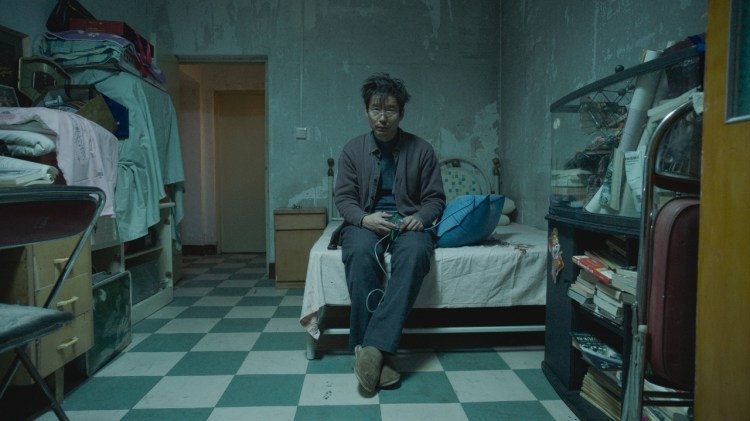
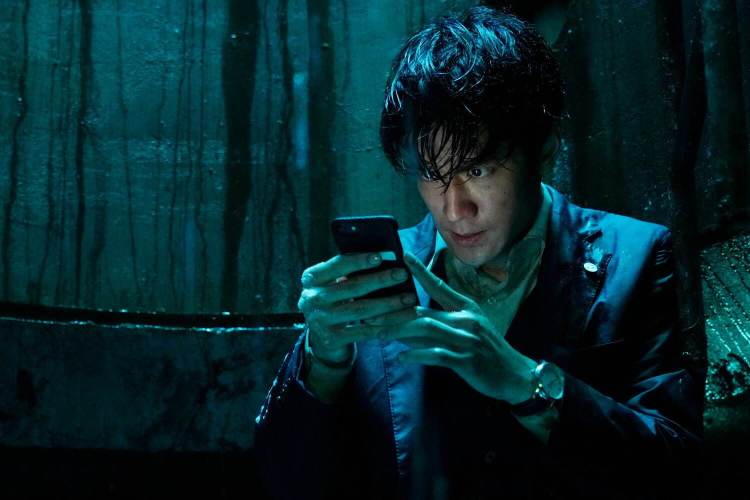
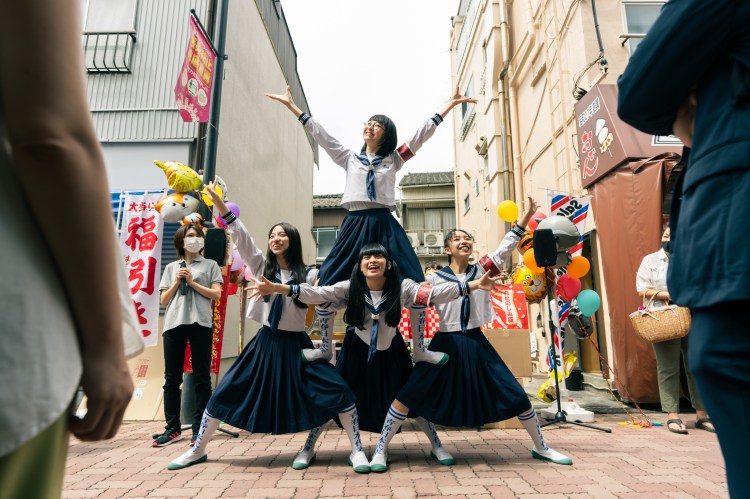
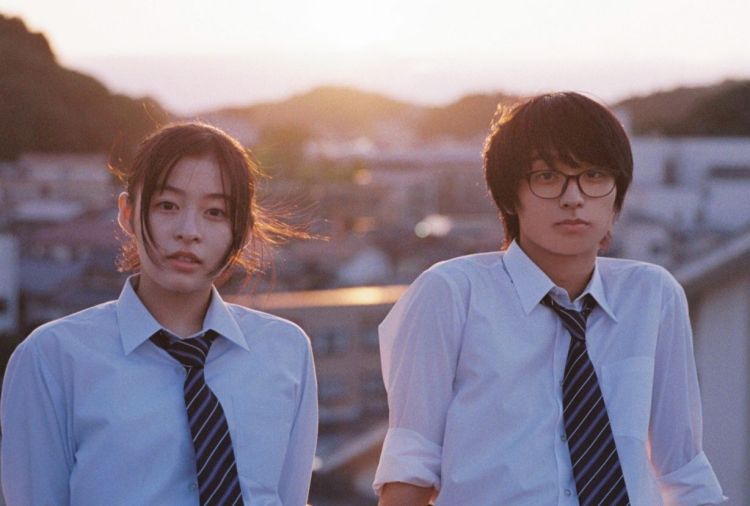
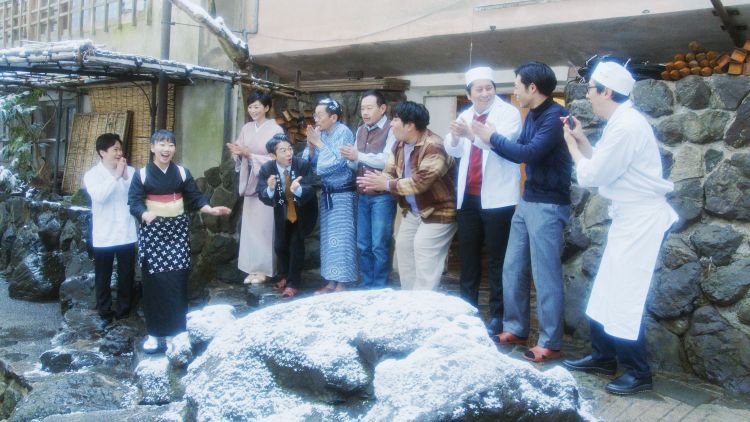
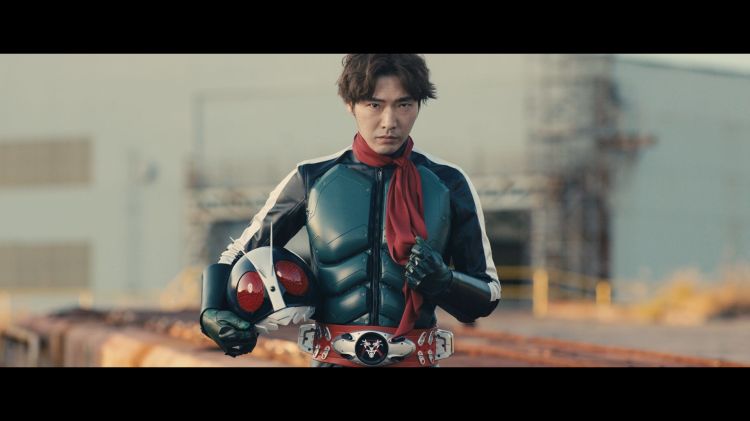
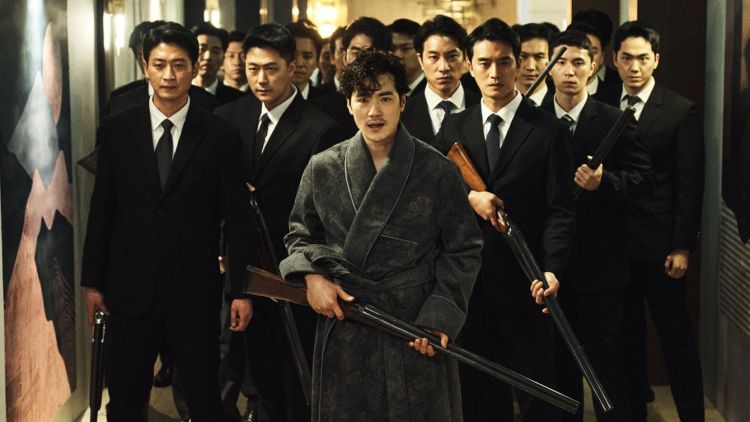
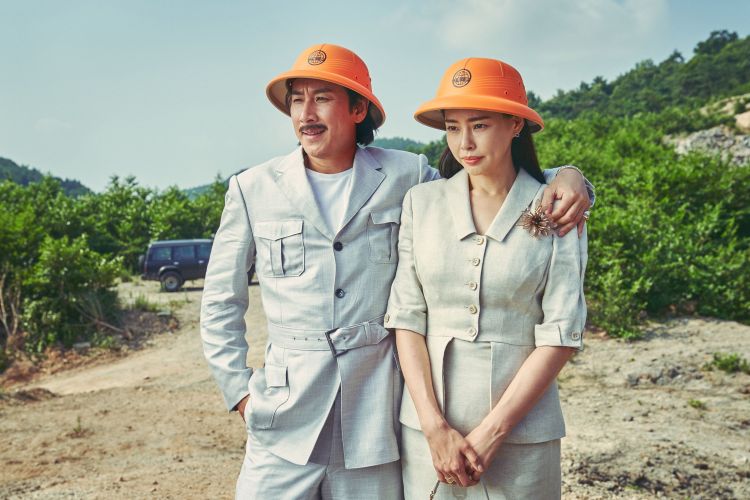
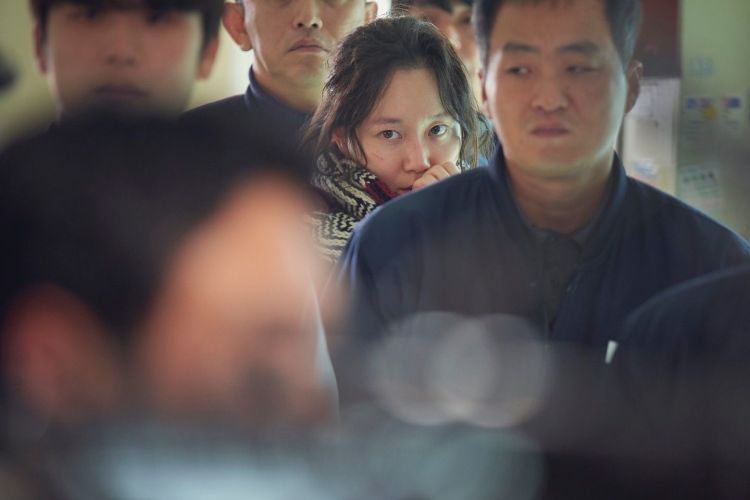
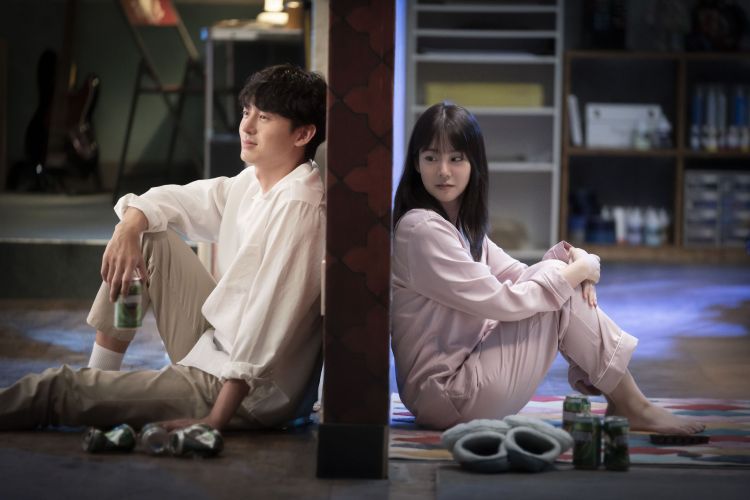
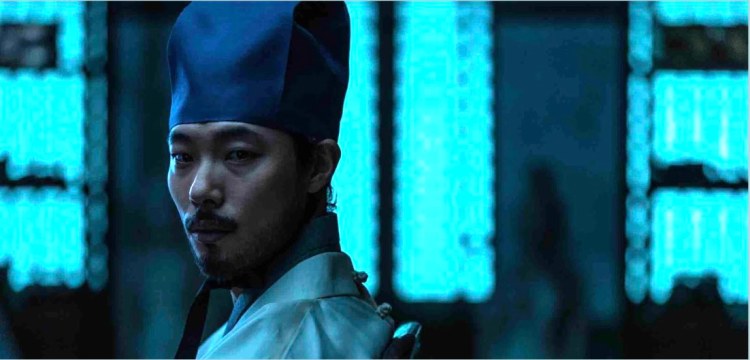
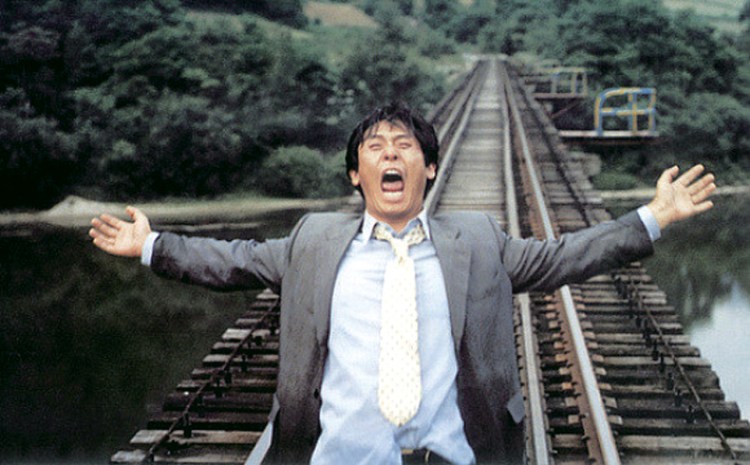
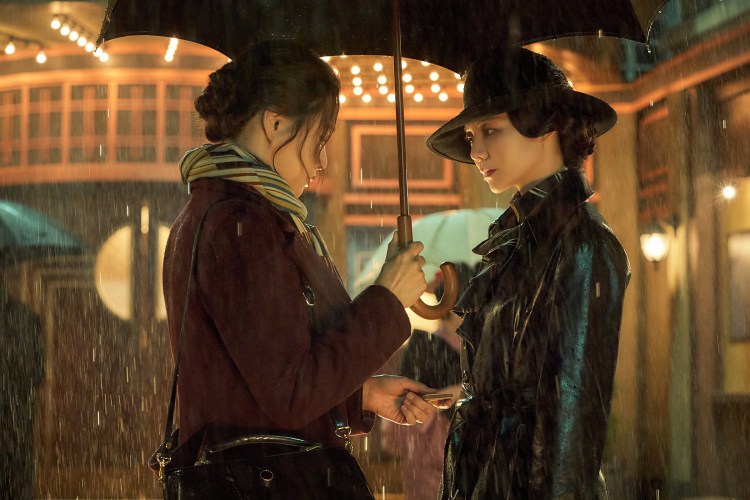
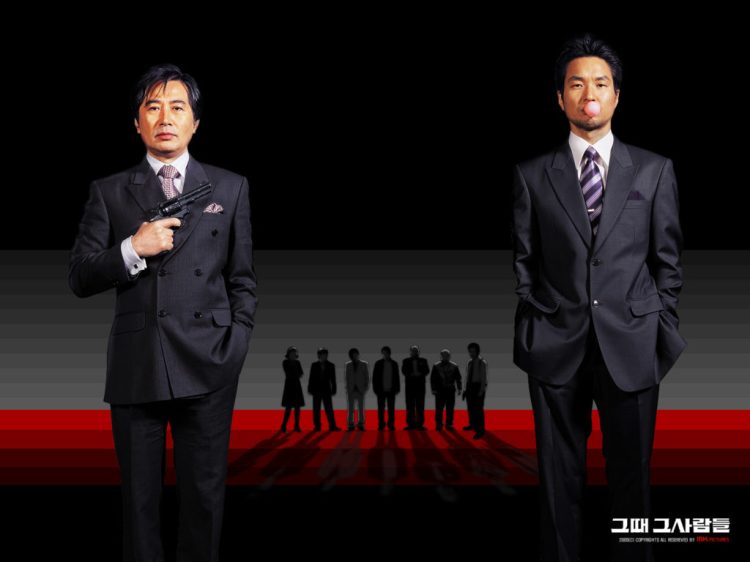
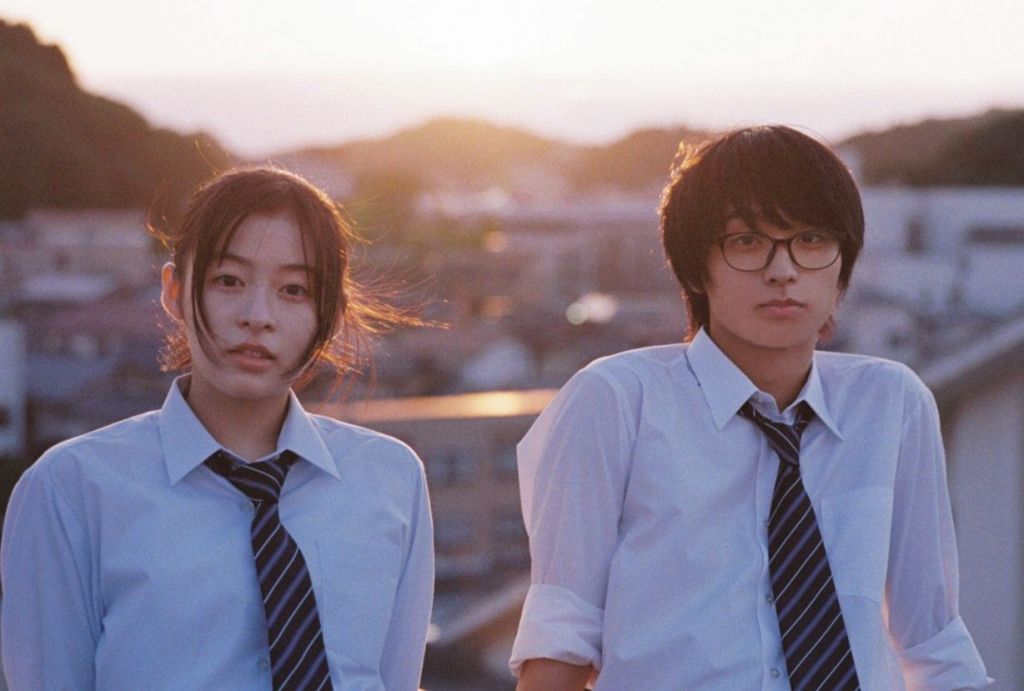
Based on actual events, Shoichi Yokoyama’s Goodbye, Bad Magazines (グッドバイ、バッドマガジンズ) explores the print industry crisis from the inside perspective of the adult magazine division at a major publisher which has just announced the closure of a long running and well respected cultural magazine, Garu. Firstly told they don’t hire right out of college, recent graduate Shiori (Kyoka Shibata) who had dreamed of working in cultural criticism is offered a job working on adult erotica and ends up taking it partly in defiance and encouraged by female editor Sawaki (Seina Kasugai) who tells that if she can make a porn mag she can make anything and be on her way to working on something more suited to her interests with a little experience under her belt. 

Her first job, however, consists entirely of shredding voided pages filled with pictures of nude women which is slightly better than the veteran middle-aged man who joined with her after being transferred from Garu who is responsible for adding mosaics to the porn DVDs they give away with the magazines to ensure they conform to Japan’s strict obscenity laws. Later a mistake is made and mosaics are omitted placing the publishing company bosses at risk of arrest and the magazine closure. Aside from being one of two women in an office full of sleazy men and sex toys, Shiori’s main problem is that she struggles to get a handle on the nature of the erotic at least of the kind that has been commodified before eventually falling into a kind of automatic rhythm. “It’s easy when it does’t mean anything” she explains to sex columnist and former porn star Haru (Yura Kano) who is much franker in her expression but perhaps no more certain than Shiori when it comes to the question asked in her column, why people have sex. 

Shiori asks her sympathetic colleague Mukai (Yusuke Yamada) for advice and he tells her that what’s erotic to him is relationships, but it seems his work has placed a strain on his marriage while his wife wants a baby and he has trouble separating the simple act of meaningless sex with that which has an explicit purpose such as an expression love or conceiving a child. According to Shiori’s editor Isezaki (Shinsuke Kato), the future of erotica will come from women with their boss finally agreeing to an old idea of Sawaki’s to create an adult magazine aimed at a female audience in the hope of opening a new market while handing a progressive opportunity to Sawaki and Shiori to explore female desire, but at the same time magazines are folding one after the other with major retailers canceling their orders and leaving them to ring elderly customers who’ve been subscribing for 30 years but don’t have the internet to let them know the paper edition is going out of circulation. 

The editorial team have an ambivalent attitude to their work, at once proud of what they’ve achieved and viewing it as meaningless and a little embarrassing. Not much more than a few months after working there, Shiori has become a seasoned pro training a new recruit who’s just as nervous and confused as she was but offering little more guidance was than she was given while becoming ever more jaded. When handed evidence that her boss has been embezzling money, she just ignores it though perhaps realising that when he’s found out it means the end for all of them too. Like everyone else, he’d wanted to start his own publishing company but the editor who left to do just that ended up taking his own life when the business failed. Yet, on visiting a small independent family-run convince store near the sea, Shiori hears of an old man who visits specifically to buy the magazines she once published because he can’t get them anywhere else while they have steady trade from fishermen who need paper copies to takes out to sea. The message seems to be there’s a desire and a demand for print media yet, even if it’s not quite enough to satisfy the bottom line. A sympathetic and sometimes humorous take on grim tale of industrial decline, Goodbye, Bad Magazines sees its steely heroine travel from naive idealist to jaded cynic but simultaneously grants her the full freedom of her artistic expression along with solidarity with her similarly burdened colleagues.  


Goodbye, Bad Magazines streamed as part of the 2022 Yubari International Fantastic Film Festival.

Teaser trailer (English subtitles)

Crossroad (死の十字路, Umetsugu Inoue, 1956)

An adulterous industrialist finds himself in a sticky situation after accidentally killing his wife in Umetsugu Inoue’s bizarre noir Crossroad (死の十字路, Shi no Jujiro). Based on a story by Edogawa Rampo, the film like any good noir suggests that in the end you can’t outrun your fate and all transgressions must be paid for but also turns on cosmic irony and strange coincidence in the great “tapestry” of life in which everything really is connected.

Shogo Ise (an aged-up Rentaro Mikuni) is the director of a construction firm about to complete a hugely expensive dam project which requires the sinking of a village and quarry. Apparently unhappily married to a woman obsessed with Nichiren Buddhism believing it helped to cure her of a serious illness during the war, he more or less lives with his secretary/mistress Harumi (Michiyo Aratama) who has been receiving incredibly weird and definitely threatening letters from Shogo’s wife Tomoko (Hisano Yamaoka). Tomoko claims that she has received an order from the “Child of the Sun” insisting that she must exact vengeance for the “great sin” Harumi has committed. The letter seems to be the last straw for Shogo who has decided to leave his wife, despite her incredible wealth, and set up home with Harumi permanently. 

Shogo hadn’t taken the threat very seriously, but sure enough Tomoko later shows up with some kind of ceremonial dagger and barges in to attack Harumi in the bath. During the struggle, Shogo accidentally kills Tomoko while trying to wrestle the knife from her. After briefly considering turning himself in, he realises that doing so will involve them all in scandal so he decides the best thing to do is dump her body in a well at the quarry which is shortly to be sunk. However, the plan soon goes awry and not least because a random man with a head injury climes into his car after he has a fender bender on a set of crossroads and later dies there leaving Shogo no choice but dump him alongside Tomoko. 

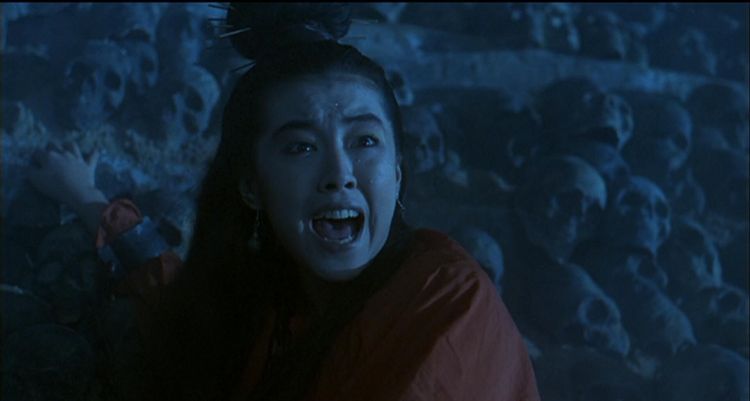
Inoue casts the abandoned quarry in truly eerie light, filled with gothic winds as if Shogo were being chastised by the gods themselves. In a sense, he’s paying not only for his sexual transgression but for the breaking of a taboo. A homeless man who once lived in the village later relates that he stayed until the last day because he did not want to leave his ancestors’ land. Shogo is part of the post-war construction boom but there’s also an underlying implication that this industrialisation is harmful to the land itself, not least in constraining a natural flow with the imposition of a dam in addition to causing a displacement of the people who once lived in the village while literally drowning the ancestral spirits. 

Harumi too speaks of feeling as if they’re both sinking beneath the waves, chasing a happiness to which they have no entitlement though she herself seems completely blameless save for her involvement in an extra-marital affair and strangely wholesome in comparison to the film’s otherwise sordid atmosphere. Even for a noir, Inoue’s sensibility is surprisingly sleazy for the world of 1956 and more than a little suggestive. A detective that randomly shows up, Minami (Shiro Osaka), lives with his foxy assistant and the interaction between them is constantly sexually charged while Inoue frequently returns to the backstreets of a neon city and the bars that line the streets approaching the crossroads where Shogo’s fate will align. 

It could be inferred that Shogo is a man whose life was marked by the war, his marriage perhaps in haste and then regretted while his wife developed her illness and subsequent obsession with Nichiren because of its corruption. Nevertheless, he’s portrayed as a basically “good” man in a very bad situation who made some very bad choices he wasn’t in the end bad enough to carry through properly hence the amazing series of collisions that seal his fate. On the one hand, like the young couple related to the drunk man who ended up in Shogo’s car, he and Harumi are just two otherwise ordinary people who decided to chase happiness albeit through an extra-marital affair only to pay a heavy price for daring to dream of a better future. Inoue has his usual amount of fun playing with noir archetypes as men strike matches in darkened alleyways and silhouettes of mysterious men in trench coats line the walls, not to mention the gothic sense of dread in the abandoned quarry, while constantly wrong footing us only to set us on our own collision course with the vagaries of post-war morality. 


Full River Red (满江红, Zhang Yimou, 2023)

It’s a curious thing, in a way, that the central conceit of Zhang Yimou’s deliciously convoluted Song Dynasty mystery Full River Red (满江红, Mǎnjiānghóng) should turn on the idea that a truth that shames you should not be concealed. Its heroes die for a poem written by a wronged man that according to the closing text at least every child in the China of today knows by heart. Yet one could also say that this tale of intrigue in the court has it parallels in the political realities of the contemporary society, while the ambiguous ending which implies a rejection of the systemic corruptions of the feudal era might also in its way be subversive despite the rabid jingoism of the closing scenes and their thinly veiled allusions to a One China philosophy.

In any case, the film takes its title from a classic poem attributed to general Yue Fei who was put to death on a trumped up charge by corrupt prime minister Qin Hui (Lei Jiayin) who favoured making peace with the warlike Jin over Yue’s bloodthirsty conquest. Qin is about to meet with the Jin on an important matter and it seems to help clear his name only a Jin diplomat is inconveniently murdered in the palace and not only that, it’s also thought he was carrying a highly confidential letter intended for Qin’s eyes only which may implicate him in treachery. For somewhat unclear reasons, buffoonish corporal Zhang Da (Shen Teng) is given two hours to find the letter and figure out who killed the diplomat or prepare to meet his end. Though as he knows find it or not certain death is all that awaits him. 

Zhang uses Shen Teng’s comic background to his advantage, painting Zhang Da as a man desperately trying to talk himself out of trouble whose word for those reasons cannot be relied upon. Though all is not as it seems, and Zhang Da proves unexpectedly astute in navigating the complicated machinations of the courtly life. The letter is something of a MacGuffin, but it’s clear that everyone wants it largely as a safety net, hoping to get kompromat on Qin they can use protect themselves in this hellish prison where death lurks around every corner. This is indeed a world in which blood will have blood, nobody is safe, and no one can be trusted. Getting the letter is like getting an immunity card from palace intrigue, something which diffident courtier Wu (Yue Yunpeng) assumed he already had in a golden seal gifted to him by the emperor only to discover it can’t necessarily protect him from someone with no respect for the system. 

The palace itself is reflection of the feudal order with its labyrinthine corridors barely narrow enough for two men to pass. There’s a constant feeling of constraint and oppression, not least in the persistent greyness of the palace walls. Even Qin seems to have adopted an air of austerity or perhaps because of the illness he affects dresses less elaborately than one might expect as do his colour coded handmaidens in blue and green who have been rendered deaf and mute to prevent them revealing any of his secrets. Zhang Da is paired with the serious commander Sun (Jackson Yee) who in a running gag is actually his uncle though much younger than him. On one level Sun is committed to this system and fully complicit with it even if casting suspicion on himself with his counterproductive habit of killing of potential suspects before they’ve given up any information, but also harbours a lingering resentment in being rendered little more than a tool for a corrupt order for which he is willing to debase him in wilfully waterboarding a friend with vinegar in a bid for redemption in the eyes of the palace.

The tone is however ironic and filled with dark humour as a kind of rebellion against the amoral nihilism of constant betrayals that define feudal life. The heroes are tattooed with the world loyalty on their backs as if standing for a more wholesome humanity though there’s no particular reason to think the system they are loyal to is much better especially given the bloodthirsty quality of Yue’s death poem which is the text that’s really being sought in its talk of national humiliation, lost lands, and feasting on the corpses of one’s enemies. Moving with the comic beats of Peking opera, Zhang scores the film with a mix of classical instrumentation and angry, hip hop-style arrangements of warlike folk songs that reinforce the duality of this tale of so many dualities in talking both of the present day and the ancient past. In any case, the ending most closely resembles a western as the world weary hero recovers his self-respect and rides off into the sunset to live as an ordinary man far away from the corrupt world of the court and finally free of its tyrannous constraints.


Full River Red was released in UK cinemas courtesy of Magnum Films.

Original trailer (Simplified Chinese / English subtitles)

Operation Plazma in Osaka (実録外伝 大阪電撃作戦, Sadao Nakajima, 1976)

The precarious balance of the post-war yakuza society begins to crumble in Sadao Nakajima’s jitsuroku eiga, Operation Plazma in Osaka (実録外伝 大阪電撃作戦, Jitsuroku gaiden: Osaka dengeki sakusen). The Japanese title might more accurately be translated as “shock tactics in Osaka” which is a neat encapsulation of the turf war which arises when a larger gang from Kobe decides to muscle in and take over the city while a small upstart continues to agitate contemplating taking the whole prize for themselves. 

Inspired by a real life turf war which took place in Osaka in 1960, the film opens with classic jitsuroku voiceover revealing that a precarious balance had been held in the local underworld since the Meiji era in part because the city is simply too big to be ruled by any one gang. But times are changing, yakuza conglomerates are in style, and so it is that the Kawada gang mounts a largely political campaign to claim the city without bloodshed, as boss Yamaji (Akira Kobayashi) puts it, by convincing the smaller gangs to join up with them. According to the voiceover, however, it wasn’t Kawada that upset the balance but a small upstart group that came out of nowhere, Soryu. 

The screen then cuts to a map of Osaka, while the stills behind the credits feature the Tsuruhashi Market in Korea town. The thing about the Soryu group is that many of its leading members are ethnically Korean which sets them apart from most of the other mobsters in town. Even so, it’s hotheaded Yasuda (Hiroki Matsukata) that first gets them in trouble by getting into a fight with Takayama (Tsunehiko Watase) at a boxing match after climbing into the ring himself when the guy he bet on looks like he’s about to lose. This sets up a conflict between the Soryu and the Nanbara gang who run the boxing hall, but it never takes off because the recently released Daito suddenly announces that he’s bought the “Dance Hall” the ring is being run from and wants to turn it into a cabaret bar. It seems clear that someone’s backing Daito, but no one quite knows who. 

As Yamaji had said it would be, it starts of as a very modern silent war in which he slowly seduces various yakuza gangs convincing them that they’re stronger together with a slight note of join us or die. Yasuda and Takayama are two men who don’t like being told what to do and each end up exiled from their gangs thanks to their opposition to Kawada. Having failed to assassinate Yamaji, boss Nanbara pathetically rolls over and decides to join him instead while the Soryu gang is sent on the run leaving Yasuda and and Takayama to form an unlikely brotherhood brokered by Yasuda’s odd decision to gift his nightclub singer girlfriend to his sometime rival leaving Takayama permanently in his debt and touched by his selfless gesture.

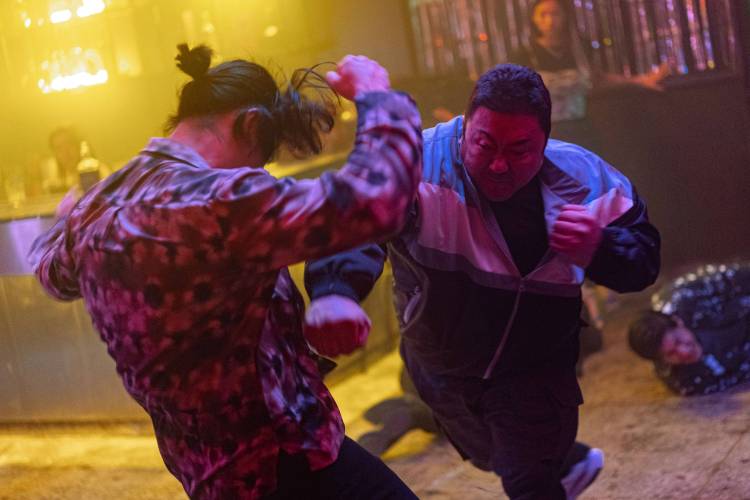
Even by the standards of the jitsuroku, Operation Plazma in Osaka is rabidly misogynistic and often sleazy with an early scene seeing the Soryu gang cause trouble by stripping a hostess naked as one pours alcohol over her body and another drinks it from between her legs. Naked women are repeatedly fondled by fully clothed men, while nightclub singer Yoshiko (Yuko Katagiri) is treated largely as a pawn, a tool used to mediate the latent homoerotic desire between Yasuda and Takayama. Then again, everything in this world is extreme. The conflicted Miyatake (Tatsuo Umemiya) who had once tried to protect Takayama eventually tries to boil a man alive to get him to reveal Takayama’s location while Nakajima’s anarchic handheld camera desperately tries to keep up with the increasingly nihilistic violence. 

The resolution arrives not with death but total defeat, the traditional yakuza forced into submission by the corporatising giant with the survivors realising they will live the rest of their lives in subjugation making an “unconditional surrender” to changing times. Yasuda had claimed that the Soryu gang was a “free democracy” standing in opposition to the latent fascism of traditional gangsterdom which then finds its way into the corporate and the extreme hostile takeover Yamaji has just performed on the city of Osaka. Suddenly all that’s left of traditional yakuza is a pinkie in a jar, a grim a reminder of what happens when those in a position to resist back down in the face of an authoritarian power.


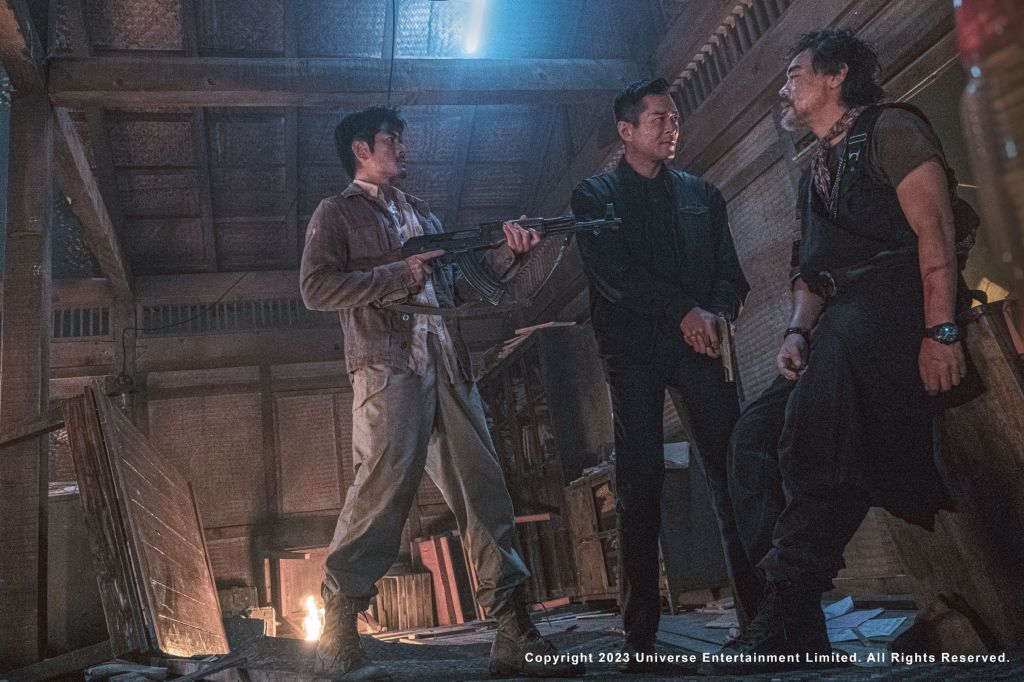
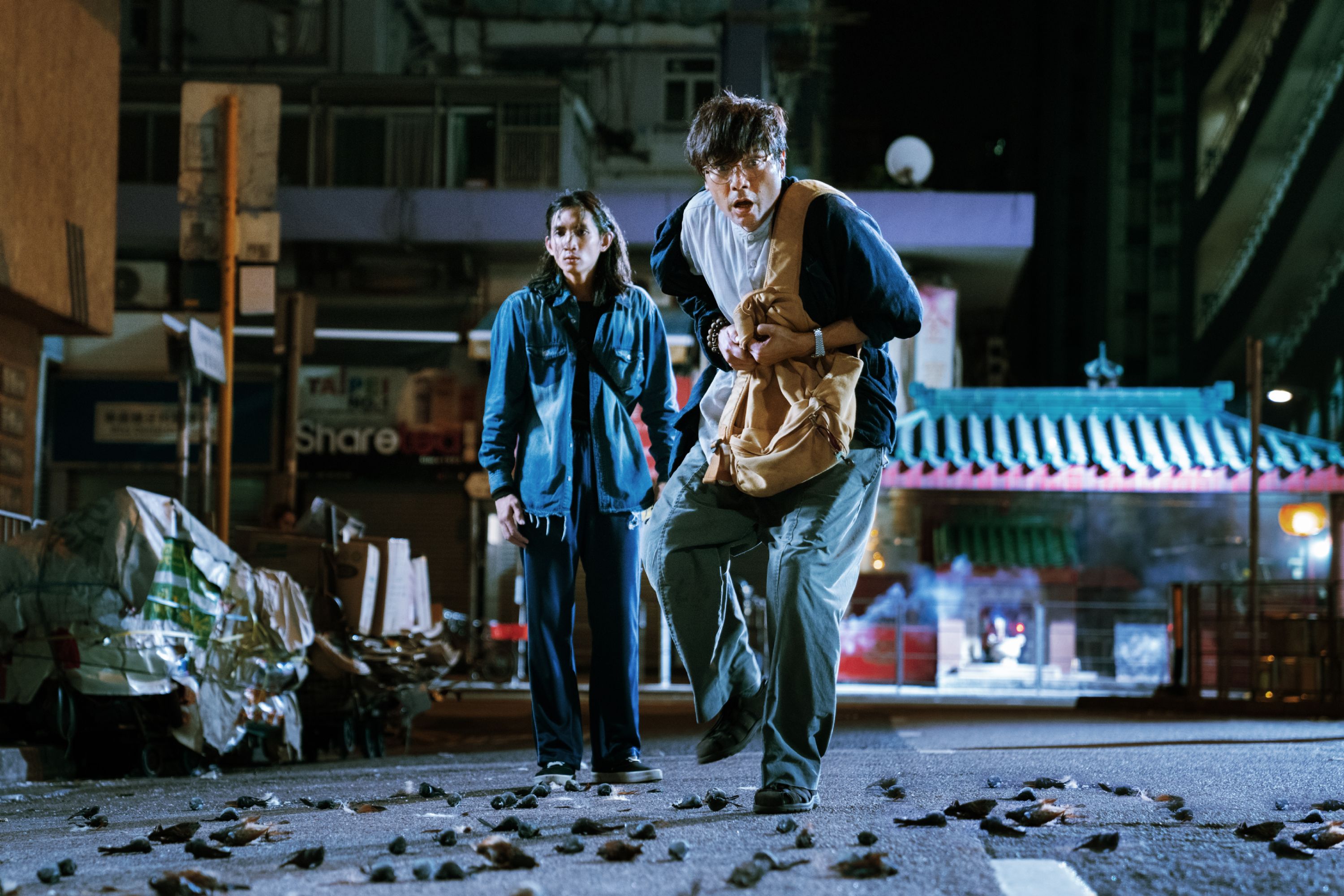
Cyber Heist (斷網, Wong Hing-fan, 2023)

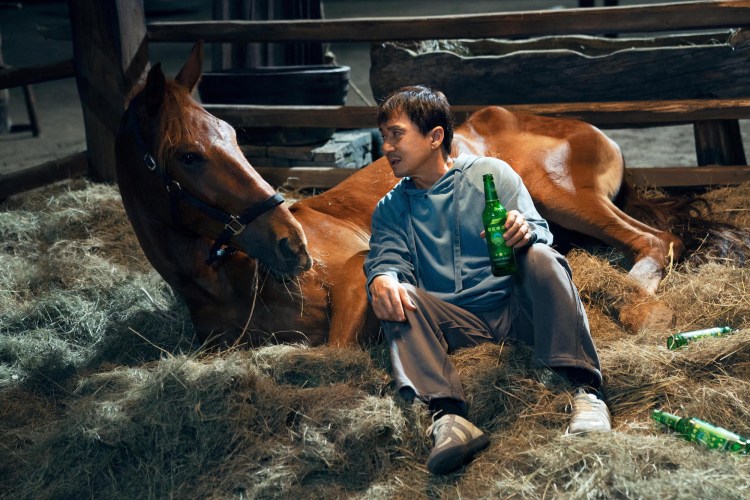
A cyber security expert is forced on the run after being framed for money laundering while trying to engineer a brighter future for his seriously ill little girl in Wong Hing-fan’s high octane techno thriller, Cyber Heist (斷網). In true B-movie fashion, the film’s visualisation of the digital world has a distinctly retro aesthetic while the plot may sometimes lack internal consistency, but what the film does have is a series of tense action sequences many featuring the hero desperately running around carrying the super secret information in a tiny robot doll. 

Chun (Aaron Kwok Fu-shing) is cyber security expert working for a top Hong Kong firm which provides technical services for local banks. The problem is that they keep getting hacked as criminal gangs take down banking services to run a complex money laundering operation. As it turns out, Chun was once a cyber criminal who spent time in prison for selling viruses on the dark web but has since reformed after becoming a father. His little girl, Bowie, is suffering from a serious heart condition and is currently on the transplant list but dreams of one day becoming an astronaut. 

It’s Bowie who provides the moral centre of the film in her constant refrain of “What are you doing, Daddy?” which Chun seems to hear every time he’s thinking of doing something nefarious. Clearly possessed of immense power in his technical knowhow Chun battles with himself as to how to use it responsibily. When Bowie is turned down for a place at an elite school, he considers simply hacking into their database and changing her records but thinks better of it before getting her a place the old fashioned way, by agreeing to make a sizeable “donation”. It doesn’t really seem like that’s a lot better in the grand scheme of things but does perhaps hint at the low level of corruption that has already seeped into everyday life. In any case, it’s Chun’s desperation for the money after being turned down for a loan by his boss, Chan (Gordon Lam Ka-tung ), that makes him vulnerable to intrigue when previous patsy Frankie (Kenny Wong Tak-bun) is killed in a mysterious “accident” after laundering more money than he was supposed to and then depositing the excess in his regular bank account.

Chun agrees to help the authorities in the form of cyber crimes inspector Suen Ban (Simon Yam Tat-wah) but soon finds himself on the run when ultra corrupt boss Chan kidnaps his daughter. Chan is also trying to protect his younger brother who was left with brain damage after being beaten by thugs working for shady gangster Mr Pong (Andy Kwong Ting-Wo) and is clearly not above reprehensible behaviour. It has to be said that the film’s conception of the way online infrastructure works has a distinctly B-movie quality. At one point, Chun’s experimental AI virus ends up accidentally destroying the entirety of the internet yet nothing really happens except for people becoming very confused by their now useless phones, and then Chun is somehow able to make everything OK again by simply rebooting it. 

Likewise, the film’s visualisation of the cyber world is heavily influenced by mid-90s William Gibson as a kind of virtual reality metaverse where hackers walk around in cyberspace while wearing creepy clear plastic masks. The space occupied by the money launderers is verdant and green, a beautiful cyber forest, while that of the dark web is pure grunge, a space of urban decay filled with dank and half finished buildings and peopled by edgy guys in hoodies wearing hacker chic. Even so, there’s a kind of charm in the retro aesthetics of ‘90s futurism along with the concurrent suggestion that the offline world is inescapably duplicitous and true techno guys are the only ones to be trusted. 

In any case, the money laundering scam is a kind of MacGuffin as Chun becomes increasingly irate while squaring off against his opposite number, Chan, and trying to prove himself as a responsible husband and father by saving his little girl and catching the bad guy not to mention clearing his name by helping the police. An old-fashioned man on the run thriller, Wong’s breathless camerawork follows Chun all over Hong Kong as he fights for his life and family against those who value nothing more than money while desperately trying to live up to his daughter’s expectations of what a good man should be in a world that online or off is already far from fair. 


Cyber Heist was released in UK cinemas courtesy of Magnum Films.

Original trailer (Traditional Chinese / English subtitles)

Policeman (警察官, Tomu Uchida, 1933)

“No one knows what will happen to us in this world of illusion” muses a conflicted villain in Tomu Uchida’s seminal proto-procedural, Policeman (警察官, Keisatsukan, AKA Police Officer). Forever an enigma, Uchida had made his name through a series of broadly progressive, left-wing films featuring strong social critique, yet he also made this mildly authoritarian, overtly pro-police piece of militarist propaganda long before it became necessary to do so. But then, look a little closer and you’ll find him subtly undercutting the messaging, reconfiguring his tale of a courageous policeman who sets aside his personal feelings in the pursuit of justice as one of tragedy in which a man ultimately imprisons himself by doing so. 

The hero, earnest policeman Itami (Isamu Kosugi), was once as he later reveals a wayward young man. “The world was against me, I thought. I was young then” he sighs, explaining that he owes his life to his boss and mentor, Sgt. Miyabe (Taisuke Matsumoto), who became a second father and set him on the right path which he now of course follows. His long lost childhood friend Tetsuo (Eiji Nakano), with whom he reconnects during a routine vehicle check, apparently experienced something similar having fallen out with his wealthy industrialist father but claims that he’s become an elite layabout spending all his time at the golf course and asking his dad for money every time he runs out which seems nothing if not contradictory but then familial relationships can be complex. In any case, a repeated motif sees the two men taking diverging paths, literally, the implication being that they’ve each chosen different directions in response in to the same adolescent crisis when in a sense “orphaned” through parental disconnection. 

On hearing Tetsuo’s story, Itami asks him with thinly veiled horror if he hasn’t become a communist, that being a fairly common and fashionable way for a young man from a wealthy family to fall out with his father. Tetsuo laughs it off, wishing it were political but claiming somewhat vaguely that it was a matter of feeling. The exchange is revealing in that screenwriter Eizo Yamauchi had apparently been instructed to portray the criminal gang at the film’s centre, of which Tetsuo is later revealed to be a member, as “communist” though no political ideology or identity is ever directly stated. Nevertheless, the central drama is clearly inspired by the Omori Bank Robbery (1932) in which a three members of the Communist Party robbed the Kawasaki Daiichi Bank without the knowledge or authority of party officials in order to gain funding for the movement. The incident backfired, badly discrediting the Communist Party (illegal at the time) and thereby imploding the most viable source of opposition to rising militarism. Armed bank robbery not being a common occurrence in Japan, most viewers would necessarily associate this brand of criminality with “communism”, killing two birds with one stone as the film does its intended job of making the world seem more dangerous than it is while reinforcing an authoritarian message that the police will protect. 

Yet, on the other hand, perhaps it really was “feeling” after all. The relationship between the two men has an intensely homoerotic quality with frequent flashbacks to their carefree high school days during which they read each other romantic German poetry, played rugby, and frolicked on a beach in the company of a very large dog. Itami largely ignores his potential love interest in Miyabe’s pretty daughter, save for briefly thinking about her while on a three-day stakeout of the robbers’ den, while constantly chasing Tetsuo after becoming suspicious that he may be the man responsible for shooting Miyabe and fleeing the scene after a robbery. His inner torment lies partly in the conflict between his responsibilities to friendship and the law, but also perhaps in his unresolved feelings for Tetsuo. Driven half out of his mind, his final epiphany crying out “I am a policeman” is as much a rejection of an identity as a claiming of one, entirely sublimating himself within the image of the role that he has chosen to play in society shedding his personal feeling and desires as he does so. In “saving” Tetsuo, shooting him in the hand to prevent his suicide, tenderly cuffing and then embracing him, he evokes both a sense of return and forgiveness and another of goodbye further enhanced by the abruptness of the transition which follows. 

Taken in this light, the late and extremely jarring slide into overt propaganda through a series of title cards loudly proclaiming the virtue of the police takes on a differing kind of anxiety in its authoritarian dimensions as a force which destroys rather than protects in its capacity to erase individual identity. Nevertheless, Uchida also includes numerous shots of heroic policemen in their dashing uniforms as they assemble for drill or show up en masse on their bikes ready to fight crime. Tetsuo’s final appearance, meanwhile, is extremely sinister dressed as he is in an outfit which would later become associated with fascism, his meticulous uniformity in strong contrast to the then crazed and dishevelled Itami still in his crumpled kimono with messy hair and three days’ worth of beard growth from his stakeout. Yet there’s nothing but pain and fear in his eyes as he realises that his friend has seen through him, Itami rather ostentatiously bundling Tetsuo’s lighter into a handkerchief almost as if he meant to him let know. 

Shooting mainly on location, Uchida’s camera is rarely at rest even employing a series of complicated vehicle tracking shots one of which eventually resolves itself into a first person perspective while the final sequence is tense in the extreme with its gunfire, search lights, and complex choreography. His use of flashback is precise and unusual, far ahead of its time in its acuity as if we actually see Itami’s thought process on screen jumping from one idea to another, while the meeting of the two men on the desolate docks seems to be drenched in loneliness and a sense of futility even while free of the oppressive shadows from the buildings which seemed to dwarf them in the city. Somehow desperately sad despite the catharsis of its final scene, Policeman subtly implies there might not be much difference between hero and villain, or between communist and militarist, save walking one way and not another as two men find their friendship frustrated by time and circumstance coming together only to be driven apart. 


Herstory (허스토리, Min Kyu-dong, 2018)

When Kim Hak-sun held a press conference and offered her testimony as a former comfort woman following a statement in the Japanese Diet in which the government rejected any responsibility for wartime sexual slavery, it brought an issue into the public consciousness that many had been unwilling to reckon with. One of many films focussing on the same subject released in the last few years, Min Kyu-dong’s Herstory (허스토리) dramatises the events of the Shimonoseki Trials which took place between 1992 and 1998 and resulted in the first admission from the Japanese authorities that the basic human rights of women had been breached but nevertheless found it not incumbent on the government to offer a direct apology. 

That the trial takes place in Shimonoseki is itself somewhat symbolic, given that this was the harbour from which boats to Korea and China departed and at which the women who were trafficked to Japan would have arrived. The film begins, however, in Busan where successful travel agent Moon Jung-sook (Kim Hee-ae) has ironically been accused of breaking the prevention of prostitution laws when a Japanese man is found dead after visiting a sex worker and it is revealed one of her employees had been running tours specifically geared towards sex tourism. Struck by Kim Hak-sun’s testimony, the association she leads of female business owners wants to do something to help and seeing as her company has been suspended, Jung-sook sets up a call centre on her premises for other victims of wartime sexual slavery and forced labour to come forward. 

Unlike some of the recent dramas dealing with the same issue, Min focusses on the resistance towards the former comfort women coming from within Korea itself. A taxi driver Jun-sook gets a lift from goes off on a rant describing the women as former sex workers out for a paycheque who should be ashamed of their sordid pasts while in any case all of this happened decades ago so why bring it up now? He is far from alone, even the Mayor describes them as “filthy women” when Jung-sook approaches him for help, and it’s obvious that many find the subject so embarrassing that they simply do not want to discuss it and blame the women for breaking the peace by speaking out. 

It’s also true that in the peculiarities of the political landscape of Korea, conservative elements tend to hold a more favourable view of Japan and the colonial era than might be expected. Economically, there are strong ties and Jung-sook, a fluent Japanese speaker, has close business relationships with Japanese clients which are endangered by her involvement with the comfort women cause. Her friend in the women’s association who runs a traditional-style hotel can be seen warmly greeting Japanese guests, at one point as she expresses her admiration for Kim Hak-sun in Korean to the television as they pass behind her. It’s clear that some would rather not rock the boat because this kind of politicking is often incompatible with running a successful business. 

Jung-sook is minded to buck the trend because she sympathises with the women’s suffering and with their rejection by mainstream society. She has the confidence to do this in part because the wealth she has accrued through business success gives her an unusual amount of power in a male-dominated, capitalistic society. Still she too struggles with contemporary notions of proper womanhood in being accused of neglecting her daughter through her workaholic lifestyle especially as she is considering leaving education claiming that studying isn’t for her. Even so, the women’s association seems to have female solidarity at its heart, collecting money to support single mothers even before taking up the cause and trying to help elderly women who have no remaining family members or means to support themselves. 

As she later comes to realise, the trial has meaning outside of winning and losing in allowing the women to express their trauma and regain some of their dignity. Even so, they are subject to further rejection in Japan, not least from a hotel which asks them to leave because other guests are unwilling to share the space with former sex workers. The Korean-Japanese lawyer also relates having faced racism in his life in Japan because of his Korean ethnicity while his mother’s restaurant is later graffitied because of their support of the case. Right-wing nationalists also hold protests outside the court and in Seoul accusing the women of lying, insisting that they are just “sex workers” as if sex workers weren’t worthy of human consideration anyway. In interpreting the testimony, Jung-sook becomes a kind of everywoman speaking for all women in her emotionally charged translation while inwardly conflicted in realising the toll the process is taking on some of the witnesses who are all in advanced age and often poor health. Min depicts their struggle with as much empathy as possible, avoiding the temptation to demonise while instead presenting a more nuanced perspective focussing on the women themselves and the rejection they continue face even within their own society.


Herstory is available digitally in the USA courtesy of Well Go USA.

Too Cool to Kill (这个杀手不太冷静, Xing Wenxiong, 2022)

Fantasy and reality begin to blur for a jobbing actor suddenly offered a leading role in an experimental hitman movie in Xing Wenxiong’s meta take on Koki Mitani’s The Magic Hour, Too Cool to Kill (这个杀手不太冷静, Zhè ge Shāshǒu Bú Tài Lěngjìng). A veteran comic actor, Wei Xiang like his character is also playing his first leading role and tearfully thanks the crew for the opportunity in a moment of behind the scenes footage playing over the ending credits proving that there might be “method” in the madness as his utterly guileless hero continues to “act” in a drama that is all too real. 

Big time gangster Harvey of the Magic Gang (Chen Minghao) is currently being targeted by rival outfit Movement. Top hitman Karl (Ai Lun) has been sent to assassinate him, but is ironically caught in the explosion at the quarry Harvey has just opened, his bullet merely grazing Harvey’s ear. Having no idea the injured worker was trying to kill him, Harvey plays the standup guy by visiting him in hospital and ironically swearing vengeance. Meanwhile, he’s also busy putting the squeeze on an actress he fancies, Milan (Ma Li), who has accepted his money to make a movie but has no intention of consenting to his terms. When Harvey threatens to fit Milan and her director brother Miller (Huang Cailun) with some concrete boots, she quickly counters that Karl is a personal friend of hers and she’ll certainly deliver him to Harvey if he gives her some time. But Milan was only bluffing and she doesn’t have enough time to flee the country before Harvey finds out, so she hatches on the idea of getting a random actor to play the part of “Karl the Killer” seeing as no one’s ever seen his face. 

The thing about Wei (Wei Xiang) is that he’s very earnest. He genuinely loves the craft of acting and is always trying to “improve” his performance such as cackling maniacally before he “dies” to show his utter contempt for death. All of this makes him quite irritating on set, but also the perfect fall guy for Milan and Miller who are, somewhat darkly, aware that Wei is not likely to survive his encounter with Harvey which will buy them some time to get away. What they didn’t bank on was Wei’s utter commitment to the role. Because he thinks it’s just a movie, he isn’t scared at all and doesn’t realise there’s a chance Harvey’s guys will actually kill him. Thus he pulls a bunch of ultra-cool, James Bond-style moves assuming he’s improvising an action drama in which he’s the hero so technically can’t “die” or at least not until the final scene. The plan begins to backfire when Harvey is so impressed that he actually offers Wei, well “Karl”, a job in his gang which only leads to further intrigue. 

It may just be that Wei’s behaviour is otherwise so odd that no one really notices, but his constant references to being in a film almost go unacknowledged. While negotiating with an Italian mob boss, he confesses he left the gun they were meant to be selling behind because it was too heavy but they can just fill it in with “special effects” later, while often asking to go for a second take because he’s not convinced the “invisible” cameras captured his best angle. On his first appearance, Wei shows up dressed like John Travolta in Pulp Fiction. Later he reenacts a scene from Desperado and even dances along to Singing in the Rain demonstrating his true love of the movies if somewhat anachronously to the movie’s ambiguous setting, 

Xing later does something similar in suddenly cutting the CGI backgrounds to show us the small island promenade surrounded blue tarp as if laying bare the “magic of the movies”. Echoing Mitan’is original he sets most of the action in a quaint Mediterranean backlot that is indeed a “fake” world to begin with where earnest actor Wei is the only one who’s “real”. Gradually, Milan starts to fall for his guileless goodness, especially on learning that he’s also been playing a role in real life that he’s committed to completely out of kindness and compassion all of which has made her regret her callous decision to feed him to the sharks so she could get out of town. A tribute to movie-loving pros, Too Cool to Kill celebrates the “unreality” of the silver screen but also the sincerity of a try hard actor who finally gains the role he was born to play.


Too Cool to Kill is available digitally in the USA courtesy of Well Go USA.

Trailer (Simplified Chinese / English subtitles)

Nippon Connection Confirms Full Lineup for 2023

Nippon Connection, the largest showcase for Japanese cinema anywhere in the world, returns with another fantastic selection of new and classic films screening in Frankfurt from 6th to 11th June. This year’s Nippon Rising Star Award will go to Drive My Car’s Toko Miura whose films I Am What I Am, and Our Huff and Puff Journey, will also be screening.

Nippon Cinema

  • #Manhole – a salaryman’s moment of triumph is disrupted when he falls down a manhole the night before his wedding in Kazuyoshi Kumakiri’s unhinged B-movie thriller. Review.
  • A Far Shore – a teenage mother struggles to make a life for herself in contemporary Okinawa in Masaaki Kudo’s bleak social drama. Review.
  • A Hundred Flowers – an expectant father finds himself confronted with paternal anxiety and past trauma on learning that his mother has been diagnosed with Alzheimer’s in Genki Kawamura’s adaptation of his own novel. Review.
  • Baby Assassins – a pair of mismatched high school girls raised as elite assassins get swept into gangland conflict while forced to live together to learn how integrate into society in Yugo Sakamoto’s deadpan slacker comedy. Review.
  • Baby Assassins 2 – sequel in which the girls give up their jobs as hitwomen but are chased by two other killers for hire.
  • December – bereaved parents are confronted by the unresolved past when the woman who killed their daughter appeals her sentence in Anshul Chauhan’s empathetic courtroom drama. Review.
  • Egoist – LGBTQ+ romantic drama from Daishi Matsunaga (Pieta in the Toilet) in which a fashion editor falls in love with a personal trainer.
  • I Am What I Am – sensitive drama in which an asexual woman is pressured into a blind date but ends up making a friend instead.
  • Lesson in Murder – a diffident student falls under the spell of a manipulative serial killer in Kazuya Shirashi’s intense mystery drama. Review.
  • Mondays: See You This Week – timeloop comedy in which a collection of colleagues are forced to endure the same week over and over again.
  • Mountain Woman – mystical drama set in the late 18th century in which a young woman walks into the mountains and meets a mysterious man.
  • My Small Land – a young woman’s life is destabilised when her father’s asylum claim is rejected in Emma Kawada’s empathetic debut feature. Review.
  • Nabbie’s Love – Okinawan dramedy in which a woman quits her job in Tokyo and returns to her grandparents’ home only for her life to be distupted when grandma’s first love resurfaces.
  • Okiku and the World – period drama from Junji Sakamoto in which two manure men encounter a samurai’s daughter.
  • Plan 75 – an elderly woman finds herself pushed towards voluntary euthanasia by a society driven only by productivity in Chie Hayakawa’s dark dystopian drama. Review.
  • Shin Ultraman – Ultraman returns to rescue kaiju-plagued Japan from geopolitical tensions and internal bureaucracy in Shinji Higuchi’s take on the classic tokusatsu franchise. Review.
  • Special Screening: Drive my Car – a theatre director begins to overcome his sense of inertia after bonding with a young woman hired to drive his car in Hamaguchi’s deeply moving drama. Review.
  • Special Screening: Our Huff and Puff Journey – youth drama from Daigo Matsui in which four superfans of the band CreepHyp take off on a road trip to Tokyo by bicycle.
  • Spring In Between – romantic drama in which a magazine editor falls in love with an autistic painter.
  • Straying – an adulterous couple on the brink of divorce are brought closer together while looking for their runaway cat in Rikiya Imaizumi’s contemporary romantic drama. Review.
  • The Zen Diary – a mountain ascetic gains a new perspective when confronted with mortality in Yuji Nakae’s contemplative foodie drama. Review.
  • Thorns of Beauty – two women team up to get revenge on a no good ex.
  • To the Supreme – zany comedy about four women in relationships with terrible boyfriends.
  • Yudo – a young man returns home hoping to turn his father’s old bathhouse into an apartment complex but soon reconsiders.

Nippon Animation

  • Future Boy Conan – three episodes of the classic Hayao Miyazaki-directed series. Screening in German dub/Japanese with German subtitles.
  • Gold Kingdom and Water Kingdom – fantasy anime in which the wedding between the children of two kingdoms is disrupted.
  • Lonely Castle in the Mirror – an isolated young woman discovers a magic portal to a desert island.
  • Poupelle of Chimeney Town – animated adaptation of the picture book by Akihiro Nishino. Screening in Japanese with English subtitles / German dub.
  • Special Screening: Tekkonkinkreet – a pair of orphan street kids find battle to save their town from gangster developers in Michael Arias’ atmospheric adaptation of Taiyo Matsumoto’s manga. Review.
  • Sumikkogurashi: The Little Wizard in the Blue Moonlight – adorable adventure in which the Sumikkogurashi guys go on an adventure to see the moon. Screening in Japanese with with German live synchronisation.
  • The Deer King – a lone survivor comes to represent both salvation and destruction in Ando & Miyaji’s fantasy adventure. Review. Screening in Japanese with German subtitles.

Nippon Visions

  • Amiko – Quirky drama loosely inspired by Natsuko Imamura’s novel Atarashii Musume following an eccentric young girl in the wake of a traumatic event in her family.
  • Double Life – a former dancer who gave up her career following an injury hires a ringer to pose as her husband when he refuses to take part in a couples dance workshop.
  • Hoarder on the Border – a failed pianist takes a job clearing houses and is confronted by dark secrets.
  • Journey – probing drama in which a cleaner applies to go on a space expedition.
  • Remembering Every Night – drama following a series of women living in Tama New Town.
  • Roleless – a cable car driver and perpetual movie extra flounders when forced to play the leading role in his own life.
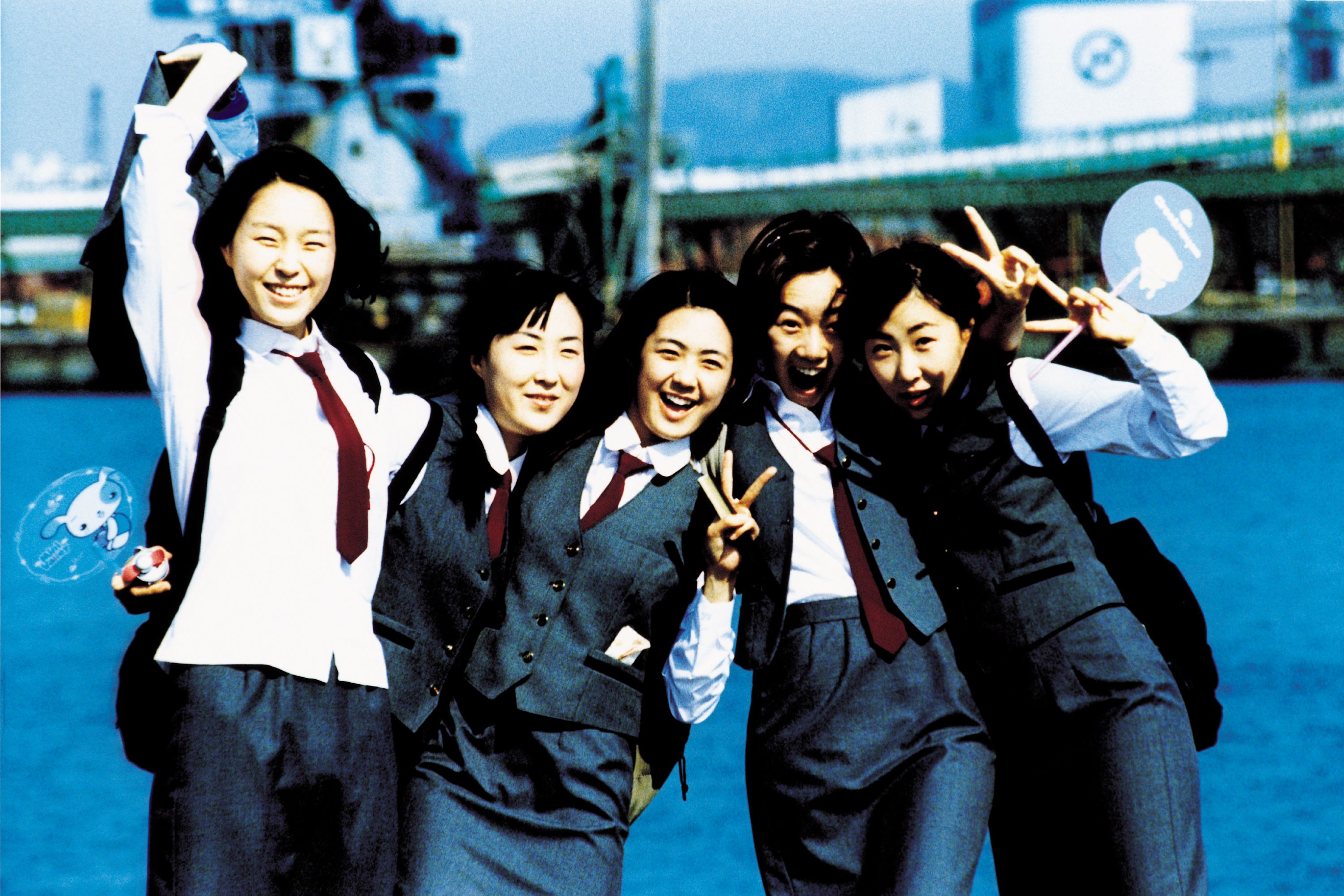
  • Sayonara Girls – teen friendship drama following four young women as they prepare to leave high school.
  • Scary Friend – eerie fairytale in which a young girl whose only friends are stuffed toys she makes herself encounters a mysterious killer.
  • Single 8 – teen drama set in the summer of 1978 when a group of friends decide to make a movie after seeing Star Wars.
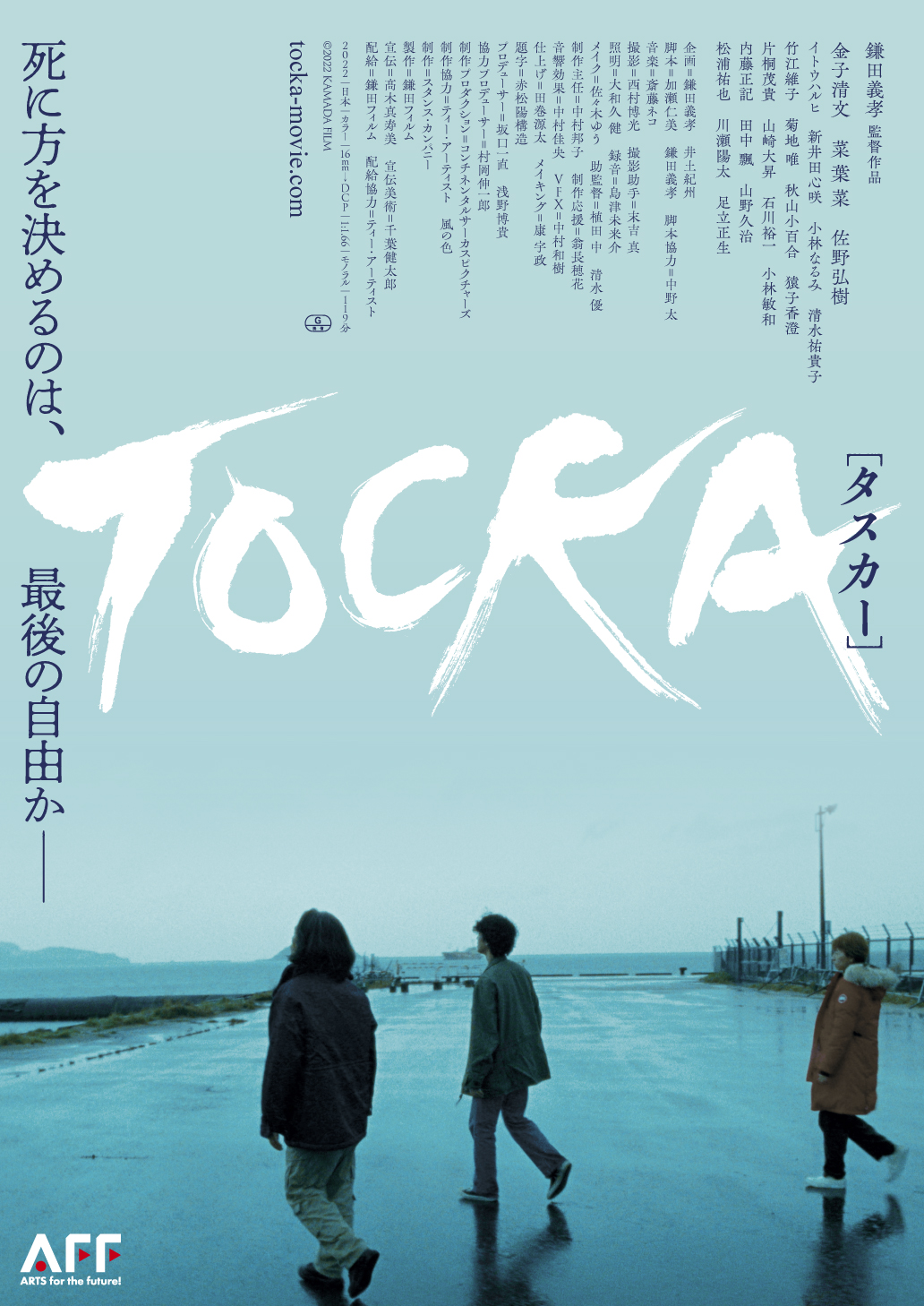
  • TOCKA – drama in which a man wants to die so that his daughter can have the insurance money but his policy doesn’t cover suicide so he teams up with someone else in a similar position.
  • Your Lovely Smile – Hirobumi Watanabe stars as a version of himself but this time for Lim Kah-Wai as the pair come together in shared sensibly and frustration with the indie way of life. Review.

Nippon Docs

  • A Son – documentary following a social worker who adopts a 20-year-old man.
  • I Am a Comedian – documentary following a controversial comedian who was banned by TV networks because of his political rants.
  • Maelstrom – personal documentary following the director’s return home from New York after becoming a wheelchair user following an accident.
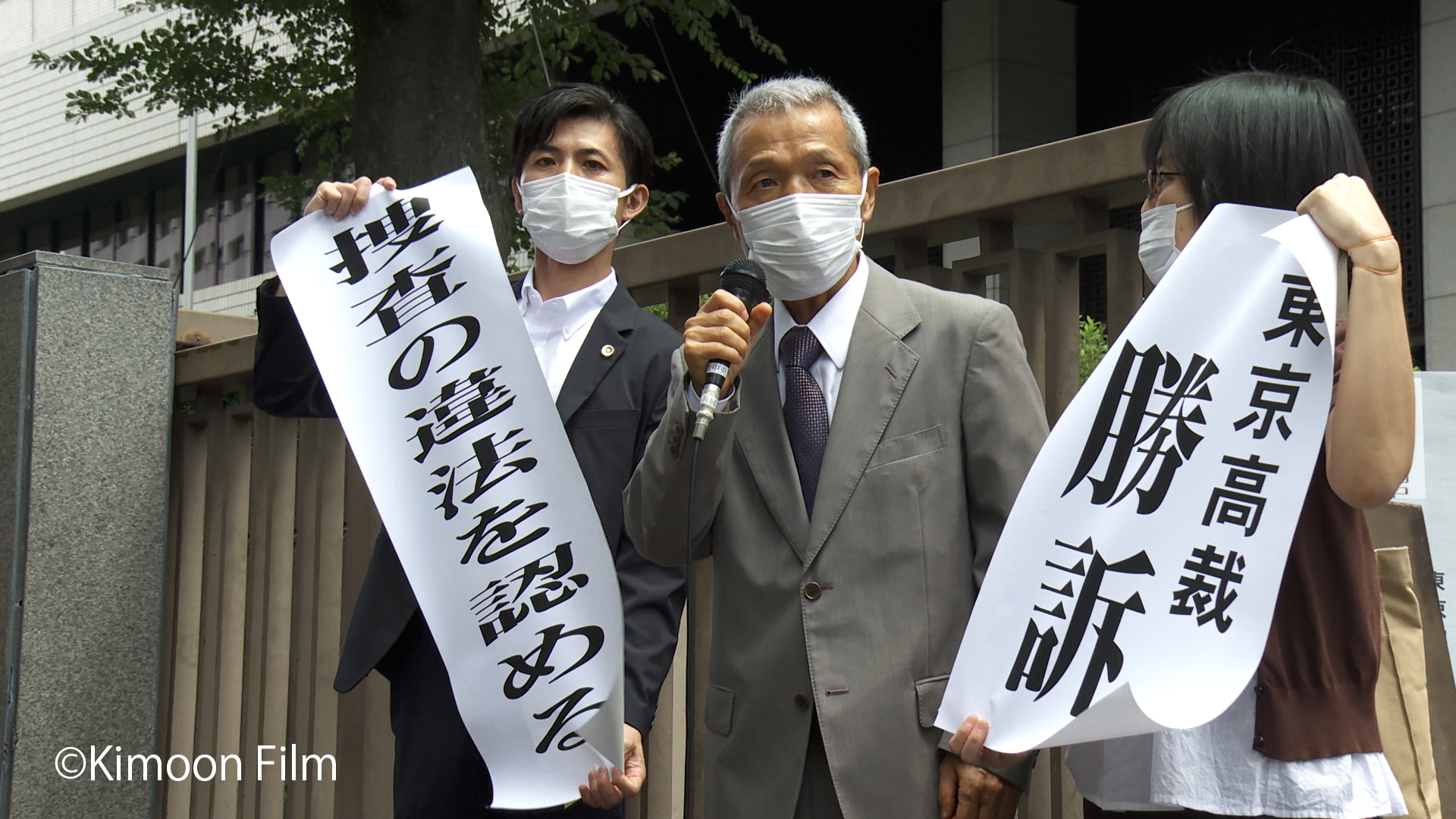
  • My Anniversaries – documentary following a man who was falsely imprisoned for murder for 29 years and has continued to fight to clear his name since his release on parole in 1996.
  • Soup and Ideology – documentarian Yang Yonghi returns to the subject of her family in coming to an understanding of her mother while learning of her traumatic history. Review.
  • Special Screening: Ryuichi Sakamoto – Coda – documentary following late musician Ryuichi Sakamoto. Screening in original language with German subtitles.
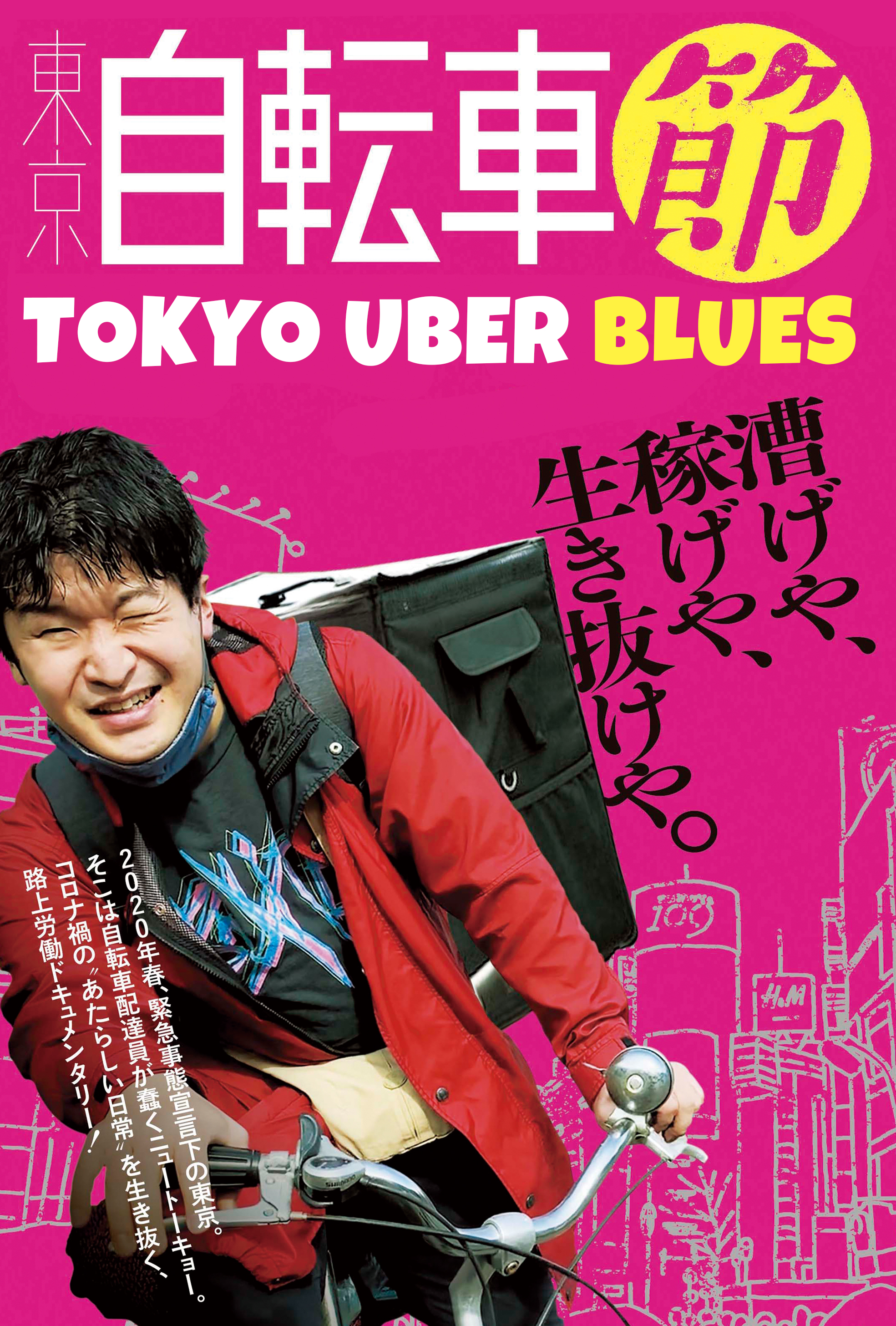
  • Tokyo Uber Blues – documentary filmmaker Taku Aoyagi documents his life as after taking a job as an Uber Eats driver in the early days of the pandemic.
  • Umui – Guardians of Traditions – documentary focussing on traditional music and dance in Okinawa.

Nippon Retro

This year’s Nippon Retro is dedicated to Keisuke Kinoshita.

  • Army – subversive wartime propaganda film in which a mother prepares to send her son away to war.
  • Carmen Comes Home – Japan’s first colour film starring Hideko Takamine as a young woman who visits home after becoming a famous stripper in Tokyo.
  • Carmen’s Pure Love – loose sequel in which Carmen struggles to make it in the city and is drawn into the elite art scene and the political campaign of a right-wing candidate.
  • Morning for the Osone Family – melancholy drama in which a family is divided by war.
  • She Was Like a Wild Chrysanthemum – heartbreaking romantic drama in which an old man looks back on his doomed first love. Review.
  • Spring Dreams – chaos engulfs a wealthy family when a sweet potato man collapses in their house. Review.
  • The River Fuefuki – period drama in which peasant brothers enlist in the Takeda army in order to escape their poverty.
  • Snow Flurry – drama following a mother and son treated as poor relations by the father’s noble family. Review.
  • Twenty-Four Eyes – moving drama following a school teacher who is sent to a remote island in 1928 and witnesses it torn apart by the effects of war despite its physical distance.

Nippon Connection takes place in Frankfurt, Germany from 6th to 11th June. Tickets are available now via the official website where you can also find full details on all the films as well as timetabling information. Unless otherwise stated, films screen in Japanese with English subtitles. You can keep up with all the latest information by following the festival on FacebookTwitterYouTubeFlickr, and Instagram.

Late Chrysanthemums (晩菊, Mikio Naruse, 1954)

The post-war economy was difficult for most, though by the mid-1950s the situation was perhaps improving. The four former geishas at the centre of Naruse’s Late Chrysanthemums (晩菊, Bangiku) , adapted once again from a series of stories by Fumiko Hayashi, are all in their way attempting to find a way through to the modern society but are nevertheless stuck in the past, unable to move forward as women more or less left behind by a changing idea of “modernity” which no longer has a place for them. 

The most successful of the women, Kin (Haruko Sugimura), has become a ruthless moneylender engaging in real estate speculation. As the film opens she’s waiting for the arrival of a business associate for a meeting about a house she’s trying to flip, clear that they’ll need to kick out the desperate widow who is currently living there. Kin has lent money to her old “friends” with whom she spent her youth as a geisha before the war. Otamae (Chikako Hosokawa) and Otomi (Yuko Mochizuki) are widows with unfilial children, Otamae now working as a maid in a love hotel while her son Kiyoshi (Hiroshi Koizumi) struggles to find a job, and Otomi a washerwoman selling blackmarket cigarettes as a sideline while her daughter Sachiko (Ineko Arima) is a forthright modern woman who refuses to enable her mother’s irresponsible vices. Nobu (Sadako Sawamura), meanwhile, married late to a man from outside of Japan and has opened a small bar where she hopes to start a family, brushing off Kin’s insensitive insistence that she is already too old to bear a child. 

Kin has prospered and become wealthy, but she’s done so largely at the sacrifice of maternity. She disparages the other women, telling them she’s grateful not to have had children because not even they can be depended upon, but is also embittered that she’s missed out on life and love, substituting material wealth for emotional fulfilment. Otomi and Otamae have problems with their children and regrets about their lives, but they both resent Kin for her heartless rationality. Kin is in a sense supporting them with her money, even if she wants it back with interest, and continues to see herself as doing a favour for women she considers friends, hurt that they often run or hide when they see her coming but insisting that she is only trying to survive while implying that the other women have failed to achieve the self-sufficiency she has achieved because they’ve lived irresponsibly by placing their trust in men and frittering their money away on the temporary pleasures of drink and gambling. 

Otomi’s thoroughly modern daughter Sachiko thinks something much the same. When Otomi approaches her for a loan, she says no, fearing that her mother has another lover she will end up subsidising or that she will spend it all on drink and pachinko. Sachiko does, however, offer to buy her mother dinner which at least ensures she will get a good meal. Sachiko’s shock news is that she plans to marry an older man, though he seems not to be particularly wealthy seeing as she later sarcastically asks Kin to buy her a house because they’ll be living with other tenants in a small flat. Otomi objects, not only because Sachiko hasn’t mentioned any of this to her before, but because she thinks Sachiko is being overly practical and gives her some surprisingly transgressive advice to the effect that she should have her fun with various men while she’s young so she’ll be able to figure out which is the best to spend a life with. Sachiko quite reasonably asks how that worked out for her, to which Otomi obviously has no answer and leaves the restaurant feeling dejected enough to ask Kin for the money she was after instead. 

Otamae’s problem is of the opposite order. Her son Kiyoshi cheerfully rolls home in the morning after staying out all night and tells her he’s become a kind of gigalo, dating a slightly older woman who is technically the kept mistress of another man. The situation is ironic in the extreme, but despite her own past as a geisha, Otamae doesn’t like it that her son is engaging in a compensated relationship, while he suggests that perhaps she messed him up by making him refer to her as his sister in public. Eventually Kiyoshi is offered a job in a mine in Hokkaido, salmoning the post-war migratory movement and leaving his mother (as well as the mistress) behind to fuel the economic recovery from the provinces. 

Otomi and Otamae have only each other to rely on, men and children have all proved undependable. Kin, the most fiercely independent, is literally haunted by the spectre of failed romance. Nobu, snaps that Kin made her money by swindling her clients, which might be why she takes the side of Seki (Bontaro Miake), a man who tried to commit double suicide with Kin but survived and was ruined. Kin sees it differently. Seki tried to kill her when she refused to die with him, so understandably she is not keen to reconnect. Nobu advises him to visit her and ask for money as “compensation”, which whichever way you look at it is crass and troubling, that Kin is expected to compensate a man for his ruined prospects caused by his obsessive romantic violence towards her which she claims has put her off men for life. Nevertheless, she continues to meditate on the memory of Tabe (Ken Uehara) whom she loved when he was a student, even visiting him in his Hiroshima barracks after he was drafted. She is thrilled to receive a letter from her first love, but declares herself disappointed minutes after he arrives for a visit. Tabe is just another failed salaryman who thinks women like her have it easy and harps on about how looking at his “old” wife makes him nostalgic for the women he loved in his youth. Like everyone else, he’s after her money. Kin burns the photo of him in uniform and gives up any lingering dream she might have had of romantic fulfilment. 

The women find themselves trapped by conflicting visions of “modernity” which are wildly different from those of their youth. They miss their “carefree” lives as geishas, now perhaps somewhat romanticised, along with the misplaced idealism of their time of Manchuria, while lamenting that as single older women they cannot be anything other than dependent. Only Kin is able to achieve self-sufficiency, but does so effectively as the film suggests at the cost of her “femininity”, becoming hard and cold, ruthlessly practical but not perhaps uncaring even as she continues to subsidise the only “friends” she has perhaps in the knowledge that they fiercely resent her. Yet their lives continue. Nobu runs her bar, Otomi and Otamae send their children off with grudging respect while vowing to follow their examples, and Kin, after a moment of crisis, ventures off towards new prospects. For good or ill they shift towards the modern world, more understanding of its rhythms and their place within it than before, but perhaps no more secure.