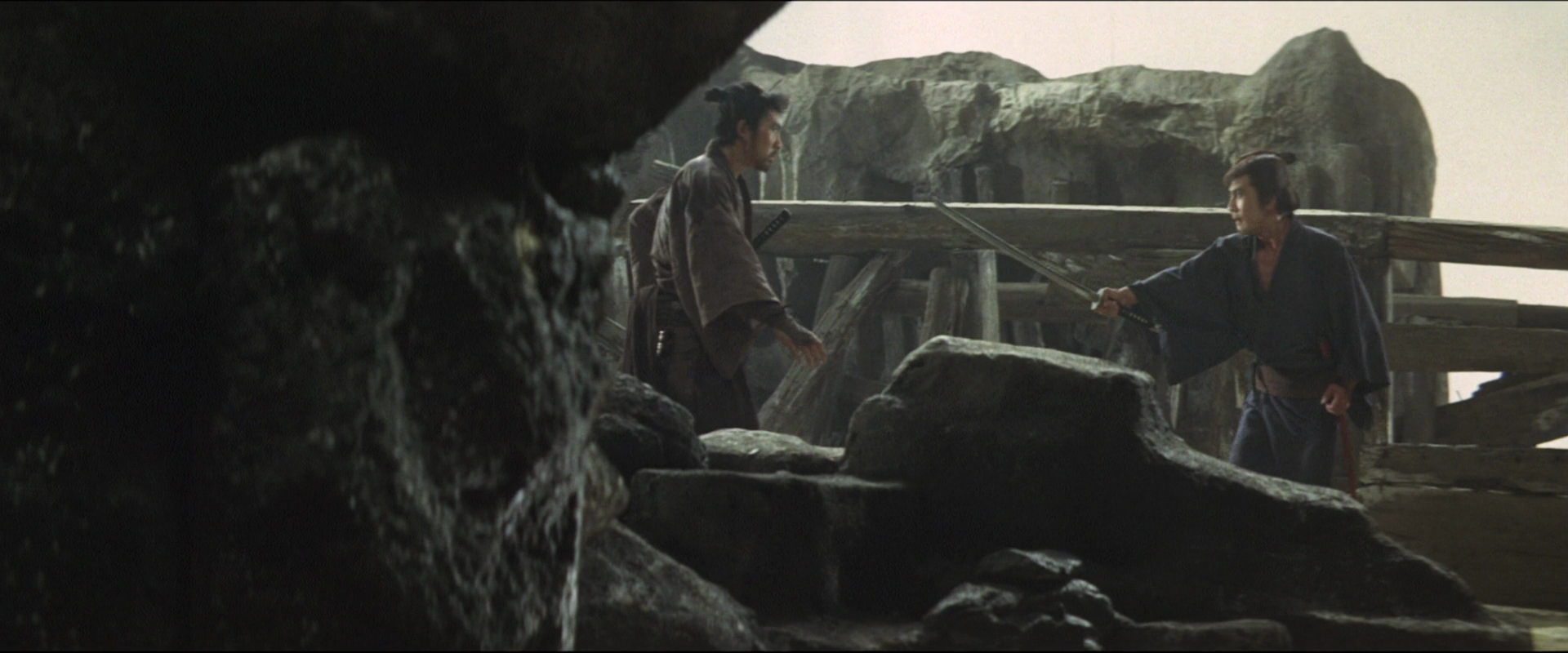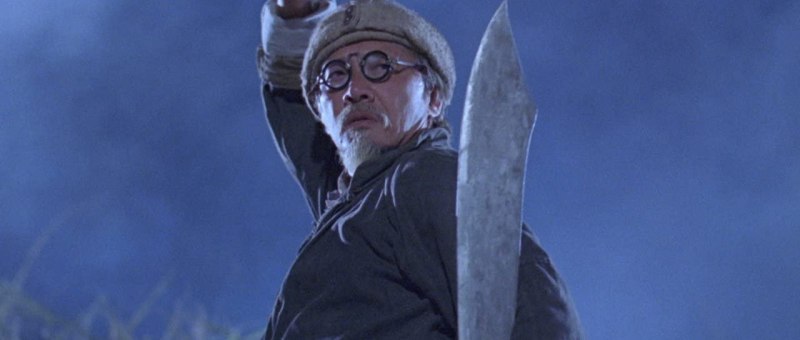
Zu: Warriors from the Magic Mountain (新蜀山劍俠, Tsui Hark, 1983)

“I never imagined that the righteous would not only refuse to unite, but also be incapable of action” laments a reluctant soldier realising there are no heroes coming to the rescue in Tsui Hark’s SFX-laden fantasy wuxia, Zu: Warriors from the Magic Mountain (新蜀山劍俠). Inspired by the work of Huanzhulouzhu (Li Shoumin), Tsui’s feudal fable marked a departure from the more “realistic” swordplay movies which were popular at the time harking back to an earlier era of fantastic adventures which drew inspiration from traditional Chinese folklore. It was also, however, an attempt to prove that Hong Kong could rival Hollywood in the post-Star Wars world, blending what might now be viewed as fairly camp but then cutting-edge special effects with classic wuxia action. 

Accordingly, after a brief voice over, Tsui opens with a world in chaos in which several factions are currently vying for hegemony over the hotly contested, mystical and mountainous terrain of Shu. Lowly retainer Ti Ming-Chi (Yuen Biao) has been tasked with delivering a message regarding troop movements to his superiors, but there is a difference of opinion in the chain of command as to whether to attack by land or sea. Placed in an impossible position, Ming-Chi eventually sees himself pledge to obey both captains, only for infighting to emerge within the group forcing him to flee for his life which is how he encounters “Fatty” (Sammo Hung Kam-Bo), a soldier from a rival faction and discovers, quite ironically, that they are from neighbouring villages which makes their rivalry all the more ridiculous. In the course of his attempt to escape, Ming-Chi falls into a mountain crevasse and finds himself entering a mysterious cave which takes him to another world in which he becomes similarly embroiled in a war against the evil Demon Cult which apparently practices child sacrifice and then uses the bones as a kind of magical armour. 

A reluctant soldier, Ming-Chi finds himself captivated by the “Great Hero” Ting Yin (Adam Cheng Siu-Chow) and determines to become his disciple while the pair form an uneasy alliance with a pair of similarly matched Buddhist monks, master Hsiao Yu (Damian Lau Chung-Yan) and his assistant I-Chen (Mang Hoi), also hot on the trail of the Demon Cult. Finding this world also confusing, he is nevertheless reassured by I-Chen’s simple explanation “they’re bad, we’re good” as the two masters face off against the Demon Lord, but comes to discover it’s not quite all as black and white as it seems and this world too is torn apart by chaos and disorder because “the hearts of men are so corrupt.” Ming-Chi begs Ting Yin to use his “peerless martial arts skills” to “save mankind”, but Ting Yin cynically tells him his best course of action is to retreat into the mountains and avoid human society because “neither you nor I have the ability to bring about change”. 

Yet Ming-Chi remains pure of heart, certain that “as long as everyone puts in the effort, peace can be restored under heaven”. “Teach me martial arts and once I’ve mastered it, I can fight oppression, help the weak, and save the masses” he pleads, but Ting Yin once again refuses him. In fact, in one of the later SFX sequences, Ting Yin will “transfer” his martial arts knowledge near instantly via a laying on of hands assisted by some elaborate prosthetics which see Ming-Chi’s body warp and bubble to accept it. Nevertheless, the lesson that Ming-Chi begins to learn, bonding with fellow assistant I-Chen who ignored his master’s petty parting words to bid him goodbye to hope they meet again along the way, is that the masters care only for themselves and are no better than the warring nobles from his own lands, obsessed with their rival sects and ideologies. If they want to save the world they’ll have to save themselves through mutual solidarity in pursuit of their goal, tracking down a pair of mystical swords which are the only way to end the demonic threat for good. 

There might of course be an added dimension to this allegory in the Hong Kong of 1983 which is perhaps also beginning to feel like disputed territory coveted by duplicitous elites who fight amongst themselves while ordinary people suffer, but Tsui is in any case more interested in zany action and excuses to employ zeitgeisty special effects making full use of the technology of the day from lasers to animation along with in-camera stunts to recreate his epic fantasy world in which old men can keep evil at bay for as long as 49 days using nothing but their powerfully hairy eyebrows and a fancy mirror. With small roles for Brigitte Lin and Moon Lee as an ice queen with a warm heart presiding over an all female palace and her spiky guard respectively, Tsui’s bonkers fairytale moves on at a glorious, confusing pace but is nevertheless filled with warmth and humanity as the goodhearted heroes attempt to head off the folly of war with human solidarity. 


Zu: Warriors from the Magic Mountain streams in the UK 9th to 15th February as part of Focus Hong Kong

Eureka release trailer (english subtitles)

The World of Wong Kar Wai Comes to BFI Player & ICA Cinema 3

4K

Wong Kar Wai’s long-awaited if controversial restorations are making their way to the UK streaming throughout February 2021 with physical screenings planned for such time as cinemas are able to reopen. After launching via ICA’s Cinema 3, seven of the newly restored classics will be available to stream via BFI Player from 8th February.

As Tears Go By


Hong Kong. 1988. Dir Wong Kar Wai. With Andy Lau, Maggie Cheung, Jacky Cheung. 102min. Digital 4K. 18
This 4K digital restoration was undertaken from the 35mm original camera negative by the Criterion Collection in collaboration with L’Immagine Ritrovata and One Cool. A Janus Films release.

4K

Wong Kar-Wai’s moody triad debut stars a young Andy Lau as a lovelorn petty gangster who is forced to host a distant cousin (Maggie Cheung) when she comes to the city to seek medical treatment for a respiratory illness. It is worth noting that the new restoration streams in the original Cantonese language track rather than the Mandarin dub previously released in the UK and therefore features the iconic Cantopop cover of Take My Breath Away. If nothing else, the film deserves an accolade for the most oblique cinematic I Love You in the unforgettable line “I found that glass”. Review.

(Clip from previous release)

Days of Being Wild

Hong Kong. 1990. Dir Wong Kar Wai. With Leslie Cheung, Carina Lau, Maggie Cheung, Andy Lau. 94min. Digital 4K. 12A
This 4K digital restoration was undertaken from the 35mm original camera negative by the Criterion Collection in collaboration with L’Immagine Ritrovata and One Cool. A Janus Films release.

Leslie Cheung stars as a restless Casanova unable to reconcile himself to his sense of rootlessness in maternal confusion while breaking hearts all over Hong Kong from the sweet and innocent Maggie Cheung who later falls for sad policeman Andy Lau to vivacious cabaret dancer Carina Lau who falls into a self-destructive spiral following the end of their affair.

Chungking Express

Hong Kong. 1994. Dir Wong Kar Wai. With Brigitte Lin Ching Hsia, Tony Leung Chiu Wai, Faye Wong, Takeshi Kaneshiro. 102min. Digital 4K. 12A
This 4K digital restoration was undertaken from the 35mm original camera negative by the Criterion Collection in collaboration with L’Immagine Ritrovata, Jet Tone, One Cool, and 3H Sound Studio. It was supervised and approved by Wong Kar Wai. A Janus Films release.

4K

A snapshot of ’90s Hong Kong, elliptical romance Chungking Express follows two lovelorn policemen each confronted by heartbreak as Takeshi Kaneshiro accidentally becomes involved with jaded assassin Brigitte Lin while Tony Leung Chiu-wai is semi-stalked by pixieish fast food stall counter-girl Faye Wong.

Fallen Angels

Hong Kong. 1995. Dir Wong Kar Wai. With Leon Lai Ming, Michelle Reis, Takeshi Kaneshiro, Charlie Young Choi Nei, Karen Mok Man Wai. 99min. Digital 4K. 15
This 4K digital restoration was undertaken from the 35mm original camera negative by the Criterion Collection in collaboration with L’Immagine Ritrovata, Jet Tone, and One Cool. It was supervised and approved by Wong Kar Wai. A Janus Films release.

4K

A quasi-sequel to Chungking Express, Fallen Angels features two intersecting stories one again featuring Kaneshiro but this time as a crazed criminal recently escaped from prison who falls for a mysterious woman whose boyfriend left her for a woman called “Blondie” who is also a point of tension between hitman Leon Lai and his partner who lives in Kaneshiro’s building.

Happy Together

Hong Kong. 1997. Dir Wong Kar Wai. With Leslie Cheung, Tony Leung Chiu Wai, Chang Chen. 96min. Digital 4K. 15
This 4K digital restoration was undertaken from the 35mm original camera negative by the Criterion Collection in collaboration with L’Immagine Ritrovata, Jet Tone, and One Cool. It was supervised and approved by Wong Kar Wai. A Janus Films release.

4K

A landmark for LGBTQ+ representation, Wong’s 1997 tragic romance stars Tony Leung Chiu Wai and Leslie Cheung as melancholy lovers who move to Argentina in an attempt to save their relationship only to break up and sporadically return to one another.

In the Mood for Love

Hong Kong. 2000. Dir Wong Kar Wai. With Tony Leung Chiu Wai, Maggie Cheung Man Yuk. 98min. Digital 4K. PG
This 4K digital restoration was undertaken from the 35mm original camera negative by the Criterion Collection in collaboration with Jet Tone Films, L’Immagine Ritrovata, One Cool, and Robert Mackenzie Sound. Supervised and approved by Wong Kar Wai. A Janus Films release.

Wong’s undoubted masterpiece and international breakthrough once again stars Tony Leung Chiu Wai and Maggie Cheung, this time as betrayed spouses in ’60s Hong Kong who begin to fall in love despite themselves as they bond in shared loneliness but are unable to act on their desires.

2046

Hong Kong. 2004. Dir Wong Kar Wai. With Tony Leung, Gong Li, Faye Wong, Takuya Kimura, Ziyi Zhang, Carina Lau, Chang Chen, Dong Jie, Maggie Cheung, Bird Thongchai McIntyre. 129min. Digital 4K. 12A
The 4K digital restoration was undertaken from the original 35mm elements by Sony Pictures Classics, in collaboration with Jet Tone Films,
L’Immagine Ritrovata, One Cool, and Robert Mackenzie Sound. The restoration was approved by Wong Kar Wai. A Sony Pictures Classics release.

A quasi-sequel to In the Mood for Love and Days of Being of Wild, 2046 follows Tony Leung Chiu Wai’s Chow Mo-wan as he struggles to overcome his longing for Maggie Cheung, romancing Days of Being Wild’s Carina Lau, observing the lovelorn landlord’s daughter Faye Wong as she struggles in her romance with Japanese tourist Takuya Kimura, entering a complicated relationship with 2046 resident Zhang Ziyi, and continuing to chase the past with gambler Gong Li who has the same name as the woman he can’t forget.

Screening at BFI Southbank (once reopened)

Ashes of Time Redux

Hong Kong. 2008. Dir Wong Kar Wai. With Leslie Cheung, Brigitte Lin, Tony Leung Chiu Wai, Carina Lau, Tony Leung Ka Fai, Charlie Young, Jacky Cheung, Maggie Cheung. 93min. 35mm. 15

This notoriously troubled production finds Wong in wuxia territory in the company of his frequent collaborators Leslie Cheung, Brigitte Lin, Tony Leung Chiu Wai, Carina Lau, Tony Leung Ka Fai, Charlie Young, Jacky Cheung, and Maggie Cheung for a prequel to the well-known tale The Legend of the Condor Heroes. With the original negatives of the film apparently lost, the 2008 “Redux” edition was re-edited and rescored from existing prints.

The Hand (Extended Cut)

Hong Kong. 2004. Dir Wong Kar Wai. With Gong Li, Chang Chen. 56min. Digital. 15

The director’s cut of Wong’s contribution to the 2004 anthology Eros stars Chang Chen (Happy Together, 2046, The Grandmaster) as a diffident tailor’s assistant who is sent to measure up high end call girl Gong Li in heady ’60s Hong Kong.

My Blueberry Nights

China/France/USA/Hong Kong. 2007. Dir Wong Kar Wai. With Norah Jones, Jude Law, Rachel Weisz, Natalie Portman. 90min. 35mm. 12A

Despite an A-list roster of Hollywood talent, Wong’s international feature debut failed to live up to his homegrown reputation with critics often remarking that his attempt to reconfigure his key concerns for an American milieu inauthentic at best as he follows a Norah Jones on a US road trip through heartbreak and despair.

The Grandmaster

Hong Kong/China. 2013. Dir Wong Kar Wai. With Tony Leung, Ziyi Zhang, Chang Chen, Zhao Benshan, Xiao Shenyang, Song Hye Kyo. 108min. Digital. 15

Starring Tony Leung Chiu Wai, Wong’s long-awaited take on the Ip Man legend finds the grandmaster reflecting on the nature of kung fu while sparring with the daughter of an old rival played by Zhang Ziyi. On its domestic premiere, the film ran to 130 minutes and was then cut down to 123 for Berlin. The “international” cut screening here, however, runs to 108 minutes and is so extensively re-edited as to constitute an entirely different film leaning heavier on action and on onscreen explanatory text. Still, Wong’s breathtaking fight sequences are present in the all their glory as is his melancholy romanticism. While not among the new restorations, The Grandmaster will also be available to stream via BFI Player.

The seven new restorations will be available to stream in the UK via BFI Player from 8th February and on ICA Cinema 3 for 14 days following the first screening.

That Night’s Wife (その夜の妻, Yasujiro Ozu, 1930)

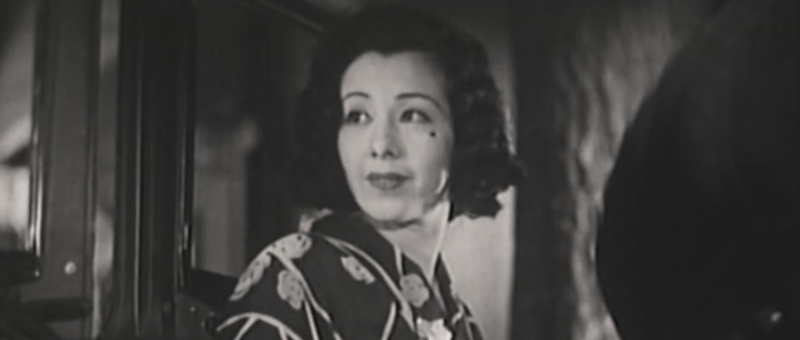
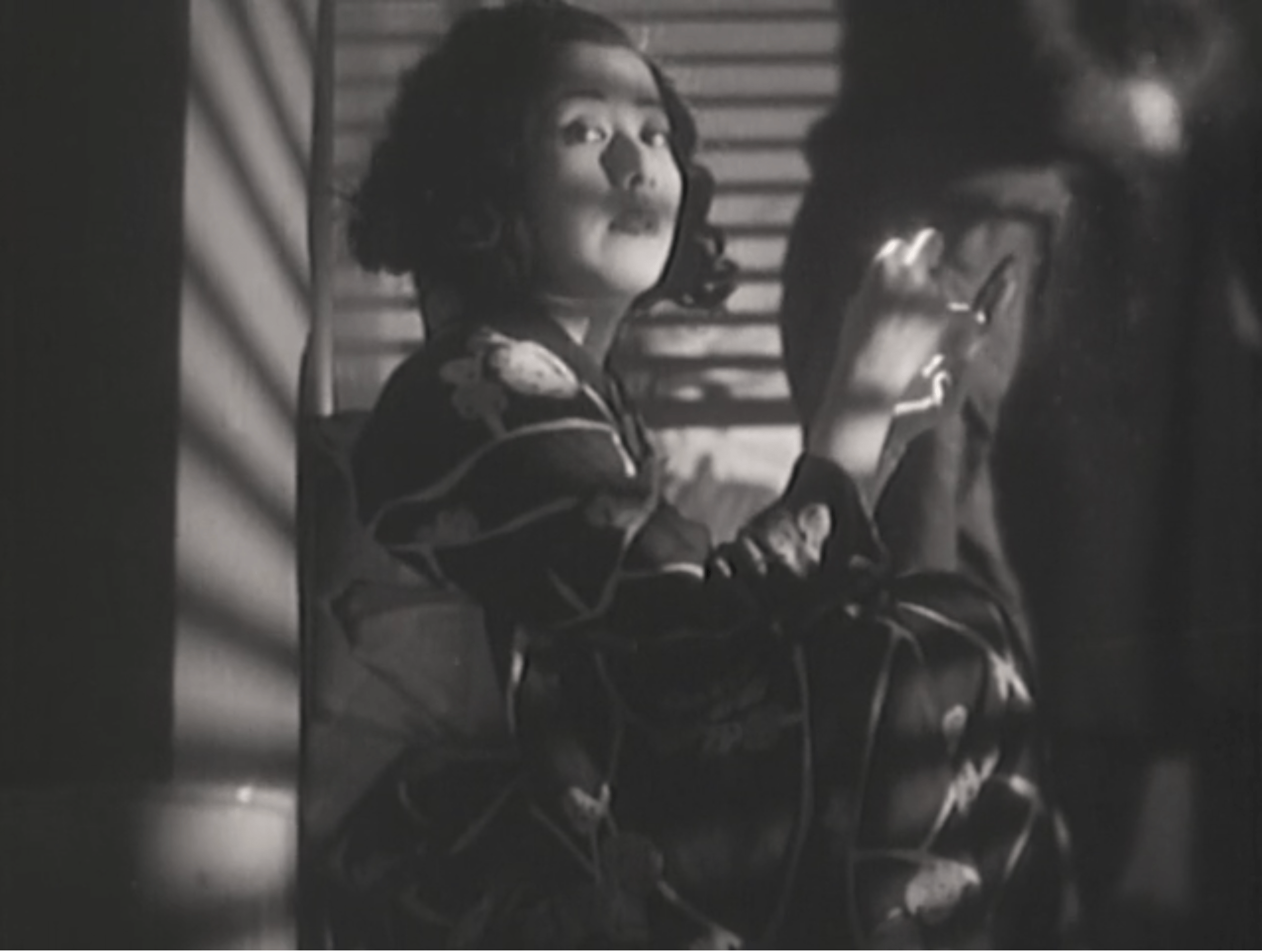
Most closely associated with his late career family dramas, Yasujiro Ozu has acquired a reputation for geniality which may in a sense be slightly unfair. He was always an astute chronicler of his times, often choosing to view them through the frame of family, and was never as blind to the issues of the day as some would have it. Ozu’s ‘30s work, that which survives at least, is in a sense fiercely political in its critique of the inequalities of the depression-era society. One of his early crime movies, the silent That Night’s Wife (その夜の妻, Sono yo no Tsuma) insists that justice must be done but does so with compassion in its full and total empathy for a man driven to extremes by the depth of his paternal love. 

Indeed, the early part of the film is tense noir chase as the hero, desperate father Shuji (Tokihiko Okada), attempts to evade a police dragnet to make his way home after robbing a bank to get money to pay for his sick daughter Michiko’s (Mitsuko Ichimura) medical care. Meanwhile, loyal wife Mayumi (Emiko Yagumo) has been patiently waiting at home tending to the child who refuses to sleep because she only wants her father and constantly asks where he is. Shuji eventually makes it back and tells his horrified wife what he has done, agreeing that he will turn himself in to the police once Michiko is well, but he’s already out of luck. The taxi he darted into was being driven by an undercover cop (Chishu Ryu) who installs himself in the apartment but agrees to wait until the doctor comes in the morning before taking Shuji in. 

Out of keeping with the rest of Ozu’s career but very much in the vein of his depression-era silents, That Night’s Wife concerns a poor but happy family mustering what little resources they have in the face of despair. Filled with tension as the policeman waits impatiently, the camera pans around the one room apartment where the family live and finds it to be a homely, bohemian space, apparently an artist’s studio with foreign film posters and travel souvenirs hanging from the walls. By all indications a starving painter, Shuji is a poor man brought to ruin by accidental tragedy. His daughter is deathly ill and doctors cost money. We can see that, by the standards of the time, he is a very hands on father beloved by his little girl and is obviously willing to sacrifice himself and his future to ensure her survival

It’s Mayumi, however, to whom the film’s title refers and in her role as wife rather than mother. The doctor (Tatsuo Saito) worries that she has not slept in the last few days, how could she when her child is so ill, but it’s she who eventually picks up the gun to protect the family by disarming the policeman and, essentially, keeping him hostage until the morning when, she claims, Shuji will willingly go with him after confirming Michiko’s survival. The world is turned upside down, no one quite plays the role they’ve been assigned. The loving father, an effete artist, turns unconvincing master criminal, the loyal wife gangster’s moll, and the policeman a calm and compassionate guardian deeply moved by the family’s predicament but also knowing that the law must be served. 

In a typically Ozu touch, the policeman pretends to be asleep with the intention of letting Shuji escape, but he once again makes an atypical choice. He refuses to run, swearing off “crazy ideas” but unrepentant in his crime. Shuji determines to pay his debt to society so that he can return home as a redeemed father and hold his daughter as a man unburned by his transgression. The message isn’t so much that crime doesn’t pay as that crime must be paid for. Shuji is acquitted in the moral courts of the audience’s hearts and not even the policeman blames him for what he has done which is all he could do as a father in an oppressive and indifferent society. A strange complicity develops between the two men who are restored to their original roles, both acknowledging that of the other and sorry for what they each know must happen next but already resigned. The father saves his family only through accepting his exile from it, but unlike Ozu’s wandering fathers of the 1930s, seems destined to return after redeeming himself in the eyes of a society which had long since abandoned him. 


Currently streaming in the UK via BFI Player as part of Japan 2020. Also available to stream in the US via Criterion Channel.

The Empty Hands (空手道, Chapman To, 2017)

“You have to remember. You’ll always meet someone stronger than you. They might beat you down, but no matter what you need to have the courage to face it.” the defeated heroine of Chapman To’s second feature The Empty Hands (空手道) is reminded by her rediscovered mentor pushing her towards a literal reclaiming of her space in accepting her father’s legacy. The title, a literal translation of the characters which form the word “karate”, is perhaps also an allusion to the heroine’s sense of powerlessness and displacement even as she learns to rediscover a source of strength in that which she had previously dismissed as a worthless burden. 

30-something Mari Hirakawa (Stephy Tang Lai-Yan) is the daughter of a Japanese émigré, Akira (Yasuaki Kurata), who came to Hong Kong in 1972 on a work transfer and later married a local woman. Teaching karate as a hobby in his spare time, he eventually discovered that in the Hong Kong of the late 70s and 80s, martial arts was a valuable commodity and so he sunk all his savings into buying a sizeable flat in Causeway Bay, converting the living area into a Dojo with the family relegated to neighbouring rooms. The business did well but the family floundered and when Mari’s mother asked Akira to mortgage the dojo to help out her brother who ran into financial trouble during the 89 crisis his refusal and the uncle’s subsequent suicide led her to leave the family. A lonely child, Mari complains that her overly strict father forced her to practice karate against her will, something which she gave up as a brown belt after an unexpected tournament defeat swearing off the practice ever since.

When Akira dies suddenly, however, Mari is forced into a reconsideration of her life choices on discovering that he has left only 49% of the apartment/dojo to her with the controlling share entrusted to a former pupil, Chan Keung (Chapman To Man-Chat). Prior to this discovery, she had been cynically planning to subdivide the apartment into seven units, renting out six and living in the seventh solely on her proceeds from exploiting Hong Kong’s notoriously difficult housing market. Mari is, it has to be said, often difficult to like, defiantly aloof and with a healthy contempt for other people even throwing back a racial slur, albeit with a pinch of irony, at a little boy who’s been frequenting the dojo expressly in order to fight back against the discrimination he faces in everyday life as a member of the Indian community. This might be something you’d expect Mari to show a little more empathy for but she seems ambivalent in her sense of identity immediately introducing herself as Japanese on giving her name to man who works at the radio station where she gets a job as a security guard and with whom she drifts into a doomed affair. 

Mari’s affair with a married man is another thing of which she believes her father disapproved, but it’s also a reflection of her low self-esteem and awkward relationship with paternal authority in that she continues to seek but is afraid to ask for approval from emotionally distant men. She claims to have only one friend, Peggy (Dada Chan Ching), whom she somewhat cruelly dismisses as “all boobs and no brain”, explaining to her that what she likes about Ka Chun (Ryan Lau Chun-Kong) is his “loyalty” ironically admiring his refusal to leave his childhood sweetheart wife but also confident that he will one day choose her. Beaten down by life, Mari has perhaps backed away from the fight passively retreating while refusing to deal with her conflicted sense of identity and desire. She resents the implication that she petulantly jacked in karate after a single defeat destroyed her sense of confidence, but as we discover it is indeed her fear of failure which has been holding her back. Chan Keung’s bet that he will sign over his share of the apartment if she can remain standing, even if she loses, after three rounds in an upcoming competition is then a subtle way of getting her stand up again and rediscover a sense of confidence to fight for herself in the arena of life. 

Ironically enough, Chan Keung had been kicked out of the dojo for doing just that, told off for using karate to prove himself when its true purpose should be in the defence of others in need of help. He rediscovers the true spirit of karate after rescuing a little girl from a predatory triad, but Akira’s mission is also one of redemption for Chan Keung as he patiently mentors the originally reluctant Mari back towards an acceptance both of her father and of her relationship with karate along with the confidence that counters defeat. A meditative mood piece from the hitherto comedian To anchored by a stand out performance from Tang (who apparently spent six months training for the role) pushing back against glossy rom-com typecasting, The Empty Hands is less martial arts movie than gentle life lesson as its beaten-down heroine learns to fight her way out of existential malaise towards a more forgiving future. 


The Empty Hands streams in the UK 9th to 15th February as part of Focus Hong Kong

Original trailer (English subtitles)

Lady Sen and Hideyori (千姫と秀頼, Masahiro Makino, 1962)

Son of cinema pioneer Shozo Makino, Masahiro Makino is most closely associated with the jidaigeki though he also had a reputation for highly entertaining, innovatively choreographed musicals some of which starred post-war marquee singing star Hibari Misora. The somewhat misleadingly titled Lady Sen and Hideyori (千姫と秀頼, Sen-hime to Hideyori), however, is pure historical melodrama playing fast and loose with the accepted narrative and acting as a star vehicle for Misora to showcase her acting talent in a rare dramatic role in which she neither sings nor engages in the feisty swordplay for which her otherwise generally lighthearted work at Toei was usually known. 

Lady Sen (Hibari Misora) is herself a well-known historical figure though Hideyori (Kinnosuke Nakamura) will not feature in the film beyond his presumed demise (his body was never found leading to various rumours that he had actually survived and gone into hiding) during the siege of Osaka in 1615. Born the granddaughter of Tokugawa Ieyasu (Eijiro Tono) who would later defeat the Toyotomi to bring Japan’s Warring States era to an end, Sen was sent to the Toyotomi as Hideyori’s future wife at seven years old (he was only four years older than she was and 21 at the presumed date of his death) and therefore perhaps far more Toyotomi that Tokugawa. In contrast to other portrayals of Sen’s life which centre on her understandable identity conflict and lack of agency in the fiercely patriarchal feudal society, Misora’s Lady Sen is clear in her loyalty to her husband whom she dearly loved and feels her father and grandfather who were directly responsible for his death are her natural enemies.  

Old Ieyasu and his son meanwhile do at least appear to care about Sen’s welfare, loudly crying out for a retainer to save her during their assault on the castle offering unrealistic rewards to any who manage a rescue. Unfortunately, however, having retrieved his granddaughter Ieyasu immediately marries her off to someone else demonstrating just how little control Sen has over her own destiny and how ridiculous it might be that she should have any loyalty to the family of her birth. His decision backfires on two levels, the first being that Dewa (Tetsunosuke Tsukigata), a lowly retainer responsible for Sen’s rescue from the falling castle, has taken a liking to her himself and fully expected to become her husband as a reward. While originally annoyed and hurt to think that perhaps she has rejected him because of the prominent facial scarring sustained while he was rescuing her, Dewa finally realises he just wants her to be happy only to be offended on realising that they’ve rerouted her bridal procession past his home which he takes as a personal slight. Nevertheless, in contrast with real life (Sen’s marriage to Honda Tadatoki was apparently amicable and produced two children though only one survived to adulthood) Sen’s relationship with her new husband is not a success, in part because she resents being used as a dynastic tool and in part because she remains loyal to Hideyori. In consequence, she makes full use of her only tool of resistance in refusing to consummate the marriage with the result that her new husband, Heihachi (Kantaro Suga), slowly drinks himself to death. 

Her other act of rebellion is however darker, striking down an old man who made the mistake of telling her with pride how he informed on retreating Toyotomi soldiers after the siege. Determining to become an “evil woman” she deliberately blackens the Tokugawa name by killing random commoners, chastened when confronted by a grieving widow but banking on the fact her relatives will not move against her and will therefore gradually lose public sympathy for failing to enforce the law against one of their own. The spell is only broken by the arrival of a former Toyotomi retainer (played by Misora’s frequent co-star in her contemporary films Ken Takakura) who reminds her of her loyalty to her husband’s legacy and prompts her retreat into religious life as a Buddhist nun mirroring the real Lady Sen who entered a convent after her second husband died of tuberculosis. Like most of Misora’s film’s Lady Sen ends with a softening, a rebuke to her transgressive femininity which in this case has admittedly turned worryingly dark her murder spree apparently a form of resistance to the entrenched patriarchy of the world around her and most particularly to her continued misuse at the hands of her father and grandfather. Despite the absence of large-scale musical numbers, Makino makes space for a fair few dance sequences along with festival parades and well-populated battle scenes but makes sure to place Misora centre stage as if countering the continual marginalisation of Lady Sen and all the women of feudal Japan. 


Clip (English subtitles)

Asian Pop-Up Cinema Announces “Happy Lunar New Year!” Free Streaming Series

Asian Pop-Up Cinema is back with another fantastic free streaming series to keep you entertained over Chinese New Year bringing an auspicious seven recent hits from the Mainland to homes across the US Feb. 12 – 18.

Four Springs

Director Lu Qingyi’s beautiful documentary follows his own family through four celebrations of New Year bringing with them both joy and sorrow. Review.

Ne Zha [Birth of the Demon Child, Nezha]

This beautifully animated family film draws inspiration from the classic Chinese legend and follows the titular Ne Zha, a naughty little boy misunderstood by the world around him as he struggles against his “demonic” destiny. Review.

The Unity of Heroes

Vincent Zhao stars as Wong Fei Hung as he finds himself battling a corrupt pharmaceuticals company intent on distributing a dangerous drug across the nation!

The Island

Apocalyptic satire starring Huang Bo as a dejected office worker with a crush on a pretty colleague (Shu Qi) who suddenly finds himself in his element when the amphibious bus they are travelling on is whisked away to an uninhabited island mere seconds after he realises that he has finally won the lottery. Review.

Last Letter

Romantic drama from Shunji Iwai subsequently remade in Japan in which a middle-aged woman (Zhou Xun) finds herself impersonating her late sister at a school reunion on running into a man who once loved her.

I Belonged To You

Ensemble love story inspired by the work of Zhang Jiajia and starring Deng Chao as late night DJ Chen whose girlfriend Xiao (Du Juan) abruptly breaks up with him after which they make a bet that if Chen can top the ratings Xiao must marry him but if he fails he must parade around the city with a sign letting everyone know he’s an idiot.

Forever Young

Youthful drama set at a performing arts college revolving around a young couple, Yan Xi (Zhang Huiwen) and Xu Nuo (Li Yifeng), who are working hard to achieve their dreams of becoming a ballet dancer and rock star respectively but find a series of obstacles in their way.

Each of the seven films is available to stream for free across the US Feb. 12 – 18 and registration is currently open via Eventive. You can find further information for all the films on Asian Pop-Up Cinema’s official website and you can also keep up with all the latest news by following the festival on FacebookTwitter, and Instagram.

Focus Hong Kong Film Festival to Launch in UK in February 2021

With cinemas closed for the foreseeable future, the team behind Chinese Visual Festival is the latest to head online with a brand new mini film festival dedicated to Hong Kong cinema arriving just in time for Chinese New Year. Focus Hong Kong will stream five features, one classic and four contemporary, as well as a series of Fresh Wave Shorts to homes around the UK from 9th to 15th February.

Zu Warriors from the Magic Mountain

Anarchic wuxia action from Tsui Hark in which a reluctant Tang Dynasty soldier ventures through a crevice and into a supernatural conflict. Released in the wake of Star Wars this zeitgeisty 1983 SFX fest has lost none of its charm.

Memories to Choke On, Drinks to Wash them Down

Leung Ming Kai & Kate Reilly’s omnibus film explores the unique culture of Hong Kong at a moment of crisis through four very different stories. Review.

A Witness out of the Blue

An eccentric policeman investigates a murder based on the testimony of the only eyewitness, a parrot, in Andrew Fung Chih-chiang’s absurdist noir thriller. Review.

Till We Meet Again

Struggling to come to terms with the death of his mother a decade earlier, a fragile man undergoes a psychological crisis in Steven Ma’s sensitive, semi-autobiographical drama.

The Empty Hands

A young woman reaches a crisis point when her Japanese father suddenly dies and she discovers he’s left half the dojo (which was also their home) to a former pupil who pledges to sign his share over to her if she can last three rounds in a fight in this unusual character drama directed by and starring Chapman To with a stand out leading performance from Stephy Tang.

“Tickets” are on sale now via the official website for the reasonable price of £2.99 for features while shorts stream for free and you can also pick up an all access pass for £8.99. The festival will be back for another mini fest in March before returning later in the year for its first full edition and you can keep up to date with all the latest news via the official website, Facebook Page, Twitter account, and Instagram channel.

The Men Who Tread on the Tiger’s Tail (虎の尾を踏む男達, Akira Kurosawa, 1952)

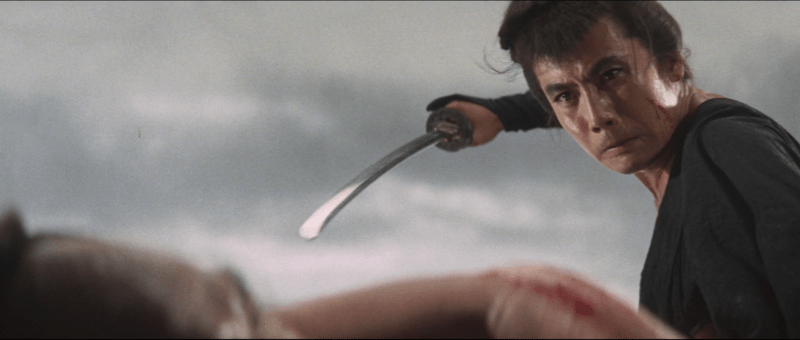
Like many directors of his age, Akira Kurosawa began his career during the war sometimes working on what were effectively propaganda films yet perhaps attempting to skirt around the least palatable implications of the task at hand. The Men Who Tread on the Tiger’s Tail (虎の尾を踏む男達, Tora no O wo Fumu Otokotachi) is an example of just that, repurposing a well known historical incident from its noh and kabuki roots and subtly undercutting it with a dose of irreverent humour unwelcome to those who liked historical tales because of their nationalistic connotations. This was not, however, the reason the film found itself out of favour so much as an ironically personal issue in which Kurosawa had apparently irritated one of the censors by pointing out his ignorance of cultural tradition leading him to conveniently leave Tiger’s Tail off the list of titles in production resulting in the American Censors rejecting it for being an unknown, illegal film which is why it languished on the shelf for seven years after filming was completed in 1945. The Americans may not have liked it much either given their aversion to period drama which they feared encouraged the kind of thinking incompatible with the democratic era, but like many of Kurosawa’s samurai dramas it has a rather ambivalent attitude to feudal loyalty both admiring of nobility and despairing of its austerity. 

Set in the late 12th century, the action takes place during a period of warfare in which warrior Yoshitsune (Iwai Hanshiro X) has returned a victory for his brother, the ruler. His brother Yoritomo, however, feels as if his victory has perhaps been too good and he is therefore a threat to him. Yoritomo accuses his brother of sedition and puts a purge in motion, leaving Yoshitsune with no option other than to flee. With six of his best retainers, he escapes dressed as an itinerant Buddhist monk and tries to make his way to neutral territory in the North. To get there, however, they need to pass through a series of checkpoints which is why they’re currently accompanied by a cheerful fool in the form of a lowly porter (Kenichi Enomoto) supposedly guiding them along a secret path through mountain forests. 

The porter is a new addition to the story added by Kurosawa for reasons of expediency and comic relief, yet his intrusion is also one which deeply angered the more nationalistic of the censors who resented the director’s irreverence towards a key historical event. Like many other of Kurosawa’s bumbling peasants, he’s both contemptuous and in awe of the world of the samurai, offering down to earth common sense takes on the politics of the day. He has already heard all about the Yoritomo/Yoshitsune drama and recounts it in the manner of a soap opera, quite reasonably asking if a quarrel between brothers could not have been sorted out with a good old-fashioned private fist fight rather than a state mandated manhunt which is also quite inconvenient for ordinary people in addition to being somewhat heartless. 

The samurai, not wanting to break cover, can only look sad and lament the cruelty of their codes, yet it’s precisely in the subversion of their ideology that they are able to escape. They have already transgressed, some with shaved heads and all already in the clothes of a monk. The porter looks at Yoshitsune, apparently a successful warrior, and remarks on his delicate physique and seeming femininity. Eventually he says too much, realises that the men are the fugitives everyone’s looking for and is suddenly afraid, forgetting for the moment that they need him to get out of the woods and knowing that samurai think nothing of killing “insignificant nobodies” like him. Nevertheless they do not kill him, but on hearing that there are lookouts on the horizon aware of Yoshitsune’s presence, they ask their lord to change places with a peasant, wearing his worn out clothes and carrying his heavy pack though the weight of it perhaps betrays him. As the porter points out, he does not have the look of a man used to trekking through the mountains and his delicate legs are already shaking under the unfamiliar strain. 

When the band is intercepted by loyal retainer Togashi (Susumu Fujita) who has been instructed to stop all priests in case Yoshitsune comes his way, Benkei (Denjiro Okochi), a real monk if also a warrior with a talent for bluff, manages to talk his way out of Togashi’s questioning, improvising an entire prospectus on the spot to convince him that they really are collecting money to repair a temple, quickly explaining that his robes are ornate because even ascetics have fashion sense. It’s not entirely clear if Togashi simply believes him, or if he too is wilfully subverting the code having recognised Yoshitsune and decided to help him escape. Might that not, in a certain sense, be the better way of serving a lord, preventing him from making a huge and painful mistake in killing his own brother out of a misplaced sense of paranoia? 

In any case, Benkei talks his way out of trouble only for a minor retainer to intervene, insisting that the porter is too pretty and bears a striking resemblance to Yoshitsune. Reacting quickly again, Benkei does the unthinkable. He strikes his lord and loudly berates him as if he really were a lazy porter failing in the duties for which he has been paid. The real porter becomes upset, placing himself in between Benkei’s staff and Yoshitsune’s body, either out of empathetic identification or horror in the betrayal of feudal loyalty. Benkei knows he must now be believed, no one would ever do what he has done because it is a complete and total negation of the samurai code. Yet in breaking it he saves his lord, which is all that really matters. Yoshitsune later forgives him, because he is a good lord after all and how could he not. But as Benkei was keen to keep pointing out, this isn’t the only checkpoint they must pass and their journey is without end, all they can do is “continue without rest”, taking this brief moment of unexpected levity provided by apology wine from Togashi and the hilarious antics from the porter before setting off once again. As for the porter, he is soon abandoned, left on one side of the samurai divide as the curtain closes on this brief strange tale. 


Currently streaming in the UK via BFI Player as part of Japan 2020. Also available to stream in the US via Criterion Channel.

The Scarlet Camellia (五瓣の椿, Yoshitaro Nomura, 1964)

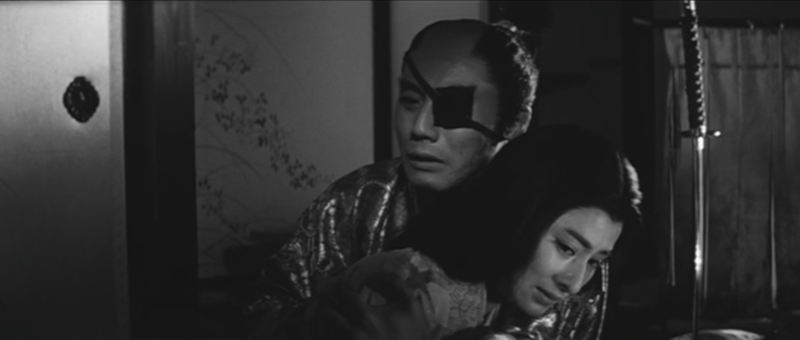
Little known outside of Japan, Yoshitaro Nomura is most closely associated with post-war noir and particularly with adaptations of Seicho Matsumoto’s detective novels, yet he had a wide and varied filmography directing in several genres including musicals and period dramas. The son of silent movie director Hotei Nomura, he spent the bulk of his career at Shochiku which had and to some degree still has a strong studio brand which leans towards the wholesome even if his own work was often in someway controversial such as in the shocking child abuse drama The Demon or foregrounding of leprosy in Castle of Sand. Part of the studio’s series of double-length epics, 1964’s Scarlet Camellia (五瓣の椿, Goben no Tsubaki) is nevertheless an unusual entry in Nomura’s filmography, adapting a novel by Shugoro Yamamoto essentially setting a policier in feudal Japan and perhaps consequently shot largely on stage sets rather than on location. 

Nomura opens with artifice as Shino (Shima Iwashita) stares daggers at an actor on the stage but later returns to his rooms every inch the giggling fan before finally offing him with her ornate silver hairpin leaving behind only the blood red camellia of the title. The first in a series of killings later branded the Camellia Murders, we later realise that the actor had to die because of his illicit relationship with Shino’s mother whom he brands a “nympho” and as we later discover had several extra-marital lovers. Extremely close to her father who, as we’re told, perished in a fire while resting in the country due to his terminal tuberculosis, Shino is apparently on a quest for revenge against the faithless men who humiliated him though her feelings towards her mother seem far more complex. 

Indeed, Shino regards her mother’s carrying on as “dirty” and seems particularly prudish even as she wields her sex appeal as a weapon in her quest for vengeance. Yet it’s not so much the free expression of sexuality which seems to be at fault but excess and irresponsibility. Shino resents her mother primarily for the ways in which she made her father suffer, off having fun with random men while he shouldered the burden of her family business which, Shino might assume, has contributed to his illness. Aoki (Go Kato), the Edo-era policeman to whose narrative perspective the second half turns, advances a similar philosophy in that there’s nothing wrong with having fun, he has fun at times too, but people have or at least should have responsibilities towards each other which the caddish targets of the Camellia Killer have resolutely ignored. He can’t say that he condones the killer’s actions, but neither can he condemn them because her motivations are in a sense morally justifiable. 

Realising the end is near, Shino indulges in a very modern serial killer trope in leaving a note for Aoki alongside one of her camellias in which she claims that she is exacting vengeance for “crimes not punishable by law”. There was nothing legally wrong in the way these men treated her mother or any other woman, but it is in a sense a moral crime. “You’re a woman and I’m a woman too” she later tells another scorned lover, a mistress thrown over by her patron with two small children after he tired of her, as she hands over a large sum of money and encourages her to return to her family in the country. Shino’s quest is essentially feminist, directed against a cruel and patriarchal society in which the use and abuse of women is entirely normalised, yet it is also slightly problematic in her characterisation of her mother as monstrous in her corrupted femininity for daring to embrace her sexuality in exactly the same way as her male counterparts though they, ironically, mainly seem to have been after her money rather than her body. 

Shino’s mother’s death is indeed regarded as “punishment from heaven” presumably for her sexual transgressions and neglect of her family, rejecting both the roles of wife and mother in a ceaseless quest for pleasure. Yet even in her resentment, Shino’s ire is directed firmly at the men taking the last of her targets to task when he justifies himself that women enjoy sex too and are therefore equally complicit by reminding him that he gets his moment of pleasure for free but the woman may pay for it for the rest of her life. Just as Shino’s mother neglected her family, the men harm not only their wives in their illicit affairs but cause concurrent damage to the mistresses they may later disown and the illegitimate children they leave behind. Abandoning the naturalism of his contemporary crime dramas for something much more akin to a ghost film with his eerie lighting transitions and grim tableaux of the skewered victims, Nomura crafts a melancholy morality tale in which the wronged heroine turns the symbol of constrained femininity back on the forces of oppression but is eventually undone by the unintended consequences of her quest for vengeance even as she condemns the architect of her misfortune to madness and ruin. 


That Demon Within (魔警, Dante Lam, 2014)

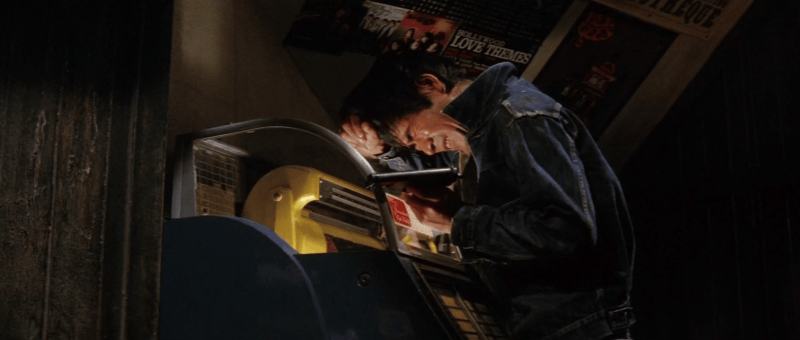
“Every man has his own fear, and different ways of hiding it. But fear will never go away” according to the hero of Dante Lam’s That Demon Within (魔警), a twisty, metaphysical take on the futility of violence and inevitability of karmic justice. Hong Kong cinema has often held that cop and criminal are merely two sides of the same coin, but rarely has it taken its mistrust of authority and nihilistic cynicism to such great heights as in Lam’s B-movie-inflected psychological thriller.

The hero, Officer Wong (Daniel Wu Neh-Tsu), is a fearful man. Now 35 and a 17-year veteran of the Hong Kong police he’s still a lowly beat cop currently occupying the police box in the reception area of a less than busy hospital. He tells us, paradoxically, that he puts on the uniform because it makes him feel safe. His life begins to change, however, when he makes the selfless offer to give some of his own blood to a man who staggers in badly injured after a bike accident. What Wong didn’t know is that the man is Hon (Nick Cheung Ka-fai), a notorious local gangster known as the Demon King responsible for the deaths of two fellow officers during the escape which led to his accident. Wong gets a dressing down from the Inspector in charge, Pops (Dominic Lam Ka-wah), and is thereafter haunted by his ironic action of being a policeman who saved the life of a cop killer.

Of course, others might say Wong did the right thing so that Hon can face justice and in any case it would be wrong to deny someone lifesaving treatment because of a moral judgement, but Wong can’t see it that way and continues to punish himself (quite literally) for his “mistake”, remembering the authoritarian father who taught him that mistakes are a sin. It turns out that Wong’s career has floundered because of “personality issues”, those being that he’s a bit of a prig, overly serious and by the book when most his fellow officers are anything but. His new commanding officer is, as it turns out, an old academy classmate who perhaps remembers what those issues might be but doesn’t see why they should have disrupted his career to the extent that they have and actively wants to help him get over them with the aid of a hypnotherapy psychologist.

Wong, however, is like everyone else dealing with his own demons but his decision to face them by chasing down Hon who has escaped to presumably do even more crime proves increasingly problematic as his sense of reality begins to unravel. There is something quite ironic in the fact that Hon’s “gang” (well, bunch of guys he hired for the job) is based in a funeral home and mostly involved with the rituals of death which, whichever way you look at it, is particularly convenient for their side business. Lam’s Hong Kong is a grimy, film noir land of dread and violence, a shadowy hellscape where no one is safe from the fire of karmic retribution. Wong has been in hell all along, waiting for the flames to consume him, but is only just starting to notice that it’s beginning to get warm.

Overcome with rage, Wong’s world literally glows red around the edges while Lam shifts to a steady cam closeup on his final mental break in the face not only of tremendous grief but the sudden impossibility of redemption and the manifestation of his guilt. Becoming a policeman was to Wong a way to protect himself from himself, an ironic form of atonement for past transgression. The source of all his trauma is echoed in the present plague of low level thuggery that sees “repo men” splash grease and paint on the homes of mostly elderly poor people presumably to pressure them to move while a single act of (accidental) police brutality at a protest against forced eviction changed not only his life but those of several others forevermore, kickstarting a chain of karmic retribution that leads us right back into the flames. If Wong is “mad” it’s because the world made him that way. Treading firmly within the realms of the B-movie with its comicbook-style aesthetic, incongruous score, and pop psychology take on the legacy of trauma, Lam’s nihilistic psycho-supernatural thriller leaves no doubt that cop or criminal there’s a demon within us all looking for an excuse to raise hell in a land of fear and violence.


Currently available to stream on Netflix in the UK and possibly elsewhere.

Original trailer (English subtitles)