Daughters (ドーターズ, Hajime Tsuda, 2020)

What does it mean to be a woman in the modern society? Two 20-somethings are confronted by just that question when one of them suddenly reveals that she is expecting a baby and plans to raise it alone but would be very grateful for the other’s support. Hajime Tsuda’s Daughters (ドーターズ) is the latest in a long line to ask a few questions about the nature of the modern family but does so through the eyes of these typical young women who find themselves perhaps a little more old-fashioned than they’d assumed as they determine to flout patriarchal norms and raise a child together as a platonic unit. 

High school friends Koharu (Ayaka Miyoshi) and Ayano (Junko Abe) have been living together in a tastefully decorated Tokyo flat for the past few years. Ayano works at a fashion magazine, and Koharu in events planning and installations. They have an active social life and enjoy the benefits of living in a big, vibrant city. All of that must necessarily change, however, when Ayano discovers she is pregnant after a meaningless one night stand with an old friend (Yuki Ito) who is about to accept a transfer abroad and had just been joking about reluctantly having to marry his girlfriend who wants to come with him. After thinking it over, Ayano decides she wants to have the baby without saying anything to the father but her decision comes as a shock to Koharu who is at once stunned by her friend’s sudden transition into adulthood. 

These really are just gals being pals, but there is perhaps something of repressed desire in Koharu’s lingering looks whether it’s actually Ayano that she wants or merely lamenting the imminent end of their lives as young women on the town not to mention a closeness she now fears will be diluted rather than perhaps deepened with the introduction of a third party in their relationship. For her this sudden end to the Tokyo high life may have arrived earlier than she expected, but it would have arrived soon enough in any case. Wanting to support her friend she remains conflicted and mildly resentful, partly it seems of the unnamed father but also despite herself carrying outdated ideas of social propriety firstly trying to dissuade Ayano from having the baby believing that raising it as a single-mother will be impossible. 

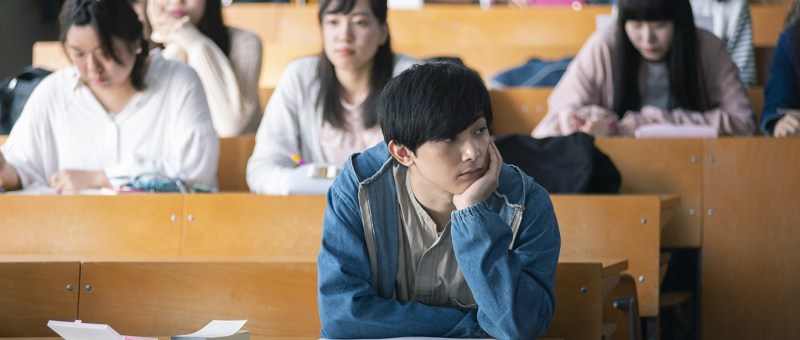
Ayano is told something similar by her father (Shingo Tsurumi) on a visit home, though he later comes round after a few stern words from her cheerful grandmother (Hisako Okata) who couldn’t be happier, insisting that children are a blessing however they arrive. At work, however, despite being surrounded by other women, she faces a series of similar discouragements, reminded that she can’t expect to return to the same position after giving birth because her priorities will have changed. She can no longer give “everything” to the company, she will need additional time off if her childcare falls through or her child is ill. She may need to leave early or come in late for the school run. Her boss does not intend this as a criticism but an acceptance of what it means to be a mother and an insistence a choice is being made, leaning into patriarchal, capitalist ideas of the employment contract which values an employee most for their availability rather their productivity or talent.  

Both women, meanwhile, harbour a lingering sense of social stigma when it comes to the subject of unmarried mothers. Koharu angrily fires the English phrase at her friend as if to discredit her decision, while Ayano finds herself earnestly asking her doctor (who appears to have seen through her ruse of introducing Koharu as her “sister”) if she sees a lot of women like her, the compassionate, supportive medical practitioner assuring her that 25% of women giving birth in Tokyo are single and though she has no idea what happened to them afterwards as a woman who has never has a child she is herself envious. Having agreed to raise the child together, Koharu still has her doubts that such an arrangement can really work, unsure of herself until heading off on a sulky solo holiday to the island paradise of Okinawa where she meets a woman (Tomoka Kurotani) who moved halfway across the country to raise her son alone. She seems happy and her son seems to have turned out just fine. 

As in Ayano’s rural hometown with its wide-open vistas, the relaxed Okinawan attitude perhaps bears out the maxim that Tokyo is often more conservative than provincial Japan, Ayano even slightly worried that having a caesarean section doesn’t really count and she’d be failing at motherhood before even really starting. In a symbolic act of transition the two women mirror the construction of a bunkbed on their moving in with the completion of the baby’s cot, built together with “faith in the future in this ephemeral city”. Stylistically innovative, filled with poetic monologues, and moving to the rhythm of a zeitgeisty pop score, Tsuda ends with the deceptively traditional as the two women find themselves confronted with a local festival but find in it strength and an acceptance that it is really OK as they embark on a new phase of their life as a family as entitled to the name as any other. 


International trailer (English subtitles)

I, the Executioner (みな殺しの霊歌, Tai Kato, 1968)

Nephew of Sadao Yamanaka, Tai Kato joined Toho as an apprentice in 1937, returning after the war training under Daisuke Ito and Akira Kurosawa, but later moved to Toei where he became closely associated with ninkyo eiga yakuza movies and jidaigeki. From the mid-1960s, however, he made several movies at Shochiku which had, it has to be said, a house style that was almost the polar opposite with a clear focus on polite, family-friendly melodrama. 1968’s I, the Executioner (みな殺しの霊歌, Minagoroshi no Reika) meanwhile is a surprisingly dark affair even among the grittier examples of Shochiku’s similarly themed B-movie thrillers, an avant-garde noir and proto-giallo in which the fugitive, serial killer antihero sees himself as an agent of divine justice in a hellish and immoral post-war landscape. 

Kato opens with a shocking scene of sexualised violence in which a woman is knocked unconscious, stripped, bound with telephone cord, and finally revived, forced to write down the names of four other women before being brutally raped and murdered by a killer whose voice we have not yet heard nor face seen. The police are mystified, attributing the woman’s death to the fact that she had worked as a bar hostess and maybe things like this are an occupational hazard for women who are surrounded by too many men. Her landlord, however, laments that hers is the second death to occur recently after a laundry boy threw himself off the roof. All things considered, he wishes the boy had picked somewhere else. 

The police have no reason to connect the two unfortunate events and so remain largely clueless, but we gradually become aware that the killer, Kawashima (Makoto Sato), is targeting the women because he holds them directly responsible for the boy’s death. He is the inspector that calls, avenging the death of this young man who, he has learned, like him hailed from Hokkaido and had come to the city at only 16 years old to earn money to support his family, saving almost all of his wages in the hope of opening a shop. Kato shows us scenes of a city under construction, a land of girders casting shadows on the ground like prison bars trapping men like these who are building the new Japan but will be discarded as soon the job is done and their labour no longer so much in demand. Kawashima has another reason for living like this, but he perhaps admires something pure and innocent in the desire of a young man leaving home to seek his fortune so that he might take care of those he loves and that this world betrayed that desire is something he finds impossible to forgive.

The five women have apparently done quite well for themselves, despite the fact that more than one of them has worked on the fringes of the sex trade. Their treatment of the boy is attributed to their boredom in the relative ease of their lives as monied women with little to occupy their time other than getting their kicks abusing the less powerful. It’s an uncomfortable role reversal that places women in a position of power and then sees them abuse it in the exact same way that men do, slinging back the same pithy justifications that men offer for sexual violence while the police meditate on the relative connotations of rape when the word is applied to a man at the hands of women rather than the other way around. If it were their sister, they could understand the desire to kill the men who had done it but a part of them struggles to see that a teenage boy may still find unwanted sexual contact a traumatic enough experience to push him towards suicide. 

Yet Kawshima appears to have no real connection to the boy, and his “revenge” is also a product of his misogyny in that as we later learn he also has reason to feel betrayed by womanhood and is already on the run from previous crime. Nevertheless, he is drawn to the innocent Haruko (Chieko Baisho), a girl-next-door type who works in his favourite ramen restaurant, only to discover that she too has a dark and violent past which may be why she seems to be drawn to him. He struggles with himself, but believes that he is taking revenge on a brutalising society defined by violence and abuse while sublimating his sense of emasculation in the face of women’s growing social and sexual freedoms in the post-war era. It is perhaps the post-war era which is cast as the major villain, one of the women later escaping her protective custody to dance furiously a hip nightclub only to return to the scene of her crime while refusing to see that she has done anything so “wrong” as to merit this kind of persecution. 

“The cycle of divine punishment must be fulfilled” Kawashima finally laments, acknowledging his grim place within this series of post-war tragedies. Surprisingly avant-garde, Kato experiments with blown out negatives, extreme close up, and deep focus mixed with his characteristic low angle composition to add to the sense of noirish dread which paints the modern city as an inescapable hellscape while even the romantic place of refuge shared by Kawashima and Haruko is a gothic moorland lit by moonlight and filled with eerie mist. Lurid and sweaty, the film has a grim sense of humour even in its oppressive atmosphere with a running gag devoted to the lead investigator’s painful case of piles, but its overriding fatalism nevertheless offers the hero a sense of redemption if only in acceptance of his narrative destiny. 


Start-Up (시동, Choi Jung-yol, 2019)

Two young men experience a failure to launch in Choi Jung-yol’s Start-Up (시동, Sidong), a much gentler coming of age tale than his 2016 feature debut One Way Trip. Like the earlier film, however, Start-Up finds its two heroes pulled in different directions while experiencing the same dilemmas, these being in the main a kind of toxic masculinity that sees them in part reject their respective maternal figures in internalised shame as sons who feel they should be but are fundamentally incapable of taking of care of them and perhaps concluding that their only familial connection must be disappointed and resentful.

We can see the boys’ sense of futility in the opening sequence in which they literally fail to kickstart a scooter that 18-year-old Taek-il (Park Jung-min), the hero, has somehow managed to buy on the internet but seems to be a dud. Eventually they wind up having an accident and being taken to the police station where Taek-il’s mother Jeong-hye (Yum Jung-ah) has to bail them out leaving even the desk officers looking quite embarrassed as she takes Taek-il to task for his irresponsibility, disappointed to learn he spent money intended for lessons to help him (belatedly) get his high school diploma on the useless scooter. He tells her he’s dropped out of school and has no interest uni, fiercely resenting her refusal to accept his decision while unwisely cutting in that she doesn’t have the money to send him anyway which earns him one of her trademark volleyball slaps. 

Taek-il’s unwise words perhaps hint at part of the reason he’s rejecting the life his mother wants for him in that he knows how much she’s suffered and sacrificed on his behalf and doesn’t want to add to her burden by encouraging her to overwork herself to pay for college when he doesn’t think he’s worth it anyway. Of course, he can’t say any of this to her, and she can’t tell him she only wants the best for him, so they alternate between silence and blazing rows with Taek-il retreating into peaceful visions of life on a desert island when everything gets too hard. Wanting to prove himself independent, he ends up running away but doesn’t have money to get very far so ends up working in a Chinese noodle restaurant in provincial Gun-san. 

His friend Sang-pil (Jung Hae-in), meanwhile, is an orphan living with his elderly grandmother (Go Doo-shim) who appears to be suffering from dementia and has been supporting the pair of them by peeling chestnuts. Like Taek-il, Sang-Pil desperately wants to be able to take care of his grandmother and make her life as easy as possible but is largely out of options which might be why he lets a shady friend, Dong-hwa (Yoon Kyung-ho), introduce him to his “company” which turns out to be a local loansharking gang for which Dong-hwa is an enforcer and debt collector. Sang-pil tells Taek-il that he’s got a job “in finance”, and though he’s conflicted enjoys the sense of self worth he gains as a working man earning money to look after grandma. He is too naive to realise that the first family they visit is aggressively nice to Dong-hwa because he’s probably been less than nice to them in the past, coming away with the mistaken idea that the job’s not so bad and people are grateful for the “service” they’re providing. 

A repeated gag sees both boys getting repeatedly beaten up, literally struck down every time they attempt to move forward. Taek-il finds himself punched in the stomach by an amateur boxer with problems of her own and thereafter knocked around by the eccentric chef at the Chinese restaurant (Ma Dong-seok), while Sang-pil is finally awakened to the dark side of his new job when he’s thrown through a glass doorway by a drunken client very clearly at the end of his tether. The answer is less fighting back than it is standing together and up for oneself as the boys begin to make mutual decisions about the future directions of their lives and the kind of men they’d like to be even if they still don’t quite know where they’re going. 

Start-Up’s genesis as an online webmanga might help to explain its myriad unresolved plot strands including the backstory of the mysterious boxing high school girl (Choi Sung-eun) who appears to have lost or become estranged from her family but ends up becoming the surrogate daughter of the kindly man who owns the Chinese restaurant (Kim Jong-Soo) which seems to be a haven for lost people of all ages looking for a place to call home, while Jeong-hye’s past success as a volleyball star is resolved as little more than an awkward punchline and her desire to start her own business which she is then swindled out of presented as something done solely for her son rather than for herself. The difficult economic circumstances of contemporary South Korea are certainly a factor in the boys’ malaise and general sense of hopelessness but it’s less Hell Joseon that’s trapping them than a complex web of familial love and resentment coupled with their desire as a young men to feel in control of their own lives rather than being constrained by parental expectation. “You should decide where to go first” Taek-il is repeatedly told, but when it comes right down to it the most important thing is figuring out how to start the engine, everything else you can figure out later.


International trailer (English subtitles)

The Lady and the Beard (淑女と髭, Yasujiro Ozu, 1931)

Yasujiro Ozu has sometimes been dismissed as middle of the road, particularly by the young radicals of the post-war generation who saw his, by then, rather conservative films as a symbol of everything they sought to reject in their national cinema. They may in some senses have had a point and, in 1931’s The Lady and the Beard (淑女と髭, Shukujo to hige), Ozu does indeed show us that the middle of the road might be the best place to be as his basically good yet rigidly traditionalist hero is cajoled towards modernity but ultimately rejects its extremes in pulling a “modern girl” back towards the path of righteousness. 

Recent graduate Okajima (Tokihiko Okada) is a kendo enthusiast with a rather unsettling beard which he has long refused to shave. Other than his strangely close friendship with nobleman Teruo (Ichiro Tsukida), he appears to have been rejected by mainstream society because of his odd appearance and socially awkward behaviour. Teruo invites him to his sister’s birthday party without bothering to ask her and consequently scandalises all of her friends who vow to humiliate Okajima as soon as he arrives. Okajima, however, has no idea he is being made fun of. He declines the invitation to dance with the young women in the modern fashion but volunteers to do a dance on his own, prancing about with a fan and waving his sword around in an unexpected display of traditional performance. When Teruo and his sister return after having a private argument, the party is ruined. All the girls have left, for reasons which Okajima seems not to understand. 

He is at least, however, chivalrous. Spotting a young woman in kimono being mugged in the street by a modern girl, he wades in to help, earning her eternal admiration while fending off the other members of the modern girl’s gang with his kendo skills. His heroism further pays off when he discovers that the woman he saved, Hiroko (Hiroko Kawasaki), is a typist at an office where he is interviewing for a job. Hiroko is able to explain to him that the reason he was turned down, despite the fact that the boss also had a big bushy beard, was his facial hair so he should try shaving it off. 

The beard is a symbol not only of Okajima’s traditional mindset but of a certain kind of masculinity which might not be welcome in the modern world. Teruo tries to defend it to his sister by showing her portraits of various great men from the past who all had facial hair while Okajima claims that his is inspired by Abraham Lincoln and is intended to put women off so that he doesn’t get distracted from becoming a great man himself. Okajima’s robust masculinity, avoidance of women, and intense friendship with Teruo, anxious should he get the wrong idea about women in his apartment, might hint at another possibility, but that soon goes out the window when he sheds the beard and instantly becomes irresistible to women. Not only is he developing a romantic relationship with the homely, traditional Hiroko but also becomes attractive to Teruo’s sister Ikuko (Toshiko Iizuka) and the modern girl Satoko (Satoko Date). 

Both Hiroko and Ikuko are attracted to Okajima because of his traditional masculinity in his capacity to protect them. Ikuko, rejecting a suitor who eventually exposes a problematic side to male dominance, tells him that she won’t consider anyone who’s not skilled in kendo because she is looking for a protector. He reminds her that’s what the police and the law are for, so she tells him fair enough, she’ll marry a policeman. Modernity codes “protection” into the system, depersonalised and in other ways perhaps problematic, where traditionalism relies on access to male strength. Ikuko disliked Okajima when he had a beard, but secretly desires those very qualities the beard was set to represent. 

Satoko, meanwhile, the modern girl, rejected Okajima because of his bizarre appearance while he rejects her for the same reason in a mirroring of the various ways we are the image we present. Kimono’d Hiroko is good, modern girl Satoko is bad. Even after shaving his beard, Okajima remains an undercover traditionalist, wearing his kendo clothes under his suit and chivalrous to the end. Not recognising him and possibly in the pay of Teruo trying to put his sister off marriage, Satoko seduces the clean shaven Okajima while he rejects her advances but tries to “save” her from an excess of modernity by getting her away from the gang. She fancies herself in love with him, but what he does is free her from the false image of the modern society to give her back the true freedom of her own agency. In the end he chooses the classically nice, middle of the road option in remaining with Hiroko who loved him with beard and without rather than modern girl Satoko or snooty aristocrat Ikuko. You trim it but it just keeps growing back, the final title card adds, but the message seems to be that too much of one thing be it nationalistic conservatism or hedonistic modernity is no good. The middle way it is, slow and steady and as wholesome as could be.


Currently streaming in the UK via BFI Player as part of Japan 2020. Also available to stream in the US via Criterion Channel.

Lovely Devils (可愛い悪魔, Nobuhiko Obayashi, 1982)

Until fairly recently, the work of Nobuhiko Obayashi had been largely unappreciated in the Anglosphere where he is associated most closely with his debut film House which was itself somewhat grudgingly respected as a “crazy” midnight movie. He was however surprisingly prolific and especially so for a director working through the difficult 1980s in a 60-year career which ended only with his death after a protracted illness itself ironically announced on the day his final film, Labyrinth of Cinema, should have opened in Japanese cinemas had it not been postponed in light of the coronavirus pandemic. Produced for television in the same year as I am You You Are Me, Lovely Devils (可愛い悪魔, Kawaii Akuma) is among those which Obayashi did not script for himself but is penned by Machiko Nasu and apparently inspired by The Bad Seed though Obayashi later revised the script to remove traces of the original work unwilling to create a simple homage. 

Similar in tone to Obayashi’s later The Deserted City, Lovely Devils is at heart a twisted gothic romance cautioning against the dangers of an excessive thirst for love. In ‘70s Japan, a wedding takes place at small church during which 5-year-old Alice, niece to Koji (Hiroyuki Watanabe) the groom, becomes overly attached to the veil of the bride, Fuyuko (Nao Asuka), and in the manner of entitled small children everywhere demands to be given it. Fuyuko tries to explain that she plans to hang on to the veil for the rest of her life as a keepsake and is sure that Alice will have an even prettier one of her own someday, but Alice creepily asks if that means she can have it when Fuyuko dies and, wanting to bring an end to the matter, she unwisely agrees. While everyone is busy assembling for the wedding photos in the garden, Fuyuko violently tumbles out of an upstairs window, her broken body landing on the patio below only to be met by Alice excited about collecting her veil. 

Meanwhile, at the same time in Vienna, Fuyuko’s exchange student sister Ryoko (Kumiko Akiyoshi) is in the middle of a difficult breakup with her local boyfriend Johann in which she, perhaps understandably, tells him to go die only to see him get hit by a car on his way out of her apartment. Overcome with guilt and grief in believing that she somehow killed Johann by wishing for his death, Ryoko goes quietly mad until her landlady contacts Koji who comes to bring her home and places her into a mental institution run by a convent in which the resident psychologist, Dr. Tsukahara (Toru Minegishi), is also a priest. After three years, Ryoko seems to be sufficiently recovered and so Koji asks his sister Keiko (Miyoko Akaza) to take her in as a governess to the now eight-year-old Alice (Tina Jackson). 

The central irony is that Ryoko is almost certainly not guilty of psychically killing Johann just someone who bitterly regrets saying something unkind in anger and having fate ironically follow through, where as Alice is definitely “demonic” and, as is later pointed out, a child who cannot discern right from wrong. In the liner notes for a later release for the film, Obayashi likened the figure of Alice who commits a series of murders with no conceptual understanding that it’s morally wrong to kill to that of himself as a thoroughly militarist boy in wartime who thought that Japan was just and everything outside Japan “bad”. Alice sees something she wants and has to have it. If someone else has it and won’t give it to her, they have to go (sometimes in quite elaborate ways). Ryoko’s battle is against the commonly held belief that eight-year-old girls are innocent angels, no one in their right mind (Ryoko has just been released from a psychiatric institution following a breakdown after all) would believe Alice capable of violent murder and especially not on the grounds that she simply wanted something trivial like a veil or a doll and was unable to accept that she could not have it. 

Later, Alice’s fragile, chain-smoking, dipsomaniac mother Keiko who always suspected there was something not quite right with her little girl attributes this extreme possessiveness to having discovered the body of her father after he unexpectedly hanged himself in their family home (it does not seem to occur to Keiko that perhaps he is merely the first victim, his ornate quill pen one of Alice’s favourite trophies). She thinks that lack of paternal love has made her seek attachment and permanence in objects but also dangerously in her uncle Koji whom she sees both as a surrogate paternal figure and as an incestuous love interest. It is also somewhat unfortunate that the actress playing Alice and the character herself is half-Japanese playing into an uncomfortable stereotype in gothic horror that posits these demonic qualities and romantic perversions as essentially an extension of foreignness, but in any case Obayashi leans in deep with the wedding imagery as Koji returns to rescue Ryoko in the white suit from his wedding firstly on her release from the hospital on which she too wears a white lace dress, and then subsequently with the still eight-year-old Alice who is dressed much the same only with the addition of an Edwardian-style sun hat to complete the look.  

It’s this final juxtaposition which pushes Ryoko towards accepting her imprisonment as a “criminal of love”, seeing herself and Alice as two of the same as if she really had caused Johann’s death through an excessive desire for a love he had but refused to give her in the same way Alice kills “out of a longing and thirst for love” sublimated into the acquisition of objects. Conjuring an intense and heady atmosphere of gothic unease with the remote country mansion and wandering ghostly brides, Obayashi once again plays with psychedelic surrealism with his romantic painted backdrops and characteristic use of colourplay particularly in flashback as Keiko recalls a sepia-tinged memory of the time they were “almost too happy”. Boasting high production values despite its TV movie genesis, Lovely Devils is defiantly an Obayashi production filled with his wistful sense of loss and nostalgia but also a deep darkness in its mildly disturbing, unconventional conclusion. 


Japan Academy Prize Announces Nominees for 44th Edition

The Japan Academy Prize, Japan’s equivalent of the Oscars awarded by the Nippon Academy-sho Association of industry professionals, has announced the candidate list for its 44th edition which honours films released between Dec. 16, 2019 and Dec. 31, 2020. The big (potential) winners this year are the tense drama recounting the efforts to mitigate the Fukushima Daiichi nuclear disaster, Fukushima 50, and crime thriller The Voice of Sin which each pick up 12 nominations, while there are also good showings for Eiji Uchida’s Midnight Swan, Ryota Nakano’s The Asadas, and the 50th anniversary Tora-san tribute, Tora-san, Wish You Were Here. The awards ceremony hosted by last year’s Best Actress winner Shim Eun-kyung and TV presenter Shinichi Hatori will take place at Grand Prince Hotel New Takanawa on 19th March.

Picture of the Year

Animation of the Year

  • Violet Evergarden: The Movie 
  • Poupelle of Chimney Town
  • Demon Slayer: Kimetsu no Yaiba the Movie: Mugen Train
  • Josee, the Tiger and the Fish
  • Stand by Me Doraemon 2

Director of the Year

  • Eiji Uchida (Midnight Swan)
  • Naomi Kawase (True Mothers)
  • Nobuhiro Doi (The Voice of Sin)
  • Ryota Nakano (The Asadas)
  • Setsuro Wakamatsu (Fukushima 50)

Screenplay of the Year

Outstanding Performance by an Actor in a Leading Role

  • Shun Oguri (The Voice of Sin)
  • Tsuyoshi Kusanagi (Midnight Swan)
  • Koichi Sato (Fukushima 50)
  • Masaki Suda (Ito)
  • Kazunari Ninomiya (The Asadas)

Outstanding Performance by an Actress in a Leading Role

Outstanding Performance by an Actor in a Supporting Role

  • Shohei Uno (The Voice of Sin)
  • Satoshi Tsumabuki (The Asadas)
  • Ryo Narita (The Cornered Mouse Dreams of Cheese)
  • Gen Hoshino (The Voice of Sin)
  • Ken Watanabe (Fukushima 50)

Outstanding Performance by an Actress in a Supporting Role

Outstanding Achievement in Music

  • Taro Iwashiro (Fukushima 50)
  • Yuki Kajiura & Go Shiina (Demon Slayer: Kimetsu no Yaiba the Movie: Mugen Train)
  • Seiji Kameda (Ito)
  • Naoki Sato (The Voice of Sin)
  • Junnosuke Yamamoto (Tora-san, Wish You Were Here)

Outstanding Achievement in Cinematography

Outstanding Achievement in Lighting Direction

Outstanding Achievement in Art Direction

  • Toshihiro Isomi & Emiko Tsuyuki (The Voice of Sin)
  • Tomoko Kurata & Shoko Yoshizawa (Tora-san, Wish You Were Here)
  • Michitoshi Kurokawa (The Asadas)
  • Yukiharu Seshimo (Fukushima 50)
  • Hiroyuki Agatsuma (Midnight Swan)

Outstanding Achievement in Sound Recording

Outstanding Achievement in Film Editing

Outstanding Foreign Language Film

  • Star Wars: The Rise of Skywalker (Episode IX)
  • Parasite
  • Ford v Ferrari (Le Mans ’66)
  • 1917
  • Tenet

Newcomer of the Year 

  • Misaki Hattori (Midnight Swan)
  • Aju Makita (True Mothers)
  • Nana Mori (Last Letter)
  • Kenshi Okada (Hope; The Legacy of Dr. Death: Black File; I Have Loved you for 30 Years, Yayoi) 
  • Daiken Okudaira (Mother)
  • Ren Nagase (Yowamushi Pedal)

Special Award from the Association

(Lifetime achievement awards, technical fields)

  • Matsuo Ikehata (scenic artist)
  • Yoshikazu Yasuhiko (animator and character designer)
  • Kikuo Notomi (gun effects)

Award for Distinguished Service from the Chairman

(Lifetime achievement awards, creatives)

  • Makiko Ishihara (former actress known as Mie Kitahara prior to her retirement on her marriage to frequent co-star Yujiro Ishihara, and until recently head of Ishihara International Productions, Inc. talent agency)
  • Akiko Koyama (actress)
  • Tatsuo Suzuki (cinematographer)
  • Yonezo Maeda (cinematographer)
  • Kazuko Yoshiyuki (actress)

Special Award from the Chairman

(Lifetime achievement award presented to members of the film industry who passed away during 2020)

  • Jo Shishido (actor)
  • Nobuhiko Obayashi (director)
  • Tetsuya Watari (actor)

Award of Honour from the Association

(Lifetime achievement award for members of the film industry who received a national honour or made a great contribution to the development of the Association)

  • Yusuke Okada (chairman of Toei who passed away on Nov. 18 at the age of 71)

Source: Japan Academy Prize official websiteEiga Natalie

The Queen of Black Magic (Ratu Ilmu Hitam, Kimo Stamboel, 2019)

“I’m not here just to punish you, I’m here to create hell” the vengeful tormentor at the centre of Kimo Stamboel’s contemporary remake of the 1981 classic The Queen of Black Magic (Ratu Ilmu Hitam) cooly intones. Reminding her victims that not to know is also a sin, the shadowy villainess has come she says to create hell on Earth because she is uncertain that mortal transgressions will be suitably punished after death and means to ensure those who have sinned suffer accordingly. Quite literally trapped in the space of their trauma, the heroes attempt to find a way out of their guilt and shame but are perhaps confronted as much by themselves as by a witch hellbent on justice as they try to find escape from the traumatic past. 

Hanif (Ario Bayu) and his wife Nadya (Hannah Al Rashid) have foregone their planned holiday to Bali to visit the man who ran the orphanage where Hanif spent much of his childhood who is now apparently close to death. This comes as a surprise to their three children who hadn’t realised their father was adopted or really ever thought about kids who don’t have parents, and though they are perhaps annoyed to have missed out on their holiday they are also a little excited to be going somewhere so unusual. Unfortunately however, the family’s cheerful mood is broken when they hit what they assume is a deer on their way to the orphanage casting an air of foreboding over their journey. 

Though it appears Hanif has been “open” with his wife about his past, the same is not necessarily true for his “brothers” Anton (Tanta Ginting) and Jefri (Miller Khan) who have also brought their partners to meet Mr. Bandi (Yayu A.W. Unru), Jefri’s wife Lina (Salvita Decorte) complaining that she knew nothing about any of this until they were already in the car on their way over. Far from a happy reunion, however, the brief sojourn at the orphanage begins to highlight the strain on each of the familial relationships, Lina apparently experiencing a kind of body dysmorphia and preoccupied with her weight while Anton’s wife Eva (Imelda Therinne) is constantly applying moisturiser to guard against a mysterious rash she was convinced was down to flesh eating bacteria but others feel is simply “dry skin”. These will however be the least of their worries as the men vaguely hint on voicing their anxiety that Mr. Bandi’s biological children may sell the estate to developers unsure of “what they’ll uncover”.

This perhaps implies that the now grown up men know more than they’re willing to admit about the dark secrets the orphanage hides, something which Hanif has in any case not shared with his wife who has only a rosy picture of his childhood with Mr. Bandi who eyes her with nervous suspicion even on his death bed. Nevertheless, the men have each been drawn back to the source of their trauma and now find themselves unable to escape without a reckoning, recalling a similar occasion that they tried to run only to find themselves mysteriously brought back as if by some supernatural force. There are indeed dark, other worldly forces in play but also a healthy dose of patriarchal violence, entrenched misogyny, abuse of power, and as the villainess had hinted a wilful tendency not to see especially when it comes protecting the most vulnerable members of society, children without parents who are easily manipulated in the knowledge that, as Hanif originally puts it, they would otherwise die abandoned. 

Justifying a particularly ironic part of her revenge plan, the witch reveals that the orphans may in fact be better off dead than raised by a man like Bandi, something which Hanif himself echoes if not quite with the same intent. Creating her hell, she forces her prey to harm themselves and each other with a variety of weapons ranging from kitchen knives, scythes, and comparatively more modern projectile weapons to insects literally choking the guilty from the inside. The orphanage itself is a place out of time, frozen as it was during Hanif’s childhood, one of the two orphans to have remained behind as mystified by Hanif’s inquisitive son Haqi’s (Muzakki Ramdhan) references to such things as “the internet”, “wi-fi” and “streaming” as he is by the “scary” VHS tape she shows him featuring actual footage of his father and a mysterious figure of legend. Yet even in realising they have allowed themselves to serve poor masters, deceived by a man they trusted, there is a sense the men at least, absent from the final frames, may never be able to free themselves from their guilt, forever haunted by the spectre of those they have unwittingly harmed. An eerie, gory, dread-propelled voyage through human cruelty to supernatural retribution, Queen of Black Magic positions the evil that men do ahead of that performed by vengeful witches looking for spiritual justice as its misused heroes attempt to find accommodation at least with the traumatic past.  


The Queen of Black Magic is available to stream via Shudder in the US, Canada, UK, Ireland, Australia, and New Zealand from 28th January.

Trailer (English subtitles)

The Burning Buddha Man (燃える仏像人間, Ujicha, 2013)

“There are many strange things happening in this world” according to the mysterious young woman who appears in the brief live action sequences bookending Ujicha’s debut feature, The Burning Buddha Man (燃える仏像人間, Moeru Butsuzo Ningen). Who is she? One of the “space people” mentioned in the accompanying voice over which also points out that humans are hard to trust seeing as they don’t even trust each other, or merely a stand in for the omnipotent artist sitting down as she does and looking over her creation her butler dutifully waiting at her side? Who can say, it’s just one of many mysteries at the heart of Ujicha’s beguiling retro sci-fi/horror Buddhist conspiracy thriller animated in his now trademark and equally retro “gekimation” style. 

Taking place in the director’s native Kyoto, the action opens with a strange, alien-like creature breaking into a temple and firing some kind of laser from a phallic device on his belt directly into the head of a colossal Buddha statue. The couple who look after the family-run temple, mindful of their duty to protect their ancestral legacy, are perturbed and politely ask the creature to stop but are later caught in the crossfire when the statue suddenly disappears leaving only their bottom halves behind. Cue the arrival of teenage daughter Beniko (Yuka Iguchi) in her school uniform who is quickly taken in by weird old monk Enju (Minori Terada) who explains that he’s an old friend of her parents and that the theft of the statue is part of a spate of similar heists across the Kyoto area perpetrated by a crazed cult who are apparently intent on “rescuing” neglected Buddha statues from “disrespectful” modern people. Staying with him in his temple, however, Beniko starts to have doubts especially after encountering the strange-looking children who run wild in the grounds Enju claims are “disadvantaged” kids he’s taken in after they were abandoned by their parents because of their odd appearances, not to mention an encounter with Enju’s sculptor grandson Enji (Ryuki Kitaoka) who suddenly frees a small dog apparently trapped inside the uchiguri cavity of an Buddhist statue after being caught in the range of the “Matter Transference Device” used by the thieves to teleport the neglected icons to “safety”. 

A weird tale of spiritual fusion, The Burning Buddha Man’s villains have apparently forgotten all their Buddhist teachings and become “addicted” to melding with statues in order to harness their power and become all powerful beings. Beniko, however, is still pure of heart and is not after revenge for what happened to her parents but to save the wrongdoers by making them “reform”. To do so, however, she’ll have to undergo an apparently reversible transformation herself as well as journeying to another world where, she discovers, her elderly catatonic grandmother (Chisako Hara) has apparently been in training for just such an eventuality for the last couple of decades. “It’s easy just to kill them” Beniko later explains, “but no one can get out from their suffering that way” apparently hoping to undo some of the pain in the world caused by this strange new technology through an act of healing. 

As showcased in the live action intro/extro sequences in which the young woman painstakingly assembles and then disassembles her world, pausing briefly to look admiringly at a figure perhaps representing herself before handing it back to her gloved butler for safekeeping, Burning Buddha Man’s aesthetics consist of a series of beautifully painted backdrops and paper cut out puppets of its strange cast of characters which include a gang of Giger-esque biomechanical former Buddhist monks rendered monstrous by their experiments in spiritual enhancement. Amping up the body horror quotient, real liquid often oozes from their mouths made sickening in its viscosity while blood later fills the screen. Yet for all that there’s a strangely childlike glee in the macabre grimness as the wholesome heroine and her pure-hearted friends push back against the corruptions of hyper-religiosity and spiritual madness hoping to restore rather than destroy but ultimately finding themselves forging a purifying hellscape that ends only in fire (and a peculiar kind of sludge making its way towards the drain of all humanity). Deeply strange yet strangely charming Ujicha’s Buddhist body horror conspiracy thriller is undeniably dark but also imbued with a sense of ironic playfulness in its truly bizarre cosmology.


The Burning Buddha Man is available on blu-ray in the UK courtesy of Third Window Films in a set which also includes Ujicha’s second feature Violence Voyager as well as a selection of shorts.

Original trailer (English subtitles)

Talking the Pictures (カツベン!, Masayuki Suo, 2019)

Famously, silent cinema was never really “silent” in Japan. As the quote from director Hiroshi Inagaki which appears after the end credits of Masayuki Suo’s ode to the early days of the movies Talking the Pictures (カツベン!, Katsuben!) reminds us, audiences always had the benshi to guide them. These narrators of film were often more of a draw than the pictures themselves, cinemagoers keener to see their favourite storyteller perform than the story up on screen. A relic of a bygone age, the benshi has often been blamed for holding Japanese cinema back as studios continued to craft their films around audience appetites for live performance, but as we’ll see even the benshi themselves could sense their obsolescence lingering on the horizon. 

Beginning in 1915, the film opens with a retro mockup of a Toei logo from the silent era though the studio was only founded in 1938 and therefore produced only sound movies. Shot as a silent picture the opening sequence follows a gang of kids as they make their way towards an active film set where a classic jidaigeki is in production, confused on passing what appears to be a woman peeing standing up against a tree, a reminder that early cinema was largely inspired by kabuki and therefore featured male actors playing female roles. This is a disappointment to young Umeko, the daughter of an itinerant sex worker, who dreams of becoming an actress. Shuntaro, a little boy obsessed with the movies and dreaming of becoming a benshi like his idol the marquee draw Shusei Yamaoka (Masatoshi Nagase), reassures her that plenty of films from other countries feature female actors as the pair bond sneaking into the local picture house together but as in any good melodrama they are separated by time and circumstance only to be reunited 10 years later when neither of them is quite living their best life. 

While Umeko (Yuina Kuroshima) is a struggling actress trying to make it in motion pictures, Shuntaro (Ryo Narita) is living as a “fake benshi” impersonating Yamaoka and others for clueless provincial audiences while the gang he’s running with rob local houses using the movies as a cover. Escaping with some of the loot, he rebrands himself as “Kunisada” after a favourite character from the silver screen and fetches up in his old stomping ground, getting a backstage job at the troubled picture house which finds itself at the mercy of the new outfit in town, a purpose built modern cinema run by local yakuza Tachibana (Fumiyo Kohinata) and his movie-loving modern gal daughter Kotoe (Mao Inoue). Like the film itself, the town is at the nexus of changing times. The Aoki cinema is housed in a former kabuki theatre with the staff dressing in kimono even if Shuntaro and his divaish rival Mogi (Kengo Kora) don suits to talk the pictures. The palatial Tachibana meanwhile boasts modern seating and has the habit of poaching the Aoki’s staff partly because they pay more and partly because no one wants to work with Mogi who is, in his own way, an exemplification of the ways the benshi can interfere with cinematic development in that he forces the projectionist to undercrank the movies to ensure they follow the rhythm of his narration and not vice versa. 

The handsome Mogi is still pulling in the crowds, but the ageing Yamaoka has become a melancholy drunk now convinced that his own art is an act of destruction, actively unhelpful in becoming a barrier between the audience and the movies rather than a bridge. After all, cinema is a visual medium, it shouldn’t need “explaining” in words. He’s actively standing in the way, imposing his own narrative over someone else’s vision just as Shuntaro is a “fake” benshi in that he merely copies the routines of others, adopting a “fake” persona while hiding out in the movie house from the gang he ran away from and the movie-loving cop (Yutaka Takenouchi) who’s chasing them. Yamaoka may have a point, the days of the benshi are numbered though there were those who argued the advent of the talkies was also a regression, the advances of the silent era squandered on the spectacle of sound. Nevertheless, filled as it is with silent-era slapstick, silly farce, melodrama, and romance, Talking the Pictures is a warm and nostalgic tribute to a bygone age of cinema and the men and women who guided us through it. 


Original trailer (no subtitles)

Tokyo Twilight (東京暮色, Yasujiro Ozu, 1957)

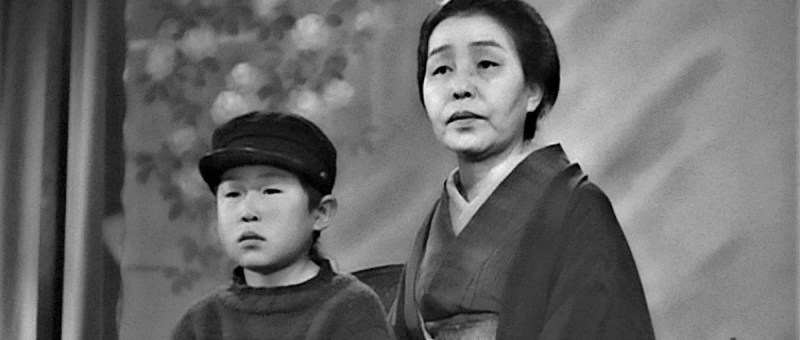
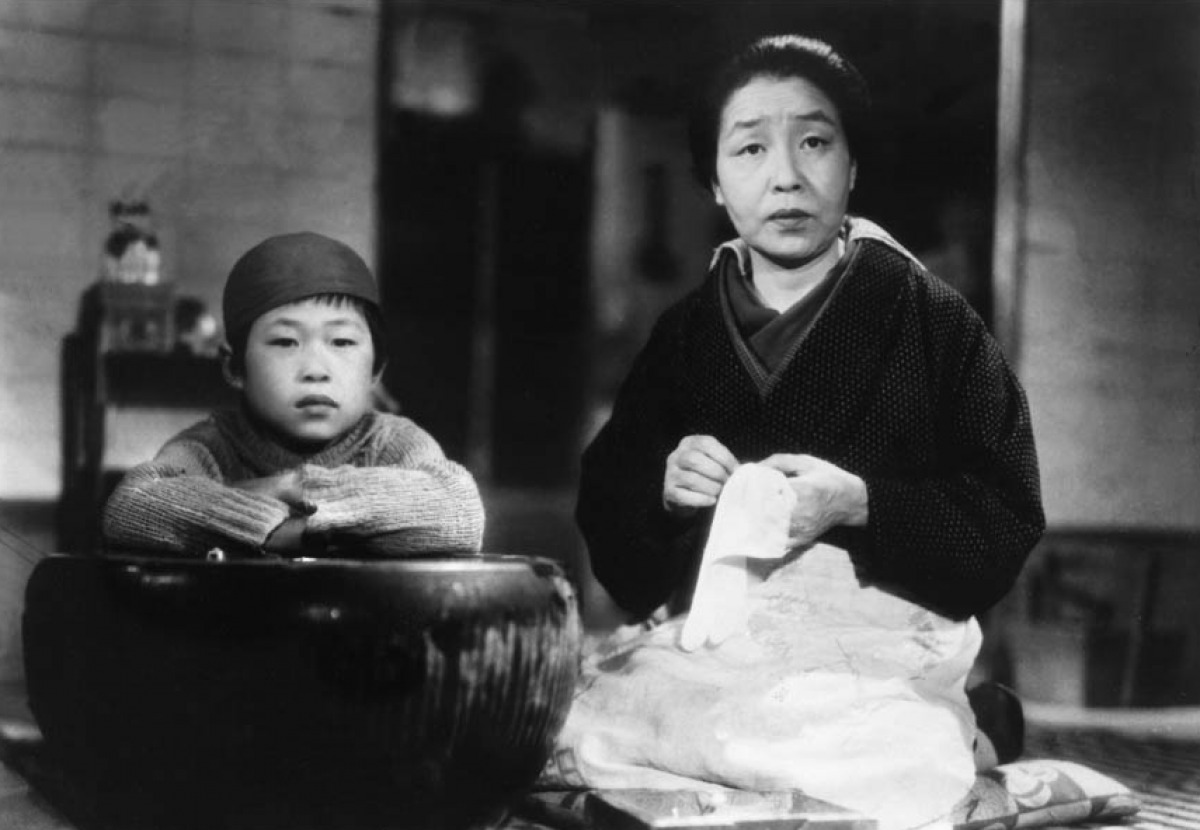
Closely associated with the family drama, Yasujiro Ozu is perhaps the most socially conservative of golden age directors. Unlike Naruse or Mizoguchi, he cheerfully reinforces patriarchal social norms and foregrounds the paternal experience while upholding the primacy of the traditional family in a rapidly modernising society. In his later career he’d come to sympathise more strongly with the young, but 1957’s Tokyo Twilight (東京暮色, Tokyo Boshoku), perhaps his bleakest take on familial failure, is essentially a treatise on the legacy of corrupted motherhood and rebuke to growing post-war freedom in which a young woman is made to feel that her future is impossible because of maternal betrayal while her sister is forced back into an unhappy marriage to an abusive husband in order to avoid the same fate befalling her own daughter. 

Unlike most Ozu families, the Sugiyamas do not seem to be particularly happy in each other’s company, living in superficial politeness rather than true intimacy. This may partly be because the sisters had a brother who passed away young in a mountain climbing accident, but it also seems that Mr. Sugiyama (Chishu Ryu), though kind and polite, is a typically authoritarian, distant father. Oldest daughter Takako (Setsuko Hara) has returned home declaring herself unable to go on living with her professor husband Numata (Kinzo Shin) who, she says, has become increasingly erratic, taking out his petty professional disappointment on their small daughter Michiko whom he seems to resent. Younger sister Akiko (Ineko Arima) meanwhile is sullen and introverted. Unmarried, she lives at home and is studying to become a stenographer. 

As we later discover, the girls’ mother Kikuko (Isuzu Yamada) left the family during the war after falling in love with the junior officer Mr. Sugiyama enlisted to look in on the family while he was away in Seoul. Akiko was only three when their mother left and barely remembers her. Takako attributes her wayward behaviour to “loneliness”, that she has been forever corrupted through never knowing a mother’s love. Mr. Sugiyama admits he tried his best, but both agree that children need two parents and no matter how much he wants to a father cannot make up a mother’s share. 

This atmosphere of alienation is perhaps why Akiko feels as if she has no one to turn to in her own moment of maternal crisis. She has become pregnant by her college student boyfriend who has been avoiding her and even has the audacity to ask if the baby’s his when Akiko finally manages to pin him down. Trying to borrow money for an abortion, Akiko visits her aunt who declines to give it to her without knowing why, eventually turning to a family friend who apparently provides no questions asked. The woman at the clinic assumes she is a bar girl, as does a policeman who eventually “arrests” her for loitering in a sleazy cafe where her boyfriend has obviously stood her up which is quite openly being used as a place for men to pick up call girls. All of this contributes to Akiko’s increasing sense of shame and worthlessness. She sees herself as a fallen woman, convinced that she is all her mother’s child contaminated by her “bad blood” which makes a conventionally successful life as an ordinary wife and mother an impossibility. 

Akiko’s aunt wants to set her up with arranged marriage matches, but Akiko declares she has no intention of marrying or having children. Without knowing anything of Akiko’s circumstances, Takako assumes this is because of her obviously unhappy marriage, trying to convince her sister that there are plenty of happy couples she is merely unlucky. Mr. Sugiyama attempts to talk to his son-in-law but finds him strange and indifferent, offering treatises on familial love while implying that he has little of it. He regrets pressuring Takako to marry him when he knew that she preferred someone else while Takako is once again haunted by the spectre of corrupted maternity in her mother’s decision to leave the family for emotional fulfilment and is fearful of making the same mistake creating another troubled daughter just like Akiko in denying her a father’s love (which seems a moot point given that Numata does not care for the child). 

Neither woman is able to escape paying for their mother’s transgression. Akiko is punished firstly for embracing her sexuality and secondly for the rejection of motherhood in choosing to have an abortion. Alone and humiliated by her unreliable boyfriend, she is denied the opportunity to start over, while Takako meditates on female failure and believes that her only option is to live in misery with a cruel and narcissistic husband because that is the “proper” thing to do and the only way to bring her daughter up “right”. The absent mother, meanwhile, is denied reconciliation and left only with the painful separation from her daughter who finally rejects her in order to reclaim the image of the good wife and mother by returning to her unhappy home. Bleak as it is, all of this is presented as a kind of happy ending in that it restores the idea of the traditional family, increasingly threatened by post-war modernity, to its original primacy. We leave with Mr. Sugiyama rehiring his maid and heading cheerfully back to the male world of work, making the fresh start that his daughters have been so cruelly denied.  


Currently streaming in the UK via BFI Player as part of Japan 2020. Also available to stream in the US via Criterion Channel.