Marriage Hunting Beauty (美人が婚活してみたら, Akiko Ohku, 2018)

out_bijyo_poster_B2Is life really easier for “beautiful” people or do they simply experience a different series of problems? Some might say beauty is a nice problem to have, but however much people may scoff there is perhaps a price to be paid for physical attractiveness as the heroine of Akiko Ohku’s Marriage Hunting Beauty (美人が婚活してみたら, Bijin ga Konkatsu Shite Mitara) is at pains to point out though few are willing to sympathise. What she discovers, however, is that her beauty has perhaps been her blindspot in that it has made her self-centred and entitled while preventing her from realising what is it that has really been bothering her.

At 32, Takako (Mei Kurokawa) remains romantically naive and has wound up in a series of dead end relationships with terrible men who happened to be married (though she didn’t find out until it was too late). Her best friend, married housewife Keiko (Asami Usuda), tells her that her problem is that she’s too beautiful – single guys are too intimidated to make the first move while the married ones are emboldened by their desire to play with fire and the knowledge that the relationship is essentially meaningless because they already have “commitment” elsewhere. Hitting rock bottom, Takako suddenly has an epiphany that she wants to get married if only to prove that she is worthy of becoming someone’s wife rather just their mistress.

Takako is, it has to be said, perfectly aware that she is an attractive woman and sees little point in deflecting praise that comes her way because her of appearance – something that begins to grate on Keiko as Takako fails to submit herself to the level of socially accepted modesty which would require her to protest when called “beautiful”. Keiko’s categorising her as a sad princess is perhaps accurate in that she certainly likes to paint herself as hard done by while refusing to engage with the aspects of her life which cause her to feel miserable and empty. Entering the world of “konkatsu” – accelerated dating with a view to marriage, is then a humbling experience in which she must simultaneously raise and lower her expectations in order to work towards an “ordinary”, conventional kind of settled domesticity.

Of course, “beautiful” people aren’t supposed to need such services, and so Takako’s first few matches on a dedicated marriage orientated website are predictably depressing – a parade of strange older gentlemen hoping to bag a beauty and usually selling their social capital (houses, steady jobs etc) to do so. The one guy she does kind of hit it off with, Sonogi (Tomoya Nakamura), is a shy salaryman who seems nice but lacks confidence and remains creepily in awe of her beauty. Meanwhile, a singles mixer at an “elite” bar introduces her to cynical dentist Yatabe (Kei Tanaka) who seems to have confidence in abundance but very little kindness.

Takako is back to the familiar problem of trying to choose between two men, one nice but servile and the other selfish and indifferent but admittedly exciting. Yatabe is a walking collection of red flags, which is to say that he’s just Takako’s type, but fortunately she’s beginning to figure out that what she likes is not always what’s good for her. Then again, she’s also trying to move past her conception of herself as a “beautiful” woman so Sonogi’s constant deference and gratitude for being allowed in the presence of someone so out of his league is exactly the opposite of what she’s looking for even if she’s beginning to warm to his nice guy charms.

Meanwhile, she remains uncomfortable with her own sense of desire and struggles to reconcile it with society’s preconceived notions of what “beautiful people” should be. Despite their otherwise close friendship, Takako is unable to talk honestly even with Keiko and largely fails to take much of an interest in her friend’s life. Keiko, meanwhile, seems to be trapped in an unfulfilling marriage and secretly may not want Takako to change because she is vicariously enjoying her messy bachelorette lifestyle. Nevertheless, it’s friendship which eventually wins out as the two women agree to meet on more equal terms, sharing their essential selves honestly and without fear as they commit to supporting each other with mutual understanding.

“There are no shortcuts to love”, Takako finally acknowledges as she realises what wanted all along wasn’t superficial acceptance but recognition. What looked like haughtiness was really low self esteem. A quirky tale of a middle-aged woman finding the courage to step into herself, Marriage Hunting Beauty might be telling a familiar story but does so with genuine sympathy for its beautiful heroine as she finally finds the strength to reject the social straightjacket and reclaim her sense of self as a person worthy of respect rather than reverence or ridicule.


Marriage Hunting Beauty was screened as the opening night gala of the 2019 Nippon Connection Film Festival.

Original trailer (no subtitles)

A Home with a View (家和萬事驚, Herman Yau, 2019)

Home with a view poster 2Everyone needs an oasis. It might be a mirage, but still you need to believe in it anyway or with the world the way it is you might just go crazy. For the Lo family, that oasis was their tiny harbour view for which they paid handsomely even though their home could be described as modest at best. Relying on the calming vision of the sea to preserve their peace of mind, the family are constantly preoccupied by the rapid increase in high rise apartment buildings which threaten it, but did not bank on a cynical businessman setting up home on the rooftop opposite and putting up a giant advertising billboard to make a few extra pennies.

Adapting the stage play by Cheung Tat-ming, Herman Yau uses the woes of the Lo family to satirise the effects of Hong Kong’s ongoing housing crisis as they find themselves living in a cramped apartment block where everyone seems to have problems but no inclination to mind their own business. Mrs. Lo, Suk-yin (Anita Yuen Wing-yi), is fed up with the butcher (Lam Suet) who lives directly above them and his habit of loudly mincing pork while she’s trying to eat her dinner in peace, while the kids – son Bun-hong (Ng Siu-hin) and daughter Yu-sze (Jocelyn Choi), resent the intrusion of cigarette smoke wafting up from the flat below belonging to an elderly resident whose oasis is presumably tobacco. Meanwhile, Grandpa (Cheung Tat-ming) is in poor health and in the process of losing his marbles all of which makes for a very exciting home environment where chaos rules and there is always something new to bicker about.

Family patriarch, Wai-man (Francis Ng Chun-yu), sunk considerable expense into buying this apartment because of its sea view. In fact he’s still paying off a hefty mortgage which is why the family is engaged in a money saving competition where they challenge each other to come up with the best schemes and bargains, but he is at heart a kindhearted man which is perhaps why he finds himself handing over a huge wad of cash to pay off the overdue rent of the lady next-door who was threatening to commit suicide rather than risk eviction with her husband seemingly having disappeared off somewhere leaving her alone with her young son. He is not, however, above jamming with the system and is himself an estate agent peddling “low cost” subdivided flats with no widows or kitchens and only access to communal bathrooms in disused but not quite redeveloped former industrial buildings.

Desperate to reclaim their access to serenity, the family set about trying to get the cynical businessman opposite, Wong (Louis Koo Tin-lok), to take the billboard down but he proves smug and indifferent to their plight. In fact, his resentment towards those who can afford swanky sea view apartments is one of the reasons he put the billboard up in the first place so he’s not about to take it down just because he’s realised its presence is inconsiderate. Trying to get the authorities, including an old friend with a longstanding crush on Suk-yin, involved proves largely fruitless with the family locked into a bureaucratic nightmare which saps all their energy and only drives them all crazier even as they begin to unite in pooling their efforts to outsmart Wong who insists the billboard is “art” which he made himself and enriches the city.

The intersection between art and advertising, as well as mild motion towards both things as acts of protest, is only one of the film’s meta touches, but its main theme is indeed family and the various ways the modern society both frustrates and cements it. The Los who were always at each other’s throats, became calm sitting together gazing out at the peaceful harbour but later returned to their individual spheres before reuniting in conflict. Meanwhile, we discover that Wong has a sad story of his own which paints him as a lonely man without a family who likes the attention the billboard has brought him because it’s finally forced people to acknowledge his existence. Rather than managing to make friends with him, the Los descend further into their psychotic fury as they try to defeat Wong, ironically rediscovering their family solidarity in the process. “In this terrible world only family can protect us”, Grandpa says, and in this crazy cutthroat society he may be right. Perhaps the best course of action is to all go mad together rather than try to resist the craziness.


A Home with a View was screened as part of the 2019 Udine Far East Film Festival. It is also currently available to stream via Netflix in the UK (and possibly other territories).

Original trailer (English subtitles)

Extreme Job (극한직업, Lee Byeong-heon, 2019)

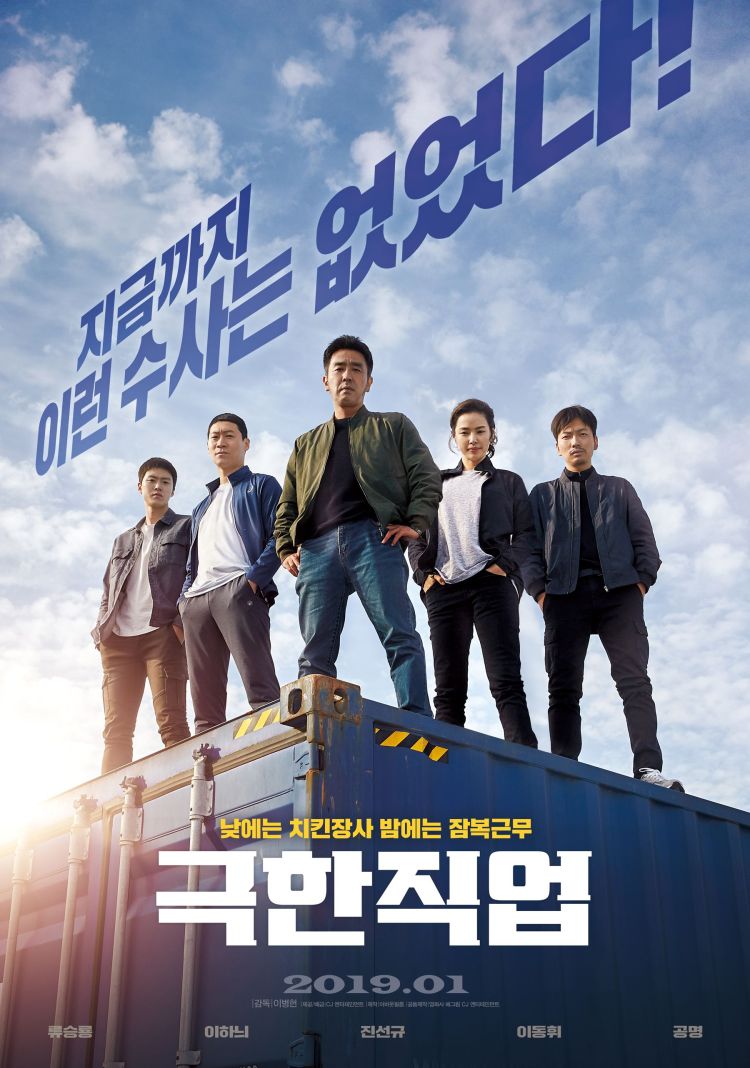
Extreme Job poster 2Another in the increasingly popular trend of multi-territory simultaneous productions, Twenty director Lee Byeong-heon’s Extreme Job (극한직업, Geukan Jigeop) shares its premise with recent Chinese hit Lobster Cop but swaps low budget zaniness for the kind of high concept comedy that dominated Korean cinema in the 2000s. Where the Chinese version was perhaps bold in making its law enforcers look like idiots, the Korean version is very much in the long tradition of idiotic but sincere policemen eventually making good, if perhaps more by accident than design.

The film opens with Chief Go (Ryu Seung-ryong) dangling on a window washing wire and making small talk with his quarry who then manages to get away leaving Go quite literally spinning in the wind. The rest of the team give chase, but the guy eventually ends up in a bad way with the gang’s exploits causing a multi-car pileup and a significant amount of public damage for which Go and his team are now responsible. Facing the threat of disbandment, the team senses opportunity when they get a lead on the Korean HQ of a notorious international drug gang and vow to break the case before a rival squad to prove their worth as police officers.

Bedding in for a 24-hr stakeout, Go & co hole up in a small fried chicken restaurant which happens to be right next to the bad guys’ hide-out only to discover the moribund eatery will soon be closing. The good news is the property is up for sale and Chief Go, borrowing the life savings of rookie Jae-hoon (Gong Myung), decides it’s worth the investment to crack the case. The only problem is, despite having been the only visitors for days, the guys keep getting interrupted by potential customers and are forced to open the chicken shop for real as a cover with the secretly excited officer Ma (Jin Seon-kyu) as chief fryer. Ma’s family recipe rib sauce proves an unexpected hit with chicken lovers and so a new food sensation is born, which is an inconvenience when you’re trying to balance running a restaurant with taking down a drug den.

Like Lobster Cop, Extreme Job satirises modish internet success as something as down to earth and ordinary as fried chicken becomes the latest foodie sensation. So taken with their success are they, that the guys begin to forget about the drug dealers in order to facilitate their chicken business all the while conveniently forgetting that they’re technically moonlighting even if it’s in service of an active investigation (albeit one they weren’t actually assigned to). Deciding that they’ve gone too far the guys raise the price to extreme levels, but that only makes the problem worse as does an attempt to rebuff the attentions of a foodie TV programme who then take against them and attempt to ruin their reputation at the worst possible moment.

Meanwhile, Go’s loyal wife is pleased with the extra money coming in but also suspicious. She doesn’t really like him being a policeman – mostly because his nickname is “zombie” on account of all the times he’s nearly died, but she probably wouldn’t want to be married to a chicken shop manager either. For some reason, owning a chicken shop seems to be a shameful occupation that everyone is embarrassed about, though through his unexpected business success Go eventually learns to embrace his inner chicken man and become a better police officer because of it.

The one officer intent on watching the bad guys finds himself excluded from the group as the others regard him as a shirker for not helping out with the chicken business. Nevertheless, in true cop comedy fashion, it’s team work that counts as the guys come to understand their complimentary strengths and start working together as a unit so they can take down the drug dealers if in bumblingly idiosyncratic fashion. As if to ram the point home, Lee closes with Leslie Cheung’s iconic theme from A Better Tomorrow running in the background to remind us that this has all been about brotherhood, togetherness, and holding the line as much as it’s been about fried chicken success. Slapstick laughs collide with ironic familial comedy and a dose of mild social commentary as the bumbling cops eventually make good by embracing their inner chicken men and reclaiming their dignity in the process.


Extreme Job was screened as part of the 2019 Udine Far East Film Festival.

International trailer (English subtitles)

Lobster Cop (龙虾刑警, Li Xinyun, 2018)

lobster cop poster 1Sadly, Lobster Cop (龙虾刑警, Lóngxiā Xíngjǐng) is not the story of a team of intrepid crustaceans in a trench coat but an amusing tale of bumbling cops made good as their plan to hole up in a seafood joint pays out in unexpected ways. Actress Li Xinyun’s directorial debut is a surprisingly subversive affair proving once again that light comedy is becoming the satirical battleground of the contemporary Chinese cinema industry and dancing rings around the censors in the process.

Our hero, bumbling policeman Yufei (Wang Qianyuan), has a habit of tracking down the bad guys but letting them get away at the critical moment. When yet another mistake puts him on the chief’s naughty list, he finds himself up against rival Xu Xin (Wang Zheng) and given a month to figure out how drug dealers are getting their merchandise into the country. Taking his best squad with him – grandfatherly Neng (Liu Hua), tomboyish Hua Jie (Yuan Shanshan), and rookie Chen (Zhou You ), Yufei vows to crack the case. Noticing that a rundown crayfish restaurant he often stops in to relieve himself has an excellent view of a “logistics company” they suspect is responsible for importing the drugs, Yufei catches on the idea of turning restauranteur in order to stakeout his quarry.

The unexpected snag is that Neng always fancied himself as a bit of a cook and his crayfish unexpectedly takes off, which is good news in one sense because it means the gang can pay back some of the money Chen had to borrow from his wealthy mother to get the restaurant off the ground, but bad in that it’s very difficult to run a successful eatery and chase drug dealers at the same time – especially when the drug dealers become some of your best customers.

In order to make their cover more credible, the gang end up posing as a family with Neng as the cuddly dad, Yufei and Hua Jie as an improbable couple, and Chen as the adorable little brother. As the restaurant starts to take off the cover identities start to take over with only Yufei digging his heels in as he tries his best to catch the bad guys in order to best his police rival and prove himself to the chief. Nevertheless, like any good police squad the secret ingredient of success is fellow feeling and it’s brotherly love that eventually saves our confuzzled cops as they get themselves into a series of sticky situations with the equally bumbling “logistics” guys while accidentally carving a path towards kingpin The General (Li Jianren).

In a slightly surprising move given the usual censors’ board squeamishness, Li inserts a fair amount of subtle homoerotic content beginning with straight-laced policeman Xu Xin walking into a potential cruising situation with the very flamboyant General hanging around in the Gents for reasons seemingly unrelated to crime (though he does later enjoy a carriage ride with a pretty lady), while a regular visitor to the shop openly flirts with Neng who seems to, on one level at least, be receptive to his advances. While it’s true that both of the presumably gay guys (Neng aside) turn out to be “bad” in one way or another, it is a refreshingly ordinary kind of representation in which homosexuality is not in itself the joke and, in a tacit sense, almost totally normalised.

Then again it is the traditional family, in model terms at least, which eventually wins out as the guys begin to pull together to make their lobster restaurant a success and eventually learn to work as a team while embracing their own strengths so they can take down the bad guys. An entertaining mix of witty banter and slapstick martial arts underpinned by tasty food photography and a cheeky subversive spirit, Lobster Cop is a surprisingly surreal concoction and a promisingly off the wall debut from Li who manages to ground the often strange goings on firmly in the real while ensuring her losers make good story commands genuine warmth.


Original trailer (English subtitles)

Unstoppable (성난황소, Kim Min-ho, 2018)

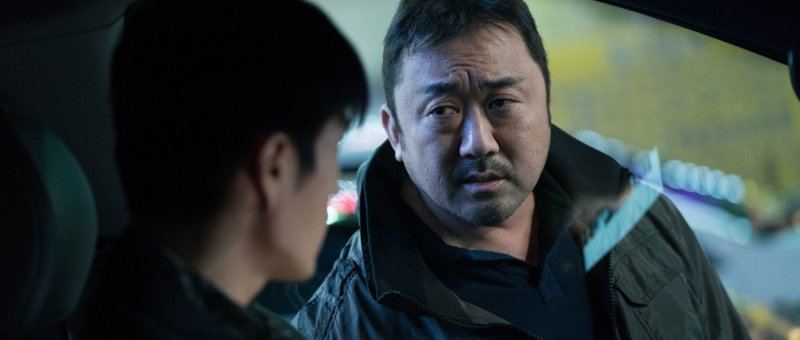
Unstoppable poster 5Can a person ever really change? The answer might be more complex than it seems but then again, you might not quite want them to change as much as you might think you do. Ma Dong-seok is quickly becoming Korean cinema’s MVP, in the genre stakes at least, and has begun to make a career for himself as a big hearted teddy bear of a man with gigantic heavy fists. It’s a legacy he very much embraces in the oddly light hearted Unstoppable (성난황소, Seongnan Hwangso) which sees him play a former gangster gone straight whose latent violent streak is reawakened when he becomes a warrior for love.

Dong-cheol (Ma Dong-seok) was once a notorious tough guy but gave up the streets when he met “an angel”, nurse Ji-soo (Song Ji-hyo), and married her. These days, he works a regular low pay labour job at the fish market but is always dreaming of better things which is why he’s constantly getting scammed by the latest get rich quick scheme proposed by one of his dodgy friends. The trouble starts when Dong-cheol is rear ended by some shady types and gets out of his car to ask for insurance details. Sensing danger but now fully reformed, Dong-cheol remains calm and refuses to engage but Ji-soo isn’t having any of it. She verbally lays into the gangsters and insists on compensation. When Dong-cheol returns home to find his apartment in disarray after arguing with Ji-soo about his unwise financial decisions during a birthday dinner at a fancy restaurant they can’t afford, he has an inkling about what may have occurred but finds the police slow and unsympathetic leaving him to take matters into his own hands.

Unlike many a similarly themed action drama, Unstoppable is keen to emphasise the sweet and innocent love between Dong-cheol and Ji-soo with even the climactic argument between them neutered shortly before Ji-soo is taken. Dong-cheol is not a violent man at heart, but is prepared to meet violence with violence where necessary and he does not like to lose. He takes damage, but never gives up the fight not because he’s angry and hellbent on revenge but because he loves his wife and is desperate to make sure nothing bad happens to her while he is around to prevent it. Meanwhile, Ji-soo is far from a damsel in distress. Refusing to be cowed, she keeps her wits about her and protects the other women kidnapped by the gang while she looks for a way to escape.

The fact is, there seem to have been a lot of unexplained disappearances of young women in this city – something which Dong-cheol becomes aware of while hanging around the police station, yet the authorities have not made much headway on the case. Dong-cheol quickly works out that he’s potentially dealing with an organised crime network which makes its money out of trafficking kidnapped women all over Asia and that, unlike himself, the families of these women largely opted to take the “compensation” money left in their place by the gangsters rather than fight back. This in itself annoys him, though not quite as much as being forced to play the gangsters’ game in order to maximise the chances of getting to Ji-soo before it’s too late.

What quickly becomes apparent to flamboyant gangster Ki-tae (Kim Sung-oh) is that he’s made quite a big mistake, even if that mistake might be more fun than hassle. Ji-soo is not the victim type and her husband will stop at nothing to get her back which means he’s fighting a war on two fronts, both surprised and somewhat amused to be met with such unexpected resistance. Still, Dong-cheol is determined to barrel through fists flying while his bumbling sidekicks – old comrade Choon-sik (Park Ji-hwan) and fast talking fixer Gomsajang (Kim Min-jae), handle the investigation from the sidelines. Undercutting the essential darkness of the “lone vigilante takes on heinous human trafficking ring” narrative with warmhearted humour, Unstoppable proves an ideal vehicle for the increasingly popular Ma Dong-seok which finds unexpected sweetness in the genuine connection between its perfectly matched husband and wife team.


Unstoppable was screened as part of the 2019 Udine Far East Film Festival.

International trailer (English subtitles)

Krasue: Inhuman Kiss (แสงกระสือ, Sitisiri Mongkolsiri, 2019)

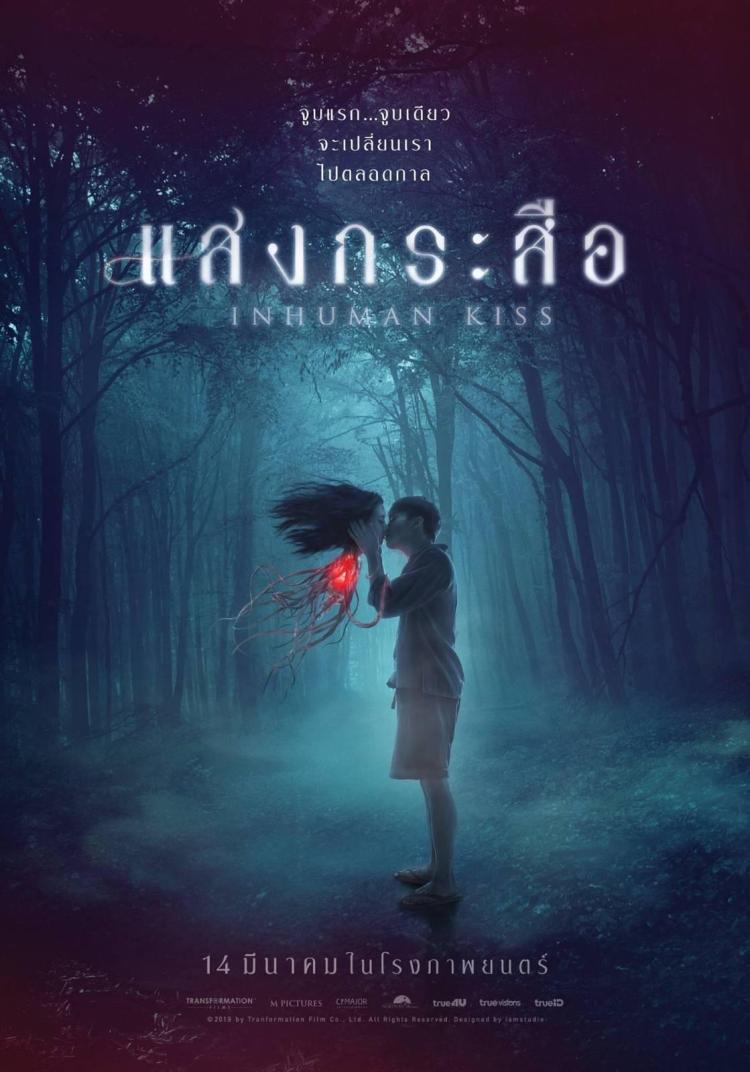
Inhuman kiss poster 2Vengeful ghosts are one thing, but what if you get possessed by a malevolent entity and go about committing evil deeds during the night only to forget them by the morning? A Krasue, in Thai mythology, is a supernatural creature which infects an ordinary woman with a curse which causes her head to detach from her body at night to devour nearby cattle. The heroine of Krasue: Inhuman Kiss (แสงกระสือ) received the curse as an overly curious child only for it to activate on entering puberty during which time she is also caught between the love of her two childhood best friends.

The gentle Sai (Phantira Pipityakorn) first encountered the Krasue when dared to go into a creepy “haunted” cottage by her cowardly friends who largely stayed outside. 10 years later, she still misses her best friend Noi (Oabnithi Wiwattanawarang) to whom she gave her protective amulet, while her other best friend, Jerd (Sapol Assawamunkong) silently pines for her but despite his confident persona is too shy to declare his feelings. Shortly after Noi returns from Bangkok in order to escape the approach of the war, a Krasue comes to town. Gradually, Sai begins to worry something is wrong when she keeps waking up with bloodstained sheets but is at a loss for what to do. Meanwhile, a band of bandit Krasue hunters has also descended on the village with the intention of “purifying” it of the troublesome curse.

Set around the time of the Second World War, Krasue: Inhhuman Kiss takes place in a rural idyll untouched by conflict but also home to ancient superstition and primitive prejudice. Though belief in the Krasue is fading, the evidence of its reappearance is undeniable and even if the townspeople can consider themselves “safe” because the monster only targets cattle, they still fear it and that their wives and daughters could become infected. Noi, who left the village long ago for Bangkok, has come back in search of safety but finds himself longing once again for the civilisation of the big city where monstrous curses are regarded as ridiculous superstition and modern medicine a potential cure for any ailment.

Thus when he realises that Sai has become a Krasue, his ultimate plan is to flee with her to the city where they might find help or at least different kind of safety in the midst of civil unrest. Originally horrified, Noi turns to a local monk for advice who counsels him that he should believe what he sees, but do as his heart tells him. Therefore he tries to protect Sai by preparing food for the Krasue so she won’t have to leave her house and risk discovery while he looks for a cure.

Meanwhile, Jerd becomes increasingly jealous of the obvious bond between Sai and her childhood friend but lacks the courage do much more about it than pout and resent Noi’s unexpected reappearance. Jerd joins the hunters, seemingly looking to emphasise his manliness against Noi’s intellectualism while allying himself with strong male role models like the worryingly intense Tat (Surasak Wongthai). In the end, however, both men act to protect the woman that they love albeit in different ways even as they fear she has become monstrous and a danger to herself.

The curse of the Krasue is, it turns out, the legacy of an ancient love triangle and an all powerful man who couldn’t accept that the woman he loved had fallen in love with someone else. Tat’s band of rage fuelled bandits are as much about misogynistic prejudice towards transgressive women as they are about protecting cattle from “supernatural” threat and their intimidating presence eventually puts a stronghold on the increasingly jumpy village in which the torches and pitchforks eventually come out in a show of intense paranoia.

The wartime corruption has finally reached the village, rendering it no safer than the city and infected with a deeper, older anxiety born of wounded male pride and female subjugation. Selfless love struggles to endure but may be no match for the humiliated rage of a spurned lover leaving acts of mutual sacrifice perhaps the only path towards salvation. A supernaturally tinged coming of age tale in which a teenage love triangle neatly overlaps with an ancient curse, Krasue: Inhuman Kiss is a surprisingly rich and delicate experience which imbues its essential horror with genuine warmth and deeply felt compassion.


Krasue: Inhuman Kiss was screened as part of the 2019 Udine Far East Film Festival.

International trailer (English subtitles)

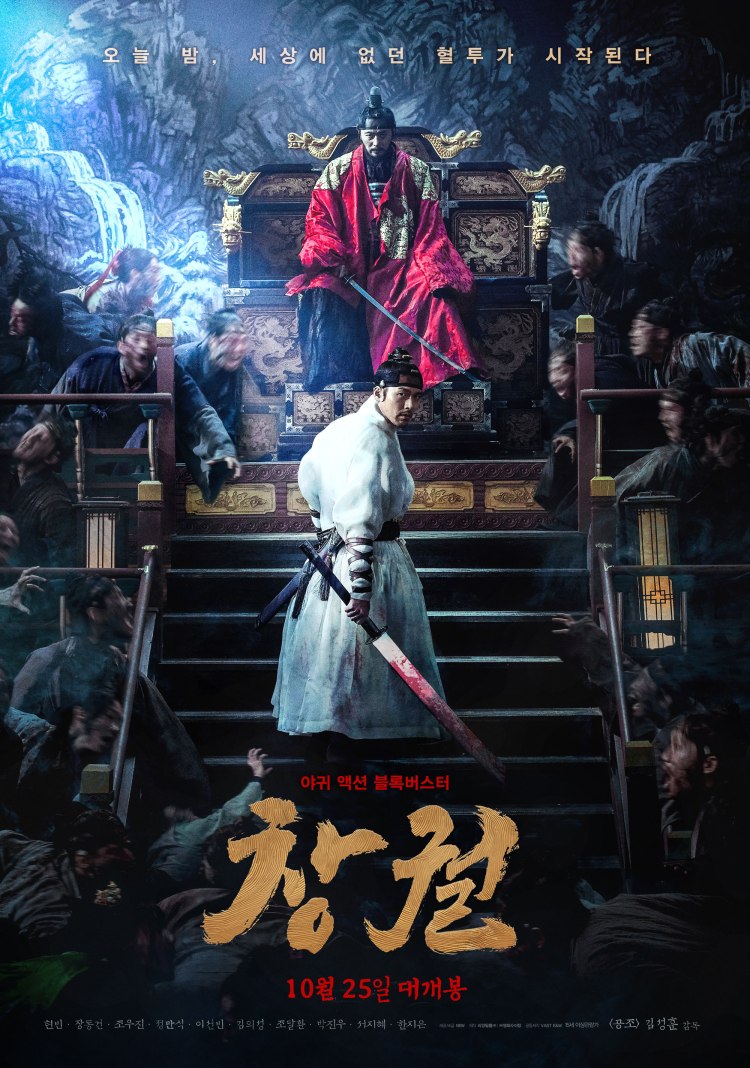
Rampant (창궐, Kim Sung-hoon, 2018)

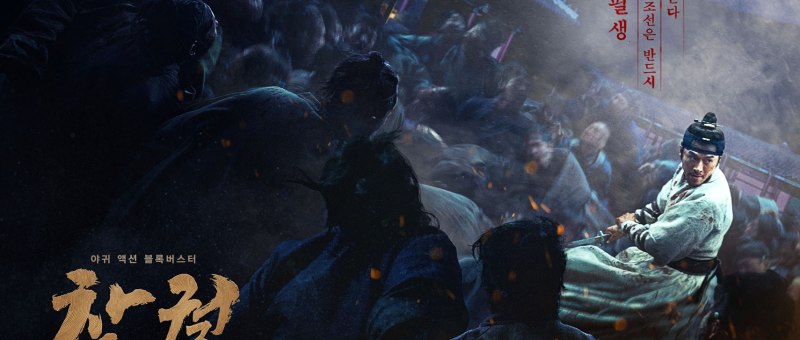
Rampant posterKorean cinema has well and truly fallen in love with zombies. You might have heard of zombie kings lingering on while ambitious underlings run the show to ensure their own succession, but you’ve never seen one quite like this. Kim Sung-hoon’s Rampant (창궐, Changgwol), arriving mere months before similarly themed Netflix TV show Kingdom, sends the zombie apocalypse back to the Joseon-era. Incorporating the political intrigue and courtly machinations the genre is known for, Rampant is ultimately less a tale of battling undead threat than of fighting for a humane future ruled over by a good king who purifies the kingdom and commits himself to the service of his people.

Our hero, Ganglim (Hyun Bin), was raised among the Qing and feels himself to be more Chinese than Korean – he isn’t even very comfortable with the language and wants nothing more than to go “home” where all the pretty ladies are. The reason he’s come “back” to Korea is that his brother, the Crown Prince (Kim Tae-woo), feared for his safety and asked Ganglim to escort his pregnant wife to the Qing out of harm’s way. The major problem is that the elderly king is weak and many in his court believe he has failed to stand up to the Qing, damaging Korean sovereignty. Unbeknownst to Ganglim, the Crown Prince has already committed suicide to take responsibility for a treasonous plot to usurp the king using firepower purchased from the Dutch. Inconveniently, this also means that Ganglim is now heir to the throne which is very much not something he is particularly interested in. Romantic as he is, however, he can’t pass up the chance to avenge his brother’s death while fulfilling his dying wish of saving his wife and unborn child.

Meanwhile, that Dutch ship was carrying more than guns. Strange flesh eating “night demons” have overrun the harbour town of Jemulpo and are slowly staggering forward under the cover of darkness ravaging as they go. Wandering into the fray, Ganglim is eventually accosted by a band of “rebels” previously loyal to his brother who, alone, are busy defending the innocent townspeople by disposing of the zombie corpses before they can do more harm.

Ganglim too is originally unwilling to help, not quite believing the tale he’s been told and then affirming that it’s not much to do with him while he concentrates on concluding his mission so he can get back to Qing. Nevertheless he gradually begins to accept his responsibility through realising it affords him an opportunity to be dashing and heroic. Meanwhile, there is conspiracy afoot in the court. Evil defence minister Kim Ja-joon (Jang Dong-gun) is still intent on seizing the throne to create a new Korea free of Qing of influence and is not above using the zombie threat as a part of his plan.

The conflict is then the familiar one of good kings and bad, or the rightful heir and an unscrupulous usurper. Ganglim, a self-centred libertine who thinks of little else than beautiful women, is not looking for the kind of responsibility which comes with a crown which of course makes him the perfect person to inherit it. Little by little, beginning to care for his small band of rebels and the townspeople they help to save, Ganglim embraces his nobility and commits himself to the service of his people. The king, he discovers, is a servant of his subjects – not the other way around as Kim would have it. Watching the old world burn, he vows to build a better one founded on more egalitarian principles with fairness and accountability at its centre.

The zombies become a kind of metaphor for the corruption which is literally devouring the kingdom and must be purified by Ganglim’s righteous fire. Kim’s revolution has destabilised the nation through unexpected foreign influence which he, ironically, attempts to turn to his advantage little caring if it costs the lives of his fellow Koreans who are, after all, only peasants and therefore not really worth caring about. Kim Sung-hoon brings painterly aesthetics to the classically inspired tale of true kings and righteous hearts while letting the zombies do their thing in true genre fashion as Joseon prepares to save itself from the rot within by beheading the monster before before it has a chance to bite.


Rampant was screened as part of the 2019 Udine Far East Film Festival.

International trailer (English subtitles)

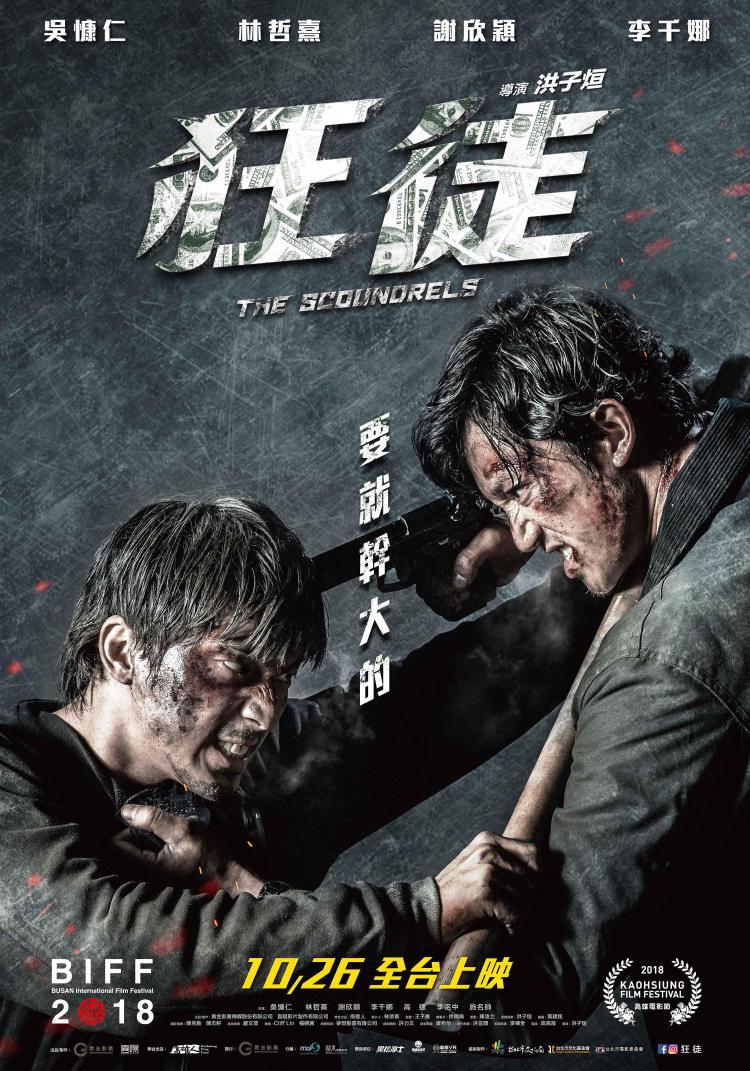
The Scoundrels (狂徒, Hung Tzu-hsuan, 2018)

The Scoundrels posterTaiwanese cinema has, of late, been most closely associated with whimsical romantic comedies and maudlin melodrama but a return to action could very much be on the cards if The Scoundrels (狂徒, Kuáng Tú) is anything to go by. A tensely plotted neo-noir, the debut feature from Hung Tzu-Hsuan takes its cues from classic Hong Kong heroic bloodshed and contemporary Korean crime thrillers as its conflicted hero battles himself in other forms, unwittingly taking the fall for the “Raincoat Robber” all while trying to reclaim his sense of self approval.

Ruining himself through a senseless act of self destructive violence, Ray (J.C. Lin Cheng-Hsi) lost his top basketball career along with the fame and fortune that went with it and now makes a living on the fringes of the crime world tagging luxury cars with GPS trackers so the thugs can pick them up later. His life takes an abrupt turn for the worse when he is about to tag the car belonging to the elusive “Raincoat Robber” (Chris Wu Kang-Ren) who takes him hostage at gunpoint and gets him to call an ambulance for the injured woman (Nikki Hsieh Hsin-Ying) lying in the back before abandoning her on the roadside and driving off.

Despite his obvious fear, Ray finds himself warming to the strangely jovial criminal who perhaps reinforces his sense of being wronged by the world with his dubious philosophies. Ben, as he calls himself, tells him that society is to blame and he’s better off embracing his darker nature but Ray remains unconvinced. Despite an awareness of his bad qualities – his self destructive need for violence and propensity to make unwise decisions, Ray prefers not to think of himself as actively criminal and resents being lumped in with the Raincoat Robber even if the TV stations sometimes paint him as a kindly Robin Hood figure who only shoots people in the knees  and makes a point of stealing from those who can afford to lose.

Even so there is something in what he says in that Ray struggles to emerge from the labels which have been placed on him throughout his life. He wants to change his fate, but is uncertain how to do it. If everyone calls him a crazed and violent man, perhaps it’s a label he can’t help but live up to and if you can’t beat your programming perhaps it’s easier to give in and simply become what everyone assumes you to be.

The police, as a case in point, quickly decide Ray is guilty because of his previous crimes and reputation as a man of violence. The veteran cop (Jack Kao) who arrested him before is convinced that Ray is their man not because the evidence says so but because he has it in for him and is convinced that no one is ever really reformed. Only one more earnest cop (Shih Ming-Shuai) bothers to examine the evidence and give credence to Ray’s pleas, but in any case Ray is unlikely to trust the authorities when the authorities have so little trust in him despite the encouragement of his loyal girlfriend (Nana Lee Chien-na) who seems to think he really might be guilty but looks as if she might stand by him anyway.

Ray wants to change his fate, but to do it he’ll have to face himself in the form of Ben only Ben is quite the adversary and in some ways even more like himself than he might have guessed if more ruthless and (almost) completely amoral. The awkward bromance between the two begins to simmer as they dance around each other never quite sure who is going to betray whom and when though Hung is careful to keep the tension high and the door open for a more genuine kind of camaraderie.

Set against the rain drenched streets of Taiwan at night, The Scoundrels fully inhabits its murky noirish world of tiny back alleys and underground gambling dens existing underneath the gleaming spires and shiny high tech hospitals. The action is thick and fast but always realistic with a good deal of humour which even sees the fight in a tea house tradition honoured in true heroic bloodshed fashion while Ray scraps for his life literally and metaphorically. A tightly plotted thriller with true noir flair, Hung’s debut is an impressively assured affair which makes the most of its meagre budget to prove that action cinema is well and truly alive and kicking in contemporary Taiwan.


The Scoundrels was screened as part of the 2019 Udine Far East Film Festival.

International trailer (English subtitles)

Intimate Strangers (완벽한 타인, Lee Jae-kyoo, 2018)

Intimate Strangers poster 1Middle-aged malaise and technophobia collide with potentially catastrophic consequences in brutal comedy of manners Intimate Strangers (완벽한 타인, Wanbyeokhan Tain). The hugely popular Italian film Perfetti Sconosciuti has already been remade in several territories, proving the universality of its conceit. The Korean edition, cleaving closely to the original, demonstrates once again that nowhere is safe in the modern wired world where public and private personas are beginning to blur as lives lived online become realer than real.

The action takes place (almost) entirely within a swanky Seoul apartment owned by plastic surgeon Seok-ho (Cho Jin-woong) and his psychiatrist wife Ye-jin (Kim Ji-soo). The couple, along with their teenage daughter (Ji Woo), have been living in the apartment for some time but haven’t gotten around to inviting their dearest friends so this evening’s celebration will be something like a belated housewarming. The other guests will be friends of Seok-ho’s from all the way back in elementary school – elite lawyer Tae-soo (Yoo Hae-jin) and his wife Soo-hyun (Yum Jung-ah), “entrepreneur” Joon-mo (Lee Seo-jin) and his much younger wife Se-kyung (Song Ha-yoon), and recently divorced Young-bae (Yoon Kyung-ho) who is supposed to be bringing his new girlfriend, but disappoints everyone by turning up alone. Part way through the evening, Ye-jin suggests a kind of party game in which they’ll all put their phones face up on the table and agree to share any messages or calls that come in. Of course, this is a game you can’t afford to refuse to play lest everyone think you’ve something to hide, but total honesty is not always advisable even amongst friends.

Despite their supposed intimacy built up over a couple of decades of similar evenings and get togethers, everyone is very much in public mode and maintaining appropriate levels of decorum. Which is why Tae-soo and Soo-hyun are at great pains to hide the fact their relationship is at breaking point thanks to the recent arrival of Tae-soo’s mother while Ye-jin and Seok-ho also have obvious problems, especially when it comes to the upbringing of their teenage daughter. Despite being a psychiatrist with full knowledge of boundaries and the harm that can be done crossing them, Ye-jin has been going through her daughter’s things and not liking what she finds. Nevertheless, everyone wants to have a pleasant evening, so the fights are on hold and politeness very much in the ascendent.

And then the phones start ringing. It might be a matter of debate exactly how much privacy one should want or expect in a marriage, with friends, or from the world in general, but everyone has something or other they’d rather wasn’t brought up at a dinner party and so showcasing one’s phone is likely to be quite a bad idea. That might be the attraction of the game, but no one seriously wants marital breakdown across the dinner table, nor do they want to hear about medical procedures, outings they weren’t invited to, workplace drama, or familial strife.

The messages, as pregnant with melodrama as they might be, begin to expose the simmering conflicts between this now disparate group of “friends”. The petty class resentments and awkward political differences that politeness sees fit to gloss over become harder to ignore when flashed up by an inconvenient notification or a call the other party is not aware is being broadcast (breaching their privacy too in the process). Realising secrets have been kept from you can be hurtful, but it’s even worse realising that you disappoint yourself in proving exactly why the secret was kept in the first place.

It’s tempting to blame everything on technology, that if no one had a phone no one would be hurt but the truth is that married or not everyone has a right to their secrets and a separate, individual life to which no one but themselves is privy. Perhaps it isn’t so much lies which are the enemy, but the expectation of intimacy and that sharing your life with someone necessarily means the entirety of it. In any case, the film (like the other incarnations) opts for an ironic ending which undoes everything which had gone before, erasing the awkwardness of exposed secrets with a return to a more comfortable reality in which everyone is superficially happier pretending to be happy in blissful ignorance. Perhaps sometimes it really is better not to ask too many questions.


Intimate Strangers was screened as part of the 2019 Udine Far East Film Festival.

International trailer (English subtitles)

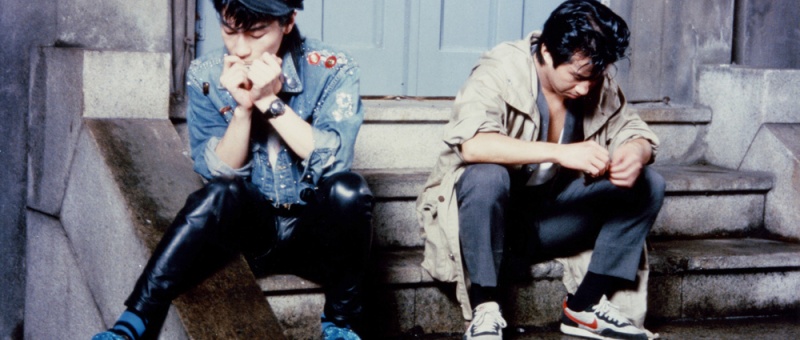
The Legend of the Stardust Brothers (星くず兄弟の伝説, Macoto Tezka, 1985)

Stardust Brothers poster 2More or less out of fashion today, concept albums were all the rage back in the ‘70s and ‘80s but few of them ever made it to the big screen. Macoto Tezka’s The Legend of the Stardust Brothers (星くず兄弟の伝説, Hoshikuzu Kyodai no Densetsu), apparently drawing inspiration from The Who’s Tommy, is a rare exception though you’d be forgiven for never having heard of it seeing as it’s been mostly forgotten since receiving a decidedly frosty reception from critics on its 1985 release. Tezka would revisit the Stardust Brothers in 2016 with a Brand New Legend, but this now fully restored “director’s cut” distributed by Third Window Films who are also co-producing Tezka’s latest work – an adaptation of a manga by his legendary father Osamu Tezuka starring Fumi Nikaido, is the first opportunity many will have to reappraise the film in 34 years.

Inspired by an “imaginary soundtrack” composed by Haruo Chicada, The Legend of the Stardust Brothers concerns itself with aspiring musicians Shingo (Shingo Kubota) and Kan (Kazuhiro Takagi) who seem to have a healthy rivalry in the intense 1980s Japanese underground club scene. Their luck changes one day when they are each handed a card for a shady-looking management company, Atomic Promotion, where the manager, Minami (played by voice of the ’70s crooner Kiyohiko Ozaki), promises to make them stars beyond their wildest dreams but only on one condition – they have to form a band of two, or it’s no dice.

On their first arrival at Atomic Promotion, the boys are introduced to a young woman, Marimo (Kyoko Togawa) – an aspiring singer who has been repeatedly kicked out of Minami’s office because he doesn’t hire girls (seemingly a satirical reference to an all powerful agency controlling most of Japan’s A-list male idols). Kan comes to her rescue and, in a throwaway comment, casts himself as Urashima Taro rescuing the “turtle” from, in this case, belligerent security guards. It is tempting, in an impish sense, to read the rest of the ongoing tale as an extended retelling of the Urashima Taro myth as the boys find themselves catching a ride to another kingdom filled with untold wealth and unimaginable pleasure only to tire of their newfound luxury and discover that while they were trapped within a tiny champagne bubble of success other stars were also rising.

It is indeed the “plateau” of success which highlights the differences between the two guys and threatens to send each of them on different paths as they contemplate the demands of showbiz life. Shingo, an insecure rocker, begins to resent the presence of the ultra modern Kan whose punkish energy and zeitgeisty features have captured the hearts of the youth. Numbing the emptiness with drink and drugs, he dreams himself swallowed whole by his sworn brother before being chased by creepy zombies emerging from their human suits to suck whatever of his soul remains right out of him.

Bored by their fame, the boys resent the implication that their “stardom” comes only at the price of their artistic integrity. They long to break free of the corporate straightjacket which attempts to strip them of their individuality in order to replace it with a manufactured, marketable persona in another jab at the increasingly commodified idol world of the burgeoning bubble era. Meanwhile, the corporate machine moves on, mass media is exposed as yet another medium of propaganda with a (perhaps conflicted) Minami propositioned by a politician with a son keen to get into the business. Fearing the Stardust Brothers are too “vulgar”, the powers that be want a new face to sell the message of love and peace to the young, which sounds much more positive than it really is. The boys’ rival, Kaworu (visual kei pioneer Issay), is very much a figure of the age – an androgynous, Bowie-like counter culture personality who is in essence the face of entrenched privilege insidiously camouflaged to infiltrate alternative youth subculture. 

Yet the political message is not perhaps the point so much as anarchic, absurdist fun. Perfectly in tune with lo-fi late punk / early New Wave sensibilities, Tezka’s script freewheels from one surreal set piece to another following the flow of Chicada’s expertly composed score which encapsulates the variety of the age while remaining absolutely of its time. Filled with youthful energy and true punk spirit, The Legend of the Stardust Brothers is the strange tale of the dust that stars are made on and its unexpected ability to find its way home even if it takes a little longer than expected.


The Legend of the Stardust Brothers is released on blu-ray later in the year courtesy of Third Window Films. It will also be screened as part of the 2019 Nippon Connection Film Festival on 1st June, 22.30.

Trailer (English subtitles)

Bonus:

Kiyohiko Ozaki’s 1971 hit Mata Au Hi Made

And its fantastic use in Isshin Inudo’s La Maison de Himiko