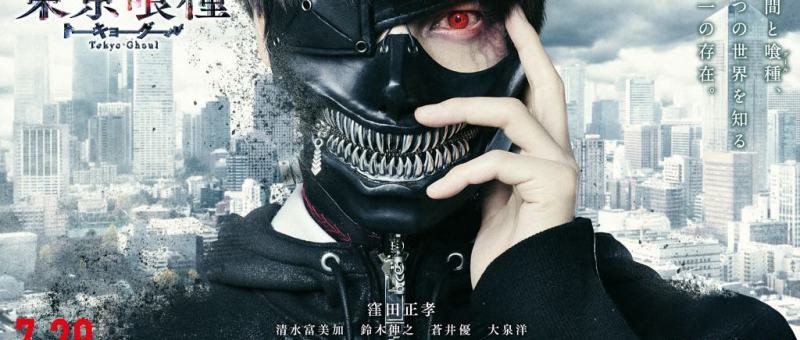
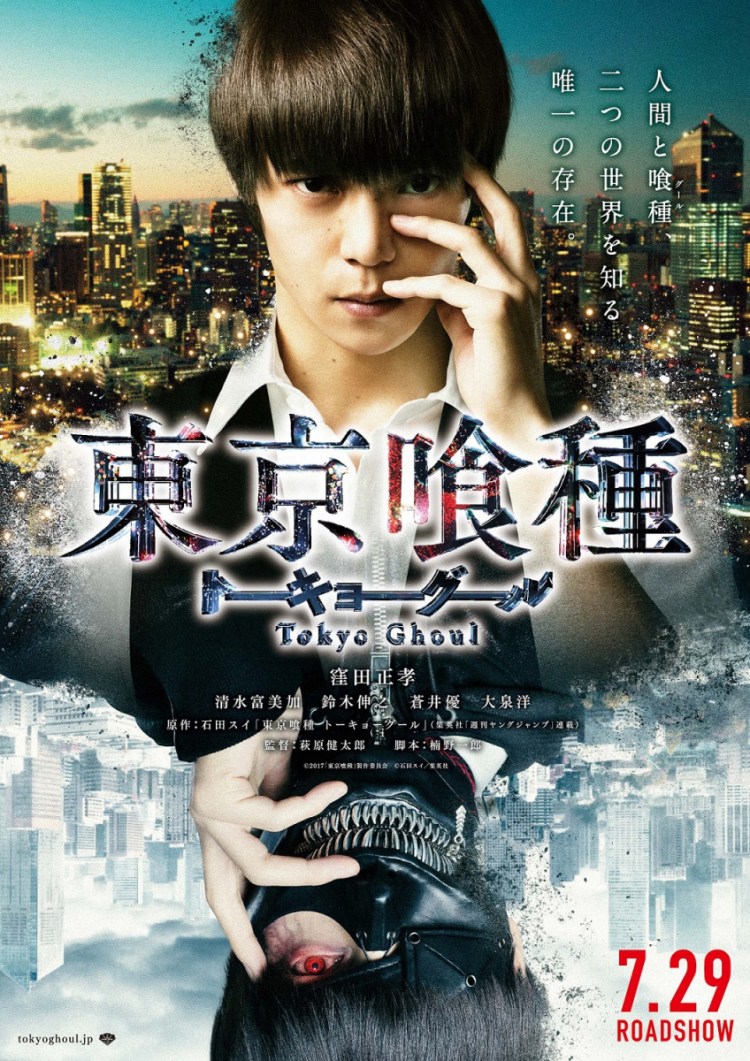
 Though the idea has never been far away, Japanese cinema has largely steered clear of the enemy within. Recently however the “they walk among us” phenomenon seems to have gained traction from the horror-leaning Parasyte to the contemplative Before We Vanish. Parasyte would seem to be an appropriate point of departure for Kentaro Hagiwara’s debut feature, an adaptation of Sui Ishida’s hugely popular manga Tokyo Ghoul (東京喰種). Like Hitoshi Iwaaki’s ‘80s take on Invasion of the Body Snatchers, Tokyo Ghoul creates for itself a subsection of “humanity” which is not quite human yet apparently lives alongside “us” keeping its true nature and identity a secret in order to avoid detection. Unlike Parasyte, however, the intentions of the Ghouls are not so much destruction or colonisation as simple survival.
Ken Kaneki (Masataka Kubota), a shy bookworm with only one real friend, is trying to pluck up the courage to talk to another shy bookworm he often notices reading the kind of books he likes in a cafe they both seem to enjoy going to. It would seem that they have quite a lot in common already, but when Ken ends up on a successful date with Rize (Yu Aoi) he gets a little more than he bargained for. Far from the shy and mousy creature of his dreams, Rize is a raging Ghoul hungry for flesh rather than love. Luckily, Rize is killed in a freak accident just as she’s about devour poor Ken. Ken, however, survives but only thanks to a transplant of Rize’s organs meaning he is now part-Ghoul and can only live on human meat.
Neither one thing nor another, Ken struggles to accept his new nature as he craves flesh and has strange visions in which he imagines himself as Rize the crazed and ravenous Ghoul. Starving and alone he finally finds his way to the Anteiku cafe where he first met Rize and now finds a support network led by ethical Ghouls who sustain themselves on ethically sourced meat and high end coffee. These Ghouls do not want to kill, they simply want to survive which also means keeping one step ahead of the CCG which exists specifically in order to hunt down Ghouls with extreme prejudice.
In many a sci-fi tome, the CCG would be the good guys – protecting regular humans from a monstrous threat lurking in the shadows. After all, who would defend a substratum of cannibal serial killers who think nothing of devouring human flesh in front of its horrified offspring, but the CCG have perhaps begun to take too much pleasure in their work. Cold and calculating detective Amon (Nobuyuki Suzuki) has an idea that the world is “wrong” and it’s his job to put it right by exterminating the Ghouls, whereas creepy silver-haired detective Mado (Yo Oizumi) enjoys toying with his prey as much as Rize did and has even begun to harvest the various “Kagune” protuberances with which the Ghouls are endowed to use in his quest to defeat them.
The CCG may be justified in their fear in but in their methods they are little different than their quarry. The Ghouls too have a right to survive and are, after all, only being what they are. CCG might be better off working with Anteiku to minimise the Ghoul threat rather than engaging in a pointless and internecine war that guarantees only a continuation of violence and fear on both sides.
Having posited such interesting ideas it’s a shame that Tokyo Ghoul reverts to the classic super hero formula of resolving everything through a climactic battle in which Ken is forced to confront himself whilst battling CCG. Neither Ghoul nor human, Ken sees faults on both sides but perhaps learns to come into himself, no longer a diffident young man but one committed to protecting his friends even if it’s themselves they need protecting from.
Hagiwara opts for an artier approach than might expected though his noble intentions are often undercut by poor quality CGI and the inescapably outrageous quality of the source material. Nevertheless he gets impressive performances from his young cast even if some fan favourite characters are relegated to little more than background decoration and others scarcely written at all. Perhaps biting off more than it can chew, Tokyo Ghoul is an uneven experience but one that does its best to find heroism in villainy and villainy in heroism, negating the good/evil dichotomy of superhero morality for something altogether more complex.
Tokyo Ghoul was screened for one night only across the UK and will be released by Anime Limited later in the year.
UK release trailer (English subtitles)




 The
The  Manga and anime phenomenon Attack on Titan has been taking the world by storm over the last couple of years, even packing in a pair of disappointing
 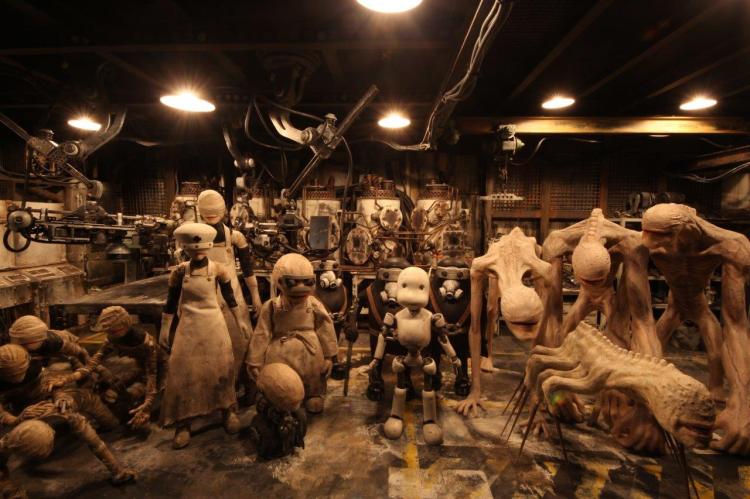 Takahide Hori’s beautifully designed stop-motion animation follows the adventures of a robot “God” as he (?) descends the various levels of underground existence looking for a cure for humanity’s ongoing decline…
  Recently restored by the Taiwan Film Institute, King Hu’s Legend of the Mountain follows a Sung Dynasty scholar tasked with translating a set of Buddhist scriptures which are said to have power over the spirits of the dead. To do so he travels to an isolated monastery in the mountains where he is assailed by the forces of evil who want to steal the scriptures for themselves…
 Note: Glasgow Film Festival appears to be screening the film under a literal translation, according to the film’s UK distributor
  A feisty widow takes to the road in search of vengeance after her ranch is raided and she is attacked by bandits in this festival favourite Eastern western from Indonesia.
 The second film from Kamila Andini, The Seen and Unseen follows one half of a pair of twins as she deals with the deteriorating health of her brother…
 The debut feature from SFX makeup artist Soichi Umezawa, B-movie horror Vampire Clay takes place in an isolated art school in which the students start going mysteriously missing…could cursed clay really be to blame?

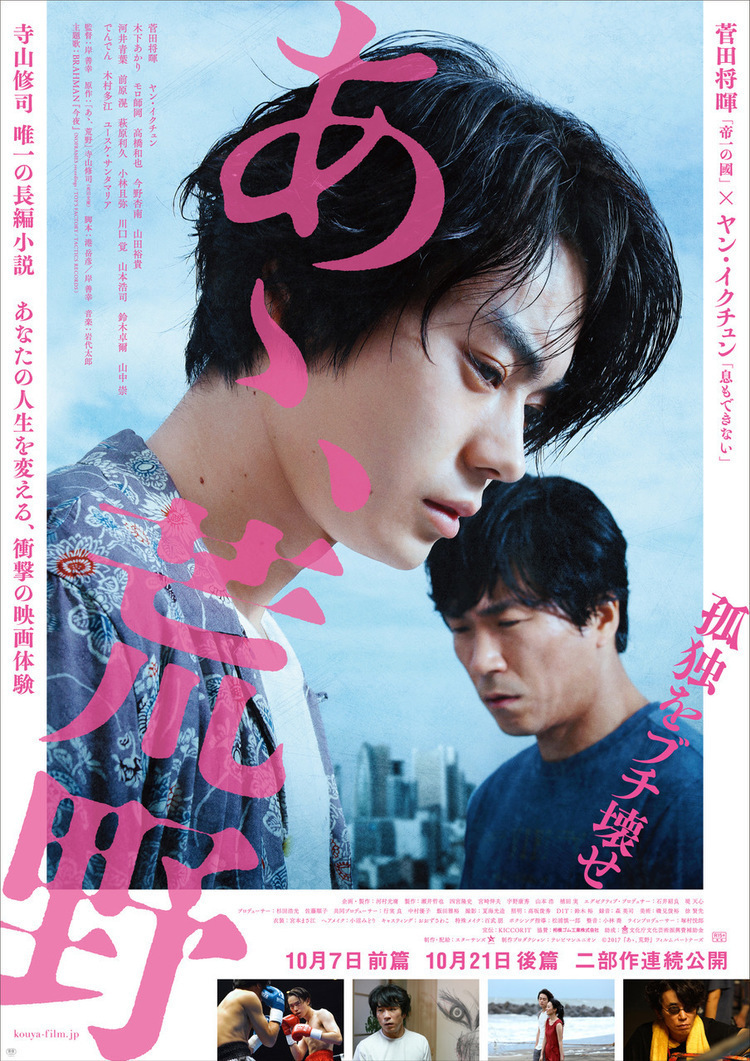
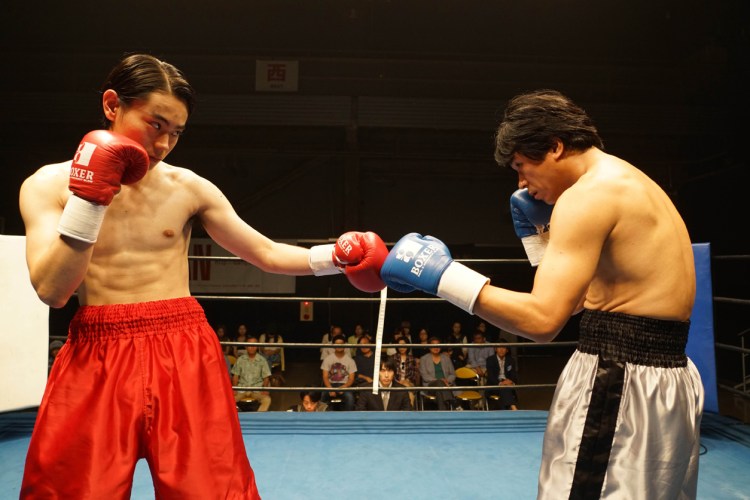 Adapted from the 1966 novel by Shuji Terayama and released in two parts, Yoshiyuki Kishi’s
 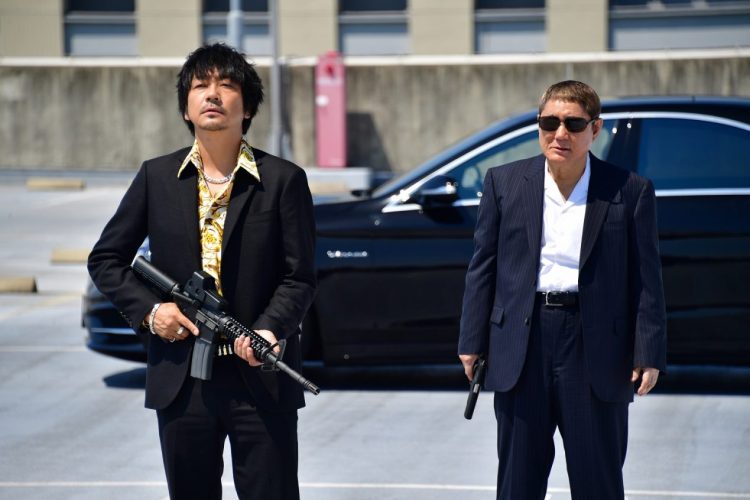 The third and presumably final instalment in the Outrage series, Coda sees actor/director Takeshi Kitano return to the role of Otomo now in exile in South Korea in an attempt to avoid ongoing gang strife at home.
 A love/hate letter to Tokyo, Yuya Ishii’s The Tokyo Night Sky is inspired by a collection of poems by Tahi Saihate and follows two lonely city souls as they struggle with their place in a society which they often feel has no place for them.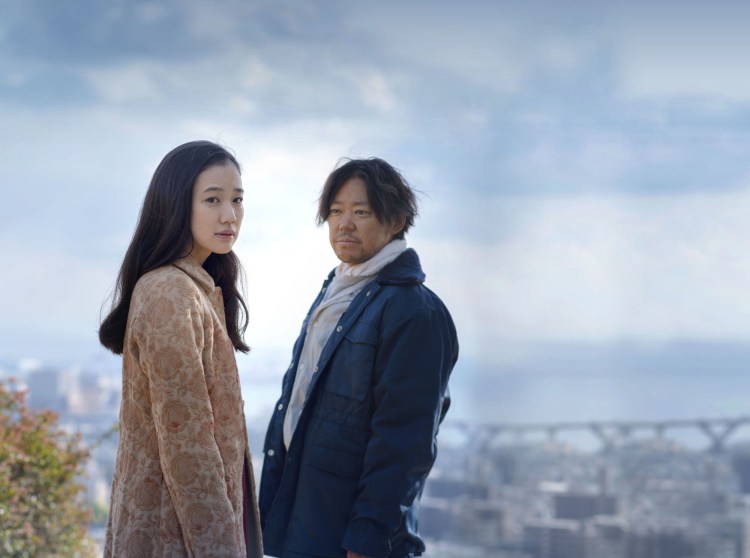
 A departure of sorts from the director’s earlier career,
 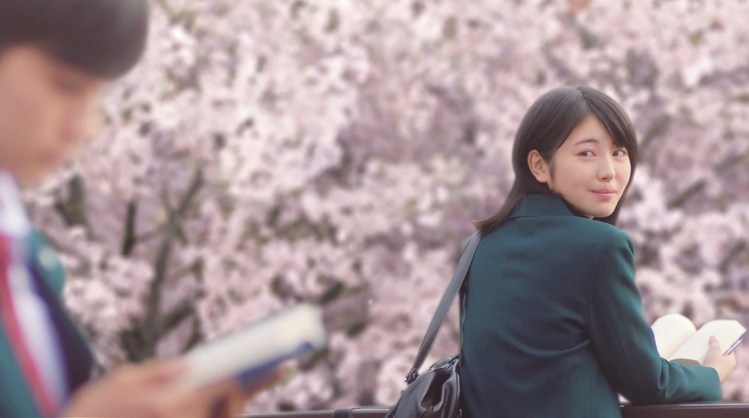 Sho Tsukikawa adapts Yoru Sumino’s novel in which the unnamed protagonist finds a classmate’s diary and discovers that she is suffering with a terminal illness. The only person to know of her condition outside of her immediate family, the protagonist commits himself to fulfilling her last wishes while she still has time.
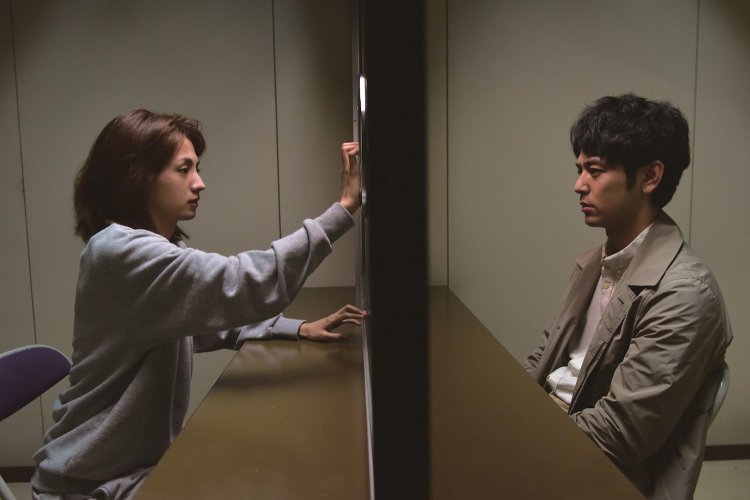 Satoshi Tsumabuki stars as a mild-mannered reporter investigating the murder of a model family while supporting his younger sister (Hikari Mitsushima) who is currently in prison charged with child neglect. Less a murder mystery than a dark social drama, the world of Gukoroku is one defined by unfairness in which pervasive systems of social inequality have destroyed the precious harmony the same society praises so highly.
 Prolific young actor Masaki Suda stars in Akira Nagai’s adaptation of the manga by Usamaru Furuya in which Japan’s political future is decided at an elite military boarding school.



 Windows on Worlds