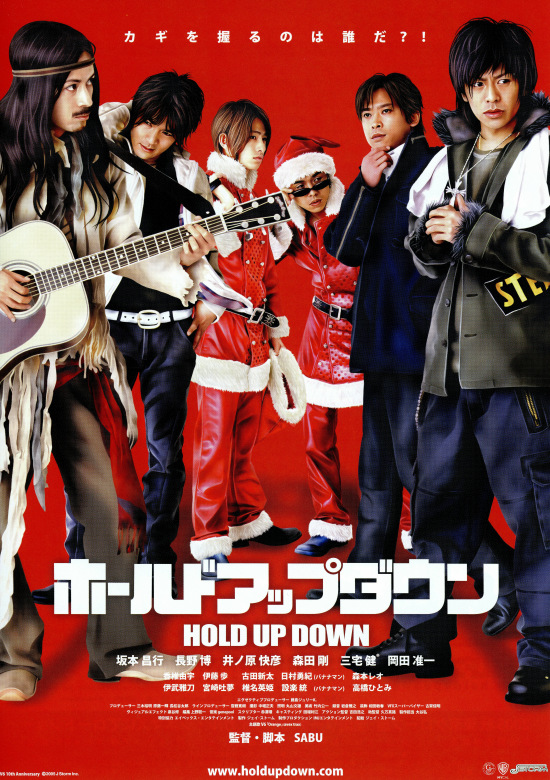
 Reteaming with popular boy band V6, SABU returns with another madcap caper in the form of surreal farce Hold Up Down (ホールドアップダウン). Holding up is, as usual, not on SABU’s roadmap as he proceeds at a necessarily brisk pace, weaving these disparate plot strands into their inevitable climax. Perhaps a little shallower than the director’s other similarly themed offerings, Hold Up Down mixes everything from reverse Father Christmasing gone wrong, to gun obsessed policemen, train obsessed policewomen, clumsy defrocked priests carrying the cross of frozen Jesus, and a Shining-esque hotel filled with creepy ghosts. Quite a lot to be going on with but if SABU has proved anything it’s that he’s very adept at juggling.
Christmas Eve – two guys hold up a bank whilst cunningly disguised as Santas, but emerging with the money they find their getaway car getting away from them on the back of a tow truck. Still dressed as Father Christmases, the guys head for the subway and decide to stash the cash in a coin locker only neither of them has any change. After robbing a busker at gunpoint for 800 yen, the duo get rid of the loot but the guy chases after them at which point they lose the key which the busker swallows after being hit by a speeding police car. Trying to cover up the crime the two policeman bundle him into the car but crash a short time later at which time the busker gets thrown in a lake and then retrieved by a defrocked priest under the misapprehension that he is Japanese Jesus!
Following SABU’s usual spiralling chase formula, events quickly escalate as one random incident eventually leads to another. Christmas is a time of romance in Japan, though encountering the love of your life during a bank robbery is less than ideal. After a love at first sight moment heralded by a musical cue, the thieves head back on the run with the girl in tow but the course of true love never did run smooth. If romance is one motivator – death is another. On this holiest of days, our defrocked priest is caught in a moment of despair, contemplating the ultimate religious taboo in taking his own life and ending the torment he feels in having failed God so badly. Therefore, when our scruffy hippy busker washes up right nearby he draws the obvious conclusion – Jesus has returned to save him! Attempting to make up for his numerous mistakes, the priest is determined to save and preserve his Lord, but, again, his clumsiness results in more catastrophes.
The situation resolves itself as each of the players winds up at the same abandoned hot springs resort which turns out to be not quite so closed down as everyone thought. Filled with ghostly charm, the gloomy haunted house atmosphere sends everyone over the edge as they thrash out their various issues as if possessed by madness. Culminating in a sequence of extreme slapstick in which everyone fights with everyone else and frozen Jesus plays an unexpectedly active part, Hold Up Down brings all of its surreal goings on to a suitably absurd conclusion in which it seems perfectly reasonable that those wishing to leave limbo land could take a 2.5hr bus trip back to the afterlife.
Pure farce and lacking the heavier themes of other SABU outings, Hold Up Down, can’t help but feel something of a lightweight exercise but that’s not to belittle the extreme intricacy of the plotting or elegance of its resolution. An innovativeIy integrated early fantasy sequence begins the voyage into the surreal which is completed in the strangely spiritual haunted house set piece as the disillusioned priest spends some time with congenial demons before attempting to make his peace with God only for it all to go wrong again. If there is a god here, it’s the Lord of Misrule but thankfully they prove a benevolent one as somehow everything seems to shake itself out with each of our troubled protagonists discovering some kind of inner calm as a result of their strange adventure, as improbable as it seems (in one way or another). Christmas is a time for ghost stories, after all, but you’ll rarely find one as joyful as Hold Up Down.
Scene from the end of the film:
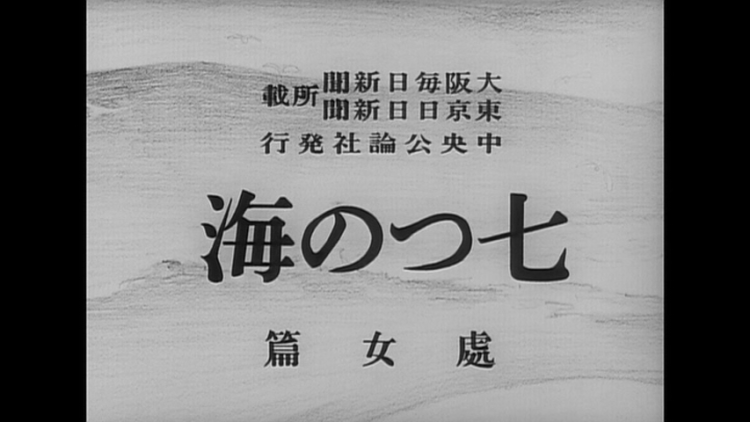 Hiroshi Shimizu is best remembered for his socially conscious, nuanced character pieces often featuring sympathetic portraits of childhood or the suffering of those who find themselves at the mercy of society’s various prejudices. Nevertheless, as a young director at Shochiku, he too had to cut his teeth on a number of program pictures and this two part novel adaptation is among his earliest. Set in a broadly upper middle class milieu, Seven Seas (七つの海, Nanatsu no Umi) is, perhaps, closer to his real life than many of his subsequent efforts but notably makes class itself a matter for discussion as its wealthy elites wield their privilege like a weapon.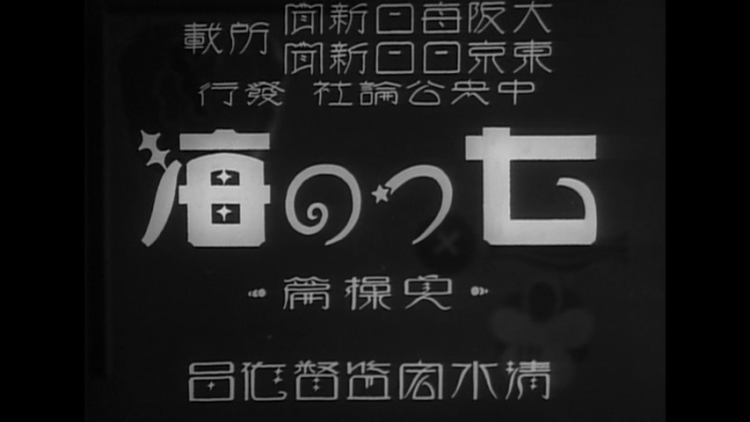
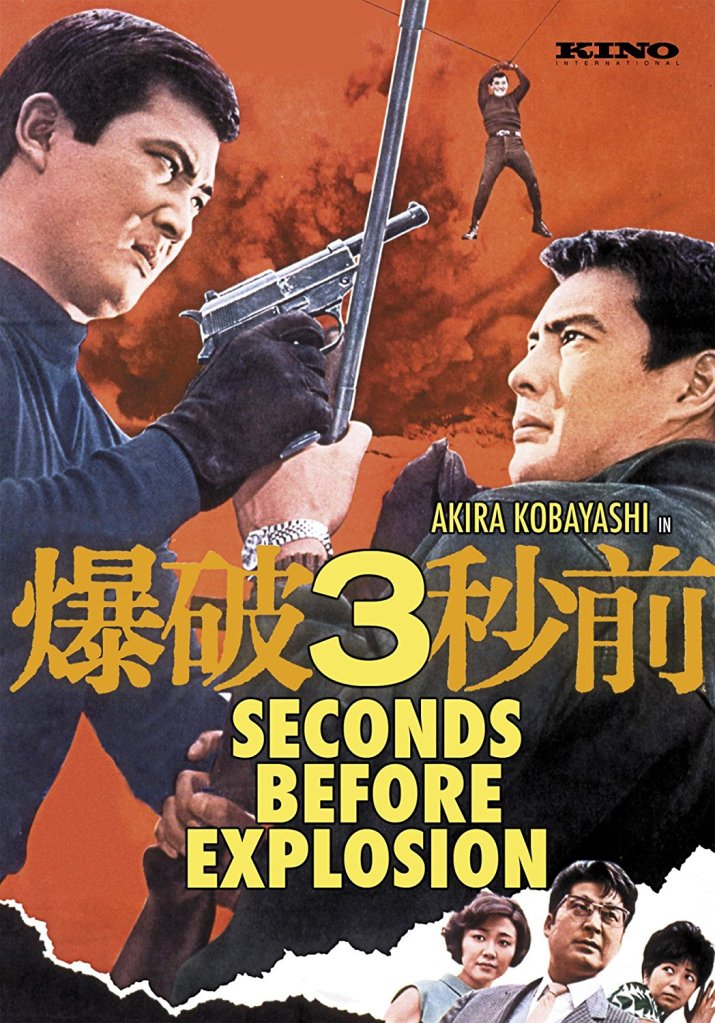 If Nikkatsu Action movies had a ringtone it would probably just be “BANG!” but nevertheless you’ll have to wait more than three rings for the Kaboom! in the admittedly cartoonish slice of typically frivolous B-movie thrills that is 3 Seconds Before Explosion (爆破3秒前, Bakuha 3-byo Mae). Once again based on a novel by Japan’s master of the hard boiled Haruhiko Oyabu, 3 Seconds Before Explosion is among his sillier works though lesser known director Motomu Ida never takes as much delight in making mischief as his studio mate Seijun Suzuki. What he does do is make use of Diamond Guy Akira Kobayashi’s boyish earnestness to keep things running along nicely even if he’s out of the picture for much of the action.
 If
If 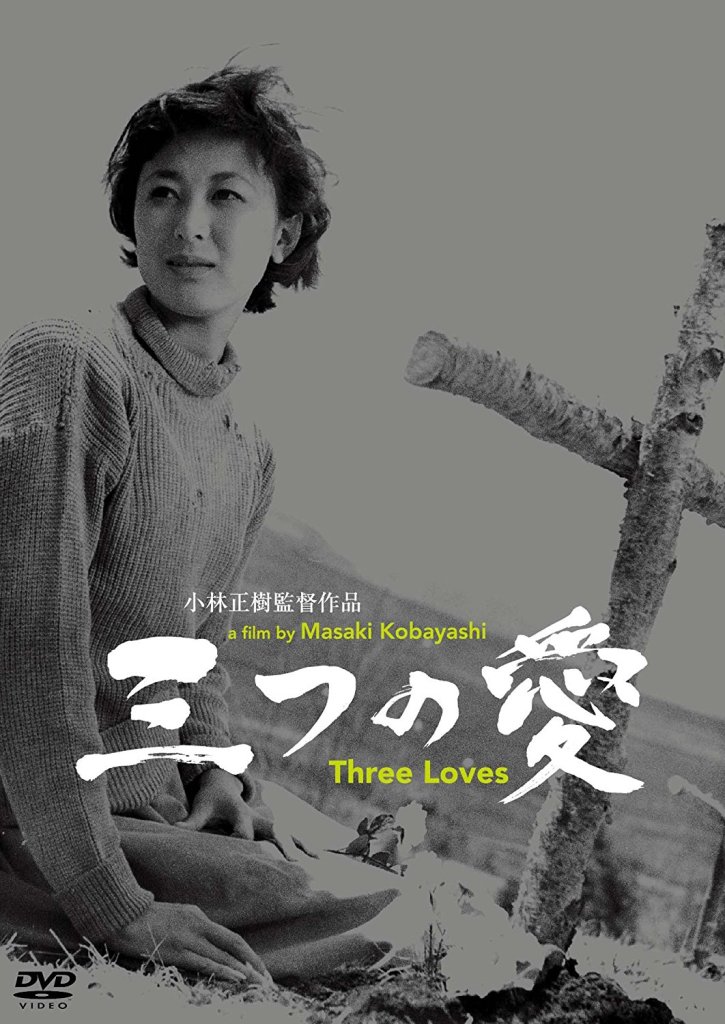 Masaki Kobayashi had a relatively short career of only 22 films. Politically uncompromising and displaying an unflinching eye towards Japan’s recent history, his work was not always welcomed by studio bosses (or, at times, audiences). Beginning his post-war career as an assistant to Keisuke Kinoshita, Kobayashi’s first few films are perhaps closer to the veteran director’s trademark melodrama but in 1953 Kobayashi struck out with a more personal project in the form of
 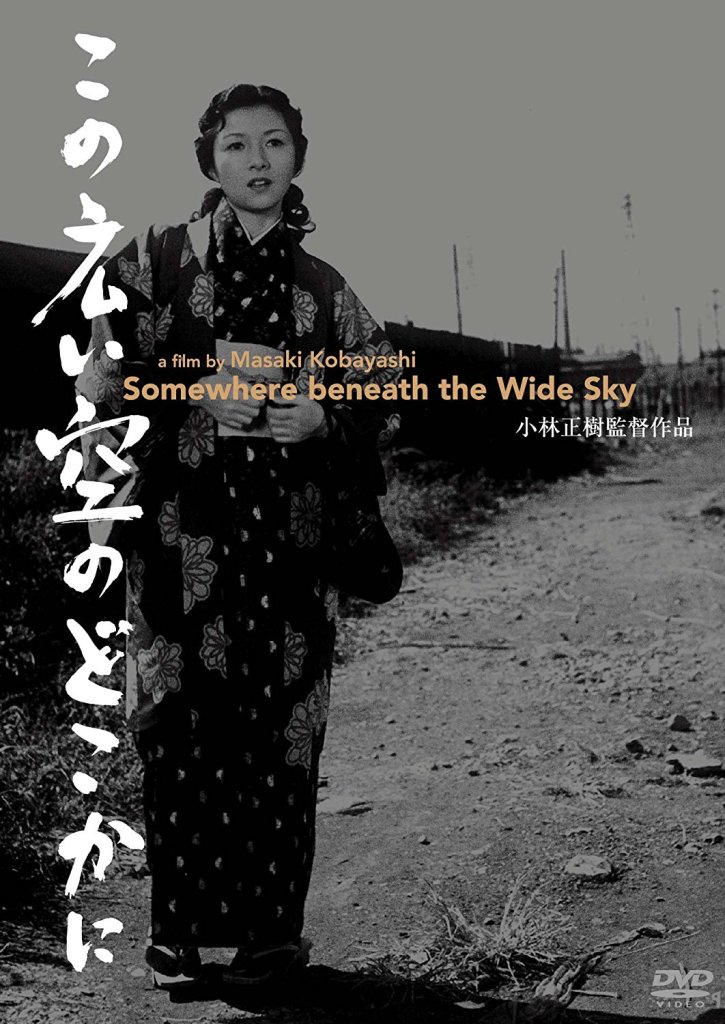 Of the chroniclers of the history of post-war Japan, none was perhaps as unflinching as Masaki Kobayashi. However, everyone has to start somewhere and as a junior director at Shochiku where he began as an assistant to Keisuke Kinoshita, Kobayashi was obliged to make his share of regular studio pictures. This was even truer following his attempt at a more personal project –
 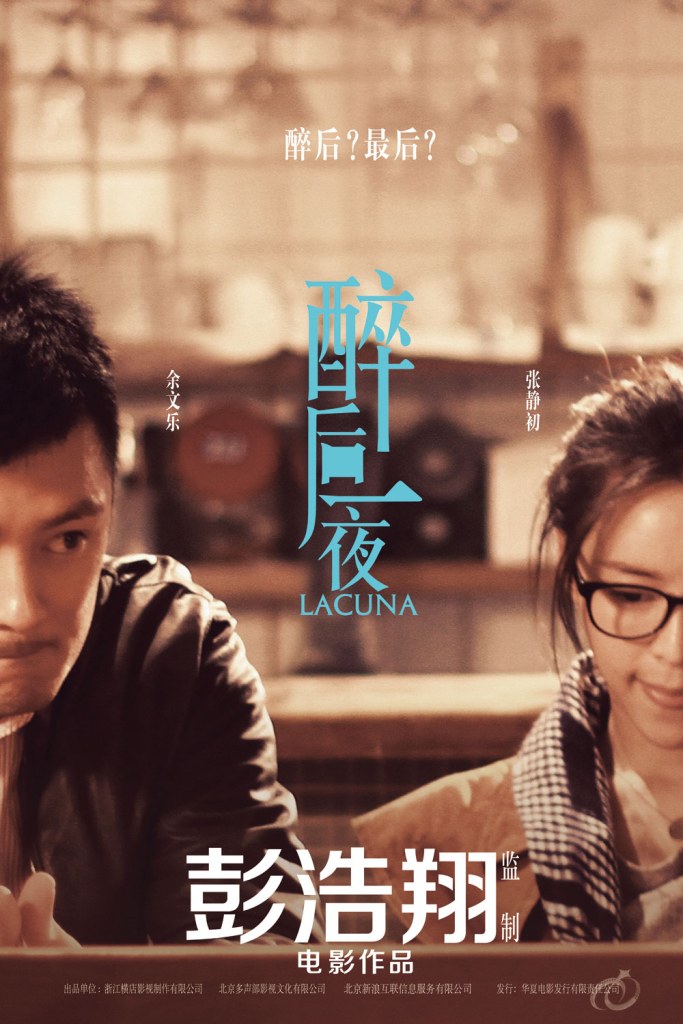 Waking up in a strange place with absolutely no recollection of how you got there is bad enough. Waking up next to a total stranger is another degree of awkward. Waking up not in someone else’s apartment but in a department store furniture showroom is another kind of problem entirely (let’s hope the CCTV cameras were on the blink, eh?). This improbable situation is exactly what has befallen two lonely Beijinger’s in Derek Tsang and Jimmy Wan’s elegantly constructed romantic comedy meets procedural, Lacuna (醉后一夜, Zuì Hòu Yīyè). An extreme number of unexpected events is required to bring these two perfectly matched souls together, but the love gods were smiling on this particular night and, once the booze has worn off, romance looks set to bloom .
 Children – not always the most tolerant bunch. For every kind and innocent film in which youngsters band together to overcome their differences and head off on a grand world saving mission, there are a fair few in which all of the other kids gang up on the one who doesn’t quite fit in. Given Japan’s generally conformist outlook, this phenomenon is all the more pronounced and you only have to look back to the filmography of famously child friendly director Hiroshi Shimizu to discover a dozen tales of broken hearted children suddenly finding that their friends just won’t play with them anymore. Where A Silent Voice (聲の形, Koe no Katachi) differs is in its gentle acceptance that the bully is also a victim, capable of redemption but requiring both external and internal forgiveness.
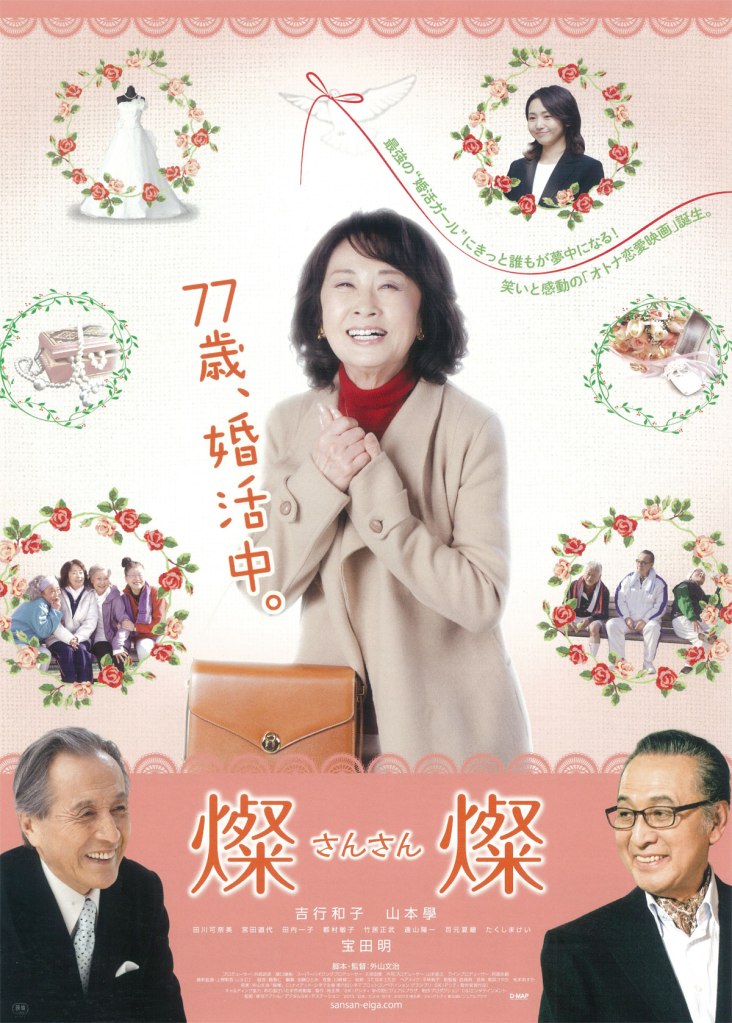 As Japan’s society ages, the lives of older people have begun to take on an added dimension. Rather than being relegated to the roles of kindly grandmas or grumpy grandpas, cinema has finally woken up to the fact that older people are still people with their own stories to tell even if they haven’t traditionally fitted established cinematic genres. Of course, some of this is down to the power of the grey pound rather than an altruistic desire for inclusive storytelling but if the runaway box office success of A Sparkle of Life (燦燦 さんさん, Sansan) is anything to go by, there may be more of these kinds of stories in the pipeline.
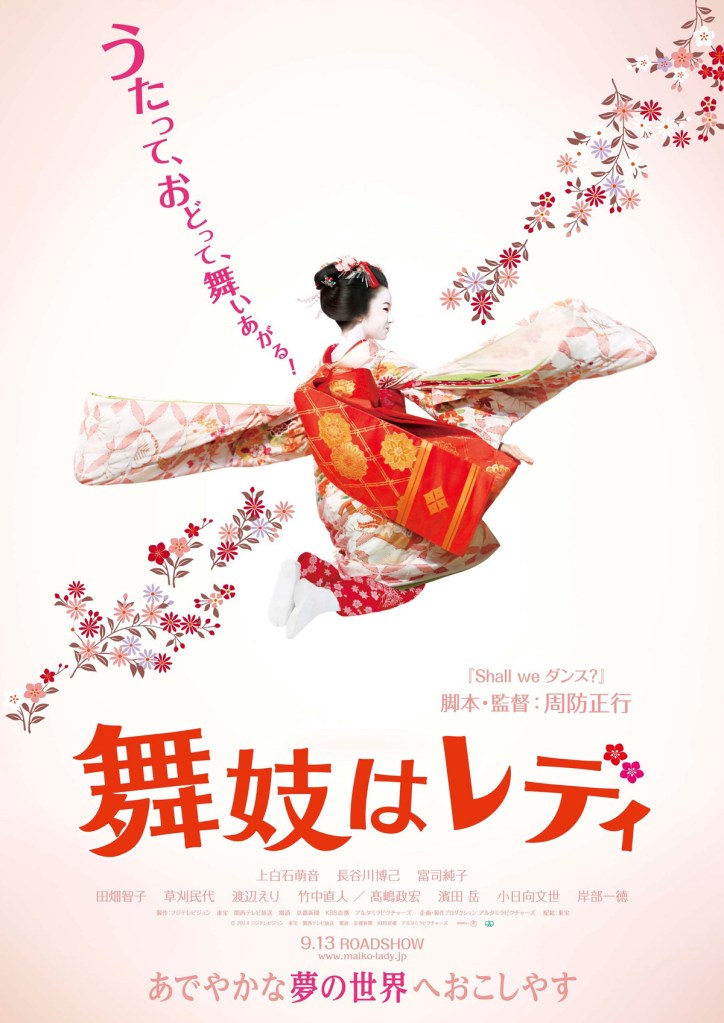 When Japan does musicals, even Hollywood style musicals, it tends to go for the backstage variety or a kind of hybrid form in which the idol/singing star protagonist gets a few snazzy numbers which somehow blur into the real world. Masayuki Suo’s previous big hit, Shall We Dance, took its title from the classic Rodgers and Hammerstein song featured in the King and I but it’s Lerner and Loewe he turns to for an American style song and dance fiesta relocating My Fair Lady to the world of Kyoto geisha, Lady Maiko (舞妓はレディ, Maiko wa Lady) . My Fair Lady was itself inspired by Shaw’s Pygmalion though replaces much of its class conscious, feminist questioning with genial romance. Suo’s take leans the same way but suffers somewhat in the inefficacy of its half hearted love story seeing as its heroine is only 15 years old.
 Windows on Worlds