Journey to the Shore (岸辺の旅, Kiyoshi Kurosawa, 2015)

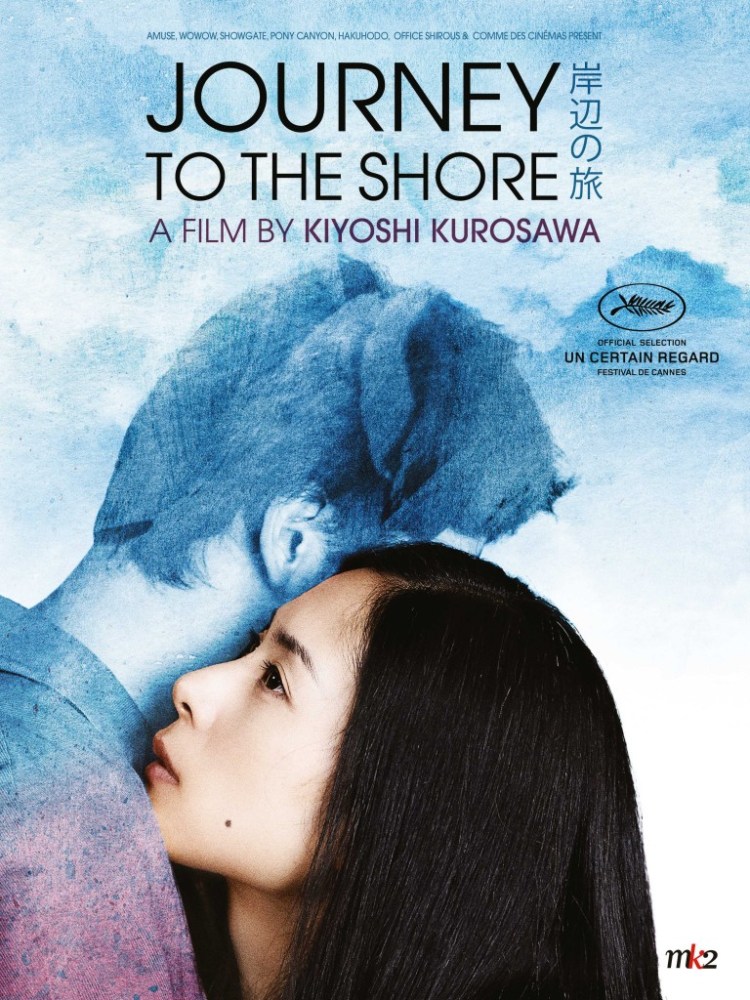
journey to the shoreTime is an ocean, but it ends at the shore. Kiyoshi Kurosawa neatly reverses Dylan’s poetic phrasing as his shoreline is less a place of endings but of beginnings or at least a representation of the idea that every beginning is born from the death of that which preceded it. Adapted from a novel by Kazumi Yumoto, Journey to the Shore (岸辺の旅, Kishibe no Tabi) takes its grief stricken, walking dead heroine on a long journey of the soul until she can finally put to rest a series of wandering ghosts and begin to live once again, albeit at her own tempo.

The film begins with three years widowed Mizuki (Eri Fukatsu) giving a piano lesson to a little girl whose mother goes on to enquire about her daughter’s progress. Wouldn’t it be better if she could learn something a little more cheerful once in a while? Reconsidering, the mother reflects that uptempo doesn’t quite suit Mizuki, and she’s right – it doesn’t. After impulse buying some flour and baking a few Japanese sweets at home, Mizuki receives an unexpected visit from her deceased husband, Yusuke (Tadanobu Asano), who drowned himself at sea.

Somehow unsurprised and pausing only to remind him to remove his shoes, Mizuki gives Yusuke some of the dumplings then retires to bed, only to wake up the next morning and wonder if she dreamt the strange events of the night before but, sure enough, Yusuke is still very much present. Promising to show her some of the beautiful places he discovered on his long odyssey home to her, Yusuke takes Mizuki on a reverse honeymoon in celebration and in mourning of all they once were to each other.

In each place they travel to, Mizuki and Yusuke help the people there deal with their own walking ghosts. Yusuke is not the only returnee as they discover with a lonely old newspaper seller who doesn’t appear to be aware that he died a long time ago. Walking dead in a realer sense than Mizuki or some of the other depressives they meet along the way who are still living but not exactly alive, Mr Shimakage is a spirit held in place by an inability to reconcile himself with the actions of his past and has brought his feelings of self loathing and regret with him into the afterlife.

Sometimes it’s the living that pin the dead, holding them close with guilt, regret, love or loneliness. If the film has a central tenet, it’s that the past has its place, and it’s not among the living. At one point Mizuki says that perhaps it’s better to leave some things unresolved. Yusuke asks her if she’s really OK with that, and she seems to reconsider but in the end that’s the way it has to be. There are no final solutions, the answers are not at the back of the book. In the end, the best you can do is try to understand and learn to be OK with everything you do and do not know about yourself and about those who are no longer here to tell their stories. Mizuki also says that she hated to practice piano as a child, but her teacher always told her to pay attention to her own rhythm. The music will always be lifeless, until you learn to hear your own song.

Kurosawa creates a beautifully ethereal world, held in a tension between the spirit realm and the everyday. Playing with lighting levels in extremely interesting ways, he allows the supernatural and natural to flow into each other, jostling and merging like waves and shore. Travelling from the grey, ordered and utilitarian city to the unruly nature of the countryside with its ancient, crashing waterfalls and beautiful, if lonely, coastlines we move from static and lifeless existence to a place of perpetual potential as we let go of one thing so that we might grasp another.

As much as Journey to the Shore is bound up with death, it necessarily speaks of life, too. During one of his strange lessons for the village folk, Yusuke delivers some meditations on science and philosophy to the effect that the world is built of nothingness but that nothingness does not lack meaning. He tells us that we are all dying, the universe was born billions of years ago and will end one day just as our species may end when the planet’s temperature exceeds that which we can endure or galaxies collide and take us down with them. For all of that, the universe is young, still growing, still expanding, and we are so lucky to have been born now when there is still so much ahead of us. This is a time of infinite beginnings. Starting again means letting go, but sooner or later you have to step off the shore of this self imposed purgatory and return to the great ocean which is life.


Journey to the Shore is availble on dual format DVD and blu-ray in the UK courtesty of Eureka Masters of Cinema.

Lowlife Love (下衆の愛, Eiji Uchida, 2016)

Lowlife Love“What would John do?” is a question Cassavetes loving indie filmmaker Tetsuo (Kiyohiko Shibukawa) often asks himself, lovingly taking the framed late career photo of the godfather of independent filmmaking in America down from the wall. Unfortunately, if Cassavetes has any advice to offer Tetsuo, Tetsuo is not really paying attention. An example of the lowlife scum who appear to have taken over the Japanese indie movie scene, Tetsuo hasn’t made anything approaching art since an early short success some years ago and mainly earns his living through teaching “acting classes” for young, desperate, and this is the key – gullible,  people hoping to break into the industry.
Despite ripping off the next generation, Tetsuo’s financial situation is not exactly rock solid as he still lives at home with his parents and younger sister and even resorts to stealing his elderly mother’s pension money all in the name of art. A low level sociopath, he bangs on about movies and artistic integrity whilst using his directorial authority to pull young and naive would be actresses onto the casting couch with promises to make them a star through the massively successful movie he’s supposedly about to make (but probably never will).

His world is about to change when he encounters two still hopeful entrants into the movie industry in the form of aspiring actress Minami (Maya Okano) and shy screenwriter Ken (Shugo Oshinari ). Ken’s script is good, and Minami shows promise as an actress but also a backbone as she’s unwilling to give in to Tetsuo’s clumsy pass at her through what actually amounts to an attempted rape in the (unisex) toilet of a seedy bar. And they say romance is dead!

Soon enough a rival appears on the scene in the form of a more successful director who abandoned the indie world long ago in favour of the golden cage of the studio system. Tetsuo calls him a sell out, but as his own world crumbles Tetsuo finally gets a much needed reality check that leaves him wondering how much “integrity” there is in his current life which is based entirely on exploitation yet produces nothing but cheap, instant gratification.

This is a film about a sociopathic, pretentious, and above all lazy “film director” who is being cast as a representation of a certain type of guy found the lowest edges of the indie film scene. Lowlife Love seeks to illuminate the inherent misogyny in the cinema industry and more particularly at the bottom of the ladder where the desperate masses congregate, each waiting for someone to extend a hand down to those below that will help them onto the higher rungs, but this is less about the subjugation of women and the way their lack of status is consistently used against them than it is about Tetsuo’s own fecklessness. Tetsuo probably could make a movie, but he doesn’t. He just talks about making movies. The system isn’t the problem here, Tetsuo is just a useless person with almost no redeeming features.

The successful director, Kano, and the ones that follow him are barely any better. Minami says at one point that directors are all crafty, filthy, bitter, and annoying – on the basis of these examples she is not wrong. Kano replies that filmmaking is like a drug, once you’re in there’s no out and you’ll do anything just to be allowed to stay. These guys are all hollow, desperate creatures, craving validation through “artistic success” but finding it through easy, loveless sex with “obliging” actresses equally eager to play this unpleasant game solely to avoid being thrown out of it or worse onto a lower stratum altogether.

Minami’s path is either one of growth or corruption depending on your point of view but the extremely shy, naive and innocent girl dreaming of becoming, not a star, but a successful actress, is gradually replaced by a manipulative dominatrix well versed in the rules of the game and unafraid to play it to the max. Whether her success is a fall or a victory is likewise a matter for debate but it contrasts strongly with the similar struggles of the veteran actress Kyoko (Chika Uchida) who even has a friend doing research on her targets so she can assess their usefulness before going all the way.

Unfortunately for her, even when she hits on a useful contact promises are easily broken, especially when you’ve already played your only bargaining chip and another, prettier player steps onto the field. A deleted scene features an embittered actress attempting to take her own life and uttering the final words that she never cared about stardom, she just wanted to keep on acting. This is an all too real response to an age old problem but one that Tetsuo and his like are much more willing to perpetuate than ease, even whilst mourning the loss of a friend to the unreasonable demands of their own industry.

Famously funded by a Kickstarter campaign and personal sacrifices of its producer, Lowlife Love features unusually high production values for an indie film and a fairly high profile cast including its leading actor, Kiyohiko Shibukawa, who has become something close to modern Japanese indie cinema’s most recognisable star. Performances are excellent across the board though the picture the film paints of the no budget indie world is extremely bleak and mean spirited. Porn, gangsters, exploitation, prostitution, and a lot of rubbish about creating art makes one wonder why anyone bothers in the first place but then we’re back to Kano’s conundrum and taking down our pictures of Cassavetes to ask what John would do. Sleazy, unpleasant and cynical, Lowlife Love’s cast of dreadful people in difficult situations yet, apparently, dreaming of the stars, is all too plausible if a little hard to watch.


Lowlife Love (下衆の愛, Gesu no Ai) was financed through a Kickstarter campaign run by Third Window Films and is currently shipping to backers with a regular retail release scheduled for a later date.

Lowlife Love will also be shown as part of the Edinburgh International Film Festival on 22nd and 23rd June 2016.

Love Ghost (死びとの恋わずらい, Kazuyuki Shibuya, 2001)

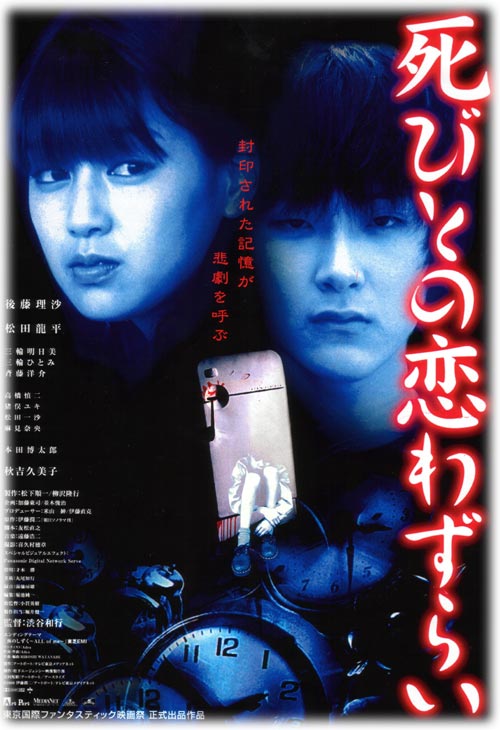
love ghost posterWhat is it about ghosts and high school girls? Maybe it’s shrines and graveyards mothers ought to be warning their daughters about rather than moody guys with motorbikes. Anyway, the somewhat salaciously titled Love Ghost (死びとの恋わずらい, Shibito no Koiwazurai) is not quite the film it claims to be, though it is haunted by the violent spirit of strong emotion. Innocent high school romance is suddenly infected with the cruel complications of adult love, mental illness, and suicide as a strange curse descends over a previously peaceful town.
Taking on the classic “mysterious transfer student” role, protagonist Midori (Lisa Goto) is about to set off for her first day in a new school after moving back to her home town ten years after her father left the family for another woman. Midori is frequently plagued by a recurring nightmare in which she indulges in the local practice of Tsuji-ura whereby girls wait near the temple and ask a passerby what they think their chances are with their current crush. Only, Midori’s visions have started to bleed into the real world and often end in a storm of fire and blood. For this reason she finds herself unable to enter the school building but is rescued by new classmate, Suzue (Asumi Miwa), who shows her another way in. On the way the pair meet clueless popular boy Kotaro (Takahashi Shinji) who is instantly smitten with the new girl, much to Suzue’s consternation.

Kotoro is, to put it mildly, a little on the dim side and either hasn’t noticed that the entire population of the school, including his good friend Suzue, is love with him or is just refusing to acknowledge it. Romance is the major occupation of the school girls who spend their break times reading tarot cards and talking about Tsuji-ura and the handsome boy dressed in black who often appears there, be he a force for good or ill. Midori isn’t really interested in her classmates but is captivated by the near silent boy at the back of the room whom everyone else is ignoring. She eventually recognises him as a boy she knew before she left and used to play with all the time. Meeting up on the roof, Ryusuke (Ryuhei Matsuda) reveals he’s been waiting for her to come back all this time. However, there is definitely something strange about this quiet boy, not to mention the ever expanding mould stain in Midori’s bathroom…

There’s a lot of obviousness in Love Ghost, but this is later revealed to be a master stroke undercutting the extreme reversals of the big reveals. Madness quickly takes hold in the school, fortunately it does not claim many victims though those who do succumb find themselves cutting their own throats out of sense of heartbroken helplessness unable to accept the fact that their romantic destinies are not the ones they would have chosen.

On the one hand there are Midori’s recurrent memories of her idyllic childhood playing with Ryusuke in beautiful green, sunlit forests which later gives way to tentative teenage romance – a perfectly natural development. However, that’s set against the increasing strangeness of the environment with its oddly ethereal atmosphere. The other girls are experiencing a dangerous kind of romantic madness turning to obsessive, unrequited love yet Midori’s own experience is seemingly a gentle and innocent one. Of course, there’s more to it than that, and Midori’s world is also “unreal” in a hundred other ways. As usual, her link to the curse is tied up with her long buried past which must once again be exposed to the light in order to move forward and finally bid goodbye to the ghosts of forgotten cruelty.

Love Ghost’s central curse is a little confused and never satisfactorily explains itself. There might be more to say about the way the intense emotions of adolescence don’t always dissipate on reaching adulthood in the way they are supposedly intended to, or about the obsessive preoccupation the schoolgirls have with romance, but Love Ghost isn’t interested in any of that. In fact, it’s a little confused what it is interested in but at heart its a series of intertwined ghost stories as Midori haunts herself whilst still alive with memories of the childhood cruelly ripped away from her by the selfish actions of a stranger which have also left her with a deep seated sense of unresolved guilt. An imperfect exercise, Love Ghost has little to recommend it aside from providing an early outing for later star Ryuhei Matsuda yet does offer a poetic, if poorly put together, take on a teen ghost story that is like to offer more to fans of supernatural romance than of J-horror gore.


Love Ghost is available on R1 US DVD from Tokyo Shock.

US release trailer:

The Music (音楽, Yasuzo Masumura, 1972)

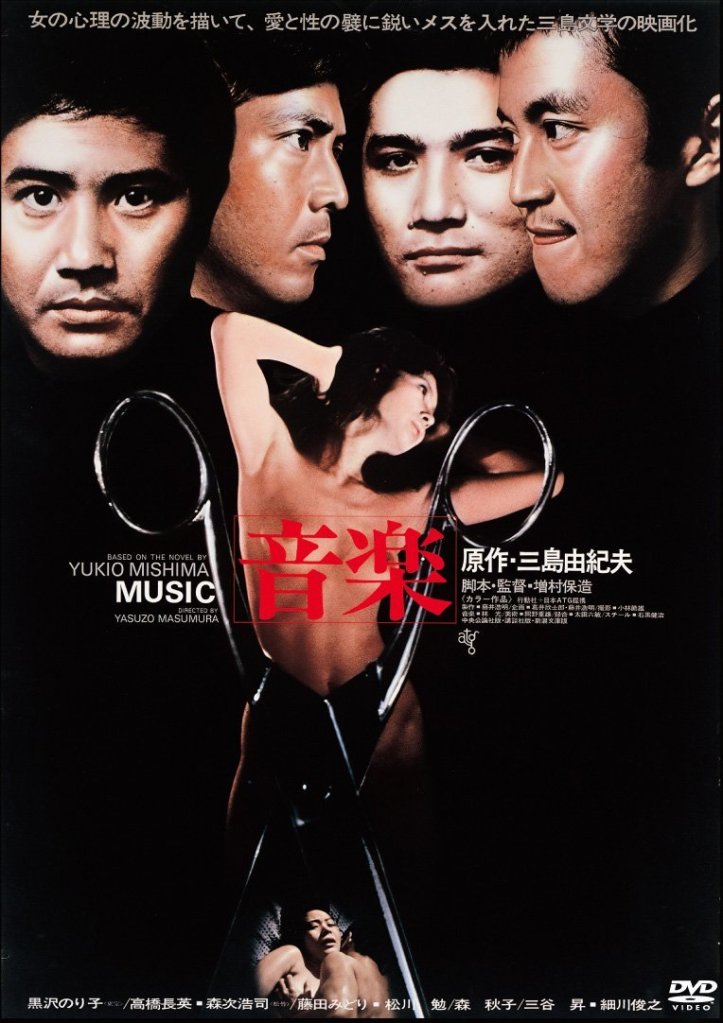
The MusicIf the under seen yet massively influential director Yasuzo Masumura had one recurrent concern throughout his career, passion, and particularly female passion, is the axis around which much of his later work turns. Masumura might have begun with the refreshingly innocent love story Kisses, but later he dived deep into the depths of depravity in Blind Beast and of manipulation in Manji before cycling back around the intense freudian character study which is The Music (音楽, Ongaku) in 1972. Based on a novel by Yukio Mishima (Mishima and Masumura – a match made in heaven), The Music is the story of one woman’s corrupted sexuality caused by a series of inappropriate sexual encounters during her childhood.
The film begins with a symbolic title sequence in which a large pair of scissors opens and closes rhythmically before being superimposed over the body of a woman – Reiko, our protagonist. She has made an appointment with a psychiatrist because, she claims, she has strange symptoms including constant nausea which led her to believe she was pregnant though medical doctors can’t find the cause of her sickness. The other thing is she can’t hear music, she can hear voices and sound effects but if music starts playing it’s like she goes deaf. Her psychiatrist isn’t quite convinced by Reiko and can tell she’s misleading him.

Sure enough he asks her to come back and she admits not hearing music was a symbolic way of explaining that she derives no pleasure from sex. Her boyfriend is a good man and she loves him, she doesn’t think the problem is with him, but she simply feels nothing when he touches her and it’s causing a rift in the relationship. This is the “music” she was talking about and which will become a recurrent motif throughout the film. Later, Reiko finds that she is able to derive a kind of satisfaction from sexual acts with men who are either dying or impotent, but should they simply get better she again loses all interest in them.

As might be expected, the reasons for Reiko’s strange behaviour lie in her childhood. Her fascination with scissors derives from a game of rock paper scissors she once played with the boy to whom she was betrothed to marry when they came of age. Reiko is the only girl in the group and when she loses the boys suddenly declare she’ll have to have her “thing” cut off – only she’s a girl and never had one in the first place. This leaves her feeling disturbed, humiliated, and in some way inherently deficient. From this point on she develops a masculine sensibility symbolised by one side of the closing scissors which becomes her own “thing”, leaving her with a desire for both cutting and being cut.

We also discover that Reiko was assaulted at a young age and that she also experienced early sexual contact with a family member as well as witnessing her aunt engage in an inappropriate relationship which greatly disturbed her. In all, it’s not surprising that Reiko is experiencing such a degree of confusion given all of the traumatic events that have followed her since her youth. Involved in an obsessive, incestuous sexual relationship Reiko is unable to move on with a “normal” life until she addresses the true cause of all her problems.

The psychiatrist is wiley guy, he can spot a lie a mile off and he has Reiko’s number pretty quickly. Amusingly, she does our job for us of trying to diagnose herself with the obvious solutions that seems to emerge from the latest story she’s told, only for the doctor to remind her it’s not so simple and untrained people shouldn’t try to analyse themselves. This is a little ironic in some respects as a trained psychologist would probably give much of Mishima’s cod Freudianism short shrift, but it works well enough in the context of the film. Reiko is about as unreliable a narrator as it’s possible to find but it does seem at last that the truth has been uncovered and Reiko set free from her improper sexual desires.

There’s a degree of campness involved in The Music with its heavy atmosphere and overtly theatrical melodrama. Masumura films with a perverse eye, animating Reiko’s recollections like dreams complete with bizarre perspectives and symbolic imagery to complete his Freudian approach to filmmaking. The Music may not be his most accomplished work, but it is nevertheless interesting and a late career return to his most pressing concerns.


Unsubtitled trailer (NSFW):

The Suicide Song (伝染歌, Masato Harada, 2007)

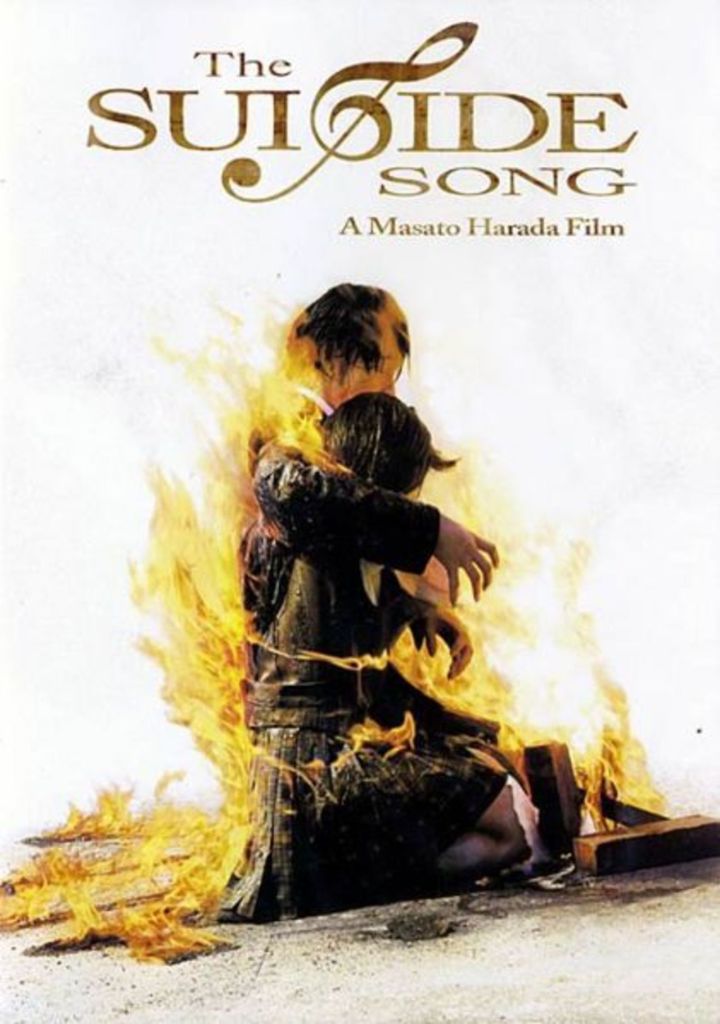
Suicide Song US Tokyo Shock DVD Cover
US Tokyo Shock DVD cover

There comes a time in every director’s life when fate leads them down the strangely tempting path of the idol movie. In recent years, sweet and innocent is no longer quite enough to cut it and when your film stars a bunch of kids from AKB48, you’re going to need 48x the kawaii factor so even though the DVD cover is suitably macabre and The Suicide Song (伝染歌, Densen Uta) is marketed as a J-Horror movie, there’s quite a lot more singing and dancing than might be reasonably expected.

In true idol star horror movie fashion, the film begins with some cutesy high school scenes before one student, Kana (Atsuko Maeda), starts in on her teacher who basically wants to skip a whole bit of the text book because it’s not on the exam. The potentially irrelevant teaching matter concerns famous Japanese playwright Chikamatsu whose big thing was, you guessed it, double suicides. Shortly after this, Kana is heard singing a weird song and then cuts her own throat with a kitchen knife right in front of her friend and classmate, Anzu (Yuko Oshima). It seems there has been a spate of these spontaneous suicides of teenage girls which occur after singing this particular song so skeevy newspaper guys Macasa, led by occult obsessed Riku (Ryuhei Matsuda ) and his ex-military buddy Taichi (Yusuke Iseya), decide to do some “investigative journalism”. Anzu and some of the other kids wind up helping out too, eventually coming under threat of that very same curse….

The idea of a “suicide song” isn’t a new one. Gloomy Sunday – a 1930s Hungarian folk song which achieved widespread acclaim thanks to an English language cover version recorded by Billie Holiday in 1941 became an urban legend after numerous suicides were linked to the doleful track and its extremely bleak lyrics. This time around, it’s AKB48’s inoffensive Boku no Hana which apparently drives anyone who tries to sing it to their deaths. Like Gloomy Sunday, the song features extremely nihilistic lyrics which echo the existential confusion and romantic disillusionment that many of its young listeners are undoubtedly experiencing. A perfectly rational explanation for why so many young women might be taking their lives with this particular song on their lips, yet Suicide Song is not particularly interested in exploring the various real world pressures which might push high school students towards death when their lives ought to be just beginning.

It’s not long before the curse makes the leap to supposedly solid adult males. Later, one character tries to weaken the importance of the song by suggesting that it just opened a door for the suppressed feelings that were already there. That each of the victims already wanted to die and and simply allowed themselves to make use of this real world meme to give themselves permission to end it all. This is an interesting idea in some ways, though comes close to victim blaming and conveniently lets the central characters off the hook for failing to save their friends who have already fallen for what is either a curse or mass hysteria. In any case, like most Japanese horror movies and mysteries, the real villain is a circle of buried secrets. The traumatic past must be faced, brought out into the light and then given a proper burial to end the ongoing chaos.

Harada is playing a very strange game. He adds in generic J-horrorisms such as odd jump cuts, stuttering, power outages and possessed video footage as well as a good deal of shadiness in the form of the low rent newspaper guys and the investigation turning up something as dark as a teenage gang competing to see how many kids they can get to kill themselves using the song as a marker. Yet, he generally keeps things cute and light just like your average teen idol romance movie. We’re even treated to a very special AKB48 performance at their club in Akihabara (“Japan’s Most Sophisticated Show” !) where they sing Aitakatta for a room full of devoted middle aged guys who are their biggest fans. There are also frequent cinematic quotations from such Hollywood classics as Vertigo and The Lady From Shanghai (not to mention a completely shoehorned in paintball sequence using Ride of the Valkyries a la Apocalypse Now) which seem to hint at some kind of greater plan, but whatever it is never quite materialises.

Whatever Harada’s intentions may have been, Suicide Song is a strange beast which veers widely in tone from wacky comedy to supposed horror film. In actuality there are very few real scares despite the J-horror aesthetic and the comedy never amps itself up to the level of parody. If the intention was to create some kind of weird, subversive genre hybrid, the punches have been well and truly pulled. Watched as a horror movie Suicide Song is prone to disappoint, though its moments of absurd comedy and cute schoolgirl drama prove enjoyable enough for those able to adjust their expectations on the turn of a dime.


The Suicide Song is available with English subtitles on R1 US DVD from Tokyo Shock.

English subtitled trailer (aspect ratio is slightly stretched):

Her Granddaughter (娚の一生, Ryuichi Hiroki, 2015)

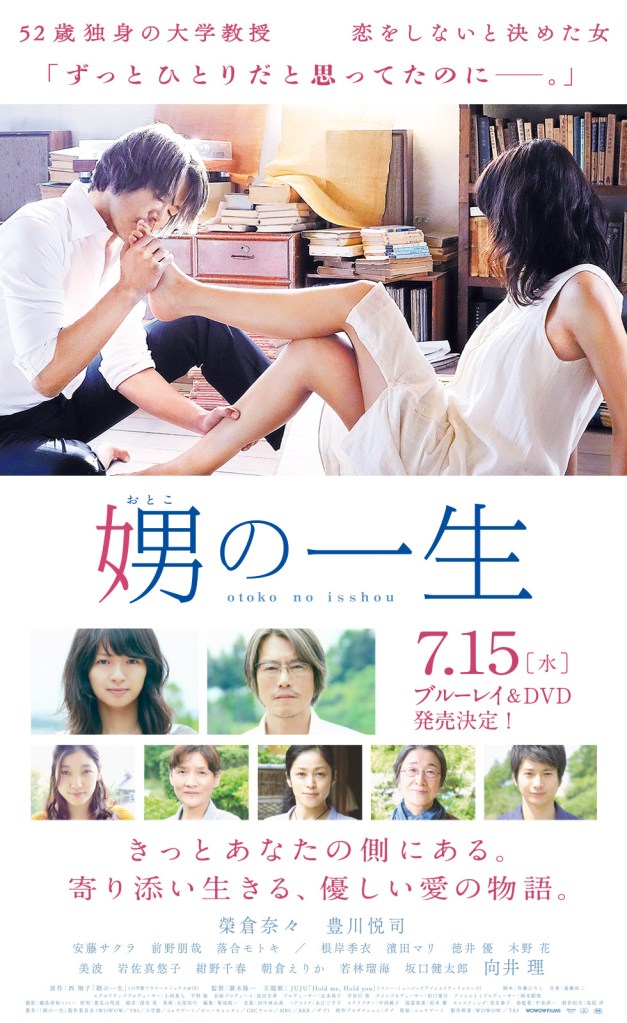
Her GranddaughterRyuichi Hiroki has one of the most varied back catalogues of any Japanese director currently working. After getting his start in pink films and then moving into V-Cinema, Hiroki came to prominence with 2003’s Vibrator – an erotically charged exploration of modern alienation, but recent years have also proved him adept at gentle character drama. Her Granddaughter (娚の一生, Otoko no Isshou), though coming with its own degree of strangeness, is another venture into the world of peaceful, if complicated, adult romance.

Tsugumi, a still youngish woman with a good job in IT in Tokyo returns to her rural hometown to look after her ailing grandmother. When her grandmother unfortunately passes on, Tsugumi inherits her house and begins to consider not going back to her old life but staying and taking over her grandmother’s hand dyed fabric business.

Feeling a little alone after the funeral, she’s shocked to encounter a slightly abrasive older man who apparently has a key to the annex given to him by the grandmother. Confused, Tsugumi can’t exactly throw him out (much as she’d like to), but gradually the two start to form a tentative relationship.

Her Granddaughter is indeed based on a best selling manga by Keiko Nishi, which might go some distance to explaining some of its more unusual plot elements. Though in essence it’s a fairly innocent tale of May to September love between a lonely, unfulfilled young woman looking for a simpler way of life, and a sensitive if difficult older man with a complicated past, there’s more to it than that. Specifically, the grandma problem. The question whether or not to pursue a man who may have previously dated your grandmother, is not one that many young women will be faced with.

Tsugumi herself is obviously grief stricken after her grandmother’s death and has also left a messy situation behind her in Tokyo. The lack of desire to return may be partly to do with this same unresolved question, though the idea of a slower, more traditional way of life obviously appeals to her. Even when the possibly ex-boyfriend of her grandmother, Kaieda, abruptly moves in, she reverts to classic gender roles by doing his washing and cooking for him, expecting him to perform the more “manly” tasks like chopping wood and making sure the fire is in for the bath. According to her friend visiting from Tokyo, this is something Tsugumi tends to do which marks her as a little out of step with her more progressive city friends.

Kaieda is an outwardly abrasive, chain smoking philosophy professor who appears to be nursing a life long broken heart. He aims for a classically cool persona with his affected ennui yet, despite his gruffness, he is a pretty good judge of character able to nudge people in the direction they should be heading but might be about to miss such as when a gauche local politician with a longstanding crush on Tsugumi might be about to accidentally rebuff the attentions of a shy but pretty girl from the municipal office who is clearly interested in him.

A later scene sees Kaieda and Tsugumi becoming a temporary family with a little boy mysteriously dropped on their doorstep. Kaieda often harshly indicates to the boy that his mother has abandoned him and won’t be coming back. Lonely childhoods of rejected children become something of a running theme as the resultant certainly of abandonment leaves each of our now adult protagonists looking for a premature exit from any potentially serious relationship. For all his aloof exterior, Kaieda is sensitive soul, though one easily read after discovering the key to all his insecurities.

One of Hiroki’s softer efforts, Her Granddaughter is nevertheless a warm and gentle character driven romantic tale. Full of beautiful country landscapes and refreshing summer breezes, the circularity of all things comes to the fore as Tsugumi in some senses becomes her grandmother and sees herself in the sad little boy as he climbs on a stool to wind a clock just as she had done in her own childhood. An interesting, resolutely old fashioned tale of modern romance which, though shrouded in several taboos neatly side steps them and encourages us to do the same, Her Granddaughter is a gentle gem from Hiroki which proves rich both in terms of theme and of emotion.


English subtitled trailer:

The Rainbow Man (虹男, Kiyohiko Ushihara, 1949)

The Rainbow Man“The Rainbow Man” sounds like quite a cheerful fellow, doesn’t he? How could you not be excited about a visit from such a bright and colourful chap especially as he generally turns up after the rain has ended? Daiei have once again found something happy and made it sinister in this 1949 genre effort which is sometimes called Japan’s first science fiction film though there isn’t really any sci-fi content here so much as a strange murder mystery with a weird drug at its centre.
The story begins with lady reporter Mimi beating her rival Akashi to an important scoop but soon after she runs into an old school friend who seems about to become a major story herself. Yurie has been taken in for questioning regarding a mysterious incident in which a rural cottage burnt down with the body of a murdered man hidden inside it. Heading into town with her maid, Yurie was taken ill near the crime scene and the maid left to go get help meaning Yurie can’t account for the hour or so that she was alone there and being so ill her memories aren’t clear either.

The case at hand concerns the extremely strange Maya family which is led by the mad scientist father who insists on studying artificial rainbows despite an ancient curse on his family which makes this a very bad idea. He is joined by his equally mad artist son Katsuto who creates disturbing, psychedelic paintings, younger son Toyohiko who has recently returned after a five year absence, and his second wife who likes Yurie and cats but not much else. The murdered man, Hachiro, was also connected to the family and was the first to fall victim to the curse of the Rainbow Man!

Unlike some of Daiei’s other genre pictures from this period, Rainbow Man (虹男, Niji Otoko) is a little more straightforward and doesn’t feature any particularly complex special effects. That said, the most notable feature of the film is the rainbow effect itself – right before the murders occur, the victims start shouting about the Rainbow Man whilst hallucinating bright rainbow-like colours. At this point, the screen erupts with psychedelic colours in strong contrast to the regular black and white footage of the rest of the movie. As surprising as this effect is now, it must have been truly shocking to the audience of 1949 who were understandably much less used to colour movies let alone the use of colour in films otherwise monochrome.

Though The Rainbow Man is tagged as sci-fi or horror, it’s really much more of a regular murder mystery with a scientific bent. In the end, it all comes down to the effects of the perfectly natural real world drug mescaline which though unusual is not a scientific fiction. The only instance of strangeness is in the bizarre rainbow man curse in which the Maya family is not supposed to be asking questions about rainbows, which is fairly odd thing to be cursed with, but then they are a very odd family in all aspects. There is, however, a strong mad scientist vibe which, mixed with the creepy old Western style house and persistent stormy weather, makes for an excitingly gothic atmosphere.

The special effects were once again designed by Eiji Tsuburaya and, even if this isn’t such a FX heavy film as some of Daiei’s other movies from the period, are always quite exciting. Director Kiyohiko Ushihara does a nice job of keeping the tension up and provides several interesting set pieces filled with unusual compositions which also make good use of gothic lighting.

The Rainbow Man is also quite interesting as an example of female led genre cinema as lady journalist Mimi takes the central investigator spot and is presented as a talented reporter who always seems to outsmart her male counterpart from a rival newspaper, Akashi. The police too, who are also depicted as competent and open minded, take Mimi seriously by valuing her investigative skills and her desire to protect her presumably innocent friend from harm. The Rainbow Man might not be the sci-fi/horror film it is often supposed to be, but it does provide an intriguing murder mystery with gothic overtones and light layer of genre inflected strangeness.


Can’t find any clips of the movie but here’s a recording of the main theme plus some stills:

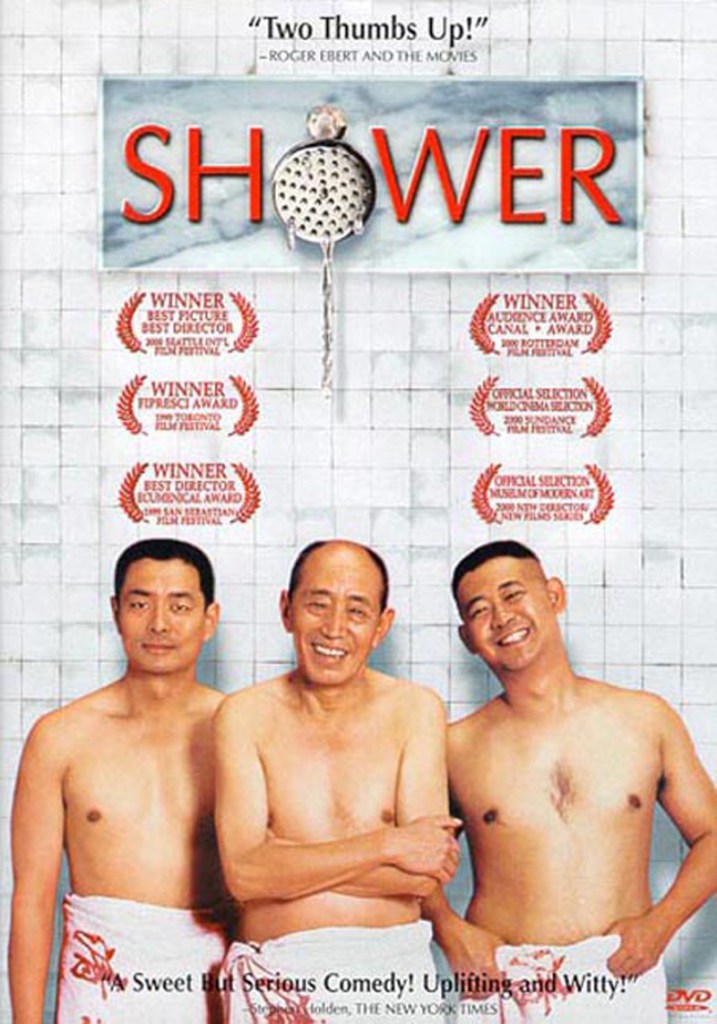
Shower (洗澡, Zhang Yang, 1999)

Shower posterChina is changing. Transforming faster than any other society at any other point in history. This brave new future, flooding in as it has across an ancient nation, has nevertheless left a few islands of dry land untouched by modern progress. Old Liu’s bathhouse is just one of these oases, far away from the big city with its frantic pace and high technology. In the city, you can step into a tiny cubicle and “undergo” a shower inside a contraption that’s just like a carwash, only for people. In Liu’s bathhouse you can relax for as long as you like, laughing and joking with old friends or just hiding out from the world.
Prodigal son Da Ming returns to this untouched relic from his past on a brief reprieve from his busy businessman life, attempting to reconnect with his distant father and younger brother, Er Ming, who has some learning difficulties. Da Ming left here for something better, he looks down on his father’s profession and its old fashioned insistence on taking one’s time, but gradually as he returns to the rhythms of his childhood the warmth of the bathhouse atmosphere begins to soak into his heart.

Most of Liu’s customers are older men who grew up in an era when going to the bathhouse was normal rather than bathing at home as younger people do. They use the bathhouse as some would use a teahouse or a bar, they spend all day there getting various treatments, racing crickets and bickering about the past. If it weren’t for the bathhouse many of these older men would have nowhere to get together. However, times have changed and even if the bathhouse were more popular with the young folk, it seems the entire block has been bought up by property developers intent on throwing up an array of tall buildings replacing the cosy, traditional atmosphere of the small town shops, restaurants and amenities which currently occupy it.

Da Ming keeps meaning to go home, he even books a return flight, but keeps putting it off. Eventually he begins to bond with his father again, going so far as climbing up to the roof to help him secure a tarpaulin during a heavy thunderstorm. He enjoys hanging out with his brother but after being away for so long has perhaps forgotten how much looking after he really needs with the consequence that Er Ming actually wanders off somewhere for the first time in his life. However, Er Ming is much more resourceful than his father had assumed and returns with a broad grin and pockets full of apples as if nothing out of the ordinary had happened.

In its final stretch, Shower makes a tonal shift to the arid deserts of Northern China and a story which happens to reflect the early life of Da Ming’s parents. In this dry land, water is worth more than all the gold in the world. There is an ancient custom that on the night before her wedding, each bride enjoys a hot bath – a true luxury in a place where death from thirst is a real possibility. The extreme measures her family have to go to to allow their daughter to perform this important ritual emphasise its importance as do the tears shed by the girl in question as she sinks into what is possibly the first and last time she will ever enjoy the simple pleasure of a hot bath. Water unites all things, as a TV broadcast watched by Er Ming reminds us, the elephant and the dung beetle have exactly the same dependency on water and their access to it is entirely in the hands of fate.

Liu’s bathhouse is a place of solace where men can come and talk through their troubles together. One local man has a series of marital problems with his rather feisty wife whereas another enjoys loudly singing O Sole Mio whilst having a shower but freezes up when he tries to sing on stage, and then there’s the old guys with their crickets and decades old arguments. Liu listens to them all, allowing their tensions to run away with the bathwater. The “human wash” shower cubicle might be efficient and undoubtedly useful in the quickening pace of modern life, but you go in there alone with all your thoughts and no one to gently lead you to the truths you always knew were there but were unwilling to see.

Shower is another China at the cross roads movie as older brother Da Ming represents the forward marching younger generation who’ve abandoned their old hometowns for the bright lights of the cities only to feel cheated out of something more essential. Returning home is a journey filled with ambivalence – being hit both by the backwardness of the place but also by its wholesome goodness and the warmth of community spirit. It may be too late to save the bathhouse, but that doesn’t mean all that it represents has to go with it. The future is uncertain for Da Ming and Er Ming, as it is for China itself, but if anything can hold back the erasure of centuries of culture it has to start here, with two brothers and a bathhouse, or doesn’t start anywhere at all.


Shower (洗澡, Xǐzǎo) is available on DVD in the UK from Momentum and in the US from Sony Pictures Classic.

US release trailer:

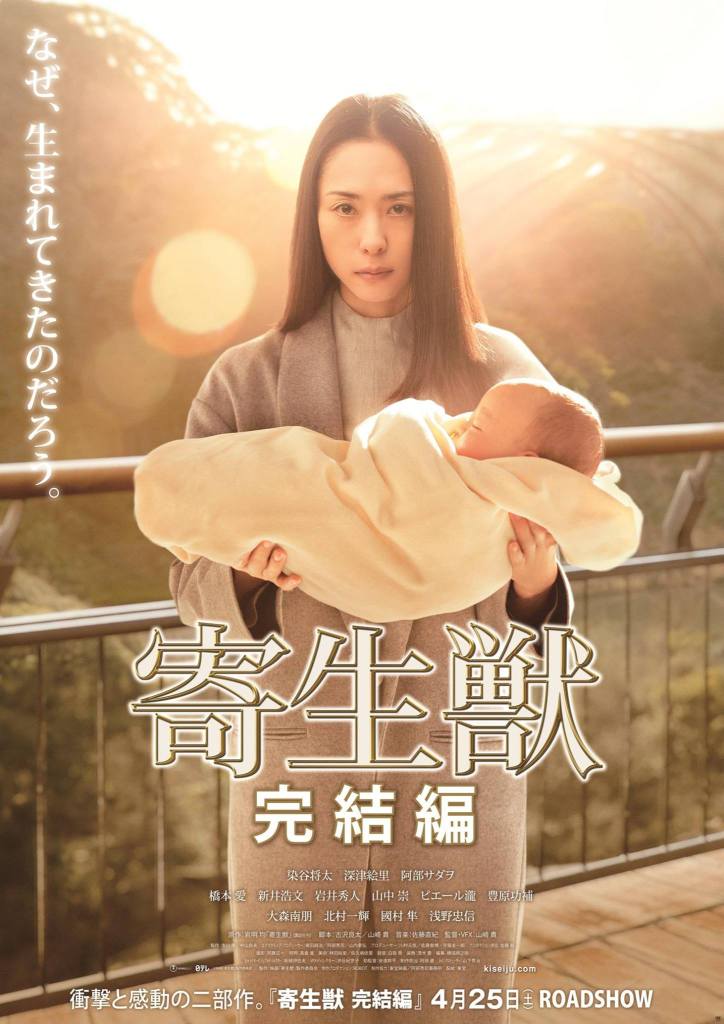
Parasyte The Movie Part 2 (寄生獣 完結編, Takashi Yamazaki, 2015)

parasyte part 2Review the concluding chapter of Takashi Yamazaki’s Parasyte live action movie (寄生獣 完結編, Kiseiju Kanketsu Hen) first published by UK Anime Network.

So, at the end of Part 1, Shinichi and Migi had successfully dispatched their creepy fellow student enemy in the midst of high school carnage but if they thought it was over their troubles were only just beginning. While Shinichi and Migi struggle to define what it is that they are, Ryoko Tamiya’s network is also showing cracks as her increasing levels of humanity contrast with her fellow Parasytes’ ambivalent attitudes to their host species. Ryoko may regard humans as the best hope for the survival of her kind, but you can’t argue with the fact that humanity is often the biggest threat to its own survival. The Parasytes may have a point when they describe us as a pestilence, blighting the planet with our lack of interest in our own living environment. Parasytes, dispassionate as they are, are better equipped to take the long view and ensure the survival of the Earth if only so that they may live in it.

Diverging slightly from the sci-fi movie norm, the police have cottoned on to the Parasyte threat and even uncovered the city hall based conspiracy though they haven’t quite got it all figured out yet. They are also completely unprepared to deal with the big bad that is Goto – a super Parasyte introduced in a Hannibal Lecter inspired cameo at the end of the previous film. Goto also has a minion, Miki, intent on making trouble whereas Ryoko still has various “experiments” on the go including her recently born son and a blackmail scam involving a low rent photojournalist. Add to the mix a dangerous serial killer who can ID Parasytes and the end of mankind seems like a very real possibility.

By this point, Shinichi and Migi have developed a symbiotic relationship which includes endearing little episodes like cooking dinner together with Migi using his unique capabilities to chop veg and make the ultimate miso soup. Ryoko has now given birth to her son and finds herself unexpectedly attached to her experimental offspring. After playing peekaboo with him one evening, she mimics the baby boy by laughing out loud and observing her reflection. Her human disguise has begun to feel good – what she wants now is less colonisation than peaceful co-existence. If Parasytes and humans could truly become one, embracing both the dispassionate Parasyte capacity to plan for their survival and the human capacity for compassion, perhaps both could achieve mutual salvation.

However, Ryoko’s comparatively hippy trippy viewpoint won’t play city hall and the new mayoral stooge is not as well disposed to humanity as his co-conspirator. In attempting to remove Ryoko’s various irons from the fire, the local government gang do nothing so much as invite their own destruction both at the hands of Ryoko herself and at those of the police. However, the police have not banked on Goto who has already become more powerful than they could possibly imagine. The series’ big bad, Goto isn’t given much of an opportunity play the mastermind card but is allowed to expound on his philosophy during the final fight. He says he hears a voice which instructs him to devour the whole of humanity but, after thinking about who this voice might belong to, he concluded that it belongs to humanity itself, begging to be released from its cycle of self destruction.

Less than subtle philosophising aside, Yamazaki maintains the approach and aesthetic from the first film though Part 2 is a little more serious in tone and more given over to meaningful speechifying than its gore filled predecessor. The body horror shenanigans are much less prevalent until the quite gruesome practical effects based final fight, though we’ve already seen enough Parasyte carnage by this point to know the score. That said, the Terminator 2 inspired car sequence and Goto’s unexpected superhero metamorphosis more than satisfy the craving for explosive action.

Parasyte plays with dualities to the max as Ryoko and Shinichi travel the same path from opposite directions ending by meeting somewhere in the middle and parting on a note of understanding rather than one of conflict. In the end, the film’s major message seems to be a plea for harmony in all things. One of Ryoko’s final thoughts casts grief as another kind of parasite – invading the soul, corrupting it and transforming a once rational person into a creature of fear and rage. She eventually finds an answer to all of her questions in the most human of things, emotional connection becomes her salvation and her final hope was that this union of pragmatism and passion could serve as a plan for the salvation of both species.

Even if Parasyte is a little blunt in delivering its well worn messages about the mankind’s negative effect on the planet, the essential baseness of the human spirit, and that desire for survival in one form or another is the driving force of all life, it does so in an interesting fashion and generally avoids falling into the cod philosophy trap of more seriously minded science fiction adventure. Once again Yamazaki marshals all his powers to create a well produced genre-hybrid of a blockbuster movie which takes its cues from 80s genre classics and is well anchored by a series of committed, nuanced performances from its admittedly starry cast.


Parasyte The Movie: Part 2 is available on DVD and blu-ray in the UK from Animatsu Entertainment.

English subtitled trailer:

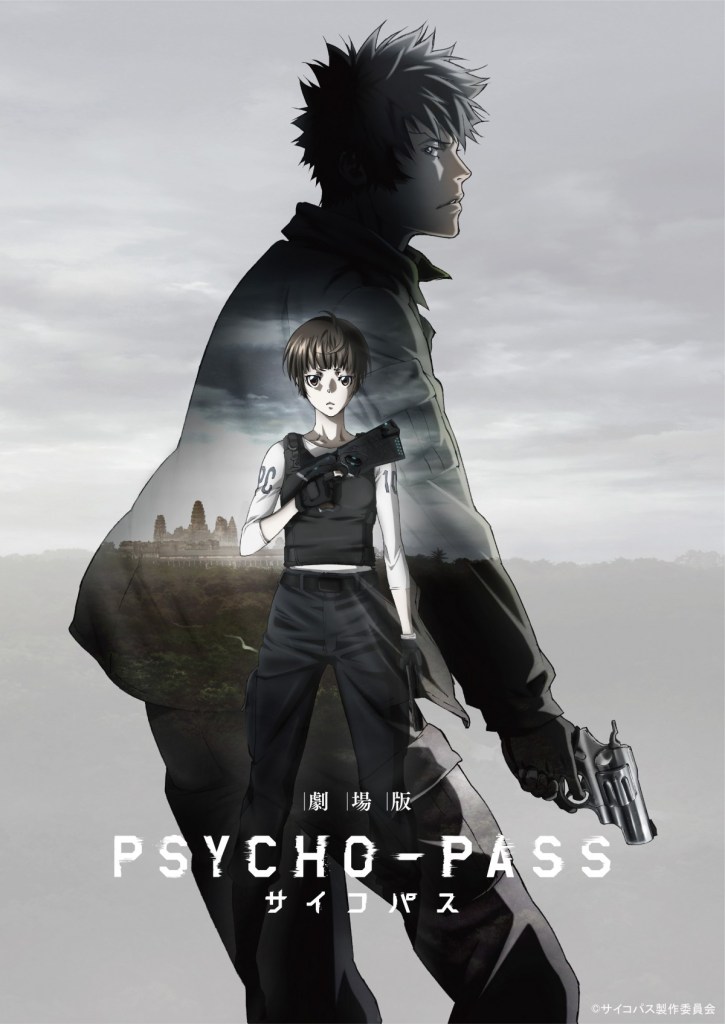
Psycho-Pass: The Movie (劇場版 PSYCHO-PASS サイコパス, Katsuyuki Motohiro & Naoyoshi Shiotani, 2015)

psycho-pass movieThe Japan of 2116 is a peaceful place. Crime is at an all time low thanks to the Sybil system which monitors the nation’s citizens issuing them a “Crime Coefficient” rating assessing how likely they are to commit a crime. When a potential criminal’s Psycho-Pass reaches an unacceptable level, the Public Safety Bureau are called in to hopefully put a stop to any criminal activity before it has the chance to occur.

However, the world outside of Japan is not quite so ordered and so its Sybil system has become an important political export. Things are about to get murky as the nearby SEAUn (South East Asia Union) is currently in a state of civil war and its de-facto leader has struck a deal with Japan for additional support in return for trialling the system in a new reclaimed land development. Not everyone is happy with sacrificing personal liberty for social safety and so an active resistance unit working against both the deployment of Sybil and the leader they see as a dictator is continuing to prove a destabilising force.

This all comes to a head when a group of so called “terrorists” manage to sneak in Japan hoping to  take the fight to Sybil itself. After a brief but intense shootout with the PSB, the gang is neutralised save for one which famed Inspector Akane Tsunemori manages to capture and take in for questioning. However, whilst Akane is waiting for the captive to come round from the sedative she gave him, her bosses have taken drastic action which amounts to lethal torture. Akane is horrified, but when the recovered information flags up the familiar face of her former colleague Kogami, she quickly finds herself at the centre of covert, international political machinations which cast her own nation in far from a positive light.

Psycho-Pass: The Movie (劇場版 PSYCHO-PASS サイコパス, Gekijo-ban Psycho-Pass) is the big screen outing for the hit TV anime which has so far spanned two series each with their own distinct narrative arcs. Series creator Gen Urobuchi handled the first season but sat out the second (handing the reign’s over to Murdock Scramble’s Tow Ubukata) in order to work on this film which takes place after season two but was actually developed at the same time so avoids direct reference to its events. For the most part, Psycho-Pass: The Movie works as a stand alone enterprise though it does make reference to plot elements from season one, or more exactly its villain, without further explanation which may leave newcomers feeling lost. Fans of the franchise already familiar with the characters and their relationships will undoubtedly get the most out of the set-up, but in depth knowledge of the series is never a prerequisite for understanding the action.

“Action” is an apt place to start when it comes to the themes of Psycho-Pass: The Movie as it acts more as an exciting side story to the main series than the grand conclusion that might be expected. Broadly speaking, the central concern is the increasing interference of powerful nations in the “domestic affairs” of smaller ones. Akane is as idealistic as they come despite everything she has already seen and is unprepared for the extent her own nation’s complicity in this very dirty, possibly proxy, war. In this country, those with flagged Crime Coefficients are forced to wear a standard issue collar which is designed to explode Battle Royale style and are treated as an underclass not permitted to board the same public transport or occupy the same “public” space as the general population. Once again this sits uncomfortably with Akane, but there isn’t a lot she can do about it.

Kogami, now a drifting mercenary since going on the run from the PSB, has become a rebel revolutionary trying to help the oppressed citizens fight for democracy in this war torn land. To some, he’s a terrorist (though the rebels are never shown targeting civilians or carrying out “terrorist action” so much as acting as a resistance group) but his sights are firmly set on hypocritical, oppressive regimes and especially those acting as puppet states for a third party. Akane and Kogami’s relationship status continues in the “it’s complicated” direction which has progressed throughout the series and they aren’t given very much time to build on that here though their mutual respect for each other adds to the tension as each comes to terms with being on opposing sides yet somehow still “together” in spite of external obligations.

Even if Psycho-Pass: the Movie proves disappointing in terms of its character development (betraying its side story origins), it excels in the action stakes with several impressive, high octane battle scenes not to mention the strange ballooning effect of the explosive Dominator weapons. Though it sets up a complicated, geo-political conspiracy of superpowers exploiting civil unrest to steal puppet states and install dictatorial stooges who oppress the local population into a sublime obedience with the promise of long desired peace, it wisely avoids expository dialogue preferring to keep things moving in a more urgent fashion. A minor entry into the Psycho-Pass world, Psycho-Pass: The Movie is nevertheless an exciting return to its increasingly dystopian universe and even if it adds little in terms of themes or characters, does at least point towards a promising continuation of the series.


Reviewed as part of the “biennial” Anime Weekend at BFI Southbank. Psycho-Pass: The Movie has also been licensed for UK distribution by All the Anime (and Funimation in the US).

English Subtitled trailer: