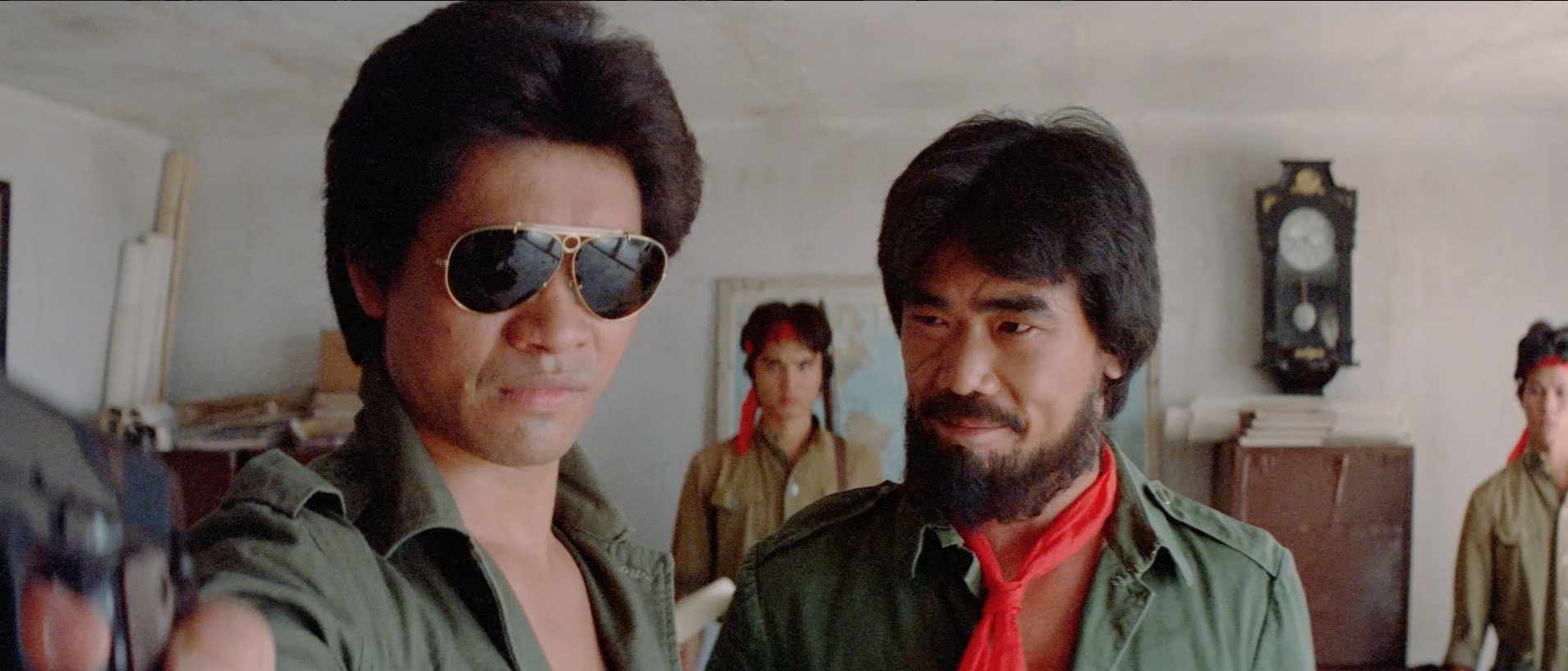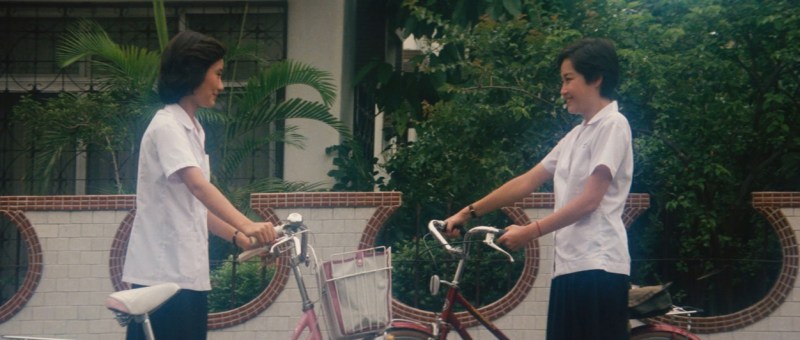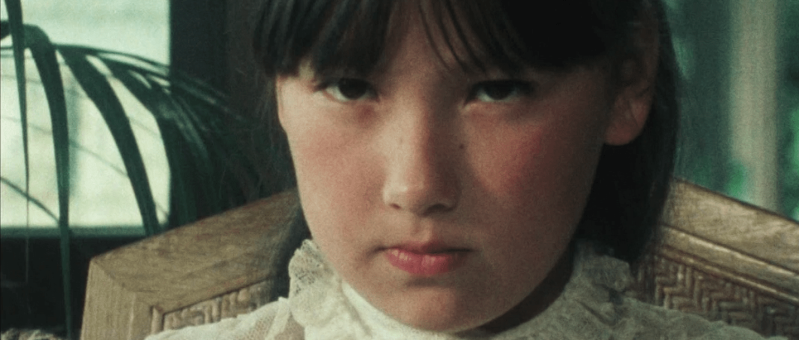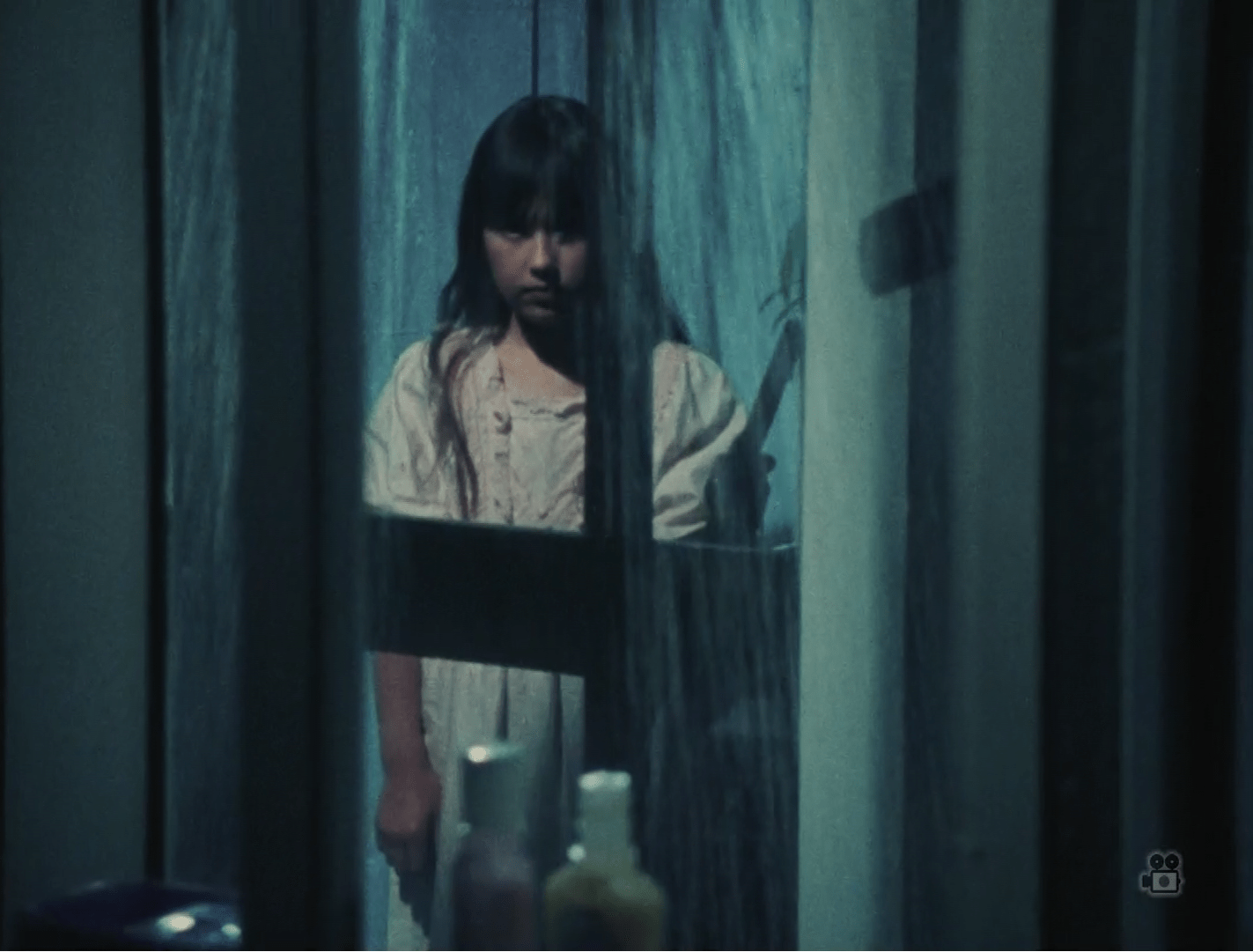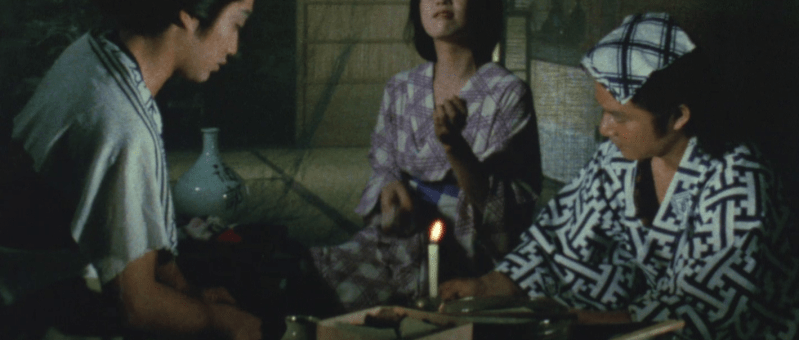
The Living Koheiji (怪異談 生きてゐる小平次, Nobuo Nakagawa, 1982)

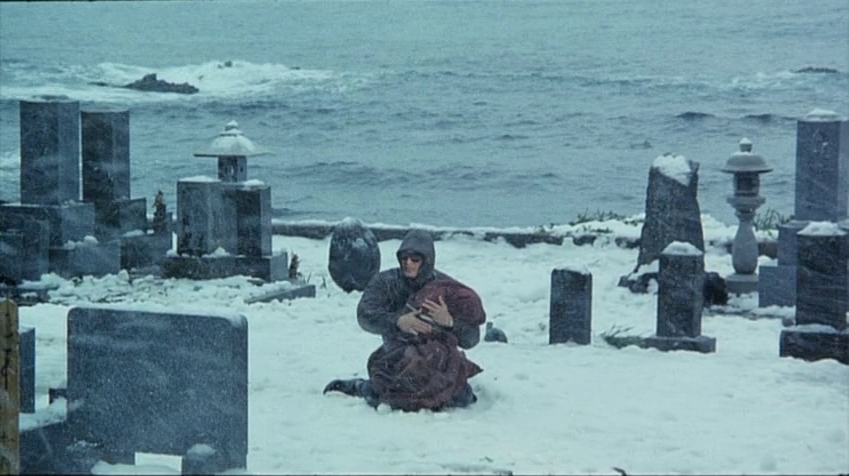
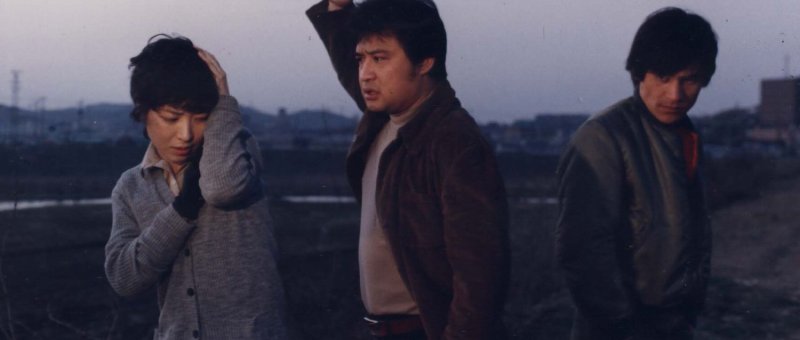
“This play will never end,” says one of a pair of actors, in love with the same woman near the conclusion of Nobuo Nakagawa’s haunting final feature, The Living Koheiji (怪異談 生きてゐる小平次, Kaiidan: Ikiteiru Koheiji). Based on a 1924 play by Senzaburo Suzuki which had not originally been a kaidan or ghost story, what originally seems seems to be a conventional love triangle drama develops into something darker and stranger as its trio of protagonists find themselves trapped in an escapable loop of obsession, violence, love and misogyny.

At heart, this is a story of a woman trapped between two men, an abusive husband she cannot leave and a childhood friend who says he loves her she may want not want either. We’re told that Ochika (Junko Miyashita) was once the daughter of a wealthy landlord and entered into an arranged marriage with wealthy man but was eventually sent back and married Taku (Shoji Ishibashi), the son of a teacher the landlord may otherwise have regarded as beneath them. A childhood friend of each of them, Koheiji (Fumihiko Fujima) was the son of an itinerant actor and loved Ochika too but bit his tongue. However, he can do so no longer. At breaking point, he must make his feelings known. Ochika does not accept them, but neither does she fully reject him. At an impasse, Koheiji states that he will kill Taku so that Ochika will then be free to marry him. On a fishing trip with Taku he directly asks him to surrender Ochika, but he refuses and becomes angry. Knocking him into the water and hitting him with an oar, Taku believes he has killed Koheiji, dissolves the acting troupe to which they all belong, and returns home. Koheiji soon turns up there but relief turns to rage when he repeats his request for Ochika’s hand and Taku kills him again.

We can never really be sure if “the living Koheiji” as he takes to calling himself is alive or dead, an actual ghost or a man with a talent for surviving living only for his obsessive love. He continues to haunt the couple, or more directly Taku whose guilt he may be manifesting. From what we can tell of Taku, he is a monstrously insecure figure who attempts to assert dominance through violence. Of the three, he is the only one outwardly frustrated by his lowly socio-economic position as an itinerant actor and only the troupe’s drum player at that. He has been writing his own play, a love suicide drama, in an attempt to bump himself up to the intellectual position of playwright but the manager rejects his work or else Taku lacks the economic power to bribe him. 

It’s possible in one sense that what we’re watching is the love suicide drama that Taku is writing. He does indeed later invite Chika to die with him while haunted by the living Koheiji. The dialogue between the three is ostensibly theatrical and delivered in the rhythms of kabuki theatre as if they were constantly rehearsing a play, yet Koheiji in particular often slips into a rhythm that mimics that of the Akita Ondo, a bawdy folk chant that is part nonsense song and part improvised diatribe against the state of the nation. Koheiji may also have been professionally frustrated in his desires to become another Danjuro, his lack of success another barrier to romantic fulfilment, but ultimately feels that Ochika should be his and Taku should consent to give her up. 

He points out that Taku is violent towards her. When Ochika asks him about his play, she says that women shouldn’t pry into men’s work and beats her. She asks him for a divorce which he refuses to grant, but later tells Koheiji that his violence is only a sign of his love for her though it’s clearly an expression of his wounded masculinity. In many ways, Ochika is a woman haunted by two men neither of whom she can fully escape. We can’t even be sure she isn’t dead too, or else a figment of Taku’s fevered imagination furiously writing out this love tragedy in real time. In any case, she continues to follow him and is continually disillusioned. On discovering that she engineered a miscarriage, he questions the parentage of the child and is resentful that she chose not to tell him about the pregnancy because it trapped her in an abusive relationship from which she wanted escape. She may have been willing to use Koheiji to help her, but does not appear to return his feelings and is in any case denied any agency. Just as she was traded away by her father, Koheiji simply demands her of Taku as if she had no right to refuse.

The living Koheiji becomes more grotesque each time he resurrects himself, eventually disguised as a leper and as pale as a ghost whether or not he actually is one. Wracked with guilt, Taku begins to experience ghostly nightmares featuring scenes from classic tales of horror such as Koheiji tied to a board and floating in a lake much as Oiwa and the servant in Nakagawa’s own Yotsuya Kaidan. A master of the genre, the eeriness that Nakagawa conjures here is of a different order. An ancient, unending haunting that as Koheiji says will never end destined to be repeated by the trio in an eternal and irresolvable cycle of suffering. The final scene takes place at Sai-no-kawara, the shore of the river of life and death to which the souls of deceased children go to be watched over by the crowds of jizo at the cave, echoing the faces of the dolls that once watched Taku and Ochika. What happens there may represent escape or merely damnation, Ochika perhaps freed or only to repeat this cycle for all eternity. 


Trailer (English subtitles)
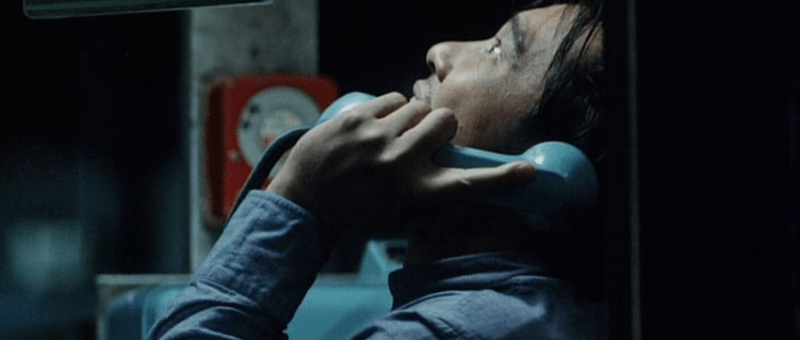
To Trap a Kidnapper (誘拐報道, Shunya Ito, 1982)

One of a number of films released in the early ’80s critical of the police force, To Trap a Kidnapper (誘拐報道, Yukai Hodo) draws inspiration from a real life case of child abduction but suggests that the police largely just get in the way and are only interested in apprehending the culprit rather than ensuring the boy’s safety. In any case, unlike the similarly themed High and Low, the film devotes most of its focus to the kidnapper’s desperation as a man apparently left behind by the rapidly rising tides of prosperity. 

Yet somewhat perversely the film opens with a scene of children playing and seven-year-old Hideyuki (Motoyoshi Wada) getting into trouble for flicking toy discs at his friend and deskmate Kaori (Kaori Takahashi). Hideyuki is then made to stand on his own in the playground as a punishment, though quickly makes things up to Kaori by gifting her the plastic discs he was playing with. Neither of them know it, but the children share a grim connection for it’s Kaori’s father Kazuo (Kenichi Hagiwara) who is responsible for kidnapping Hideyuki on his way home from school in the next town over.

Both Hideyuki and Kaori attend a prestigious private institution but are being raised in very different circumstances. Kazuo was once a successful cafe owner but was swindled out of his business and is now in massive debt to a shady loanshark named Moriyasu who’s sold his promissory note on to a third party debt collector. Hideyuki’s father, Noboru Mitamura (Fujita Okamoto), is a doctor though there’s nothing that suggests the family is anything more than financially comfortable and they aren’t immediately able to get the money together for the ransom. Noboru has to ring round all his friends, family, and random acquaintances begging for emergency loans but without really being able to explain why he needs the money. Just having seen it noted on a school register that Hideyuki’s dad was medical professional Kazuo assumed they’d be a good target for a kidnapping and is in any case resentful of their nice middle class life. 

His wife, Yoshie (Rumiko Koyanagi), is in turn resentful of Kazuo for their reduced circumstances later lamenting that they moved house, swapped their big car for a smaller one and are even going to rehome their dog but if Kazuo is really so deeply in debt, something he had kept from her, then nothing they do really matters because their lives will never improve. What she can’t understand is why Kazuo was so keen on keeping Kaori in a private school that he’d get himself into financial hell rather than make a more pragmatic decision to let her go somewhere else. The obsession perhaps hints at his class anxiety, wanting his daughter to stay in a more resolutely middle class environment otherwise in strong contrast to the hometown he later visits where his elderly mother operates a loom in a moribund fishing village which the youngsters are slowly leaving for jobs in factories in neighbouring towns. 

Perhaps in over his head, it at one point looks like Kazuo is about to dump Hideyuki’s body in the sea only to realise police divers are already searching the area. Despite himself, he begins to care for the boy though doesn’t really know what to do with him. He feeds him bread from convenience stores and keeps him tied up in the boot of his car wrapped in several blankets without really considering the possibility that he may die of cold or hypothermia left outside in the freezing winter. Realising the distraught parents have called in the police despite his warnings not to, he is too afraid to accept the ransom and is therefore at something of an impasse given he can’t very well give up the boy without getting the money.

Meanwhile, as the Japanese title implies the tale is alternately told from the perspective of the reporters at Yomiuri Shinbun who are originally quite annoyed by the police’s request for a news blackout to avoid panicking the kidnapper, suggesting it’s an infringement on their free speech if coming around in the acceptance that a child’s life is at stake. A rookie reporter, Kotaro (Shin Takuma) is involved in a dispute with his fiancée Tomo (Miwako Fujitani) who is having second thoughts because he’s always working while her parents are pressuring her to consider an arranged marriage. Kotaro refuses to write one of the dummy articles they’re putting together in the event that Hideyuki is killed describing it as morbid and irresponsible, but is very involved with the ongoing press investigation which simultaneously seems more rigorous than that of the police and accidentally gets in its way. A “suspicious car” that’s noticed outside a drop sport turns out to belong not to the kidnapper but a reporter on a stakeout wasting the police’s time.

Even they are eventually conflicted, the officer in charge on the ground later letting the Mitamuras leave on their own for the final drop empathising with them as a fellow parent and acknowledging the reason everything keeps going wrong is because the police got involved. Yet his boss orders him to follow them anyway, reminding him that the only job of the police is to catch the culprit seemingly indifferent to whether or not they rescue the hostage unharmed. Their tactics are quite naive, not considering that Kazuo will obviously realise that the Mitamuras are surrounded by undercover officers because they keep using the same ones and it’s odd to keep seeing that couple from the coffee shop everywhere they go. The big break in the case happens by accident just because a couple of traffic cops decide to ask a random car a few questions.

In any case, it’s Kaori who ends up suffering. She and her mother are also victims, unfairly hounded by the press and left with nowhere to go and no-one to turn to having had their lives turned upside down by her father’s desperate decision. He didn’t even know the kids were friends or the effect his actions would have on his daughter. Kazuo hadn’t really thought any of this through but acted only in jealousy and resentment, wanting payback against the Mitamuras for their nice middle class life and his own slice of the pie that he felt had been denied to him. In the end, the only winners are the press who can rejoice in selling their newspapers even if a remorseful Kotaro resents himself for taking a paparazzo photo of Yoshie and Kaori trying to leave town quietly. On seeing his article pasted on pillars at the station, even Tomo starts to change her mind reflecting that if he’s working on a story like this then perhaps working too much isn’t such a dealbreaker after all even if everyone seems to have forgotten about little Hideyuki in the headlong rush to dominate the newsstands by trying to lure a kidnapper into their trap.


Original trailer (no subtitles)

Nomad (烈火青春, Patrick Tam, 1982)

In his 1982 New Wave classic Nomad (烈火青春), director Patrick Tam had intended to reflect on Nietzsche’s Joyful Wisdom along with the concept of the wanderer, a heroic ideal of the emancipated mind which necessitates permanent exile in which it is no longer possible to call any place “home”. It was also he claims a critique of the “mindless embrace of foreign culture” by Hong Kong youth then obsessed with David Bowie and Japan. 

The film’s English title refers to the boat owned by the hero’s father which becomes a symbol of the yearning for escape and for the foreign among the young, but is also imbued with an essential irony thanks to its design which recalls the “black ships” that sailed into the bay of Edo and forced Japan to reopen its doors to the world after 200 years of isolation. The original Chinese title, meanwhile, translates as something like “Burning Youth” and strongly recalls Japan’s Sun Tribe movies of the late 1950s which similarly critiqued aimless post-war youth and the corruptions of pervasive American pop culture as embodied by Coca-Cola and jazz music. Tam makes frequent visual reference to Japanese New Wave youth movies such as Nagisa Oshima’s Cruel Story of Youth while the shocking ending (which was not shot by Tam who had envisioned a bloodier showdown aboard the Nomad) also has shades of Ko Nakahira’s seminal chronicle of post-war ennui, Crazed Fruit. 

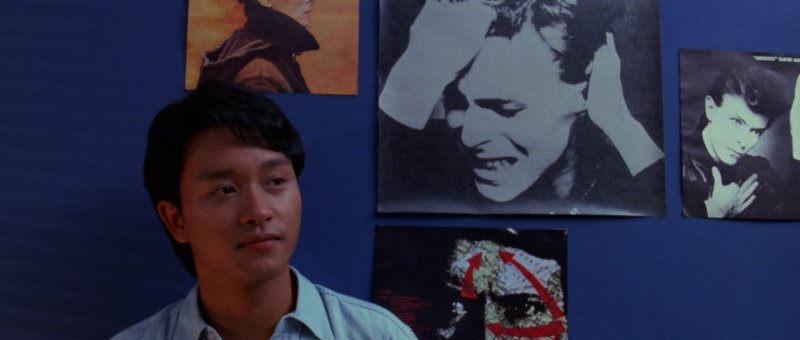
Nomad similarly focusses on a collection of aimless youngsters struggling to find direction in pre-Handover Hong Kong. Louis (Leslie Cheung Kwok-Wing) continues to long for his absent mother and often listens to recordings she once made introducing classical music on the radio while a model of the Nomad sits prominently on a shelf in his room. He has posters of David Bowie on the wall, while his cousin Kathy (Pat Ha Man-Jik) puts on the robes of a Japanese Miko and performs a traditional fan dance. Louis is one of the few young people who does not speak the language, but is later fascinated by the work of a Japanese fashion designer featuring swords and samurai armour that he says, in a moment of foreshadowing, only make him think of ritual suicide. 

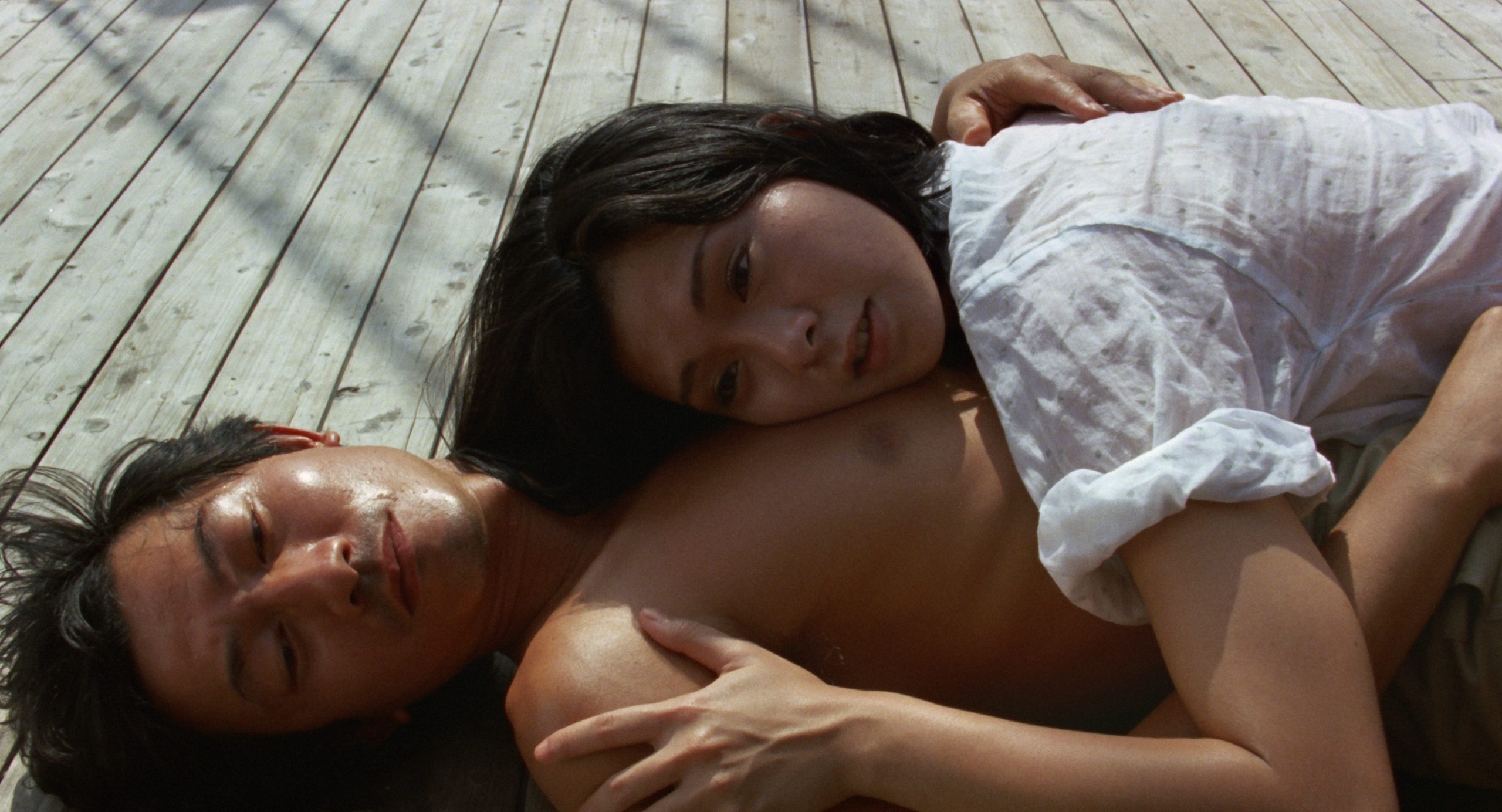
His life is directly contrasted with that of Pong (Kent Tong Chun-Yip), a young man from a poor family who works as a lifeguard at the local pool which is how he ends up meeting Kathy who in turn fascinates him with her rich girl sense of confidence and invincibility. The desire to find a place of their own is emphasised by the constant frustration their repeated attempts to make love in Pong’s family apartment which everyone has generously agreed to vacate so he can bring a girl home only for his younger brother to prank him and his dad to come home early inviting half the neighbourhood over for mahjong. The couple eventually have sex on the empty top deck of a tram, another symbol of transience, and then repeatedly in several other public locations until the relationship is disrupted by the return of Kathy’s former boyfriend, Shinsuke (Yung Sai-Kit), who has deserted the Japanese Red Army and is now a fugitive ironically looking for safe harbour while on the run.

The Japanese Red Army was a far-left terrorist organisation most active in the Middle East though Shinsuke’s decision to leave it seems to be less to do with a disillusionment with communism than a reawakening of his humanity in which he has decided he can no longer be a part of its bloodiness and violence. Nevertheless, while holed up aboard the Nomad, he explains that he cannot join the other youngsters in their romantic dream of sailing to Arabia because he has rejected exile and is determined to return home and meet his certain death in Japan. The destructive forces have however followed him in the form of an assassin posing as an assistant to a fashion designer, which seems to be allusion a little too on the nose even if it quickly descends into a strange pastiche of samurai ideology otherwise at odds with that of the JRA in which they track Shinsuke down and then instruct him to commit seppuku with the sword he has been carrying all along. 

In an earlier fight that led Pong and Louis becoming friends, some young women had needled him that he should try to protect Kathy though she needed no protection in this situation and he was unable to provide it anyway. Something similar happens on the beach though he turns out to be surprisingly adept with a samurai sword when he’s unexpectedly rescued by Tomato (Cecilia Yip Tung), a young woman he met in a cafe after he overheard her desperately trying to dump one boyfriend and not be be dumped by another over two different telephones, who suddenly reemerges with a harpoon gun. It’s Tomato, who had kept a copy of Nietzsche’s The Antichrist given to her by a boyfriend but apparently not read it, that finally remarks on their aimlessness, “we do nothing for society”, only to be countered by Louis who answers, “what society? We are society.”

Briefly at the beach they may find the kind of utopia they’re looking for, lighting the cottage with lanterns and sleeping piled one on top of another under a communal mosquito net in the open air, but just as quickly find that dream shattered by the intrusion of a political reality. This nomadic youth finds itself exiled from its home, dreaming of an impossible escape, caught between the colonial present and a colonial future with half an eye on an old coloniser and fast losing sight of its own identity. Abandoned on a blood-soaked shore, all youth can do is look out in shock and confusion bereft even of hope in a liminal space at once transient and permanent. 


Nomad screens at the BFI Southbank on 15th July in its new 4K Director’s Cut as part of Focus Hong Kong.

The Shootout (凶弾, Toru Murakawa, 1982)

The seishun eiga or youth films of the 1960s often had an ambivalent attitude to rebellious youngsters who for various reasons were not able to accommodate themselves to the times in which they lived, but few were prepared to ask real questions about society’s responsibility towards young people in difficult situations who had often been let down by the same state institutions which only sought to demonise them. Based on a story by Hiroshi Fukuda which was inspired by a real life ferry hijack which outraged the nation when the police opted to shoot the teenage hijacker dead, Toru Murakawa’s The Shootout (凶弾, Kyodan) stars the nephew of 60s youth movie king Yujiro Ishihara and places the blame firmly at the door of the police and other public services whose gradual and needless escalation of events leads only to tragedy. 

Teenagers Hideo (Yoshizumi Ishihara), Numa (Masato Furuoya), and Soichi (Tatsuo Yamada) met in reform school and have become something like brothers. All of them either never knew their parents or lost them young and have developed a healthy distrust of authority thanks to their experiences. As the film opens, the boys run cheerfully through the streets of a small rural town headed to the mountains where they play with a shotgun Hideo inherited from his late father. While driving back the boys pick up a distressed young woman, Hiromi (Mio Takaki), running barefoot through the pouring rain, but soon come to the attention of a pair of bored policemen the older of whom has a definite problem with the “unreliable” youth of the day and all their “sissy” music. They pull car over for speeding which is a problem not only because Soichi has been drinking, but because it is also not his car. He took the neighbour’s when his was taken away and it’s been reported stolen. 

While the younger policeman processes Soichi, the older one decides to kick off after finding the shotgun, banging Hideo’s head against the side of the car and then attacking Numa with a police truncheon when he asks him politely to stop before punching him in the face and kneeing him in the stomach though at this point neither of the boys has made any attempt to resist. Continuing to kick him on the ground, the policeman tells Numa that he should have more respect for his parents which is something of a sore spot because Numa was a foundling raised in the care system. Snapping, Numa hits the policeman over the head with the shotgun leaving him crawling on the muddy ground in danger of drowning while having suffered a serious head injury. 

This is first of many needless escalations that the boys encounter. The policeman was not really interested in serving the law, only in validating his authority and in reality little better than a thug himself. If he had not needlessly inflicted violence on the two young men, which is in itself an act of extreme entitlement given his age and fitness level compared to that of two physically fit teenage boys, none of the succeeding action would have taken place. The boys feel that they are unfairly victimised and are understandably mistrustful of the police because as they say even when they are doing their best to adhere to the rules of mainstream society they are written off as reform school boys not least by the police who have already decided that they are innately bad and must be guilty of whatever it is they are accused. 

The boys find the same thing when they decide to turn themselves in after a few days on the run and go to their social worker for help. The social worker lives in a temple and first seems as if he’s going to help when they explain and ask him to mediate for them with the police who they fear will not listen to the real story, but it soon becomes clear that he only wants to help Hideo who is the grandson of a diplomat and a promising student while foundling Numa is according to him unsalvageable. If only the social worker had been prepared to listen to them, the hijacking would never have happened. All the boys ever ask for is that someone pay attention to their side of things, honestly without prejudice, but all they’re ever told is that the word of a reform school boy is worthless which really begs the question of what the reform school is for in the first place. 

Then again there are a handful of sympathetic officers including one in charge of the original incident who makes it clear to his men that they should not be judging the suspects on their backgrounds while another (Kunie Tanaka) who was responsible for arresting Hideo when he killed his sister’s no good violent boyfriend during a fight reflects that he had beautiful eyes for a murderer and has come to question the nature of contemporary policing feeling perhaps that boys like these deserve help rather than punishment. The only person who does make an effort to listen is the fatherly captain of the ferry which Hideo ends up hijacking (Tomisaburo Wakayama) who seems to be getting through to him only to have his progress undermined by the police who again only want to preserve their own authority. 

Comparing the ferryjacking to the 1972 Munich terrorist attack, which seems rather hyperbolic even though the situation is obviously dangerous given the hostage taker is an emotionally volatile teenage boy with at this point two powerful firearms, the police and Coast Guard determine that killing him is likely the only solution. Obviously never having studied much about hostage negotiation, they surround the boat when it stops to refuel pushing Hideo further into a corner and increasing the likelihood that he may end up feeling out of options and decide to take everyone else with him when he goes. From the police’s point of view, perhaps that adds an extra justification to their clear determination to kill when the implication is that to them boys like Hideo are just a threat to be neutralised, another powder keg reform school boy who would have caused trouble eventually. 

That the public do not agree with the police’s actions perhaps says something about contemporary social attitudes, that in general people do not want to live under such rigid authoritarianism and could see that Hideo was merely a frightened boy who could have been talked down if again someone, other than the captain who did his best to save him, had been prepared to listen rather than once again needlessly escalating the situation to preserve the image of police authority. On the flip side, we’re also shown that the shooting has an adverse effect on the remorseful police sniper who is also at a moment of emotional strain caring for a wife dying of a brain tumour at only 25. Reminiscent of Rebel Without a Cause, The Shootout like its heroes has a healthy distrust of authority figures but also a small faith in the wider public while asking serious questions about the way society treats those who are often the most in need of care and protection. 


Mercenaries from Hong Kong (獵魔者, Wong Jing, 1982) [Fantasia 2022]

A former mercenary’s bid for revenge having failed in his responsibilities soon goes awry in Wong Jing’s third directorial feature Mercenaries from Hong Kong (獵魔者). As is constantly pointed out to the hero, perhaps he’s not so different from his target with his very selective brand of justice and morality. After all maybe the difference between medicine smuggler and drug trafficker is largely semantic and taking revenge after the fact hardly makes up for the failure to protect the innocent from a world you’ve helped create. 

Li Lok (Ti Lung) is a pretty big figure on the underworld scene and as the ultra macho title sequence reveals a former mercenary who served in Vietnam. In the daring opening scene he sneaks into a gang hideout disguised as a telephone repairman and takes out a gangster in the middle of drugging a young woman whom he and his friend intend to rape and then murder. But Li Lok isn’t here to save the girl and in fact he doesn’t. He’s there because the gangster has done this kind of thing before and the previous victim was his 15-year-old niece whose care he had been entrusted with by his late brother before he passed away. Later one of his comrades will make a similar request of him and he will fail again apparently taking little stock of his responsibilities. 

Nevertheless, having knocked off the gangster annoys local big boss Shen who intends to have Li Lok eliminated but Hong Kong’s richest woman Ho Ying (Candice Yu On-On) convinces him not to because she has a job for Lok assassinating a top Thai assassin who killed her father and is now apparently blackmailing her with a cassette tape full of corporate secrets. All Lok needs to do is round up a posse and head to Cambodia where “the devil” Naiman (Ching Miao) is hiding out, kidnap him, and retrieve the tape to receive a massive life-changing payout while permanently getting Shen off his back. It all sounds like a pretty good deal to Lok along with the former buddies he recruits to join him who are all trapped in desperate poverty one with a sick little girl who desperately needs a kidney transplant. 

This is a Wong Jing film and perhaps there’s no need to dig too deeply into it, but there is something in the power Ying wields over Lok and his team by virtue of her wealth and privilege that speaks to the city’s growing inequality though it’s also true that perhaps the guys have all fallen low through their mercenary choices and are now unable to get a foothold in the contemporary society without resorting to crime. Yet perversely, Ying leverages Lok’s chivalrous sense of honour as part of her plan playing damsel in distress rather than dangerous femme fatale while he assumes he’s on a righteous mission planning to turn Naiman over to the authorities rather than just killing him while little caring that his actions threaten to destabilise an already chaotic situation in Cambodia. 

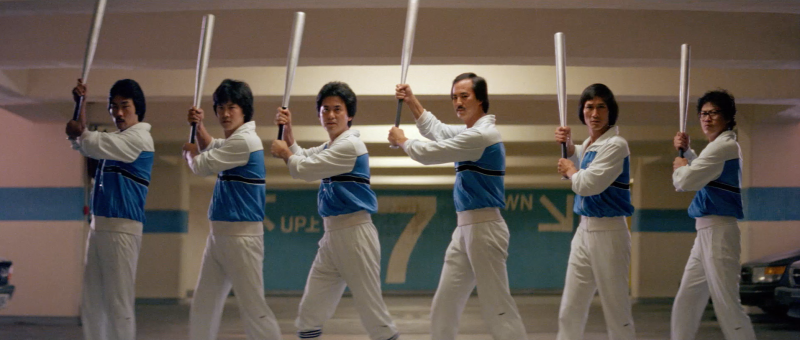
When one of the sworn brothers of the gangster that Lok killed in revenge is killed coming after him even after the truce, Lok is irritated that he died unnecessarily as if it offends his sense of justice that this man was not protected better by Shen. Yet as Naiman keeps pointing out to him, he’s no saint and perhaps no different. He could have saved the girl in the gang hideout but chose not to, escaping by jumping out of a window onto a van waiting below and riding off on a motorcycle (which is admittedly impressive). He claims to hate drug dealers but profited off war and misery in smuggling medicines across the border from Thailand into Cambodia even if he could tell himself he was running a kind of humanitarian service. Meanwhile Ying who is obviously involved in something shady if she’s dealing with people like Lok and his team, paying for their weapons and equipment which presumably includes the series of identical outfits the guys sport like some violent middle-aged boy band, wins an Outstanding Woman award and ironically pledges to use some of her wealth to fund community-based anti-drug programs. 

Li Lok may in a sense emerge victorious but also exactly where he started in failing to protect an innocent girl from a mercenary world. The Cantonese title might more literally be something like Devil Hunters, but Lok and his guys are certainly a mercenary bunch desperate to escape their poverty and hopelessness even if they may stand for a kind of justice and honour in brotherhood. This being a Wong Jing film there is plenty of crass humour including some that is very of its time along with gratuitous sex and female nudity but also a series of incredibly impressive action scenes and a bleaker than bleak conclusion which may suggest that the Loks of the world will be unable to protect the next generation from the violence they themselves have unleashed. 


Mercenaries from Hong Kong screened as part of this year’s Fantasia International Film Festival.

Original trailer (English subtitles)
Girls’ School (女子學校, Mimi Lee, 1982)

The intense friendship between two young women is placed in jeopardy when a rumour begins to circulate that they are more than friends in Mimi Lee’s subversive 1982 drama Girls’ School (女子學校, nǚzǐ xuéxiào). The film’s educational framing may ensure that it can only reinforce the contemporary social codes of the repressive martial law era in insisting the two women must be guided back towards he “correct” path, but otherwise affords them a genuine sympathy that undercuts the sense of moral censure while simultaneously rooting the source conflict in the rejection and frustrated longing that provoke only pettiness and jealousy. 

Chia-Lin and Chih-Ting have been best friends all the way through school and are more or less inseparable but the transgressive intensity of their relationship has also isolated them from their classmates some of whom, such as Chun-Hsueh, feel rejected and excluded. Possibly with a high degree of projection, it’s Chun-Hsueh who first starts the rumour that the two young women are “lesbians” only later admitting to the teacher Mr. Mei, informed via a note from class monitor Yu-Liang who has a crush on him, that she doesn’t quite understand what the word means or what saying it might mean not only for Chia-Lin and Chih-Ting but for the other girls and indeed for the school’s reputation. In reprimanding her, Mr. Mei accuses Chun-Hsueh of casting a dark shadow over the hearts of her previously innocent classmates now corrupted with the ugliness not only of her lie but the topic of homosexuality which he and the rest of the educational body view as something shameful and taboo. 

Reminiscent of William Wyler’s The Children’s Hour, the reason the rumour takes hold may be that there is a grain of truth in it in the burgeoning feelings between the two women yet in keeping with the social attitudes of the time the main interest is in proving that it isn’t true with each keen to clear their name of such vicious slander while the other girls frequently describe them as “disgusting”. Even so, the unfairness of their separation and the obviously strong feelings between the two women cannot help but evoke sympathy while Chih-Ting, the bolder of the pair, continues to insist that they’ve done nothing wrong even as Chia-Lin is overwhelmed by the pressure all around them suggesting that they might be better to simply “keep our friendship in our hearts” shamed into repressing their true feelings by an oppressively judgmental society. 

Then again, the film also succumbs to a series of uncomfortable stereotypical tropes in rooting Chih-Ting’s potential lesbianism in her tomoboyishness having been raised by a single father and longing for maternal affection. Having been abandoned by her mother she also feels emotionally rejected by her father who has a gambling problem and rarely returns home while further rejection by Chia-Lin at the instigation of her sister who is also a teacher at their school herself nursing a broken heart after her longterm boyfriend married someone else leaves her feeling like a “monster”, constantly asking herself “what’s wrong with me?” while wondering why others treat her like a “poisonous sore”. This sense of rejection and frustrated longing is the primary motivator for the actions of all, Chun-Hsueh starting the rumour because she wanted to be included in the girls’ friendship and Yu-Liang reporting it because she wanted to curry favour with Mr. Mei after seeing him scrunch up and bin a love letter while quite obviously smitten with Chia-Lin’s sister Miss Yang. 

Mr. Mei is clearly in a difficult position and often trying to do the right thing, admitting to Chih-Ting that the teacher’s don’t know how to help them, but also somewhat insensitive while like others overly mindful of the school’s reputation rather than girls’ fragile emotions never quite considering that the intensity of their feelings and the pressure placed upon them could lead them to harm themselves or else endanger their mental health. It is then a little uncomfortable that the resolution lies in Chih-Ting who had previously professed to hate everyone except Chia-Lin undergoing a softening in which she becomes “more cheerful and mature”, eventually re-embraced by the same classmates who shunned her now satisfied the rumour isn’t true while Chih-Ting has quite literally sacrificed a part of herself to be accepted by a society whose acceptance she had been insistent was unnecessary. The starkness of her conversion along with the subversive quality of the melancholy love song which recurs throughout may attack the underlying homophobia in supporting the truth of the feelings between the two women but leaves them with little possibility for emotional authenticity in an overly conservative society. 


Girls’ School screened as part of Osaka Asian Film Festival 2022

Restoration trailer (Traditional Chinese / English subtitles)

Lovely Devils (可愛い悪魔, Nobuhiko Obayashi, 1982)

Until fairly recently, the work of Nobuhiko Obayashi had been largely unappreciated in the Anglosphere where he is associated most closely with his debut film House which was itself somewhat grudgingly respected as a “crazy” midnight movie. He was however surprisingly prolific and especially so for a director working through the difficult 1980s in a 60-year career which ended only with his death after a protracted illness itself ironically announced on the day his final film, Labyrinth of Cinema, should have opened in Japanese cinemas had it not been postponed in light of the coronavirus pandemic. Produced for television in the same year as I am You You Are Me, Lovely Devils (可愛い悪魔, Kawaii Akuma) is among those which Obayashi did not script for himself but is penned by Machiko Nasu and apparently inspired by The Bad Seed though Obayashi later revised the script to remove traces of the original work unwilling to create a simple homage. 

Similar in tone to Obayashi’s later The Deserted City, Lovely Devils is at heart a twisted gothic romance cautioning against the dangers of an excessive thirst for love. In ‘70s Japan, a wedding takes place at small church during which 5-year-old Alice, niece to Koji (Hiroyuki Watanabe) the groom, becomes overly attached to the veil of the bride, Fuyuko (Nao Asuka), and in the manner of entitled small children everywhere demands to be given it. Fuyuko tries to explain that she plans to hang on to the veil for the rest of her life as a keepsake and is sure that Alice will have an even prettier one of her own someday, but Alice creepily asks if that means she can have it when Fuyuko dies and, wanting to bring an end to the matter, she unwisely agrees. While everyone is busy assembling for the wedding photos in the garden, Fuyuko violently tumbles out of an upstairs window, her broken body landing on the patio below only to be met by Alice excited about collecting her veil. 

Meanwhile, at the same time in Vienna, Fuyuko’s exchange student sister Ryoko (Kumiko Akiyoshi) is in the middle of a difficult breakup with her local boyfriend Johann in which she, perhaps understandably, tells him to go die only to see him get hit by a car on his way out of her apartment. Overcome with guilt and grief in believing that she somehow killed Johann by wishing for his death, Ryoko goes quietly mad until her landlady contacts Koji who comes to bring her home and places her into a mental institution run by a convent in which the resident psychologist, Dr. Tsukahara (Toru Minegishi), is also a priest. After three years, Ryoko seems to be sufficiently recovered and so Koji asks his sister Keiko (Miyoko Akaza) to take her in as a governess to the now eight-year-old Alice (Tina Jackson). 

The central irony is that Ryoko is almost certainly not guilty of psychically killing Johann just someone who bitterly regrets saying something unkind in anger and having fate ironically follow through, where as Alice is definitely “demonic” and, as is later pointed out, a child who cannot discern right from wrong. In the liner notes for a later release for the film, Obayashi likened the figure of Alice who commits a series of murders with no conceptual understanding that it’s morally wrong to kill to that of himself as a thoroughly militarist boy in wartime who thought that Japan was just and everything outside Japan “bad”. Alice sees something she wants and has to have it. If someone else has it and won’t give it to her, they have to go (sometimes in quite elaborate ways). Ryoko’s battle is against the commonly held belief that eight-year-old girls are innocent angels, no one in their right mind (Ryoko has just been released from a psychiatric institution following a breakdown after all) would believe Alice capable of violent murder and especially not on the grounds that she simply wanted something trivial like a veil or a doll and was unable to accept that she could not have it. 

Later, Alice’s fragile, chain-smoking, dipsomaniac mother Keiko who always suspected there was something not quite right with her little girl attributes this extreme possessiveness to having discovered the body of her father after he unexpectedly hanged himself in their family home (it does not seem to occur to Keiko that perhaps he is merely the first victim, his ornate quill pen one of Alice’s favourite trophies). She thinks that lack of paternal love has made her seek attachment and permanence in objects but also dangerously in her uncle Koji whom she sees both as a surrogate paternal figure and as an incestuous love interest. It is also somewhat unfortunate that the actress playing Alice and the character herself is half-Japanese playing into an uncomfortable stereotype in gothic horror that posits these demonic qualities and romantic perversions as essentially an extension of foreignness, but in any case Obayashi leans in deep with the wedding imagery as Koji returns to rescue Ryoko in the white suit from his wedding firstly on her release from the hospital on which she too wears a white lace dress, and then subsequently with the still eight-year-old Alice who is dressed much the same only with the addition of an Edwardian-style sun hat to complete the look.  

It’s this final juxtaposition which pushes Ryoko towards accepting her imprisonment as a “criminal of love”, seeing herself and Alice as two of the same as if she really had caused Johann’s death through an excessive desire for a love he had but refused to give her in the same way Alice kills “out of a longing and thirst for love” sublimated into the acquisition of objects. Conjuring an intense and heady atmosphere of gothic unease with the remote country mansion and wandering ghostly brides, Obayashi once again plays with psychedelic surrealism with his romantic painted backdrops and characteristic use of colourplay particularly in flashback as Keiko recalls a sepia-tinged memory of the time they were “almost too happy”. Boasting high production values despite its TV movie genesis, Lovely Devils is defiantly an Obayashi production filled with his wistful sense of loss and nostalgia but also a deep darkness in its mildly disturbing, unconventional conclusion. 


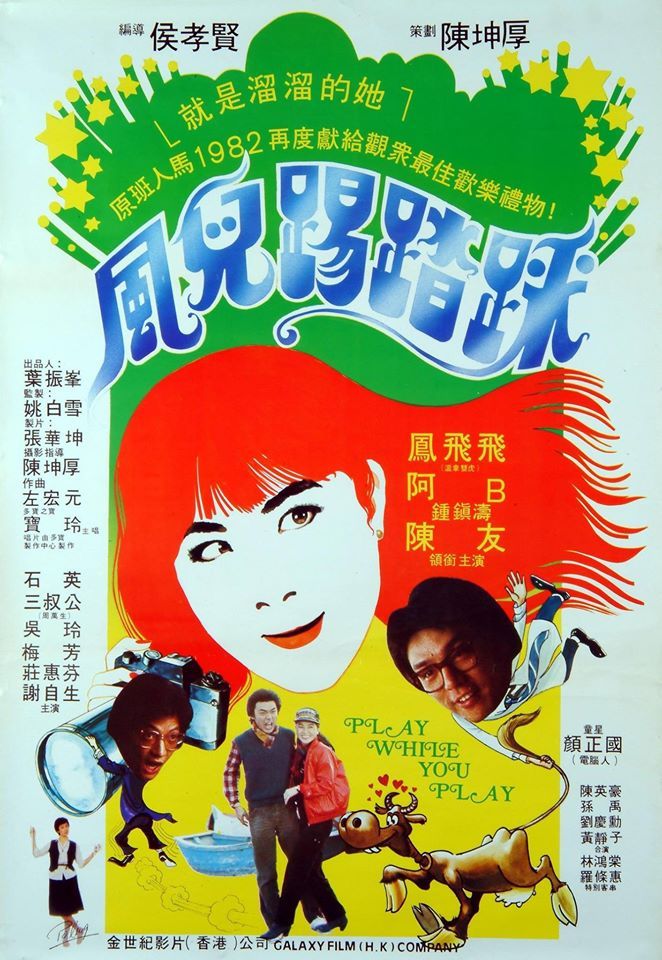
Cheerful Wind (風兒踢踏踩, Hou Hsiao-Hsien, 1982)

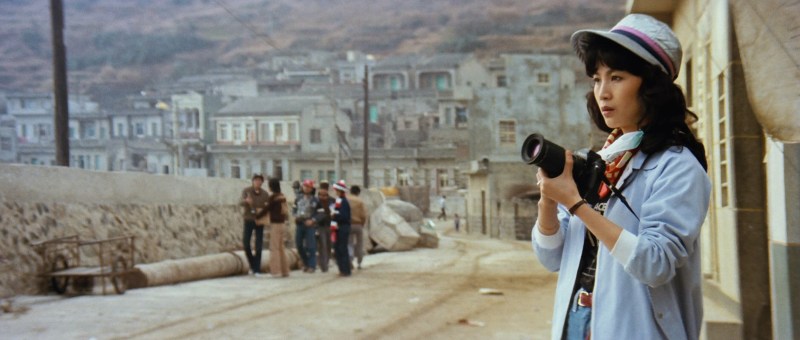
A leading figure of the New Taiwan Cinema movement, Hou Hsiao-Hsien has sometimes been regarded as difficult or inaccessible but there has always been a kind of playfulness in his wistful romanticism and it is not perhaps as surprising as it might first seem to realise that like many directors of his generation he began his career with a series of idol movies starring top Hong Kong star Kenny Bee. Cheerful Wind (風兒踢踏踩, Fēng Ér Tī Tà Cǎi, AKA Play While You Play) reunites him with Cute Girl co-star and Taiwanese chart topper Fong Fei-fei* who, in true idol movie fashion, sings the title tune the refrain of which is heard frequently throughout. For all that, however, it’s a surprisingly subversive effort in what is often regarded as a conservative genre, painting its heroine as a free spirited modern woman and refusing to punish her either for her breezy approach to romance or for rejecting marriage in favour of individual fulfilment. 

The heroine, Hsiao Hsing-Hui (Fong Fei-Fei), is a keen photographer working for an ad company currently shooting a commercial for detergent in a traditional seaside village. Whilst there she catches sight of Chin-tai (Kenny Bee), a musician she later discovers to be blind and, therefore, not catching sight of her as she had first assumed. Somewhat problematically, Hsing-hui decides to use Chin-tai in the commercial, an essentially exploitative action that plays into various unhelpful stereotypes about the blind as they hope to show that “even” those who cannot see are aware of their brand despite being unaware of the branding. She does something similar after unexpectedly running into him back in Taipei and “helping” him to cross a road he had no intention of crossing, but this does at least provide the opportunity of a second meet cute which kick starts their relationship. 

Hsing-hui, however, is technically already attached to nerdy colleague Lo Zai (Anthony Chan Yau) with whom she is living though apparently in separate rooms. He is keen to move things forward and has already quit his job with the intention of taking Hsing-hui to meet his mother in Hong Kong who has apparently been nagging, but she is in no particular hurry and has in fact already agreed to fill in for her brother teaching at the primary school in her home town while he goes to Australia for a tennis competition. 

This new focus on international travel perhaps symbolises the growing ambitions of a newly prosperous, globalising society. Hsing-hui’s dream is not marriage but to see the world, which is one reason she’s staying with Lo Zai in that they plan to tour Europe together and she fears she may never have another opportunity. Back in Taipei, meanwhile, when Hsing-hui’s country bumpkin father (Chou Wan-sheng) arrives to take a look at Lo Zai, they take him to eat pizza and drink Coca-Cola in a trendy restaurant but he finds himself doubly displaced. He speaks mainly Taiwanese dialect and struggles to understand the capital’s preferred Mandarin, quickly lost after failing to understand directions while trying to find the bathrooms at the station and enduring a series of comic misunderstandings while trying to converse with Lo Zai who hails from Hong Kong. In fact, the family aren’t really that keen on the idea of her marrying a Hong Konger, but in a pleasantly modern touch Hsing-hui’s father is quick to tell her that it’s her own decision and as long she’s sure he’ll support it. 

Chin-tai meanwhile jokes about a wife needing good teeth as if she were a goat or a horse being sold at auction and as sympathetic as her father is, he also brings up dowries while attempting to negotiate with Lo Zai who goes along with it but isn’t actually that invested in the “hassle” of marriage anyway. “I prefer the old ways, they were more romantic then” Chin-tai confesses, and to an extent Hsing-hui does too, a hippieish free spirit even in the country where she’s taken to task by her new boss for getting the kids to paint an undersea mural on the playground wall rather than the government approved slogans they were supposed to be reinforcing. For all of this drive and positivity, this is still a nation trapped under martial law and would be for the next five years which makes the tacit approval of Hsing-hui’s desire to seize her own destiny romantic and otherwise all the more subversive. What she gets is a universal happy ending with a man who has no desire to trap her and vows to wait while she achieves her dreams in the hope that she will then return to him. Hou’s second feature sees him flirt with youthful post-modernist aesthetics and is so absolutely of its time that it almost hurts, but for all of its essential fluffiness is also an infinitely breezy affirmation of a woman being absolutely herself and the men just dealing with it as she steps bravely into a freer future entirely of her own choosing. 


Cheerful Wind streamed in its new restoration as part of this year’s Udine Far East Film Festival.

Festival teaser trailer (dialogue free)

Title song performed by Fong Fei-fei

*The standard pinyin romanisation of 鳳飛飛’s name is Feng Fei-Fei, but she is usually credited as Fong Fei-fei.

Suspicion (疑惑, Yoshitaro Nomura, 1982)

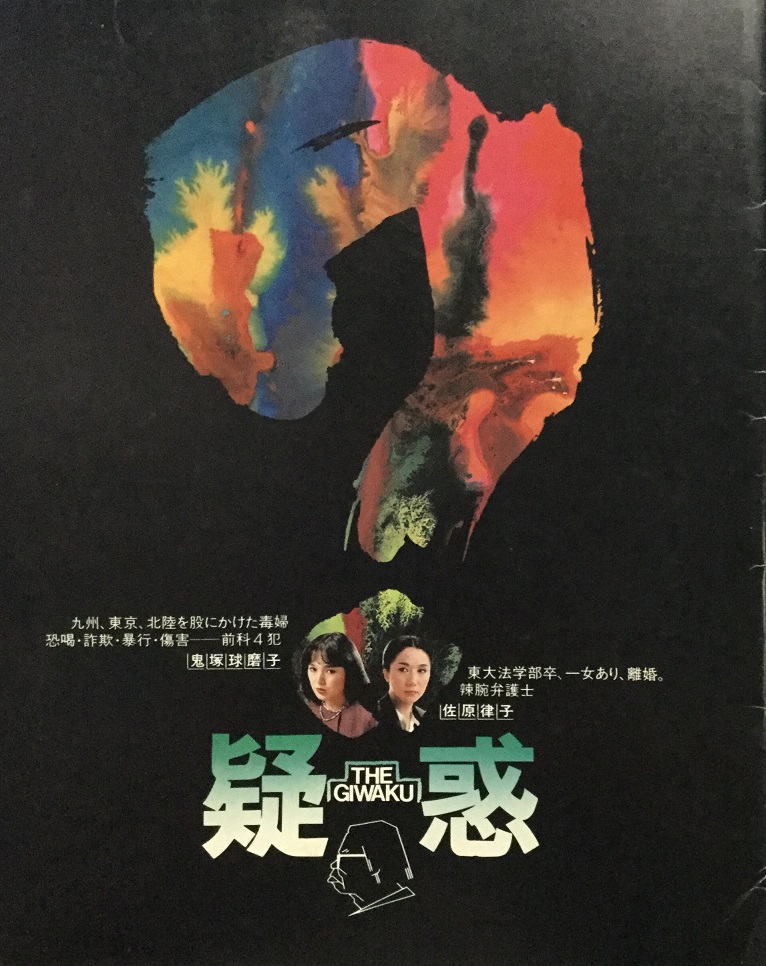
Suspicion posterBy the early ‘80s, Japan had successfully shaken off post-war desperation for burgeoning consumerism, but even as the nation rocketed into a more comfortable future, social equality proved slow to arrive. Once again adapting a novel by Seicho Matsumoto, Yoshitaro Nomura’s Suspicion (疑惑, Giwaku) makes allies of two very different women who are each in one way or another rejected by the conservative, infinitely rigid society in which they live.

Former bar hostess Kumako (Kaori Momoi) falls under suspicion when she alone survives the car accident that takes her husband’s life. A brassy, aloof woman, Kumako does not behave in the way the police might expect a recently bereaved spouse to behave which instantly turns them against her. This becomes a real problem once they discover that her husband, Shirakawa (Noboru Nakaya), was an extraordinarily wealthy man on whom she had recently taken out a number of life insurance polices. Shirakawa’s public profile ensures that the potentially salacious case is taken up by the newspapers who waste no time proclaiming Kumako a gold digging murderess while openly baying for her blood. Intimidated by the public outcry, the police are determined to charge Kumako with her husband’s murder despite the only existing evidence being extremely circumstantial.

After a prominent lawyer declines to take her case, her legal council stands down citing his poor health leaving Kumako entirely undefended. The court eventually appoints her a new lawyer, a woman – Ritsuko Sahara (Shima Iwashita), more practiced in civil than criminal law and just as much of an outcast as Kumako though in very different ways. Ritsuko has divorced her husband and he has custody of their young daughter whom Ritsuko makes a point of seeing once a month. Though the arrangement seems to suit her well enough, her status as a career woman who has “rejected” the roles of wife and mother also makes her one viewed with “suspicion” by those around her.

The central issue is indeed Kumako’s character. A former bar hostess with a traumatic childhood, Kamako has four previous convictions including assault and blackmail as well as an abrasive personality and a tendency to rub people up the wrong way. She doesn’t do herself any favours, but no kind of justice would be served if she were sentenced to death not for her husband’s murder but for the crime of being an “unpleasant” woman in a society which expects women to be docile and polite.

The papers, however, are very invested in the story of the coldblooded, gold digging murderess. Akitani (Akira Emoto), a local reporter, cosies up to the police for insider information, and does his best to root out Kumako’s sordid past including a sometime boyfriend who might have been her “pimp”. Ritsuko makes “trial by media” a key part of her defence strategy, arguing that her client’s case has been unfairly prejudiced by the image the press has sought to construct of her, but is unaware of the extent to which the police investigation has been distorted by the desire to appease the media or the various ways in which a venal press has gently perverted the course of justice in search of a better story.

Cool and efficient, Ritsuko isn’t really sure whether Kumako did it or not but is determined to ensure she is tried by the codes of law and not of conventional morality. A disgraced Akitani later barks at her that he sees no need to defend “a woman like that” in the papers, but Ritsuko’s having none of it – the purpose of the law is precisely to ensure guilt or innocence is assessed rationally on the basis of the evidence presented, as free of personal prejudice as it’s possible to be. An idealistic claim, given Japan’s famously implacable legal system, but one that sits well with a functioning democracy.

Ritsuko’s defence of Kumako is not particularly a feminist exercise, though a grudging kind of mutual respect eventually arises between the two women who have each in one sense or another rejected socially defined gender roles. While Ritsuko proclaims herself happy enough to be a mother once a month on Sundays, her husband’s new wife is a more territorial sort, eventually asking her to stop seeing her own daughter because she would rather raise her believing that she is hers alone. Kumako, however, is entirely unrepentant, even emboldened, vowing that she will continue using men until the day she dies. The two women remain mirror images of each other, both rejected, viewed with “suspicion” for the choices they have made, and forever at odds with a society which has already found them each “guilty” in the court of public opinion.


Original trailer (no subtitles)

People in the Slum (꼬방동네 사람들, Bae Chang-ho, 1982)

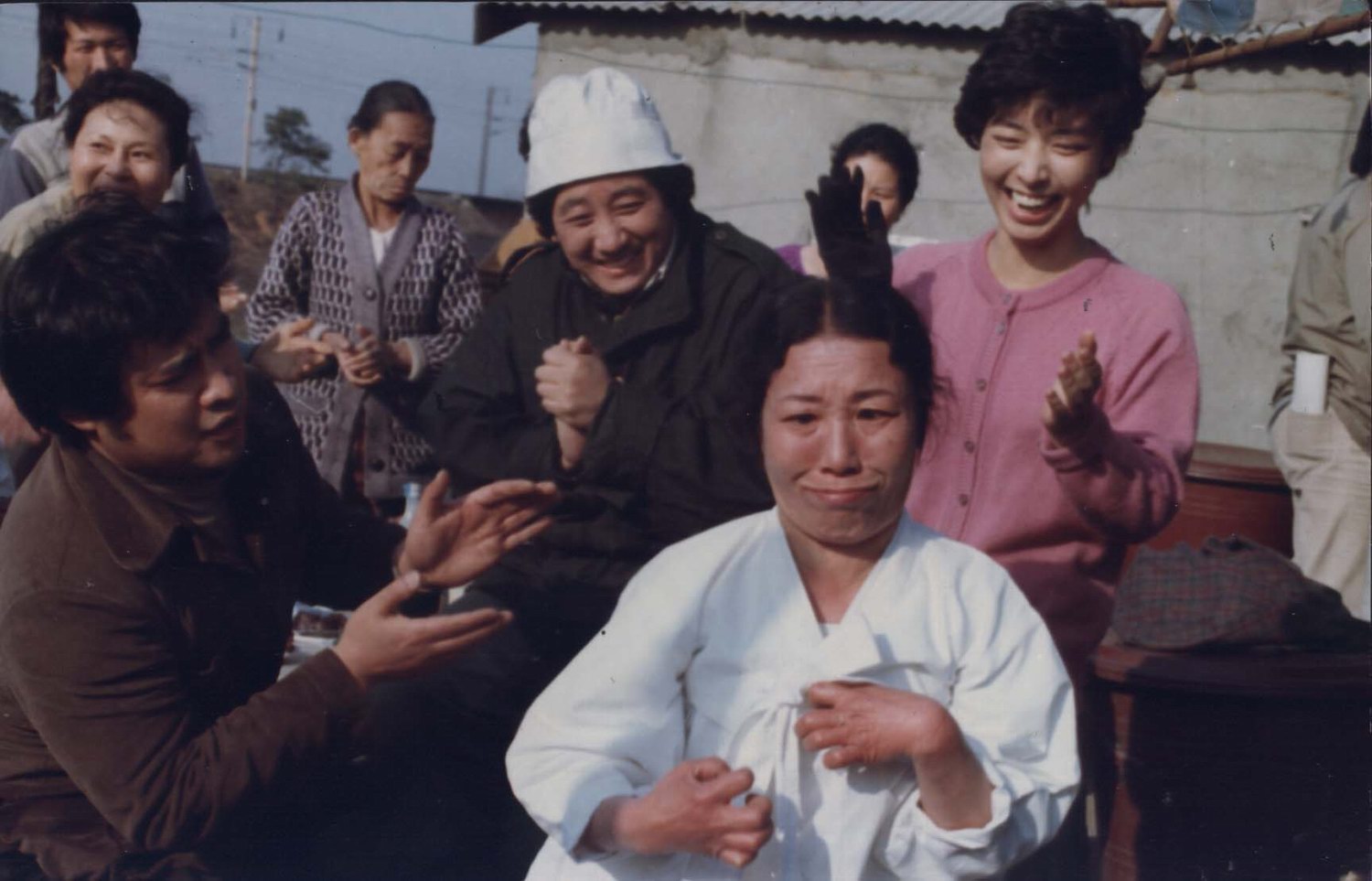
People in the slum still 2The Korea of the early ‘80s was not an altogether happy place. One dictator fell in 1979, but hopes of returning to democracy were dashed when general Chun Doo-hwan staged a coup and instigated martial law, brutally suppressing a large scale democracy protest in Gwangju in 1980 (though the news of the incident was also suppressed at the time it took place). People in the Slums (꼬방동네 사람들, Kkobangdongne Salamdeul), adapted from the best selling novel by Lee Dong-cheol, is not an overtly political film but takes as its heroes those who have lost out in the nation’s bold forward march into the capitalist future. Opening with a voice over from the author himself, the film dedicates itself to “the memory of neighbours of bygone days”, remembering both the hardships but also the fierce sense of community and warmth to be found among those living at the bottom of the heap.

Myeong-suk (Kim Bo-yeon), a still young-ish woman with a young son, lives in a slum outside of the city with her second husband, Tae-sub (kim Hee-ra). Nicknamed “Black Glove” because of the glove she always wears on her right hand, Myeong-suk is about to open her own business – a small grocery store serving the local residents, but her happiness is tempered with anxiety. Tae-sub, despite his promises, steals money from Myeong-suk to go drinking and gambling, is occasionally violent, and does not get on with her son, Jun-il, who refers to him as Mr. Piggy. Jun-il is also a constant worry because he’s picked up a habit of stealing things and generally causing trouble around the neighbourhood. When Myeong-suk’s former husband and the father of Jun-il, Ju-seok (Ahn Sung-ki), catches sight of her by chance one day, the past threatens to eclipse the small hope of her future.

Life in the slums is not easy. There are few resources, few people are working and there are lots of children with no money to feed and clothe them. Fights are frequent but often unserious. The community pull together to support each other, turning out in force for the grand opening of Myeong-suk’s shop or the 60th birthday celebration of a fellow resident. Besides Myeong-suk, her second husband, and son, the slum is home to a collection of unusual characters from a widow who dresses in white and does strange dances to entertain the locals, to the pastor who does his best to help where he can. A poor drunken woman makes a fool of herself all over town, nursing a crush on the pastor but seemingly unable to move past her dependency on alcohol and whatever it is that caused it and landed her in the slum.

Myeong-suk’s early life would not have suggested her current trajectory, as Bae reveals in Ju-seok’s flashbacks of his courtship to the woman who would become his wife. Ju-seok, a pickpocket, spotted Myeong-suk on a bus and it was love at first sight. Eventually he married her but never revealed his illicit occupation until he was finally arrested. For the sake of his wife and child, Ju-seok attempts to go straight but his efforts are frustrated by bad luck, temptation, and unforgiving policemen. No matter how hard Ju-seok tries to be a decent, hardworking, family man, the economic instability of late ‘70s Korea will not allow him to do it.

Myeong-suk waits for him, but there comes a point she cannot wait anymore. Her second husband is no better than her first and, just like Ju-seok, is hiding something from her. Tae-sub is a bully and a bruiser who is only using Myeong-suk as a convenient place to hide. She cannot rely on him for affection, protection, or financial stability. Ju-seok, at least, did love Myeong-suk even if that love was the very thing which kept leading him back into a life of crime which then took him away from her. Once again love is a luxury the poor cannot afford .

Where the general atmosphere may seem destined for a tragedy for the resilient, suffering Myeong-suk, her damaged son, and reformed taxi-driver former husband, Bae gives them hope for a warmer, if not a better, future. As Myeong-suk prepares to leave the slum, the pastor, encircled by the residents, reads out a passage reminding the locals that a neighbour’s suffering is one’s own suffering while the drunken woman who previously hated children appears to have sobered up and happily hugs a child. Myeong-suk makes a selfless gesture of atonement and solidarity in giving the money from selling her shop to another single mother whose youngest three all have different fathers, perhaps indicating the difficulty of her life since the father of her eldest passed away. Tae-sub too reforms, decides to face the past he’s been running from and make amends for his former life, facilitating a possible reunion for the star-crossed lovers Myeong-suk and Ju-seok. The future suddenly looks brighter, but it remains uncertain and who knows if love and a taxi-driver’s salary will be enough to keep Ju-seok on the straight and narrow as a responsible husband and father in turbulent ‘80s Korea.


People in the Slum screens as part of the London Korean Film Festival 2017 which is hosting a mini Bae Chang-ho retrospective of three films at each of which the director will be present for a Q&A.

The film was also recently released on all regions blu-ray courtesy of the Korean Film Archive. In addition to English subtitles on the main feature, the blu-ray also includes English subtitles for the commentary track by Bae Chang-ho and film critic Kim Sungwook, and comes with a bilingual booklet featuring essays by Jang Byung-won (programmer for Jeonju International Film Festival), Lee Yong-cheol (film critic), and Chris Berry (King’s College London).

You can also watch the entirety of the film legally and for free courtesy of the Korean Film Archive’s YouTube Channel.