Ah Ying (半邊人, Allen Fong, 1983)

“I want to make a film that reflects our time. If not, no one will ever know we existed,” frustrated filmmaker Cheung explains but finds himself hamstrung by the fact that he is not quite of this place by virtue of the fact that he is a Mandarin-speaking Mainlander who’s been living in the United States for several years. The old university friend who’s offered him this opportunity says as much, suggesting that in the end he doesn’t really understand Hong Kong while simultaneously failing to get a grip on his protagonist, a Hong Kong student in California.

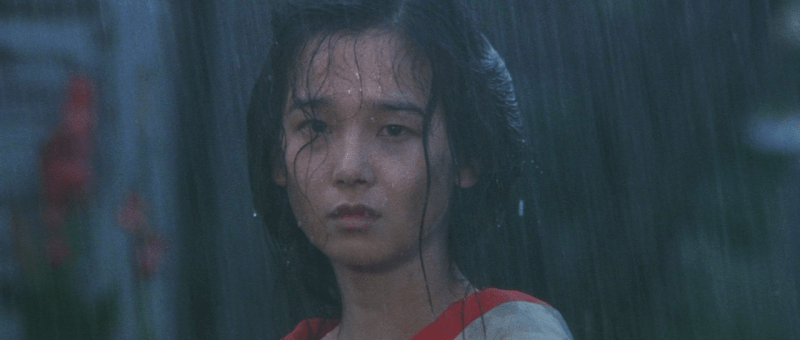
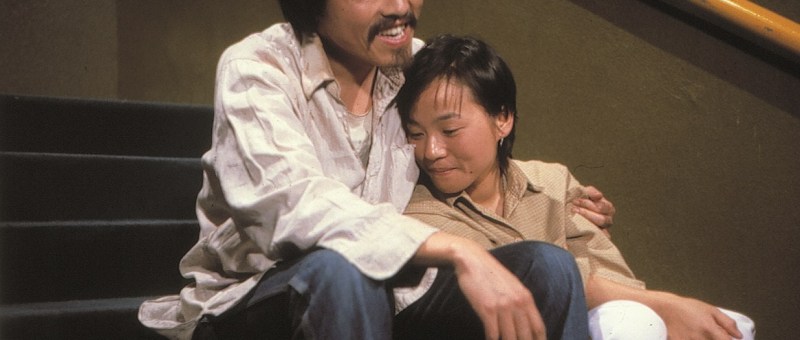
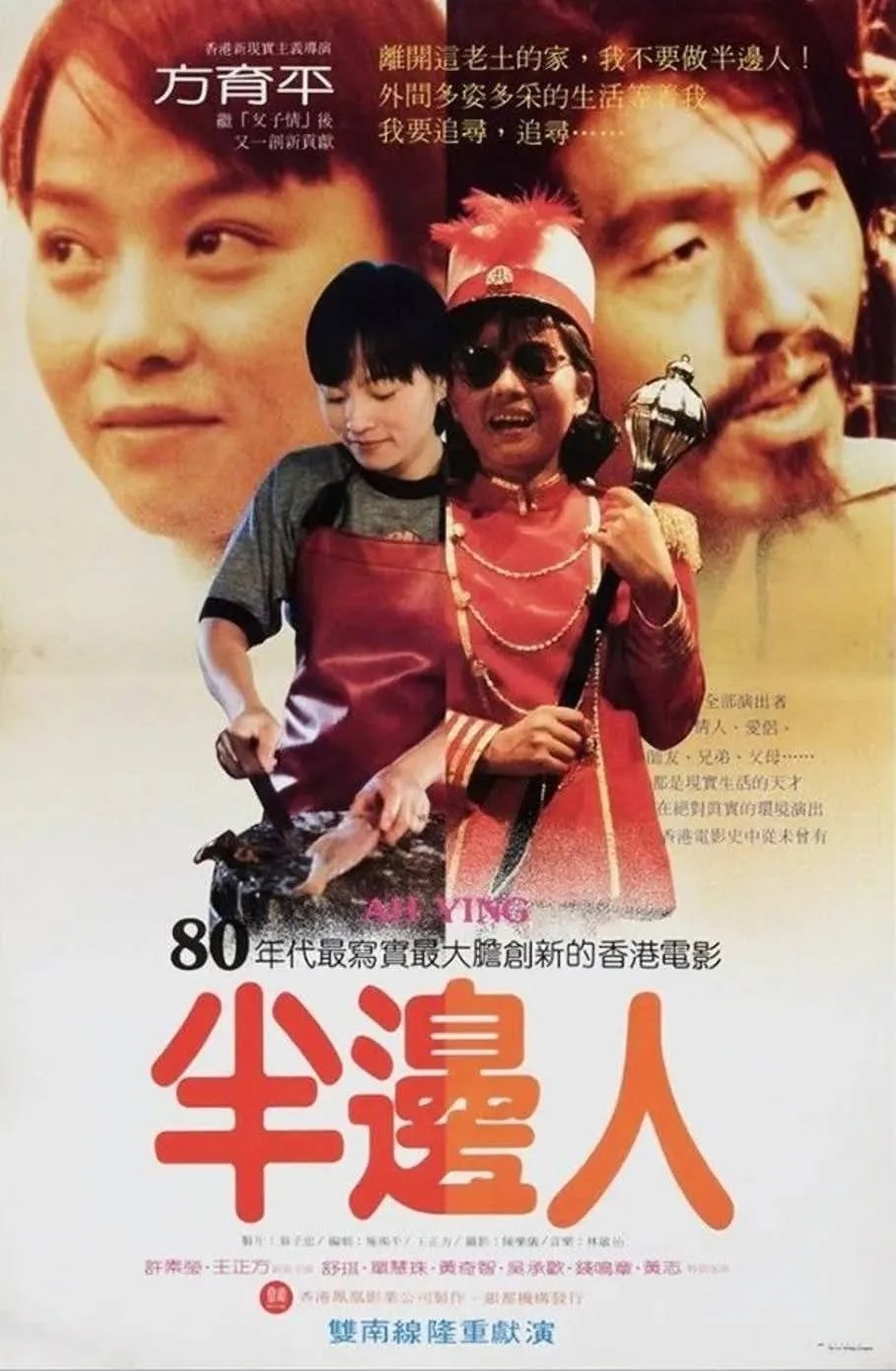
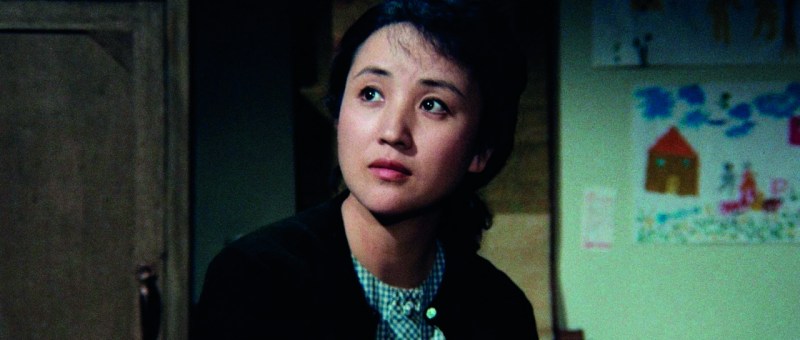
It may be this sense of dislocation that Allen Fong’s Ah Ying is hinting at. Fong himself studied at UN Berkley before returning to Hong Kong and based the character of Cheung on a friend of his who died suddenly in the middle of working on a project. But the film is really about its title character, a young woman who longs to transcend the world she was born into and find a more independent destiny while held back by her needy mother and drunken father who run a fishmongers at the market where Ah Ying is expected to help out. We her clumsily gutting fish, ripping off half the meat while stripping the skin and inelegantly tearing out its viscera, only to leave abruptly in response to a slightly rude customer and the fact she can’t get through to her increasingly distant boyfriend, Hung, on the telephone.

Later we see Ying try to scrub the fish smell off her hands after running off to her part-time job at the Hong Kong Film Centre in which she does menial work in return for free acting classes taught by Cheung. She tells him that she doesn’t really know why she’s there, but she wants to try it out and maybe it will lead to a career. Cheung is a little insensitive in mentioning a girl he knew who wanted to be an actress in California, but she spends 11th months of the year working in a cocktail bar. Nevertheless, acting quite literally gives Ying the opportunity to be someone else and helps her to imagine a different future outside of her family’s lack of aspiration for her. 

Ying’s family are comparatively lucky in that they have two adjacent apartments, but Ying and her four siblings all live in one with her parents too, while her taxi-driver brother and his wife live next-door though Ying likes to hang out there and listen to records. Western music is another means of escape as she demonstrates by singing an a cappella version of Time in Bottle as part of Cheung’s acting class, though he hasn’t heard of any of the musicians she mentions like Brian Eno or David Bowie further marking him as out of touch with “our times”. They do, however, bond over Simon & Garfunkel’s version of Scarborough Fair with Cheung noting that it sounds just like Chinese opera. 

In order to further research his screenplay, Cheung talks Ying into arranging an interview with her by then ex-boyfriend Hung who breaks up with her for being too nice to him which he finds clingy and unpleasant even when she tells him she’s fine with him continuing to sleep with other girls. Though she continues to look back on her relationship with Hung, Ying has already signalled her desire to move on by getting rid of her perm as if marking a new transition into adulthood. Her mother is not, however, particularly happy about it as Ying is currently the only one of her several children prepared to help out at the fish stand. Ying’s mother clings to her like life raft as a means of sustaining herself in what is in many ways a dissatisfying of existence filled with constant toil to provide for her ungrateful family who look down on her occupation while her husband sleeps in a chair all day after drinking too much and barely helps at all.

Ying’s mother tells Cheung that she’ll be lost without her when she marries, but otherwise suggests she’d prefer her not to because she’d be left to cope with everything on her own. Cheung asks Ying why she doesn’t move out and she replies that it’s it the rent, her father only pays her pocket money for helping on the stand and she doesn’t earn anything at the film centre, though it’s unlikely a young woman on her own would be able to afford to rent in Hong Kong anyway. Cheung becomes a kind of lifeline to her, a mentor figure guiding her towards another kind of life but equally lost himself and a stranger in the contemporary city. Though she may develop feelings for him, his interest in her remains paternal and like the characters they play on stage any union between them will have to wait until the next life. Nevertheless, through her connection with him, she may have begun to discover her true self and become at last a whole person even if seemingly tethered to the fish stand. In the busy streets and cramped apartments, Fong may have succeeded in recording his times after all but also an unexpected sense of optimism and possibility in discovering new paths even if they ultimately lead to a parting.
Ah Fei (油麻菜籽, Wan Jen, 1983)

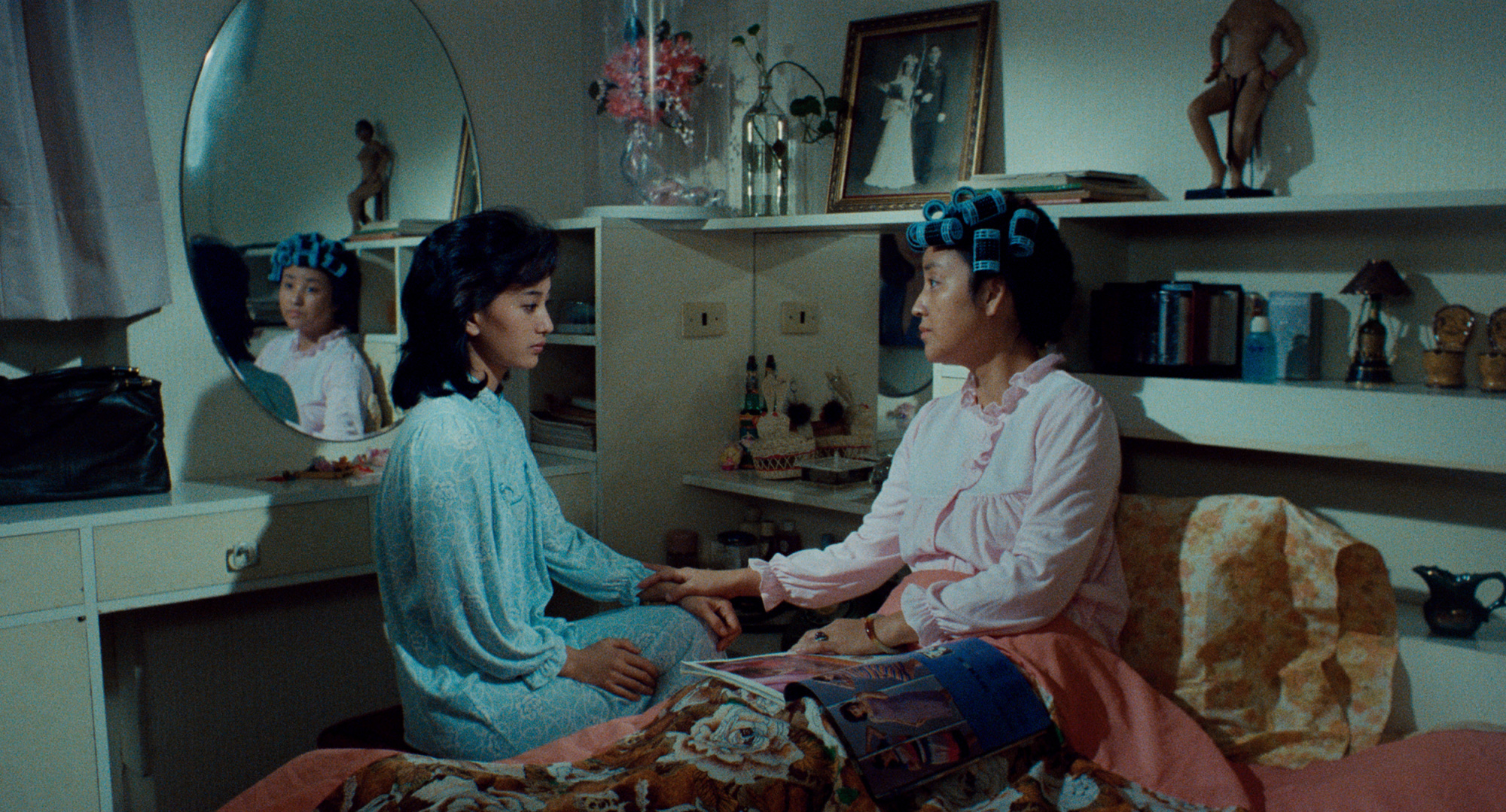
A few minutes into Wan Jen’s familial melodrama Ah Fei (油麻菜籽, yóu má càizǐ), a mother takes her children by the hand and walks to the end of a long jetty. We get the sense that she means jump and take her children with her, that she’s at the end of her tether and sees no other way out for herself, but still she thinks better of it and goes back anyway. Indeed, there isn’t really any way out for Hsin-chin, but there might be for her daughter, Ah Fei, if only Hsin-chin (Chen Chiu-yen) can bring herself to set her free.

Hsin-chin’s own mother died while she was a child and her otherwise sympathetic father later arranged her marriage to a man he thought was “honest” but turned out to be anything but. Shih-chen (Ko I-chen) is violent and irresponsible. He barely works and spends all the money Hsin-chin makes seamstressing on drink, gambling, and other women. Hsin-chin appeals to her father, but he ends up sending her back and siding with Shih-chen. He gives his son-in-law a not altogether stern talking to while encouraging him that there should at least be “civility” between husband and wife. 

We can see that this patriarchal sociality trumps all. Shih-chen originally takes no interest in Ah Fei but only in his son, Ah Shong whom he takes out with him drinking and introduces to his mistress. She buys him a toy sword which both buys the boy’s affection and creates further discord in the marital home as Shih-chen conspiratorially warns him not to tell his mother how he got it. On arriving home, Shin-chen had called for Ah Shong and he had come running in without even taking his shoes off, treading mud all over the floors Ah Fei had just been washing. 

Years later, Hsin-chin asks Shih-chen if he really thinks his son is as useless as he is. Shih-chen doesn’t answer, but it’s obvious that the answer is yes. These patriarchal patterns are quite obviously learned, passed down from fathers to sons in the ingrained codes of manliness. When his mother had tried to punish him when he was caught stealing bananas from a local farmer, Ah Shong turned round and said he’d tell his father her to beat her again if she didn’t stop. There is something sad and ironic in this circulation of violence as she beats her son to discipline him in much the same way her husband inflicts his violence on her and the teachers at Ah Fei’s school whack the pupils’ hands with a ruler when their grades dip below those of the previous paper. Ah Fei is studious and respectful, while Ah Shong is lazy and entitled. When his mother suffers a nasty miscarriage and calls for his help, Ah Shong doesn’t even wake up leaving Ah Fei to run alone through the night to the neighbour’s house so she can get the doctor. 

While the lived in the country, Hsin-chin had cherished her daughter and remarked that there was no point raising sons while Ah Fei is the only one contributing to the family by helping her with the housework. But on their return to Taipei after Shih-chen is caught sleeping with another man’s wife and forced to pay a humiliating fine in compensation, the situation is reversed. Shih-chen appears to mellow. He now stays home painting rather than going out to philander, but is still a figure of male failure who cannot find a job to support his family and leaves the heavy lifting to an increasingly embittered Hsin-chen. Hsin-chen meanwhile concentrates all her efforts on Ah Shong and resents Ah Fei. Though the family pay 200 dollars for Ah Shong’s private school, they begrudge the 30 for Ah Fei’s extra tuition so she can get into high school. Ah Fei doesn’t even want her to finish primary education. A neighbour has heard about an opening at a local factory and Hsin-chin wants her to start right away. It’s only Shih-chen who supports her education and switches his allegiance to Ah Fei rather than Ah Song who has disappointed him. He has come realise that Ah Shong is just like him after all, and seems to have a new degree of awareness about the family’s dynamics. He doesn’t want this life for Ah Fei, while Hsin-chin actively tries to trap her within the domestic space just as she was trapped.

In a repeated motif, Hsin-chin picks up a pair of scissors but can use them only in passive aggressive bouts of counter-productive revenge such as shredding Shih-chen’s suits, chopping the heads off roses to express her frustration, and cutting Ah Fee’s hair so she can’t go back to school after finding out that she had a boyfriend. Even once Ah Fei is a grown woman with a good job in advertising that is actively supporting the family, she struggles to separate herself from her mother who continues to frustrate her love and discourage her from marrying. Some of this is her own bitterness, and some honest advice that Ah Fei’s choice of husband is the most important decision she’ll ever make. Marry a good man and she’ll have a good life. Marry badly and she’ll end up like Hsin-chin knowing nothing but suffering. 

Of course, the crucial element is that Ah Fei has a choice that Hsin-chin never did. But at the same time she struggles to take it or to reject the internalised misogyny that ruled her mother’s life along with the patriarchal social codes that left her unable to leave a bad husband. She is well educated and financially independent so cannot be trapped in the same way her mother was even if her “escape” is ironically bound up with the patriarchal institution of marriage. Only on seeing her in a wedding dress does Hsin-chin finally accept her, reverting to the kind mother she had been in the countryside rather than the embittered old woman she had become in Taipei who is too afraid of her impending loneliness and the spectre of poverty to set her daughter free. Ah Fei’s liberation may speak of that of her generation, travelling from the countryside to a Taipei slum and finally a well-appointed flat in the centre of a rapidly developing city in the twilight of an authoritarian regime, but equally of the interconnected cycles of toxic masculinity, patriarchal entitlement, male failure, and internalised misogyny all seemingly dissolved in a single moment of forgiveness and acceptance.


Ah Fei screened as part of the BFI’s Myriad Voices: Reframing Taiwan New Cinema.

Trailer (Traditional Chinese / English subtitles)

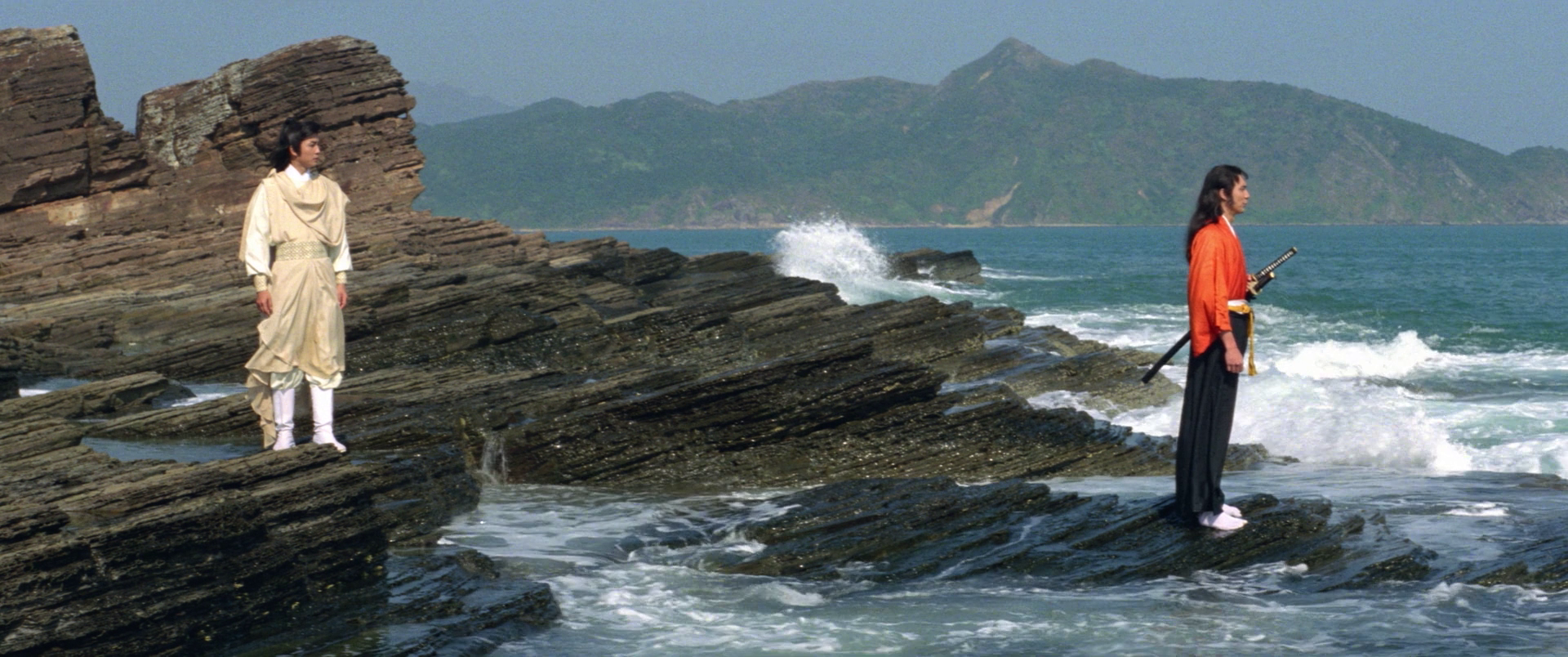
Duel to the Death (生死決, Tony Ching Siu-Tung, 1983)

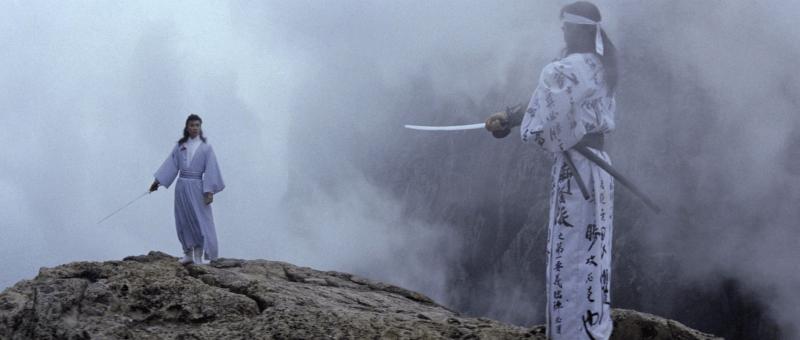
What is the essence of martial arts, self-improvement and defending the weak, or victory at all costs? The debut directorial feature from action choreographer Tony Ching Siu-Tung, Duel to the Death (生死決) may have a familiar theme but is unusual in its even-handedness focussing instead on the bond between its martial artist heroes who are each as it turns out pawns of greater powers and the mercy of a world in nothing is fair or righteous.

This is obvious right from the high impact opening sequence in which Japanese ninjas raid a Chinese temple to steal “The Lost Manual to Breaking the Swordplay Stances of All Clans.” Obviously, the scroll wasn’t very lost, in fact quite easy to find along with the names of all the martial artists in China which will come in handy later, but right away sets up the Japanese as essentially duplicitous and underhanded. The central drama revolves around a contest held every 10 years between a representative from Japan and China to decide whose martial arts is best, but it’s obvious that the Japanese plan to win by cheating which they attempt at every opportunity. 

This remains largely unknown to earnest swordsman Miyamoto (Norman Chui Siu-keung) who genuinely believes he’s engaging in a test of skills with a worthy opponent. In contrast to that advocated by the Shaolin monks, the philosophy fed to Miyamoto is that he must win at all costs even if it meant turning a sword on Buddha. His own master challenges him in disguise and is pleased when he is killed because it means his pupil has eclipsed him and there is no greater honour than dying at the hands of a superior samurai. Destructive as he maybe, Miyamoto is no villain for he has a pure-hearted attachment to his code only to have his illusions shattered when he realises he’s just a patsy set up for an easy victory by the shogun who has already cut a deal with the contest’s organisers to have his opponent kidnapped so he’ll have to fight the organiser’s daughter instead.

The authorities in China are shown to be duplicitous too, and despite the prevailing Shaolin philosophy it becomes apparent that Hsia-hau, the current guardian of the House of the Holy Sword, cares quite a lot about fame and fortune. Desperate to restore the name of his clan and perhaps irritated not to have had a son, he’s raised his daughter Sing Lam (Flora Cheong-Leen) as a boy but does not seem to fully trust her ability to improve their fortunes despite the supposed gender equality of the jianghu society. Notably, Miyamoto refuses to fight her after realising she is a woman signalling once again the destructive qualities of his code in its rigid misogyny where Ching Wan (Damian Lau), the Chinese challenger, fully accepts her but seems unwilling to let their potential romance disrupt his own commitment to pursuit of his skill.

Like Miyamoto, Ching Wan sees the contest as a means of testing himself yet places no importance on winning or losing. Ching Wan often often comes to Miyamoto’s defence, stating that the Japanese were only acting in accordance with the their national character and they could learn a lot from their perseverance, while Miyamoto too refuses to rise to the bait when Sing Lam remarks that Japan must be a very poor place if the simple dinner they’ve been offered seems like an extravagant feast so it’s understandable that they always seem to be trying to plunder China. Trying to plunder China the shogun most definitely is, or least hoping to dominate it, but all the two martial artists want is the impossibility of a fair fight in a world in which double dealing is the norm and nothing’s quite as it seems. 

The full-on weirdness of Ching’s action sequences underline just how absurd this world is. Ninjas lurk everywhere including in the sand, while during one fight one giant ninja suddenly explodes into lots of tiny little ones. In the opening raid, they use dynamite for suicide attacks and are later seen flying in massive kites. The shogun keeps all the kidnapped martial artists he was planning to take back to Japan to steal their knowledge in a giant spider web-like network of ropes underground, hanging around until the ninjas load them into palanquins. Nevertheless, despite the obviousness of his use of Korean sets standing in for Japan, Ching injects a degree of realism in a painstaking attempt to maintain authenticity in depicting Japanese sword style. Cutting fast and furious with delirious wire work, the most impressive action sequence may well be that of Sing Lam effortlessly setting up a pair of obnoxious Japanese swordsmen. “Why dwell on determining whose martial arts is better?” a monk idly asks, and indeed there is no real answer save a vicious cycle of violence of retribution that remains unfinished even at the nihilistic conclusion. 


Original trailer (English subtitles)

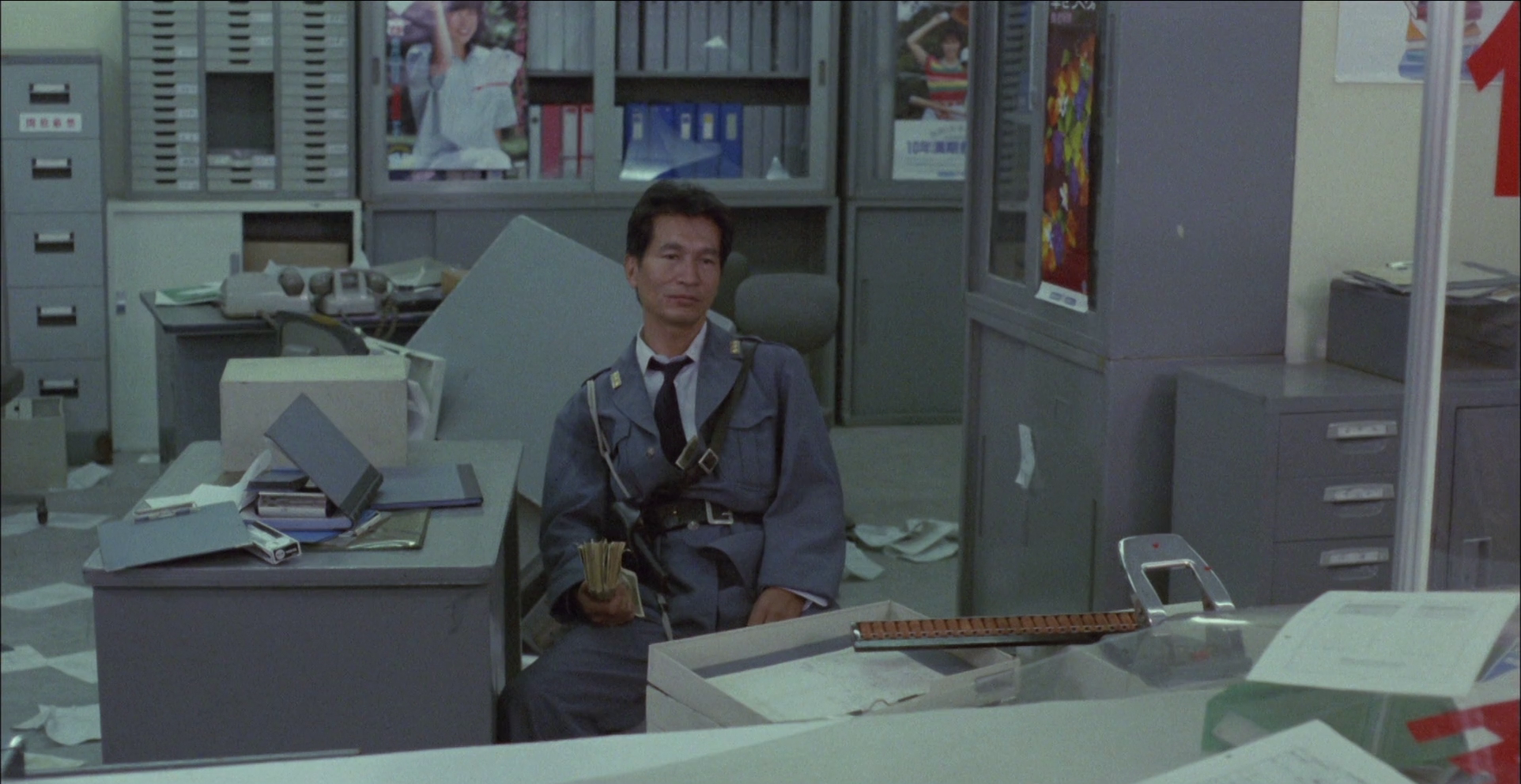
The Mosquito on the Tenth Floor (十階のモスキート, Yoichi Sai, 1983)

A beaten-down beat cop’s existential crisis progressively deepens after he throws himself into financial ruin to buy a computer in Yoichi Sai’s debut The Mosquito on the Tenth Floor (十階のモスキート, Jikkai no Mosquito). Like Pool Without Water, star Yuya Uchida conceived and co-scripted the film as a vehicle for himself and was apparently inspired by the sight of some blood, his own, on a wall where he’d squashed a mosquito though he also claimed the the 10 in the title is intended to reference the 10 commandments in addition to simply where the unnamed protagonist lives.

The fact that he lives on the 10th and top floor in a building with no lift is symbolic of his dismal circumstances. On the one hand he can rise no higher but on the other is stuck with an inconvenient living situation precisely because of his inability to rise socially. As it transpires the hero, a policeman, joined the force right out of high school with aspirations of rising to the rank of captain but has spent the entirety of his 20-year career manning a police box. He’s repeatedly failed the exam for promotion to lieutenant and realistically speaking is now simply too old to make much further progress. A man of few words, he listens as the other officers who took the exam with him outline the hierarchal structure of the police force while meditating that as a man on the wrong side of 40 his possibilities have decreased and it’s more than likely he’ll be stuck in the police box until he retires. 

His boss later says as much, sympathising with him but also pointing out that a policeman is also a public servant with a role to serve within the community. He is supposed to make people feel safe and contribute to the progress towards a crime-free society, but it’s clear that his life has spiralled out of control precisely because he cannot ally his career goals with the kind of life he wished to lead. His wife divorced him two years ago seemingly because she wanted a greater degree of material comfort and became resentful that he failed to progress in his career and could not move on from the low-salaried position of an ordinary street cop. She now makes a living selling golf club memberships, looking ahead to the oncoming Bubble-era and a society of affluent salarymen which is very much what her new boyfriend seems to be. Meanwhile, she lives in a very nice townhouse with their teenage daughter and constantly hassles the policeman for falling behind with his child support and alimony payments. He’s also racked up a healthy tab at a karaoke bar where he regularly hangs out and has a serious gambling problem with betting on boat races seemingly his only other form of social outlet.

As his daughter and others keep reminding him, the world is changing and his decision to buy a computer after unwisely taking out a payday loan is in part a symbol of his desire to progress into the modern society even if, somewhat ironically, others chastise him for spending what is then a huge amount of money on something they think of a child’s toy. Otherwise an upstanding policeman who irritatedly deflects a colleague’s joke about bribing someone to pass the exam, the policeman finds himself taking out one payday loan to pay another with loansharks constantly ringing him at the police box to remind him he’s behind on his payments. To overcome his sense of powerlessness, he begins by abusing his authority in catching a punk woman shoplifting and arresting her but then taking her back to his flat to play computer bowling and take advantage of her sexually. He later does something similar with a bar hostess, Keiko (Reiko Nakamura), who took him home when he was drunk. Though the encounter begins as rape, Keiko soon gives in and even comes back for more claiming that she’d never done it with a policeman before and it exceeded her expectations which is in many ways reflective social attitudes at the time. Emboldened, he invites danger by raping a female traffic cop, tearing her clothes as she fights back, screams, and cries though she presumably does not report him given the professional and social consequences that may adversely affect her life and career if she chose to. 

His ex-wife Toshie (Kazuko Yoshiyuki) says she’s not even sure if he’s human anymore, and his failed attempt to rape her after his boss reminds him that he advised against getting a divorce in the first place because it would negatively affect his chance of promotion may be a perverse way to prove he is though it obviously backfires. Having failed in every area of his life and with no prospect of ever getting back on track or starting again, he begins to go quietly insane typing rude words into his computer while the constant calls from loansharks take on a mosquito-like buzzing as does his own final wail of despair and powerlessness as he’s brought down by same authority he once served. His aloneness and confusion are palpable when he ventures into the city and discovers his teenage daughter Rie (Kyoko Koizumi) dancing in Harajuku staring at her intently but then walking away having invaded this space reserved for the young. “Police yourself!” one of the Rockabilly guys ironically instructs him on noticing that he’s dropped his ice cream cone, explaining that the police might shut them down if they’re discovered to be using the space irresponsibly by littering. Rie and her friends tell him to get a life, explaining that the world is changing while tapping him for cash he doesn’t have but is too embarrassed to refuse, laying bare the extent to which he and those like him have been left behind by the economic miracle, buzzing around maddeningly in mid-air with safe nowhere safe to land. 


Original trailer (no subtitles)

It’s All Right, My Friend (だいじょうぶマイフレンド, Ryu Murakami, 1983)

Ryu Murakami was already a prize-winning author who had successfully adapted his own novel for the screen when he began work on 1983’s It’s All Right, My Friend (だいじょうぶマイフレンド, Daijobu My Friend) yet he was perhaps an odd choice for the material. A big budget blockbuster produced by Toho, the film may have been intended to echo the kind of films Kadokawa was making with its teenage starlets and media mix strategy and like them is largely built around the title song performed by star Leona Hirota. But what might have worked as a countercultural piece of punk cinema if made on a shoestring by starving artists could not help but fail when blessed with the production values of a mainstream picture. 

A case in point, the film stars Hollywood actor Peter Fonda as an alien, Gonzy, who has lost the ability to fly causing him to plummet into an outdoor swimming pool where the three heroes are hanging out. Fonda delivers all his lines in English, while everyone else replies in Japanese. Gonzy explains that he was raised in the US by a kindhearted scientist who taught him to speak (his first words were “Merry Christmas”) but longs to visit his home planet. Meanwhile, he’s being hunted by a mysterious fascistic group of misogynistic eugenicists who want his genes for their cloning programme which hopes to eliminate the need for human women to exist at all. 

Doors have apparently already taken over factories, family restaurants, and psychiatric institutions such as the Tachibana Mental Hospital where they take heroes Monica (Yoshiyuki Noo) and Mimimi (Leona Hirota) and try to brainwash them to recognise a pigeon as an apple and aeroplane as a banana. They also drill into the brain of a young man they describe as a poor delinquent in order to turn him into an obedient drone, the implication being that they wish to turn mankind into a race of automatons and possibly resent women because they pose a threat to their plan. Then again, there is a distantly homoerotic quality to the relationships between the Doors, two of them later dying with clasped hands aside from all their strange musical numbers about how women are inferior and produce only substandard offspring.  

Ryuichi Sakamoto is credited as a composer on the film and the Doors’ henchman appear to be closely styled to resemble Yellow Magic Orchestra, often mimicking their dance moves while otherwise faceless and anonymous behind their identical sunglasses and slicked back hair. Murakami signals his intentions in the opening scene in which Mimimi has a dream sequence in the manner of classic Hollywood musical. She dances with an American sailor against a backdrop that strongly recalls the noir cinema of the late 40s until a car full of gangsters turns up and shoots him with a machine gun leaving her kicking around on her own. Music becomes the device that can break through the Doors’ programming, the drones beginning to twitch to Monica’s Harmonica provoking a vision of dancers in gold lamé that finally ends in a mass disco of liberation from the authoritarian thought police that restores Gonzy’s ability to fly. 

Even so, the reason he couldn’t was apparently his aversion to his personal kryptonite, tomatoes, whose voices he can hear whispering that they hate him and thereby suppressing his powers in reawakening memories of his childhood trauma along with his low self-esteem. To help him fly again, the gang engage in a series of crazy episodes including hang gliding in Saipan while Gonzy continues as an innocent with an incredibly vulgar sensibility eventually turning his “bazooka-like” ejaculate into a key weapon. There might be something in the echoing of an early ’80s anxiety about dangerous technology and weird techno-cults with shady motivations for their scientific endeavours though the irony is often buried under the swanky blockbuster production values and destabilising presence of Fonda who is quite literally in a different film from the rest of the cast by virtue of speaking his own language and being unable to understand what is going on. Even so, the film like the title song is essentially a kind of tribute to intercultural friendship in the bond that arises between the trio of aimless youths and the middle-aged space alien who’s trying to find his way home. Decidedly strange and defiantly surreal, Murakami’s weird countercultural blockbuster is a forgotten piece of 80s pulp but perhaps exposes something of the anxieties of a Japan heading towards the height of its prosperity and developing a fear of flying if not quite of tomatoes.


Legend of the Cat Monster (麗猫伝説, Nobuhiko Obayashi, 1983)

Produced as a special marking the 100th episode of the Tuesday Night Suspense Theatre TV drama series, Nobuhiko Obayashi’s Legend of the Cat Monster (麗猫伝説, Reibyo densetsu) is preceded by a title card reading “Elegy for a Faraway Film”. Scripted by Chiho Katsura, the film is indeed in its way a lament for dying world albeit one which owes a heavy debt to Billy Wilder’s Sunset Boulevard with a little Fedora thrown in. Repurposing the classic ghost cat film it casts cinema itself as dangerous illusion, a vampiric compulsion that drowns all who encounter it in irresolvable longing. 

This sense of irrecoverable nostalgia is palpable from the opening sequence which, aside from the melancholy voiceover, introduces us to the world of Setouchi Cinema apparently a moribund studio complex once dubbed the Hollywood of Japan. The new arrival, Ryohei (Akira Emoto), is dressed in noticeably anachronistic fashion as if he were a 1930s newsboy rather than a young man living in the Japan of the early 1980s. His girlfriend, Ryoko (Jun Fubuki), who works as a stage hand dresses in a similarly old-fashioned style and in fact carries an oversize watch that was a heirloom from her late father, an unsuccessful film director. Ryoko remarks that she’s been hoping someone would come and rescue her from this half-dead island but she doubts Ryohei will be the one to do it because he has also come here in search of a dream. 

That dream is, however, already dead at least according to some. The film director working at the studio is berated by a woman of around the same age working as a manager for an idol star for still getting an allowance from his mother at 60 because he has failed to make it as a film director at least in financial terms. There is a poignant, largely unexplored subplot between that suggests the inability to reconcile the dream of cinema with the economic “reality” has kept them apart all these years and that their dream of love may now be over too. 

It seems that the reclusive actress at the film’s centre, Akiko (Wakaba Irie), is also living on a frustrated dream of love withdrawing from the world around her believing that her lover will someday return from “Hollywood” which seems to be another word for paradise or perhaps the world beyond on the other side of the silver screen. To her, film is but a dream with in a dream. A window or screen is a portal to the burdens of the heart, memories of days gone by, and the illusions we once saw that cannot be seen again.  She herself is trapped within her own dream of love, but it is not so much a dream of her that bewitches Ryohei but the impossibility of cinema.

When passing photographer, Tachihara (Toru Minegishi), who lost his own wife to the unobtainable magic of the movies, snaps a picture of Akiko at her window holding a cat and looking exactly as she did the day she abruptly walked out on an incomplete film, it spurs a cynical producer to get the idea of convincing her to make a comeback and in a ghost cat movie, no less. Obayashi’s casting coup is getting mother and daughter Takako and Wakaba Irie to play aged and youthful versions of the famous actress, Takako herself having been a huge star of the 1930s performing most notably for Kenji Mizoguchi in the The Water Magician. There is an undeniable poignancy in her reflection that is only her aging body which is dying, as if she were merely becoming an embodiment of her image migrating to silver screen which exists between this world and next. It’s this screen that is later ruptured by Ryoko as she makes her escape after failing to save Ryohei from the curse of cinema. 

As Akiko laments, he’s writing his script more for himself than for her and it’s the quest for art which has begun to drain and make him mad. When he, pale and zombie-like, attempts to proffer his scripts it appears to be nothing more than his own name written over and over again. Like the Max-esque butler Mizumori (Akira Oizumi) says, film is an eternal dream which by its definition can never realised and exists only a state of longing somewhere beyond the veil. Drawing inspiration from Nobuo Nakagawa in particular and harnessing the sense of gothic dread found in Sunset Boulevard, Obayashi captures the eternal nightmares of artistic creation with the maddening obsessions of unrequited love and the image of the ideal which exists eternally out of reach somewhere on the other side of the screen.


The Geisha (陽暉楼, Hideo Gosha, 1983)

The coming of the railroad spells doom for one of the most prestigious geisha houses in Japan in Hideo Gosha’s adaptation of the Tomiko Miyao novel, The Geisha (陽暉楼, Yokiro). Miyao’s novels had often provided the inspiration for Gosha’s films and she had herself been the daughter of a “flesh broker” in pre-war Kochi though later escaping to another town to be a substitute teacher. Though the English title may focus more on plight of the the individual geisha at its centre, the Japanese hints more at the destructive cycle of the Yokiro itself in the persistent legacy of exploitation.

Then again as he later points out, if you’re looking for a villain in this story then the responsibility lies largely with Daikatsu (Ken Ogata) himself. In a prologue set in 1913, Daikatsu has eloped with geisha Otsuru but the pair are discovered by gangsters sent after them by the Yokiro. Daikatsu kills all of their assailants and assures Otsuru that they are finally “free” but it appears to be too late. Holding their baby daughter in one arm, Otsuru collapses into his other and presumably dies either then or shortly after while Daikatsu is later sent to prison for 10 years. 20 years later in 1933, the daughter, Fusako (Kimiko Ikegami), has become the number one geisha at the Yokiro under the name Momowaka though her career flounders because she is regarded as too emotionally distant to keep a patron. 

Daikatsu is also himself in Kochi at this point and working as a procurer brokering the sale of young women to the Yokiro and other geisha houses and brothels. When a school teacher comes to him to sell his wife, he taps her teeth to check for malnutrition much as one would examine a horse before running a hand underneath her kimono to check everything is at is should be before offering a valuation. Her husband only looks at him anxiously enquiring if a body such as hers which has as he later reveals born three children will fetch a good price. Daikatsu lets them go so the woman, Masae, can spend a final night with her family explaining that he cannot force someone to work if they do not want to do so and is well aware they will likely take his money and never be seen again which is what almost what happens. As it turns out the husband is killed in a fight and the woman ends up becoming a geisha anyway, only in the pay of prominent Osaka yakuza led by Inaso. 

Inaso (Mikio Narita) and buddies want in on the construction of the railroad that will shortly be coming to Kochi, but need to take over the town first which means getting around the mistress of the Yokiro, Osode (Mitsuko Baisho), who is apparently running every game town. The entire local economy is underpinned by female exploitation and facilitated by a woman, a former geisha, seizing the only power that is available to her. Isano later uses Masae as a kind of spy, getting her to initiate a relationship with Osode’s weak willed husband in an attempt to humiliate her which largely backfires as Osode boldly reclaims her man through a violent brawl in a hot spring though it does not appear that she is especially fond of him so much as he serves a particular purpose.

The brawl emphases the way in which women are pitted against each other by the nature of a patriarchal society along with the ways in which they are forced to mediate their power through men. Fusako also gets into an intense physical fight with Tamako (Atsuko Asano), a surrogate daughter of Daikatsu’s and emblem of a coming modernity, who insists on becoming a sex worker at the area’s most prominent brothel. In a strange moment of confrontation, both the geishas of the Yokiro dressed in their traditional regalia, and the sex workers of Tamamizu, arrive at a modern club where the heir to a banking empire courted by the Yokiro, Saganoi, dances the Charleston he learned while studying abroad in America. The geisha who dances with him struggles to pick up the moves, Saganoi lamenting that the dance is just not suited to a woman wearing a heavy kimono, elaborate wig, and clumsy geta. Tamako immediately gets up from her table and kicks off her shoes, gathering the hem of her own kimono to free her legs for the high level kicks of the modern dance. 

Fusako reclaims her authority by interrupting the dance immediately before its conclusion and insisting on retrieving their guest. Tamako appears to resent Fusako, perhaps frustrated in her relationship with Daisuke who does not appear to have had much contact with the daughter he sold at 12 years old. They too end up in an elaborate brawl in which Tamako rips off Fusako’s wig and splits her lip, symbolically freeing her to transcend the constraints of her “geisha” persona. Meeting Saganoi at Western-style bar, she boldly dances on the counter and sleeps with him of her own volition. But in doing so she conceives a child and leaves herself in a difficult position. She has betrayed her patron, and though she could simply have kept the fact from him and allowed him to think the baby was his, Fusako does not want to bring her child up in lies while simultaneously hanging on to a naive dream that Saganoi will one day return to her despite being made aware he has left for Europe. 

“All men are enemies of women,” she writhes in childbirth while swearing that no one will take her child from her, but she is still an indentured woman and her daughter is by rights the property of Osode. Her illness, presumably consumption, began long before her pregnancy and seems to an echo of the suffering she has been forced to endure as a geisha. As her health weakens, so the Yokiro declines. First it is ravaged by a literal storm, but also under threat from the Osaka gangsters desperate to take over Kochi to gain access to the lucrative construction contracts extending in its direction. Even so, as Daikatsu admits much of the fault lies with him. He chose to elope with Otsuru and was unable to protect either her or their daughter whom he allowed meet the same fate by entering the geisha world. He continued to earn his money by selling women into what is essentially slavery, and cannot escape his part in their continued exploitation while his entanglement with gangsters later disrupts the more settled life Tamako has begun to build for herself. 

“Wait all you want, the train’s not coming,” Tamako is later told, as if signalling that there really is no way out of this destructive and disappointing existence. Truly epic in scope, Gosha’s pre-war drama draws together patriarchal exploitation and societal corruption to critique a burgeoning modernity, but ends exactly as it started among the vibrant cherry blossoms only this time undercutting the melancholy of the oft repeated song with a more cheerful scene hinting at least symbolically at a long-awaited reunion. 


Original trailer (English subtitles)

Choji Snack Bar (居酒屋兆治, Yasuo Furuhata, 1983)

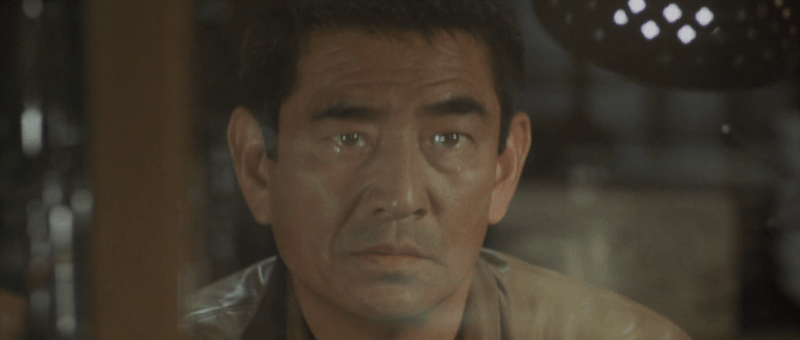
Beginning his career at Toei, Yasuo Furuhata is most closely associated with tough guy action films forging a strong and enduring relationship with the genre’s key star Ken Takakura through their work on the New Abashiri Prison series. From the late ‘70s however he began to transition further towards the realms of manly melodrama with a series of films which often starred Takakura as a man struggling to adapt to life in modern Japan such as the guilt-ridden policeman of Station or the conflicted former yakuza of Yasha. Arriving between the two and adapted from a novel by Hitomi Yamaguchi, Choji Snack Bar (居酒屋兆治, Izakaya Choji) is in someways much the same casting a typically stoic Takakura as an intensely noble man whose values are increasingly at odds with the world in which he lives while shifting away from the realms of manly action towards a more somber contemplation of the broken dreams of post-war youth. 

Eiji (Ken Takakura), known to all as “Choji”, is a happily married father of two who gave up his job in shipping to open a bar selling small eats in a Hakodate. He and his wife Shigeko (Tokiko Kato) have been planning to expand the business by opening a larger location near the docks but Eiji is dragging his feet largely it seems because the place found for him by childhood friend Kawahara (Juzo Itami) is too close to another bar run by an old man who helped him when he first started out so he’s loathe to risk infringing on his livelihood. Meanwhile, the central drama in town in the mysterious disappearance of Choji’s childhood sweetheart, Sayo (Reiko Ohara), who married a wealthy ranch owner but has long been trapped in an unhappy marriage she has several times failed to escape. Sayo’s disappearance coincided with a fire at the ranch which is suspected to have been started deliberately the assumption being that Sayo is responsible. 

The ironic disappearance of Sayo forces Choji into a reconsideration of his life choices, something his middle-aged friends also find themselves experiencing if for various different reasons. Choji was once a high school baseball star dreaming of turning pro but his hopes were dashed after an injury forced him to leave the sport thereafter working in an office at the docks but later resigning rather than accept a promotion that would mean he’d suddenly be the boss to his former friends. The bar is his way of being his own man, no one’s boss but his own, though his decision was not universally respected among his friends and in fact came as something of a shock to Shigeko who consented to an arranged marriage partly in search of the typical salaryman life. Most of the other men in town, however, struggle to keep their youthful dreams alive or to find accommodation with the way their lives are now. Inoue (Eiji Misato), for example, is obsessed with cabaret singing, spending all his time in karaoke bars often wearing elaborate costumes and makeup. Childhood friend Iwashita (Kunie Tanaka) even wonders if he’s gone “mad” after taking him to task for neglecting his family on discovering that he’s converted a docked boat into a tiny private cabaret space complete with a sound system and lighting as well as a small seating area for spectators who presumably have not yet materialised. 

This is perhaps in a way a symbol in itself of Japan’s new economic prosperity, later thrown into stark contrast by Choji’s explanation that he and Sayo broke up because of their mutual poverty he nobly pushing her to marry a wealthy man so at least one of them could be happy. Happy is however something Sayo has never been, later paying a short visit to Choji during which she blames him for his “cowardice” suggesting that he is largely responsible for the misery of her life in failing to fight for their love, giving up too easily on a distant happiness which is something he later cautions a young baseball player not to do. The police meanwhile accuse him of complicity, implying the pair knew Sayo’s husband had TB and thought he’d die soon enough after which they’d inherit his money and stay together, consequently assuming the “arson” was an attempted murder. 

The irony is that Choji is far too noble to have ever considered such a thing, something demonstrated by his continuing righteousness in refusing to take up Kawahara’s offer of cheap and lucrative new premises because it would mean betraying his former mentor, refusing to condemn his former teacher’s shock marriage to a woman 30 years his junior, and eventually taking Kawahara to task for his callous comments over the death of friend’s wife. Rival cabbie Akimoto (Masao Komatsu) was forever joking that his wife would die before him and sleazily flirting with young women, but went into debt in order to buy her an elaborate funeral altar and is completely devastated by her loss while living with his three children in a noticeably rundown apartment. As Choji puts it, Kawahara’s broken dream is in no longer being the big boss among the boys as he was in their high school days, fuelling his sense of middle-aged male frustration into embittered drunken violence. Yet everyone is always telling Choji he is being unnecessarily “good”, that he should stop thinking about doing the right thing and put himself first by accepting the offer to relocate the bar because business is business. 

Sayo too is trapped in the past unable to accommodate herself with the way her life turned out, an ironic casualty of Choji’s goodness clinging to her broken dream of youth. These now middle-aged teens of the post-war era are in a sense victims of their age, denied the sense of possibility the youth of today might enjoy but equally unable to step fully into the contemporary era of economic prosperity which some feel has become increasingly amoral and unkind. Nevertheless, as Shigeko puts it “no one can take away what a person carries in their heart”, Choji manfully retaining his nobility while literally burning the image of the past but perhaps carrying it with him as the other men carry the shards of their broken dreams some with more nobility than others.  


Original trailer (no subtitles)

Amagi Pass (天城越え, Haruhiko Mimura, 1983)

There’s no statute of limitations on guilt an ageing policeman laments in Haruhiko Mimura’s adaptation of the Seicho Matsumoto mystery, Amagi Pass (天城越え, Amagi-Goe). Co-produced by Yoshitaro Nomura and co-scripted by Tai Kato, Amagi Pass arrives at the tail end of the box office dominance of the prestige whodunnit and like many of its kind hinges on events which took place during the war though in this case the effects are more psychological than literal, hinging on the implications of an age of violence and hyper masculinity coupled with sexual repression and a conservative culture. 

In a voiceover which doesn’t quite open the film, the hero, Kenzo (Mikijiro Hira / Yoichi Ito), as we will later realise him to be, likens himself to that of Kawabata’s Izu Dancer though as he explains he was not a student but the 14-year-old son of a blacksmith with worn out zori on his feet as he attempted to run away from home in the summer of 1940 only to turn back half-way through. In the present day, meanwhile, an elderly detective, Tajima (Tsunehiko Watase), now with a prominent limp, slowly makes his way through the modern world towards a print shop where he orders 300 copies of the case report on the murder of an itinerant labourer in Amagi Pass in June, 1940. A wandering geisha was later charged with the crime but as Tajima explains he does not believe that she was guilty and harbours regrets over his original investigation recognising his own inexperience in overseeing his first big case. 

As so often, the detective’s arrival is a call from the past, forcing Kenzo, now a middle-aged man, to reckon with the traumatic events of his youth. Earlier we had seen him in a doctor’s office where it is implied that something is poisoning him and needs to come out, his illness just as much of a reflection of his trauma as the policeman’s limp. Flashing back to 1940 we find him a young man confused, fatherless but perhaps looking for fatherly guidance from older men such as a strange pedlar he meets on the road who cheekily shows him illustrated pornography, or the wise uncle who eventually tricks him into buying dinner and then leaves. His problems are perhaps confounded by the fact that he lives in an age of hyper masculinity, the zenith of militarism in which other young men are feted with parades as they prepare to fight and die for their country in faraway lands. Yet Kenzo is only 14 in 1940 which means he will most likely be spared but also in a sense emasculated as a lonely boy remaining behind at home. 

He tells the wise man who later tricks him that he’s run away to find his brother who owns a print shop in the city because he hates his provincial life as a blacksmith, but later we realise that the cause is more his difficult relationship with his widowed mother (Kazuko Yoshiyuki) whom, he has recently discovered, is carrying on an affair with his uncle (Ichiro Ogura). Returning home after his roadside betrayal he watches them together from behind a screen, a scene echoed in his voyeuristic observation of the geisha, Hana (Yuko Tanaka), with the labourer plying her trade in order to survive. Described as odd and seemingly mute, the labourer is a figure of conflicted masculinity resented by the other men on the road but also now a symbolic father and object of sexual jealously for the increasingly Oedipal Kenzo whose youthful attraction to the beautiful geisha continues to mirror his complicated relationship with his mother as she tenderly tears up her headscarf to bandage his foot, sore from his ill-fitting zori, while alternately flirting with him. 

Yet his guilt towards her isn’t only in his attraction but in its role in what happened to her next even as she, we can see, protects him, their final parting glance a mix of frustrated maternity and longing that has apparently informed the rest of Kenzo’s life in ways we can never quite grasp. Amagi Pass for him is a barrier between youth and age, one which he has long since crossed while also in a sense forever trapped in the tunnel looking back over his shoulder towards Hana and the labourer now on another side of an unbreachable divide. The policeman comes like messenger from another time, incongruously wandering through a very different Japan just as the bikers in the film’s post-credit sequence speed through the pass, looking to provide closure and perhaps a healing while assuaging his own guilt but finding only accommodation with rather than a cure for the traumatic past. 


Original trailer (no subtitles)

Neither Seicho Matsumoto’s original novel or the film adaptation are directly related to the well-known Sayuri Ishikawa song of the same name released three years later though the lyrics are strangely apt.

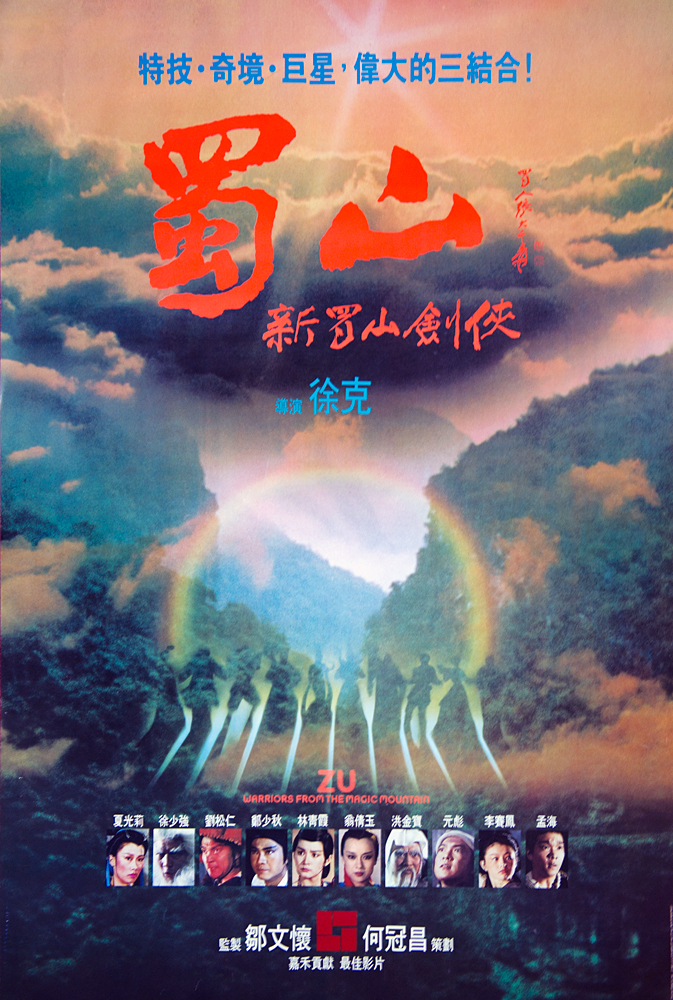
Zu: Warriors from the Magic Mountain (新蜀山劍俠, Tsui Hark, 1983)

“I never imagined that the righteous would not only refuse to unite, but also be incapable of action” laments a reluctant soldier realising there are no heroes coming to the rescue in Tsui Hark’s SFX-laden fantasy wuxia, Zu: Warriors from the Magic Mountain (新蜀山劍俠). Inspired by the work of Huanzhulouzhu (Li Shoumin), Tsui’s feudal fable marked a departure from the more “realistic” swordplay movies which were popular at the time harking back to an earlier era of fantastic adventures which drew inspiration from traditional Chinese folklore. It was also, however, an attempt to prove that Hong Kong could rival Hollywood in the post-Star Wars world, blending what might now be viewed as fairly camp but then cutting-edge special effects with classic wuxia action. 

Accordingly, after a brief voice over, Tsui opens with a world in chaos in which several factions are currently vying for hegemony over the hotly contested, mystical and mountainous terrain of Shu. Lowly retainer Ti Ming-Chi (Yuen Biao) has been tasked with delivering a message regarding troop movements to his superiors, but there is a difference of opinion in the chain of command as to whether to attack by land or sea. Placed in an impossible position, Ming-Chi eventually sees himself pledge to obey both captains, only for infighting to emerge within the group forcing him to flee for his life which is how he encounters “Fatty” (Sammo Hung Kam-Bo), a soldier from a rival faction and discovers, quite ironically, that they are from neighbouring villages which makes their rivalry all the more ridiculous. In the course of his attempt to escape, Ming-Chi falls into a mountain crevasse and finds himself entering a mysterious cave which takes him to another world in which he becomes similarly embroiled in a war against the evil Demon Cult which apparently practices child sacrifice and then uses the bones as a kind of magical armour. 

A reluctant soldier, Ming-Chi finds himself captivated by the “Great Hero” Ting Yin (Adam Cheng Siu-Chow) and determines to become his disciple while the pair form an uneasy alliance with a pair of similarly matched Buddhist monks, master Hsiao Yu (Damian Lau Chung-Yan) and his assistant I-Chen (Mang Hoi), also hot on the trail of the Demon Cult. Finding this world also confusing, he is nevertheless reassured by I-Chen’s simple explanation “they’re bad, we’re good” as the two masters face off against the Demon Lord, but comes to discover it’s not quite all as black and white as it seems and this world too is torn apart by chaos and disorder because “the hearts of men are so corrupt.” Ming-Chi begs Ting Yin to use his “peerless martial arts skills” to “save mankind”, but Ting Yin cynically tells him his best course of action is to retreat into the mountains and avoid human society because “neither you nor I have the ability to bring about change”. 

Yet Ming-Chi remains pure of heart, certain that “as long as everyone puts in the effort, peace can be restored under heaven”. “Teach me martial arts and once I’ve mastered it, I can fight oppression, help the weak, and save the masses” he pleads, but Ting Yin once again refuses him. In fact, in one of the later SFX sequences, Ting Yin will “transfer” his martial arts knowledge near instantly via a laying on of hands assisted by some elaborate prosthetics which see Ming-Chi’s body warp and bubble to accept it. Nevertheless, the lesson that Ming-Chi begins to learn, bonding with fellow assistant I-Chen who ignored his master’s petty parting words to bid him goodbye to hope they meet again along the way, is that the masters care only for themselves and are no better than the warring nobles from his own lands, obsessed with their rival sects and ideologies. If they want to save the world they’ll have to save themselves through mutual solidarity in pursuit of their goal, tracking down a pair of mystical swords which are the only way to end the demonic threat for good. 

There might of course be an added dimension to this allegory in the Hong Kong of 1983 which is perhaps also beginning to feel like disputed territory coveted by duplicitous elites who fight amongst themselves while ordinary people suffer, but Tsui is in any case more interested in zany action and excuses to employ zeitgeisty special effects making full use of the technology of the day from lasers to animation along with in-camera stunts to recreate his epic fantasy world in which old men can keep evil at bay for as long as 49 days using nothing but their powerfully hairy eyebrows and a fancy mirror. With small roles for Brigitte Lin and Moon Lee as an ice queen with a warm heart presiding over an all female palace and her spiky guard respectively, Tsui’s bonkers fairytale moves on at a glorious, confusing pace but is nevertheless filled with warmth and humanity as the goodhearted heroes attempt to head off the folly of war with human solidarity. 


Zu: Warriors from the Magic Mountain streams in the UK 9th to 15th February as part of Focus Hong Kong

Eureka release trailer (english subtitles)