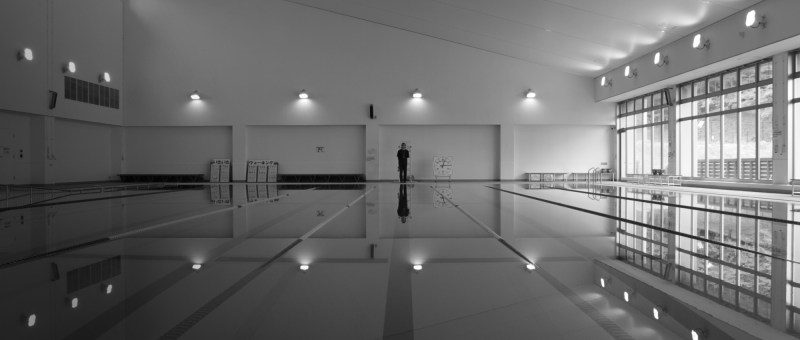
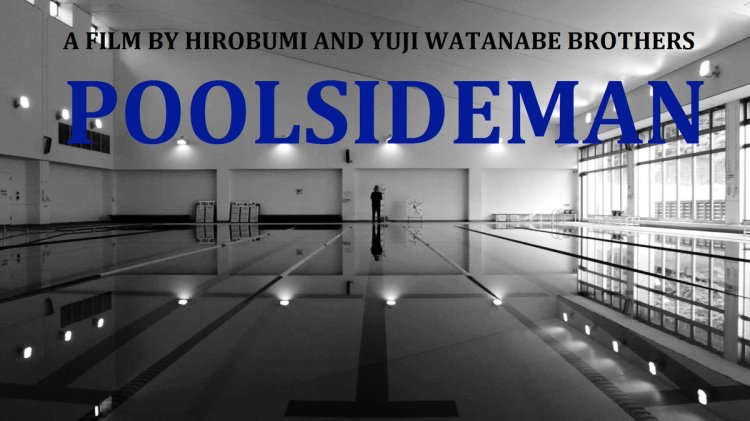
 Around halfway through Poolsideman (プールサイドマン), the director himself playing an overly chatty colleague of the film’s protagonist, embarks on a lengthy rant about encroaching middle-age which is instantly relatable to those who find themselves at a similar juncture. He’s sure the world seemed better when he was a child, there wasn’t all of this distress and anxiety – everything just seemed like it would go on forever but time has inexplicably sped up with a series of rapid changes packed into recent years. The life of a poolsideman is improbably intense, or at least it is for Mizuhara (Gaku Imamura) whose days are all the same but filled with tension and the low simmer of something waiting to explode. Loosely inspired by the real life case of a man who left Japan for the Middle East with the idea of joining Isis, Poolsideman wants to explore why such a surreal thing might happen but finds it all too plausible.
Mizuhara lives his life to strict routine. He gets up, turns on his radio to listen to the latest current events which mostly have to do with atrocities in the Middle East, eats breakfast and goes to work where he checks the lockers, patrols the pool, writes down various readings from the boiler system, and avoids his colleagues at break times by sitting outside or eating shortbread in his car before leaving for the day. He then goes to a local cinema where he is generally the only audience member and watches a violent film full of shooting, explosions and screaming, before grabbing a McDonald’s dinner and going home to bed.
His precious routine is broken when one of his colleagues informs him that they’re both being sent to a different pool to help out with staff shortages and asks if it would be possible to give him a lift because the pool is kind of far and he is only a “paper driver” – he has a license, but in reality doesn’t drive. It’s not as if Mizuhara can refuse, and so the pair drive together to another pool where they do the same job only in different surroundings.
The first hour or so of this two hour film is entirely taken up with Mizuhara repeating his near identical days while different news reports play recounting various international atrocities. Mizuhara never says anything and runs through each of his tasks with robotic precision but there’s something burning somewhere just behind his eyes. He looks at his colleagues with disdain as they gossip raucously in the rec room before taking himself outside to smoke or enjoy his daily shortbread alone in his car listening to more reports of terrible things happening abroad. Despite his apparent calmness, Mizuhara does indeed seem like the type who may just snap but deciding to join Isis is not necessarily the result most would have predicted.
Poolsideman’s main position is that blanket news coverage of horrific events may have strained Mizuhara’s already tense mind, leading him to believe the world is a worse place than it really is. Later, he switches his radio preferences but sticks with international politics as the world swings right – Trump, at that point still a candidate, suggests using nuclear weapons against “enemy” forces in the Middle East (something particularly worrying to the only nation so far with direct experience of nuclear attack) while Obama and Clinton attempt to talk sense. Britain votes for Brexit, against expectation and its own interest which, the commentator explains, is expected to lead to the destabilisation of Cameron’s government, extreme economic chaos, and political turmoil (on point, as it seems). Mizuhara carries on as before, cereal, toothbrushing, the pool, the cinema, and McDonald’s but there’s always the feeling that he’s standing on the edge about to jump and there’s no way to know how he might do it.
Less ostensibly humorous than And The Mudship Sails Away, Poolsideman still finds room for comedy though mostly through the amusing monologues delivered by Watanabe to the ever silent Mizuhara. Ranting about modern life from an inability to connect with the young to the noise pollution of hipster karaoke bars and ramen restaurants that make you book a ticket in advance, Watanabe’s observations are all too true but at least he works out his frustration with friendliness and good humour rather than internalising some kind of barely suppressed rage which threatens to boil over at any second. A kind of state of the nation address, Poolsideman gestures at the enemy within – the ignored, frustrated, and angry young man whose mind is ripe for hijacking when assaulted by a constant barrage of violence and political disturbance. Ending on a note of ambiguous tension Poolsideman wonders where all of this leads, or if it leads anywhere at all, but offers no easy answers for the problem of Japan’s disillusioned youth.
Poolsideman was screened at the 17th Nippon Connection Japanese Film Festival.
Original trailer (no subtitles)
 Times change so quickly. The “danchi” was a symbol of post-war aspiration and rising economic prosperity as it sought to give young professionals an affordable yet modern, convenient way of life. The term itself is a little hard to translate though loosely enough just means a housing estate but unlike “The Projects” (団地, Danchi) of the title, these are generally not areas of social housing or lower class neighbourhoods but a kind of vertical village which one should never need to leave (except to go to work) as they also include all the necessary amenities for everyday life from shops and supermarkets to bars and restaurants. Nevertheless, aspirations change across generations and what was once considered a dreamlike promise of futuristic convenience now seems run down and squalid. Cramped apartments with tiny rooms, washing machines on the balconies, no lifts – young people do not see these things as convenient and so the danchi is mostly home to the older generation, downsizers, or the down on their luck.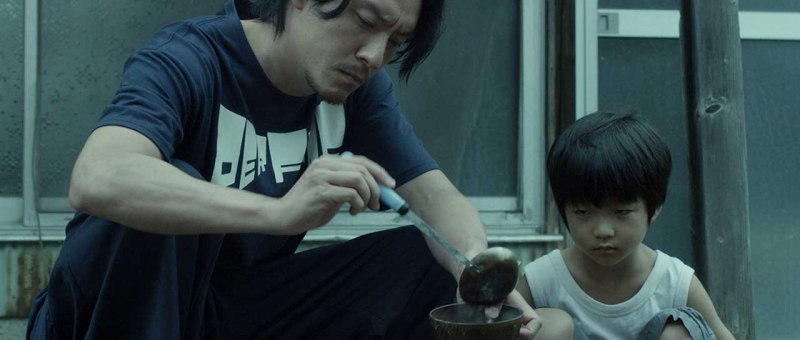
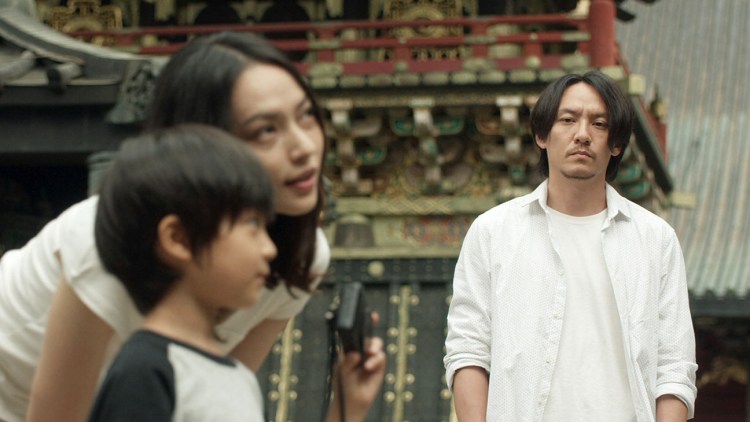 Taiwan and Japan have a complicated history, but in SABU’s latest slice of cross-cultural interplay each place becomes a kind of refuge from the other. Working largely in Mandarin and with Taiwanese star Chang Chen, SABU returns to a familiar story – the lonely hitman tempted by a normal family life filled with peace and simplicity only to have his dreams taken from him by the spectre of his past. Only this time it isn’t just his past but that of others too. Despite the melancholy air, Mr. Long (ミスター・ロン) is a testament to the power of simple human kindness but also a condemnation of underworld cruelty and its vicelike grip on all who enter its grasp.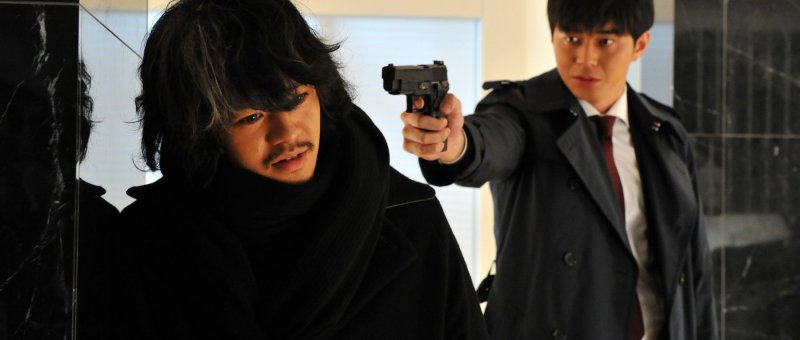
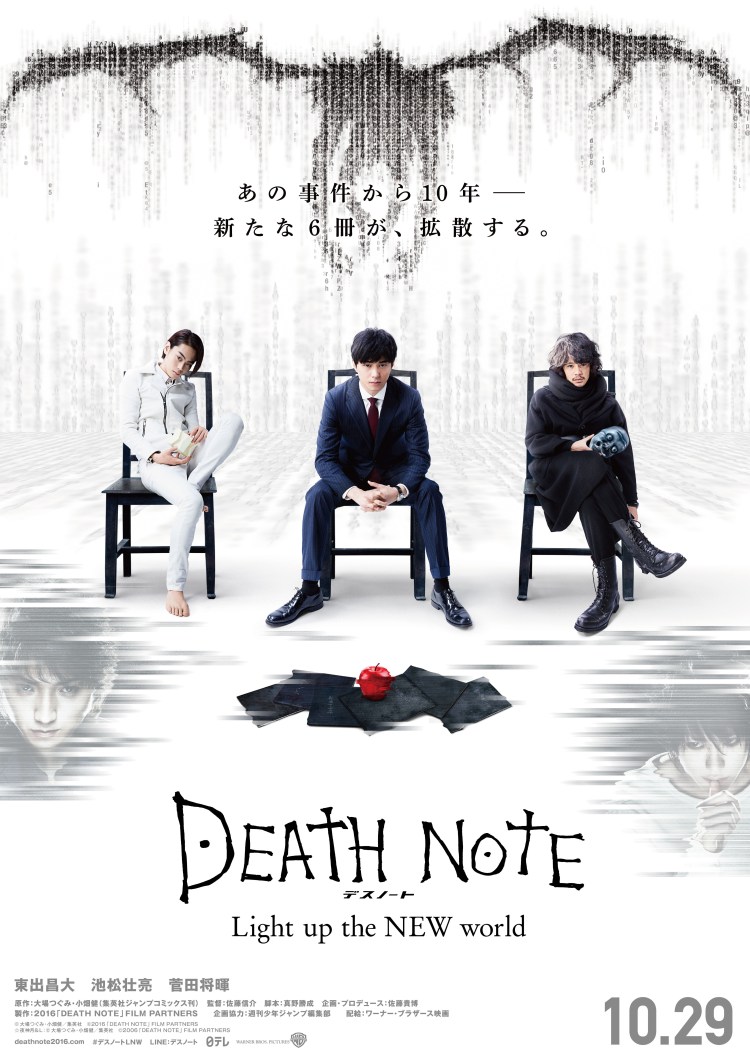 Tsugumi Ohba and Takashi Obata’s Death Note manga has already spawned three live action films, an acclaimed TV anime, live action TV drama, musical, and various other forms of media becoming a worldwide phenomenon in the process. A return to cinema screens was therefore inevitable – Death Note: Light up the NEW World (デスノート Light up the NEW World) positions itself as the first in a possible new strand of the ongoing franchise, casting its net wider to embrace a new, global world. Directed by Shinsuke Sato – one of the foremost blockbuster directors in Japan responsible for Gantz,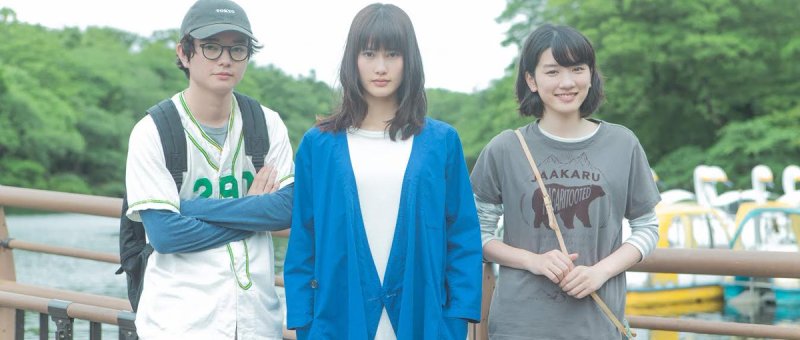
 Parks are a common feature of modern city life – a stretch of green among the grey, but it’s important to remember that there has not always been such beautiful shared space set aside for public use. Natsuki Seta’s light and breezy youth comedy, Parks (PARKS パークス), was commissioned in celebration of the centenary of the Tokyo park where the majority of the action takes place, Inokashira. Mixing early Godardian whimsy with new wave voice over and the kind of innocent adventure not seen since the Kadokawa idol days, Parks is a sometimes melancholy, wistful tribute to a place where chance meetings can define lifetimes as well as to brief yet memorable summers spent with gone but not forgotten friends doing something which seems important but which in retrospect may be trivial.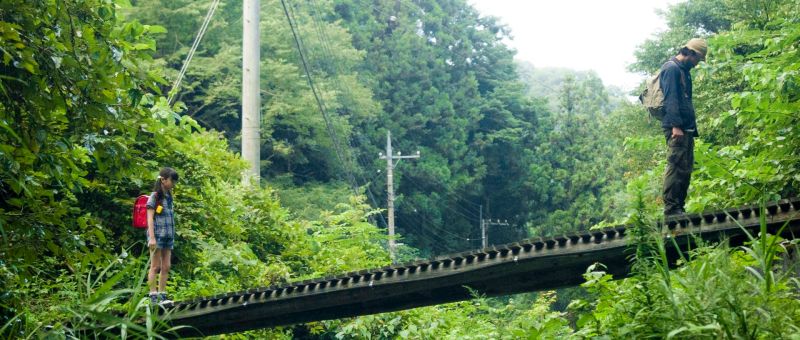
 When tragedy strikes the one thing you ought to be able to rely on is your family, but when the tragedy occurs within that sacred space which exits between you what is to be done? Yosuke Takeuchi’s The Sower (種をまく人, Tane wo Maku Hito) attempts to provide an answer whilst putting one very ordinary, loving and forgiving family through a series of tests and tragedies. Lies, regret, and despair conspire to ruin the lives of four once happy people but even in the midst of such a shocking, unexpected event there is still time to turn towards the sun rather than continuing in the darkness.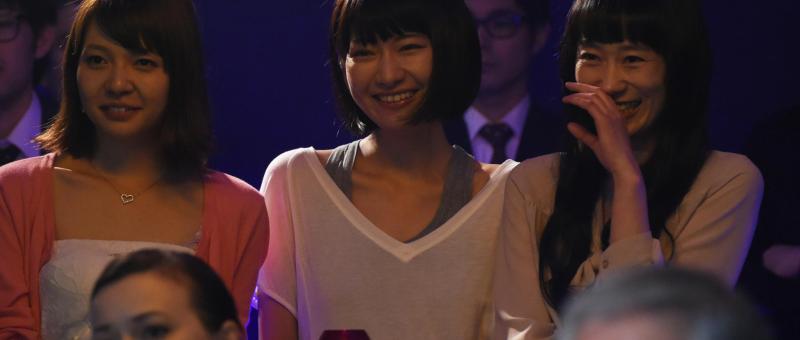
 Towards the end of the 60s and faced with the same problems as any other studio of the day – namely declining receipts as cinema audiences embraced television, Nikkatsu decided to spice up their already racy youth orientated output with a steady stream of sex and violence. The Roman Porno line took a loftier approach to the “pink film” – mainstream softcore pornography played in dedicated cinemas and created to a specific formula, by putting the resources of a bigger studio behind it with greater production values and acting talent. 40 years on Roman Porno is back. Kazuya Shiraishi’s Dawn of the Felines (牝猫たち, Mesunekotachi) takes inspiration from Night of the Felines by the Roman Porno master Noboru Tanaka but where Tanaka’s film is a raucous comedy following the humorous adventures of its three working girl protagonists, Shiraishi’s is a much less joyous affair as he casts his three lonely heroines adrift in Tokyo’s red light district.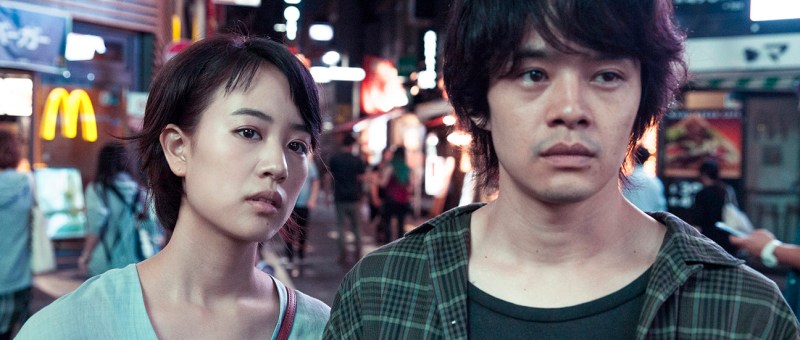
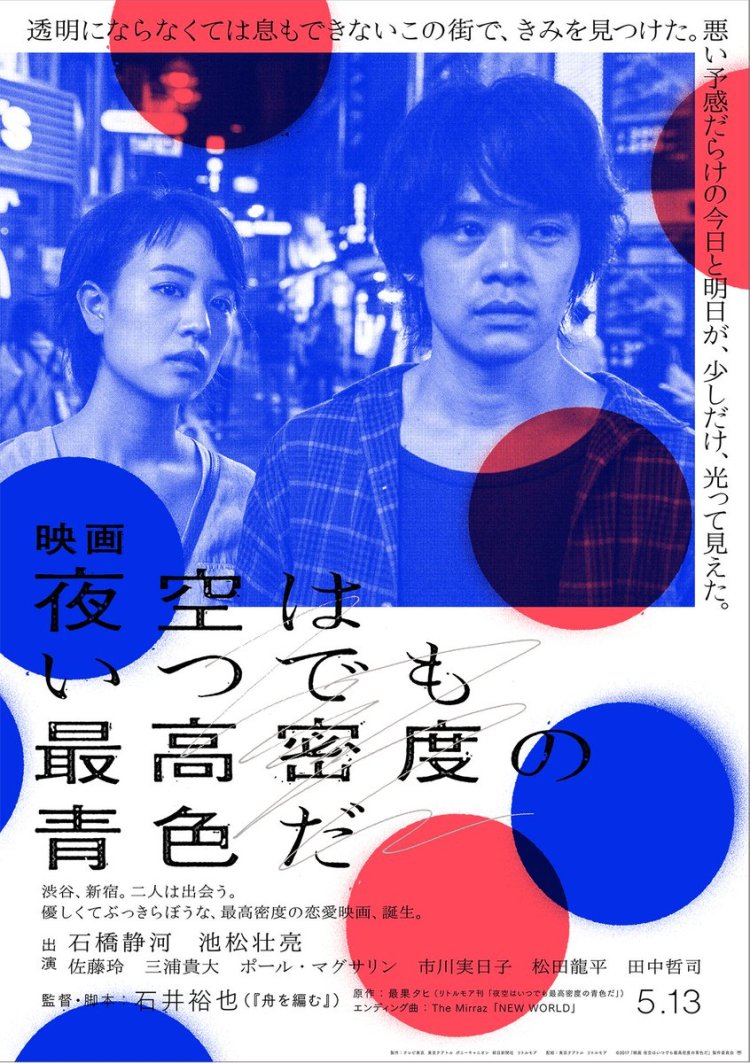 Learning to love Tokyo is a kind of suicide, according to the heroine of Yuya Ishii’s love/hate letter to the Japanese capital, The Tokyo Night Sky is Always the Densest Shade of Blue (夜空はいつでも最高密度の青色だ, Yozora wa Itsudemo Saiko Mitsudo no Aoiro da). This city is a mess of contradictions, a huge sprawling metropolis filled with the anonymous masses and at the same time so tiny you can find yourself running into the same people over and over again. Inspired by the poems of Tahi Saihate, The Tokyo Night Sky is at once a meditative contemplation of city life and an awkward love story between two lost souls who somehow find each other in its crowded backstreets.
 Generally speaking, murder mysteries progress along a clearly defined path at the end of which stands the killer. The path to reach him is his motive, a rational explanation for an irrational act. Yet, looking deeper there’s usually something else going on. It’s easy to blame society, or politics, or the economy but all of these things can be mitigating factors when it comes to considering the motives for a crime. Gukoroku – Traces of Sin (愚行録), the debut feature from Kei Ishikawa and an adaptation of a novel by Tokuro Nukui, shows us a world defined by unfairness and injustice, in which there are no good people, only the embittered, the jealous, and the hopelessly broken. Less about the murder of a family than the murder of the family, Gukoroku’s social prognosis is a bleak one which leaves little room for hope in an increasingly unfair society.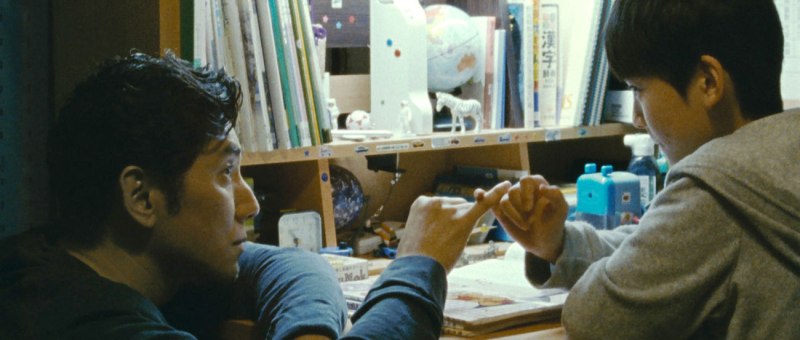
 Self disgust is self obsession as the old adage goes. It certainly seems to ring true for the “hero” of Miwa Nishikawa’s latest feature, The Long Excuse (永い言い訳, Nagai Iiwake) , in which she adapts her own Naoki Prize nominated novel. In part inspired by the devastating earthquake which struck Japan in March 2011, The Long Excuse is a tale of grief deferred but also one of redemption and self recognition as this same refusal to grieve forces a self-centred novelist to remember that other people also exist in the world and have their own lives, emotions, and broken futures to dwell on.
