
 They say the way to a man’s heart is through his stomach, but for some guys you’ll have to do a whole lot of baking. Based on the popular manga which was also recently adapted into a hit anime (as is the current trend) My Love Story!! (俺物語!!, Ore Monogatari!!) is the classic tale of innocent young love between a pretty young girl and her strapping suitor only both of them are too reticent and have too many issues to be able to come round to the idea that their feelings may actually be requited after all. This is going to be a long courtship but faint heart never won fair maiden.
Takeo (Ryohei Suzuki) has been best friends with next-door neighbour Suna (Kentaro Sakaguchi) ever since they were small and he made a point of becoming his defender when Suna was the new kid in town and the other boys made fun of him. However, Taeko is a big lug of a guy, adored by the his male classmates for his off the charts level of coolness, but often shunned by the ladies thanks to his impulsive nature and booming voice. Suna, by contrast, is massively popular and finds himself surrounded by swooning girls everywhere he goes. Being the big hearted guy he is, when Takeo notices his middle school crush confessing her love to Suna on graduation day, he makes sure Suna lets her down gentle and chooses to break his own heart instead.
You see, being the big guy is not exactly easy. A little slow on the uptake but also extremely sensitive, Takeo has been hearing gorilla jokes his whole life and so has internalised an intense feeling of being completely unloveable. Despite this, he remains an extremely good person who just wants everyone else to be happy even if he’s convinced himself he’s not allowed to be. Thus when he saves timid high school girl Rinko (Mei Nagano) from a persistent street harasser and falls in love at first sight, it doesn’t really occur to him that the same thing might have happened to her. Mistaking Rinko’s attempts to get his attention for a backhanded way to get to his more conventionally handsome friend, Takeo resolves to get the two together no matter what!
It would be difficult to find a romance quite as innocent as My Love Story!! which (successfully) strings out one wilful misunderstanding for around two hours. There are no great scenes of jealous exes or sudden arranged marriages to contend with, just two people entirely incapable of speaking plainly. Takeo is so invested in the idea of his own ugliness that it just doesn’t make sense to him that anyone would choose him over the conventionally handsome Suna. Likewise Rinko is quite a timid girl, bowled over by the cool way Takeo dealt with her street harasser and subsequent acts of heroism throughout the film. Though her friends may crack gorilla jokes behind her back, Rinko can see straight through to Takeo’s giant heart and is always ready to defend him, even if her own diffidence means she can’t just tell Takeo how she really feels in a way he understands.
Meanwhile, Suna is very bored by all of these missed messages as his well meaning buddy tries to foist the girl he himself loves on his obviously disinterested friend. As for why Suna is so disinterested, the film is also a somewhat coy. A little shy and awkward himself, Suna is uncomfortable with all the attention his ridiculous good looks bring him, as well as additional resentment from the other guys and often needing to deflect praise for Takeo’s heroism which people often seem to attribute to him. It may just be that Suna is over the superficial and is waiting for someone to see past his pretty boy face but his refusal to talk about the kind of girl he likes aside from going for “big and strong” perhaps hints at an altogether different reason. In any case, Suna getting fed up with being persistantly gooseberried becomes the final catalyst for finally explaining to Takeo what exactly has been going on these past few months.
Before you know it, enough baked goods to feed a small army have been consumed but Takeo is still having trouble realising that they each had a secret ingredient – love! Sometimes nice guys do get the girl, even if it involves shielding them from a falling coffin in a haunted house that’s on fire which is not as good of a metaphor as you’d think but it’ll do for now. Old fashioned and innocent, My Love Story isn’t going to set the world on fire, but it might just light a flame in your heart.
Original trailer (no subtitles)
 Tharlo producer Wang Xuebo looks north in this rare cinematic showcase for China’s Hui people, a largely Muslim ethnic group concentrated in the rural North West. Using a cast of non-professional actors, Knife in the Clear Water (清水里的刀子, Qingshui Li De Daozi) marries a neorealist aesthetic with a Tarkovskian poetry as a widowed man faces the coming end of his own life largely through his self identification with his faithful bull, about to be sacrificed in the name of dead for the pleasure of the living. Setting religion to one side, this tale of rural poverty and people eclipsed by a landscape that’s as unforgiving as it is beautiful has an infinitely timeless quality even if this traditional way of life is just as moribund as the bull which drives it.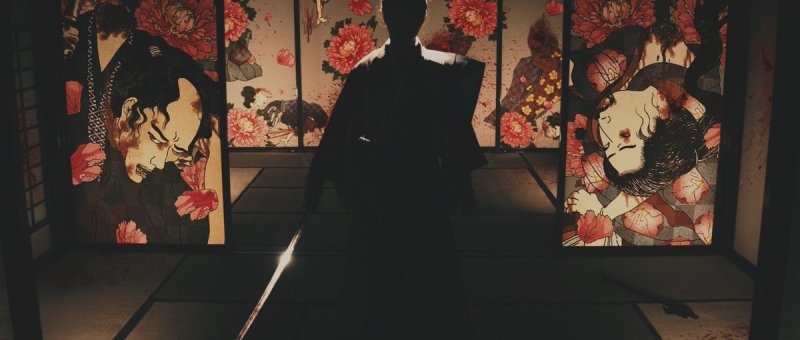
 All life is suffering, and all suffering is caused by desire. Ninko, the titular monk at the centre of this entertaining oddity from Norihiro Niwatsukino, seems to have taken this to heart and is suffering more than most in his attempts to reach Nirvana. Suffering of Ninko (仁光の受難, Ninko no Junan) takes its cues from the Hyaku-monogatari classical Japanese tales of ghosts and the supernatural as its seemingly comic story of a pretty monk and his ironic talent for attracting the wrong kind of attention gradually darkens until its unexpectedly strange finale. Visually striking if a little rough around the edges, Suffering of Ninko has a pleasantly organic quality as if its narrator were really making it up as she goes along only to tire of it a little by the end and give us a suitably spooky conclusion to send us on our way.
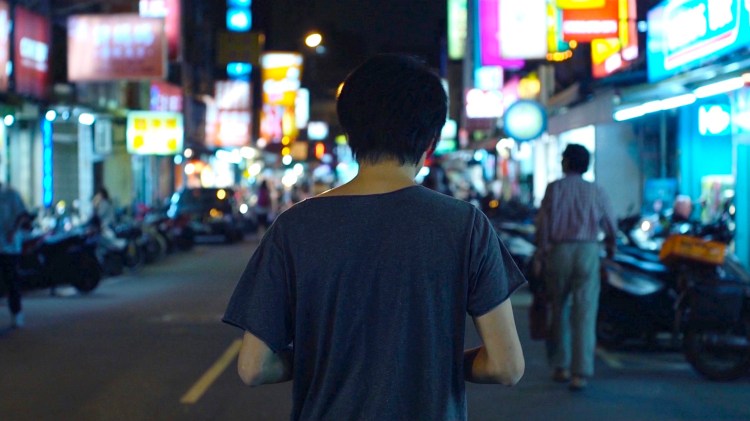 We don’t move forward in this dance, comments the lady currently being waltzed by a charming lost soul. Don’t worry, he says, that’s not a bad thing. Indeed, Out There, the first independent feature film from director Takehiro Ito exists in a fixed yet liminal space, here and not there as its protagonist finds himself without the proper place to be. Conceived as a way of salvaging some of the material collated for a documentary on the late Taiwanese director Edward Yang, Out There takes more of its cues from Tsai Ming-liang or even Lav Diaz in its preoccupation with the intersection between time, existence, and place. If that all sounds to weighty, there’s a little whimsy in here too, but the intent is a serious one as nationhood (or the lack of it), drifting cultures, love and history all conspire to confuse and distract the course of a young man in search of an identity which is entirely his own.
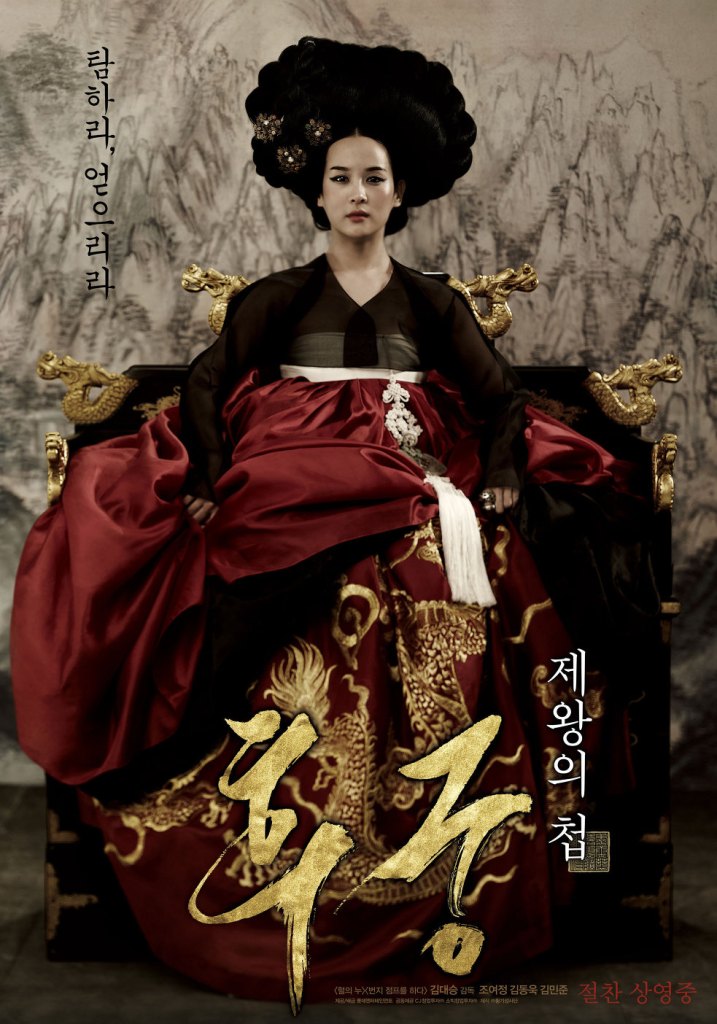 You can become the King of all Korea and your mum still won’t be happy. So it is for poor Prince Sungwon (Kim Dong-wook) who becomes accidental Iago in this Joseon tale of betrayal, cruelty, and love turning to hate in the toxic environment of the imperial court – Kim Dae-seung’s The Concubine (후궁: 제왕의 첩, Hugoong: Jewangui Chub). Power and impotence corrupt equally as the battlefield shifts to the bedroom and sex becomes weapon and currency in a complex political struggle.
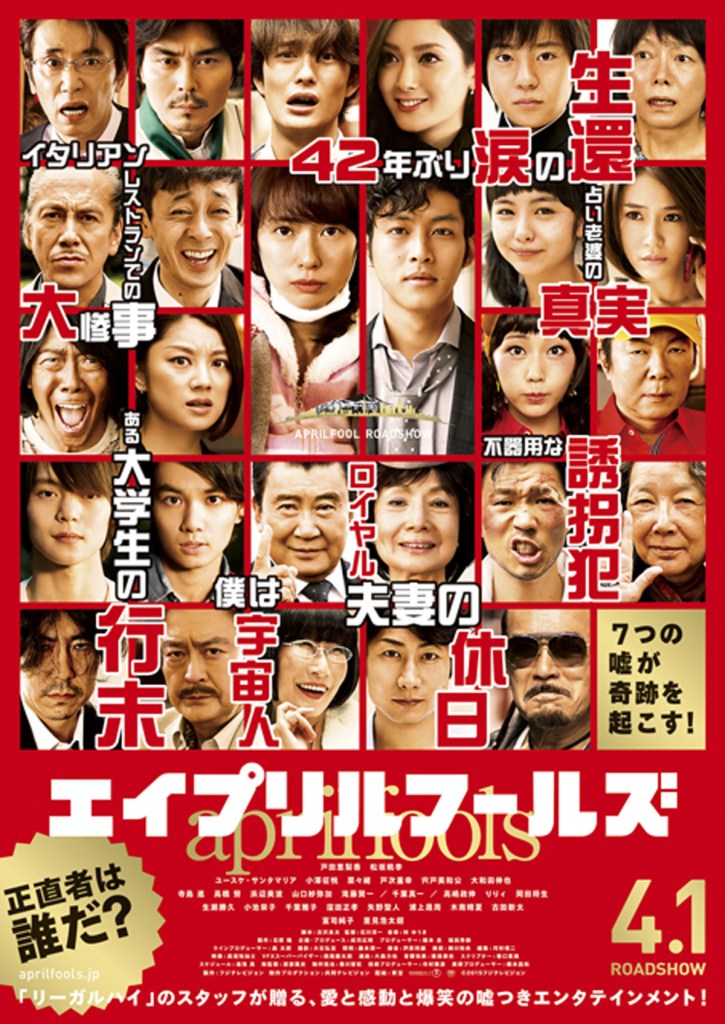 In this brand new, post truth world where spin rules all, it’s important to look on the bright side and recognise the enormous positive power of the lie. 2015’s April Fools (エイプリルフールズ) is suddenly seeming just as prophetic as the machinations of the weird old woman buried at its centre seeing as its central message is “who cares about the truth so long as everyone (pretends) to be happy in the end?”. A dangerous message to be sure though perhaps there is something to be said about forgiving those who’ve misled you after understanding their reasoning. Or, then again, maybe not.
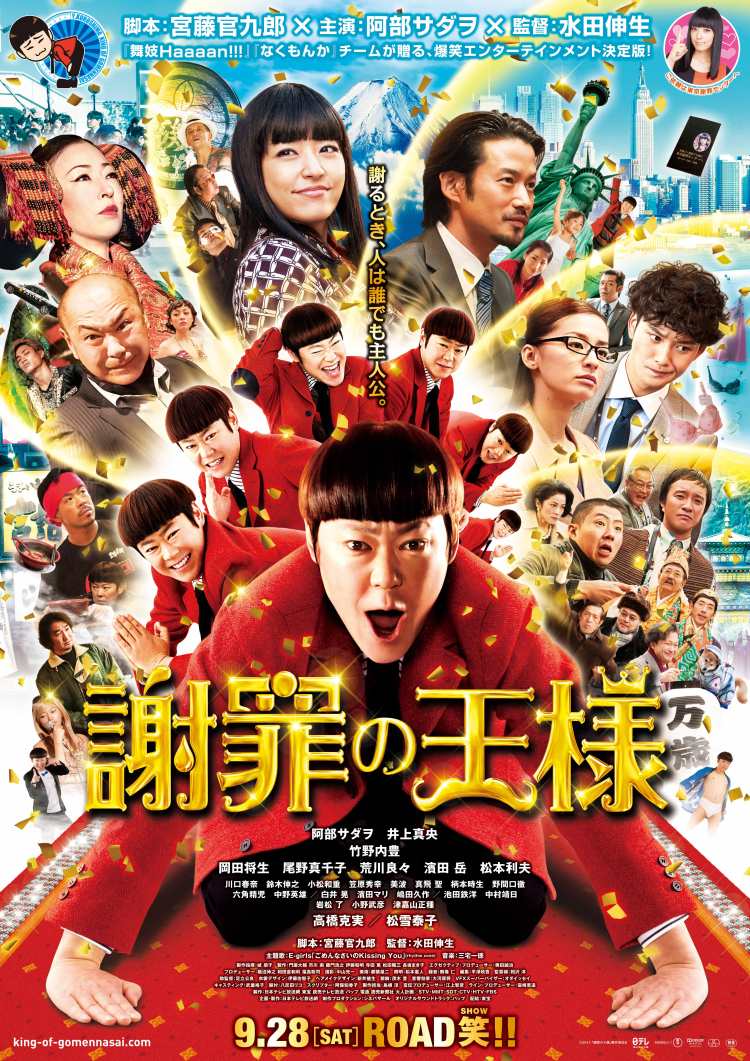 There are few things in life which cannot at least be improved by a full and frank apology. Sometimes that apology will need to go beyond a simple, if heart felt, “I’m Sorry” to truly make amends but as long as there’s a genuine desire to make things right, it can be done. Some people do, however, need help in navigating this complex series of culturally defined rituals which is where the enterprising hero of Nobuo Mizuta’s The Apology King (謝罪の王様, Shazai no Ousama), Ryoro Kurojima (Sadao Abe), comes in. As head of the Tokyo Apology Centre, Kurojima is on hand to save the needy who find themselves requiring extrication from all kinds of sticky situations such as accidentally getting sold into prostitution by the yakuza or causing small diplomatic incidents with a tiny yet very angry foreign country.
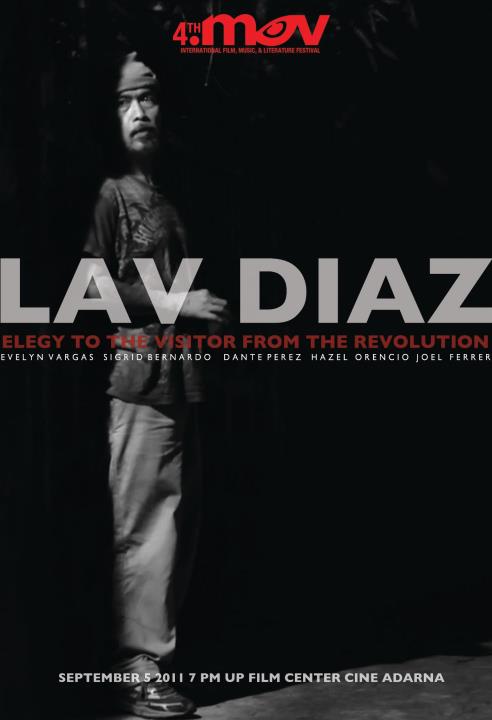 Lav Diaz is many things but he’s not especially known for his brevity. Elegy to the Visitor From the Revolution (Elehiya Sa Dumalaw Mula Sa Himagsikan) is something of a departure in that regard as it runs a scant eighty minutes but is, nevertheless, imbued with the director’s constant themes of loss, melancholy and despair conveyed across a tripartite structure peopled by three very different yet interconnected sets of characters. To say “only” eighty minutes long, yet Elegy to the Visitor From the Revolution first began as a one minute short, intended to form a part of Nikalexis.MOV – an omnibus dedicated to the memory of film critics Alexis Tioseco and Nika Bohinc tragically killed during a home invasion. Diaz’ film, however, outgrew its origins to become a stand alone feature in its own right.
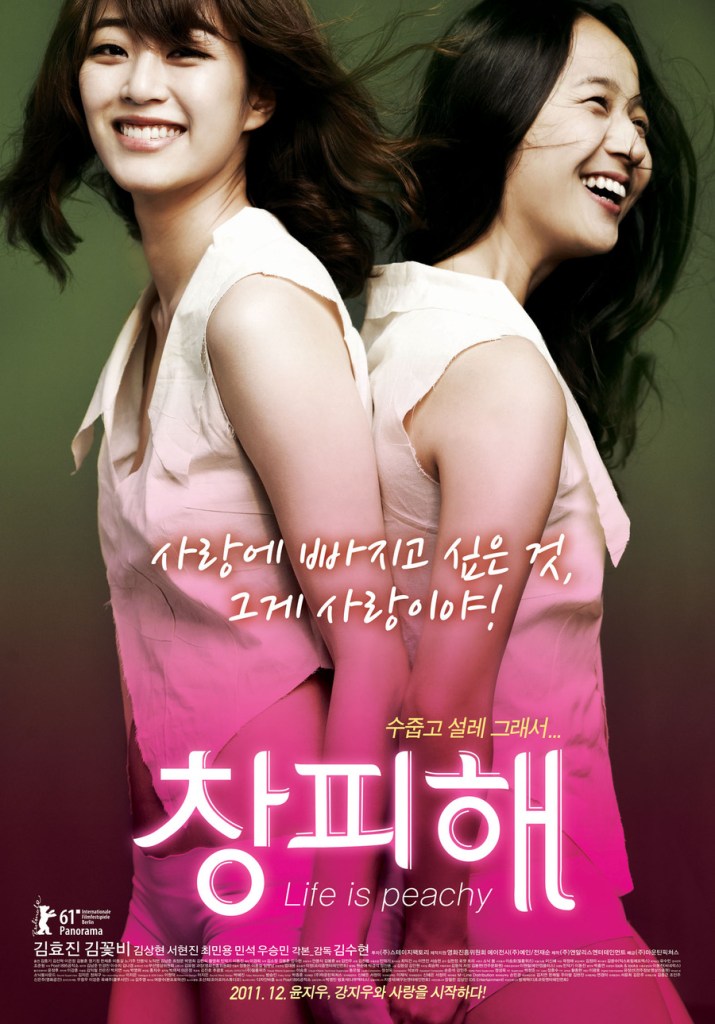 One of the very earliest films to address female same sex love in Korea, Ashamed (yes, really, but not quite – we’ll get to this later, 창피해, Changpihae, retitled Life is Peachy for US release) had a lot riding on it. Perhaps too much, but does at least manage to outline a convincing, refreshingly ordinary failed love romance even if hampered by a heavy handed structuring device and a lack of chemistry between its leading ladies.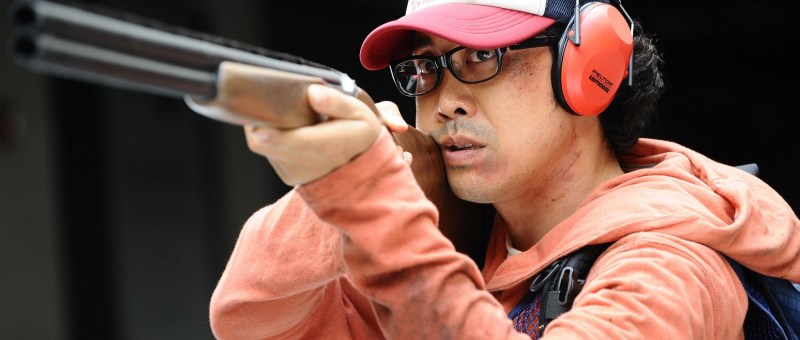
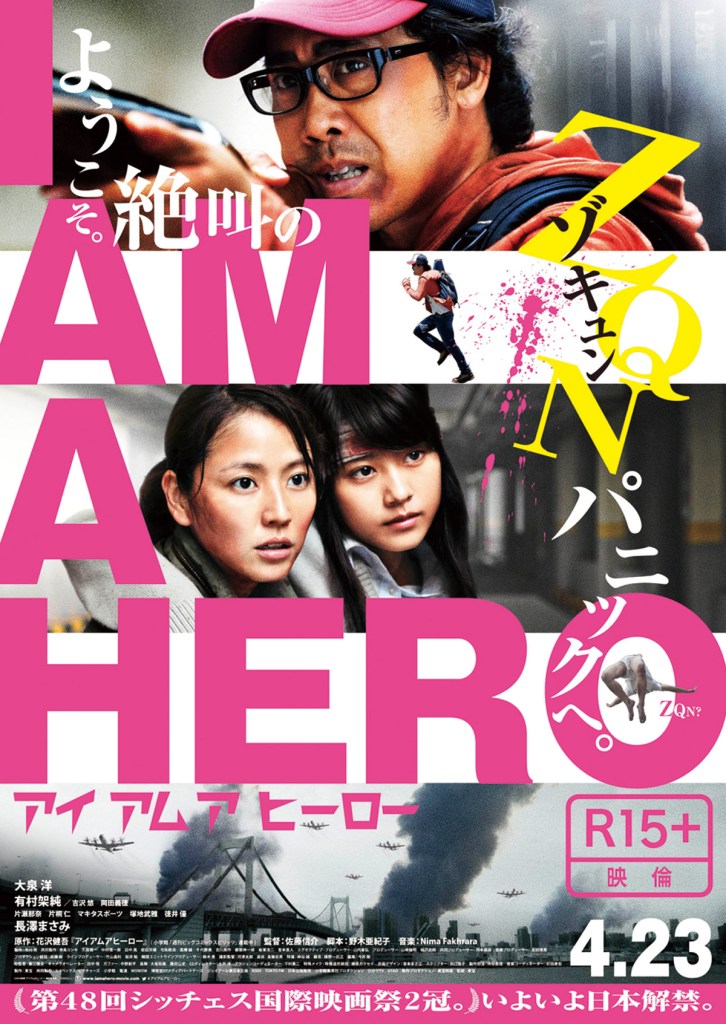 Japan has never quite got the zombie movie. That’s not to say they haven’t tried, from the arty Miss Zombie to the splatter leaning exploitation fare of Helldriver, zombies have never been far from the scene even if they looked and behaved a littler differently than their American cousins. Shinsuke Sato’s adaptation of Kengo Hanazawa’s manga I Am a Hero (アイアムアヒーロー) is unapologetically married to the Romero universe even if filtered through 28 Days Later and, perhaps more importantly, Shaun of the Dead. These “ZQN” jerk and scuttle like the monsters you always feared were in the darkness, but as much as the undead threat lingers with outstretched hands of dread, Sato mines the situation for all the humour on offer creating that rarest of beasts – a horror comedy that’s both scary and funny but crucially also weighty enough to prove emotionally effective.
