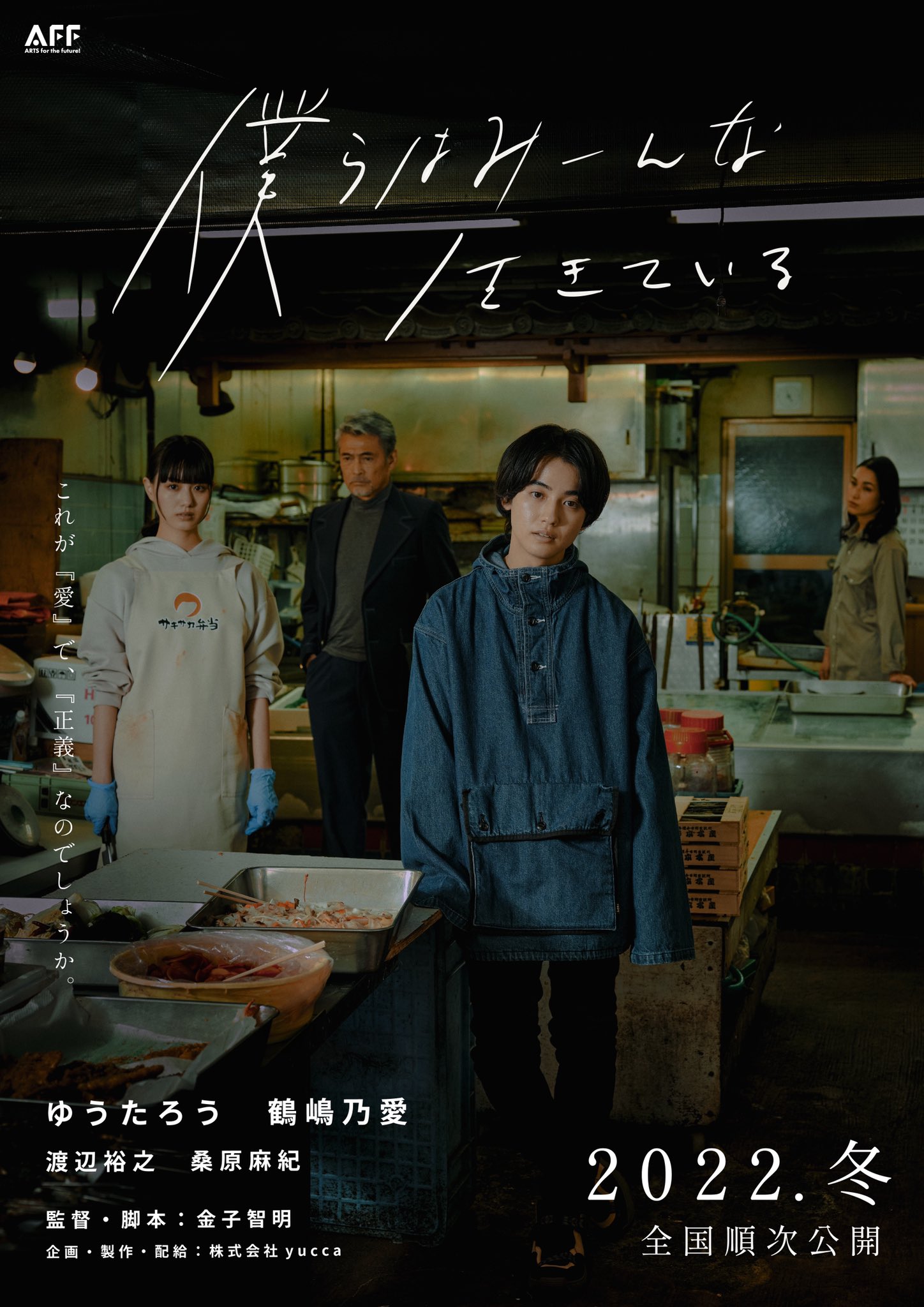
Dead Fishes (僕らはみーんな生きている, Tomoaki Kaneko, 2022)

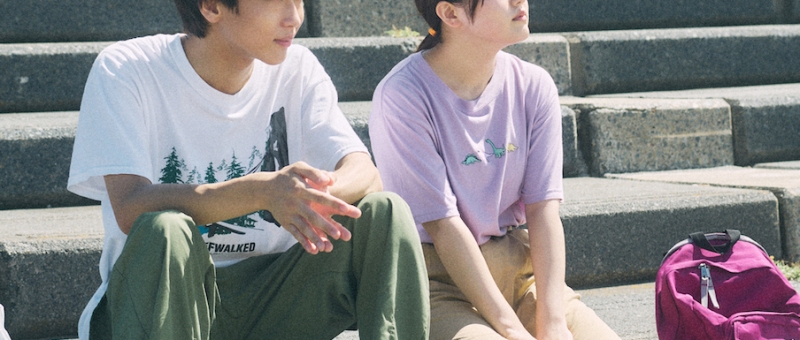
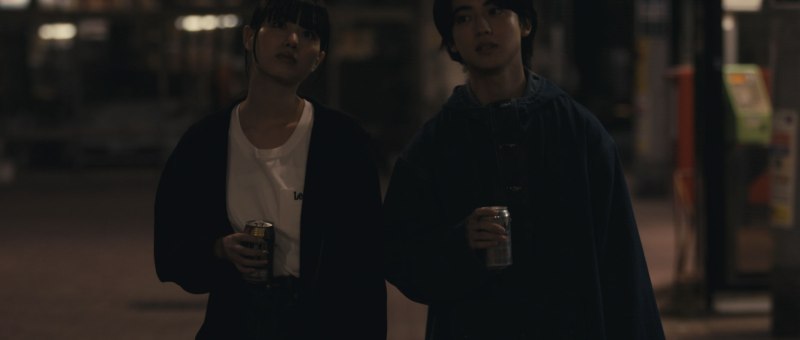
Fearing he knows nothing of the world, a young man comes to Tokyo in search of experience but finds his horizons broadened a little more than he might have liked in Tomoaki Kaneko’s bleak indie drama Dead Fishes (僕らはみーんな生きている, Bokura wa Minna Ikiteiru). Legacies of poor parenting, either from an overabundance of love or.a lack of it, continue to cast a shadow over the futures of the young while love otherwise makes people do funny things that defy both logic and humanity.

One of the key reasons Shun (Yutaro) leaves his rural hometown is to get away from his parents and their tempestuous marriage though it’s also true that his mother has become more than a little possessive and he clearly does not want to end up trapped by her all his life. He dreams of becoming a writer, but tells new friend Yuka (Noa Tsurushima) that writing for him was more of an escapist than artistic exercise. Most of his books are of the kind where nothing really happens, a kind of wish fulfilment writing stories about the happy family he never had in which parents and children enjoy cheerful days out at the beach or the zoo, which is why he suspects publishers aren’t biting.

But Yuka has parental resentments too, explaining that her mother took her own life after her father abandoned them before she was born. She has a healthy distrust of adults and the in-built cynicism of someone twice her age but also resents herself for having been unable to enact revenge on her absent father. Nevertheless, she feels sympathy for the old people living in the local care home who have also been, according to her, “abandoned” by their families who no longer wish to care for them. Their boss, Yuriko (Maki Kuwahara), is currently caring for her mother who is suffering with dementia and occasionally becomes violent or refuses food though as the pair discover she is also mixed up with her much older boyfriend’s heinous scheme to help overburdened children knock off their elderly relatives through slow poisoning or an “accident” in return for a portion of their life insurance money.

The scheme both bears out the corrupted relationship between parent and child and the darkness of the contemporary society in which, as the Chairman (Hiroyuki Watanabe) says, the elderly can benefit their families only by dying. Despite having become aware of the goings on at the bento shop, neither Yuka nor Shun are particularly motivated to do anything to stop them, simply living on in resentment or disapproval. Yuriko tells him that he can’t understand her actions because he’s too young and has never been in love, but it’s also true that she was supposed to get a healthy payout for the slow poisoning of the man the Chairman made her marry for appearance’s sake who is likewise aware they’re planning to kill him but basically allowing them to because of love. Love is also the justification Shun’s mother gives when she arrives unnanounced and ends up talking to Yuka, explaining that she’s never thought Tokyo was right for her son so she’s found him a job back home which is after all not really her decision to make. 

But then again even Shun’s writing dreams become corrupted by the city when he’s hired to write a column for a pornographic magazine that’s only distributed in local brothels. Even the editor who hires him appears beaten down and desperate, explaining that he was once a writer too but seemingly ashamed of his current profession later decided to cut his losses and return to his hometown stopping to warn Shun only not to turn out like him or to let himself be changed by the environment he now finds himself in.

By contrast, Yuka’s flighty roommate Mika (Haruka Kodama) says she’d rather die than live with dead fish eyes escaping from her own despair and disappointment through casual sex work to supplement her income from working at a black company. Claiming that all you need in life is a money and good reputation, she’s planning to string this out until the end of her 20s in the hope of meeting a nice man to settle down with for a traditional housewife existence. Bleak in the extreme, Kaneko leads this moribund small town a sense of futility and emptiness and sees little way out for an orphaned generation other than to surrender themselves to the indifference of the world around them.


Original trailer (no subtitles)

The Roundup: Punishment (범죄도시 4, Heo Myeong-haeng, 2024)

There’s a moment in the fourth instalment of the Roundup series when monster cop Seok-do’s boss asks him what good his fists are in the age of cyber crime. More so than in previous episodes, Punishment (범죄도시 4, Beomjoedosi 4) seems to lean hard into the idea that Seok-do iMa Dong-seok) is a dinosaur stuck in the 1970s and unable to understand the modern world. He’s a bruiser cop in an era of supposedly compassionate policing, a thug sent to catch a thug. Yet he’s also presented, as is actually said by his superior officer, as everything a good cop should be in his determination to nail the bad guys to keep a promise to a murder victim’s devastated mother.

But as in the previous films, the victim largely gets forgotten until the very end when Seok-do and his colleagues pay a visit to his grave. Set in 2018, the film is apparently inspired by a real life case and in an echo of the kinds of explanatory title cards seen at the end of Chinese films, ends with a reminder that the government began cracking down on cybercrime in that year. Reminiscent of anti-gambling drama No More Bets, the victim here is also a computer programmer effectively enslaved after being lured to the Philippines on a promising job offer only to be forced to work on casino websites by organised crime. Seok-do is mostly concerned with catching the bad guys rather than exposing this nefarious practice or its effects on those who fall victim to its addictive gambling scam. 

In any case, a running joke sees Seok-do once again cast as a dinosaur apparently unable to grasp simple concepts of modern technology. “Right, we’ll go get it before it closes, then,” he replies when informed the villains used “open source software”. He thinks syncing to the cloud means a crowd of people will come help you set up your phone and he never replaces his because it’s a bother to put in all those numbers into your contacts again. The team end up having to recruit a new team member from cybercrime, the only woman in the room which comes in handy when they need her to pose as the girlfriend of familiar comic foil Jang Yi-soo (Park Ji-hwan) who is tricked into thinking he’s been deputised with a shiny badge that looks like it fell out of a serial packet and has the telltale letters FDA at the top which Seok-do convinces him stands for Police Dark Army.

Despite all the thuggery, there’s something essentially childlike about Seok-do’s roguishness that sees him delight in playing a trick on Jang Yi-soo. After wrecking the first class cabin of a soon to depart plane, he walks off sheepishly like naughty little boy ignoring his boss’ frantic calls to come back and explain himself. In this instalment, we get less of the overt references to police brutality with one brief scene of Seok-do putting a motorbike helmet on a suspect and beating him over the head while his colleague keeps watch outside as we peek in through the widow. To remind us he’s still the good neighbourhood cop, we see several scenes of him visiting a restaurant run by the widow of a colleague killed in the line of duty and secretly slip his teenage daughter wads of cash to buy something nice for herself. 

What it all amounts to is a slightly awkward advocation for the police who are directly stated to be always there to protect the citizens and catch criminals who harm them even if they do It abroad. To this extent, Seok-do is a good cop literally smacking some sense into bad guys because it turns out his giant fists can fight “digital” crime after all and there’s no denying that it does feel good to see Ma Dong-seok smack bad guys. The action scenes this time around are visceral and surprisingly bloody not to mention loud with the sound of Ma’s thunderous fists flailing around. The film’s distinctly retro sensibility is echoed in the ‘70s score which seems to hark back to an era of maverick cop movies about men like Seok-do who keep order on the streets while Seok-do himself seems increasingly like a man out of time, a throwback to a bygone era perhaps uncomfortably romanticised in the quasi-authoritarian sensibility which seems to underpin it.


Festival trailer (English subtitles)

Memories of His Scent (においが眠るまで, Kahori Higashi, 2024)

The link between scent and memory is incredibly strong to the extent that they are often inextricable from one another. For Hinoki, what she fears is that her father’s scent will fade from the world around her and she’ll no longer be able to feel his presence either externally or within herself. She tries to recapture and recreate it artificially only to realise that there was a crucial component that she never thought to include but was always central to her memories of her late father.

We can see the way she immortalises him in her dream sequence in which she walks through a gallery looking at a series of small exhibits marking out her father’s life until his hospitalisation at age 45 and subsequent death from illness. The last box appears empty but turns out to contain a simulacrum of his scent in the same way some museums offer the opportunity to experience what it may have felt like to live in a place through breathing in its ambient smells. It’s this sense of intimacy that Hinoki longs to recapture as she attempts to deal with her grief and the series of upheavals to her life in the wake of her father’s death including closing his coffee shop and bean roastery. She’s horrified that her mother’s put his favourite apron in the to go pile as if she were throwing away an essential part of him she can’t recover. It’s this along with a diary dropped off by the owner of a mini theatre he used to deliver coffee to that sends Hinoki on a summer holiday road trip adventure looking for traces of her father in the places he visited and trying to identify that behind a poetic entry at the end of the diary. 

The film then doubles as another in a series of films elegising the dying culture of boutique cinemas in small towns often catering to small but dedicated audiences who have formed a kind of community around their love of film. These smaller screens generally show older and indie films and are key to the success of independent filmmakers whose work often wouldn’t be shown in larger multiplexes, yet audiences have often not returned after the enforced break of the pandemic era while they also face competition from streaming and other forms of entertainment. The first cinema Hinoki visits is closing down in 42 days though she marvels at the scent and atmosphere of this retro space which has its own elegiac quality. Whilst there she also coincidentally runs to a scent scientist who gives her some pointers about how to preserve and recreate her father’s scent before it fades. By the time she reaches the end of her journey the final cinema has already closed down and rather depressingly been replaced by an entirely empty open air car park. 

Even so what she begins to realise is that nothing really disappears and experiences can be recreated to an extent as she discovers when they put a movie on in the car park leading to a very personal epiphany. The people she meets along her way teach her various things such as the importance of clearly stating how you feel while there’s still time even if her best friend’s attempt to do just that doesn’t quite go to plan. A single father raising a small daughter brings back painful memories for her of her own childhood and her father’s now continuing absence while also reminding her that those experiences live on in her memory along with the various things her father taught her throughout her life. 

Though suffused with melancholy, the film is ultimately uplifting in its determination that life goes on and nothing really disappears. Originally diffident and describing herself as someone who doesn’t particularly like interacting with others, through her partly solo road trip Hinoki learns to open herself up to the world around her along with its myriad fragrances and what they say about the people who inhabit a place. She thinks she’s looking for her father, but she’s really looking for herself and the path towards the rest of her life lived in his absence while discovering the richness of life as its lived in addition to that which has passed.


Memories of His Scent screened as part of this year’s Osaka Asian Film Festival.

Unborn Soul (渡, Zhou Zhou, 2024)

When a woman receives the news that her unborn child has a 70% chance of being born with a disability she finds herself confronted by a series of uncomfortable social attitudes and prejudices while trying to decide what is best both for herself and her child in Zhou Zhou’s empathetic drama, Unborn Soul (渡, dù). Touching on issues such as the demands of caring for someone with a profound disability and patriarchal notions of needing to continue the family line, the film sees its heroine more or less isolated in her refusal to be pressured into an abortion she isn’t convinced is the right decision. 

Though now relaxed, the legacy of the One Child Policy may in part be influencing the way people think about raising children and the ageing society with Qing’s father-in-law insisting on a “perfect child” to inherit their family name. Qing has been the sole carer for her 60-year-old uncle who has cerebral palsy and an intellectual disability since her grandmother died and it seems to be in the back of her mind to wonder who might be around to care for her child when she is no longer able to if they were indeed to be born with a disability that prevented them from living an independent life. Because of her closeness with her uncle, she has also has a more empathetic view of living with a disability than those around her and believes it is wrong to think that the baby is better off not being born having heard from him that he is glad to be alive.

Her husband however leans towards an abortion admitting that he is not really prepared to care for a disabled child for the rest of his life while his father outright objects to the idea of having someone with a disability in their family. Laying bare the patriarchal attitudes that surround her, Qing is essentially silenced by her husband and father-in-law who at one point says he’s sick of women like her who “can’t communicate” and won’t do what they’re told. Her husband is also in a sense trapped by this patriarchal system in that his father heavily pressures him to force his wife to have an abortion until she finally files for divorce. He has a clause put into the agreement that if Qing insists on going ahead with the pregnancy the child will have no connection to his family regardless of whether or not it is born with a disability. 

While all of this is going on, the baby seems to narrate its thoughts on the present drama while lamenting the suffering he feels himself to be causing to his mother. The question arises of whether or not the baby would wish to be born which is not a question anyone could answer and in any case perhaps he would end up feeling it would have been better to not to have been even if he were born able-bodied and with no intellectual disabilities. In an attempt to reassure herself, Qing visits a home for disabled adults and encounters a man with cerebral palsy who has got a job as a masseur and is living a fulfilling and independent life but is also confronted by the fact that many of these people have been abandoned by families who feared the stigma of disability. 

The implications of the film’s ending maybe slightly uncomfortable even if they reflect Qing’s nature as a true mother who thought only of her child even while the film is otherwise critical of an overly efficient medical system which tries to usher Qing towards an abortion without really considering that her choice to give birth to the child might be valid which also displays a lack of respect for the lives of disabled people. Shot in a classic 4:3 the film flits between theatricality and detachment while shifting into a strangely dreamlike aesthetic with its commentary from the unborn baby who certainly seems quite a sophisticated thinker for one so young. In any case, the decision is in a sense taken out of Qing’s hands leaving her with little choice other than to accept the hand that fate has dealt her while otherwise isolated from a cold and rational society.


Unborn Soul screened as part of this year’s Osaka Asian Film Festival.

Original trailer (English subtitles)

Nothingness (無, Kim Gap Sik, 2024)

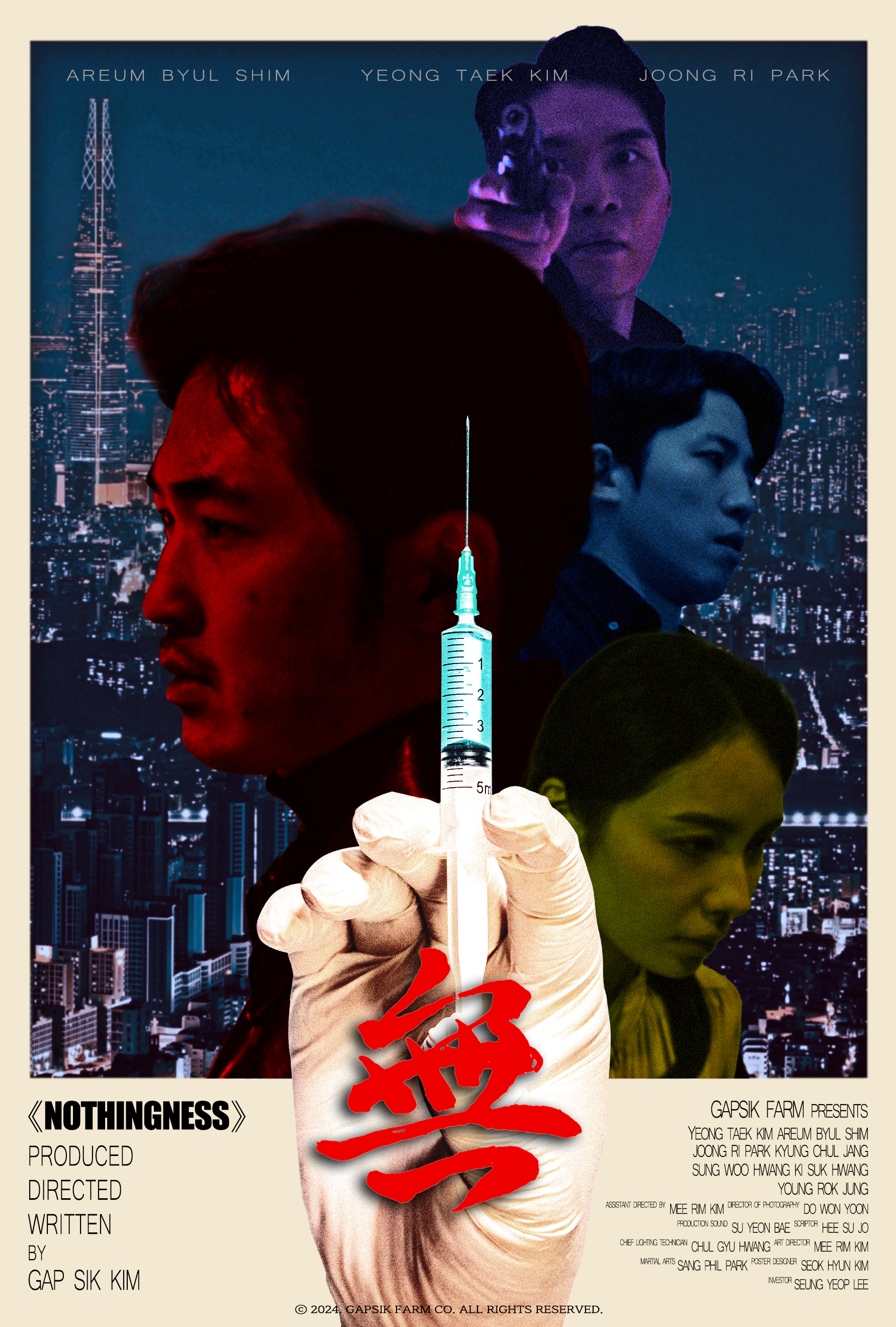
What are we without our violent impulses? In Kim Gap Sik’s sci-fi-inflected noir Nothingness (無, 무, Mu), a shady corporation has produced a new drug that inhibits the tendency for violence with those unwilling to take it exiled to the “City of Dreams”. But what does it mean to live with inhibition, and can we really call ourselves free if we are prevented from acting on our baser instincts?

At least, it seems to be slowly eating away at former policeman Young-il (Kim Yeong-taek) who has been placed on suspension and forced to take drug R-3 after dispatching violent serial killer and former childhood friend Jong-ha (Hwang Sung-woo). Young-il is now in a relationship with Jong-ha’s former girlfriend Yeon-jeong (Shim Areum-byul) but lives a depressed and aimless life devoid of purpose or meaning. Dangling the prospect of reinstatement, his former partner informs him that Jong-ha’s DNA has been found at a crime scene hinting that he is alive and has escaped from the City of Dreams to return to Seoul to enact his revenge.

Through his investigations,Young-il comes to discover that Jong-ha is part of a group that apparently intends to cast the world into “nothingness”. Jong-ha claims that he is now someone who has no name, hometown, or nationality and has transgressed the borders of what is considered to be a meaningful life. Young-il meanwhile struggles with himself, gravitating towards suicide while his doctor ignores his complaints. Resentful that he has been unfairly cast out of the police force he obsesses over the idea of reinstatement in part as a bridge to a happier life with Yeon-jeong but also finds himself conflicted.

After all, he’s told Jong-ha wants to “turn the world into nothingness”, but arguably so do those who invented R-3, reducing him to a zombie-like state of numbness and despair out of fear that he may at some point commit an act of violence. The creator of R-3, for whom Yeon-jeong works, explains that the people have traded freedom for security though she is becoming convinced that what he cares about is lining his own pockets indifferent to the side effects of his wonder drug including the suicidal ideation that plagues Young-il. Young-il suggests taking a trip back to their hometown, but Yeon-jeong is against it, certain that everything there has changed. A fugitive from City of Dreams he encounters tells him those like him who refuse to take the drug have lost their hometowns or perhaps never really had one in this harsh and judgemental world from which they have already been exiled for insisting on their freedom over the enforced authoritarianism that revokes their power to resist. 

The man also warns him that his former partner and other officers routinely collect protection money in the area and if he’s reinstated as a policeman he probably he will too robbing him of a position of righteousness in his quest to neutralise serial killer Jong-ha who is now targeting employees of the company that manufactures R-3. Accusing her boss of wanting to turn the world into obedient dogs, Yeon-jeong begins to reconsider her commitment to her work pleased by the “violent” sight of a child stomping in the park and no longer able to go along with the kind of side effects that plague Young-il or the wilful suppression of human nature.

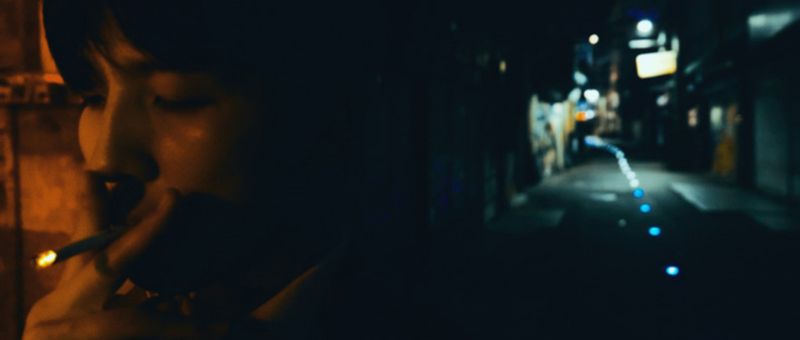
As the threat of a nuclear strike hovers in the background, Kim conjures a sense of existential dread caught between those attaining a zen-like sate of emptiness and those like Young-il unable to escape their own despair. Seemingly inspired by Blade Runner and classic noir cinema, Kim uses voiceover and a jazz synth score to bring out the neo noir themes while often filming in an intense darkness that echoes the murkiness of the world inhabited by Young-il, a lost soul searching for himself in a world of decreasing autonomy. Meanwhile, his mirror image Jong-ha takes on an almost mythical quality as an embodiment of nothingness and destructive nihilism that in itself becomes means of resisting a corrupt society. Making the most of its modest budget, Kim’s elegantly lensed noir presents a bleak vision of a near future world coloured only by despair and emptiness in which there is no freedom or safety and as Young-il is reminded cares little for men like him.


Original trailer (no subtitles)

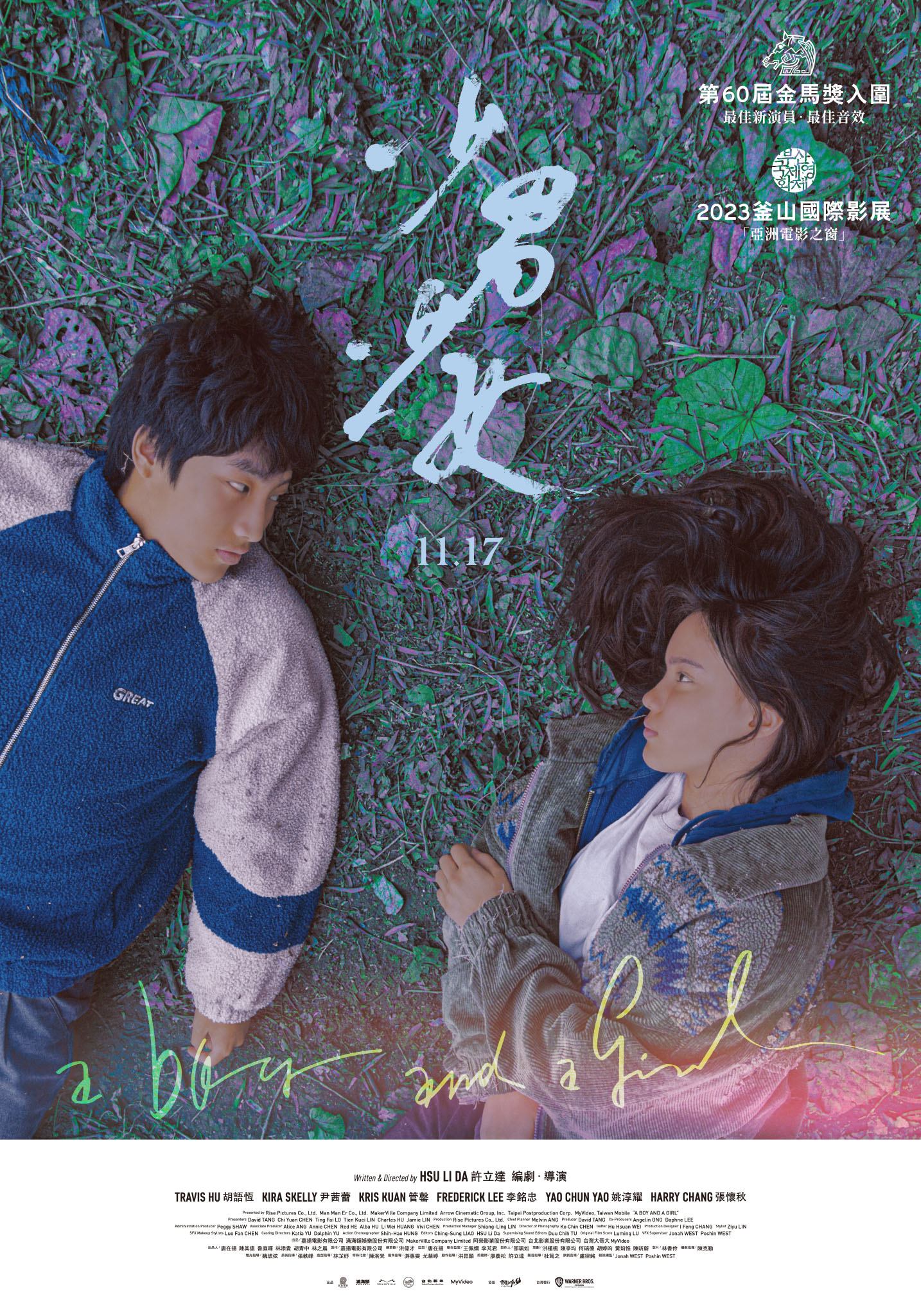
A Boy and a Girl (少男少女, Hsu Li-Da, 2023)

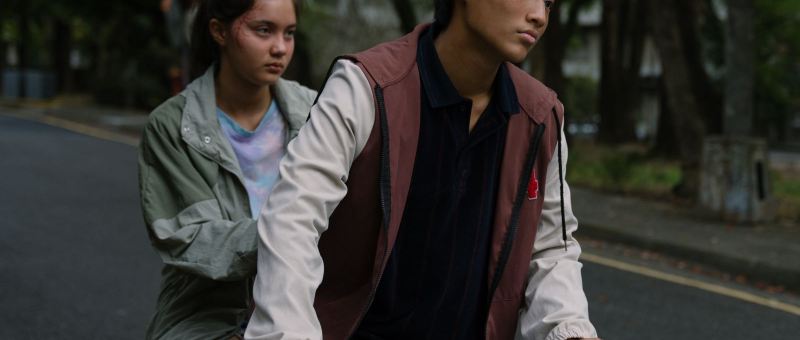
A young man on the cusp of adolescence longs to escape his miserable circumstances but gradually finds himself succumbing to the corruption all around him in Hsu Li-Da’s bleak coming of age drama, A Boy and a Girl (少男少女, shàonánshàonǚ). Though the title may sound like a cheerful rom-com, Hsu’s film is closer to anti-romance as the ill-defined relationship between the two provokes unforeseen changes and eventually dangerous situations. 

In any case, all the Boy’s trouble’s start when his phone gets broken in the middle of a deal to sell in game points signalling an abrupt end to his escapist dreams. He’s desperate to get another one, but his mother can’t afford it and has problems of her own in that the hostess bar she runs is in financial trouble and she’s had to enter a sexual relationship with a local thug just to keep it running. The Boy catches them at it, and looks on voyeuristically laying bare his oedipal desires coupled with a moralistic objection to the act and resentment towards the gangster.

For these reasons he becomes determined to escape his moribund small town along with the hostess bar where his mother works by fighting back against adult duplicity. After meeting the Girl and gaining access to her phone, he discovers that she had been involved in a sexual relationship with their PE teacher which had resulted in a pregnancy. The pair of them attempt to blackmail the teacher with screen caps of his incriminating messages to her, but the plan backfires. The teacher doesn’t feel under threat and gets two of his underlings to beat the Boy up rather than pay. The Boy is morally outraged by the teacher’s behaviour and thinks someone ought to do something, but doesn’t know what to do so lands on blackmail as a form of punishment though as it turns out the Girl was less interested in vengeance or money than whether the teacher really loved her. Like the Boy, the Girl is mostly alone. She claims not to know who her mother is, while her father is suffering with an illness.

As expected they plot their escape together, but events soon overtake them. With the blackmail scheme ruined, the girl settles on sex work and the Boy becomes a kind of pimp if a conflicted one frustrated by the Girl’s whimsical businesses sense which sees her tell a potential client to forget about the money because he’s not quite as hideous as all the others. Meanwhile, she starts giving the boy a drug called Little Devil which causes those who take it to laugh manically and commit acts of extreme violence. Left without a moral arbiter the boy has nowhere to turn. Not only can he not talk to his mother’s boyfriend, but eventually encounters a corrupt cop whose immediate reaction is to tout for a bribe or, as he would have it, protection money. 

In this very messed up environment, all relationships have become transactional. Gradually the Boy begins to behave like those around him and takes on the codes of the masculinity with which he is presented, posturing and squaring up to his mother’s boyfriend in contest over ownership of her. His mother wants escape too, but is afraid and constrained by the persistent misogyny of the present society even if, ironically, her work her also leans into it in running a karaoke bar where the some of the hostesses are encouraged to undress. The more they try to escape, the tighter the noose seems to grow refusing to let any of them leave and denying them even the hope of better life.

Already cynical, the Girl is resigned to her fate and in fact no longer really resisting it save for interactions with the Boy. Told that her father is much sicker than they thought and needs an expensive operation, the Girl suggests that she doesn’t intend to pay while the Boy tries his best to get cash to pay off the ganger, free his mother, and keep the bar only to be confronted with his naivety. The picture Hsu paints of contemporary Taiwan is bleak and unforgiving, refusing either of the pair the prospect of a happier future and guaranteeing only misery for all in a land of cheats and gangsters in which a good heart is weakness few can afford.


A Boy and a Girl screened as part of the 18th Season of Asian Pop-Up Cinema.

Original trailer (English subtitles)

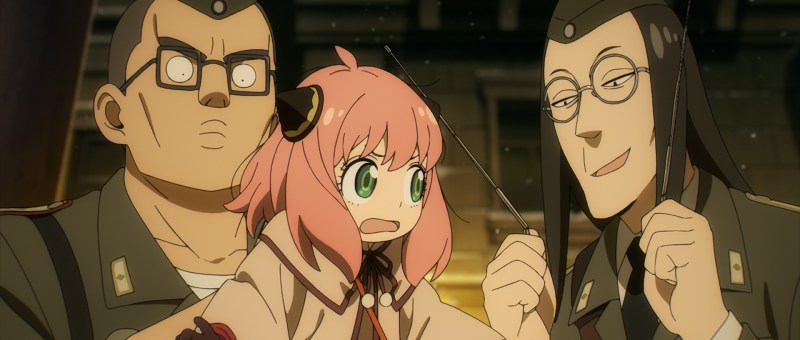
SPY x FAMILY CODE: White (劇場版 SPY×FAMILY CODE: White, Takashi Katagiri, 2023)

The irony at the centre of the Folger family is that they cannot communicate effectively because they’re each afraid of blowing their cover. Adapted from the manga by Tatsuya Endo, Spy x Family was the smash hit anime of 2022 and now makes its way to the big screen with an epic adventure which threatens the foundations of a “fake” family which has become increasingly real to the extent that it may have come to eclipse the reason it was created.

Newcomers to the franchise need not fear as the film is broadly standalone and gives a brief explanation of its setup in not dissimilar fashion to the voiceover intro of the TV anime. Codenamed “Twilight”, spy Loid Folger (Takuya Eguchi) has adopted a little girl, Anya (Atsumi Tanezaki), and married a local woman, Yor (Saori Hayami), in order to infiltrate an elite boarding school with the aim of targeting a reclusive politician through forging a connection with his younger son, Damian. What Loid doesn’t realise is that he’s completely in the dark about his new family. Anya is the only one who knows the whole truth as she is a telepath, while Yor is a secret assassin who agreed to fake marriage as cover to avoid detection by the authorities. Even the family dog, Bond, is a canine clairvoyant who was the product of an experimental program to breed super intelligent dogs. 

The mission is compromised by the fact that Anya is less than academically gifted and unlikely to gain all eight stars needed to join the elite group of students that would get her close to Damian and Loid close to his father. Having made so little progress, Loid’s handler reveals Operation Strix may be taken away from him and given to a political crony which would necessarily mean he’d have to give up the new family life to which he’s gradually become accustomed. But the family is also threatened by Yor’s insecurity and conflicted feelings for Loid, well aware their arrangement is “fake” but still anxious that Loid is having an affair and worried he’ll divorce her for not being good enough at the domestic life she too has come to value. Anya, meanwhile, obviously wants to keep to her new family together while helping her parents with various missions but can’t say anything for fear of exposing herself as a telepath and Bond as a clairvoyant. 

Echoing the extended cruise arc from the anime, the film follows the Forgers on a mini break to nearby Frigis in search of a regional dessert they hope will help Anya win another star only to end up swept into local politics. The long-form format of the feature surpasses that of the TV series in shedding its bitty, episodic structure for something more substantial though that may of course detract from its charms for those taken by the isolated vignettes of the show. Even so, the film doesn’t stint on quickly humour gaining the ability to deepen its ongoing gags culminating in a fantasy sequence animated like a kids drawing in which Anya meets the God of Poop and is rewarded for excellent service. 

Though what’s really about is once again the Forger family who must finally turn the wheel together in order to avoid certain death. Though fighting parallel battles, unable to simply explain what they’re doing and ask for help, the gang eventually end up in the same place united in their missions and also as a family having faced off various threats and reaffirmed their bonds which have by this point become very much real. Loid continues to struggle with the mechanics of his mission, frequently unable to read Yor’s insecurity and unwittingly fuelling it, and exclaiming that he doesn’t understand children nor have much clue how to manage Anya’s often madcap behaviour. The irony is that if he succeeds, the family will have to disband and he’ll lose this new sense of domesticity that’s becoming used to, but if he fails his nation may go to war and thousands of people will die. But until then his biggest problem is figuring out how Anya can win a baking contest and survive yet another impromptu family holiday without becoming embroiled in an international conspiracy. 


SPY x FAMILY CODE: White is in UK cinemas now courtesy of All the Anime.

UK trailer (English subtitles)

Images: © 2023 SPY x FAMILY The Movie Project © Tatsuya Endo/Shueisha

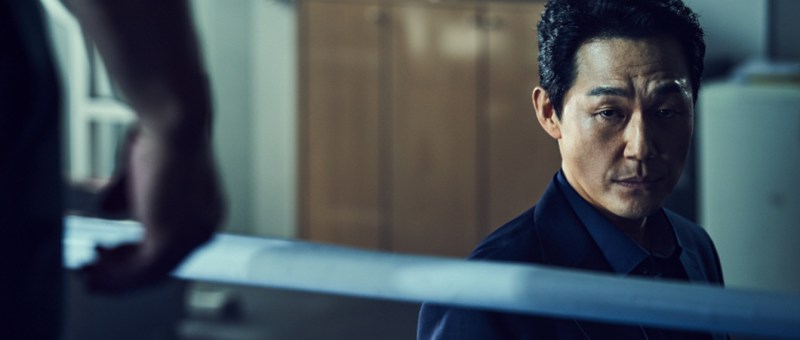
The Wild (더 와일드: 야수들의 전쟁, Kim Bong-han, 2023)

Who’s fault really is it? The hero of Kim Bong-han’s The Wild (더 와일드: 야수들의 전쟁, The Wild: Yasoodeului Jeonjaeng) goes to prison for seven years after the guy he was fighting in an illegal boxing match dies. But later he discovers that his friend and gang boss Do-sik (Oh Dae-Hwan) drugged his opponent first to assist in their match fixing scam, leaving a question mark about who was finally responsible for the young man’s death. It’s this confusing web of causality which damns each of the protagonists each in their own way seeking an impossible escape from the past. 

The first thing that Woo-cheol (Park Sung-Woong) says when he gets out of prison is that he wants to lead a quiet life, refusing Do-sik’s offer to give him a bar in compensation for his long years inside. Yet Woo-cheol is quickly pulled back into the gangster underworld after bonding with a young sex worker, Myung-joo (Seo Ji-Hye), who also happens to be the former girlfriend of the man he killed. This brings him into conflict with corrupt cop Jeong-gon (Joo Suk-Tae) who is working with Do-sik to take out the middle man in their smuggling operation which is largely handled by North Korean defectors. 

There may be something in the positioning of Gaku-su (Oh Dal-Su) and Woo-cheol as outsiders trapped by circumstance, yet the North Koreans otherwise depicted are all worst than the gangsters knowing only violence, recrimination, and rapaciousness. Putting up with them tries Woo-cheol’s patience and puts him at odds with Do-sik while disrupting the power play that has emerged between him and his underling Yoon-jae (Jung Soo-Kyo). Later in the film, another man calls them fools for being so obedient when the facts is that dogs never abandon their owners but are often abandoned by them. With so many concurrent schemes in motion, relationships are generally a weakness and it becomes impossible to know who can be trusted or what side anyone is on. 

That’s a dilemma that strikes right at the heart of Myung-joo who is attracted to Woo-cheol’s manly nobility but also conflicted and later pursued by her late boyfriend’s younger brother who blames her for his brother’s death insisting that he only participated in the fight because he wanted money to move out so they could live together. Then again perhaps it was the mother’s fault for refusing him the money when he asked for it. Everything that happens is really everyone’s and no one’s fault, just a fatalistic motion towards an unstoppable end game. Do-sik prides himself on being able to make his own fate, but even he is carried along by forces outside of his control never quite as much in charge of his destiny as he’d like to think. 

Meanwhile, he takes out his sense of futility on those around him. An intensely homosocial tale about the corrupted brotherhood between a series of men, the film has an unpleasant streak of deeply ingrained misogyny with strong depictions of sexualised violence and rape. Aside from Mrs Han, the feisty boss in charge of the girls who is later punished for her attempt to stand up to the men’s bad behaviour, the women are afforded little agency with Myung-joo reduced to little more than a tool used and manipulated by various plotters while like Woo-cheol longing to live a quiet life. Life him, she is dragged down by her guilt and trauma unable to escape her past. Do-sik, meanwhile, dreams of leaving this small-town world for the bright lights of Seoul but perhaps makes too great a calculation and finds himself outmanoeuvred by unexpected betrayal.

The film’s Korean title dubs the conflict between the men as a war between beasts, while it’s true enough that each of them is embroiled in a fiery hell preemptively looking for revenge before the threat has arisen. Romance and loyalty lead only to death and disappointment. A melancholy Do-sik asks Woo-cheol if they’re still friends and though it’s unclear if the question is genuine, seems to be harbouring a degree of regret in the coldness of his plotting either willing to sacrifice lifelong friendship or sure that those bonds are too secure to be broken. In any case, you cannot outrun fate nor find refuge from its ravages, only attempt to embrace its bitter ironies.


The Wild is available digitally in the US courtesy of Well Go USA.

International trailer (English subtitles)

DitO (Takashi Yuki, 2024)

A defeated boxer and absent father rediscovers the will to fight after an unexpected reunion with the daughter he abandoned to chase his dreams in Takashi Yuki’s Philippines-set sporting drama DitO. The title translates simply as “here” which is what Eiji (Takashi Yuki) and those around him eventually accept themselves as being, striving to create a place for themselves to belong rather than fruitlessly searching for one and finding themselves denied.

A contrast is eventually drawn between Eiji, an ageing boxer who remained in the Philippines when his wife (Machiko Ono) and child returned to Japan, and Joshua, a 17-year-old aspiring boxer and surrogate son figure whose boxing dreams are suddenly dashed by unexpected defeat and the death of his father from a long illness. Faced with these two blows, Joshua declares that he’s going to choose his family in giving up boxing to look after his younger siblings in direct contrast to the choice Eiji made to let his family leave him so that he could continue chasing a boxing glory he never achieved. 

When his now 17-year-old daughter Momoko (Momoko Tanabe) shows up out of the blue and tells him her mother has passed away, he’s a defeated figure still nagging his kindly boss Tamagon to set him up with a fight though having apparently fallen out with his coach some years previously. Her father’s living conditions evidently come as a shock to Momoko as she winds her way through the narrow alleyways of a local slum towards a small courtyard where Eiji lives in a home stewn with cardboard boxes that has no functional gas supply or other cooking facilities. In her youth, she’d seen him as a hero who keeps fighting no matter what, but here he’s clearly given up and is far from the saviour she hoped he’d be after travelling all the way from Japan where she believes she has nothing and no one to go back to. 

Meanwhile, as he reminds her the Philippines is not Japan and she finds it difficult to adjust to an environment that much less safe at least for women as her father cautions her not to go walking around alone and especially at night. Tamagon and coach Sese also paradoxically remind them that they shouldn’t trust Japanese people after the pair are scammed by an offer of an apartment which in truth seemed far too good to be true by a pair of Japanese expats apparently expressly targeting their fellow countrymen. Yet as she said, everything she has left in the world is “here” and so Momoko too decides to forge her own future in the Philippines rather than go looking for one if while also recapturing the past of her happy childhood memories from when they all lived together as a family. 

As Sese says, Eiji’s internal battle has narrowed his vision of the world and cost him the will to fight must as Joshua says that in understanding his fear he has lost the desire to fight it in the anxiety that he may lose. What they learn is that they must stand and fight for what they want, never giving in win or lose, though they will always have the familial solidarity of the boxing gym whatever else may happen to them. Essentially a family drama, the film is in part a tale of father and daughter learning to reconnect but also of the importance of making an active choice to “here” rather than passively existing in a place not of your own choosing. 

Momoko’s decision to clean her father’s long neglected house is not only a symbol of her desire to lighten his life and jolt him out of his inertia, but of a determination to make a home for herself and maybe even get the gas turned back on so she can use the kitchen. Nevertheless, it’s also clear that “here” is wherever you are and the thing is to embrace the now or change it and fight for your place to belong rather than let it beat the spirit out of you. In the end being a hero really just means staying in the fight with no fear of losing because you know you won’t stop fighting.


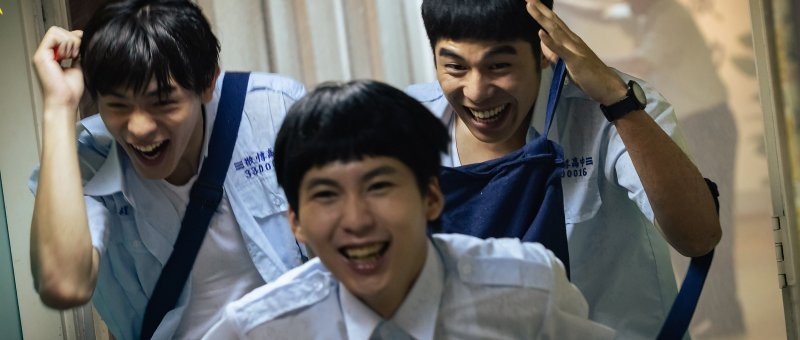
After School (成功補習班, Lan Cheng-lung, 2023)

In an odd kind of way, Lan Cheng-lung’s autobiographically inspired coming-age drama After School (成功補習班) charts how far Taiwan has come since the mid-90s while pivoting around the figure of Mickey Chen, a hugely influential LGBTQ+ filmmaker who passed away 2018. Chen was in fact Lan’s own cram school teacher and in terms of the film a voice for the future giving the children the permission to be themselves in the post-martial law society even as they struggle to break free of the authoritarian and fiercely patriarchal past. 

In a sense, cram school itself is the manifestation of that culture in that most of the kids have been forced to go there by their parents to pursue futures not of their choosing. The hero Cheng Heng (Zhan Huai-Yun), Lan’s stand in, wants to be a filmmaker but his dad wants him to be a maths teacher. That might be one reason he and his friend Cheng Hsiang (Chui Yi-tai), who lives with his family because problems with his own, spend most of their time messing around and playing childish pranks on the teachers and admin staff. Meanwhile, they’re far mare interested in potential romance than studying with Cheng Hsiang a bit of a ladies man and Cheng Heng nursing a crush on the school’s most popular girl Chen Si (Charlize Lamb). 

Nevertheless, the closeness between the boys gives rise to a few rumours that they may be gay. The idea is only further cemented by an ironic incident in which Cheng Heng sustains an embarrassing injury to his groin while watching a pornographic video he swiped from a cousin little realising that it was actually gay porn. His parents, or really more his father, do not take well to this and see it perhaps as just more evidence of his rebelliousness and lack of respect for his family in his desire to follow his own path rather than the one they’ve set down for him of getting a steady, respectable job as a teacher. 

That’s one reason that the arrival of Mickey (Hou Yan-xi), a recent graduate taking a temporary teaching job to save for studying abroad, is thought so disruptive because he encourages the kids to be who they are not who they’re taught to be. Mickey holds progressive sessions on sex and sexual identity, explaining concepts such sexual orientation and safe sex which is surprising not least because this is a cram school which exists solely to help kids do well on standardised tests rather than give them any broader kind of education. The headmaster, who is also the father of the boys’ friend Ho Shang (Wu Chien-Ho), is by contrast an authoritarian remnant of the martial law era who can’t permit any kind of liberalisation or individualisation and often inflicts corporate punishment on pupils deemed to have transgressed the rules of a polite society. 

But it’s Mickey who tries to help the boys accept and become comfortable with their sexuality and that of others, taking them to a gay bar where he interviews several of the regulars for his documentary. The barman once entered a marriage of convenience and had a child to please his parents but feels deep guilt and regret for the way he treated his wife and his since been disowned by his family. Now he hosts a New Year dinner for others like him who have nowhere else to go because their families have rejected them. The boys too are rejected by their fathers solely on the suspicion of homosexuality while the mothers remain broadly supportive of their children but trapped by those same patriarchal social codes caught between their authoritarian husbands and love for their sons.

Yet even with these more distressing themes, Lan’s film is at times a little too rosy, sticking to its lighthearted tone rather than fully address the implications of society’s attitude to the LGBTQ+ community in the mid-1990s as opposed to that of today in which Taiwan became the first Asian nation to legalise same sex marriage. Nevertheless, it presents a warm-hearted firsthand account of the effect Mickey had on those around him as the teens rebel against the authoritarian past to embrace their freedom and identities, no longer afraid to speak their feelings but determined to be themselves and accept the selves of others rather than live under the constraints of oppressive patriarchy and traditions.


After School screened as part of the 18th Season of Asian Pop-Up Cinema.

Trailer (Traditional Chinese / English subtitles)