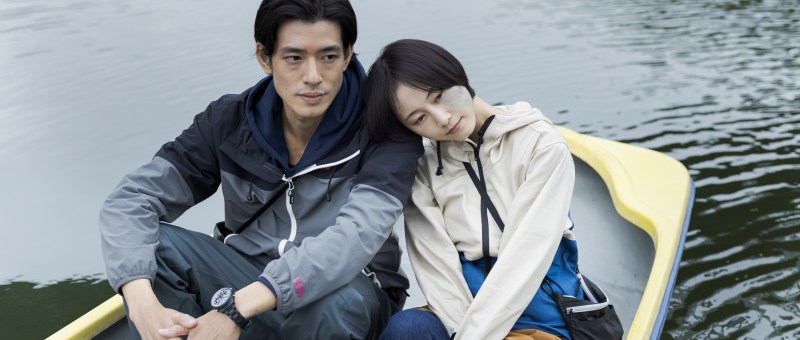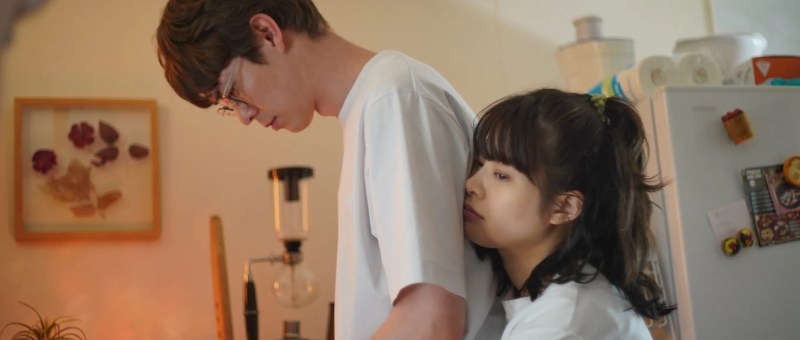
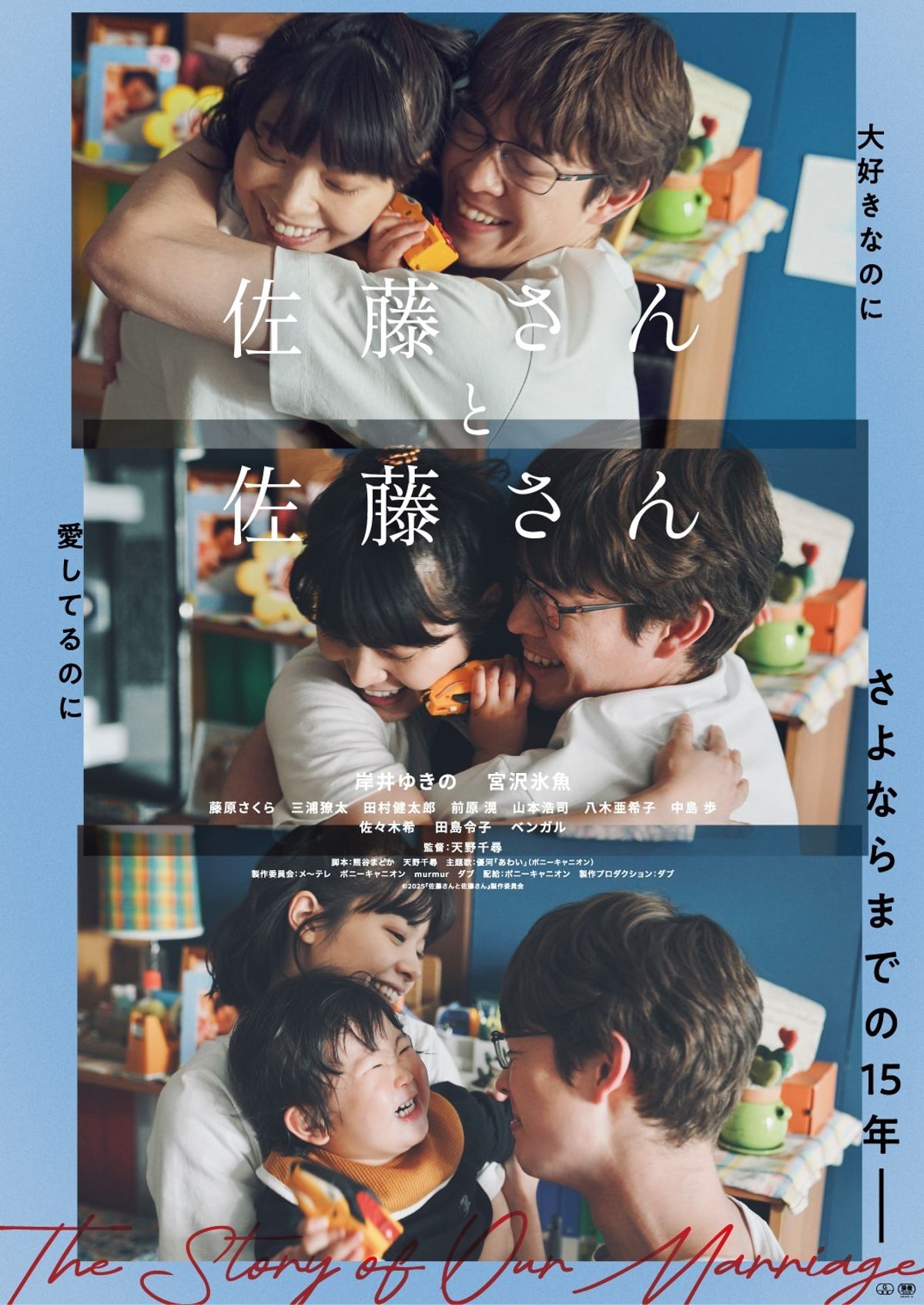
Sato and Sato (佐藤さんと佐藤さん, Chihiro Amano, 2025)

Aged 37 and recently divorced herself, lawyer Sachi (Yukino Kishii) listens to a man whose wife has evidently left him complain that what really soured him on her was that there was a dead bug in their living room that remained in the same spot for months on end, which indicated to him that his wife only ever swept the room as if it were round, literally cutting corners in their married life. He also complains that she only ever fed the children ready meals for dinner and they only ever had toast for breakfast. “I mean, would anyone call that a woman?” he rolls his eyes and sighs, expecting instant support from his legal team. It doesn’t seem to have occurred to him that he could simply have swept up himself or sorted breakfast and dinner, though he now brands his wife an unfit mother and seeks full custody, perhaps only as a means of hurting her or vindicating himself.

It’s this patriarchal take on the division labour that comes under the microscope in Chihiro Amano’s profoundly moving marital drama, Sato and Sato (佐藤さんと佐藤さん, Sato-san to Santo-san). Following the gradual disintegration of a relationship under the pressures of contemporary married life along with changing notions of gender roles, toxic masculinity, and the ways in which men and women navigate the domestic environment, the film seems to ask why it is that there isn’t more equality across the board, with practical and emotional responsibilities for the home still disproportionately falling on one partner.

This is all is more obvious when Tamotsu (Hio Miyazawa) ends up becoming an accidental househusband after repeated failures to pass the bar exam. He and Sachi, who share a surname which is also the most common in Japan making them a pair of everypersons, met as members of the university coffee club and, in truth, seemed somewhat mismatched from the start. She just bought the deal of the day and had the beans ground there. He’s carefully researched the best on offer and had the beans roasted to perfection with the intention of grading them on the day for the best flavour. Depending on how you see it, perhaps they complement each other and round out the corners to become one whole, but, on the other hand, maybe they aspire to different things. Nevertheless, they become a happy young couple full of hope and expectation for the future. But their relationship is soured by Tamotsu’s failures, and only more so when Sachi says she’ll study for the bar with him only to end up passing herself when he again yet fails.

Of course, it’s embarrassing for Tamotsu on a personal level that he can’t pass the exam, especially when he’s so told so many people that he’s going to be a lawyer. He’s been putting everything else on hold, including his relationship with Sachi having put off meeting her parents until he’s passed out of fear he’ll disappoint them. The sense of inadequacy begins to eat away at him, especially after Sachi begins working as a lawyer and is taking care of most of their bills. The other men we meet in the film, especially Sugai who is being divorced by his wife of 50 years, stress their position as a provider, as if that were all they needed to do in order to fulfil their role and buy their wife’s devotion. But Mrs Sugai, who now refuses to see him, states only in a letter that living with him is unbearable and he all he ever did was shout at her so there’s no prospect of communication. Tamotsu too is further driven into despair by the thought that others see him as “unmanly” because he’s being supported by his partner, though in reality masculinity is a performance for other men and not really something most women care about. What begins to bother Sachi is not his failure, but that she feels as if he’s given up and is not really contributing to their relationship or seriously studying to pass the exam. 

On a visit back to his hometown due his grandmother’s health crisis, starts to bond with a local woman and almost forgotten childhood friend who has herself escaped an abusive marriage but lost her children to her in-laws. He sees in her a more idealised kind of traditional wife, but after conplimenting him that his wife must be very lucky as he helps clear up at the bar where she works while all his friends doze off drunkenly, she gives him a rude awakening. He’s just like the others after all. He wants comfort, which is to say emotional labour from her, a woman he doesn’t really know, and the absolution sought by every man who says his wife doesn’t understand him. He wants to be told that he’s right and good, even while he blames Sachi and his domestic responsibilities for his inability to pass the bar. While talking with his old friends and hearing that his ageing father is planning to close their family farm, he starts to think about moving back and starting some sort of non-profit but as Sachi says when he puts it to her rather abruptly, he’s not really serious. Even if this sort of life might really suit him better, it’s not a decision he’s made after coming to the realisation that the bar exam is beyond him, but an attempt to run away not only from his failure but his domestic responsibilities. 

But by the same token, even while the roles are reversed Sachi falls into many of the same traps as an insensitive husband. So busy with her own working life, she doesn’t really see things from Tamotsu’s perspective and is only irritated by what she sees as his failure to commit to one thing or another. He is annoyed when she does things like point out there’s no toilet paper or contemplates buying a washing machine to make his life easier, because really he doesn’t think these things should be his responsibility and suggesting they are makes him feel like less of a man. They can’t orient themselves around the idea of a marriage as a domestic partnership in which they split both domestic and external labour equally and are each responsible for the whole. 

But then again, perhaps society isn’t ready for that either. Though Tamotsu does actually take care of the home environment and is the main caregiver for their son, Fuku, others still look to Sachi where a child is concerned. When they’re called into school because Fuku has apparently seriously injured another child in a squabble over building blocks, Tamotsu wants to ask more questions about how this happened, but Sachi immediately takes over and reassures the teachers she’ll make the necessary apologies to the other family, whispering in private that they’re all too busy to string this out which may not, of course, be very helpful in terms of Fuku’s further development. Conversely, when the pair are picked up by police after a violent argument in the street, the officer insists he has to write down “unemployed” even if Tamotsu says he’s a househusband, while when Sachi replies “lawyer” he assumes she’s trying to assert her right to legal representation and chuckles that she’s not under arrest so it isn’t necessary. She has to show him her lawyer’s pin to explain, and even then he just stares at them dumbfounded by their usual family setup. 

Sachi’s friend Shino who consults her for divorce advice when her husband cheats on her, reflects that Sachi might have had it easy in one sense because she never needed to change her name and accommodate herself with the loss of identity that comes with being called “Mrs Hasegawa” or “Miki’s mum” rather than by her birth name which admittedly was passed down from a father rather than a husband. For Shino taking back her maiden name was more important than a divorce in allowing her to reclaim herself as an individual who has choices and agency and isn’t someone who exists only in relation to a man in her social role as wife and mother. The film suggests the reason the marriage is unsustainable is precisely because society doesn’t accept it as a partnership of equals, so even when Tamotsu finally passes the bar, they end up with what’s perceived as two husbands and no one taking care of the domestic space to which the only solution is two households. With profound empathy for each, the film takes care not to apportion any blame, except perhaps on the parade of useless husbands being sued for divorce while unable to understand why their wives have left them or accept any responsibility for the failure of the marriage, but sees only the sadness of romantic failure and the impossibility of an uncompromised happiness in an otherwise oppressive society.


Sato and Sato screened as part of this year’s Camera Japan.

Trailer (no subtitles)
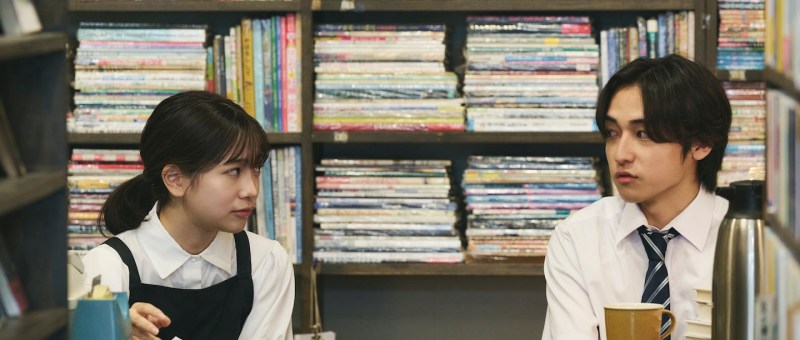
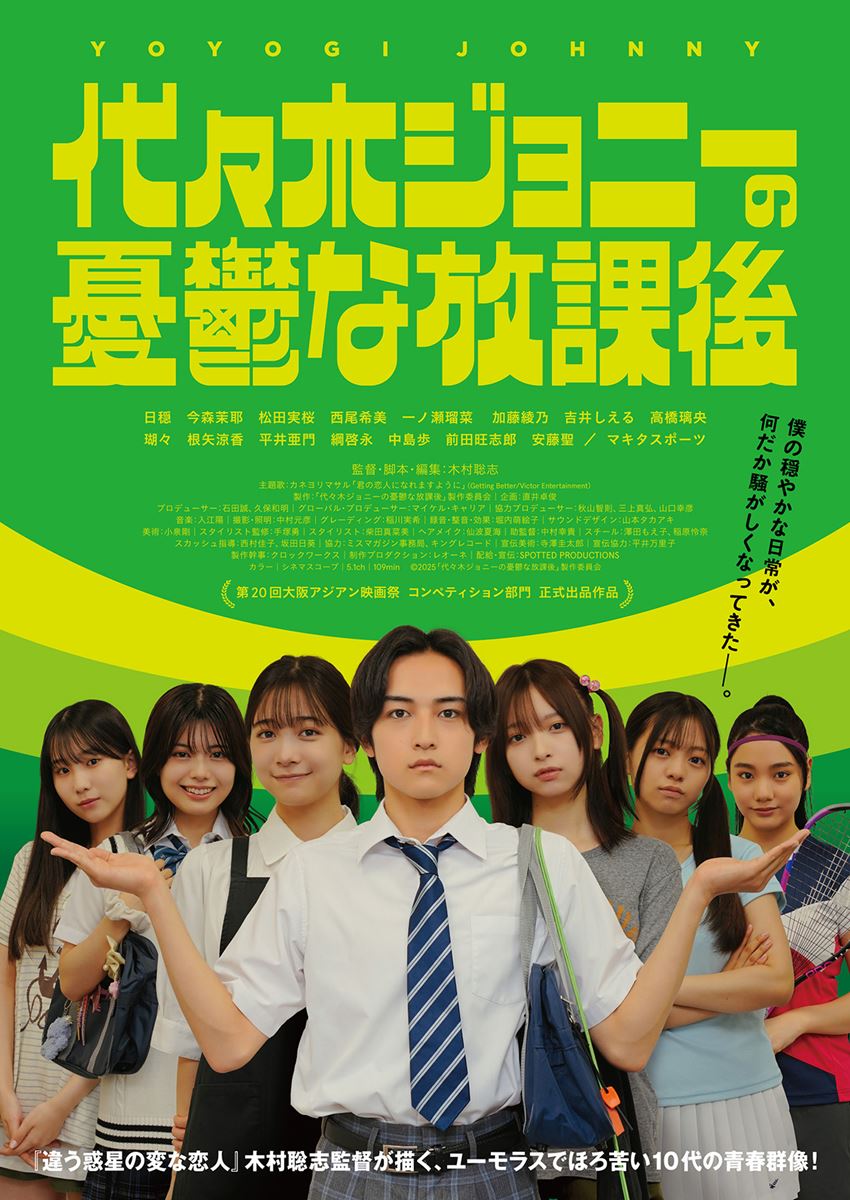
Yoyogi Johnny (代々木ジョニーの憂鬱な放課後, Satoshi Kimura, 2025)

Not much makes a lot of sense in the world of the titular Yoyogi Johnny. Nothing’s quite as it first seems and life is full of contradictions, but that’s alright, for the most part. Johnny just floats on through life going with the flow, but then he meets a series of girls who each for some reason want to practice things with him though for very different reasons while he tries to make sense of it all and gain the courage to push for what he really wants.

Then again, he breaks up with Asako (Mio Matsuda) because he realises he likes her in the same way he likes “history” which is to say, when someone asks him what his favourite subject is he just says that but doesn’t actually know if he even likes history or not. Having never been in love, he doesn’t know what it’s like and therefore wants to end the relationship. Mostly he just spends his time hanging out in the “squash club” where they don’t actually play any squash but just use the clubroom to hideout from the less satisfying aspects of their lives or otherwise avoid other people. In fact, they’re only in the squash club to make up the numbers and were all looking to start clubs of their own but for various reasons were prevented from doing so. But when a mysterious young woman they christen Deko (Shieru Yoshii) for her prominent forehead arrives at the club looking for the founder, Ondera, whom they call “Button”, it wrecks their peaceful lives because of her insistence that they actually play some squash.

Deko wants to practice squash with him, but his childhood friend Kagura (Runa Ichinose) wants him to role play real world interactions while she has otherwise become a virtual recluse who no longer attends school. Meanwhile, he’s also drawn to a colleague at his part-time job at a bookshop/bar, Izumo (Maya Imamori), who is also the boss’ daughter. Somewhat salaciously, she wants him to practice “physical contact,” as that’s one of the areas she has difficulty in having herself also been a recluse who dropped out of school and has come to Tokyo for a fresh start. Johnny immediately picks up on this irony of Izumo salmoning her way to the capital while, in general, most people are travelling away from the city to a less populated area for a quieter life rather than the other way around though like many of these conversations it’s lost on Izumo to whom it is of course just normal. Johnny has several of these conversations in which he attempts to point out that something doesn’t make sense but just finds himself trapped in an infinite loop of back and fore as the other person struggles to understand his logic or he theirs. He is however a kind person who tries to help everyone who asks him though perhaps without really thinking about it. 

Yet most of the young women eventually oscillate out of his life depriving him of these very important friendships and ironically rebounding to the squash club even though they now actually have to play squash. Nevertheless, through his various relationships Johnny begins to gain a new perspective on himself and even finds out what it’s like to fall in love. A strange young woman who seems to be part of what very much looks like a cult, reminds him that “self-sufficiency” is a lie even though it’s supposedly what their cult is founded on. It is after all an organisation that promotes “independent living” while sending its members who all live in the dorm to farm the fields, though this yet another thing that doesn’t really make sense but Johnny just has to accept. Nevertheless, it seems she’s right when she says people can’t live by themselves alone and by and large need each other to survive. She tells Johnny that he should stop visiting Kagura because it’s “meaningless” and wouldn’t help her, but at the same time seems to appreciate his good-naturedness and the gentle positivity he puts out into the world in his ability to just be nice and be there for that want or need him while never expecting anything in return. As he’s fond of saying, if you regard a person as a friend then it doesn’t really matter whether they agree or not they’re still your friend and Johnny has more than many might awesome he would. Warm-hearted and filled zany humour, the retro aesthetic of its opening titles only adds to film’s charm as a little gem of indie comedy.


Yoyogi Johnny screened as part of this year’s Osaka Asian Film Festival.

Trailer (no subtitles)

The Parades (パレード, Michihito Fujii, 2024)

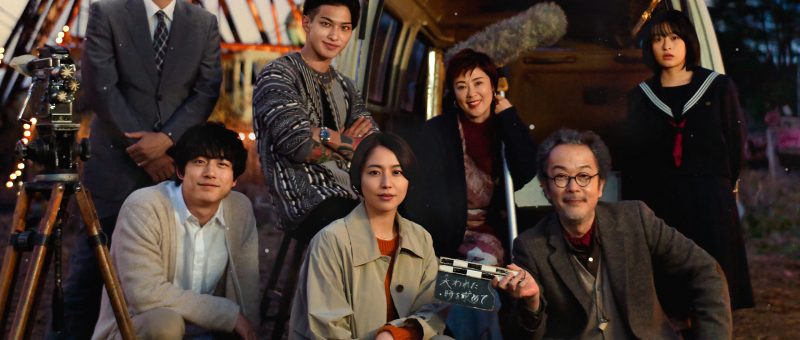
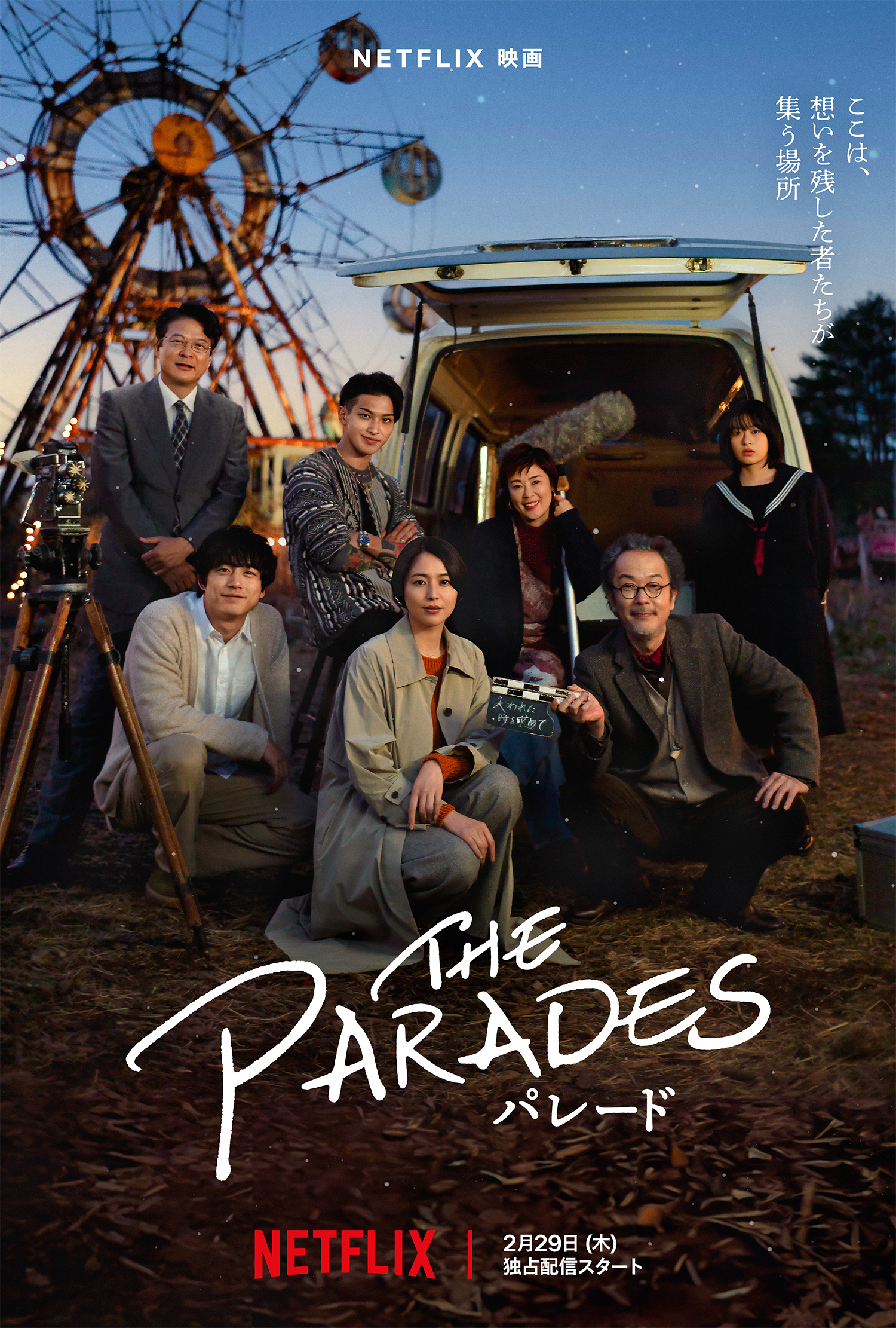
Living a life without regrets is easier said than done. The protagonists of Michihito Fujii’s The Parades (パレード, Parade) each have unfinished business that prevents them moving on from this world, but what they discover is an unexpected sense of solidarity among similarly lost souls as they try to lay themselves to rest. After all, all they can do now is observe and reflect while helping others like them with their own lingering doubts and regrets.

Drawing inspiration from the 2011 earthquake and tsunami, Fujii first introduces us to Minako (Masami Nagasawa). A 35-year-old single mother, she wakes up on a beach and frantically looks for her seven-year-old son Ryo (Haru Iwakawa) little realising that the reason no one seems to be able to hear or react to her is because she’s already dead. Picked up by fellow ghost Akira (Kentaro Sakaguchi), she’s taken to a disused fairground that doubles as a hub for wandering souls. Though it takes her a while to accept her new situation, she gradually bonds with others at the camp each of whom have their own unfinished business which isn’t all that different from her own in that they mostly want to be sure the people they left behind will be alright.

The film takes its name from the monthly processions in which wandering souls meet by lantern light to look for their missing people together. This sense of solidarity and empathy seems to echo the best of humanity along with a melancholy longing. There appears to be little rancour in this afterlife, a yakuza who was killed in a gang war simply feels sorry for his father and so guilty about the girlfriend he left behind that he’s been afraid to face her for the last seven years, and a high school girl who took her own life because of bullying first thinks her unfinished business is vengeance on the bullies but later accepts is actually a desire to apologise to her best friend who then had to take the brunt of the bullies’ cruelty on her own.

What the film seems to say is that we should have more of this fellow feeling in life. Former film producer Michael (Lily Franky) constantly references his days as a student protestor remarking that they might not have amounted to very much but at least they had unity. His regret is less his failed revolution than a moment of emotional cowardice that saw the woman he loved marry someone else instead. Constant references to the end of Casablanca echo their plight as if Maiko (Yuina Kuroshima / Hana Kino) married Sasaki (Ayumu Nakajima / Hiroshi Tachi) for the good of the revolution though she really loved Michael who unlike Rick just walked out on it because in the end he wasn’t brave enough to risk the consequences of its success or failure. 

The world building may not always be consistent and the rules of this universe appear unclear. It seems that in general the ghosts don’t linger long. Even the heavenly liaison Tanaka (Tetsushi Tanaka) appears to have been dead not longer than 40 years with Michael seemingly the only other long-stayer with the others’ deaths fairly recent. In general they are only really waiting for themselves or others, wanting to make sure that their loved ones will be alright in their absence even though there’s nothing more they can do for them now other than observe. Though they can walk through this world and interact with physical objects, their presence is otherwise invisible unless the person they wish to contact happens to be in an altered state. To this extent, the resolution may seem like a bit of a cop-out but does lend an additional poignancy and imply that these lessons learned in limbo can still be taken into the mortal realm creating additional empathy and solidarity among the living so that they may be able to live their lives freely and fully perhaps not entirely without regrets but at least with fewer of those that would prevent them from moving on when their time comes. But even if they find themselves trapped in limbo, they’ll hopefully find others like themselves and a gentle sense of hopefulness about what’s to come even as they prepare to leave this world.


Trailer (English subtitles)

Happyend (Neo Sora, 2024)

The central thesis of Neo Sora’s mildly dystopian drama Happyend is that the real looming earthquake the powers that be are so afraid of is a youth revolution. But the film seems to ask if that’s something that’s really achievable or if idle teenage fantasies of a better world will soon be snuffed out by its seeming impossibility or the internalised desire for a conventionally successful life lived under a system they know to be corrupt, unfair, prejudiced, and staunchly hierarchal.

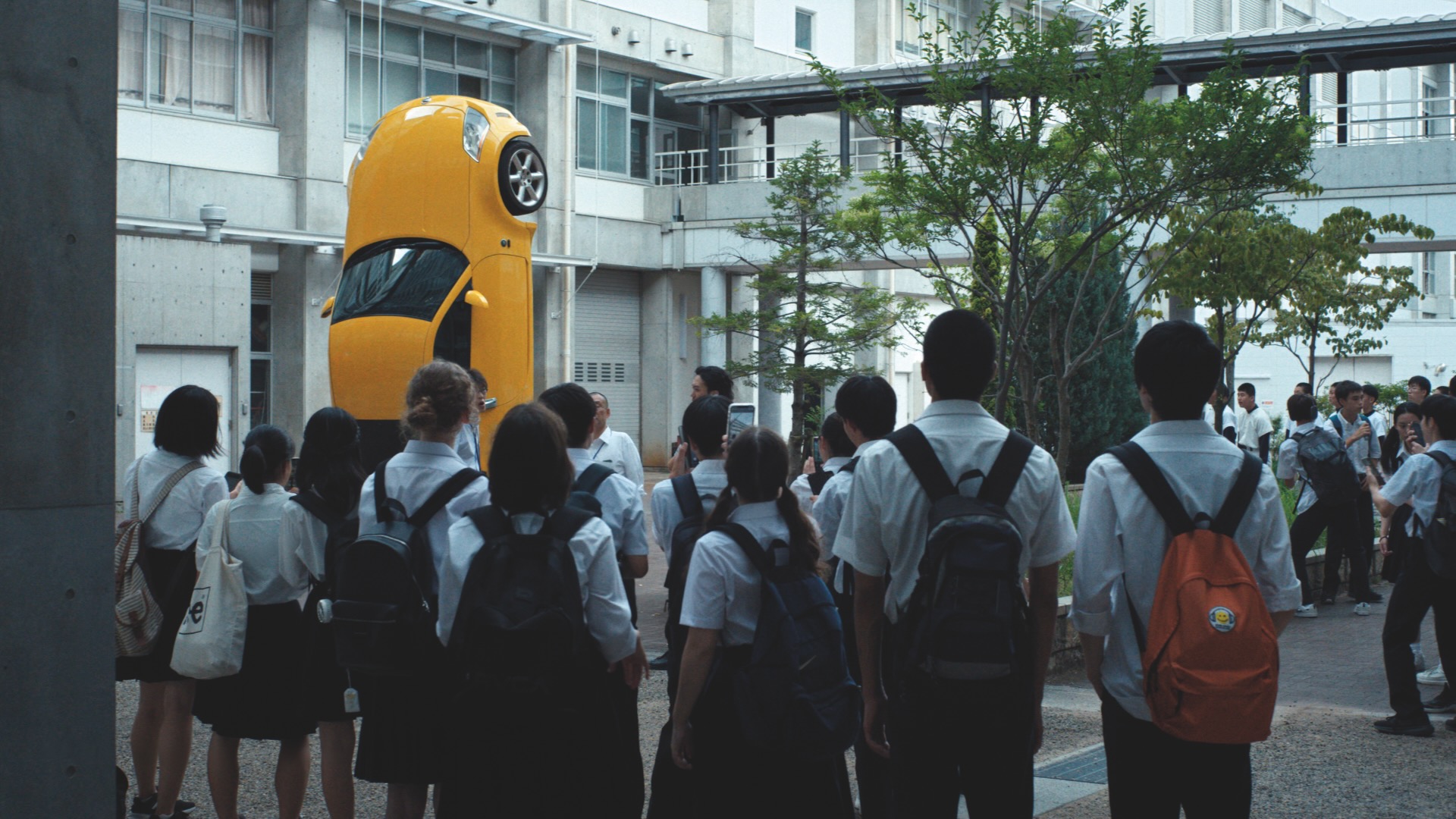
Thus the school at its centre becomes a microcosm for the society at large. Set slightly in the future, though with a retro sensibility, the film revolves around a close group of friends who are nevertheless pulled in different directions as they approach the end of high school while becoming aware of the destructive effects of an authoritarian educational system on children across the nation. The priggish headmaster (Shiro Sano) is involved in dubious schemes with local government and high tech companies and drives a flashy yellow sports car to work. Somehow the teens manage to prank him by standing it on its end like some kind of monolith to his hypocrisy and corruption. The headmaster quickly brands the obviously harmless prank as a “terrorist” action and uses it to crack down on lapses of discipline in the school. 

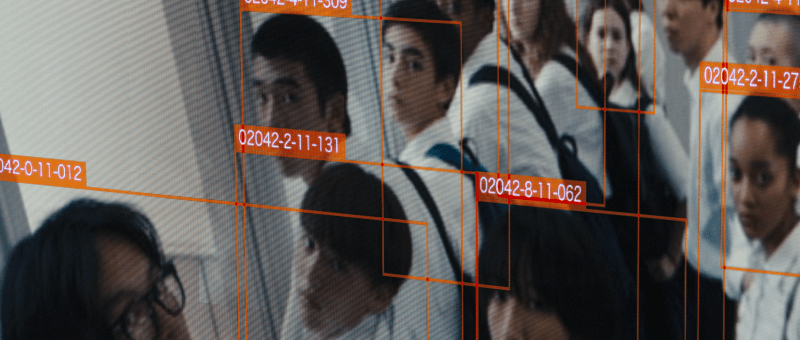
His actions are mirrored in those of the Prime Minister who uses the looming fear of “the big one” as a means of forwarding his fascitistic agenda. He alludes to the false narrative that Koreans and other minorities committed crimes and poisoned wells in the wake of the 1923 earthquake as justification for his tough approach to immigration while limiting the ability of those who do not hold Japanese citizenship to participate in democracy. Kou (Yukito Hidaka), the most conflicted of the teens is a zainichi Korean whose family as he points out has been in Japan for four generations. He’s not obliged to carry his permanent residency documentation on him, but is repeatedly asked for it by police who scan his face to pull up his records on their ominous new devices. Drawn to rebellious student Fumi (Kilala Inori), he’s minded to resist social oppression but also mindful of his single-mother’s hopes that he will win a scholarship and attend university. 

Nevertheless, he begins to drift away from childhood friend Yuta (Yuta Hayashi) who resists by immersing himself in the dance music of the past. Kou regards him as childish or unenlightened, irritated that he doesn’t seem to have grown or changed at all and increasingly convinced he’s outgrown their friendship. There may be something naive about Yuta’s simple desire to enjoy his time with his friends and find his freedom in music, but he is the only one of the teens who really does reject the system by choosing to live outside it. 

Tensions come to a head when the school instals a mass surveillance system under the cute name “Panopty,” doubtless inspired by Jeremy Bentham’s famous design for the perfect prison. The system awards points for infractions on discipline but ruthlessly and without thought. A delicious moment sees a telltale baseball student fined once for smoking after picking up a discarded butt with the intention of throwing it away and then again for littering when he inevitably drops it. Led by Fumi, the kids resist in distinctly old-fashioned ways with a sit-in at the headmaster’s office but cracks soon start to appear and some aren’t willing to risk their academic futures on something which will only benefit the kids of tomorrow. In the end they win the right to a free vote on the surveillance system, but have perhaps underestimated how many of the young will also vote for “safety” over freedom in the mistaken belief that the system does not infringe on the rights of people like them.

This is a city in which ominous red lights blink in the distance like silent alarms, where the kids are forever hanging out next to signs that read “caution”, where earthquake alerts are so common no one really pays much attention to them but the looming threat of mass destruction hangs over everything and everyone. Even so, these kids are just teens growing up, having fun with their friends, and beginning to decide which path they’ll take in life. A poignant moment takes place at the end of a bridge with steps on either side and the sense that at some point you go one way and your friend another and you may never see each other again. Perhaps this is their earthquake, the silent tremor that sends them into adulthood and a society still in flux that seems somehow beyond repair.


Happyend screened as part of this year’s BFI London Film Festival.

Original trailer (no subtitles)

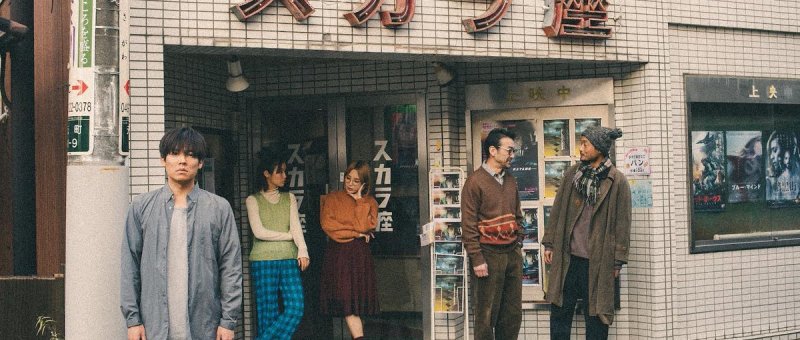
Twilight Cinema Blues (銀平町シネマブルース, Hideo Jojo, 2023)

Japan’s mini theatres have been in a status of crisis since the pandemic. Already struggling under the weight of changing times the immediate restrictions pushed many over the edge unable to entice older regulars back into screens or find a new audience among the young. This is doubly bad news for the industry as a whole as it’s mini theatres that allow indie films the platform they need to succeed and without them there is little avenue for films produced outside of the mainstream. Like Lim Kah-Wai’s Your Lovely Smile, Hideo Jojo’s Twilight Cinema Blues (銀平町シネマブルース, Ginpeicho Cinema Blues) similarly extols the virtues of the mini theatre which is not just somewhere to watch films but a place to belong that has room for anyone and everyone that wants to be there.

That’s more than true for Takeshi (Keisuke Koide), a struggling man approaching middle age who’s become near destitute and is almost sucked into a welfare scam targeting the homeless by a pair of shady yakuza claiming they run an NPO. At the orientation he runs into Kajiwara (Mitsuru Fukikoshi ), the owner of a mini theatre who declines to join the gangsters’ scheme but offers Takeshi the opportunity to bunk in his storeroom while working part-time little knowing that to Takeshi this particular mini cinema is like a return to source allowing him to rediscover his love of film.

But the mini cinema itself is also struggling. They simply don’t get bums on seats and Kajiawa is behind on paying his staff. Though they have a small collection of regulars, they aren’t enough to keep the lights on on their own. Even the projectionist is thinking he’ll probably retire along with the machine. Unable to afford new films, Kajiawara relies on cheap and easily licensable classics such as old favourite Casablanca but is largely unable to see away out of his situation while feeling guilty over ending what was effectively a family business and local landmark. The building’s 60th anniversary, 60 being a symbolic number in Japanese culture as it represents a full turn of the Chinese zodiac and literal new start, presents an opportunity to both Kajiawara and Takeshi to begin to move forward by renewing their faith in cinema.

The faith of Takeshi’s homeless friend Sato (Shohei Uno) needed no renewing. Though he had nothing, the ability to see a film twice a month made him feel human while the community at the cinema is perhaps the only one that still accepts him. He offers a small prayer after every film, and instructs Takeshi that he should the same. But his openhearted faith is also his undoing, allowing him to fall for the yakuza scam little realising they’ll force him to work for them taking half of the social security payments they helped him sign up for in the process. In the outside world, men like Sato find only exploitation and prejudice with cinema their only refuge.

Then again, filmmaking isn’t easy. A young woman who desperately wanted her debut film to play in her hometown cinema has based her first feature on the life of her father, a failed film director who drank himself to death (in a neat allusion to Oshima’s Cruel Story of Youth, her film’s title literally translates as “cruel story of a director”). Similarly, the suicide of a much loved assistant director has prevented those around him from moving on, preoccupied with the shock his death caused them in its suddenness and lack of obvious cause. They blame themselves sending their lives into a downward spiral that results in crushing financial debts and the end of a marriage. In some ways, the film is an ode to the ADs who keep everything running, including on occasions the director, and are in a sense the custodians of filmmaking.

Still, it’s clear that not everything can seamlessly repaired. Times have moved on even if some have been left behind and you can’t always simply reclaim what you’ve lost, but you can always start again with another spin of the wheel and make the most of what you’ve got. It won’t be the same, but that doesn’t mean it won’t be good. Jojo’s heartwarming tale of cinema has an undercurrent of darkness and despair running beneath, but also suggests that the silver screen can be a beacon hope when the world is at its bleakest and not least for those whose existence largely lies behind it.


Screened as part of this year’s Japan Foundation Touring Film Programme.

Original trailer (English subtitles)

Home Sweet Home (スイート・マイホーム, Takumi Saitoh, 2023)

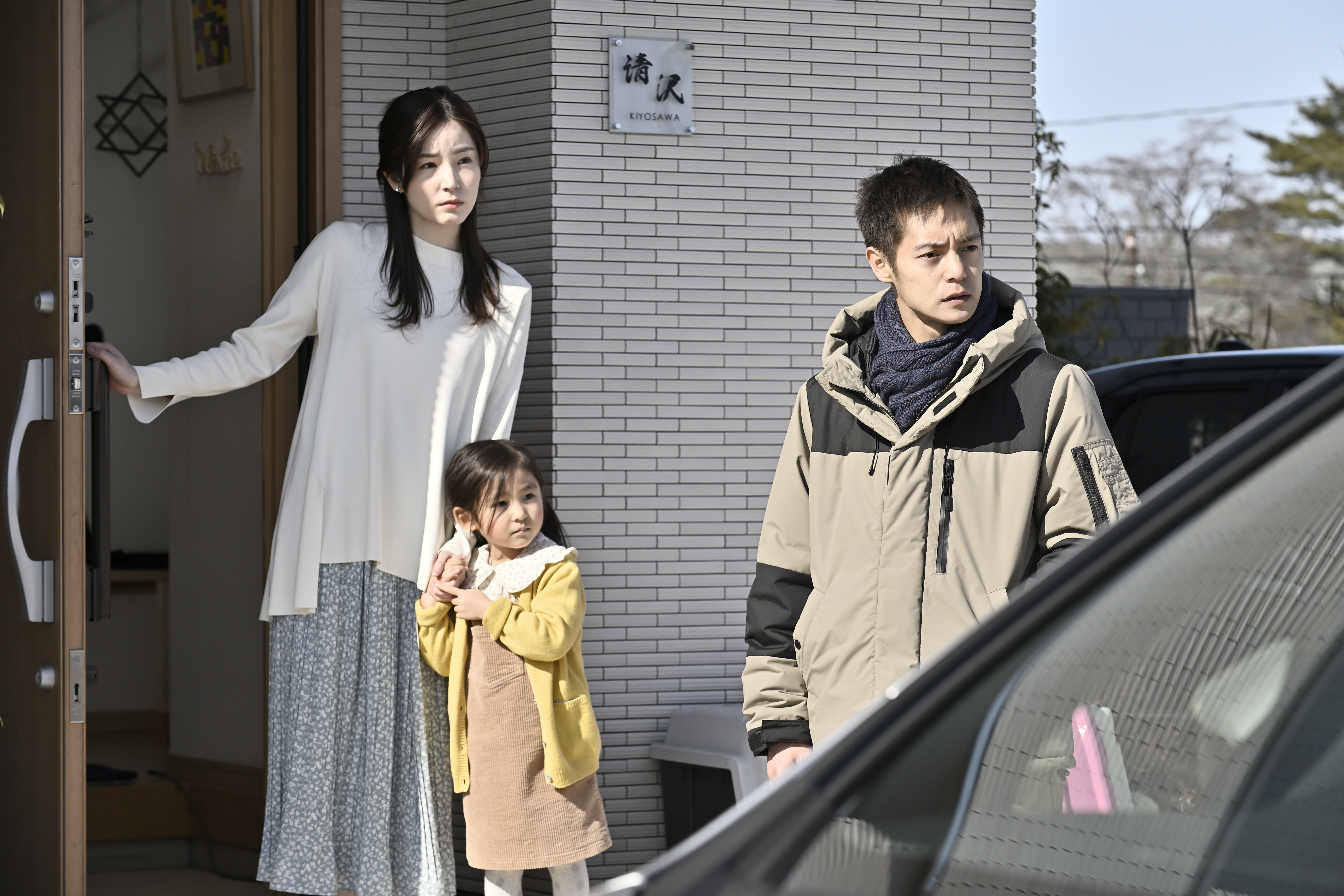
“The secret is in the basement” is not a phrase which inspires confidence when viewing a potential new living space, but as it turns out the cellar is the least of their worries in Takumi Saitoh’s eerie adaptation of Rinko Kamizu’s mystery horror novel, Home Sweet Home (スイート・マイホーム). The Kiyosawas are just looking for somewhere warm where they can enjoy life as a family in comfort and security, but if something sounds too good to be true then it usually is as they will discover to their cost. 

The saleswoman at Magic Homes describes the Kiyosawas as “the ideal family” for whom she is glad to build an “ideal” home. To many they may look “ideal” in that husband Ken (Masataka Kubota) has a steady job as a personal trainer while wife Hitomi (Misako Renbutsu) is a stay at home mum to four-year-old Sachi. But of course nothing’s quite as it seems and there are already cracks in the foundations of this happy family home as Ken has been having a years’ long affair with co-worker Yurie (Ririka). After finally deciding to take the plunge on the house, the affair comes to a natural end point as Yurie too decides to marry her longterm boyfriend with the aim of starting a family. But not long after the Kiyosawas have moved in to their new “magic home” complete with new addition Yuki, Yurie’s husband receives a video showing an unrecognisable Ken entering her apartment with the presumed motive of blackmail lending a note of anxiety to his moment of familial bliss. 

To begin with, the house itself takes on a eerie quality especially with the ominous rumble of the single AC unit in the pitch-black basement. The home does not seem to have been particularly well thought out for families with small children as the tiny doors leading to the hatch are at a toddler’s height and don’t appear to have any kind of safety locks in place. Everything else is run off the central smart system including a network of CCTV cameras sold to the family as a convenience that would allow them to keep an eye on the children wherever they might be in the house while getting on with other things, but also undoubtedly a privacy worry and no one likes to feel watched in their own home. Watched is exactly how they start to feel, Hitomi convinced someone’s been in the house while looking around realising how many vents and ducts there are ominously staring down at them in every room. 

Ken’s brother Satoru (Yosuke Kubozuka) is suffering with a mental illness that makes him paranoid, repeatedly insisting that there are people watching them and they need to protect the family because they are everywhere in the ceilings and the floors. Though it first seemed to us that the house was the problem, the family’s desire for conventional suburban living biting back at them, we wonder if the problem is Ken and his reckless endangerment of his family through his affair. When first viewing the house, the couple had been accosted by a creepy salesman, Amari (Yohei Matsukado), who makes barbed remarks about looking after the family that have Ken suspecting he’s got it in for them because they chose someone else to handle their sale or perhaps resents them for not being “ideal” enough to live in one of his “magic homes”. 

But then what is the “ideal” family, who gets to decide that? Why should the Kiyosawas have to fulfil a stereotypical ideal just to be judged worthy of homeownership? There might be something chilling in the uniformity of the house’s design, a utopian vision of suburban bliss founded on outdated patriarchal social norms of the nuclear family though in this case slightly adjusted for a new era, but then again the call is coming from within the house in more ways than one in Ken’s delayed response to traumatic childhood incident and concurrent anxiety around being able to protect his family in fulfilment in the social “ideal” for fatherhood. It’s the “ideal” that is the true enemy from the generic house design to the unfair expectations placed on the Kiyosawas to live up to a particular kind of suburban properness in order to qualify for the right to live there. Paranoid and eerie, Saito conjures a world of constant tensions in which we are all being “watched” if not to say judged and any bug in the system must be quickly removed so that the “ideal” may prevail.  


Home Sweet Home screens July 27 as part of this year’s New York Asian Film Festival.

Original trailer (no subtitles)

Images: ©2023 Rinko Kamizu, KODANSHA Ltd./ “Home Sweet Home” Film Partners

Thorns Of Beauty (恋のいばら, Hideo Jojo, 2023)

“Can two women who like the same guy become best friends?” A loose remake of Pang Ho-Cheung’s 2004 Hong Kong comedy Beyond our Ken, Hideo Jojo’s Thorns of Beauty (恋のいばら, Koi no Ibara) finds a jilted ex teaming up with the current squeeze against a no good guy who has compromising photos of each of them he could potentially expose online anytime he feels like it. Not quite everything is as it first appears, yet as they plot revenge against the caddish Kentaro (Keisuke Watanabe) the pair begin to discover a bond that runs deeper than their shared quest for validation.

Momo (Honoka Matsumoto), a mousy librarian, first accosts Riko (Tina Tamashiro), an aspiring dancer who works at a nightclub, on a bus, staring at her intensely until she finally removes her earphones. In truth, Momo never quite shakes an edge of possibly dangerous eccentricity and there is always an underlying doubt that she is telling the truth when she explains to Riko that she and Kentaro were previously an item and he has private photographs of her she fears he may intend to post online. For whatever reason, Riko decides to hear her out and though insisting that Kentaro’s not that sort of guy seems to think there may be something in it. A photographer by trade, Kentaro has in the past photographed her without her consent claiming that he spends all day photographing things other people find beautiful and wanted capture something for himself in his free time. 

Much of the story is filtered through a version of Sleeping Beauty that Momo finds at the library where she works. As the two women bond in their shared quest for revenge, Jojo often plays with the image of them as “witches” lighting them in an eerie green while they dress in black with hats that cast shadows over their faces. Yet we also find ourselves wondering who the sleeping beauty is in this scenario, an unexpected candidate turning out to be Kentaro’s elderly grandmother who has dementia and spends her days collecting shiny things to build a vast fairytale castle. Momo comes to see herself as hoping to wake Riko from a moment of romantic fantasy with a man who in the end doesn’t really care for her which she likely knows but has allowed the relationship to continue mainly out of a sense of inertia. 

But in teaming up with Riko, Momo also begins to awaken from her own low self-esteem in believing herself to be inferior to someone like her. There are times when we wonder if this is going to turn into a Single White Female-style bid at identity theft as Momo seems to idolise her new friend possibly planning to eliminate her and reclaim her place in Kentaro’s life. In the end, however, both women are throughly awakened from their romantic illusions in realising that Kentaro is indeed that sort of person with a hard disk full of pictures of other women just like them while their friendship also begins to take on a distinctly homoerotic quality that clearly runs beyond simple friendship or female solidarity. 

As Momo reflects, Sleeping Beauty is a passive heroine who is asleep for the entirety of her own story. When she’s born, the fairies give her various gifts that turn her into a stereotypical figure of idealised femininity and leave her with nothing to want or strive for. Momo wonders if that doesn’t make her a little boring and if Sleeping Beauty actually wanted any of those things or in the end they were just burden to her. Momo would only be grateful for things she actually wanted like the ability to totally become herself, while Riko reflects on a “past life” as a woman living happily with her two sons by a lake in Switzerland. Cutting through the thorns of their illusions, they awaken each other to a sense of possibility each of them may long have forgotten. Strangely poignant in the touching quality of its central romance along with fairytale allusions, the film in the end allows both women to reclaim an image of themselves from a man who tried to take it from them without ever really bothering to look at it. 


Thorns Of Beauty screened as part of this year’s Nippon Connection.

International trailer (English subtitles)

The Nighthawk’s First Love (よだかの片想い, Yuka Yasukawa, 2021)

A young woman begins to regain a sense of self-confidence in the face of social prejudice when invited to consult on a film in Yuka Yasukawa’s adaptation of the Rio Shimamoto novel, The Nighthawk’s First Love (よだかの片想い, Yodaka no Kataomoi). Drawing inspiration from a Kenji Miyazawa story about an ostracised nighthawk bullied by a hawk who cannot accept that they are the same because he finds the nighthawk’s difference offensive, Yasukawa’s gentle drama is less about the transformational quality of love than it is about learning to accept oneself as distinct from the self that others see. 

A shy young woman, Aiko (Rena Matsui) keeps a distance with others because of a longterm sense of rejection owing to a prominent birthmark on her face. After agreeing to be interviewed for a book about people living with facial difference and disfigurement, Aiko is approached by filmmaker Tobisaka (Ayumu Nakajima) who just happened to chance on their photoshoot and was struck by what he describes as a quiet sense of strength in her reserve. Though Aiko is not originally keen on the idea of having someone turn her life into a film, she soon begins to bond with Tobisaka who does not appear to react to her birthmark and eventually embarks on a romance only to find herself insecure in his continuing attachment to a former muse and dedication to his craft. 

While visiting her publisher, Marie (Lisa Oda), Aiko encounters a curious little girl who touches her own face and bluntly asks Aiko if the bruise-like mark on her cheek hurts. Aiko answers patiently that it doesn’t and isn’t offended by the little girl’s question, but perhaps is by the mother’s reaction as she stares and wonders what to say before apologising for her daughter’s rudeness but not for her own. Aiko recounts something similar in recalling her childhood bullying in which the kids in her class nicknamed her “Lake Biwa” because the mark on her face resembled the famous landmark which they were learning about in school. Though they were being cruel to her, Aiko remembers that a part of her enjoyed the attention while the teacher’s attempt to shut her classmates down was in a way more painful as if it were the birthmark itself which was “horrible” rather than the kids’ comments. After that the other children began to avoid her, unsure what to say and perhaps blaming her for having gotten into trouble with the teacher. She explains that she worries people often drift away from her in part because of the birthmark itself and in part because of the way it influences her behaviour generating a vicious cycle of doubt, rejection, and loneliness. Tobisaka’s muse, Miwa (Miyuu Teshima), looks very much like her only without the birthmark and Aiko worries if she can keep him while fearing in her insecurity that their relationship is nothing but a long con designed to get her to agree to participating in the film. 

Yasukawa often frames Aiko looking into mirrors, at one point a reflection of her face appearing next to that of Miwa in her makeup on a poster for the film. Tobisaka gives her a compact mirror as a gift that he possibly intends to help her see herself though perhaps as he sees her, while she remains internally conflicted insistent that there’s nothing wrong with having a birthmark but carrying a degree of internalised shame and wondering if her life would be different without it. It’s another compact given to her by a similarly troubled friend that later grants her agency in realising that she does have a choice in displaying her birthmark or not even if deciding that she might not want to have it removed after discovering that it may be medically possible. Her supervisor advises her that attempting to become a different person in the pursuit of growth is nothing but a fantasy while she gradually comes to the realisation that change is not quite not quite what she’s looking for, quite literally freeing herself from her self-imposed imprisonment to embrace her authentic self. Her growth lies not simply in being loved by a man who may in a way be exploiting her, but in truly seeing herself and others for the first time. An elegantly lensed tale of self-acceptance, Yaskukawa’s gentle drama allows its diffident heroine the space to grow while becoming more rather than less of herself in defiance of a social prejudice that is all to often routed in the same insecurity she has now escaped.


The Nighthawk’s First Love screens at Japan Society New York on Nov. 13 as part of The Female Gaze: Women Filmmakers from JAPAN CUTS and Beyond.

Original trailer (no subtitles)

Anita (梅艷芳, Longman Leung Lok-man, 2021)

“I have the spirit of Hong Kong in me, I won’t resign to fate so easily” insists Anita Mui in a television interview following a year-long career break after a slap in a karaoke bar earned by standing up to a drunken gangster sparked a turf war and sent her into a temporary exile in Thailand. Running away wasn’t something Anita Mui was used to, though she had been it seems humbled by the experience and in Longman Leung Lok-man’s perhaps at times overly reverential biopic of the star who passed away of cancer at 40 in 2003, primed to rise stronger than before with greater focus and determination to serve the people of her home nation. 

Leung does indeed paint Anita (Louise Wong) as a daughter of Hong Kong, opening with her childhood as a vaudeville double act with self-sacrificing sister Ann (Fish Lew) in 1969. Jumping forward to 1982, the pair enter a TV talent competition but only Anita makes through to the final and then eventually wins launching herself into superstardom and path to success that later seems to her to have been too easy. Indeed, Leung frequently cuts to montage sequences featuring stock footage of the real Anita Mui receiving a series of awards and eventually moving into a successful film career with her appearance in Stanley Kwan’s Rouge bringing her best friend Leslie Cheung (Terrance Lau Chun-him) with her as she goes. 

If there’s a defining quality beyond her defiance that Leung is keen to capture, it’s Anita’s generosity and kindheartness. In the opening sequence, the 6-year-old Anita goes to great pains to rescue a balloon trapped in a tree for a little boy who then runs off happily forgetting to say thank you. Ann tells her off for going to trouble for someone who couldn’t even be bothered to say thanks but as she said it makes no difference she’d just just have told him it was no bother and the whole thing would be a waste of time. Her path to fame is not one of ruthless, she is keen to pay it forward and to help others where she can. She is obviously pained when her sister is cut from the competition and mindful of her feelings while bonding with life-long friend Leslie Cheung after his performance at a nightclub bombs while hers is a hit thanks in part to her ability to charm her audience in three different languages switching from Cantonese to Mandarin for a contingent of Taiwanese guests and Japanese for a gaggle of businessmen sitting at the back during a rendition of classic unifier Teresa Teng’s Tsugunai. 

Then again, though we see much of Anita Mui’s post-comeback charity work including that to raise money for flood victims in Taiwan, we obviously do not see any of her pro-democracy political activism or role in assisting those fleeing the Mainland after Tiananmen Square. Such controversial aspects of her life may be taboo for the contemporary Hong Kong or indeed Mainland censor, as perhaps are any overt references to Leslie Cheung’s sexuality even if Anita’s other key relationship, her stylist Eddie, is played with a degree of camp by a fatherly Louis Koo. For similar reasons, despite the emphasis on supporting other artists her major protege Denise Ho, who was recently arrested for her support of Hong Kong independence, is also absent. 

Meanwhile, the film is otherwise preoccupied with a more literal kind of maternity in directly contrasting the course of Anita’s life with that of her sister Ann who married and had children but later passed away of the same disease that would claim Anita just a few years later. The film presents her life as one of romantic sacrifice, that she was forced to choose between love and career and never found true romantic fulfilment. The love of her life, according to the film, was Japanese idol Yuki Godo (Ayumu Nakajima) who was more or less ordered to break up with her because the Japanese idol industry is much more controlling of its stars than that of Hong Kong, only his real life counterpart Masahiko Kondo was actually involved in a fair amount of scandal a short time later having become engaged to a Japanese idol who broke into his apartment and attempted to take her own life after he broke up with her and began dating another pop star. Anita is often described as the Hong Kong Momoe Yamaguchi with whom she shares her low and husky voice as well as rebellious energy, though Momoe Yamaguchi in fact retired quite abruptly after marrying her on-screen co-star and devoted herself to becoming the perfect housewife and mother in an echo of the romantic destiny the film implies continually eluded Anita culminating in her decision to marry the stage during her final concert. 

At the end, however, the film returns to her as a daughter of Hong Kong embodying a spirit of rebellion it subversively hints is now in danger of being lost. Yet Anita refused to resign herself to fate, ignoring her doctor’s advice to stop singing after developing polyps in her vocal chords and again when told to stop working during her treatment for cancer. Her defiance and resilience along with the conviction that anything is possible if you want it enough echo the spirit of Hong Kong in 2003 though later wounded by her loss and that of Leslie Cheung who tragically took his own life a few months before Anita too passed away. Featuring a star-making turn from model Louise Wong in her first acting role, Leung’s brassy drama capturing the fervent energy of Hong Kong in its pre-Handover heyday is a fitting tribute to the enduring spirit of its defiant heroine. 


Anita screens at the Soho Hotel, London on 8th July as part of Focus Hong Kong’s Making Waves – Navigators of Hong Kong Cinema.

International trailer (English subtitles)

Teresa Teng’s Tsugunai

Momoe Yamaguchi – 曼珠沙華 (Manjushaka)

Anita Mui – 曼珠沙華

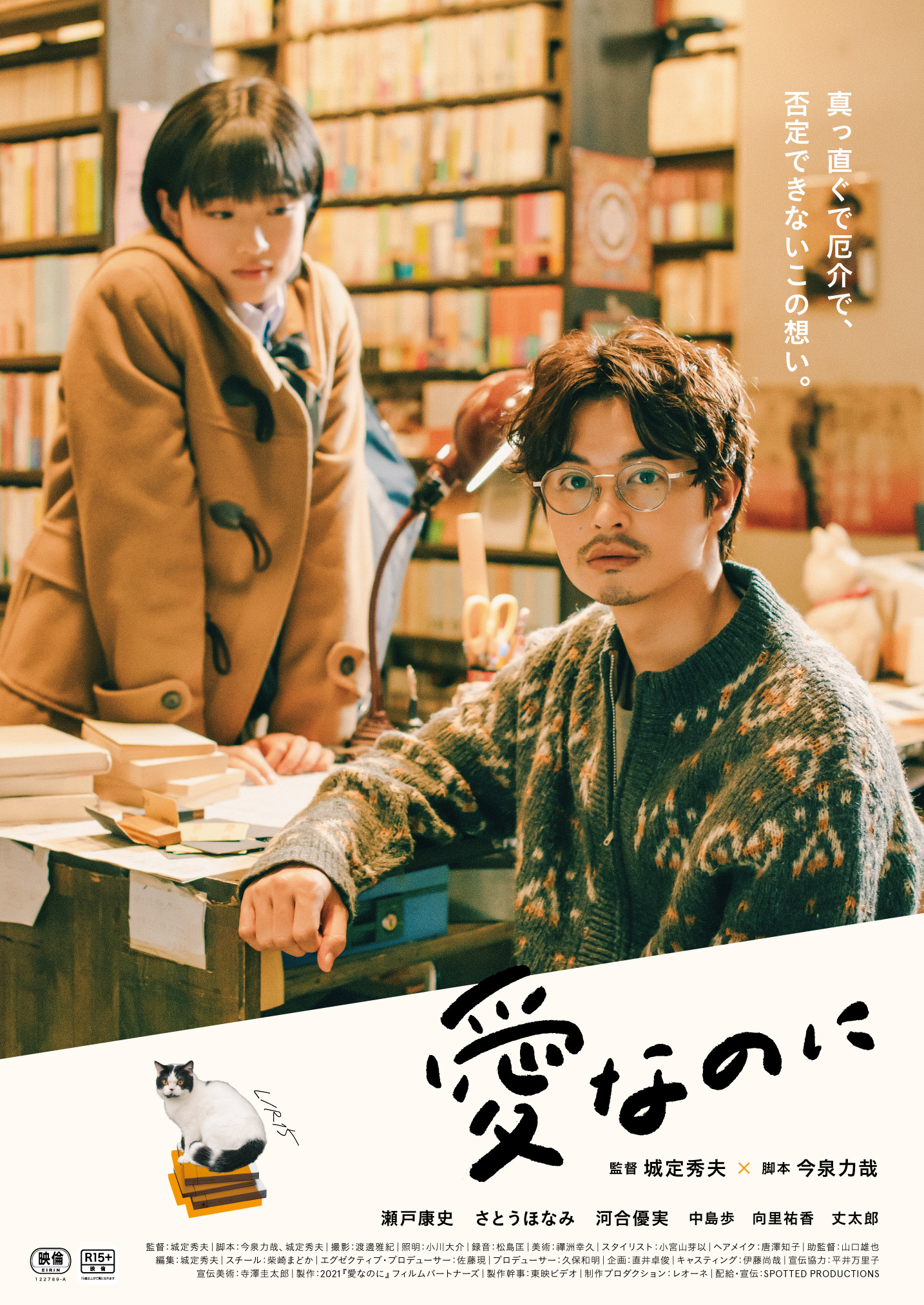
Love Nonetheless (愛なのに, Hideo Jojo, 2022)

“Don’t deny love!” the fantastically awkward yet empathetic hero of Hideo Jojo’s Love Nonetheless (愛なのに, Ai Nanoni) eventually exclaims when confronted by the parents of a high school girl whose crush on him he’d tried to diffuse sensitively while growing to appreciate her friendship. Scripted by the ever prolific Rikiya Imaizumi who has made something of a name for himself examining the complicated romantic lives of young people in the contemporary society, Jojo’s prickly dramedy like his other film this year To Be Killed by a High School Girl deals with some quite uncomfortable ideas but does so with as much sensitivity as it can muster. 

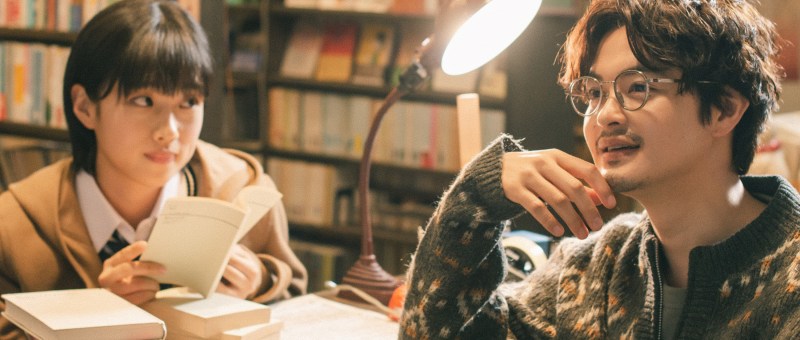
The lovelorn hero, Koji (Koji Seto), for example is always trying to rationalise the circumstances around him considering his own actions and their implications carefully. When he catches a high school girl, Misaki (Yuumi Kawai), stealing a book from the secondhand bookshop where he works he chases her but she, surprisingly, stops running when she notices him struggling and buys him a bottle of water from a vending machine before eventually confessing that she stole the book because she saw him reading it. Not only does she announce she’s in love with him, she immediately proposes marriage. 30-year-old Koji is shocked and alarmed. He tries to turn her down but she doesn’t listen, continuing to frequent the store bringing him letters reiterating her marriage proposal which he never answers. 

Meanwhile, he’s hung up on an unrequited crush, Ikka (Honami Sato), who he’s just learned is about to be married. Even he describes himself as a “creep” looking back over of a cringeworthy series of tweets he’d sent her which she never replied to, while she explains to her fiancé Ryosuke (Ayumu Nakajima) why she’s not planning on inviting him to the wedding despite inviting everyone else from her old part-time job. Unbeknownst to her, Ryosuke has secretly been carrying on with their wedding planner, Miki (Yuka Kouri), who is content with the no strings nature of their relationship and ironically hates the “bizarre ritual” she has been hired to organise having developed a rather cynical view of marriage due to the nature of her work. The couple seem to be in a fairly liminal state, their apartment still full of boxes while they bicker about the financial strain of a ceremony which as Miki points out is not even about them but solely for their families and any children they may later have. 

All these people supposedly love each other, so why is it all so difficult and destructive? Always introspective, Koji realises he may have alienated Ikka with his inappropriate behaviour and has reflected on his actions but the fact remains that most of the other men are not so emotionally aware. Misaki is also courted by an awkward classmate who greets her with roses but thrashes them to the ground in frustration when she turns him down and later physically attacks Koji even when he points out that hitting his love rival won’t change the fact that Misaki’s not interested in him. Ikka meanwhile is approached by a sleazy salaryman when drinking alone in an izakaya whose response when she tells him she’s married is “so what, I am too”. Ryosuke appears to be having an affair for no other reason than he could while simultaneously confused by Miki’s lack of emotional investment in their relationship only for her to patiently explain to him that his problem is he’s bad in bed something which a lover would be unable to tell him directly. Ikka begins to realise this for herself while turning to Koji to get back at Ryosuke on learning of the affair as if believing that a level playing field of emotional betrayal would somehow allow them to start their married life on an equal footing. 

The secondary question arises of how important sex is in a romantic partnership, Ikka wondering if Ryosuke really is just a bad lover or if their unsatisfying sex life is a sign that they are simply incompatible and should separate given that she finds much more fulfilment with Koji whom she chose because of her lack of romantic interest in him. Koji meanwhile, fully aware of the realities of the situation, points out that it’s unfair and irresponsible of Ikka to exploit his feelings for her while cautioning her that her behaviour is heading towards the self-destructive and that she should reconsider marrying Ryosuke not because he thinks she should date him but simply because this complicated situation is obviously unhealthy for everyone. You could of course say the same about his awkward, perhaps uncomfortable relationship with the teenage Misaki which might in a sense be romantic, both slightly inappropriate and essentially innocent even if his eventual concession that he might love her one day is a step too far in failing to fully diffuse her one-sided crush in part because he’s become dependent on the attention he receives from her in the letters he doesn’t answer. 

Then again, the most troubling aspect of Ryosuke’s affair is not the extra-marital sex but the manipulative lie he constructed to excuse it designed to arouse Ikka’s sympathy in tying it back to her awkward experience with one-sided workplace crushes. Aware of the affair but not the lie, the choice she thinks she’s making is if her relationship with Ryosuke is strong enough to accept sacrificing sexual fulfilment or if perhaps this is as good as it gets when it comes to marital compromise. Koji’s solution seems to be that you should let love rest where it lands, denying it is pointless even if not reciprocated while sensitivity with other people’s feelings is essential for a happy, healthy society. Warmhearted and empathetic in its forgiveness of its messy protagonists’ many flaws, Jojo’s steamy drama never pretends love is easy but suggests it comes in many forms and in the end maybe follow your heart is as good advice as you’re ever going to get.


Love Nonetheless screened as part of this year’s Udine Far East Film Festival.

Original trailer (English subtitles)