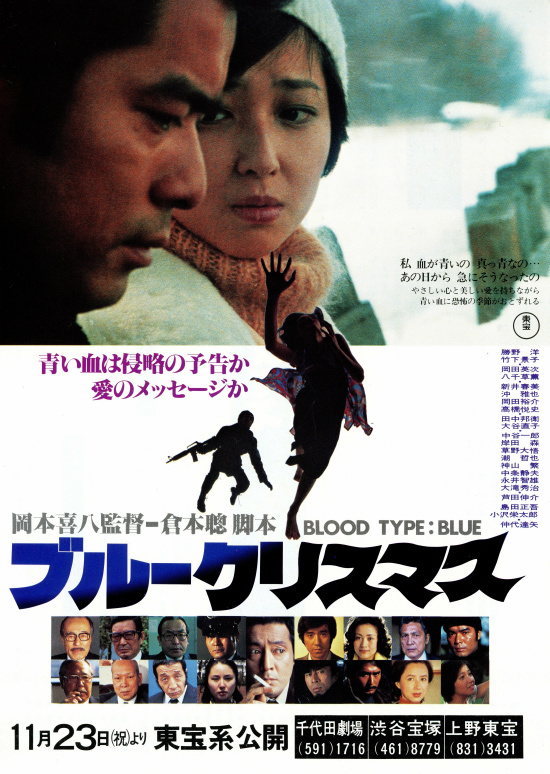
Blue Christmas (ブルークリスマス , Kihachi Okamoto, 1978)

blue-christmasThe Christmas movie has fallen out of fashion of late as genial seasonally themed romantic comedies have given way to sci-fi or fantasy blockbusters. Perhaps surprisingly seeing as Christmas in Japan is more akin to Valentine’s Day, the phenomenon has never really taken hold meaning there are a shortage of date worthy movies designed for the festive season. If you were hoping Blue Christmas (ブルークリスマス) might plug this gap with some romantic melodrama, be prepared to find your heart breaking in an entirely different way because this Kichachi Okamoto adaptation of a So Kuramoto novel is a bleak ‘70s conspiracy thriller guaranteed to kill that festive spirit stone dead.

A Japanese scientist disgraces himself and his country at an international conference by affirming his belief in aliens only to mysteriously “disappear” on the way back to his hotel. Intrepid reporter Minami (Tatsuya Nakadai) gets onto the case after meeting with a friend to cover the upcoming release of the next big hit – Blue Christmas by The Humanoids. His friend has been having an affair with the network’s big star but something strange happened recently – she cut her finger and her blood was blue. Apparently, hers is not an isolated case and some are linking the appearance of these “Blue Bloods” to the recent spate of UFO sightings. Though there is nothing to suggest there is anything particularly dangerous about the blue blood phenomenon, international tensions are rising and “solutions” are being sought.

A second strand emerges in the person of government agent, Oki (Hiroshi Katsuno), who has fallen in love with the assistant at his local barbers, Saeko (Keiko Takeshita). Responsible for carrying out assassinations and other nefarious deeds for the bad guys, Oki’s loyalty is shaken when a fellow officer and later the woman he loves are also discovered to be carriers of the dreaded blue blood.

Okamoto lays the parallels on a little thick at times with stock footage of the rise of Nazism and its desire to rid the world of “bad blood”. Sadly, times have not changed all that much and the Blue Bloods incite nothing but fear within political circles, some believing they’re sleeper agents for an alien invasion or somehow intended to overthrow the global world order. Before long special measures have been enforced requiring all citizens to submit to mandatory blood testing. The general population is kept in the dark regarding the extent of the “threat” as well as what “procedures” are in place to counter it, but anti Blue Blood sentiment is on the rise even if the students are on hand to launch the counter protest in protection of their blue blooded brethren, unfairly demonised by the state.

The “procedures” involve mass deportations to concentration camps in Siberia in which those with blue blood are interrogated, tortured, experimented on and finally lobotomised. This is an international operation with people from all over the world delivered by their own governments in full cognisance of the treatment they will be receiving and all with no concrete evidence of any kind of threat posed by the simple colouring of their blood (not that “genuine threat” would ever be enough to excuse such vile and inhuman treatment). In the end, the facts do not matter. The government has a big plan in motion for the holiday season in which they will stage and defeat a coup laid at the feet of the Blue Blood “resistance”, ending public opposition to their anti-Blue Blood agenda once and for all.

Aside from the peaceful protest against the mandatory blood testing and subsequent discrimination, the main opposition to the anti-Blue Blood rhetoric comes from the ironically titled The Humanoids with the ever present Blue Christmas theme song, and the best efforts of Minami as he attempts to track down the missing scientist and uncover the conspiracy. This takes him around the world – firstly to America where he employs the somewhat inefficient technique of simply asking random people in the street if they’ve seen him. Laughed out of government buildings after trying to make serious enquires, Minami’s last hope lies in a dodgy part of town where no one would even try to look, but he does at least get some answers. Unfortunately, the information he receives is inconvenient to everyone, gets him fired from the investigation, and eventually earns him a transfer to Paris.

In keeping with many a ‘70s political thriller, Blue Christmas is bleaker than bleak, displaying little of Okamoto’s trademark wit in its sorry tale of irrational fear manipulated by the unscrupulous. In the end, blue blood mingles with red in the Christmas snow as the bad guys win and the world looks set to continue on a course of hate and violence with a large fleet of UFOs apparently also on the way bearing uncertain intentions. Legend has it Okamoto was reluctant to take on Blue Christmas with its excessive dialogue and multiple locations. He had a point, the heavy exposition and less successful foreign excursions overshadow the major themes but even so Blue Christmas has, unfortunately, become topical once again. Imperfect and cynical if gleefully ironic in its frequent juxtapositions of Jingle Bells and genocide, Blue Christmas’ time has come as its central message is no less needed than it was in 1978 – those bleak political conspiracy thrillers you like are about to come back in style.


Original trailer (No subtitles)
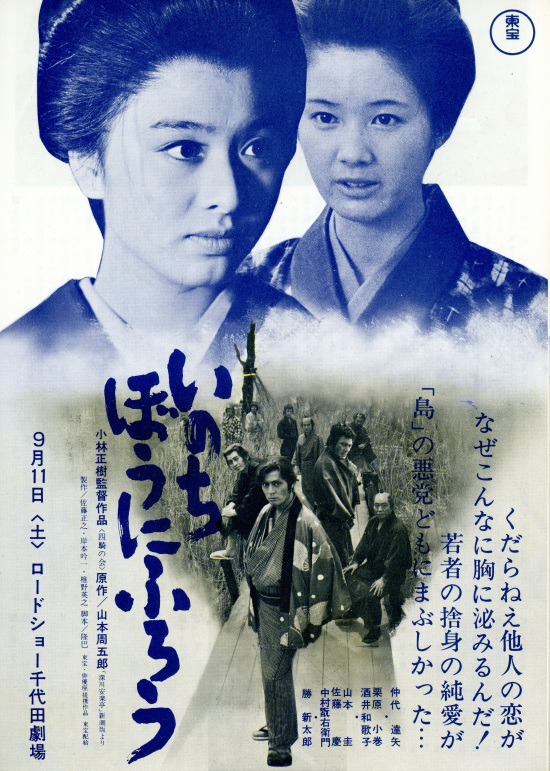
Inn of Evil (いのちぼうにふろう, Masaki Kobayashi, 1971)

inn-of-evil“Sometimes it feels good to risk your life for something other people think is stupid”, says one of the leading players of Masaki Kobayashi’s strangely retitled Inn of Evil (いのちぼうにふろう, Inochi Bonifuro), neatly summing up the director’s key philosophy in a few simple words. The original Japanese title “Inochi Bonifuro” means something more like “To Throw One’s Life Away”, which more directly signals the tragic character drama that’s about to unfold. Though it most obviously relates to the decision that this gang of hardened criminals is about to make, the criticism is a wider one as the film stops to ask why it is this group of unusual characters have found themselves living under the roof of the Easy Tavern engaged in benign acts of smuggling during Japan’s isolationist period.

Led by the innkeeper Ikuzo (Kan’emon Nakamura), the Easy Tavern is, effectively, the hideout of a smuggling gang conveniently located on a small island in the middle of a river where they can unload goods from the Dutch boats before shipping them on to Edo. Everything had been running smoothly, but the friendly policeman has been moved on and the new guy seems very straight laced. The gang’s routine existence changes one night when they receive two unexpected visitors – a young man they save from a beating in the street, and a drunk who wanders in looking for sake. The younger man, Tomijiro (Kei Yamamoto), brings a sad story with him in that all of his troubles have been caused by trying to save the woman he loves from being sold to a brothel. Moved by Tomijiro’s innocent ardour, even the most hardhearted residents of the Easy Tavern become determined to help him. Accepting a job everyone had a bad feeling about in order to get the money for Tomijiro to buy back his lady love before it’s too late, the gang’s unusual decision to risk their lives for someone else’s happiness may be the first and last time they ever do so.

The residents of the Easy Tavern have various different backstories, but the thing they all have in common is having been rejected by mainstream society at some point in their lives. The most high profile, Sadashichi (Tatsuya Nakadai), is known as “The Indifferent” which is both apt and slightly ironic. Sullen and cynical, he puts on a show about caring for nothing and no one but, as inn keeper’s daughter Omitsu (Komaki Kurihara) has figured out, it’s more that the opposite it true – he cares too much about everything. Abandoned as a child, Sadashichi’s sad story is that he once thought his saw his mother long after they were separated but killed her because she’d fallen into prostitution. Then again, perhaps it was just a woman who looked like her, or perhaps he made he whole thing up. Coming across a lost baby bird shortly after killing a man, Sadashichi is determined to look after it but is later distressed by the words of the drunk who reminds him that the bird’s mother is probably going crazy with worry. Sadashichi may identify with this lost little bird, but his empathy also extends to Tomijiro’s plight as his plaintive looks and gloomy face prompt him into action, if only to make them go away.

Similarly, the other members including “The Living Buddha” – a rabidly bisexual former monk thrown out of his temple for his lascivious ways, an effeminate homeless man, a stutterer, and an invalid all have reasons for living outside the law. As the sympathetic inn keeper later tries to explain to a policeman, most of these men are people who’ve faced rejection in one way or another. Craving sympathy, they’ve turned violent and suspicious, pushed away from the very things they wanted most. Far from an Inn of Evil, the Easy Tavern is the only place where these people have been able to find acceptance, building a community of lost souls from those cast out from society at large.

The decision to try and help Tomijiro to rescue his childhood sweetheart, cruelly sold by her selfish and uncaring father, is, in once sense, a selfless one but perhaps also reminds them of all the times they were also betrayed or abandoned and no one came to help. Even knowing the plan is unlikely to end well, the inn keeper is proud of his men’s decision, if they didn’t try to help the girl no one else would. They may be throwing their lives away in a pointless endeavour, but if they don’t at least try then what’s the point in living at all. This more than anything expresses Kobayashi’s constant preoccupation throughout his career in pointing to the essential goodness of those who refuse to simply accept acts of injustice as normal and stand up to oppose them, even if their resistance will produce little or no actual change.

Filming in a crisp black and white, Kobayashi creates an eerie atmosphere aided by Toru Takemitsu’s strangely ethereal score. The world of the The Easy Tavern is a dark one in which cruelty and betrayal lie at every turn and men ruin themselves through thoughtless and reckless decisions, but the best of humanity is to be found among this gang of outlaws who collectively decide it’s world risking their lives for someone else’s love story. Filled with impressive visual imagery including the strange sight of the looming bright white police lanterns and the impressively staged last stand as Sadashichi holds off the troops for Tomijiro to escape, Inn of Evil is a tightly controlled, minutely detailed character drama in which men who’d throw their lives away for nothing find that their sacrifice has not been in vain.


Introspection Tower (みかへりの塔, Hiroshi Shimizu, 1941)

vlcsnap-2016-12-10-01h34m55s187Shimizu, strenuously avoiding comment on the current situation, retreats entirely from urban society for this 1941 effort, Introspection Tower (みかへりの塔, Mikaheri no Tou). Set entirely within the confines of a progressive reformatory for troubled children, the film does, however, praise the virtues popular at the time from self discipline to community mindedness and the ability to put the individual to one side in order for the group to prosper. These qualities are, of course, common to both the extreme left and extreme right and Shimizu is walking a tightrope here, strung up over a great chasm of political thought, but as usual he does so with a broad smile whilst sticking to his humanist values all the way.

Introspection Tower opens with a tour being given to a group of women guided by one of the teachers (Chishu Ryu) in which he outlines the qualities of the school. There are no high walls or barbed wire fences, the front gate remains open at all times for the children to feel free within their new environment so they can learn to want to stay until they can be reintegrated into society. The school is run like mini commune with several houses segregated by sex and headed by a teacher and a female guardian – usually his wife, though the female houses also have a female teacher. The kids spend time in conventional education in the morning followed up with physical activity and vocational training in the afternoons to help them find work later in life. Parents are welcome to visit and also encouraged to write letters (notably, all of these kids seem to be able to read and write, at least to a degree). The kids also take care of the housework amongst themselves so they learn life skills like cooking and cleaning, again meant to help them as they return to regular society.

Rather than a straightforward narrative, Shimizu concentrates on the general life of the school with particular interest in four difficult pupils – new arrival Tamiko (Yuiko Nomura), a naughty upperclass girl who has difficulty learning to muck in with everyone else, Yoshio (Jun Yokoyama, formerly known as Bakudan Kozo) who likes get into fights, Masao (Norio Otsuka) who has his head in the clouds, and Nobu who can’t seem to get on with his stepmother no matter how hard she tries. Several times the kids get fed up with their reform school lives and try to escape, only to be brought back with their tails between their legs and, being children, they are apt to fight, grouse and get upset over nothing.

Perhaps unusual given Shimizu’s reputation the film is not exclusively told from the point of view of the kids but also looks at the often difficult lives of the adults who’ve dedicated their entire existences to caring for them. Each of the teachers and guardians is fully committed to looking after the children and trying to teach them how to be functioning members of society, living with kindness and responsibility. The house leaders are referred to as “mother” and “father” and the kids are intended to think of the other residents as siblings as if they’re all part of one big well functioning family. Discipline is carried out through self reflection, penance, and apology as the offending child is encouraged to realise why the way they’ve behaved is unacceptable and why they should avoid acting in that way in the future. Endlessly patient and giving, the adults’ lives are not easy ones as a female teacher finds herself snapping and hitting a pupil while another couple wonder if they’re really making that much difference when the children continue to misbehave.

About half way through, one naughty boy causes a huge problem by temporarily draining the well which is the school’s only source of water. Faced with a number of serious issues, the teachers decide to try channelling a riverbed from the nearby lake down to the school but they obviously don’t have money to pay for it. You can see where this is going and it’s certainly the most problematic aspect of the film as these young children are suddenly expected to do the strenuous, sometimes dangerous, work of physically carving a channel in the land with shovels and pick axes. Intended to sell the virtues of togetherness and responsibility, the river construction is, in essence, the forced labour of imprisoned minors who are given no rights to refuse, are not compensated for their efforts, and are children who are not equipped to handle this physically taxing work. Shimizu films the sequence like some kind of Soviet propaganda film as the axes rise and fall rhythmically as a hymn to the beauty of physical labour, but this particular celebration of the strength of the group over the individual is very difficult to take at face value.

Whatever Shimizu intended with the river building sequence, several of the pupils earn their freedom through taking part in it, supposedly reformed by hard work and community. Their “graduation” ceremony involves them reading poems and inspirational phrases aloud as a tribute to the school, but Shimizu neatly undercuts the happily ever after image with the presence of an older boy who has returned to visit. Regarding the school as his home, he has nowhere else to go and it quickly transpires he’s lost yet another job. Even when things seem to be going well, people find out he was in a reform school and it all falls apart. No matter how good the efforts of the teachers, the kids will face constant stigma and internalised shame for the rest of their lives making reintegration into society a difficult prospect. Nevertheless, Shimizu does seem to want to believe the school can do some good in looking after these troubled children who often come from difficult family circumstances.

An odd, confused effort from Shimizu, Introspection Tower still does its best to emphasise his humanist philosophy in the broadly progressive approach of the school which truly is dedicated to to teaching these children how to live in the Japan of the day without getting into trouble. The tone is one of good humour mixed with Shimizu’s naturalistic approach to filming children which shows them for all of the complicated young people they really are, deriving both great comedy and heartrending drama from their comic escapades and melancholy backstories. Making fantastic use of location shooting once again with an approach closer to his silent work than his talkies, Shimizu’s return to the world of progressive education is a strange and occasionally problematic one which is at times hard to read but, worryingly enough, seems to have its heart in the right place.


Nobuko (信子, Hiroshi Shimizu, 1940)

vlcsnap-2016-12-09-01h11m57s027The well known Natsume Soseki novel, Botchan, tells the story of an arrogant, middle class Tokyoite who reluctantly accepts a teaching job at a rural school where he relentlessly mocks the locals’ funny accent and looks down on his oikish pupils all the while dreaming of his loyal family nanny. Hiroshi Shimizu’s Nobuko (信子) is almost an inverted picture of Soseki’s work as its titular heroine travels from the country to a posh girls’ boarding school bringing her country bumpkin accent and no nonsense attitude with her. Like Botchan, though for very different reasons, Nobuko also finds herself at odds with the school system but remains idealistic enough to recommend a positive change in the educational environment.

Travelling from the country to take up her teaching job, Nobuko (Mieko Takamine) moves in with her geisha aunt to save money. When she gets to the school she finds out that she’s been shifted from Japanese to P.E. (not ideal, but OK) and there are also a few deductions from her pay which no one had mentioned. The stern but kindly headmistress is quick to point out Nobuko’s strong country accent which is not compatible with the elegant schooling on offer. The most important thing she says is integrity. Women have to be womanly, poised and “proper”. Nobuko, apparently, has a lot to learn.

As many teachers will attest, the early days are hard and Nobuko finds it difficult to cope with her rowdy pupils who deliberately mock her accent and are intent on winding up their new instructor. One girl in particular, Eiko (Mitsuko Miura), has it in for Nobuko and constantly trolls her with pranks and tricks as well as inciting the other girls to join in with her. As it turns out, Eiko is something of a local trouble maker but no one does anything because her father is a wealthy man who has donated a large amount of money to the school and they don’t want to upset him. This attitude lights a fire in Nobuko, to her the pupils are all the same and should be treated equally no matter who their parents are. As Nobuko’s anger and confidence in her position grow, so does Eiko’s wilfull behaviour, but perhaps there’s more to it than a simple desire to misbehave.

Released in 1940, Nobuko avoids political comment other than perhaps advocating for the importance of discipline and education. It does however subtly echo Shimizu’s constant class concerns as “country bumpkin” Nobuko has to fight for her place in the “elegant” city by dropping her distinctive accent for the standard Tokyo dialect whilst making sure she behaves in an “appropriate” fashion for the teacher of upper class girls.

This mirrors her experience at her aunt’s geisha house which she is eventually forced to move out of when the headmistress finds out what sort of place she’s been living in and insists that she find somewhere more suitable for her position. The geisha world is also particular and regimented, but the paths the two sets of female pupils have open to them are very different. Nobuko quickly makes friends with a clever apprentice geisha, Chako (Sachiko Mitani), who would have liked to carry on at school but was sold owing to her family’s poverty. Though she never wanted to be a geisha, Chako exclaims that if she’s going to have to be one then she’s going to be the world’s best, all the while knowing that her path has been chosen for her and has a very definite end point as exemplified by Nobuko’s aunt – an ageing manageress who’s getting too old to be running the house for herself.

Eiko’s problems are fairly easy to work out, it’s just a shame that no one at the school has stopped to think about her as a person rather than as the daughter of a wealthy man. Treated as a “special case” by the teachers and placed at a distance with her peers, Eiko’s constant acting up is a thinly veiled plea for attention but one which is rarely answered. Only made lonely by a place she hoped would offer her a home, Eiko begins to build a bond with Nobuko even while she’s pushing her simply because she’s the only one to push back. After Nobuko goes too far and Eiko takes a drastic decision, the truth finally comes out, leading to regrets and recriminations all round. Despite agreeing with the headmistress that perhaps she should have turned a blind eye like the other teachers, Nobuko reinforces her philosophy that the girls are all the same and deserve to be treated as such, but also adds that they are each in need of affection and the teachers need to be aware of this often neglected part of their work.

Lessons have been learned and understandings reached, the school environment seems to function more fully with a renewed commitment to caring for each of the pupils as individuals with distinct needs and personalities. Even Chako seems as if she may get a much happier ending thanks to Nobuko’s intervention. An unusual effort for the time in that only two male characters appear (one a burglar Nobuko heroically ejects assuming him to be Eiko playing a prank, and the other Eiko’s father) this entirely female led drama neatly highlights the various problems faced by women of all social classes whilst also emphasising Shimizu’s core humanist philosophies where compassion and understanding are found to be essential components of a fully functioning society.


Four Seasons of Children (子どもの四季, Hiroshi Shimizu, 1939)

vlcsnap-2016-12-08-00h10m14s613Isn’t it sad that it’s always the kids that end up hurt when parents fight? Throughout Shimizu’s long career of child centric cinema, the one recurring motif is in the sheer pain of a child who suddenly finds the other kids won’t play with him anymore even though he doesn’t think he’s done anything wrong. Four Seasons of Children (子どもの四季, Kodomo no Shiki) is actually a kind of companion piece to Children in the Wind which also makes use of this motif, as they’re both based on works by the same author, Joji Tsubota, and feature the same cast playing characters with the same names. Four Seasons differs slightly in its form as it originally played as two films released at the same time with the piece split into four sections following the two central brothers across the course of a particularly traumatic year.
Beginning in spring, younger brother Sampei (Bakudan Kozo now known as Jun Yokoyama) is excitedly waiting for the arrival of an old man (Takeshi Sakamoto) who brings masks for the children and rides a fine horse. Unfortunately, Sampei takes a tumble and arrives last when only a noh style mask of a lady’s face remains which really doesn’t appeal to him (later he asks his older brother Zenta (Masao Hayama) to draw a moustache on it to make it look ”stronger”), so the old man offers to give him a ride on his horse to make up for it. Sampei and Zenta don’t think they have any grandparents, but Sampei thinks it would be nice if the old man were his grandpa for real.

After he does a typical Sampei thing and falls off a cow, Sampei’s mother (Mitsuko Yoshikawa) arrives and realises that, yes, mask man really is her estranged father who disowned her after she got married without his consent. Happy that perhaps her parents have finally forgiven her, Sampei’s mother is also a little bit worried as they’ve never explained to the children why they weren’t in contact with her parents and she’s afraid it might upset them. There’s also another problem. The boys’ father (Reikichi Kawamura) is currently very ill, and their dairy farm isn’t doing well either. The family have large debts secretly taken out with the father-in-law’s company behind his back, so all of this could quite easily backfire. More drama erupts when an ambitious underling, Rokai (Seiji Nishimura), realises there’s a possibility the old man will take his daughter’s family as his direct heirs rather than promote from within the company and starts on a series of fiendishly machiavellian plans to oust his rival.

The boys, however, know very little of this. They love their cows and life on the ranch, and the thing they’re most sad about is when they end up having to move in with grandpa for a while to avoid some of Rokai’s scheming. Having been very popular in their old town, the boys are slower to make friends and quickly run into a problem with the son of the man who’s causing their family so much bother. A typically melancholy episode sees little Sampei wandering off on his own to make friends with the carp in the local lake because there’s no one else for him to talk to. However, the boys later bond with their would be arch nemesis, Kintaro (Teruo Furuya), in defiance of the ongoing feud between their families, even going so far as to carry him on their back all the way home after he breaks his leg falling out of a tree when his father stupidly “repossesses” the backyard where the kids have been playing together safely.

Gradually, as time wears on, the allegiance of Kintaro and his mother starts shift away from Rokai and towards the boys and their family who have never been anything other than kind to them. In a nice piece of symmetry, it seems the two women were also close childhood friends who have been kept apart thanks to the ongoing pettiness instigated by the menfolk. The grandfather, having fully patched things up with his daughter, is doing his best to remain on the side of decency despite Rokai’s underhanded tactics but finds himself increasingly cornered by his finagling. The boys’ commitment to their friend and refusal to give in to Rokai’s attempts to use the children to perpetuate his feuding only serve to remind everyone how petty and self serving Rokai’s actions really are.

Rokai is several times described as “a real villain” by the disbelieving grandpa, constantly exasperated by the dishonourable conduct of someone he’d employed on his staff for several years. Yet aside from Rokai himself, it’s greed and pettiness that are the true villains of of the piece. The boys’ father gives them some very important advice for their future lives when he tells them not to strive to have more things than other people but to be generous in its place. Rokai, afraid and resentful, eventually gets his comeuppance, ending a long year of torment for the Ono family and restoring justice to an unjust world.

The boys themselves know little of the details of the feuds between their families, worrying about normal things like whether they’ll be able to go on to middle school and wondering how the cows are doing back at their old ranch. It’s these details at which Shimizu excels as usual, perfectly capturing the reality of childhood even whilst giving more space to adult concerns than he often did in many of his other, more purely child centred films. Once again making great use of location shooting, Shimizu captures the fast disappearing rural paradise the boys inhabit which is entirely divorced from the political tension of the day. Another warm and humorous tale of kids and the way they often become the accidental victims of a grown up dispute, Four Seasons of Children perfectly unifies all of Shimizu’s ongoing themes right up to its necessarily just, compassionate, ending.


Children in the Wind (風の中の子供, Hiroshi Shimizu, 1937)

vlcsnap-2016-12-06-23h27m52s218It would be a mistake to say that Hiroshi Shimizu made “children’s films” in that his work is not particularly intended for younger audiences though it often takes their point of view. This is certainly true of one of his most well known pieces, Children in the Wind (風の中の子供, Kaze no Naka no Kodomo), which is told entirely from the perspective of the two young boys who suddenly find themselves thrown into an entirely different world when their father is framed for embezzlement and arrested.  Encompassing Shimizu’s constant themes of injustice, compassion and resilience, Children in the Wind is one of his kindest films, if perhaps one of his lightest.
Brothers Zenta (Masao Hayama) and Sampei (Bakudan Kozo) live a fairly comfortable life in a small town with their accountancy clerk father (Reikichi Kawamura) and doting mother (Mitsuko Yoshikawa). Older brother Zenta is the stereotypically good boy who studies hard, gets good grades, and causes no trouble. Sampei, by contrast, is a handful. Running out of the house to play Tarzan with the other neighbourhood kids even though he’d promised his mother he’d stay home to study to improve his awful performance at school, Sampei is the loveable rascal that no one quite knows what to do with. Despite their mother’s protestations, the boys’ father is content to let Sampei run riot for now, he’s only young after all.

When their father is accused of embezzling company funds, sacked, and later arrested, the boys’ world begins to crumble. The other kids won’t play with them anymore, their dad isn’t home, and their mother is worrying about money now that her husband has lost his job. Sampei is packed off to an uncle’s while Zenta stays behind to try and get a job to help out. Unfortunately, Sampei does not take well to his new environment and starts misbehaving even more than usual by disappearing up trees, riding a bucket down a river, running off to meet kappa, and even trying to run away with the circus!

All of this is told more or less from Sampei’s point view meaning that the facts of his father’s case recede into the background while Sampei’s worry and confusion comes to the fore. Having been in the office to deliver his father’s lunch when the coup occurred, Sampei can tell something awful has happened and tries to comfort his dad by closing all the blinds to block out the nosy kids’ faces peeking in from outside, and grabbing his father’s hat to get him to come home. Reassuring his dad that it’s all fine because he can just start a better company of his own, Sampei puts a childishly brave face on things while his ashen faced father walks home in silence. Of course, because Sampei is a child, no one explains to him exactly what’s happened, so no one explains it to us either, but we can perhaps infer a little more from the adults’ passing conversation than the still innocent Sampei.

The boys’ relationship with their father is one of the film’s warmest elements as, in contrast to the stereotypically austere salaryman dad, he delights in playing with his children, even breaking off from worrying about his impending doom by launching into a game of sumo. Sampei and Zenta know their father couldn’t have really done anything bad, so they aren’t really worried and though they miss him, they are sure he’ll be home soon. It’s not until fairly late on that they start to realise the gravity of the situation and how difficult things are for their mother, but once they do they become determined to support her too.

This being a (happy) Shimizu film, the injustice is finally undone and everything goes back to normal which what all children always want. Children, more than adults, are apt to forget quickly and so it’s not long before the other neighbourhood kids start responding to Sampei’s Tarzan call once again. In a typically nice touch, Sampei even invites his arch rival, Kinta – the son of the man who framed his dad for embezzlement in the first place, to come and see the approaching circus with him. A final gesture of reconciliation signals the end to hostilities as a possibly life changing event becomes a humorous summer interlude in the boys’ early lives. Warm and lighthearted, Children in the Wind is perhaps not as cutting or incisive as some of Shimizu’s more socially conscious efforts, but is filled with his characteristic compassionate humanism in its childlike certainty in justice and the willingness to forgive and forget.


Welcome to the Quiet Room (クワイエットルームにようこそ, Suzuki Matsuo, 2007)

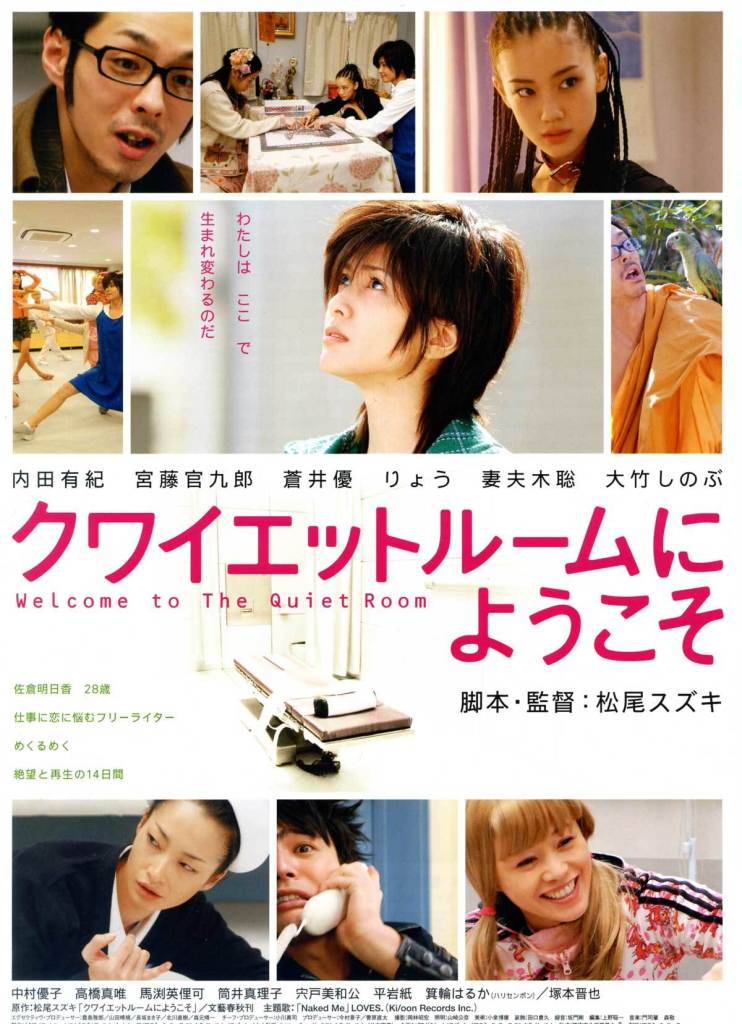
welcome-to-the-quiet-roomEveryone has those little moments in life where you think “how did I get here?”, but thankfully most of them do not occur strapped to a table in an entirely white, windowless room. This is, indeed, where the heroine of Suzuki Matsuo’s adaptation of his own novel Welcome to the Quiet Room (クワイエットルームにようこそ, Quiet Room ni Yokoso) finds herself after a series of events she can’t remember but which seem to have involved pills and booze. A much needed wake up call, Asuka’s spell in the Quiet Room provides a long overdue opportunity to slow down and take a long hard look at herself but self knowledge can be a heavy burden.

After her initial confusion, Asuka (Yuki Uchida) is informed by the no nonsense matron, Eguchi (Ryo), that she’s been brought in after an overdose. Everyone seems to assume it’s a suicide attempt, though Asuka can’t remember a thing. Apparently her roommate found her and called and ambulance and has now signed the committal papers which means Asuka is stuck here until the doctors say she’s fit to leave. Aside from the obvious, this is bad news because Asuka has a series of tight deadlines she’s been busting her gut to meet and is worried about losing her contracts. Whatever she might feel about it, it seems as if Asuka will have to rely on the kindness of strangers a little longer before she can finally get back to her exciting freelance world.

Aspects of Asuka’s previous life are illuminated gradually through flashback accompanied by her post-committal deadpan voiceover. After a brief career as a model, Asuka got married, divorced, and then hooked up with her present roommate, Tetsuo (Kankuro Kudo), who hooked her up with a series of freelance writing gigs which have only contributed to her stress levels with their ever present deadlines. Prior to her hospitalisation, Asuka was a rather silly, perky woman with a self confessed preference for “idiots” when it came to her circle of friends. Slowly and in the absence of her regular methods of self medication, all of Asuka’s illusions about herself and the way she was living her life begin to crumble. Finally able to cut through the noise, Asuka is forced to come to terms with a significant amount of guilt relating to a decision taken during her marriage whilst also acknowledging the effect crippling depression has had on her way of life.

Whilst in the hospital, Asuka comes in to contact with the other residents who have various needs and demands, each exemplifying the problems plaguing modern women. Tellingly, the majority of the women on the ward are younger – some just teenagers or young adults, all suffering with various kinds of eating disorders. One such patient, Miki (Yu Aoi), quickly befriends Asuka and teaches her how to survive in the increasingly surreal hospital environment. Asuka later makes friends with another recovering overdose patient around her own age, Kurita (Yuko Nakamura), but conversely finds herself harassed by the ward’s resident fixer, former adult video actress Nishino (Shinobu Ootake), while other residents make repeated escape attempts or go to great lengths to set their hair on fire.

Asuka’s Wizard of Oz inspired outfit, hair, and the silver Dorothy slippers which play into a repeated motif of Asuka’s memories of a high school culture festival, all reinforce the idea of the hospital as a strange otherworldly place in which Asuka will be residing temporarily until she completes her quest. The temporary nature of the space gives Asuka’s journey a rather melancholy atmosphere as she’s encouraged to forget all about her time there when transitioning back to the “real world” meaning that the fragile bonds and friendships created during in her hospital sojourn will have to be left behind. Finally learning to calm down and take charge of herself, Asuka rediscovers a long absent inner strength and the last image we see of her is in raucous laughter after an catching sight of an improbable event through a car window.

Matsuo opts for a less madcap treatment than the far out comedy of Otakus in Love but carefully balances an absurd sense of humour with dramatic weight as Asuka’s personal discoveries are intercut with increasingly surreal episodes. Yuki Uchida shines in a early comeback role as the two very different Asukas even if she almost has the show stolen out from her by another beautiful performance from Yu Aoi as the sensitive goth Miki. Tackling a weighty subject with warmth and good humour, Welcome to the Quiet Room is another characteristically off the wall character piece from Suzuki, but all the better for it.


Original trailer (no subtitles)

The Last Princess (덕혜옹주, Hur Jin-ho, 2016)

last-princessReview of Hur Jin-ho’s The Last Princess first published by UK Anime Network.

Filmic biopics of real life historical figures are not generally known for their fierce adherence to fact, but The Last Princess (덕혜옹주, Deokhyeongjoo) is unusually honest in its approach in the sense that it includes a brief opening statement to the effect that the film pays very little attention to historical veracity. Hur Jin-ho adapts the story of Korea’s last princess, Yi Deok-hye (Son Ye-jin), as recounted in a novel by Kwon Bi-young, whilst indulging the genre he’s best known for – romantic melodrama. Another of the recent spate of films to address Korea’s colonial past, The Last Princess is the story of a woman who was fiercely loyal to her homeland, even in the face of harsh opposition and final rejection by the very people she’d been striving so hard to protect.

Told in a non-linear fashion, The Last Princess spans the majority of Deok-hye’s life from her opulent childhood in the royal palace to her eventual repatriation to Korea in the mid 1960s. In 1919, nine years after Korea had been annexed by the Japanese, Deok-hye lives in the palace with her loving father, the former Emperor (Baek Yoon-sik), and her mother, the concubine Lady Yang (Park Joo-mi). Her carefree days soon end when she witnesses her father’s death by poison and comes to understand her precarious position as puppet royalty of a subjugated regime.

Her life, and those of her remaining family members, is largely in the hands of a traitorous civil servant, Han (Yoon Je-moon), whose fierce loyalty to the Japanese emperor knows no bounds. Deok-hye is unwilling to assist him in his desire to use her as a tool to promote the “Japanisation” of the country and so is packed off to the mainland to study with the promise that she can return to live with her mother in Korea after her studies have ended. Needless to say she does not return.

In a touch of cinematic romanticism, the film elides two characters into one in the otherwise fictional character of Kim Jang-han (Park Hae-il). The son of a resistance fighter loyal to the emperor, Jang-han was betrothed to Deok-hye when they were both children and later returns to her as an adult in Japan where he is active in the Resistance, before coming back to find her years after the war. Jang-han hatches a plan to help Deok-hye and the other royal family members escape for exile in Shanghai but the the pair are eventually separated.

Recalling other recent Korean Resistance movies Age of Shadows and Assassination, The Last Princess has its share of action as Deok-hye and Jang-han attempt to escape the Japanese occupation and foster the revolution from abroad. The villain of the piece this time around is not so much the Japanese but the Koreans who willingly helped them as as exemplified here by the odious Han. Han is the most typically melodramatic character and only lacks a moustache to twirl to complete the effect. Hellbent on ingratiating himself with the Japanese, Han is determined to harness his princess’ appeal to sell the virtues of the Japanese state. When Deok-hye resolutely refuses to play along, he threatens her family members and friends in an attempt to force her compliance but finds her love for her country too strong to be bent by his egocentric cruelty.

Sent away and kept a virtual prisoner far from home, there is little Deok-hye is able to do in service of her nation. Introduced to the Resistance operating in Japan, she begins to see a way to help and eventually finds herself taking a stand when blackmailed into reading out a propaganda speech in front of a collection of forced labourers. Beginning the speech in Japanese as ordered, Deok-hye finds she cannot continue and eventually makes her real feelings known in Korean as she instructs the people in front of her not to give up, she will be right along side them fighting to regain their homeland. In a touch of Casablanca inspired drama, a chorus of Arirang suddenly springs up among the crowd, much to the consternation of the Japanese officers expecting a show of contrition, as the Princess herself is whisked off to pay a heavy price for her “betrayal”.

The Last Princess forces its heroine through constant loss – of her home, of her position, of her family, of a future, of love, of a child, of happiness, of her mind, and most importantly of her nationality. Deok-hye never wanted to be Japanese, did not travel to Japan of her own volition, and did her best to resist even at great personal cost. Nevertheless she finds eventually finds herself barred from her homeland due to opposing political concerns when the fledgling Republic fears the misuse of a powerful symbol like a royal family to frustrate the democratic future. Played with wonderful sensitivity by leading actress Son Ye-jin, Deok-hye suffers as her nation suffers, longing for independence both personal and national but finding only new cages everywhere she goes. Despite the unconvincing ageing makeup of the latter part of the film and an overly intrusive score, The Last Princess is an impressively produced prestige picture which plays its melodrama credentials to the max but is also undoubtedly moving in recounting the tragic story of its heroine whose constant misuse and lack of agency mirror much of the history of the nation she holds so dear.


Reviewed at the 2016 London Korean Film Festival.

International trailer (English subtitles)

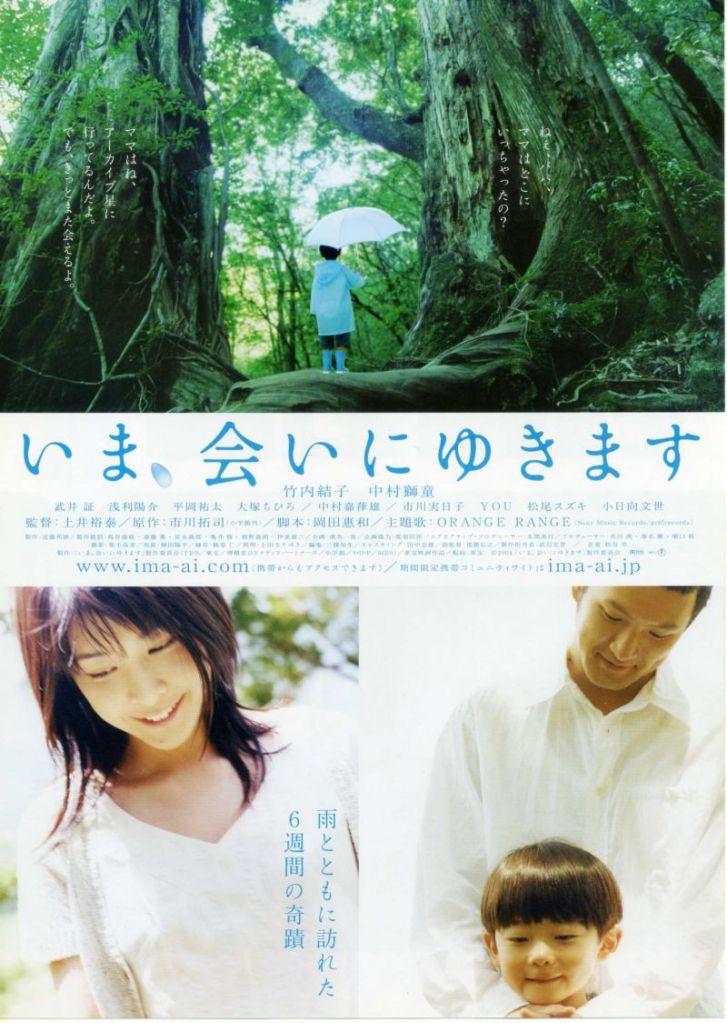
Be With You (いま、会いにゆきます, Nobuhiro Doi, 2004)

be-with-youWhen it comes to tragic romances, no one does them better than Japan. Adapted from a best selling novel by Takuji Ichikawa, Be With You (いま、会いにゆきます, Ima, ai ni Yukimasu) is very much part of the “Jun-ai” or “pure love” boom kickstarted by Crying Out Love In the Center of the World released the same year but taps into Japan’s long history of supernaturally tinged love stories, filled with the weight of impending tragedy and the essential transience of the human experience.
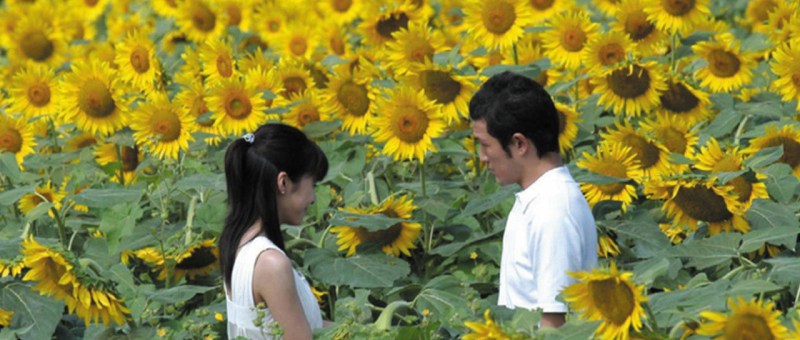
Like many such tales, Be With You begins with a framing sequence set 12 years after the main events, but unusually it’s directed from the point of view of the soon-to-be 18 year old, Yuji (Yuta Hiraoka). Receiving a birthday cake from a bakery which has apparently only stayed open because of its promise to deliver birthday cakes to him every year until he turns 18, Yuji begins to reflect on the “miracle” which he and his father experienced all those years ago.

Yuji’s mother passed away at the age of 28 when he was only 5 years old. However, before she died, Mio (Yuko Takeuchi) had prepared a special picture book for Yuji to try and help him process what was happening. In the book, Mio has gone to a place called “Archive Star” and will return for the first rainy season a year after her death. Improbable as it is, Yuji and his father Takumi (Shido Nakamura) discover a woman who looks exactly like Mio lost in the forest during the first rains. Stunned the pair take her home but Mio has no knowledge of her former life as a wife and mother. Gradually, Mio begins to fall in love with her husband all over again whilst bonding with her young son, but their happiness is short lived as Mio realises her time with them is limited.

Because Mio can’t remember, we experience the love story between the teenage Takumi and Mio firstly through his eyes as he tells her of his unrequited high school crush when she sat at the desk across from him for two years during in which he was too shy to say anything. Later we hear the same story again from Mio’s perspective through her diary where we learn, not altogether surprisingly, that she felt the same way. The pair mirror each other throughout their courtship, wanting to say something but lacking the courage and looking for excuses to try and push the situation in a better direction. Other than the mutually unresolved attempts at phone calls and an unreturned pen, Mio and Takumi essentially relive their original romance in the brief time they are able to share together from repeated motifs of untied shoelaces and clumsiness with a bicycle, to innocent in pocket hand holding.

Takumi has an ongoing medical condition which interferes with his motor functions, slowing him down and giving him an air of soulful melancholy later compounded by his romantic tragedy. Having been a champion runner on a sports scholarship to college, the diagnosis causes extreme disruption to his life and leads him to the typically jun-ai decision to break up with Mio because he feels as if he’d be a burden to her. A year after Mio passed away, Takumi is doing his best to bring up his son but is a little distant and struggling to take care of the domestic environment. When Mio realises that she can’t take care of them forever, she switches her focus to trying to prepare her husband and son for life alone – teaching Yuji how to fry eggs and do the laundry, whilst renewing her emotional bond with Takumi. There’s no happy ending in store for Mio, the loss cannot be avoided and perhaps it might even be worse to have had this brief respite from the ongoing pain, but the six week rainy season does, at least, provide an opportunity to say those things that might have otherwise gone unsaid.

Nobuhiro Doi films in a typically elegant fashion making great use of the area’s natural beauty to create a fairy tale atmosphere from the mysterious, life giving forest. The poignancy of the tale is all the deeper knowing that Mio eventually understood what would happen to her, but chose a brief life with Takumi and her son over the possibility of a longer one without them. Heartbreakingly sad, yet a testament to the importance of appreciating the present which all too soon becomes the past, Be With You is a genuinely romantic love story, not only between a husband and a wife but an entire family carrying the weight of a tragic loss but easing the burden by treasuring the memory of the intense love shared between them.


Original trailer (no subtitles)

Resurrection of Golden Wolf (蘇る金狼, Toru Murakawa, 1979)

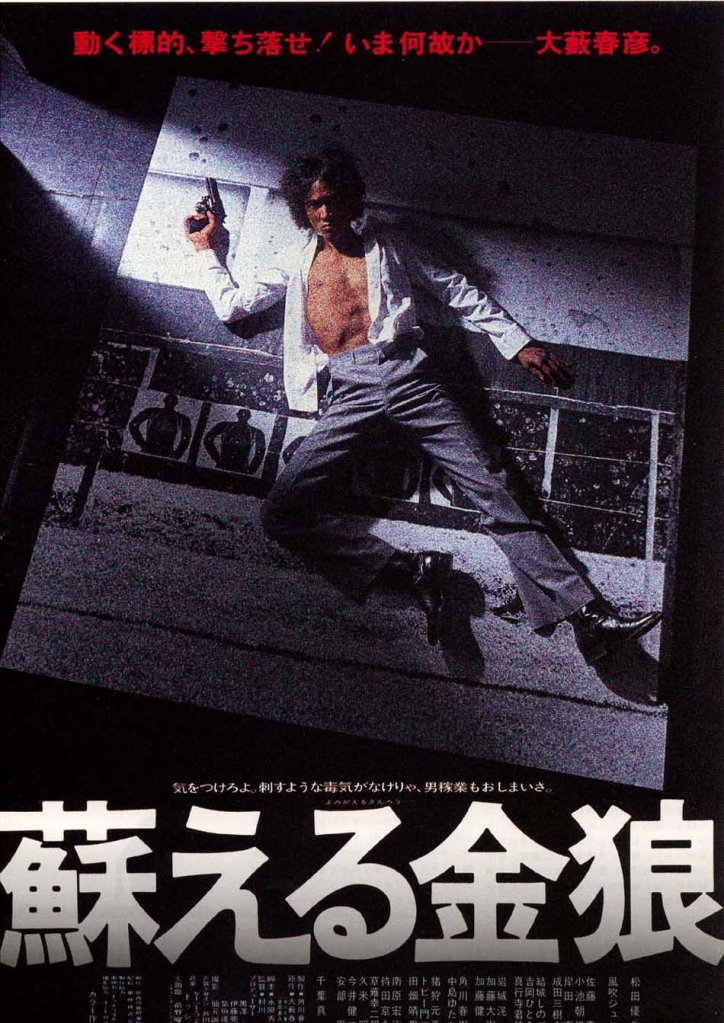
resurrection-golden-wolfYou know how it is. You work hard, make sacrifices and expect the system to reward you with advancement. The system, however, has its biases and none of them are in your favour. Watching the less well equipped leapfrog ahead by virtue of their privileges, it’s difficult not to lose heart. Asakura (Yusaku Matsuda), the (anti) hero of Toru Murakawa’s Resurrection of Golden Wolf (蘇る金狼, Yomigaeru Kinro), has had about all he can take of the dead end accountancy job he’s supposedly lucky to have despite his high school level education (even if it is topped up with night school qualifications). Resentful at the way the odds are always stacked against him, Asakura decides to take his revenge but quickly finds himself becoming embroiled in a series of ongoing corporate scandals.

Orchestrating a perfectly planned robbery on his own firm in which Asakura deprives his employers of a large amount money, he’s feeling kind of smug only to realise that the bank had a backup plan. The serial numbers of all of the missing money have been recorded meaning he can’t risk spending any of it. Accordingly he decides the “safest” thing to do is exchange the problematic currency for the equivalent in heroine. His plan doesn’t stop there, however. He also knows the big wigs at the top are engaged in a high level embezzlement scam and seduces his boss’ mistress, Kyoko (Jun Fubuki), for the inside track. Asakura is not the only game in town as another detective, Sakurai (Sonny Chiba), is blackmailing some of the other bosses over their extra-marital activities. Playing both sides off against each other, Asakura thinks he has the upper hand but just as he thinks he’s got what he wanted, he discovers perhaps there was something else he wanted more and it won’t wait for him any longer.

Based on a novel by hardboiled author Haruhiko Oyabu, Resurrection of Golden Wolf is another action vehicle for Matsuda at the height of his stardom. Re-teaming with Murakawa with whom he’d worked on some of his most famous roles including The Most Dangerous Game series, Matsuda begins to look beyond the tough guy in this socially conscious noir in which an angry young man rails against the system intent on penning him in. A mastermind genius, Asakura is leading a double life as a mild mannered accountancy clerk by day and violent punk by night, but he has every right to be angry. If his early speech to a colleague is to be believed, Asakura worked hard to get this job. A high school graduate with night school accreditation, he’s done well for himself, but despite his friend’s assurance that Asaukura is ahead in the promotion stakes he knows there’s a ceiling for someone with his background no matter how hard he works or how bright he is.

Under the terrible wig and unfashionable glasses he adopts for his work persona, Asakura has a mass of unruly, rebellious hair and a steely gaze hellbent on revenge against the hierarchical class system. He is not a good guy. Asakura’s tactics range from fisticuffs with street punks to molesting bar hostesses, date rape, and getting his (almost) girlfriend hooked on drugs as a means of control, not to mention the original cold blooded murder of the courier he stole the company’s money from in the first place. The fact he emerges as “hero” at all is only down to his refusal to accept the status quo and by his constant ability to stay one step ahead of everyone else. When the system itself is this corrupt, Asakura’s punkish rebellion begins to look attractive despite the unpleasantness of his actions.

Adding in surreal sequences where Asakura dances around his lair-like apartment in a quasi-religious ritual with his silver mask, plus bizarre editing choices, eerie music and incongruous flamenco, Murakawa’s neo-noir world is an increasingly odd one, even if not quite on the level of his next film, The Beast Must Die. Very much of its time and remaining within the upscale exploitation world, Resurrection of Golden Wolf is necessarily misogynistic as its female cast become merely pawns exchanged between men to express their own status. The tone remains hopelessly nihilistic as Asakura nears his goal of the appearance of a stereotypically successful life with an executive job and possible marriage to the boss’ daughter only to find his conviction wavering. Hopelessly bleak, dark, and sleazy, Resurrection of Golden Wolf is, nevertheless, a supreme exercise in style marrying Matsuda’s iconic image with innovative direction which is hard to beat even whilst swimming in some very murky waters.


Again, many variations on the English title but I’ve gone with Resurrection of Golden Wolf as that’s the one that appears on Kadokawa’s release of the 4K remaster blu-ray (Japanese subs only).

Original trailer (English subtitles)