The Twilight Years (恍惚の人, Shiro Toyoda, 1973)

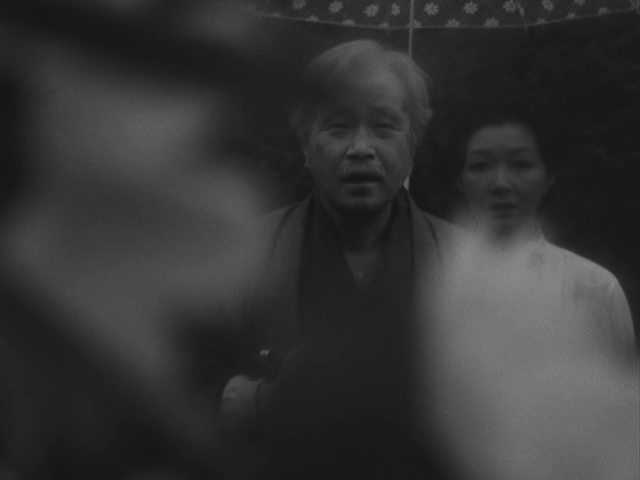
In the early 1970s Japanese society was not as concerned with population slowdown as it would come to be, but Shiro Toyoda’s sympathetic ageing drama The Twilight Years (恍惚の人, Kokotsu no Hito) is evidence of a growing consciousness that traditional ideas about how one cares for the elderly may now be becoming incompatible with the functioning of modern society. Based on a best-selling novel by Sawako Ariyoshi, the film has profound empathy both for the ageing patriarch once apparently a tyrant but now a meek and frightened child, and the daughter-in-law to whom his care largely falls.

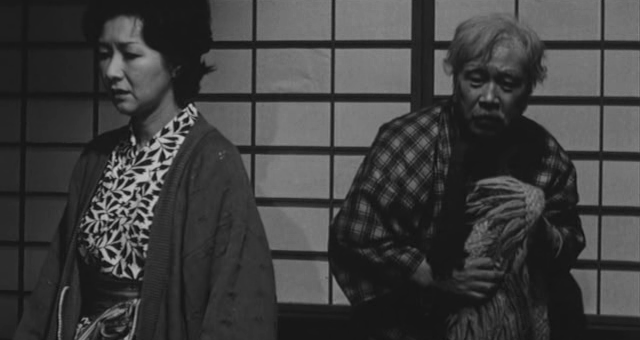
In fact, it’s caring for Shigezo (Hisaya Morishige) that some believed shortened the lifespan of his late wife who passes away in the film’s opening scenes. Already somewhat detached from reality, Shigezo simply reports that his wife won’t wake up no matter how much he tries to wake her, much like a child who’s discovered someone no longer living. While his daughter-in-law Akiko (Hideko Takamine) rushes to her room with a sense of foreboding, Shigezo merely stays in the kitchen eating boiled potatoes straight out of the pan. It’s the odd behaviour that seems to irk his son Nobuyoshi (Takahiro Tamura) but it’s only now that the couple seem to be realising that there’s something wrong especially as Shigezo does not appear to understand that his wife has died. Pitiably, he chides her for lounging around so late in the day when she’s already been laid out for her funeral.

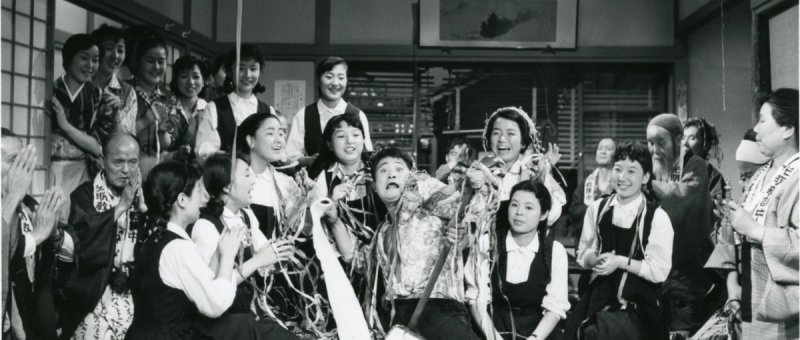
When his daughter, Kyoko (Nobuko Otowa), arrives having actually missed the funeral itself due to transport issues and a conflicting responsibility to act as a matchmaker at a wedding, Shigezo doesn’t recognise her. He continues to ask for Akiko and gradually forgets most of the other people in his life, screaming when encountering Nobuyoshi and instructing Akiko to call the police to report a burglar in their home. According to both women, Shigeyoshi had treated Akiko poorly ever since she joined their family, which makes caring for him so much harder. The reason he becomes so attached to Akiko is likely simply that she is the person who is always around him so he has less time to forget her. He may realise on some level that she may not wish to care for him given his previous behaviour which may be why he becomes preoccupied with the idea she may “disappear” and cries out in the night when he can no longer see her.

But Akiko also has other responsibilities including a job outside the home and a teenage son studying for his exams. Nobuyoshi expresses regret that he hasn’t been more help and voluntarily tries to pitch in, but lets himself off the hook given that his father doesn’t recognise him and becomes anxious in his presence. Satoshi (Izumi Ichikawa) meanwhile does try to do his bit but is young and a little resentful of the responsibility. As his dementia becomes more severe, Shigezo begins calling Satoshi “Dad” as if he were a child again. Which is all to say, Shigezo becomes Akiko’s responsibility and the strain of caring for him begins to affect her own mental and physical health leading her to fear that she too may die younger than she otherwise might have. 

Yet in exploring her options, Akiko finds little by way of support. Most nursing homes won’t accept patients with complex needs like Shigezo and conditions such dementia are often regarded as mental illnesses meaning her only option might be to put him in an asylum. Shigezo was attending an old person’s daycare centre, but later says he doesn’t want to go anymore because it’s full of old people and therefore no fun. While the film is sympathetic towards Akiko and the difficulties she is facing in caring for her father-in-law it also has profound empathy for Shigezo for though he has so many people who are doing their best to look after him, his increasing mental confusion quite obviously leaves him isolated and he must be incredibly lonely while trapped within his own reality. He develops a habit of saying “hello, hello,” as if he were answering the telephone which may be his attempt to communicate while he is also fascinated with a caged bird which may reflect his own sense of being constrained by his condition.

Later, the bird seems to symbolise Akiko too, trapped as she is within the domestic environment where all responsibility seemingly falls to her. Even so a young student couple she rents the annex to for a lower price in exchange for keeping an eye on Shigezo during the day remark that he may be in the ideal state for a human being having returned to early childhood in which there are no concerns or responsibilities and he is therefore unburdened by the weight of what is to live. Toyoda often uses handheld camera to symbolise the desperation and destabilisation of Shigezo’s existence in which Akiko has become his only fixed point. One of Nobuyoshi’s friends remarks that perhaps it was better when the average life expectancy was 50 and Nobuyoshi’s mother might have been lucky passing away peacefully while otherwise in good health. Still, as Nobuyoshi says, it comes for us all in the end and we should all try to be kinder to each other while we’re here.
Tokyo Sweetheart (東京の恋人, Yasuki Chiba, 1952)

It appears that even as early as 1952, some people were doing “very well, thank you” despite the suffering going on all around them. Then again, the heroes of Yasuki Chiba’s charming ensemble rom-com Tokyo Sweetheart (東京の恋人, Tokyo no Koibito) are relentlessly cheerful and likely wouldn’t use the word “suffering” to describe themselves, preferring instead to laugh at the foolishness of wealthy men and their petty squabbles while continuing to value what is honest and genuine above greed and insincerity.

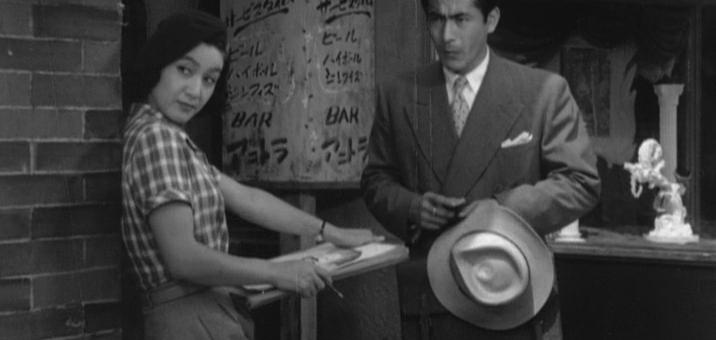
At least, there’s a minor irony in the fact that Akazawa (Hisaya Morishige) makes his living selling pachinko balls, a a source of elusive hope that’s brought ruin to millions. His mistress, Konatsu (Murasaki Fujima), exclaims that when you’re doing well a ring or two is nothing, trying to manipulate Akazawa into buying a 500,000 yen diamond from the jewellers’ downstairs. Akazawa can afford to buy it, but he doesn’t really want to because he’s cheap and greedy. Later we’re introduced to a friend of portrait artist Yuki (Setsuko Hara) who does caricatures on the street corner below the office and hangs out with the three shoeshine boys opposite. Harumi (Yoko Sugi), a sex worker, has fallen ill presumably from tuberculosis. They only need 500 yen daily for her living expenses and medicine, but the only way they can hope to come up with it is by getting a large amount of people to part with a small amount of money which they are all willing to do as an act of solidarity. 

In rather farcical turn of events, the jeweller’s has commissioned a fake ring to display in the window for security purposes while they keep the real one in the safe. Konatsu suggests a complex plan to the jewellers of getting Akazawa to buy the diamond but giving him the fake which she will then return and pocket difference. Only Akazawa has the same idea, or rather he only wants to buy the fake one because Konatsu won’t know the difference and he doesn’t think she’s worth the expense of the real one. When he ends up with both rings, Akazawa’s wife, Tsuruko (Nijiko Kiyokawa), makes him give the fake one, which is actually real, to the tea girl, Tama, who wants to sell it, even if it is fake, to help Harumi not only with her illness but to escape sex work. The boys tell her she’s being selfish and naive. If Harumi had any way of escaping sex work she would have done so years ago, there’s no real hope for her now. “A shoe can be repaired,” one of the boys sighs, “but I’m not so sure about her.”

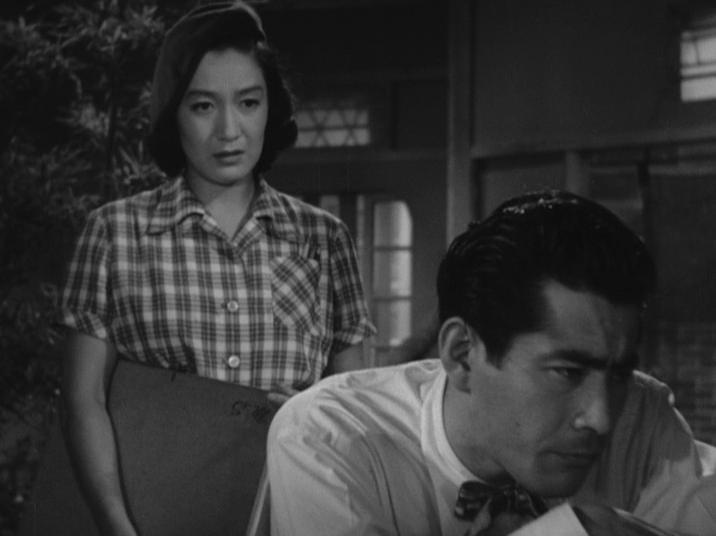
In some ways, it seems as if the genuineness of the ring is unimportant. The two are often mistaken for each other and few can tell the difference. After all, if you like it, what does its supposed authenticity matter and what does that really mean anyway? It does, however, seem to matter to Yuki who later says that she thought the film’s most genuine person, Kurokawa (Toshiro Mifune), was “gaudy and slick” when they first met because he was wearing a tacky tie pin and ring which stand out a mile to her as “fake”. Kurokawa in fact makes the replica jewellery displayed in front windows and dresses in that way as a kind lived brand though he does not necessarily approve of his own occupation. He exceeds expectations when he tracks the gang down in order to pay back some money Yuki had lent him when the conductor couldn’t give him change for his bus fare, as well as treating the shoeshine kids to ice creams and warning off the creepy yakuza type who keeps trying to bother Yuki for dates.

But the contradictions are brought to the fore when Harumi’s health declines and Yuki decides she ought to call the estranged mother to whom Harumi had written a comforting letter stating that she’d married and was living happily in Tokyo, enclosing a photo of herself and Kurokawa one of the shoeshine boys had taken on his toy camera. Yuki wants Kurokawa to pose as the husband so the mother won’t be so upset, only for him to point out that she now asks him adopt a fake persona after taking him to task for confusing people with his “fakes”. Again, this false comfort does seem to bring genuine relief to the mother even if as Kurokawa suspects she’s seen right through their ruse suggesting that authenticity of feeling is the only kind that matters.

Akazawa and his wife, meanwhile, bankrupt themselves trawling the river looking for the lost “genuine” ring sinking to all new depths of absurdity as even Tsuruko dons a diving suit and goes in to look herself. Unfortunately, all they find is a single pachinko ball. There is something quite abrupt about the sudden tonal shift from Harumi’s death bed to the gang laughing away at the foolishness of Akazawa and his wife, the boys convinced that Yuki and Kurokawa are now a couple though they never really enjoy much of a romantic resolution. Kurokawa lives a long way out of town and his home is surrounded by rubble and empty lots, signs of post-war devastation still not fully cleared away though Yuki and the boys, presumably war orphans, remain endlessly cheerful even as the extreme irony of Kurokawa’s rendition of Moon Over Ruined Castle washes over them. They do at least have each other and the strength of their community, living honest and genuine lives every day in contrast to men like Akazawa chasing pointless yet shiny trinkets and falling straight down the plughole themselves.


The End of Summer (小早川家の秋, Yasujiro Ozu, 1961)

Fathers in Ozu are usually sentimental and doting, sometimes insensitive or austere, but by and large responsible. The crises the family faces are generally emotional more than they are practical, few Ozu fathers fail in a duty of care towards their wives and children. And then, there’s Manbei (Ganjiro Nakamura). The hero of Ozu’s penultimate film, The End of Summer (小早川家の秋, Kohayagawa-ke no Aki), is quite the opposite. He does as he pleases and enjoys his life to the fullest without really noticing the effect his behaviour has those around him. But then, as his sister later puts it, he was a very happy man which is rare thing in this society so perhaps he had something right after all. 

Produced for Toho and set in Osaka rather than the usual Shochiku and Tokyo, the film opens not with Manbei but with his brother-in-law Kitagawa (Daisuke Kato) trying to set up Manbei’s widowed daughter-in-law Akiko (Setsuko Hara) with a widowed industrialist obsessed with cows. Meanwhile, the family is also trying to find a match for his youngest daughter, Noriko (Yoko Tsukasa), who is put off by the whole idea of an arranged marriage and worried that Manbei and her older sister Fumiko (Michiyo Aratama) may try to pressure her into accepting because their family sake brewery is trouble. Fumiko’s husband Hisao (Keiju Kobayashi) is technically running the brewery and favours a merger to save the business but Manbei is resistant. Manbei himself is largely absent and his increasing habit of skipping out during the day is beginning to worry the family, especially when they discover he’s been visiting an old mistress with a 21-year-old daughter he thinks is his. 

Followed to a cafe, Manbei exclaims that summer refuses to end in an accidental metaphor for his life. For him everything is sunshine and rainbows, scuttling away from the family home like a little boy sneaking out after dark while the now grownup kids are left behind to clean up his messes. Manbei is a widower, and aside from the financial dimension, perhaps it’s not a huge problem if he wants to go and hang out with an old flame, but Fumiko in particular is scandalised remembering the various humiliations he put her late mother through when she was just a child. Hisao advises her that perhaps it’s best not to bring it up. Manbei isn’t going to change his behaviour and it’s only going to create more drama whereas it might be more manageable if they all pretend not know. Fumiko, however, can’t stay silent even if she knows her father isn’t going to listen to her and in fact lies quite baldly about what he’s been doing in Kyoto. 

Fumiko is on the side of marrying Noriko off, but unlike her husband, father, and uncle, is keen to emphasise that they should move slowly and be sure to take her feelings into account. Rather than her sister, Noriko turns to Akiko for support. Originally in favour of meeting the prospective husband, after all you can always turn it down if you don’t like him, she cautions Noriko that the most important thing is character rather than behaviour and that it’s essential to marry without regret. Noriko feels as if she’s obliged to do as everyone says, but is secretly in love with a young man she met on a skiing holiday who has just been transferred to Sapporo. Akiko, meanwhile, was not altogether taken with the cow-loving widower, but in any case would prefer to maintain her present way of life as a single mother even while others pressure her to remarry. 

The conclusion Noriko comes to is, perhaps strangely, inspired by her carefree father in that she decides it’s best to do what will make her the most happy rather than simply going along with what everyone else wants her to do which may or may not be in her best interest. Fumiko grudgingly admits that though her father was often exasperating perhaps he was the only thing holding the family together. Ozu broadly lends the irresponsible but never malicious Manbei tacit approval in celebrating the fact that he lived the life he wanted to live and he was at least defiantly happy in his own eternal summer, but then ends on an uncharacteristically morbid note as two farmers wash vegetables in the river opposite a crematorium remarking on the increasing number of crows while resigning themselves to the cycle of life. Smoke and crows await us all, perhaps Manbei had it right and the thing is to be happy while you can without taking much notice of what others might have to say about it. 


Princess Mononoke (もののけ姫, Hayao Miyazaki, 1997)

“So you say you’re under a curse? So what? So’s the whole damn world.” The world is indeed cursed in Hayao Miyazaki’s landmark 1997 animation Princess Mononoke (もののけ姫, Mononoke-hime). As the greedy monk insists, “there are angry ghosts all around us. Dead from wars, sickness, starvation. And no one cares”. Yet as an impassioned parable as it is about the destructive forces of industrialisation, Miyazaki’s mystical drama is really about balance and duality along with the necessity of harmony and co-existence with nature red in tooth and claw. 

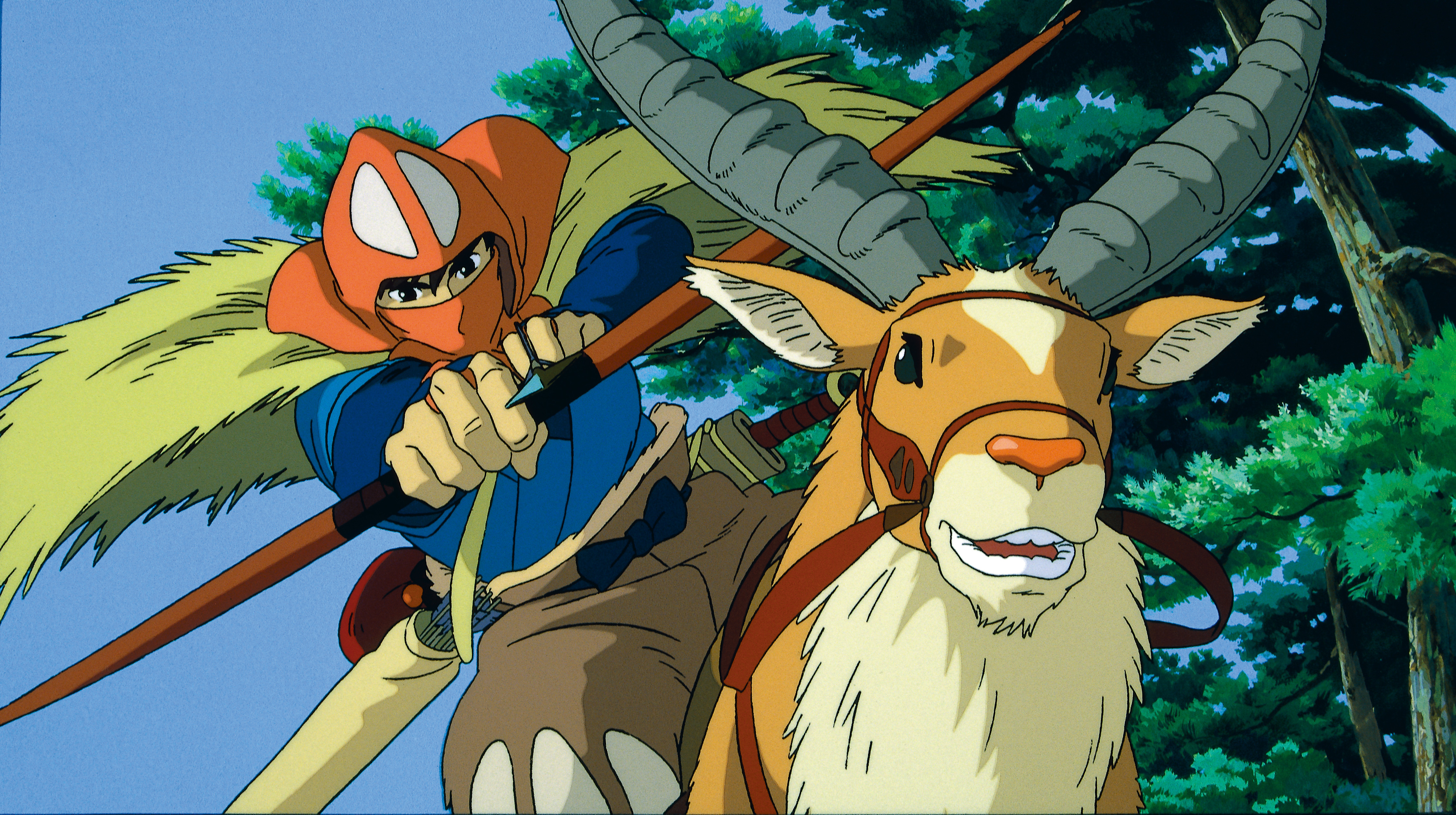
Young prince Ashitaka (Yoji Matsuda) already lives in what seems to be perfect harmony with the natural world, but his idyllic existence in an ancient clan long exiled by the emperor is disturbed one day by a marauding giant boar chased out of the forest having been turned into a demon consumed with hate and resentment. Ashitaka first tries reasoning with the beast, but is finally forced to put it out of its misery to protect the village and is infected himself in the process. Now unable to stay lest he endanger his community, Ashitaka ventures West in search of the corruption which sent the boar hurtling towards his home. 

What he eventually comes to is an industrial settlement, Irontown, ruled by Lady Eboshi (Yuko Tanaka) who ought by all rights to be a villain in her casual disregard of or active hostility towards unruly nature which her industrialisation pollutes. But then as we can see Lady Eboshi is a good and compassionate leader who has erected a community of the marginalised buying out the contracts of indentured sex workers and freeing them to labour in her ironworks while taking in lepers to manufacture her futuristic firearms. Uncharitably, one could also say that she’s chosen these people because they have little power and will be more likely to put up with hardship and exploitation without complaint because it’s better than the lives they lived before, but it does it does seem that she has her heart in the right place as far as her people are concerned determined to build a community of mutual solidarity between workers. 

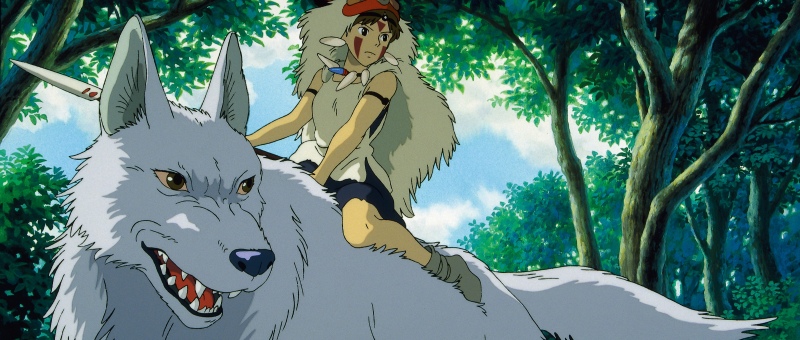
Conversely, the titular Princess Mononoke, San (Yuriko Ishida), ought by rights to be the heroine but she and the wolf deities she lives with are also violent and unforgiving in their hatred of humans as determined to wipe out the threat presented by Lady Eboshi as she is them. Ashitaka was dispatched to be a peacemaker, to see with eyes unclouded by hate, in an attempt to find common ground and a way that the forest and humanity can live together because in reality one cannot survive without the other. He is by turns disappointed with each of them but holds compassion for both while a tertiary political threat lingers on the horizon in the machinations of shady priest Jigo (Kaoru Kobayashi) and the emperor who wants the head the of the Forest Spirit because he believes it will confer immortality. Lady Eboshi, who otherwise appears to reject the feudal order, intends to give the emperor the head in order to gain protection from overreaching lord Asano who hopes to capture the capitalistic potential of Irontown for himself. 

Jigo is an embodiment of humanity’s greed and its destructive potential, not caring that severing the Forest Spirit’s head will cause untold destruction in which any financial gain he might make would be all but irrelevant. His role is even more ironic given that he is a priest who has supposedly rejected material desire describing himself as a monk just trying to get by while seemingly willing to manipulate and betray almost anyone in his quest for gold. Lady Eboshi wants to improve conditions for her community while San essentially wants the same but Jigo just wants to improve things for Jigo and no one else. 

What Ashitaka wants is to cure his curse by restoring the balance between the human world and the natural in the creation of a society in which neither need be a threat to the other. Thus he pledges to help rebuild Irontown along less destructive lines while entrusting the forest to San to protect though she finds herself unable to forgive humanity for the destruction it has already wrought and may do again. Even so, as Ashitaka says, “it’s time for us both to live” hinting at a kind of rebirth and a new beginning free from the old authority be it the Forest Spirit or the emperor and the feudal order in a new world of freedom and equality. 


Princess Mononoke screens on 35mm at Japan Society New York on July 22.

Trailer (english subtitles)

Snow Country (雪国, Shiro Toyoda, 1957)

Closely associated with literary adaptation, Shiro Toyoda had been wanting to adapt Yasunari Kawabata’s Snow Country (雪国) since its serialisation and apparently spent four years preparing his treatment ahead of the 1957 film starring Ryo Ikebe as the solipsistic aesthete at the novel’s centre. Characteristically, however, he takes several liberties with the source material, notably introducing an entirely different conclusion which perhaps helps in re-centring the tale away from the hero Shimamura to the melancholy geisha who apparently falls for him because of his intense loneliness. 

A brief reference to a failed military insurrection in Manchuria sets us firmly in the mid-1930s as do repeated mentions of the ongoing depression which causes additional anxiety to local business owners in a small holiday resort town. Mimicking the novel’s famous opening, Toyoda opens with a POV shot of a train exiting a tunnel into the snow-covered landscape, the hero Shimamura (Ryo Ikebe) sitting sadly gazing out of a window and eventually captivated by the reflection of a young woman devotedly caring for a young man who appears to be in poor health. Meanwhile, another young woman, Komako (Keiko Kishi), gazes at her own reflection in a train station window, waiting once again as if unable to depart. As we discover, Shimamura has returned with the intention of seeing Komako with whom he’d struck up a relationship during a summer trip but is somewhat disappointed to learn that she has since become a geisha.

In a flashback to their first meeting, Komako asks Shimamura if he has come for “escape”, a question he doesn’t exactly answer while petulantly complaining about his lack of artistic success as someone who paints pictures apparently out of step with his times. When the head of the local commerce association tries to involve him in conversation about the failed insurrection, he bluntly tells him that he’s an artist and as such has no interest in such things, but it does indeed seem that he is looking for some kind of escape from the turbulent times, expressing that here the war seems very far away as does “the depression”. Komako, a more modern and perhaps prophetic figure than it might at first seem, is the only one to bring up the war directly speculating that it may be about to intensify while the frustrated affair between the two seems to be informed by the mounting tensions against which they are attempting to live their lives. 

Rather self-absorbed, Shimamura in a sense may even identify with Komako explaining that he too has a “patron” and implying that his flight is perhaps a response to his sense of powerlessness, that he feels constrained by his financial dependency presumably on his father-in-law though his relative economic superiority which leads Komako to frequently remark on his “extravagance” obviously affords him the freedom to make these random solo trips to ski resorts and indulge his career as a painter regardless of its capacity to support himself and his family. Komako must know on some level that the relationship is a fantasy, yet she believes in it enough to end her connection with an elderly patron on suspecting that she is carrying Shimamura’s child only to have her hopes dashed when he does not turn up for a local festival as promised with the consequence that all of her dependents are turfed out of the home he had provided for her. 

Komako is not “free” in the same way that Shimamura evidently is, her entire life dictated by the fact that she is poor and female. Fostered by a shamisen teacher, she may have been technically engaged to the young man, Yukio (Akira Nakamura), Shimamura saw on the train being cared for by Yoko (Kaoru Yachigusa), Komako’s foster sister in love with him herself, but intensely resents the burdens she is expected to bear quite literally with her body. She later tells Shimamura that she didn’t become a geisha for Yukio in order to pay his medical bills but out of a sense of obligation, while she is also responsible for her birth family, the now bedridden shamisen teacher, and Yoko who intensely resents her for her callous treatment of Yukio and generally “dissolute”, selfish way of living. During the famous fire in a cinema that closes the novel (but not the film), Komako even exclaims that her life would be easier if Yoko burned to death, but on witnessing her either fall or jump from the burning building she can do nothing other than run to her side. 

Indeed, the novel’s climax finds Shimaura standing alone indifferent to the fate of Yoko, a young woman he had come to admire if only for her contrary qualities, admiring instead the beauty of the night sky. In Toyoda’s characterisation, Yoko is in one sense the conventionally good woman whose selfless devotion to the sickly Yukio so captivates Shimamura, but her goodness is nevertheless undercut by the degree of her animosity towards Komako even as the two women remain trapped in a complex web of frustrated affection and intense resentment, each perhaps knowing they neither can have the man they want and are condemned to an eternal unhappiness as the snow mounts all around them in this perpetually cold and depressing moribund resort town. Switching between studio matte paintings ironically mimicking Shimamura’s art and on-location footage of the deepening snows, Toyoda’s sense of near nihilistic melancholy evoking the atmosphere of Japan in the mid-1930s hints at grand tragedy but finds resolution only in stoicism as the heroine picks up her shamisen and trudges onward amid the quickening blizzard.  


Ken (剣, Kenji Misumi, 1964)

Most closely associated with jidaigeki, Kenji Misumi’s only film to be set in the contemporary era, Ken (剣), shifts his persistent concerns into the modern day in the clash of the warrior ideal and the emotional costs of living, but also takes a sideways look at conflicted post-war masculinity as two young men vicariously lock horns in a quest for mastery over their desires. Adapting a short story by Yukio Mishima, Misumi dials back on the tragic romance of militarism painting the hero’s ultimate acceptance of nihilistic futility less as a noble sacrifice than a humanist failure of the society that failed to save him from his absolutist fallacy. 

Obsessed with strength and honour, Kokubun (Raizo Ichikawa) has convinced himself that he can capture “this spark of pure life” he saw in the sun through perfecting the art of kendo. An aloof and austere figure, he has foregone all else and dedicated himself to his skill alone. For this reason he is appointed captain of his university kendo club over his jealous rival, Kagawa (Yusuke Kawazu), who loses out because his sword is “sentimental” and there is a concern that he draws his power from “arrogance”. There is indeed something in that, and it’s Kagawa’s sense of male pride that partly sets him on a quest for vengeance and vindication in a obsessive desire to dominate Kokubun but there’s also an unspoken attraction as he later admits to a female acquaintance in remarking that he finds Kokubun’s way of life “infuriating” but despite himself also “refreshing”. 

Literal sword play, Kagawa’s obsession with Kokubun results in a vicarious seduction in which he attempts to corrupt him by enlisting the help of a female student to expose him as a fraud by rupturing his asceticism and thereby destroying his source of strength if not his sense of self. The quasi-sadomasochistic relationship between the two men is further borne out by the implication that Kokubun is in fact finding his sexual release in the intense act of repression, satisfying himself through physical exhaustion in the company of other men, Misumi’s roving camera fully capturing the homoeroticism of this intensely homosocial society. Humiliated by Kokubun who forces him into a public act of contrition through physical endurance after disappointing the club by breaking the rules smoking on the job at their part-time gig at a supermarket, Kagawa goes to the chairman to complain that Kokubun’s leadership style is far too intense, “feudalistic” as another member puts it shortly before quitting, claiming that all he wants is for his rival to wake up from his militarist dream and live in the real world though his final act of mutiny will engender consequences unforeseen in his conviction that Kokubun’s ideology is largely performative self-delusion. 

The team manager perhaps thinks something similar, reminding Kagawa that he is merely “more grown up” as if Kokubun is in a sense maintaining his childlike innocence in refusing to enter an adult world he regards as “ugly” and “corrupt”. His ideal is simplicity and he finds it in the primacy of the sword. There is in this something of an uncomfortable militarist throwback that finds a disciple in the ever loyal Mibu (Akio Hasegawa) who dutifully parrots back the quasi-facist philosophy to his quietly horrified mother and sisters who probably don’t help the situation by mocking his lack of masculinity in his inability to grow a proper beard while insisting on shaving every day anyway. Attracted by Kokubun’s dynamism and energy, he longs for strength through self denial. “We must move away from those empty desires” Kokubun instructs him while discussing the suicide of a young man who was discovered next to a selection of half eaten fruit. Rather than sympathy the man is largely mocked by his male peers, Kokubun dismissing him as “weak in mind and body” for having taken his own life apparently in fear of failure, but also stressing that suicide is a choice taken by the very strong as well as the very weak. 

In this brief exchange he opens the door to a notion of nobility in the choice to take one’s own life which leads straight back into the death cult of militarism, perhaps something that only Mibu as a fellow devotee is able to see. Yet Misumi perhaps undercuts this sense of nobility with a return to collective shame, eulogising Kokubun’s determination to preserve his “uprightness and strength” as Kagawa admits defeat in the face of Kokubun’s unbreakable purity, while placing the burden of failed responsibility on the kendo troupe not for their inability to live up to his ideal but for their lack of understanding in failing to free him of his moral absolutism. The way of the sword once again leads only to death and while there may be an uncomfortable beauty in such moral purity, in the end all there is is futility. 


Original trailer (no subtitles)

Shozo, a Cat and Two Women (猫と庄造と二人のをんな, Shiro Toyoda, 1956)

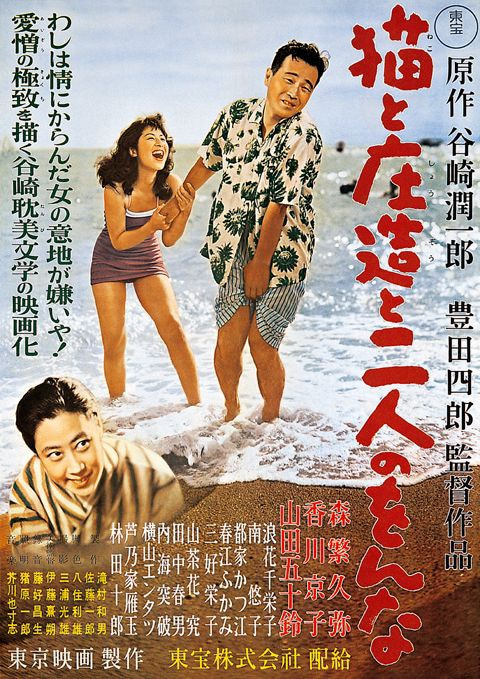
Post-war melodrama is largely concerned with the place of women, in particular, in a rapidly changing society, but given the centrality of domestic life, were men yearning for “independence” too? Shiro Toyoda was closely associated with comedic tales of strong women and weak men, and Shozo, a Cat and Two Women (猫と庄造と二人のをんな, Neko to Shozo to Futari no Onna) is as its title implies no exception. Adapting the novel by Tanizaki, Toyoda offers a subtle critique of the traditional family as its hapless hero finds himself caught between the conflicting demands of his feudalistic mother, stoic first wife, hedonistic second, and his much loved but perhaps mercenary feline, Lily. 

Shozo (Hisaya Morishige) is perhaps a typical spoiled only son, lazy, feckless, and essentially passive. Shinako (Isuzu Yamada) who agreed to an arranged marriage with him four years previously is walking out, thoroughly fed up with her mother-in-law Orin’s (Chieko Naniwa) constant complaints not least among them that the couple have no children. Unbeknownst to Shinako, however,  Shozo has been carrying on with his slightly younger cousin, Fukuko (Kyoko Kagawa), who is a free spirited modern woman. In fact, Fukuko has already run away from home three times in the company of various men so her wealthy father would be only too pleased to see her settle down and is so desperate to offload her that he’s even offering a huge dowry. All of this is complicated by the fact that Fukuko’s father already owns the mortgage on Shozo’s family store, which presents a serious challenge to typical family dynamics. 

Shozo, meanwhile, is only really interested in his pet cat, Lily, something which was a bone of contention in his failed marriage to Shinako (and perhaps a reason they have not been blessed with children). On learning that Orin has already moved Fukuko into the family home mere seconds after she vacated it, Shinako is suddenly struck by remorse and feels the need to vindicate her pride through revenge. Plotting how best to drive a wedge between Fukuko and her new husband, she settles on petitioning Shozo to give her custody of Lily, and then suggests the same thing to her rival knowing that whatever happens it will cause a series of problems in the Oyama household. 

The irony is, in a sense, that it’s Shozo who has been displaced from his own home. Perhaps surprisingly, he often tries to help out with household tasks but his mother always stops him, insisting that housework isn’t something a man should pay attention to. Orin is of course perpetuating outdated ideas of traditional gender roles, but there is also an obvious anxiety in her need to protect her territory from possible incursion. She doesn’t necessarily trust the idea that she and Shozo are connected by anything deeper than practicality and filial obligation and her only currency is her ability to provide the services that Shozo “cannot” provide for himself. His learning to take care of himself is an existential threat to her position as his caregiver even though he is a grown man in his 30s perfectly capable of doing his own laundry and preparing his own meals (as he already does for Lily who particularly enjoys grilled chicken). 

When they brought Shinako into the house, they did so apparently because she was known to be a “good worker” at her job as a maid for a wealthy family. Since then she has indeed worked hard, but is viewed as little more than a glorified servant by Orin who has delegated much of the feminine labour to the younger woman, while Shozo emotionally neglects her in favour of the cat and apparently satisfies his carnal urges outside the home. They accept Fukuko for her money, but take the opposite approach, treating her as the lady of the manor. Fukuko does no housework (a cupboard is later discovered where she’d thrown all the washing she couldn’t be bothered to do), but Orin simply picks up her share and more, becoming maid to her daughter-in-law who frequently reminds them that it’s her money paying for everything so she is the one who is really in charge. 

Shozo does not seem to react too closely to these assaults on his masculinity, but only wants to escape to be alone with Lily whom he believes is the only one who really loves him. In this he is perhaps the truly modern man who wanted his family relations to be “real” rather than defined by social obligation, but he’s also self-centred and childish, still seeing the women (even Lily) as providers of service rather than fellow human beings. His mother satisfied his hunger, Shinako kept him financially by managing the business, and Fukuko sated his passion, but he feels oppressed by all of them in different ways and in the end does not want the responsibility of dealing with human emotions. Lily may be capricious, but her needs are easily satisfied and to that extent she is dependent on him. His desire to be “independent” and find emotional fulfilment only with his cat is just as much of a challenge to the social order as a woman who rejects marriage or seeks to fulfil herself outside of the home. 

Shozo’s dilemma is however presented as comedic until its unexpectedly melancholy conclusion which reduces him to the status of a stray cat as the women come to literal blows, fighting not quite over him (he isn’t worth fighting over) but for their own self-esteem and particular brand of womanhood. Shinako sits at home and calculates all the back pay she’d be entitled to for the labour she performed at the Oyama household in recognition that being a wife is also a job and they treated her as a maid anyway (which is to say as an outsider with no intention of love or loyalty), while Fukuko begins to see the “emptiness” in her party girl lifestyle but prefers to be pampered and resents being “beaten” by a mere housemaid. This system traps everyone, forcing them to manipulate the desires of others while suppressing their own. Shozo and his cat are left out in the cold, trapped between tradition and modernity but no more free than they were before even in their mutual dependency.


Tales of Ginza (銀座二十四帖, Yuzo Kawashima, 1955)

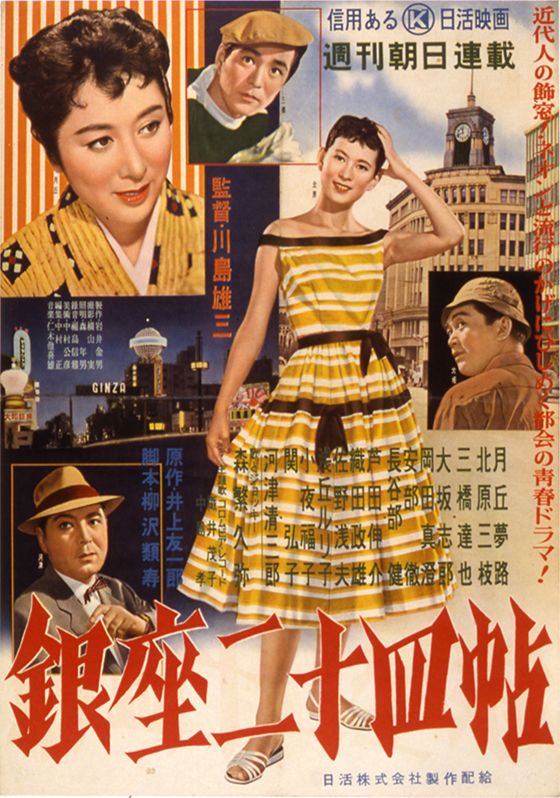
“If we all work together we can make Ginza’s night, no the whole world, bright and at peace” insists the hero of Yuzo Kawashima’s chronicle of changing times Tales of Ginza (銀座二十四帖, Ginza 24 Chou), trying to sell a brighter post-war future to a jaded reactionary. By 1955, the consumerist revolution was already on the horizon, and nowhere did it beckon as invitingly as in the upscale Ginza with its elegant department stores and swanky nightlife, but as Hiroshi Shimizu’s Tokyo Profile had shown two years earlier, it wasn’t all glitz and glamour. The world looked very different to the people who lived and worked in the city within a city than it did to those who just dropped in to have a good time. 

Our hero, the incongruously named Mr. Coney (Tatsuya Mihashi), is an earnest florist doing his best to brighten up the city. He’s taken three orphaned teenage girls into his shop, allowing them to support themselves honestly while he teaches them valuable skills, and has also employed the rather less earnest Jeep (Asao Sano). Jeep has had trouble with drug dependency in the past and, Coney fears, is drawn to the easy pleasures of the post-war underworld. The main drama kicks into gear when the upper middle-class Wakako (Yumeji Tsukioka) wanders past the shop and fancies a few roses, asking one of the girls to deliver them to her home later in the day. 

Wakako is currently in the middle of arranging some paintings which belonged to her late father for an exhibition in a gallery where she hopes to sell them. As we discover, she’s in need of money fast because she’s become estranged from her husband, Kyogoku (Seizaburo Kawazu), who has been seduced by post-war criminality. Wakako wants a divorce, but the situation is complicated by the fact her mother-in-law has taken custody of her daughter. In the course of sorting through paintings, the gallery owner spots one Wakako didn’t really want to part with – a portrait of herself as a teenager painted by one of her father’s apprentices when they lived in Manchuria during the war. The painting is signed “G.M”, and the only concrete thing Wakako can remember is that the boy was called “Goro” and was a beautiful, kind soul whom she’d dearly like to see again. 

The “G.M” mystery begins to whip up a small storm in the already volatile Ginza. Coney comes to believe that his older brother, whom he’d long believed to be dead, may be the man Wakako’s looking for but he doesn’t really want to say so until he’s 100% certain. Meanwhile, there are a surprising number of GMs in the city, including a rather sleazy, womanising “doctor” (Toru Abe) who goes to the papers and tells them he painted the picture though Wakako is not convinced and would be a little disappointed to think the man she wondered about all those years turned out to be a cheesy lounge lizard. Other contenders include a melancholy baseball scout (Shinsuke Ashida) who turns out to have connections to the underworld, and, unbeknownst to Coney, the drugs kingpin of post-war Japan known as the “G.M. of Ginza”. 

Drugs are something that Coney is particularly worried about. He’s seen the effect they’re having on his city, and resents that their influence is making Ginza “dark”. The orphaned girls he has working at the shop all lost their parents to drug abuse, and Coney has made getting Jeep off the stuff a primary goal. Jeep, however, is unconvinced. He thinks Coney is a sucker, and that floristry isn’t a profession for a grown man. In part, he’s kicking back against Coney’s well-meaning paternalism, but is also attracted by the flashing neon signs and easy pleasures of the modern Ginza of which the drugs trade is an increasingly big part. For Jeep, the post-war future is one of amoral and thoughtless hedonism, getting rich quick though low level, “innocent” crime, like peddling drugs and porn. 

Wakako too is tempted by that future, though mostly through lack of other options. She’s planning to open a bar with the money from the paintings, but eventually decides to go into business with Coney, working for his brighter future in the florist’s. The pair perhaps fall in love, but the future is still too uncertain for romance. Wakako refuses to see her husband, insisting only on obtaining a divorce and with it her freedom. Coney volunteers to talk to him on her behalf, essentially arguing that his wife will he happier with him because the kind of future they desire is essentially the same. Kyogoku cannot really argue with him. He is a sad and broken man who realises that his choices have robbed him of the future he desired, forced onto the run unable to see his wife and daughter. He justifies himself with the rationale that if he didn’t run drugs in Ginza, “foreigners” would take over and crime would be rampant. He claims that life is survival of the fittest, and that he has no need of love. Kyogoku never felt loved by the aristocratic mother who raised him only as an heir to their name. The only time he felt loved was by his best friend who was, he says, murdered because he lacked power and because his good heart made him weak. 

There maybe something a little reactionary in Coney’s moral absolutism. He condemns his brother for getting involved with student politics which made him “hate Japan”, though he later signs a student petition himself, and has only contempt for Ginza’s famous nightlife while willingly wandering through it selling flowers to romantically-minded guys in bars, but does his best to avoid judgment as he tries to coax those he feels have strayed back onto a better path. Coney believes in a brighter future where good people work together peacefully, while the Kyogokus of the world are content to plunge us all into darkness in a nihilistic pursuit of empty pleasures. No one really “wins” in the end. Coney gets some answers, but remains too diffident to fight for love, while Wakako is perhaps prevented from doing so in feeling called towards another kind of future, which is in effect the past, because of her maternity. Ginza is changing, and you can’t change it back, but you can do your best to be your best, saying it with flowers if with nothing else.


Currently available to stream on Mubi in the US.

Opening titles (no subtitles)

Madame White Snake (白夫人の妖恋, Shiro Toyoda, 1956)

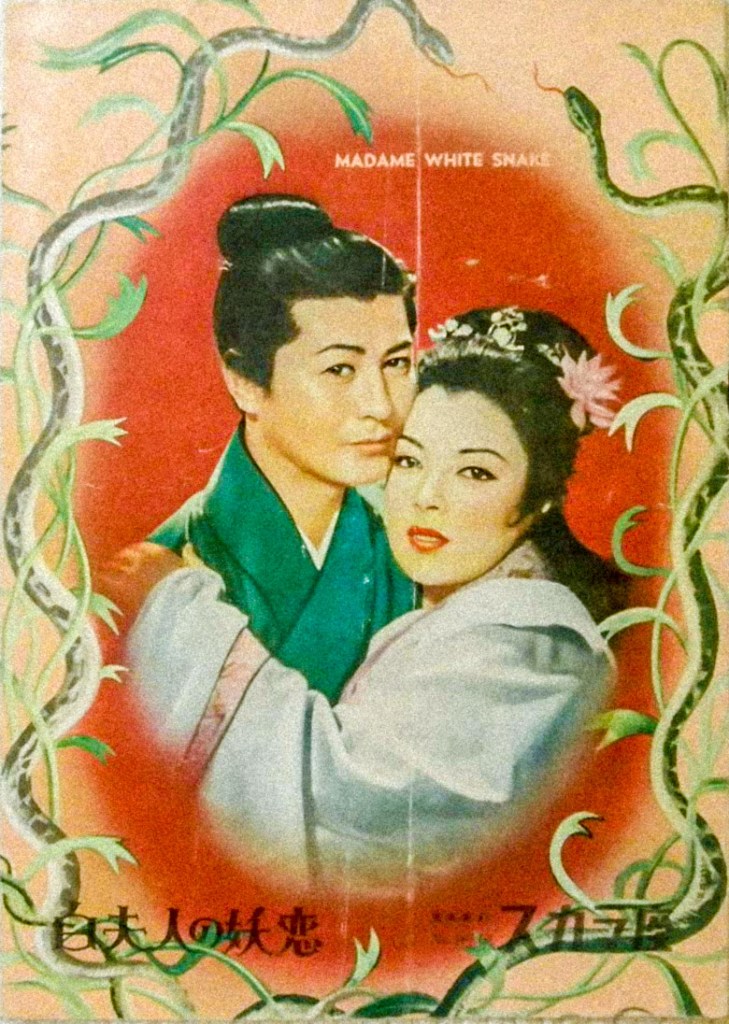
A studio director at Toho, Shiro Toyoda was most closely associated with adaptations of well respected works of literature, often with an earthy, humanist touch. He might then be an odd fit for a tale of high romance co-produced with Hong Kong’s Shaw Brothers and inspired by a classic Chinese legend. Madame White Snake (白夫人の妖恋, Byaku Fujin no Yoren) effectively drops some of Toho’s top talent, including “pan-Asian” star Shirley (Yoshiko) Yamaguchi (AKA Li Xianglan / Ri Koran), into a contemporary Hong Kong ghost movie with Toyoda doing his best to mimic the house style. 

As in the classic legend, fate is set in motion when herbalist Xu-xian (Ryo Ikebe) allows “noblewoman” Bai-niang (Shirley Yamaguchi) and her maid Xiao-qing (Kaoru Yachigusa) to board a boat he is riding to escape a storm. The pair bond because they are both orphans out in the rain to pay their filial respects to their late parents on tomb sweeping day. Disembarking, Xu-xian lends the ladies his umbrella, vowing to visit their house the next day after his rounds to reclaim it. When he arrives, Xu-xian is greeted by a near hysterical and extremely romantic Bai-niang who has apparently fallen deeply in love with him because of his pure heart. She proposes marriage, but Xu-xian is wary. He is after all just a poor boy, a herbalist living with his older sister and her husband. He has no money to get married and Bai-niang is a noble woman from a good family, society simply wouldn’t allow it. Xu-xian tries to escape, but his gentle words of refusal only wound Bia-niang’s heart. 

Hoping to smooth the situation, Xiao-qing decides to give Xu-xian a small fortune in silver taels so the money issue will be solved. Strangely, the plan appears to work. Xu-xian quickly gets over his reluctance to accept money from a wealthy woman who wants to marry him and returns to being in love and excited, selling his newfound hope for the future to his sister by showing her the taels. It is, however, not quite that simple. The silver turns out to be stolen as evidenced by a mark of fire on its surface. Xu-xian falls under suspicion as a thief and comes to resent Bai-niang for placing him in such a difficult and embarrassing position. 

Nevertheless, despite all the strange goings on such as the suddenly “abandoned” house, the green smoke, and vanishing women, Xu-xian does not seem to suspect that Bai-niang is not fully human, and is only angry with her for misusing him. In a motif which will be repeated, however, he is eventually won over. After taking a job in his sleazy uncle’s inn, he re-encounters Bai-niang and realises she really is the one for him. But as they begin to build their life together, launched with an unwise loan from the sleazy uncle who can’t seem to keep his eyes (and occasionally hands) off Bai-niang, doubt begins to creep in. Those small cracks are deepened when Xu-xian is accosted by a man who announces himself as a Taoist from Mount Ji and tells him that he has an evil aura over his head, encouraging him to believe that an evil spirit is slowly capturing his heart which why he’s a little bit afraid to go home. The priest gives him some useful talismans, which are of course quite bad news for Bai-niang who now knows that her husband secretly doubts her. 

Meanwhile, prepared to do “anything” to make the man she loves happy, Bai-niang has come to the strange conclusion that Xu-xian’s moodiness is down to the fact that their medicine shop isn’t doing so well. Unfortunately, her big idea is poisoning the local well to make everyone think there’s a plague so they’ll have to buy more of her potions. It’s a fairly nefarious plan, but apparently all for love. As in the original tale, however, the real crisis once again comes with the randy uncle who uses the pretext of a local festival to try and get Bai-niang drunk on special wine that is known to unmask spirits. Realising that his wife is a little bit otherworldly sends Xu-xian into a coma, while Bai-niang goes to ask the gods for help, only to be undercut by the annoying Taoist priest who wakes Xu-xian up by convincing him his wife’s “evil”. 

If you don’t want people to think you’re “evil”, trying to drown the entire town might not be the best move. Bai-niang’s refusal to give up on Xu-xian even when he constantly tries to reject her places her at odds with loyal servant Xiao-qing who is equal parts enraged on her behalf and exasperated that she can’t see sense. Bai-niang tells the gods that the only witchcraft she used was the witchcraft of love even if that love caused her to try and poison the entire town, but now regards herself as nothing more than Xu-xian’s wife and is willing to renounce her powers in order to save him. Once again, Xu-xian has a sudden change of heart, avowing that there are human women with the heart of a snake, and Bai-niang is a woman to him even if she’s a snake spirit which is, apparently, the only thing that matters. Still, theirs is a love this world doesn’t understand, and so only in a better one can they ever be together.


Original trailer (no subtitles)

The Hotelman’s Holiday (駅前旅館, Shiro Toyoda, 1958)

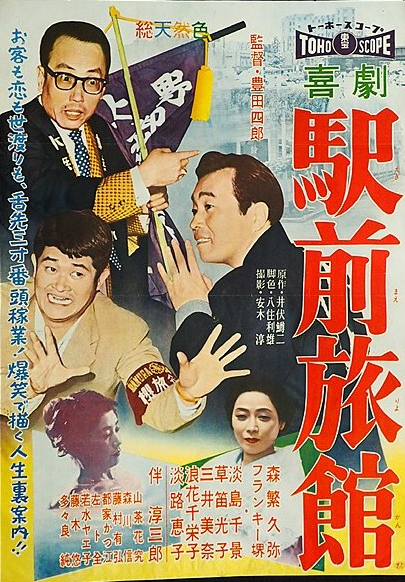
Hotelman's holiday poster 1The post-war world was one rife with trouble. By 1958, however, the horizon was perhaps beginning to brighten which means it was no longer too soon have a good laugh about how awful life could be. Nothing particularly awful happens in Shiro Toyoda’s cheerful comedy The Hotelman’s Holiday (駅前旅館, Ekimae Ryokan), the first in a series of “Ekimae” or “station front” movies produced by Toho, but it does amusingly rip a leaf out of Toei’s book in having its community of feckless hoteliers band together to stand up to greedy yakuza stand-in barkers who are actively destabilising the local economy with their underhanded ways.

Our hero, “born in a maid’s room” Jihei (Hisaya Morishige), is the manager of the Kukimoto inn near Tokyo’s Ueno station. Kukimoto seems to get most of its business from large tour groups, particularly school children on trips to the city and religious organisations, seemingly unperturbed by the area’s then scrappy working class earthiness. The problem is that there are rather a lot of inns in this small area (it is after all near a major rail station) and they’re all competing for the same walk-in guests which means they’re increasingly at the mercy of the local “barkers” who target travellers at points of transit and take them to certain inns in return for commissions. Even so, Jihei himself can often be found outside enticing passersby into the hotel to prove his managerial prowess.

The barkers know their worth and are beginning to get too big for their boots in shifting into the human trafficking business. Not to go into the finer details, the inns have a lot of ladies living on their premises on whom some of their trade relies. The barkers have been tempting the girls from the inns away from their homes and into potentially more lucrative though almost certainly less friendly occupations.

The central drama kicks off when the barkers try to abduct Kukimoto’s maid Okyo (Mina Mitsui) who is saved at the last minute by intellectual student Mannen (Frankie Sakai). Mannen is studying law and working illicitly for several tourist information companies in order to pay his way through college. As such he’s just another of the scrappy young guys trying to forge ahead in the precarious post-war environment. Jihei is, in a sense, pretty much the same. Born in a maid’s room, as he says, he’s very much part of the inn business and is proud to be a manager but also resents his subordinate position to the owner and the way they often treat him like a servant rather than the dependable employee he really is. His position leaves him feeling as if he’s already reached his peak and there is no real future for him other than the status quo. That feeling of futility might be why he, Mannen, and some of the other hotel managers eventually decide that they need to “cleanse” the Ueno Station area of the barker threat.

Their resistance has a pleasantly pithy quality in that it relies on a perfectly peaceful method of putting up banners to encourage customers not to trust the barkers and to approach inns directly. As might be assumed, the barkers aren’t very happy about their business being undermined and immediately begin threatening the Kukimoto inn, whom they assume to be the instigators, with destruction if they do not immediately cease and desist. Jihei thinks he has a solid plan and it does indeed defuse the situation but cannot ultimately rectify it. What it does do is give the inn’s owners the excuse they’ve been looking for to part with him, and Jihei the impetus he perhaps needed to rethink his life.

As Mannen puts it, “our reality is preposterous and absurd”, but we have to go on resisting because “happiness exists even in this world”. The inn managers stand up against the barker oppression in the same way communities stand up against yakuza in Toei’s modern gangster dramas, but like many of anti-gangster narratives, the corruption is so deeply ingrained that it cannot be entirely eliminated, only managed. Thus Jihei, also involved in a series of romantic subplots involving an intense former geisha (Keiko Awaji) and a diffident bar owner (Chikage Awashima), eventually realises that if he cannot change his environment he might be better to leave it, escaping to the sort of place where they still grow barley and travel by cart. Mannen too, their revolution failed, eventually takes off with Okyo to go into business in Osaka, giving up on his imagined future for a more solid present. Meanwhile, chaos rules in Ueno as crowds of travellers pour out of the station towards an uncertain future with only the barkers to guide them.


Original trailer (no subtitles)