

“Times may change but there’s always a bunch of greed-blinded old men to rip you off” according to the sidelined noble yakuza pushed into the shadows of Kihachi Okamoto’s anarchic gangster romp The Last Gunfight (暗黒街の対決, Ankokugai no Taiketsu). Another of Okamoto’s early crime movies, Last Gunfight, adapted from the novel by hardboiled king Haruhiko Oyabu, as its name implies finds a stranger in town arriving at the tail end of a gang war in which the wrong side seems to have won hoping to offer a course correction for the post-war future.
Branded a “dirty cop” and demoted to small-town Kojin, Fujioka (Toshiro Mifune) is a maverick officer exploring the local landscape by getting into fights with foot solders from differing outfits, quickly finding out that the Ooka gang are currently in the ascendent while old school Kozuka flounders. Improbably enough, the local flashpoint is over control of the gravel dredging business currently operated by Kozuka but contested by Ooka. Fujioka meanwhile is caught in a complex web at the nexus of which is Tetsu (Koji Tsuruta), a former Kozuka man who now runs a bar while he plots revenge for the death of his wife in a traffic accident he suspects may have been foul play possibly at the hands of Ooka man Niki, brother of brassy bar girl Sally (Yoko Tsukasa).
Arriving on the same train as dodgy lawyer Tendo (Akihiko Hirata) and an exotic dancer destined for the club, Fujioka keeps his cards close to his chest leaving his loyalties all but clear. The station are less than thrilled to have him, especially as he spends his first night in town in one of their cells after starting a bar fight, waking up right under a sign which reads “stop violent crime”, while another earnest young officer reminds him that “policemen should never be involved in violence”. Fujioka continues to play both sides, cosying up to both Ooka and Tetsu, walking the line between cop and thug while seemingly scoping out the terrain on either side of the tracks.
Meanwhile, the town is mired in a battle for its soul as the amoral Ooka gang slowly take over. As Kozuka foot soldier Yata (Makoto Sato) puts it, his boss is the sort who won’t have anything to do with yakuza who don’t obey the code which is why he won’t simply cut a deal with Ooka. According to Kozuka (Jun Tazaki), others might lump him in with “fools and trash” but he’s the old school kind of yakuza providing a genuine service to the community. He dredged the river to stop it flooding and was given the gravel business as a thank you so he resents having it stolen out from under him by the likes of Ooka who makes his money primarily through the drugs trade trafficking “China White” and has seemingly corrupted the entire city council.
Then again, as Kozuka points out ties based on greed are the most fragile of all and it appears Ooka has secrets he’d rather weren’t exposed. Living in a Western-style mansion complete with open fireplaces and hunting trophies on the walls Ooka is laying claim to a fiefdom as the new inheritor of the feudal legacy. Tetsu’s bar, meanwhile, seems to have a Wild West theme which perhaps speaks of his love of freedom and independence as opposed to Ooka’s elitist authoritarianism. As a representative of legitimate authority Fujioka walks a tightrope between the two but eventually shuns a potential love interest in bargirl Sally, currently Ooka’s squeeze but playing her own game hoping to find out what happened to her brother, in favour of a bromance with the wounded Tetsu.
Like Okamoto’s other gangster movies from this era however and in contrast to the heaviness of the title, Last Gunfight is imbued with a strong sense of irony and the director’s characteristically cartoonish sense of humour with its ridiculous fight scenes, elaborate production design, and playful subversion of gangster movie tropes right down to the frequent musical numbers starring a trio of minions clad in black suits and lip-syncing to songs about killing the moon. Ending as it began, Okamoto’s elliptical narrative sees the strangers leaving town, job done, but laying themselves bare as they go now shorn of their cover identities and headed back into the heart of corruption in search of new destinations.
Original trailer (no subtitles)






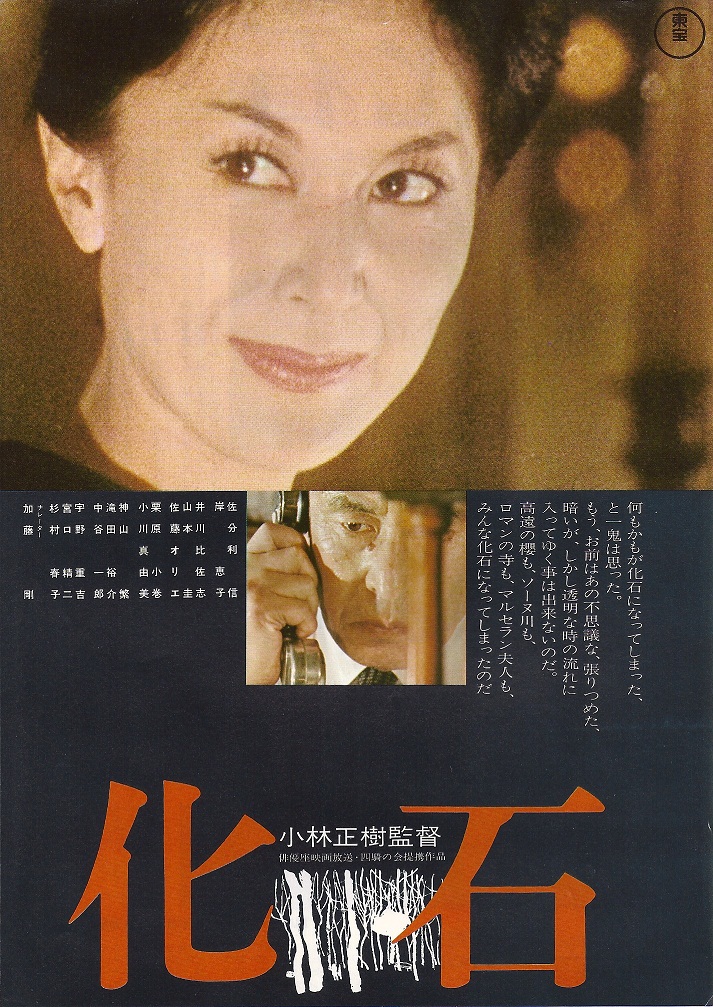 Throughout Masaki Kobayashi’s relatively short career, his overriding concern was the place of the conscientious individual within a corrupt society. Perhaps most clearly seen in his magnum opus,
 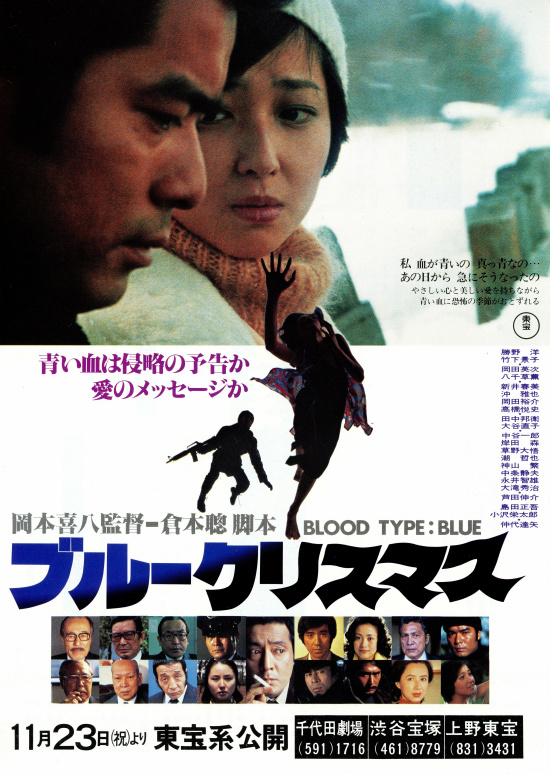 The Christmas movie has fallen out of fashion of late as genial seasonally themed romantic comedies have given way to sci-fi or fantasy blockbusters. Perhaps surprisingly seeing as Christmas in Japan is more akin to Valentine’s Day, the phenomenon has never really taken hold meaning there are a shortage of date worthy movies designed for the festive season. If you were hoping Blue Christmas (ブルークリスマス) might plug this gap with some romantic melodrama, be prepared to find your heart breaking in an entirely different way because this Kichachi Okamoto adaptation of a So Kuramoto novel is a bleak ‘70s conspiracy thriller guaranteed to kill that festive spirit stone dead.
 “Sometimes it feels good to risk your life for something other people think is stupid”, says one of the leading players of Masaki Kobayashi’s strangely retitled Inn of Evil (いのちぼうにふろう, Inochi Bonifuro), neatly summing up the director’s key philosophy in a few simple words. The original Japanese title “Inochi Bonifuro” means something more like “To Throw One’s Life Away”, which more directly signals the tragic character drama that’s about to unfold. Though it most obviously relates to the decision that this gang of hardened criminals is about to make, the criticism is a wider one as the film stops to ask why it is this group of unusual characters have found themselves living under the roof of the Easy Tavern engaged in benign acts of smuggling during Japan’s isolationist period.
 Windows on Worlds