 Despite the potential raciness of the title, The Liar and his Lover (カノジョは嘘を愛しすぎてる, Kanojo wa Uso wo Aishisugiteru) is another innocent tale of youthful romance adapted from a shojo manga by Kotomi Aoki. As is customary in the genre, the heroine is cute yet earnest, emotionally honest and fiercely clear cut whereas the hero is a broken hearted artist much in the need of the love of a good woman. Innocent and chaste as it all is, Liar also imports the worst aspects of shojo in its unseemly age gap romance between a 25 year old musician and the 16 year old high school girl he picks up on a whim and then apparently falls for precisely because of her uncomplicated goodness.
Aki (Takeru Satoh) introduces himself through a film noir-style voice over in which he details his ongoing malaise. Now a ghost member of the band Crude Play, Aki feels conflicted over his artistic legacy as his carefully crafted tunes are repurposed as disposable idol pop and performed by the friends who were once his high school bandmates. His idol girlfriend, Mari (Saki Aibu), has also been seeing the band’s manager in an effort to get ahead leaving Aki feeling betrayed and devoid of purpose.
Soon after, Aki runs into grocer’s daughter Riko (Sakurako Ohara) who is captivated by the song he’s been humming whilst staring aimlessly out to sea. Aki, feeling mischievous, picks Riko up on a whim. He goes to great pains to remind us that he had no real feelings for her and was only in it for the kicks but a later meeting sets the pair off on a complicated romance.
Aki becomes the “liar” of the title when he gives Riko a false name – Shinya, the name of the bassist who has replaced him in his own band. Despite the supposed purity of music as a means of communication, it is, in many ways, another lie. When Aki and his bandmates were offered a contract straight after high school they were overjoyed but it was short lived. Listening to their demo tape, Aki spots the problem right away – it’s not them playing, they’ve been replaced by polished studio session musicians. Saddened, Aki quits the band and is replaced by a ringer but continues to write songs both for Crude Play and other artists while the band’s manager gets the credit.
Music conveys and complicates the romance as it brings the two together but also threatens to keep them apart. Riko, a Crude Play fan, does not know Aki’s true identity and is disappointed when he says he hates girls who sing because she herself is in a high school band. Sure enough, the band get scouted by odious producer Takagi (Takashi Sorimachi) and handed to the villainous Shinya (Masataka Kubota) who threatens to do the same thing to them as they did to Crude Play. Riko, like Aki, is a musical purist but also wants to make her rock star dreams come true.
Like many a shojo heroine, Riko is convinced only she sees the “real” Aki, pushing past his angry, distant persona to a deeper layer of sensitive vulnerability. This being shojo she is more or less right, as Aki tells us in his voice over detailing just how irritating it seems to be for him that he’s falling for this unusually perceptive young woman. Despite realising that almost everything Aki has told her has been a lie (intentional or otherwise), Riko ignores his duplicity precisely because she thinks she already knows the “real” Aki through the “truth” of his music.
Takagi, the band’s unscrupulous manager, prattles on about music not mattering if it doesn’t sell, avowing that it’s all a matter or marketing anyway. Aki’s central concern is the misuse of his artistic legacy, that his art form has been stripped of its meaning and repackaged for mass market consumption. The band is “fake”, a manufactured image based on the ruins of the truth. Aki believes himself to be the same – an empty vessel, devoid of meaning or purpose. His love of music is only reawakened by Riko’s innocent enthusiasm and her surprising promise of “protection”.
The conflict is one of essential truth betrayed by music in all senses of the word as it is used and misused by the various forces in play. Unlike most shojo adaptations, Aki leads the way with Riko a vaguer figure ready to absorb the projected personalities of the target audience but the central dynamic is still one of goodhearted girl and broody boy. The unseemly age gap issue is entirely ignored, as the troubling undercurrent of Riko’s most attractive quality being her all encompassing pureness, undermining the otherwise charming, wistful comedy of the innocent musical romance.
Original trailer (English subtitles)
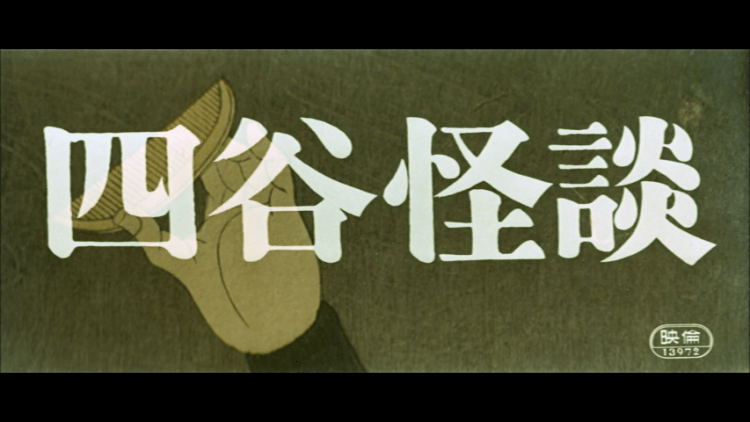 Shiro Toyoda, despite being among the most successful directors of Japan’s golden age, is also among the most neglected when it comes to overseas exposure. Best known for literary adaptations, Toyoda’s laid back lensing and elegant restraint have perhaps attracted less attention than some of his flashier contemporaries but he was often at his best in allowing his material to take centre stage. Though his trademark style might not necessarily lend itself well to horror, Toyoda had made other successful forays into the genre before being tasked with directing yet another take on the classic ghost story Yotsuya Kaidan (四谷怪談) but, hampered by poor production values and an overly simplistic script, Toyoda never succeeds in capturing the deep-seated dread which defines the tale of maddening ambition followed by ruinous guilt.
 When you spent your youth screaming phrases like “no future” and “fumigate the human race”, how are you supposed to go about being 50-something? A&R girl Kanna is about to find out in Kankuro Kudo’s generation gap comedy The Shonen Merikensack (少年メリケンサック) as she accidentally finds herself needing to sign a gang of ageing never were rockers. A nostalgia trip in more ways than one, Kudo is on a journey to find the true spirit of punk in a still conservative world.
 Japan’s political climate had become difficult by 1938 with militarism in full swing. Young men were disappearing from their villages and being shipped off to war, and growing economic strife also saw young women sold into prostitution by their families. Cinema needed to be escapist and aspirational but it also needed to reflect the values of the ruling regime. Adapted from a novel by Katsutaro Kawaguchi, Aizen Katsura (愛染かつら) is an attempt to marry both of these aims whilst staying within the realm of the traditional romantic melodrama. The values are modern and even progressive, to a point, but most importantly they imply that there is always room for hope and that happy endings are always possible.
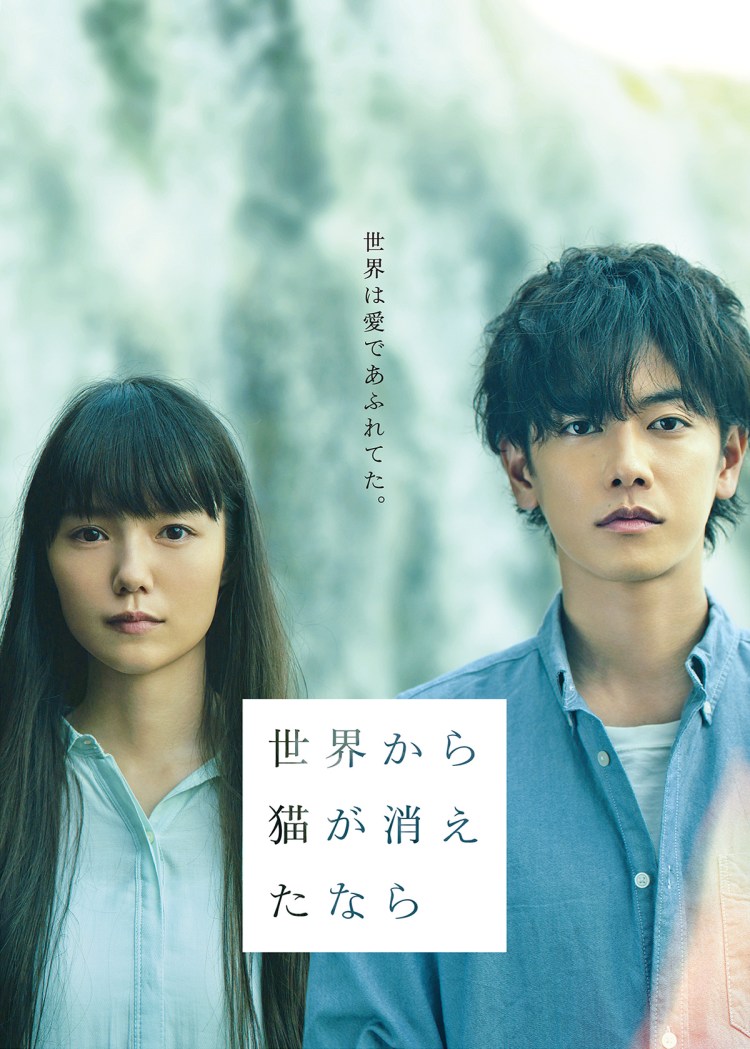 What would you give to live another day? What did you give to live this day? What did you take? Adapting the novel by Genki Kawamura, Akira Nagai takes a step back from the broad comedy of
 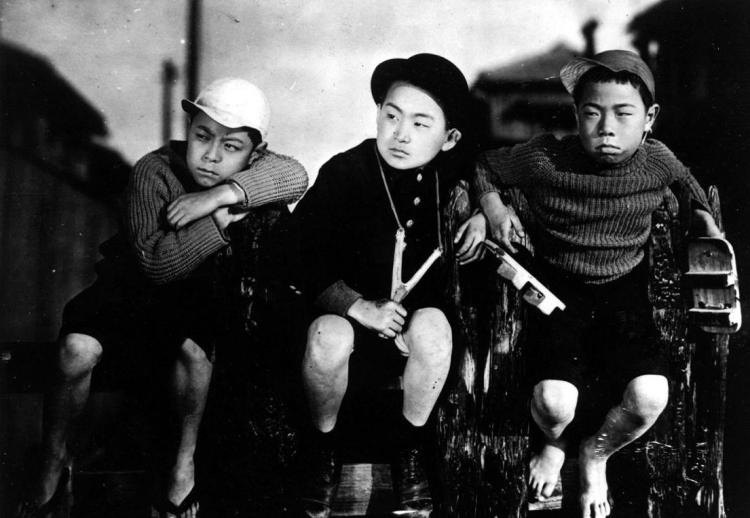 When one thinks of the classic examples of children in Japanese cinema, Hiroshi Shimizu is the name which comes to mind but family chronicler Yasujiro Ozu also made a few notable forays into the genre. I Was Born, But… (大人の見る絵本 生れてはみたけれど, Otona no miru ehon – Umarete wa mita keredo) stars one of the premier child actors of the silent era in Tokkan Kozo (later known as Tomio Aoki) who also worked repeatedly with Shimizu (
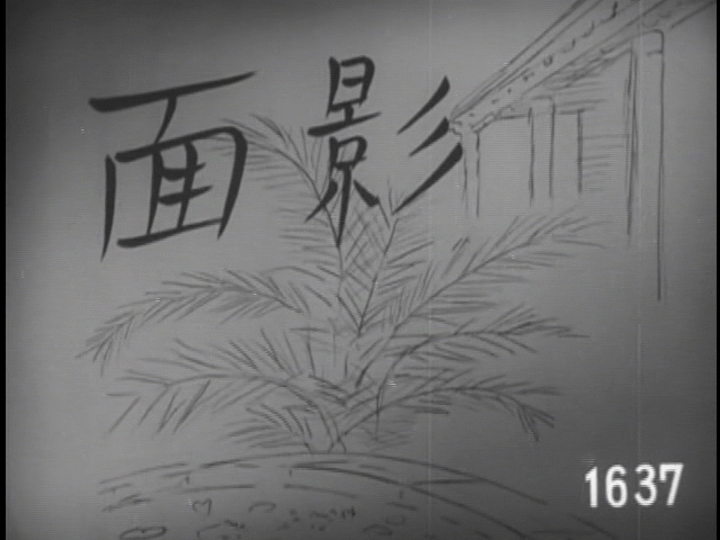 Master of the shomingeki, Heinosuke Gosho goes upscale for the post-war romantic melodrama, Vestige (面影, omokage), even if he goes out of his way to add a layer of expressionistic imagery. Inspired by Gosho’s own experiences, Vestige has an air of melancholy and of frustrated dreams but also of resignation as the two not quite lovers at the centre agree to quell their romantic yearnings and preserve their conventional, bourgeois lives at the expense of greater happiness.
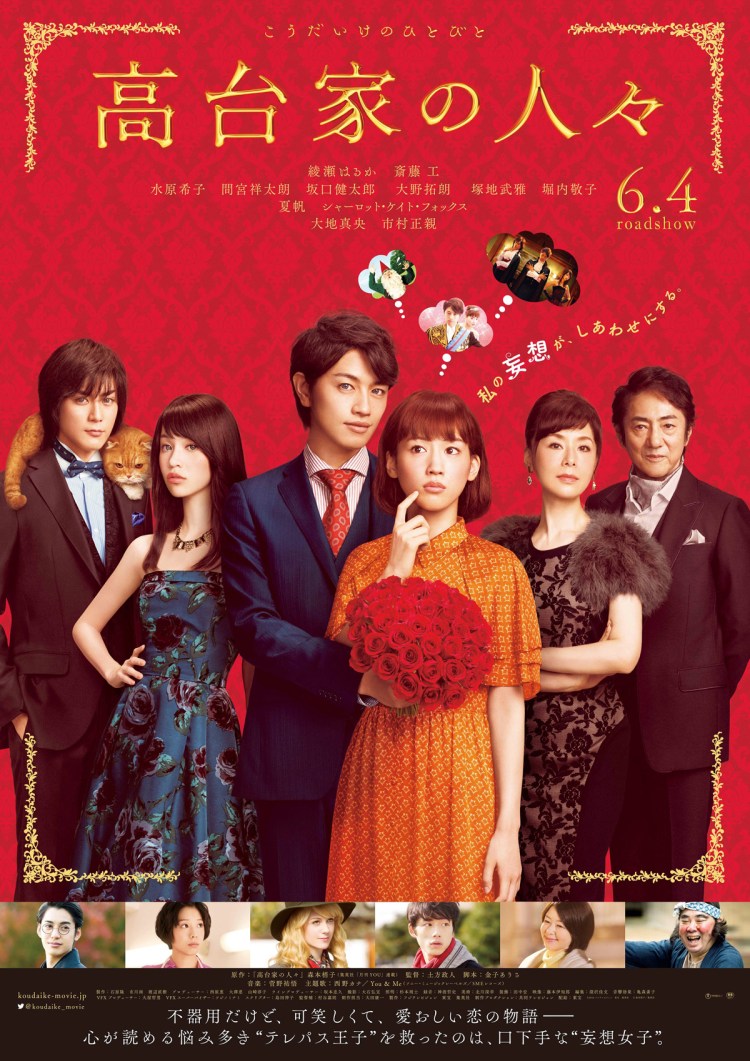 Fear of “broadcasting” is a classic symptom of psychosis, but supposing there really was someone who could hear all your thoughts as clearly as if you’d spoken them aloud, how would that make you feel? The shy daydreamer at the centre of The Kodai Family (高台家の人々, Kodaike no Hitobito) is about to find out as she becomes embroiled in a very real fairytale with a handsome prince whose lifelong ability to read minds has made him wary of trying to form genuine connections with ordinary people. Walls come down only to jump back up again when the full implications become apparent but there are taller walls to climb than that of discomfort with intimacy including snobby mothers and class based insecurities.
 All things considered, a live pig is a rather insensitive gift to present to your local police station, though any gift at all might be considered in appropriate even if offered by a well meaning colleague keen to help out when a horrific murder may be connected to his missing person case. By 1977 Kinji Fukasaku had made a name for himself through the wildly successful “jitsuroku” or “true record” genre of yakuza movies kickstarted by his own
 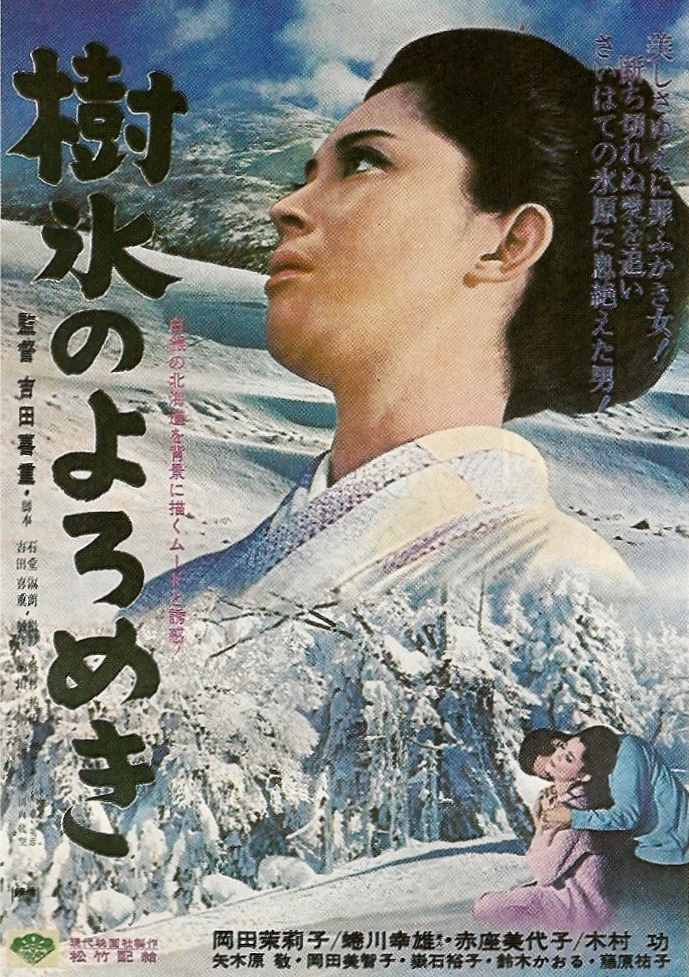 Kiju (Yoshishige) Yoshida, along with his wife – the actress Mariko Okada, was responsible for some of the most arresting films of the late ’60s avant-garde art scene. So called “anti-melodramas”, many of Yoshida’s films from this era took what could have been a typical melodrama narrative and filmed it in an alienated, almost emotionless manner somehow reaching a deeper level of an often superficial and overwrought genre. Affair in the Snow (樹氷のよろめき, Juhyo no Yoromeki) is, in essence, the familiar story of an unreasonable love triangle but in Yoshida’s hands it becomes a melancholy yet penetrating examination of love, sex, and transience as the central trio attempt to resolve their ongoing romantic difficulties.
