It Was a Faint Dream (あさき夢みし, Akio Jissoji, 1974)

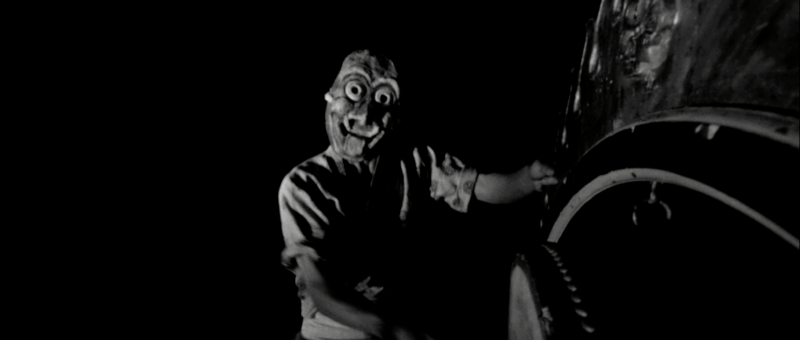
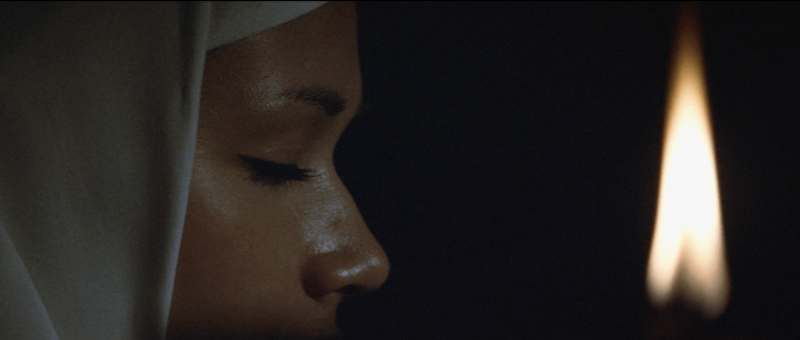
It was a faint dream posterFollowing his ultramodern Buddhist Trilogy, Akio Jissoji casts himself back to the Kamakura era for a tale of desire and misuse in It Was a Faint Dream (あさき夢みし, Asaki Yumemishi, AKA Life of a Court Lady). Taking its name from a Heian era Buddist ode to transience, Faint Dream follows its melancholy heroine on a fleeting path of love, loss, romantic disappointment, and finally spiritual rebirth while the nation faces the external threat of putative invasion by warlike imperialists hellbent on domination and conquest.

Shijo (Janet Hatta), an orphaned young woman taken as a concubine by the lord Tameie (Kotobuki Hananomoto), has returned home to await the birth of her child. The baby she is carrying, however, is not Tameie’s but that of another young noblemen, Saionji (Minori Terada), with whom Shijo had fallen in love before being taken by the lord. Hoping to pass the baby off as merely premature, Shijo has been deceiving Tameie and remains fearful she will be found out. Meanwhile, Saionji’s wife is also pregnant. When Saionji’s legitimate child is stillborn, an obvious solution presents itself and Shijo loses the first of her children.

A young woman without means or protectors, Shijo finds herself forced to indulge the whims of men in order to survive. Yet Tameie, falling ill, apparently thinks only of her when he pushes Shijo towards sleeping with other men in order to keep the peace, so that their resentment doesn’t become an all consuming evil. Thus it is that Tameie’s own brother, the high priest Ajari (Shin Kishida), falls for Shijo with a burning passion which Tameie fears could drag her down to hell with its implacable intensity. Reluctant and half disgusted, Shijo follows her lord’s advice, falling for the priest as she goes, and becoming pregnant with another child she must also lose.

Ajari’s radical Buddhist philosophy insists that chanting sutras is enough for salvation. It doesn’t matter if you’re high born or low or whether you believe or not, simply saying the words gets you into paradise. It’s a philosophy that appeals to Shijo for obvious reasons, but still she finds it near impossible to reconcile herself to her position of powerlessness within the court. A figure of desire, she is “courted” by just about every man she meets but has little right to refuse their attentions, especially as they often hold financial as well as social power over her. Tameie’s warning, ironic as it is in insisting that hell hath no fury like a man scorned, has its merit in bearing out the intensely destabilising properties of romantic love in a highly regimented society.

For all of that, however, Tameie is a romantic man, himself embittered by the disappointments of his life. Born to be a king, he prefers music and poetry to the sword but still laments his “betrayal” at the hands of the older generation who crowned him at three only to depose him at 16 and hand power to his 10-year-old brother with only a promise, apparently now broken, that his son would inherit the throne. Abandoned as a child, he has little sympathy for Shijo’s maternal pain on repeatedly having her children taken from her because of social propriety, merely reminding her that children and parents walk different paths and hers is evidently here, with him, at court.

Even so, men are content to have it both ways. Romance is a transient thing, Shijo is told, a flower which blooms in an instant of truth but then scatters. Attachment is the enemy of love, the wise man admires the flower as its falls but does not mourn its loss forever. Shijo finds this hard to understand, but continues to live her life as an object of desire rather than an active participant until she finally stops and makes a firm decision of her own in choosing to reject it. She becomes a nun and wanders the land looking for serenity despite being told that no woman can become a Buddha because of the five obstacles in her way no matter how nobly she might seek it.

Ironically enough, Shijo’s life is in itself a “faint dream”. She chooses to reject her desires, but admires other women for embracing theirs, and remains seemingly ageless while the fleeting loves of her youth grow old and fade. The lords sit around perfecting their poetry while boys are pulled off their farms to combat a Mongol invasion, and a deadly disease ravages the country. Shijo turns to ask her former lover about the child they conceived together, but it’s as if she were asking about someone else in another time. Having received her answer, she walks off into the distance, a nameless nun, free of the cares of the world and no longer burdened by desire.


It Was a Faint Dream is the fourth of four films included in Arrow’s Akio Jissoji: The Buddhist Trilogy box set.

Original trailer (no subtitles)
Poem (哥, Akio Jissoji, 1972)

Poem dvd coverThere might be a temptation to view Akio Jissoji’s “Buddhist Trilogy” as an intensely Japanese affair given its obvious preoccupation with Eastern religious thought and background dialogue with the political confusion of the day, but like fellow New Wave outsider Kiju Yoshida, Jissoji had studied French literature and there is something classically European about his nihilistic ennui in the midst of a decaying social order. Poem (, Uta), the trilogy’s final instalment, bears this out most of all as the servant boy of a noble house, secretly its spiritual heir, alone attempts to resist the march of time to save the natural essence of a culture about to eclipse itself in consumerist emptiness.

Jun (Saburo Shinoda), a strange young man, is a servant/legal clerk to a lawyer, Yasushi (Shin Kishida), who is the oldest son of the Moriyama family. Though he has inherited stewardship of the house and mountains, Yasushi and his wife Natsuko (Eiko Yanami) long to break free of its traditionalist constraints by ripping it apart and replacing tatami mat comfort with Western modernity. They can’t do that, however, because old Moriyama (Kanjuro Arashi), Yasushi’s father, is still alive and Yasushi doesn’t particularly want to have to talk to him. Meanwhile, the spacious mansion is also shared by a legal student, Wada (Ryo Tamura), who is kind of interning with Yasushi while repeatedly failing the bar exam, and the family’s maid Fujino (Hiroko Sakurai).   

Unlike Yasushi, Jun sees his life’s purpose as serving the Moriyama family. Intensely worried that a fire may engulf this fine house built with only the best Japanese cedar, Jun gets up every night at midnight and patrols with an electric torch, looking for loose sparks. One night he finds some, though not the kind he was expecting, on accidentally witnessing Wada make love to Fujino. Apparently uninterested, Jun looks it over and moves on while the lady of the house, Natsuko, starved of affection by her impotent husband, finds herself stirred by such unexpected eroticism.

Yasushi’s physical impotence is perhaps merely a manifestation emasculated powerlessness as the oldest son of a noble house who, nevertheless, wields no real power and is entirely unable to make decisions for himself. Yet his big case at work is thrown into confusion when his social climbing client suddenly tries to have his partner, Arita (Haruhiko Okamura), removed days before the court hearing because it might look nicer to have someone of Moriyama’s standing representing him. Even so, Yasushi is so clueless with the modern world that he needs Jun, a calligraphy enthusiast and advocate for the old, to operate the photocopier because he doesn’t know how (and neither does Wada). Only Jun, in another contradiction, insists on working to rule and leaving at 5pm because his “main job” is protecting the house and serving the Moriyama family, not Yasushi. Jun allows himself to be seduced by Natusko on the grounds that if she does not receive sexual satisfaction inside the house she will need to look for it outside which could bring shame on the Moriyama name. Finding out his wife is sleeping with another man, the weird servant boy no less, Yasushi doesn’t even care (besides being mildly turned on), as long as she doesn’t do anything which might arouse “rumours”.

The dirty secret that neither Yasushi or his debauched brother Toru (Eishin Tono) know is that Jun, whose name means “pure”, is their illegitimate half-brother that their father had with a maid. As we later discover, old Moriyama plans to divide his estate not in two but three, believing that it hardly matters anyway because division, in a break with the system of traditional succession by the oldest son, will be the end of the Moriyama family. He may well have a point as neither Yasushi, who eventually abandons the house to Toru and escapes to Kyoto, or his brother are interested in legacy. Once Moriyama passes, they plan to sell the entire plot, mountains and trees and all, to developers. In fact, the house already technically belongs to someone else because as soon as he moved in Toru started taking out exorbitant loans to fund his wastrel playboy lifestyle and has already figured out the jig is up and they’re all broke. Only Jun, who hears the voice of the mountains as if it were the voice of existence itself, is desperate to save the family name though he is at this point almost beyond saving himself.

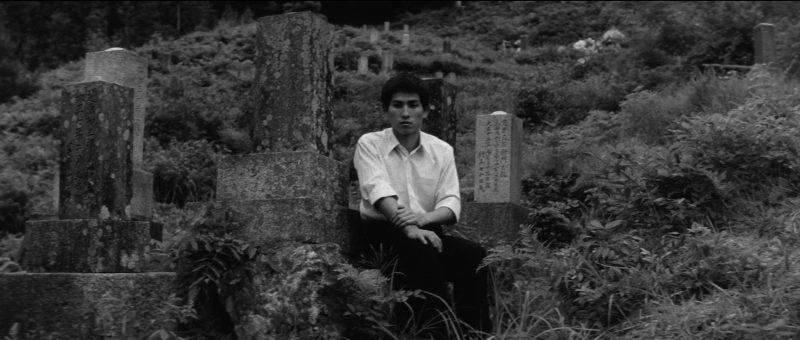
Looking for the “absolute” in tombstones, Jun is told that only darkness exists inside. Yet he is certain that as long as form survives, content can return. He sees the Moriyamas’ forests as the essence of an older Japan and their untouched natural beauty the rock on which their souls are anchored. Yet his half-brothers oppose him. For them, Japan, even the world, is already ruined and nothing worth protecting remains. Existence itself is nothing more than a dream, and suicide no different. They no longer feel they can live “in such an age”.

Yet Jun, his father’s spiritual heir even if he doesn’t know it, keeps reaching, perhaps not quite hoping but demanding even in his powerlessness which may, in a sense result in a kind of transcendence in its purity. Unlike the ambiguously hopeful ending of This Transient Life, or the urgent ominousness of that of Mandala, Poem ends in defeat and futility, suggesting that time cannot be stopped or progress arrested even by those who seek the eternity of enlightenment. And so Jissoji brings us full circle by showing us a world in entropy unsalvageable in the cruelty of its contradictions.


Poem is the third of four films included in Arrow’s Akio Jissoji: The Buddhist Trilogy box set which also features an introduction and selected scene commentaries by scholar of the Japanese New Wave David Desser plus a 60-page booklet with new writing by Tom Mes and Anton Bitel.

Original trailer (English subtitles)

Mandala (曼陀羅, Akio Jissoji, 1971)

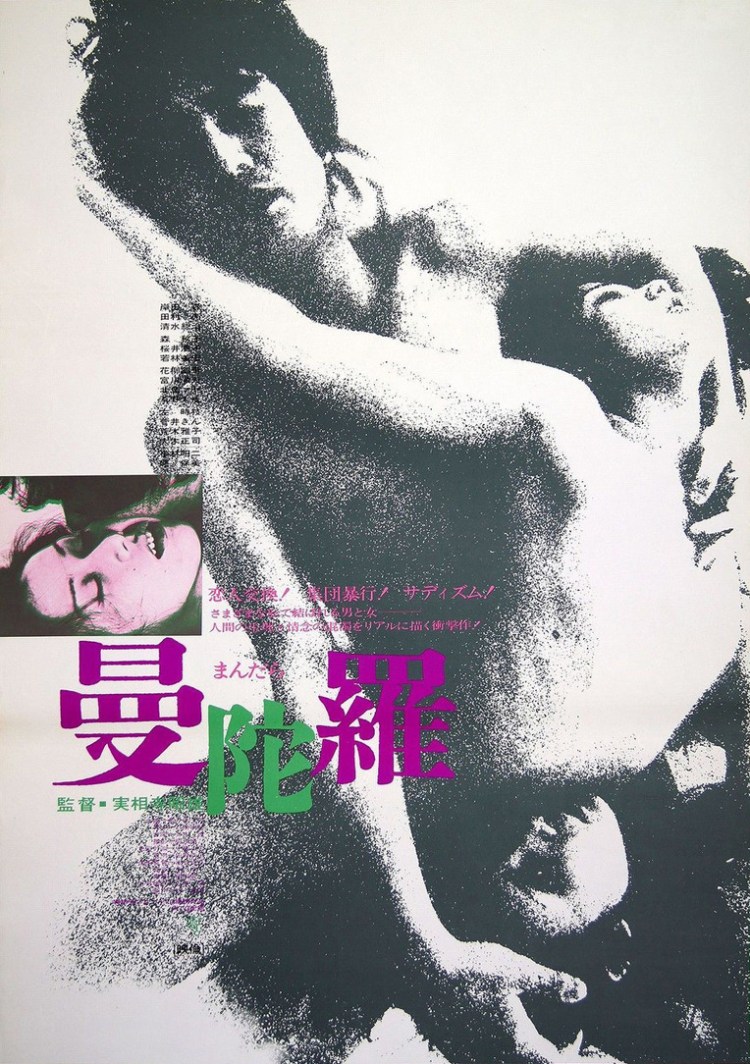
Mandala jissoji poster 2Politically speaking, the Japan of 1971 was trapped in a kind of limbo. The student movement had been dealt a serious blow with widespread supressionary measures in the run-up to the renewal of the ANPO treaty in 1970, which was finally signed despite opposition. It was not, however, yet dead and would stumble on, losing its way, until the climactic events of Asama-Sanso in 1972. Following hot on the heels of his radical This Transient Life, Akio Jissoji’s second film for ATG Mandala (曼陀羅) finds him exploring just this conflict as two young men look for “utopia” in an escape from the tyranny of time.

Kyoto uni students Shinichi (Koji Shimizu) and Hiroshi (Ryo Tamura) have taken their girlfriends to a strange little beachside inn for a spot of wife swapping. Where Shinichi’s girlfriend Yukiko (Akiko Mori) is only too happy to oblige her boyfriend’s whims, Hiroshi’s squeeze Yasuko (Ryo Tamura) goes along with it but instantly regrets her decision. Meanwhile, unbeknownst to them, the couples are being spied on by weird ultra-Buddhist cult leader Maki (Shin Kishida) who comes to the conclusion that Shinichi and Yukiko are good candidates to add to their commune which is built around the concepts of agriculture and eroticism. Maki’s violent recruitment method is knocking out the guys and then subduing the women so they can be raped by cult members and thereby inducted.

Maki’s strange philosophy which posits a new “utopian” future born of a return to a more primitive way of life in which love does not exist and sex is a free and natural act whose only purpose is reproduction, wins an acolyte of Shinichi because of its key offering – the ability to stall time. Always looking for a way to be dead yet alive, Shinichi is obsessed with the idea of stillness. Movement is the image of time passing. Coming to and finding the comatose, naked body of Yukiko lying on the beach after being raped by Maki’s minions, Shinichi cannot resist the urge to have sex with her “lifeless” body (which she apparently consents to, playing dead even after regaining consciousness part way through). Yukiko too confesses her own fantasy of being ravished as a corpse, a body outside of conscious time.

Shinichi, proclaiming he no longer believes in the future or in that a classless anti-State will ever arise, leaves the struggle and joins Maki’s atavistic utopia to which only those who “deny time and history” are permitted. Hiroshi, meanwhile, berates him for betraying the “continuous revolution” while he himself is on the run having left university after a disagreement with his Trotskyist protest group. The two men are each fleeing the centre and heading in different directions if perhaps ultimately bound for a similar destination. A hyper individualist, Hiroshi declares that there is no such thing as mankind, only a confluence of individuals, with the exception perhaps of those who have dedicated themselves to religion. He doesn’t want the child that Yasuko is carrying, not because he fears it may be Shinichi’s, but because he does not see the point in contributing to “the multiplication of mankind”, which is a key tenet of of Maki’s primitivist manifesto.

Unlike Hiroshi, Yasuko is not seeking revolution but conventionality. She wants the baby, and perhaps a marriage. At the end of her tether, having suffered horribly at the hands of Maki’s minions, she draws a small cottage with a friendly bird flying above as if to symbolise the simple dream that has been destroyed by the cruelty of men. Too late, Hiroshi realises that his irritation with Yasuko was simply a reaction against the shadow of himself he saw reflected in her, and he cannot forgive those who have caused her harm.

Harm there is plenty. Maki’s vile philosophy, overseen by his shaman wife (Yoshihiro Wakabayashi), supposedly the embodiment of many gods, strips women of their right to autonomy, insisting that “love” is an unwelcome modern sophistication which should be replaced by “benevolence” in an egalitarian affection for all mankind. In “ancient times”, he says, a woman would willingly submit to a man and, therefore, there was no such thing as “rape”. “A woman’s silence and resistance make a man a rapist” he tells his minions while Shinichi is busy raping the latest kidnap victim in a room equipped with CCTV for Maki to watch from behind a screen. His tenet of fecundity, both in terms of agriculture and human reproduction, comes at the cost of basic human decency and reduces the role of women to mere vessels for men’s desires.

Throughout the history of Japanese cinema, “love” has indeed been the destabilising, individualising force which threatens the social fabric, but for Maki it serves as a palpable evil. Like Hiroshi, he too believes that men exist as individuals, but also that “benevolence” could raise them to become a “community”. Hiroshi wants to live in a world of revolution, free of charisma and religion, but Shinichi seems to have found peace in atavistic simplicity. Faced with the choice, Hiroshi again chooses individualism, declaring that he would rather die alone than go mad along with everyone else. Yet his frustration may perhaps take him to a dark and unexpected place that sees him pick up a sword and a copy of the Manyoshu as if on some sort of nationalistic mission of revenge against an intransigent government and society. Revolutions fail, and then they start again. Hiroshi has perhaps picked a side, even if that side is merely opposition, but what he’s chosen is movement, action, maybe even life however fleeting, over the cold meaninglessness of Maki’s grand plan for a primitivist utopia.


Mandala is the second of four films included in Arrow’s Akio Jissoji: The Buddhist Trilogy box set which also features an introduction and selected scene commentaries by scholar of the Japanese New Wave David Desser plus a 60-page booklet with new writing by Tom Mes and Anton Bitel.

Original trailer (English subtitles, NSFW)

This Transient Life (無常, Akio Jissoji, 1970)

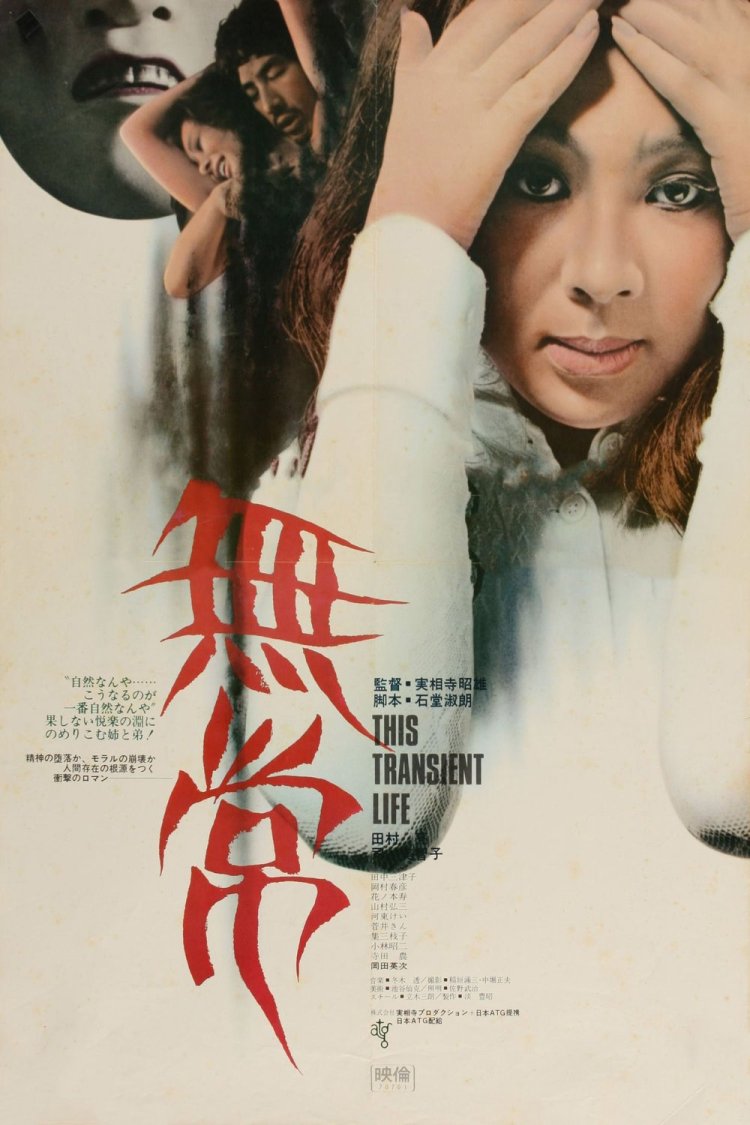
this transient life poster“People should do whatever pleases them, it’s because people suppress their desires that the world has become so complicated” the “hero” of Akio Jissoji’s 1970 Buddhist epic This Transient Life (無常, Mujo) impassively intones, “If we just do whatever pleases us, then everything will turn out fine”. As we will see, there are definite problems with Masao’s (Ryo Tamura) philosophy, but he may have something in the inherent paradox of Buddhism which finds serenity in nothingness while decrying nihilism.

We first meet Masao, a wealthy young man from a noble family, jumping over a wall in defiant violation of a no trespassing sign. He is in hiding, avoiding going home because his austere father (Kozo Yamamura) is due to arrive for another dose of parental oppression. His sister, Yuri (Michiko Tsukasa), comes to fetch him knowing that they cannot resist forever. Like her brother who rejects university and the corporate life, Yuri rejects marriage and seems intent on deciding her own future, only she does not seem to have any other path in mind. Left alone in the house while their parents attend a family function, disinviting the kids because of their ongoing recalcitrance, the siblings put on a pair of noh masks and chase each other around the house. Gradually a primal spirit takes over. Masao seduces his own sister, beginning a dangerous and necessarily illicit affair for no other reason than to prove that he can.

Ogino (Haruhiko Okamura), a reluctant Buddhist priest at the local temple who is perhaps himself in love with Yuri though apparently unwilling to pursue her even though there is nothing in his religion which forbids him, later takes Masao to task for his dark philosophy. Branding him a chaos agent who creates hell wherever he goes, Ogino urges him to absent himself from the society of others, go travelling, keep his hedonistic nihilism to himself. Masao, however, counters that he has only made the world more “colourful”, that in the end all he has done is dig out the true essence from the hearts of those around him. People do what they want, and nothing he says or does is in any way relevant save that they each faced their own destinies as they intersected with his. To Ogino’s mind, being overly aware of your destiny is no good thing, in fact Buddha will place his hand over your eyes to prevent just that, but to Masao the power to discern his own fate that which gives him the terrifying power to act solely according to his desires.

Meanwhile, the men around him seem to flounder in their own repression. Discovering the transgressive relationship between Masao and his sister, Ogino keeps quiet but finds himself caressing a statue of the goddess Kanon, while the family’s servant Iwashita (Kotobuki Hananomoto) secretly peeps on Yuri in the bath, and Masao’s later mentor, the sculptor Mori (Eiji Okada), actively encourages him to sleep with his much younger wife looking on as he does. “Women are nothing” Masao coldly exclaims, they are “curious animals” who want “immediate pleasure”. Seduced by Mori’s lonely wife Reiko (Mitsuko Tanaka), he later leaves decrying her as a whore who has commodified the act of love as if she were merely a receptacle for his desires much like the shapeless wood which receives the passions of the sculptor and eventually assumes its chosen form.

Masao and Yuri rebel against conventionality and bourgeois values through the ultimate taboo, bearing out Ogino’s criticism of Masao’s philosophy as “nothing but disorder”. Their transgression spirals and informs others. A disruptive influence in his master’s household, Masao pushes Mori’s resentful son (Isao Sasaki) into a quasi-incestuous relationship with his step-mother, while pushing his sister into a socially transgressive marriage to a servant to cover-up the “crime” of a child conceived not only out wedlock but with incestuous blood. He absolves himself for the blood on his hands claiming that every man makes his own choice, and posits himself as the only truly enlightened being as an embodiment of realised desire. Ogino calls him a mad man, but he alone is able to achieve a kind of enlightenment and enter a higher plane, transcending normal human consciousness. “Life and death are a great matter, treasure your time” the title card advises us. Masao rejects the “unappealing” simplicity of heaven for the chaotic pleasures of a transient existence, impressing his own desires on a repressive society and watching indifferently as their terrible flowers bloom.


This Transient Life is the first of four films included in Arrow’s Akio Jissoji: The Buddhist Trilogy box set which also features an introduction and selected scene commentaries by scholar of the Japanese New Wave David Desser plus a 60-page booklet with new writing by Tom Mes and Anton Bitel.

 Opening scene (English subtitles)

Tokyo Ghoul S (東京喰種 トーキョーグール【S】, Kazuhiko Hiramaki & Takuya Kawasaki, 2019)

tg2_poster_3校B_ol_6In Tokyo Ghoul, regular university student Ken Kaneki (Masataka Kubota) had to learn to accept the parts of himself he didn’t like in order to become the kind of man he wanted to be. Of course, the situation was more complicated than that faced by most young men because Ken Kaneki’s darkness was born of being seduced by a beautiful woman who turned out to be a “ghoul” – a supernatural being craving human flesh, something he later became himself when they were both injured in a freak accident after which he got some of her organs. The sequel, Tokyo Ghoul S (東京喰種 トーキョーグール【S】) finds him in a more centred place, having accepted his new nature as neither human nor ghoul but a bridge between the two. Now he has a series of different questions to face in trying help others accept themselves in the same way as they too wonder if there are some parts of themselves so dark that if they revealed them they could never be loved.

While Ken goes about his regular student life working part-time at ethical ghoul cafe Anteiku, a ghoul serial killer known as “The Gourmet” (Shota Matsuda) has been making the news after targeting a high profile model (Maggy) whom he stalked and killed simply to taste her heterochromatic eyes. Tsukiyama, as we later learn his name to be, is a dandyish fopp living in a Western-style country house complete with servants who serve him only the finest meals well presented to hide their dark genesis. On catching a whiff of Ken’s unique human/ghoul scent, he knows he must taste him and puts a nefarious plan in motion in order to lure him to a mysterious ghoul-only restaurant where humans are butchered live for show while the clientele salivate over scenes of intense cruelty.

That’s all too much for poor Ken. He can’t understand how anybody could act with so little regard for life. The cafe owner pointedly asks him if he feels pity when looking at the butchered flesh of an animal, which he of course does not. The ghouls feel much the same, humans are their prey – they can’t help what they are, but living under the intense fear of discovery in an obviously hostile world has made them cruel and resentful to the extent that they no longer understand the value of life. The ghouls that Ken knows, the ones which frequent Anteiku, are different. They have resolved to live ethically and respect lives both human and ghoul equally.

Ken’s friend and colleague Touka (Maika Yamamoto), however, is beginning to have her doubts. In the first film we saw her pursue a touching friendship with classmate Yoriko (Nana Mori) whose cooking she made a point of eating solely as a means of connection despite the fact that human food makes her ill. Now she fears she’s doing the wrong thing, that it will only hurt more if her friend finds out her secret and rejects her, or worse that she may put her in danger. Therefore, she counsels Ken to distance himself from his overly cheerful friend Hide (Kai Ogasawara) and the human world in general, threatening that she herself will kill Hide if he discovers that Ken is a ghoul. As expected, Ken ignores her advice but is mildly shaken by it. Deciding to intervene when his sometime enemy Nishiki (Shunya Shiraishi) is being beaten up in the street, he discovers a better future on learning that Nishiki is living with a human woman who knows he is a ghoul, but loves him anyway.

Though Kimi’s (Mai Kiryu) justifications that she can live with the fact her boyfriend kills people and eats them so long as he leaves her friends and family alone is a little worrying, it is a touching example of the film’s positive message that there is no secret so terrible that it means someone can’t be loved. Kimi accepts Nishiki’s nature as a ghoul, aware of the fact he can’t help what he is and that if she had been born a ghoul she would be the same. Touka fears rejection, but on catching sight of her bright red wings Kimi utters the single word “beautiful”, seeing only goodness without fear or hate.

Tsukiyama meanwhile seems to have gone in the opposite direction, pursuing his desires to the point of obsession in a quest for ever greater sensation. He stalks and murders the model to devour her eyes in an especial piece of irony, while his pursuit of Ken takes on an intensely homoerotic quality. Using the same tactics as Tokyo Ghoul‘s Rize, Tsukiyama picks Ken up through bonding over books, invites him to “dinner” and later sends him an invitation accompanied by a single red rose. Despite the romanticism, however, he soon reverts to type in blaming Ken for his actions. “You’re making me this way”, he insists, “take responsibility”, like every abuser ever simultaneously accepting that his behaviour is inappropriate and justifying it as a consequence of someone else’s actions. In the end, Tsukiyama’s illicit desires consume him, while Ken’s act of self-sacrifice once again allows him to be the human/ghoul bridge combatting Tsukiyama’s rapacious cruelty with an open-hearted generosity which pushes Touka to the fore so that she too can learn that peaceful co-existence is possible when there is trust and understanding on both sides.

Nishiki tells Ken his problem is that he’s too nice, but that’s not a bad thing to be because he just might “save somebody someday”. Niceness as a superpower might be an odd message for a movie about flesh eating monsters almost indistinguishable from regular humans, but perhaps that’s what will save us in the end, a generosity of spirit that makes it possible for us each to accept each other’s darkness in acknowledgement of our own. Less stylistically interesting than the first instalment, Tokyo Ghoul S may be a kind of bridge movie in a possible trilogy (a sequel is teased in a brief mid-credits sequence featuring a mysterious character who makes several unexplained appearances throughout the film), but nevertheless does its best to further the Tokyo Ghoul mythology as its hero finds his strength in difference and mutual understanding.


Tokyo Ghoul S screens in the US for three nights only on Sept. 16/18/20 courtesy of Funimation. Check the official website to find out where it’s playing near you!

Original trailer (English subtitles)

The Hotelman’s Holiday (駅前旅館, Shiro Toyoda, 1958)

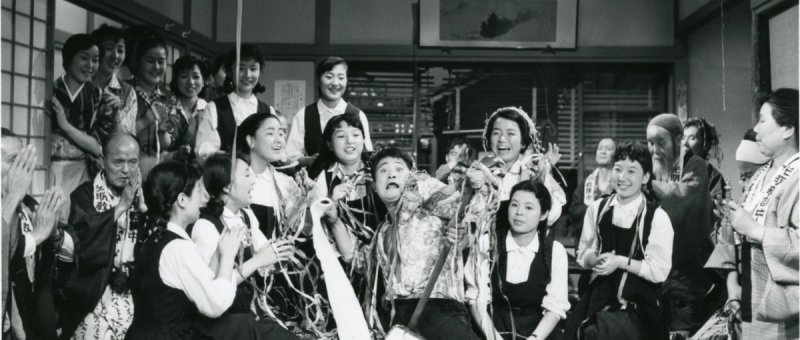
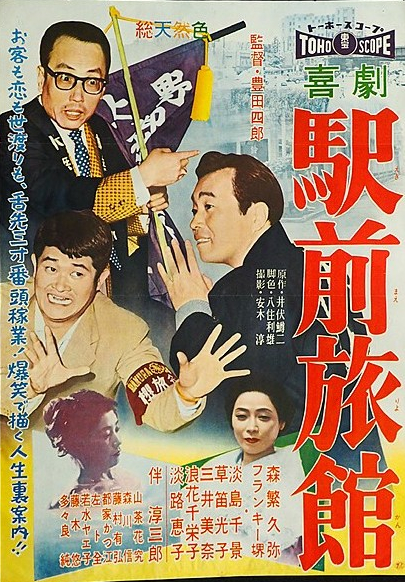
Hotelman's holiday poster 1The post-war world was one rife with trouble. By 1958, however, the horizon was perhaps beginning to brighten which means it was no longer too soon have a good laugh about how awful life could be. Nothing particularly awful happens in Shiro Toyoda’s cheerful comedy The Hotelman’s Holiday (駅前旅館, Ekimae Ryokan), the first in a series of “Ekimae” or “station front” movies produced by Toho, but it does amusingly rip a leaf out of Toei’s book in having its community of feckless hoteliers band together to stand up to greedy yakuza stand-in barkers who are actively destabilising the local economy with their underhanded ways.

Our hero, “born in a maid’s room” Jihei (Hisaya Morishige), is the manager of the Kukimoto inn near Tokyo’s Ueno station. Kukimoto seems to get most of its business from large tour groups, particularly school children on trips to the city and religious organisations, seemingly unperturbed by the area’s then scrappy working class earthiness. The problem is that there are rather a lot of inns in this small area (it is after all near a major rail station) and they’re all competing for the same walk-in guests which means they’re increasingly at the mercy of the local “barkers” who target travellers at points of transit and take them to certain inns in return for commissions. Even so, Jihei himself can often be found outside enticing passersby into the hotel to prove his managerial prowess.

The barkers know their worth and are beginning to get too big for their boots in shifting into the human trafficking business. Not to go into the finer details, the inns have a lot of ladies living on their premises on whom some of their trade relies. The barkers have been tempting the girls from the inns away from their homes and into potentially more lucrative though almost certainly less friendly occupations.

The central drama kicks off when the barkers try to abduct Kukimoto’s maid Okyo (Mina Mitsui) who is saved at the last minute by intellectual student Mannen (Frankie Sakai). Mannen is studying law and working illicitly for several tourist information companies in order to pay his way through college. As such he’s just another of the scrappy young guys trying to forge ahead in the precarious post-war environment. Jihei is, in a sense, pretty much the same. Born in a maid’s room, as he says, he’s very much part of the inn business and is proud to be a manager but also resents his subordinate position to the owner and the way they often treat him like a servant rather than the dependable employee he really is. His position leaves him feeling as if he’s already reached his peak and there is no real future for him other than the status quo. That feeling of futility might be why he, Mannen, and some of the other hotel managers eventually decide that they need to “cleanse” the Ueno Station area of the barker threat.

Their resistance has a pleasantly pithy quality in that it relies on a perfectly peaceful method of putting up banners to encourage customers not to trust the barkers and to approach inns directly. As might be assumed, the barkers aren’t very happy about their business being undermined and immediately begin threatening the Kukimoto inn, whom they assume to be the instigators, with destruction if they do not immediately cease and desist. Jihei thinks he has a solid plan and it does indeed defuse the situation but cannot ultimately rectify it. What it does do is give the inn’s owners the excuse they’ve been looking for to part with him, and Jihei the impetus he perhaps needed to rethink his life.

As Mannen puts it, “our reality is preposterous and absurd”, but we have to go on resisting because “happiness exists even in this world”. The inn managers stand up against the barker oppression in the same way communities stand up against yakuza in Toei’s modern gangster dramas, but like many of anti-gangster narratives, the corruption is so deeply ingrained that it cannot be entirely eliminated, only managed. Thus Jihei, also involved in a series of romantic subplots involving an intense former geisha (Keiko Awaji) and a diffident bar owner (Chikage Awashima), eventually realises that if he cannot change his environment he might be better to leave it, escaping to the sort of place where they still grow barley and travel by cart. Mannen too, their revolution failed, eventually takes off with Okyo to go into business in Osaka, giving up on his imagined future for a more solid present. Meanwhile, chaos rules in Ueno as crowds of travellers pour out of the station towards an uncertain future with only the barkers to guide them.


Original trailer (no subtitles)

Love and Goodbye and Hawaii (恋とさよならとハワイ, Shingo Matsumura, 2017)

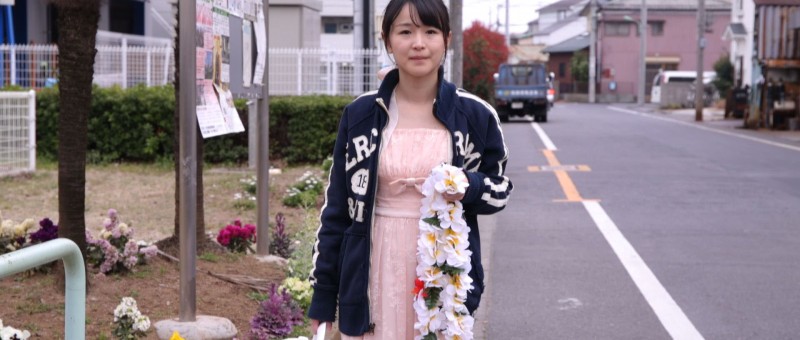
Love and Goodbye and Hawaii poster 1“To end something requires more courage than anything else” the conflicted heroine of Shingo Matsumura’s Love and Goodbye and Hawaii (恋とさよならとハワイ, Koi to Sayonara to Hawaii) is told by her well-meaning ex, but it’s a lesson she’s struggling to learn. Life may very well be a “road made of decisions”, but Rinko (Aya Ayano) doesn’t know how to make them and is rapidly becoming aware that if you don’t hit the relevant dialogue box fast enough they will largely be made for you. Less a tale of romantic confusion, Love and Goodbye and Hawaii is a young woman’s gradual path towards accepting that her attachment to the status quo is as much about the fear of moving forward as it is the pain of faded love.

Office worker Rinko has been living with her graduate student boyfriend Isamu (Kentaro Tamura) for the last three years. To all of their friends, they seem to have the perfect relationship but what no one knows is that, though they continue to live together, the couple broke up some months previously. Seeing as it was Isamu’s apartment in the first place, Rinko plans to move out as soon as she’s saved enough money to find somewhere new in the precarious Tokyo housing market, but then again now that they’re no longer “together” the arrangement has become so comfortable that there’s really no hurry to make a change. Matters come to a head, however, when Rinko discovers that a fellow student at Isamu’s university has taken a liking to him, and it seems he to her.

Despite having been broken up for almost six months, Rinko hasn’t quite accepted that it’s over. She demurs when her friends ask her if she’ll be getting married soon, only latterly admitting that they’ve technically broken up, and explaining that she really has it good now because it was too “heavy” before which is why they fought all the time. Now that there’s “nothing” to fight over and they’ve gone back to being platonic friends it’s all so much easier. Too easy, in fact, which why she isn’t really ready to move on.

Rinko’s unconventional living arrangements seem extremely strange to her friends. “Break up like normal people and never see him again” her friend tells her, offering her a space on the sofa if it’s money that’s the issue. Not that money’s not a problem, but even when well-meaning people offer financial help to end this “weird” situation, Rinko doesn’t really want to take it. She tells her friend that relationships are like driving and you don’t want to jump on the breaks incase they jam and you end up on the skids, but as her perceptive younger sister points out perhaps she just wants to get back together and doesn’t know how to go about it.

Analogies are something Rinko seems to have a taste for, unable to state her feelings plainly in a way others will understand she wraps them up in a more palatable narrative. So it is that she ends up telling her friend’s drunken younger sister that with Isamu she felt like she was CD no other player had worked out how to play. She figured out she liked the sound inside her when she was with him, but time moves on and it feels like she’s still a CD but Isamu is now an iPod and she doesn’t really know what to do with that. What she’s trying to say is that they’ve grown apart, but what she hasn’t quite admitted to herself is that maybe it’s not Isamu that she’s afraid of leaving but the vision of herself as reflected in him.

“Show your real self, put your real feelings out there” the younger woman tells her, but that’s something that doesn’t necessarily get easier with age. Finally gathering the courage, Rinko makes her way back to Isamu for a “serious talk”, only to run into her romantic rival but contrary to expectation the two women find that they have no interest in competition and only wish each other well. Rather than that “serious talk” however, Rinko ends up trying to sort out her romantic dilemma through the familiar medium of a walking race which does at least allow the diffident Isamu to make his feelings plain without actually having to say anything. Sometimes actions are kinder than words, and easier to understand. What Rinko needs to learn is that you can find self acceptance without needing to see it reflected in someone else, and that fear of moving forward is not a good reason for holding back. A quiet and melancholy look at life after love, Love, Goodbye and Hawaii is a gentle ode to the art of moving on with no hard feelings, looking straight ahead.


Original trailer (English subtitles)

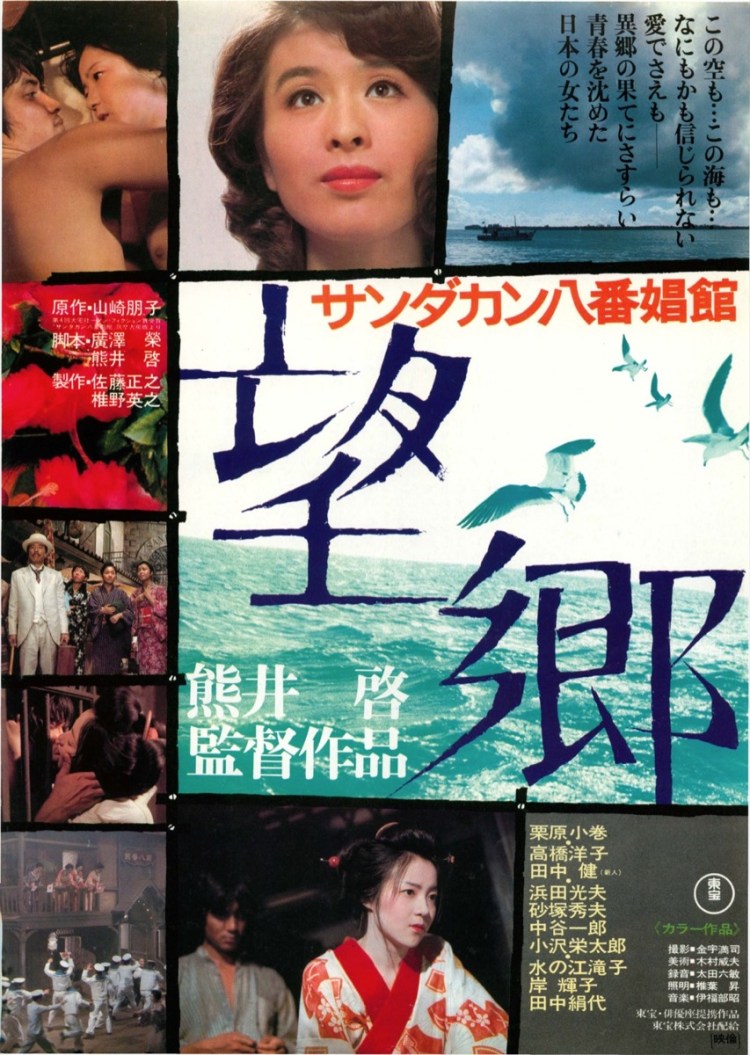
Sandakan No. 8 (サンダカン八番娼館 望郷, Kei Kumai, 1974)

Sandakan 8 posterSome might argue that Japanese cinema has often been reluctant to examine the nation’s traumatic 20th century history with the proper rigour, but even if subtle and coming from unexpected angles there have been many and varied attempts to ask questions about the lingering consequences of feudalism. Sandakan No. 8 (サンダカン八番娼館 望郷, Sandakan Hachiban Shokan: Bokyo), inspired by a true life account of a woman unwittingly sold into sexual slavery as a child at the turn of the century, is not only a condemnation of socially approved people trafficking and its role in building the short-lived Japanese empire but a mild provocation of the contemporary society which refuses to engage with its traumatic past.

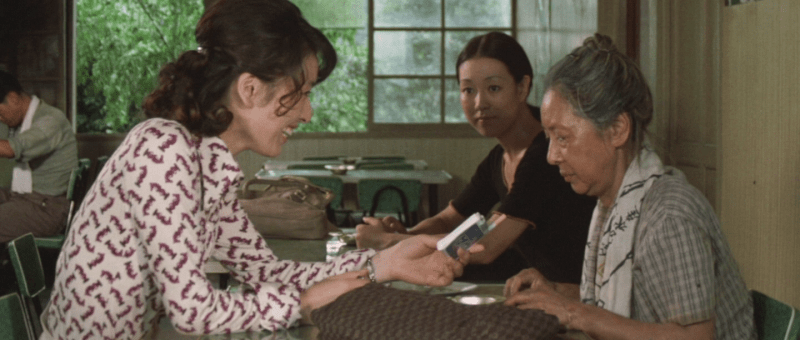
In the contemporary era, graduate student Keiko Mitani (Komaki Kurihara) is engaged in researching the “karayuki-san” – Japanese women who were sold into sexual slavery throughout Asia in the early 20th century. Almost forgotten, the karayuki-san are a taboo subject and even those still living in the areas from which women and girls were sent away are unwilling to speak of them. By chance, however, Keiko runs into an old woman in a cafe who speaks with a standard Tokyo accent and tells them that she spent most of her life “abroad”. Quickly realising she doesn’t mean she was a diplomat’s wife, Keiko wonders if the woman might be have been a karayuki-san and delays her return to Tokyo in order to find out.

There is something, it has to be said, ironically exploitative in Keiko’s determination to get the old woman, Osaki (Kinuyo Tanaka), to open up about a subject on which she so obviously does not want to be drawn. A visit to Osaki’s home reveals her to be living in a run-down hovel on the edge of town which is filled with stray cats whom Osaki feeds because “they’re all abandoned, but still they have to live”. Keiko gets herself brownie points by reacting politely to Osaki’s reduced living situation, eventually staying three weeks during which time she gradually teases out Osaki’s sad life story. Finally asking if there wasn’t anything Osaki might have liked to know about her, Keiko’s hypocrisy is fully brought home to her when Osaki admits that no one was more curious about Keiko than she was but that “people have reasons for not confiding in others” and if it’s something you need to ask about then it’s probably something that the other person may not want to share. In any case, Osaki seems to have known Keiko had an ulterior motive but does not regret sharing her story and has no worries about what Keiko might do with it as long as she makes sure to tell the truth.

The truth, in a sense, seems to be something the villagers feel themselves well acquainted with which is why Osaki lives in a shack on the edge of town. Tricked into sexual slavery as a child by an amoral people trafficker who lured her with promises of money to be made overseas, Osaki found herself in Borneo and a prisoner of “Sandakan No. 8” which was one of 10 numbered brothels on the island largely catering to Japanese travellers overseas, facilitating the expansion of the Japanese empire as accidental emissaries and ports of call. When Osaki was a child, Japan was a poor country and it was considered normal to sell one’s daughter in order to feed a family. Working overseas carried with it a kind of cache though no one, except perhaps her brother, seems to be fully aware of what Osaki is going to and she herself has not in any way chosen or consented to become a sex worker. When she eventually returns to Japan, she finds herself unwelcome in her brother’s house, which her money paid for, because of the shame associated with those who have “worked away”. Even 50 years later, she finds herself living alone, all but disowned by her only son, on the outskirts of her childhood village ostracised by the “respectable” townspeople who don’t for a second believe Osaki’s quick introduction of Keiko as her daughter-in-law.

The daughter-in-law deception is only one heartbreaking aspect of the complex relationship between the two women who are each, in a sense, hiding something from the other but end up forming a genuine connection anyway. Intensely lonely and having lived a life filled with suffering, Osaki is willing to pay for company with her story while Keiko is, not quite deliberately, using her loneliness against her in an attempt to earn her trust and get her to reveal her secrets. Nevertheless, Keiko is able to mine a rich and deep seem of 20th century trauma through the tragic story of just one woman which reaches out to hundreds like her some of whom rest in a graveyard in the forests of Borneo with their backs forever to Japan. The enemy is, once again, poverty more than it is patriarchy or even feudalism, a problem less of the essence in the rapidly improving post-war economy, but as Kumai is keen to point out, this system of state sanctioned people trafficking (finally outlawed only once Japan’s status on the world stage began to rise) had far wider implications than it might be thought which still echo into the present day and perhaps beyond if not for the efforts of women like Keiko who do not wish to forget.


Original trailer (no subtitles)

Bright Future (アカルイミライ, Kiyoshi Kurosawa, 2003)

Bright future posterThe cinema of the late ‘90s and early 2000s is one defined by alienated youth kicking back against a stagnant society in which they see no place for themselves now that the dull and conventional salaryman world of their parents can no longer offer security in place of fulfilment. Kiyoshi Kurosawa’s early masterpieces had edged towards the nihilistic, embracing this sense of generational hopelessness but finding perhaps glimmers of possibility in the longing for escape no matter how far off. Bright Future (アカルイミライ, Akarui Mirai), shifting away from the genre fare which had made his name, does something much the same but perhaps even bleaker in its melancholy acceptance of intergenerational disconnection.

Our two heroes, Yuji (Joe Odagiri) and Mamoru (Tadanobu Asano), have workaday jobs at a factory which they find fulfilling only in their emptiness. The guys have found a fan in the factory’s ageing boss, Fujiwara (Takashi Sasano), who begins giving them special jobs and trying to hang out with them while promising a special signing bonus should they agree to become regularised employees. Bonding in their resentment towards men of Fujiwara’s age who romanticise their youth while exercising paternal authority and entitlement, the two hatch their revenge on an unforgiving society through the strange plan to acclimatise their pet jellyfish to life in modern Tokyo.

The jellyfish, closely associated with the ethereal Yuji, becomes a kind of symbol of the “bright future” the two young men fear will elude them. They, like the jellyfish, have tried to acclimatise themselves to living in the otherwise hostile environment of contemporary Tokyo but also accept that the ability to survive may not be enough and it may eventually be necessary to remove oneself from an unforgiving society until such time as it is possible to return.

This or something like it seems to be Mamoru’s key philosophy as the owner of the jellyfish and the chief architect of the “bright future” both men dream of – literally in the case of Yuji who is the idea’s unwilling prophet. Mamoru has, for reasons unknown, decided to take the strangely melancholic Yuji under his wing, eventually entrusting sole custody of the jellyfish to him in an attempt to force him to look after “himself”. In service of this ideal and perhaps of Yuji’s unwilling visions, Mamoru takes more immediate revenge against the literal Fujiwara – murdering his boss and his wife (Marumi Shiraishi) in their well appointed middle-class home (only their small daughter is spared). Yuji interprets this gesture as protective seeing as he himself had found the bodies after wandering into the Fujiwara home with violence on his mind, but misinterprets Mamoru’s intentions for him in disappointing his mentor by insisting that he is prepared to “wait” for him rather than take this cue to step up and take control of his own life’s direction. 

Yuji is indeed, like the majority of heroes in turn of the century Japanese cinema, entirely directionless. He appears to have no surviving family in the older generation, only an exasperated sister who does her best to help but doesn’t know how, attempting to straightjacket him into a salaryman world of conventional success with an office boy job at her understanding company. A strange young man, Yuji has has vivid dreams and a need for control and routine – it’s the closure of the local bowling lanes which sends him round to the Fujiwara’s in a calm yet violent rage while repeatedly losing in a video arcade to his sister’s boyfriend also sends his insecurity into overdrive. He once dreamt of a “bright future” but now sees only darkness. Stepping up onto the roof of a building in which he is learning to find a home, he is forced to admit that despite attempting to look far into the distance he can’t see much of anything at all from where he is right now.

Yet for all his resentment towards men like Fujiwara, it’s a father figure which eventually begins to push him in a more positive direction. Mamoru’s father Shinichiro (Tatsuya Fuji) takes his son’s vulnerable best friend under his wing, giving him a home and a purpose as he begins to teach him how to repair things that might ordinarily be thrown away. Shinichiro’s previous assistant quit because he saw no future in this line of work, but Yuji seems to delight in the repurposing of the previously useless for arcane ends even if his chief contribution is a continuation of his jellyfish experiments. Shinichiro, superficially supportive, cannot understand the obsession with the jellyfish. Attempting to reassure a thwarted Yuji, he asks him what exactly the jellyfish could achieve in a world so resistant to real change yet he also berates him with the impassioned impotence of age in decrying his contemptuous dismissal of the reality which, after all, belongs to men like Shinichiro who will demand respect while offering very little in return.

The jellyfish find they can’t live in Tokyo, but youth adopts a different solution as it runs rampant with out purpose or direction but seemingly delighting in meaningless anarchy. A group of teens Yuji runs into wear identical Che Guevara T-shirts while sporting light-up microphone headsets as they wander round the city kicking cardboard boxes and laughing as they go, like overgrown children with no clear forward path before them. Age and youth seem primed to exist in differing realities, perpetually unable to understand each other while youth struggles to find direction in the absence of parental guidance. Ironic in the extreme, the “bright future” here seems to exist only as a vague hope but, perhaps, the only guiding light in an ever darkening world.


Original trailer (English subtitles)

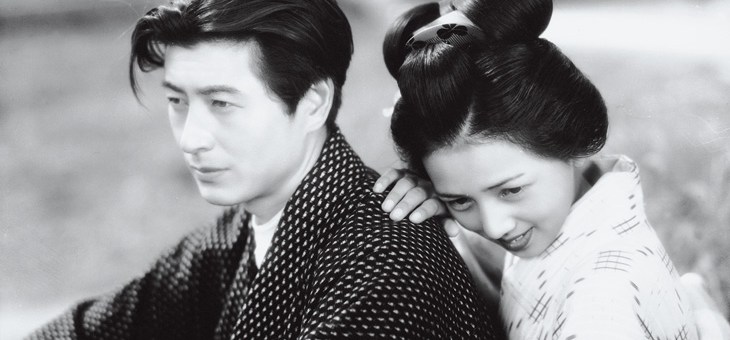
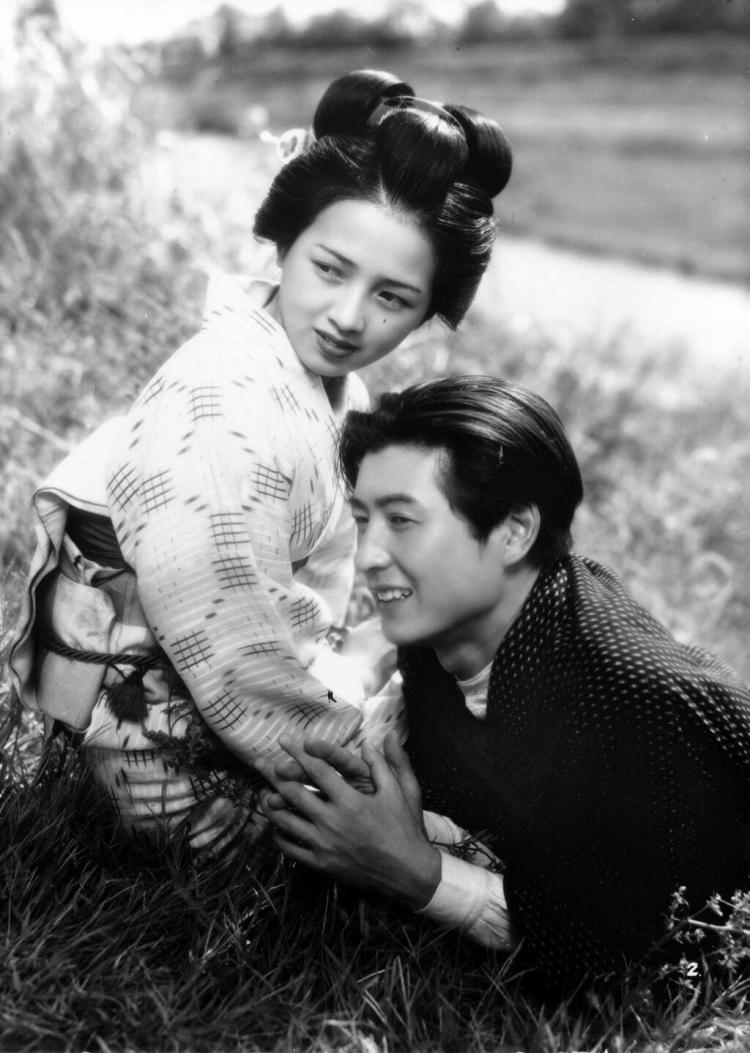
Apostasy (破戒, Keisuke Kinoshita, 1948)

Hakai still 1For all his good hearted humanism and intense belief in the simple power of human goodness, the films of Keisuke Kinoshita can also be surprisingly conservative, most particularly in their attachment to the old, pre-war Japan which they often see as unsullied by the corruption and ugliness of the militarist era. A new constitution film, Kinoshita’s adaptation of the Toson Shimazaki novel The Broken Commandment, The Apostasy (破戒, Hakai), opens with a series of bold titles proclaiming “Freedom and equality”, and “respect for human rights” before breaking into an attack on the persistent feudalism which has managed to survive into the new era along with prejudice and contempt. Zooming back to the missed opportunity of Meiji-era liberation, Kinoshita too remains somewhat ambivalent about the the decline of a social order in a Chekhovian lament for the rise of the petty middleman and the fall of noble aristocracy.

In Meiji 35 (1902), despite the advent of the Meiji Restoration and abolishment of the class system, prejudice against the “burakumin” – untouchable “outcasts” who lived in isolated settlements and (historically) made their living in occupations connected with death, was still very much in existence. This is all too apparent to Segawa (Ryo Ikebe). A bright young man, Segawa’s father sent him out of their village to make something of himself with the solemn promise that he must never reveal his burakumin origins to anyone. The world being as it is, however, Segawa is conflicted especially as he has fallen in love with his mentor’s daughter Oshiho (Yoko Katsuragi) and wonders if it would be fair to marry a non-burakumin woman without telling her truth and live with the threat of discovery forever over their heads.

The Broken Commandment would later be adapted again by Kon Ichikawa whose focus is, perhaps quite surprisingly, very different to that of Kinoshita who, uncharacteristically, chooses to prioritise class concerns over the right to live freely and honestly in a compassionate society. Ichikawa’s adaptation deliberately widens the implications of Segawa’s dilemma, making it plain that he is talking not just about burakumin rights but directly to all oppressed peoples and most particularly to those who feel obliged to keep their true natures a secret in an oppressive and conformist society. Strangely, Kinoshita chooses not to engage with this theme which might otherwise seem tailor made for his persistent concerns if perhaps a little close to home, preferring to focus not on Segawa’s gradual shift into accepting his own identity and hearing the call to activism but on the reactions of the changing world around him which seems to be imploding while besuited upstarts enact their petty revenge on the chastened nobility.

This is most clearly seen in the unfair treatment of Segawa’s mentor and landlord, Kazama (Ichiro Sugai) – a former samurai and until recently the local school teacher. Mere months away from his retirement, Kazama has been instructed to resign so that the school will not need to pay his pension while his position has been taken by a pushy local man with limited education whose sole claim to the job is being of the people. Kazama is understandably resentful but stoic. Segawa’s liberal colleague, Tsuchiya (Jukichi Uno), takes the school board to task for its unreasonableness and underhanded attempt to save money by forcing an old man out of his position with no thought for his 30 years of service. Though Tsuchiya might be broadly in agreement with the changes taking place in Meiji-era society, he too worries about the greedy upstarts usurping privilege rather than seeking to eradicate it.

Stepping back for second, Apostasy is a post-war film designed to echo the egalitarian philosophies of the new constitution drawn up under the American occupation. It is then somewhat subversive that our villains are the Westernised lower middle classes of Meiji-era society who seem to have embraced “modernity” by dressing in suits but refuse to abandon ridiculous ancient prejudices such as that towards burakumin, doubtless because those prejudices largely work out in their favour. It would be tempting to read these prejudices as foreign imports, but that against the burakumin is wholly Japanese and truth be told somewhat backward in contrast to (the kimono’d) Tsuchiya’s forward looking socialist beliefs which superficially at least seem more in keeping with the age.

Yet it is in some senses Segawa himself who struggles to emerge from the feudal yoke. His promise to his father is a sacred vow underlined by loss and sacrifice. He feels it is his duty to live as his father wished, as a “normal” Japanese citizen in success and comfort, but also begins to become acutely aware that to do so may be cowardly and selfish. If he chooses to keep his promise to his father and never reveal himself as a burakumin, he will be complicit with the systems which oppress him and thereby ensure those like him will always be oppressed. His awakening comes, in a sense, from a second father – Inoko (Osamu Takizawa), a burakumin who has come out of the closet and loudly fought for burakumin rights along with the general liberty of all oppressed people. Caught between two fathers and his growing love for Oshiho, Segawa remains lost while one of the suited proto-militarists threatens to out him leaving him floundering in the face of intense social stigma and the possibility that those he loves may turn against him.

Segawa has to free himself or risk becoming like Kazama – a man haunted by the feudal past, as Tsuchiya puts it. Kazama himself is painted in broadly sympathetic terms, forced to endure the melancholy fate of being eclipsed by a Lopakhin-esque member of the insurgent middle-classes, but his prejudice is later exposed despite his original support of Segawa when he notices one of the suits smirking at him and instantly feels humiliated, turning his impotent rage back on the outcast as if his presence further dishonours him as a samurai. Segawa’s aim as a teacher had been to teach his children the power of individual thought, which would seem to be the best weapon against prejudice but his message has been cut off at source thanks to the self-interested school board who have been all to quick to claim the benefits of modernity with none of the responsibility. Resolved to fight for a freer future, Segawa finally accepts his responsibility as a burakumin spokesman in the knowledge that his calling is to educate and that only through education can anything ever change. The lessons of Meiji may have gone unheeded, but the opportunity presents itself again to abandon the feudal past in favour of an egalitarian modernity built on fairness and compassion rather than obligation and oppression.


Titles/opening (no subtitles)