 Hiroya Oku’s long running manga series Gantz has already been adapted as a TV anime as well as two very successful live action films from Shinsuke Sato. Gantz:O (ガンツ:オー) is the first feature length animated treatment of the series and makes use of 3D CGI and motion capture for a hyperrealistic approach to alien killing action. “O” for Osaka rather than “0” for zero, the movie is inspired by the spin-off Osaka arc of the manga shifting the action south from the regular setting of central Tokyo.
Kicking off in Shibuya, the first scene features the demise of the franchise’s protagonist, Kei Kurono (Yuki Kaji), as he defeats one of the giant monsters terrorising the city and saves his friends but fails to save himself. A quick geographical cut takes us Osaka where there are reports of another disturbance, but the major threat turns out to be a depressingly commonplace one as a lone madman goes on a stabbing spree at a Tokyo train station.
17 year old high school student Masaru Kato (Daisuke Ono) gets himself mixed up in the incident when he ignores the crowds of people running in the opposite direction and comes to the aid of an injured old man. Sadly, Kato is repeatedly stabbed by the attacker and “dies” at the scene only to be resurrected in front of Gantz. Introduced to fellow players Suzuki (Shuuichi Ikeda) – an old man who “died” of a stroke, Reika (Saori Hayami) – an idol who was “killed” in a car crash, and the sardonic teenager Nishi (Tomohiro Kaku), Kato learns that he’s been given a second chance at life as a warrior in Gantz’s survival game in which he must fight off huge monsters within the time limit or die for real.
The entirety of Gantz:O revolves around this one climactic battle in the Osaka streets as Kato, Suzuki, Reika, and Nishi come into contact with the much more successful (but definitely less “nice”) Osaka detachment as backup in the fight against these fearsome monsters. As such, the main draw is furious action filled with bizarre scenes of carnage as the gang take down a collection of strange creatures often inspired by traditional folklore such as the huge winged tengu or shapeshifting priest-like boss. The visuals are extremely impressive displaying extreme fluidity of motion almost akin to live action photography.
Aesthetics are the key as the movie’s other elements are more or less inconsequential. As a bonus episode in the Gantz world, this is only to be expected and O makes no real attempt to do anything other than focus on the monster killing action. Thus character development is often shallow or non-existent, falling into genre clichés of cool heroes and depressed, brokenhearted women.
The question of self preservation vs altruism is central to the Gantz universe which begins from a position of nihilism and narcissistic self determination but gradually opens up to the importance of protecting one’s comrades, friends, family, and fellow human beings. Kato is the selfless hero the gang have been awaiting – his “death” results directly from his reckless attempt to help an injured person and his instinct is always to help those in need no matter the personal cost. His determination to save the lives of strangers is directly contrasted with his responsibility to the younger brother who is entirely dependent on him and would be lost should Kato lose his life. The film is ambivalent towards this dilemma as it constantly harks back to the people waiting for these secret warriors to come home, at once critical of them for risking their lives and acknowledging the fact that someone has to fight these monsters or everyone will die.
Despite the exposition heavy opening, Gantz:O does little to explain its world to the uninitiated and provides no logical explanations for its machinations leaving newcomers to the franchise with a host of unanswered questions but then all Gantz really wants to do is sell the message of altruism whilst destroying odd looking monsters in various bloody ways. Depressingly sexist, if edging away from the franchise’s nihilistic baseline, Gantz:O is an impressive visual spectacle but remains an essentially hollow, inconsequential addition to the Gantz canon.
Original trailer (no subtitles)
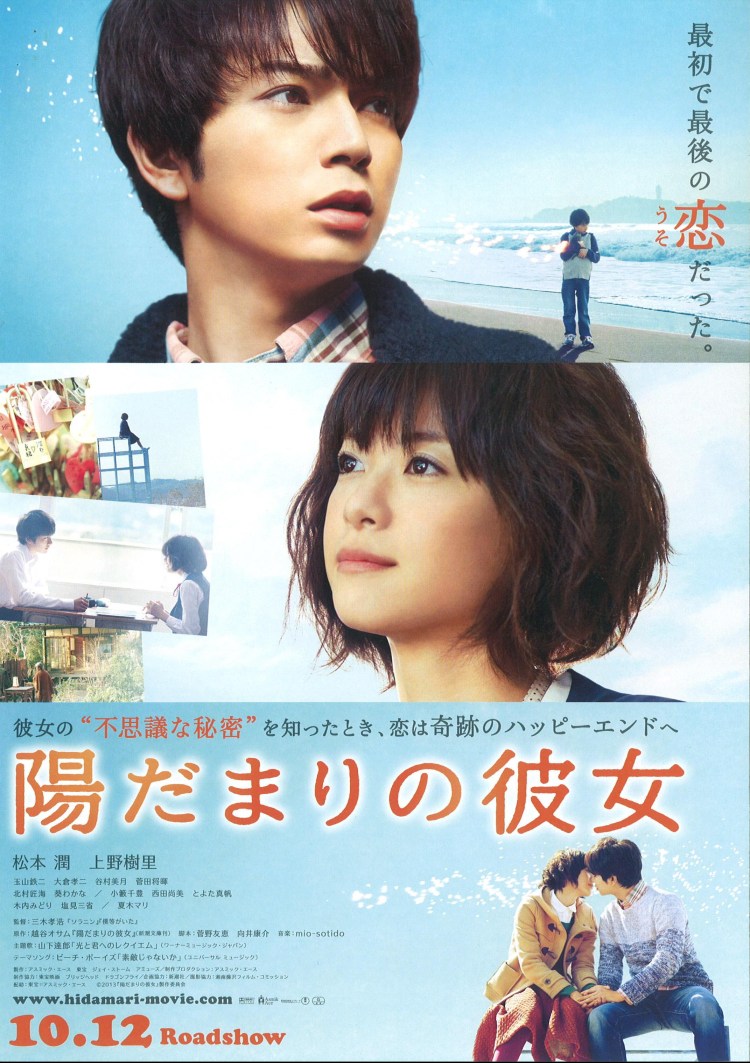 The “jun-ai” boom might have been well and truly over by the time Takahiro Miki’s Girl in the Sunny Place (陽だまりの彼女, Hidamari no Kanojo) hit the screen, but tales of true love doomed are unlikely to go out of fashion any time soon. Based on a novel by Osamu Koshigaya, Girl in the Sunny Place is another genial romance in which teenage friends are separated, find each other again, become happy and then have that happiness threatened, but it’s also one that hinges on a strange magical realism born of the affinity between humans and cats.
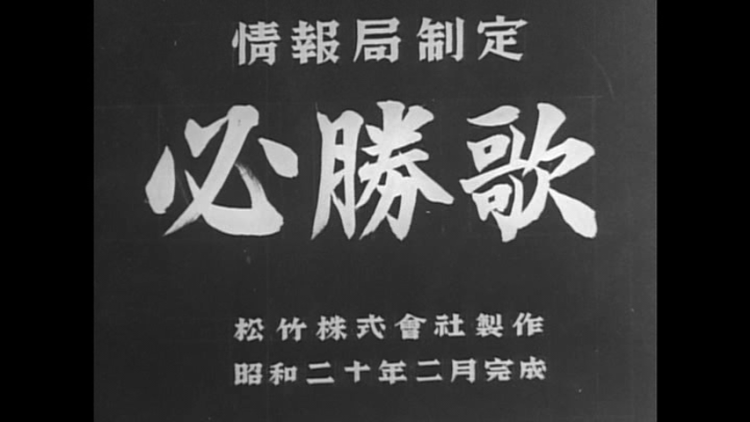 Completed in 1945, Victory Song (必勝歌, Hisshoka) is a strangely optimistic title for this full on propaganda effort intended to show how ordinary people were still working hard for the Emperor and refusing to read the writing on the wall. Like all propaganda films it is supposed to reinforce the views of the ruling regime, encourage conformity, and raise morale yet there are also tiny background hints of ongoing suffering which must be endured. Composed of 13 parts, Victory Song pictures the lives of ordinary people from all walks of life though all, of course, in some way connected with the military or the war effort more generally. Seven directors worked on the film – Masahiro Makino, Kenji Mizoguchi, Hiroshi Shimizu, Tomotaka Tasaka, Tatsuo Osone, Koichi Takagi, and Tetsuo Ichikawa, and it appears to have been a speedy production, made for little money though starring some of the studio’s biggest stars in smallish roles.
 In the brave new Netflix era, perhaps it’s not unusual to hear someone exclaim that their most significant relationship is with their television, but most people do not mean it as literally as Haruko, the heroine of the self titled Haruko’s Paranormal Laboratory (春子超常現象研究所, Haruko Chojogensho Kenkyujo). Lisa Takeba returns with her second film which proves to be just as strange and quirky as the first and all the better for it. Haruko’s world is a surreal one in which a TV coming to life is perfectly natural, as is the widespread plague of “artistic” behaviour which involves robbing the local 100 yen store for loose change and randomly setting fire to things. Yet Haruko’s problems are the normal ones at heart – namely, loneliness and disconnection. Takeba’s setting may be a strange fever dream filled with fiendishly clever, zany humour but the fear and anxiety are all too real.
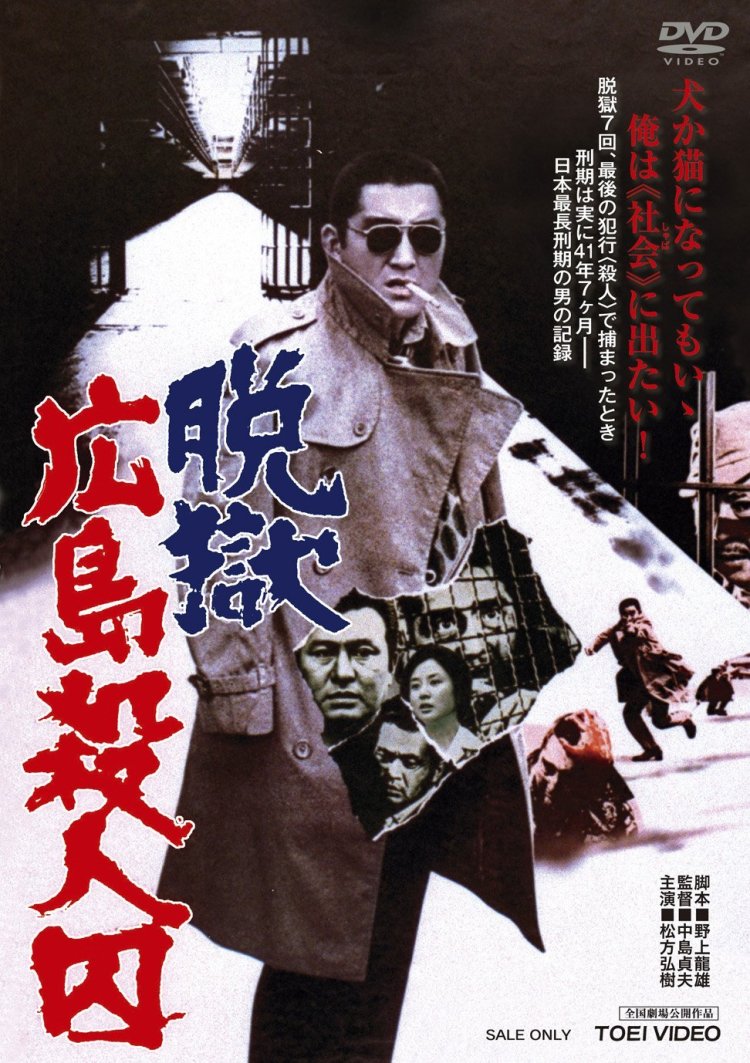 Sadao Nakajima had made his name with Toei’s particular brand of violent action movie, but by the early seventies, the classic yakuza flick was going out of fashion. Datsugoku Hiroshima Satsujinshu (脱獄広島殺人囚, AKA The Rapacious Jailbreaker) follows in the wake of seminal genre buster,
 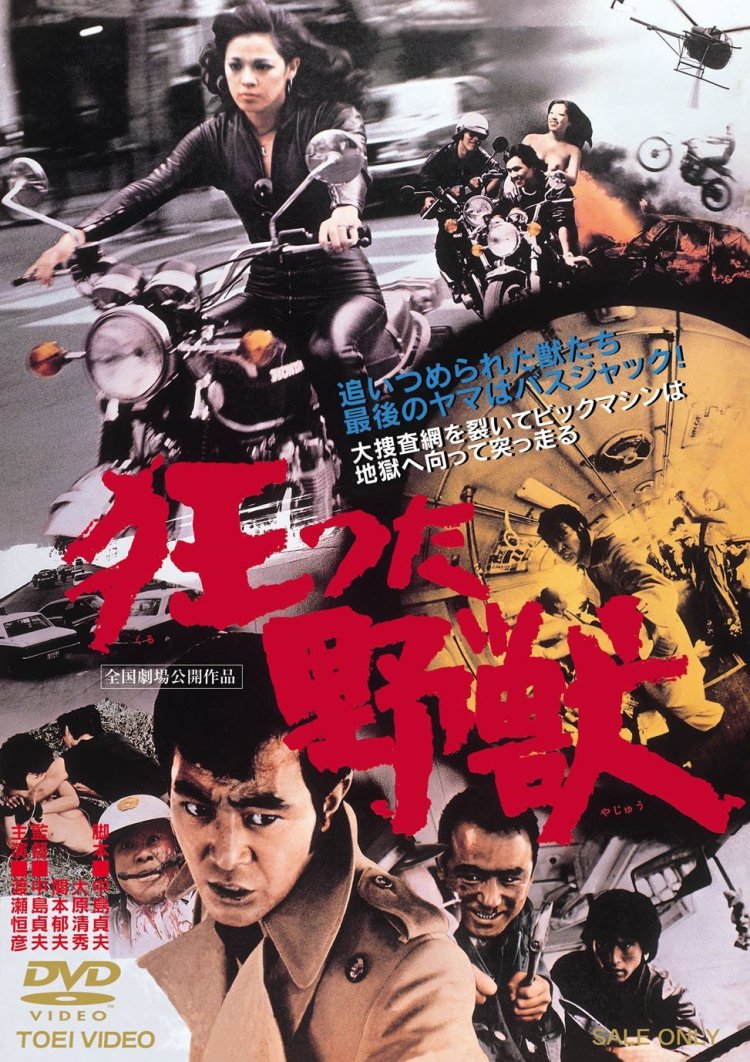 Robbing a bank is harder than it looks but if it does all go very wrong, escaping by bus is not an ideal solution. Sadao Nakajima is best known for his gritty yakuza movies but Kurutta Yaju ( 狂った野獣, Crazed Beast/Savage Beast Goes Mad) takes him in a slightly different direction with its strangely comic tale of bus hijacking, counter hijacking, inept police, and fretting mothers. If it can go wrong it will go wrong, and for a busload of people in Kyoto one sunny morning, it’s going to be a very strange day indeed.
 Yasushi Sato, a Hakodate native, has provided the source material for some of the best films of recent times including Mipo O’s The Light Shines Only There and Nobuhiro Yamashita’s
 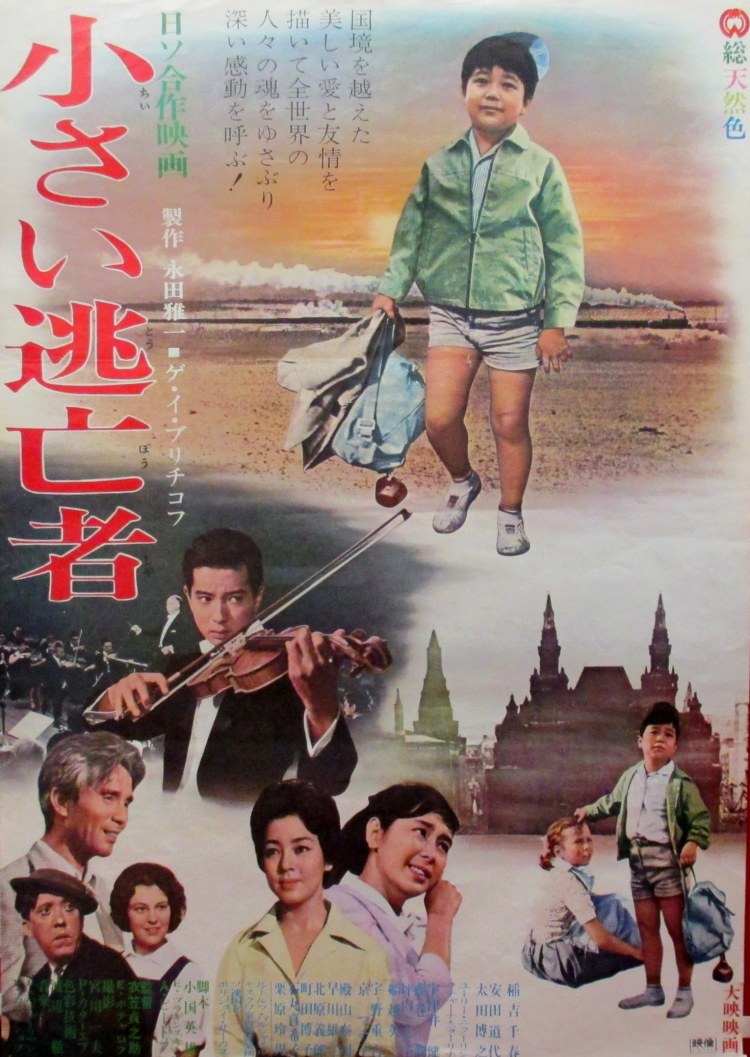 Teinosuke Kinugasa maybe best known for his avant-garde masterpiece The page of Madness even if his subsequent work leant towards a more commercial direction. His final film is just as unusual, though perhaps for different reason. In 1966, Kinugasa co-directed The Little Runaway (小さい逃亡者, Chiisai Tobosha) with Russian director Eduard Bocharov in the first of such collaborations ever created. Truth be told, aside from the geographical proximity, the Japan of 1966 could not be more different from its Soviet counterpart as the Eastern block remained mired in the “cold war” while Japan raced ahead towards its very own, capitalist, economic miracle. Perhaps looking at both sides with kind eyes, The Little Runaway has its heart in the right place with its messages of the universality of human goodness and endurance but broadly makes a success of them if failing to disguise the obvious propaganda gloss.
 Every love story is a ghost story, as the aphorism made popular (though not perhaps coined) by David Foster Wallace goes. For The Tale of Nishio (ニシノユキヒコの恋と冒険, Nishino Yukihiko no Koi to Boken), adapted from the novel by Hiromi Kawakami, this is a literal truth as the hero dies not long after the film begins and then returns to visit an old lover, only to find her gone, having ghosted her own family including a now teenage daughter. The Japanese title, which is identical to Kawakami’s novel, means something more like Yukihiko Nishino’s Adventures in Love which might give more of an indication into his repeated failures to find the “normal” family life he apparently sought, but then his life is a kind of cautionary tale offered up as a fable. What looks like kindness sometimes isn’t, and things done for others can in fact be for the most selfish of reasons.
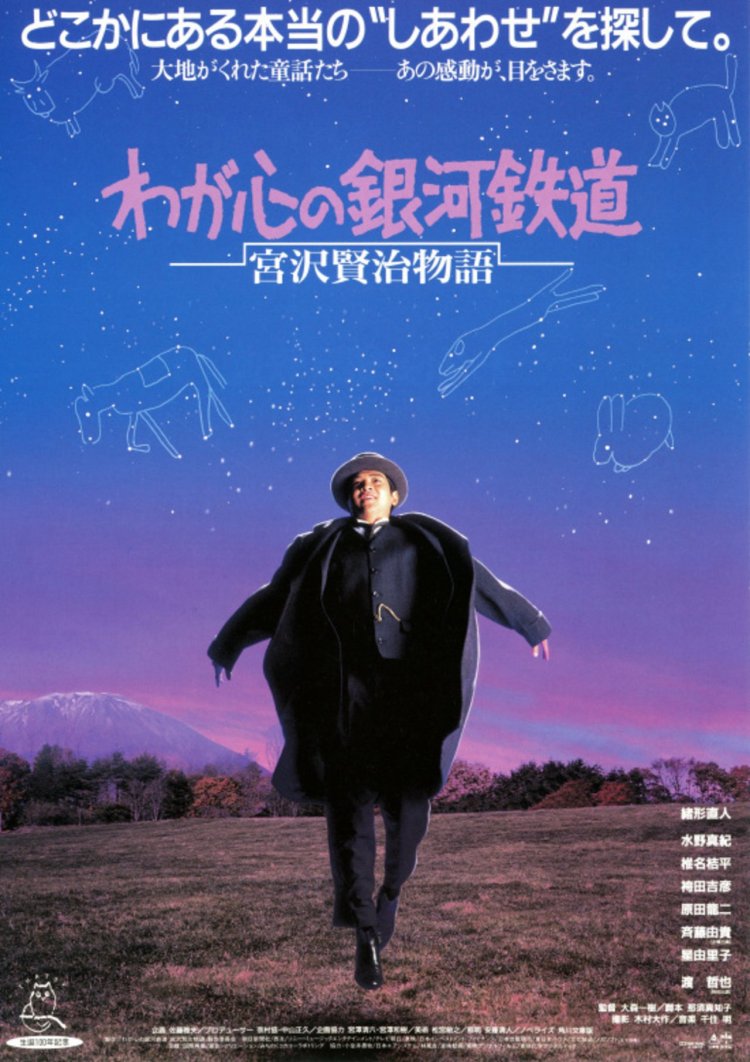 Kenji Miyazawa is one of the giants of modern Japanese literature. Studied in schools and beloved by children everywhere, Night on the Galactic Railroad has become a cultural touchstone but Miyazawa died from pneumonia at 37 years of age long before his work was widely appreciated. Night Train to the Stars (わが心の銀河鉄道 宮沢賢治物語, Waga Kokoro no Ginga Tetsudo: Miyazawa Kenji no Monogatari), commissioned to mark the centenary of Miyazawa’s birth, attempts to tell his story, set as it is against the backdrop of rising militarism.
 Windows on Worlds