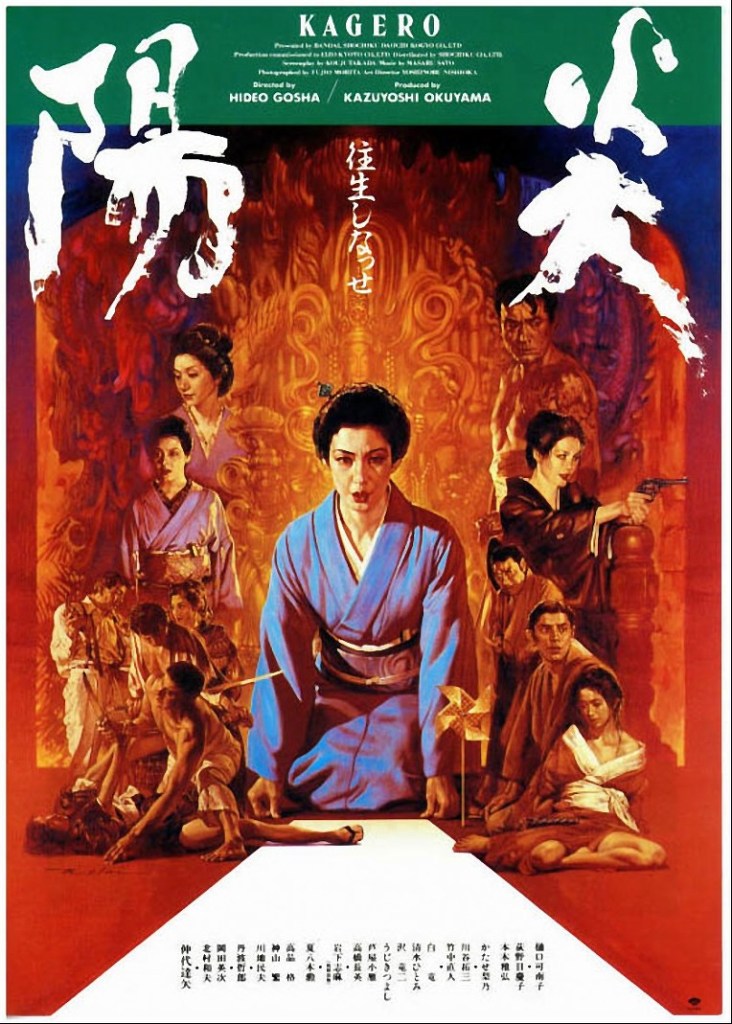
 Hideo Gosha had something of a turbulent career, beginning with a series of films about male chivalry and the way that men work out all their personal issues through violence, but owing to the changing nature of cinematic tastes, he found himself at a loose end towards the end of the ‘70s. Things picked up for him in the ‘80s but the altered times brought with them a slightly different approach as Gosha’s films took on an increasingly female focus in which he reflected on how the themes he explored so fully with his male characters might also affect women. In part prompted by his divorce which apparently gave him the view that women were just as capable of deviousness as men are, and by a renewed relationship with his daughter, Gosha overcame the problem of his chanbara stars ageing beyond his demands of them by allowing his actresses to lead.
Heat Wave (陽炎, Kagero), which was to be the director’s penultimate feature, is a homage to late ‘70s gangster movies with a significant nod to Toei’s Red Peony Gangster series. Set in 1928, the action follows cool as ice professional itinerant gambler Rin Jojima (Kanako Higuchi) whose high stakes life becomes even more complicated when she accidentally runs into her adopted little brother, apparently on the hook to some petty gangsters. Dropping her commitments to help him out of his sticky situation and recover the family restaurant, Rin comes face to face with the yakuza who killed her father in a gambling dispute more than twenty years previously but vengeance is just one of many items on her to do list.
The title Heat Wave was apparently selected for the film to imply that Gosha was back on top form and ready to burn the screen with thrilling action but when producers saw his rushes they knew that their hopes were a little misplaced. Gosha was already seriously ill and was not able to direct with the fire of his youth. Heat Wave is undoubtedly a slow burn as Rin figures out the terrain and designs her campaign with the opposing side coming up with a counter plan, but the gradual acceleration begins to pay off in the film’s elaborate smoke and flames finale as Rin takes a bundle of dynamite to the disputed territory and then fights her way out with sword and pistol aided by an unlikely ally. Downbeat but leaving room for the hoped for sequels, Heat Wave is very much in the mindset of Gosha’s heyday in which, as Rin laments, the good die young and the bad guys win.
In keeping with many gambling films much of the action is taken up with tense games of hanafuda which may prove confusing to the uninitiated and are not particularly engaging in any case, though Gosha does not overly rely on the game to fill the screen. This may be early Showa, but save for the trains the action could almost be taking place a hundred years previously. Rin may have an unusual degree of autonomy as an unmarried woman travelling alone and earning her money through back alley gambling but her world is still a traditional one in which the honour of the game is supposed to matter, even if it is ignored by the unscrupulous who would be prepared to undercut their rivals away from the gaming table by attacking their friends and allies. Rin gains and then loses, reduced to an endgame she never wanted to play and which she fully intends to win by destroying herself only to be saved by her greatest rival.
Gosha’s reputation for vulgarity was not quite unjustified, even if perhaps overstated. Rin apparently inhabits the male world of her profession in a full way as an odd scene in which she’s taken to an inn to watch a live lesbian sex show seems to demonstrate though there is no dramatic purpose to its inclusion save to emphasise Rin’s impassive poise. Though nudity is otherwise kept to a minimum, Rin’s yakuza tattoos are on full show as a clear indication of her position in the underworld. The appearance of such extensive tattooing on female gangsters is a rare sight and Gosha does his best to make the most of its transgressive qualities.
When the producers realised Gosha was not as filled with intensity as they’d hoped, they hatched on the idea of attaching a hard rock song to the end to give the film more edge (apparently much to the consternation of the composer). This might explain the strange entry to the credits sequence which is accompanied by a very up to the minute burst of synthesiser music accompanied by computer graphics loading the faces of the stars across the screen in strips. Perhaps meant to bring the ‘70s inspired action into the present day the sudden entry of the modern world is jarring to say the least though perhaps it kept viewers in their seats long enough to enjoy the post credits sting of Rin giving it her best “you shall perish”, presumably to whet appetites for a sequel. Even if not quite as impressive as some of Gosha’s previous work, Heat Wave makes up for its flaws in its exciting finale which brings all of his choreographical and aesthetic abilities to their zenith as Rin basks in both victory and defeat with the legacy of the good people who took her in burning all around her.
Selection of scenes from the the film (no subtitles)
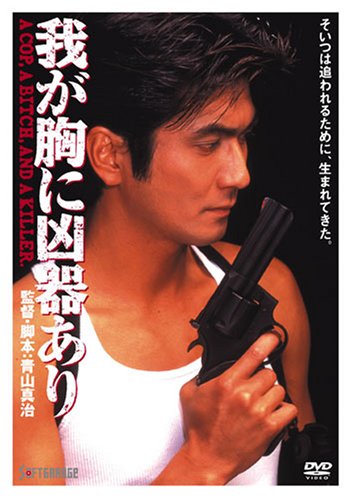 Shinji Aoyama would produce one of the most important Japanese films of the early 21st century in Eureka, but like many directors of his generation he came of age during the V-cinema boom. This relatively short lived medium was the new no holds barred arena for fledgling filmmakers who could adhere to a strict budget and shooting schedule but were also aching to spread their wings. After a short period as an AD with fellow V-cinema director now turned international auteur Kiyoshi Kurosawa, Aoyama directed his first straight to video effort – the sex comedy It’s Not in the Textbook!. Released just after his theatrical debut, Helpless, A Weapon in My Heart (我が胸に凶器あり, Waga Mune ni Kyoki Ari, AKA A Cop, A Bitch, and a Killer) is a more typically genre orientated effort with its cops, robbers, and femme fatale setup but like the best examples of the V-cinema trend it bears the signature of its ambitious director making the most of its humble origins.
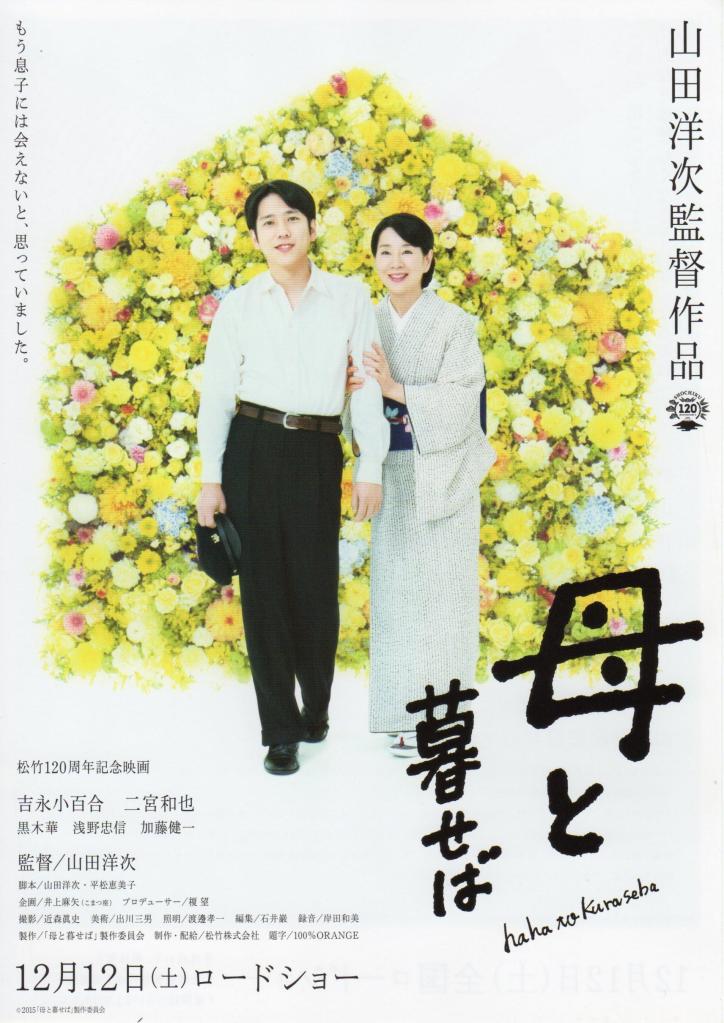 After such a long and successful career, Yoji Yamada has perhaps earned the right to a little retrospection. Offering a smattering of cinematic throwbacks in homages to both Yasujiro Ozu and Kon Ichikawa, Yamada then turned his attention to the years of militarism and warfare in the tales of a struggling mother,
 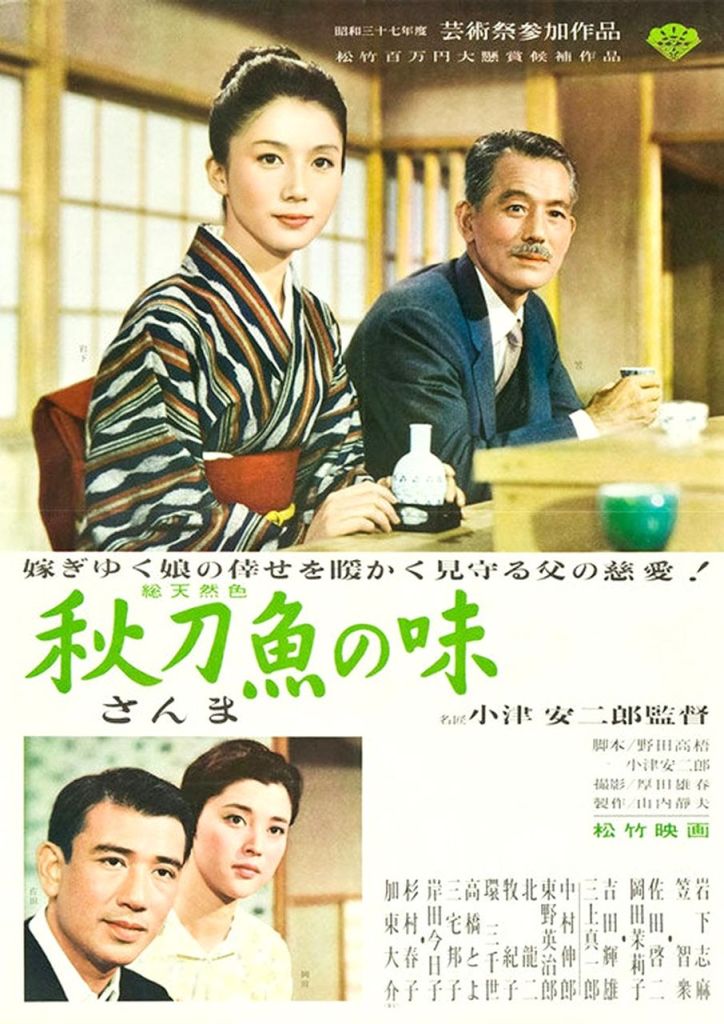 An Autumn Afternoon (秋刀魚の味, Sanma no Aji) was to be Ozu’s final work. This was however more by accident than design – despite serious illness Ozu intended to continue working and had even left a few notes relating to a follow up project which was destined never to be completed. Even if not exactly intended to become the final point of a thirty-five year career, An Autumn Afternoon is an apt place to end, neatly revisiting the director’s key concerns and starring some of his most frequent collaborators.
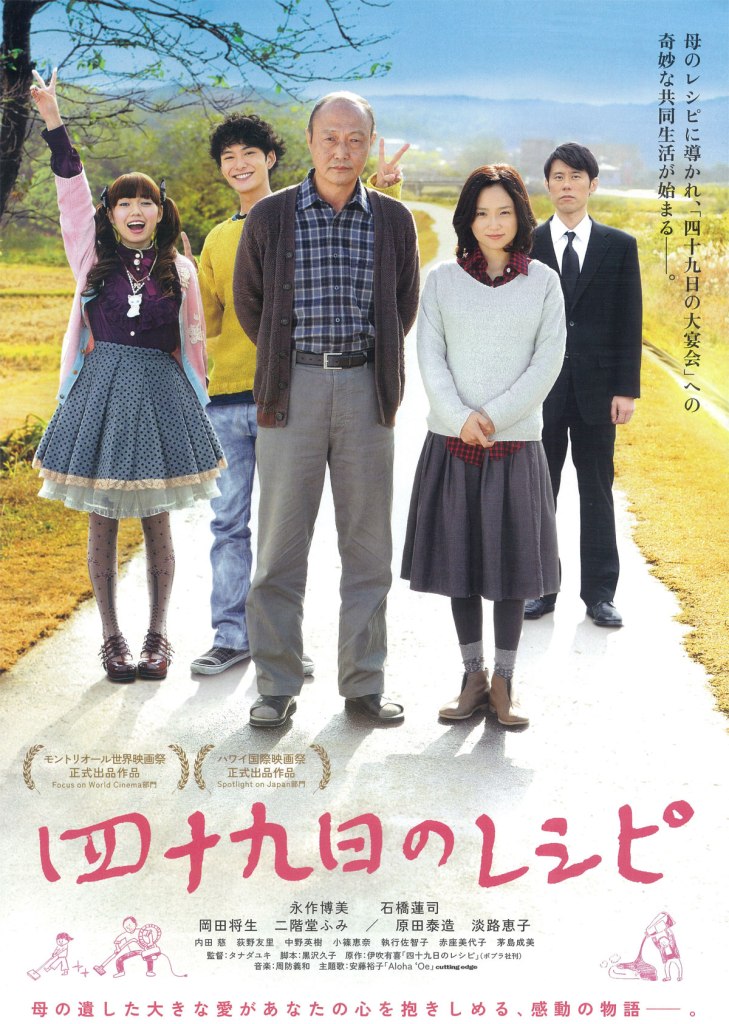 When everything goes wrong you go home, but Yuriko, the protagonist of Yuki Tanada’s adaptation of Yuki Ibuki’s novel might feel justified in wondering if she’s made a series of huge mistakes considering the strange situation she now finds herself in. Far from the schmaltzy cooking movie the title might suggest, Mourning Recipe (四十九日のレシピ, Shijuukunichi no Recipe) is a trail of breadcrumbs left by the recently deceased family matriarch, still thinking of others before herself as she tries to help everyone move on after she is no longer there to guide them. Approaching the often difficult circumstances with her characteristic warmth and compassion, Tanada takes what could have become a trite treatise on the healing power of grief into a nuanced character study as each of the left behind now has to seek their own path in deciding how to live the rest of their lives.
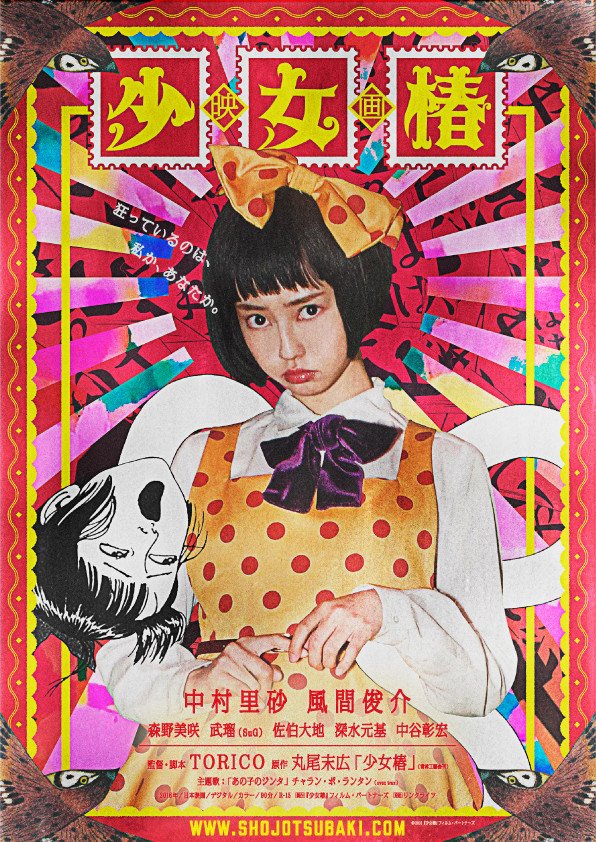 Picking up on the well entrenched penny dreadful trope of the tragic flower seller the Shoujo Tsubaki or “Camellia Girl” became a stock character in the early Showa era rival of the Kamishibai street theatre movement. Like her European equivalent, the Shoujo Tsubaki was typically a lower class innocent who finds herself first thrown into the degrading profession of selling flowers on the street and then cast down even further by being sold to a travelling freakshow revue. This particular version of the story is best known thanks to the infamous 1984 ero-guro manga by Suehiro Maruo, Mr. Arashi’s Amazing Freak Show. Very definitely living up to its name, Maruo’s manga is beautifully drawn evocation of its 1930s counterculture genesis – something which the creator of the book’s anime adaptation took to heart when screening his indie animation. Midori, an indie animation project by Hiroshi Harada, was screened only as part of a wider avant-garde event encompassing a freak show circus and cabaret revue worthy of any ‘30s underground scene.
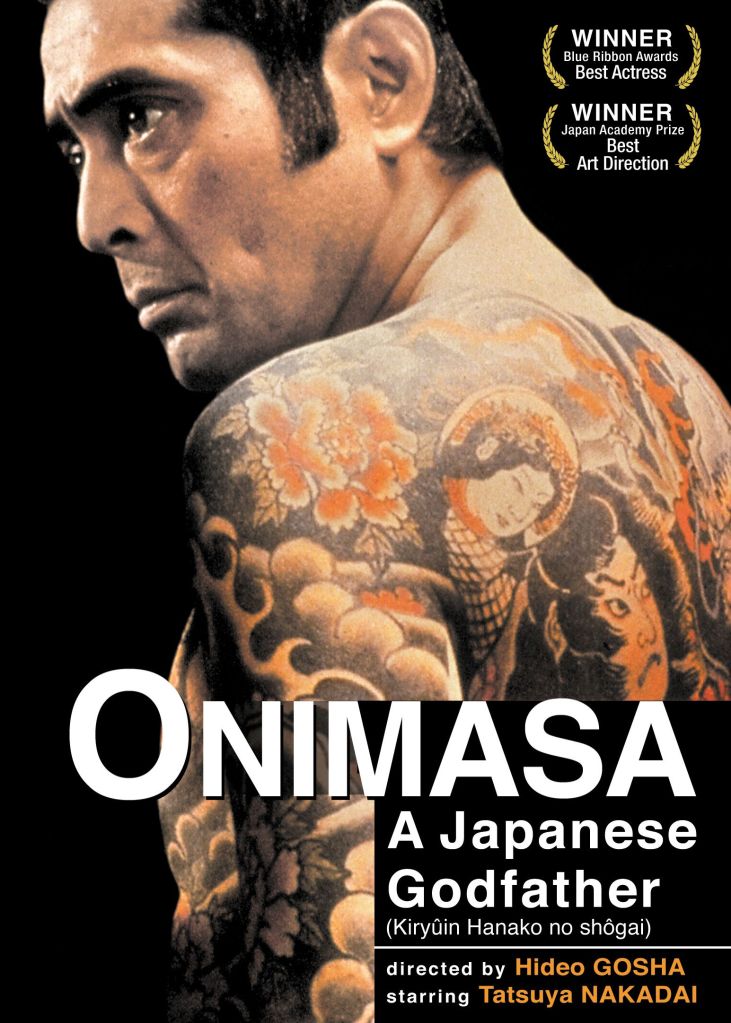 When AnimEigo decided to release Hideo Gosha’s Taisho/Showa era yakuza epic Onimasa (鬼龍院花子の生涯, Kiryuin Hanako no Shogai), they opted to give it a marketable but ill advised tagline – A Japanese Godfather. Misleading and problematic as this is, the Japanese title Kiryuin Hanako no Shogai also has its own mysterious quality in that it means “The Life of Hanako Kiryuin” even though this, admittedly hugely important, character barely appears in the film. We follow instead her adopted older sister, Matsue (Masako Natsume), and her complicated relationship with our title character, Onimasa, a gang boss who doesn’t see himself as a yakuza but as a chivalrous man whose heart and duty often become incompatible. Reteaming with frequent star Tatsuya Nakadai, director Hideo Gosha gives up the fight a little, showing us how sad the “manly way” can be on one who finds himself outplayed by his times. Here, anticipating Gosha’s subsequent direction, it’s the women who survive – in large part because they have to, by virtue of being the only ones to see where they’re headed and act accordingly.
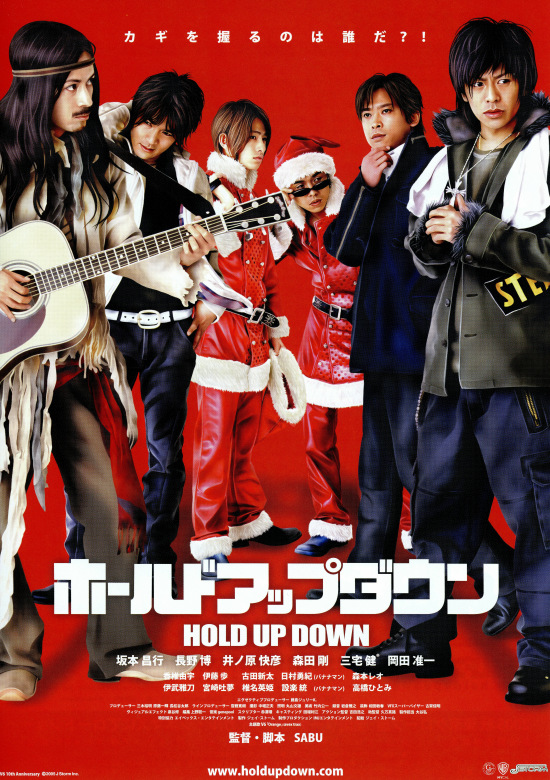 Reteaming with popular boy band V6, SABU returns with another madcap caper in the form of surreal farce Hold Up Down (ホールドアップダウン). Holding up is, as usual, not on SABU’s roadmap as he proceeds at a necessarily brisk pace, weaving these disparate plot strands into their inevitable climax. Perhaps a little shallower than the director’s other similarly themed offerings, Hold Up Down mixes everything from reverse Father Christmasing gone wrong, to gun obsessed policemen, train obsessed policewomen, clumsy defrocked priests carrying the cross of frozen Jesus, and a Shining-esque hotel filled with creepy ghosts. Quite a lot to be going on with but if SABU has proved anything it’s that he’s very adept at juggling.
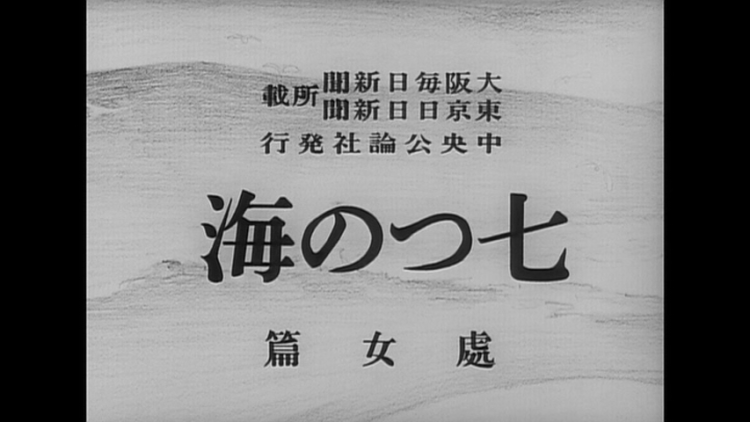 Hiroshi Shimizu is best remembered for his socially conscious, nuanced character pieces often featuring sympathetic portraits of childhood or the suffering of those who find themselves at the mercy of society’s various prejudices. Nevertheless, as a young director at Shochiku, he too had to cut his teeth on a number of program pictures and this two part novel adaptation is among his earliest. Set in a broadly upper middle class milieu, Seven Seas (七つの海, Nanatsu no Umi) is, perhaps, closer to his real life than many of his subsequent efforts but notably makes class itself a matter for discussion as its wealthy elites wield their privilege like a weapon.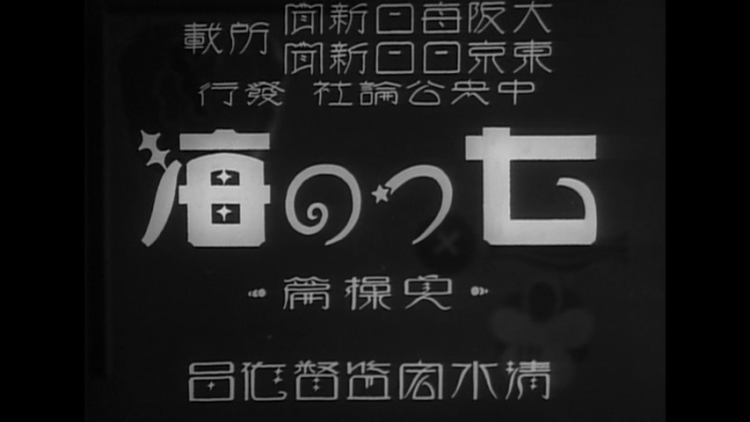
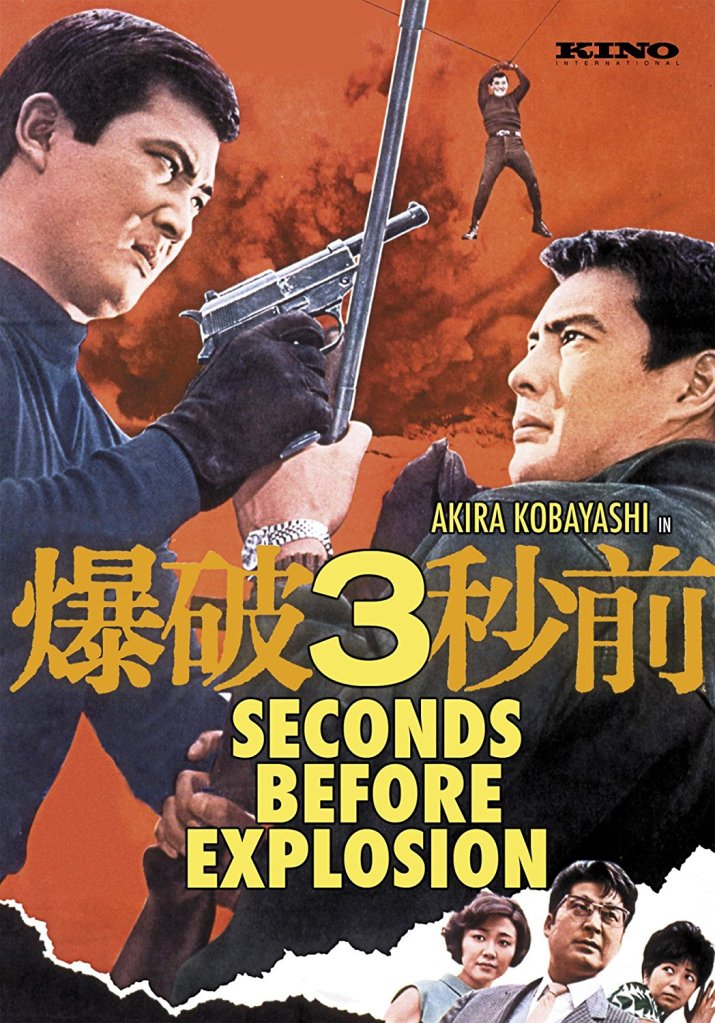 If Nikkatsu Action movies had a ringtone it would probably just be “BANG!” but nevertheless you’ll have to wait more than three rings for the Kaboom! in the admittedly cartoonish slice of typically frivolous B-movie thrills that is 3 Seconds Before Explosion (爆破3秒前, Bakuha 3-byo Mae). Once again based on a novel by Japan’s master of the hard boiled Haruhiko Oyabu, 3 Seconds Before Explosion is among his sillier works though lesser known director Motomu Ida never takes as much delight in making mischief as his studio mate Seijun Suzuki. What he does do is make use of Diamond Guy Akira Kobayashi’s boyish earnestness to keep things running along nicely even if he’s out of the picture for much of the action.
 Windows on Worlds