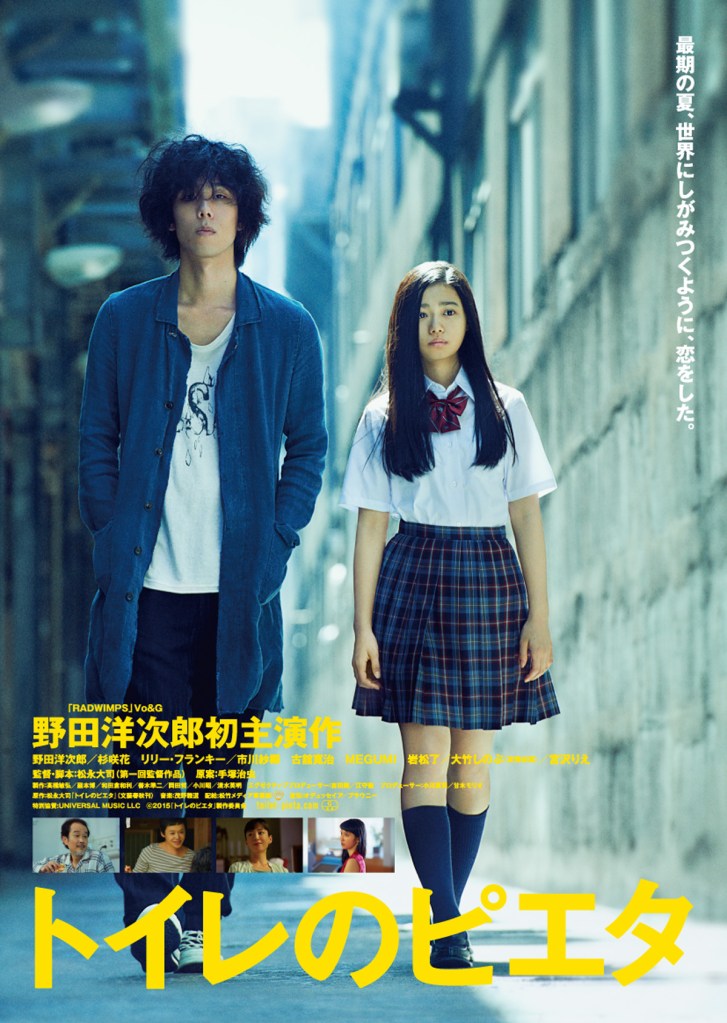
 Somewhere near the beginning of Daishi Matsunaga’s debut feature, Pieta in the Toilet (トイレのピエタ, Toire no Pieta), the high rise window washing hero is attempting to school a nervous newbie by “reassuring” him that the worst thing that could happen up here is that you could die. This early attempt at black humour signals Hiroshi’s already aloof and standoffish nature but his fateful remark comes back to haunt him after he is diagnosed with an aggressive and debilitating condition of his own. Noticeably restrained in contrast with the often melodramatic approach of similarly themed mainstream pictures, Pieta in the Toilet is less a contemplation of death than of life, its purpose and its possibilities.
Having left his country home for Tokyo to become a painter, Hiroshi (Yojiro Noda) has become a bitter man, wilfully drowning in his own broken dreams. A chance encounter with an old flame, Satstuki (Saya Ichikawa), further deepens Hiroshi’s sense of inadequacy – she is about to open a solo exhibition in the very building which Hiroshi is currently engaged in washing the windows of. After having so sarcastically made fun of his new colleague’s fear of the rig, it’s Hiroshi who finds himself collapsing on the job and requiring medical treatment.
Seeing as the hospital have requested he bring a family member along with him for the results of the examination, it’s probably not good news. Not wanting to involve his parents, Hiroshi persuades Satsuki to masquerade as his younger sister only to restart an old argument in the waiting room prompting his former love to remember why they aren’t together anymore and hightail it out of there. Spotting a high school girl arguing with a salaryman she says has torn her uniform, Hiroshi decides to offer the job to her. Mai (Hana Sugisaki) plays her part to perfection but the news is even worse than he’d feared – aggressive stomach cancer requiring immediate hospitalisation and sustained chemotherapy if he is to have any chance at all of surviving more than a couple of months at most.
Prior to his illness, Hiroshi is a difficult man, permanently grumpy and irritated as if carrying a great sense of injustice. Despite several different voices reminding him that he had talent, Hiroshi has given up drawing in the belief that his artistic career was always doomed to failure. Intent on punishing himself for just not being good enough to succeed, Hiroshi’s decision to make window washing his career signals his lack of personal ambition, content to simply keep existing while a silent rage bubbles under the surface.
After the original failed reconnection with Satsuki who, we later discover, has moved in another direction using her society connections to advance her career in a way of which Hiroshi does not approve, Hiroshi’s illness brings him into contact with a number of people who each do their bit to reopen his heart. The most important of these is the feisty high school girl, Mai, who refuses to simply disappear from Hiroshi’s life after the awkward bonding experience of being present at the cancer diagnosis of a total stranger. As angry and defeated as Hiroshi, Mai’s difficult homelife has brought her untold suffering but unlike the brooding painter, hers in an externalised rage which sends her reeling into the world, looking for reaction and recognition rather than the introspective craving for disappointment and indifference which marks Hiroshi’s approach to his internalised sense of inadequacy.
Hiroshi’s hospital stay produces twin motivators from both ends of the spectrum in the form of an older man in the next bed, Yokota (Lily Franky), who enjoys taking photographs (especially of pretty girls), and a terminally ill little boy who remains cheerful, polite and friendly despite Hiroshi’s rather rude attempt to shake him off. It’s on a visit to the hospital chapel with the boy, Takuto (Riku Sawada), and his mother (Rie Miyazawa) that Hiroshi first comes across the statue of the pieta which inspires his ultimate, life affirming act which sees him turn the smallest room of the house into a new Sistine Chapel with a large scale installation recasting Mai as Mary, arms outstretched ready to receive her sorrowful burden.
Hiroshi’s life had been mere existence but reaching an acceptance of its end forces him into a process of more positive self reflection and a desire to leave something more permanent behind. Inspired by a few words found on the final page of the diary kept by the godfather of manga, Osamu Tezuka, himself battling stomach cancer at the time, Pieta in the Toilet puts art at the core of life as Hiroshi picks up his paint brush, Yokota his camera (albeit with slightly less than artful intentions), and Takuto his painstakingly collected colour-in heroes. Necessarily melancholy yet somehow life affirming Pieta in the Toilet offers a nuanced though no less powerful contemplation of life, death and art in which each gives meaning to the other, ensuring the richness of a life fully lived.
Screened as part of the Japan Foundation Touring Film Programme 2017.
Original trailer (English subtitles)
 Junichiro Tanizaki is widely regarded as one of the major Japanese literary figures of the twentieth century with his work frequently adapted for the cinema screen. Those most familiar with Kon Ichikawa’s art house leaning pictures such as war films The Burmese Harp or Fires on the Plain might find it quite an odd proposition but in many ways, there could be no finer match for Tanizaki’s subversive, darkly comic critiques of the baser elements of human nature than the otherwise wry director. Odd Obsession (鍵, Kagi) may be a strange title for this adaptation of Tanizaki’s well known later work The Key, but then again “odd obsessions” is good way of describing the majority of Tanizaki’s career. A tale of destructive sexuality, the odd obsession here is not so much pleasure or even dominance but a misplaced hope of sexuality as salvation, that the sheer force of stimulation arising from desire can in some way be harnessed to stave off the inevitable even if it entails a kind of personal abstinence.
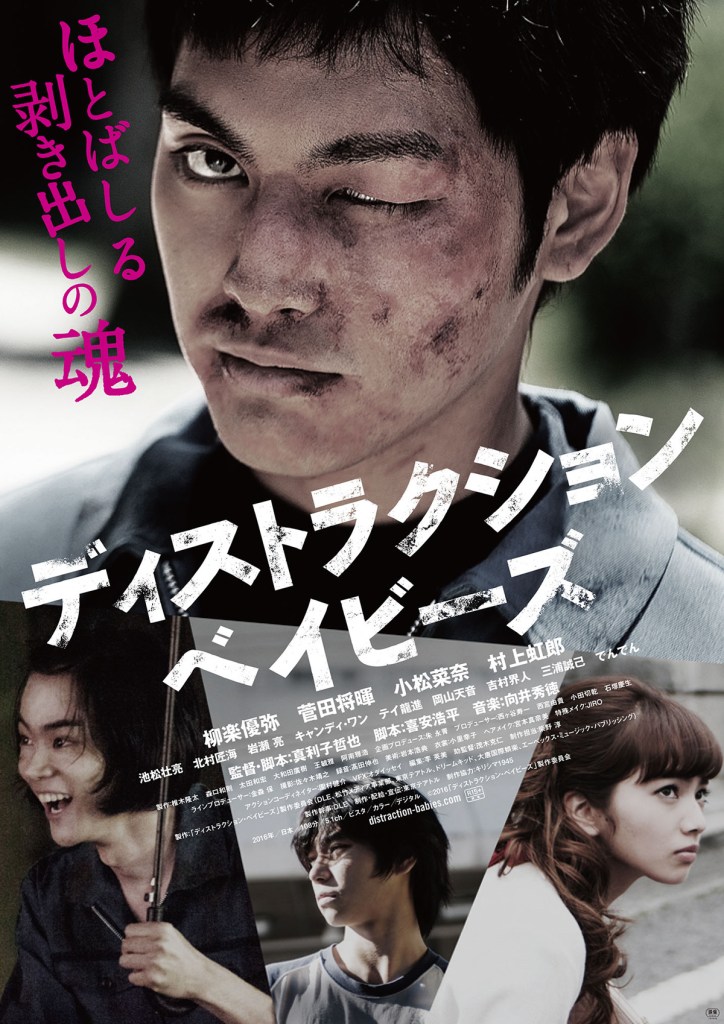 Post-golden age, Japanese cinema has arguably had a preoccupation with the angry young man. From the ever present tension of the seishun eiga to the frustrations of ‘70s art films and the punk nihilism of the 1980s which only seemed to deepen after the bubble burst, the young men of Japanese cinema have most often gone to war with themselves in violent intensity, prepared to burn the world which they feel holds no place for them. Tetsuya Mariko’s Destruction Babies (ディストラクション・ベイビーズ) is a fine addition to this tradition but also an urgent one. Stepping somehow beyond nihilism, Mariko’s vision of his country’s future is a bleak one in which young, fatherless men inherit the traditions of their ancestors all the while desperately trying to destroy them. Devoid of hope, of purpose, and of human connection the youth of the day get their kicks vicariously, so busy sharing their experiences online that reality has become an obsolete concept and the physical sensation of violence the only remaining truth.
 They say the way to a man’s heart is through his stomach, but for some guys you’ll have to do a whole lot of baking. Based on the popular manga which was also recently adapted into a hit anime (as is the current trend) My Love Story!! (俺物語!!, Ore Monogatari!!) is the classic tale of innocent young love between a pretty young girl and her strapping suitor only both of them are too reticent and have too many issues to be able to come round to the idea that their feelings may actually be requited after all. This is going to be a long courtship but faint heart never won fair maiden.
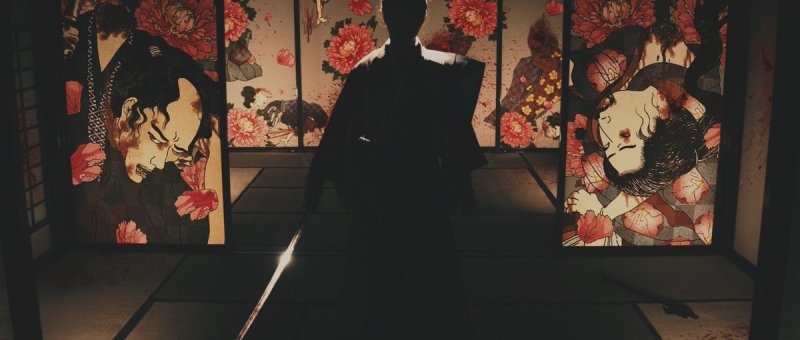
 All life is suffering, and all suffering is caused by desire. Ninko, the titular monk at the centre of this entertaining oddity from Norihiro Niwatsukino, seems to have taken this to heart and is suffering more than most in his attempts to reach Nirvana. Suffering of Ninko (仁光の受難, Ninko no Junan) takes its cues from the Hyaku-monogatari classical Japanese tales of ghosts and the supernatural as its seemingly comic story of a pretty monk and his ironic talent for attracting the wrong kind of attention gradually darkens until its unexpectedly strange finale. Visually striking if a little rough around the edges, Suffering of Ninko has a pleasantly organic quality as if its narrator were really making it up as she goes along only to tire of it a little by the end and give us a suitably spooky conclusion to send us on our way.
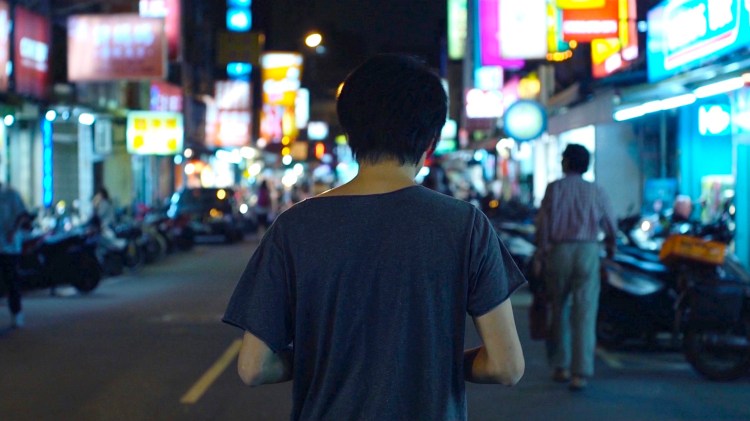 We don’t move forward in this dance, comments the lady currently being waltzed by a charming lost soul. Don’t worry, he says, that’s not a bad thing. Indeed, Out There, the first independent feature film from director Takehiro Ito exists in a fixed yet liminal space, here and not there as its protagonist finds himself without the proper place to be. Conceived as a way of salvaging some of the material collated for a documentary on the late Taiwanese director Edward Yang, Out There takes more of its cues from Tsai Ming-liang or even Lav Diaz in its preoccupation with the intersection between time, existence, and place. If that all sounds to weighty, there’s a little whimsy in here too, but the intent is a serious one as nationhood (or the lack of it), drifting cultures, love and history all conspire to confuse and distract the course of a young man in search of an identity which is entirely his own.
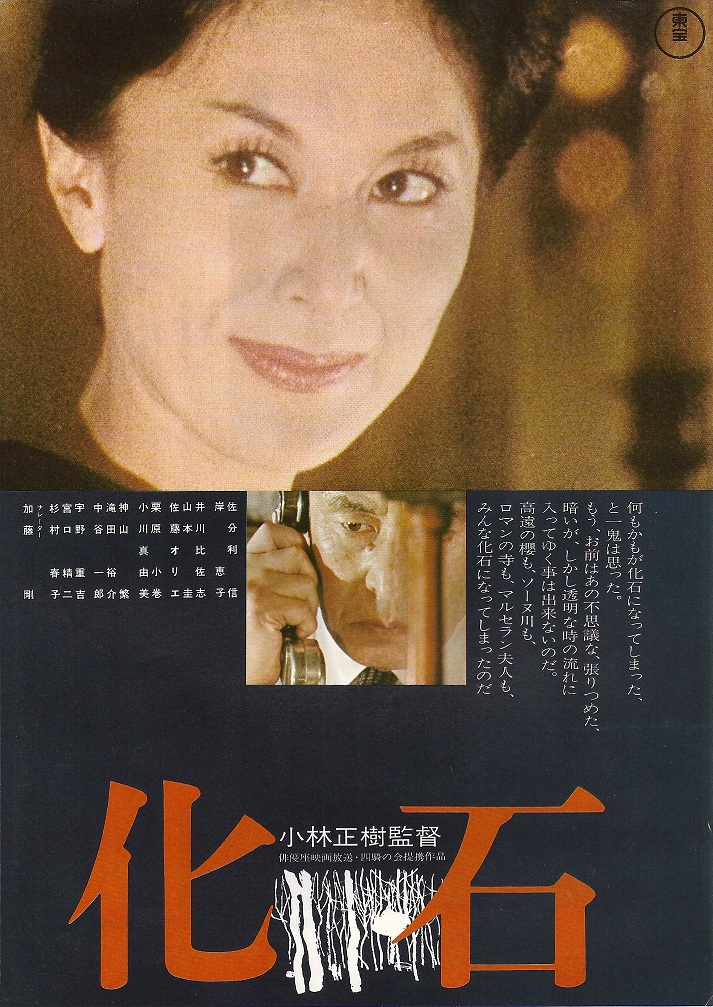 Throughout Masaki Kobayashi’s relatively short career, his overriding concern was the place of the conscientious individual within a corrupt society. Perhaps most clearly seen in his magnum opus,
 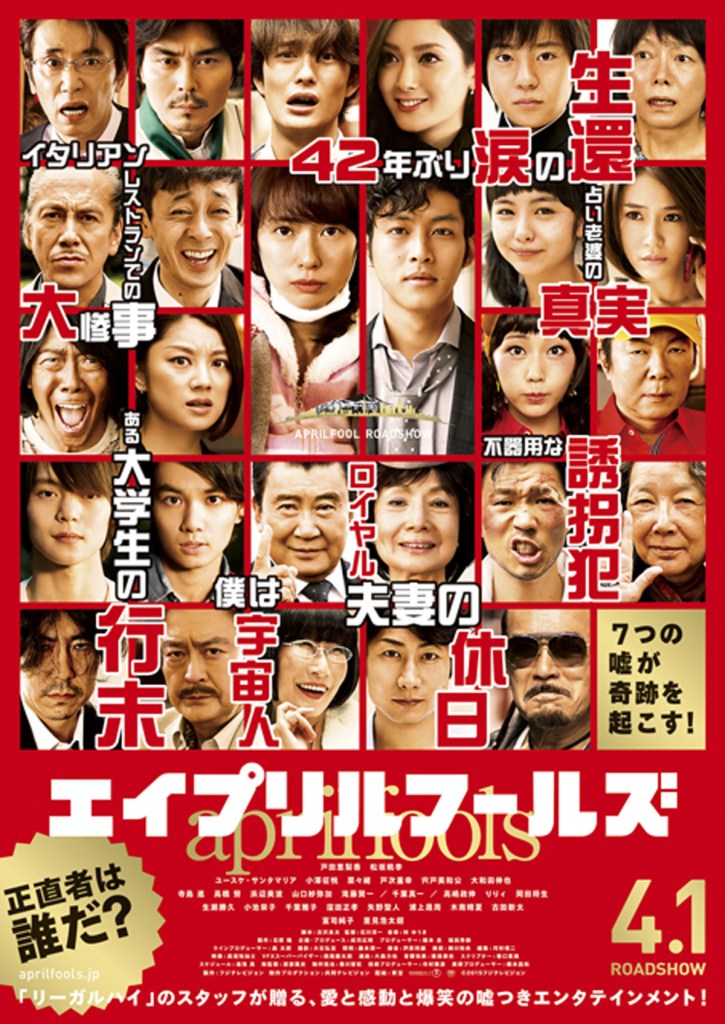 In this brand new, post truth world where spin rules all, it’s important to look on the bright side and recognise the enormous positive power of the lie. 2015’s April Fools (エイプリルフールズ) is suddenly seeming just as prophetic as the machinations of the weird old woman buried at its centre seeing as its central message is “who cares about the truth so long as everyone (pretends) to be happy in the end?”. A dangerous message to be sure though perhaps there is something to be said about forgiving those who’ve misled you after understanding their reasoning. Or, then again, maybe not.
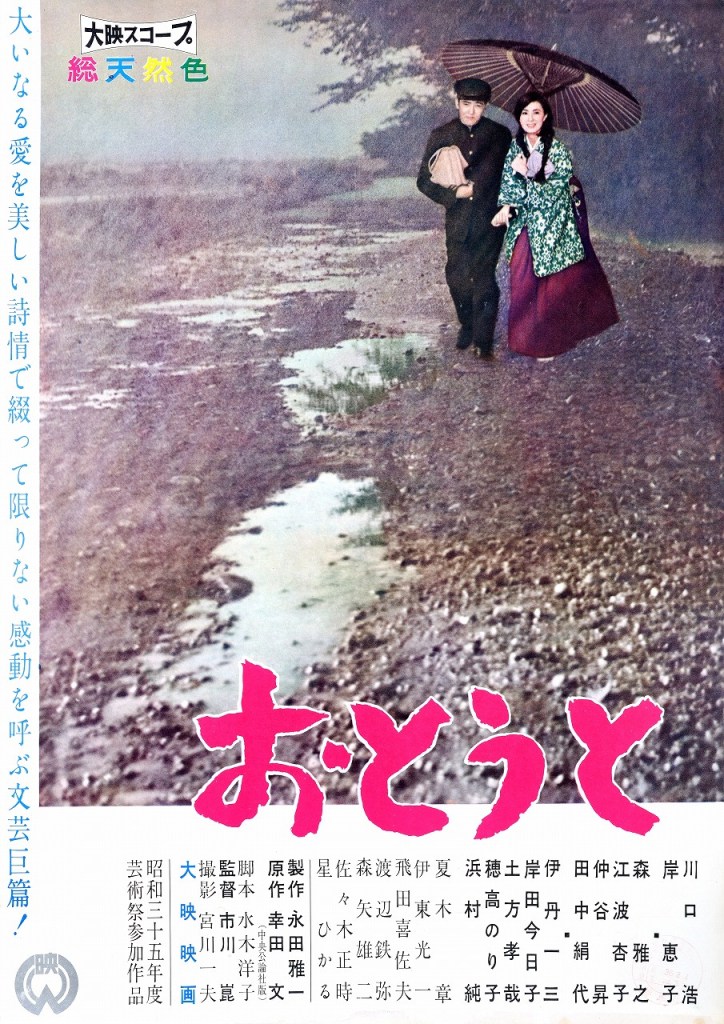 Perhaps oddly for a director of his generation, Kon Ichikawa is not particularly known for family drama yet his 1960 effort, Her Brother (おとうと, Ototo), draws strongly on this genre albeit with Ichikawa’s trademark irony. A Taisho era tale based on an autobiographically inspired novel by Aya Koda, Her Brother is the story of a sister’s unconditional love but also of a woman who is, in some ways, forced to sacrifice herself for her family precisely because of their ongoing emotional neglect.
 Windows on Worlds