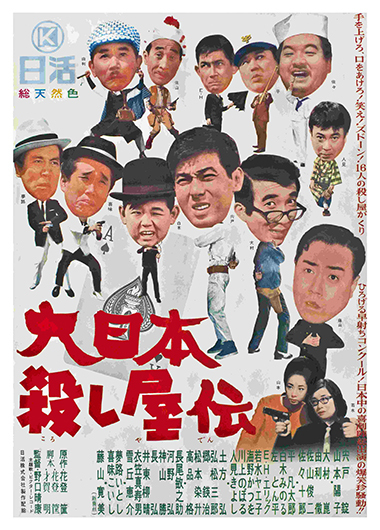
 “If you don’t laugh when you see this movie, I’m going to execute you” abacus wielding hitman Komatsu warns us at the beginning of Haryasu Noguchi’s Murder Unincorporated (大日本殺し屋伝, Dai Nihon Koroshiya-den). Luckily for us, it’s unlikely he’ll be forced to perform any “calculations”, and the only risk we currently run is that of accidentally laughing ourselves to death as we witness the absurd slapstick adventures of Japan’s craziest hitman convention when the nation’s “best” (for best read “most unusual”) contract killers descend on a small town looking for “Joe of Spades” – a mysterious assassin known only by the mole on the sole of his foot.
After the amusing Bond style opening, we witness the first victim of Joe of Spades who happens to be one of the five top gangsters in town. Sure enough, the other four then receive a threatening phone call to the effect that they’re next in line for a bullet in the brain. After ringing up an assassins agency and holding a series of auditions, the head honchos wind up with a gang of hitmen bodyguards each of whom have their own theme and wacky back story.
The leader of the gang is Heine Maki – a poetry loving, bowler hatted killer whose signature weapon is a heavy book of poems with a gun hidden inside,. He’s joined by O.N. Kane – an ex-baseball player who missed out on the major leagues through being too good and carries a baseball bat that’s really a gun, “Knife” Tatsu – ex-sushi chef knife thrower with an intense fear of fish, Al Capone III – a midget who claims to be the Japanese grandson of Al Capone and is obsessed with the Untouchables TV show, and of course Komatsu himself whose signature move is to throw his abacus in the air and invite chaos in the process.
The guys are really a little more than this small town can handle though they quickly discover the situation is nowhere near as straightforward as they thought and wind up facing off against some equally eccentric foes. That’s not to mention the mama-san at Bar Joker who turns out to be at the center of the case and a local mechanic who’s suspiciously handy with a pistol.
There really are no words to describe the quick fire, extremely zany universe in which Murder Unincorporated takes place. This is a world ruled by crime in which each of our “heroes” showcase extremely sad backstories which explain why they had absolutely no choice but to turn to killing people to survive. Take “Knife” Tatsu for example, he became a hitman because he was unable to kill the fish gasping away on his cutting board so he decided to kill people instead. O.N. Kane turned murderous after being let down in his baseball dream, Heine has a romantic tale of lost love, Capone III simply has it in the blood, and Komatsu? He wants to be a pharmacist…
This is all inspired by legendary Japanese funnyman Kobako Hanato who is famous for his Southern Japan flavoured absurd comedy routines. Kon Ohmura, who plays Komatsu, was one of his top collaborators for a time and became one of Japan’s all time great comedians. Meta quips such as remarking that the police are about to turn up “for the first time in this film” and involved jokes like the one that sees Komatsu tracking down identical “Joes” in varieties club, diamond, heart (amusingly, dressed as a geisha and playing pachinko), before heading into a punchline it would be a crime to spoil only add to the feeling that absolutely anything could happen and that would be perfectly OK.
Director Noguchi mostly keeps things straightforward but builds a fantastic comedic rhythm managing the quick fire dialogue and general absurdity with ease. Much of the film is told in flashback or reverie but the device never becomes old so much as easily syncing with with general tone of the film. There are some more unusual sequences such the opening itself, keyhole view, and a later sequence where we see directly though Komatsu’s big square glasses but otherwise the deadpan filming approach boosts the inherent comedy in the increasingly surreal situations. Quirky, oddly innocent, absurd, and just extremely laugh out loud funny, Murder Unincorporated is a world away from Nikkatsu’s po-faced crime dramas but exists in a crazy cartoon world all of its own that proves near impossible to resist!
Murder Unincorporated is the third and final film included in the second volume of Arrow’s Nikkatsu Diamond Guys box set.
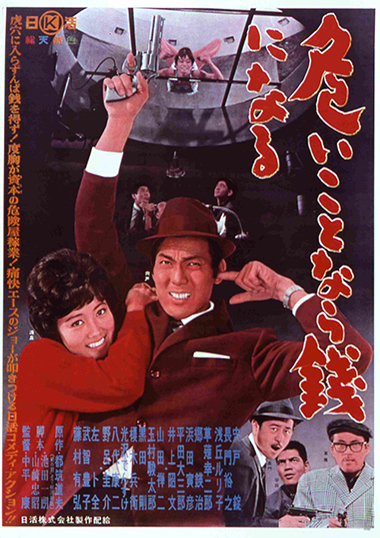 Where there’s danger, there’s money! Or, maybe just danger, who knows but whatever it is, it certainly doesn’t lack for excitement. Ko Nakahira is best known for his first feature, Crazed Fruit, the youthful romantic drama ending in speed boat murder which ushered in the Sun Tribe era. Though he later tried to make a return to more artistic efforts, it’s Nakahira’s freewheeling Nikkatsu crime movies that have continued to capture the hearts of audience members. Danger Pays (AKA Danger Paws, 危いことなら銭になる, Yabai Koto Nara Zeni ni Naru) is among the best of them with its cartoon-like, absurd crime caper world filled with bumbling crooks and ridiculous setups.
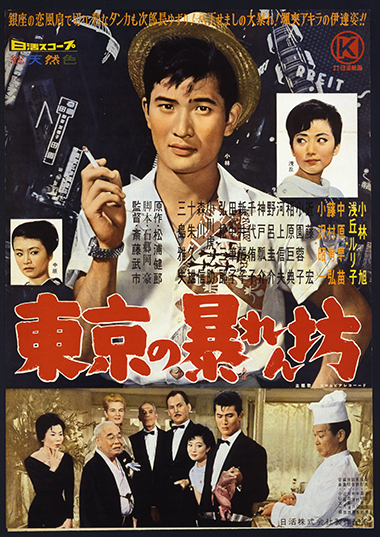 The bright and shining post-war world – it’s a grand place to be young and fancy free! Or so movies like Tokyo Mighty Guy (東京の暴れん坊, Tokyo no Abarembo) would have you believe. Casting one of Nikkatsu’s tentpole stars, Akira Kobayshi, in the lead, Buichi Saito’s Tokyo Mighty Guy is, like previous Kobayashi/Saito collaboration
 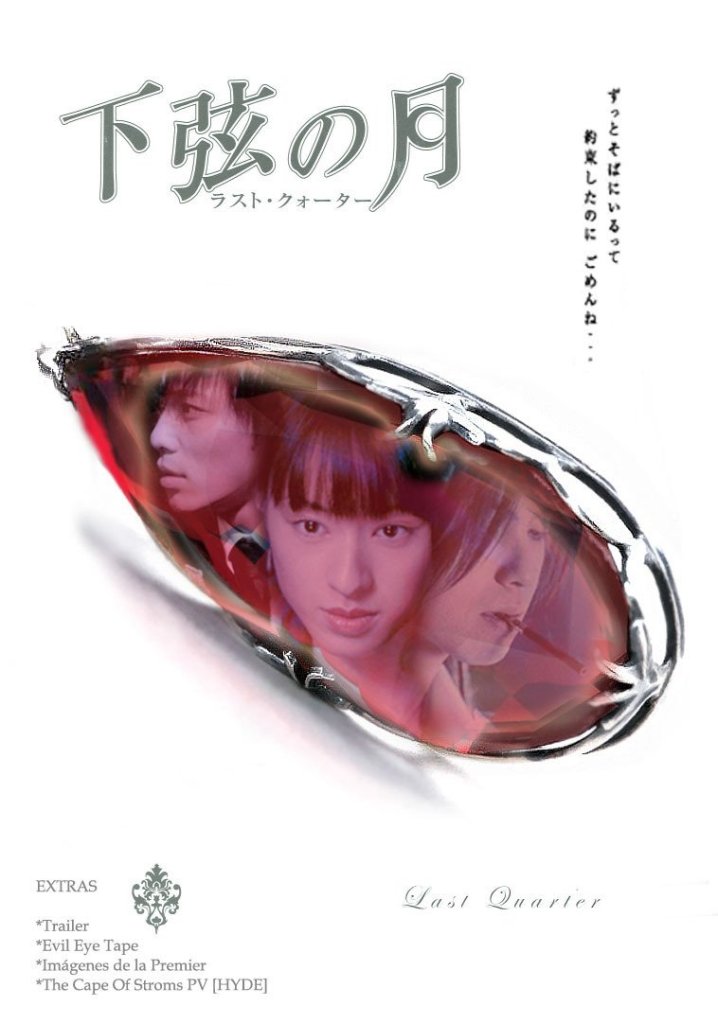 To begin on a cynical note, Last Quarter (下弦の月 ラスト・クォーター, Kagen no tsuki Last Quarter) is a film with a wide variety of marketing hooks. The first being that it’s an adaptation of a much loved short manga series by the well respected mangaka Ai Yazawa (Paradise Kiss) so it has its shoujo pedigree firmly in place. Secondly, pop star HYDE of L’Arc-en-Ciel is central to the production as he both stars in the movie as the ghostly love interest/deathly spirit and repeatedly sings his own songs throughout the film including over the end credits. Thirdly, it also stars actress Chiaki Kuriyama well known to overseas audiences thanks to Kill Bill and Battle Royale. You’d think with all these high quality ingredients first time director Ken Nikai would be able to cook up quite a feast though he does somewhat over egg the pudding.
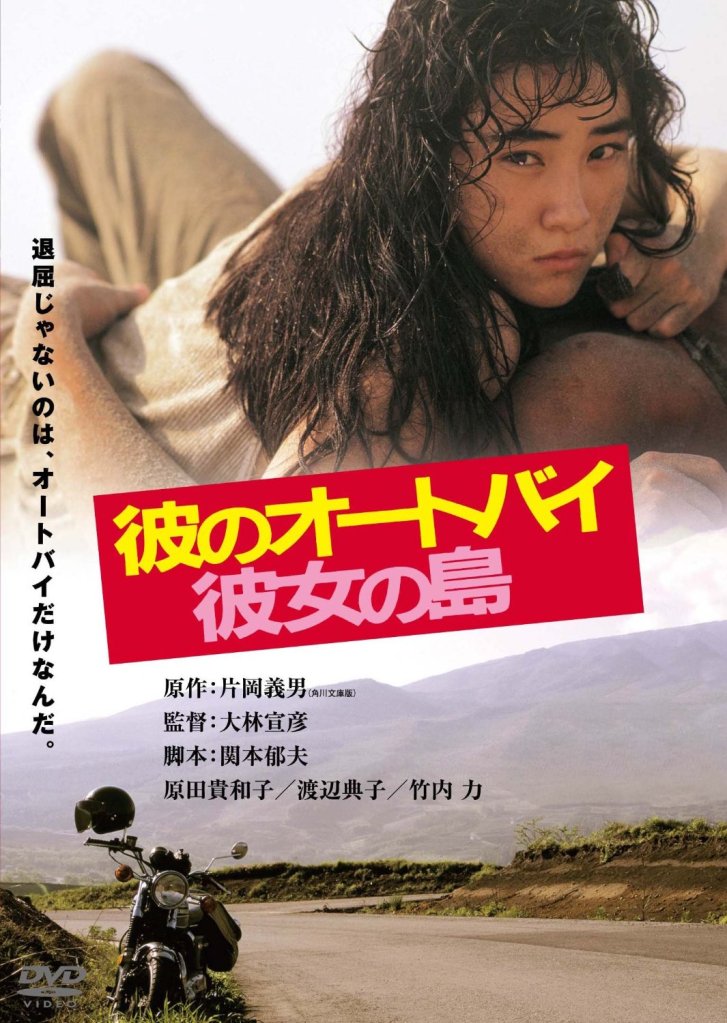 Like many directors during the 1980s, Nobuhiko Obayashi was unable to resist the lure of a Kadokawa teen movie but His Motorbike, Her Island (彼のオートバイ彼女の島, Kare no Ootobai, Kanojo no Shima) is a typically strange 1950s throwback with its tale of motorcycle loving youngsters and their ennui filled days. Switching between black and white and colour, Obayashi paints a picture of a young man trapped in an eternal summer from which he has no desire to escape.
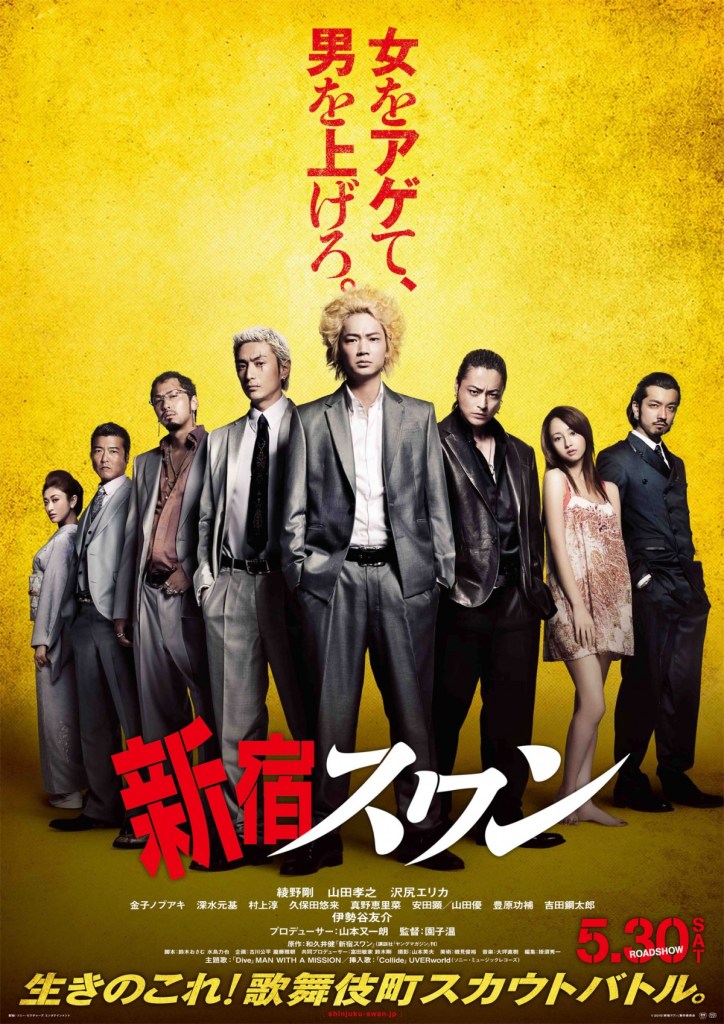 Enfant terrible of the Japanese film industry Sion Sono has always been prolific but recent times have seen him pushing the limits of the possible and giving even Takashi Miike a run for his money in the release stakes. Indeed, Takashi Miike is a handy reference point for Sono’s take on Shinjuku Swan (新宿スワン) – an adaptation of a manga which has previously been brought to the small screen and is also scripted by an independent screenwriter rather than self penned in keeping with the majority of Sono’s directing credits. Oddly, the film shares several cast members with Miike’s Crows Zero movies and even lifts a key aesthetic directly from them. In fact, there are times when Shinjuku Swan feels like an unofficial spin-off to the Crows Zero world with its macho high school era tussling relocated to the seedy underbelly of Kabukicho. Unfortunately, this is somewhat symptomatic of Sono’s failure, or lack of will, to add anything particularly original to this, it has to be said, unpleasant tale.
 Akira Kurosawa’s later career was marred by personal crises related to his inability to obtain the kind of recognition for his films he’d been used to in his heyday during the golden age of Japanese cinema. His greatest dream was to die on the set, but after suffering a nasty accident in 1995 he was no longer able to realise his ambition of directing again. However, shortly after he died, the idea was floated of filming some of the scripts Kurosawa had written but never proceed with to the production stage including The Sea is Watching (海は見ていた, Umi wa Miteita) which he wrote in 1993. Based on a couple of short stories by Shugoro Yamamoto, The Sea is Watching would have been quite an interesting entry in Kurosawa’s back catalogue as it’s a rare female led story focussing on the lives of two geisha in Edo era Japan.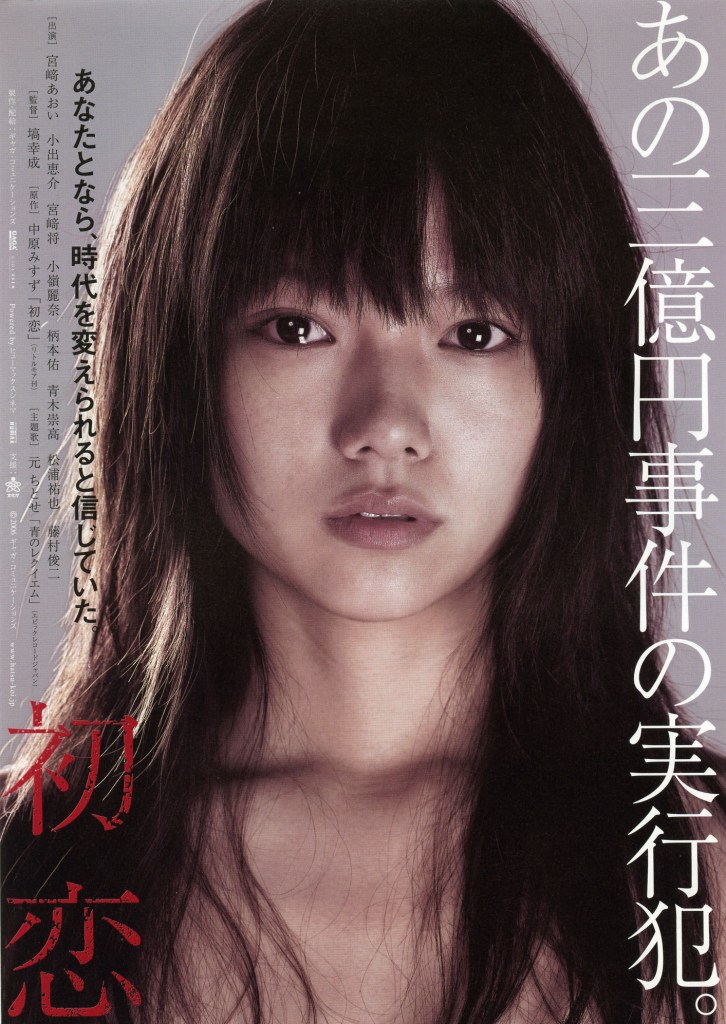
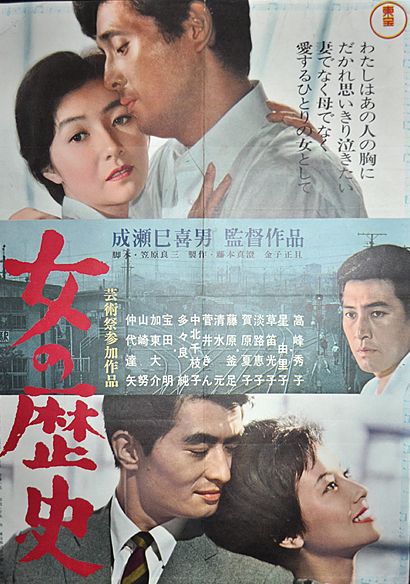 Mikio Naruse made the lives of everyday women the central focus of his entire body of work but his 1963 film, A Woman’s Story (女の歴史, Onna no Rekishi), proves one of his less subtle attempts to chart the trials and tribulations of post-war generation. Told largely through extended flashbacks and voice over from Naruse’s frequent leading actress, Hideko Takamine, the film paints a bleak vision of the endless suffering inherent in being a woman at this point in history but does at least offer a glimmer of hope and understanding as the curtains falls.
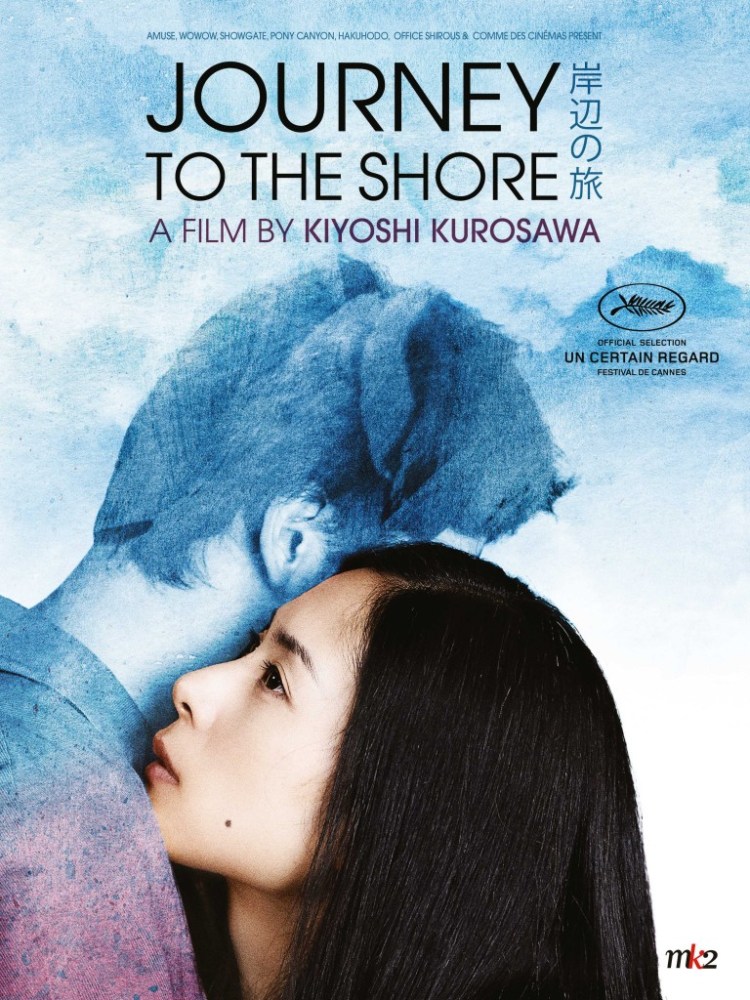 Time is an ocean, but it ends at the shore. Kiyoshi Kurosawa neatly reverses Dylan’s poetic phrasing as his shoreline is less a place of endings but of beginnings or at least a representation of the idea that every beginning is born from the death of that which preceded it. Adapted from a novel by Kazumi Yumoto, Journey to the Shore (岸辺の旅, Kishibe no Tabi) takes its grief stricken, walking dead heroine on a long journey of the soul until she can finally put to rest a series of wandering ghosts and begin to live once again, albeit at her own tempo.
 Windows on Worlds