Megane (めがね, Naoko Ogigami, 2007)

119236783696916311605When considering their next holiday destination, many people like to peruse some brochures, have a read of trip advisor or head to a well known tourist spot that is likely to impress the guests at their next soirée but then there are always others who just simply show up somewhere and hope for the best. The central character of Megane, Taeko (Satomi Kobayashi), perhaps wishes she’d done a little research before heading out to a very strange inn on a very strange island but the longer she stays, the more the ways of the laid-back islanders seem to make sense to her.

The film begins as inn owner Yuji (Ken Mitsuishi) plays with his dog on the beach before suddenly realising “She’s here!” – referring to a favourite, annual guest who operates a shaved ice stand on that very same beach but for the spring only. Sakura (Masako Motai) has, indeed, arrived but unexpectedly there is also a second visitor, Taeko, all the way from the big city. Yuki seems impressed Taeko managed to find the out of the way hotel and points out their tiny sign (if they had a bigger one there would be too many customers).

Taeko might have been looking for an escape but this is a little more than she bargained for. First off, she gets a wake up call every morning in the form of Sakura kneeling next to her bed and commenting on the weather and she’s sort of expected to attend meals at the same time as everyone else, convenient or not. Sakura also leads a strange callisthenics session on the beach each morning which Taeko is encouraged to join as well as constantly being offered Sakura’s shaved ice which she always declines.

There isn’t much to do in this strange place, Yuji, Sakura and another woman who isn’t a guest but hangs round all the time anyway are convinced Taeko has come for the purpose of “twilighting” which Taeko doesn’t quite understand and they refuse to elaborate on but apparently this weird island is very good for it. Getting sick of these strange people and their odd habits Taeko decides to just check out and try another hotel. BIG MISTAKE. The other hotel on the island turns out to be an even more bizarre cult commune which makes Yuji and co seem much more appealing all of a sudden. Returning humbly to the extremely relaxed hotel and sacrificing her suitcase in the process, Taeko finally begins to embrace the odd ways of the island and open herself up to its benign indifference.

However, part way through she’s rudely interrupted by one of her students who’s managed to track her down despite her having chosen this place specifically for its remoteness and lack of cellphone signal. Yomogi (Ryo Kase) takes to the weird ways of the island like a fish to water, in fact his hipsterish adaptability is a little odd in itself, but against expectations his arrival only slightly irritates Taeko and creates no major drama of its own. The mystery of the overly jealous hanger on, Haruna (Mikako Ichikawa), is partially solved towards the end though her gentle possessiveness of the inn bound family and passive aggression to Taeko’s gradual acclimatisation is also more of the comic variety and eventually works itself out in a gentle way.

“Gentle” may well be the best way to describe Megane. Someone should probably market a “calm” mix which consists entirely of the relaxing island sounds of this film. These people take things slow and are all the happier for it. They know the pleasure of a sunset, shaved ice on the beach on a sunny day, drinking beer outside or enjoying a barbecue with friends. Mellow to the core, Megane is the ideal way to find your own spot of serenity at the end of a busy day and is sure to ease even the heaviest of hearts with its subtle, absurd humour.


The Japanese region A blu-ray release of Megane includes English subtitles!


Crying Out Love, in the Center of the World (世界の中心で、愛をさけぶ, Isao Yukisada, 2004)

sekachuJust look at at that title for a second, would you? Crying Out Love, in the Center of the World, you’d be hard pressed to find a more poetically titled film even given Japan’s fairly abstract titling system. All the pain and rage and sorrow of youth seem to be penned up inside it waiting to burst forth. As you might expect, the film is part of the “Jun ai” or pure love genre and focusses on the doomed love story between an ordinary teenage boy and a dying girl. Their tragic romance may actually only occupy a few weeks, from early summer to late autumn, but its intensity casts a shadow across the rest of the boy’s life.

The story begins 17 years later, in 2004 when Sakutaro is a successful man living in the city and engaged to be married. Whilst preparing to move, his fiancée, Ritsuko, who happens to be from the same hometown, finds an old jacket of hers in a box which still has a long forgotten cassette tape hidden in the pocket. Dated 28th October 1986, the tape takes Ritsuko back to her childhood and a long forgotten, unfulfilled promise. She leaves a note for Sakutaro and heads home for a bit to think about her past while he, unknowingly, chases after her back to the place where he grew up and the memories of his lost love which he’s been unable to put to rest all these years…

In someways, Crying Out Love is your typical weepy as a young boy and girl find love only to have it cruelly snatched away from them by fate. Suddenly everything becomes so much more intense, time is running out and things which may have taken months or even years to work out have to happen in a matter of hours. In real terms, it’s just a summer when you’re 17 but then when you’re 17 everything is so much more intense anyway even when you don’t have to invite Death to the party too. Aki may have a point when suggesting that the the love the local photographer still carries for their recently deceased headmistress who married another man only lasted so long because it was unfulfilled. Perhaps Aki and Sakutaro’s love story would have been over by the end of high school in any case, but Sakutaro was never given the chance to find out and that unfinished business has continued to hover over him ever since, buzzing away in the back of his mind.

“Unfinished business” is really what the film’s about. Even so far as “pure love” goes, there comes a time where you need to move on. Perhaps the photographer might have been happier letting go of his youthful love and making a life with someone else, although, perhaps that isn’t exactly fair on the “someone else” involved. The photographer’s advice, as one who’s lived in the world a while and knows loneliness only too well, is that the only thing those who’ve been left behind can do is to tie up loose ends. Sakutaro needs to come to terms with Aki’s death so he can finally get on with the rest of his life.

There is a fair amount of melodrama which is only to be expected but largely Crying out Love skilfully avoids the maudlin and manages to stay on the right side of sickly. The performances are excellent across the board with a masterfully subtle performance from Takao Osawa as the older Sakutaro equally matched by the boyishness of a young Mirai Moriyama as his teenage counterpart. The standout performance however comes from Masami Nagasawa who plays the seemingly perfect Aki admired by all for her well rounded qualities from her sporting ability to her beauty and intelligence but also has a mischievous, playful side which brings her into contact with Sakutaro. Her decline in illness is beautifully played as she tries to put a brave face on her situation, determined not to give in and clinging to her romance with Sakutaro even though she knows that she will likely not survive. Kou Shibasaki completes the quartet of major players in a slightly smaller though hugely important role of Sakutaro’s modern day fiancée saddled with a difficult late stage monologue which she carries off with a great deal of skill.

Impressively filmed by Isao Yukisada who neatly builds the films dualities through a series of recurrent motifs, Crying Out Love, in the Center of the World is not without its melodramatic touches but largely succeeds in being a painfully moving “pure love” story. Beautiful, tragic, and just as poetic as its title, Crying Out Love, in the Center of the World is a cathartic romance that like Sakutaro’s memories of Aki is sure to linger in the memory for years to come.


The Japanese R2 DVD release of Crying Out Love, In the Center of the World includes English subtitles (Hurray!).

(Unsubbed trailer though, sorry)


If You Were Young: Rage (君が若者なら, Kinji Fukasaku, 1970)

51AM0Z0Z2cLFor 1970’s If You We’re Young: Rage (君が若者なら, Kimi ga Wakamono Nara), Fukasaku returns to his most prominent theme – disaffected youth and the lack of opportunities afforded to disadvantaged youngsters during the otherwise booming post-war era. Like the more realistic gangster epics that were to come, Fukasaku laments the generation who’ve been sold an unattainable dream – come to the city, work hard, make a decent life for yourself. Only what the young men find here is overwork, exploitation and a considerably decreased likelihood of being able to achieve all they’ve been promised.
Our story revolves around five young men who meet whilst working at a factory which later goes bust. The central pair, Kikuo and Asao have been friends since childhood. Both of their fathers were killed in mining accidents and the boys are part of the “golden egg” movement bringing in workers from the rural towns to increase prosperity in the capital. The other three are a fisherman’s son, Kiyoshi, a boxing enthusiast Ryuji and fifth wheel Ichiro. After a short spell in gaol, the guys hatch on the idea of clubbing together to buy a dumper truck and start a business of their own. However, by the time they’ve actually got the truck one of them’s in prison, one pulls out because of a shotgun marriage and the other is killed in a labour dispute. Asao and Kikuo get on with living the dream and are doing pretty well with the truck until their imprisoned friend decides to escape and ruins all of their lives in the process.

Almost proto-punk in tone, If You Were Young: Rage takes a long hard look at the put upon masses who rebuilt Japan but were left with little in return. These five guys left their small towns for the big city promised high wages, access to education and a path to a better life but largely what they found was cold rooms and overwork. There are frequent strike motions in the film as the construction and factory workers attempt to insist on better pay and conditions but are constantly defeated by the white collar bosses who can just bus in even more desperate young men who will agree to cross the picket line because they have no other choice. Our central five now have a dream and something to work towards, their truck isn’t just “a truck” – it’s a hundred trucks somewhere down the line and a symbol of the path to prosperity.

However, at the end of the film all of their dreams have been shattered. Some of this is not their fault, merely the vicissitudes of fate and changing times, some of it is down to poor choices but largely the odds were always stacked against them because the world is unfair. Kiyoshi lies all the time because he’s scared of pretty much everything, possibly because of an abusive (though perhaps not uncommon) upbringing. His selfishness and, ultimately, cowardice is about to mess things up for everyone else and there are somethings you just can’t come back from. Like many of Fukasaku’s heroes, what Asao dreams of is the friendship he found when the five guys were all together and working as a team. He wants to go back to that time of perpetual hope and friendship rather than live in this lonely prosperity.

Fukasaku veers between quirky new wave style optimism and the extreme pessimism of his general world view. The film is bright and colourful for the majority of its running time with memory and fantasy often relegated to black and white. He uses his usual freeze frames, often in times of violence, hand held cameras and dynamic framing to achieve his youthful, freewheeling atmosphere but as usual there’s a kind of desperation lurking in the background. As might be expected, the ending is all flames and ashes – youth lies ruined, dreams shattered, and the possibility of moving on seems woefully far off. Another characteristically caustic look at modern youth from Fukasaku, this more indie effort is one of his most searing and bears out his rather bleak prognosis for the future of his nation.


If You Were Young: Rage is available with English subtitles on R1 US DVD from Homevision and was previously released as part of the Fukasaku Trilogy (alongside Blackmail is My Life and Black Rose Mansion) by Tartan in the UK.


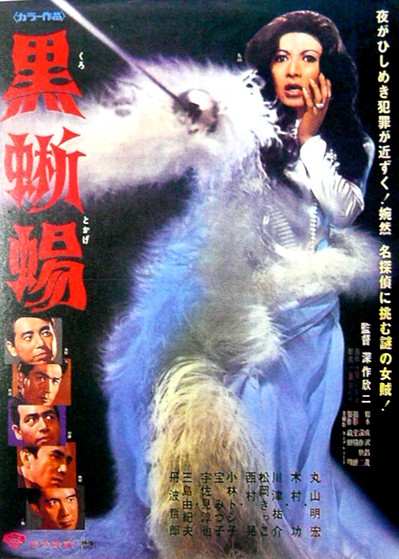
Black Rose Mansion (黒薔薇の館, Kinji Fukasaku, 1969)

3187_largeThose who only know Kinji Fukasaku for his gangster epics are in for quite a shock when they sit down to watch Black Rose Mansion (黒薔薇の館, Kuro Bara no Yakata). A European inflected, camp noir gothic melodrama, Black Rose Mansion couldn’t be further from the director’s later worlds of lowlife crime and post-war inequality. This time the basis for the story is provided by Yukio Mishima, a conflicted Japanese novelist, artist and activist who may now be remembered more for the way he died than the work he created, which goes someway to explaining the film’s Art Nouveau decadence. Strange, camp and oddly fascinating Black Rose Mansion proves an enjoyably unpredictable effort from its versatile director.
The sense of foreboding sets in right from the beginning as Kyohei, club owner and family patriarch, narrates a scene draped in a harsh red filter in which the lynchpin of the entire film, Ryuko, disembarks from a boat onto a jetty to meet him. He warns us that the sight of her was the “calm before the storm”, already anticipating the tumultuous events which are to follow. Having spotted her in a club in Yokohama, Kyohei poached Ryuko to work at his private members bar as a cabaret artist where she duly fascinates the customers seemingly knowing how to appeal to each of their own particular tastes in turn. A short time later, other suitors from the other bars begin to turn up but Ryuko refuses to recognise any of them. She is waiting for true love and believes the black rose she carries will turn red once she meets her prince charming. After a while she decides to move on but Kyohei convinces her to stay and maintain her “illusion” of perfect love rather than continually bursting its bubble, and so the two become a couple. However, when Kyohei’s wayward son Wataru returns and also becomes infatuated with Ryuko, a new chain of tragic events ensues…

Just to add fuel to the fire, the role of Ryuko is played by female impersonator Akihiro Miwa (formerly Akihiro Maruyama) who had also worked with Fukasaku on the notorious Black Lizard. Ryuko is mysterious, exotic maybe, etherial – certainly. She seems to shed identities only to pick up new ones perfectly tailored to whichever man she’s courting hoping each is the one who will turn her black rose red. Each of the previous suitors has failed to make her flower bloom and has so been discounted – erased from her memory whether willingly or unconsciously. When one of them is killed in front of her and her rose splashed with blood turning temporarily red, only then does she look on him lovingly. She loves them as they die but not before or after. Has each of these lonely, “different” men fallen for a siren call from the angel of death, or is Ryuko just another unlucky femme fatale who always ends up with the crazies?

Camp to the max and full of that rich gothic melodrama that you usually only find in a late Victorian novel, Black Rose Mansion is undoubtedly too much of a stretch for viewers who prefer their thrills on the more conventional side. However, there is something genuine underlying all the artifice in the story of obsessive, all encompassing love which develops into a dangerous sickness akin to madness. Ryuko is an unsolvable mystery which drives men out of their minds though they never seem to probe very far into her soul preferring to conquer her body. Only Kyohei who, at the end, is cured of his obsession with her, recognises that Ryuko is a woman who only exists in men’s minds and what you think of as love is really only lust like an unquenchable thirst.

Fukasaku attempts to invert classic gothic tropes by shooting the whole thing in lurid, brightly coloured decadence. Every time Kyohei thinks back on Ryuko he sees her bathed in red, like a beautiful sunset before a morning storm. Like Kyohei and pretty much everyone else in the picture, we too become enthralled by Ryuko and her uncanny mystery, seduced by her strangeness and etherial quality. Yes, it’s camp to the max and drenched in gothic melodrama but Black Rose Mansion also succeeds in being both fascinatingly intriguing and a whole lot of strange fun at the same time.


Black Rose Mansion is available with English subtitles on R1 US DVD from Chimera and was previously released as part of the Fukasaku Trilogy (alongside Blackmail is My Life and If You Were Young: Rage) by Tartan in the UK.


Blackmail is My Life (恐喝こそわが人生, Kinji Fukasaku, 1968)

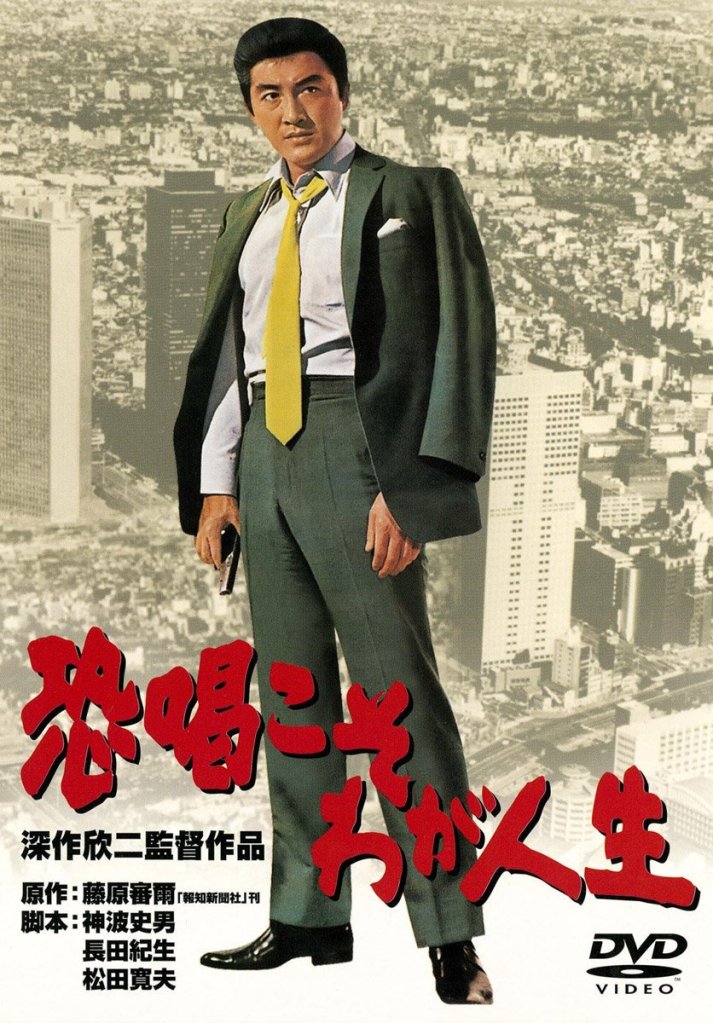
81eOlRLzY4L._SL1200_Suffice to say, if someone innocently asks you about your hobbies and you exclaim in an excited manner “blackmail is my life!”, things might not be going well for you. Kinji Fukasaku is mostly closely associated with his hard hitting yakuza epics which aim for a more realistic look at the gangster life such as in the Battles Without Honour and Humanity series or his bloody tale of high school warfare, Battle Royale but he also made a few comedies too and often has his tongue firmly in his cheek. Blackmail is My Life (恐喝こそわが人生, Kyokatsu Koso Waga Jinsei) is nominally a crime film, it follows the adventures of a group of young people having a lot of fun doing crime and crime related activities, but the whole thing’s so flippant and ironic that it threatens to drown itself in late ‘60s cool. It doesn’t, of course, it swims around in it whilst looking cool at the same time.

Shun starts the film with a slightly melancholy voiceover (a technique much borrowed in the ‘90s). He was young, he was ambitious but the best thing was he had friends who were more like family. He breaks up with his girlfriend and mopes about his awful job cleaning toilets at a cabaret bar but one day he overhears something about a scam going on with the whiskey they’ve been selling. Shun spots a business opportunity to get his own back on the cabaret owners and get some dough in the process. So begins his life as a petty blackmailer and it’s not long before he’s got his three best mates trapping businessmen into compromising situations so they can film it and blackmail them. The gang carry out petty crime and everything would probably be OK for them if they had stuck to shallower waters, not tried to get revenge for a family member’s death and, crucially, known when they were in way over their heads. Could it really ever be any other way for a self confessed small time punk?

Shun is a bit of an odd duck really. As a girlfriend points out, he’s always thinking about the past like an old man rather than the future, like a young one. He has an irreverent attitude to everything and a vague sense of entitlement mixed with resentment at having missed out in Japan’s post-war boom town. The blackmailing not only allows him to feel smugly superior to everyone else as if he’s some kind of mastermind trickster, but of course also allows him to live the highlife on the proceeds with far less time spent working himself to the bone like the average salaryman.

However, he also has this unexplained sadness, almost as if he’s narrating the film from the point of view of its ending despite being smack in the middle of it. When thinking of happy things he always comes back to his gang of friends enjoying a joyful, innocent day on the beach but later he starts having flashes of rats drowned in the river. Somehow or other he fears he’ll end here, dead among the detritus of a world which found no place for him. He tries to convince himself he’s bucking the system, trying to start a revolution for all the other young punks out there but at the end of the day he’s just another hungry scrapper terrified he’s going to land up on the trash heap.

Like a lot of Fukasaku’s other work, Blackmail is My Life is bright and flashy and cool. Full of late ‘60s pop aesthetics, the film seems to have a deep affinity with the near contemporary work of Seijun Suzuki, in fact one of the characters is always whistling Tokyo Nageremono, the theme tune to Suzuki’s pop art masterpiece Tokyo Drifter. Having said that Fukasaku swaps nihilistic apathy for a sort of flippant glibness which proves a much lighter experience right through until the film’s fairly shocking (yet inevitable?) ending.

Not quite as strong as some of his later efforts, Blackmail is My Life nevertheless brings out Fukasaku’s gift for dynamic direction though the comparatively more mellow scenes at the sea are the film’s stand out. Pulling out all the stops for his crazed, POV style ending with whirling cameras and unbalanced vision Fukasaku rarely lets the tension drop for a second as Shun and co. get hooked on crime before realising its often heavy tarrifs. Another bleak and cynical (though darkly comic) look at the unfairness of the post-war world, Blackmail is My Life may not rank amongst Fukasaku’s greatest achievements but it wouldn’t have it any other way.


Blackmail is My Life is available with English subtitles on R1 US DVD from Homevision and was previously released as part of the Fukasaku Trilogy (alongside Black Rose Mansion and If You Were Young: Rage) by Tartan in the UK.

Bicycle Sighs (自転車吐息, Sion Sono, 1989)

utJ5fVVtDUtt2rlbYWNjvqTFrytThese days we think of Sion Sono as the recently prolific, slightly mellowed former enfant terrible of the Japanese indie cinema scene. Hitting the big time with his four hour tale of religion and rebellion Love Exposure before more recently making a case for ruined youth in the aftermath of a disaster in Himizu or lamenting the state of his nation in Land of Hope what we expect of him is an energetic, sometimes ironic assault on contemporary culture. However, his beginnings were equally as varied as his modern output and his first feature length film, Bicycle Sighs (自転車吐息, Jidensha Toiki), owes much more to new wave malaise than to post-punk rage.
Loosely speaking, Bicycle Sighs is a kind of coming of age film where three teenagers experience a bout of anxiety about the future near the end of the ‘80s. Shiro (played by Sono himself), Keita and their female friend Katako have remained behind in their small town after all of their friends have moved on, mostly to universities. Life for them carries on much as before as they continue their part time paper rounds and messing about around town. Shiro, the more arrested of the pair of boys, becomes fixated on the idea of finishing a film they started making in high school whereas Keita wants to finally get into college himself and study to be a doctor.

As might be inferred from the English language title, there’s a sort of latent nostalgia for an era of innocent, aimless bicycle riding – of time spent with now absent friends and an adulthood that was far enough away not be worth worrying about. The bicycles themselves take on a symbolic quality and actually end up undergoing two different kinds of “funerals” during the film, once by burial and another by fire. This all seems like a pointer towards a bonfire of innocence but in actuality nothing very serious happens to any of the young people in the film save the usual occasions of heart break and disillusionment.

The 8mm sections filmed for the film within a film segments are often the most impressive, taking on an authentic sort of youthful exuberance. The “First Base” movie that the guys are making is a typical high school scenario in which the friends are enjoying a game of baseball but start discovering their game invaded by “invisible runners”. Later they start to be able to see one of them only he’s wearing a Godzilla mask and carrying a briefcase. Eventually he leaves the game trailing a long line out behind him. When Shiro tries to finish the film it develops into a great sci-fi style conspiracy where the kids uncover a plot in which their own “invisibility” is the ultimate aim.

Bicycle Sighs is a picture of youth in disarray (a theme Sono would often come back to). They’re each in search of their identity, some wanting to move back and others forward but all stuck in a limbo land of frustration. Sono packs in avant-garde inspired symbols like flags with the various Japanese characters for “I” emblazoned on them or another character taking to the streets alone on new year’s eve (also the eve of his own birthday) to wish happy new year to an empty town. There’s a great deal of interesting material in Bicycle Sighs, but ultimately its messages are a little oblique and somehow Sono never manages to bring everything together in a meaningful way. Nevertheless, some of his later skills shine through, particularly in the 8mm scenes, and there’s enough going on to please most attentive viewers even if it seems a little derivative at times.


You can actually get this on UK iTunes with English subtitles (for the moment anyway)


Gentle 12 (12人の優しい日本人, Shun Nakahara, 1991)

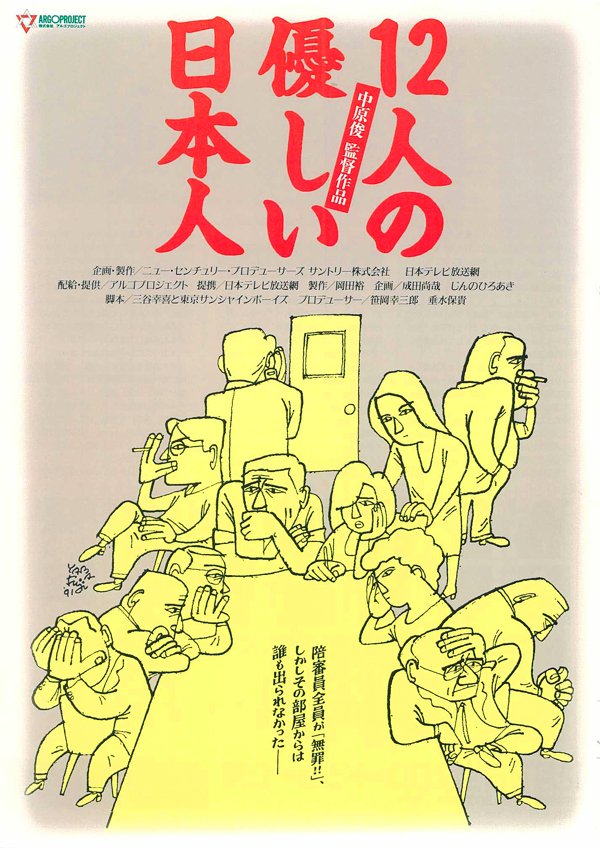
161_img_1_oAs you might be able to tell from its title, Gentle 12 (12人の優しい日本人, Juninin no Yasashii Nihonjin) is a loose Japanese parody of the stage play 12 Angry Men notably filmed by Sidney Lumet back in 1957. The Japanese title literally translates as “12 Kindly Japanese Guys” and the film takes the same premise of twelve jurors debating the verdict in a murder case which was previously thought fairly straightforward. This time our jury is a little more balanced as it’s not just guys in the room and even the men are of a more diverse background.
In contrast to the American version, each of our twelve jurors is immediately inclined to acquit and some of them are even walking out the door before one juror, Juror no. 2, raises an objection. He thinks the defendant may be guilty and they should at least talk about it a little more. Irritated, the jurors walk back into the room and enquire why he’s had this sudden change of heart. They will, of course, be entitled to some refreshments now, so what’s the harm in hanging round to talk things through. Eventually people start to switch sides, some in confusion or just wanting to get it over with, but gradually each is exposed as having a personal reason for feeling the way they do that has relatively little to do with the facts of the case.

In contrast to the original stage play, the first instinct of the Japanese jurors is to acquit. No one wants to believe the defendant, who is the mother of a young child accused of pushing her violent ex-husband into the path of an oncoming truck, could have wilfully planned such an outrageous crime in advance. Whatever the facts are, she has clearly suffered enough and her child certainly doesn’t deserve to be orphaned through having its mother taken away by over zealous seekers of “justice”. Nevertheless Juror no.2 doesn’t believe her story and thinks there’s at least the possibility that she pushed him deliberately if not having engineered the entire situation in someway.

As in the American version, they proceed to debate the facts of the case in detail but while some change sides after thinking over the arguments, others are rigidly committed to their positions. Of those in the not guilty camp, some of them can’t quite articulate their reasoning beyond “it’s just a feeling” which proves particularly infuriating to Juror No. 2. The US version placed more emphasis on societal prejudices with personal ones largely backing them up – i.e. they took against the defendant in that case because he was a poor boy from the slums so in their middle class, majority culture minds it was natural that he was guilty. Here, there’s a great deal of sympathy for the defendant who seems to have experienced a lot of misfortune but continues to try and do the best for her young son.

Even so, some take against her because she reminds them of past misfortune of their own, or take against the victim because even as a thoroughly unpleasant man he’d managed to attract himself a pretty wife and son only to misuse and abandon them. Some believe themselves to be excellent judges of character or to be good at spotting a liar only to have their opinions about themselves undermined when scrutinised. The revelations here are personal rather than societal, but the central fact remains that you can’t really ever know or prove what happened and even having witnessed something with your own eyes doesn’t necessarily mean you’ve totally understood the situation fully. Much of the juror’s deliberations consist of creating a narrative out of scattered facts and exercises in supposition. In the end, it more or less comes down to gut feeling anyway.

Originating as a stage play and scripted by Japanese comedy master Koki Mitani, Gentle 12 has its moments of humour and never really takes itself too seriously. What else could you say about a case which seems to hinge on the smallest size of pizza available from a delivery company and how someone might say the words “ginger ale” when really, really angry. The “kindly” jurors also have a wonderful tendency towards tolerance or towards restrained anger that sees them getting quite annoyed whilst trying not to lose their tempers in exasperation or just calmly restating their arguments (or lack thereof) and infuriating everyone else in the process. Neatly filmed by Shun Nakahara, Gentle 12 might not have the same level of cultural bite as its original work suggests but it does prove an enjoyably absurd confined space drama which offers a few cultural revelations of its own.


Rakugo Monogatari (落語物語, Shinpei Hayashiya, 2011)

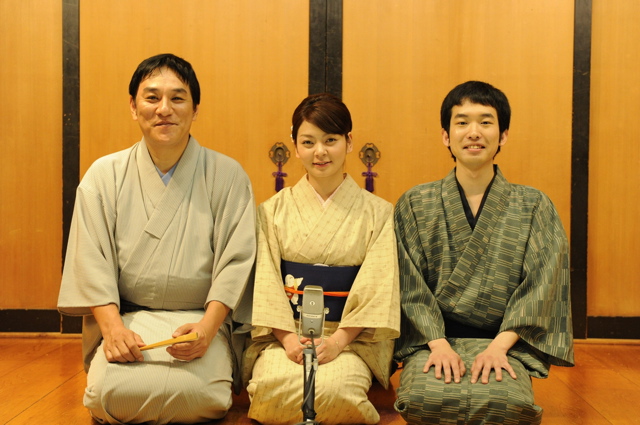
program_rakugoWhen it comes to the classic Japanese art forms, kabuki, noh and maybe even bunraku are not so uncommon overseas. Rakugo, however, has not been as lucky. Famously impenetrable for non-native speakers even if their language skills are otherwise top notch, rakugo is the art of traditional comic story telling in which the “rakugo-ka” recites a standard monologue with the aim of mining it for laughs in their own individual fashion. These stories date back to the Edo-era and rely heavily on classic Japanese puns, stock characters and cultural assumptions, consequently, their appeal has been on the wane in Japan for sometime. That’s not to say the art form is quite dead yet though, as real life rakugo-ka Shinpei Hayashiya’s Rakugo Monogatari attempts to prove.
The film begins as youngster Masato catches a Rakugo act and becomes immediately smitten. Hoping to become the disciple of a top master, he parks himself outside the house of Kozaru but is too shy to actually knock on the door. Luckily, Kozaru’s wife arrives home and spots Masato waiting outside. She’s a sharp woman and immediately guesses what Masato’s after so she invites him inside to meet her husband. Kozaru is a bit of a strange man but with a fantastic sense of humour and eventually agrees to take the young hopeful on as his pupil. There will be laughter and tears along the way but Masato is well on the road to achieving his rakugo dreams.

Created by real life rakugo comedian and occasional actor Shinpei Hayashiya, Rakugo Monogatari certainly has the air of authenticity. For a film that’s about an apprentice, we don’t really see a lot of direct training scenes (though there are some) and, in fact, we don’t spend all of our time on the hopeful Masato. After he starts to make some headway, the canvas widens a little to look at the arcane institution of the rakugo association and in particular its reaction to the decision of one of its female members to pursue a career in television which is taking her away from her rakugo roots. The position of female rakugo performers is briefly touched on as, though there are at least two highly proficient female rakugo-ka active on these stages, one of the other association members proclaims that he feels “uncomfortable” with a woman reciting this material at an important event. He says this right in front of an apparently high ranking female member of the association who looks rightfully non-plussed (and in general she is not a woman to be crossed lightly) before trying to back track. The younger female rakugo-ka eventually gets to perform but then has her profile immediately undermined by a personal scandal that would probably not have much effect on a male star’s career.

Hayashiya does give in to melodrama in the third quarter though he largely even manages to work a few laughs into a tragic situation. The other thread of the film is the warm and solid relationship between Kozaru and his wife Aoi, which is filled with a sort of bickering, reciprocal humour as the two become surrogate parents to the nervous Masato. In an odd sort of way it’s Aoi who lends the heart to the film and though her role is purely supportive, she provides the firm foundations which allow her husband and his new apprentice to flourish in their own careers.

A perfect tribute to the art of rakugo, Rakugo Monogatari is an affectionate comedy celebrating all sides of its famously complicated world. Though it runs a little long and has a tendency to run off the point for a while (perhaps an intentional complication), Rakugo Monogatari nevertheless proves an enjoyable foray into the world of this declining art form and finds plenty left to enjoy while it’s there.


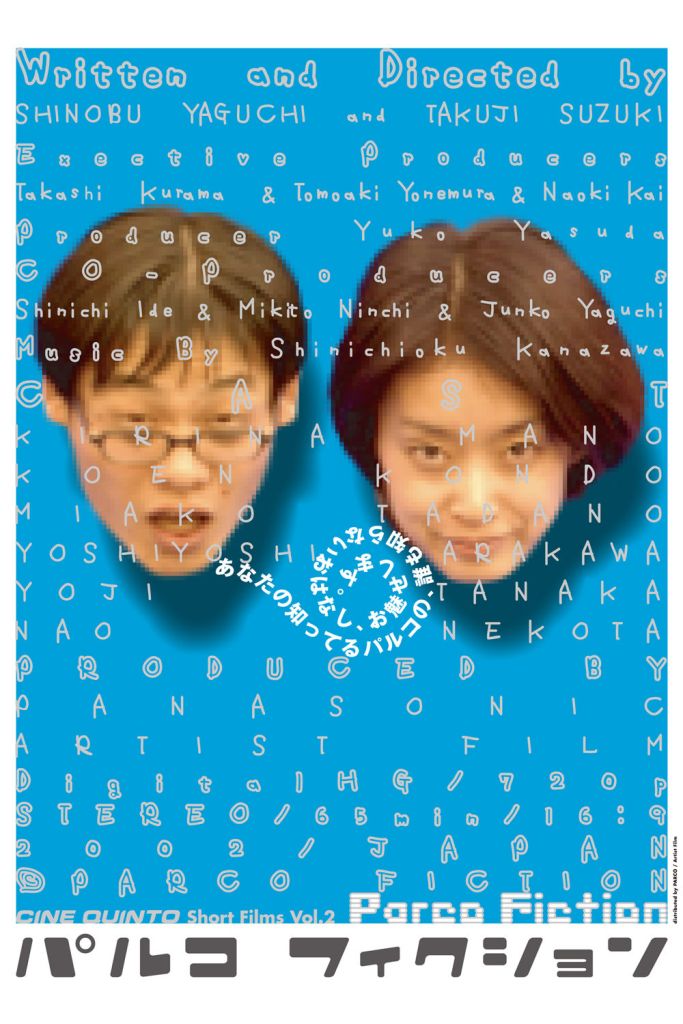
Parco Fiction (パルコ フィクション, Takuji Suzuki & Shinobu Yaguchi, 2002)

1000x1500sr

Since making 2002’s Parco Fiction, directors Shinobu Yaguchi and Takuji Suzuki have both gone on to bigger and better things but for this under seen portmanteau movie, they found themselves uniting to create something which seems to be a strange advert for the Parco department store in Tokyo’s trendy Shibuya district. The film is divided into five different short episodes loosely connected to the department store plus opening, closing and linking segments each filled with the kind of whimsical, absurd humour usually found in these kinds of films.

Opening with a planning meeting for the building of the department store in which its unusual name is decided after the chain smoking consultant finds it written on his scarred lungs after a medical emergency, the story moves on to a young lady who is undergoing an interview for a job at the store. Unfortunately, the young man being interviewed alongside her is an ideal candidate – a Tokyo university graduate who seems to have completely charmed the panel. However, the girl is given a job with the instruction not to open the envelope she’s been given but she can’t resist and finds herself setting off on a strange quest.

This only continues in part two as we come into contact with a soon to be middle school girl who has the misfortune of having a slightly dotty grandma by the name of “Harco”. Every time the Parco ad comes on, grandma gets very excited because she thinks someone’s calling her name even though the last person to call her “Harco” died, years ago. The little girl sets off to solve this problem by stopping grandma seeing the ads, but then something even stranger happens.

Tale three is set during a sale in which a young woman has her heart set on a particular dress and will stop at nothing to get it. This introduces us to the security guard at the Parco who takes us into story five as a shop worker has an unusual medical problem which prevents her from looking up. The security guard has a crush on the shopgirl, but he’s on the taller side so all he can do is stay close by and prepare to catch her every time she’s about to swoon after slightly raising her head. The film then closes with another mini sequence featuring the “standing room only” screening of Parco Fiction at a public cinema.

As is common with these kinds of films, some of the segments are more successful than others. The first perhaps goes on too long and the episode with the little girl and her grandma gets a little too surreal for its own good but the overall tone is zany, quirky humour. Sometimes very off the wall and filled with a good deal of slapstick too, Parco Fiction feels like a fairly low-key, frivolous effort but none the less enjoyable for it. Having said that, the entire duration of the film lasts only 65 minutes, and, truthfully, feels a little long despite the variation of stories involved.

Not a landmark film by any means, Parco Fiction still has plenty to offer particularly as a fairly early effort from these two directors who’ve since gone on to carve out fairly interesting careers. Sure to interest fans of quirky comedies, each of the segments has a zany, studenty humour vibe that often proves extremely funny. The film is undoubtedly low budget (and obviously filled with references to the Parco department store) but earnest enough and filmed in an accomplished and interesting manner.


This is another one you can randomly buy on UK iTunes with English subtitles.

Unsubbed trailer:

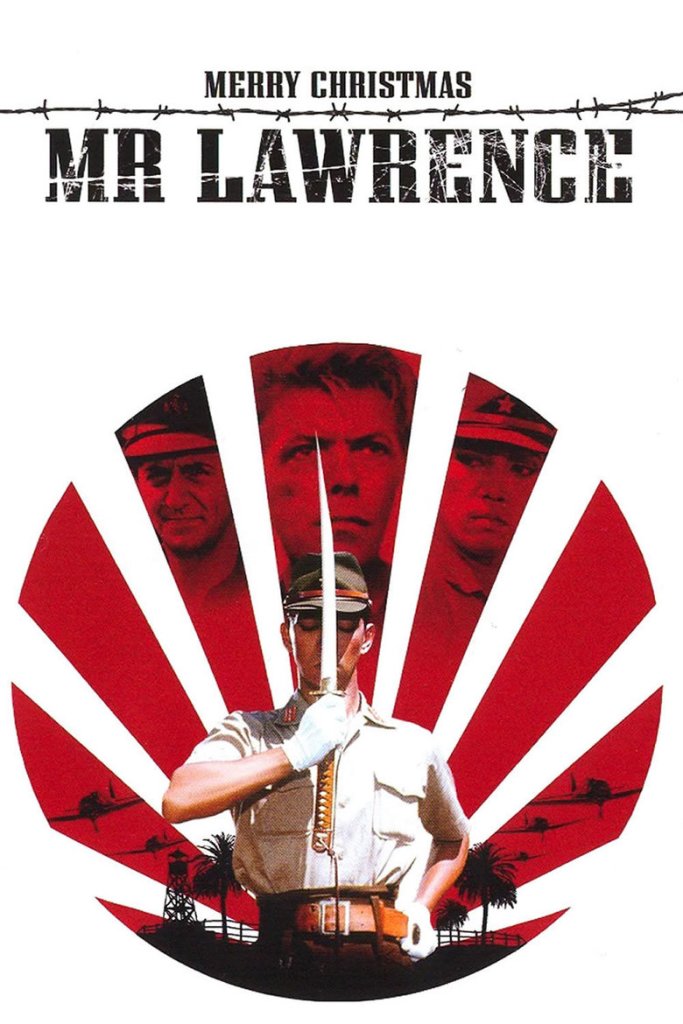
Merry Christmas, Mr. Lawrence (戦場のメリークリスマス, Nagisa Oshima, 1983)

Merry-Christmas-Mr-Lawrence-images-832f3814-1564-403a-a98a-313c5bb99deOf all the post-war Japanese filmmakers, the one who liked to twist the knife the most was surely Oshima. No subject too taboo, no pain too raw – he liked to find the sore spot and poke at it a little, if only in the hope of encouraging an accelerated healing, albeit one which would leave a scar to remind you that once you suffered. With Merry Christmas, Mr. Lawrence (戦場のメリークリスマス, Senjou no Merry Christmas) he takes an unflinching look at the treatment of Japan’s prisoners of war and contrasts the Japanese forces with the different attitudes of the (mostly) British soldiers held within the walls of the camp.

Based on a semi-autobiographical novel by Laurens Van der Post, The Seed and the Sower, much of the action takes place in a prisoner of war camp run by the Japanese in Java in 1942. The titular Lawrence (Tom Conti) is one of the British prisoners here but unusually speaks fluent Japanese as he lived in Japan for a time before the war. The camp is run by Captain Yonoi (played by Ryuichi Sakamoto who also composes the music for the film) but largely ministered over by the more sadistic Sergeant Hara (played by Takeshi Kitano in an early straight acting role and billed here solely as “Takeshi”). Things kick off once Yonoi is called away to help preside over a military trial for a “difficult” prisoner who refuses to talk. However, Yonoi is somewhat taken aback by the upright soldier he discovers there. Celliers (played by David Bowie) is sentenced to death only to have the firing squad deliberately miss before he’s transferred to Yonoi’s camp.

As expected the conditions at the camp are not particularly pleasant. The first scene we’re treated to is Lawrence being called to witness an altercation where a Korean/Japanese soldier is accused of raping a Dutch internee. Hara taunts both of them with homosexual slurs and berates the Dutchman for not having resisted strongly enough. Kanemoto, the accused man, has obviously been badly beaten and is eventually ordered to commit seppuku which he eventually tries to do at that very moment by impaling himself on a bayonet. Seppuku is not something to be taken so lightly though so he’ll be patched up now for a ritual suicide later to be witnessed by the wronged parties (whether they wish to watch or not). Homosexuality, or more precisely, homosexual acts, are not to be tolerated among prisoners even if Hara later protests that samurai are not afraid of “queers” whilst insinuating that the majority of Englishman are gay anyway.

Latent homosexuality continues to be an ongoing theme throughout the film. The attraction between Yonoi and Celliers passes beyond simple admiration or even fascination. There don’t seem to be any other particular reasons for Yonoi to continue trying to protect Celliers as he does when he saves him from the firing squad and later allowing him a greater degree of freedom than other prisoners. Both men feel themselves prisoners of their respective social systems – Yonoi as the cold hearted samurai, efficient and unfeeling, yet with an intellectual core and a conflicted heart, and Celliers as a man desperately trying to atone for having once betrayed someone he deeply cared for in a misguided attempt to fit in. That said, both men are on opposite sides of a war and in any case that kind attraction stands against both of their countries’ current social customs. Again, a man is betrayed by a kiss and another man pays an extraordinarily high price leaving the other powerless to save him.

As Lawrence says there are no winners here, wars are just men doing what they thought was right at the time even if they really know that every one of them is wrong. The Japanese are rigid, repressed and anxious whereas the British are obsessed with honour in other ways and lean more towards the side of pragmatism when the going gets tough. A Japanese soldier may prefer to die, even going so far as to commit suicide, rather than subject themselves to the humiliation of having been captured alive. A British soldier will accept becoming a prisoner but largely because he believes he has a duty to live on and serve to the best of his capacity. Once captured, his duty is to try and escape to return to fight and die for King and country until the bitter end.

What both sides have in common is the dehumanisation of its troops. When it comes down to it one man is as good as another. If a radio has been smuggled into the camp someone must be punished for that action, the exact identity of the perpetrator becomes almost an irrelevance. Likewise, if a war has been lost, someone must pay for wrongful acts committed by the losing side even if his actions are no worse than those of any other soldier.

Merry Christmas, Mr. Lawrence proves a beautifully sad condemnation both of the rigidity of war, of men who think they’re acting in righteousness when the very idea is the one which causes them to act unjustly, and of repressive social systems in general. Lawrence acts as the voice of reason whilst all the while admitting that he himself is also “wrong” and forced into certain actions and modes of behaviour with which he does not necessarily agree. Both of these empires are on the verge of crumbling, all this death and cruelty will prove to have been for nothing. War is a fruitless tragedy in which there are no winners, only losers on every side. “There are times when victory is very hard to take”, victors too need to abide by their own sense of decency without being swayed by vengeance masquerading as righteousness.


Merry Christmas, Mr Lawrence is available with English subtitles on blu-ray as part of The Criterion Collection in the US (and was previously released on blu-ray in the UK from Optimum/Studiocanal but appears to be currently out of print).

(That final voice over is needlessy creepy, isn’t it?)