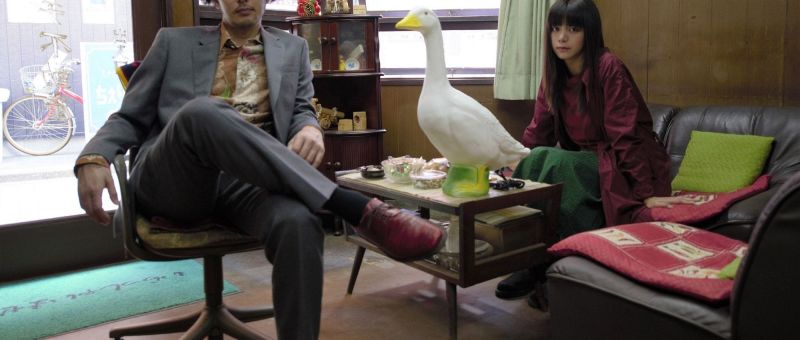
 In the olden days, when there had been a traumatic incident, holy people would be brought in to perform some kind of ritual to “purify” the air so life could go back to “normal”. These days people don’t believe in ghosts, or at least not in ghosts of that kind, but there is still a degree of discomfort involved in spending time in a place where something unpleasant has happened. Japanese rental laws state that a prospective renter/buyer should be informed if something untoward has occurred in the property, but the law only requires you to tell the next person in line. Therefore, if you can find a person willing to spend a few days in an apartment with a troubled past, they could be quite a useful asset to the unscrupulous estate agent.
Miko Yakumo (Elaiza Ikeda) is just such a woman and has therefore found herself falling into a “room laundering” career thanks to her uncle Goro (Joe Odagiri), a roguish real-estate-broker-cum-underworld-fixer with a sideline in fake IDs for undocumented migrants. Miko’s father died when she was five, and her mother disappeared without warning a few years later leaving her with her grandmother who died when Miko was 18. She’s now 20 and is nominally in her uncle’s care but having dealt with so much loss and abandonment, she prefers to keep to herself, always closed off with a pair of headphones blocking her ears, speaking to no one. The apartment “job” therefore suits her well enough with its clear stipulation to avoid mixing with the neighbours, but there’s one big drawback. Miko has recently developed the ability to see ghosts which is sometimes a problem given the circumstances her new places of residence became vacant.
A tale of learning to deal with the past, Room Laundering (ルームロンダリング) takes its heroine on some long, strange journeys but despite its death laden themes and Miko’s emotional numbness it has its essential warmths even if they’re sometimes harder to see. Miko’s travels chart a course of modern loneliness as she encounters those who’ve found themselves passing away alone, in pain and in sadness – old ladies whose bodies weren’t found until they’d almost all rotted away, neglected children who starved to death after being abandoned, businessmen who killed themselves after getting into debt, a catalogue of human misery seemingly without end. Miko doesn’t find the ghosts scary because she thinks real people are scarier. They lie, and they leave, and they let you down. At least the ghosts will stick around even if you wish they wouldn’t.
Even so, interacting with the recently deceased begins to reawaken Miko’s sense of vitality. Drinking with (or more accurately on behalf of) an insecure punk rocker (Kiyohiko Shibukawa) who took his own life before sending off his demo tape proves an oddly fulfilling experience for the otherwise introverted young woman, while staying in the apartment of a murdered cosplayer (Kaoru Mitsumune) gives her a sense of purpose when she decides to help the unfortunate woman move on by unmasking the real killer. Meanwhile, she also breaks her non-fraternising rule to chat to the geeky boy next-door (Kentaro Ito) and starts to wonder if maybe not all the living are so bad after all.
In dealing with the legacy of abandonment while literally living a transient life, Miko is forced to confront the ghosts of her past and exorcise them in order to escape her self imposed limbo. Only by being on her own can she reach the realisation that she is not alone. Meanwhile, Uncle Goro’s originally shady looking services for migrants without the proper papers begin to look more altruistic than they first seemed. He, like Miko, is helping himself by helping others who are also trapped in a kind of limbo only a more prosaic earthbound one of rigid bureaucracies and xenophobic exploitation. Goro maybe a dodgy estate agent with a sideline in forcing grannies out of their homes to pave the way for “redevelopment” but at least he’s found a better system of room laundering than his colleague who generally just rents to foreigners and visa overstayers he can either evict or extort if things go wrong. It just goes to show a little bit of empathy goes a long way. After all, you’re a long time dead.
Room Laundering was screened as part of the Fantasia International Film Festival 2018.
Original trailer (no subtitles)
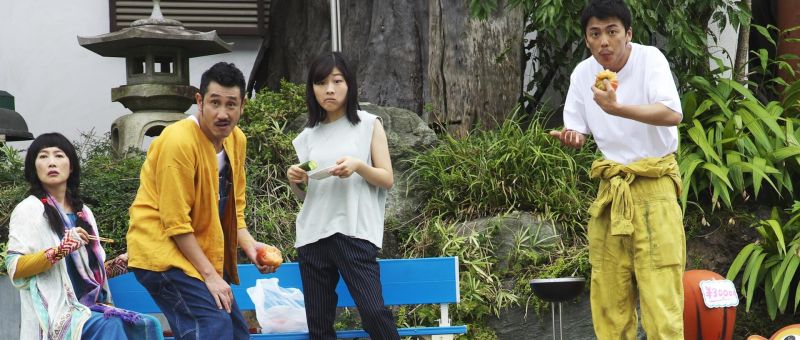
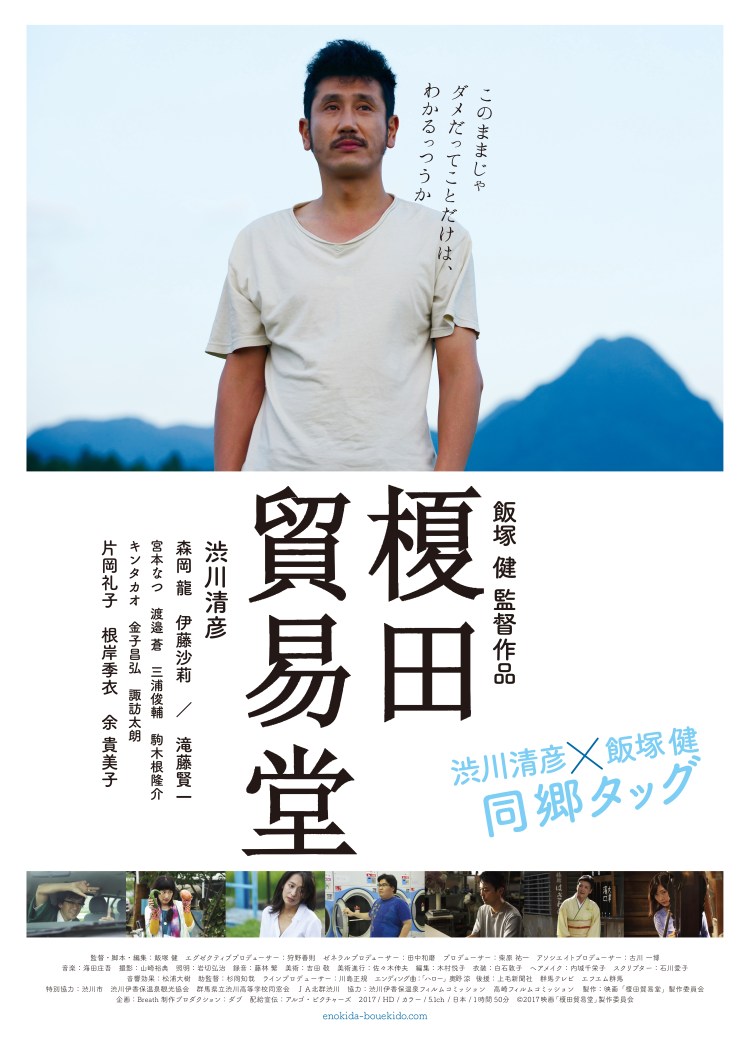


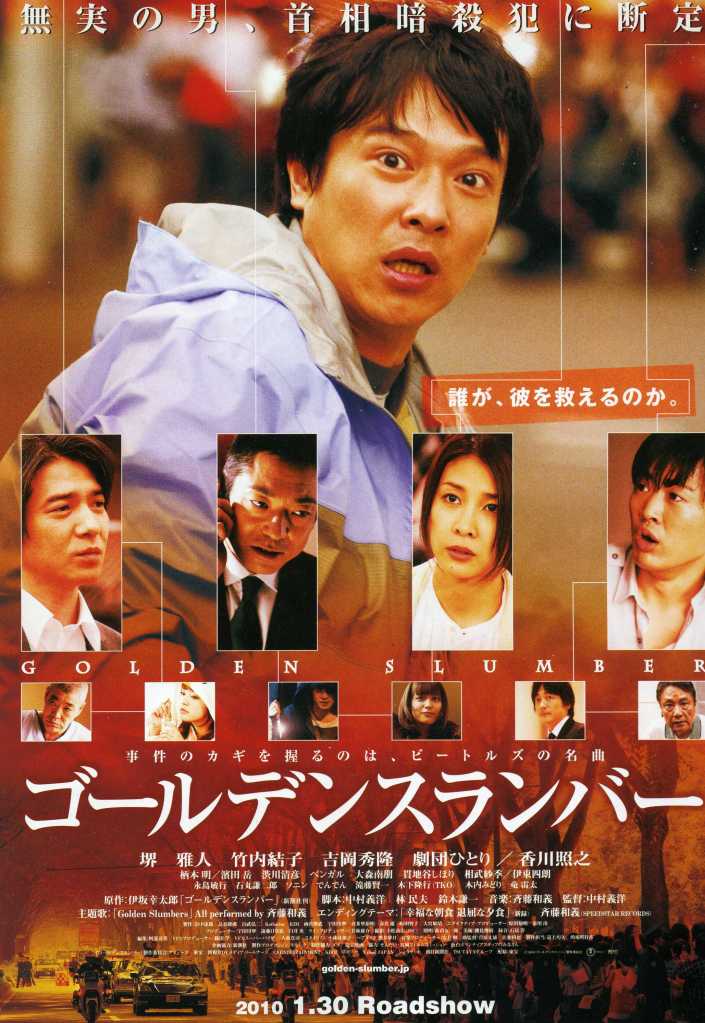 Yoshihiro Nakamura has made a name for himself as a master of fiendishly intricate, warm and quirky mysteries in which seemingly random events each radiate out from a single interconnected focus point. Golden Slumber (ゴールデンスランバー), like
  Toshiaki Toyoda has never been one for doing things in a straightforward way and so his third narrative feature sees him turning to the prison escape genre but giving it a characteristically existential twist as each of the title’s 9 Souls (ナイン・ソウルズ) search for release even outside of the literal walls of their communal cell. What begins as a quirky buddy movie about nine mismatched misfits hunting buried treasure whilst avoiding the police, ends as a melancholy character study about the fate of society’s rejected outcasts. Continuing his journey into the surreal, Toyoda’s third film is an oneiric exercise in visual poetry committed to the liberation of the form itself but also of its unlucky collection of reluctant criminals in this world or another.
 Looking back, at least to those of us of a certain age, the late ‘90s seem like a kind of golden era, largely free from the economic and political strife of the current world, but the cinema of that time is filled with the anxiety of the young – particularly in Japan, still mired in the wake of the post-bubble depression. Toshiaki Toyoda’s Pornostar (ポルノスター, retitled Tokyo Rampage for the US release) (not quite what it sounds like), is just such a story. Its protagonist, Arano (Chihara Junia, unnamed until the closing credits), stalks angrily through the busy city streets which remain as indifferent to him as he is to them. Though his wandering appears to have no especial purpose, Arano seethes with barely suppressed rage, nursing sharpened daggers waiting to plunge into the hearts of “unnecessary” yakuza.
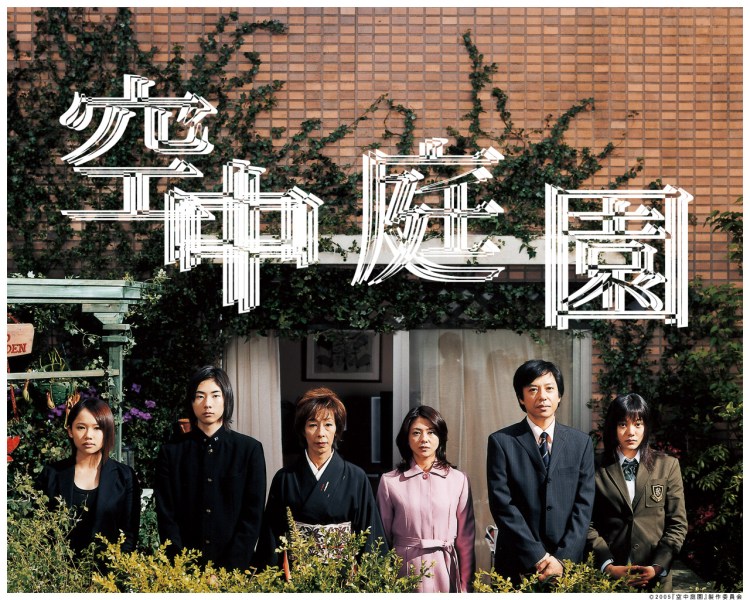 If you wake up one morning and decide you don’t like the world you’re living in, can you simply remake it by imagining it differently? The world of Hanging Garden (空中庭園, Kuchu Teien), based on the novel by Mitsuyo Kakuta, is a carefully constructed simulacrum – a place that is founded on total honesty yet is sustained by the willingness of its citizens to support and propagate the lies at its foundation. This is
  Yusuke Iseya is a rather unusual presence in the Japanese movie scene. After studying filmmaking in New York and finishing a Master’s in Fine Arts in Tokyo, he first worked as model before breaking into the acting world with several high profile roles for internationally renowned auteur Hirokazu Koreeda. Since then he’s gone on to work with many of Japan’s most prominent directors before making his own directorial debut with 2002’s Kakuto. Fish on Land (セイジ -陸の魚-, Seiji – Riku no Sakana), his second feature, is a more wistful effort which belongs to the cinema of memory as an older man looks back on a youthful summer which he claimed to have forgotten yet obviously left quite a deep mark on his still adolescent soul.
 “What would John do?” is a question Cassavetes loving indie filmmaker Tetsuo (Kiyohiko Shibukawa) often asks himself, lovingly taking the framed late career photo of the godfather of independent filmmaking in America down from the wall. Unfortunately, if Cassavetes has any advice to offer Tetsuo, Tetsuo is not really paying attention. An example of the lowlife scum who appear to have taken over the Japanese indie movie scene, Tetsuo hasn’t made anything approaching art since an early short success some years ago and mainly earns his living through teaching “acting classes” for young, desperate, and this is the key – gullible, people hoping to break into the industry.
 When examining the influences of classic European cinema on Japanese filmmaking, you rarely end up with Fellini. Nevertheless, Fellini looms large over the indie comedy Choklietta (チョコリエッタ) and the director, Shiori Kazama, even leaves a post-credits dedication to Italy’s master of the surreal as a thank you for inspiring the fifteen year old her to make movies. Full of knowing nods to the world of classic cinema, Chokolietta is a charming, if over long, coming of age drama which becomes a meditation on both personal and national notions of loss.
 Windows on Worlds