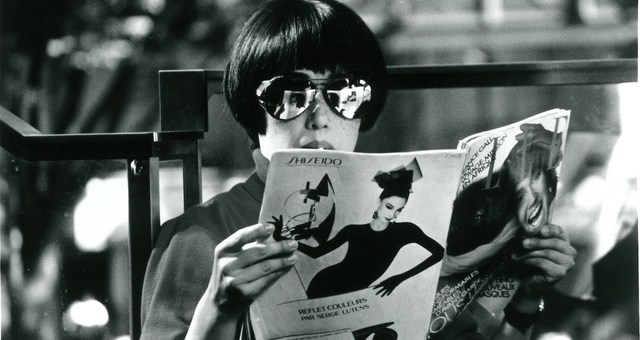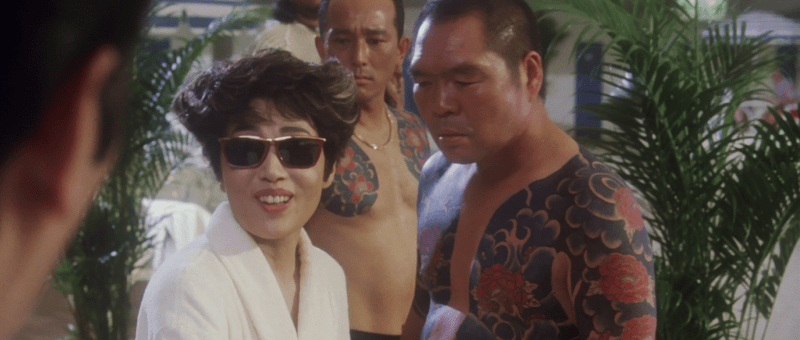
Minbo, or the Gentle Art of Japanese Extortion (ミンボーの女, Juzo Itami, 1992)

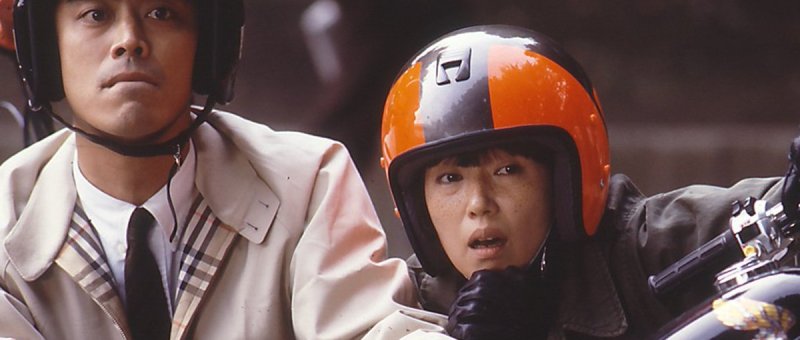
“Yakuza are vain, treat them politely,” the heroine of Juzo Itami’s 1992 comedy Minbo, or The Gentle Art of Japanese Extortion (ミンボーの女, Minbo no Onna) instructs a hapless pair of hotel employees trying to solve the organised crime problem at their hotel, but it’s a lesson Itami would go on to learn himself after he was attacked by gangsters who slashed his face and neck with knives. Itami in fact died in fairly suspicious circumstances in 1997 having fallen from the roof of a high-rise building leaving a note behind him explaining his “suicide” was intended to prove his innocence in regards to an upcoming newspaper story alleging an affair with a young actress. Given Itami’s films had often made a point of skewering Japanese traditions and that taking one’s own life is not the way most would choose to clear their name, it has long been suggested that his death was staged by yakuza who’d continued to harass him ever since the film’s release. 

It’s true enough that Minbo may have touched a nerve in undercutting the yakuza’s preferred image of themselves as the inheritors of samurai valour standing up for the oppressed masses against a cruel authority. Of course, that isn’t really how it works and getting the yakuza on your side in a civil dispute may be a case of out of the frying pan into the fire. It’s the yakuza themselves who are the oppressive authority ruling by fear and intimidation. Even so, the yakuza as an institution were in a moment of flux in the early ‘90s following the collapse of the bubble economy during which they’d shifted further away from the street thuggery of the post-war era into a newly corporatised if no more respectable occupation. This change is perhaps exemplified by “minbo”, a kind of fraud in which gangsters get involved in civil disputes underpinned with the thinly veiled threat of violence. 

The yakuza who plague the Hotel Europa, for example, pull petty tricks such as “discovering” a cooked cockroach in the middle of a lasagne, or claiming to have left a bag of cash behind which is later handed back to the “wrong” person by the front desk who probably should have asked for ID. Itami frames the presence of the yakuza as a kind of infestation, suggesting that if you do not tackle it right away it soon takes over and cannot be removed. Dealing with the problem directly may cause it to get worse in the short term, but only by doing so can you ever be rid of them once and for all. At least that’s the advice given by forthright attorney Mahiru (Nobuko Miyamoto) who demonstrated that the only way to deal with yakuza is to show them that you aren’t afraid because at the end of the day the law is on your side. 

Part of the “woman” cycle in which Itami’s wife Nobuko Miyamoto stars as a sometimes eccentric yet infinitely capable woman solving the problems of contemporary Japan through old-fashioned earnestness and everyday decency, Minbo finds its fearless heroine explaining that the yakuza themselves are a kind of con. In general they won’t hurt civilians because then they’re much more likely to be arrested. Going to prison is incredibly expensive and therefore not likely to prove cost effective. She knows that if she can catch them admitting they’ve committed a “crime” then they can’t touch her, and they won’t. They do however go after the rather more naive hotel boss Kobayashi (Akira Takarada) whom they try to frame for the rape of a bar hostess, drugging him after he unwisely agreed to meet them alone to hand over blackmail money. Then again, the hotel isn’t entirely whiter than white either. Kobayashi admits they can’t pull strings with the health ministry over the cockroach incident because they previously used them to cover up a previous instance of food poisoning. 

In any case, the yakuza end up looking very grubby indeed. It’s hard to call yourself a defender of the oppressed when you’re pulling petty stunts no better than a backstreet chancer. Yet like any kind of irritating insect, they too begin to evolve gradually developing a kind of immunity to Mahiru’s tactics in themselves manipulating law only they aren’t as good as she is and they are after all in the wrong. She’s a little a wrong too in that if pushed too far the yakuza will indeed stoop to physical violence against civilians, but she also knows that they thrive on fear and that to beat them she may have to put her safety on the line to prove they have no power over her. It seems Itami felt something similar issuing a statement shortly after his attack to the effect that “Yakuza must not be allowed to deprive us of our freedom through violence and intimidation, and this is the message of my movie”. As gently humorous as any of Itami’s movies and no less earnest, Minbo paints the yakuza as a plague on post-bubble Japan and suggests that it’s about time they were shown the door. 


Trailer (no subtitles)
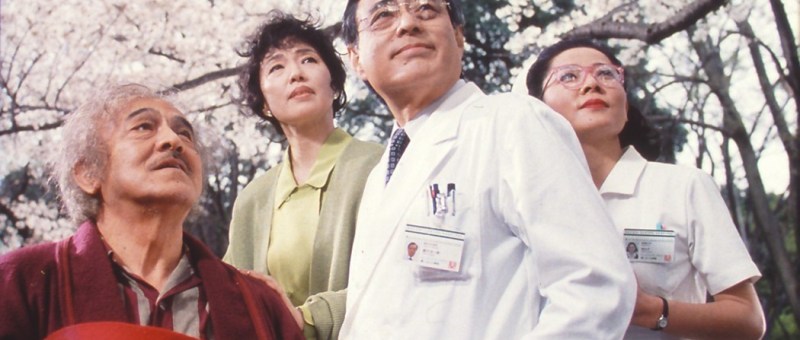
The Last Dance (大病人, Juzo Itami, 1993)

A self-involved film director gets a lesson in what it is to live when he discovers that he has terminal cancer in a lighthearted melodrama from Juzo Itami, The Last Dance (大病人, Daibyonin). Itami was apparently inspired by his own stay in hospital after being attacked by yakuza offended by his previous film Minbo and like his debut The Funeral the film has a few questions to ask about the nature of death along with the functioning of the medical system. 

That’s partly because film director Buhei Mukai (Rentaro Mikuni) is not initially told of his diagnosis. His well-meaning doctor, Ogata (Masahiko Tsugawa) a old university friend of his wife, elects to tell him only that he has a stomach ulcer in keeping with an old-fashioned policy that worries patients may lose hope and give up too easily on discovering the extent of their illness. Buhei meanwhile continues to obsess about his condition, convinced it must be cancer and that his wife, Mariko (Nobuko Miyamoto), and the medical staff are lying to him, at one point pretending to be his own uncle in order to tease the truth out of Ogata over the phone and attempting suicide when he accidentally implies that Buhei may not have long left. 

His distress is compounded by the irony that in the film he was working on when he became ill he was starring as a composer with advanced cancer whose wife has also been diagnosed with a more aggressive form of the disease. Whatever we might think about Buhei, it’s fair to say that the film’s sexual politics have not aged well. Not only was he having an affair with the actress playing his wife, but continues to flirt inappropriately with the medical staff and at one point even tries to force himself on his wife who was in the process of leaving him when he was first diagnosed. His lechery seems primed to appeal to men of a similar age while hinting at his virility and desire for life, but is nevertheless crass and often uncomfortable. Nevertheless, as Mariko says he’s like a child inside cheekily joking with the doctors about his drinking and smoking habits while running away from anything unpleasant and trying to get out of having to undergo treatment. 

Itami had often remarked on the weaknesses of Japanese men who “can’t stand loneliness, can’t make decisions alone, can’t face anyone who disagrees with them and can’t accept responsibility for their mistakes,” Buhei seemingly possessing all four. In part regretting her decision to keep the seriousness of his illness from him, Mariko reflects that in the end all they did was leave Buhei alone in his fear and anxiety as the only one who didn’t know the truth, engineering a kind of conspiracy as they cheerfully told him to “soldier on” knowing there was no hope. Yet during his time in the hospital, Buhei is also confronted by the ethical dilemmas of medical treatment on witnessing doctors desperately try to resuscitate a man who was miserable, in pain, bedridden, and unable to communicate, just waiting for the end. As even his grieving wife calls out to the doctors to let him go, Buhei wonders if it’s right to preserve life at all costs especially when the patient has not been given a choice in his treatment and may not have been informed that they have no possibility of recovery. 

Coming to a new realisation he challenges Ogata’s conviction that death is his enemy, telling him that he should see it less as defeat than acceptance reflecting on the irony that he never felt so alive as when dying. Whimsical if occasionally maudlin, Itami throws in a surrealist dream sequence in which Buhei approaches the other side and comes to realise that death might not be so frightening after all even as he watches himself from above in an out of body experience witnessing the accidental violence inflicted on his body by those trying to save it. In some senses, Buhei is fairly unredeemed, winking at his indifferent mistress even on his death bed, but is in others humbled as he looks back on his life with its regrets and unfulfilled promises, repairing his relationship with his long suffering wife while admitting that under different circumstances he and Ogata might have become good friends. Offering a sometimes critical view of medical practice and ethics, Itami’s poetic meditation on what it is to die loses none of his ironic humour even in its unfolding tragedy. 


GO (Isao Yukisada, 2001)

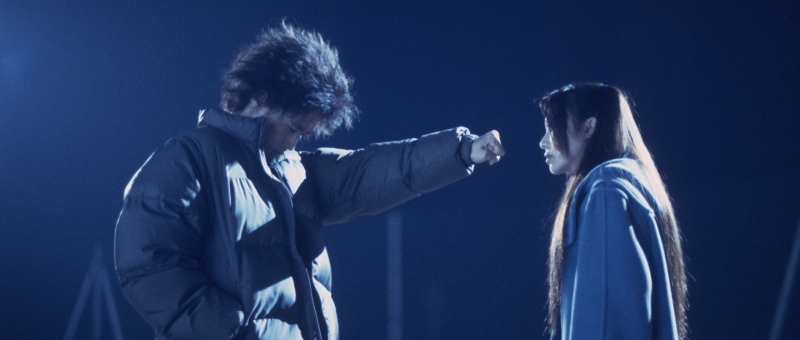
“We never had a country” a student at a North Korean school in Japan fires back, hinting at his feelings of displacement in being asked to remain loyal to a place he never knew while the culture in which he was born and raised often refuses to accept him. The hero of Isao Yukisada’s Go is not so much searching for an identity as a right to be himself regardless of the labels that are placed on him but is forced to contend with various layers of prejudice and discrimination in a rigidly conformist society.

As he points out, when they call him “Zainichi” it makes it sound as if he is only a “temporary resident” who does not really belong in Japan and will eventually “return” to his “home culture”. In essence, “Zainichi” refers to people of Korean ethnicity who came to Japan during the colonial era and their descendants who are subject to a special immigration status which grants them rights of residency but not citizenship. Sugihara’s (Yosuke Kubozuka) situation is complicated by the fact that his father (Tsutomu Yamazaki) has a North Korean passport, making him a minority even with the Korean-Japanese community. He attends a North Korean school where speaking Japanese is forbidden and is educated in the tenets of revolutionary thought which are of course entirely contrary to the consumerist capitalism of contemporary Japan. 

His father eventually consents to swap his North Korean passport for a South Korean one mostly it seems so he can take a trip to Hawaii with his wife (Shinobu Otake) which seems to Sugihara a trivial reason for making such a big decision especially as it caused the lines of communication to break down with his bother who returned to North. Yet it seems like what each of them is seeking is an expansion of internal borders, the right not to feel bound by questions of national identity in order to live in a place of their own choosing. “I felt like a person for the first time,” Sugihara explains on being given the opportunity to choose his nationality even if it is only the “narrow” choice between North and South Korea. 

But on the other hand he wonders if it would make his life easier if he had green skin so that his “non-Japaneseness” would be obvious. Sugihara reminds us several times that this is a love story, but he delays revealing that he is a Zainichi Korean to his girlfriend because he fears she will reject him once she knows. On visiting Sakurai’s (Ko Shibasaki) home, it becomes obvious that she comes from a relatively wealthy, somewhat conservative family. Her father, who is unaware Sugihara is Korean-Japanese, immediately asks him if he likes “this country” but is irritated when Sugihara asks him if he really knows the meaning behind the various words for “Japan” again hinting at the meaninglessness of such distinctions. When he eventually does tell Sakurai that he is ethnically Korean, her reaction surprises both of them as she recalls her father telling her not to date Korean or Chinese men on account of their “dirty” blood. 

Such outdated views are unfortunately all too common even at the dawn of the new millennium. Even so, Sakurai had not wanted to reveal her full name because she was embarrassed that it is so “very Japanese” while conversely Sugihara takes ownership of the name “Lee Jong-ho”. He embraces the “very Japanese” tradition of rakugo, and hangs out in the Korean restaurant where his mother works dressed in vibrant hanbok. Given a book of Shakespeare by his studious friend, he is struck by the quote which opens the film which states that a rose by any other name would smell as sweet and wonders what difference a name makes when its the same person underneath it. 

Perhaps his father’s admission that he always found a way to win wasn’t so off base after all, nor his eventual concession that Sugihara may have it right when he rejects all this talk of “Zainichi” and “Japanese” as “bullshit” and resolves to “wipe out borders”. He insists on being “himself” or perhaps a giant question mark, and discovers that Sakurai may have come to the same conclusion in realising that all that really mattered was what she saw and felt. Yukisada captures the anxieties of the age in the pulsing rhythms of his youthful tale which keeps its heroes always on the run, but is in the end a love story after all and filled with an equally charming romanticism. 


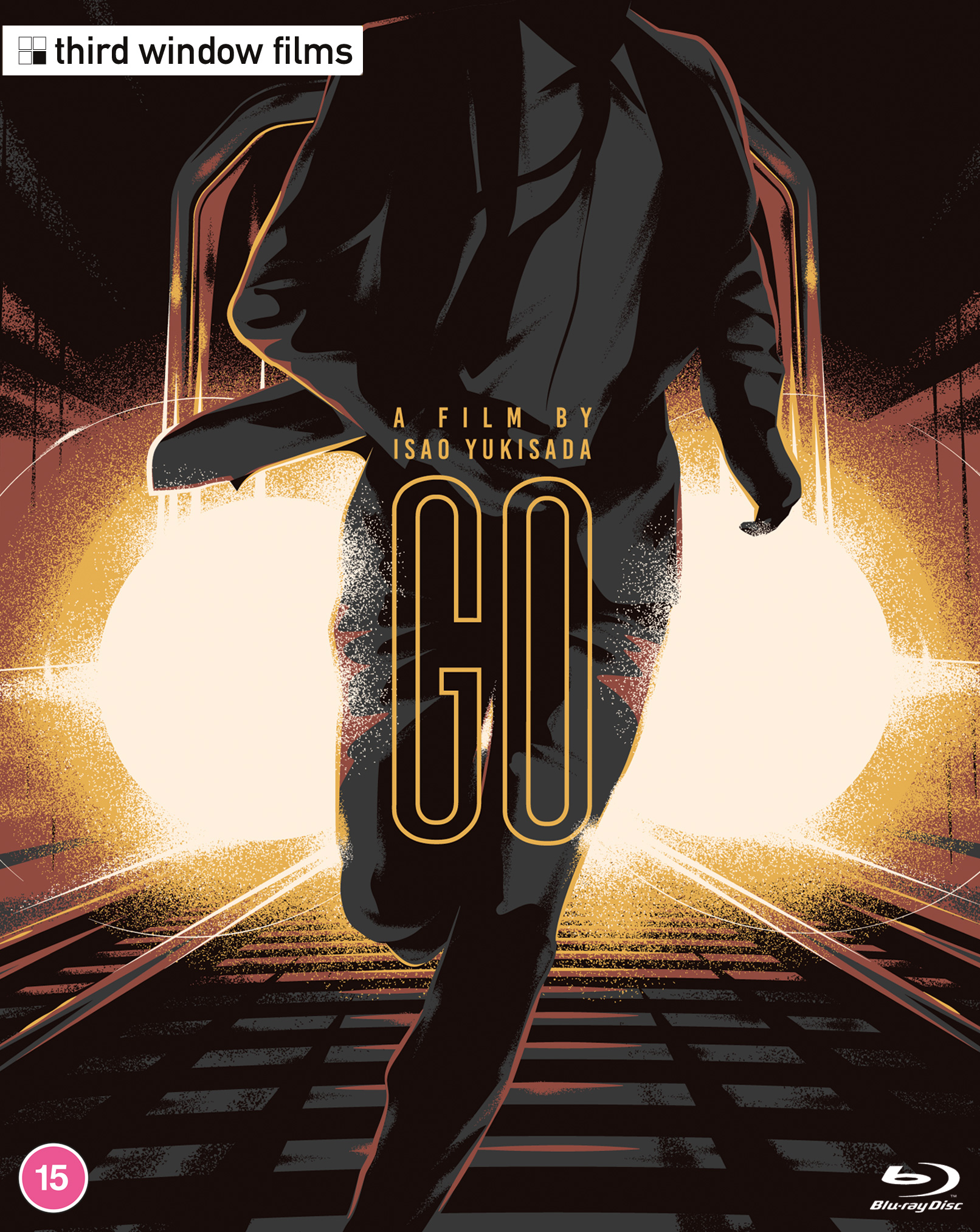
GO is released on blu-ray in the UK on 22nd May courtesy of Third Window Films.

Original trailer (English subtitles)

Horror of the Wolf (狼の紋章, Masashi Matsumoto, 1973)

“All I wanted was to live a quiet life alone” a teenage werewolf laments unfairly forced into a human world which has no real place for him while he can find no accommodation with its innate cruelty. Adapted from the manga by Kazumasa Hirai & Hisashi Sakaguchi, Horror of the Wolf (狼の紋章, Okami no Monsho) is part high school delinquent movie and part psychedelic werewolf exploitation film in which the hero finds himself drawn into a weird supernatural battle with a crazed nationalist while falling for his beautiful high school teacher who perhaps uncomfortably reminds him of his late mother. 

Akira Inugami (Taro Shigaki) spent the early years of his life in Alaska playing with the local wolves until his anthropologist parents were murdered “due to suspicions of spy activity”. After spending some time raised by the wolves, Akira was then taken in by his fantastically wealthy aunt, the CEO of the top chain of Japanese restaurants in the US where he was schooled until returning to Japan. As the film opens, he’s attacked by a gang of thugs, refusing to fight back and later stabbed but cooly removing the knife from his stomach as if it were only an inconvenience to him. Witnessing this strange event, school teacher Miss Aoshika (Yoko Ichiji) promptly faints, only to receive a shock the next day when the man she thought she saw murdered the night before shows up as a mysterious transfer student at her elite academy. 

Hinting at an underlying theme of class conflict and institutional corruption, the school doesn’t really want to take Akira because he’s a troublemaker who’s always getting into fights, though this claim seems to conflict with his ongoing refusal to engage with physical violence, but is reluctant to dismiss him because his aunt is so very wealthy. The same goes for his rival, Haguro (Yusaku Matsuda), whose father is a yakuza boss. Haguro is the leader of the school’s delinquent thugs, a distinctly cool presence who wanders around brandishing a katana which he is frequently seen unsheathing with the Japanese flag in the background while his family crest appears to feature an eagle reminiscent of those seen in Nazi Germany.

Nationalism aside, the film has an ongoing preoccupation with animal imagery not only with Akira’s wolfishness but Aoshika whose name literally means “blue deer” often appearing in front of a wooden deer ornament while Akira’s apartment seems to be kitted out with AstroTurf or at least a vibrant green carpet with the appearance of grass as well as occasionally shifting into an idyllic dreamscape where he can frolic cheerfully in the wild. When Aoshika comes looking for him, he tells her that he’s simply wearing a wolf mask and refuses to take it off, urging her to leave him in peace because “women are so lacking in delicacy and so overbearing it drives me nuts”. 

Akira is not alone in his apparent misogyny, Aoshika is violently raped on three separate occasions the first being by her own students which the headmaster brushes off as a rather frequent occurrence giving rise to the question of why she continues to work at the school, where she is apparently the only female member of staff, if she continually faces such traumatic violence. Her final assault meanwhile comes at the hands of Haguro who seems to be performing some kind of bizarre ritual while preparing to face off against Akira who saved her from a previous attack by street punks while in his werewolf guise.  

Aside from his brooding intensity, there are few clues to Akira’s true identity other than his ability to heal in rapid time following injury and skilful athleticism in dodging attacks. Repeatedly referred to as a “lone wolf”, partly an insult based on his name (which literally means “dog god” and is used to describe those possessed by the spirit of a dog), Akira adopts a pacifist stance towards his aggressors refusing to fight back later telling Haguro that they’re simply not worth the bother yet his refusal to fight is mistaken for a philosophical position that eventually makes him a figurehead for a gang of leftist teens trying to halt the culture of violence in the school in what seems to be an ironic swipe at the student protests even if also setting up a challenge to Haguro’s crypto-fascist authoritarian thuggery. 

A curiously avant-garde affair, Masashi Matsumoto’s teen wolf drama features striking composition with frequent use of solarisation and an almost mythical opening sequence detailing the hero’s origin story amid the snows of Alaska, along with incongruous practical effects such as the furry wolf mask Akira often wears in his apartment in his half-transformed state. It is also somewhat lurid, unnecessarily revelling in the sexualised violence directed at the heroine with three lengthy rape scenes of varying intensity. Even so in its undeniable strangeness and eventual pathos for those who cannot survive in “a cruel world made by humans” Horror of the Wolf reserves its sympathy for the outsiders unwilling to submit to a world of human cruelty.


Funuke Show Some Love, You Losers! (腑抜けども、悲しみの愛を見せろ, Daihachi Yoshida, 2007)

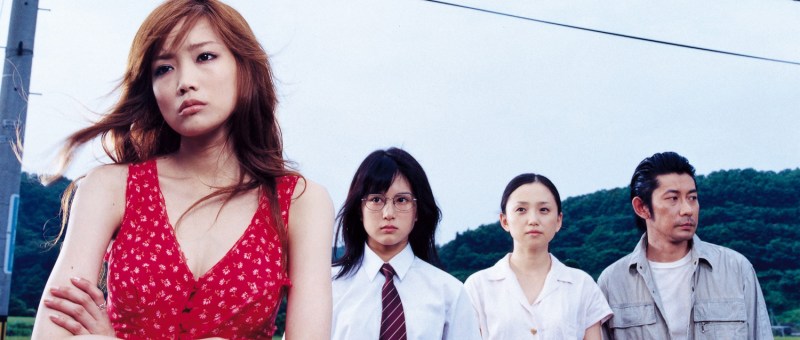
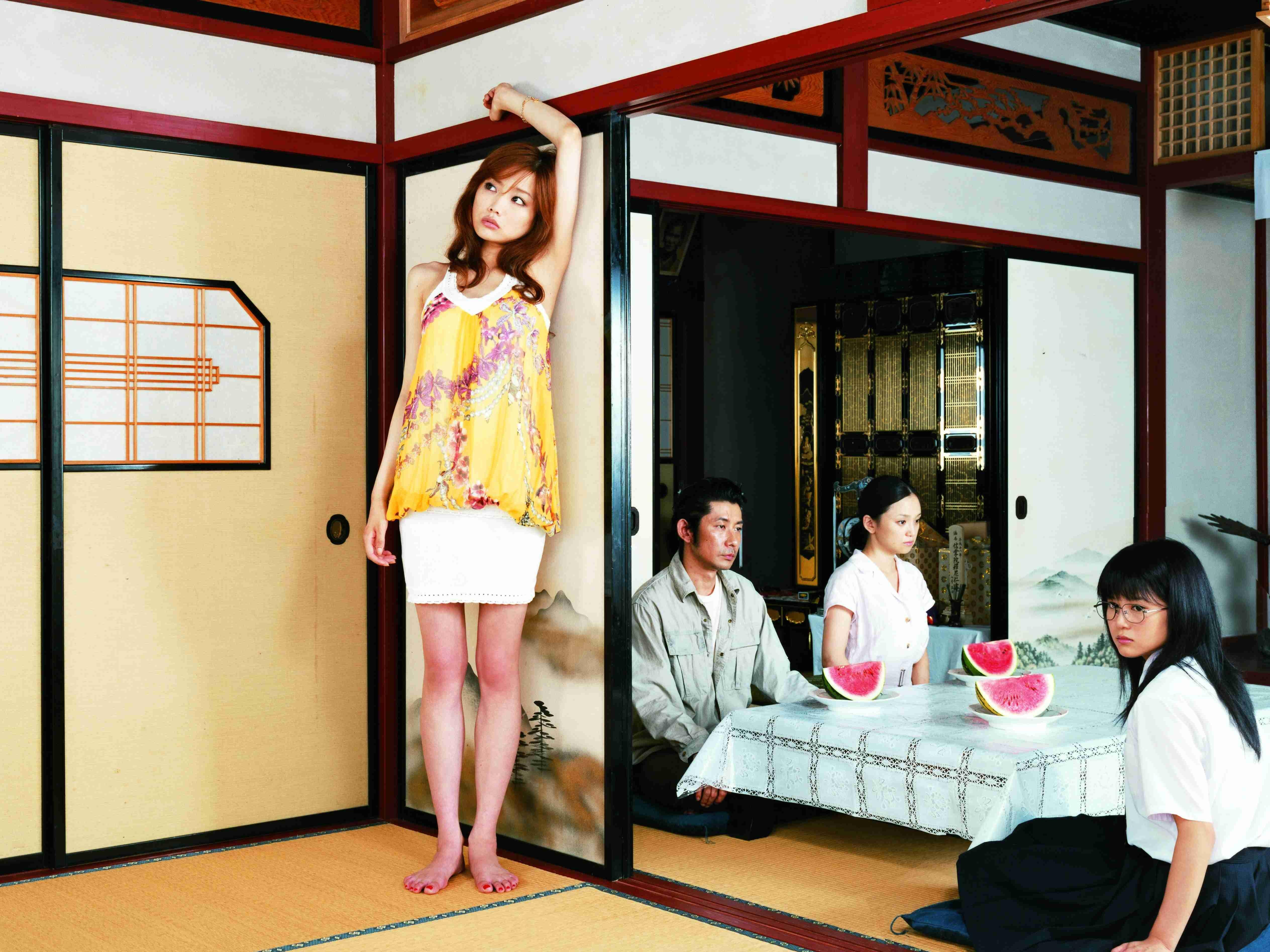
“We’re family, I’m sure we’ll understand each other” a conciliatory big brother tries to console, but family is it seems a much more complicated matter than one might assume it to be in Daihachi Yoshida’s debut feature, Funuke Show Some Love, You Losers! (腑抜けども、悲しみの愛を見せろ Funukedomo, Kanashimi no Ai wo Misero), adapted from the novel by Yukiko Motoya. Released in 2007, Yoshida’s film is one among a series of cynical reevaluations of the meaning of “family” in the contemporary society but eventually skews towards the uncomfortably conservative in its implicit suggestion that a family which is not bound by blood cannot succeed while even blood connection may prove inherently toxic. 

Fittingly the film opens with a freak yet largely offscreen accident as Mrs & Mrs Wago are killed by a runaway bus while attempting to save a stray cat, an event witnessed by their 18-year-old daughter Kiyomi (Aimi Satsukawa). The Wagos were a blended household, Kazuko and Shutaro having married later in life and bringing with them their children from previous marriages in Kazuko’s daughters Sumika (Eriko Sato) and Kiyomi, and Shutaro’s son Shinji (Masatoshi Nagase). Four years previously, Sumika left home after a traumatic family incident with the aim of becoming an actress in Tokyo, while her place has perhaps been taken by Shinji’s new wife Machiko (Hiromi Nagasaku) whom he has only recently married. Yet Kiyomi seems more perturbed by the possibility of her sister’s return than she is grief-stricken by her parents’ death, while Sumika barely glances at the altar on her arrival immediately treating Machiko as a servant sent out to pay the taxi and collect her bags. 

As we quickly gather, Sumika is an intensely narcissistic, self-absorbed sociopath intent on manipulating everyone around her in order to assume a position of dominance yet her resentment is perhaps the only thing glueing the family together. Her grudge against Kiyomi apparently stems back to her having used her for inspiration for a manga about a young woman driven to psychotic violence in her ambition to become an actress which later won a prize and was printed under her real name with the consequence that everyone in town quickly realised it was about her. Sumika repeatedly uses this excuse as to why she hasn’t been successful, that the manga forced her into a moment of introspection that destroyed her self-confidence, later saying something similar to an unresponsive audition panel bearing out her tendency to blame her failures on others. Yet Kiyomi apparently feels intensely guilty. “I never thought of myself as the kind of person who’d turn her family into manga for money” she laments shortly after Sumika attempted to boil her to death in the bath, “I want to transform into the kind of person who can sympathise with family members’ pain”. 

“Family means supporting each other at times like this” the relentlessly cheerful Machiko had tried to comfort Kiyomi at the funeral, yet she is constantly reminded that she is not quite included as a family member. Shinji tells her to keep out of family business and later to avoid getting between the sisters, denying her an equal status within the home despite the reality of their marriage. Ironically enough, Machiko was abandoned at birth and raised in an orphanage apparently so desperate to belong to a family that she willingly puts up with Shinji’s abusive treatment while making creepy dolls as a hobby. Yet at the end of the film it’s she who is left on her own, inheriting the family home, while the two blood sisters are eventually forced out but bound to each other if only in unresolved and continual resentment. 

Nevertheless there is also a degree of pathos in the series of frustrated dreams which prevent each of the siblings from escaping the otherwise perfectly nice if dull rural hometown where they were born. Sumika’s tragedy is her refusal to accept she has no talent and is unlikely to find career success because she is an unpleasant person, a meta plot strand seeing her writing letters to a director whose new movie is apparently about whether you can love someone you’ve only communicated with remotely and never met. Sumika seeks only dominance, manipulating her siblings through guilt and shame in order to encourage a sense of dependence while also dependent on them for financial support. Her need prevents either Kiyomi or Shinji finding happiness, their attempts to escape her control eventually leading in very different directions. 

Unlike similarly themed familial dramas, Funuke situates the fault line in its dysfunctional family not in the changing society but in its lack of blood relation while eventually suggesting that even the blood bond between the two sisters is more grimly toxic than it is supportive. In an odd way, it leaves Machiko as the winner while uncomfortably implying that her orphanhood prevents her from becoming part of a conventional family, literally left home alone. A more literal translation of the title might be “show some miserable love, you cowards”, suggesting that these anxious siblings are too afraid of themselves and each other to embrace familial affection Kiyomi eventually affirming “In the end I couldn’t change either, sorry”. While the limitations of early digital photography may not stand up a decade and change later, Yoshida’s occasionally experimental flair including an entire sequence playing out as manga panels helps to overcome the unfortunate lifelessness of a typically 2000s low budget aesthetic while the universally strong performances do their best to gain our sympathy in an otherwise cruelly cynical, if darkly humorous, take on post-millennial family dynamics. 


Funuke Show Some Love, You Losers! is available on blu-ray in the UK from Third Window Films.

Trailer (English subtitles)

Shall We Dance? (Shall we ダンス?, Masayuki Suo, 1996)

If your life has gone pretty well and you’ve more or less achieved conventional success but you’re still somehow unhappy then what is it that you’re supposed to do? Sugiyama (Koji Yakusho), the hero of Masayuki Suo’s charming ballroom dancing dramedy Shall We Dance? (Shall we ダンス?) is beginning to wonder, after all he’s a “serious” man as his wife repeatedly describes him but is it really acceptable for a middle-aged husband and father to chase emotional fulfilment or would he be cheating on the salaryman dream in daring to nourish his soul?

As he later says, Sugiyama has followed a conventional path in life. He has a respectable job as an accountant, married at 28 and had a child at 30. By 40 he was able to buy a family home, but also acknowledges that he sold his soul to the company to do so seeing as with the mortgage hanging over his head he is now fully locked in to the corporate system and couldn’t leave even if he wanted to. Yet he’s not quite like his co-workers, an early scene sees the roles somewhat reversed as he, the boss, declines the invitations of a drunken subordinate to stay out longer after an effectively compulsory after work drinking session to return to his family home at only 9pm but going straight to bed when he gets there. He and his wife Masako (Hideko Hara) share a room but sleep in separate beds presumably so he doesn’t wake her when he gets up early to go to the office making his own breakfast before he leaves. 

“It’s not a matter of like or dislike, it’s work” Sugiyama tells his co-worker as she complains that the more glamorous sales department gets all the best perks and she’s sick of working in accounts, hinting at his inner malaise in his relentlessly corporate life. That’s one reason he’s captivated by the sight of a beautiful yet sad woman gazing out of a window from a building above on his train journey home. When he gets off the train to look for her, he in one sense leaves the salaryman rails breaking with the conventions that he is expected to fulfil in search of something more. Mai (Tamiyo Kusakari), a former ballroom dancer taking a temporary sabbatical from competitive sport teaching at her father’s studio, is just as unhappy as he is but for contrary reasons. She has lost the joy of dance, for her it has become as soulless a job as Sugiyama’s accountancy and she too struggles with the image she has of a dancer and what that means for her in terms of personal fulfilment. 

Yet as Sugiyama explains in his opening voiceover, ballroom dancing is viewed as something of a naff hobby mostly associated with sleazy old men only there for the opportunity of physical contact with women of varying ages. When he spots his co-worker Aoki (Naoto Takenaka) at the dance class it’s embarrassing for both of them, each promising not to say anything to anyone at work, the floor later erupting in laughter when someone finds a picture of Aoki taken at a competition in the newspaper. Developing an interest in the sport, Sugiyama buys a ballroom dancing magazine but interrupted by his daughter quickly hides it as if he had been looking at pornography or some other material he feels to be shameful. 

The irony is that Masako had wished Sugiyama would go out more, realising that he’s selflessly dedicated himself to the salaryman dream in order to provide for their family, but then becomes suspicious and resentful as he leaves her alone to pursue his new hobby which he cannot disclose to her out of embarrassment. She in turn sniffing perfume on his shirts fears he’s having an affair, but is unable to ask him about it directly preferring to hire a private detective (Akira Emoto) instead. Leaving aside that each of them ends up secretly spending money when they’re supposed to be saving for the mortgage, the oppressive social conformity of the salaryman existence is beginning to erode their relationship. Forced into the role of the conventional housewife, Masako too is lonely expected to find fulfilment only in home and family while preparing to re-enter the world of work now her daughter is old enough to care for herself because of the financial burden of the mortgage rather than her own desire to fulfil herself. Sugiyama isn’t having an affair, but still she feels betrayed because he left her behind to chase emotional liberation on his own rather than taking her with him never really noticing her loneliness. 

Yet as Sugiyama is repeatedly told, dancing, unlike the salaryman game, is about more than learning the steps, it’s about feeling the music and finding joy in movement. That’s something Mai has also lost sight of, finally realising that she too was a selfish dancer who’d been dancing alone all along unable to fully trust her partner rediscovering her joy in dance as she coaches not only Sugiyama but his classmates towards their own liberation. Sugiyama remains conflicted because the excessively corporatised society leads him to believe that it’s taboo to devote oneself to anything other than work or in essence to experience joy that is not directly related to productivity, that he should be wholly “salaryman” and nothing else, just his wife should be nothing more than that. It’s this oppressive conformity that undermines their conventional marriage rather than Sugiyama’s transgressive decision to get off the salaryman train, put down his briefcase, and embrace his desire for personal fulfilment. Only through this act of mutual emotional authenticity can they restore familial harmony. A minor meditation on the emptiness of the increasingly elusive salaryman dream in the economically stagnant ’90s, Suo’s charming drama insists on joy as a basic human need in a society which often trivialises personal happiness.


Shall We Dance? screens at the BFI on 21/30 December as part of BFI Japan.

Original trailer (no subtitles)

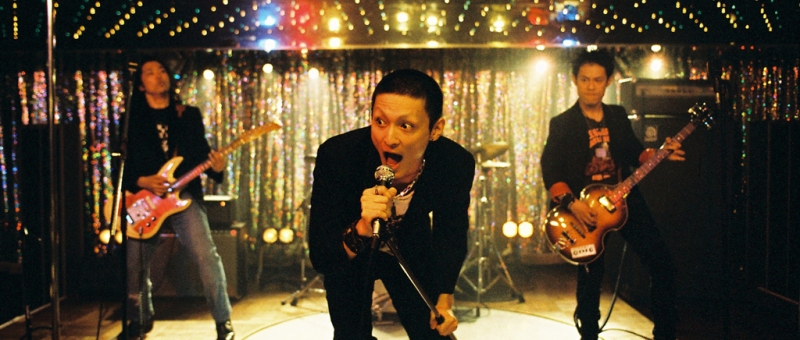
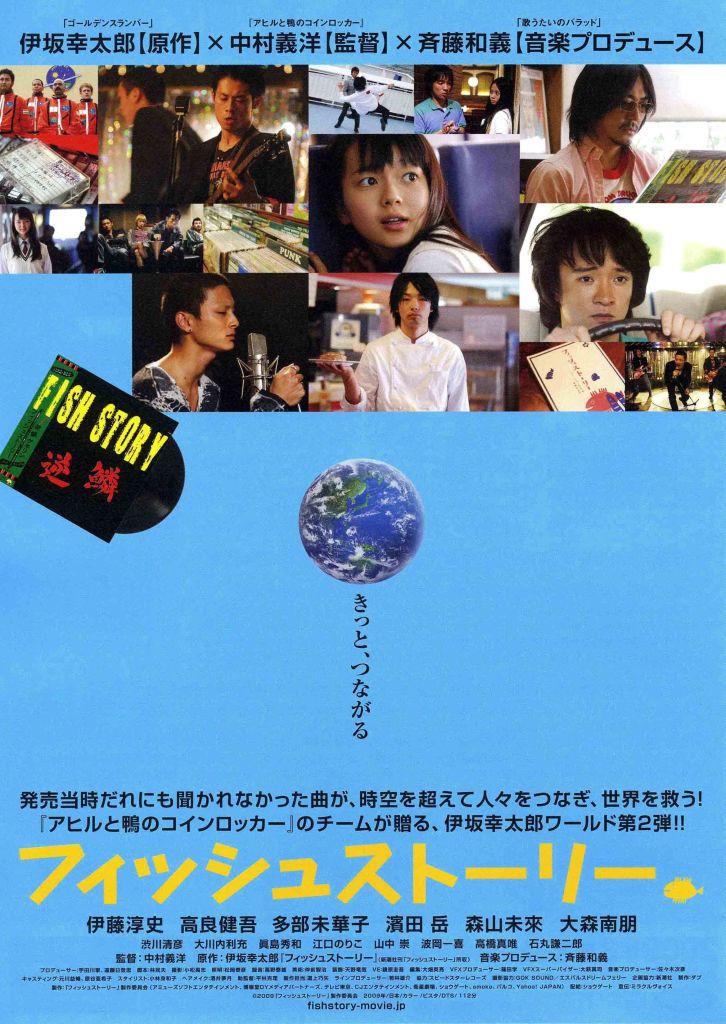
Fish Story (フィッシュストーリー, Yoshihiro Nakamura, 2009)

“Music saves the world” according to a hold out record store owner keeping the doors open in the wake of coming disaster. In one way or another and most particularly at the present time, perhaps it always feels as if the world is ending but somehow we seem to carry on. Yoshihiro Nakamura’s Fish Story (フィッシュストーリー) is, as it says, a story of how music saves the world, but also of how personal acts of quiet integrity echo through time while art finds its audience and its purpose in the proper moment even if the message is not immediately understood. 

The film opens in the “future” of 2012 during which a fiery comet is headed directly for the Earth resulting in a deadly tsunami set to engulf Mount Fuji, drowning humanity rendered unexpectedly powerless in the face of cosmic destiny. A man in a wheelchair dressed oddly like a cult leader trundles along empty arcades strewn with rubbish, pausing to poke at some trolleys with his walking stick. Eventually he stops outside a record store which is to his surprise open for business despite the coming apocalypse and jumps up, apparently able to walk after all, and heads inside where he takes the boss (Nao Omori) to task for his strange decision to go to work on this day of all days. The shopkeeper however calmly engages in conversation with a customer, sure that “music saves the world”, “this song will save the day”, introducing him to the music of little-known ‘70s punk band Gekirin whose music was too far ahead of its time for the conservative post-war society. 

Their forgotten song, Fish Story, however as we will see does indeed change the world if in small and unexpected ways not least because it’s remembered for an unexpected pause in the middle of a guitar solo, a temporary suspension of living time in which small miracles could occur. “It has a meaning” the shopkeeper insists, though refusing to elaborate. As we discover, it does and it doesn’t, but stays true to the spirit of song, a “fish story” of its own embellished in the telling as curious listeners attempt to explain its existence. For three college students in 1982 who enjoy listening to paranormal tapes, it’s something of a let down seeing as they’d been told that the missing section contained a woman’s scream which is apparently still audible to those with a sixth sense but predictably not to them. Nevertheless, a moment of silence and a woman’s scream eventually result in a timid young man (Gaku Hamada) assuming his destiny, learning to stand up to bullies even if in eventual need of rescue himself. 

Like the young man of 1982, the shopkeeper and his customer are largely passive, sure that someone is coming to save them, idly talking of superheroes in teams of five like classic tokusatsu serial Go-rangers or else Bruce Willis saving the day by heroically sacrificing himself to blow up the asteroid. But the Americans’ “Armageddon” plan soon proves a bust, hinting perhaps at the fallacies of the disaster movie model in which the nation of production saves the world all on its own. The only possible hope now lies in cross-cultural cooperation. “Just as music knows no border, we’ve come together in this emergency” says the team of international experts boarding an Indian rocket as they pursue the only option left for the salvation of humanity no matter that there’s only a one in a million chance it works, because that’s what you do at the end of world, only what you can. 

The old man scoffs at the shopkeeper and his customer, sure the world is going to end even though he previously predicted it would do so 13 years previously in line with Nostradamus. Others concluded it would end in 2009 and took action accordingly, action which almost assures the present destruction in accidentally destroying the mind capable of preventing it. It is all connected, in a cosmic sense, but it’s also all small coincidences that lead to a greater whole. In the post-war chaos of 1953, a struggling father lies about his English skills to get a job as a “translator” only to engage in an avant-garde act of language violence bludgeoning one text into another with the aid of a dictionary. The incomprehensible novel which results is pulped, but survives as a curiosity and eventually finds its way home, inspiring another work of art and becoming a kind of fish story of its own. Gekirin chose to disband rather than compromise their artistic integrity, knowing that no one was going to hear their song. “Does that make everything we’ve done meaningless?” dejected bassist Shigeki (Atsushi Ito) asks, and perhaps it seems that way, but the word is heard in the end. It all matters, we all matter, no matter how insignificant it seems in the moment. 

Adapted from the novel by Kotaro Isaka, Nakamura’s anarchic voyage through a comfortable and nostalgic post-war Japan albeit one in the shadow of coming disaster is imbued with a quiet sense of hope even as it leaves its protagonists passive participants in a history they are unaware of making. Two teams of five do in their way save the world, and all because of a song that no one heard which was inspired by a book that no one read. Life, it’s all a big fish story, but it makes sense in the end so long as you stick around long enough. 


Fish Story is released on blu-ray & VOD in the UK on 10th August courtesy of Third Window Films. On disc extras are presented in standard definition and include: making of featurette, Gekirin live performances, Gekirin talk show, director and cast Q&A, and deleted scenes.

Original trailer (English subtitles)

A Taxing Woman’s Return (マルサの女2, Juzo Itami, 1988)

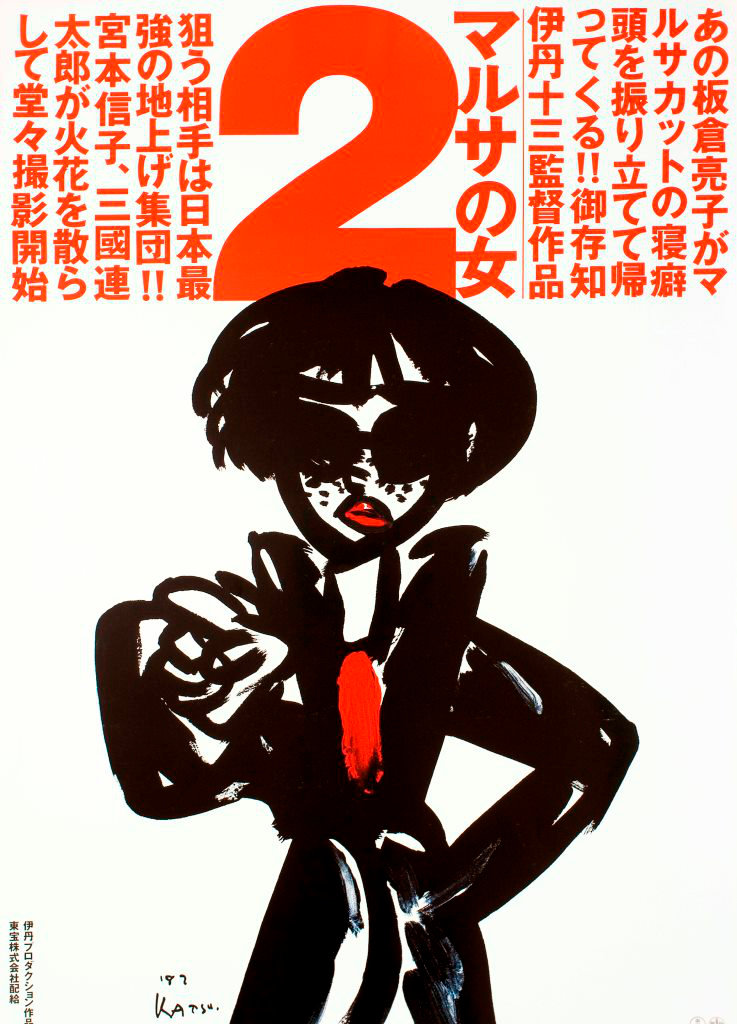
Taxing Woman 2 posterA Taxing Woman introduced us to Ryoko Itakura (Nobuko Miyamoto) – an oddball detective working as an insurance inspector who met her Irene Adler in a tax dodging corporate gangster with a limp. A year later she’s back, still the only woman working with the tax inspectorate and apparently still a dogged pursuer of those who would seek to defraud the Japanese government of its rightful earnings. Ryoko may have been a stickler for the rules who applied the same dog with a bone approach to a mom and pop store chowing down on its own supplies as to a dodgy yakuza led conspiracy, but she also believed in justice – something which stands her in good stead when she rubs up against a dodgy cult which, again, is a yakuza front but adds insult to injury by deliberately manipulating the vulnerable.

The action opens with some kids poking at the dead body of a “landshark” floating in a pond before flashing to a meeting of officials sucking crab meat from the shell and wondering what they’re going to do about this land they need cleared now their heavy is out of the picture. The corrupt politician from the first film, Urushibara (Takeya Nakamura), is apparently still involved in semi-legal land deals but palms the assignment off on a colleague. The big wigs need to empty a dated housing complex on some valuable land so they can build a vanity skyscraper – office space apparently being scarce in mid bubble Tokyo.

To do this they enlist the services of dodgy cult leader Onizawa (Rentaro Mikuni) and his troop of yakuza goons. Most of the tenants have already signed but they have three key holdouts – a diner owner clinging on to the family legacy, a stubborn paparazzo, and an intellectual professor who heads up the housing association. Unlike the yakuza of Taxing Woman, these guys have not reformed – they are the new/old style of lawless thugs who are perfectly prepared to threaten women and children to get their own way. Making it impossible for the tenants to stay through intimidation and noise torture, they stoop to blackmail to seal the deal.

Despite arriving only a year after A Taxing Woman, Taxing Woman’s Return (マルサの女2, Marusa no Onna 2) takes place in a much darker, though more obviously comedic, world. Whereas the earlier film adopted a noticeably ambivalent attitude to the tax inspectors and the enterprising gangsters, the villains of A Taxing Woman’s Return are so heinous and morally bankrupt as to be entirely indefensible even if the inspectorate takes a turn for the bumbling to compensate. The “cult” is, of course, merely a convenient money laundering front and tax dodge for the yakuza – religious organisations are exempt from taxation in the vast majority of cases which may be why the local tax office records hundreds of registered “religious bodies” in its jurisdiction alone. That doesn’t mean it doesn’t have its loyal followers, often vulnerable people looking for spiritual fulfilment but being bled dry by the money hungry cultists while the leader’s wife swans around in sables costing more than the average annual salary. A desperate devotee in need of a loan puts his own teenage daughter up as collateral only to see her raped by Onizawa, eventually becoming pregnant by him at only 16 years of age and thereafter becoming his devoted concubine in a bizarre instance of Stockholm Syndrome.

Yet for all the background darkness of weird cultists and nasty yakuza backed up by corrupt and venial politicians, Itami ups the cartoonish sense of the absurd with our hero Ryoko clambering over rooftops to listen in to the bad guys while her boss throws himself down flights of stairs and has to battle piercing sirens to get into the villains’ secret vault. It is however a dark humour as the opening makes plain with its troupe of little children staring at the strange shape floating in the water – a motif later repeated when a yakuza is gunned down in the street only for another group of children to pour over him as he expires, a single tear rolling down his cheek. The original spongy white body gives way to the businessmen sucking spongy white crab out its shell while insensitively discussing the late land shark, and the yakuza are unafraid to deploy a maggot infested severed hand (thankfully a fake picked up from a friend who makes horror movies) to convince the tenants they mean business.

At the end of A Taxing Woman, the gangster and the inspector reached something of a truce but one which came down, broadly, on the side of right. This time things aren’t quite so simple. The conspiracy is bigger and deeper, stretching all the way into the Diet and about more than just office space in still developing Tokyo. Onizawa, regarding himself as public servant, tries to say he did it all for his country, that if someone didn’t get their hands dirty Tokyo would be eclipsed by Hong Kong or Seoul. A post-war justification for a bubble era problem, but one that takes us straight back to the first film in Onizawa’s second proposition that only through money does he truly feel “immortal”. He may be a liar and a cheat, but he’s only a symptom of rapidly spreading infection, one which Ryoko and her team are powerless to cure, trapped on the wrong side of the fence while the bad guys build monuments to economic hubris, indulging in vanity in an era of bad faith which is about to be brought to a rather abrupt close.


Currently available to stream in the US/UK via FilmStruck.

Original trailer (no subtitles)

A Taxing Woman (マルサの女, Juzo Itami, 1987)

A Taxing Woman posterIn bubble era Japan where the champagne flows and the neon lights sparkle all night long, even the yakuza are incorporating. Having skewered complicated social mores in The Funeral and then poked fun at his nation’s obsession with food in Tampopo, Juzo Itami turns his attention to the twin concerns of money and collective responsibility in the taxation themed procedural A Taxing Woman (マルサの女, Marusa no Onna). Once again starring the director’s wife Nobuko Miyamoto, A Taxing Woman is an accidental chronicle of its age as Japanese society nears the end of a period of intense social change in which acquisition has divorced mergers, and individualism has replaced the post-war spirit of mutual cooperation.

Ryoko Itakura (Nobuko Miyamoto), a single mother and assistant in the tax office, has a keen eye for scammers. She demonstrates this on a stakeout with a younger female colleague in which she keeps a shrewd eye on the till at her local cafe and comes to the conclusion that they’ve been running a system where they don’t declare all of their cheques. Running her eyes over the accounts of a mom and pop grocery store, she notices some irregularities in the figures and figures out the elderly couple feed themselves from the supplies for the shop but don’t “pay” themselves for their own upkeep. That might seem “perfectly reasonable” to most people, but it’s technically a small form of “embezzlement” and Ryoko doesn’t like figures which don’t add up. Seeing as the couple probably didn’t realise what they were doing was “wrong” she lets them off, this time, as long as they go by the book in the future. A more complicated investigation of a pachinko parlour finds a more concrete form of misappropriation, but Ryoko is fooled by the owner’s sudden collapse into inconsolable grief after being caught out and leaves him in the capable hands of his confused accountant.

Nevertheless, Ryoko may have met her match in sleezy corporate yakuza Hideki Gondo (Tsutomu Yamazaki). Dressing in a series of sharp suits, Gondo walks with a pronounced limp that hints at a more violent past but as his rival from the Nakagawa gang points out, violence is a relic of a bygone era – these days gangsters go to jail for “tax evasion” as means of furthering their “business opportunities” and facilitating ongoing political corruption. Gondo’s business empire is wide ranging but mainly centres on hotels, which is how he arouses Ryoko’s interest. She looks at the numbers, does a few quick calculations, and realises either the business isn’t viable or the correct figures aren’t being reported. Ryoko doesn’t like it when the books don’t balance and so she sets her sights on the seedy Gondo, but quickly discovers she has quite a lot in common with her quarry.

Itami was apparently inspired to make A Taxing Woman after the success of Tampopo shoved him into a higher tax bracket. Given Japanese taxes (at the time) were extremely high, getting around them had become something of a national obsession even if, in contrast to the preceding 30 years or so, there was plenty of money around to begin with. More than the unexpected tendency towards civil disobedience the times seemed to cultivate, Itami homes in on the increasingly absurd desire for senseless acquisition the bubble era was engendering. Thus Gondo who owns a large family home well stocked with symbols of his rising social status, also occupies a bachelor pad where he keeps a mistress which reflects the gaudy excess of the age right down to its random stuffed hyena. Nevertheless when one of the tax clerks asks for some advice as to how to have it all, Gondo replies that that’s easy – to save money, you simply avoid spending it. Gondo lets his glass run over and delights in licking the edges. It’s all about delayed gratification, apparently, and having a secret room full of gold bars to gaze at in order to relieve some of that anxiety for the future.

Gondo, like many of his ilk, has “diversified” – yakuza are no longer thuggish gangsters but incorporated organisations operating “legitimate” businesses through “illegitimate” means. Thus we first find him using a nurse who allows herself to be molested by an elderly, terminally ill client whose identity they will steal to found a company they can quickly dissolve when he dies to shift their assets around and avoid the tax man. Later he pulls another real estate scam by pressing a desperate family but his real focus is the love hotels, whose slightly embarrassing existence ensures that not many come poking around. Ryoko, however, is unlikely to let such a large scam slide and delights as much in closing loopholes as Gondo does in finding them. Noticing a kindred spirit, Gondo quite openly asks his new tax inspector “friend” what she’d think if he married his mistress, gave her all his money, and divorced her – divorce proceeds are after all tax free. Sounds great, she tells him, as long as you trust your wife not to skip town with all the doe.

Ryoko, a modern woman of the bubble era, single and career driven, is a slightly odd figure with her officious approach to her job and unforgiving rigour. Unlike her colleague who dresses in the glamorous and gaudy fashions of the times, Ryoko wears dowdy suits and her mentor boss is always reminding her about her “bed hair”, meanwhile she stays late at the office and offers instructions to her five year old son over the phone as to how to microwave his dinner. Though there is another woman working with her at the tax office, when she’s finally promoted to full tax inspector status she finds herself in a room full of guys who apparently hardly ever go home. On her first job she’s only really brought along because she’s a woman and they want to threaten a mob boss’ mistress with a strip search to find a missing key for a safety deposit box. The mistress, however, tries to throw them off the sent by publicly stripping off and encouraging them to check her “cavity” if they’re so keen to find this key, only for Ryoko to find it under the sink while all the guys are busy being shocked. Ryoko’s methods are occasionally as underhanded as Gondo’s and, like his schemes, built on gaming the system but she’s certainly a force to be reckoned with for those considering defrauding the Japanese government.

Gondo’s schemes excel because they aren’t entirely illegal, only clever ways of manipulating the system, but they’re also a symptom of a large conspiracy which encompasses improprieties right up the chain as banks, corporations, and politicians are all part of the same dark economy managed by a corporatising yakuza. Gondo takes frequent calls from a local representative who often “helps him out”. Later the same representative tries to put pressure on the tax office to back off, but Ryoko’s boss points out that he doesn’t need to because the press are already on the story so he should probably get started on his damage control rather than bothering public servants. Gondo and Ryoko, perhaps as bad as each other, lock horns in a battle wills but discover a strange degree of respect arising between them in having discovered a worthy adversary. There’s something undeniably absurd in Ryoko’s firm determination to catch out struggling businesses and the confused elderly with the same tenacity as taking on a yakuza fronted conspiracy, and there’s something undeniably amusing in Gondo’s attempts to beat the man by playing him at his own game, but the overall winner is Itami who once again succeeds in skewering his nation’s often contradictory social codes with gentle humour and a dispassionate, forgiving eye.


Currently available to stream in the US/UK via FilmStruck.

Original trailer (no subtitles)

Night Train to the Stars (わが心の銀河鉄道 宮沢賢治物語, Kazuki Omori, 1996)

night train to the stars posterKenji Miyazawa is one of the giants of modern Japanese literature. Studied in schools and beloved by children everywhere, Night on the Galactic Railroad has become a cultural touchstone but Miyazawa died from pneumonia at 37 years of age long before his work was widely appreciated. Night Train to the Stars (わが心の銀河鉄道 宮沢賢治物語, Waga Kokoro no Ginga Tetsudo: Miyazawa Kenji no Monogatari), commissioned to mark the centenary of Miyazawa’s birth, attempts to tell his story, set as it is against the backdrop of rising militarism.

An aimless if idealistic young man, Miyazawa (Naoto Ogata) is at once fiercely religious and interested in mildly left-wing, agrarian politics. Together with a close friend, Kanai, he dreams of building a village utopia in which a community of farmers works the land enjoying peace and prosperity free of the oppression of landlords. The eldest son of a money lender, Miyazawa does not approve of his father’s profession and attempts to show him up by interfering in his business but only succeeds in showing his own naivety and though he has an especially close relationship with his older sister Toshi (Maki Mizuno), Miyazawa longs for pastures new but never manages to stick at anything for very long. After failing to join a religious sect in Tokyo, he returns home to start an agrarian school which will teach ordinary famers’ sons the joys of the arts.

Miyazawa had seemingly always been a strange, ethereal presence – a drunken guest at his family home mocks the way he used to wander around town robotically banging his toy drum as a child, and it’s clear he doesn’t fit within any of the environments he attempts to carve out for himself save the solitary cabin where he later begins his personal agrarian experiment. As the eldest son of the family it would be expected that Miyazawa take over the family business but there just isn’t any way he could. Second son Seiroku (Ryuji Harada) later adopts the familial responsibilities, even if remaining committed to his brother’s legacy by collating and publishing his work following Miyazawa’s death.

Miyazawa’s strangeness extends to his diet – he’s a strict vegetarian thanks to his attachment to Nichizen Buddhism. Intense religiosity remains a central part of Miyazawa’s life but it’s often one that’s hard to integrate with his other relationships. Not content with leading by example, Miyazawa is continually trying to convert his reluctant friends and family to his own beliefs, refusing to take their polite refusals seriously. Though his father simply ignores Miyazawa’s pleas and accepts them as a part of his strangeness, other friends are not so tolerant. One even eventually decides to sever the friendship entirely, giving the young Miyazawa a painful station platform lecture on the true nature of friendship. Berating him for the fact his letters are essentially all about himself and his religious claptrap, his friend reminds him that true friendship is accepting someone for what they are, implying that he’s not a trophy to be won for the cause of Nichizen Buddhism and has his own beliefs and causes which are just as valid as Miyazawa’s.

Yet even if sometimes misguided, Miyazawa’s intensions are altruistic. His is a love of the world, of dreams, and nature and people too though something in him has never quite felt at home in conventional society. Miyazawa’s writing is more an artistic pursuit than an attempt at a literary occupation – his first published volume sold so badly he felt guilty enough to get himself in debt buying all his own books so that the publishing company wouldn’t be out of pocket after supporting him. The son of wealthy family, Miyazawa could perhaps afford to indulge his eccentric ideas but the same is not true for all as he finds out when visiting the home of a pupil who is considering giving up his studies because of an alcoholic parent. Miyazawa offers to pay his tuition for him, but the boy turns him down, studying is a frivolous affectation that he can no longer afford.

Though he talks of romance, Miyazawa prefers the one of the mind to the one of the heart. A young woman falls in love with his writings and, she thinks, with him though Miyazawa explains that her feelings are too big for him to process – just as one cannot eat all the clouds in the sky, he cannot accept the weight of her emotion. Knowing that his health is failing, Miyazawa chooses a fantasy, idealised love over a physical one he fears he will abandon, cleaving to the beauty of the landscape rather than those who people it.

On his deathbed Miyazawa asks his family to throw his notebooks away – he only kept them to try and figure things out but he feels as if he knows all he needs to know by now. Miyazawa’s constant search, as it was for the characters of Night on the Galactic Railroad, was for “true happiness” – perhaps he found it, perhaps not, but thankfully his work lived on thanks to his brother who later took up his interest in agricultural reforms. A typical prestige picture of the time, Night Train to the Stars is a straightforward biopic but one which also bears out Miyazawa’s dreamlike world view with all of its strangeness and wonder.