Last Letter (你好,之华, Shunji Iwai, 2018)

“Anything we need to change?” asks a young woman looking for feedback on a speech, “Nothing. It’s fine” her mentor replies in an exchange which takes on a peculiar poignancy, hinting at a gentle accommodation with the ordinary tragedies of life which is perhaps itself the hallmark of director Shunji Iwai’s career. Adapting his own novel and calling back to his 1995 masterpiece Love Letter, Iwai makes his first foray into Sinophone cinema with the Peter Chan-produced Last Letter (你好,之华, Nǐhǎo Zhīhuā) taking his key concerns with him as a collection of lovelorn souls ponder the what ifs of romantic misconnections and the “limitless possibilities” of youth. 

In the present day, the now middle-aged Zhihua (Zhou Xun) attends the funeral of her elder sister, mother of two Zhinan, who sadly took her own life though the family have been telling people she died of an illness which is in a sense not exactly untrue. Zhinan left behind her only two things, a letter to her children daughter Mumu (Deng Enxi) and son Chen Chen (Hu Changling), and an invitation to the 30-year reunion for her middle school class. Attending the reunion with the intention of letting everyone know that her sister has passed away, Zhihua is mistaken for Zhinan and ends up going along with it, even reconnecting with a teenage crush, Yin Chuan (Qin Hao) now an unsuccessful novelist, for whom she became an unfaithful go-between charged with delivering his love letters to the sister she feared was always prettier and cleverer than she was. After her husband, Zhou (Du Jiang), destroys her phone in a jealous rage, Zhihua finds herself ironically mirroring her teenage years in continuing a one-sided correspondence with her first love in the guise of her sister.  

As in Love Letter the older protagonists find themselves trapped in a nostalgic past, Yin Chuan complaining that he’s stuck with memories of Zhinan, the subject of his first novel, leaving him with perpetual writer’s block. Like misdirected letters the past is filled with missed opportunities and painful misunderstandings, but then again there are no guarantees that it would have been different if only the message had made it home. Little Zhihua (Zhang Zifeng in a double role), chastened to have been discovered frustrating Yin Chuan’s teenage attempts at romancing her sister (doubled by Deng Enxi) by not delivering the letters, plucks up the courage to write one of her own but finds it rejected while as her adult self is perhaps engaging in a little self delusion little realising that Yin Chuan may have already seen through her ruse but is as intent on attempting to communicate with the past in the form of her departed sister as she is. 

Perhaps slightly unfulfilled if not exactly unhappy (husband’s unexpected act of violence aside), Zhihua ponders lost love while attempting to come to terms with her sister’s death, denied an explanation for her apparently abrupt decision to run off with a rough man with no family who turned out to be a violent drunk exorcising his class resentment by beating up an educated, middle-class woman. Mumu, meanwhile, afraid to read her mother’s last letter, engages in a little epistolatory deception of her own, accidentally causing confusion in also replying to Yin Chuan’s letters posing as her mother when he tries writing to her old address with fond memories of their youth. “Life is not something you can write on a whim” he’s reminded, and it’s true enough that, as echoed in the poignant graduation speech, some will achieve their dreams and others won’t. Those limitless possibilities of youth don’t last forever, life doesn’t obey the rules of narrative destiny and you don’t always get a happy ending or in fact an ending at all. 

Yet unlike Love Letter, the man and the letter eventually arrive at the correct destination if much later than intended. The message reaches those it is intended to and a kind of closure comes with it. Mirroring her teenage self, Zhihua finds herself a go-between once again, passing letters between her lonely mother-in-law and her former professor whom she’s been secretly meeting in a local park, while reflecting on her own role as perpetual bystander not quite destined for the position of protagonist. As she had her daughter Saran (Zhang Zifeng) struggles with a nascent crush preferring to stay with grandma and keen to avoid going back to school in order not to have to face him, while Mumu attempts to deal both with the loss of her mother and with her legacy as a figure of romantic tragedy. Little Chen Chen is sadly forgotten, putting a brave face on grief and largely left to get on with it on his own until forced to face his sense of rootlessness as an orphaned child wondering if the world still has a place for him to call home. Shot with Iwai’s customarily lush, wandering camera filled with a sense of painful melancholy, the lasting message is nevertheless one of accommodation with life’s disappointments that even in moments of despair and hopelessness lack of resolution can also spark possibility and the memory of those “wonderful choices” of youth need not foreground their absence so much as sustain.


Last Letter streams in the US Feb. 12 to 18 as part of Asian Pop-Up Cinema’s “Happy Lunar New Year!”

Original trailer (English subtitles)

Forever Young (栀子花开, He Jiong, 2015)

“As long as you don’t give up, it’s never too late to follow your dream” according to a sympathetic teacher perhaps incongruously advising a conflicted student who might in one sense be facing an ending but also has his whole life in front of him. Apparently inspired by a song from 2004, Gardenia in Blossom, Forever Young (栀子花开, Zhīzihuā Kāi) ironically concerns itself with the lives of a collection of youngsters facing their first roadblock as they approach the end of university while their dreams seem further away than ever. 

Popular girl Yanxi (Zhang Huiwen) has her heart set on joining the Paris Opera Ballet along with her three roommates with whom she dances the Dance of the Four Swans. Yanxi’s boyfriend Xunuo (Li Yifeng), meanwhile, dreams of making it as a rockstar with his three bandmates. The combined group of friends, cheerful and excited about celebrating Yanxi’s upcoming 21st birthday, are upbeat about the future and looking forward to their graduation concert “Dream Night” at which they hope to catch the eye of influential people. When tragedy strikes however and it seems the girls will not be able to perform, Xunuo makes a surprising decision, roping his bandmates in to take their place and dance the Dance of the Four Swans in their stead. 

Mirrors of each other, Yanxi and Xunuo can each be blinkered and self-centred. Yanxi takes it for granted that the group all want the same thing and are determined to go to Paris with her but apparently hasn’t noticed that her friends have their own problems and at least one may not be able to afford to go abroad because she’s already subsidising her brother’s education. Stubborn and unsympathetic, Yanxi later comes to regret having been so unforgiving as she faces the prospect of continuing alone only to encounter yet another setback. Xunuo meanwhile does something similar in convincing his bandmates to join him in the Four Swans project at the expense of their own dream in taking time away from their band practice while forcing them to don tutus and possibly make fools of themselves in front of all their friends. 

Asked why she chose ballet, Yanxi replies that standing on tiptoes allowed her to see further, but now she worries she’s been suffering with a particular kind of myopia in having seen nothing at all while still clinging on to a vain hope for her Paris dream. The idealised relationship between the pair is marred only by Xunuo’s petulant decision not to get on the bus with everyone else after their night out when Yanxi reminded him she was bound overseas, and her later despondency as they’re temporarily forced apart by Xunuo’s secret plan even while his strange rivalry with a former friend with whom he wrote a plaintive love song takes on an overtly homoerotic quality.  

Nevertheless, there’s something of an incongruity in such young people being constantly reminded that as long as you don’t give up there’s always time to achieve your dreams though it’s true enough that they’re each at a crisis point, about to lose the student safety net and faced with the choice of whether to keep trying to make it or go for the “safe” option of heading into the workforce. Xunuo declares that he just wants “all the sadness and troubles to go away”, only for his teacher to point out that if you’ve nothing to overcome then you’ll never grow. The presence of tragedy never seems to touch them as deeply as one would think, though at least through Xunuo’s vicarious dancing dream the guys are able to renew their friendships, acknowledging their own strengths and weaknesses as they work together in memory of absent friends and perhaps their own fading youth. 

A strangely cheerful campus drama despite its darkness and the foreboding of the title, Forever Young allows its heroes to be just that as they promise themselves that as long as they refuse to give up it’s never too late for their dreams to come true while also subtly hinting at a new ideal of masculinity in the infinitely sensitive Xunuo who is selfless and kind and just wants everyone to be happy. An overly idealised conclusion perhaps as the youngsters bid goodbye to their adolescent lives for the stormy seas of adulthood, but also a reassuring one as they emerge from their respective traumas and hardships with renewed hope for the future.


Forever Young streams in the US Feb. 12 to 18 as part of Asian Pop-Up Cinema’s “Happy Lunar New Year!”

Original trailer (English subtitles)

The Unity of Heroes (黄飞鸿之南北英雄, Lin Zhenzhao, 2018)

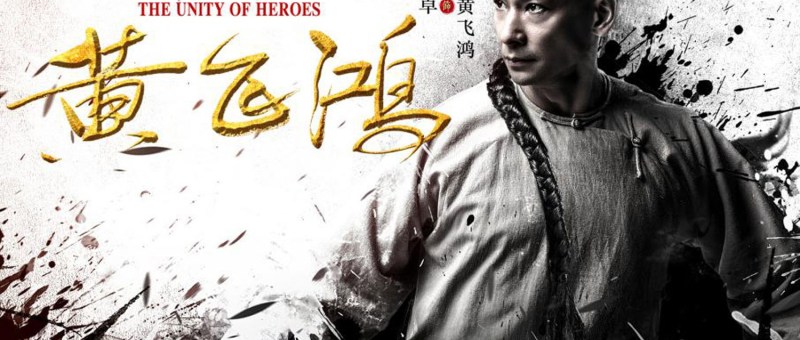
“All Chinese martial artists must stick together” affirms Wong Fei-hung, justifying himself to a dejected disciple for supposedly having appeased a local rival in Lin Zhenzhao’s The Unity of Heroes (黄飞鸿之南北英雄, Huáng Fēihóng zhī Nánběi Yīngxióng). Returning to the role he first took over from Jet Li closing out Tsui Hark’s Once Upon a Time in China series, Vincent Zhao stars in and produces this VOD outing for the legendary folk hero in which he once again valiantly defends the values of traditionalism while contending with an ever changing society. 

Twin arrivals, one expected the other not, spell change for Fei-hung and his trio of assistants, the first being the return of 13th Aunt Shaojun (Wei Na) who had been studying abroad, and the other being a crazed, zombie-like figure who wanders into the temple after escaping from a fire at the docks. If that weren’t enough to contend with, a new master, Wu (Michael Tong Man-Lung), has also arrived in town to teach his brand of martial arts with the Northern Fist Club, immediately entering a conflict with Fei-hung’s guys when Kuan (Li Lu-Bing) comes to the rescue of a mysterious woman who started a fight with them. Meanwhile, Fei-hung is suspicious of a new Western-style hospital which has been set up in order to treat victims of the opium crisis which he feels is ironic as he holds the Westerners responsible for getting the Chinese hooked on opium and then forcing them to pay to be cured of it. Of course, it turns out that the hospital, apparently backed by the British East India Company, is very definitely up to no good, led by the rather vampirically named “Vlad”. 

Finding himself faced with the threat of a superpowered opium which turns those who use it into rage-fulled killing machines, Fei-hung remains preoccupied with the erosion of Chinese traditions in the face of increasing Westernisation. Indeed, Shaojun who has been studying Western medicine in Europe has apparently even forgotten how to use chopsticks and asks for a knife and fork instead which it seems Fei-hung would not have denied her only well-meaning underling Qi decides to bring her something not quite as suitable for the dinner table. Likewise, seeing Fei-hung running a needle over a flame, Shaojun immediately runs for her alcohol bottle only for him to protest that he’s always been taught fire is enough. Nevertheless, he’s not totally against Western learning, eventually conceding that he could not have cured his patient on his own, it took one of Shaojun’s injections to clear his acupuncture points so he could eliminate the “poison” though moxibustion. 

Even so, Fei-hung is at the mercy of the evil Vlad who, as he feared, uses the rivalry between the martial arts masters to divide and conquer, seducing the apparently equally anti-Western henchmen of Wu by hopping them up on his new wonder drug as a means to take out Fei-hung and become the town number one. Allegories abound, but the lines drawn between covert capitalist colonialism and the drugs trade are anything but subtle as Vlad sells his super soldier drugs plan as a remedy to the supposed weakness of the Chinese physique that will allow them to escape subjugation, something which is of particular interest to his conflicted underling Xiaoyue (Wei Xiao-Huan) whose mother was apparently worked to death in a labour camp. “Your lives are worthless” Vlad reveals as the mask slips, “nothing is cheaper than you” justifying his decision to test his drugs on Chinese subjects with vaguely eugenicist overtones. 

All of that aside, however, first time feature director Lin Zhenzhao makes sure to include all the Wong Fei-hung staples from the training montage which opens the film to an innovative set piece involving Fei-hung’s trademark umbrella coupled with his obvious confusion with Shaojun’s “upgraded” European model, its steel spokes, and “improved” opening and closing mechanism. Given the film’s destination for the online streaming market as opposed to cinema screens, production values are surprisingly high with well populated crowd scenes, convincing production design, and nicely choreographed fight sequences including that all important shadowless kick. While not perhaps a return to the Once Upon a Time in China highs, Unity of Heroes nevertheless holds its own as another entertaining entry in the Wong Fei-hung saga.


The Unity of Heroes streams in the US Feb. 12 to 18 as part of Asian Pop-Up Cinema’s “Happy Lunar New Year!”

Original trailer (English subtitles)
Vanishing Days (漫游, Zhu Xin, 2018)

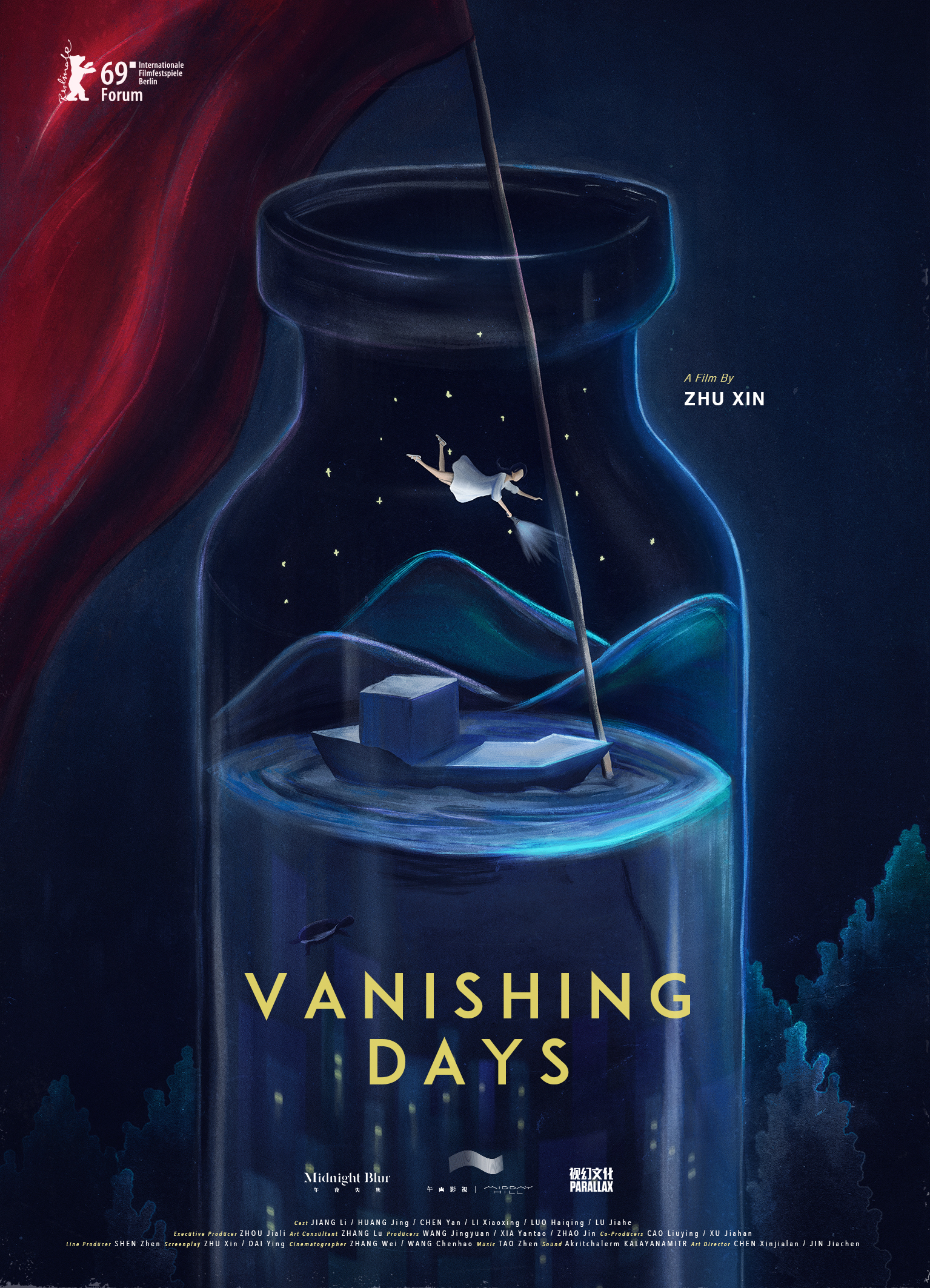
“Things appear for a while and then they’re gone. One day, if I found out I had missed something I wouldn’t be surprised” according to the author of a mysterious science fiction tale told in intervals throughout Zhu Xin’s Vanishing Days (漫游, Mànyóu). An ethereal meditation on the dreams of childhood and the uncertainty of memory, Vanishing Days locates itself in one idle summer of an adolescent girl recreated through fragmentary images and the strange anxiety of losing your place in the map of the world as you find yourself not quite at home with yourself or others. 

14-year-old Senlin (Jiang Li) is trying to keep herself occupied during the hot summer cheering up boring activities by doing them in roller skates, changing the water for her pet turtle after complaining of a stagnant smell she thought was coming from her father. Her adventures begins when she decides to follow him after he unexpectedly goes out, thereafter absent for the majority of the action. Senlin’s dad hikes into a nearby forest and has a sit down in a cave which we’re later told is pleasant and cool, but it seems as if he visits there often because he immediately starts talking to a boy who refers to him as father and is also named “Senlin”. The male Senlin (Lu Jiahe) mildly rebukes his father for lying to him, the waters are not magical after all and he doesn’t think he will be reincarnated. 

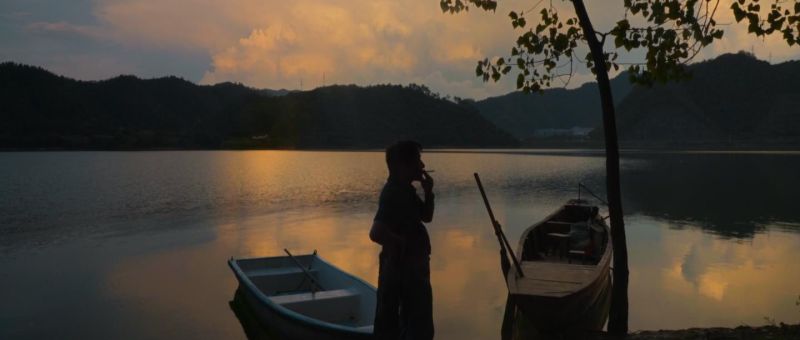
Meanwhile, Senlin arrives home to find her father’s place taken by a visitor, her aunt Qiu (Huang Jing) whom she apparently knew in her infancy but doesn’t remember meeting. A melancholy middle-aged woman. Qiu explains to Senlin’s mother Caiqin (Chen Yan) that her husband Bo (Li Xiaoxing) has passed away after suffering some kind of kidney disease and that she’s decided to sell the remaining cargo boats they used to sail around the rivers of China. 

Confused by her aunt’s presence and unexpected affection, Senlin soaks in her strange tale of rowing out to a deserted island with Bo where she explored a disused used house and he became somehow captivated by the landscape, barely noticing when they were almost struck by lightning after he suggested making off with an abandoned boat. During the journey back Bo went missing, later returning with the excuse that he had lost his shoes, but visiting the island years later after he had died Qiu found out from an old man that Bo had been standing entranced on a mountain as if trapped on another plane. 

The plane is perhaps where Senlin eventually meets him, guided into a strange forest dreamscape where he later refers to her by the name “Hongqi” which means “red flag” just like the one she is always carrying around with her. Senlin begins to wonder if she is really “Senlin”, who the mysterious boy might be, and what her real connection is to the wounded Qiu who is always in someway leaving town. Senlin loses her turtle, but rather than look for it her mother’s advice is to buy another one, Qiu becoming emotional on the way home and suddenly asking Senlin to come and live with her but not to tell her mother about the invitation. 

Like the dream, the science-fiction story is about someone recalling the summer before they got on an airship for two years, apparently not really missing anyone but surprised at the various ways the world has changed on their return. Is “Hongqi” meditating on the continued absence of “Senlin” or are they one and the same, perhaps figments of each other’s imaginations or manifestations of some latent anxiety? Spectres of death and loss linger throughout – funeral wreaths tracking anonymously into the building, a stabbing (of a funeral director), the turtle’s escape, Bo’s illness, the abandoned house on a lonely island, and the continued absence of Senlin’s dad. But Senlin’s strange dream odyssey ends up taking her back “home” rather than away from it, the red flag abandoned on a windowsill while the family is apparently repaired. Senlin may not be able to remember it clearly, but something has begun to shift and a choice made that seems to be to leave the past behind and let the ghosts go where they may, up into an airship sailing far above the rivers of China bound for other futures. 


Original trailer (English subtitles)

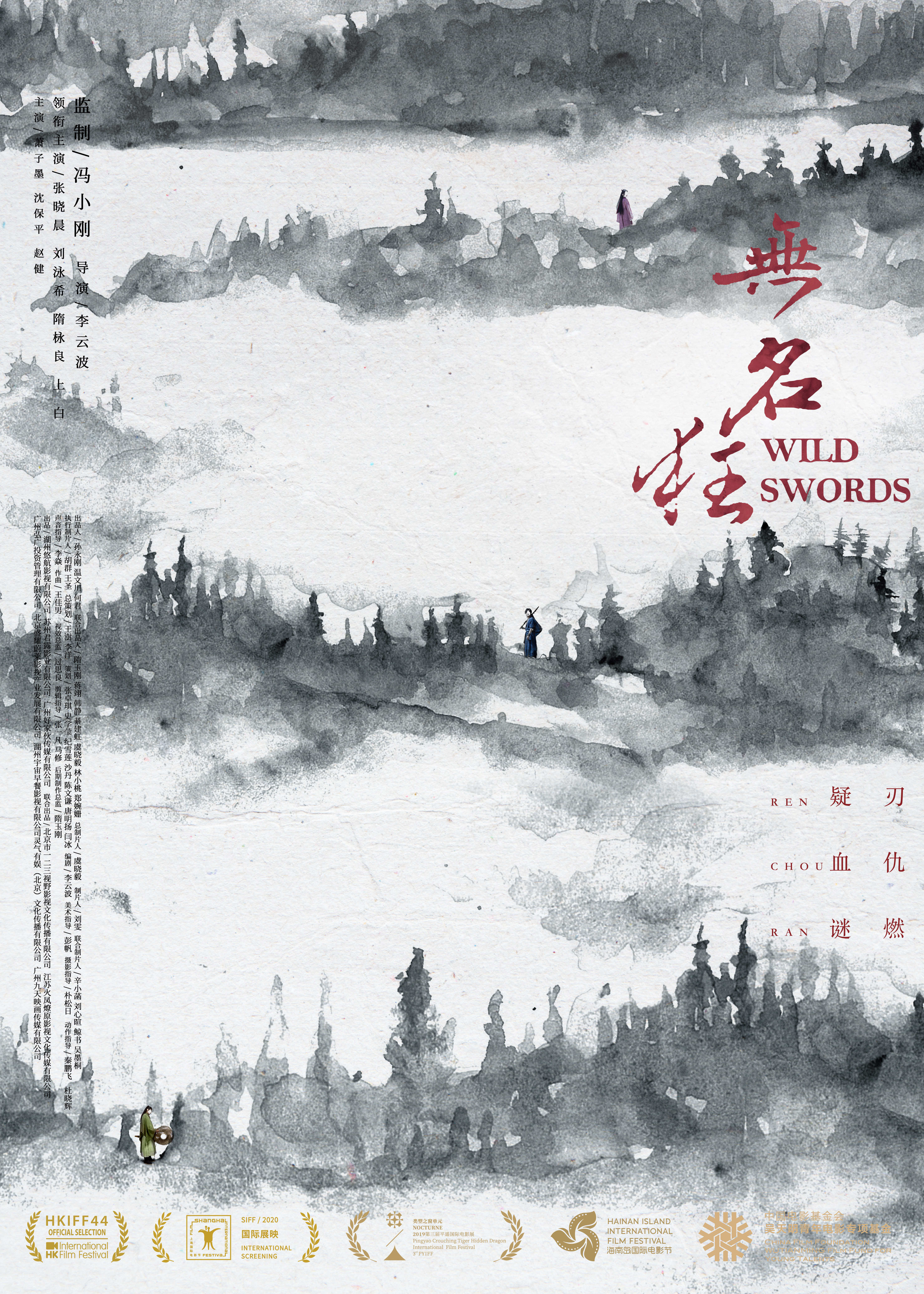
Wild Swords (无名狂, Li Yunbo, 2019)

Indie and wuxia might not be words that neatly fit together in the minds of many who perhaps associate the genre with lavish costumes and elaborate sets, but it is in essence one which values simplicity and innovation. Produced by Feng Xiaogang and financed through crowdfunding, Li Yunbo’s Wild Swords (无名狂, Wúmíng Kuáng) is a classic jianghu tale of warring sects, intrigue, and moral ambiguity that makes the most of its shoestring budget through striking cinematography and beautifully choreographed action sequences while spinning a complex tale of misdirected vengeance and fractured identity. 

Told largely through a series of Rashomon-esque conflicting flashbacks, the bulk of the action follows bandit Wang Yidao (Zhang Jian) who is made an offer he can’t refuse to escort a valuable prisoner, Kuo Chang-sheng (Zhang Xiao-chen), to an unnamed destination. Yidao didn’t want to take the job because he thinks it’s more trouble than it’s worth, and events will prove him right. The reason Chang-sheng is a wanted man is that he’s connected to the legendary Chang Wei-ren (Shang Bai) whom just about everyone wants to find, not least for his involvement in the death of the heir to the Tang-Men, the rival clan he holds responsible for the destruction by poison of his own Nameless sect. Eventually Yidao becomes aware that his mysterious client is Bai Xiaotian (Sui Yongliang), another former member of the Nameless who is looking for Wei-ren for purposes of revenge.

The Tang-Men are well known as master poisoners, a plot device frequently employed and eventually wreaking psychological havoc on the central three as Xiaotian reveals that the greatest Tang-Men technique allows the user to change their appearance leading him to believe that any one of them, including perhaps himself, could actually be Wei-ren in “disguise”. Meanwhile, he outlines his time among the Nameless, resentful of Wei-ren who rivalled him in swordsmanship and it seems love. Chang-sheng, however, has quite a different version of events apparently relayed to him by Wei-ren whom he now believes to be dead. Yidao knows not who if anyone to believe, but has little time to think about it after becoming swept up in the Tang-Men’s quest to chase down Wei-ren. 

Perhaps slightly subversive, Wei-ren’s version has him both becoming weary of the heartless philosophy of the Nameless while simultaneously painting them as the good guys who refused to lackey for an authoritarian government which ironically requested their assistance in getting rid of “evil factions”. Xiaotian sees his rival as a lazy goofball, his lack of application only fuelling Xiaotian’s resentment towards him, yet Wei-ren sees himself as a sensitive loner who looked to the sect for a family only to find merciless ruthlessness in which all are disposable aside from the chosen one. As he tells Xiaotian, when you climb to the summit of martial arts, all you see is the abyss waiting below and no matter how fast you think you are, there is always someone faster. The ones who die are the ones who hold back.  

Wringing genuine intrigue out of its complex, conspiracy-laden narrative, Wild Swords is careful to make space for the genre essential fight in a teahouse which also introduces us to the pretty boy villain of the Tang-Men, Wuque (Eric Hsiao), as he relentlessly stalks his prey in order to gain revenge for the murder of the Tang heir. Caught up in their identity drama, the three men begin to realise the futility and meaninglessness inherent in the world of jianghu in which there is only the “bitterness of life”. They are each one and the same, sole survivors of a vanquished clan carrying the weight of those they failed to protect. Beautifully lensed and set against the majestic natural scenery, Li Yunbo’s slightly revisionist take on the classic wuxia finds its conflicted heroes at war with themselves pursuing misdirected vengeance against those they blame for their loss while wilfully misunderstanding the cause of all their suffering as they pursue their jianghu destiny to its natural conclusion. 


Wild Swords streamed as part of this year’s San Diego Asian Film Festival.

Teaser trailer (dialogue free)

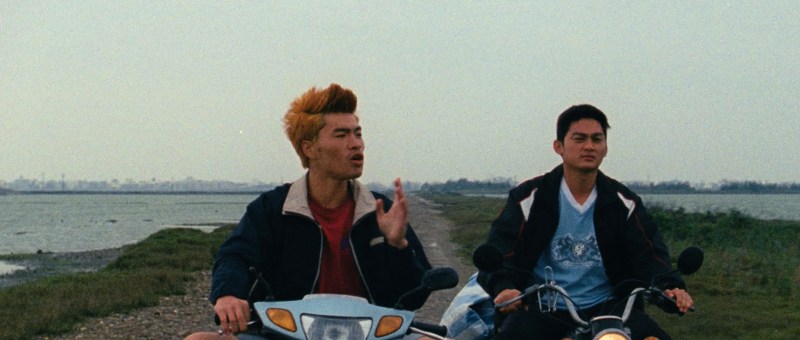
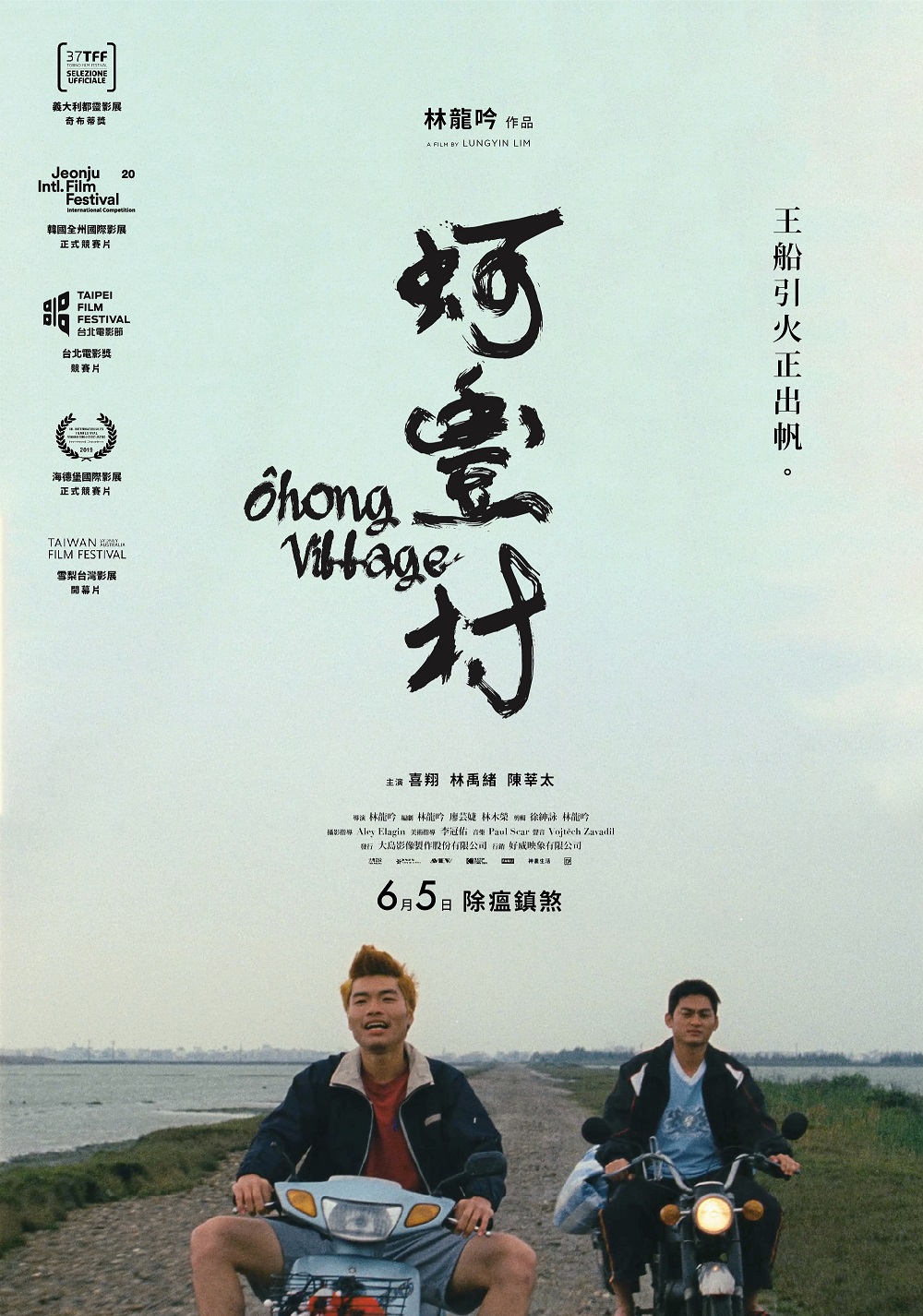
Ohong Village (蚵豐村, Lim Lung-yin, 2019)

Familial legacy and frustrated dreams conspire against father and son in Lim Lung-yin’s striking 16mm debut, Ohong Village (蚵豐村) . Set in a small oyster farming community on the southern shore of Taiwan, Lim’s anti-urban panorama is an ambivalent contemplation of small-town existence as its trio of frustrated male protagonists find themselves caught in an existential riptide torn between a nostalgia for a simpler life and the lure of the new and the modern far away in the cities. 

30-year-old Sheng (Lin Yui-Hsu) left the village seven years previously and has rarely visited during his time away but has now come home for his sister’s wedding where he boasts of his vast success, his claims of earning millions daily ringing somewhat hollow. As it seems, things have not gone entirely well in Taipei and Sheng most likely is not intending to return. His old friend Kun (Chen Hsin-Tai) who stayed in the village, similarly boasting of the vast sums he too earns as a top oyster shucker, has a business proposition for him, hoping to capitalise on the recent tourism craze by renovating the raft his father left him and turning it into a tourist boat selling the oyster farmer experience to people from the cities. Meanwhile, the oyster business seems to be on its last legs, Sheng’s embittered father Ming (King Jie-wen) unceremoniously dumped by a business contact who flatly tells him that his oysters are no longer plump enough and he’ll be going across town to source his catch in future. 

Ming’s sense of hopeless disappointment is additionally acute because, as we’re told, his father was a big man on the island whose catch extended far and wide. Grandma (Wu Mei-he) laments that in the old days the community were happy working together on the salt flats but now the fields are flooded and those who were wealthy left the village never to return. Angry with himself for his perceived failure to live up to his father’s legacy, Ming is also resentful of his son whom he sent to the city to make a better life for himself only to see him return with nothing other than disappointment and a sense of internalised inadequacy. Frustrated by his hollow self aggrandising he snaps at Sheng to cut the “bullshit”, but otherwise pushes him away, discouraging his friendship with Kun who he sees as everything he wanted Sheng not to be, and pouring scorn on the boys’ newfound dream of tourist boat entrepreneurship. 

For his part, Sheng begins to reconnect with his grandfather’s legacy perhaps literally given direction by the old compass he finds among his possessions which leads him to a distant shore on which sits a giant and mysterious statue. Wearing a T-shirt emblazoned with the word “faith”, Sheng had been otherwise sceptical of traditional thinking, snapping at Ming for talking to a tree in communicating with his late father and unconvinced by Kun’s divinatory claims asking who it is who’s making his decisions him or God. Nevertheless, a drunken voyage through the neon-lit streets provokes in him visions of the upcoming festival, while he too later finds himself taking refuge in ritual and risking all to protect a lonely tree from an oncoming storm. 

Kun asks his friend why he didn’t ask him to come when he left, and Sheng gives him the unconvincing excuse that Kun is a man who loves his freedom and wouldn’t have taken well to the city where there are rules which must be followed. Kun agrees that there’s freedom in the village, but he doesn’t know what to do with it. While Sheng begins to find his direction, accepting his legacy and his place, Kun travels in the other direction doing something stupid and chasing the dreams Sheng has now abandoned though there’s no real way to know if his own claims of vast riches are yet more “bullshit” or an ironic boon that mirrors Sheng’s progress towards inner peace. 

Shot on grainy 16mm and scored with a mix of traditional folk instrumentation, synths, and retro pop, Ohong Village is imbued with a sense of melancholy nostalgia for a way of life that has in a sense already disappeared but also with frustration and youthful ennui as the two young men search for hope and possibility while Ming is left only with lonely middle-aged disappointment and an ambivalent desire for his son both to go and to stay. Reimagining the village as a space of both purgatorial ruination and possible salvation, Lim’s etherial drama finds little other than despair and emptiness in its flooded vistas but offers perhaps also a strange sense of melancholy warmth if only in the intensity of its longing. 


Ohong Village streamed as part of the 14th Five Flavours Film Festival.

Original trailer (English subtitles)
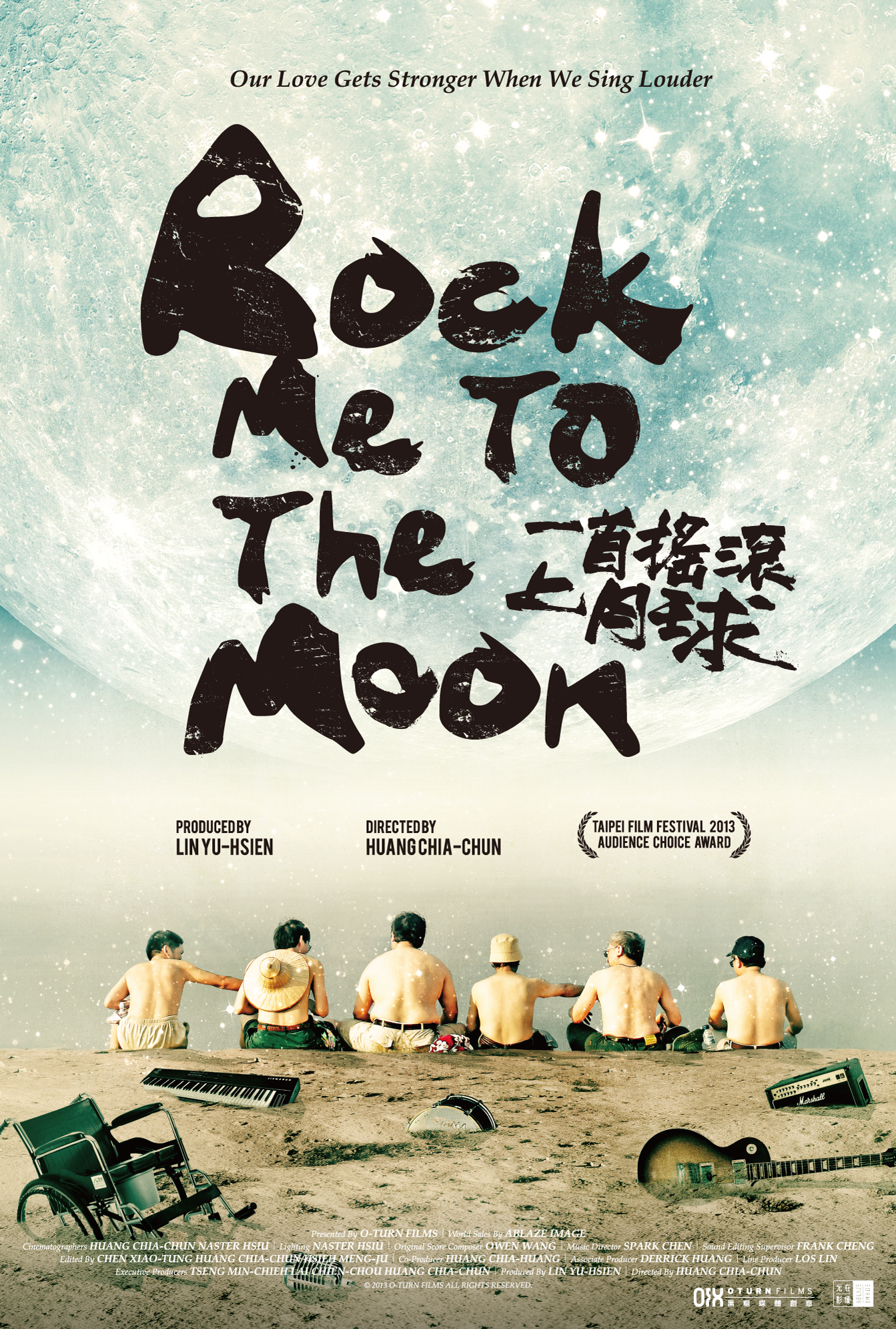
Rock Me to the Moon (一首搖滾上月球, Huang Chia-chun, 2013)

“Finally, I understand to be strong is to be gentle” sings the lead vocalist of Sleepy Dads, a rock band comprised entirely of middle-aged men who are each fathers of children with rare medical conditions. Documentarian Huang Chia-Chun first encountered the men while working as a volunteer with Taiwan Foundation for Rare Disorders where he was struck by their intense love for their children continuing to give all for their families while also obviously facing their own difficulties as they try to balance economic support with the emotional. Charting the Sleepy Dads’ quest to play at a high profile rock festival, Rock Me to the Moon (一首搖滾上月球, Yī Shǒu Yáogǔn Shàng Yuèqiú) is not only an exploration of living with disability but also a quiet re-evaluation of notions of masculinity as the fathers find themselves members of a minority when it comes to their children’s care. 

That was in fact one of the motivations which led to the founding of the band, one of the dads remarking that as they looked around at various support groups it was almost all mothers with very few men, lamenting that unfortunately many fathers either reject their children or abandon their families entirely. A news report later in the film, meanwhile, relates the tragic story of a single-father who was pushed towards suicide because of the difficulties of caring for his daughter alone which left him unable to earn the money to support them both and eventually overburdened with debt. Though one of the Sleepy Dads is a school teacher with a steady job, many of the others are in precarious freelance employment struggling to balance the need to earn money with the physical need to be there for their children each of whom has differing needs especially as some of them have more than one child suffering with longterm illness. 

The band provides a place where the men can come together to relax with others in a similar position, finding mutual support and solidarity while investing themselves in mastering a new skill. Guided by Spark, the lead singer of top rock band Quarterback, who offers them the opportunity to open at one of their concerts, the Sleepy Dads do their best to perfect their skills with the hope of eventually playing at a top festival despite their comparatively advanced age and lack of experience. Training hard to achieve their goal, it’s less the end point that matters than the process as they work through their difficulties together with good humour and determination. 

As another of the fathers puts it, however, Taiwanese men are raised to be brave and strong but he’s also under an intense amount of pressure. Poignantly his wife, preparing to undergo medical treatment herself, expresses that she’d just like her husband to give her a hug but he says he doesn’t know how because he wasn’t brought up to show emotion in that way. She also worries that he sometimes doesn’t see that she’s under a lot of pressure too and prefers to think of her as a kind of superwoman with an innate ability to cope with anything life throws at her. Nevertheless, the Sleepy Dads have fierce love for their children and are never afraid to show it, doing everything they can to care for them while knowing in some cases that their kids may not survive them and so their time together is even more precious. As the song says, they’ve learned that true strength lies in being gentle. 

While one of the mothers laments that she feels isolated even within her own family because her in-laws will not accept the children, asking her not to bring them to a family gathering, the Sleepy Dads have formed an extended family of their own coming together to celebrate one of the dad’s moves into a new home he’s had designed to better meet his family’s needs with all the kids playing together happily. They don’t pretend that their lives are easy, but they share their joys and sorrows equally and work out their frustrations through the medium of song. A warm and empathetic tribute to these selfless men and their infinite love for their children, Rock Me to the Moon is also a celebration of friendship and solidarity not to mention the power of music to overcome all hardships. 


Rock Me to the Moon streams in the US Dec. 11 – 13 as part of Asian Pop-Up Cinema & TACCGC’s @Home with Taiwan Cinema: Love & Hope.

Original trailer (English subtitles)
The Reason Why I’m Home (回家的理由, Chang Ming Yu, 2019)

How do you learn to forgive after family tragedy? That’s a question Chen-yun the heroine of Chang Ming Yu’s documentary The Reason Why I’m Home (回家的理由, Huíjiā de Lǐyóu) begins to ask herself as she tries to come to terms with an extremely traumatic history while preparing to become a mother. As a close friend of his subject, Chang is both companion and chronicler, a quietly supportive presence as Chen-yun navigates these extremely difficult emotional waters, but also prompting her to think more deeply about the concept of family at the exact moment in which she begins to found her own. 

The reason Chen-yun returns home after a five year absence is that she is told her younger brother has been taken seriously ill. In fact, as it turns out he has passed away, apparently beaten to death by members of the cult her mother Fen-chueh belonged to though she also claims he had become a drug user. Fen-chueh accepts responsibility for her son’s death, but is said to have been under control of the cult’s crazed leader Chen-miao who according to Chen-yun brainwashed her brother to make him believe he was a bad person. Chen-yun suspects that like her he eventually wanted to leave but was unable to and was subsequently killed. She harbours a degree of guilt that she chose to leave him behind, telling him only that she was leaving to look for their father who had already escaped the cult. 

Expecting a baby with her policeman husband, Chen-yun is forced to deal with the fallout from the scandal of her mother’s crime, hounded by press determined to interview her about the case. Chen-yun’s father, technically the plaintiff in the case against Fen-chueh, signals his intention to sever ties with his former wife and advises Chen-yun to do the same while also telling her not to seem too happy which seems like an unfair request when she’s about to give birth to new life. After all as she puts it, life goes on. She hasn’t forgotten about her brother but you can’t go on mourning forever. Nevertheless, despite her earlier animosity in which she hinted that her mother had been abusive in her childhood and refused to say when questioned whether or not she still loved her, Chen-yun finds herself ringing Fen-chueh when she needs someone who can sign papers on her behalf at the hospital while her husband is unavailable. As healing an act as that might seem to be, it also has its share of awkwardness, a nurse accidentally asking a series of tactless questions necessary for the admission forms such as how many siblings Chen-yun has along with other details her mother is assumed to know but does not. 

Given what we know of her family background, it is perhaps surprising that Chen-yun continues to allow Fen-cheuh back into her life, even asking her to look after her baby son. Nevertheless in the brief time before Fen-chueh must report to serve her four-year prison sentence, Chen-yun begins to repair their fragile maternal bond, coming to understand her mother a little more now that she has become a mother herself and perhaps learning to forgive her for her role in her brother’s death. “No one taught us how to be parents” Fen-chueh later confesses to Chang in a private interview, having realised that though she thought she was doing the best for her daughter she may only have been causing her harm. 

As a new mother Chen-yun cannot help but think of similar questions as she begins to bring up her young son in the midst of her family legacy, taking him with her as she visits her brother’s grave and to visit her mother in the prison so he’ll get to know grandma even while she’s away. Mixing observational footage with brief conversational sessions between a behind the camera Chang and an often emotional Chen-yun, The Reason Why I’m Home focusses not on the tabloid fodder of the crime with its cruel cultists and legacy of abuse but on the slow process of healing as Chen-yun learns to forgive herself and her mother while repairing their fragile family bonds as she does her best to raise her son in love and safety.


The Reason Why I’m Home streamed as part of this year’s San Diego Asian Film Festival.

Original trailer (English subtitles)
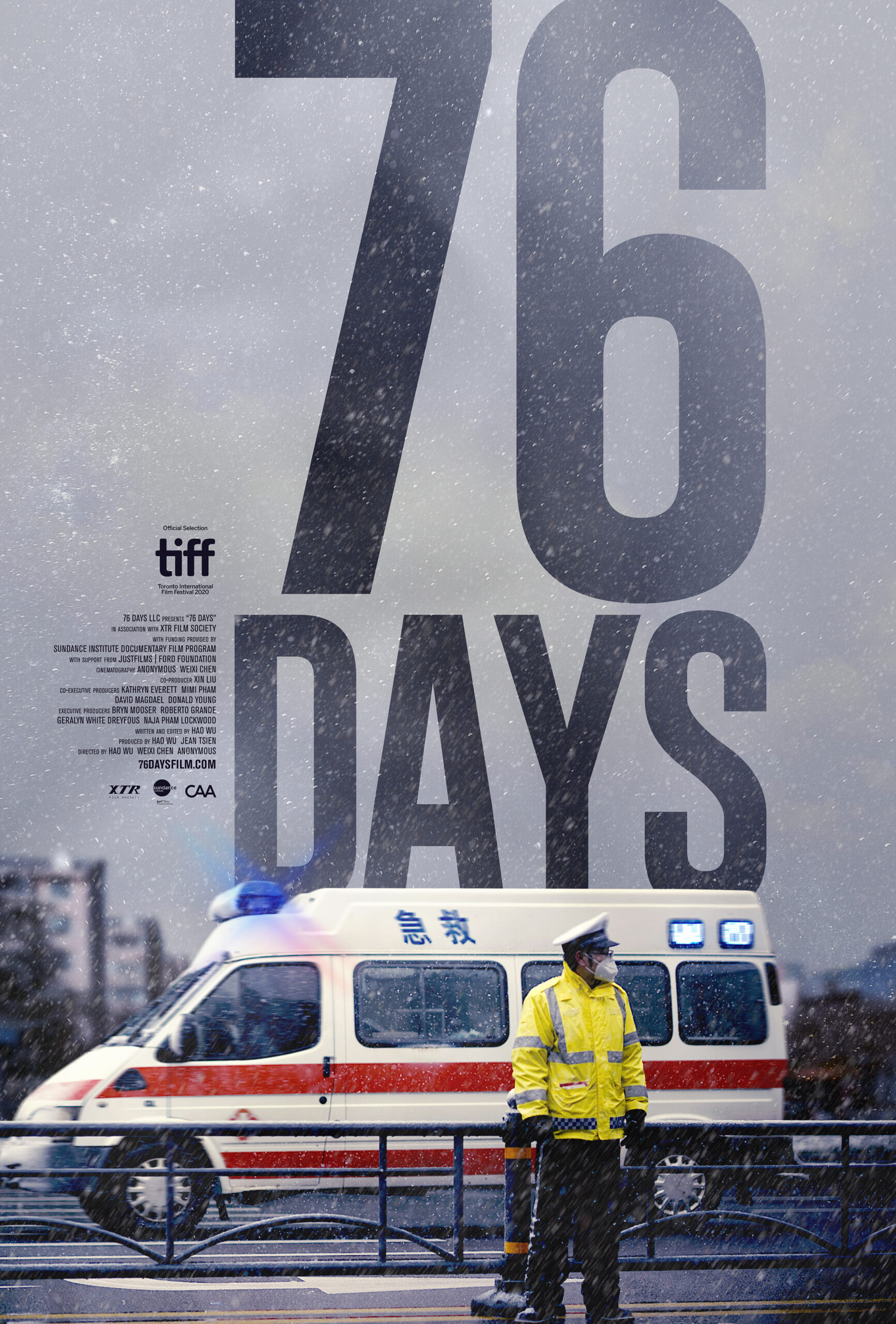
76 Days (Wu Hao, Chen Weixi & Anonymous, 2020)

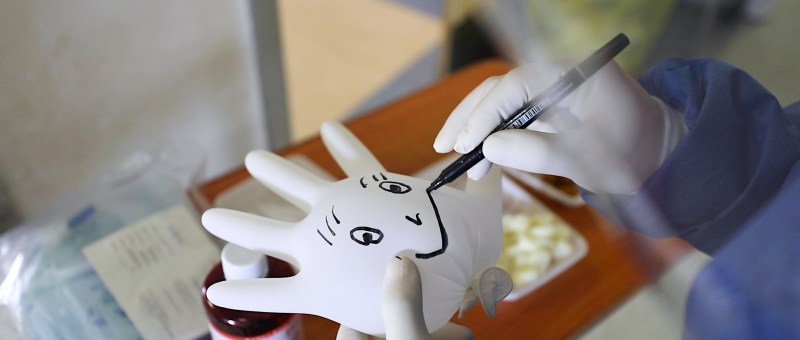
“Don’t worry, so many of us are here for you” a nurse tries to reassure a pregnant woman understandably anxious in being told that her husband cannot be in the room with her while she undergoes an emergency C-section in 76 Days, an observational documentary shot almost entirely within a series of hospitals during the Wuhan lockdown. Co-directed by New York-based director Wu Hao and two on the ground reporters, Chen Weixi and another who has elected to be credited anonymously, 76 Days is testimony to the heroism of the frontline medical personnel who found themselves dealing with a new and mysterious illness, but also a record of a moment as it happened through the eyes of those who were there. 

As such, it opens in chaos with a hospital overrun by those who desperately need help and have nowhere else to turn. “Let’s not panic, OK?” the head nurse adds to the end of her briefing as the team prepare for still more patients, many of them waiting in a small room complaining of the cold. Meanwhile, another healthcare worker in a full hazmat suit breaks down in tears not allowed to attend her own dying father while her colleagues try to offer comfort at the same time as encouraging her to pull herself together because they need her on the ward. She can only watch as he’s taken out of the room in an orange bodybag, two of her colleagues continue to take hold of her at the armpits, less for solidarity it seems than to keep her safe while while she follows the gurney down towards the van which will take his body away. 

Meanwhile, the doctors attempt to help those who’ve come in looking for treatment including one confused older gentleman who keeps insisting he’s not really ill and wants to go home. Making repeated attempts to escape which might be comical if it were not for the gravity of the situation, the old man is obviously frightened and alone alternating between crying on his bed and wandering around in search of company. Later his son rings him to give him a telling off for causing the doctors so much trouble, reminding him that he’s been a Party Member for decades and ought to be acting with a little more dignity while the doctors do their best to be patient with both men, especially when the son later expresses reluctance to have him back in case he’s not really “cured” (the old man will be one of last to leave the hospital). The old man’s anxiety raises another issue in that he’s used to speaking in dialect and so there is an obvious difficulty in communication between some of the patients, particularly those among the older generation, and the hospital staff some of whom are secondments from Shanghai rather than from the local area. Other patients, meanwhile have been looking up their symptoms on the internet which is causing them additional anxiety and headaches for their doctors who then have to re-explain all their treatment decisions. 

We also realise that certain procedures cannot be delayed just because there is so much to do leaving personnel tied up with bureaucracy, often needing to ring grieving relatives to ask them for a copy of their loved ones’ documentation so they can issue a death certificate. Some of the nurses also make a point of rescuing the personal affects of those who’ve died such as bracelets and other items of jewellery so they can be disinfected and returned to family members along with more practical items such as mobile phones and ID cards. At the height of the crisis, there is a large box filled with phones belonging to those who have already passed away some of which are still ringing. 

Keeping in touch becomes a secondary problem as couples come in and are shuffled into separate wards, an old woman making regular requests for updates on her husband and a compassionate nurse going so far as to show her his dinner so she can see that he’s eating. Meanwhile the woman who underwent the C-section is isolating away from her baby, she and her husband later enduring another anxious wait towards the end of the lockdown until they’re told that it’s safe for their little girl come home with them. There are no title cards or explanatory text, like everyone else we have no idea where we are or when this will end save for a few brief glances of the daily roster as we notice that admissions seem to be decreasing, people are beginning to go home, and on the momentary glimpses of the outside traffic seems to be increasing on the streets.  

Yet even when it’s over it’s not really over. A nurse has to sit and go through that box of phones ringing relatives again, some of whom evidently had not been made aware their loved one had died, to ask them what to do with the affects. The bracelet of one old woman is dutifully returned to her daughter who cannot help crying as she receives it, but like everyone else goes out of her way to thank the doctors for doing all they could while the nurse profusely apologies that they weren’t able to save her. A valuable historical document, 76 Days is also strangely imbued with a kind of hope in the selfless dedication of the doctors and medical staff who daily risked their own lives to save those they could, while proving that this will someday if not exactly end then at least stabilise. 


76 Days streamed as part of this year’s San Diego Asian Film Festival.

Clip (English subtitles)

The Age of Awakening (前進, Ke Chin-Yuan, 2018)

Taiwan is now a prosperous society regarded as most the progressive in Asia, yet for some that prosperity has come at too high a cost. Ke Chin-yuan’s documentary The Age of Awakening (前進, Qiánjìn) looks back over the last thirty years and wonders how it can be that in a little under half a century humanity has managed to “devastate this beautiful, mountainous island”. Tracing the links between the authoritarian past and the origins of eco-activism, Ke is nevertheless keen to remind us that the environmental costs of unchecked capitalism are not a local issue. 

Ke cites the titular “awakening” at the tail end of the martial law era, explaining that the picturesque coastline where he first picked up a camera was forever ruined when the area was re-designated as an industrial park. His own eyes were awakened to the environmental costs of development when local residents rose in opposition to the building of a petrochemical plant, apparently a key part of the nation’s economic strategy. Charting the resistance towards the DuPont plant in Lugang and the LCY Chemical Corp in Hsinchu, he uncovers the hidden link of environmental harm and authoritarianism as centralised government and a prohibition on protest largely prevent the local community having a say over their own land. Though some may have been glad to see the plants arrive, misled by false promises of good jobs and the benefits of development, they were soon disillusioned by the reality in which industrial pollution poisoned the sea life on which the local economy was otherwise dependent while also destroying farmland and leaving an acrid, near unbearable smell in the air. 

As one of the protestors puts it, all they want is breathable air and drinkable water. If your government cannot guarantee you such basic rights, then what really is it for? Yet the government, Ke seems to suggest, is minded to make a tradeoff and thinks this is an acceptable price for the prize of economic growth. Seeing the imposition of the plants and misinformation surrounding their foundation as yet more evidence of the various ways in which those with the least power suffer most under authoritarianism, Ke centres the awakening to environmentalism as a cornerstone of the movement against martial law in which communities sought the power and freedom to be able to advocate for their rights on a local level.

Yet as he points out the environment is never just a local issue. The protestors may be successful in keeping the plant out their town, but maybe the plant gets built the next town over where they perhaps aren’t so lucky possibly because they have less sympathetic political leaders keener to toe the government line. Taiwan is a small island, and at least according to some you can’t ever really be far enough away to escape the effects of industrial pollution. Yet even when prevented from building in Taiwan, local companies simply shift overseas to other, even less empowered, areas of Asia where the same thing happens again. The poor are misled by offers of good jobs only to find dead fish washing up on their shores, eventually mounting protests against the unfair imposition of having a chemical plant built on their land. In Taiwan, meanwhile, the issue is even thornier with large developments built on territory which belongs to the indigenous community. 

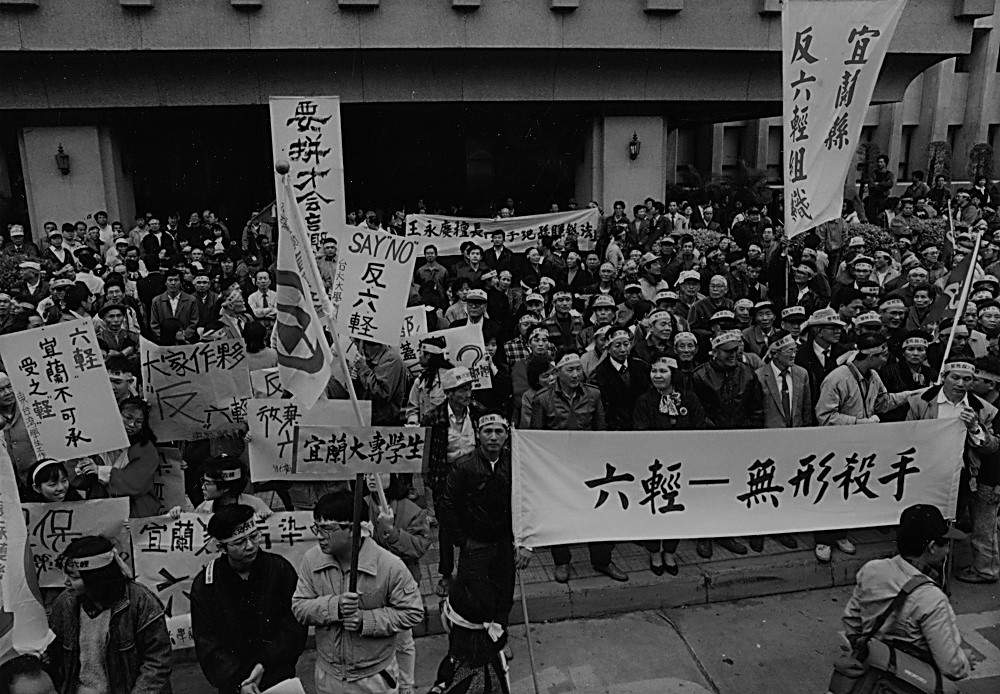
Nevertheless, the drive for economic development continued after the martial law era. According to another protestor, it’s a matter of conscience rather than technology with the choice to favour the economy over the environment seemingly irreversible even when major parties win on an economic platform and govern with the knowledge that such policies have widespread public support. So, Ke asks, why is the government so unwilling to listen when the idea that the environment itself is also a basic human right is almost a given? What has actually changed in the last three decades with Taiwan’s transition to democracy? Not enough, according to his veteran activists, but it’s not all doom and gloom. Awareness has improved, people care more than they used to. They’ve been ‘awakened” to the issues in all of their complexity and Taiwan has a lively, diverse and intersectional activist scene in which environmental concerns are very much part of a social justice movement full in the knowledge that the environment is never just a local issue. The age of awakening may have come to an end, but the age of action is only just beginning. 


The Age of Awakening screens on 6th December at London’s Rio Cinema as part of Taiwan Film Festival UK 2020.

Original trailer (no subtitles)