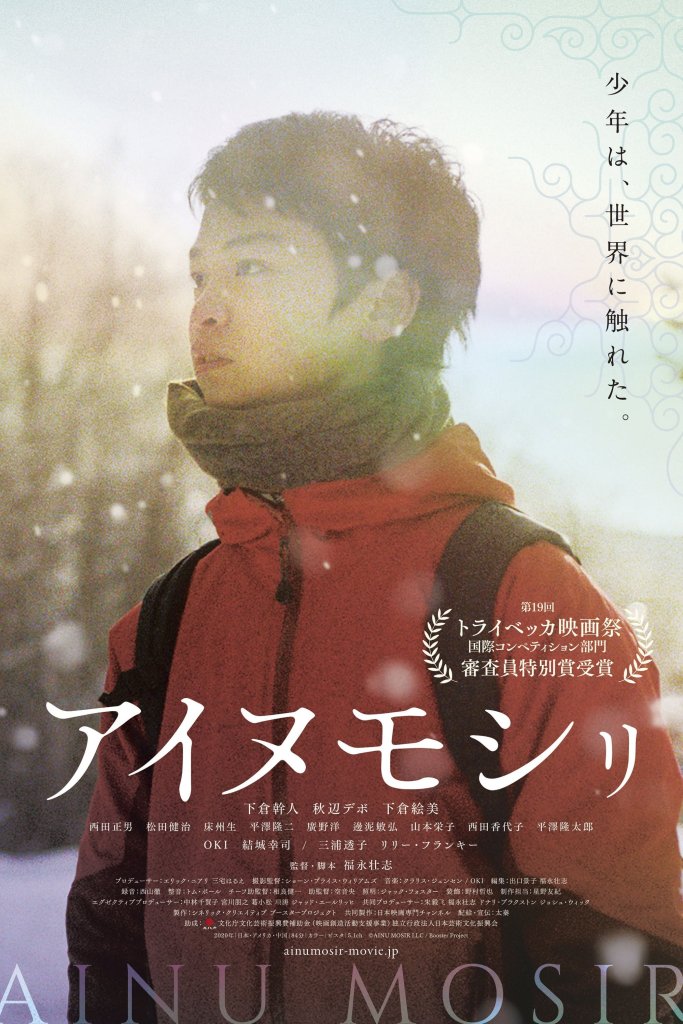
Ainu Mosir (アイヌモシㇼ, Takeshi Fukunaga, 2020)

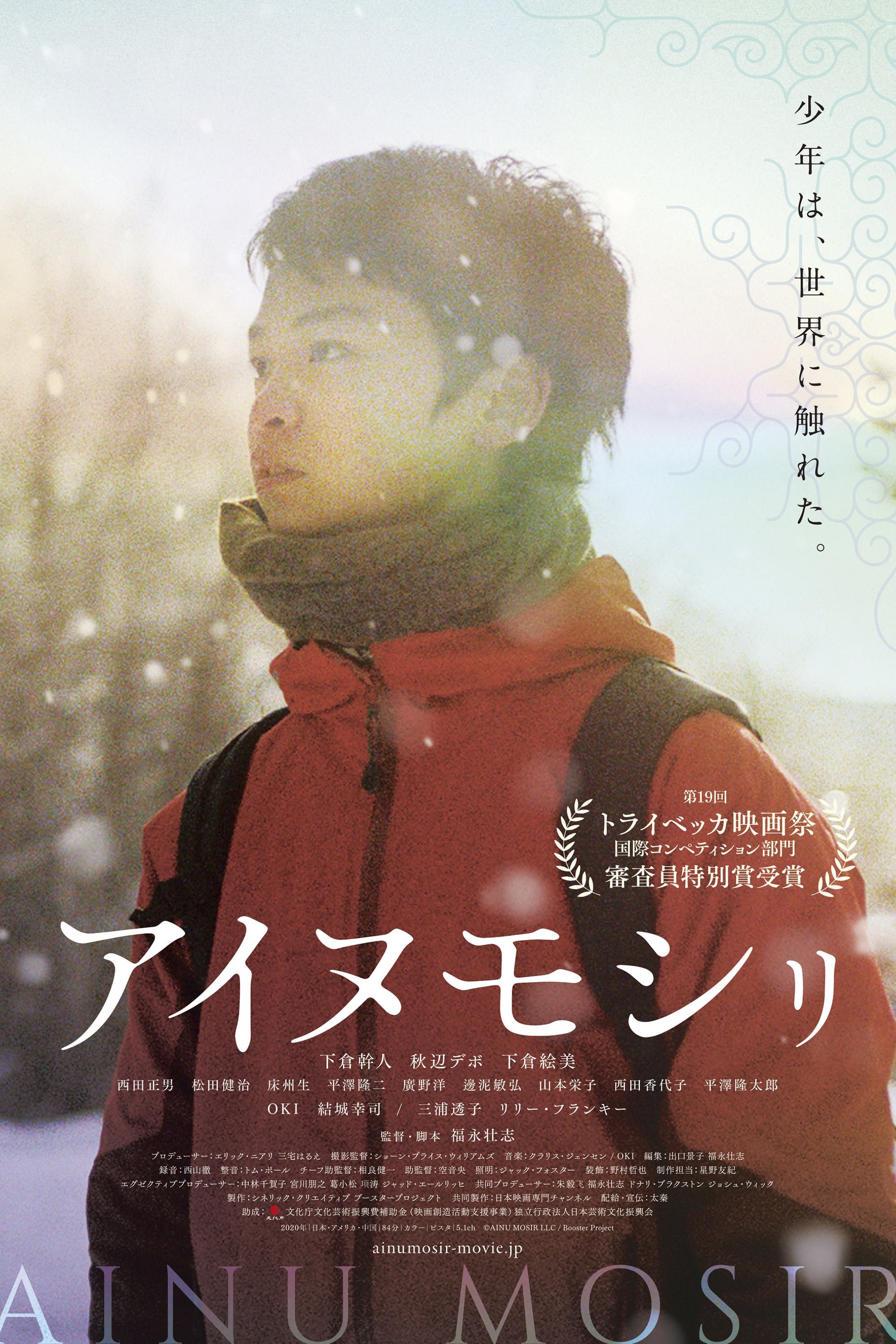
Despite its continuing preoccupation with the conflict between tradition and modernity, Japanese cinema has often been reluctant to address the nation’s relationship with marginalised communities such as the Ainu, the indigenous people of Hokkaido which was in essence the site of Japan’s first colonial expansion at the beginning of the Meiji era. Set very much in the present day, Takeshi Fukunaga’s Ainu Mosir (アイヌモシㇼ) takes its title from the indigenous name for the island and is both coming-of-age tale and exploration of the position of the Ainu people within the context of modern Japan. 

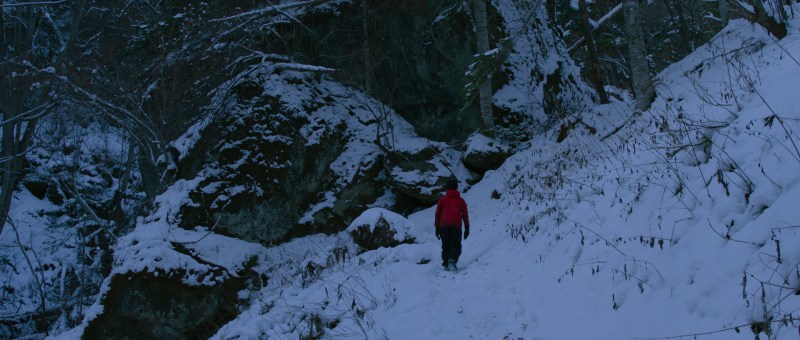
14-year-old Kanto (Kanto Shimokura) lives in the quaint Ainu tourist village of Akan and has not long lost his father. Questioned about his plans for the next stage of his education, Kanto replies that he’s fine with anything as long as it involves leaving Akan, later explaining to his understandably upset mother Emi (Emi Shimokura) that his desire to leave is because the town is “tiny” and “they make you do Ainu stuff”. Emi points out that neither she nor anyone else has ever forced him to participate in Ainu culture, but still the boy insists that he’d prefer to go somewhere more “normal” spending his time playing classic American rock on an electric guitar rather than engaging with his cultural roots. His attitude begins to change, however, when Debo (Debo Akibe), an elder acting as an uncle, begins introducing him to various aspects of Ainu culture such as the remote cave in the Forest of Light which leads to the land of the dead, teaching him how to catch and gut fish, and finally enlisting him in a project to look after a captive bear, Chibi, hidden in a cage in the woods. 

Bears are sacred in Ainu culture, but what Debo has not explained to the boy is that he’s raising Chibi as part of an ancient ritual last performed over forty years previously which involves sacrificing the bear in the belief that his spirit will then return to the land of the gods filled with tales of how wonderful humans are after being so lovingly looked after during his time in the mortal world. In a series of documentary-style sequences, Fukunaga captures the ambivalence present within the community on learning of Debo’s plan to carry out an Iomante ritual, pointing out that they live in different times and bear sacrifice is unlikely to be accepted by the outside world which will undoubtedly view it as primitive and cruel. Aside from a concern as to how the indigenous community is viewed by mainstream society, some of the council are acutely worried because they are economically dependent on the tourist trade. Young Kanto is frustrated by the idea of growing up in a museum, the town of Akan something like a theme park repackaging Ainu culture for curious Japanese tourists. His own mother works in a shop selling traditional crafts as souvenirs while appearing in a stage show adapting ancient ritual as entertainment for visiting audiences. 

A man in Emi’s shop stops to ask her if she herself is Ainu, but seems ambivalent on being told that yes she is while a female customer somewhat crassly compliments her on the quality of her Japanese which is particularly ironic as we’ve just seen her attending evening classes to relearn the Ainu language which is in constant danger of dying out. Warming to Ainu culture, Kanto is more receptive towards the idea of adding traditional instrumentation but his bandmate is, as he was, embarrassed by “Ainu stuff” and wants nothing to do with it. Debo’s betrayal sets Kanto on a collision course with his newly found appreciation for his indigenous roots in presenting him first hand with something dark and cruel that proves difficult for him to understand but perhaps finally allows him to come to terms both with his father’s death and with his own identity as a member of an indigenous community. 

Using a cast of mainly non-professional actors from the local area, Fukunaga switches between documentary-style capture of Ainu life and the cinematic naturalism of Kanto’s path towards self-acceptance filled as it is with the wonder of the natural world. Juxtaposing the reality of the Iomante ritual with the repackaged stage show, he shows us what it costs to preserve traditional culture within a surrounding modernity even as scholars descend to record the songs of the Ainu for prosperity badgering old women to offer up long forgotten lullabies for a lonely tape recorder. Kanto has however perhaps found his path in knowing he is not alone as he steps into a less innocent adulthood having integrated both sides of himself into a more complete whole. 


Ainu Mosir streams in Germany 1st to 6th June as part of this year’s Nippon Connection. It is also available to stream in the UK (and possibly elsewhere) via Netflix.

International trailer (English subtitles)

21st Nippon Connection ONLINE Film Festival Confirms Full Program

Nippon Connection is back for 2021 once again taking place entirely online! Running from 1st to 6th June, the festival will be bringing some of the best in contemporary Japanese cinema to homes around the world via their Shift72-powered streaming platform. Unfortunately not everything will be available everywhere with some titles streaming in Germany only, but unless otherwise stated all films stream in the original Japanese with English subtitles. Full details for all the films including streaming locations will be available via the official website from 22nd May with tickets priced at €6.

Full list of features:

NIPPON CINEMA

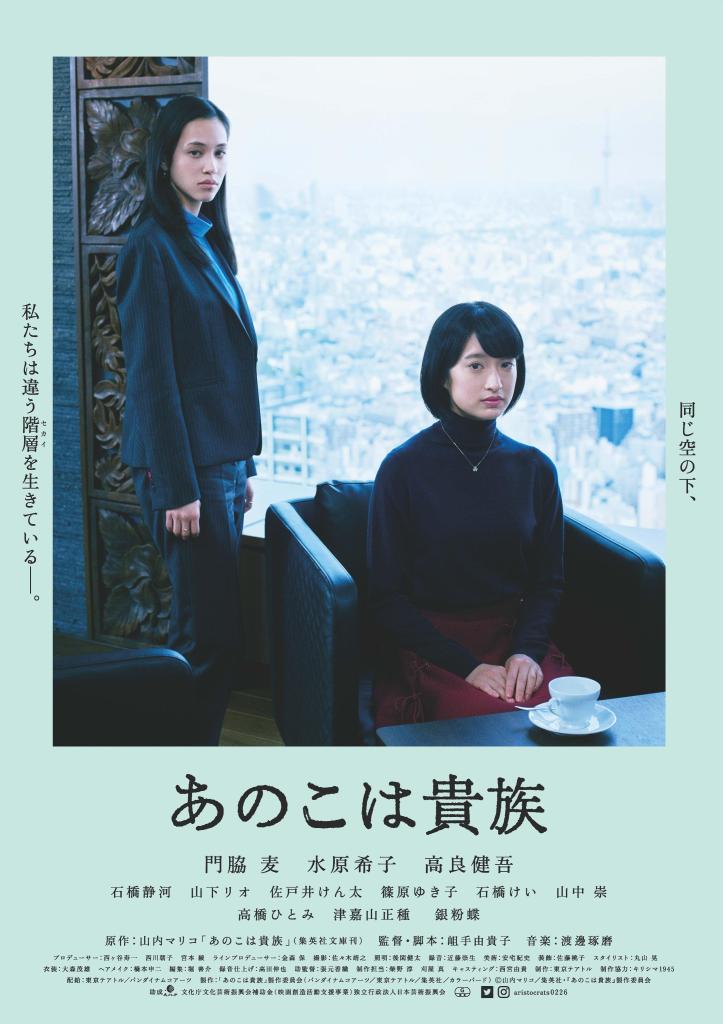
  • Aristocrats – a rich girl (Mugi Kadowaki) and a poor girl (Kiko Mizuhara) eventually find inter-class solidarity through failed relationships with the same man (Kengo Kora) in Yukiko Sode’s empathetic social drama.
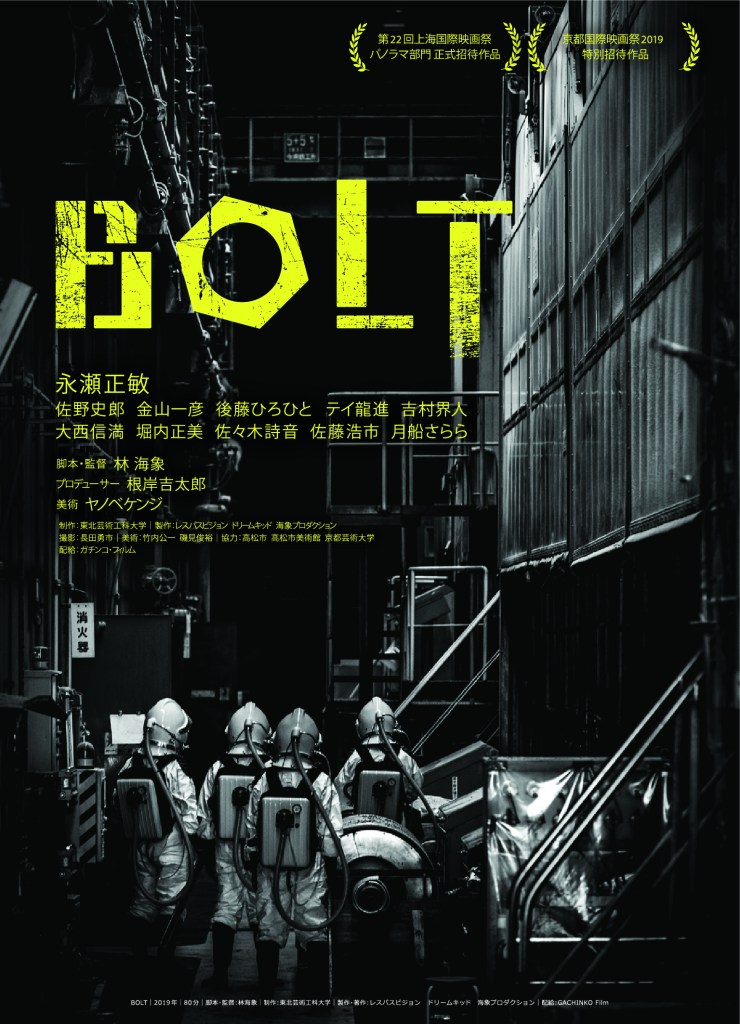
  • Bolt – tripartite nuclear-themed omnibus movie directed by Kaizo Hayashi and starring Masatoshi Nagase
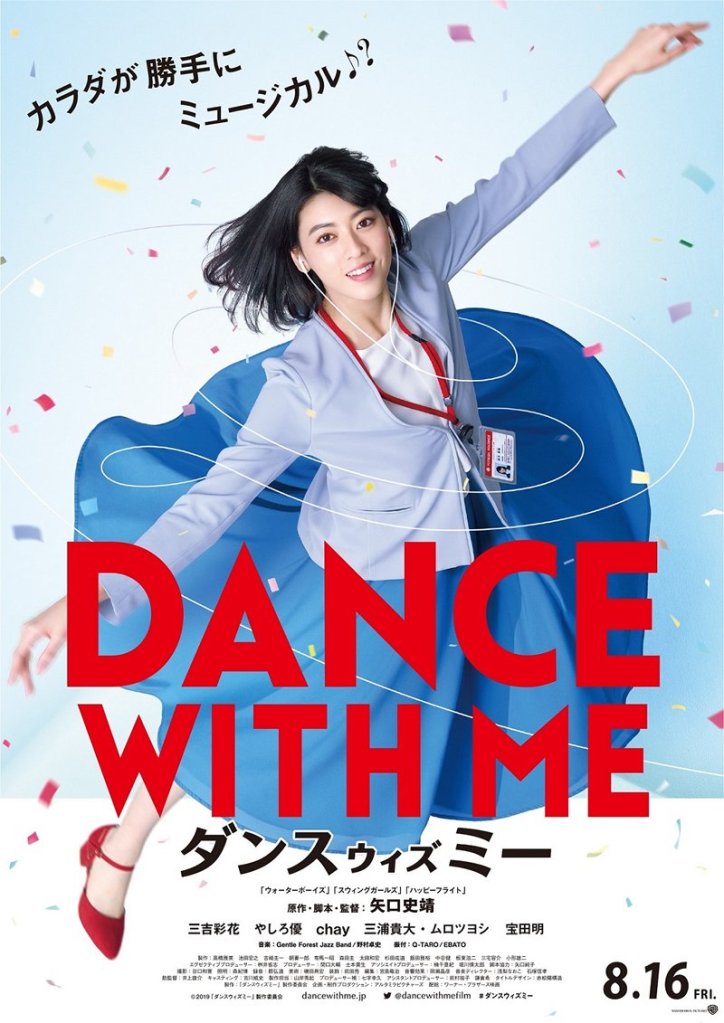
  • Can’t Stop The Dancing (AKA Dance with Me) – musical comedy from Shinobu Yaguchi starring Ayaka Miyoshi as an ambitious executive whose plans for career success are derailed when she’s accidentally hypnotised to break into song and dance every time she hears music. Review.
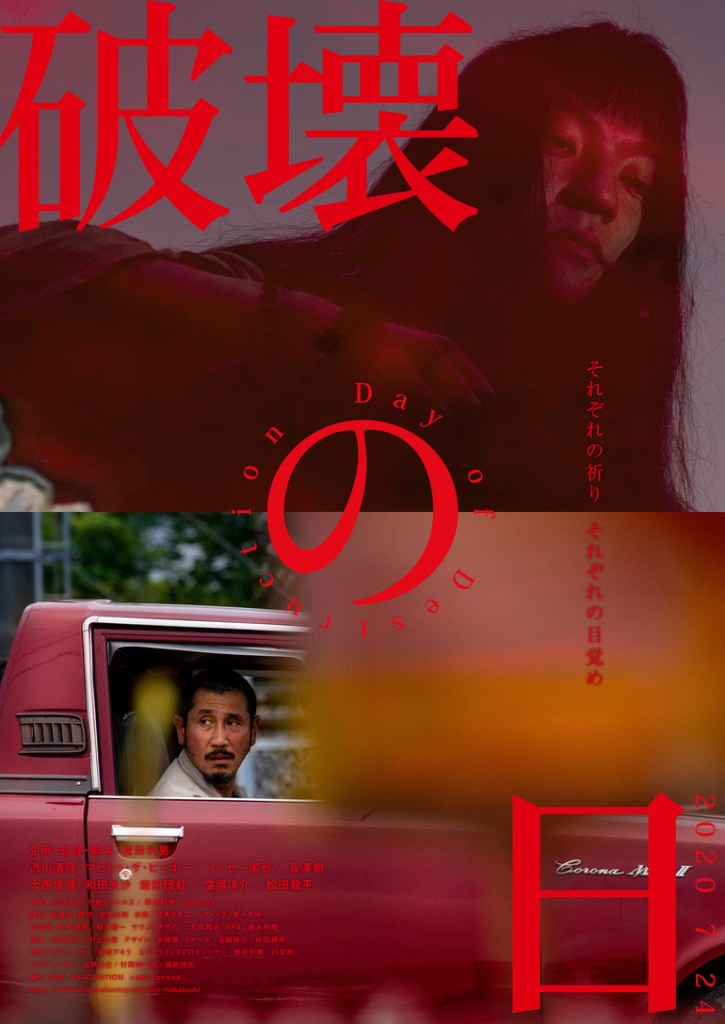
  • The Day Of Destruction – Toshiaki Toyoda sets out to exorcise the demons of a venal city in an impassioned attack on societal selfishness and personal apathy. Review.
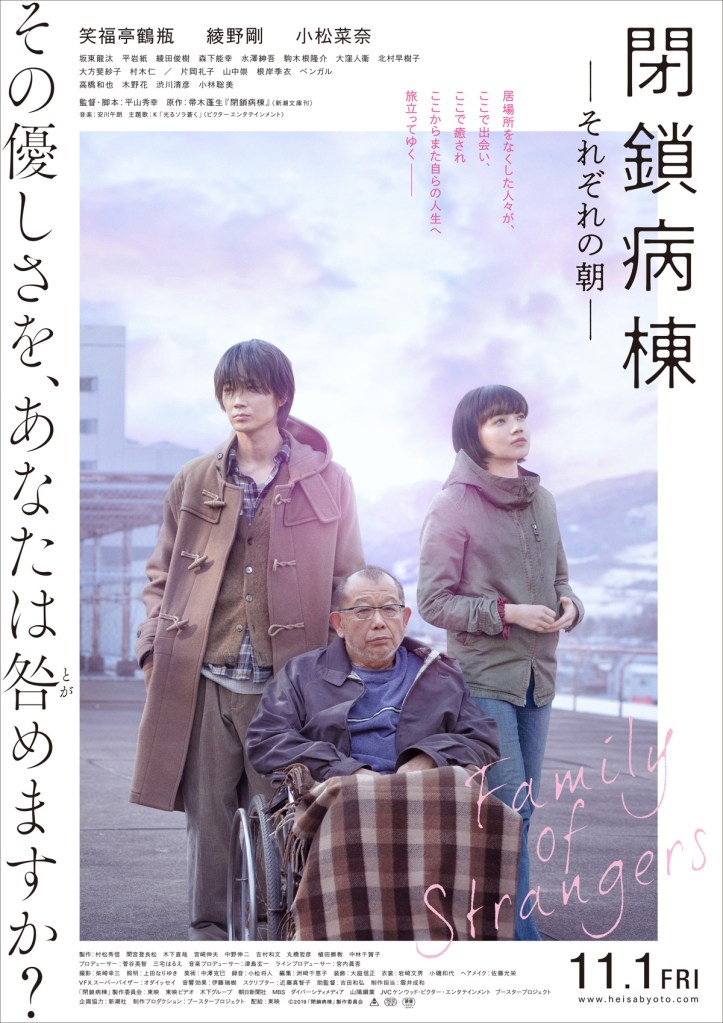
  • Family Of Strangers (AKA Closed Ward) – the lives of three patients at a psychiatric clinic are disrupted when a murder takes place at the facility.
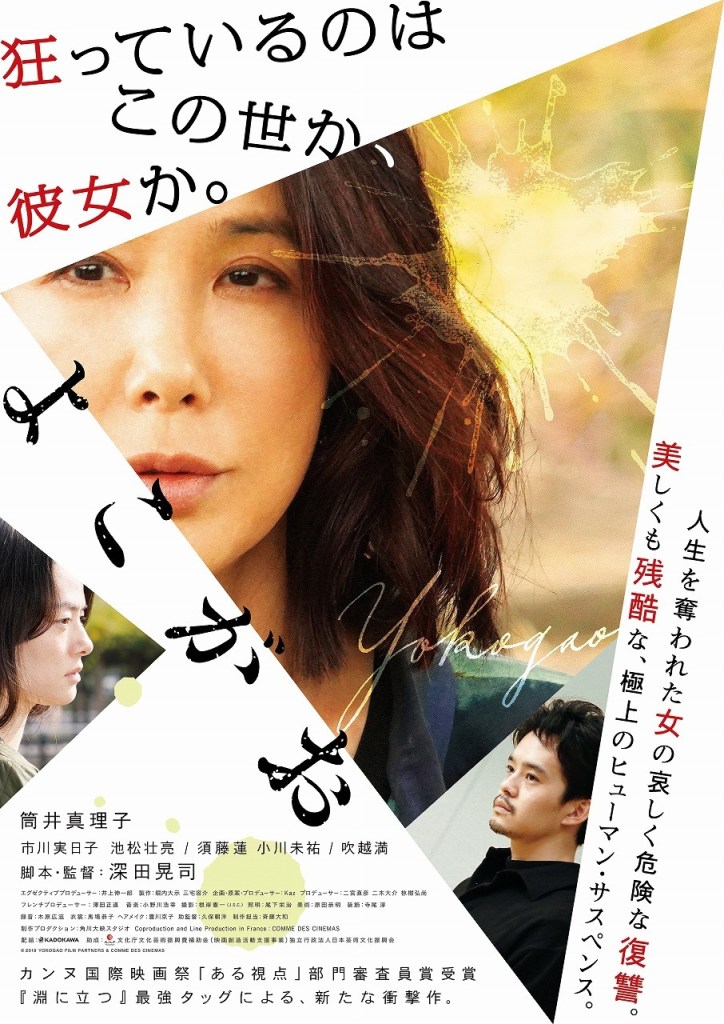
  • A Girl Missing – a home care nurse’s life is turned upside-down when she’s wrongfully implicated in a kidnapping in Koji Fukada’s thought provoking drama. Review.
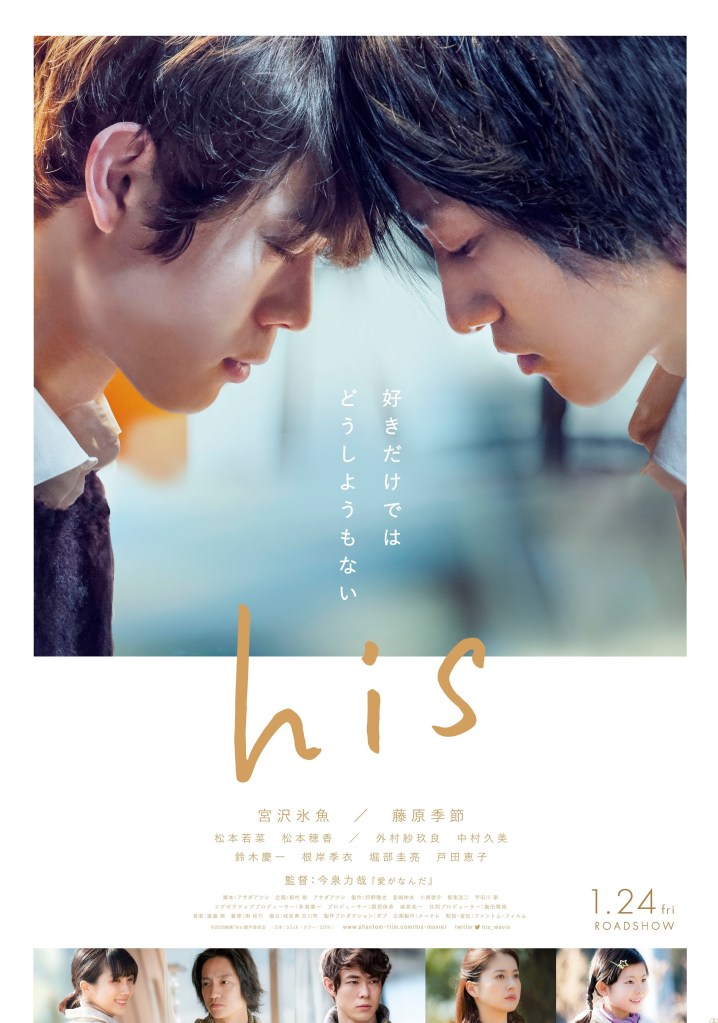
  • his – teenage lovers break up after uni each taking different paths while struggling with their sexuality but begin to see new hope reuniting some years later in Rikiya Imaizumi’s empathetic drama. Review.
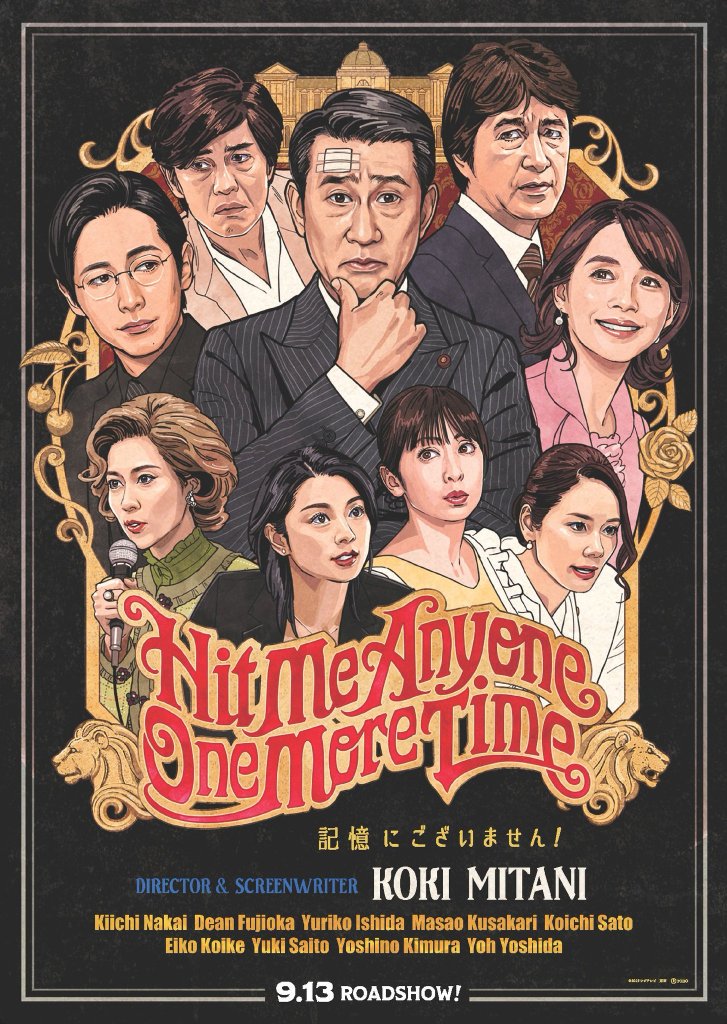
  • Hit Me Anyone One More Time – farcical comedy from Koki Mitani in which a man gets hit on the head and loses his memory only to be told he is actually the prime minister of Japan!
  • My Blood And Bones In A Flowing Galaxy – SABU adapts the hugely popular novel in which a high school boy tries to save a bullied classmate.
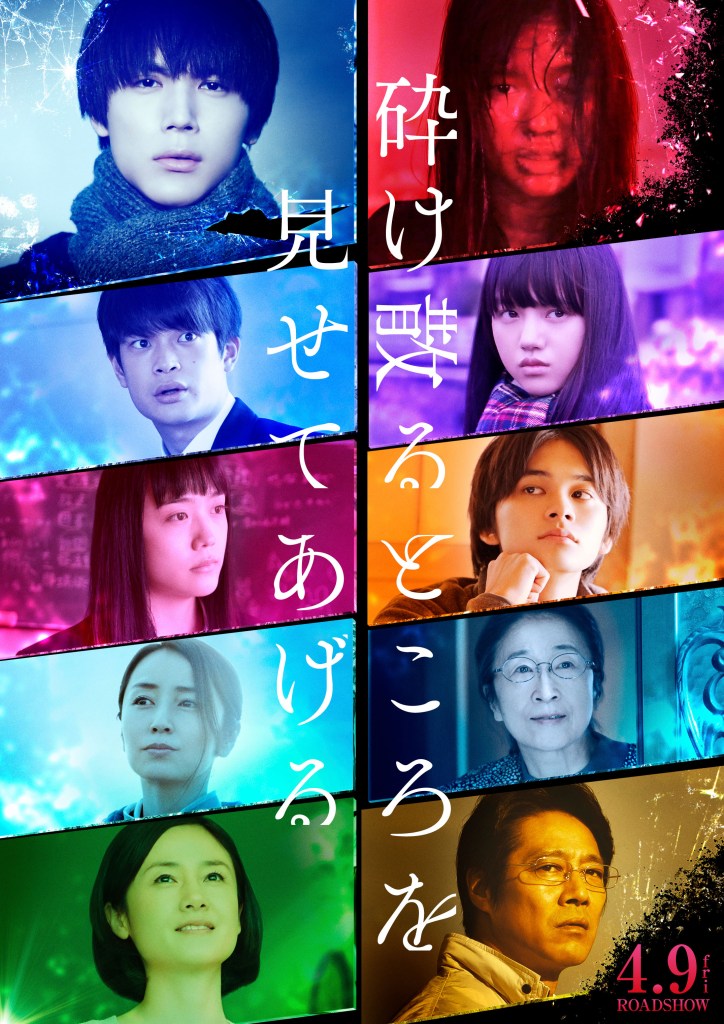
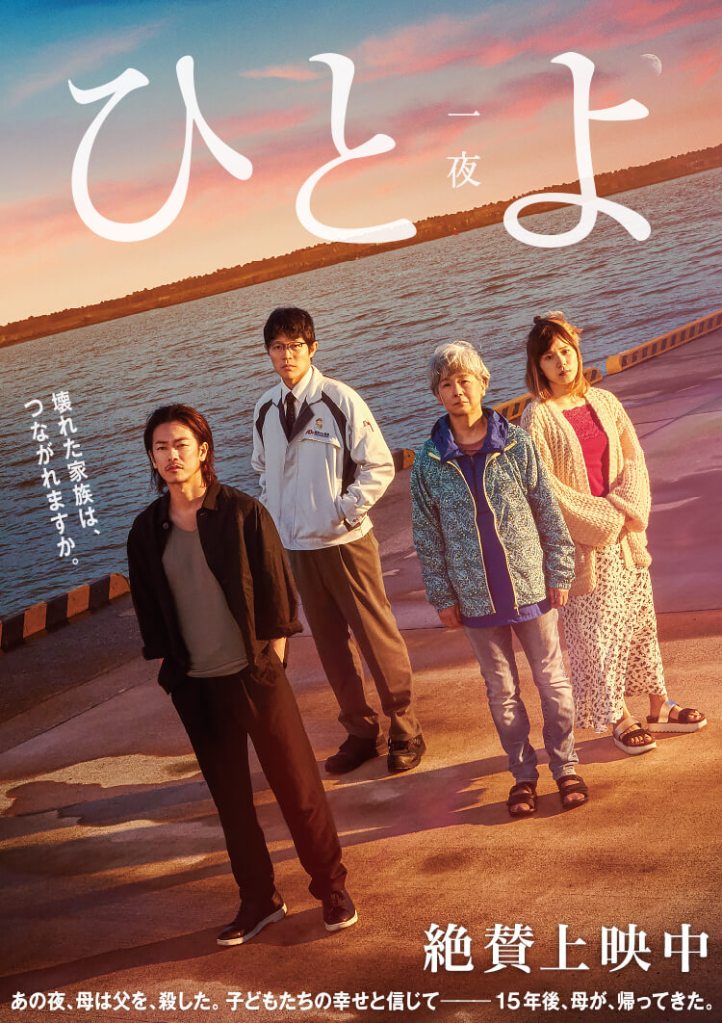
  • One Night – adult children are forced to face the legacy of trauma and abuse when their mother returns after 15 years of exile in Kazuya Shiraishi’s raw family drama. Review.
  • Our 30-Minute Sessions – a ghostly intervention helps a collection of wounded adults find accommodation with grief in Kentaro Hagiwara’s bodyswapping take on the band movie. Review.
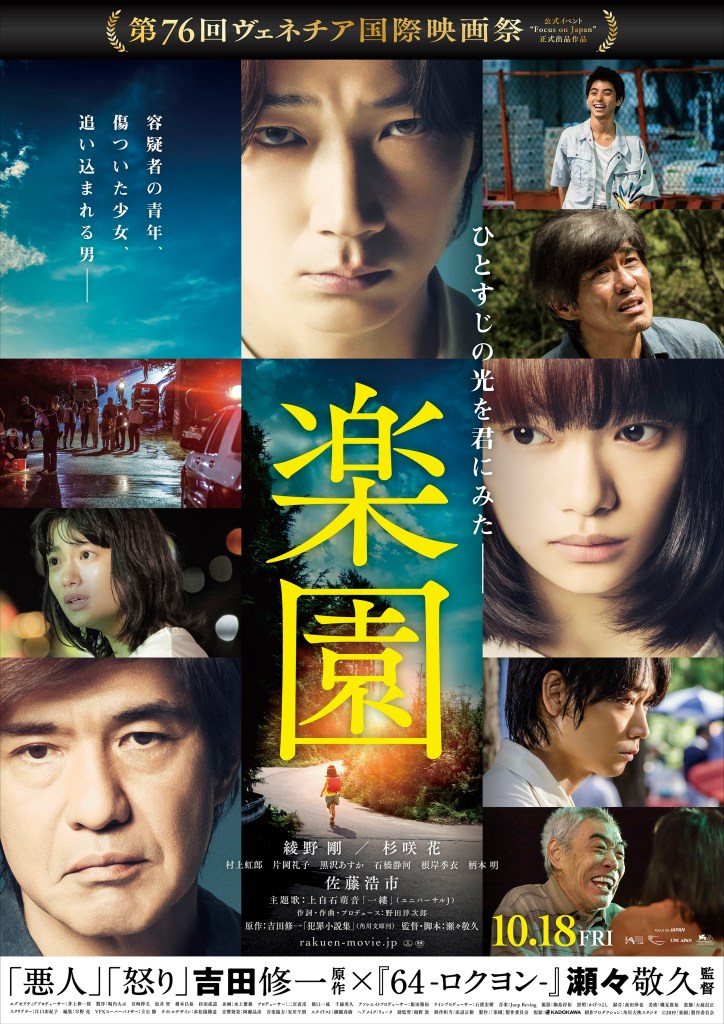
  • The Promised Land – Takahisa Zeze adapts the novel by crime writer Shuichi Yoshida revolving around the unsolved disappearance of a 12-year-old girl.
  • Red Post On Escher Street – epic drama from Sion Sono following a series of actors who audition for a festival darling director.
  • Sea Of Revival – a man tries and fails to make a new start as he searches for a sense of belonging in a land touched by tragedy in Kazuya Shirashi’s unconventional family drama. Review.
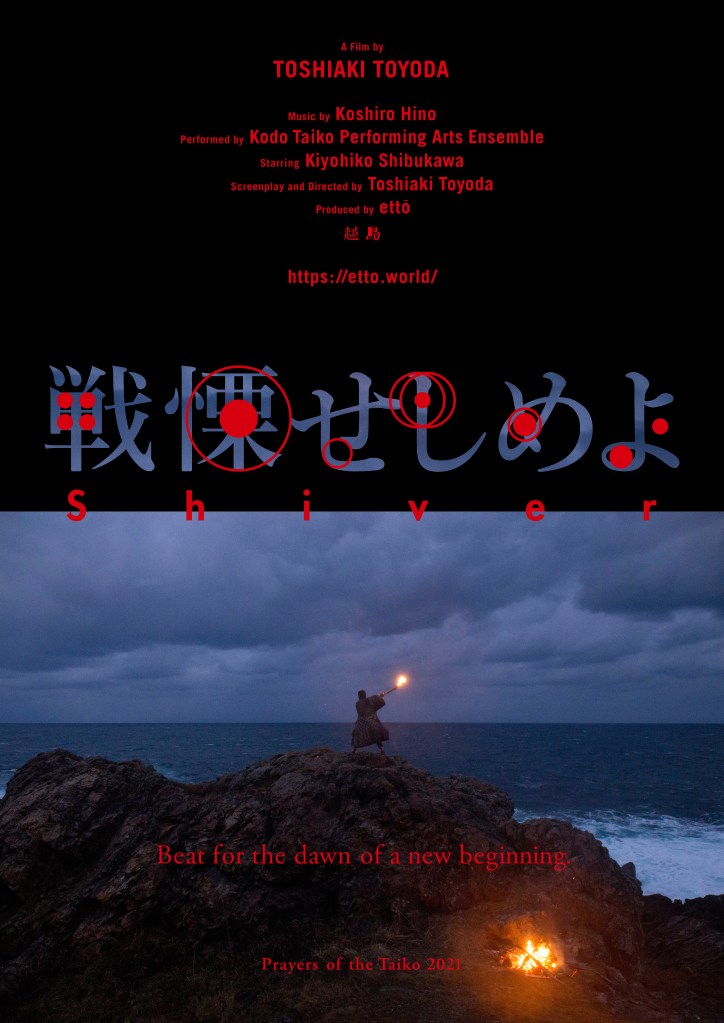
  • Shiver – dialogue free music movie from Toshiaki Toyoda filmed entirely on Sado island.
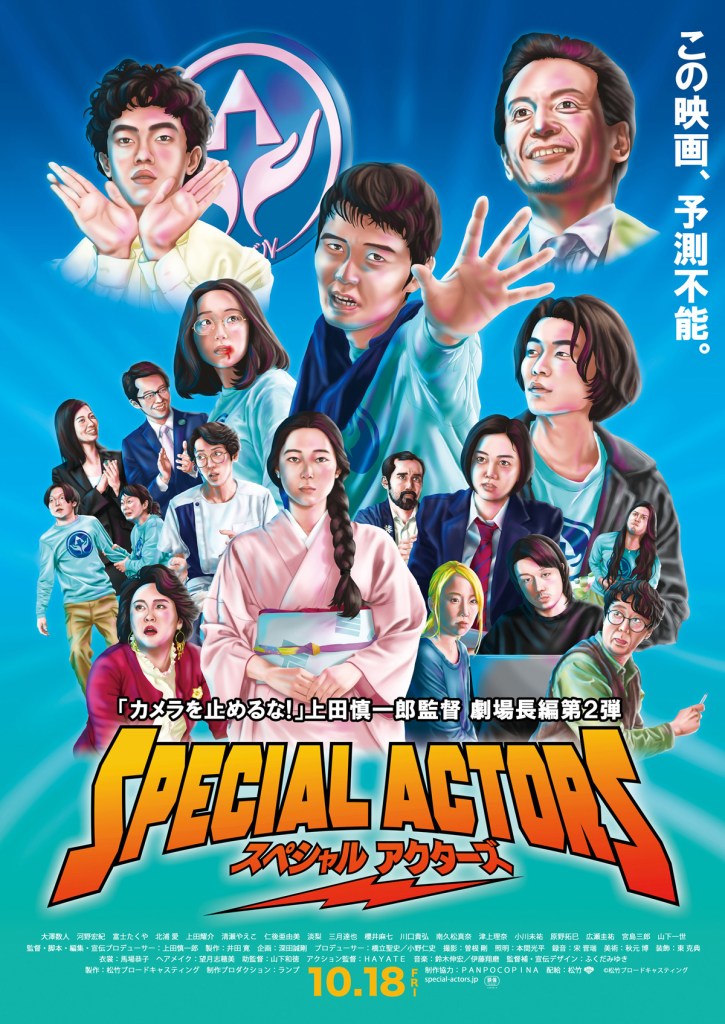
  • Special Actors – a nervous young man discovers his inner hero while infiltrating a shady cult as a “Special Actor” posing as a new devotee in Shinichiro Ueda’s absurdist followup to One Cut of the Dead. Review.
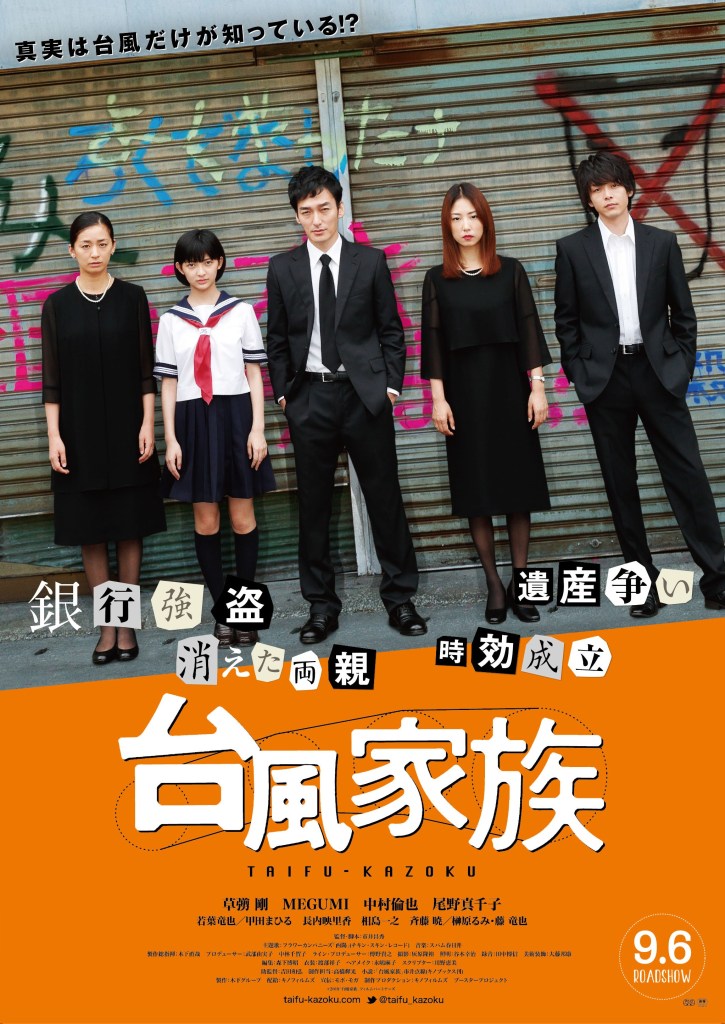
  • The Stormy Family – abandoned siblings reunite 10 years after their parents robbed a bank and disappeared.
  • To The Ends Of The Earth – Kiyoshi Kurosawa reunites with recent muse Atsuko Maeda as a lost TV presenter goes searching for herself while filming in Uzbekistan. Review. Original version with German and French subtitles only
  • Under The Open Sky – a pure-hearted man of violence struggles to find his place in society after spending most of his life behind bars in Miwa Nishikawa’s impassioned character study. Review.
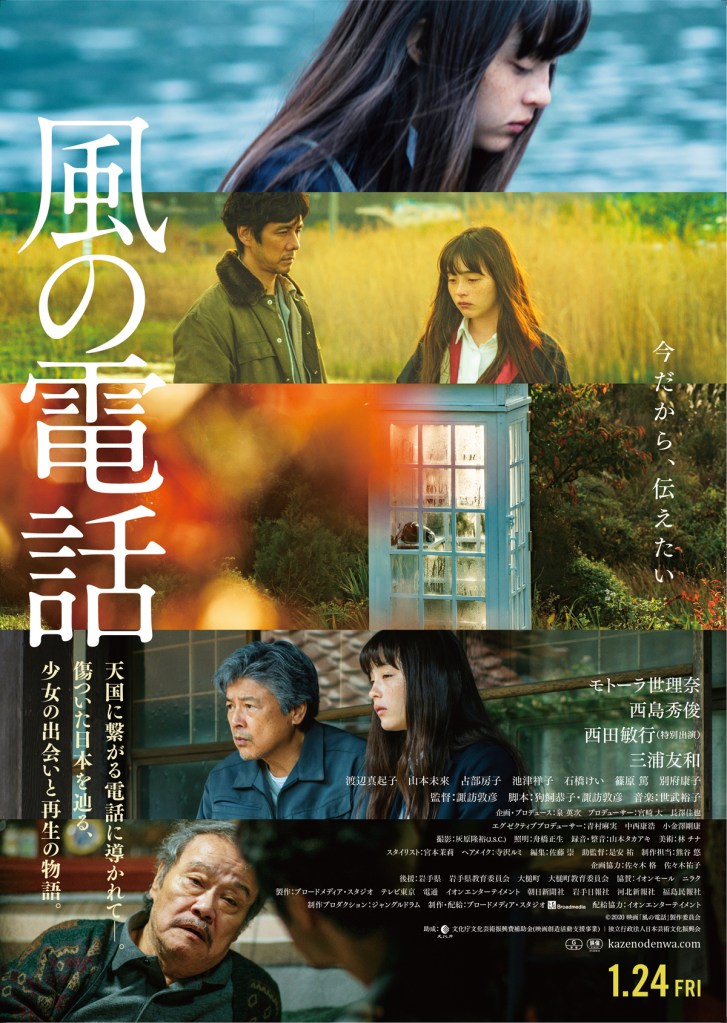
  • Voices In The Wind – Nobuhiro Suwa returns to Japan after an 18-year absence for a tale of national catharsis as a young woman makes a painful journey home in search of making peace with the traumatic past. Review.
  • Wonderful Paradise – a father has to sell the family flat after a career setback but his kids unwittingly turn the sad event in to an unpredictable party.
  • Special screening: A Town And A Tall Chimney – village youngsters stand up to industrial pollution in late Meiji Ibaraki. original version with German subtitles only

NIPPON VISIONS

  • © Kamata Prelude Film Partners
  • Ainu Mosir – coming-of-age drama in which an Ainu boy confronts the contradictions of his cultures.
  • Along The Sea – a migrant worker from Vietnam is faced with her lack of possibility after discovering she is pregnant while living undocumented in Akio Fujimoto’s unflinching social drama. Review.
  • Beyond The Infinite Two Minutes – a musician/cafe owner starts receiving messages from himself from two minutes in the future.
  • Company Retreat – docudrama in which a young woman is harassed by her boss while working as a hotel receptionist.
  • Daughters – two young women find themselves reassessing their ideas of womanhood and maternity in the wake of an unexpected pregnancy in Hajime Tsuda’s refreshingly positive drama. Review.
  • Extraneous Matter–Complete Edition – compilation of a series of short films about a woman who encounters something strange while living a sexless life with her boyfriend.
  • I’m Really Good – Hirobumi Watanabe shifts focus in capturing one ordinary, though strangely full, day in the life of a little girl living cheerfully in peaceful Tochigi. Review.
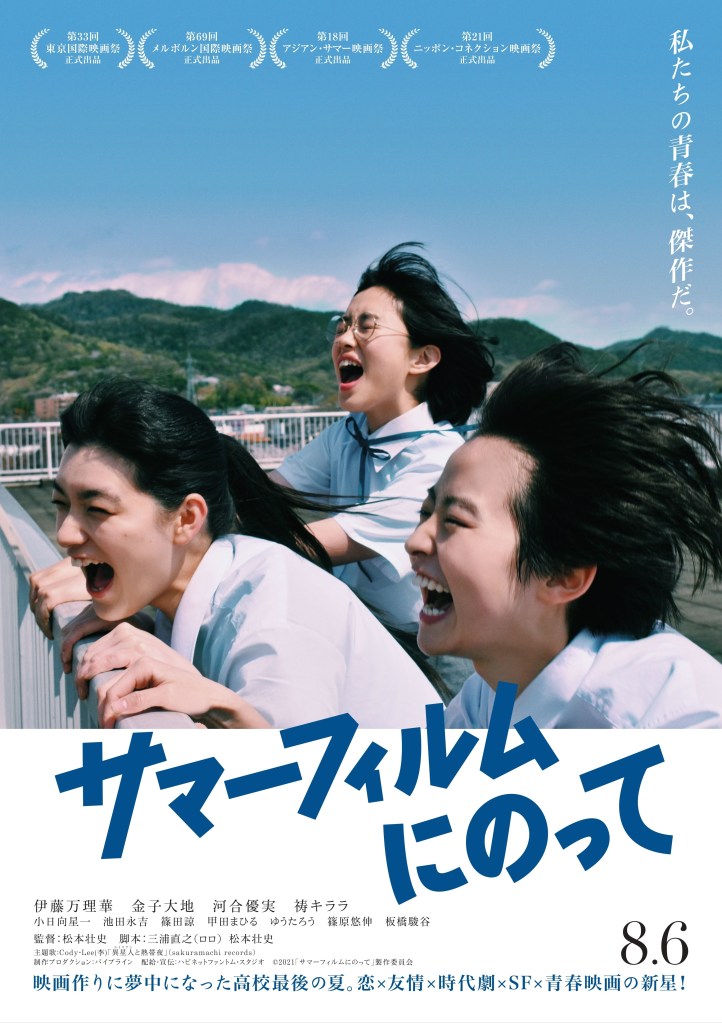
  • It’s A Summer Film! – high school drama in which a jidaigeki obsessive decides to make a samurai movie only to discover her lead actor is a time traveller from the future!
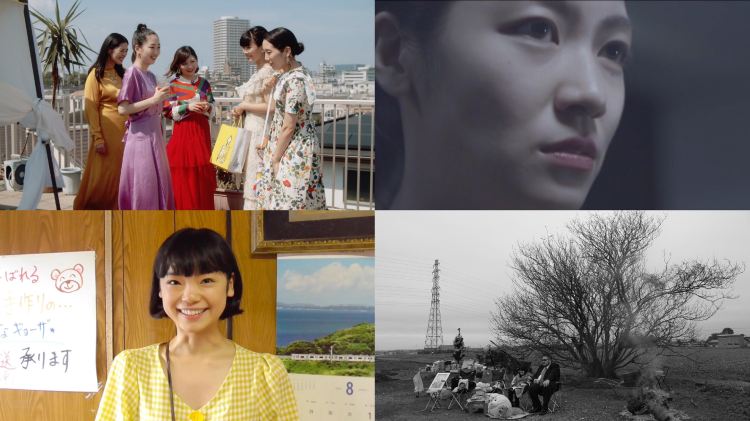
  • Kamata Prelude – four-part anthology film directed by Ryutaro Nakagawa, Mayu Akiyama, Yuka Yasukawa, and Hirobumi Watanabe.
  • Kontora – a directionless high school girl finds a path towards the future through deciphering a message from the past in Anshul Chauhan’s ethereal coming-of-age drama. Review.
  • Nosari: Impermanent Eternity – an “ore ore” scammer ends up living with an elderly woman convinced he really is her grandson.
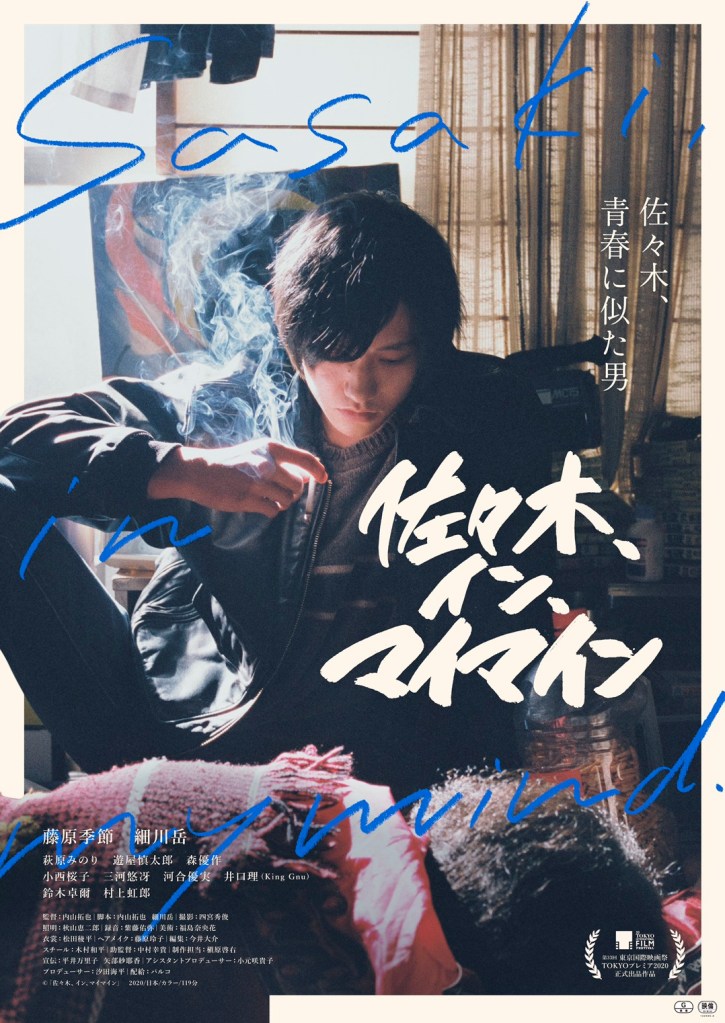
  • Sasaki In My Mind – a down on his luck actor thinks back on his high school days.
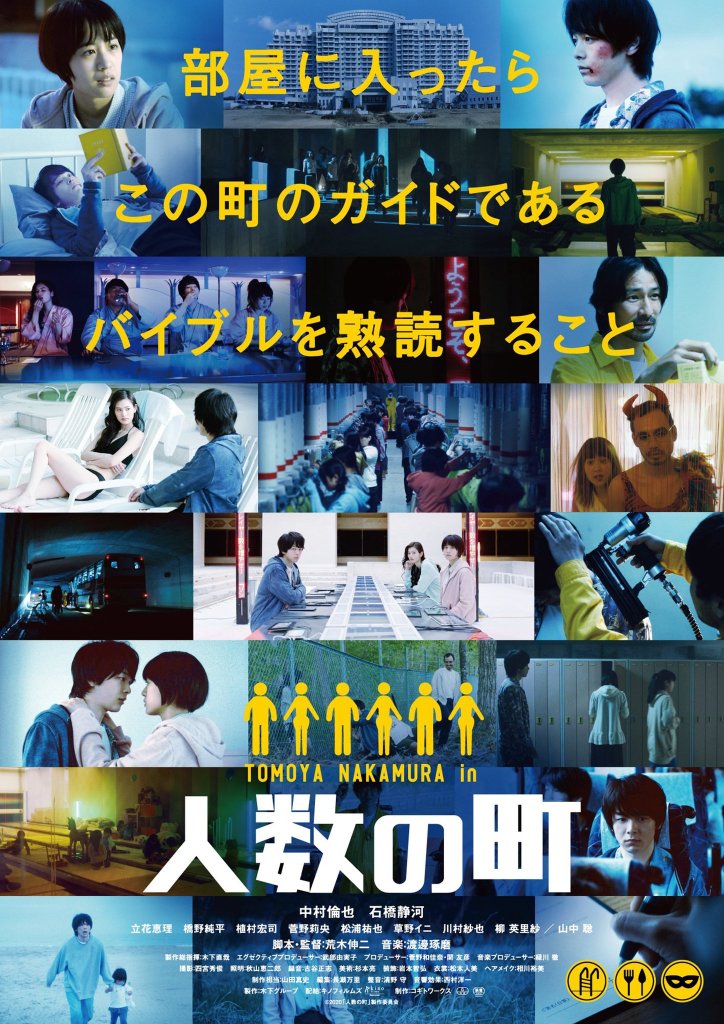
  • The Town Of Headcounts – a disaffected young man gets a fresh start in a utopian community but quickly becomes disillusioned in Shinji Araki’s slick dystopian thriller. Review.
  • yes, yes, yes – a family begins to fall apart under the weight of impending grief when a mother enters the final stages of a terminal illness in Akihiko Yano’s intense existential drama. Review.

NIPPON DOCS

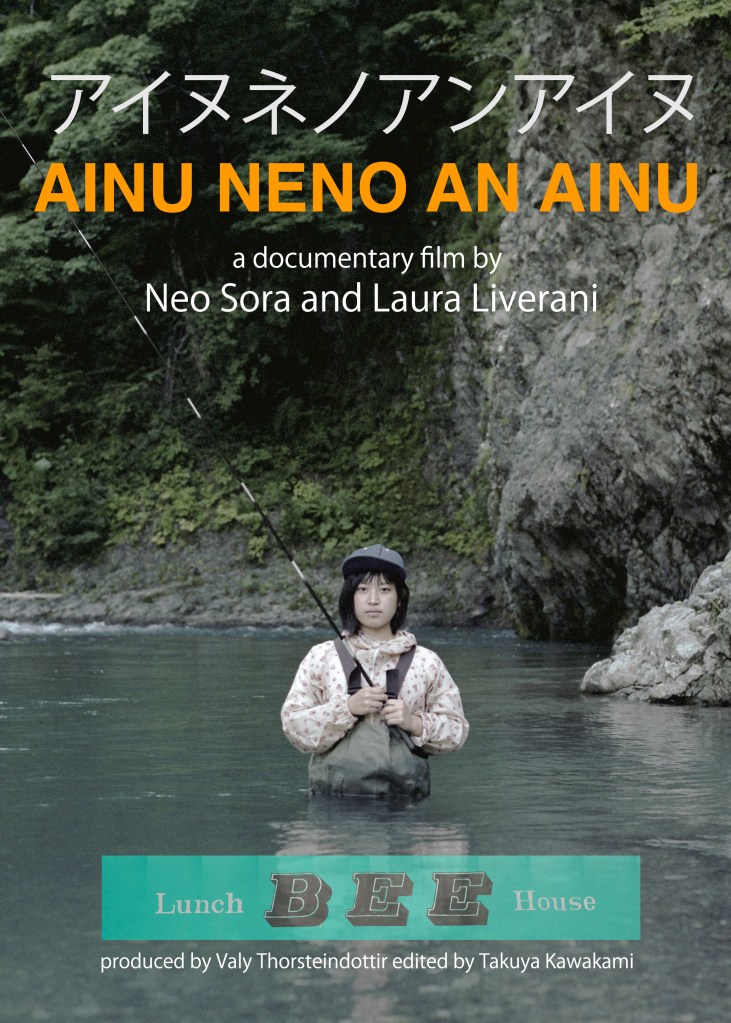
  • Ainu Neno An Ainu – documentary by Laura Liverani, Neo Sora & Valý Þórsteinsdóttir exploring Ainu identity in contemporary Japan
  • I Quit, Being “Friends” – director Ayako Imamura turns the camera on herself and explores her sometimes complicated relationship with an autistic friend who struggles with communication.
  • Koshien: Japan’s Field Of Dreams – documentary following a high school baseball team as they battle through national championships
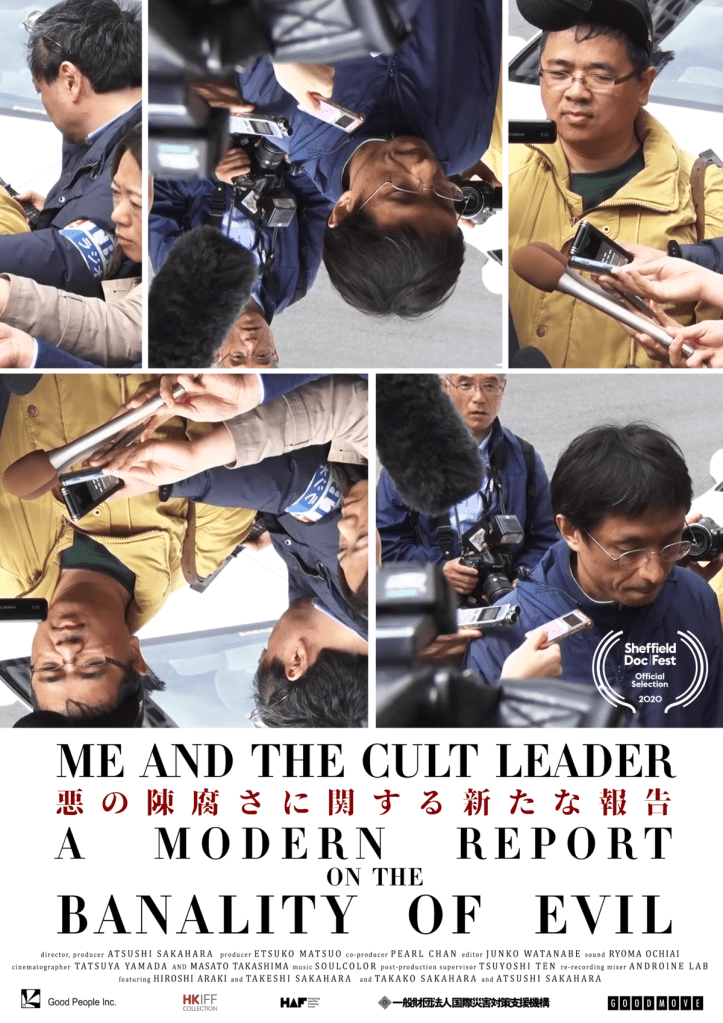
  • Me And The Cult Leader – sarin gas attack survivor Atsushi Sakahara takes a cult member on the road in search of understanding in an empathetic, self-directed doc. Review.
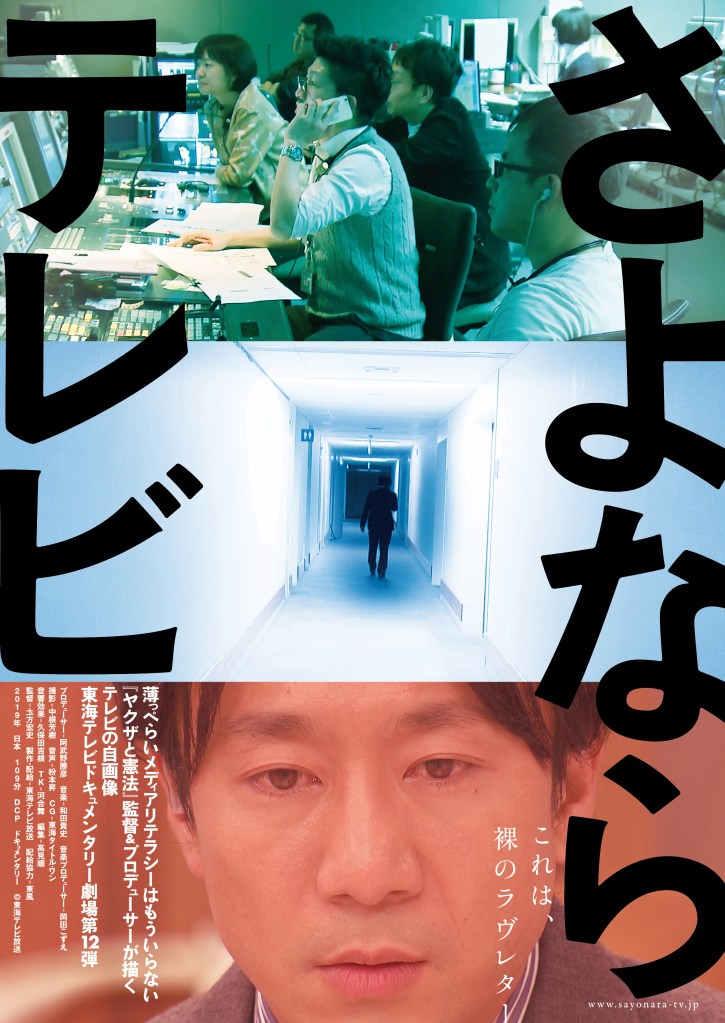
  • Sayonara TV – documentary marking the 60th anniversary of Tokai Television Broadcasting while contemplating the changing place of television in the contemporary media landscape.
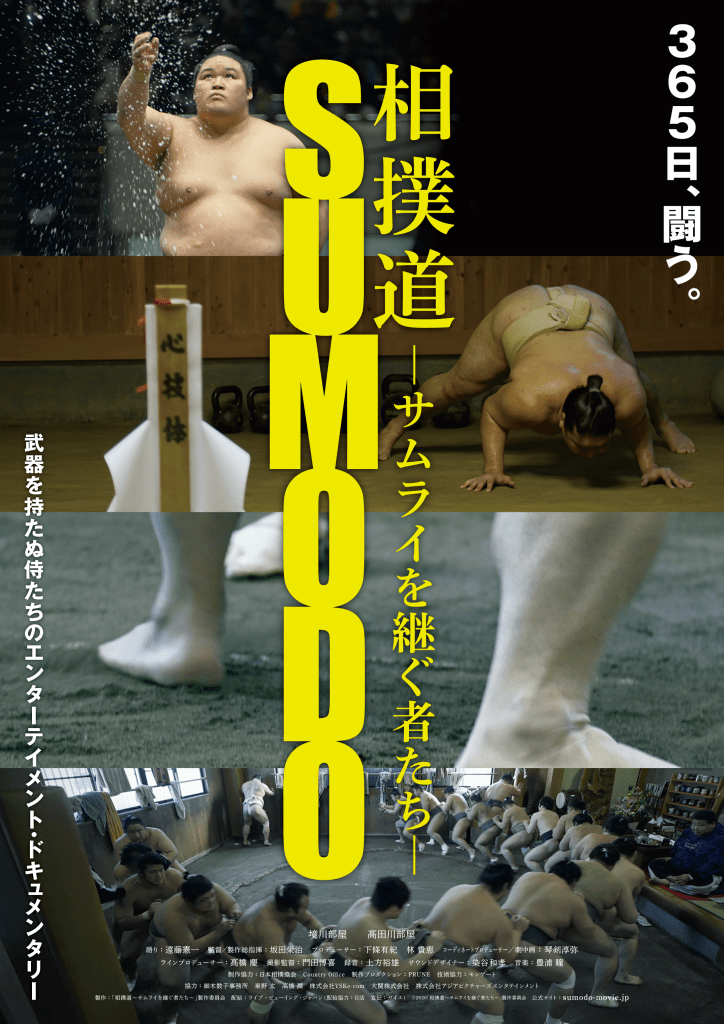
  • SUMODO ~The Successors Of Samurai~ – documentary exploring the lives of sumo wrestlers.
  • The Witches Of The Orient – documentary focussing on the 1964 Olympic Gold medal-winning women’s volleyball team who inspired a host of manga and anime heroines.
  • A new feature documentary by Thomas Ash (details coming soon) world premiere

NIPPON ANIMATION

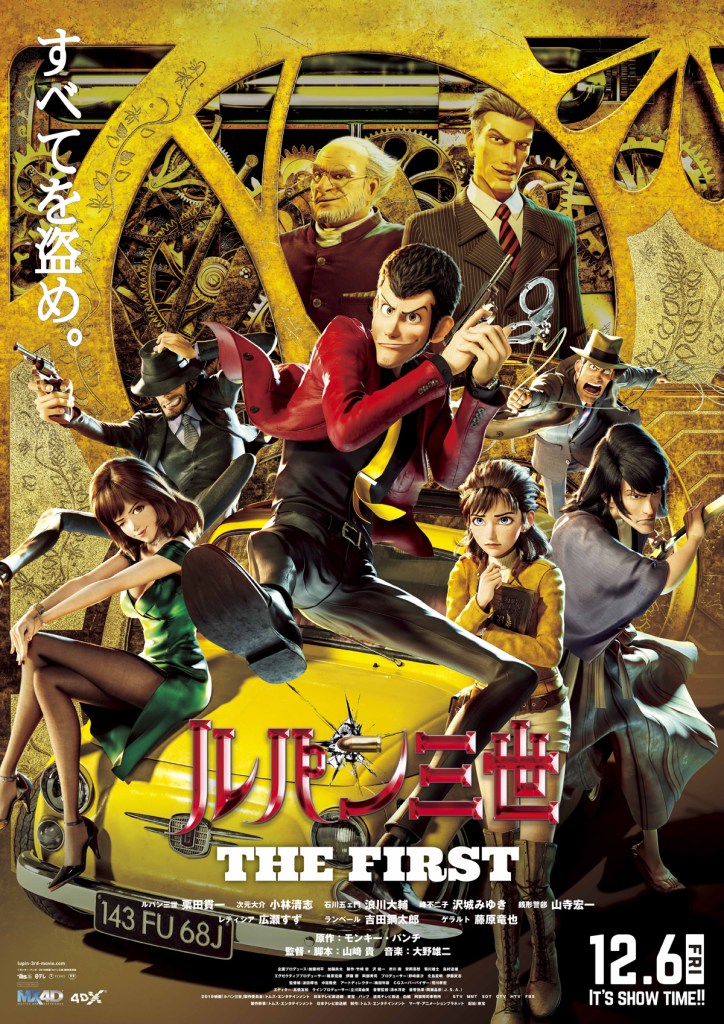
  • Lupin III: The First – 3DCG take on Monkey Punch’s iconic hero directed by Takashi Yamazaki. Original version with German subtitles only
  • ON-GAKU: Our Sound – deadpan slackers decide to start a band and discover unexpected sides to themselves in the joy of making music in Kenji Iwaisawa’s infinitely charming indie animation. Review.
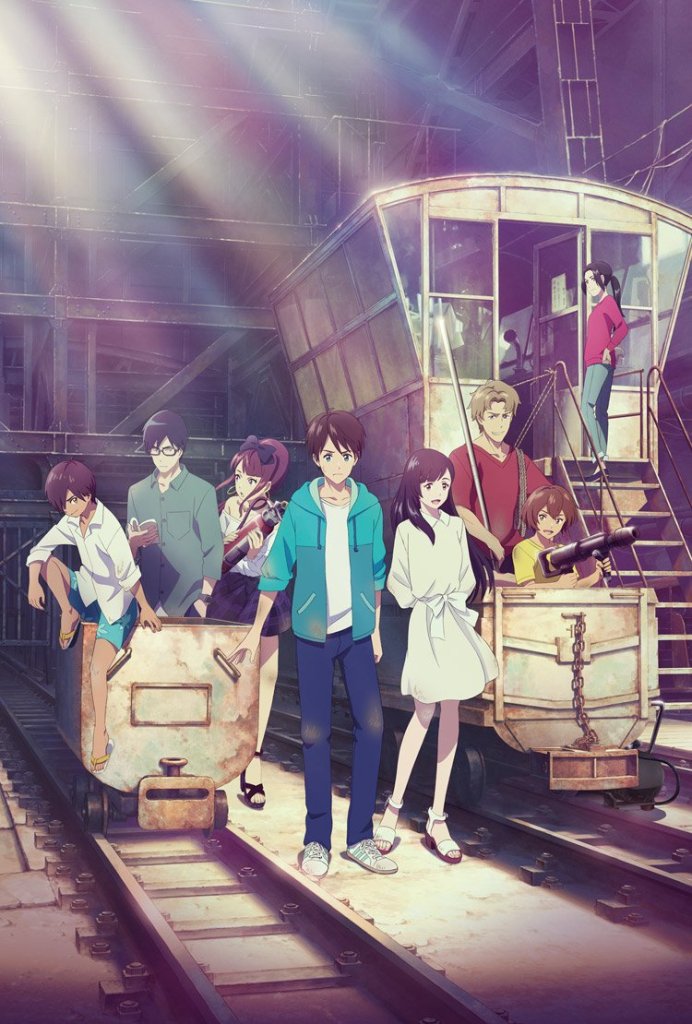
  • Seven Days War – a group of idealistic teens holds the fort against duplicitous adult indifference in Yuta Murano’s openhearted anime adaptation of the cult novel. Review. Original version with German subtitles only
  • Sumikkogurashi: Good To Be In The Corner – cute animation starring the iconic San-X characters. original version with English subtitles / original version with German voice-over

The festival will also be hosting its usual series of lectures and special events via Zoom with the full program available from 22nd May via the official website where you’ll also be able to find ticketing and reservation links. This year’s online Nippon Connection runs 1st to 6th June via the festival’s dedicated streaming platform. To keep up with all the latest news you can also follow the festival on Facebook,  Twitter,  YouTubeFlickr, and Instagram.

Infinite Foundation (無限ファンデーション, Akira Osaki, 2018)

Sometimes the music finds you when you need it most. So it is for the heroine of Akira Osaki’s wistful coming-of-age drama Infinite Foundation (無限ファンデーション, Mugen Foundation). To better capture the teen experience with an immediate naturalism, Osaki’s cast was provided with no script only a vague outline inspired by the songs of singer-songwriter Cosame Nishiyama and asked to improvise each individual scene. What results is suitably intense tale of complicated teenage female friendships, frustrated ambitions, and fear for the future in which a shy, introverted young woman gradually finds the courage to chase her dreams with the help of an ethereal songstress and unexpected solidarity. 

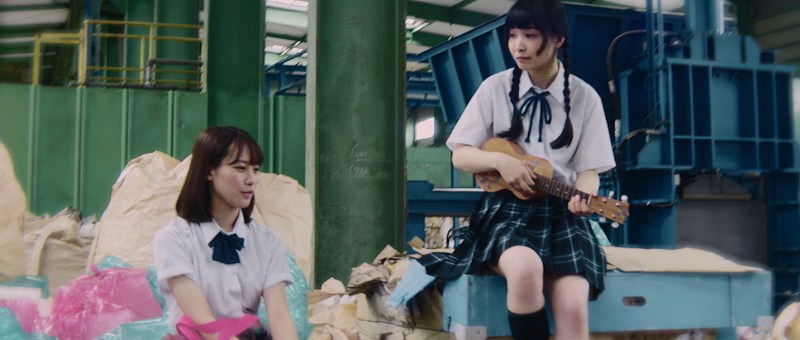
Mirai (Sara Minami), whose name literally means “future”, is a dreamy young girl who thinks she’s not much use for anything so usually idles away her time in school drawing dress designs in her sketchbook when the teacher’s not looking. In fact, she’s technically in summer school catch up, but every time the teacher returns to check on her he notices that she still hasn’t got round to filling in the answers on her maths test. Wandering home one day she hears the gentle strains of a ukulele coming from a nearby recycling plant and strikes up a friendship with a strange girl, Cosame (Cosame Nishiyama), with her hair in long plaits and dressed in a school uniform. Meanwhile, she’s also unexpectedly approached by the stylish Nanoko (Nanoka Hara) who, taken with her beautiful designs, insists that she join the drama club to help them come up with costumes for their imminent production of Cinderella. 

Perhaps Mirai will be going to the ball after all. Before that however she’s still contending with a sense of insecurity while her cheerful and supportive mother (Reiko Kataoka) tries to encourage her to pay more attention to her studies. Pushed towards conventional academic success, Mirai had been a little embarrassed about her love of drawing, particularly as it’s something as “frivoulous” as dress designs which she can’t believe anyone else would value. Rather than hanging out with friends, she spends most of her time sewing in her room, retreating into comfortable fantasy but also lonely and a little bit lost. So when Nanoko is so enthusiastic about her artwork it gives her a much needed confidence boost showing her that someone at least thinks her drawings have value and are not silly or embarrassing wastes of time. 

The drama club, however, is something of a baptism of fire for someone who feels themselves not good with people and at sea with interpersonal relationships. Mirai sticks fast to Nanoko, but Nanoko’s longterm bestfriend Yuri predictably doesn’t like it that she’s abruptly dragged this other person into their shared activity while the other members of the group struggle to relate to her, describing her as difficult to talk to and leaving her sitting in the corner doing her own thing while they get on with rehearsing. The main drama occurs when Nanoko makes a surprising announcement that puts the show in peril. She has a big audition lined up in Tokyo for a part in a film which makes it impossible for her to also star in the play. Nanoko asks for understanding, but does so with a degree of entitlement and superiority that cannot help but annoy her friends. She implies that she’s in this because she’s a real actress, while they’re only messing around in a school play. Mirai isn’t sure where to put herself, her new friend has just betrayed her and now she doesn’t know if they were ever friends at all or she was just using her to increase her hold over the drama club. 

The message that Mirai begins to get is that she may have real talent, but it’s up to her to achieve her dreams. She begins to feel that everything she’s been doing with her life has been superficial and incomplete because she never had the confidence to follow through, living in her own tiny bubble alone in her room for fear of getting hurt out in the big wide world. While the mysterious ukulele player sings her inspirational songs about living with loneliness, Mirai begins to build her infinite foundations towards a more confident future as a young woman determined to fight for her dreams.


Infinite Foundation streamed as part of this year’s online Nippon Connection Film Festival.

Original trailer (no subtitles)

Tamaran Hill (たまらん坂, Tadasuke Kotani, 2019)

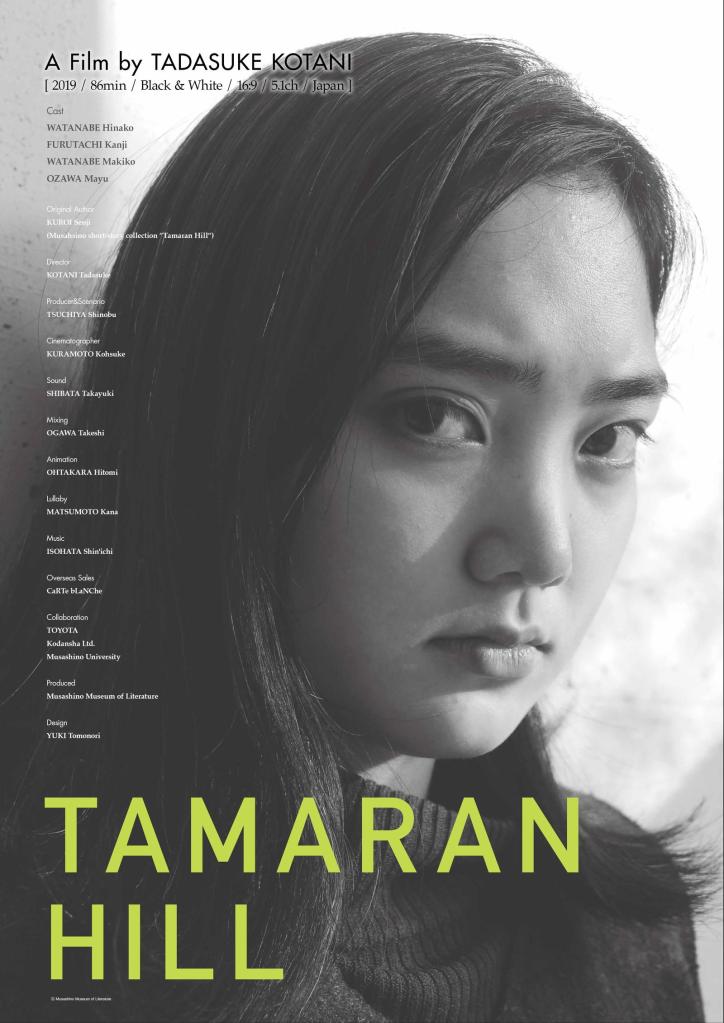
Does Japan have more uphills or downhills? You have to think about that one for a second, like one of those trick questions they put in books for children. Nevertheless, you can’t argue with the idea that so much of life is really about perspective and perhaps perspective itself can also be a subjective choice. Shot in crisp black and white with occasional animation and adapting the novel by Seiji Kuroi who actually appears at one particularly meta moment, Tadasuke Kotani’s Tamaran Hill (たまらん坂, Tamaranzaka) follows a young woman’s path towards forging, or perhaps rediscovering, her identity through a meditation on the word “unbearable”, its association with her father, and the long buried memories of a potential hometown. 

Hinako (Hinako Watanabe), a college student, lost her mother at four years old and is at something of a crossroads as she contemplates her future. Her teacher (Makiko Watanabe), who for some reason has an ever present robot assistant at her side, advises Hinako and her fellow students that if they want to get a good job what they need to get good at is the art of narrative lying. They need to assert their individuality in inoffensive ways, quantify their experiences in concrete numbers, but avoid embellishing facts in which hard evidence is available. Her advice to Hinako is that she needs to create a convincing “character” to pep up the self intro on her CV, perhaps paint herself as a survivor who lost her mother not to cancer of the vocal chords but in a natural disaster. 

Hoping to start at the beginning in rebuilding herself, Hinako begins researching the idea of “hometowns” only to be sidetracked by a book titled “Tamaran Hill”. The title catches her eye because “tamaran” which means “unbearable” is one of her father’s catchphrases, indeed we heard him say it numerous times after getting stuck at the airport by a typhoon meaning that he couldn’t get back for his late wife’s memorial service. In the book, the narrator details his friend’s increasing obsession with a slope near his home by the name of Tamaran Hill, something with which Hinako also becomes intrigued as she finds herself sliding into the narrative, the narrator detailing her own experiences as if she were reading them. 

It seems that for most, “tamaran” does indeed mean “unbearable”. The explanations for the name run from a deserting samurai decrying the folly of war as he ran from a nearby battlefield to Showa-era students resentful at having to climb uphill to gain their education but Hinako is disappointed to learn that the answer may be far more prosaic than she’d hoped. Reality and fiction begin to blur. She finds herself asking if an old man is merely a character from her imagination only to receive a philosophical answer that characters are composed of words but that words have vitality, warmth, and power. Meanwhile she begins to have visions of a mysterious past which mingle with those of the narrator’s friend leading her towards the “hometown” she has long been looking for. 

Hinako’s “unbearable” Buddhist priest father (Kanji Furutachi) apparently doesn’t like to talk about the past, which might be why she feels so lost, while he also berates her for not properly looking after her seemingly adopted younger brother. He actively hides from her the keys to her history, offhandedly remarking on the reappearance of a long absent relative in Hinako’s questions about a mysterious cosmos flower placed on her mother’s grave. Hinako wonders if it’s her mother’s fault that she can’t love anyone, retracing her steps inspired both by the novel and a letter hidden by her father in order to make sense of the brief and fragmentary memories which comprise her visions and thereby reconstruct an image of herself which is, essentially, narrative. 

Hinako’s process towards self identification hints at personal fictions and the strange alchemy of fantasy and reality that is memory, but she does at least seem to have straightened her story as per her teacher’s instruction, confidently stating that she has “decided” on her hometown. Perhaps the fiction is more reliable than truth in its manufactured certainties, and after all no one takes “just be yourself’ at face value. Does the slope go up or down, or is it actually on the level and it’s just that everything else is tilted? It’s all a matter of perspective, “unbearable” only in its inscrutability. 


Tamaran Hill streamed as part of this year’s online Nippon Connection Film Festival.

Original trailer (English subtitles)

Me & My Brother’s Mistress (おろかもの, Sho Suzuki & Takashi Haga, 2019)

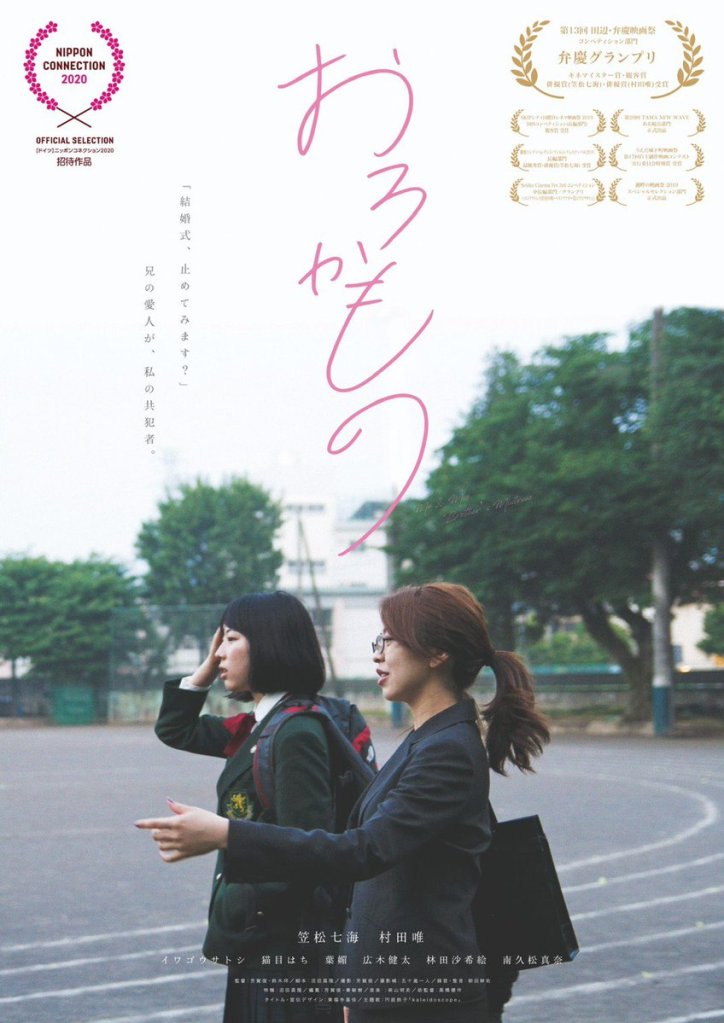
Why does everyone always blame “the other woman” and not the cheating boyfriend? That’s a question earnest high schooler Yoko begins to ask herself in Sho Suzuki & Takashi Haga’s Me & My Brother’s Mistress (おろかもの, Orokamono) after spotting a suspicious text on her brother’s phone and then spying on him as he leaves a love hotel with another woman a month before his wedding. But what is it that she finds so troubling, realising her only remaining family member is a two-bit louse, or the fact he’s going to get married and it won’t be just the two of them anymore?

In the last year of high school, Yoko (Nanami Kasamatsu) is filled with anxiety about the future. In fact, she’s the only one who hasn’t returned her careers survey and it seems she also turned the previous one in blank. Her parents passed away nine years previously, and ever since then it’s just been her and her older brother Kenji (Satoshi Iwago), now a permanently exhausted salaryman engaged to the homely Kaho (Hachi Nekome). Yoko doesn’t get on with Kaho, for the bizarre reason that she’s just too nice, but when she figures out that Kenji is having a torrid affair mostly conducted in love hotels on Sunday afternoons, she is quite rightly outraged that her brother could be so duplicitous. Rather than confront him, she decides to have a word with the “mistress”, following her around all day but conflicted on spotting her doing such unexpectedly decent things as giving up her seat on the train for a middle-aged woman laden with shopping. Tracking her to a restaurant, she planned to give her a dressing down but Misa (Yui Murata), as she discovers her name to be, is perfectly reasonable if also unrepentant.

Misa asks a number pertinent questions including why it is Yoko thinks this is any of her business in the first place and why she’s decided to have it out with her and not Kenji all of which Yoko has to concede is fair. Unlikely as it sounds, the two women end up becoming friends of a sort, Yoko beginning to sympathise in realising this is all her brother’s fault but still not really feeling all that sorry for Kaho which is one reason why she suddenly suggests they try to stop Kenji’s wedding. 

Tellingly, she later asks Kaho if she’s not afraid that another woman will steal Kenji away, but it’s a question she should perhaps have asked herself. She is quite obviously at difficult time. Everything is about to change for her. She’ll soon be leaving school and evidently doesn’t really want to think about what happens next, while her home life is also about to change when Kaho moves in with them permanently meaning it’ll no longer be just her and Kenji. Perhaps that’s what’s really bothering her, that Kaho is displacing her in her own home and stealing her big brother away to start a new family that might not include her in quite the same way. 

Indeed, her main objection to Kaho is in her genial domesticity, the various ways she and Kenji already operate as a couple, the perfectly cooked meals she prepares and the maternal care with which she overseas the house. Kaho isn’t really worried about another woman because she knows what Kenji is looking for is exactly what she gives him – a settled home. Misa, meanwhile, laments her status as a perpetual mistress, never really valued by the usually already attached men she ends up dating who think of her as a casual fling, a short-lived distraction from their domestic responsibilities. Still too young to fully understand, Yoko feels offended on Misa’s behalf that her brother could treat her or any woman this way. Yet their plan to stop the wedding ends up proving counterproductive in that it forces her to sympathise with Kaho and perhaps realise that Kaho herself was never the problem while also regretting having encouraged Misa’s self destructive descent towards an inevitable conclusion that is only going to cause her more pain. 

Yoko’s only future goals were apparently to become a decent and honest person, an ideal she perhaps is not quite serving in her “evil” plot to ruin her brother’s wedding. Misa brands her a “boring teen” already obsessed with dull stability, while it’s perhaps Misa’s boldness and unconventionality which attracts the otherwise straight-laced young woman. In any case, Yoko begins to discover a new equilibrium or at least a new accommodation with adulthood that lends her a little of Misa’s defiance as she makes an unexpectedly bold decision of her own in figuring out what it is she really wants and walking confidently towards the future even if with no real clue as to what comes next.


Me & My Brother’s Mistress streamed as part of this year’s online Nippon Connection Film Festival.

Original trailer (English subtitles)

Flowers and Rain (花と雨, Takafumi Tsuchiya, 2019)

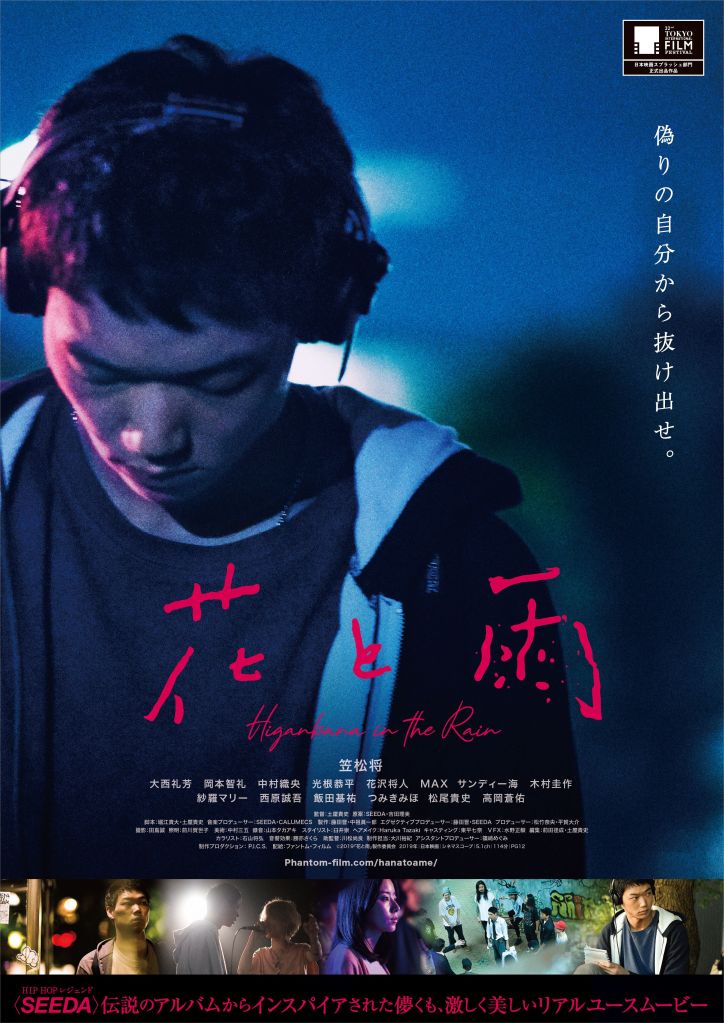
A troubled young man seeks fulfilment in hip hop glory but his self-involved insecurities frustrate his dreams in Takafumi Tsuchiya’s stylish coming of age drama Flowers and Rain (花と雨, Hana to Ame). Inspired by the album of the same name by real life rapper SEEDA, Tsuchiya’s film finds its conflicted hero consumed by a sense of internalised rage and cultural displacement as he struggles to find his place in conformist Japan after a childhood spent abroad realising only too late that he was not the only one struggling and that his self-absorbed inferiority complex has cost him dearly. 

Hakuhiro (Sho Kasamatsu) spent his early childhood in London where his father was working at the time. Whilst there, he was sadly subject to common racist microaggressions from other children who tried to put him down by showing off to their friends with ugly playground chants. Nevertheless, Hakuhiro and his older sister Saki (Ayaka Onishi) profess that they prefer living in the comparatively less stressful UK than in conformist Japan and it is indeed Saki who seems to have the most difficulty when they are forced to move back after the financial crisis. She is determined to return to the UK for university, but as we later see ultimately remained in Japan. Hakuhiro meanwhile has become a sullen and distant teen, bullied by the high school delinquents for being a returnee student. He gives them the same treatment as he gave the playground bullies, ignoring them until he is able to ignore them no more. Mostly he just keeps to himself, listening to hip hop on cassette via his retro walkman and vintage headphones. 

Hakuhiro dreams of becoming a top rapper by rapping in English, but a small circle of likeminded friends including a fellow high school student, Aida, are unconvinced. Though he actually comes from quite a wealthy family and still lives at home supported mainly by his parents, Hakuhiro wants to rap about the same things as his heroes such as street life and social oppression, none of which rings true to those around him who are painfully aware that he is somewhat uncomfortably appropriating the struggles of others and pretending to be something he’s not. He blames his friend Aida for his lack of success in not writing good enough beats for his words and Japan as a country for failing to “get” true hip hop. His sense of insecurity eventually tips over into belligerent arrogance that sees him taken in by an unscrupulous promoter who allows him to humiliate himself during a live rap battle with his high school bullies resulting in the probable end to a credible career as an underground rapper. 

To get more experience of what he sees as “the life”, Hakuhiro has also gotten himself involved with drugs firstly by growing cannabis and then by trafficking cocaine on behalf of a shady street gang. His relationship with his family has obviously suffered and though he’s nominally gone back to uni he doesn’t seem very invested in his studies. Saki, herself troubled in repeatedly failing to pass the final exams for her MBA, tries to talk some sense into him but Hakuhiro repeatedly fails to notice that she is also in distress and trying to tell him something important. A brush with the law pushes him back towards the straight and narrow, but does not exactly humble him and he is still blind to the various ways in which his self-absorbed and arrogant behaviour ruins his relationships and with them his chance of ever making it in the music business. 

Only tragedy finally awakens him to his failings. As Aida had tried to tell him, his problem was a refusal to face reality as reflected in the inauthenticity of his lyrics. If he wants to make it as an artist he’ll have to face himself from a position vulnerability and give up the macho posturing of his adolescence for something a little more “real”. Drawing inspiration from SEEDA’s life and music, Tsuchiya is unafraid to allow his hero to appear unsympathetic even while emphasising the lingering traumatic echoes of a sense of displacement and rejection that prevents him from stepping into adulthood with a fully formed identity, but eventually allows him to find a sense of peace in art even if too late to repair fractured relationships with those he loves.


Flowers and Rain streamed as part of this year’s online Nippon Connection Film Festival.

Original trailer (no subtitles)

Shell and Joint (Isamu Hirabayashi, 2019)

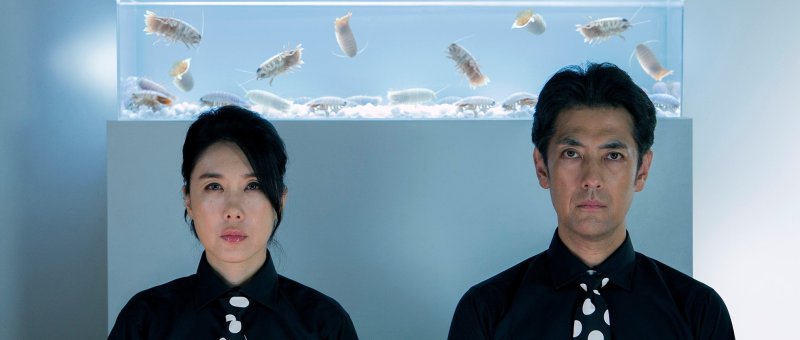
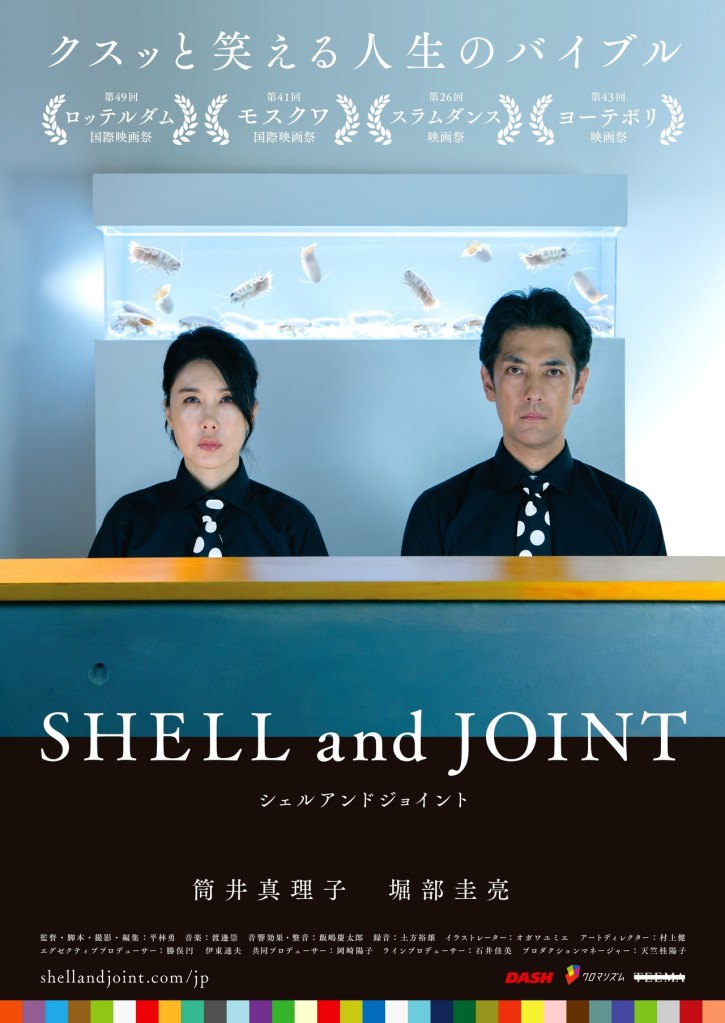
A capsule hotel is a contradictory space, a hub for compartmentalised pods which are nevertheless joined to form one greater whole. The people who frequent them are usually looking for confined private spaces as if cocooning themselves before emerging as something new, or at least renewed, yet the hotel at the centre of Isamu Hirabayashi’s Shell and Joint is slightly different, a noticeably upscale take on convenience with its stylishly modernist design and well appointed spaces from showering facilities to saunas. It is also, it seems, at the nexus of life and death as its bored receptionists, childhood friends, debate what it is to live and what it is to die. 

Sakamoto (Mariko Tsutsui), the female receptionist, has considered suicide many times but continues to survive. She attributes her death urge not to existential despair but to brain-altering bacteria and is certain that a vaccine will eventually be found for suicidal impulses. While her deskmate Nitobe (Keisuke Horibe) is struck by the miracle of existence, Sakamoto thinks his tendency to adopt a cosmic perspective is a just a way of dealing with his fear of death in rejecting its immediacy. Her suicide attempts are not a way of affirming her existence and she has no desire to become something just to prove she exists, nor does she see the point in needing to achieve. Just as in her bacterial theory, she rejects her own agency and represents a kind of continuous passivity that is, ironically, the quality Nitobe had admired in the accidentally acquired beauty of the pseudoscorpion. 

This essential divide is mirrored in the various conversations between women which recur throughout the film and mostly revolve around their exasperation with the often selfish immediacy of the male sex drive. The creepy “mad scientist” starts inappropriate conversations about sperm counts and his colleague’s impending marriage, offering to loan him some of his apparently prime stock to vicariously father a child with the man’s “cute” fiancée who, in a later conversation with another female researcher, expresses her ambivalence towards the marriage, like Sakamoto passively going with the flow, because men are like caterpillars permanently stuck in the malting phase. Her colleague agrees and offers her “men are idiots” theory which is immediately proved by the male scientists failing to move a box through a doorway. 

A middle-aged woman, meanwhile, recounts the process of breaking up with her five boyfriends who span the acceptable age range from vital, inexperienced teenager to passionate old age through the solipsistic, insecure self-obsessed middle-aged man but her greatest thrill lies in the negation of the physical, remarking that “ultimately eroticism is all mental” while suggesting the ephiphany has made her life worth living. On the other hand, a young man is terrorised in a sauna by a strange guy claiming that he is actually a cicada and simultaneously confiding in him about the strength of his erection along with the obsession it provokes to find a suitable hole in which to insert it. 

“What’s the deal with leaving offspring?” another of the women asks, seemingly over the idea of reproduction. The constant obsession with crustacea culminates in a butoh dance sequence in which lobsters spill their eggs down the stairs of an empty building (much to the consternation of an OL sitting below and, eventually, the security team) while other strange guests tell stories of women who underwent immaculate conception only to be drawn to the water where hundreds of tiny crab-like creatures made a temporary exit. The urge to reproduce, however, necessarily returns us to death and the idea of composition. The melancholy story of a Finnish woman drawn to the hotel because of its similarity to a beehive meditates on the sorrow of those left behind while a fly and a mite mourn their cockroach friend by wondering what happens to his dream now that he has died only to realise that because he told them about it, it now lives on with them. Nitobe wonders what the corruption of the body in death means for the soul and for human dignity, while the images Hirabayashi leaves us with are of a corpse slowly suppurating until only a scattered skeleton remains. Such is life, he seems to say. Life is itself surreal, something which Hirabayashi captures in his absurdist skits of the variously living as they pass through the strange hotel and then, presumably, make their exits towards who knows what in the great cycle of existence.


Shell and Joint streamed as part of this year’s online Nippon Connection Film Festival. Viewers in the US will also be able to catch it streaming as part of this year’s Japan Cuts!

International trailer (dialogue free)

Prison Circle (プリズン・サークル, Kaori Sakagami, 2019)

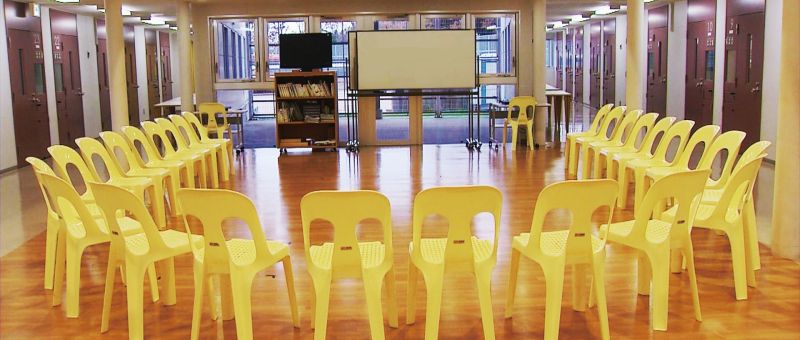
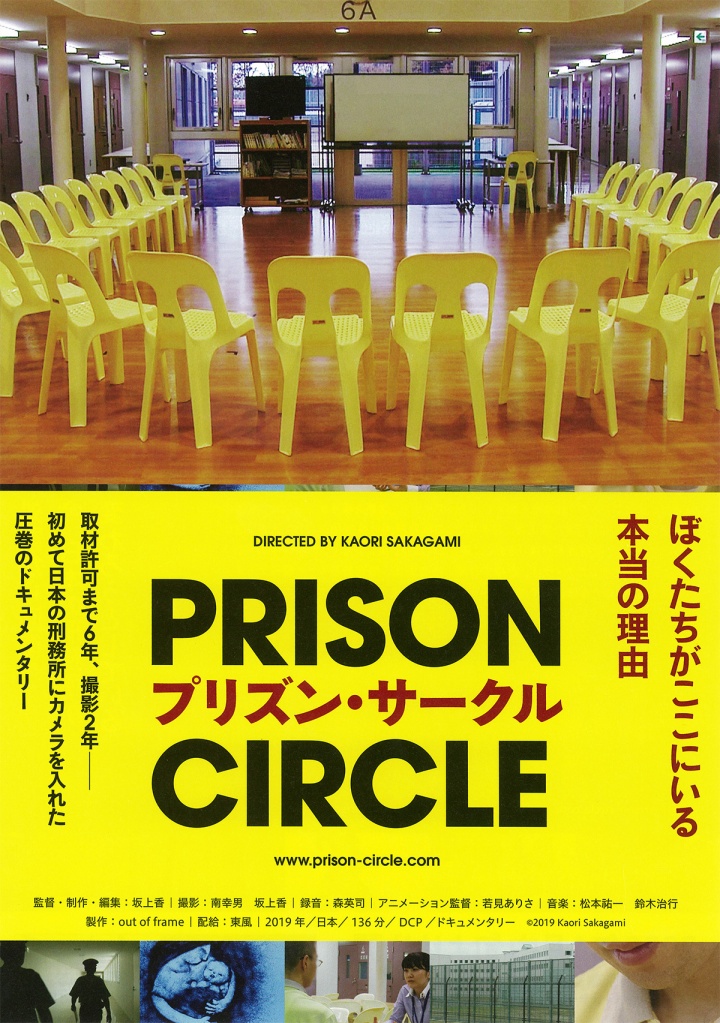
“A scar may recover but trauma never goes away” according to one of the inmates in Kaori Sakagami’s heartfelt documentary Prison Circle (プリズン・サークル). Neatly encapsulating the doc’s themes, the title refers both to the circle of chairs which represents the open group therapy sessions at the centre of the experimental rehabilitation programme on which the film is focussed, and the cycle of violence to which it alludes. Long interested in justice issues, Sakagami follows her two previous documentaries dealing with the US penal system with that of Japan, but concerns herself less with life in prison than the wider social issues which led to these men being convicted of crimes along with their future possibilities for reintegration into mainstream society. 

Sakagami apparently spent six years trying to acquire permission to shoot inside a Japanese prison before coming to an agreement with Shimane Asahi Rehabilitation Program Center which nevertheless has its limitations in that the faces of all the inmates are understandably blurred, she is always accompanied by two guards, and is not permitted to interact with prisoners or anyone working in the prison outside of a few direct interview sessions. Apparently inspired by Sakagami’s US documentary Lifers: Reaching for Life Beyond the Walls, the Shimane programme is the first and only of its kind in Japan shifting the focus away from punishment towards rehabilitation supporting around 40 men through a therapeutic treatment centre (TC) which attempts to help the prisoners understand the reasons for their crimes, empathise with their victims, and eventually return to mainstream society. According to the closing text the programme has been successful in reducing the rate of recidivism among its graduates in comparison with those released from a regular prison. 

In order to qualify, inmates must have the will to change, have no underlying mental health conditions, and be serving at least six months. The prisoners are also described as low risk though many of those we meet have been convicted of violent crimes including those which involved a death. Operating as a small bubble within a larger facility, the TC shares many of the rules and regulations with the wider population in that inmates are expected to raise their hand to ask permission of the guards any time they want to do something, but unlike other blocks are permitted to walk around unsupervised and sleep in “rooms” rather than “cells”. Prisoners engaging in the programme are also partially exempted from mandatory labour requirements while required to participate in the group sessions that are at the core of the TC. 

Following four men over two years, Sakagami finds a fatalistic similarity among their stories despite the differences in their offences, painting their crimes as a cry for help and direct result of childhood trauma. Each of the men who are now in their 20s comes from a difficult family background and experienced abuse, neglect, and bullying which is, the film seems to suggest, the root cause of their lawbreaking. The first of the men, Taku, was abandoned by his abusive father into a children’s home and thereafter left without support as a young man leaving care with nothing to fall back on. Encouraged to be open, he relates his embarrassment in revealing that even as a grown man he often longs to be hugged he feels because his parents never held him when he was a child. The other prisoner reveals he feels something similar, and other of the men admit they fell into crime in part because they wanted to stay connected to something even if it was delinquent kids in place of a family that had already failed them. The last of the men, Ken, also explains that he ended up getting into debt in part because he was buying expensive presents for his mother and girlfriend because he feared they’d abandon him and he didn’t know how else to keep them. 

Yet the prisoners also admit to feeling little remorse, seeing themselves as victims rather than perpetrators and struggling to draw the lines between their trauma and the crimes they have committed along with the hurt they’ve caused to those around them. Through therapy and role play sessions, the prisoners learn to empathise with each other as well as themselves as they begin to process their trauma in an essentially safe space. Sakagami shifts into gentle, storybook-style sand animation in order to dramatise their often horrific childhood memories linking back directly to a fairy tale written by one of the men about a boy who cried wolf because of a mysterious curse which forced him to lie, insisting that he was fine even in his loneliness as he pushed away those who had not rejected him. The boy in the fairy tale is eventually given the power to free himself after being approached by a benevolent god who gives him permission to speak his truth, emerging from his darkness into the light. Though limited by the conditions of filming and over reliant on onscreen text, Sakagami’s compassion for these men and faith in the project is never is doubt as the closing dedication “For everyone who wishes to stop the cycle of violence” makes plain. 


Prison Circle streamed as part of this year’s online Nippon Connection Film Festival. Viewers in the US will also be able to catch it streaming as part of this year’s Japan Cuts!

International trailer (English subtitles)

Extro (エキストロ, Naoki Murahashi, 2019)

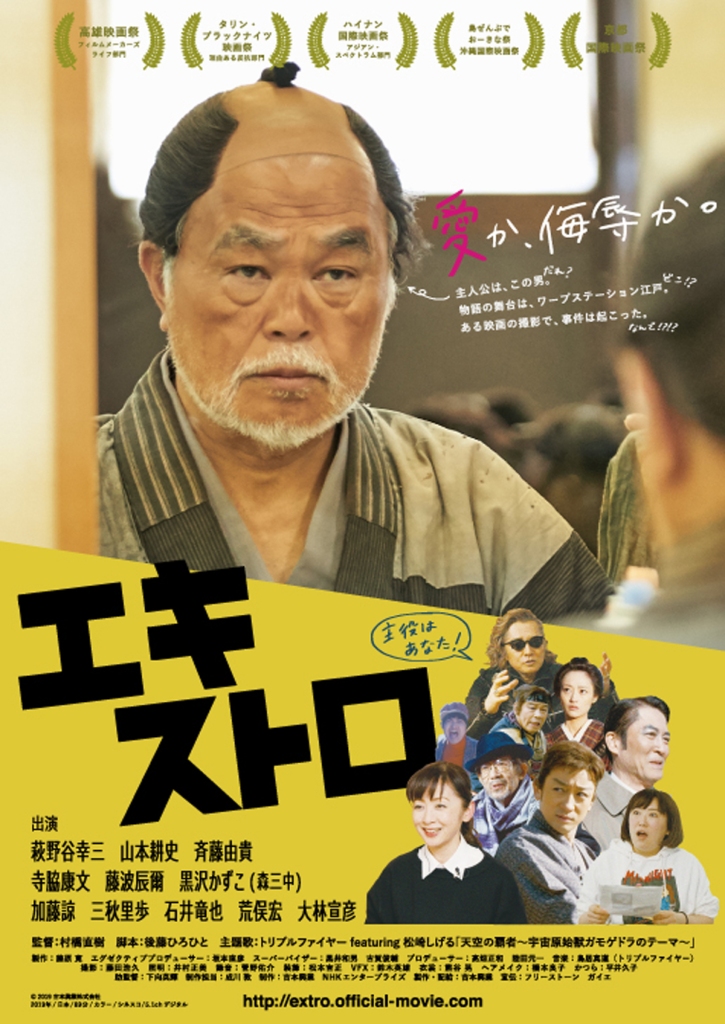
Extras are the unsung heroes of the movies. Getting up in the middle of the night, prepared to spend hours in makeup, and enduring not only the discomfort but also the boredom of standing around all day waiting for something to happen. Naoki Murahashi’s affectionate mockmentary Extro (エキストロ) is dedicated to those whose names do not appear in the credits and are, according to the characteristically warm onscreen interview from the late Nobuhiko Obayashi, the very force that brings life to the otherwise artificial world of the film set. 

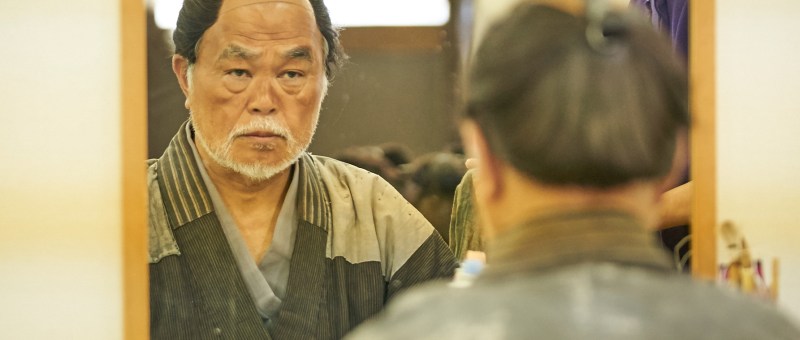
The set in this case being “Warp Station Edo”, an artificial replica of a historically accurate samurai-era town used for the production of jidaigeki TV serials. Murahashi’s first subject is a retired dental technician, Haginoya (Kozo Haginoya), fulfilling a lifelong dream as a background performer, but as we quickly see the life of an extra is not an especially glamorous one. Having got up at the crack of dawn to be there at the time listed on his call sheet, he’s nearly sent away because he doesn’t want to shave his beard and back in old Edo facial hair was prohibited for civilised people. The only solution is to switch his role from townsman to farmer, which causes a costuming delay and gets the AD into trouble. Haginoya then goes on to cause yet more problems by bigging up his part before being taken ill, complaining that his intestines hurt right in the middle of a take. Unsurprisingly, he sits the rest of the day out. 

Meanwhile, the other extras are mostly forced to stand around in the cold waiting for the cameras to start rolling. The agency which provides the background actors laments that extra work is only suitable for flexible people with a lot of free time, i.e. pensioners like Haginoya, but that it also requires physical stamina which they often lack. It also transpires most of the agency’s employees are working on a volunteer basis and earning their money through a separate main job, which really begs the question why they bother especially when the agency itself becomes liable for the extras’ mistakes such as those repeatedly made by one “problem child” including making sneaky peace signs, smiling at the camera, and posting strange on-set photos to social media. 

Not quite content with satirising the production environment and its tendencies towards exploitative employment practices, Murahashi adds a second surreal plot strand introducing two bumbling policemen who are seconded to go undercover as extras after a suspected drug dealer is spotted on camera, somewhat incomprehensibly stepping out of hiding and into living rooms across the country. Predictably, the policemen aren’t very good at the acting business and quickly forget all about the case while becoming overly invested in their cover identities, even attending an acting workshop in an effort to blend in with the background stars. 

While the hero of the jidaigeki TV drama earnestly insists that the extras are what give the fake town “life” and it is in a sense he who is being allowed to perform in their world, not everyone is so forgiving. A pro-wrestler brought in to star in a low budget movie titled Dragon Samurai gets so fed up with the antics of the two policeman that he eventually quits, presumably costing another production company somewhere a lot more money, while a repeated gag sees most of the projects go unreleased because someone involved with the production had too much to drink and engaged in acts of public indecency. One such project is the amazingly titled “Prehistoric Space Monster Gamogedorah”, apparently inspired by a local legend about a giant evil duck.

From the self-obsessed stars who turn up when the money’s right to the embattled agency staff and the stressed out ADs, Murahashi doesn’t quite so much sing the praises of the extras as satirise the low level production industry, but does eventually cycle back to the unironic intro from Obayashi who affirms that the extras, or “extros” as he likes to call them short for “extraneous maestros”, are a part of what gives film its beauty and power. As if to prove that sometimes dreams really do come true, even Haginoya gets his moment in the spotlight mimicking his screen hero Steve McQueen as an Edo-era fireman but disrupting the filming once again by laughing maniacally in joy as he rings his bell while Gamogedorah looms ominously on the horizon.


Extro was streamed as part of this year’s online Nippon Connection Film Festival. Viewers in the US will also be able to catch it streaming as part of this year’s Japan Cuts!

Original trailer (no subtitles)

Yan (燕, Keisuke Imamura, 2019)
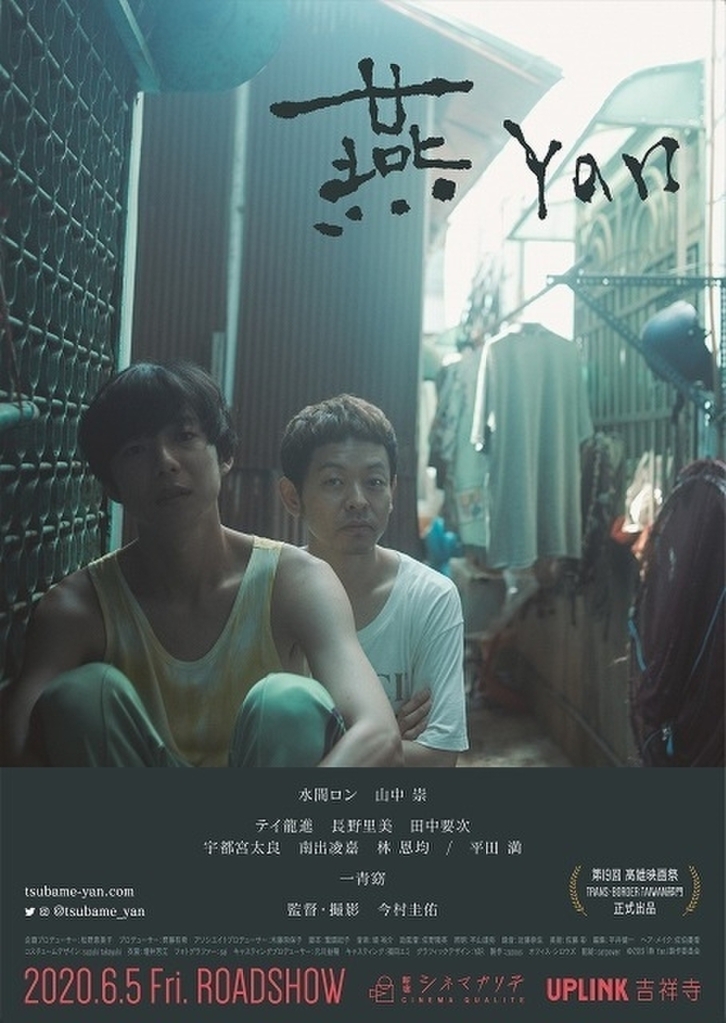
A sense of dislocation plagues the drifting heroes of Keisuke Imamura’s elegantly lensed Yan (燕), a poetic meditation on the legacy of abandonment both cultural and familial. As much about the disintegration of a family as the complexities of identity, Imamura’s nuanced character drama finds its hero looking for himself in the shadow of his long lost brother and rediscovering perhaps a long absent sense of security in reconnecting with his childhood self while learning to let go of his fierce resentment towards the mother he assumed had forgotten him. 

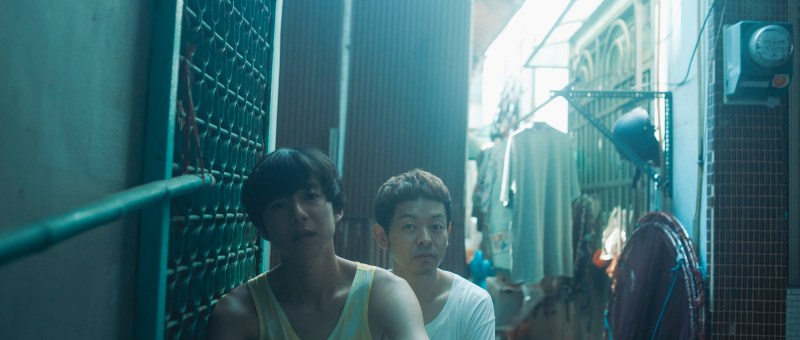
28-year-old Tsubame (Long Mizuma) is a workaholic architect with a successful, settled life in Tokyo. He is also, however, slightly disconnected and harbouring a great deal of anger towards his family, aside it seems from his cheerful step-mother. An awkward meeting with his father following a rare summons to the family home results in some distressing news. His company’s gone under and he’s deep in debt, which is why he wants Tsubame to go to Taiwan to deliver some important papers to his estranged older brother Ryushin (Takashi Yamanaka) whom he hasn’t seen in 23 years since he left with their mother (Yo Hitoto) so he can renounce his rights to an inheritance to avoid being liable for his father’s debts. Tsubame is reluctant, he didn’t even go to Taiwan for his mother’s funeral and has done his best to erase that side of his life from his memory, but after his step-mother guilt trips him by explaining that his father’s in poor health so it might be the last thing he’ll ever ask he finds himself on the next flight to Kaohsiung.

Despite his animosity towards his Taiwanese heritage, Tsubame seems to have maintained his Mandarin which is a definite help in the busy city but finds himself conflicted in being taken at first for a local and then recognised as not. Sitting down at a dumpling stand the proprietress and another customer guess that he is probably Japanese but on hearing that he was born in the area and his mother was from there immediately remind him that he is then also Taiwanese, something that appears to bother him. Flashing back to his childhood we witness both warm scenes of his mother conversing with her children in Mandarin while they mainly reply in Japanese, and a series of xenophobic micro-aggressions from neighbours who accuse her of trying to harm their children with new year dumplings containing lucky coins while Tsubame finds himself a victim of bullying by the local kids after mistakenly using his Chinese name, Yan, or making the usual kinds of language mistakes that all young children make but being made fun of over them as someone not quite Japanese. Like the heroines of What’s For Dinner, Mom? he also remembers a sense of embarrassment on being the only kid with a non-standard bento but sadly never managed to convert any of his classmates to Taiwanese food, internalising a sense of shame over his difference and becoming hyper Japanese in response. In a particularly painful moment, he berates his mother for her poor language skills and lack of cultural awareness, tearing up a drawing he’d made and crying out that he wished he could swap her for a “normal” Japanese mum like everyone else’s. 

Why exactly she chose to leave only him behind, taking her older son with her, is never quite explained but perhaps a part of her felt that Tsubame preferred to stay in Japan. Ryushin meanwhile is carrying his own burden having left with his mother but resentful over her longing for the son she left behind. He appears to have felt dislocated himself as a boy raised Japan struggling to adapt to his new environment and is now a divorced father, it seems living with another man who left the Mainland for the comparatively liberal Taiwan to escape a conservative father and the pain of having to keep his true a identity a secret even from himself. Bonding with Tony (Ryushin Tei), his brother’s partner, Tsubame comes to a realisation that he has been doing something much the same in rejecting his Taiwanese heritage but struggles to accept that a person can be more than one thing and like the sparrow from which he takes his name could be equally at home in both Japan and Taiwan. 

As Tony tells him, somewhat cynically, bitterness is also born of love which is after all what has brought Tsubame all the way to Kaohsiung. Tsubame’s mother had told him the Chinese proverb that a mother’s love is like a flowing river, but a child’s is the like breeze that rustles the leaves. The small Tsubame replied that he’d always love his mother but has spent the majority of his life in silent resentment, only latterly acknowledging it might have been true after all after coming to an understanding of his mother’s choices and realising that in her heart at least she had never abandoned him. 


Yan was streamed as part of this year’s online Nippon Connection Film Festival.

Original trailer (English subtitles)