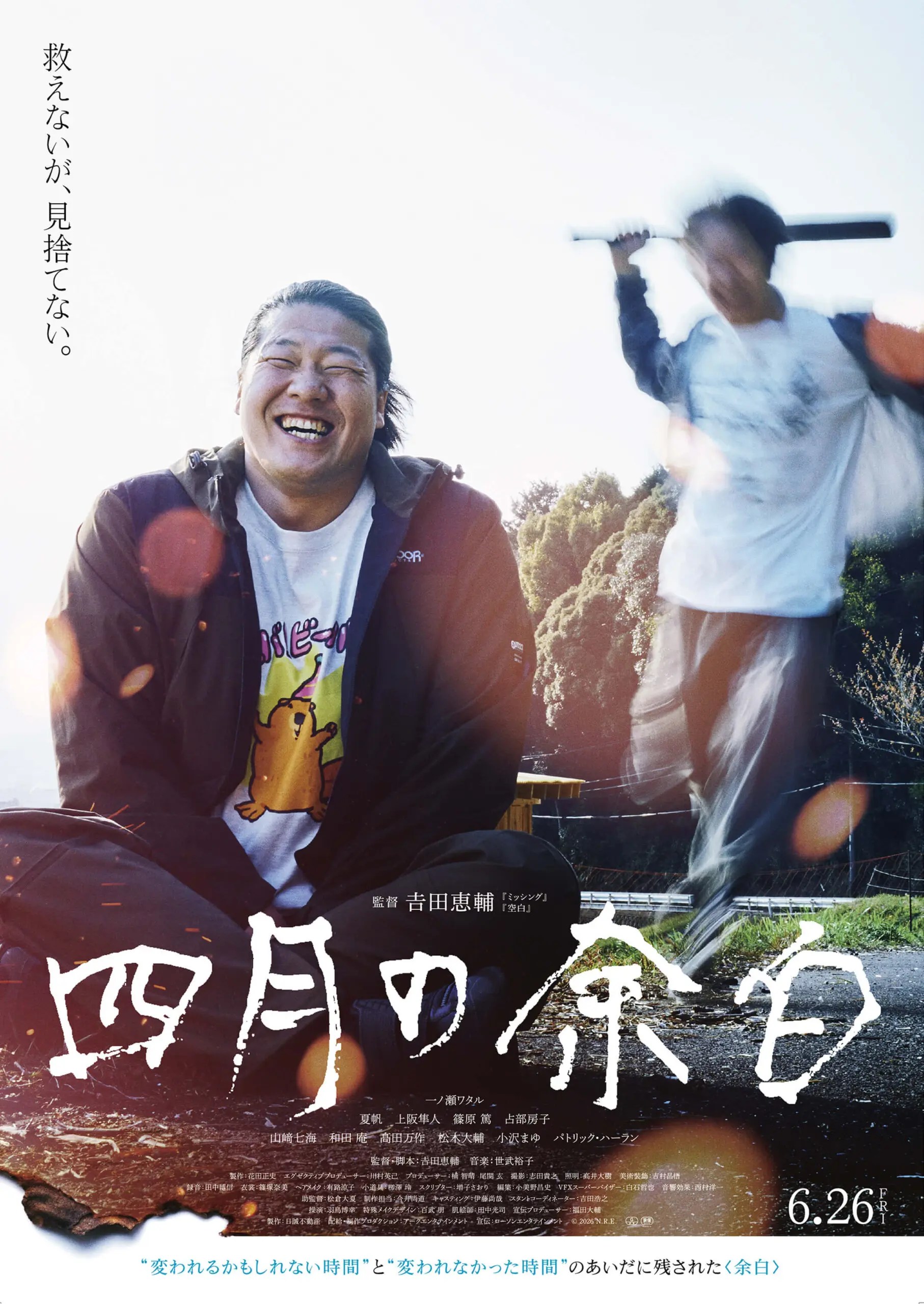
Can a person really change, or should we just accept that some people are born bad and can’t be accepted in mainstream society? This seems to be the question at the centre of Keisuke Yoshida’s empathetic drama Unchained (四月の余白, Shigatsu no Yohaku) which suggests, in a way, that violence is a vicious circle as society tends to write off those with behavioural issues pushing them deeper into their isolation and giving them little opportunity for reform or rehabilitation.
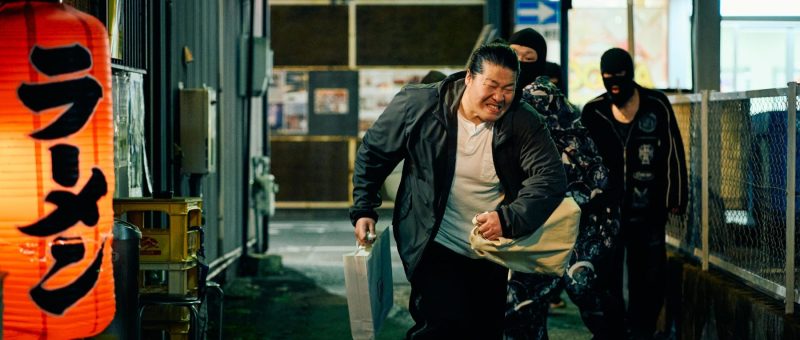
“Mister Nishi” (Wataru Ichinose), as he seems to be known, is a former delinquent who committed acts of heinous violence in his youth, spent time in prison, and experienced a personal tragedy that acted as a wake up call and gave him the opportunity to turn his life around. He now works at a kind of tough love bootcamp that attempts to guide wayward teens back towards the mainstream. His methods, however, are not universally approved and especially not by contemporary teachers. Though corporal punishment has long been outlawed in educational facilities, Nishi believes that sometimes there is no other way to reach these children and violence may be the only way to teach them that their actions have consequences.
A teacher takes him to task and asks him if he isn’t just teaching them to be violent and in fact pushing them towards and anti-social behaviour. Nishi disagrees, but the film doesn’t really explore the alternative any further and more or less sides with Nishi. The children at the facility do seem to be doing better than they presumably were beforehand and do not appear to be unhappy there. It also seems that they are expected to do farm work, and it’s unclear if they’re being compensated for that, though this may be a slight cultural difference that is not raised in the film either by the documentary crew that comes to film the facility nor by a journalist who tries to take Nishi down by accusing him of fabricating details of his backstory which eventually leads to the facility closing down.
Nishi may, however, have met his match in Kaito (Hayato Kohsaka), a violent young man exhibiting an extreme lack of empathy. Kaito’s teacher first seeks out Nishi because she’s at a loss of what else to do, while the boy’s mother appears to be a good woman who has tried everything she can and is now at the end of her tether. Kaito has become violent towards her too and apparently beat the family dog to death in a fit of rage for which he feels no remorse. The mother is beginning to feel suicidal and willing to try Nishi’s methods as a last-ditch effort to save her family. There is no clear reason why Kaito became this way. We get a hint of generational violence in that Kaito seems to resent his father who is disabled and in his view defeated by life. His father does seem to have become depressed because of his disability and it’s because of the depression and sense of worthlessness that he’s been unable to hold down a job and has taken to drink.
In a twist of fate, it turns out that it was Nishi who crushed his knee and left him permanently disabled. Kaito’s father therefore piles all of his resentment onto him without taking any responsibility for the choices he made himself after that. When Kaito ironically injures another boy in the same way, his father begins to realise his mistakes and cautions the other boy against becoming consumed by resentment or a sense of defeat. It’s this notion of “defeat” that becomes central to the interrogation of a cultural notion of toxic masculinity in which the reason some of these young men are thought to act out is that they don’t want to be seen as losers and harm others to prove their superiority. This is in part true of Kaito who declares himself happy to hurt other people as long as he himself does not get hurt. It’s not that he is incapable of understanding that others experience pain in the same way that he does, but that he simply does not really care.
Some argue that Nishi doesn’t either and that, as he was a delinquent himself, he is incapable of fully sympathising with victims and only has empathy for those commit acts of violence. Nevertheless, that does give him a unique perspective that allows him to help some of these teens both by supporting them and being a positive role model as someone who has been able to reform and live a more mainstream, settled life. Then again, some seem dubious of the way he seems to change after the media takes interest which leaves him with less time for the children while chasing the spotlight. Ms. Kusano (Kaho), meanwhile, wonders if she did the right thing or perhaps just did what was easiest for her in abandoning Kaito into Nishi’s care. She chastises herself for having forgotten a model student who spoke to her at a reunion while uncertain if it’s right to devote so much of her time to kids like Kaito rather than supporting those he victimised such as student who withdrew from the school due to his bullying.
While a fellow teacher’s characterisation of Kaito as a”bad apple” who should be “discarded” before he causes any more trouble may seem callous, it’s also true that without his influence the other kids who’d been in his gang begin to straighten out and give more thought to their futures. Though he struggles at the facility, Kaito does seem to benefit in a way from a less stimulating environment and shows signs of change, if also of self-sabotage and an inability to walk away from his delinquent life for fear of being seen as a loser. It’s only after he’s cajoled into another act of violence and receiving kindness in return that he begins to see the error of his ways. The film seems to suggest, then, that person can change but that equally society has to let them, rather than try to tear them down as they did to Nishi in denying him his fresh start by reminding him that no apology is enough to change what he did in the past. While perhaps controversial in some of its implications, the film is at least empathetic and even handed, filmed in an unostentatious style that tries to sympathise both with the dealers and the receivers of violence in the conviction that there is no one who cannot change.
Unchainedscreened as part of this year’s Camera Japan.
Trailer (no subtitles)

