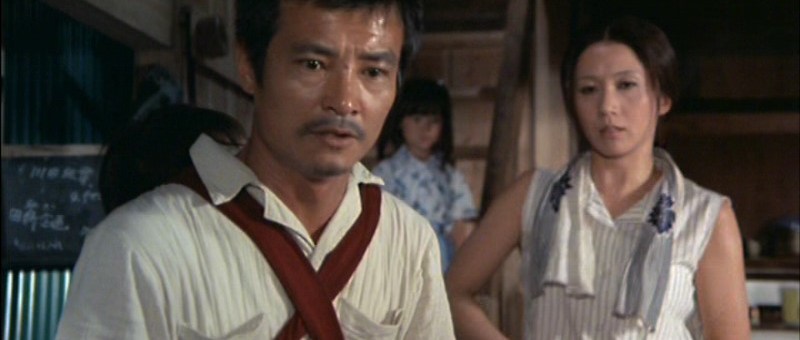
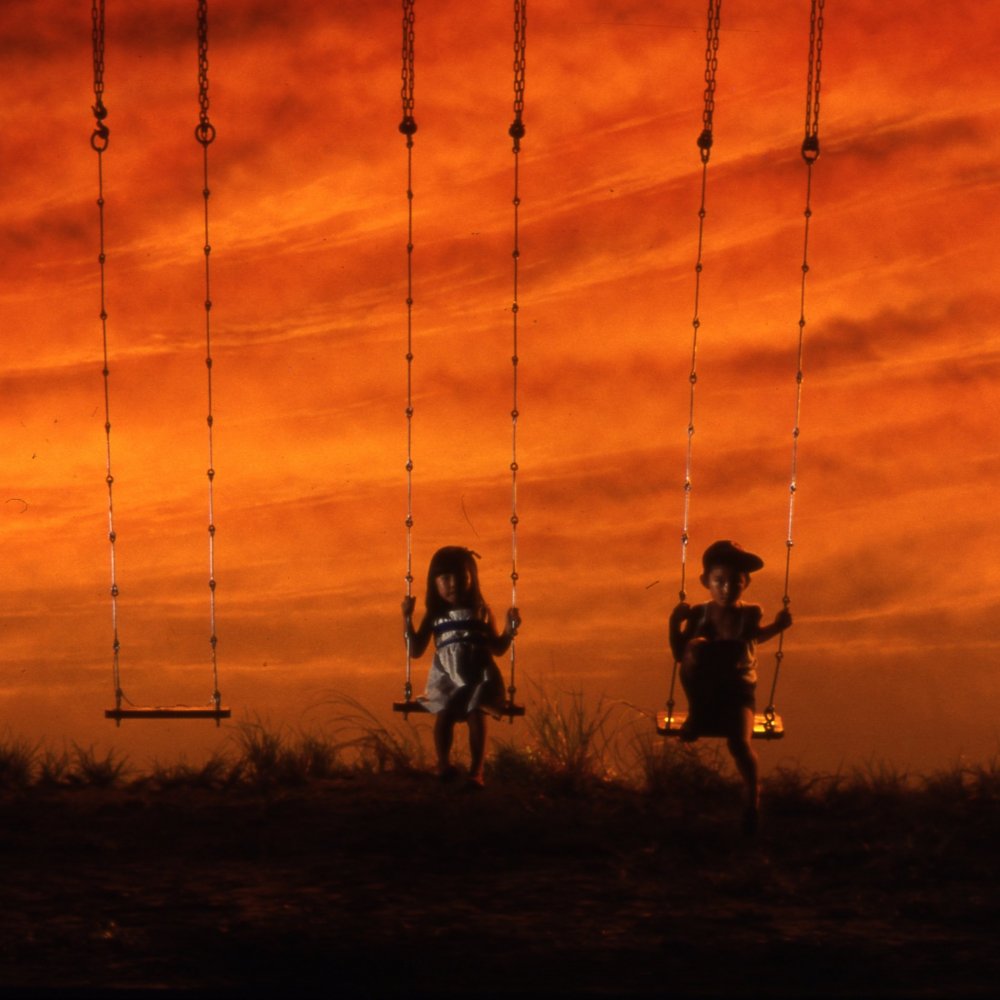
By the late 1970s Japan had achieved its economic miracle, but it had yet perhaps to deal with the traumas of the immediate post-war era. Once again adapted from a story by Seicho Matsumoto, Yoshitaro Nomura’s shocking social drama The Demon (鬼畜, Kichiku) explores the radiating effects of orphanhood and economic privation on the family unit producing as a rather judgemental policeman eventually puts it a generation of parents who don’t know how to raise children and may even lack the inclination to do so even if thankfully not to the extent of the couple at the film’s centre.
Nomura opens with one of his trademark lengthy train sequences following a harried mother and her three children travelling in the sweltering heat from the countryside to the city as she makes a last, desperate attempt to remind the father, Sokichi Takeshita (Ken Ogata), of his responsibilities. Once a successful businessman, Sokichi has become financially ruined after a fire destroyed his print shop and no longer has the means to maintain a second household for his mistress and children at a discrete distance from the home he shares with his wife, Oume (Shima Iwashita). As Kikuyo (Mayumi Ogawa) points out to him, she is unable to support herself economically while caring for the children but he has little answer for her especially once the previously oblivious Oume overhears their conversation. After a series of heated arguments, Kikuyo makes the radical decision to simply abandon the children with their father and thereafter disappears having vacated her previous home and left no forwarding address.
A part of the problem in the Takeshitas’ marriage had been that they have no children of their own, Sokichi remarking to Kikuyo, whom he met while she was working in a traditional teahouse where he used to take clients, that he had always wanted a child. Conventional gender roles have in a sense been reversed, Oume angrily insisting that her husband would never have made any money had not been for her while it appears that she is more or less in charge of their business affairs and he is the one largely looking after the children to the extent that they are “looked after”. To Oume, the siblings are partly a reminder that her husband betrayed her with another woman but also an attack on her femininity in reminding her that she was unable to become a mother while someone else has given birth to Sokichi’s children. For all of these reasons they are to her children which cannot continue to exist. She undermines Sokichi’s attachment to them by frequently questioning their paternity pointing out that they share little physical resemblance while reminding him that he met Kikuyo through her occupation on the fringes of the sex trade.
Her mistreatment begins as neglect, refusing to feed or bathe “a stranger’s” child and then graduates to physical violence stuffing food into the mouth of Sokichi’s infant son Shoji after catching him playing with the dinner bowls. Yet when Sokichi finds her endangering the baby while moving heavy papers from a shelf he does nothing, suspecting his wife has become a threat to the children’s safety but also as she later implies wanting to be rid of them himself. The couple could, of course, have simply surrendered the children to an orphanage (it remains unclear how exactly their existence has been registered), but ultimately choose not to as if they wanted to obliterate the idea of them as if they had never been born.
It may be tempting to view Sokichi as a helpless victim casting Oume as terrifying Lady Macbeth intimidating him into destroying the evidence of his indiscretion, but even if it was Sokichi “looking after” the children, it is finally he who must also “take care” of them. During his abandonment of his second child, 3-year-old daughter Yoshiko (Miyuki Yoshizawa), he takes her into a toy store where a group of boys are playing with remote control cars demonstrating that this is no longer an age of economic privation and that in the end the reason for the children’s second abandonment is not primarily financial even if Sokichi has been in a sense humbled, deluded into a false sense of security in his business success only to be robbed of the era’s increasing prosperity through a freak accident. “Everybody’s struggling” he eventually reflects as his assistant (Keizo Kanie) informs him that he is leaving, ironically to take better care of his ageing parents and small children presumably in a less toxic environment.
Yet as we discover the reasons for Sokichi’s sense of displacement stem back to his own post-war childhood, apparently born out of wedlock never knowing his father and then abandoned by his mother, bounced around between relatives all of them poor who viewed him as nothing more than a burden until effectively indentured to a print shop at ten years old by an uncle who stole his advance pay and once again abandoned him. These kinds of familial disruptions whether caused by a literal orphanhood or the economic constraints of the immediate post-war period have produced according to the moralising policeman at the film’s conclusion a generation of people who do not know how to parent because they were not effectively parented themselves many of whom go on to have children perhaps accidentally but have no idea how to relate to them, frightened of the responsibility or resentful of the “burden” as Sokichi eventually seems to have become.
Nevertheless, Nomura ends on a note of ambiguity, the goodness in eldest son Riichi (Hiroki Iwase) emphasised as he refuses to name his father or reveal his abuse, an action interpreted by the police as an attempt to protect Sokichi but could equally be a trauma response owing to have been returned to him by the police once before. In any case the film asks if in being rescued from his toxic family circumstances, effectively orphaned, Riichi will simply end up continuing the cycle of displacement, another man unable to become a “father”. But then again, what of Kikuyo who branded Sokichi “inhuman” yet left her children with him and disappeared, perhaps as a neighbour implies with another man? A sympathetic policewoman (Shinobu Otake) reassures Riichi they’ll look for his mother, but as she too abandoned him would that actually help? The jury seems to be out on whether this sense of displacement, in essence the integrity of the traditional family, can ever effectively be repaired even as an increasingly consumerist society continues to erode its foundations.
The Demon screens at the BFI on 12/19 December as part of BFI Japan. It is also available to stream in the US via Criterion Channel.
Original trailer (no subtitles)


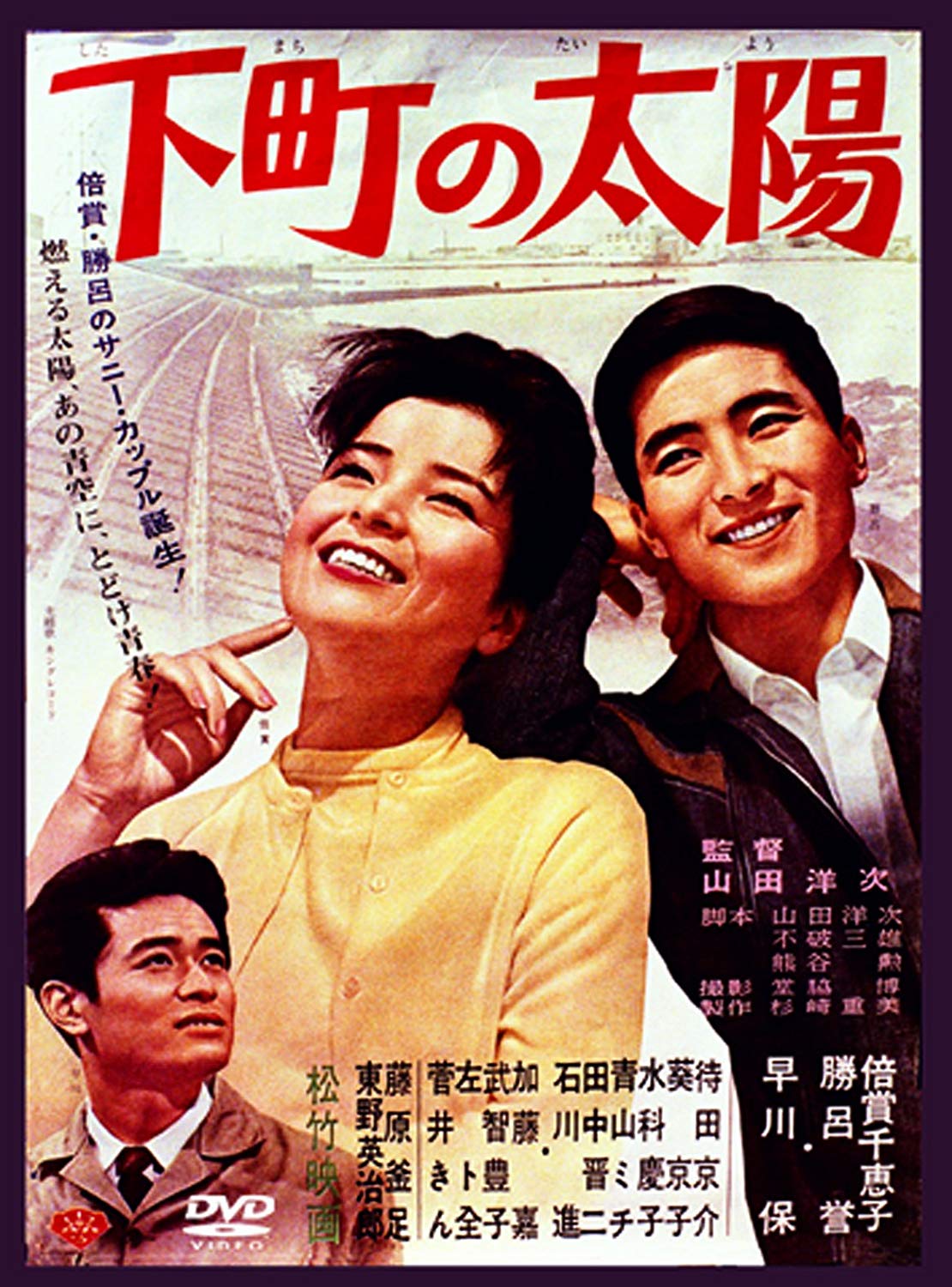


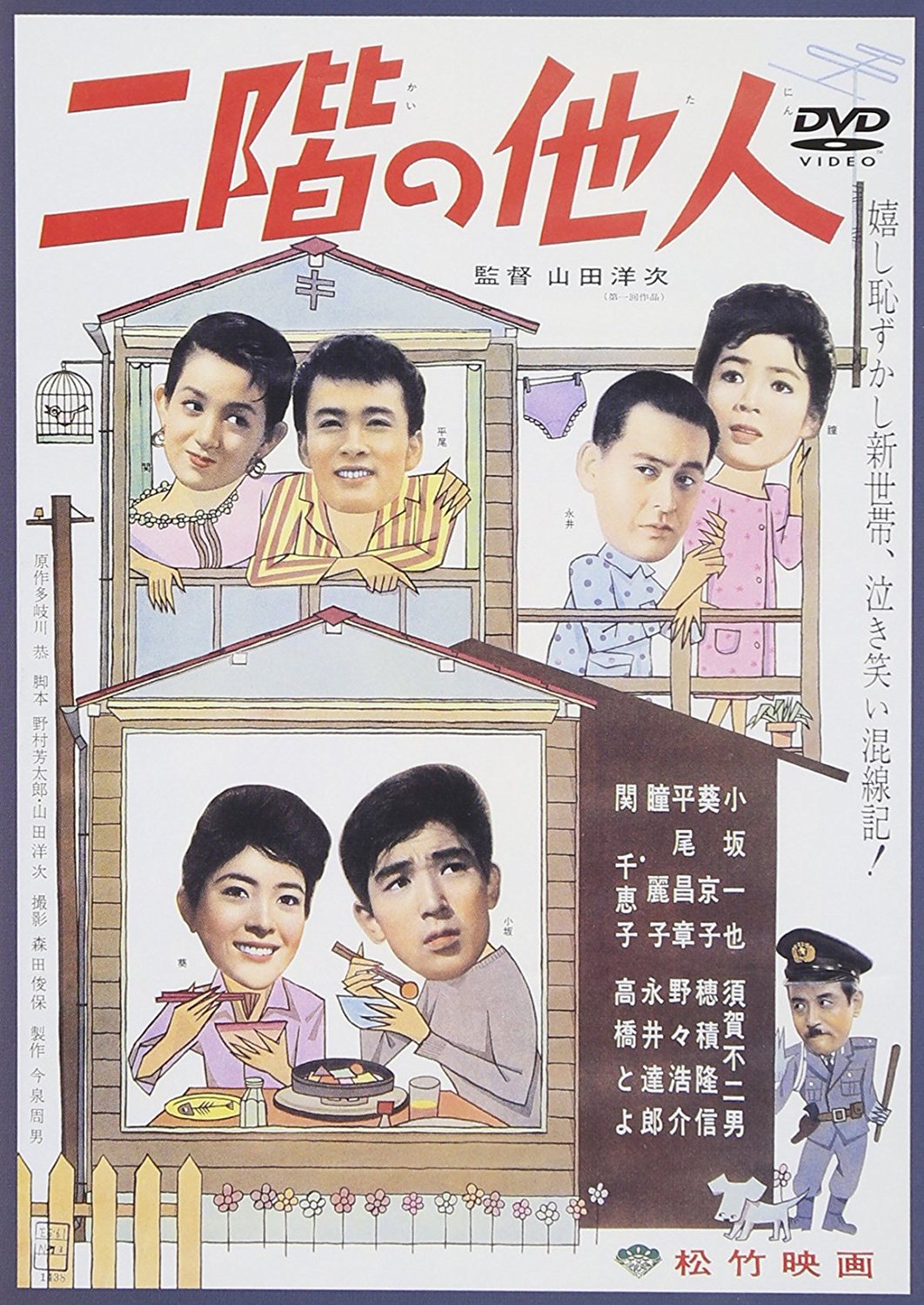
 In theory, we’re all equal under the law, but the business of justice is anything but egalitarian. Yoji Yamada is generally known for his tearjerking melodramas or genial comedies but Flag in the Mist (霧の旗, Kiri no Hata) is a rare step away from his most representative genres, drawing inspiration from America film noir and adding a touch of typically Japanese cynical humour. Based on a novel by Japanese mystery master Seicho Matsumoto, Flag in the Mist is a tale of hopeless, mutually destructive revenge which sees a murderer walk free while the honest but selfish pay dearly for daring to ignore the poor in need of help. A powerful message in the increasing economic prosperity of 1965, but one that leaves no clear path for the successful revenger.
 Kiju (Yoshishige) Yoshida is best remembered for his extraordinary run of avant-garde masterpieces in the late 1960s and early 1970s, but even he had to cut his teeth on Shochiku’s speciality genre – the romantic melodrama. Adapted from a best selling novel, Akitsu Springs (秋津温泉, Akitsu Onsen) is hardly an original tale in its doom laden reflection of the hopelessness and inertia of the post-war world as depicted in the frustrated love story of a self sacrificing woman and self destructive man, but Yoshida elevates the material through his characteristically beautiful compositions and full use of the particularly lush colour palate.
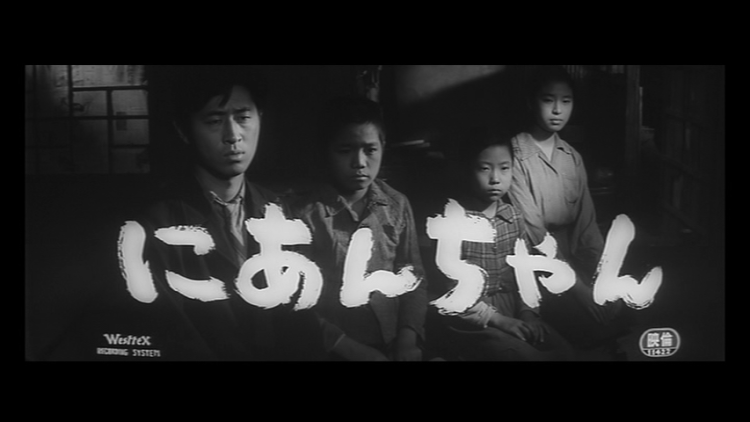 Like most directors of his era, Shohei Imamura began his career in the studio system as a trainee with Shochiku where he also worked as an AD to Yasujiro Ozu on some of his most well known pictures. Ozu’s approach, however, could not be further from Imamura’s in its insistence on order and precision. Finding much more in common with another Shochiku director, Yuzo Kawashima, well known for working class satires, Imamura jumped ship to the newly reformed Nikkatsu where he continued his training until helming his first three pictures in 1958 (Stolen Desire, Nishiginza Station, and Endless Desire). My Second Brother (にあんちゃん, Nianchan), which he directed in 1959, was, like the previous three films, a studio assignment rather than a personal project but is nevertheless an interesting one as it united many of Imamura’s subsequent ongoing concerns.
 Windows on Worlds