
I Am What I Am (そばかす, Shinya Tamada, 2022)

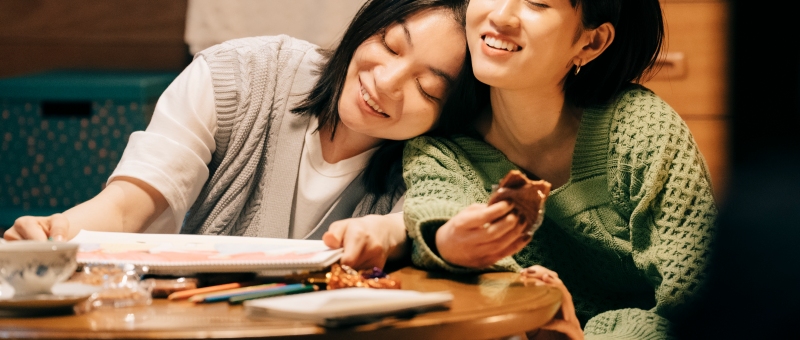
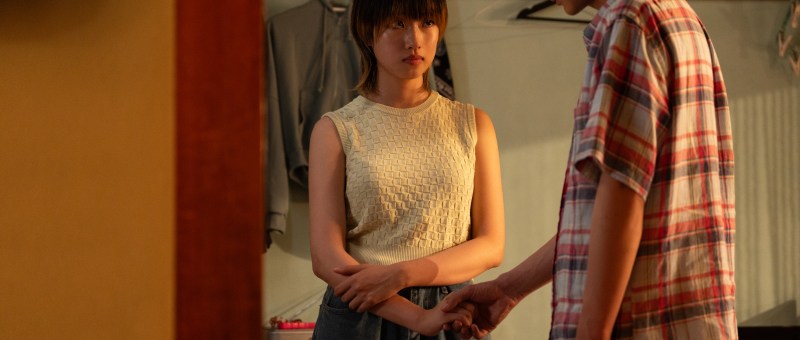
Part way through Shinya Tamada’s empathetic social drama I Am What I Am (そばかす, Sobakasu), the heroine’s sister remarks that she wishes she could live as if the world did not concern her as she assumes her sister does. In many ways, it’s an incredibly ironic statement because Kasumi (Toko Miura) finds herself constantly at the mercy of a world which refuses to acknowledge her, certain that the truth she offers freely of herself must be a lie or at least a cover for some other kind of shame. 

The fact is that Kasumi is asexual and has no interest in love or dating. As the film opens, she appears to be on some kind of awkward double date but seems isolated and aloof, as if deliberately left out of a conversation as she will be several times throughout the course of the film because of the centrality of “romance” in most people’s lives. She’s constantly asked about her “type”, or what she finds attractive in a man with a clear presumption of heteronormativity in also in play. Not wanting to get into it, Kasumi finds herself just nodding along offering some vague, stereotypical comment to smooth things over. When one of the men does strike up a more interesting conversation to which Kasumi can enthusiastically contribute, he doesn’t even listen to her but abruptly gets up to chase her friend. She ends up going to ramen bar on her own to decompress before running the gauntlet at home between mum, sister, and grandma who are all very confused by her lack of interest in marriage. 

Kasumi’s mother tells her that she has to get married someday, unable to accept that not to do so is also valid choice. Whether she does this because she feels embarrassed to have a 30-year-old unmarried daughter fearing that it reflects negatively on her parenting, is genuinely worried that Kasumi is lonely and unable to progress romantically because of shyness, or has a practical concern that she’ll be alone when she’s old, remains unclear though it does seem that her quest to marry Kasumi off is more to do with herself than her daughter. But with grandma apparently having had three divorces of her own, Kasumi’s sister Natsumi (Marika Ito) paranoid her husband’s cheating on her while she’s pregnant, and the parents’ marriage strained by her father’s depression it’s only natural she may wonder what’s so great about marriage anyway. 

In any case, though Kasumi constantly tells people quite directly that the issue is she has never experienced romantic desire and is fine the way she is they refuse to believe her assuming either that she is shy, stubbornly rebellious, or as her sister later suggests, gay. “No one would judge you for that,” she spits out less than sympathetically even while quite clearly judging her for this, as if it denies a basic fact of biology as unthinkable as someone claiming not to breathe the air. Her friend, Yashiro, who introduces her to a new job at a kindergarten, reveals that people did indeed judge him for being gay which is why he’s returned to his hometown. Not even he really believes Kasumi though eventually develops a sense of solidarity with her when her attempt to update Cinderella for a new, more inclusive generation leaves her both exposed and humiliated with a conservative politician visiting the school remarking that he thinks “diversity” is all very well but it only confuses the children and perhaps they should learn about it after developing “solid values”. 

The irony is that Kasumi is remarkably unjudgemental and accepting of all those around her, Yashiro remarking that he just knew she would be a safe person to disclose his sexuality to while she also bats nary an eyelid on reconnecting with a middle school friend (Atsuko Maeda) who turns out to have become a famous porn star in Tokyo only keen to protect her from the unwanted attention of star struck teenage boys and the accusatory eyes of those around them. Each of her attempts to find platonic friendship also fails because sooner or later romance gets in the way. She hits it off with the guy at the omiai marriage meeting her mother tricked her into attending because he also reveals that he has no desire to date or get married, but as much as she thinks she’s found a kindred spirit it turns out that his issue was a more conventional reluctance to enter a serious relationship. When he develops feelings and she has explain again that she meant it when she said she had no interest in romance he takes it personally, insisting that she’s lying and resentful that she doesn’t find him attractive. An attempt to get flat with a female friend also hits the rocks when she decides to get back together with an ex instead. 

When questioned about dating activities and giving the unoriginal answer of the cinema, Kasumi had mentioned a fondness for Hollywood remake of the War of the Worlds starring Tom Cruise. She later elaborates on her statement that she likes the way he runs to explain that in most of his other films, Tom Cruise is usually running towards something but in this one he’s just a regular guy running from trouble which something she can relate to because she’s been running away all of her life too. Yet the unexpected discovery that her mini stand over Cinderella might have done some good after all along with encountering someone who might indeed be a kindred spirit gives her the courage to start moving forward, less concerned by the world and more confident in herself. An empathetic tale of one woman’s attempt to live her life the way she wants frustrated by a conformist society, Tamada’s gentle slice of life drama is a refreshingly empathetic in its fierce defence of its heroine’s right to chase happiness in the way that best suits her.


I Am What I Am screened as part of this year’s Nippon Connection.

Original trailer (English subtitles)

Images: ©2022 “I am what I am” film partners

Lonely Castle in the Mirror (かがみの孤城, Keiichi Hara, 2022)

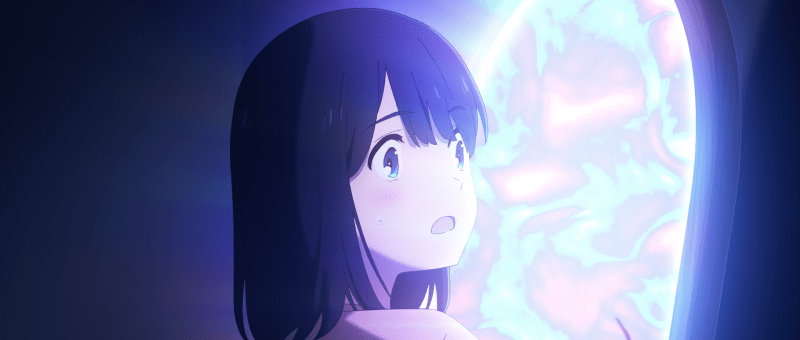
Kokoro isn’t “lying” when she complains of a stomach ache to avoid going to school, it’s just that it’s the anxiety she feels at the prospect that is making her physically ill. Based on a novel by Mizuki Tsujimura, Keiichi Hara’s fantasy-infused anime Lonely Castle in the Mirror (かがみの孤城, Kagami no Kojo) explores the effects of school phobia in uniting a series of teenagers who each for one reason or another have turned away from education often because of bullying or the rigidity of the contemporary schools system. 

As we discover, Kokoro (Ami Toma) gradually stopped going to school after her life was made a misery by manipulative popular girl Sanada who operates a small clique of bullying minions yet appears all sweetness and light with the teaching staff. Unable to fully explain what’s been going on, Kokoro largely remains at home while her understanding mother (Kumiko Aso) explores opportunities in alternative teaching and tries to support her as best she can. Though the film is very sympathetic towards Kokoro and the children in insisting that it isn’t their fault they can’t attend school but the fault of an unaccommodating system, it perhaps misses an opportunity to fully commit to educational diversity when the end goal becomes getting Koroko back in class undaunted by the presence of her bully. 

Nevertheless, it offers her another outlet when the mirror in her bedroom suddenly becomes a magic portal that transports her to a fantasy fairytale castle where she meets six other school phobic teens who are all dealing with similar issues. A young girl in wolf mask informs her that they have until the end of the school year to locate a key which if turned will grant one, but only one, of their wishes. When the key is turned, they will all lose their memory so it’s unclear if they will know whether or not the wish was granted but in any case are left with a choice between achieving their dreams and the new friendships they’ve formed at the castle. The issues that plague each of them are various from bullying to dealing with grief, purposelessness, a feeling of not fitting in, parental expectations, and an implication of sexual abuse at the hands of a close relative. As the Wolf Queen tells them “collaboration is beautiful” and it is the connections they forge with each other that give them strength to go back out into the world while each vowing to pay it forward and make sure to stand up to injustice by protecting other vulnerable kids like themselves when they’re able to. 

Even so, Kokoro takes her time on even deciding whether or not to use the mirror and for some reason the castle is only open business hours Japan time. If they stay past five they’ll be eaten by wolves! Many things about the fantasy land do not add up and Kokoro begins to worry that it’s all taking place in her head, her new friends aren’t really real, and she’s being driven out of her mind by the stress of being the victim of a campaign of harassment she can’t even escape by staying home minding her own business. But through her experiences she is finally able to gain the courage to speak out against her bullying while supported by her steadfast mother and an earnest teacher who is keen to find the best solution for each of her pupils rather than trying to force them back into a one size fits all educational system. 

In any case, Kokoro’s quest is to find her way back through the looking glass to rediscover her sense of self and take her place in mainstream society free of the sense of loneliness and inferiority she had felt while being bullied by Sanada and her clique of popular girls though in an ironic touch the film does not extend the same empathy to her or ask why Sanada has an apparent need to need to pick a target to destroy. A variable animation quality and occasional clash of styles sometimes frustrate what is at heart a poignant tale of finding strength in solidarity and learning to take care of each other in a world powered more by compassion than an unthinking devotion to the status quo.


Lonely Castle in the Mirror screened as part of this year’s Nippon Connection.

International trailer (English subtitles)

The End of the Pale Hour (明け方の若者たち, Hana Matsumoto, 2021)

A series of youngsters contend with disillusionment amidst the failure of the salaryman dream in Hana Matsumoto’s adaptation of the “I Novel” by Masahiko Katsuse, The End of the Pale Hour (明け方の若者たち, Akegata no Wakamonotachi). United by a chorus of “it wasn’t supposed to be this way”, the choice left to them is to resign themselves to life’s disappointment or to take a gamble on a happier future which though it might not work out might grant them a greater feeling of control over an existence which often seems pointless and unfulfilling. 

The unnamed protagonist (Takumi Kitamura) is already feeling a degree of trepidation even at a gathering that has been organised by a brash fellow student who crassly brands it the “winners’ party” to celebrate that they’ve all been able to line up jobs for after graduation in a competitive employment market. He ends up leaving with an equally bored woman (Yuina Kuroshima), a graduate student a little older than him, and drifts into a relationship with her that seems doomed to failure not least in her constant reminders that “everything ends sometime” and “our youth will be over soon, we need to enjoy it now”. The man insists that their youth won’t end just because they’ve entered the working world but in a sense it of course does, his sparkler fizzling out portentously as he’s forced to think of the future. 

A recent trend has seen large numbers of graduate recruits quit their company jobs within the first three years for reasons the man and his new workplace friend Naoto (Yuki Inoue) quickly discover. Japanese companies generally hire en masse in the spring and then shuffle employees into various departments after a probationary period sometimes letting the ones who don’t make the grade go entirely. Though he had done well in the preliminary tasks and hoped to be assigned to the prestigious planning department where the real work gets done, the man is assigned to the “General Affairs” section of office dogsbodies marked out from the regular salaryman workers by their uniform jackets which make it clear that their work is considered menial mainly concerned with setting up furniture for meetings, taking care of maintenance tasks such as replacing light bulbs, and dealing with interoffice complaints. He is constantly told off for not stamping his documents properly only for someone to explain to him that he needs to make sure his name appears at the correct angle to symbolise his bowing to the boss on paper in an example of the rigid office culture for which the young have increasingly little patience.  

Part of the man’s problem is his passivity. He’s dissatisfied with the system but is at heart conventional and lacks the courage to break with it. The woman is seemingly less so, a free spirit who’s chosen a path she believes to be more creatively fulfilling excited that she might make something that will one day be in someone’s hands. But then as we discover she is more conventional than she first appears, her openness and enthusiasm perhaps partly fantasy to mask the disappointment that she too feels that her life has not turned out as she thought it would. The man remarks that he likes walking around at twilight because it’s the only moment in which he can feel free, a moment of infinite possibility in the liminal space between one day and the next in which today is already over but tomorrow has not started. Later Naoto will say something similar of their youthful days as fresh hires filled with resentment but also determination, railing against the system until the early hours of the morning, describing it as the “magic hour” of their lives though they never knew the light was dimming. 

Such dejection may be slightly unwarranted given that none of them are even 30 by time of the film’s conclusion despite the minor greying of their hair. In any case, the man seems to have come to an acceptance of youth’s end, taking the spirit of the twilight with him as he charts a new, if still conventional course, choosing not to jump ship like his friend but tentatively make an application to get out of General Affairs into a better salaryman job. “It’s been a magic time, hasn’t it?” the woman had said of their brief holiday, “like a dream” but one from which she knows, and perhaps he does too, they’ll soon have to awake. Expressing the anxieties of contemporary generation dissatisfied with their overly corporatised lives in a rigid and conservative society, The End of the Pale Hour nevertheless ends with a sense of the dawn and the promise of new beginnings if tinged with the glow of youthful nostalgia. 


The End of the Pale Hour streams in Germany until 6th June as part of this year’s Nippon Connection.

Original trailer (English subtitles)

Tokyo Revengers (東京リベンジャーズ, Tsutomu Hanabusa, 2021) [Fantasia 2021]

“You don’t deserve to change my life” the hero of Tsutomu Hanabusa’s adaptation of Ken Wakui’s manga Tokyo Revengers (東京リベンジャーズ) eventually affirms in finally facing his fears while trying to change destiny not least his own. In contrast to its original meaning in English, the wasei eigo “Revenge” usually means not payback but “rematch” or at least a second chance to prove oneself or make up for a past mistake. Through his time travel shenanigans, this is perhaps what young Takemichi (Takumi Kitamura) is attempting to do in revisiting the events which he feels ruined his life and left him a useless coward too cowed to offer much resistance to his continual degradation. 

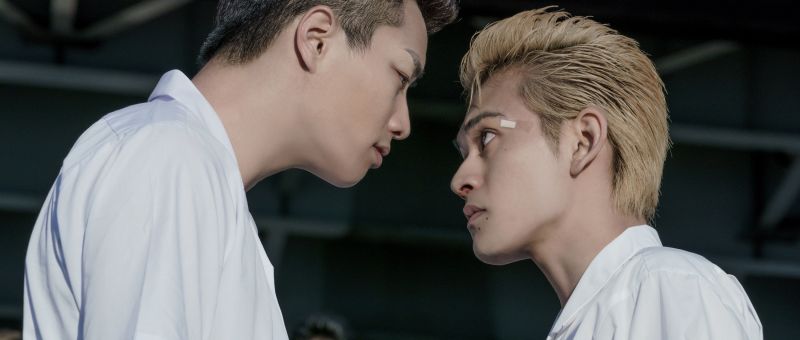
Now 27, Takemichi lives in a rundown, untidy apartment and works part-time in a bookstore where his boss inappropriately mocks for him for still being a virgin, the kind of guy who peaked in high school and can’t move on from adolescent bravado. He might have a point in a sense in that Takemichi is indeed arrested but hearing on the news one day that his first love Hinata (Mio Imada) has been killed in a car accident supposedly caused by the Tokyo Manji gang alongside her brother Naoto (Yosuke Sugino), he finds himself thinking back to his school days. It’s at this point that someone shoves him off a train platform and, facing certain death, he suddenly finds himself in the body of his 17-year-old, bleach blond delinquent self. Takemichi assumes it’s a near death flashback, but later wakes up back in the present and realises that his actions in the past have consequences in the future. 

Quite clearly taking its cues from classic high school delinquent manga in which moody high school boys vie for the top spot through relentless violence, Tokyo Revengers nevertheless undercuts the genre’s macho posturing in firstly having Takemichi broken by his first defeat and then allowing him to reclaim his space as a hero through his determination to care for and protect others even if his final victory is in facing the man he held responsible for shattering his sense of self. Sent back into the past to prevent the Tokyo Manji Gang from ever forming, Takemichi refuses the obvious early solution but remains conflicted in realising that at its inception “Toman” saw itself as a compassionate force for good, a far cry from the nihilistic violence it now brings to the city. Rather than more violence, he finds a solution in its reverse, safeguarding relationships and preventing heartbreak in order to ensure no one else’s soul is corrupted by grief or loneliness. 

Takemichi feels himself powerless but is valued by his friends for his determination to protect others no matter the cost to himself, as he unwittingly proves through his time travel adventures attempting to save himself as much as Hinata by restoring his sense of self apparently shattered by his subjugation at the hands of a rival gang back back in high school. At 27 he’s a meek and broken man, forever apologising for his existence and living an unfulfilling life always running away from challenge or difficulty. Given an improbable second chance, he begins to find the courage to do it all differently with the benefit of hindsight and the stability of age, finally facing his teenage trauma as a fully adult man.  

Like any good delinquent movie, Hanabusa makes space for more than a few mass brawls along with intensely personal one-on-one battles drawing a direct line between high school violence and street war thuggery. “Thugs aren’t cool anymore” Toman leader Mikey (Ryo Yoshizawa) had explained, his compassionate second in command Kenchin (Yuki Yamada) reminding him to “have a heart” in keeping gang violence within the confines of their society and refraining from injuring innocent people. Toman aren’t yakuza, but they are perhaps the inheritors of jingi, or at least would be if left untouched by trauma and betrayal. In beating his own trauma, Takemichi undoes his destiny saving his friends and himself by learning to embrace his inner strength and refusing to back down in the face of intimidation. Part high school delinquent manga, part time travel adventure, Hanabusa’s sci-fi-inflected drama swaps macho posturing for a more contemplative take on the weight of past mistakes while giving its hero a second chance to be the kind of man he always thought himself to be.


Tokyo Revengers screened as part of this year’s Fantasia International Film Festival.

Original trailer (English subtitles)

Tonkatsu DJ Agetaro (とんかつDJアゲ太郎, Ken Ninomiya, 2020)

Among the more prolific of young indie talents currently emerging in Japan with five features released since his 2015 debut Slum-Polis, Ken Ninomiya is fast becoming the go to chronicler of Tokyo’s contemporary club scene but unlike The Limit of Sleeping Beauty or Chiwawa, Tonkatsu DJ Agetaro (とんかつDJアゲ太郎) is a surprisingly wholesome take on the same phenomenon as an otherwise clueless young man begins to step into himself after accidentally falling love with the live house vibe. 

As his slightly amusing name implies, Agetaro (Takumi Kitamura) is the third generation heir to a tonkatsu (deep fried pork cutlet) restaurant. It’s not that he doesn’t want to take over the family business, but admits that he’d largely be doing it because he doesn’t know what else to do. His rather nerdy friends, all sons of small business owners in an area of Shibuya with a distinctly small-town vibe, are in much the same position. Ironically remarking that Agetaro always loses at The Game of Life as they hang out playing boardgames, the guys eventually find him with a pair of binoculars staring at a girl in an apartment opposite they are convinced inhabits a different word where people eat prosciutto and cheese and drink fancy wine. Agetaro gets an unexpected chance to meet his unobtainable crush, Sonoko (Maika Yamamoto), when he’s summoned to deliver a bento to a dance club after hours for a moody DJ, Oily (Yusuke Iseya), who describes tonkatsu as the area’s “soul food” and rates Agetaro’s dad’s as the very best. Allowed to step onto the dance floor, he finds himself blown away by Oily’s set and determines to become the very first tonkatsu chef/DJ partly in the hope of impressing Sonoko. 

Though set very much in the present day, there’s a pleasingly retro quality to Tonkatsu DJ Agetaro that recalls old school Showa-era musical youth movies in which young guys from humble backgrounds make something of themselves by working hard and staying true to their roots. Agetaro’s problem is that he’s caught in a moment of adolescent anxiety, resentful of his father (Brother Tom) whom he feels looks down on him, refusing to let his son anywhere near the fryer while making him chop cabbage all day and reminding him he doesn’t have to take over the shop if he doesn’t want to. Agetaro’s dad won’t teach him to fry because he thinks he doesn’t take anything seriously, and he might be right, but as his sister (Natsumi Ikema) says he’s worried about him too secretly trying to be supportive by standing at the back of the room when Agetaro gets his big break at the local club. 

Despite being mentored by Oily, however, Agetaro blows his first opportunity failing to get the crowd moving with a rather naff set designed to entertain his equally nerdy friends. But failure, crucially, only endears him to Sonoko who had previously been put off by his cheesy attempts to become a viral YouTube star with a series of gimmicky videos featuring himself and his friends wearing novelty “tonkatsu” outfits. Where he thought of giving up, Sonoko’s reminder that everyone makes a mess of things once in a while and no one should expect success right out of the gate helps Agetaro realise that what he needs to do is bring all of himself to his set which in this case means understanding that the thing is learning do something well and in that there’s no difference between frying the perfect cutlet and finding the perfect beat. Simply put, he needs to become the Tonkatsu DJ for real. 

Attracted to DJing because of the freedom it offers, Agetaro eventually finds his “heaven” on the dance floor marrying both sides of himself as he accepts his tonkatsu legacy and claims his space within the club scene which here is unproblematically joyful, a warm and welcoming space in which young people come together to enjoy good music, dance, and have wholesome fun. Simply put, it’s hard not to fall in love with a film which makes space for an unironic and unapologetically joyful moment of catharsis featuring Belinda Carlisle’s Heaven is Place on Earth. Shifting away from the slick music video aesthetic of his earlier work, Ninomiya hits lowkey charm in his tale of minor slacker success as his feckless hero finally figures himself out and learns how to cook up a storm in the store and on the floor. 


Tonkatsu DJ Agetaro screens on July 4/6/9 as part of this year’s Neuchâtel International Fantastic Film Festival (NIFFF)

Original trailer (English subtitles)

My Blood & Bones in a Flowing Galaxy (砕け散るところを見せてあげる, SABU, 2020)

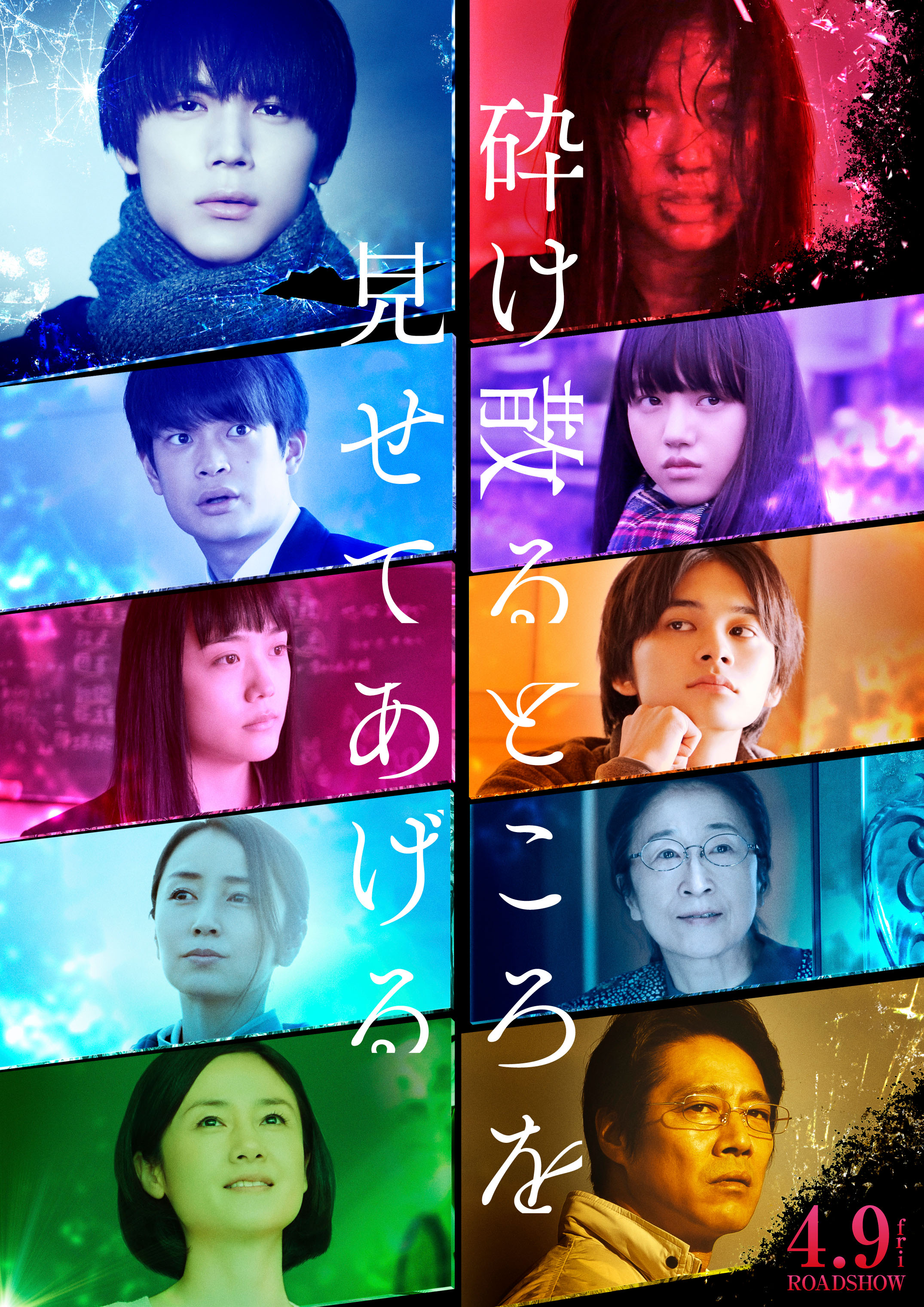
“Do heroes need a reason to be heroes?” asks the hero of SABU’s adaptation of the light novel by Yuyuko Takemiya My Blood & Bones in a Flowing Galaxy (砕け散るところを見せてあげる, Kudakechiru Tokoro wo Misete Ageru). A little lighter than the Japanese title which translates as “I will show you a broken place”, SABU’s latest collaboration with EXILE TRIBE is a sometimes surreal tale of the great confluence of love, undercutting and repurposing a traditional idea of masculinity as the young man at its centre tries and fails to overcome himself to be the hero he longs to be while finally discovering that true heroism lies in the capacity to lend courage to others in a world often haunted by violence and despair. 

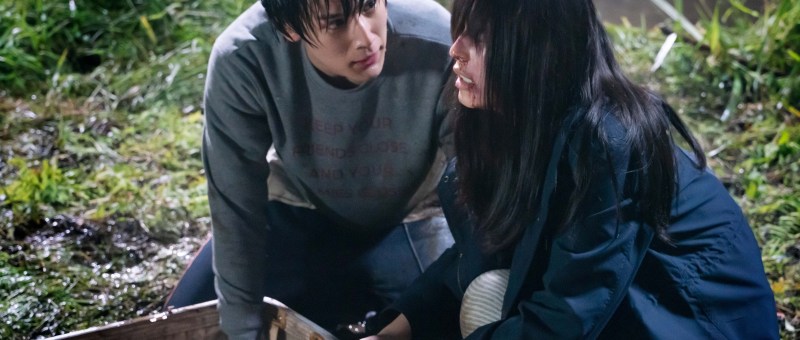
SABU opens, however, with a brief framing sequence in which another young man (Takumi Kitamura) meditates on the legacy of his father who died a hero trying to save a little girl from a submerged car. A flashback to sometime in the ‘90s introduces us to Kiyosumi (Taishi Nakagawa) running full pelt late for school and surreptitiously joining the back of the assembly hall behind a class of younger students hoping to avoid detection. Once there, however, he witnesses a young woman being relentlessly bullied by her classmates and intervenes. After the assembly concludes he tries to make sure the girl is OK, but when he touches her in comfort she begins screaming uncontrollably and leaves the room. Kiyosumi, however, is undeterred and continues trying to protect her, eventually earning her trust after rescuing her when she’s doused in water and locked up in a bathroom storage cupboard. The pair soon become friends, Kiyosumi apparently falling for the melancholy young woman but naively failing to realise that her problems may be bigger than he realises and that there are some monsters you can’t fight alone. 

During one of their early conversations, Hari (Anna Ishii), the young woman, outlines her UFO theory of universe in which she visualises each of the forces which oppress her as alien spaceships floating ominously in the sky above. Standing in for unresolved trauma, the ever present threat of violence, and the pain of loneliness, the presence of the UFOs both brings the pair together and overshadows their growing romance, Kiyosumi’s voiceover hinting at an unhappy ending in which he will not fulfil his dream of being forever by her side. He continues to doubt himself, unsure if he can really be the hero that Hari believes him to be while she draws confidence from his kindness to become one herself. 

There is, it has to be said, an air of chauvinism and a mild saviour complex in Kiyosumi’s otherwise altruistic desire to stand up to injustice. He doesn’t stop to ask himself if Hari wants saving or if his intervention may end up making things worse for her as it eventually does if in an unexpected way. Childishly naive, he fails to look beyond the immediate problem of high school bullying, recalling his own days as a lonely first year rejected by the cool crowd only later finding a friend, while certain that he can protect Hari solely with the force of his presence. To begin with, he may be right, his initial intervention allowing other like-minded souls to stand up against the school’s bullying culture and earning Hari another friend in the equally defiant Ozaki (Kaya Kiyohara). But only too late does he begin to realise that the bruises on her wrists may not be caused in class and that her victimisation does not end at the school gates. 

Rescued from the storecupboard, Hari tried to defend her aggressors citing the fact that they used clean tap water the last bucket of which was even warm as a sign of “kindness”. So brutalised is she that she expects nothing more. The irony is Kiyosumi cannot in the end protect her, but does perhaps lend her the strength to protect herself as she in fact saves him. Yet as Kiyosumi points out, the “UFOs” do not simply disappear in the midst of red rain but may strike again at any moment, his attempts to rescue a drowning girl a kind of metaphor for his desire to drag Hari free of the source of her trauma and show her “the glowing beauty of this world”, a desire he can only realise by becoming one with a galaxy of eternal love. True heroism, he eventually realises, is just being there if only in spirit as a source of constant support and reassurance in a world of dizzying anxiety. At times infinitely bleak but coloured with teenage sunniness and youthful naivety, SABU’s empathic drama both recognises and forgives its hero’s chauvinistic self-obsession while allowing the heroine to save herself each bolstered by a sense of mutual solitary born of a deep compassion with love perhaps the best weapon against the circling UFOs of a sometimes cruel existence. 


My Blood & Bones in a Flowing Galaxy streamed as part of this year’s Nippon Connection.

Original trailer (English subtitles)

Our 30-Minute Sessions (サヨナラまでの30分, Kentaro Hagiwara, 2020)

“I want to move on” a grieving young woman explains, though perhaps ironically heading in the wrong direction. A youthful take on learning to live with loss, Our 30-Minute Sessions (サヨナラまでの30分, Sayonara made no 30-bun) finds a group of college hopefuls shattered by the unexpected death of a charismatic friend leaving them each lost, moving on in one sense but treading water in another uncertain what to do with the unfulfilled potential of their adolescent memories. Yet, through ghostly intervention, what they eventually realise is that nothing’s ever really lost, the echoes of those memories merely add to the great symphony life and all you can do in the end is learn to play along with it. 

That’s something introverted college student Sota (Takumi Kitamura) has however struggled with, unable to emerge from the trauma of losing his mother at a young age. As we first meet him, he’s subjected to a painful group interview for a regular salaryman job at which they ask about the memories he’s made with his university friends but rather than come up with a convincing lie, Sota honestly tells them he has no friends and that’s a good thing because it means he’s free to dedicate himself to work 100%. As expected, he gets a rather brutal rejection text before he’s even reached the lift, pausing only to rudely but perhaps accurately decline an invitation to join a WhatsApp group with the other hopefuls for the reason that it’s “pointless” because they’re unlikely to meet again. 

Sota doesn’t like to share his space with other people, but after noticing a walkman abandoned at a disused swimming pool finds himself a permanent host to Aki (Mackenyu), recently deceased lead singer of up-and-coming college band Echoll. Unlike Sota, Aki is charismatic and outgoing, every inch the rock star but less cocky than aggressively caring. It pains him that the thing he left unfinished has fallen apart in his absence and that all his friends seem to have given up their dreams and aspirations in life. For unknown reasons it seems that when Sota presses the play button on the walkman, it allows Aki to take over his body for the length of a single side of a cassette tape temporarily lending him the swagger and verve hitherto missing in his life even if he claimed not to particularly have missed them. 

In fact, Sota quite enjoys the arrangement because it means he doesn’t quite exist for the time the tape is playing, other people are no threat to him in his literal invisibility. Yet over time, a conflict obviously develops especially as the main thrust of Aki’s mission is healing his former girlfriend’s broken heart. Having lost her love of music, Kana (Sayu Kubota) has spent the last year largely inside working her way through a book of daily soup recipes that only her mother tastes. She claims she’s “moved on”, but in reality has done anything but caught in a kind of limbo unable to let go of her guilt and memories of lost love while conflicted as she bonds with the shy and introverted Sota himself it turns out also a frustrated musician.

A poignant reminder of Aki’s unfinished business as he and his friends attempt to find a degree of accommodation with loss the Japanese title translates more closely to “30 minutes to goodbye”, but there’s also something in the Japanese for playback (再生) equating to “again life” as it grants the late singer a temporary resurrection if one that lasts only the length of a set list. Perhaps a hipsterish affectation, the love of the outdated analogue recording mechanism, besides its practical advantages, provides a tangible proof of life albeit a fallible one in which every attempt to replay necessarily weakens integrity. Yet as a veteran later puts it, no matter how many times the tape is erased and overwritten, traces of previous recordings remain becoming in a sense just one of many layers that add depth and richness to the quality of the whole. 

The bandmates begin to realise that starting over doesn’t mean forgetting Aki or betraying his memory, they don’t have to leave him behind but can in a sense take him with them in the memories they share while Sota eventually begins to see the joy in human interaction and the power of connecting through music shedding his introversion in the knowledge that not all friendships are inauthentic and even if someone makes an early exit they leave traces of themselves behind on which others can build. A stylistically interesting take on the band movie with a fantastic soundtrack of convincing college rock hits, Our 30-Minute Sessions is a classic coming-of-age drama but one dedicated perhaps less to the art of moving on than to that of moving forward adding new notes to an ever expanding symphony of life.


Our 30-Minute Sessions streamed as part of the 2021 Japan Foundation Touring Film Programme.
Original trailer (no subtitles)

Hello World (ハロー・ワールド, Tomohiko Ito, 2019)

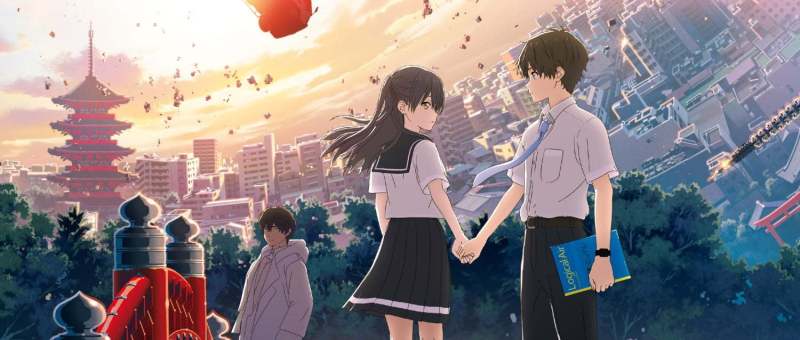
“Hello World” is a phrase familiar to many as the first line of text given to a new program. It signals firstly that the code is functioning correctly, but also expresses a sense of excitement and positivity as if a new entity were standing on the shores of an unfamiliar land eager for adventure. Tomohiko Ito’s sci-fi-inflected anime carefully places the phrase not at its beginning but at its conclusion, affirming that the hero has managed to step into himself, discover his place, and come to an understanding that grants him a sense of agency and possibility in a brand new world that is in a sense of his own creation and choosing. 

Before all that, however, Naomi Katagaki (Takumi Kitamura) is a textbook “regular high school boy” who fears he is just an extra in his own life quietly reading away at the back of the classroom and last in line in the dinner queue. Reading a self-help book on becoming more assertive helps less than he might have hoped, but two changes are slowly introduced into his life albeit passively the first being he is press-ganged onto the library committee and the second that he is approached by a strange man who claims to be himself a decade older. Future Naomi (Tori Matsuzaka) claims not to have come from another time but from “reality”, explaining that the world Naomi currently inhabits is a simulacrum designed to perfectly preserve the city of Kyoto as a digital archive housed inside supercomputer Alltale which has infinite memory. His older self tells him that he is fated to fall in love with classmate Ruri (Minami Hamabe) but she will then be killed by a lightning strike at a festival in three months’ time. Though their actions will have no effect on the “real” world, Future Naomi claims it’s enough for him to “save” Ruri even if it’s only virtually seemingly caring little that he will in fact be completely ruining the Chronicle Kyoto project by introducing a note of the inauthentic perfectly primed for the butterfly effect. 

In any case, what Naomi eventually discovers is that you can’t always trust “yourself” especially if you’re apparently merely data and therefore perhaps infinitely expendable. Young Naomi doesn’t seem particularly fazed by the revelation that his world is not “real”, and is perhaps overly trusting of his new mentor’s guidance following his instructions to the letter in accordance with the “Ultimate Manual” he’s been given to facilitate his romance with Ruri whom he originally claims not to fancy because like many immature teenage boys he only likes “cute” girls like transfer student Misuzu (Haruka Fukuhara) who literally sparkles while Ruri is like him a wallflower obsessed with books, shy and with an aloof, slightly intense aura. What Future Naomi offers him is pure male adolescent fantasy wish fulfilment in gifting him both the means for romantic success and literal superpowers in the form of the Hand of God which allows him to conjure objects from the digital world and will apparently help to save Ruri from her cruel fate.

The universe, however, has other plans. Soon enough he’s being chased by the forces of order, Homeostasis System Droids, trained to eliminate and correct inconsistencies in data appearing as oversize policemen in kitsune masks. Nothing in Naomi’s world makes much concrete sense, even as he’s been told he’s the creation of a simulacrum. Why would Future Naomi fetch up three months before the accident to train him rather than simply altering code, why would someone bother to create these universal super powers, and what exactly are the connections between this world and the “real” from which Future Naomi claims to have come? Some of this might well be explained by a final twist which turns everything we thought we knew upside down, implying perhaps that the gaps and contradictions we see are down to the vagaries of analogue rather than digital memory mixed with trauma both physical and emotional. Nevertheless, it turns out that Naomi’s mission is less to save Ruri than to save himself twice over, allowing Future Naomi to find an accommodation with the traumatic past while essentially giving birth to a “new world” of adulthood in which he is the fully actualised protagonist rather than the bit-playing extra he’s always believed himself to be. 

Featuring character designs by Kyoto Animation stalwart Yukiko Horiguchi, Hello World’s 3D animation fusion of 2D reality and the digital realm makes for interesting production design as Naomi’s world eventually crumbles around him in multi-coloured pixel while he’s chased by giant neon hands under an angry red sky. Nevertheless, its wilful incoherence often proves frustrating even if its myriad plot holes might be explained in part by the final revelation which itself introduces another note of bafflement in its parting scene. Asking some minor questions about the collection, use, and storage of personal data, archival practice, the limits of digital technology, and the nature of “reality”, Hello World is nevertheless a coming of age romance at heart in which the hero saves himself twice over while learning to rediscover a sense of wonder in future possibility.


Hello World streamed as part of the 2021 Japan Foundation Touring Film Programme.
International trailer (English subtitles)

Seven Days War (ぼくらの七日間戦争, Yuta Murano, 2019)

“Youth is the liberated zone of life” according to the voice of experience in Yuta Murano’s impassioned anime adaptation of the cult novel by Osamu Soda, Seven Days War (ぼくらの七日間戦争, Bokura no Nanoka-kan Senso). Featuring a number of meta references to the ‘80s original and live action movie, Murano’s stylistically conventional adaptation shifts the action to Hokkaido and the present day encompassing such themes as economic strife, systemic political corruption and small town nepotism, migration and exploitation, but is most of all a coming-of-age story as the rebellious teens meditate on the costs of adulthood, resolving not to become the vacuous and resentful adults they see all around them who have traded emotional authenticity for a mistaken ideal of civility. 

Obsessed with 19th century European military history, high schooler Mamoru (Takumi Kitamura) complains that no one takes any interest in him and remains too diffident to confess his feelings to the girl next door, Aya (Kyoko Yoshine), with whom he has been in love for the past six years. Hearing that Aya and her family will soon be moving away because her authoritarian politician father has been offered the opportunity to take over a relative’s seat in Tokyo gives him the boost he needs, nervously suggesting that he and Aya run away together so they can at least celebrate her upcoming birthday the following week. Aya surprises him by agreeing, but rather than a romantic getaway for two she decides to invite several not particularly close friends from school, holing up in a disused coal refinery on the edge of town. Once there, however, they realise someone has beaten them to it. Marret (Makoto Koichi), the child of undocumented migrant workers from Thailand, has been hiding in the building after being separated from their parents when the building they were living in was raided by immigration authorities. 

Though the group is not universally in favour, they quickly find themselves deciding to protect Marret while trying to help find the kid’s family using both their ingenuity in fortifying the coal refinery and their youthful know how in weaponising the internet and social media to win sympathy and fight back against the oppressive ideology of the authorities. Yet Marret finds it difficult to trust them because they occupy a liminal space between the idealism of childhood and the cynicism of maturity. Marret’s family came to Japan on the false promise of finding good employment only to be ruthlessly exploited, convincing the idealistic youngster that all adults lie and can never be trusted. Mamoru, whose name literally means “protect”, does his best to save everyone but temporarily gives in to despair, confessing that he is just an “optimistic child” lacking the power to do any real good, only later coming to a revelation that the problem with the duplicitous adults they’re rebelling against is that they continue to run from their emotions and the pain of not being able to be fully themselves for fear of not fitting in has made them cruel and cynical. 

Honda (Takahiro Sakurai), the conflicted assistant to Aya’s authoritarian father, tacitly approves of the teens, affirming that the young always fight for the things they believe in but then rebels against himself in doxxing them, exposing both their identities (sans Aya’s) and dark secrets online in an attempt both to intimidate and to drive them apart. But the kids run in another direction. They elect to share their truths and in the sharing neutralise the threat while gaining the confidence that comes with deciding not hide anything anymore. The sharing is it seems what matters, a collective unburdening which paves the way for emotional authenticity but sidesteps the need to consider the fallout from the concurrent revelations. A heavily telegraphed confession of same sex love, for example, is accepted by all though there is no explicit indication as to whether or not is reciprocated save that is in no way rejected. 

In any case, the kids decide that being their authentic selves is more important than conformity and make a mutual decision to respect the same in others, something which is eventually mirrored in those like Honda among the duplicitous adults touched by the kids’ pure hearted rebellion. Necessarily, that leaves the weightier themes such as the plight of undocumented migrants, the casual cruelty of the authorities, small-town corruption and persistent nepotism relegated to the background, perhaps superficially considered seen trough an adolescent lens, but nevertheless products of the inauthenticity of the cynical adult world the kids are rebelling against. A heartfelt advocation for the idealism and universal compassion of youth carried into a more open adulthood that comes with emotional authenticity, Seven Days War leaves its heroes with the spirit of resistance, defiantly themselves as they step into an adult world uncorrupted by cynicism or prejudice.


Seven Days War screened as part of Camera Japan 2020.

Original trailer (no subtitles)

Shadowfall (影踏み, Tetsuo Shinohara, 2019)

Cinema has an odd preoccupation with twins. The uncanniness of seeing more than one person with the same face in the same frame injects a note of inescapable unease, not least because of the oddness of the techniques required to make one actor appear to be in two places at once. Shadowfall (影踏み, Kagefumi) adapted from the mystery novel by 64’s Hideo Yokoyama, places the “evil twin” motif at its heart but, perhaps a little uncomfortably, uses it as a metaphor for the shadow self as the conflicted hero attempts to find closure with past trauma and family legacy in order to reintegrate his two selves into one complete whole capable of living a life both spiritually and emotionally honest. 

As the film opens, ace cat burgler Shuichi (Masayoshi Yamazaki) is in the process of breaking into the home of a local politician. Whilst there, however, he discovers petrol pooled on the hall floor and the politician’s wife, Yoko (Yuri Nakamura), nervously grasping a cigarette lighter. He manages to snap the lighter shut before she can use it, saving her life (as well as that of the husband she was about to kill), but is then caught by a policeman, Sosuke (Pistol Takehara), who happened to be “just passing by” and is also, coincidentally, a childhood friend. Shuichi gets two years, and is met on his release by a young man, Keiji (Takumi Kitamura), dressed in incongruously old-fashioned, gangster-style clothes and adressing him as “Shuichi-ni” or “big brother Shuichi”. Together, the pair form a small crime fighting team determined to find out what became of Yoko while poking their noses into some conspiratorial corruption which links her with yakuza, police, and the judiciary. The situation is further complicated when Sosuke is found dead after a visit to Yoko’s bar, leaving Shuichi implicated in the possible murder of his old friend. 

Reflecting on the case, police detective Mabuchi (Shingo Tsurumi), who also knew Shuichi in his youth, remarks that twins are tied to each other like heaven is to hell. One will necessarily drag the other down. Later, he corrects himself, that if is that is true then the reverse must also be and one should be able to raise the other up. What we see, however, is largely the former. We discover that Shuichi had an identical twin who was “no good”, a petty teenage hoodlum always in trouble with the police where he was a top student preparing to study the law and become a prosector. Their mother (Shinobu Otake), a teacher, found herself a victim of social stigma as the mother of a criminal, asked to resign from her job because a woman who can’t raise her own son to be a law abiding citizen is not fit to educate those of others. Hisako (Machiko Ono), who had been friends with both the boys and is still carrying a smouldering torch for the “good” Shuichi, experiences something of the same when she’s targeted by a creepy stalker (Kenichi Takito) who leaks her “criminal associations” on the message board of the nursery school where she too teaches. 

Having waited for him all these years, Hisako is praying for the restoration of the Shuichi she once knew who was good where his brother was “bad”. Despite her deep and abiding love for him, she claims to have chosen Shuichi, rather than his brother, because loving the good is the safer, more responsible choice. Shuichi, meanwhile, describes himself as walking in his brother’s shadow, a darkened space into which Hisako wishes to be admitted but is wilfully denied. He tells himself he does this to keep her safe, but is in reality unable to step into that space himself and occupy it as a full and complete person. He claims that his criminality is an act of revenge when it is actually a kind of self-harm that ensures his two selves, the shadow self that is his departed brother, and the ghost self which is the cat burglar, will remain forever separate. 

Talking with another twin whose mirroring of his brother had even darker results, Shuichi confesses that to share a soul with another human being is a terrible curse and one he secretly longed to be released from. It’s this latent sense of guilt which haunts him, cleaving his soul in two. Only by dealing with the traumatic past, the memories inflamed by Yoko whose burden is a fear of an excessive “niceness” she too must learn to let go, can he reintegrate his two selves into one complete whole with only a single shadow. A noirish tale of haunting grief and unresolved regret, Shadowfall finds hope in the simple act of acceptance and the promised restoration of the imperfect whole. 


Screened as part of the Japan Foundation Touring Film Programme 2020.

International trailer (English subtitles)