Flowing (流れる, Mikio Naruse, 1956)

The denizens of a moribund geisha house contemplate visions of independence in post-war Japan Mikio Naruse’s thriving ensemble drama, Flowing (流れる, Nagareru). There is indeed a flowing through the geisha house, a tumble of comings and goings though mostly connected to money which is itself constantly flowing though the for geisha mainly in the wrong direction. Released in the year of Prostitution Prevention Law, the film casts a shadow over the lives of these women who are unwittingly living in their industry’s twilight but asks if it’s really possible for a woman to survive without a man while each of them is in one way or another badly let down by an inconstant lover. 

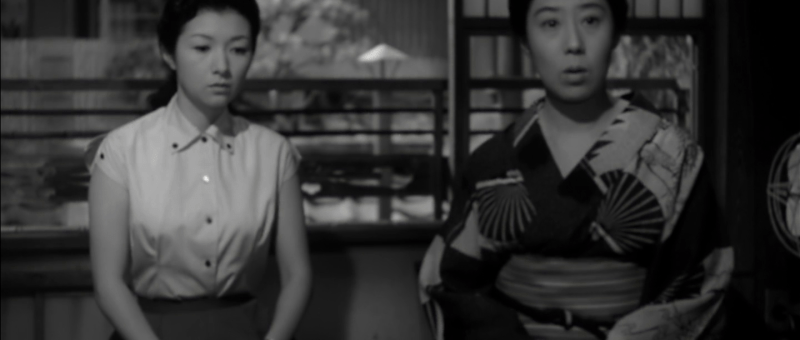
We’re constantly told that Tsutanoya is the most respectable geisha house in town yet despite its well appointed interiors, it’s clear that business is not good. As the film opens, a young geisha, Namie, is accusing the owner’s daughter Katsuyo (Hideko Takamine) of diddling her on her pay. Katsuyo acts indignant and tries to shift the blame back onto Namie but later admits that the house has indeed been skimming a little more off their wages than was agreed claiming all the geisha houses do it which is probably true but doesn’t make it right. In any case Namie will eventually quit and end up working at “some third rate place” while her uncle (Seiji Miyaguchi) causes problems for proprietress Tsuta (Isuzu Yamada) complaining that Namie was exploited and wanting both the backpay he feels she’s owed and compensation though it seems unlikely any of that money is finding its way back to Namie. Meanwhile the house is a geisha down with only former office worker Nanako (Mariko Okada) and 50-year-old veteran Someka (Haruko Sugimura) on the books.

Despite their financial situation, Tsuta hires a new maid, Rika (Kinuyo Tanaka) who is immediately renamed “Oharu” on her arrival. Oharu is a salt of the Earth type, infinitely capable, maternal, kind and loyal bringing a much needed sense of stability to the ever flowing geisha house while also fascinated by this exotic and arcane world. But then as Tsuta cautions her geisha houses may look glamorous from the outside but the life inside them isn’t always fun. Oharu runs into trouble on her first trip to the grocers when they inform her Tsuta hasn’t paid her tab and they can’t let her add to it until she does. A 45-year-old widow whose only child died a year previously, Oharu is also trying to live an independent life, a conflicted Tsuta struck with wonder at her ability to survive without a man, but may also have struggled, grateful to have been offered the job which others might have declined because of the stigma towards the sex trade as finding employment as a middle-aged woman is near impossible. 

At the film’s conclusion even she may imply it isn’t really possible to live as a woman without some kind of support or losing one’s humanity suggesting that she may return to her husband’s hometown and the family she claims not have gotten along with after learning of Tsuta’s betrayal at the hands of an old friend and former geisha, Ohama (Sumiko Kurishima), who at any rate seems to be living quite well as the proprietress of a restaurant. Traditionally, the profession of geisha was seen as a kind of independence in itself but it’s also one that by its nature is reliant on men. Tsuta is often described as someone who is not able to do anything else yet is highly skilled at music and dance having spent a lifetime in training. Without a patron she is stuck and as we learn she threw hers over to pursue a man she loved but he left her in the lurch having mortgaged the geisha house to invest in his business by taking a loan from her older sister who seems to have a nice sideline as a polite loan shark also having loaned money to Someka. 

The most outwardly cheerful, Someka is in other ways a dark vision of a geisha’s future surviving on nothing but nihilistic hedonism while apparently living with a much younger man who eventually leaves her to marry into another woman’s family. Katsuyo has rejected the geisha life explaining that she is unable to, as Nanaka puts it, say silly things to men in order to earn her keep and is essentially incapable of ingratiating herself with men she doesn’t like. She claims she has no desire to marry, unconvinced that any man would be interested in a geisha’s daughter while certain that for a man marrying into a woman’s family is humiliating while suggesting the same would be true for her. Putting her faith in industry, she buys a sewing machine and sets about figuring out how to use it less because she envisages being able to support herself and her mother through taking in needlework than she just wants to feel as if she’s doing something. 

Meanwhile, Tsuta’s niece Fujiko observes all the comings and goings of the geisha house learning the traditional arts in preparation for a future which will soon be obsolete. In a typically Narusean touch, Tsuta comes to a resolution about her future and envisages a new beginning for herself but is unaware the rug is soon to be pulled from under her by the underhanded capitalist Ohama who plans to turf her out to turn the geisha house into another restaurant. “My days of seeking favours from men are over,” Tsuta admits, not of her own volition but simply understanding that she no longer has access to that kind of independence though in essence surrendering her autonomy in leaving herself to the mercy of Ohama in order to escape her older sister’s control. Someka had laughed raucously at Katsuyo’s insistence that she need not be dependent on a man (and after everything she’s seen why would she want to be?) but the younger woman is undeterred even as we see her struggling, doubting that her efforts will in the end be enough to win her her freedom. Ever the optimist, Tsuta is perhaps doing something similar but even Oharu is considering giving up and going home, too good to survive in the dog eat dog world of the contemporary capital where the flow of currency is the lifeblood of the city implying that perhaps the answer to her question is no, a woman can’t survive alone, nor can she rely on female solidarity, but she’ll have to try anyway because there is no other choice. 


The Wind Blows Twice (風ふたゝび, Shiro Toyoda, 1952)

Struggling with the end of her marriage, a young woman finds herself listless yet considering new possibilities in Shiro Toyoda’s The Wind Blows Twice (風ふたゝび, Kaze Futatabi). Adapted from a serialised novel by Tatsuo Nagai, the title is echoed in a remark from one of two potential suitors that youth is something that can come two or even three times so as long as you remain young at heart. They are each, however, each currently frozen and unable to move forward in the wake of their personal traumas. 

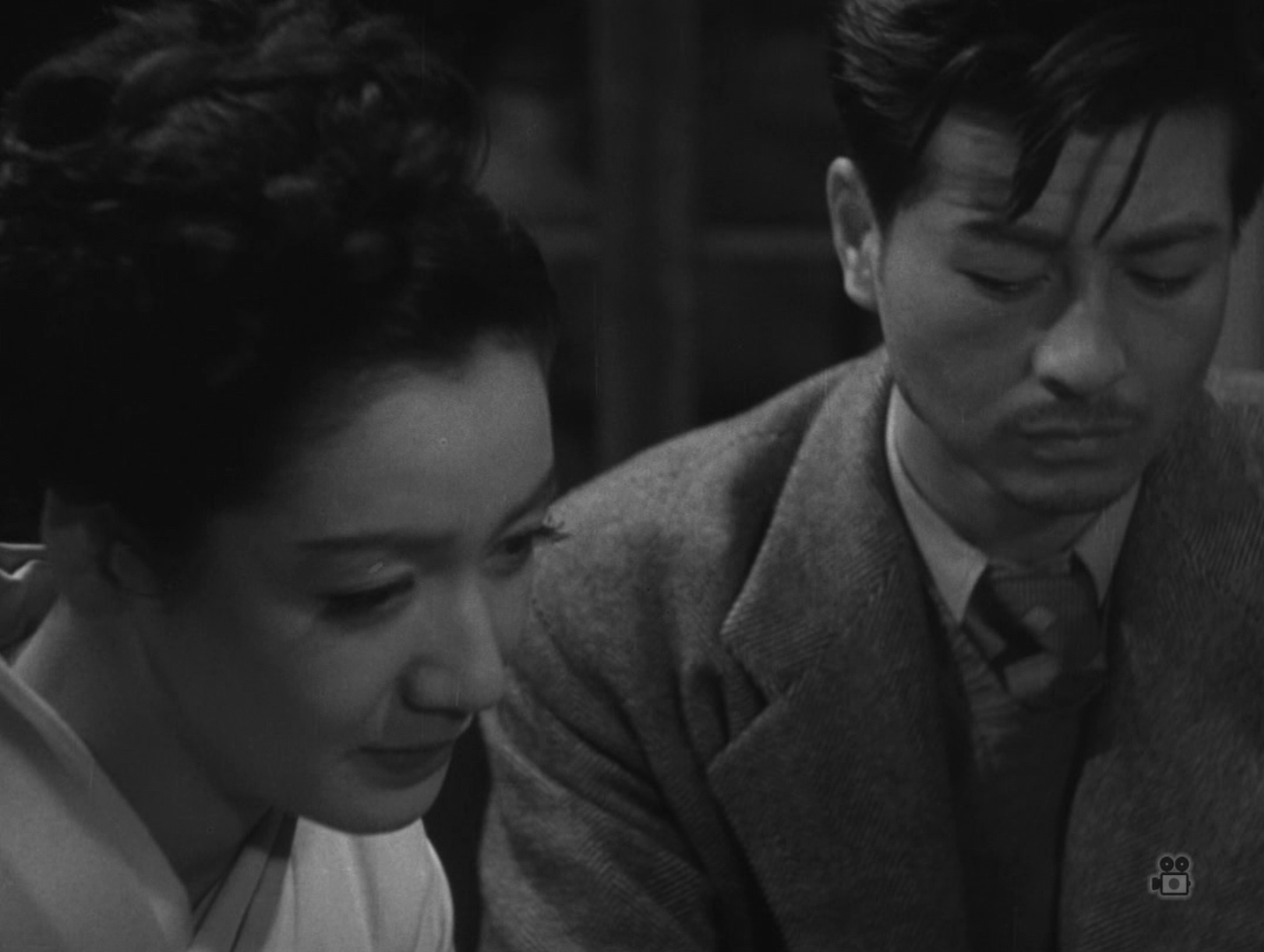
Kanae (Setsuko Hara), it seems, married for love but her husband has apparently been arrested for some kind of corruption. She has severed all ties with him and returned to the house of the uncle and aunt who raised her after her mother’s death where she helps out in their shop. Meanwhile, she learns that her semi-estranged father Seijiro (Ken Mitsuda), a university professor who lives in Sendai and hasn’t been in contact despite his daughter’s difficult circumstances, collapsed on the steps of the local station and is being cared for by a former student, Miyashita (Ryo Ikebe). She travels to look after him and becomes closer to Miyashita, who currently works as an auctioneer and has dreams of becoming a greengrocer, but is perturbed to learn that her father is a suspect in the theft of 10,000 yen from the wallet of a wealthy man, Michihara (So Yamamura), who carelessly left in the toilet and discovered the money missing when he went back to pick it up. Worried that the rumour may damage her father’s career, Kanae goes to apologise and find out what’s going on but Michihara tells her not to worry and it was his own fault anyway but his sudden magnanimity seems suspicious. In any case, Kanae later tells her friend Yoko that Michihara frightened her, also remarking to Miyashita that she felt as if she managed to slip away from him as she made her escape.

Though he later turns out to be sympathetic, Michihara appears as the villain of the piece. He thinks Kanae reminds him of his late wife and intends to ask her to marry him one the seventh anniversary memorial service is concluded. He starts using his wealth and power to gently interfere in her life, setting up a job for her on hearing that she’d been looking for employment and later approaching her father with the idea of investing in his research into the use of fluorides in the production of resin. Despite her initial dislike of him, Kanae goes along with everything and is soon sucked into Michihara’s world while otherwise wilfully oblivious of his feelings for her (which she does not share) and hoping he’ll help her convince Miyashita that he ought to return to science and help her father with his research which would obviously pave the way for them be together romantically.

The problem is that like Kanae Miyashita has become frozen inside, scarred by his wartime experiences and soured on science. Yet just as staying with him restores Kanae’s spirit and encourages her to want to look for work and find purpose in her life, her influence on him reawakens his passion for scientific research only he is less happy about it than she was. The interest that’s sparked in him ironically lies in the frozen north, travelling to Hokkaido to see an old friend and researching how to prevent potatoes from freezing in order to improve people’s quality of life. In essence it seems as if the futures they may want are too different. Now much more cheerful and energetic, Kanae genuinely enjoys her work in broadcasting and is less than keen to give it up and move to rural Hokkaido to help Miyashita study potatoes while secretly hoping she can convince him, with Michihara’s help, to become a respectable academic like her father and live a nice middle class life researching things that are more useful to industry and big business than to regular people.

Miyashita is disinclined to do so. He bounds straight off a train to see her with three day stubble from the journey, only to be disappointed witnessing in her in an elaborate kimono with her hair constrained in traditional style while Michihara is there waiting to see him to discuss a job offer from Seijiro. It’s at this point that he seems to decide his romantic desire for Kanae is most likely futile and she has chosen the rarified world of Michihara rather a rustic and homely life with a man like himself. Of course, this makes it sound as if Kanae doesn’t have much choice at all herself and to an extent she doesn’t or at least she feels backed into a corner while her aunt pressures her to remarry, unbothered to which man but excited about the proposal from Michihara because it means she will enjoy a life of uninterrupted financial comfort.

Having chosen her own suitor and seen things go drastically wrong also increases her aunt’s conviction that she shouldn’t make the same mistake again while she too is perhaps wary of remarrying. In any case. Kanae seems to want work and enjoys her job in broadcasting as much as she’s naturally drawn to Miyashita who brings out in her a greater desire to live while Michihara only seems to want her to be a shadow of his late wife suggesting that to marry a man like that may itself be a kind of death sentence. To that extent, the choice Kanae makes involves a predicable sacrifice, but still in any case it is a choice that she makes for herself to strike out for happiness and fulfilment of her own choosing rather than allow herself to be railroaded by conventionality unable to express her own desires.


Rainbow Over the Pacific (夜明けの二人, Yoshitaro Nomura, 1968)

Yoshitaro Nomura is most closely associated with a series of gritty crime thrillers that dug deep into the dark heart of post-war Japan. It may seem surprising therefore to see him helming this generally cheerful if occasionally melancholy musical romance created as a star vehicle for singer Yukio Hashi in commemoration of 100 years of Japanese migration to Hawaii. Curiously pitched, Rainbow Over the Pacific (夜明けの二人, Yoake no Futari) arrives somewhere between extended tourist reel and accidentally colonialist soft propaganda that nevertheless never shies away from the complicated relationship between the two nations. 

As the film opens, hero Hideo (Yukio Hashi) is a something of a slacker working in a photo studio with a crush on an aspiring model. When she shows up late to what he thought was a date and then tells him she’s getting married before dumping her fiancé’s ex on him, he finds himself taking pity on the jilted girlfriend while they drown their mutual sorrows in the beerhalls of post-war Tokyo. Audrey Reiko Misaki (Jun Mayuzumi) is a third generation Japanese-Hawaiian who loves all things Japan and is becoming quite fond of Hideo though he abruptly tells her that it’s been fun but they live in different countries so it’s best they call it quits. Reiko goes back to Hawaii and tries to forget about her double romantic heartbreak in Japan while Hideo continues to be an unserious man berated by his grumpy granddad and exasperated mother not least because of his reluctance to get married. A year later his mentor takes him with him on a trip to the US stopping over in Hawaii where finds himself hoping for a fateful reunion with Reiko. 

Before that, however, he and his boss are met by a Japanese-American man who takes them on a tour of the island and explains that all the swanky hotels are owned by Japanese companies. “Anything you can find in Japan you can find in Hawaii” he insists, at once exoticising the environment and trying to sell it as a place that the growing Japanese middle classes might feel comfortable going on holiday because it is almost like being in Japan only of free of the intense atmosphere of the era of high prosperity where everyone works all the time. But then something a little strange happens, Sakata (Hiroyuki Nagato) points at the elephant in the room and begins talking about Pearl Harbour before visiting a cemetery where many men of Japanese descent who lost their lives fighting for the US in Europe are buried. Even so, he quickly points out that the Japanese community continue to dominate the political realities of the island with several Japanese-Americans elected to the Senate one of whom he actually interviews on camera. 

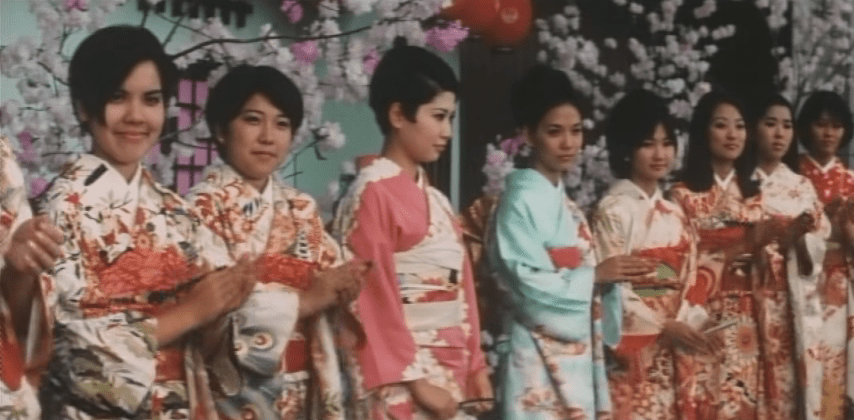
As for Hideo, he is at times a fairly crass tourist who accidentally mocks the traditional singing of a middle-aged Hawaiian. Much of the narrative appears to have been designed to take in most of the important tourist sites on the islands which are each marked with onscreen katakana as are several important landmarks in Japan in the later part of the film which almost does the same thing in showing off historical Kyoto and the Nara deer. After re-encountering Reiko, Hideo finds himself sucked into various kinds of romantic drama, accidentally coming between a local girl and her boyfriend whose relationship is strained by his wealthy father’s disapproval (much like Hideo he is thought to be an unserious man) and then getting into a dangerous situation with a rival suitor whose cool exterior masks a volatile intensity. 

Ironically enough, through his Hawaiian adventures Hideo becomes a “serious” man resolving to buckle down and work hard though seemingly abandoning his dreams of romance out of a kind of misplaced bro code that in a roundabout way undermines the message of solidarity between Hawaii and Japan in implying that Reiko must choose between the two but then refusing to respect her choice. Further parallels are drawn in the reunion of Hideo’s great uncle who has since become a respected teacher at a Japanese school and his grumpy grandfather who is exposed as a dissolute layabout who returned to Japan in disgrace after giving up in the face of the harshness of life for Japanese migrants, Nomura utilising stock footage to demonstrate the many difficulties they faced in trying to make new lives for themselves in Hawaii. Of course, this being a star vehicle for Hashi, he gets several opportunities to sing including a rendition of the title of song while the film at times turns into a musical though the melancholy, foggy conclusion perhaps plays against the expectations of the genre. In any case, the film appears to be a fascinating document of an increasingly globalising Japan which nevertheless looked for itself even while seeking escape.


Ikiru (生きる, Akira Kurosawa, 1952)

The Japanese economy may have embarked on a path towards recovery thanks to the stimulus of the Korean War, but in the early 1950s many might have thought it too soon to ask if survival in itself was enough yet this is exactly what disillusioned civil servant Kenji Watanabe finds himself asking after receiving the devastating news that he has advanced stomach cancer and year at most to live. “To live” is apt translation of Akira Kurosawa’s intensely moving existential melodrama, Ikiru (生きる), which tackles the compromises of the salaryman dream head on along with those of the contradictions of the sometimes dehumanising post-war society. 

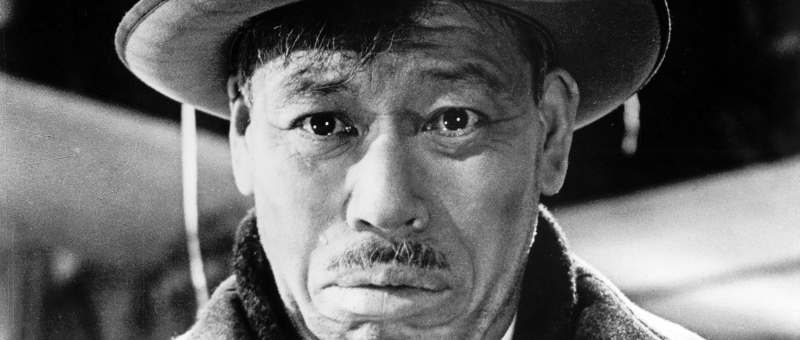
As the opening voice over reveals to to us, Watanabe (Takashi Shimura) is man who died long ago or perhaps has never truly been alive. In some senses, he is nothing more than an embodiment of the seal he uses to stamp documents day in day out, a mere piston in an ever turning machine of relentless bureaucracy. A young woman, Miss Odagiri (Miki Odagiri), working in the Public Affairs department loudly reads out a joke someone has written about their boss, Watanabe, who has taken not a single day’s holiday in 30 years suggesting that it’s less that he fears city hall will grind to a halt without him than they’ll suddenly figure out city hall has no need of him at all. The irony is city hall does indeed grind to a halt in Watanabe’s absence as he, unthinkably, fails to turn up for work for days on end as the papers pile ever higher on his desk. “Nothing moves here without his seal” one of the workers admits, bewildered by this sudden break with protocol while salivating over its implications in the possibility that Watanabe’s chair may soon be empty. 

Yet Watanabe’s crisis is that he’s realised he’s wasted his life on a pointless bureaucratic career that’s done little more than keep a roof over his head. Even the roof is a fairly modest one and it’s clear that his grown up son Mitsuo (Nobuo Kaneko) considers him to be a stingy old miser, unable to understand why he’s never spent so much as a penny on himself and lives in a kind of self-imposed austerity. Perhaps to Watanabe this is what constitutes properness. He’s done everything he was supposed to do, got a steady job at city hall and eventually became the head of department, but now he feels foolish and lonely. Mitsuo and his wife seem to resent him and talk openly about their plans to use their inheritance, along with Watanabe’s retirement bonus, for a downpayment on a “modern” home the polar opposite of the pre-war townhouse where the family continue to live. 

Mitsuo and Kazue (Kyoko Seki) are perhaps emblems of the increasingly empty consumerism of the post-war era, emotionally disconnected from Watanabe and seeking only the flashy and new. Miss Odagiri, the young woman from work, immediately says that she’d love to live in a home like Watanabe’s rather than the crowded multiple occupancy flat she currently inhabits with her family. Cheerful and outgoing, Odagiri is on the other hand a symbol of a new generation that wants something more out of life than simple material comfort and might even be willing to trade it for a small amount of happiness. Having worked at city hall for all of 18 months, she decides that she just can’t take it anymore and is quitting to get a job in a factory making toy rabbits that she says allow her to feel as if she’s making friends with all the babies in Japan. 

To that extent, Watanabe is himself also a baby craving Odagiri’s company admitting that he envies her youth and vitality in realising he squandered his own and will never get it back. How uncomfortable it must be for her, their final meeting in a restaurant sandwiched between a loving couple and teenage girl’s birthday party as Watanabe, gaunt and shrunken, claws at the air and begs her to help him live. Yet even within the grotesquery the tone is ironic, the strains of “Happy Birthday” accompanying Watanabe down the stairs as a the high school climbs up to meet her friends signalling his (re)birth as a man with purpose and determination. Just as Odagiri had found meaning in the rabbit, Watanabe finds it deciding to get a playground built over a post-war swamp in the slums filled with raw sewage and mosquitos that left the local children ill. 

Yet children’s parks aren’t particularly profitable which is presumably why the petition to build one had been kicked all round city hall in the infernal wheel of bureaucracy in which Watanabe too is trapped. “You call this democracy?” one of the women bringing the petition asks, taking the clerk to task complaining that all they do is fob them off insisting it’s someone else’s responsibility to help while determined only to guard their own turf. “You’re not supposed to do anything at city hall” someone ironically adds, “the best way to protect your place in this world is to do nothing at all”. Watanabe did nothing at all for 30 years and it got him nowhere, his dedication to his job disrupting his relationship with his son though Watanabe is ironically one of the most emotional men and engaged fathers seen on screen in the post-war era. 

After his death, in the park he helped build for which the deputy mayor has taken credit, his colleagues put him on trial at the wake trying to work out why he did it and whether or not he even knew he was dying seeing as he told no one close him not even the son whom he felt he could no longer trust. They deny his role while both praising and condemning his passion as somehow improper, disrupting the dispassionate rhythms of the bureaucratic machine with human emotion. It was only coincidence, they say. The deputy mayor wanted an election and the yakuza wanted to turn the swamp into a red light district. “Did he think he could just build a park?” someone adds, bemused by his effrontery as a man from Public Affairs straying into the Parks Department’s territory. You have to protect your turf after all. Finally moved by Watanabe’s last ditch bid to make his life mean something, to feel alive and know he has lived, the the drunken salarymen, all but one who retreats to look at Watanabe’s photo above the altar, swear to follow his example. 

But of course the bureaucratic wheel keeps turning, another dangerous sewage problem diverted to another department continuing the literal pollution of the capitalistic post-war society. A kind of ghost story, Kurosawa lights Shimura from below, shadows cast across his gaunt face even by his “rakish” new hat while his huge eyes have a somehow haunted, grotesque quality filled with hungry desperation. Yet it’s to childhood that Watanabe eventually returns, “perfectly happy” sitting on a swing singing a song from his youth about the price age while surrounded by snow and at last painfully, absurdly alive. 


Ikiru screens at the BFI Southbank, London on 4th & 15th February 2023 as part of the Kurosawa season.

Original trailer (English subtitles)

Gate of Hell (地獄門, Teinosuke Kinugasa, 1953)

Which is the greater challenge to the social order, love or ambition, or are they in the end facets of the same destabilising forces? Teinosuke Kinugasa’s Gate of Hell (地獄門, Jigokumon) is, from one angle, the story of a man driven mad by “love”, reduced to the depravity of a crazed stalker betraying his samurai honour in order to affirm his status, but it also paints his need as a response to the chaos of his age along with its many repressions while the heroine is, once again, convinced that the only freedom she possesses lies in death. Yet in the midst of all that, Kinugasa ends with a triumph of nobility as the compassionate samurai restores order by rejecting the heat of raw emotion for an internalised contemplation of the greater good. 

Set in the 12th century, the film opens in revolt as two ambitious lords combine forces to attack the Sanjo Palace in what would become known as the Heiji Rebellion. The lords have attacked knowing that Taira no Kiyomori (Koreya Senda) is not in residence, having departed on a pilgrimage. Fearful for the safety of his sister and father, retainers order decoys to be sent out to distract the rebels. Kesa (Machiko Kyo), a court lady in service to the emperor’s sister, agrees to be her decoy and Morito (Kazuo Hasegawa), a minor retainer, is ordered to protect her. He manages to escort her back to his family compound where he assumes she will be safe, transgressively giving her a kiss of life, pouring water into her mouth with his own, after she has fainted during the journey. Unfortunately, Morito has miscalculated. His brother has sided with the rebels and they are not safe here. During the chaos they go their separate ways, and as soon as Kiyomori returns he puts an end to the rebellion restoring the status quo.  

Shocked at his brother’s betrayal, Morito tells him that only a coward betrays a man to whom he has sworn an oath of loyalty but he explains that he is acting not out of cowardice but self interest. He has made an individualist choice to advance his status in direct opposition to the samurai code. Morito doesn’t yet know it but he is about to do something much the same. He has fallen in love with Kesa and after meeting her again at the Gate of Hell where they are each paying their respects to the fallen, his brother among them, is determined to marry her, so much so that he asks Kiyomori directly during a public ceremony rewarding loyal retainers for their service. The other men giggle at such an inappropriate, unmanly show of emotion but the joke soon fades once another retainer anxiously points out that Kesa is already married to one of the lord’s favoured retainers. Kiyomori apologises and tries to laugh it off, but Morito doubles down, requesting that Kiyomori give him another man’s wife. 

This series of challenges to the accepted order is compounded by a necessity for politeness. Morito is mocked and derided, told that his conduct is inappropriate and embarrassing, but never definitively ordered to stop. Making mischief or hoping to defuse the situation, Kiyomori engineers a meeting between Morito and Kesa, cautioning him that the matter rests with her and should she refuse him he should take it like a man and bow out gracefully. Kesa, for her part, has only ever been polite to Morito and is extremely confused, not to mention distressed, by this unexpected turn of events. She is quite happily married to Wataru (Isao Yamagata) who is the soul of samurai honour, kind, honest, and always acting with the utmost propriety. That might be why he too treats Morito with politeness, never directly telling him to back off but refusing to engage with his inappropriate conduct. That sense of being ignored, however, merely fuels Morito’s resentment. He accuses Kesa of not leaving her husband because Wataru is of a higher rank, as if she rejects him out of snobbishness, rather than accept the fact she does not like him. 

Morito continues in destructive fashion. We see him repeatedly, break, smash, and snap things out of a sense of violent frustration with the oppressions of his age until finally forced to realise that he has “destroyed a beautiful soul” in his attempt to conquer it. “One cannot change a person’s feelings by force” Wataru advises, but is that not the aim of every rebellion, convincing others they must follow one man and not another because he is in someway stronger? The priest whose head was cut off and displayed at the Gate of Hell was killed in part because he reaped what he had sown in beheading the defeated soldiers of a previous failed revolution. Morito kills a traitor and he falls seemingly into rolling waves which transition to an unrolling scroll reminding us that rebellions ebb and flow through time and all of this is of course transient. Only Wataru, perhaps ironically, as the unambiguously good samurai is able to end the cycle, refusing his revenge in the knowledge it would do no real good. Morito is forced to live on in the knowledge of the destruction his misplaced passion has wrought, standing at his own Gate of Hell as a man now exiled from his code and renouncing the world as one unfit to live in it. 


Gate of Hell is currently streaming on BFI Player as part of the BFI’s Japan season.

Late Autumn (秋日和, Yasujiro Ozu, 1960)

“It’s people who complicate life. Life itself is surprisingly simple” according to a puffed up old man having just hugely overcomplicated an admittedly delicate situation in Yasujiro Ozu’s Late Autumn (秋日和, Akibiyori). A reinterpretation of his classic Late Spring, Late Autumn once again stars Setsuko Hara but this time as a widowed mother far more enthusiastic about marrying off her only daughter while enduring the sometimes unwelcome assistance of a group of middle-aged men stepping into the decidedly female realm of matchmaking and of course concluding that they are doing a fantastic job. 

The action opens at the seventh memorial service for Akiko’s (Setsuko Hara) late husband, Miwa, attended by his three old high school friends, Taguchi (Nobuo Nakamura), Hirayama (Ryuji Kita), and Mamiya (Shin Saburi) who’s turned up fashionably late in the hope of skipping most of the sutras. At the refreshments afterwards, talk turns to the marriage of Miwa’s daughter Ayako (Yoko Tsukasa) who is now 24 which is actually edging towards the late side by the standards of the time. The three old men offer to help find prospective matches with Taguchi instantly proposing an acquaintance to which Ayako smiles demurely but is later relieved to discover is already taken. Mamiya too has a lead, a nice young man from his office, Goto (Keiji Sada) who graduated from a good university and is not bad looking either. Though Akiko is excited, she’s surprised to discover that her daughter wants to shut the offer down immediately before even exchanging photos. She feels she’s not ready for marriage and is happy the way things are. Of course, if she fell in love it might be a different matter, but to her mind there’s no rush to get married just for the sake of it. 

Generally speaking, it’s other women who mostly enforce these restrictive patriarchal social norms, after all a daughter’s marriage is ironically the one area of a woman’s life over which she usually has total control. In this case, however, Ayako’s marriage becomes a kind of hobby for three eccentric old men who each have problems of their own they don’t seem to be in a big hurry to deal with. They each have a latent crush on Akiko from their youth though it was obviously Miwa who later married her. Hirayama is widowed with a teenage son, but Mamiya and Taguchi have wives and daughters of their own, Taguchi’s already married but apparently experiencing frequent bouts of “frustration” with her husband, and Mamiya’s still in school, while their wives are fully aware of their lingering affections for Akiko but mostly content to laugh at their ridiculousness. They are all certain that Ayako “needs” to get married as soon as possible and that they are “helping” her towards “happiness” though what they’re mostly doing is a father knows best routine in which they resolutely ignore her repeated desire for things to go on as they are until she decides that they shouldn’t. 

Ayako isn’t interested in arranged marriage, but does become interested in Goto after accidentally meeting him at Mamiya’s company and then discovering they have a mutual friend, all of which makes their relationship both “arranged” and “not”, giving Mamiya cause to think he’s responsible when he’s really just incidental. Thinking things aren’t moving fast enough, the guys decide the problem is Akiko and if they can persuade her to remarry then Ayako will be less reluctant to leave home. Their behaviour is in fact quite manipulative, something they are later called out on by Ayako’s feisty friend Yuriko (Mariko Okada) who is also trying to help but determined to do it in a less problematic way. The gang’s suggestion to Ayako that her mother is considering remarriage when in fact she had no such intentions at all places a rift between the two women with Ayako left feeling hurt and betrayed, as if her mother has offended her father’s memory and done something improper behind her back. 

Ayako is not alone in her lingering prejudice against second marriage even if Yuriko tries to explain to her that she’s being unreasonable. Hirayama too originally objects to the gang’s plan to get him to marry Akiko on the grounds that it would be “immoral” to marry his old friend’s wife, but is brought round when he puts the idea to his son and finds him wildly enthusiastic if only in part because he’s already thought ahead to his own marriage and is worried his dad will want to live with them and that would inconvenient for everyone. When it comes to Akiko’s marriage, there seems to be more wiggle room. Everyone wants her to be “happy” and so there’s a greater freedom to explore various options while completely ignoring her preference to remain a widow. As we see from Akiko’s life, she is already financially independent and really has no “need” to remarry unless she happened to fall in love though she remains attached to her husband’s memory. As she later confesses to Ayako, she has no desire to “climb that mountain” again, and in fact will be happier living in freedom as an independent woman. 

As so often, however, while remarriage is optional marriage is not. Ayako has to marry, she never really has the option to remain single even that was what she wanted. She falls in love with Goto and indeed wants to marry him if perhaps worried about leaving her mother behind, making the three old men partially correct in their conviction that her reluctance was more anxiety than it was opposition. Unfortunately, their “success” emboldens them towards the next match and possibly more unhelpful meddling, complicating what should be simple with their increasingly outdated ideas fuelled by a desire to rebel against their sense of impending obsolescence. “In marriage you just give up” an exasperated wife admits, but wouldn’t it be something if you didn’t have to?


Late Autumn is currently streaming on BFI Player as part of the BFI’s Japan season.

Original trailer (no subtitles)

Until We Meet Again (また逢う日まで, Tadashi Imai, 1950)

Til we meet again poster 1Despite later becoming a member of the Communist Party, Tadashi Imai had spent the war years making propaganda pictures for the militarist regime. He later described his role in the propagation of Japanese imperialism as “the worst mistake of my life”, and thereafter committed himself to socially conscious filmmaking. Imai was later identified most closely with a style that was the anthesis of many his contemporaries branded “realism without tears”. Nevertheless, in 1950 he found himself making a full on romantic melodrama with anti-war themes. Until We Meet Again (また逢う日まで, Mata Au Hi Made) was, unofficially, an adaptation of Romain Rolland’s 1920 novel Pierre et Luce in which war conspires against the pure hearted love between two innocent young people.

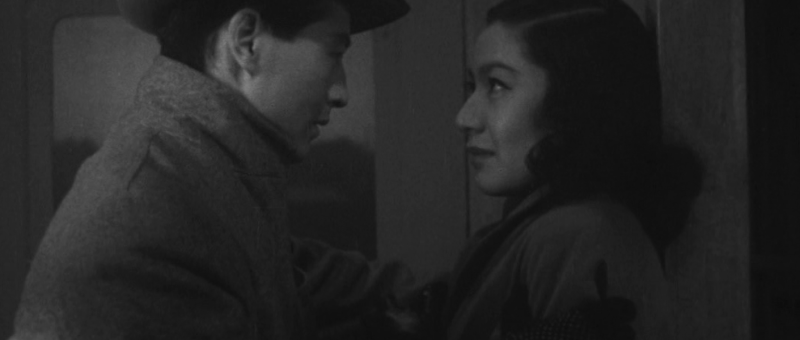
Relocated to the Tokyo of 1943, Until We Meet Again begins at its conclusion with anxious student Saburo (Eiji Okada) pacing the floor, prevented from meeting his one true love, Keiko (Yoshiko Kuga), because his sister-in-law has fallen dangerously ill. Having just received notice that his draft date has been moved up and he’s expected to report for duty that very night, he fears he may never see her again whereupon he flashes back to their early courtship, all adolescent innocence and filled with the pure joy of falling in love for the first time.

Yet, as much as the war is the destructive force which will always stand between them, it’s also the one which brings them together. Saburo makes nervous eye contact with a pretty girl sheltering in a subway during an air raid. They are both afraid, and he chivalrously comforts and shields her with his body. Most particularly in the Japan of 1943, such bodily contact with a stranger of the opposite sex would be considered extremely inappropriate. There would be no other opportunity to enter this mild kind of physical intimacy save for the external pressures of life in war. Saburo doesn’t yet know the name of the woman in the subway, but can seemingly think of little else, seeing her everywhere he goes and looking for her in every face he sees. When they finally “meet”, they both agree that they are already acquainted and the intimacy between them quickly deepens through unexpected and perhaps transgressive physicality – a hand taken and placed inside a jacket to fight the cold, an embrace taken to guard against one explosion but leading to another. This innocent diffidence eventually leads to the film’s most famous scene in which Saburo, lamenting he must leave Keiko’s home, returns briefly to look at her in the icy window through which they share a chaste kiss.

Saburo, a wealthy young man too sensitive for the times in which lives, is ill-equipped to understand the difficulties of Keiko’s life. A closeup on her ragged shoes and her hard-nosed practicality make plain her penury and her determination to escape it. If he allowed himself to dream seriously of a life with her after the war, he might have to consider the words of his hardline brother, once sensitive like him but now fully committed to the militarist cause, who reminds him that an idle romance may be irresponsible considering that it will only cause them both, and more particularly her, pain when he must leave perhaps never to return. Saburo knows his brother might be right, wrestling with his love for Keiko while she professes that she would rather be with him no matter what pain might come.

Saburo’s friends tell him that “love is taboo”, and his brother something similar when he berates him for wasting his time hanging around with girls rather than preparing for the military. The enemy is less “the war” than it is the persistent austerity of militarism which crushes individuality and emotion to make love itself an act of treason. Yet it’s the very presence of the looming threat of war that makes their race towards romance possible. Saburo will be shipping out. Everything is fraught and desperate. There may not be another time and so the only time is now. It’s no coincidence that each incremental step in the couple’s relationship is preceded by an explosion, or that alarms are constantly ringing, while clocks tick ominously counting down their time.

Having been seriously injured in a freak accident despite wielding his privilege to serve in Japan and not on the front line, Saburo’s brother reconsiders and tells him that he is leaving his share of life’s happiness to him and so he has a duty to be doubly happy. Keiko too just wants her little “slice of happiness”, but it’s something this world has seen fit to deny them. The couple daydream about furnishing a house filled with children, but it’s a fantasy that will never materialise because theirs are the unrealised hopes of the youth of Japan cruelly denied their rightful futures because of a foolish war waged by their fathers and their grandfathers. The poignant final scenes suggest the older generation too will collapse under the weight of the tragedy they provoked, but sympathy remains with men like Saburo who went to war unwillingly because they had no other choice, unable to protect the things they loved from the chaos they left behind.


The Rendezvous (約束, Koichi Saito, 1972)

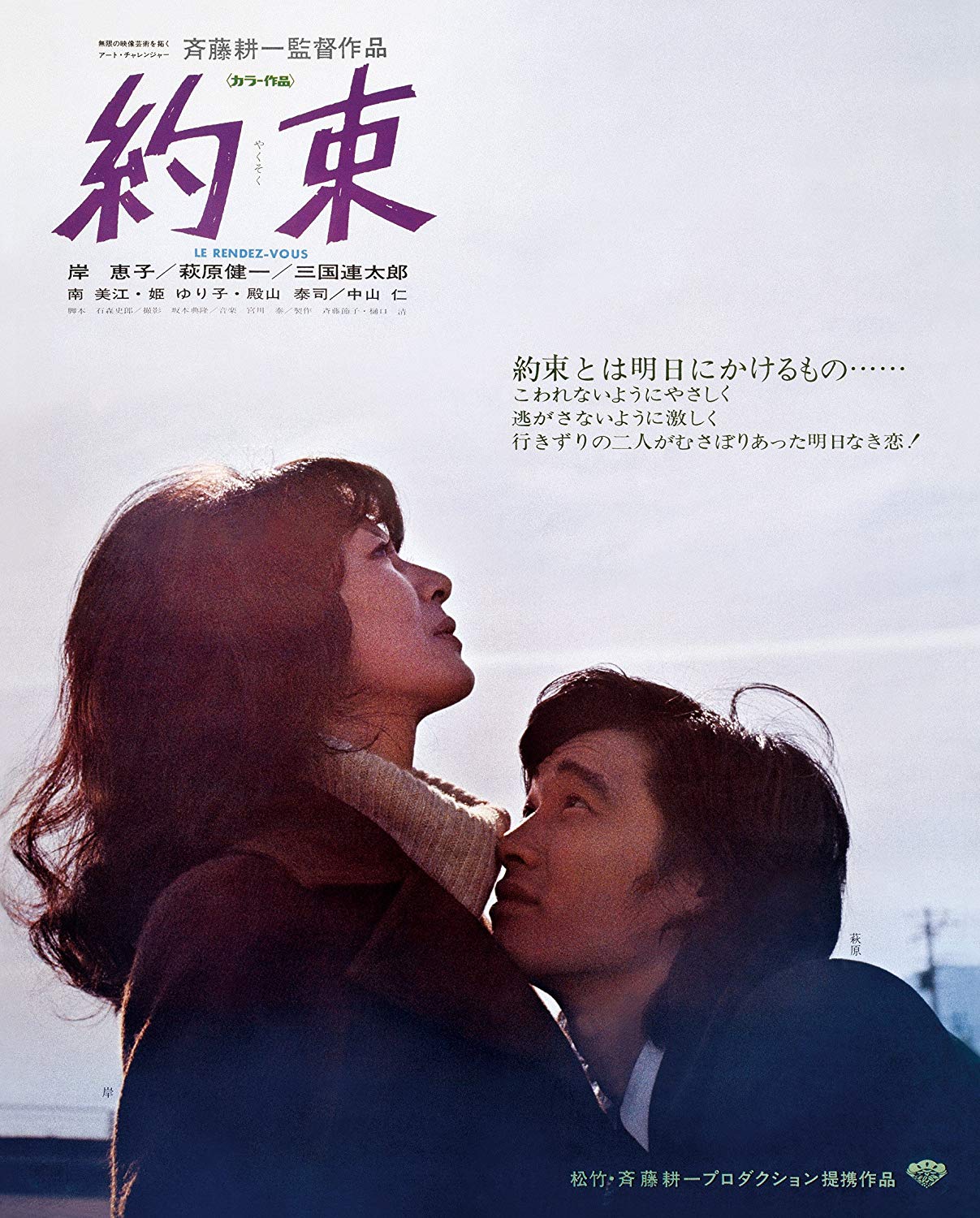
The Rendezvous poster“If human’s don’t trust each other, it’ll be the end of the world” – so says the cheerful hero at the heart of Koichi Saito’s The Rendezvous (約束, Yakusoku). Saito’s film is, somewhat unusually, a rare example of a Korean film remade in Japan. Inspired by Lee Man-hee’s Late Autumn (now sadly thought lost), The Rendezvous has been remade three times in Korea by such esteemed directors as Kim Ki-young (1975), Kim Soo-yong (1982) and most recently Kim Tae-young in 2010. There is indeed something particularly timeless in its tale of fate frustrating a fated love as each of our protagonists struggles to find the energy to rebel against their own sense of impossibility.

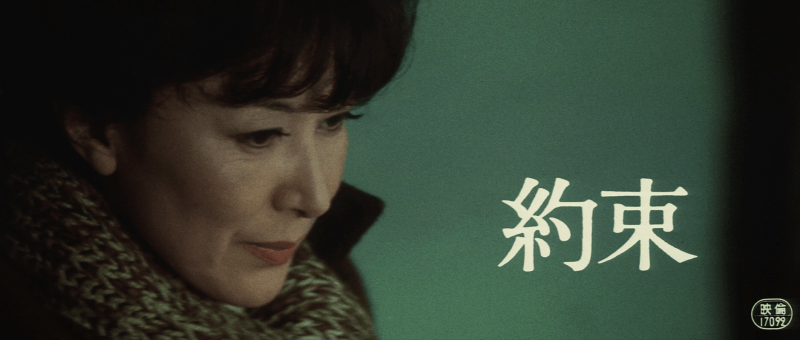
A brief framing sequence begins with a nervous, melancholy woman, Keiko (Keiko Kishi), sitting alone on a park bench, surrounded by the cheerful activity of athletes training, women pushing prams, and families enjoying the crisp sunshine. As she thinks back to what brought her here we travel back with her to a fateful train journey some years previously.

Keiko sits sadly by the window, impassively watching the sea stretch out as the train whizzes by. An older woman (Yoshie Minami) is sitting next to her, though they appear at least not to be on particularly friendly terms. At the first stop a younger man, Akira (Kenichi Hagiwara), gets on and sits down opposite Keiko, throwing a newspaper over his face, presumably to help him get some sleep (or, as we later wonder, perhaps just to better disappear). Intrigued, Keiko nevertheless shivers on catching sight of the paper’s headline – “Drunken Husband Stabbed to Death”. Knocking the paper off his head as she gets up to go to the bathroom, Keiko clips it back on for him with her hairpin – something that later gives him an excuse to talk to her when he eventually wakes up.

Akira, it turns out, is the chatty sort of person who enjoys making conversation with strangers. He makes a nuisance of himself trying to chat to Keiko and the old woman who ignore him, whilst accidentally frightening the bored little girl opposite by trying to entertain her. The ice finally thaws when Akira decides to buy everyone lunch – Keiko accepts and speaks to him if only to insist on paying him back (which the old lady then also feels compelled to do). Though very little actual conversation takes place on this first train journey, Akira is also travelling to the same small town as Keiko and continues to make a nuisance of himself by following her around. Nevertheless a connection begins to form between the pair, such perfect opposites in every way but one, though the time is always ticking and the encounter is one coloured by its impending end.

Keiko’s mysterious behaviour is later revealed to be more than just shyness or existential angst. Akira repeatedly asks for her trust, but she claims herself incapable of trusting anyone because in a sense she is already dead. Indeed, her entire aura is one of deliberate stillness, rarely speaking, and often leaning sadly against a more solid structure as if lacking the energy to fully support herself. Ironically enough, Keiko’s name is written with the character for “firefly” – a creature that burns out bright and then fades away. Keiko not only believes that her light has gone out, but that there are no more fireflies left. Akira, whose name is written not with the character for “bright” but with one for “cheerful”, begins to show her that there could be fireflies still, jokingly pointing to the lights from a nearby boat bobbing on the water.

We’re later told that the root of all Keiko’s suffering is “an absence of love”, that as passion cooled there was only emptiness in its place. “Emptiness” seems to be the force which defines Keiko’s existence, the reason her fire is out and her life apparently over. Though she feels a passionate attraction to Akira, she cannot bring herself to submit to it, both distrusting herself and afraid to face the possibility that it too will end. Both Keiko and Akira are fugitives from themselves, literally railroaded towards an inevitable conclusion they lack the courage to oppose. Akira wants to run, but Keiko knows she belongs on the train, incapable of escaping her self-imposed imprisonment and unwilling to step away from her unchanging destiny.

Fate follows them everywhere – violent headlines, prisoners being escorted, flashes of handcuffs, all reminding them that they are trapped, powerless in the face of an oncoming reckoning. Akira repeatedly asks Keiko to trust him, insisting that as long as she believes in him everything will be alright. Yet Akira is a flustered young man always in a hurry, running as if already late for the future. He makes Keiko a promise of a meeting and even gives her his watch to help her keep it, yet fails to appear. Akira’s heart may be trustworthy, but his body less so and even if he really wanted to come fate may have other plans. Love, it seems, is not enough. Saito returns to Keiko, sitting alone on the bench, waiting as the park empties and all the kids go home for tea. There’s no way to know if Akira can keep his promise even if he meant to, but perhaps there is something even so in the continued faith that he might simply bound in, hours late but as earnest as ever.

The central narrative seems to retain the Korean of sensibility of Lee’s original in its sense of dread and inevitability, and of passion repressed. Saito’s approach leans more towards misty European arthouse than your average Shochiku romance, making the most of its mystery as the time continues to run down for Keiko and Akira before they must prepare to meet their respective fates. Fate, at least, will wait for you and will always be there in the end. Impossibility defines the world of the defeated Keiko and the childlike Akira, but perhaps the most painful thing is hope itself, and the lingering faith that a promise will be kept despite the overwhelming odds.


Original trailer (no subtitles)

An Inlet of Muddy Water (にごりえ, Tadashi Imai, 1953)

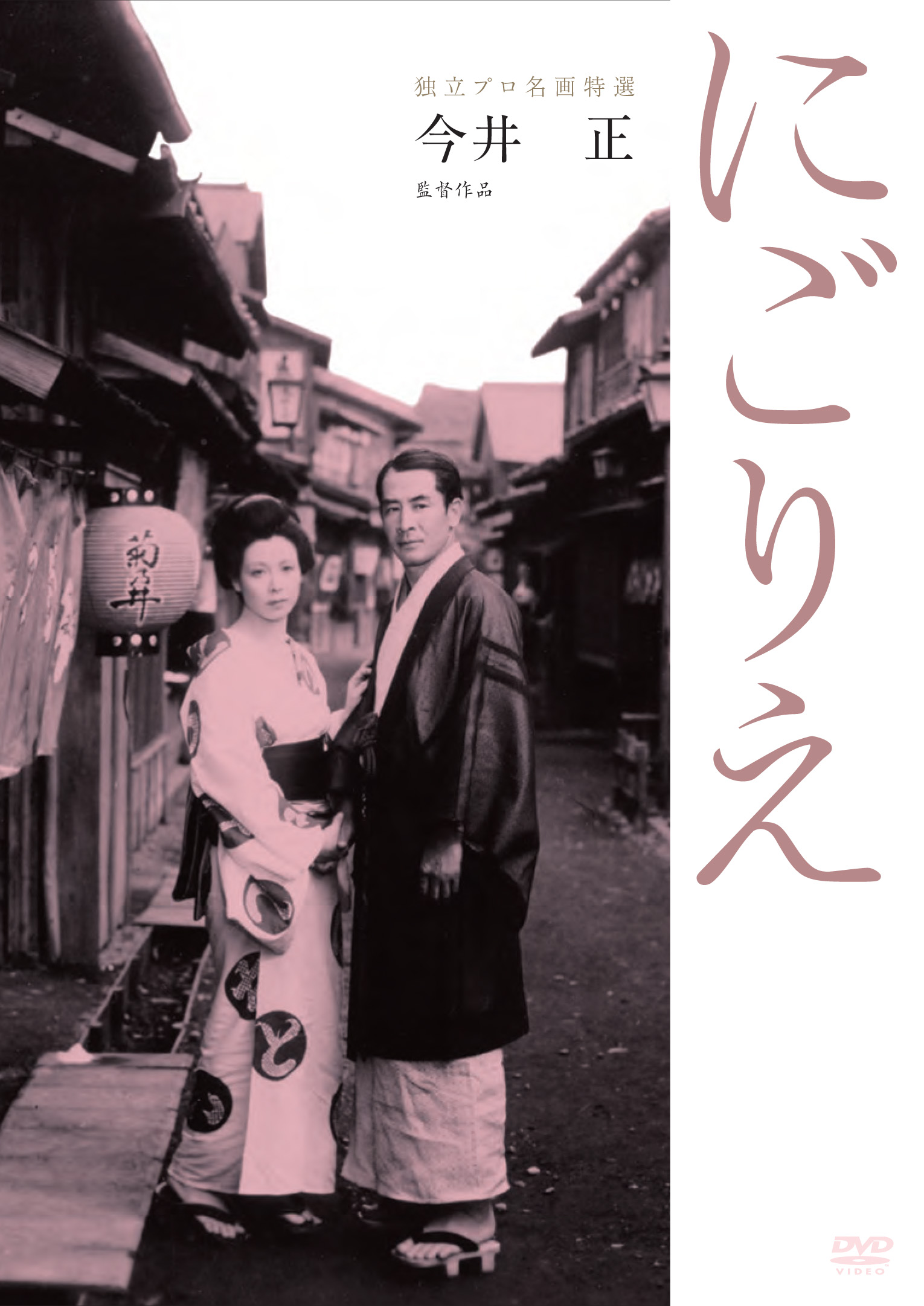
inlet of muddy water dvd coverTadashi Imai was among the greatest directors of the golden age though his name remains far less known than contemporaries Ozu or Mizoguchi. Despite beginning in outright propaganda films during the war, Imai is best remembered as a staunchly left wing director whose films are known for their gritty realism and opposition to oppressive social codes. An Inlet of Muddy Water (にごりえ, Nigorie) very much fits this bill in adapting three stories from Japanese author Ichiyo Higuchi. Higuchi is herself a giant figure of Japanese literature though little of her work has been translated into English. Like Imai’s films, Higuchi’s stories are known for their focus on female suffering and the prevailing social oppression of the late Meiji era which had seen many changes but not all for the better. Higuchi was not a political writer and her work does not attack an uncaring society so much as describe it accurately though her own early death from tuberculosis at only 24 certainly lends weight to the tragedy of her times.

In the first part of the film which is inspired by one of Higuchi’s best known stories, The Thirteenth Night, a young woman returns home to her parents, no longer able to bear living with an emotionally abusive husband. Oseki (Yatsuko Tanami) had been raised an ordinary, lower middle-class girl but, like many a heroine of feudal era literature, caught the eye of a prominent nobleman who determined to marry her despite their class difference. Life is not a fairytale, and so the nobleman quickly tired of his beautiful peasant wife, belittling her lowly status, lack of education, and failure to slot into the elite world he inhabits.

Oseki’s plight elicits ambivalent reactions in each of her parents though they both sympathise with her immensely, if in different ways. Her mother (Akiko Tamura) is heartbroken – having long believed her daughter to be living a blissful life of luxury, she feels terribly guilty not to have known she had been suffering all this time and believes Oseki has done the right thing in leaving. Her father (Ken Mitsuda), however, also feels sad but reacts in practicality, pointing out that to leave her husband now would mean losing her son forever and probably a long, lonely life of penury. He, somewhat coldly, tells her to go back, grin and bear it. Oseki can see his point and considers resigning herself to return if only to look after her son.

On her way home she runs into a childhood friend whom she might have married if things had not turned out the way they did. “Life gets in the way of the things we want to do”, she tells him by of explanation for not staying in touch. Rokunosuke (Hiroshi Akutagawa), once a fine merchant, is now a ragged rickshaw driver, bereaved father, and divorcee. Like Oseki his life is a tragedy of frustration with the added irritant that he and Oseki might have been happy together, rather than independently miserable, if an elite had not suddenly decided to interfere by crossing class lines just because he can rather than out of any genuine feeling.

The callousness of elites is also a theme in the second story, The Last Day of the Year, in which a young maid, Omine (Yoshiko Kuga), works for a wealthy household dominated by a moody, penny pinching mistress whose mistreatment of her staff is more indifference than deliberate scorn. Omine’s uncle, who raised her, has fallen ill. At the beginning of his illness he took out a loan but he’s got no better and still needs to pay it back so he asks Omine to ask the mistress for an advance of the paltry sum of two yen in the hope that his son will be able to enjoy a new year mochi like the other kids. The mistress says yes and then changes her mind, leaving Omine to consider a transgressive act of social justice.

Where The Thirteenth Night and The Last Day of the Year pointed the finger at uncaring elites, Troubled Waters broadens its disdain to the entire world of men in focussing on two women caught on either side of the red light district – Oriki (Chikage Awashima), a geisha stalked by a ruined client, and the client’s wife, Ohatsu (Haruko Sugimura), who endures a life of penury thanks to her husband’s geisha obsession. Oriki’s sad story is recounted to a wealthy patron (So Yamamura) who is more fascinated in learning the secrets of her soul than her kimono, but like many of her age it begins with parental strife, orphanhood and perpetual imprisonment as a geisha wondering what will become of her when her looks fade and she’s no longer number one. She has no control over the men who spend time with her but is worried by Gen (Seiji Miyaguchi) who ruined himself buying her time and now stalks her in and around the inn. Infatuated and obsessed with Oriki, Gen has turned against his noble wife Ohatsu who is working herself to the bone to support the family while Gen has resorted to a life of casual labour but rarely does much of anything at all.

Recalling Higuchi’s famous diary, Imai opens each of the segments with a brief voiceover detailing the inconsequential details of the weather with a world weary, often melancholy tone as the writer laments too much time spent on fiction and resolves to tell the story of the world as it really is. There is no real connection or overarching theme which unites the three stories, save for the continued suffering of women at the hands of men and the society they have devised. Oseki must return to her abusive husband, Omine will continue to work for her heartless mistress, and Ohatsu will have to make do on her own after being so thoroughly let down by her husband. There is no recourse or escape, no path forward that will allow the women to break free of their oppression or even to learn to be free within it. Each of the stories is bleak, ending on a note of resignation and acceptance of one’s fate as terrible as that may be but Imai’s ending is most terrible of all, reminding us that today is simply another day and the heavy atmosphere of dread and oppression is certain to endure as long as we all remain resigned.


Screened at BFI as part of the Women in Japanese Melodrama season.

The Affair (情炎, Kiju Yoshida, 1967)

the affair 1967After leaving Shochiku and forming an independent production company with his actress wife Mariko Okada, Kiju (Yoshishige) Yoshida continued in the Shochiku vein, after a fashion, through crafting what came to be known as “anti-melodramas”. Taking the familiar melodrama a studio like Shochiku was well known for, Yoshida transformed the material through radical cinematography designed to alienate and drain the overwrought drama of its empty emotion in order to drive to something deeper. The Affair (情炎, Jouen), released in 1967, is just such an experiment as it paints the cold and repressed world of its heroine in steely black and white, imprisoning her within its widescreen frame, and setting her at odds with the younger, more liberated generation who get their kicks through groovy beatnik jazz and an eternal party.

Oriko (Mariko Okada) is a married, middle-aged woman who has never been able to find fulfilment with her successful executive husband Takashi (Tadahiko Sugano). The marriage has long been cold and Oriko has discovered that her husband has a younger mistress leading her to seek a divorce but Takashi will not give her one. Her one confidant is a poet and sculptor whom she first met as her mother’s lover – something she tried to put a stop to. Oriko’s mother died a year ago in a traffic accident though she’d long been a heavy drinker and Oriko is convinced her mother was probably drunk at the time of her death. Aside from a drink and poetry habit, Oriko’s mother also had a taste for love – Mitsuharu (Isao Kimura), now an odd kind of friend, was merely one of her many lovers. Oriko’s intense disgust of her mother’s “decadent” lifestyle has left her with a deep seated repression, unable to allow herself to experience any kind of pleasure in case she too succumbs to a life of base desire.

Yoshida imbues Oriko’s life with a kind of dread and stillness, defined by its emptiness and sterility. At odds with her mother while she was alive, Oriko cannot let her go even in death. Yet she is not ready to break through to the new post-war world inhabited by her hippyish sister-in-law Yuko (Shigako Shimegi) and her well to do friends. Oriko dresses in western style for her office job but sticks to kimono at home and on the move, hers is an old fashioned world of propriety and elegance but the gesture is less conformist than rebellious – she is in revolt against herself as she represses and refuses her desires.

Despite her inability to adapt to married life with her husband, Oriko is eventually awakened by witnessing her sister-in-law’s quasi-rape by a local labourer. Originally reluctant, Yuko eventually gives in and allows the labourer to have his wicked way with her while, unbeknownst to her, Oriko watches through a frosted window. Later she finds herself setting off through the dark and mysterious night to the shack where the labourer takes refuge to warn him off trying anything with Yuko again only to find herself succumbing to his “charms”.

The encounter is a shocking one which ultimately destabilises Oriko’s entire personality. Having spent so long repressing herself, Oriko is not sure what to do – only that she still doesn’t want her husband and may be in love with an equally problematic suitor in the man who had been a lover of the very woman she was so desperate not to become. Yet Oriko must finally accept that she is not so different from the mother she despised, feeling the same desire and the same need even if her deepening self loathing makes pleasure a knife which wounds.

Mitsuharu has long been in love with Oriko but unable to express himself firstly through the taboo of having been intimate with her mother and then because of her marriage. The two have become awkward friends as Mitsuharu tries to help Oriko navigate her marital problems only daring to hint at his true feelings as Oriko details her frustrations with her husband. A sculptor by trade and a poet in soul, Mitsuharu chips away at Oriko’s reserve like one of his sculptures, literally opening her up and exposing her true form to the air. Eventually crushed by his own desire, Mitsuharu may be robbed of a direct connection to the very force which has come to define this recent stage of Oriko’s life but this only reinforces her devotion to him. Leaving a final poem for her unpoetical husband, Oriko writes the words “this flower, still vital, resigns herself to her fate” as she acknowledges her desires but subsumes them into her love for Mitsuharu rather than repressing them into herself.

Yoshida’s camerawork is once again astounding, marooning his disparate cast inside their own individual space, unable to connect with each other or the outside world. Framed in mirrors and windows, caught alone among a crowd of indifferent passengers on a bus, separated by shoji, Yoshida’s characters are endlessly divided but the prisons are all of their own making.


Original trailer (Traditional Chinese subtitles only)

https://www.youtube.com/watch?v=6Y8Xb-IZtE0&t=3s