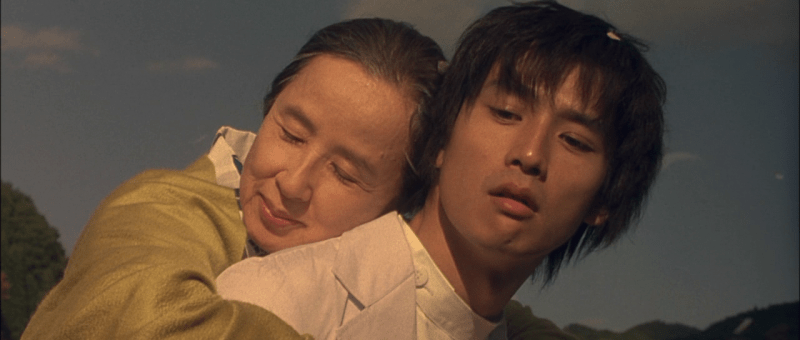
The Guard From Underground (地獄の警備員, Kiyoshi Kurosawa, 1992)

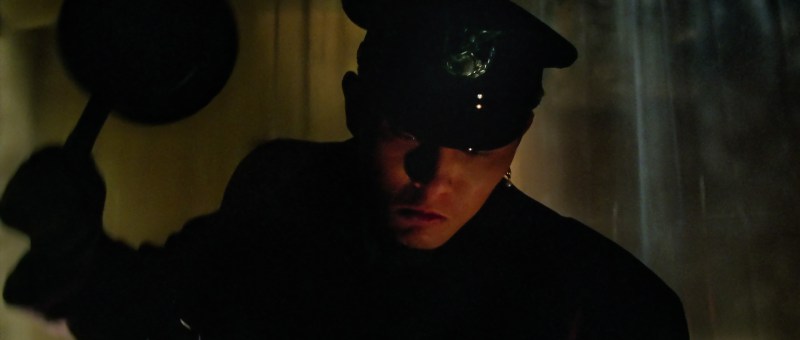
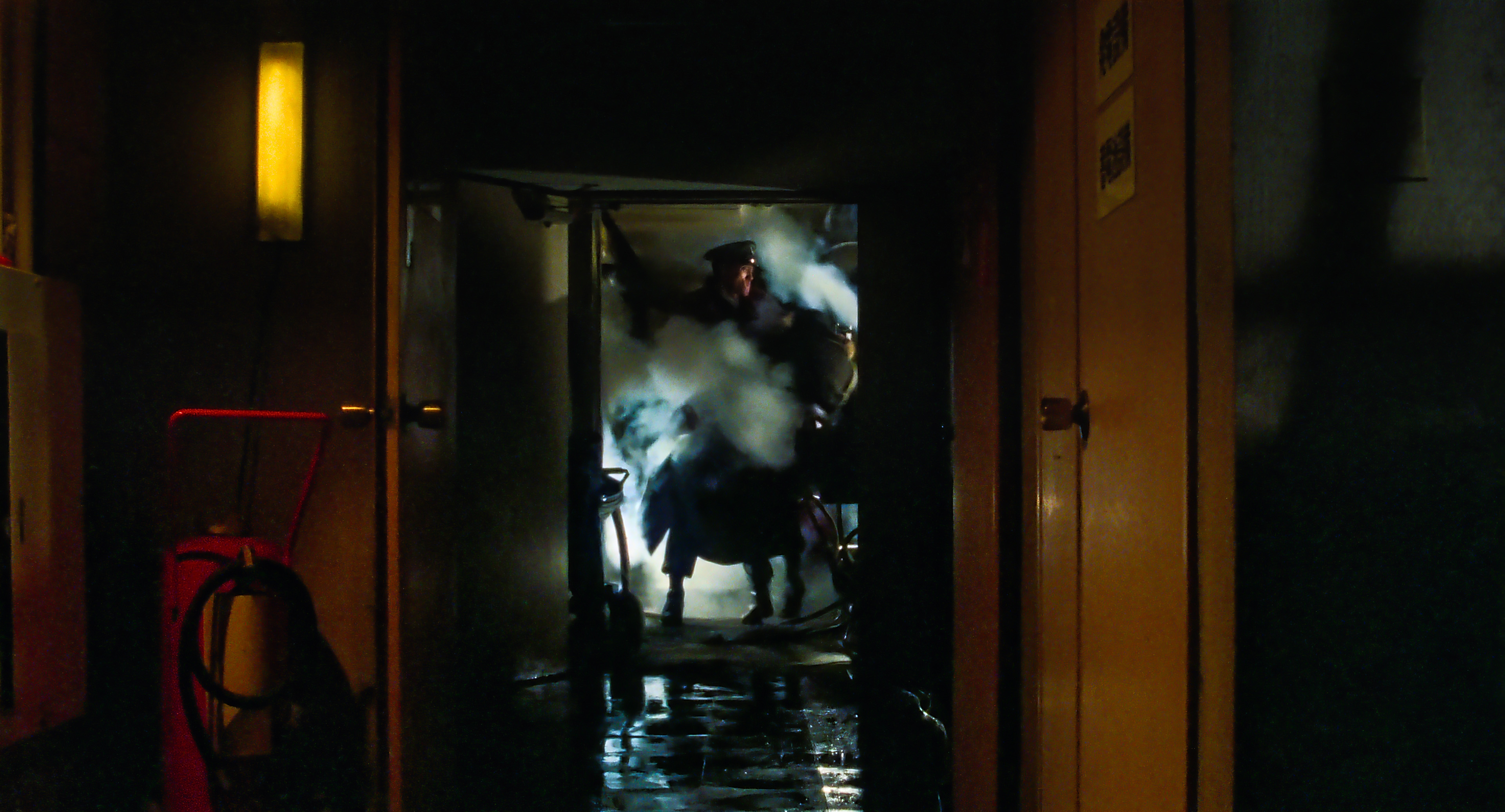
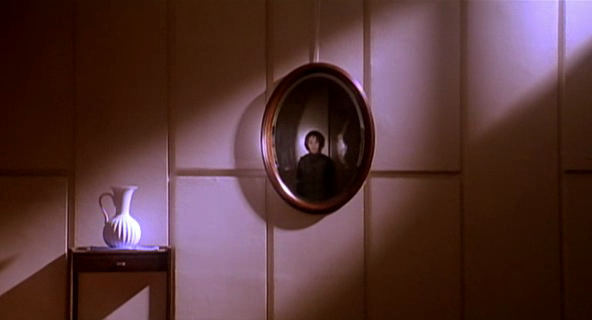
Ever feel like your job is trying to kill you? Released at the tail end of the Bubble era, Kiyoshi Kurosawa’s The Guard from Underground (地獄の警備員, Jigoku no Keibin) positions an office building as an industrial hell complete with a demon living in the basement but grimly suggests it’s just one of many hazards to be aware of for a woman in the corporate environment. Then again, the hellish guard himself has a sorrowful look in his eyes that speaks of true loneliness and might evoke pity if only in the fatalistic inevitability of his office-bound killing spree. 

It has to be said, Akebono Trading should have another look at its hiring procedures through in any case there’s something odd about this building which feels more like an abandoned hospital than a place of business while we might also wonder why we’re seeing signs for cargo depots and engine rooms and staff getting locked in the filing room is apparently not an uncommon occurrence. The new security guard has the same name as a former sumo wrester acquitted of the murders of his stablemate and lover on the grounds of temporary insanity, Fujimaru (Yutaka Matsushige), and is himself a hulking presence, tall but of medium build so who knows if it’s really the same guy or just the office rumour mill going into overdrive.  

Meanwhile, the other new recruit is a refined young woman, Akiko (Makiko Kuno), who’s been brought on as an art expert to help a new division recently diverted into prospecting with art sales to assess what is and isn’t a fair market price for a priceless piece of art. As Akiko admits, she’s not well placed to give that information because her background is in curation so she’s not particularly well versed in the collector market but presumably the job pays a bit better than the museums sector so she’s trying to do her best. Her new boss, Kurume (Ren Osugi), is a bit of a weirdo (like all the other men in the building) and crassly remarks that paintings like women have no value if there’s no buyer while she struggles to understand what the point of her job is. Meanwhile we’re left to wonder if Section 12 is actually a real department at all or a shady enterprise set up to help the enigmatic boss, Hyodo (Hatsunori Hasegawa), improve his investment portfolio which will probably serve him well when the bubble finally bursts. 

It’s tempting to read Fujimaru as a personification of corporate culture slowly picking off the employees and largely doing so by means of the building itself, electrocuting them by forcing their hand on the circuit breaker, bashing one inside a locker, or otherwise using his security guard’s truncheon to bludgeon them to death. To begin with, it seems as if he’s developed a fondness for Akiko and while that may be true in the same way King Kong develops a fondness for Fay Wray, it soon becomes clear that he isn’t in fact trying to protect her by taking out all the skeevy guys but seemingly killing for no reason. He looks a painting of Goya’s Saturn Devouring His Son with fascination, again hinting at his nature as the personification of capitalistic corporatism devouring the employees who might one day overthrow him, yet also lends the guard an eerie, mystical quality suggesting he merely enjoys the act of carnage though he does not actually eat anyone (that we see). More than that he seems almost like Frankenstein’s Monster, somehow lonely in identifying his otherness as he eventually confesses to Akiko remarking that “desolate time” flows through him unlike her “kind”. As he leaves, he pleads not to be forgotten. 

Akiko defeats him by refusing to believe his story and declaring herself disinterested in his truth possibly stood in good stead by the constant necessity of evading the attentions of the men around her such as those of Kurume who starts off giving paternalistic advice about looking after her parents and the preferential savings rates on post office accounts before randomly taking off his trousers. Anticipating his later career, Kurosawa makes the office a place of lurking dread and anxious eeriness only deepened by its industrial aesthetics along with the tiny windows leaking apocalyptic lighting from the oblivious outside world now cut off except for the new/old teletype text and ironic benefits of international time zones. “Traffic’s hell this time of day” a taxi driver chirpily advises, ironically delivering his passenger straight into its fiery depths. 


The Guard From Underground is released in the UK on blu-ray on 25th September courtesy of Third Window Films.

Trailer (English subtitles)

Doing Time (刑務所の中, Yoichi Sai, 2002)

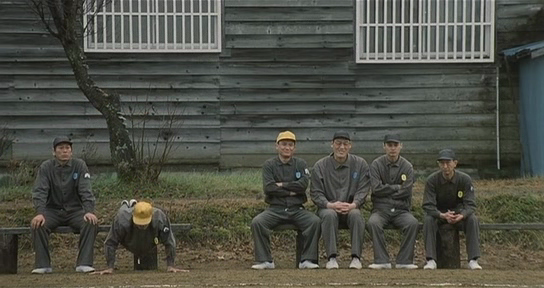
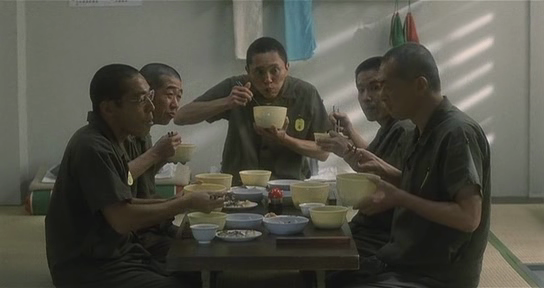
Who ever thought that life in prison could be so…peaceful? Adapted from the autobiographical manga by Kazuichi Hanawa, Yoichi Sai’s 2002 drama Doing Time (刑務所の中, Keimusho no Naka) is a slice of life dramedy somewhat typical of the early 2000s save its unexpected setting in a state penitentiary. Unlike the average prison movie, the main thing that Hanawa discovers is that life inside is incredibly dull, yet he approaches his brief sojourn in this other world with anthropological precision observing and mimicking the behaviour of his fellow prisoners while making the most of this hopefully once in a lifetime experience reflecting that he’ll likely never have the opportunity to wear such worn out undergarments ever again. 

A quiet man already in middle age, Hanawa (Tsutomu Yamazaki) is no dangerous criminal merely a firearms enthusiast who liked to fire modified pistols into bottles of water. He’s got three years for illegal possession of weaponry and explosives, which seems to be quite a harsh penalty considering another man is doing seven for murder after shooting a man he says waved an axe at him when he went to collect a debt. There are clearly men who have committed violent crimes in Hanawa’s immediate vicinity, yet this is not a traditional tale of prison gangs and factional infighting, the only violence we witness concerns one prisoner who appears to have broken the rules accidentally in thoughtlessness or ignorance rather than direct rebellion. Rather it is, ironically enough, almost like a summer camp in which Hanawa and his four cellmates attempt to amuse themselves during the little free time they are offered for contemplation and relaxation. 

Even so, every inch of the prisoners’ lives is micromanaged by the guards from the way they walk to when they are allowed to move or speak. So entirely stripped of their dignity are they, that they must ask for permission even to use the toilet in their own cell while in solitary confinement and dutifully report back once they’ve finished. The communal squat toilets at the back of the workshop where Hanawa works crafting wooden tissue boxes are entirely open with only knee-height doors on each stall for privacy. The prisoners’ days are tightly ordered, early to bed and early to rise with work in-between and only the promise of rest to look forward to on weekends and holidays. 

Ostensibly a shy man, Hanawa dislikes having to ask permission all the time though not so much as an affront to his autonomy as simply bothersome. Surprisingly he begins to warm to the rhythms and routines of prison life discovering in them a kind of liberation, finding his time in solitary for “unauthorised communication” the most enjoyable of his sentence free as it is of the necessity of interacting with other people. Like the bug collector in Woman of the Dunes, he finds freedom in simplicity appreciating the mindlessness of his absurd new job folding paper bags for medical prescriptions. He can abandon any sense of responsibility for his life, submitting himself entirely to the guards’ authority and surrendering the need for control, happy to allow his existence to be managed for him without needing to decide on anything for himself. 

That aside, it’s difficult to see what other purpose prison could serve for a man like Hanawa who merely had an unusual if potentially dangerous hobby save providing him with a unique life experience he seems to be treating as a kind of adventure. He may at times look down on his cellmates who have their own routines, but otherwise appears grateful for their input and advice regarding prison life often listening to their explanations for behaviour he regards as strange such as removing one’s trousers before entering the bathroom and then deciding to do as they do. With so little stimulation the mundane becomes exciting, each meal a culinary adventure listening to a cellmate recount his group treat of a film screening (Takeshi Kitano’s Kid’s Return) as if he had returned from exotic land relishing his description of the chocolate biscuits and cola he was given to snack on. Time is what Hanawa is doing, but he does at least gain the opportunity of experiencing life in slow motion learning to appreciate the beauty of a single dandelion while observing the absurdity of the world all around him which is perhaps no more absurd than that which exists outside. 


Adrift in Tokyo (転々, Satoshi Miki, 2007)

An aimless young man finds unexpected direction while walking the streets of the city with an unlikely father figure in Satoshi Miki’s meandering dramedy Adrift in Tokyo (転々, Tenten). These two men are indeed adrift in more ways than the literal, each without connections and seeking a concrete role in life while attempting to make peace with the past. But like any father and son there comes a time when they must part and their journey does indeed have a destination, one which it seems cannot be altered however much they might wish to delay it.

That Fumiya (Joe Odagiri) is aimless might be assumed from his unruly hair and the fact that he thinks tricolour toothpaste might be enough to jolt him out of his sense of despair but is confirmed by his matter of fact statement that he’s in his eighth year of university where nominally at least he’s studying law. His problem is that he’s amassed massive debts to a loanshark, Fukuhara (Tomokazu Miura), who breaks into his apartment and threatens him by shoving a sock in his mouth before leaving with his ID and driving licence. Fukuhara, however, later decides to make him another offer that he will cancel the debt and even give Fumiya even more money if only he will agree to wander around Tokyo with him for an unspecified time until they reach Kasumigaseki where he intends to hand himself in at police headquarters claiming to have recently murdered his wife. 

Like many things that Fukuhara says, it’s not clear whether or not he has indeed killed his wife though Miki frequently switches back to a scene of a woman who seems to have passed away and has been laid out in bed though she shows no signs of having died violently. Her zany co-workers keep thinking they should check on her seeing as she hasn’t shown up in days but something always distracts them and they end up forgetting about her entirely. The body appears to have been treated with love, hinting that if what Fukuhara says is true and this woman was his wife whom he killed in a fit of passion he has quite clearly thought through his plan of action rather than attempting to flee the scene and is perhaps only delaying the inevitable while walking out some other trauma in the company of Fumiya a surrogate son mirroring the description he gives of taking walks in the company first of his father and then of his wife. 

Fumiya deflects every question and agrees that he hates memories having burned his photo albums before leaving for university. He claims that he has no parents, describing the people who raised him as just that, as his mother and father both abandoned him as a child leaving him in a perpetual state of arrest which is one reason he’s still a student four years after most people have graduated. He never went to the zoo or rode a rollercoaster or called a man dad and seems to think of himself as nothing much of anything at all. Yet the fake can sometimes be more real than the real as he eventually discovers becoming part of an awkward family unit with Fukuhara’s “fake” wife (Kyoko Koizumi) he used to accompany to weddings as a paid guest, just beginning to enjoy being someone’s son when Fukuhara decides he’s reached the end of his road. 

There is a sense that everyone is chasing the ghost of someone else or perhaps even themselves, Fumiya finding shades of the father who abandoned him in career criminal Fukuhara who tells someone else that he once had a son who died in infancy, and seeing something of his mother in fake wife Makiko discovering transitory roots in an unlived imaginary childhood. But then there are also occasions of cosmic irony such as a coin locker bag being full not of money but of bright red daruma dolls and tengu noses, or a rebellious street musician meekly bowing to the police. A repeated gag says you’ll have good luck if you spot iconic actor Ittoku Kishibe out and about in the streets, and perhaps in a way Fumiya does in learning to make peace with his childhood self walking with Fukuhara who also comes to accept his failures as a man, a husband, and perhaps a father too. Filled with zany humour and a warmth underlying its melancholy, Adrift in Tokyo is a meandering journey towards a home in the self and a sense of rootedness in the middle of a sprawling metropolis filled with infinite possibility. 


Adrift in Tokyo is released on blu-ray in the UK on 12th December courtesy of Third Window Films.

Original trailer (English subtitles)

Tsuyukusa (ツユクサ, Hideyuki Hirayama, 2022)

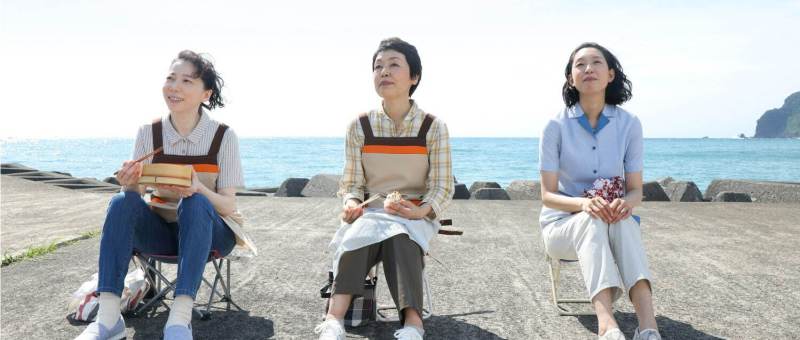
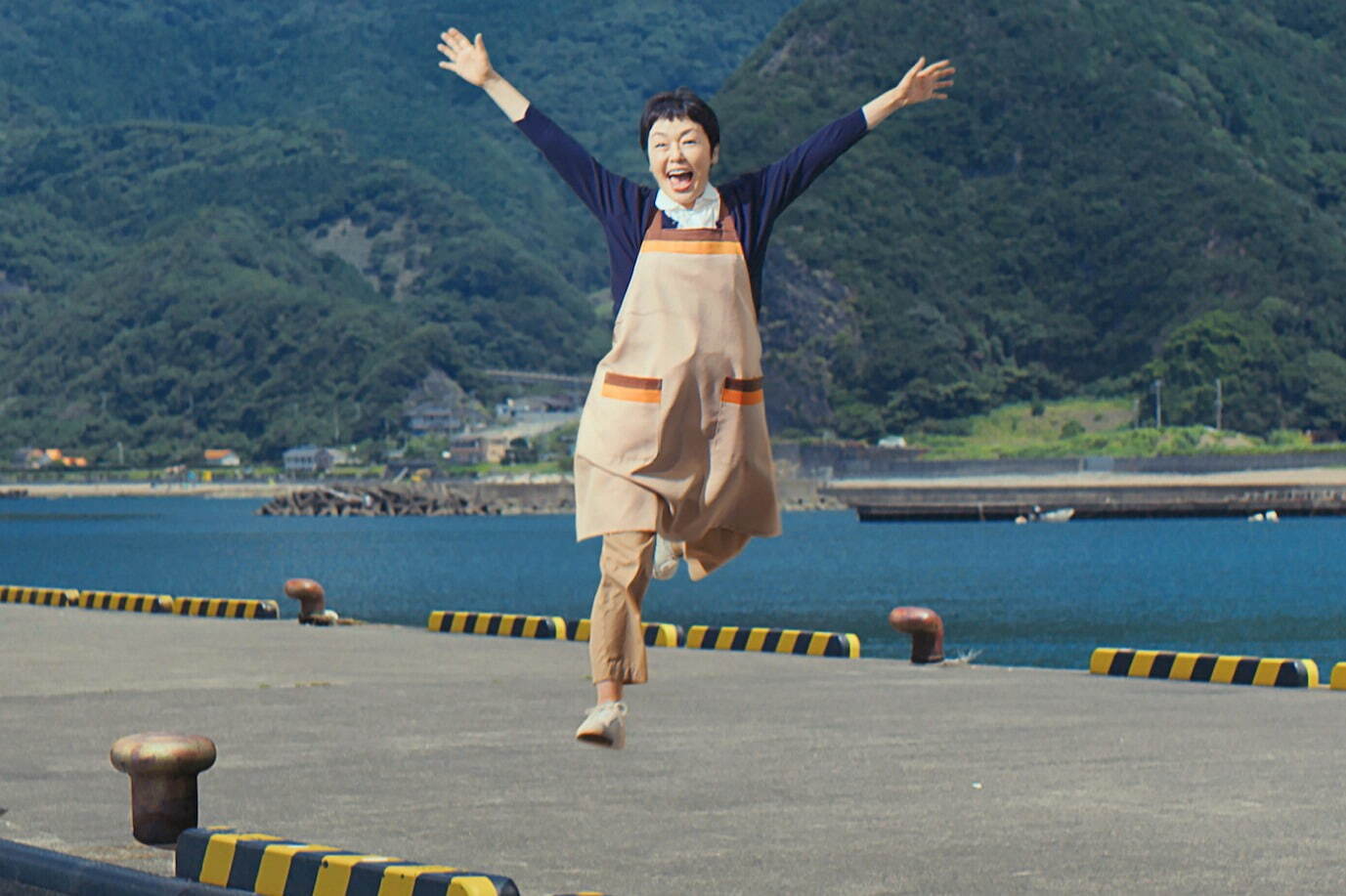
A middle-aged woman decides to embrace possibility after her car is hit by a meteorite in Hideyuki Hirayama’s charmingly quirky dramedy, Tsuyukusa (ツユクサ). Though dealing with difficult subjects such as grief, depression, alcoholism, and loneliness, a spirit of warmth and generosity shines through in the quiet seaside town as its various inhabitants each in their own way find themselves pondering new beginnings and while discovering that change may be scary it’s worth taking the risk for greater happiness. 

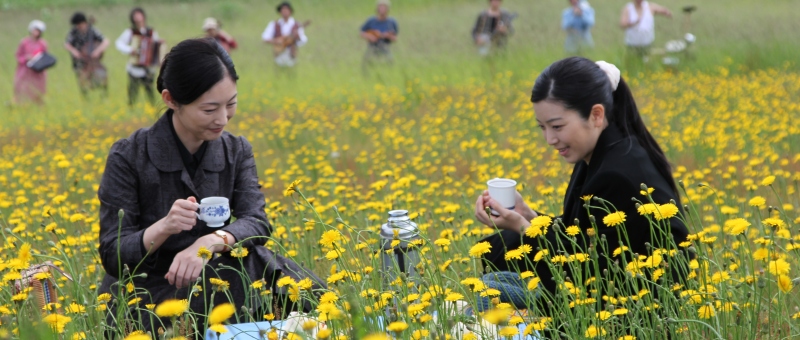
49-year-old Fumi (Satomi Kobayashi) lives in a quiet village by the sea and works in a textile factory where the atmosphere is laidback and collaborative. For poignant reasons only later disclosed she’s formed a close relationship with her friend’s son Kohei (Taiyo Saito) who is obsessed with all things space. It’s Kohei who decides that whatever it was that hit her car while she was driving home one evening was probably a meteorite and declares that Fumi must be one very lucky lady because the chances of witnessing a meteorite strike are all but infinitesimal. Fumi too seems to take it as a good omen, wearing the moon rock that Kohei finds at the beach as a pendant and symbol of the new possibilities in her life. 

Meanwhile it seems clear that Fumi is dealing with a series of things including a problem with alcohol which is why she’s been attending a local support group which is surprisingly large given the size of the town. Then again she’s not the only one dealing with crisis, her two friends from the factory are also at a point of transition. Kohei’s mother Nao (Kami Hiraiwa) is at odds with her husband (Kiyohiko Shibukawa) who has accepted a job offer in another town but suggests that she and Kohei stay behind in part because he is the boy’s stepfather and worries about uprooting him especially as Kohei does not seem to have fully accepted him as a father. Taeko (Noriko Eguchi) meanwhile has embarked on a secret affair with a Buddhist monk (rakugo performer Tougetsuanhakusyu) she somewhat transgressively met when he read the sutras at her late husband’s funeral. Fumi is gradually warming up to new love of her own in taking a liking to Goro (Yutaka Matsushige), a melancholy gentleman of around her own age whom she often sees sadly blowing the tsuyukusa leaves like a harmonica in the local park. 

The village is for them a gentle space of healing, many coming from the city following some kind of emotional trauma and looking for a quiet place to escape their sorrow. Even Kohei is caught at a point of transition, exclaiming that all the adults he knows are liars while attempting to deal with his first real heartbreak and contemplating moving away from all his friends and the town he grew up in with a man he doesn’t quite feel he knows. But then as Goro points out, the tsuyukusa grow everywhere and happiness is always in reach as long as you decide to go out and fetch it. Fumi may originally over invest in the symbolism of the moon rock, as if being hit by a meteorite really was an omen of change and a kind of good luck charm in itself rather than a funny thing that happened and caused her to reevaluate her life but finally realises that she didn’t need a meteor strike to give her permission to be happy. 

Even so the quirky seaside town does seem to be a cheerful place with a series of colourful characters even if many of them are lonely or displaced. Fumi’s boss is forever doing tai chi by the beach after apparently being left by his wife and unsuccessfully travelling to Taiwan in search of a new one. The guy who runs the local bar used to be a whaler and sends customers out on errands on his behalf, while the old man who runs the alcohol support group finds his job so stressful that it’s driving him to drink. “Just fix the pain, please. Then I can keep on going” Fumi tells a dentist though it’s a fairly apt metaphor for life. Reminiscent of the work of Naoko Ogigami of which Satomi Kobayashi is perhaps a representative star, Tsuyukusa never shies away from the darker corners of life but nevertheless allows its warmhearted protagonist to rediscover joy if only in the simple things. 


Tsuyukusa screened as part of this year’s Five Flavours Film Festival and is available to stream in Poland until 4th December.

Original trailer (no subtitles)

Ringu (リング, Hideo Nakata, 1998)

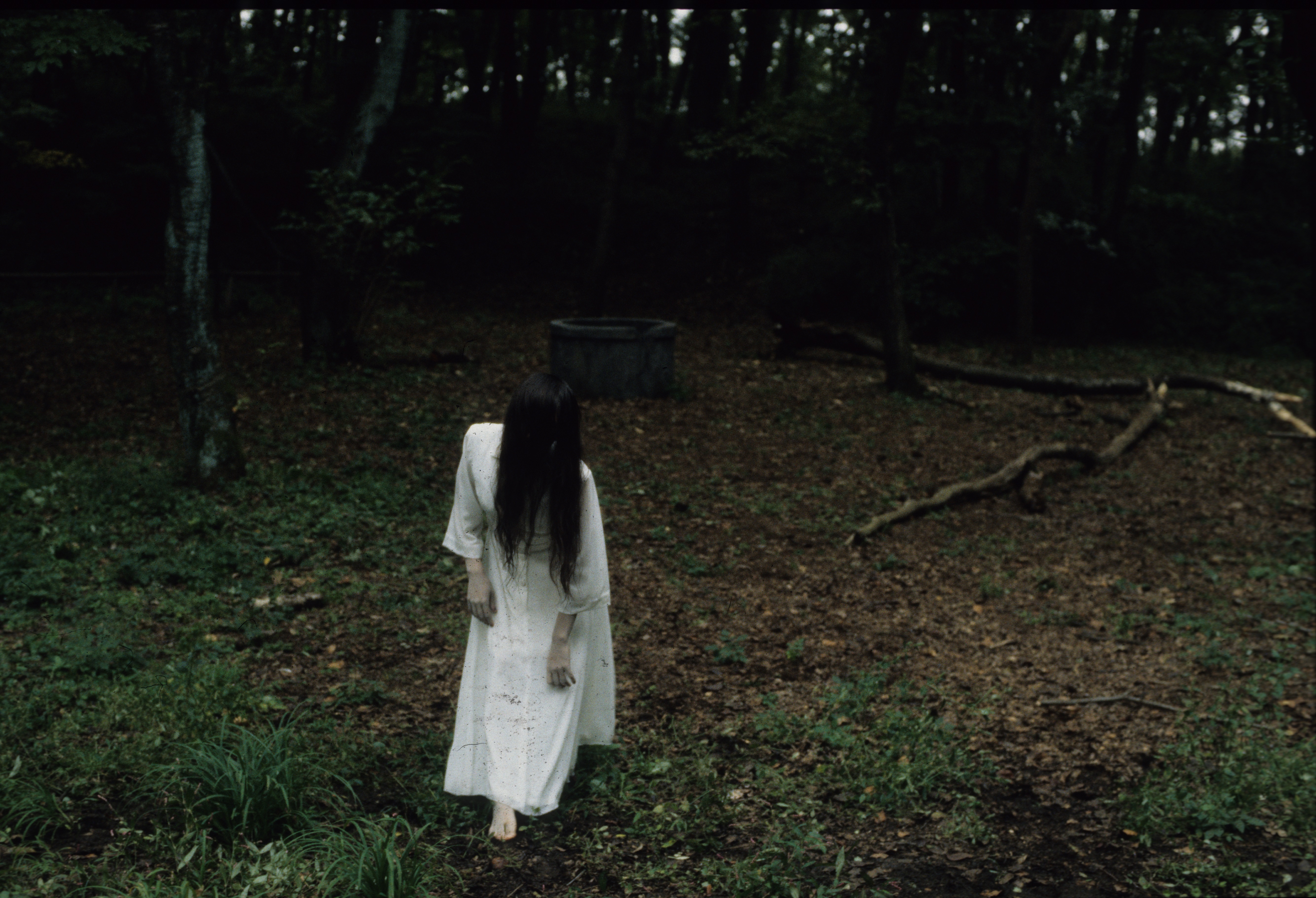
As the investigative duo at the centre of Hideo Nakata’s eerie supernatural horror Ringu (リング) begin to unlock the mystery of Sadako, we’re told that a strange woman who may have had some kind of psychic powers was loathed by those around her in part because of her habit of sitting and staring at the sea. Nakata opens the film with waves and often returns to them as if suggesting in this millennial horror that what we fear is a transmission we cannot see. In the end there may not be so much difference between the magic of an analogue TV broadcast and a message from another plane. 

In any case, perhaps the central message is that one should pay more attention to the words of those whose warnings are often dismissed on the grounds of their age and gender. Journalist Reiko (Nanako Matsushima), for example, doesn’t seem too invested in a video she’s making about a cursed video related by a trio of high school girls in a cafe who explain that they don’t personally know anyone who’s died after watching it but have been reliably informed by friends of friends who apparently do. As will later be discovered, the girls actually give Reiko crucial information but for whatever reason she does not remember it until coming to the same conclusion herself. In any case, it’s not until her own niece, Tomoko (Yuko Takeuchi), dies in mysterious circumstances that Reiko starts to wonder if this is more than a spooky story elevating the chain letter to new technological heights.

According to the urban legend, if you watch the cursed tape you’ll immediately get a phone call telling you you’ll die in seven days. The supernatural entity now synonymous with the film, Sadako, is manipulating these still analogue waves for herself. Sending her messages via television and telephone she is a literal ghost of the airwaves and as Reiko’s ex-husband Ryuji later puts it radiating her sense of rage in her own mistreatment, insisting that her story be known and that those who refuse to acknowledge it should not be allowed to survive. Just as Reiko should have listened to the high school girls, someone should have listened to Sadako and because they didn’t others now have no choice. 

In a sense Sadako represents this nascent fear of technological advancement. When Reiko answers her flip phone, it’s a reminder that there’s no escape from unwanted communication even if you can in theory try to switch it off. The girl with Tomoko when she died was driven out of her mind and now won’t venture anywhere near a television, as if you could escape Sadako’s wrath by merely keeping your distance from the portal. The two teenagers who died around the same time as Tomoko were in a car in the middle of nowhere, but cars have radios which receive radio waves. Sadako travels through the air, invisible until she chooses not to be. She may only have a direct line, but it is in one sense a call for help she’s issuing only in the very inefficient manner of a vengeful ghost whose rage has become indiscriminate or at least directed towards the society that wronged her and everyone in it rather than a single guilty party. 

In a certain sense, you can cure the curse only by spreading it. If everyone everywhere suddenly understood, learned Sadako’s painful history, then the curse would wither and die with no new hosts to go to which is perhaps what Sadako wants. Yet it leaves Reiko with a dilemma, knowing that to save the lives of those closest to her she may have to ask someone else to risk their life or even expose them without their consent. Throughout the film she’s been depicted as an imperfect mother, divorced and often leaving her small son Yoichi to fend for himself at home while the boy at one point walks past his own father in the street and does not seem to recognise him so absent had he been in his life. Through their shared quest to undo the curse, the pair in a sense reclaim their parental roles and repair their familial ties in working together to save their son’s life in contrast to the parental figures surrounding Sadako who may have done the reverse. Sadako frightens us because of her transgressive qualities, quite literally transgressing the barriers between ourselves and the stories we tell by crawling out of them and finding us here, on the other side of the screen, where we thought we were safe to remind us not to look away and to listen to those whose voices are all too often ignored. 


Ringu screens at Japan Society New York on Oct. 7 as part of the Monthly Classics series.

20th anniversary trailer (English subtitles)

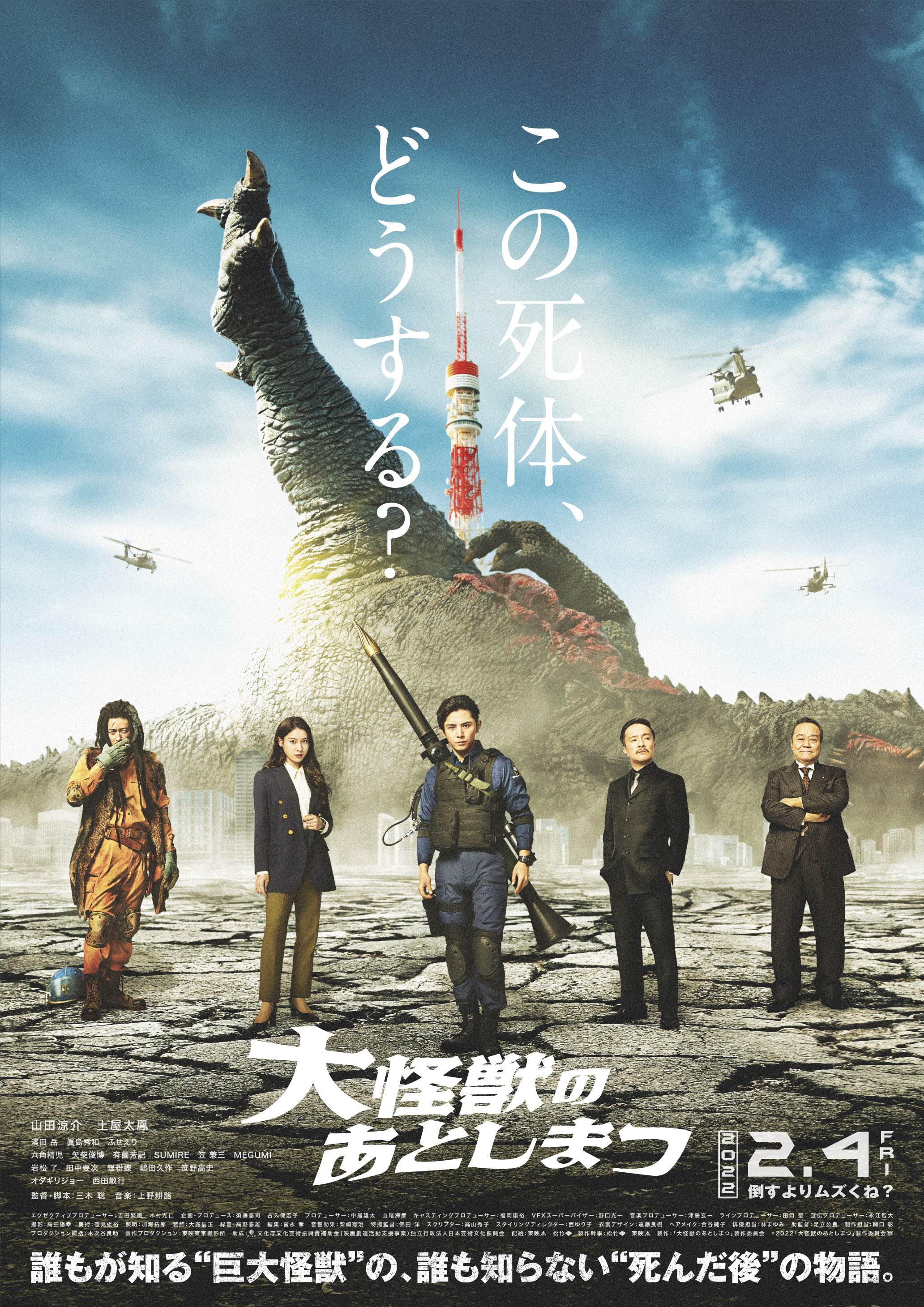
What to Do With the Dead Kaiju? (大怪獣のあとしまつ, Satoshi Miki, 2022) [Fantasia 2022]

The sudden appearance of a deus ex machina is usually where a story ends. After all, that’s the point. Whatever crisis is in play is suddenly ended without explanation. But what happens then? Satoshi Miki’s What to Do With the Dead Kaiju? (大怪獣のあとしまつ, Daikaiju no Atoshimatsu) steps in to wonder what it is that comes next after a giant monster has been defeated. Someone’s going to have to clean all that up, and in a surprising twist a fair few people are keen to take on the burden. Like Hideaki Anno & Shinji Higuchi’s Shin Godzilla, which the film is on one level at least attempting to parody, Miki’s kaiju comedy is a government satire this time casting shade on the nation’s pandemic response, though with considerably less nuance. 

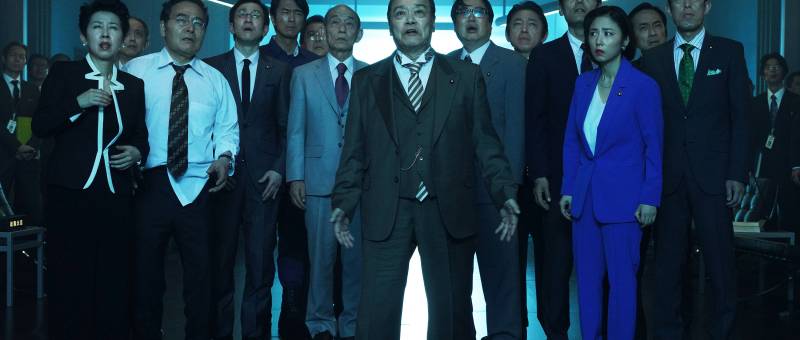
As the opening onscreen text, a nod to Shin Godzilla, and accompanying voiceover tell us Japan had been plagued by a kaiju but it suddenly died after being engulfed by a mysterious ball of light. While attempting to comedown from the constant state of anxiety under which they’d been living, the prime minister (Toshiyuki Nishida) is at a loss for what to do next especially as no-one really knows if the kaiju corpse is safe. While trying to ascertain whether or not the fallen kaiju might explode, spread dangerous radiation, or present some other kind of threat, government departments start fighting amongst themselves about whose responsibility the clean up effort must be all of them wanting the glory but not the work or expense. 

Some suggest turning the kaiju’s body into a massive tourist attraction and are therefore less keen on anything that involves destroying it while others think it should be preserved and put in a museum. The government has placed the SJF, a militarised science force set up after a terrorist incident, in charge but isn’t listening to much of what they’re saying. Meanwhile, evil moustachioed staffer Amane (Gaku Hamada) is playing his own game behind the scenes which also involves his wife, Yukino (Tao Tsuchiya), who was previously engaged to the leader of the SJF Taskforce, Arata (Ryosuke Yamada), before he abruptly disappeared after being swallowed by a mysterious ball of light three years previously. 

The political satire largely revolves around the indecisive PM, who at one point says he has no control or responsibility for what the other ministers do, and his anarchic cabinet meetings in which politicians run round in circles and insult each other like children. Not exactly subtle, much of the humour is indeed childish and scatological while one minister’s running gag is making sleazy sexist remarks even at one point accidentally playing a saucy video instead of displaying the latest kaiju data on the communal screen. The government experiences a public backlash in deciding to name the kaiju “Hope” which lends an ironic air to its rampage not to mention the necessity of its destruction, while the decision to declare the body safe for political reasons despite knowing it probably isn’t (“protecting the people’s right not to know”) casts shade on the pandemic response among other crises as do the constant refrains about getting back to normal now the crisis is over. 

Then again, there’s something a little uncomfortable going on with the film’s geopolitical perspectives, throwing up an angry politician on the screen with a mangled name who insists that the kaiju originated on their territory and must be returned to them in what seems to be an awkward allusion to Japan’s ongoing territorial disputes with Korea even while it’s suggested that the Americans wouldn’t mind getting their hands on the corpse either for purposes of experimentation and research. On the other hand it also becomes apparent that the Japanese military have deliberately destroyed civilian homes and cost lives in a reckless attempt to stop the kaiju which obviously failed. 

The closing scenes hint we may have been in a slightly different franchise than the one we thought we were dealing with, another deus ex machina suddenly arriving to save the day after the villains almost cause accidental mass destruction. The film’s problem may be that it’s the wrong kind of silly, relying on lowbrow humour while otherwise trying to conform to a blockbuster formula in which the kaiju corpse becomes the new kaiju but the battleground is bureaucracy. Ultimately the film’s prognosis is bleak. Even when the PM has achieved sufficient growth to realise he should make some kind of decision he makes the wrong call leaving everything up to a lone hero while fundamentally failing to come to any conclusion on what to do with a dead kaiju save trying to ensure it does not blow up in his face. 


What to Do With the Dead Kaiju? screened as part of this year’s Fantasia International Film Festival.

Original trailer (English subtitles)

Embalming (EM エンバーミング, Shinji Aoyama, 1999)

“Nothing can last forever” according ironically enough to an embalmer who feels it is her calling to preserve the bodies of the dead she says to help their grieving families, but does that actually help or is she actively preventing them from moving on in enabling their desire to hold on to something beautiful that is already gone? Jumping on the J-horror boom, Shinji Aoyama’s adaptation of the mystery horror novel by Michiko Matsuda Embalming (EM エンバーミング, EM Embalming) is another millennial mediation on the loss of bodily autonomy amid the corruptions of the late 20th century. 

A predominantly Buddhist funerary culture, embalming is rare in Japan which generally favours cremation over burial. As the opening crawl explains to us, the process may be familiar from the ancient Egyptian mummy, but was also put to use during the American Civil War in order to transport bodies of fallen soldiers home to their families. It also says that through technological advances, bodies can now be preserved for up to one hundred years though according to embalmer Miyako Murakami (Reiko Takashima), the best she can do is 50 days or perhaps she’s merely decided that after the the 49th day it’s inappropriate to hold on any longer. Apparently friendly with local policeman Hiraoka (Yutaka Matsushige), Miyako is called in when the 17-year-old son of a local politician, Yoshiki, is found dead on the pavement outside a tall building having fallen from above. Having no reason to suspect foul play, Hiraoka concludes it’s most likely to be a suicide. The reason he’s called Miyako is that the mother is out of her mind with grief and insisting her son be embalmed to preserve him as he was for all eternity though his father does not agree. 

Neither does local priest Jion (Kojiro Hongo) who sends a couple of his goons to pick Miyako up so he can tell her in imposing and ritualistic tones that she must stop the “evil acts” she’s “inflicting” on Yoshiki’s body, insisting that she’s spanner in the karmic wheel of life and death holding up the cosmos by refusing to let nature take its course in returning Yoshiki’s body to the universe. “What you are carrying out is a violation of the silence of Bodhisattva, and is therefore an act of evil!” he explains though Miyako is hardly about to be swayed from her life’s work and as we later realise Jion has motives other than the spiritual in mind. Nevertheless, it’s true enough that even if Miyako insists embalming gives dignity to the dead, Yoshiki has no further say as to what happens to his body or how much longer he remains in this world. There’s no way to know how the bodies Miyako works on would have felt about the prospect of being mummified or if they would be happy with the way their bodies may go on being used after their death. 

“When a human being dies, they become an object. Human flesh becomes food for maggots and bacteria and eventually the bodies disappear completely” according to another embalmer, Dr. Fuji (Toshio Shiba), who works with shady “death dealers” and in Miyako’s opinion betrays the art of embalming by frankensteining his bodies using a series of replacement parts to achieve the appearance of perfection. He seems to regard human bodies dead and alive as inanimate entities to be treated no differently from plant matter, recounting tales of his war trauma which seems to have permanently disconnected him from his humanity. The only reason Miyako has tracked him down is because Yoshiki’s head was severed and stolen in freak burglary and she’s received word he might know where it is. Yet to Dr. Fuji and other death dealers as Hiraoka had previously mentioned, the head is the least valuable part as he proves by simply dropping one in the bin while talking to an unfazed Miyako. 

Miyako may be as some accuse her “possessed by death” and attempting to exorcise her unresolved grief and mortal anxiety through the art of embalming in search of an eternity she does not really believe exists. But then as her assistant Kurome (Seijun Suzuki) reminds her, the dead cannot be brought back to life, “you can only be a flower while alive”. Dr. Fuji hints at a dark history that recalls the crimes of Unit 731, experimentation on living bodies and total disregard for the dignity of the dead, while an even older corruption seems to stem from shady priest Jion, “some rip-off faith healer targeting society’s political and economic echelons” as Hiraoka describes him. At times darkly humorous, Aoyama’s bleak drama is filled with existential dread and a sense of the uncanny as we see corpses twitch and flicker with the absence of life while Miyako meditates on an impossible eternity rejecting her powerlessness in the face of transience in favour of the simulacrum of existence in a world ruled by death. 


Inu-Oh (犬王, Masaaki Yuasa, 2021)

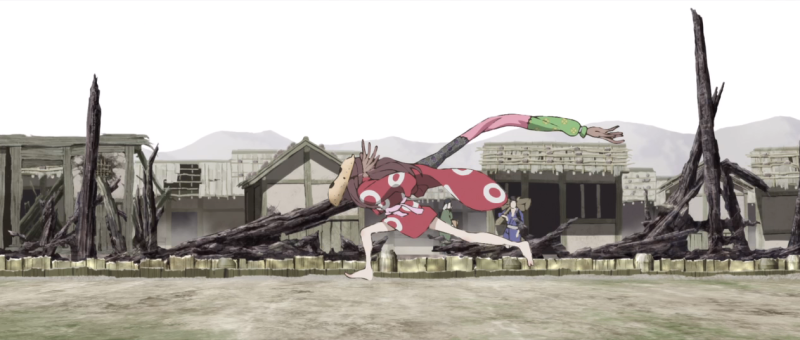
“Unity demands order” according to an ambitious politician near the end of Masaaki Yuasa’s stunning anime prog rock opera, Inu-Oh (犬王). Inspired by Hideo Furukawa’s novel Heike Monogatari Inu-Oh no Maki, Yuasa’s spirited drama is as much about the liberating power of artistic expression as it is about the danger it presents to those in power, while reclaiming the stories wilfully hidden in history or as the narrator puts it “stolen and forgotten” in order to exorcise a degree of historical trauma lingering in the cultural aura.

Set in the Muromachi period in which two imperial courts contested hegemony, the tale opens with the retrieval of a set of cursed remnants buried at the bottom of the sea after the battle of Dan-no-ura in which the Heike clan were famously defeated. Ashikaga Yoshimitsu (Tasuku Emoto) is convinced that possessing imperial treasures would lend credence to his claim, but their resurfacing creates nothing but misery leaving the boy who discovered them, Tomona (Mirai Moriyama), blind and his father dead. Setting off for Kyoto in search of revenge, Tomona is taken in by an elderly Biwa player and eventually runs into a strange creature wearing a gourd mask and behaving like a dog, striking up a friendship that later leads to the realisation that the boy is also cursed, haunted by the spirits of fallen Heike warriors desperate for their stories to be told. 

In true fairytale fashion, curse later begins to dissipate as the pair exorcise the ghosts by telling their stories never singing the same song twice but always in search of new songs to be sung. Tomona changes his name several times, adopting that of “Tomoichi” in keeping with the requirements of his Biwa school and later choosing for himself that of “Tomoari” in his partnership with Inu-Oh in emphasis of the fact that “we are here”. Yet as the ghost of his father reminds him, changing his name makes him difficult to find literally losing touch with his roots in becoming invisible to friendly spirits. He and the cursed boy Inu-Oh are interested in a new kind of Biwa that is opposed by the Biwa priests for its transgressive modernity some feeling that Tomona’s transformation with his long hair and makeup brings the profession into disrepute though the act proves undeniably popular with Inu-Oh the biggest star of the age. 

Having begun in the classical register with images resembling ink painting and a score inspired by traditional noh, Yuasa introduces electric guitar as the film shifts into rock opera, the pair’s stagecraft incredibly modern as they adopt all kinds of elaborate staging to add atmosphere to their tales including at one point a large lantern silhouette mimicking the big screen graphics of the present day. Yet Inu-Oh’s fame comes with a price. His popularity threatens both the pride of a jealous rival and the ambitions of the Ashikaga clan who fear his tales of the Heike are simply too bold and radical, later condemning them as an affront to the glory of the shogun and insisting that their official version must be the only record of the Heika warriors. 

The sense of freedom the pair had felt in their ability to express themselves through music and dance is quickly crushed by cultural authoritarianism, Inu-Oh reduced to a kind of court jester performing only for the lord while as the closing credits tell us becoming the biggest popular star of his age though now too forgotten along with his songs while his more elegant counterpart, Fujiwaka, is remembered for shaping the art of contemporary noh though there is perhaps something in Tomona’s defiant reclaimation of his name along with the essential right to choose it for himself that grants him a greater liberty in simply refusing to allow himself to be subjugated by feudal power. A psychedelic rock opera set in 14th century Japan that remembers even noh was once new and malleable, Inu-Oh insists on art’s danger in its capacity to challenge the status quo not only directly but through a series of internal revolutions born of the masks we choose to wear and those we choose to remove in the radical act of self-expression which is in its own way the truest form of liberty. 


Inu-Oh screened as part of this year’s Glasgow Film Festival 

International trailer (English subtitles)

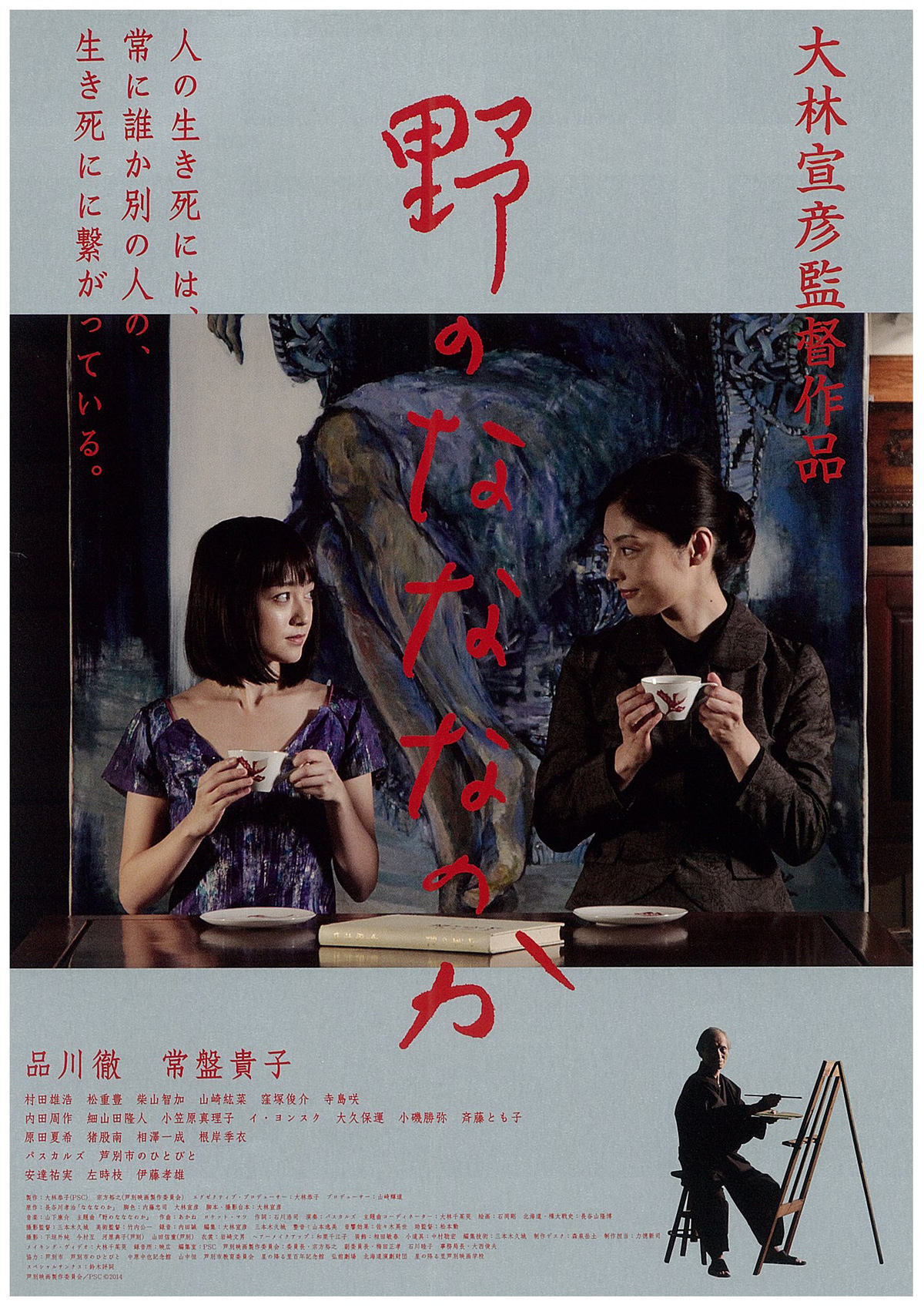
Seven Weeks (野のなななのか, Nobuhiko Obayashi, 2014)

“A death is a history” runs an opening title card in Nobuhiko Obayashi’s poignant existential drama, Seven Weeks (野のなななのか, No no Nanananoka). Returning to some of the director’s key themes, Obayashi’s adaptation of the novel by Koji Hasegawa takes its name from the traditional Buddhist period of mourning reminding us that life and death is a continuous cycle in which all lives are necessarily tied to one another. Some may later ask if those connections are also constraints, thinking perhaps of the sometimes onerous burdens of family, but even they later reflect on the necessity of human ties while contemplating the confluence of the eternal and the transient. 

The death we’re being asked to witness is that of 92-year-old Mitsuo Suzuki (Toru Shinagawa), a former doctor and owner of what some view as a junk shop, who is discovered collapsed by his granddaughter Kanna (Saki Terashima) only to die a few days later at the time shown on his permanently broken wristwatch which also happens to be the time the Great East Japan Earthquake struck in 2011. Soon his extended family begin to arrive beginning with long widowed sister Eiko (Tokie Hidari), grandson Fuyuki (Takehiro Murata) and his daughter Kasane (Hirona Yamazaki), and Kanna’s brother Akito (Shunsuke Kubozuka) while Fuyuki’s brother Haruhiko (Yutaka Matsushige) and his wife Setsuko (Tomoka Shibayama) will make it only in time for the wake. Throwing all into confusion is the unexpected arrival of a mysterious young woman, Nobuko (Takako Tokiwa), later revealed to be a nurse who once lived with the family and fulfilled the role of mother for Kanna and Akito whose parents were killed in a car accident while they were still young. 

Nobuko is in many ways the key to a mystery yet also a cypher, more than one woman at the same time as if in a sense resurrected from Mitsuo’s traumatic memories of love and war in the time of his youth. At his wake, men of a similar age spin their own war stories, Eiko reminding the young that their youth was war and perhaps they’ve a right to romanticise it for all of its terrible cruelty. Mitsuo didn’t go to the front but found himself a victim of shifting borders, ironically a descendent of settler colonisers as a native of Hokkaido travelling to the disputed island of Sakhalin in search of a friend and in the company of the young woman who was engaged to him but with whom he was himself in love believing the war was over only to discover no one had told the Russians and that wars do not end at the same time for everyone, or for some at all. 

In an ironic touch, great-granddaughter Kasane participates in an excavation of an old mine once staffed largely by forced Korean labour, an elderly woman plaintively singing Arirang over the dig site, only to later visit a similar location which has become the “Canada World” tourist attraction including a replica of the house from Anne of Green Gables. As she, Eiko, and Kanna reflect on the changes in the town there’s a minor sadness that the mine has closed which seems somewhat incongruous, even as the wholesomeness of coal from the ground is favourably compared with the dangerously intangible qualities of nuclear energy. Nevertheless, conflicted nuclear engineer Haruhiko later stakes his future on renewable energy, neatly echoing the sense of circularity in a continuous cycle of death and rebirth in which one life is necessarily tied to another and therefore to all lives. 

“We got along with the Russians in Sakhalin before the war” Mitsuo’s friend Ono (Takao Ito) laments, musing on the senselessness of conflict in its propensity to draw lines between people which divide rather than connect. Mitsuo’s death is indeed “a history tying the past and future”, a minor allegory for that of his nation as he contemplates lost love and the end to wandering that is death which leads in turn to new beginnings. “You want to look away. You want to forget about it”, Mitsuo confesses, “but you can’t. You have to remember so that it’s never repeated”. Through their 49-day odyssey, the family members begin to edge their way towards a less anxious if still uncertain future. “We might lose people but not hope” Kanna expounds, recommitting herself to the hometown spirit while opening up to the possibility of romance, while her brother does something much the same, as does her uncle Fuyuki even as his daughter conversely gives up on a possibly inappropriate crush to shift into a more mature adulthood. “We will go on peacefully” runs the final title card, a mission statement for the foundation of a better world. 


Seven Weeks streams in the US July 9 – Aug. 6 as part of Japan Society New York’s Tragedies of Youth: Nobuhiko Obayashi’s War Trilogy season in collaboration with KimStim.

Original trailer (English subtitles)

Our 30-Minute Sessions (サヨナラまでの30分, Kentaro Hagiwara, 2020)

“I want to move on” a grieving young woman explains, though perhaps ironically heading in the wrong direction. A youthful take on learning to live with loss, Our 30-Minute Sessions (サヨナラまでの30分, Sayonara made no 30-bun) finds a group of college hopefuls shattered by the unexpected death of a charismatic friend leaving them each lost, moving on in one sense but treading water in another uncertain what to do with the unfulfilled potential of their adolescent memories. Yet, through ghostly intervention, what they eventually realise is that nothing’s ever really lost, the echoes of those memories merely add to the great symphony life and all you can do in the end is learn to play along with it. 

That’s something introverted college student Sota (Takumi Kitamura) has however struggled with, unable to emerge from the trauma of losing his mother at a young age. As we first meet him, he’s subjected to a painful group interview for a regular salaryman job at which they ask about the memories he’s made with his university friends but rather than come up with a convincing lie, Sota honestly tells them he has no friends and that’s a good thing because it means he’s free to dedicate himself to work 100%. As expected, he gets a rather brutal rejection text before he’s even reached the lift, pausing only to rudely but perhaps accurately decline an invitation to join a WhatsApp group with the other hopefuls for the reason that it’s “pointless” because they’re unlikely to meet again. 

Sota doesn’t like to share his space with other people, but after noticing a walkman abandoned at a disused swimming pool finds himself a permanent host to Aki (Mackenyu), recently deceased lead singer of up-and-coming college band Echoll. Unlike Sota, Aki is charismatic and outgoing, every inch the rock star but less cocky than aggressively caring. It pains him that the thing he left unfinished has fallen apart in his absence and that all his friends seem to have given up their dreams and aspirations in life. For unknown reasons it seems that when Sota presses the play button on the walkman, it allows Aki to take over his body for the length of a single side of a cassette tape temporarily lending him the swagger and verve hitherto missing in his life even if he claimed not to particularly have missed them. 

In fact, Sota quite enjoys the arrangement because it means he doesn’t quite exist for the time the tape is playing, other people are no threat to him in his literal invisibility. Yet over time, a conflict obviously develops especially as the main thrust of Aki’s mission is healing his former girlfriend’s broken heart. Having lost her love of music, Kana (Sayu Kubota) has spent the last year largely inside working her way through a book of daily soup recipes that only her mother tastes. She claims she’s “moved on”, but in reality has done anything but caught in a kind of limbo unable to let go of her guilt and memories of lost love while conflicted as she bonds with the shy and introverted Sota himself it turns out also a frustrated musician.

A poignant reminder of Aki’s unfinished business as he and his friends attempt to find a degree of accommodation with loss the Japanese title translates more closely to “30 minutes to goodbye”, but there’s also something in the Japanese for playback (再生) equating to “again life” as it grants the late singer a temporary resurrection if one that lasts only the length of a set list. Perhaps a hipsterish affectation, the love of the outdated analogue recording mechanism, besides its practical advantages, provides a tangible proof of life albeit a fallible one in which every attempt to replay necessarily weakens integrity. Yet as a veteran later puts it, no matter how many times the tape is erased and overwritten, traces of previous recordings remain becoming in a sense just one of many layers that add depth and richness to the quality of the whole. 

The bandmates begin to realise that starting over doesn’t mean forgetting Aki or betraying his memory, they don’t have to leave him behind but can in a sense take him with them in the memories they share while Sota eventually begins to see the joy in human interaction and the power of connecting through music shedding his introversion in the knowledge that not all friendships are inauthentic and even if someone makes an early exit they leave traces of themselves behind on which others can build. A stylistically interesting take on the band movie with a fantastic soundtrack of convincing college rock hits, Our 30-Minute Sessions is a classic coming-of-age drama but one dedicated perhaps less to the art of moving on than to that of moving forward adding new notes to an ever expanding symphony of life.


Our 30-Minute Sessions streamed as part of the 2021 Japan Foundation Touring Film Programme.

Original trailer (no subtitles)