Fine, with Occasional Murders (晴れ、ときどき殺人, Kazuyuki Izutsu, 1984)

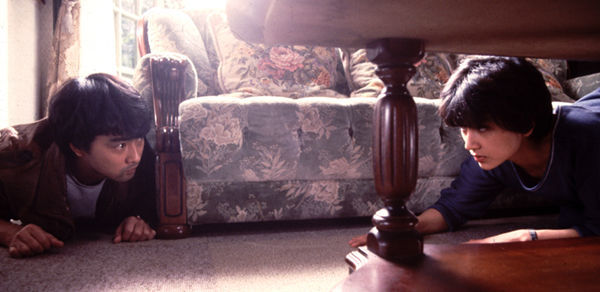
fine with occasional murders posterIn Japan’s ailing late ‘70s cinema market, studios were taking extreme decisions to get the public away from their TV sets and back into movie houses, yet one enterprising would-be media mogul had another idea. Haruki Kadokawa, a man with a publishing house and cinematic ambitions hit on a then innovative marketing strategy which amounted to a perfect storm for his own particular capabilities. Amassing a small stable of idols, he resurrected the studio system to produce a steady stream of youth movies adapting novels he also published and featuring title songs which his idols sang and he released on his record label. Hitting their heyday in the early to mid-1980s, Kadokawa’s idol films are a perfect time capsule of their pre-bubble setting in which, unlike the “seishun eiga” of twenty years before, upperclass young girls solved crimes and defied authority all whilst remaining prim, elegant and innocent. Fine, with Occasional Murders (晴れ、ときどき殺人, Hare, Tokidoki Satsujin) is a prime example of this gentle yet somehow dangerous world as its heroine returns home from studying abroad only to become embroiled in a conspiracy lodged firmly within her own home.

As the film opens, a middle-aged man and woman pay a nighttime visit to the site of a new factory, reminiscing about their youth and the small soap business they started thirty years ago which is now a full scale plastics film. The woman catches sight of someone leaving and stops to wish him goodnight only to suddenly wonder why he’s there in the first place. The reason becomes apparent when she steps forward a little and discovers the body of a young woman lying against her fence post. As if that weren’t worrying enough, factory owner Mrs. Kitazato (Mitsuyo Asaka) then starts getting threatening letters telling her she must go to the police and confirm that an innocent man is the killer or her daughter, Kanako (Noriko Watanabe), studying overseas, will be in danger. Mrs. Kitazato frets and worries but goes along with the killer’s demands to save her daughter only to be confronted with the dead body of the patsy as it lands right at her feet after being thrown from a police station window.

Suffering from a heart condition, Mrs. Kitazato remains unwell until Kanako comes home but then lasts only long enough to impart two important secrets – one being that the man Kanako assumed was her father may not have been, and secondly the whole story with the threatening letters and her belief that they were sent by someone in the family from whom she received a New Year card written in the same handwriting.

As usual Kanako is left to deal with all of this on her own, though slightly less usually remains within her own family home for the vast majority of the picture. Paid a visit by the police, Kanako comes into contact with their prime suspect in the first murder, Kamimura (Yosuke Tagawa) – a young man who had been a high school friend of the victim and had given her a place to stay while she was trying to escape her career as a hotel hooker. Kamimura becomes Kanako’s innocent love interest as she hides him in the secret room her mother had built behind a dresser in the dining room. Together the pair try to investigate the strange goings on in the Kitazato household whilst also exploring their very different backgrounds. 

Like many of Kadokawa’s idol movies (often adapted from the novels of Jiro Akagawa) the setting is both dark and hopefully innocent as Kanako is burdened with the knowledge that someone close to her is a murderer but faces her situation with cheerful resilience and determination. Whilst pursuing her spiky relationship with Kamimura, she’s also being haunted by the spectre of an arranged marriage to the dreadful son of a business associate, Masahiko (Akihiro Shimizu), who attempts to rape her with her mother’s body still still lying on the bed in the same room, and is also having an affair with their maid, Mari (Mariko Miike). Masahiko is also revealed as a prime suspect in the murders when another body is discovered in the living room with Masahiko standing red handed over it. The murder scenes (and there are more than you’d expect), are nasty, bloody and violent. Despite the innocence of Kanako’s wide open world, misogynistic killers lurk round every corner as do corrupt businessmen, untrustworthy servants, and enemies masquerading as friends.

As darks as it gets, the tone is always one of irony filled with bumbling policemen who form an odd double act in their humorous black and forth, running jokes about hard contact lenses and improbably large sandwiches, and the general whimsy of a young man’s dream of building a real flying bicycle. Despite being one of Kadokawa’s new “Sannin Musume” (alongside Hiroko Yakusushimaru and Tomoyo Harada), Noriko Watanabe played fewer leading roles than her two compatriots. Fine with Occasional Murders (released in the same year as Someday, Someone Will Be Killed), is her first big idol movie lead for which she also sings the theme song which has an almost identical title. She is, however, the archetypal Kadokawa heroine – steadfast, strong, confident, kind, and noble, calmly solving the mystery behind her own mother’s death mere days after losing her, figuring out that poor boys are probably OK, and that awful CEOs and their sons will always be awful. Valuable lessons indeed for increasingly wealthy 1980s teens. 


TV Commercial

And the song itself which has the same title as the movie only the last two characters are read differently – Hare, Tokidoki Kirumi
Rage (怒り, Lee Sang-il, 2016)

rage posterVillain, Lee Sang-il’s 2011 adaptation of a novel by Shuichi Yoshida, used a crime story to investigate the wider effects of social stigma and emotional repression – themes which are recurrent in the author’s work. Rage (怒り, Ikari) attempts to do something similar but its aims are larger, reflexively tacking the vicious cycle of social oppression and emotional repression in a society which actively suppresses the desire for expression in the aim of maintaining an illusion of harmony. A brutal, senseless killing has occurred and three suspects present themselves. The killer could be any one or none of them, but the fact of the matter is that when you cannot speak the truth, you cannot truly believe in anything or anyone.

In the blazing summer heat with its noisy cicadas and uncomfortable humidity, a young couple has been brutally murdered in their Hachioji home. There are few clues to be found save that the killer has painted the kanji for “rage” in blood on the wall. The police do, however, come up with a suspect and circulate a photofit which is anonymous enough to look like any youngish man who might make you feel uncomfortable for a reason you can’t articulate.

Meanwhile, a middle-aged man from Chiba, Maki (Ken Watanabe), anxiously wanders around Kabukicho until someone finds him and takes him to a brothel where his runaway daughter, Aiko (Aoi Miyazaki), has been working and has been very badly injured through her “eagerness to please her clients”. The father, trying to comfort his daughter who seems cheerful enough despite her ordeal, inwardly seethes with rage and is both relieved and worried when she begins a relationship with a secretive drifter, Tashiro (Kenichi Matsuyama).

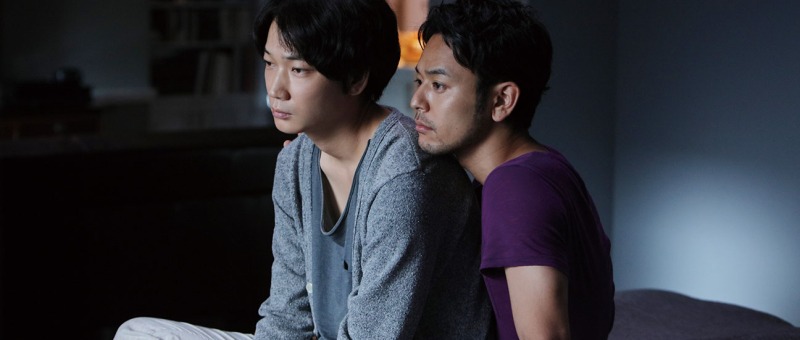
Back in Tokyo, Yuma (Satoshi Tsumabuki) visits a gay bathhouse and roughly forces himself on a nervous man hunched in a corner. Despite the slight unpleasantness of their meeting, the two men eat dinner together and Yuma invites his new friend, Naoto (Go Ayano), to live with him in his well appointed apartment despite knowing nothing more about him.

Further south, a teenage couple enjoy a day out on what they think is a deserted island but the girl, Izumi (Suzu Hirose), discovers a backpacker, Tanaka (Mirai Moriyama),  living in some local ruins. Strangely drawn to him, Izumi keeps meeting up with Tanaka but an encounter in the city turns sour when her friend, Tatsuya (Takara Sakumoto), works himself into a jealous rage. Trying to get the drunken Tatsuya to the ferry, Izumi is raped by GIs from the local military base.

The Okinawan episode is, in many ways the key. Tetsuya invites Izumi to see a movie in Naha but they’re really going to observe a protest about the continued presence of the US military bases. Tatsuya wanted to be there to see it but pressed for an answer he doubts protest will achieve anything. Izumi, after her brutal encounter, says the same thing. She doesn’t want anyone to know. “Protesting won’t change anything”. No matter what she says, nothing will be done, no one would listen, nobody really cares.

Or, perhaps they simply care about the wrong things. Aiko gets home from her horrible ordeal in the city but everyone knows what she did there; her “sordid” past is the talk of the town. Her father says nothing, because like Izumi he knows it will do no good, but still he berates himself for it and his internalised anger grows.

Izumi does not want the stigma of being a rape victim, and Aiko does not want the stigma of being a “fallen woman”, their secrets are already out, but Yuma is jealously guarding his – living as a cautious gay man with his life strictly divided, his true nature walled off from his professional persona. Too afraid to be open about his sexuality, he projects his sense of unease and discomfort onto Naoto – first going overboard by inviting someone he just met and knows nothing about to live with him and then refusing to let him in all the way. Yuma asks Naoto not to attend his mother’s funeral despite the fact they had been friends because he doesn’t want the awkwardness of deciding how to introduce his boyfriend to a set of relatives he doesn’t really know. What he doesn’t do is ask any questions about Naoto’s past, jumping to conclusions and angrily slinging accusations when he thinks he’s caught Naoto out in a lie but his reaction and subsequent behaviour only bear out his own insecurities in his inability to trust the man the loves.

Each of the trio begins to doubt their friends or lovers with little more to go on than a police photofit which only superficially resembles them. The suspicion, however, is reflexive. It’s born of a society in which one is obliged to keep secrets and emotional honesty is frowned upon. No one speaks the truth because no one wants to hear it – it will only bring more suffering with additional social stigma. Sooner or later, when all of these unexpressed emotions reach a critical mass, they will explode. Such crimes could so easily be avoided were it easier to live a more open, less fearful life, but as long as it is impossible to trust oneself, there can be no unguarded trust between people.

Neatly in line with the self-centred narrative viewpoints, Izumi’s rape is relegated to a plot device as she herself disappears from the screen only to return briefly in the final coda. The effects of the rape are then explored as they impact on Tetsuya and Tanaka whose self images of masculinity are (seemingly) damaged by their failures to protect her. Izumi’s rape is viewed as something that happened to the men, as if she were a car that was scratched or a jacket torn. Self-involved as this is, it plays into the central theme – no one cares very much about anybody else’s feelings until those feelings are visited upon them by means of violence.

The murder occurs essentially because of a betrayal followed by unbearable, unexpected kindness. A woman felt sorry for a man, and so she trusted him and was betrayed. Two parties fail to trust the one they love because of a failing in themselves, their own sense of personal inadequacy will not allow them to believe in the other person’s faith in them, while another misplaces his trust in his need to find an ally and confidant to feel less alone and powerless. Prevailing social stigmas, selfishness, and a need to maintain the status quo have left all running scared, craving connection but too afraid to engage. When the system won’t let you be, violence, of one sort or another, is an inevitable consequence.


Original trailer (English subtitles)

Independencia (Raya Martin, 2009)

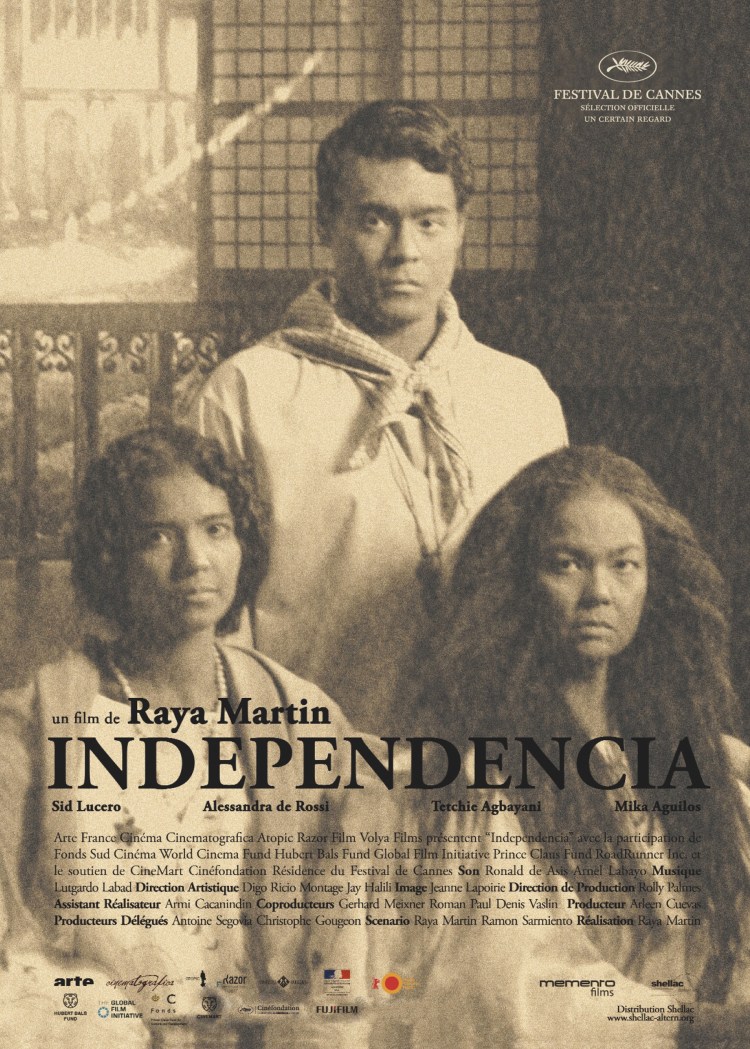
Independencia posterThough only 24 at the time of Independencia’s release, Raya Martin had already amassed a reputation as an ambitious iconoclast, a director of “slow cinema” who made a fast start on a wide-ranging series of films dealing with the complicated business of his nation’s history and identity. Like many Philippine arthouse directors, Martin’s work is necessarily bound up not just with history itself but with its mediation or more specifically how cinema reflects and refracts on these increasing complications.

Moving on from 2005’s A Short Film About the Indio Nacional, Independencia opens with a raucous street scene as a collection of local townspeople attempt to celebrate the longed for liberation from Spanish rule. The party is interrupted by gunshots. A middle-aged man looks off into the middle distance and exclaims that “they” are coming. The Philippines will not be free after all, it has merely swapped one master for another as the Spanish have sold it to the Americans, rendering their declaration of independence nothing if not premature.

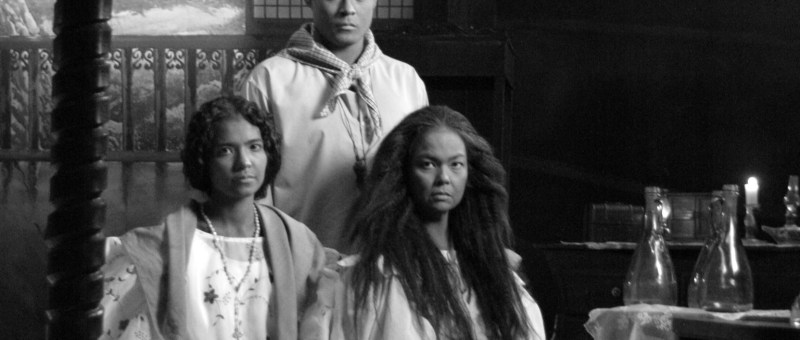
A tough middle-aged woman (Tetchie Agbayani)  is not prepared to wait around to be recolonised and orders her less forthright son (Sid Lucero) to accompany her into the jungle where they will live their lives away from the chaos of war with no masters but themselves. Mother and son discover a small hut apparently abandoned by Spanish colonists of ages past and adopt it as their own, growing their own crops (such as they can) and learning to live off the land as their ancestors had, a skill taken from them by the false promise of urban civility. Some time later the son discovers an injured woman (Alessandra de Rossi ) in the jungle, who seems to have been raped and beaten by American troops.

Gradually the mother, son, and putative daughter-in-law shed their colonial corruptions by exchanging their Spanish clothes for those of forest dwellers, the son’s hair now long, and the cross around his neck the only reminder of his former life while he tells his son (or, more precisely the son of the woman he found in the jungle he is raising as his own) altogether older tales of magic amulets and snake fighting ancestors, conjuring a new mythology from the ashes of the old.

Martin’s mythology is resolutely cinematic. Shooting in black and white academy ratio, he adopts the style and aesthetics of a early talking picture, aping the visual language associated with the new occupying forces (though perhaps retrospectively). After leaving the town, the mother and her son find themselves in is not a real jungle but an obvious stage set with a painted matte backdrop behind it. As the family (or families) make their lives in this artificial world the trees behind them begin to thin out, the threat of the outside world always encroaching on the “independence” they are seeking to build for themselves.

The film is split into two by the incongruous presence of a propaganda reel, shot on messy handheld and depicting an American soldier shooting dead a peasant boy who pretended to steal an egg from a marketplace as a joke. The soldier poses over the child’s body like a big game hunter while the vendor looks on appalled. The cheesy voice over reminds us that this should be “lesson to all those people who do questionable things justifying them as innocent jokes”. The troops, it assures us are “everywhere”, ensuring that the streets are safe in this “time of crisis”.

Meanwhile, the family can hear gunshots just as the revellers did in the beginning and they realise their days of independence are numbered. The boy, growing older, is curious about his world, having only the tales of his mother and father to go by, not understanding the danger that surrounds him. He is fascinated by a “golden figure” whose hair and body shine so brightly he can hardly see them, but the boy is also out of place here constantly lost in the jungle that ought to be his home. The son, now losing his sight, exclaims that strange things have entered the forest – wonderful and terrible things, but that the “one who is bathed in light” will protect them. 

Yet the figure which presents itself at the climactic moment is not one of light but of darkness, opaque and faceless. Left alone, the boy is faced with encroaching invaders on one side and a rapidly shrinking forest on the other. His choice is one of no choice, but he does, in a sense at least, choose his independence in the only way that is left to him. 


Available on R0 DVD from Second Run.

Original trailer (English subtitles)

Hanzo the Razor: Who’s Got the Gold? (御用牙 鬼の半蔵やわ肌小判, Yoshio Inoue, 1974)

Hanzo the razor who's got the gold posterAll things must come to an end, and so the third instalment in the Hanzo the Razor series, Who’s Got the Gold? (御用牙 鬼の半蔵やわ肌小判, Goyokiba: Oni no Hanzo yawahada koban) is the last. To be frank the central tenet is wearing a bit thin (not least because Hanzo’s been bashing away at it with a mallet for the last two movies), and though scripted by the previous film’s director, Yasuzo Masumura, direction has been handed to the less experienced studio director Yoshio Inoue. Consequently, Who’s Got the Gold? is the most obviously parodic entry in the series, camping it up in grand style as Hanzo (Shintaro Katsu) goes after a more obvious kind of vice in the form of greedy, entitled lords, corrupt priesthood, and a nation too obsessed with its past to survive in a rapidly modernising era.

Inoue opts for a purely theatrical opening as Hanzo’s two ex-con underlings, Devil and Viper, enjoy a spot of night fishing whilst dreaming about having enough money to head to the red light district. They get the fright of their lives when they think they see a creepy ghost woman emerging from the lake. Being Devil and Viper they panic and run home screaming to report this terrifying incident to their brave protector Hanzo. Hanzo is in the middle of his usual “tool polishing” routine but fancies paying a visit this mysterious lake because, well, it might be fun to try having sex with a ghost for once. Devil and Viper are very confused by this idea, but it’s par for the course with Hanzo and so off they go.

Of course, the ghost lady is not a real ghost so only part of Hanzo’s lusts are satisfied as he performs his normal sort of “special torture” on her and finds out that she’s part of an ongoing scam in which treasury officials have been skimming off some of the gold they’re supposed to be protecting. Sadly, Hanzo’s investigations hit a snag when the woman’s husband turns up and kills her for having been raped by Hanzo before promptly getting killed himself.

Hanzo does not approve of any of these goings on and fully intended to arrest the treasury officers if only they hadn’t gone and died first. Accordingly he reports all of this to his superiors but advises against prosecutions because he sympathises with the difficult position these men found themselves in. Being a samurai is not cheap and these lowly jobs are very badly paid – how are you supposed to maintain your house to the manner required without resorting to extreme measures when your lord is snaffling all the money and not paying his retainers what they’re owed. It will not come as a surprise that the lord didn’t want to hear this, and so Hanzo marks his card. It didn’t really help that Hanzo’s walk into the castle involved running a gauntlet of unfortunate samurai forced to kneel along the path all day just hoping that the lord would show them some favour. Among them was a old friend of Hanzo’s who receives a tactless offer of fixed employment if only he will give up a family heirloom that the lord has been admiring.

The gold smuggling subplot runs in parallel with another problem – a doctor whom the lord has ordered Hanzo to arrest because he was advocating the adoption of Western technologies, fearing that the nation was leaving itself dangerously vulnerable if it refused to modernise. The doctor, like the girl’s father in the first film, is dying of a terminal illness and so Hanzo thinks the sentence can wait. Hiding the doctor in his house he listens to his ideas and then comes to the same conclusion, allowing him to finish building a cannon to prove to the lord just how destructive these new weapons really are and just how dangerous it would be to fight them with only katanas and samurai spirit. Hanzo lives in interesting times, but this dilemma says something both about the precarious position of the samurai order in the face of increasing modernisation and about the 1970s background in which a small war was currently being waged against American imperialism.

As usual Hanzo refuses to bow. He will not give in to bullies or those who abuse their authority to add additional oppression onto an already oppressed populace which he has pledged his life to protecting. The contradiction of being a rapist so well endowed that afterwards no one seems to mind has still not been solved, but by this third instalment in the series the “joke” is so well worn as to receive little attention. Who’s Got the Gold? is weakest of the three adventures for Hanzo and his well conditioned razor but it has its charms, if only in the troublingly easy way that its central conceit has become so essentially normalised as to be barely noticed.


Original trailer (no subtitles)

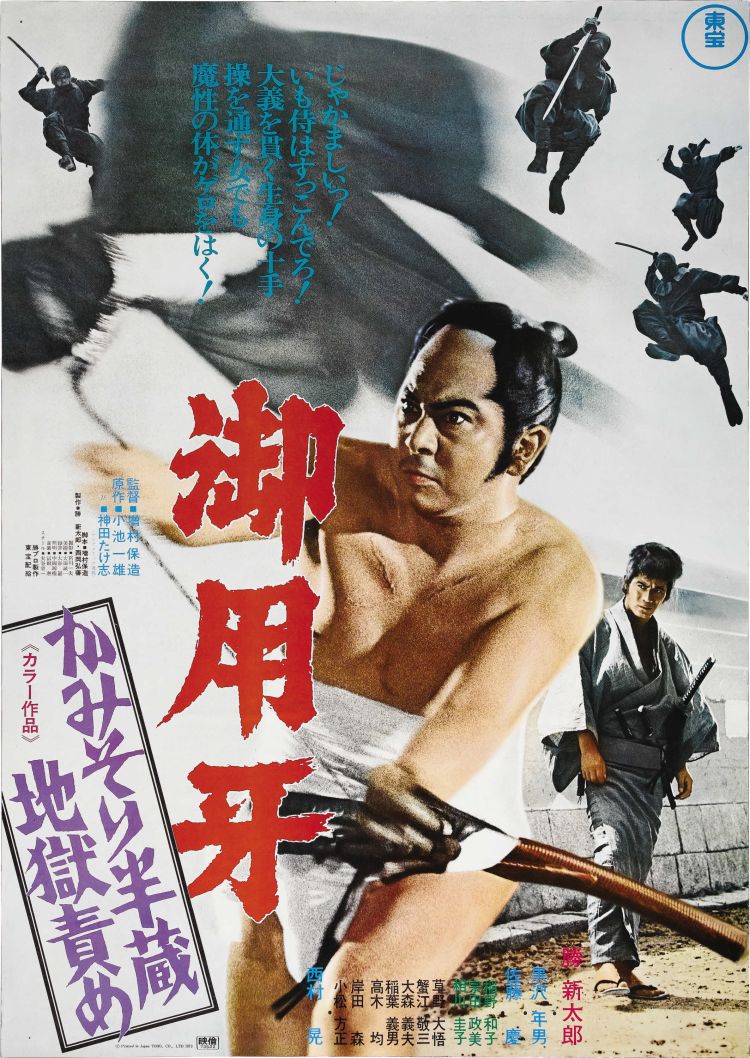
Hanzo the Razor: The Snare (御用牙 かみそり半蔵地獄責め, Yasuzo Masumura, 1973)

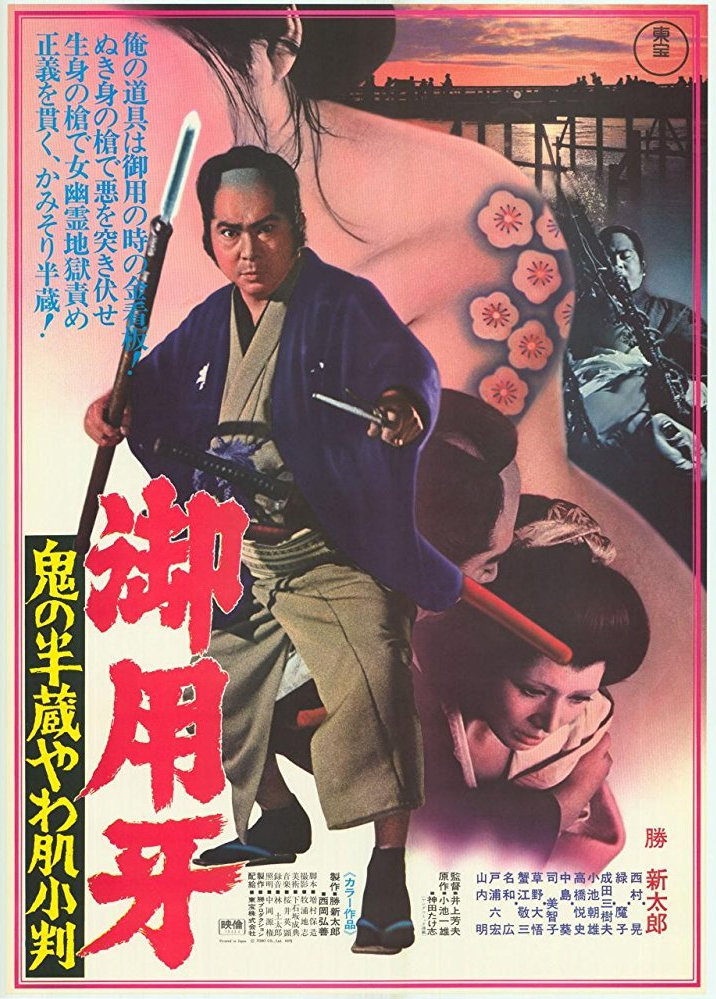
Hanzo the Razor the Snare posterYasuzo Masumura had spent the majority of his career at Daiei, but following the studio’s bankruptcy, he found himself out on his own as a freelance director for hire. That is perhaps how he came to direct this improbable entry in his filmography on the second of a trilogy of exploitation leading jidaigeki films for Toho. Essentially a vanity project for former Zatoichi star Shintaro Katsu who both produces and stars in the series, Hanzo the Razor: The Snare (御用牙 かみそり半蔵地獄責め , Goyokiba: Kamisori Hanzo Jigoku Zeme) is another tale of the well endowed hero of the Edo era protecting ordinary people from elite corruption, but Masumura, providing the script himself, bends it to his own will whilst maintaining the essential house style.

Hanzo (Shintaro Katsu) chases a pair of crooks right into the path of treasury officer Okubo. As expected, the lord and his retainers kick off but Hanzo won’t back down, shouting loudly about honour and justice much to his lord’s displeasure. Eventually Hanzo takes the two crooks into custody and they tell him exactly what’s happened to them this evening – they snuck over from the next village to steal some rice from the watermill but they found a dead girl in there and so they were running away in terror. Hanzo investigates and finds the partially clothed body still lying in the mill untouched but when he takes a closer look it seems the girl wasn’t exactly murdered but has died all alone after a botched abortion. Realising she smells of the incense from a local temple, Hanzo gets on the case but once again ends up uncovering a large scale government conspiracy.

Though it might not immediately seem so, Masumura’s key themes are a perfect fit for the world of Hanzo. In his early contemporary films such as Giants & Toys and Black Test Car, Masumura had painted a grim view of post-war society in which systemic corruption, personal greed, and selfishness had destroyed any possibility of well functioning human relationships. It was Masumura’s belief that true freedom and individuality was not possible within a conformist society such as Japan’s but this need for personal expression was possible through sexuality. Sex is both a need and a trap as Masumura’s (often) heroines chase their freedom through what essentially amounts to an illicit secret, using and manipulating the men around them in order to improve their otherwise dire lack of agency.

Hanzo’s investigation takes him into an oddly female world of intrigue in which a buddhist nun has been duped into becoming a middle-woman in a government backed scheme pimping innocent local girls to the highest bidder among a gang of wealthy local merchants. Hanzo berates the parents of the murdered girl for not having kept a better eye on her, but these misused women are left with no other recourse than the shady protection of others inhabiting the same world of corrupt transactions such as the local shamaness who has developed a “new method of abortion” just as Hanzo has developed a “new method of torture” which involves a bizarrely sexualised ritual in which both parties must be fully naked before she enacts penetration with her various instruments. Hanzo first tries more usual torture methods on the nun before indulging in his trademark tactic of trapping her in a net to be raised and lowered onto his oversize penis which he keeps in top notch by beating it with a stick and ramming it into a bag of rough uncooked rice.

Unlike the first film, the women are less ready to fall for Hanzo’s giant member. The nun complains loudly that her Buddhist vows of chastity are being violated while Hanzo’s later rape of the woman who runs the local mint is a much more violent affair. Hanzo grapples with her legs as she struggles, gasping as he opens his loincloth and reveals his surprisingly large appendage, once again playing into the fallacy that all women harbour some kind of rape fantasy. Hanzo has done this, he claims, to “calm her down”, because he could sense her sexual frustration and desperate need for male contact. To be fair to Hanzo, he does appear to be correct in his reading of the woman’s behaviour as she sheds her anxiety and becomes a firm devotee of the cult of Hanzo.

Meanwhile, political concerns bubble in the background as the main conspiracy revolves around consistent currency devaluations which are placing a stranglehold on the fortunes of the poor while their overlords, who are supposed to be protecting them, spend vast sums on claiming the virginity of innocent young girls. Hanzo may be a rapist himself (though he makes it clear that he derives no pleasure from his actions and only gives pleasure to the women involved), but he draws the line at the misuse of innocents, saving a little girl about to be violated by the master criminal Hamajima (Kei Sato) in a daring confrontation in which he boldly brings his own coffin, just in case.

Masumura broadly sticks to the Toho house style, but gone is the camp comedy of the first instalment with its giggly gossipers and humorous shots of Hanzo’s permanently erect penis. Instead he opts for an increase in sleazy voyeurism, filling the screen with female nudity whilst neatly implicating the male audience who enjoy such objectification by shooting from secretive angles as his collection of dirty old men crowd round a two way mirror to watch the lucky winner torture and abuse the soft young flesh they’ve just been bidding on. Like Sword of Justice, The Snare also ends with a slightly extraneous coda in which Hanzo settles a dispute with another official by means of a duel he would rather not have fought. Walking off bravely into the darkness, Hanzo utters only the word “idiot” for a man who wasted his life on petty samurai pride. Hanzo has better things to do, protecting the common man from just such men who place hypocritical ideas of pride and honour above general human decency in their need for domination through fear and violence over his own tenet of unrestrained pleasure.


Original trailer (no subtitles)

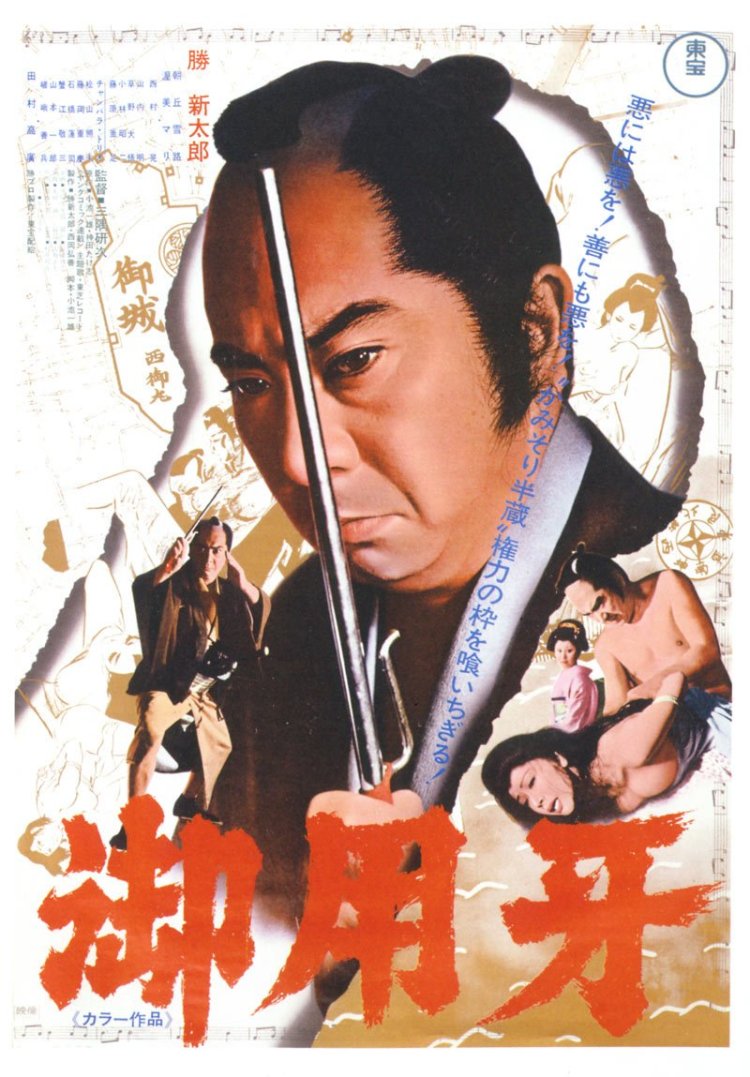
Hanzo the Razor: Sword of Justice (御用牙, Kenji Misumi, 1972)

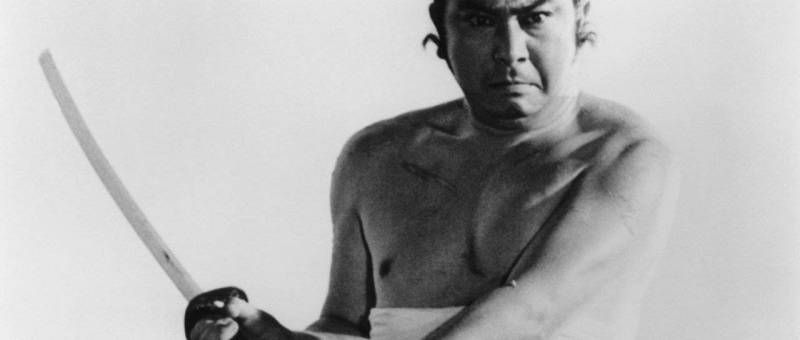
Hanzo sword of Justice posterJapanese cinema was in a state of flux in the early ‘70s. Audiences were dwindling. Daiei, a once popular studio known for polished, lavish productions folded while Nikkatsu took the proactive measure to rebrand itself as a purveyor of soft core pornography. Toho did not go so far, but in its first foray into a new kind of jidaigeki, exploitation was the name of the game. Hanzo the Razor: Sword of Justice (御用牙, Goyokiba) was released in 1972 – the same year as the beginning of another seminal series, Lone Wolf and Cub, which was produced by Hanzo’s star, former Zatoichi actor Shintaro Katsu, who also happens to the be brother of the franchise’s lead Tomisaburo Wakayama. Like Lone Wolf and Cub, Hanzo the Razor is based on a manga by Kazuo Koike whose work later provided inspiration for the Lady Snowblood films, and is directed by Lone Wolf and Cub’s Kenji Misumi. It is then of a certain pedigree but its intentions are different. More obviously comedic in its exaggerated, unpleasant sexualised “humour”, Hanzo the Razor is also a tale of the systemic corruption of the feudal order but one which casts its “hero” as a noble rapist.

Honest and steadfast police officer Hanzo (Shintaro Katsu) usually skips the annual swearing in ceremony but this year he’s decided to make an appearance. He appears to have done so to make a personal stand by refusing to sign the policeman’s oath because he knows everyone else is breaking it. Officers may not be doing something so obvious as accepting cash for preferential treatment, but they gladly accept free drinks, gifts from lords, and entertainment in the local geisha houses. Hanzo’s actions, honest as they are, do not go down well with his fellow officers and if he can’t figure something out on time, Hanzo faces the possibility that his career in law enforcement may come to an abrupt end when contracts are up for renewal at the end of the year.

Whatever else Hanzo is, he doesn’t like bullies or those who abuse their authority and the trust placed in them by those they are supposed to be protecting. More than just saving his own skin, Hanzo is determined to unmask the hypocrisy and corruption of his boss, Onishi (Ko Nishimura), who he discovers shares a mistress with a notorious killer still on the run. Chasing this early thread, Hanzo walks straight into a chain of corruption which leads all the way to the top.

At his best, Hanzo is a steadfast champion of the people who remain oppressed by the corrupt and venal samurai order. Far from the a by the books operative, Hanzo is prepared to do what’s best over what’s right as in his decision to help a pair of siblings who are faced with a terrible dilemma trying to care for a terminally ill father. He’s also extremely well prepared, having installed a host of booby traps and hidden weapons caches throughout his home to deal with any conceivable threat. Dedicated in the extreme, Hanzo has also spent long hours testing his torture techniques on himself to find out the exact point of maximum efficiency for each of them.

Here’s where things get a little more unusual. As Hanzo climbs down from a bout of torture, a huge erection is visible inside his loincloth, prompting him to reveal that it’s pain which really turns him on. Later we see Hanzo doing some maintenance on his “tool” which involves placing it on a wooden board bearing a huge penis shaped indent, and hitting it repeatedly with a hammer before ramming it back and forth into a bag of uncooked rice. Each to their own, but Hanzo derives no pleasure from these acts – they are simply to make sure his “special interrogation method” runs at maximum efficiency. Which is to say, Hanzo’s preferred technique for getting women to talk amounts to rape but as each of them fall victim to his oversize member they cry out in pleasure, willing to spill the beans just to get Hanzo to finish what he started. Playing into the fallacy that all women long to be raped, Hanzo’s inappropriate misuse of his own authority is played for laughs – after all, the women eventually enjoy themselves so it’s no harm done, right? Troubling, but par for the course in the world of Hanzo.

This essential contradiction in Hanzo’s character – the last honourable man who nevertheless abuses his authority in the course his duty (though he apparently takes no personal pleasure in the act), is reduced to a roguish foible as he goes about the otherwise serious business of taking down corrupt authority and ensuring the law protects the people it’s supposed to protect. Odd as it is, Hanzo’s world is an strangely sexualised one in which sexually liberated women wield surprising amounts of power. Hanzo is assured one of his targets has “no lesbian tendencies” as other older court ladies are said to, while a gaggle of camp young men gossip about the size of Hanzo’s world beating penis. In an odd move, Misumi even includes a penis eye view of Hanzo’s techniques, superimposed over the face of a woman writhing in pleasure. Surreal and broadly humorous if offensive, Hanzo the Razor: Sword of Justice is very much of its time though strangely lighthearted in its obviously bizarre worldview.


Original trailer (English subtitles)

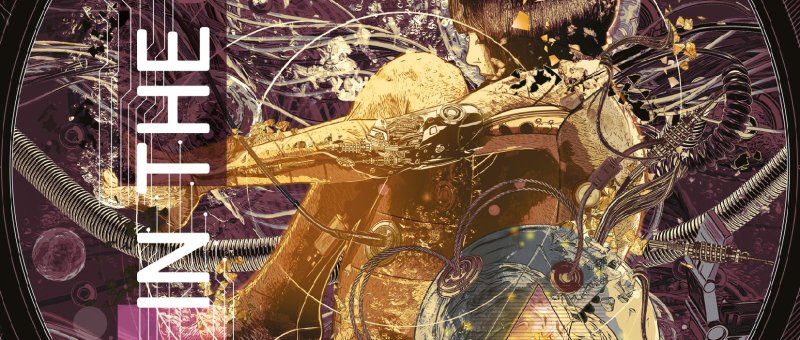
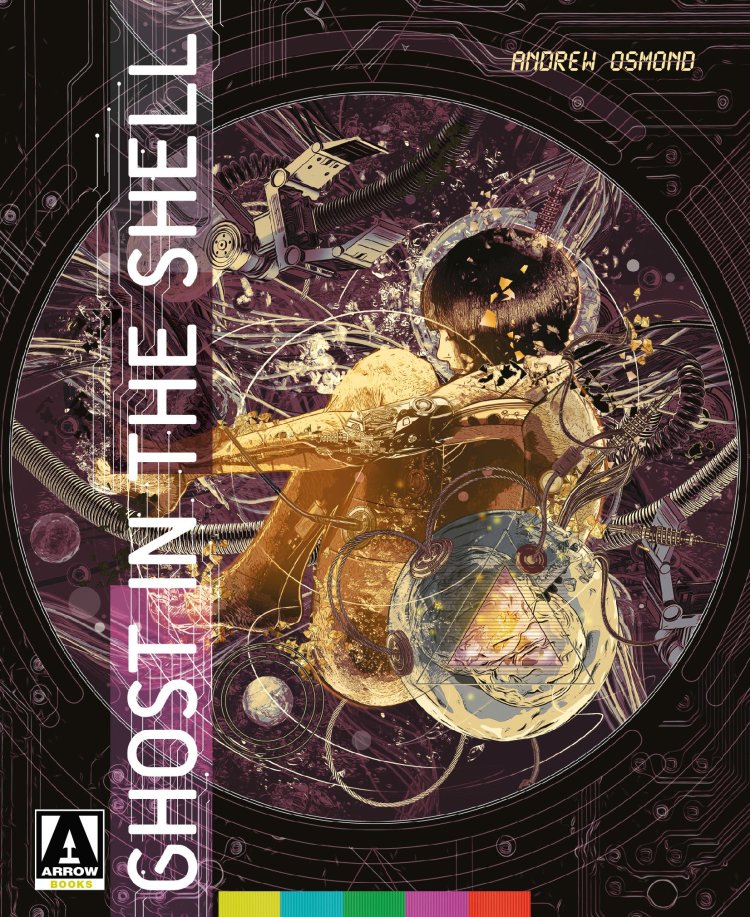
Ghost in the Shell (Andrew Osmond)

ghost in the Shell cover
Cover Illustration by Chris Malbon

Since its release in 1995, Ghost in the Shell has, ironically enough, taken on a life of its own becoming a long running animated franchise expanding far beyond the borders of the original manga by Appleseed’s Masamune Shirow. Anime expert Andrew Osmond attempts to chart this unexpected legacy by looking specifically at the 1995 film with comparisons to its sequel Innocence, “upgraded” 2.0 re-release, and recent American live action adaptation with brief asides to its TV anime incarnations Stand Alone Complex and Arise.

Beginning with the film’s transition from a niche interest release in its home country to an international breakout hit, Osmond attributes much of Ghost in the Shell’s ongoing (overseas) popularity to its association (rightly or wrongly) with The Matrix. The Matrix picks up on the classic, noir-tinged trope of the stealthy female hacker in the gun toting Trinity but, as Osmond points out, the similarities largely end with the poster. Trinity, unlike Kusanagi, is soon relegated to a traditionally female supporting role whereas Kusanagi remains very much in the lead as the commander of Section 9.

Osmond then goes on to question the film’s relationship to the landmark sci-fi noir Blade Runner as well as to the cyberpunk subgenre to which it is so often attributed. Ghost in the Shell, despite sharing many thematic and aesthetic similarities, according to Osmond, differs from Blade Runner in its positive female focus rather than the noir-tinged male world of Scott’s retro-futuristic city. Osmond’s central disagreement with the cyberpunk designation is that Ghost in the Shell lacks the punk attitude usually so essential to the genre. Gibson’s Neuromancer, the iconic cyberpunk text, was indeed influenced by mid-80s punk centring on a group of youthful outsiders, but Kusanagi and Section 9 are the authority against which cyberpunk youth is often trying to rebel. Osmond argues that Akira, despite its lack of cyberspace, fits the label better because of its much more recognisably “punk” milieu of motorcycle gangs and rebellious youth. Ghost’s association with the genre, Osmond states, has more to do with its later association with the Matrix (which may not even really be cyberpunk itself) rather than any essential part of its own nature.

What Ghost in the Shell does share with the world of cyberpunk, is its generally gloomy world view influenced by classic noir, hardboiled fiction. In keeping with this, Kusanagi, as argued above, is less a Trinity-style action heroine later sidelined in favour of a male hero than a solitary detective, caught, like Deckard, inside a web of existential questioning provoked by her own dualities.

As laid out in Chapter 3, Oshii’s first contribution to the Ghost in the Shell adaptation was to raise the tone – the “cute” Kusanagi of the manga with her oversize boobs and childlike appearance was redesigned in keeping with Oshii’s more serious intentions which replaced Shirow’s goofier approach with something altogether more mature and in that regard “naturalistic”. Osmond argues that this crucial decision perhaps alienated Japanese anime fans who preferred manga-esque aesthetics, but helped to gain traction overseas precisely because it lacked the hyperfeminine character designs which had come to define Japanese animation in even in other “arthouse” leaning anime such as Satoshi Kon’s Perfect Blue. 

Osmond links this same sensibility back to the film’s methods of production which involved an unprecedented investment from a foreign distributor – Manga Entertainment, which had been founded in the wake of Akira and on the assumption that there must be other explosive, adult orientated animation waiting to be discovered. Finding out that animation featuring Akira’s lavish production values was not as plentiful as hoped (or at least, the ones in the realms of affordability), Manga decided to get into producing the content they needed themselves. Though Osmond is clear that Manga did not particularly influence the film’s production beyond creative controls including storyboard approval, poster design, and music requests, their desire was for another well produced, “mature” anime with an “auteur” aesthetic to follow in Akira’s footsteps (which it eventually did). On the film’s completion, Manga’s American CEO suggested that the film was more comprehensible to Western fans because of the already familiar science fiction tropes, even going so far as to label it “an intelligent, animated Blade Runner.”

Looking more deeply into the film’s creative process, Osmond profiles the contributions not only of the film’s director, Mamoru Oshii, but also the influence of his long term screenwriter Kazunori Ito and the later involvement of composer Kenji Kawai, before finding space to spotlight individual animators whose work often goes unappreciated, as well as reflecting on the role of the (poor quality) English dub on the film’s immediate reception. Following a comprehensive overview of the franchise’s creation which was, so it seems, born with the 1995 film, Osmond ends with a few words (and lengthy review) of the recent Hollywood live action adaptation which he views as an entertaining if less thoughtful entry into the franchise. Like its heroine, Ghost in the Shell lives on in many forms and the announcement of a new, CGI addition to the franchise directed by Kenji Kamiyama – director of the most successful spin-off Stand Alone Complex, and Space Captain Harlock’s Shinji Aramaki, proves the net is vast indeed.


Ghost in the Shell is available now published by Arrow Books.

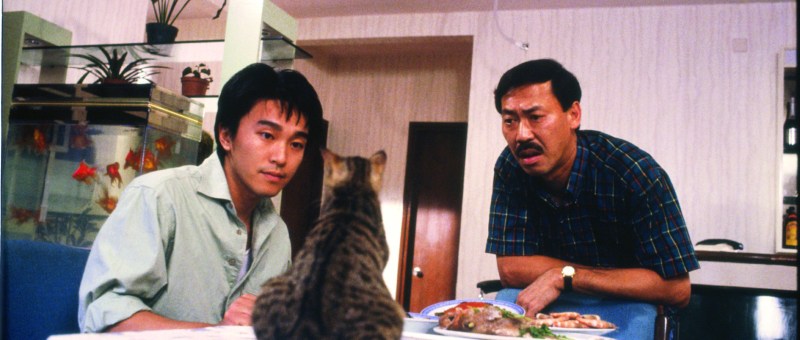
Look Out, Officer! (師兄撞鬼, Lau Sze-yue, 1990)

look out officer BD 1The thing about classic Hong Kong comedies is, they were made for a very specific time and place as a quick populist diversion not intended to have much of a life beyond their original release. Despite the thrown together, sketch show-style progression from one tenuously related set piece to the next held together by quick fire comedy, they could also be surprisingly subversive as in this 1990 comedy starring a young Stephen Chow. Look Out, Officer! (師兄撞鬼) is a silly buddy cop comedy and supernaturally tinged procedural but it also satirises the Hong Kong government’s response to the growing “boat people” crisis in which, as is declared in the film, those who’ve come from Vietnam for “economic reasons” will be regarded as illegal immigrants and deported. 

The film begins with two policeman as one berates the other for stopping to burn “ghost money” on the street, describing his need for ritual as like that of an old woman. The first policeman, Biao (Bill Tung), then gets a message on his pager to check out an abandoned warehouse. Piling into the police car, Biao and religious cop Chin (Stanley Fung) arrive but don’t find anything suspicious. Chin decides to leave while Biao wants to investigate further. Poking around, Biao finds himself directly above some kind of large scale drugs lab into which he heroically jumps and beats up most of the grunts waiting below before the head gangster turns up and throws him out of a window. Biao’s body lands directly on the top of Chin’s car who has returned after having second thoughts and wanting to make sure his partner is OK.

The “official” explanation is that Biao has killed himself because of his excessive gambling debts. Up in heaven he gets put on trial (alongside recently deceased dictators Ceausescu and Marcos) and the judges find that his death is indeed suicide despite his protestations. Eventually they agree to let him go back to Earth as a ghost to prove he was murdered and take revenge on the killer. Biao gets assigned a “saviour” whom he will know thanks to an unusual birthmark. The “saviour” turns out to be rookie cop, Sing (Stephen Chow), who is not exactly top of his graduating class but aided by Biao’s supernatural powers he just might be able to find the real killer after all.

As it turns out Chin dabbles in Taoist magic (to make his arms longer, for no particular reason) as do the gangsters who seem to have demonic forces on their side. Biao never saw the face of the man who killed him because he had him in a headlock, but he does remember his terrible body odour thanks to being shoved under his armpits. Victory in the final battle relies on conjuring a unique charm which consists of equally stinky ingredients including virgin’s urine, cat poo, and flatulence neatly bringing several of the film’s running jokes together into one satisfying punchline.

Running gags there are a plenty from the grumpy old cleaner at the police station they’ve nicknamed the 1000 year old virgin who likes to mop up the men’s toilets while they’re busy so she can assess the policemen’s “capabilities” for herself, to the cat who keeps defecting on the altar, and Sing’s general weediness. The supernatural procedural runs in tandem with the usual romantic comedy subplots including Chin’s over protective attitude to his grown up daughter who inevitably ends up in a relationship with Sing thanks to Biao’s supernatural wingman-ing. One of the “charms” Baio has been given to help him in his quest is a “lewd” spell which suddenly makes the victim randy for the first person they see. Biao uses this to get his own back on Chin for leaving him behind by making their austere superior officer suddenly come over all goey only to have her snap out of it and accuse him of sexual harassment.

The humour maybe distinctly lowbrow, but there is a degree of satire lurking in the background as Sing is sent into a “massage parlour” with a codeword in Vietnamese only to discover that all the girls in the place can understand it and immediately parrot back the recent ordinance of Vietnamese immigration. Later, a Vietnamese man threatens to commit suicide over the cruel and inhumane treatment he has received as a Vietnamese immigrant trying to make a life in Hong Kong, fearing he may be forcibly deported and will be killed if he has to go back to Vietnam losing everything he’s tried to build in Hong Kong.

When Biao eventually gets back to heaven they don’t want to let him in even though he’s cleared his name because heaven has a quota and he doesn’t meet the criteria. All is not lost, however, because you can buy your way in as an immigrant with ”special investor” status. In heaven, it seems, everything is fine so long as you have money. As above, so below. Another characteristically nonsensical, juvenile comedy from Shaw Brothers, Look Out, Officer! is as silly and of its time as one would expect but it is undeniably entertaining and unexpectedly moving in its final moments.


Remake of Philip Chan & Ricky Lau’s Where’s Officer Tuba? (1986)

Celestial Pictures trailer (English/traditional Chinese subtitles)

The Day After Opens London Korean Film Festival 2017

The day after posterFollowing a long series of teaser screenings which culminated with Cannes hit The Villainess, the London Korean Film Festival has now revealed the complete lineup for this year’s event which runs from 26th October to 19th November 2017.
Opening Gala

The day After Still 2The London Korean Film Festival 2017 will open with one of three films released this year by prolific director Hong Sang-soo – The Day After. Another whimsical comedy of manners from Hong, The Day After stars Kim Min-hee as the new girl at a publishing firm completely unaware that she’s taken the place of the previous new girl who has been “let go” after an affair with the boss ended badly.

Closing Gala

first lap stillClosing the festival will be the second film from Kim Dae-hwan who picked up the best new director award at Locarno for this awkward tale of familial disconnection. The First Lap revolves around young couple Ji-young and Su-hyeon who are not married but have been living together for a few years. Discovering they might be about to have a child of their own, the pair decide to try and reconnect with their old families before starting a new one.

Special Focus: Korean Noir, Illuminating the Dark Side of Society

The Merciless still 1The special focus for this year’s festival is Korean Noir and Korean cinema has certainly had a long and proud history of gritty, existential crime thrillers. Running right through from the ’60s to recent Cannes hit The Merciless, the Korean Noir strand aims to illuminate the dark side of society through its compromised heroes and conflicted villains.

  • Black Hair – Lee Man-hee’s 1960s genre hybrid neatly mixes noir with melodrama as a gang boss’ wife is blackmailed after having been raped by one of her husband’s underlings only to be facially disfigured and cast away when her husband learns of her assault. Read the Review.
  • The Last Witness – Lee Doo-young’s 1980 mystery thriller follows a police officer’s investigation into the murder of a brewery owner which leads him back to events of 25 years earlier and into the darkest parts of his own soul. Director Lee Doo-young will be in attendance for a Q&A.
  • Dead End – Darkly humorous 19 minute short directed by City of Madness’ Kim Sung-soo.
  • The Rules of the Game – released in 1994, the second film from Jan Hyun-soo follows a young man who comes to the city to join a gang but ends up selling his girlfriend into prostitution.
  • Green Fish – the 1997 debut from the now legendary Lee Chang-dong follows a recently demobbed soldier who returns home to find nothing waiting for him and eventually falls in with gangsters.
  • Nowhere to Hide – Lee Myung-se’s experimental 1999 noir stars Ahn Sung-ki as a ruthless gangster.
  • KilimanjaroThe Shameless director Oh Seung-uk’s 2000 debut also stars Ahn Sung-ki as a gangster alongside Park Shin-yang playing a pair of twin brothers one of whom is a criminal and the other a policeman. Director Oh Seung-uk will be in attendance for a Q&A.
  • Die badVeteran / Battleship Island’s Ryoo Seung-wan made his debut with this 2000 four part crime themed portmanteau film.
  • A Bittersweet Life –  Kim Ji-woon’s 2005 existential hitman thriller stars Lee Byung-hun as a conflicted mobster.
  • A Dirty Carnival – Yoo Ha’s celebrated gangland thriller from 2006
  • New World – an all powerful policeman tries to bring down a crime syndicate through underhanded means while an undercover cop begins to wonder if his mission will ever end in Park Hoon-jung’s tense psychological thriller.
  • Coin Locker Girl – a baby found in a coin locker gets sold to a gangland organ trafficker who decides to raise her as her own in Han Jun-hee’s dark 2013 drama
  • The Merciless – Premiered at Cannes in 2017 Byung Sung-hyun’s The Merciless is a violent thriller in which an undercover cop and the leader of a prison gang team up for gangland domination.

The Noir section will also feature a panel event, Forum on Korean Noir, featuring Eddie Muller (president Film Noir Foundation), Huh Moonyoung (film critic), Last Witness director Lee Doo-young, and Kilimanjaro director Oh Seung-uk.


Cinema Now 

master still one.jpgThe best in recent cinema across the previous year ranging from period drama to financial thriller, gangland action, social drama, and horror.
  • Come, Together – Shin Dong-il examines the destructive effects of financial pressures on a middle class family.
  • Crime City – turf war drama starring  Ma Dong-seok. Director Kang Yoon-sung will be present for a Q&A.
  • In Between Seasons – Intimate family drama following a mother’s reaction to discovering the relationship between her son and his best friend is closer than she thought.
  • Warriors of the Dawn – historical drama set in 1592 in which a group of mercenaries attempt to protect the newly crowned prince on a perilous journey.
  • Master – corporate thriller in which a team of fraud specialists led by Gang Dong-won attempt to unmask a dodgy financial guru played by Lee Byung-hun. Read the Review.
  • The Mimic – horror movie in which a monster lures children away to eat them by impersonating familiar voices.

Indie Fire Power

Bamseom Pirates Seoul InfernoProgrammed by Tony Rayns, this year’s indie strand has a special focus on documentary filmmaker Jung Yoon-suk who will be attending the festival in person to present his films.
  • Non Fiction Diary – 2014 documentary directed by Jung Yoon-suk centring on a notorious clan of serial killing cannibals. Director Jung Yoon-suk will be present for a Q&A
  • The White House in My Country – documentary short by Jung Yoon-suk. Director Jung Yoon-suk will be present for a Q&A
  • Ho Chi Minh – documentary short by Jung Yoon-suk. Director Jung Yoon-suk will be present for a Q&A
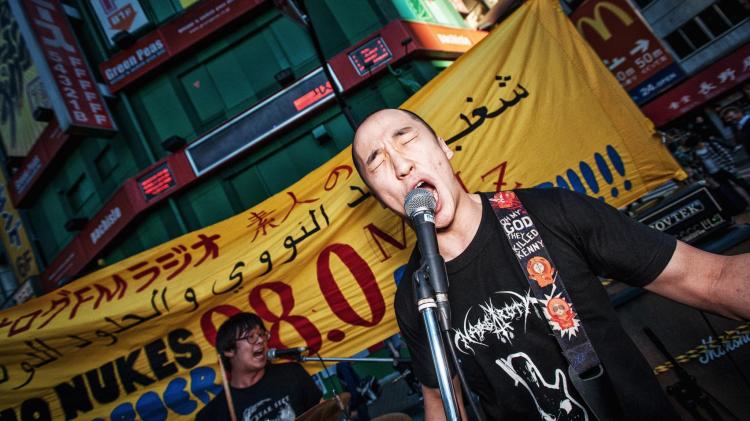
  • Bamseom Pirates Inferno – 2017 documentary by Jung Yoon-suk focussing on an underground punk band. Director Jung Yoon-suk will be present for a Q&A
  • Merry Christmas Mr. Mo – indie comedy/drama from Lim Dae-hyung in which a dying barber’s only wish is to star in a short film directed by his estranged son.
  • A Confession Expecting a Rejection – witty drama following characters on and off screen as they discuss various topics from failed relationships to disappointing film courses.

Women’s Voices 

jamsil still 1Focussing on female viewpoints this year’s Women’s Voices strand includes one narrative feature and four short films.
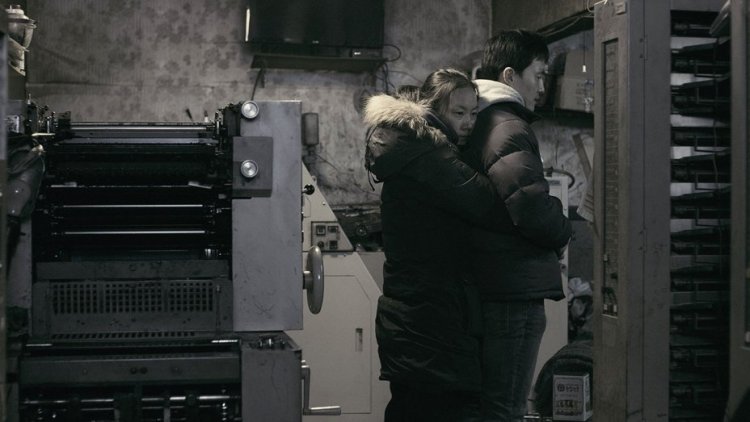
  • Jamsil – drama focussing on the lives of two women. Director Lee Wanmin will be present for a Q&A.

Shorts

  • Candle Wave Feminists – an examination of the misogyny hidden inside the campaign to unseat Park Geun-hye Director Kangyu Garam will be present for a Q&A.
  • My Turn – 15 minute drama focussing on pregnancy in the workplace.
  • Mild Fever – 36 minute drama in which a secret comes between a husband and wife.
  • Night Working – 28 minute drama exploring the relationship between a Korean factory worker and a Cambodian migrant.

Classics Revisited: Bae Chang-ho Retrospective

whale hunting still 2Three films from legendary director Bae Chang-ho each starring Ahn Sung-ki.
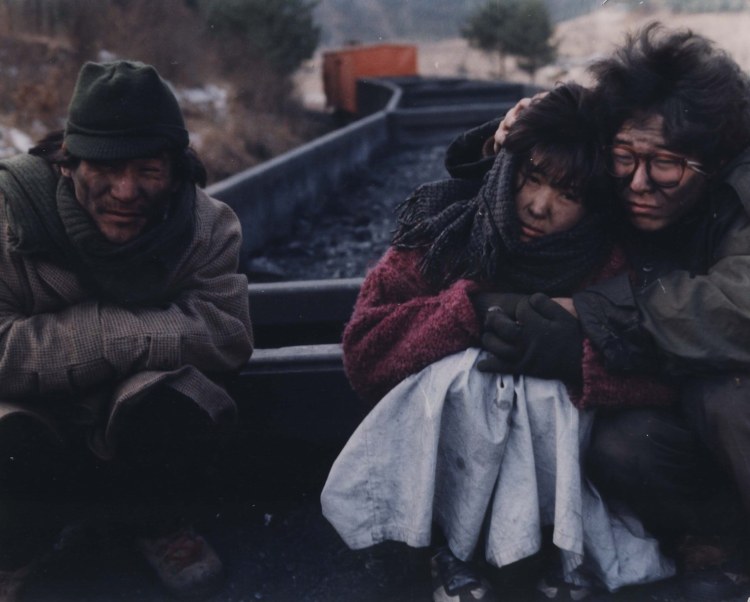
  • People in the Slum – drama revolving around a single mother who always wears black gloves and has a rebellious son with a tendency to steal things.
  • Whale Hunting – a boy gets rejected by his crush and runs away to hunt whales but ends up wandering round with a tramp and helping a mute girl find her voice again.
  • The Dream – a monk breaks his vows of chastity, attacks a young woman, leaves the monastery to start a family with her, but never captures her heart.

Documentary

good bye my heroWorkers’ rights and examinations of the Yongsan tragedy in which five civilians and one police officer lost their lives during a protest against redevelopment dominate the feature documentary strand.

  • Two Doors – documentary examining the Yongsan tragedy. Director Kim Il-rhan will be present for a Q&A.
  • The Remnants – documentary examining the Yongsan tragedy. Director Kim Il-rhan will be present for a Q&A.
  • Goodbye My Hero – an unemployed father battles for reinstatement
  • Dream of Iron – industrial ship building documentary

Animation

lost in the moonlight still 1Two charming yet very different animated adventures aimed at a younger/family audience.

  • Lost in the Moonlight – a shy young girl dreaming of the spotlight gets lost in a fantasy world.
  • Franky and Friends: A Tree of Life – Franky and Friends head off on a journey to save the world after nearly destroying it through wastefulness

Mise-en-scène Shorts

tombstone refugee still 1A selection of shorts from the Mise-en-scène International Short Film Festival.

  • Tombstone Refugee – alternative burial drama.
  • Home Without Me – a young girl looks for familial love
  • Thirsty – a man struggles to makes ends meet
  • Between You and Me – behind the scenes comedy drama.
  • Dive – drama about a boy’s love of water
  • The Insect Woman – centres on a young girl obsessed with insects.
  • 2 Nights 3 Days – follows a couple on the eve of their wedding anniversary.

Artist Video

This year’s collaboration with LUX | Artists’ Moving Image focusses on the work of two artists – Lim Minouk and Koo Dong-hee.

Lim Minouk

  • New Town Ghost
  • Wrong Question
  • Portable Keeper
  • The Weight of Hands
  • The Possibility of the Half
  • S.O.S. – Adoptive Dissensus

Koo Dong-hee

  • Tragedy Competition
  • The King Fish
  • Under the Vein: I Spell on You
  • Crossxpollination
  • What’s Not There

The London Korean Film Festival runs from 26th November to the 19th October at multiple Central London venues before heading out on tour to Glasgow Film Theatre, Manchester HOME, Sheffield Showroom, Nottingham Broadway Cinema, and Belfast Queen’s Film Theatre.

The full programme including details for all the films, screening times and ticketing information will be available on the official website in due course but you can also keep up with all the latest developments via the festival’s Facebook page, Twitter account, Flickr, YouTube and Instagram channels.

Big Man Japan (大日本人, Hitoshi Matsumoto, 2007)

big man Japan posterBeing a superhero is not all it’s cracked up to be. After all, with great power comes great responsibility and responsibility, well, it’s kind of a drag. The debut feature from comedian Hitoshi Matsumoto, Big Man Japan (大日本人, Dai Nipponjin) is the story of a modern day gladiator – a slave and a prisoner, forced into an arena to fight “monsters” intent on causing widespread destruction, but usually being the cause of that destruction himself. Poor old Daisato (Hitoshi Matsumoto) is not much of anything at all, but bears all of his respective burdens with stoic resignation.

Shot in mock-documentary style, the film keys us in to Daisato’s predicament slowly as he lovingly looks at an umbrella or a packet of dried seaweed before adding that he likes them because they “only get big when you want them to”. The fact is, Daisato is the sixth in a line of superheroes known as Big Man Japan. Every time disaster strikes and there’s a scary looking monster about to pound Tokyo, Daisato has to hightail it to the nearest power station, undergo a lengthy, bizarre, and completely pointless ritual before jumping into a giant pair of purple pants and being pumped full of electricity which eventually causes him to grow to colossal size.

Yet unlike Batman, or even the obvious point of inspiration, Ultraman, Daisato is not particularly public minded and submits himself to this unpleasant treatment out of a sense of duty and tradition. Daisato’s grandfather, the Fourth, was the kind of superhero everybody loves – strong, clever, dependable, but more than that he was a fun guy to be around. Under the Fourth, superheroing was a laugh and a mini industry all at once. Asked why they bother with the strange ritual before Daisato transforms (given that they’re pushed for time), the old timer looks wistful and remarks that everything was much better when Four ran the show.

These days Four (Taichi Yazaki) is a doddery old man with dementia whom Daisato leaves in an old people’s home whilst feeling guilty about not being able to look after him. Occasionally Four goes rogue and causes havoc by beating up innocent buildings and generally destroying things that don’t need to be destroyed. Daisato maybe a monster fighting superhero but he’s no match for Japan’s ageing population and the increasing demands of elderly care.

Daisato bears his responsibilities with resignation rather enthusiasm. His father, unlike Four, had a lust for fame, repeatedly zapping himself to try and be bigger and stronger but eventually just zapping himself to death. Yet even whilst unhappy about being forced into his life of mercenary monster hunting, Daisato still wanted his kid to take over the Big Man Japan name – only his kid’s a girl who doesn’t actually like her dad very much and gets picked on at school for being the daughter of Japan’s most rubbish reality TV star. Daisato’s superpowers have led to the breakdown of his marriage as his wife has left him, unwilling to allow her child to be zapped with electricity and sucked into Daisato’s abnormal world. She’s moving on, going with the mainstream and looking to hook up with a decent, reliable sort of guy.

Even the documentary maker occasionally seems exasperated at Daisato’s passivity and general malaise. The monster hunting battles are not just in service of protecting the people of Japan but also a major TV event, though it has to be said that Daisato is not very popular and the few people who like him do so precisely because of his perseverance in the face of constant failure. Daisato has a manager of sorts, who drives expensive looking cars, has two expensive looking dogs named “simplicity” and “delicacy”, and is intent on selling each and every spot in Daisato’s giant torso to advertising sponsors landing him with tattoos advertising fresh goods right on his chest and back. Eventually Daisato ends up angering the public still further when he kills an incredibly cute, apparently harmless monster in a moment of panic.

Daisato is, in many ways, a victim of his culture as he feels compelled to put up with constant mistreatment in service of duty and tradition, seeing himself as the last in a long chain of ancestors he’s never been able to live up to and whose powers he will probably not be able to pass down to a successor of his own. In one particularly worrying episode, the mysterious forces which control Daisato do not even bother to contact him but break into his house for a spot of non-consensual zapping which destroys Daisato’s entire home leaving him with nothing. Being big in Japan is actually being very, very small. Poor old Daisato can’t seem to catch a break, but maybe there is one just waiting to catch him.


Original trailer (English subtitles)