Samurai Spy (異聞猿飛佐助, Masahiro Shinoda, 1965)

samurai-spyNothing is certain these days, so say the protagonists at the centre of Masahiro Shinoda’s whirlwind of intrigue, Samurai Spy (異聞猿飛佐助, Ibun Sarutobi Sasuke). Set 14 years after the battle of Sekigahara which ushered in a long period of peace under the banner of the Tokugawa Shogunate, Samurai Spy effectively imports its contemporary cold war atmosphere to feudal Japan in which warring states continue to vie for power through the use of covert spy networks run from Edo and Osaka respectively. Sides are switched, friends are betrayed, innocents are murdered. The peace is fragile, but is it worth preserving even at such mounting cost?

Our “hero” Sasuke (Koji Takahashi) is a wandering spy for the Sanada clan, nominally part of the Tokugawa though with no strong allegiance to either side. Everywhere he goes he feels hunted, watched by shadowy forces and unseen motivators. After bumping into Mitsuaki (Mutsuhiro Toura), an old comrade who fought alongside him at the Battle of Sekigahara, Sasuke is pulled into the ongoing intrigue as his friend is murdered and he assumed to be the culprit. Things are further complicated when a mysterious woman to whom he had become attached, Okiwa (Misako Watanabe),  is killed in a similar fashion. A political shift is taking place as a high ranking Tokugawa official, Tatewaki (Eiji Okada), is in the process of defecting to the Toyotomi with white cloaked ninja master Takatani (Tetsuro Tanba) (presumably) working against him. Sasuke is charged with trying to sort all of this out but constantly finds himself on shaky ground as everything around him is constantly changing and the air is filled with conspiracy.

Shinoda aims to disorientate. After beginning with a brief historical narration to set the scene including a bloody excerpt from the horrific Battle of Sekigahara (the historical context presumably much more apparent to a Japanese viewer than an overseas one), he jumps forward 14 years and proceeds to give a rundown of the current situation. Quick fire naming and a lack of external context intentionally make it difficult to pin down who is who and which side is which. The opening sequence takes place in darkness with only moonlight and lanterns to light the way, so our players are always cast in shadows, only half visible and unidentifiable. Nothing is as it seems, the world is murky and the people in shadier still.

Sasuke fought at Sekigahara when he was just 15. His true coming of age has been in an era of peace and he is committed to sustaining that peace at all costs rather than return to the bloody, internecine warfare of the past. This stands in contrast to his double dealing friend, Mitsuaki, whose own coming of age was forged by war and so now finds himself at a loose end as warriors are obsolete in an age without war. Nevertheless, Sasuke feels the peace is threatened – all conversations are eventually about conflict, no one thinks about the meaning of death or what it is to be alive. Men like Mitsuaki have decided to live purely for pleasure, wanting nothing more than women and sake, thinking of nothing beyond satisfying their needs, and rarely consider the moral or political dimension of their actions. Mitsuaki’s unexpected degree of self interest accidentally threatens to completely destabilise the status quo, setting off a series of betrayals and counter betrayals in its wake, but all Mitsuaki was thinking about was a how to get paid twice for doing one job.

Navigating this complex network of allegiances and betrayals, Sasuke comes to discover what it is he really wants out of life and what he needs to do to get it. No longer a neutral observer, he has to pick a side and the one he picks that of the wronged. Coming to the aid of the threatened and oppressed, Sasuke adds himself to the list of enemies of the state yet he sees it as his duty to fight against the forces of darkness for a better, fairer world. Of course, he has his personal reasons for revenge but even these are partly born out of a sense of outrage for the injustice done to people who mattered to him.

Yet for all of the real world intrigue and political allegory Samurai Spy is also imbued with an unsettling sense of the absurd. Sasuke is plagued, yet at times assisted, by the almost supernatural Takatani who, incongruously, dresses in a bright white outfit with the fabric of his hood tied up into horns on the front. Appearing as needed along with his more conventionally dressed ninja minions, Takatani seems to float through the air performing strange acts of ninjadom and acting with no firm course of action. Shinoda shoots the battle scenes from odd angles using slow motion to give them a strange kind of power, even in one instance allowing a severed limb to float to the ground. In a nod to the circularity of violence, he even allows the climactic fight to be interrupted and witnessed by a small boy, shocked by what he has seen. The fact that the situation is laid to rest by a forgotten deus ex machina is yet more evidence for the world’s essential leaning towards constructed narrative.

Filled with the fog of war (literally so in places), Samurai Spy dramatises the uncertainties of its environment through the extreme lack of visual clarity. The audience is as disorientated as Sasuke, continually wrong footed and left at a loss as to the true motivations of each of the major players. The atmosphere is palpably intense, as if sitting on a powder keg ready to explode at any spark of conflict. From this viewpoint, it’s impossible to see who is in the right and who the wrong or even if those two ideas are even appropriate ways of thinking about things. Peace stands on a knife edge and, ironically, only survives if robustly defended. Violence is shown up for all of its essential cruelty and senselessness yet it is the only thing which is certain. Sasuke, at least, seems to have made his own peace in one way or another but the world he leaves behind him is far from ready to do the same.


The Vanished Murderer (消失的凶手, Law Chi-leung, 2015)

vanished-murderWhen The Bullet Vanishes was first released back in 2012, the film received unfair criticism in some quarters due to its enormous debt to Guy Richie’s then popular Sherlock Holmes. Derivative or not, The Bullet Vanishes remains an innovative and intricately plotted cerebral thriller, primed to launch the return of its central detective, former prison warden, Inspector Song (Sean Lau). Only slightly late, Song is finally back to address another series of baffling deaths and conspiracies in 1930s China only this time he’s landed in a pulpy LA noir rather than the cowboy-tinged action of the previous film.

The Murderer Vanishes (消失的凶手, Xiāoshī de Xiōngshōu) revolves around Song’s Irene Adler figure, Fu Yuan (Jiang Yiyan), whom we saw Song making frequent prison visits to in The Bullet Vanishes. Song is called to the prison because Fu Yuan has mysteriously disappeared from her cell leaving only a Shawshank Redemption inspired red herring behind her. The strange bond between Song and Fu Yuan in which they chastely dance around each other in the ultimate long distance romance, dictates that Fu Yuan send him a letter to tell him exactly where she is so he can come and arrest her all over again.

After a hot date at the cemetery, Fu Yuan takes Song to a philosophy lecture in which the speaker, Professor Hua (Gordon Lam), muses on a thought experiment in which he discusses the ethical problem of making an active choice to sacrifice one life in order to save multiple lives and whether making such a choice is any different from committing a murder – i.e. pushing another person in front of a moving train to stop it hitting a crowd further up the track. The experiment is eerily echoed when a body falls out of the sky just as Song is about to re-arrest Fu Yuan, allowing her to once again slip away.

Song investigates and is arrested only to be recruited to solve the mystery of why so many of the workers at evil corporate boss Gao Minxiong’s (Guo Xiaodong) string of factories are suddenly leaping to their deaths whilst wearing shirts bearing slogans which decry him as a slave driver.  Song is assisted by the girl he jilted at the alter eight years ago with whom he was improbably reunited on the train, Chang Sheng (Li Xiaolu), and a local policeman, Mao Jin (Rhydian Vaughan), as well as the philosophy professor but somehow this must all be linked to Fu Yuan’s mysteriously timed prison escape.

The biggest departure The Vanished Murderer has to deal with is the absence of co-star Nicholas Tse. Rather than give Song a new partner or attempt to ditch the buddy format altogether, Tse’s role has been awkwardly split into four with Song surrounded by his cohorts of varying stripes but never achieving the same kind of bond that made The Bullet Vanishes so satisfying. Many of the first film’s plot elements are also ported over wholesale, rehashing the same political subplots and betrayals but without the subtlety.

One again we have an exploited work force of factory workers suffering at the hands of a heartless capitalistic sociopath. Gao Minxiong is seen early on collaborating with a British businessman who warns him about the effects of the depression only for Gao to explain the “measures” he’s taken which include burning harvests to increase demand and therefore drive prices up, as well as closing factories to increase competition for jobs and therefore drive wages down. Gao also has a private militia he uses for strike breaking and indiscriminate massacre. The people suffer while the elites prosper, it’s an old story.

The Bullet Vanishes may have had one foot in the Old West, but The Vanished Murderer has stayed in the same geographical area whilst jumping fifty years into the future in terms of tone. Gone are the lawless, dingy back alleys and saloons – The Murderer Vanishes takes place under bright sunlight, in an airy city surrounded by green country estates. Song has even switched up his zany bowler hat from the first film for a wide brimmed fedora and the musical score also pulls in some Spanish guitar to ram home that West coast style. This is a land of flappers and jazz babies, filled with art deco elegance and international flair.

For all that it’s a pulp world too and as such exempts itself from the need to make any kind of real sense. The central mystery is nowhere near as compelling as that of The Bullet Vanishes and resolves in a less than satisfactory manner. In the great pulp tradition action set pieces become increasingly ridiculous until the point Song and Fu Yuan attempt to escape by riding a horse through a building. The film’s finale takes place entirely on a train and does at least make good use of its CGI budget even if it’s a disappointingly simple way to conclude.

A slight misstep after the well plotted charm of The Bullet Vanishes, The Vanished Murderer can’t live up to the promise of the first film. The relationship between Song and Fu Yuan ought to take centre stage but the pair spend too much time apart to make it work and the film kills off a promising ongoing plot strand for the sake of cheap melodrama in the closing moments. Still, The Vanished Murderer provides enough thrills of its own even if lighter in tone and with a weaker central mystery to make the continuing adventures of Inspector Song worth investigating.


Original trailer (Mandarin with English subtitles)

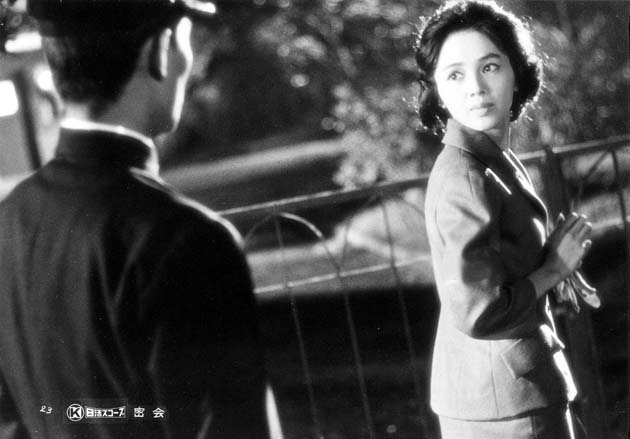
Notes of an Itinerant Performer (歌女おぼえ書, Hiroshi Shimizu, 1941)

notes-on-an-itinerant-performerFilmed in 1941, Notes of an Itinerant Performer (歌女おぼえ書, Utajo Oboegaki ) is among the least politicised of Shimizu’s output though its odd, domestic violence fuelled, finally romantic resolution points to a hardening of his otherwise progressive social ideals. Neatly avoiding contemporary issues by setting his tale in 1901 at the mid-point of the Meiji era as Japanese society was caught in a transitionary phase, Shimizu similarly casts his heroine adrift as she decides to make a break with the hand fate dealt her and try her luck in a more “civilised” world.

At 25 years old, Uta (Yaeko Mizutani) jumps ships from one acting company to another having been promised better work by a roguish fellow performer. Tired of the strenuous life of travelling from village to village, putting on folk plays and street performances, Uta is thinking of quitting the business and looking for a job as a maid or something similar which is at least in the same place everyday. In a stroke of luck, she comes into contact with a kindly tea merchant who takes pity on her and suggests she come to live with him where she can teach his teenage daughter how to dance.

Uta becomes a member of the Hiramatsu household but not all of the inhabitants are as generous of spirit as Mr. Hiramatsu (Hideo Fujino) himself. The oldest son is away at college but the daughter, Nuiko (Kyoko Asagiri), has no interest in learning to dance and resents her father’s “adoption” of such a “common” woman. Youngest son Jiro (Haruhiko Tsuda) is similarly unimpressed with Uta’s presence, making her new home less than welcoming. To make matters worse, Mr. Hiramatsu abruptly dies leaving his business and household in disarray. Oldest son Shotaro (Ken Uehara) returns and feels as if he ought to abandon his studies and take over the company, but as a student he has no experience of running a business and lacks his father’s knowledge of the tea industry. Uta encourages him to return to university and finish his studies if only so that the prestige of a degree might help him later if he decides to restart the business. She also volunteers to act as a guardian for Jiro and Nuiko though Shotaro is wary seeing as they know each other so little. He then makes a surprising suggestion – that he and Uta marry, making it perfectly natural that she take care of everything at home while he’s away studying in the city.

Like many a Shimizu hero, Mr. Hiramatsu is a good hearted man but perhaps lacking in practical skills. Though he seemed to be prosperous and successful, the business was on the rocks and he dies leaving a number of debts behind him and total admin chaos for Shotaro as there is no clear successor to keep the business running in Mr. Hiramatsu’s absence. Luckily for Uta, Shotaro is also a kindhearted man like his father (in contrast to his siblings) and has no desire to suddenly throw her out when his father promised to look after her. He is, however, at a loss as of how to take care of everyone with no money coming in.

Even before Mr. Hiramatsu died, not everyone was happy about his decision to take in a travelling performer and an old friend begins to warn him about the danger of rumours. Friend of the family Kajikawa feels he has a stake in this as he intends his daughter Ayako to marry Shotaro and thinks it’s a done deal (though Mr. Hiramatsu does not seem particularly wedded to the idea). Ayako and Nuiko are also good friends and Ayako does seem like the ideal bride for Shotaro as a member of his own social class and a business connection for the family. Shotaro, however, proposes to Uta without really thinking things through. It is, in one sense, a purely practical decision but one that is likely to meet with a degree of social opposition.

Uta left her life as a travelling performer because she wanted something more conventional. Her mother died when she was six and she never knew her father. Her only happy memory of family is the time spent with her grandmother who died when she was twelve. Uta resents her lack of status as a member of a lowly order of entertainers and longs for something grander but has also internalised a deep seated sense of inferiority. Hence when Jiro and his school friends refer to her as a “monster” living in the house, she half accepts their prejudiced view of her. Nevertheless, she wants to honour the kindness that Mr. Hiramatsu offered her and also deeply respects his son, Shotaro, possibly even developing romantic feelings for him. Despite continuing to feel herself unworthy, Uta does the unthinkable by almost singlehandedly resurrecting the tea business when presented with an opportunity from a foreign company. Even after becoming a formidable business woman and winning the respect of Nuiko and affection of Jiro, Uta still feels herself out of place in the mercantile world and ultimately opts to leave in order to pave the way for the “proper” union of Ayako and Shotaro.

When Shotaro and Uta meet again she tells him that she left because she found his middle class world of “decency” too rigid and full of dull formality. Her “housewife” life was a hard one – getting up early, no smoking, no drinking. At least as a travelling performer she can sleep in and have her share of fun. This produces a quite shocking and strange scene in which Shotaro strikes Uta violently, knocking her to the floor. He repeats his earlier promise to marry her and invites her to come home as his wife, a “decent” woman, and full member of his social class whatever anyone else might have to say about it. Shotaro is apparently a man of his word but there is real feeling implied in his actions as opposed to duty or obligation. Nevertheless, this quite surprising scene of domestic violence used as a tool of coercion does not speak to Shotaro’s otherwise kindly personality and undercuts the “romantic”, if melodramatic, quality of the scene. This may be another instance of Shimizu’s aversion to romantic resolutions or romance as a solution to crisis, but one expects better from a director generally so keen to underline the hardships faced by women in his society.

Despite being filmed well into the era of the talkies and long after Shimizu himself had made the jump to sound, Notes of an Itinerant Performer makes use of frequent intertitles setting the scene or providing explanatory background material. Conversely, it also anticipates a more recent trend by allowing the discussions between the “American” (actually heavily accented European) and his interpreter to take place in English with Japanese sidetitles for parts not subsequently translated in the dialogue. In fact, this broadly positive foreign presence seems an odd inclusion for the fraught political world of 1941 (the film was released in March, just nine months before outright hostilities would commence with the USA which had been effecting a series of trade sanctions with the expansionist nation since 1938) even if the deal itself is taking place in the comparatively more open society of 1901.

In many ways about transitionary periods both in terms of society and of the self, Notes of an Itinerant Perfomer seems conflicted right up until its “Reader, I married him” inspired intertitle. Uta crosses a class border, transcending her lowly origins through selfless sacrifice, pure heartedness, and perseverance yet finally she is dragged across by violence and condescension rather than self acceptance or personal transformation. Filled with ambiguity, Notes of an Itinerant Performer reflects the uncertainties of its times and is noticeably less forgiving than Shimizu’s general outlook as its problematic finale demonstrates.


Creepy (クリーピー 偽りの隣人, Kiyoshi Kurosawa, 2016)

creepyHow well do you know your neighbours? Perhaps you have one that seems a little bit strange to you, “creepy”, even. Then again, everyone has their quirks, so you leave things at nodding at your “probably harmless” fellow suburbanites and walking away as quickly as possible. The central couple at the centre of Kiyoshi Kurosawa’s return to genre filmmaking Creepy (クリーピー 偽りの隣人, Creepy Itsuwari no Rinjin), based on the novel by Yutaka Maekawa, may have wished they’d better heeded their initial instincts when it comes to dealing with their decidedly odd new neighbours considering the extremely dark territory they’re about to move in to…

The Takakuras, Koichi (Hidetoshi Nishijima) and Yasuko (Yuko Takeuchi), have just relocated to the suburbs where Koichi will be taking a position at a local university teaching criminal psychology. A year previously, Koichi had been a member of the police force working on serial murder cases but after a serious miscalculation on his part during a negotiation with an escaped prisoner leaves an innocent woman dead and himself in the hospital, Koichi comes to the conclusion that he’s not quite cut out for the force after all.

Having just moved into the neighbourhood, Koichi and Yasuko attempt to make the expected visit to announce their presence to their neighbours only to find that the locals aren’t exactly friendly. After one neighbour slams the door in her face, Yasuko pays a visit to the other one, Nishino (Teruyuki Kagawa), but the way in which be begins talking to her is very strange indeed. Though unsettled, Yasuko just can’t let the idea drop and becomes intent on building up a more conventional relationship with her hard to read neighbour, ignoring all of her better instincts in the process.

Meanwhile, Koichi has become intrigued by a six year old cold case in which three members of a family abruptly disappeared leaving their young daughter, Saki (Haruna Kawaguchi), behind. Working with a former colleague, Nogami (Masahiro Higashide), Koichi tracks down the abandoned little girl (now a teenager) and attempts to get to the bottom of the mystery.

Japanese films are full of the parasitic interloper who wheedles his way into a family only to usurp control for himself and eventually colonise it. Generally, such families go back to normal once the interloper has had his fun but for the families of Creepy that would be quite difficult. In the modern world when the family unit has become so fractured and insecure that it renders once permanent communities only temporary, a chasm has been opened in human interactions which makes it easier for extreme horror to locate itself right next door to you. Nobody knows what goes on behind closed doors, and in a sense no one wants to know. Koichi attempts to use his scientific knowledge to reassure Yasuko that, as psychopaths are usually very good neighbours, Nishino must be fine, but this only goes to show superficial the couple’s interest in their environment really is.

Koichi has a mild obsession with serial killers. His desire to spend more time with a real life psycho contributed to this fall from grace at the beginning, but his investigative abilities leave a lot to be desired. Yasuko may have suggested that Nishino is the kind of person who “has no social skills” but Koichi is the archetypal interrogator – only interested in the facts and blind to the emotional subtext. After Koichi puts too much pressure on the traumatised Saki, she accuses him of tearing into people’s emotions as if dissecting a rat, and later asks him if he has any kind of heart or real human empathy at all. For all his highly prized science, most of Koichi’s clues are based on his intuition – he just “feels” the house seems like a crime scene, that Nishino is a bad guy, and that something strange is going on.

This almost supernatural “feeling” becomes the central spine of the film as creepiness travels through the air in invisible waves. Kurosawa adopts a swirling, floating approach to camera movement in the early part of the film which gives it a drunken, ethereal atmosphere, preventing any concrete attempt to grasp the reality. Playing with lighting levels Kurosawa emphasises and isolates the characters but also adds a note of uncertainty that hints at the darkness lingering at the edges of the frame. This sense of the ever present evil that exists within otherwise pleasant environments contributes to the Lynchian sense of the absurd which is also echoed by the anxiety inducing lingering camera shots of banal objects such as room thermostat or closed gates.

Despite the eeriness of the general tone, Kurosawa encourages a strain of black humour which helps to cover some of the more outlandish plot elements. The final conclusion perhaps strains credulity and is never fully explained but then the lack of concrete details adds to the already overwhelming creepiness of the events in play. Wonderfully atmospheric, beautifully photographed, and filled with a spirit of absurdism, Creepy is a very modern horror story though one not unafraid to step into the realms of the senses.


Reviewed at 2016 BFI London Film Festival

Original trailer (English subtitles)

The Human Condition (人間の條件, Masaki Kobayashi, 1959-61)

human-condition

Review of Masaki Kobayashi’s magnum opus The Human Condition (人間の條件, Ningen no Joken) first published by UK Anime Network


If Masaki Kobayashi had an overriding concern throughout his career, it was the place of the conflicted soul within an immoral society. Nowhere is this better articulated than in his masterwork – the nine and a half hour epic, The Human Condition. Adapted from a novel by Junpei Gomikawa, Kobayashi’s film also mirrors his own wartime experiences which saw him conscripted into the army and sent to Manchuria where he was accounted a good soldier, but chose to mark his resistance to the war effort by repeatedly refusing all promotions above the rank of Private. Kaji, by contrast, essentially sells his soul to the devil in return for a military exemption so that he can marry his girlfriend free of the guilt that comes with dragging her into his uncertain future. At this point Kaji can still kid himself into thinking he can change the system from within but to do so means compromising himself even further.

The first of three acts, No Greater Love, takes place in Manchuria during the Japanese expansion where Kaji is working for a Japanese steel company. Fully aware that the company is using forced and exploitative labour, Kaji has been tasked with increasing productivity and has written a comprehensive report indicating that introducing better working conditions would positively affect efficiency as there would be less absenteeism and fewer sickness related gaps in the line. His boss is impressed and presents him with an offer of promotion managing a mine in the North. Kaji is conflicted but ultimately decides to accept as the post comes with a certificate of military exemption so he can finally marry his girlfriend, Michiko. However, his progressive ideals largely fall on deaf ears.

Road to Eternity finds him in the army where his left leaning ideas are even less appreciated than they were at the mine. Asked to train recruits, Kaji once again enacts a progressive approach which takes physical reinforcement out of the process and focusses on building bonds between men but his final battle comes too early leaving his team dangerously exposed. Kaji is briefly reunited with Michiko who has made a perilous journey to visit him but neither of the pair knows when or if they will see each other again.

The concluding part, A Soldier’s Prayer, finds a defeated Kaji wandering the arid land of Northern Manchuria on a desperate quest south with only the thought of getting back home to Michiko keeping him going. Eventually he is taken prisoner by Soviet forces but far from the people’s paradise he’d come to believe in, the Russians are just as unforgiving as his own Japanese. In the army he was a “filthy red” but now he’s a “fascist samurai”.

As much as Kaji is “good” man filled with humanistic ideals, he is also an incredibly flawed central presence. Already compromised by working for the steel company in Manchuria in the first place fully knowing the way the company behaves in China, his decision to take the mining job is an act of self interest in which he trades a little more of his integrity for military exemption and a marriage license. Needless to say, the head honchos at the mine who’ve been at the coal face all along do not take kindly to this baby faced suit from head office suddenly showing up and telling them they’ve been doing everything wrong. Far from listening to their experiences and arguing his point, Kaji attempts to simply overrule the mining staff taking little account of the already in place complex inter-office politics. This creates a series of radiating factions, most of whom side with Kaji’s rival and have come to view the cruel treatment of workers as a sort of office perk.

The complicity only deepens as Kaji becomes ever more a part of the machine. Kaji feels distraught after he loses his temper and strikes a subordinate, but before long he’s physically whipping a crowd of starving men in an attempt to stop them killing themselves through overeating. His biggest crisis comes when a number of Chinese prisoners are caught trying to escape and Kaji is unable to help them after specifically guaranteeing nobody would be killed. Forced to watch the botched execution of a brave man who refused to capitulate even at the end, Kaji is forced to acknowledge his own role in the deaths of these men, his complicity in the ongoing system of abuse, and his complete powerlessness to effect any kind of change in attitudes among the imperialist diehards all around him.

Kobayashi pulls no punches when it comes to examining the recent past. The steel company is built entirely on the exploitation of local workers who are progressively stripped of their humanity, whipped and beaten, starved and humiliated. The situation is only made worse when Kaji is forced to accept a number of “special labourers” from the military police. Tagged as prisoners of war, these men are not soldiers but displaced locals from Northern villages razed by Japanese troops. The train they arrive on is worse than a cattle truck and some of the men are already dead of heat, thirst, and starvation. The others pour out, zombie-like, searching desperately for food and water. Kaji is further compromised when the head of the mine has a plan of his own to subdue the men which involves procuring a number of comfort women which Kaji eventually does even if the entire process makes him sick. This is where the system has brought him – effectively to the level of a people trafficker, pimping vulnerable women to enslaved men.

Kaji comes to believe in a better life across the border where people are treated like human beings but anyone who’s read ahead in the textbooks will know this doesn’t work out for him either. Equally scathing about the left as of the right, The Human Condition has very little good to say about people, especially when people begin to act as a group. Even Kaji himself who has so many high ideals is brought low precisely because of his self-centred didacticism which makes it impossible for him to take other people’s views into account. With his faith well and truly smashed, Kaji has only the vague image of Michiko to cling to. Even so, he trudges on alone through the snowy landscape, deluded by hope, still dreaming of home. Trudging on endlessly, driven only by blind faith, perhaps that’s the best definition of the human condition that can be offered. A brutal exercise in soul searching, The Human Condition is not always even certain that it finds one but still retains the desire to believe in something better, however little in evidence it may be.


Trailers for each of the three parts (English subtitles)


After the Storm (海よりもまだ深く, Hirokazu Koreeda, 2016)

after-the-stormIt’s never too late to be what you might have been – a statement attributed to George Eliot which may be as fake as one of the promises offered by the protagonist of Hirokazu Koreeda’s latest attempt to chart the course of his nation through its basic social unit, After the Storm (海よりもまだ深く, Umi yori mo Mada Fukaku). Reuniting Kirin Kiki and Hiroshi Abe as mother and son following their star turns in Still Walking, After the Storm is, in many ways, a story of decline and lost potential though it leaves room for a new beginning if only the past can finally be left behind.

Ryota (Hiroshi Abe) is a one time prize winning novelist now working at a sleazy detective agency. He’s also a divorced father and well meaning deadbeat dad who never pays his child support but turns up every Sunday to hang out with his 11 year old son, Shingo (Taiyo Yoshizawa), much to the consternation of his ex-wife, Kyoko (Yoko Maki). Ryota hasn’t quite accepted that the marriage is over and has been using his detective skills to spy on Kyoko, discovering that she has a new man in her life who’s the exact opposite of him – successful, wealthy, and part of the elegant set.

Like father, like son (to echo another of Koreeda’s films), Ryota has inherited some of his worst qualities from his recently deceased dad. When we first meet him, Ryota has surreptitiously returned to his childhood home and let himself in with the spare key only to start rifling through draws, pocketing old lottery tickets and appraising the value of every object in sight. His mother, Yoshiko (Kirin Kiki), is actually a little bit relieved at her husband’s passing as she’s finally free of his unpleasant behaviour. Remembered as a liar and a cheat, an untrustworthy man whom everyone avoided, Ryota’s father is not the best role model leaving both of his children determined not to follow in his footsteps. This is Ryota’s first failure, and the one he’s most reluctant to acknowledge.

Desperately wanting to reclaim his place within his own family, Ryota goes to great lengths to get the money for his child support payments, somehow still hoping to be forgiven. Ryota’s eyes are always on the prize, but always on the unattainable rather than the real possibilities right in front of him. After double dealing on his clients by effectively blackmailing them, not to mention pressuring his colleague to lend him money, Ryota fritters it away on gambling trying to win it all, rather than settling for making the best of what he has. His quick fix approach to life has already cost him his wife’s faith as she is far less obliged to put up with the kind of nonsense Yoshiko was expected to grin and bear.

Yet Ryota seems to have the desire to be better, only lacking the faith to accept the possibility. When Ryota tries to blackmail a high school boy over an affair with a teacher, the boy declares that he’ll never grow up to be the kind of man Ryota is. Ryota, wounded, replies that it isn’t easy to grow up and be the man you wanted to be. As a child, Ryota wanted to be a civil servant because it was the exact opposite of his father, but he’s ended up becoming his father anyway. Shingo also claims to want to be a civil servant rather than something flashier like a professional baseball player but perhaps his desires are born more out of a sense of self realisation than an active opposition. When someone later asks Ryota if he’s the man he always wanted to be, he truthfully replies that he isn’t, but he’s working on it.

Events come to a head when Kyoko, Shingo, and Ryota end up staying over at Yoshiko’s apartment because of the oncoming typhoon. Played out with a quiet kind of restraint, old grievances are aired, understandings are reached, and each arrives at the next morning with a new sense of clarity.  After the storm has broken, there’s nothing left to do but assess the damage and then begin trying to rebuild as best you can.

Ryota’s epiphany comes to him as he’s wearing his father’s shirt and about to sign his own name with his father’s prized brush and ink stone. There’s something to be said for owning yourself, even if you can’t exactly be proud of it. Yoshiko asks why men can’t learn to love the present – if all you ever do is obsess over what you’ve lost or what you could gain, life will pass you by. Ryota may not have changed very much after coming through the storm, but he’s working on it. Who knows, he might even mean it, this time.


Reviewed at the 2016 BFI London Film Festival.

Original trailer (English subtitles)

The original Japanese title for the film, Umi yori mo Mada Fukaku, is taken from the lyrics to the Teresa Teng song Wakare no Yokan.

The Bacchus Lady (죽여주는 여자, E J-Yong, 2016)

bacchus-ladyRather than a Maenad in a divine frenzy driven by drunkenness, lust, and hedonistic fury, a “Bacchus Lady” is a humorous nickname used for the older women who solicit men in Korean parks by euphemistically offering to sell them a bottle of Bacchus energy drink. E J-yong reteams with veteran Korean actress Youn Yuh-jung to tell the tragic story of Youn So-young, hooker with a heart of gold and now a member of the older generation permitted to slip through the cracks in the absence of familial connections.

Youn So-young (Youn Yuh-jung) is going to have to close the shop for a few days, she has gonorrhoea thanks to a no good customer who (presumably) paid her extra for no protection. As if that weren’t bad news enough, So-young becomes a witness to a public domestic dispute as the doctor’s Filipina former lover and mother to his unacknowledged son tracks him down to his clinic. During the heated argument conducted in English the jilted lover stabs her no good former beau with a pair of scissors and is hauled off by security, instructing her young son, Min-ho, waiting downstairs, to make a run for it.

Not knowing quite why, So-young chases after the boy and ends up taking him home. With the help of her transgender landlady (An A-zu) and younger neighbour with a prosthetic leg (Yoon Kye-sang), So-young cares for the boy before trying to figure out what’s going on with his mother. So-young returns to work after her initial problems are cleared up which brings her into contact with three former clients who each have a very unusual favour to ask of her…

First and foremost, The Bacchus Lady (죽여주는 여자, Jug-yeo-ju-neun Yeo-ja) wants to ask a lot of questions about the status of the elderly in contemporary Korea. Korea has one of the highest rates of older people living in poverty among the developed nations with many forced to keep working to support themselves even as their health fails. Though many older people have extended family networks, the nature of modern society leaves them isolated as their children may have moved away or even to foreign countries and are not able, or simply not interested, in providing later life care for their relatives. Some, like So-young, are on their own. With no familial connections to rely on and only her neighbours to count as friends, she has few options and opportunities for women of her age are thin on the ground.

Speaking to a client who turned out to be a documentary filmmaker, So-young reveals that she chose prostitution out of pride – she couldn’t bring herself to take a street cleaning job and thinks this is better. In fact, her story is more complex and exposes a deep seem of historical social problems as So-young first became a prostitute at the American air base.

There are odd parallels to be found everywhere – So-young was seduced an abandoned by an American soldier just as Min-ho’s mother has been abandoned by her Korean doctor who returned home and married well, leaving her far behind. In fact, Min-ho has a picture of his happy family which is almost identical to one So-young has stashed away in a drawer (only she’s torn out the painful half of hers). Now the Koreans are making the same mistakes as the previously mentioned occupying forces, sowing their wild oats abroad and forgetting all about their foreign adventures when they come home to settle down.

Parents reject their children, and children reject their parents. When one of So-young’s former customers suffers a stroke, his son’s family come back from the States to visit him but the daughter-in-law coldly announces that they won’t visit again for another year (knowing full well he may not have that long). The grandchildren barely speak Korean and aren’t interested in hanging round the sickbed of a man they don’t quite know, grandfather or not. The son says nothing. The daughter-in-law even tries to stop So-young visiting her husband’s father assuming she’s some kind of granny gold digger (got to protect that inheritance after all). No wonder the poor man becomes the first of many asking So-young to help him to die. Loss of youth, loss of health, loss of relationships – the loneliness and the boredom alone are too much to bear, let alone pecuniary worries.

So-young is an impulsive sort of woman. When asked why she does some of the things she does, So-young replies that she doesn’t know, she must be mad. Yet there’s a kindness and a naivety belying her otherwise straightforward personality. Even if she can feel something is probably a bad idea but it might help, she feels compelled to do it anyway, eventually with disastrous consequences. So-young is a nice woman who’s been unlucky and society continues to make her pay for that. Always left feeling as if she needs to atone for an unforgivable sin, So-young lives an oddly ascetic life, taking few pleasures and giving away most of her rewards. Her story may be an extreme one, but hers is the fate of many older women who find themselves abandoned without pensions, savings, or family to help them survive.

An interesting look at life on the fringes of an affluent city, The Bacchus Lady is sad tale though one filled with compassion and good humour. E avoids outward melodrama or unwelcome sentimentality, approaching So-young’s ultimate destination with the necessary pathos. The gentle accordion based score lends the film a whimsical air which is only undercut by the abrupt tonal shift and suddenness of the coda finale, but E’s aim is a serious one. So-young is her own woman, but she also stands for a disadvantaged stratum of society who have been consistently denied the ability to fend for themselves and are suddenly expected to do so in their old age when they most need society’s help. Sympathy for Lady Bacchus? Society would do well to take note.


Reviewed at the 2016 BFI London Film Festival

Original trailer (English subtitles):

A Mother’s Love (母情, Hiroshi Shimizu, 1950)

mothers-loveShimizu’s depression era work was not lacking in down on their luck single mothers forced into difficult positions as they fiercely fought for their children’s future, but 1950’s A Mother’s Love (母情, Bojo) takes an entirely different approach to the problem. Once again Shimizu displays his customary sympathy for all but this particular mother, Toshiko, does not immediately seem to be the self sacrificing embodiment of maternal virtues that the genre usually favours.

Tellingly, when we first meet Toshiko she’s asleep on a bus as her three children badger a friendly artist who’s entertaining them by drawing a picture of their pretty mother. The boys are quick correct themselves when talking about the woman they’re with – she’s their “aunt” not their mother, but the artist sees through the ruse. Toshiko is heading to visit her brother in the country in the hope that he will look after her children for awhile offering the explanation that she wants to get married again. Her brother is sympathetic to her problems, but has six children of his own already (and perhaps a seventh on the way) so taking in three extra mouths to feed is not really an option. Agreeing to look after the youngest girl, they suggest trying an elderly uncle but remind her that he has a rather conservative mindset and may ask all sorts of questions about Toshiko’s recent past which she might not want to answer.

Not to worry, the uncle seems to have mellowed with age though he can’t take in two growing boys either and suggests asking a friend of his who’s been trying for a baby for years but has been unable to have one. When that doesn’t work out Toshiko deposits her second son at the uncle’s and travels on with just her oldest boy, Fusao, but as time goes on Toshiko begins to rethink her decision to have her children fostered out and wonders if just being together might be worth more than a stable economic life founded on the pain of abandonment.

The protagonists of “hahamono” which praise the idea of the noble, self sacrificing mother are not universally saintly but the one thing they never do is consider leaving their children. In this regard Toshiko is not immediately sympathetic. Rejecting the name “mother” for “aunt” in the hope of hooking a prospective husband, Toshiko has already marked herself as falling outside of the idealised mother standards and her rather cool, snappy way of addressing the children does not go in her favour either. Her brother greets her warmly (even if he seems to suspect that she’s probably come because she wants something) and has no desire to drag up the past but points out that other people might not be so charitable given that all three children have different fathers and Toshiko has never revealed how she supported herself towards the end of the war and in its immediate aftermath. Nevertheless, Shimizu refuses to judge her. Her life has been a hard one and she herself was fostered out herself as a child. Toshiko’s decision may not be one everyone would agree with but that doesn’t mean it was an easy one for her to make, or that she feels nothing in giving up her children.

The biggest tragedy is that the kids will be separated. Apparently often left to fend for themselves at home whilst Toshiko works, the children are a mini band of three and it seems even more cruel that they will be deprived not only of a mother but of their siblings too. Though the youngest girl tries to run after her mother and brothers, and the second son cries so much that his brother goes back to give him one of his comic books to cheer him up, Fusao is even more upset and anxious as the last remaining child. Constantly wetting the bed which costs him his place at a few prospective new homes, Fusao is plagued by the idea that his mother is about to abandon him and finally pleads with her that he can take care of his siblings by himself if only they can all stay together.

Fusao’s pleas eventually soften his mother’s heart though she begins to think again after coming across a band of itinerant performers, one of whom is nursing an infant despite her poverty and the harshness of her life. The young woman seems devoted to her child and is determined to take care of it even though she has no husband to help her. The child’s grandmother urged her daughter to give the baby up to someone with more resources to raise it but the girl refused, no matter how hard it may turn out to be. Moved, and feeling even more guilty in witnessing the hardships another mother is bearing for her child, Toshiko’s resolve begins to weaken.

When Toshiko is taken ill at an inn and her friend from the city, Mitsuko, comes to visit her it is revealed that Toshiko’s plan is not another marriage but that the two women are in the process of opening a bar – hence why she needs to farm out her children. Mitsuko has also sent her daughter to a relative so that she can plow all her time and money into the enterprise though no one knows how long it will take until the place is successful enough to support the full families of both women. It may be, therefore, that Toshiko’s desire to run her own business is for the ultimate benefit of her children who will finally have a degree of economic security. On thinking again, she wonders if it isn’t selfish vanity and that she’s sacrificing her children to fulfil her own desires.

Shimizu takes a more conservative viewpoint than that found in his other work by encouraging Toshiko to reject the prospect of being her own boss to embrace the traditional values of her natural maternity. The old nurse Toshiko visits in the hope that she will take in Fusao (which she almost certainly would have done) remarks that a full belly isn’t everything and being together might be enough, but that doesn’t quite explain what the obviously desperate Toshiko is going to do to survive from here on in. One can only hope that she somehow finds a way to make the bar work (even if it takes a little longer) rather than be left with nothing all over again. Focusing less on the children than on the maternal conflict as Toshiko becomes torn by the traditional values as seen in her rural hometown and the less forgiving modernism of the city, Shimizu retains an understanding tone but also eschews the concessions to pragmatism which so often went hand in hand with his forward looking idealism, for a reassertion of conservative values which fly in the face of his usually compassionate acceptance of the very real difficulties faced by women in a conformist and male dominated society.


The Discarnates (異人たちとの夏, Nobuhiko Obayashi, 1988)

discarnatesNobuhiko Obayashi is no stranger to a ghost story whether literal or figural but never has his pre-occupation with being pre-occupied about the past been more delicately expressed than in his 1988 horror-tinged supernatural adventure, The Discarnates (異人たちとの夏, Ijintachi to no Natsu). Nostalgia is a central pillar of Obayashi’s world, as drenched in melancholy as it often is, but it can also be pernicious – an anchor which pins a person in a certain spot and forever impedes their progress.

Hidemi Harada (Morio Kazama) is a successful TV scriptwriter whose career is on the slide. He’s just gotten a divorce and seems to be conflicted about the nature of his new found bachelordom. As if he didn’t have enough despair in his life, the closest thing he has to a friend – his boss at the TV station, tells him he thinks it’s better if they end their professional relationship because he plans to start dating Harada’s ex-wife and it would all get very awkward.

Feeling unloved, Harada takes a trip to his hometown on a location scout for another project and takes in a few familiar sights along the way. It’s here that he runs into a youngish man who looks just like Harada’s father did when he was a boy. Not only that, accompanying his new found friend home, the man’s wife looks just like his mother, but Harada’s parents died when he was just twelve years old. The mysterious couple are glad to have him in their house and treat him with the warmth and kindness that seemed to have been missing in his life, leaving him the happiest and most cheerful he’s been in years.

Now in a much better mood, Harada feels guilty about rudely dismissing the woman from upstairs who’d come to visit him the day before. Apologising, Harada strikes up a friendship and then a romance with the equally damaged Kei (Yuko Natori) but even if his mental health is improving, his physical strength begins to deteriorate. Looking pale and old, Harada’s teeth rot and fall out while his hair loses its color. Even so, Harada cannot bear to pull himself away from the warmth and security that was so cruelly taken away from him when he was just a child.

Harada doesn’t start off believing that the mysterious couple really are his late parents, but if even if they weren’t these two people who are actually younger than him take him in as a son, feeding and entertaining him. When Harada returns a little while later confused by what exactly has happened, his mother immediately treats him as a mother would – physically taking off his polo shirt and urging him to remove his trousers lest they get wrinkled from sitting on the floor. Having lost his parents at such a young age, Harada has been a adrift all his life, unable to form true, lasting emotional bonds with other people. Lamenting his failure as a husband and a father, this very ordinary kindness provides the kind of warmth that he’s been craving.

However, there is always a price to be paid. Harada’s visits become increasing tiring, taking a physical toll on his ageing body. Each hour spent in the past is an hour lost to the dead. His parents are both dead and alive, existing in a strange, golden hued bubble filled with the comforting innocence of childhood free from the concerns of the adult world. Yet each time Harada succumbs to his weakness and goes to visit them, he is doing so as a way of avoiding all of his real world problems. According to one of Harada’s scripts, the past becomes a part of you and is never lost, but memory can be an overly seductive drug and an overdose can prove fatal.

Contrasted with the warm glow of the post-war world of Harada’s childhood home, his life in bubble era Tokyo is one filled with blues and a constant sense of the sinister. Harada believes himself to mostly be alone in the apartment block save for a mysterious third floor light that hints at another resident who also favours late nights over early mornings. The light turns out to belong to a lonely middle-aged woman, Kei, who is also a fan of Harada’s work. Kei has her own set of problems including a wound on her chest that she is too ashamed to let anyone see. Ultimately, Harada’s self-centred inability to lay the past to rest and fully take other people’s feelings into account will deal Kei a cruel blow.

Harada sees everything with a writer’s eye. His childhood world is a dream, but his life is a film noir filled with shadows and misery. His environments appear too perfectly composed, like a TV stage set and, as if to underline the fact, at the end of each “scene” the colour drains from the screen to leave a blue tinted black and white image shrinking into a rectangle and disappearing like the dot going out in the days when television really did close down overnight. Whether any of this happened outside of Harada’s mind or reflects a constructed reality he wrote for himself in the midst of a mental breakdown, his dilemma is an existential one – return to childhood and the side of his parents by accepting the death of his present self, or say goodbye to remnants of the abandoned child inside him and start living an adult, fully “fleshed” life by killing off this unattainable dream of a long forgotten past which never took place.

Filled with melancholy, longing and regret, The Discarnates is the story of a hollow man made whole by coming to terms with his traumatic past and all of the ways it’s influenced the way in which he’s lived his life. Harada’s parents treat him as their twelve year old son, barely acknowledging that he’s a middle aged man with a teenage son of his own. They feel regret for all of the thousand things they were never able to teach him though they are unable to see the full depths of his inability to escape his interior bubble for the wider world. Unsettling, though not as obviously surreal as some of Obayashi’s other efforts, The Discarnates is one of his most melancholic works speaking of the danger of nostalgia and all of its false promises whilst also acknowledging its seductive appeal.


Original trailer (no subtitles)

Grasshopper (グラスホッパー, Tomoyuki Takimoto, 2015)

grasshopperThe best revenge is living well, but the three damaged individuals at the centre of Tomoyuki Takimoto’s Grasshopper (グラスホッパー) might need some space before they can figure that out. Reuniting with Brain Man star Toma Ikuta, Takimoto moves away from the more overtly sci-fi elements but maintains a level of everyday strangeness that adds weight to this standard B-movie affair. A revenge thriller in which revenge itself is shown to be a fallacy, Grasshopper manages to mix its grimy grind house violence aesthetic with an oddly hopeful view of human nature.

One tragedy connects three very different people. Halloween, Shibuya – a crazed man at the wheel of a 4×4 receives a phone call instructing him to “crush all those bugs”, because he’s “the saviour”. The man obeys and plows into the holiday revellers crushing them like insects under his wheels. One victim, Yuriko (Haru), who died pushing a child out of harm’s way happened to be the fiancée of middle school science teacher, Suzuki (Toma Ikuta). Revisiting the spot where she fell, Suzuki unexpectedly receives a letter informing him that the events which occurred at Halloween were not as straightforward as the media asserts and he should set about investigating the father and son working at “Fraulein”. His mind burning with thoughts of vengeance, Suzuki abandons his old life and launches himself headlong into the criminal underworld in search of answers.

Meanwhile, the evil kingpins at the centre of things have sent their ace hitman with a difference, Kujira (Tadanobu Asano), to silence a troublesome reporter. Kujira’s unusual assassination method involves a kind of hypnosis in which he forces his victims to acknowledge their darkest sins and eventually commit suicide. Though this sounds like the ideal plan for evading detection, the gangsters are nervous that Kujira has learned to much through his near death conversations with his targets and send a duo of slightly less competent killers on his trail. This leads us to our third strand – sociopathic blade wielding killer, Semi (Ryosuke Yamada), and his stray cat rescuing handler, Iwanishi (Jun Murakami).

Suzuki finds himself out of his depth in the murky, crime ridden underworld. Talking to yet another hitman he crosses paths with, Suzuki is offered the grasshopper analogy which lies at the centre of the film. Pusher (Hidetaka Yoshioka) tells him that unlike regular migratory locusts which are generally green, there is a mutant breed which undergoes a “swarm phase” in which their wings grown darker and longer, becoming ever more destructive in the quest to feed themselves in a crowded environment. People, Pusher claims, are no different. The film is filled with these mutant insects, crushing their fellow humans like roaches under boots, yet there’s something to be said for the migratory guys who keep moving and oppose the mutant breed through stealth and cunning.

Each of the three men is looking for a kind of revenge even if it’s ultimately self inflicted. Unusual hitman Kujira has hit the assassin’s version of angel wings in that he can see the faces of all the men and women he has killed, quite literally haunting his every move and offering a running commentary on his life. Setting out for vengeance against the men who’ve ordered his death, Kujira knows he’s nearing the end of his path yet before he gets there he will have to face off against Semi with whom he has no particular quarrel despite having just given Semi a reason to seek vengeance against him. Semi’s quest for revenge is pointed at Kujira but their mutual need for satisfaction will destroy each of them whilst also bringing them together as equals.

Everything prior to the fateful Halloween is bathed in golden light where warm colours predominate in Suzuki’s fond memories of his fiancée, but everything after is dark, reds and blacks tinged with insect green as grasshoppers swarm like harbingers of a great evil. Revenge itself is constantly frustrated and ultimately swept away from each party by shadowy forces secretly working against the darkness. Nothing is quite as it seems, no one is quite telling the truth. Yet as deep as the original conspiracy goes, the counter conspiracy consistently exceeds it.

Filled with impressive action sequences from Semi’s well choreographed balletic knife displays to large scale crowd scenes and good old fashioned fist fights, Grasshopper owns its down and dirty origins but reinvigorates them with a degree of modern sophistication. Yuriko, a soup chef, insists that the true secret ingredient in her cooking is genuine emotion – that this is what’s left behind when everything else is gone. Suzuki could choose to dive inside his cocoon of unresolved vengeance for the rest of his life but that would not have been what Yuriko wanted for him. In this anti-revenge drama, vengeance is the fallacy that detracts from the truth – that the ultimate form of revenge is learning to live with the past rather than wasting time settling scores.


Original trailer (no subtitles)