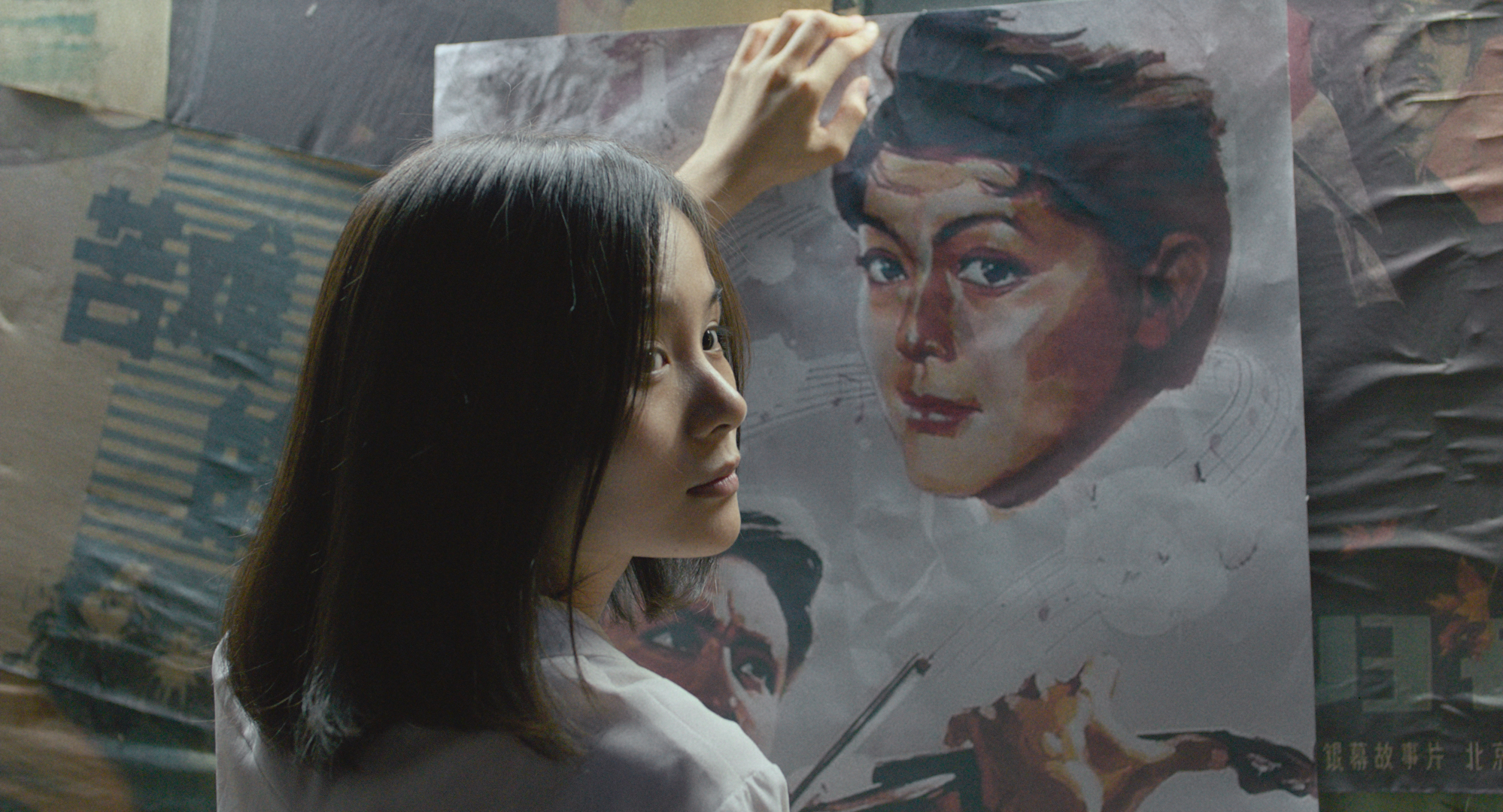
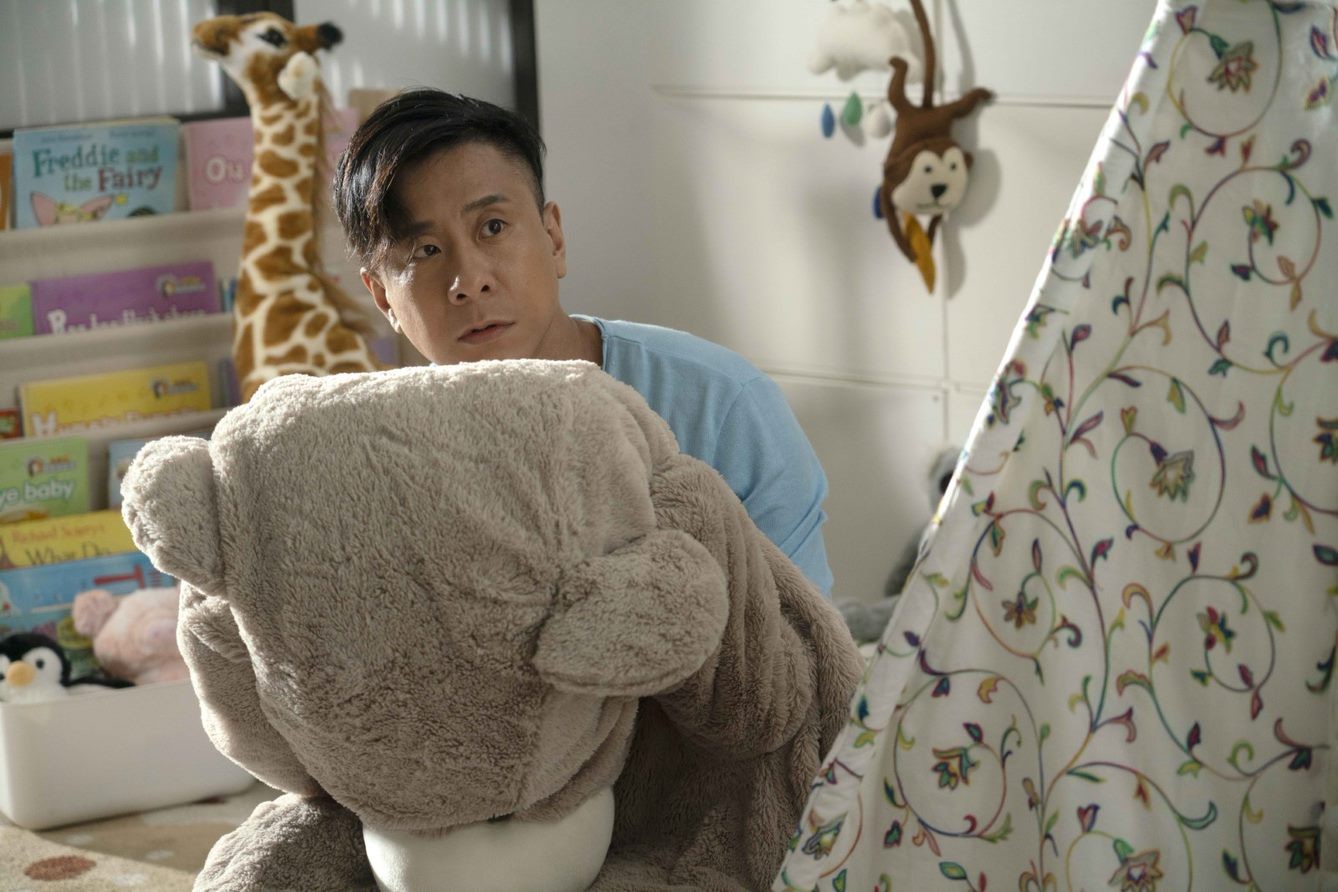
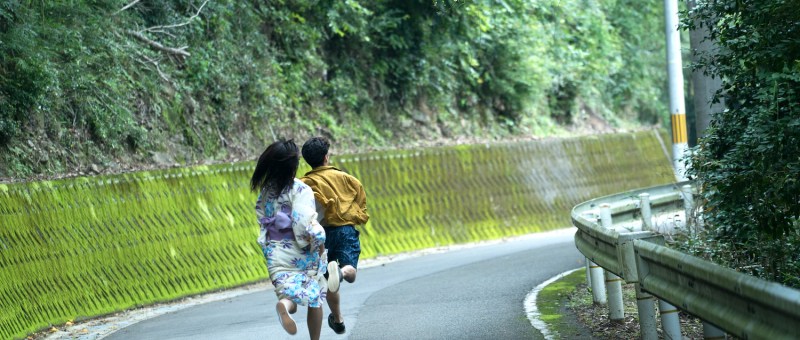
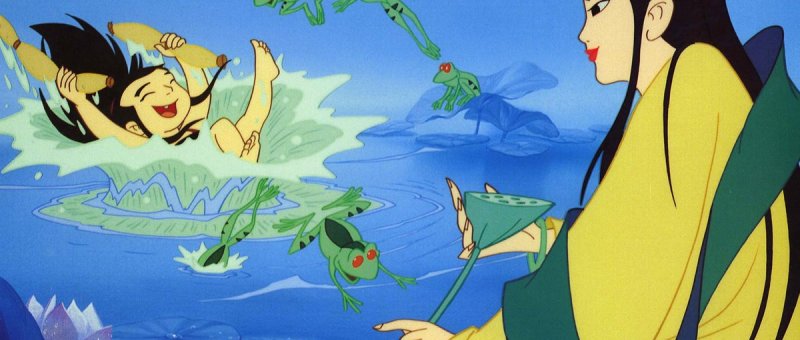
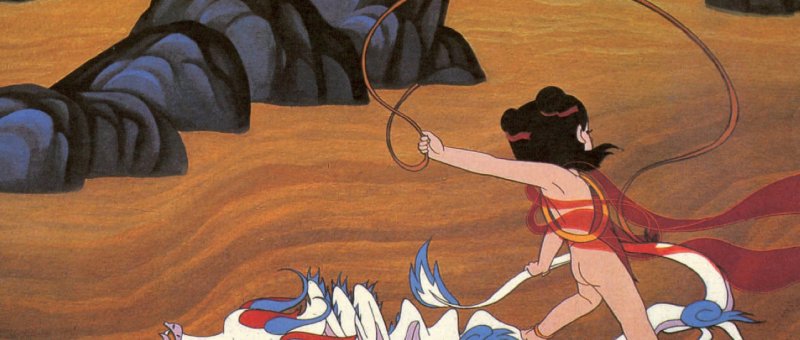
In recent years a festival darling, Ann Hui picked up the Golden Lion lifetime achievement award at the 77th Venice Film Festival yet there have been plenty of ups and downs in her 40-year career as Man Lim-Chung’s candid documentary Keep Rolling (好好拍電影) makes plain. Making his feature directorial debut, Man has been a frequent Hui collaborator as production designer and art director since July Rhapsody in 2002 and follows Hui from the production of 2017’s Our Time Will Come right up to her Golden Lion acceptance speech featuring both behind the scenes footage of Hui directing and direct to camera interviews from herself and other Sinophone directors including Stanley Kwan, Tian Zhuangzhuang, Jia Zhangke, Fruit Chan, Tsui Hark, and Hou Hsiao-Hsien.
What quickly becomes clear is Hui’s ready willingness to face herself. She makes no secret of her on-set frustrations, Man cutting to footage of her irritated with an assistant director while another director recalls an incident from earlier in her career in which she lost her temper with her creative team only to turn up the next morning with tea and pineapple buns by way of an apology. By contrast, she is also described as unusually flexible in her working practices, willing to listen to the opinions of others and change her mind if convinced rather than stubbornly insisting on perfection or getting the image first in her head. Though she is often direct and forthright, making it plain to a PR that she won’t go on stage just to say a few meaningless words while reminding another that she’s not as young as she was and the schedule of in-person appearances is becoming unmanageable, she is also cheerful and energetic always laughing and joking unconcerned with her image and willing to expose an unvarnished vision of herself such as her agonising over a dress to wear to an awards ceremony only to turn up in her regular clothes because she didn’t have time to change after spending all day deliberating with the jury, much to the annoyance of old friend Sylvia Chang who had dressed up for the occasion.
This is perhaps why she’s been able to weather the storm, philosophically laughing off the low points of her career in which she struggled to make ends meet as having accorded her additional life experience and added to her understanding of the lives of others. “You should treat each film as if it’s your last”, Stanley Kwan remembers her advising him, not for any morbid reason that tomorrow you may be gone but because you may never get the opportunity again should funding dry up which is a definite possibility in ever pragmatic Hong Kong. After recovering from a slump with Summer Snow, she found herself in another after the consecutive box office failures of The Stunt Woman and Eighteen Springs, funding Ordinary Heroes with investments from friends but seeing that too flop leaving her with no offers at all.
Yet as Jia Zhangke points out, an artist cannot care too much about box office and Hui herself comments on her determination to take on stories that matter to her and more recently to contemporary Hong Kong though she also admits that the growing importance of the Mainland market may be disrupting that of the local industry. Her protagonists are loners and outsiders often standing at a crossroads of history, a position pregnant with symbolism reflecting according to some the spirit of Hong Kong always anxious in search of settlement and security. Yet, they also perhaps reflect a sense of herself as a perpetual exile, born in Northern China to a Chinese father and a mother she discovered only at 16 to have been Japanese, thereby gaining new understanding which helped repair their sometimes fractious relationship as dramatised in 1990’s Song of the Exile. Now in her 70s and still working, Hui also cares for her now elderly mother reluctant to pursue the idea of placing her in residential care unwilling to admit the idea of “abandoning” someone while perhaps also reflecting on her experiences filming A Simple Life, inspired by the life of her friend and producer Roger Lee. A vibrant yet uncompromising look at the life and career of a legendary artist who helped to kick start the Hong Kong New Wave and went on to conquer European festivals, Man’s elegantly put together doc ends with the words “Long live cinema” a fitting tribute to woman who has dedicated her life to its continuing evolution.
Asian Pop-Up Cinema returns for a bumper 12th season operating both online throughout the US via Eventive March 15 to April 30 and in person at Lincoln Yards Drive-in from April 15 to May 1 with a small season of films submitted for the Oscars streaming via Asia specialist streaming app Smart Cinema USA. The Season 12 Bright Star Award will be going to Japanese actress Kasumi Arimura who stars in Sho Tsukikawa’s And Life Goes On while the first episode of her TV show collaboration with director Hirokazu Kore-eda, A Day-Off of Kasumi Arimura (Episode 1: After My Homecoming), will also be getting a rare international outing.
Online via Eventive (streaming across the US unless otherwise noted):
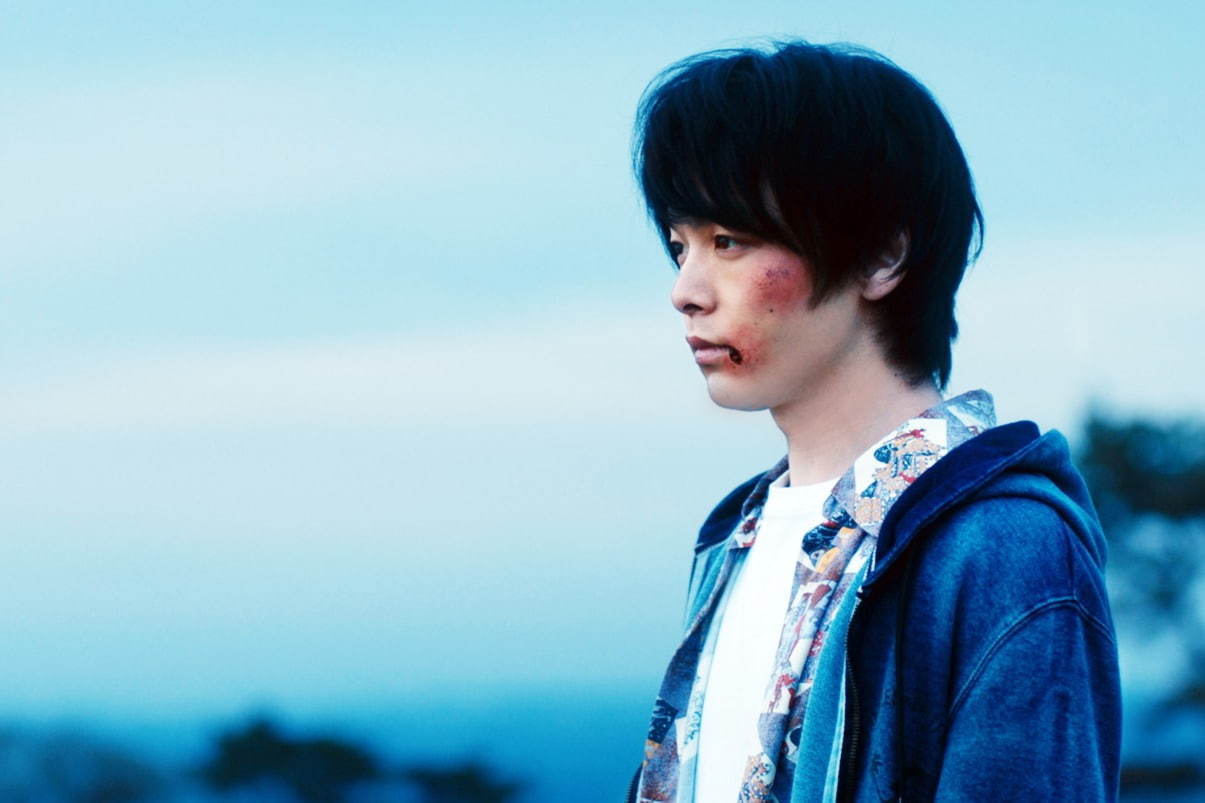
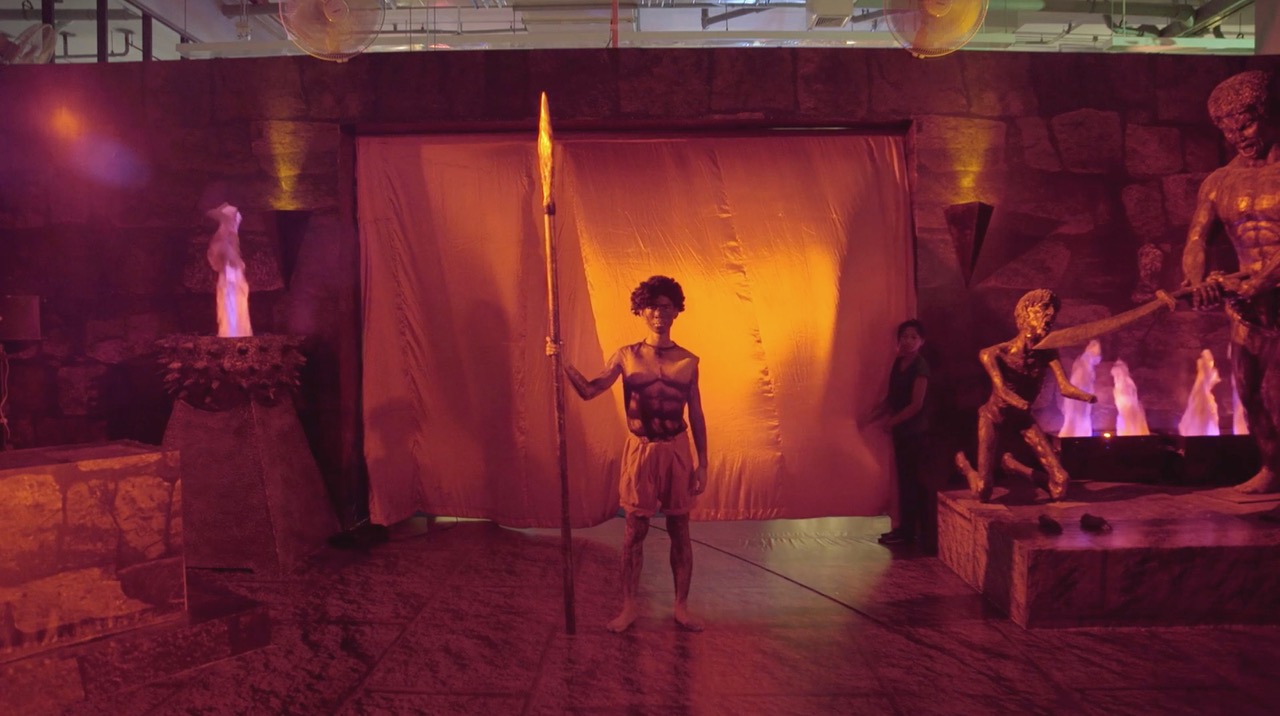
A nameless protagonist on the run from loansharks is saved by a man in orange who whisks him away to “The Town” where others seeking refuge from a hostile society take shelter but his new idyll is shattered by the arrival of a young woman looking for her missing sister.
Originally aired as a six-episode WOWWOW TV drama, Sho Tsukikawa’s And Life Goes On stars Kasumi Arimura as a young woman whose dreams of becoming an actress are derailed by the 2011 earthquake and tsunami. Joining the relief effort she finds herself falling in love with a fellow volunteer student from Tokyo.
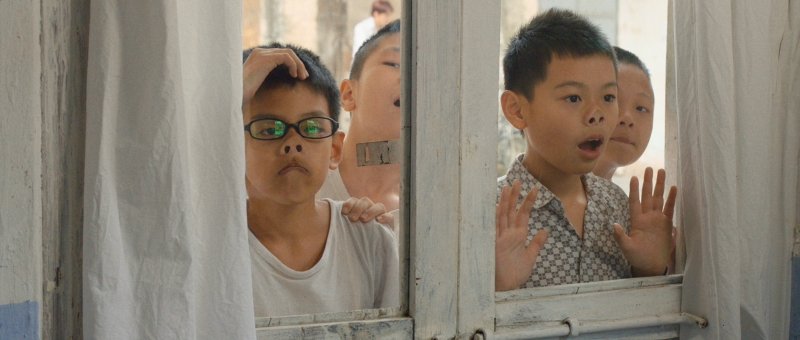
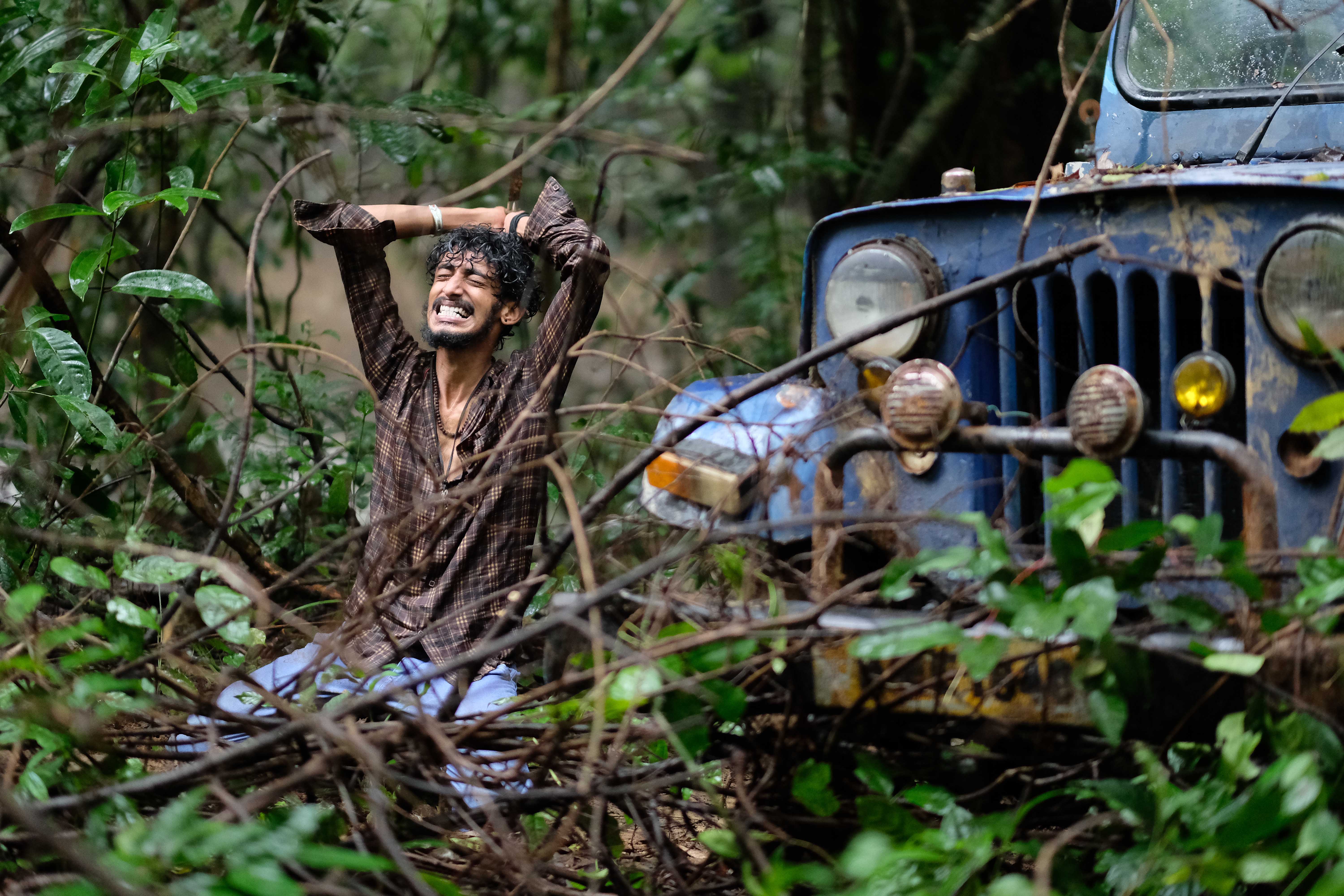
Chola (Sanal Kumar Sasidharan, 2019) – India, Hidden Gem Encore, Free Admission
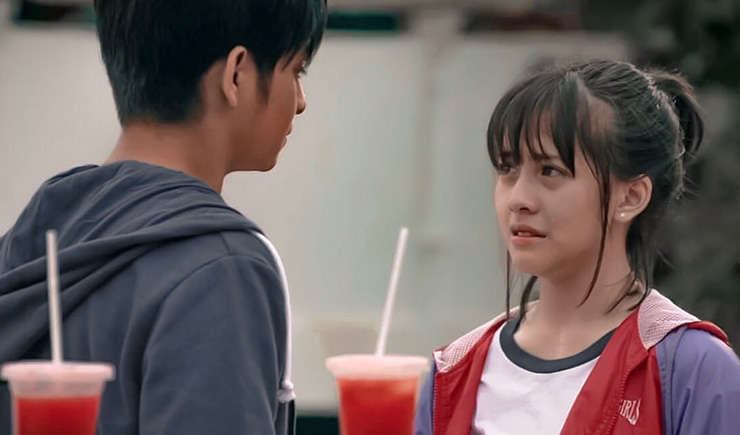
Teenage lovers meet at dawn for a secret trip into town but a sinister third party spells doom from the outset in this Malayalam-language psychological drama.
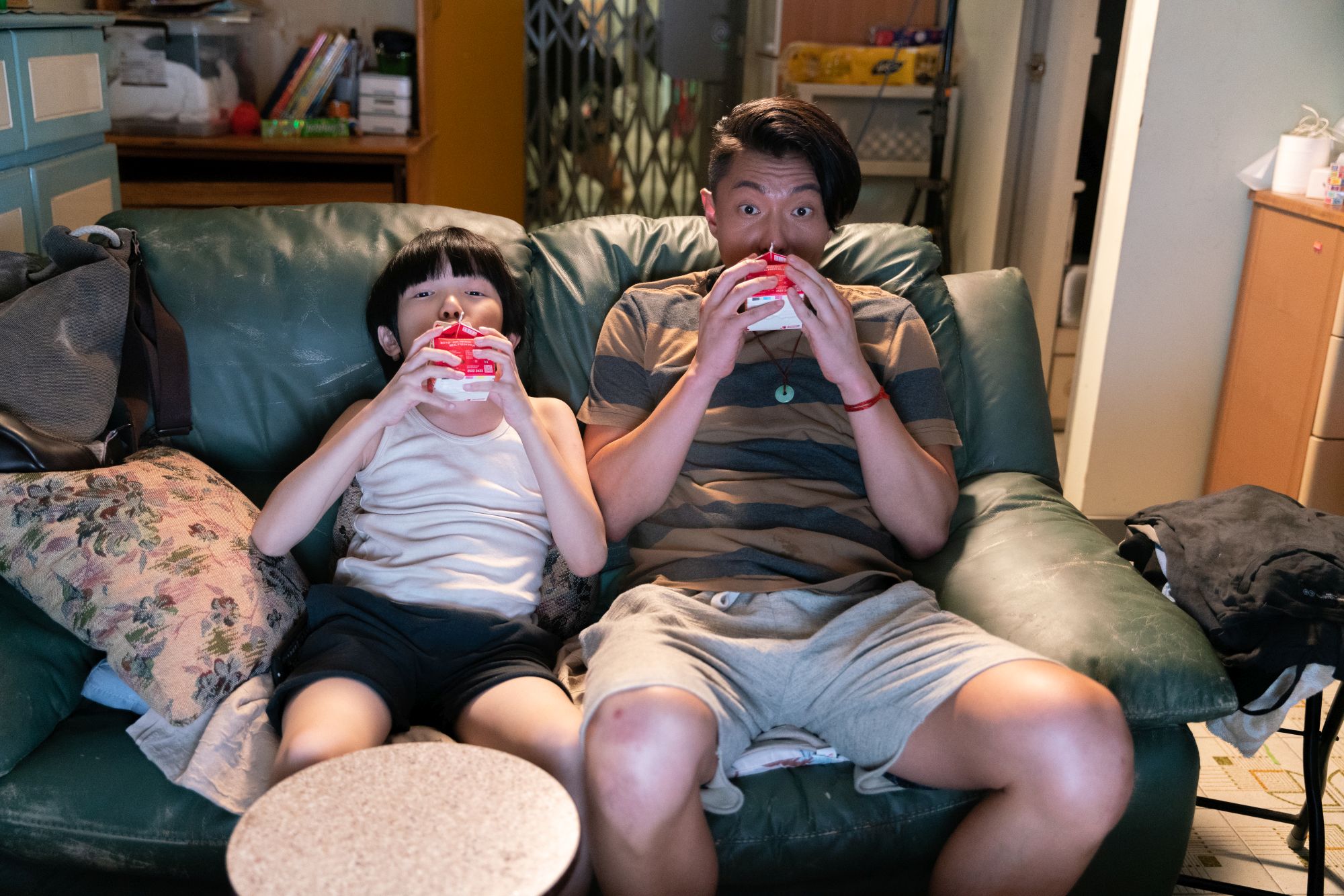
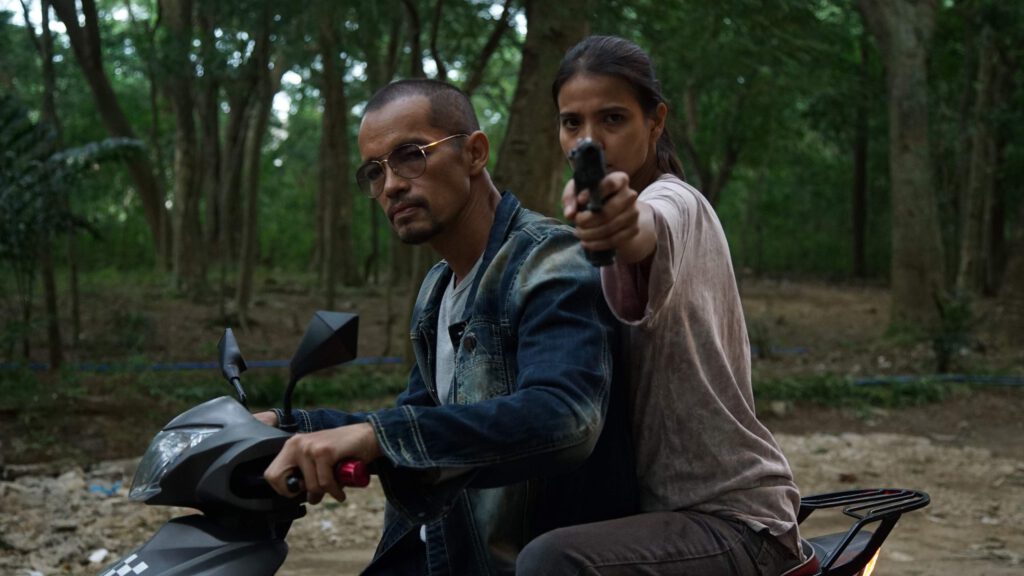
Three men try their luck in Phnom Penh: Songsa sells jeans for his father, Thy joins a biker gang and works in a gay bar, and father-to-be Phaerum hopes to become a car salesman, but all discover a different side of the contemporary city.
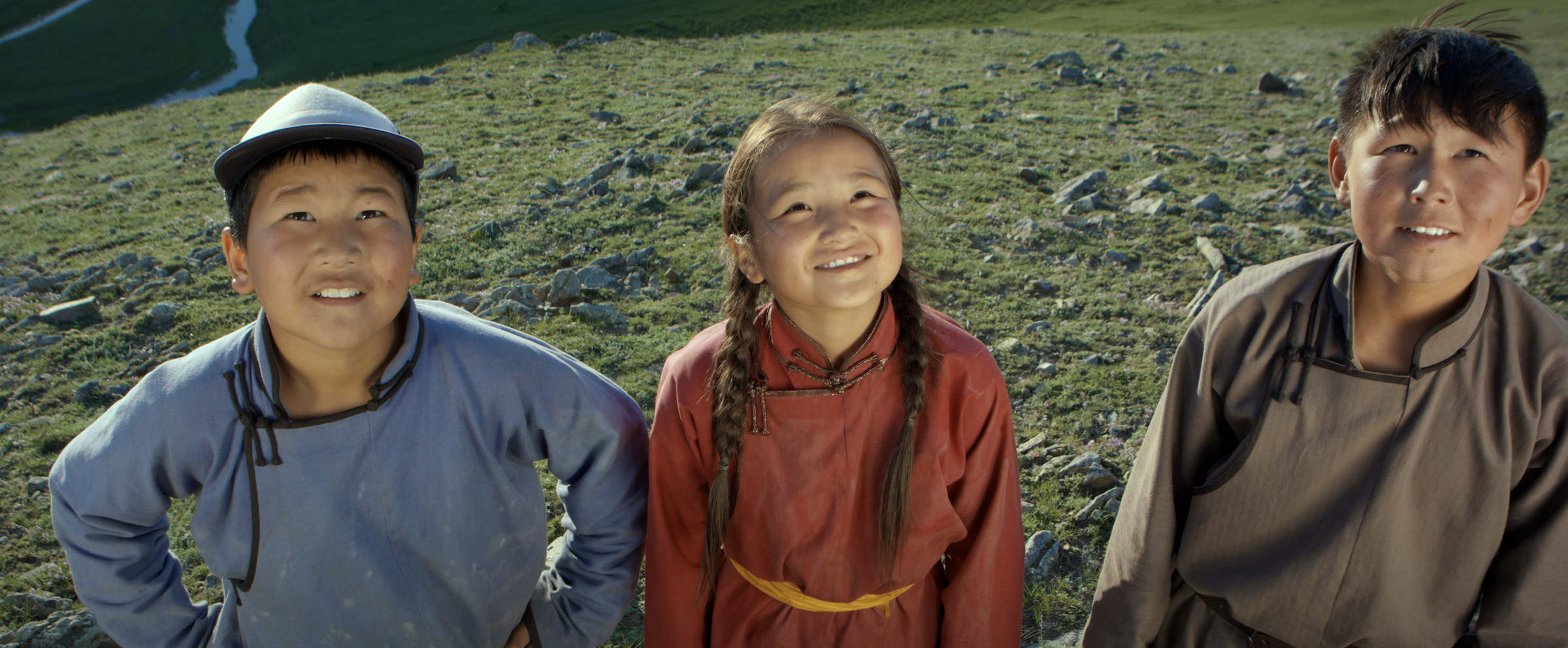
Mongolian drama in which a little boy narrates the stories of his mother, father, and himself spanning from life on the Steppe where a kid and his friends go on adventure to find a better TV signal, to the city where a contortionist’s life is changed by her mother’s injury, and finally to the contemporary society where the boy manages to escape being bullied after his computer mouse transforms into a girl capable of granting his every wish.
Keep Rolling (Doc) (Man Lim-chung, 2020) – Hong Kong
Candid documentary exploring the life and career of legendary director Ann Hui.
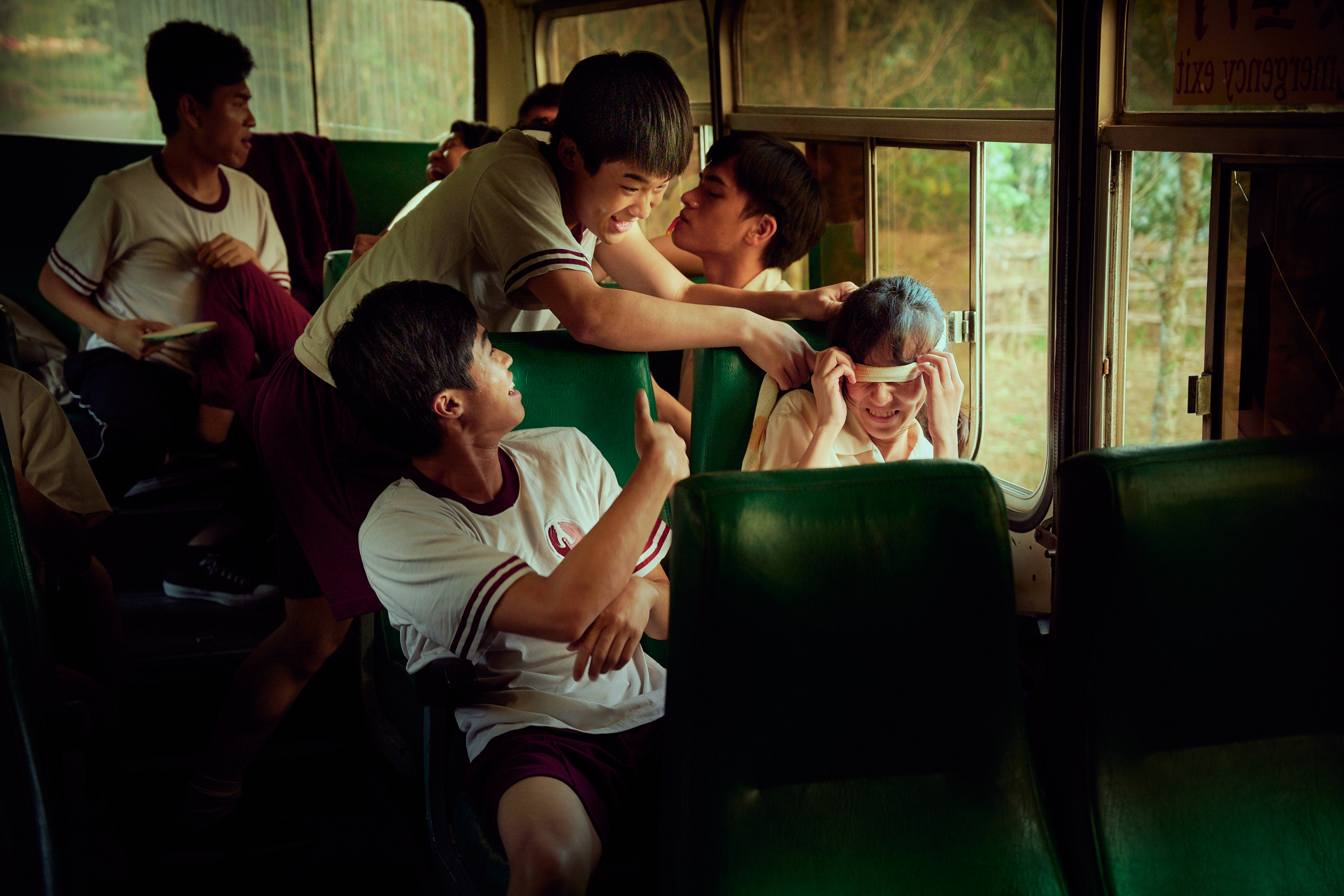
The Silent Forest (Ko Chen-nien, 2020) – Taiwan, (streaming in Illinois only)
A deaf teenager faces a dilemma when he transfers to a special school and witnesses a young woman being bullied this multiple award-winning drama from Taiwan.
Kasumi Arimura stars as a fictional version of herself enjoying a rare day off visiting her mum in the first episode of the late night drama directed by Hirokazu Kore-eda. Review.
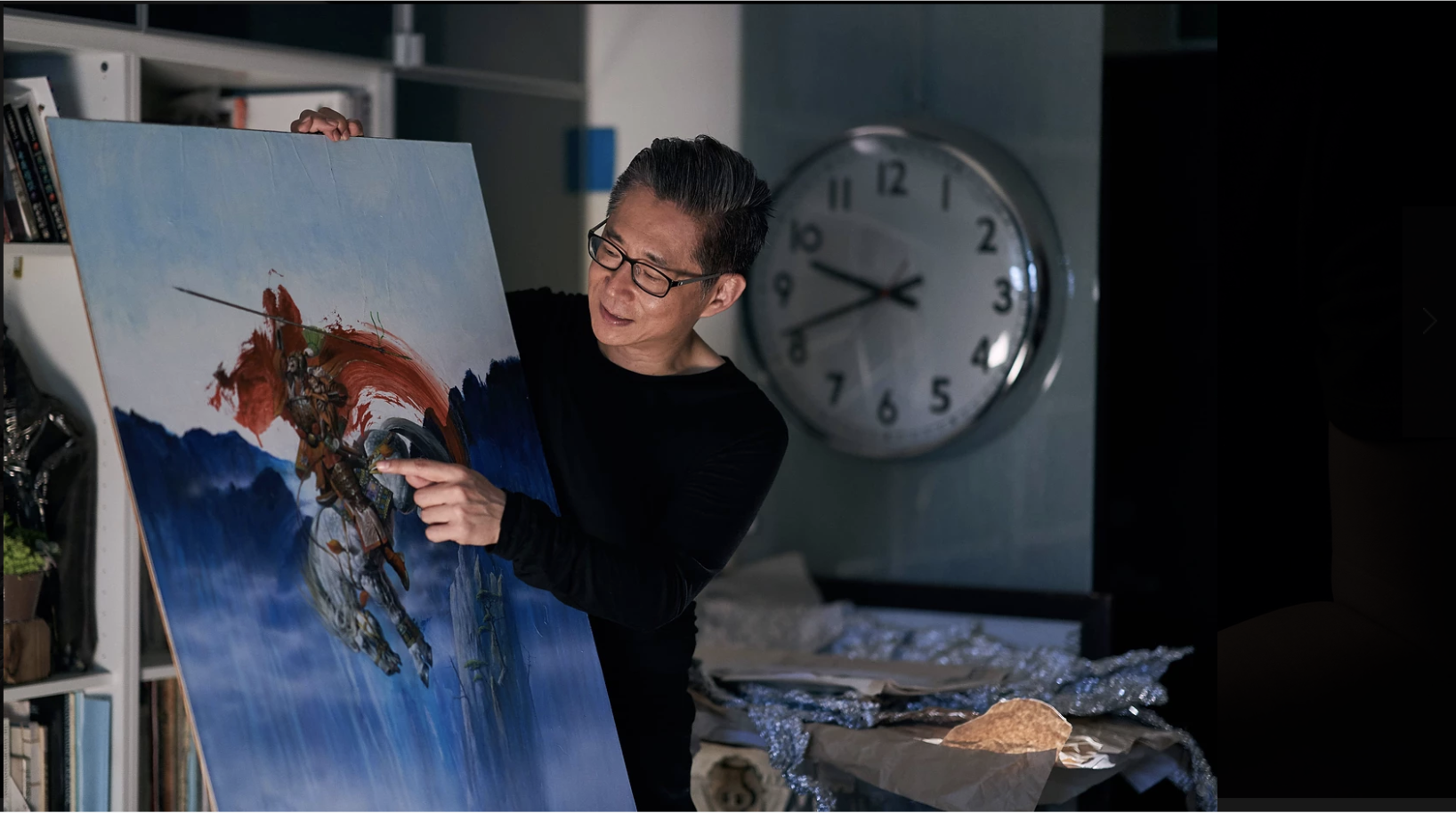
Documentary exploring the life and career of legendary Taiwanese comics artist Chen Uen who sadly passed away at his desk at the young age of 58.
Come and See (Doc) (Nottapon Boonprakob, 2019) – Thailand
Documentary exploring controversial Thai Buddhist sect Dhammakaya and its leader Dhammachaiyo who claims to have met Buddha but has also been accused of money laundering and embezzlement.
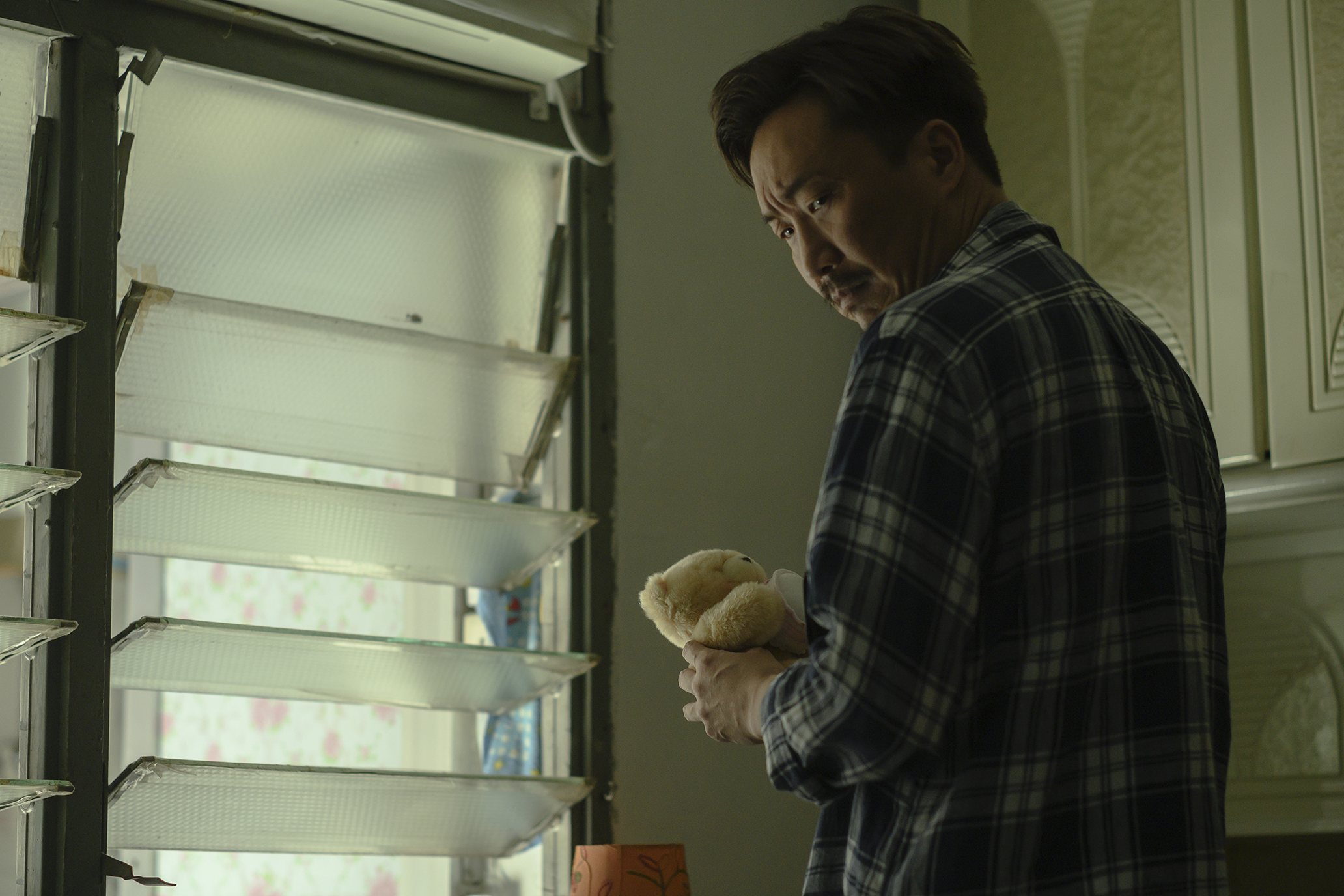
A policeman is forced to face a mistake he made 20 years previously while investigating a crime of passion.
Search Out (Kwak Jung, 2020) – South Korea, Free Admission
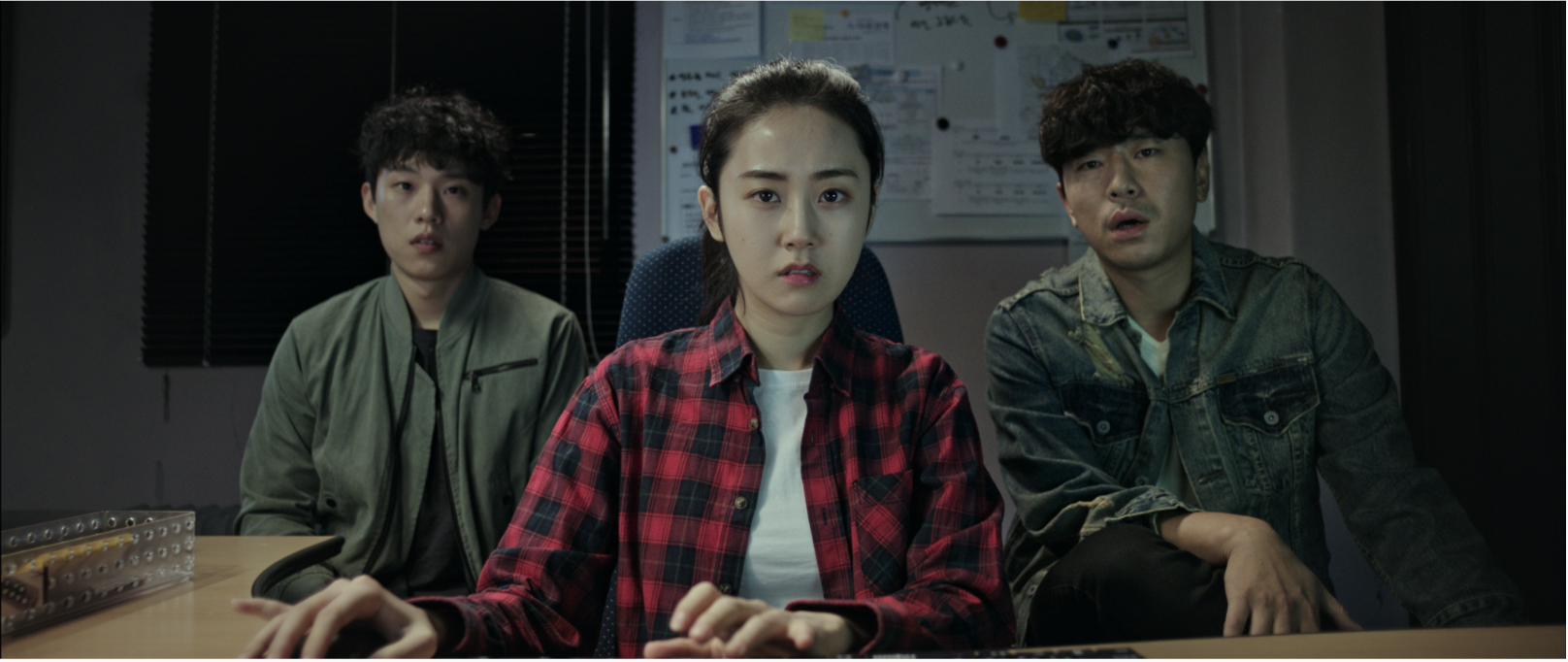
Three youngsters turn internet detectives after stumbling on a malicious Instagram profile which appears to manipulate the vulnerable towards suicide in Kwak Jung’s cyber thriller.
Taking its name from the classic story of the monk Tang Sanzang and his sidekick the Monkey King Jill Coulon’s documentary follows a series of Chinese tourists on a 10-day European bus tour .
Four-part horror anthology from Taiwan featuring adaptations of spooky online stories in which a woman moves into a haunted apartment, a person tries to survive in a world in which food has been declared illegal, teenagers play hide and seek in an abandoned house, and a taxi driver who took his own life attempts to return to the mortal realm to reconcile with his daughter.
Lily Franky stars as an introverted professor whose life changes after he saves a painter who washes up onshore by administering venom from a poisonous shell bringing further travellers to his door in search of various cures.
A married couple join a voluntary rehabilitation programme in the midst of Duterte’s war on drugs only for the husband to be found dead in the street some time later beside a sign reading “I’m a pusher; don’t be like me” leaving the wife with no choice other than to become a police informant in order to provide for her children.
A French-Canadian woman travels to the birthplace of her adopted daughter in Vietnam and ends up travelling the country with her birth mother.
April 1 – 15:
Oscar Contenders from Asia: streaming via Smart Cinema USA (further details to be revealed in late March)
True Mothers (Naomi Kawase, 2020) – Japan
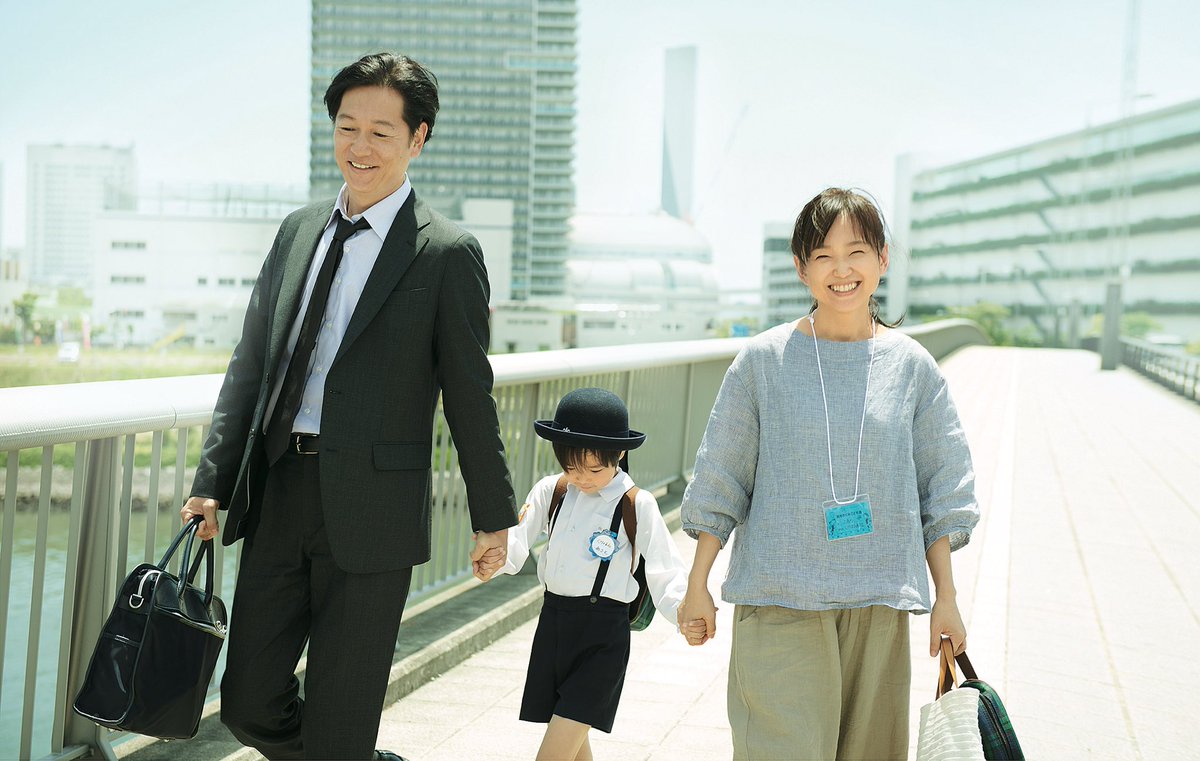
Heartbreaking drama from Naomi Kawase in which a young couple adopt a baby only for the birth mother to resurface some years later.
Better Days (Derek Tsang, 2019) – Hong Kong
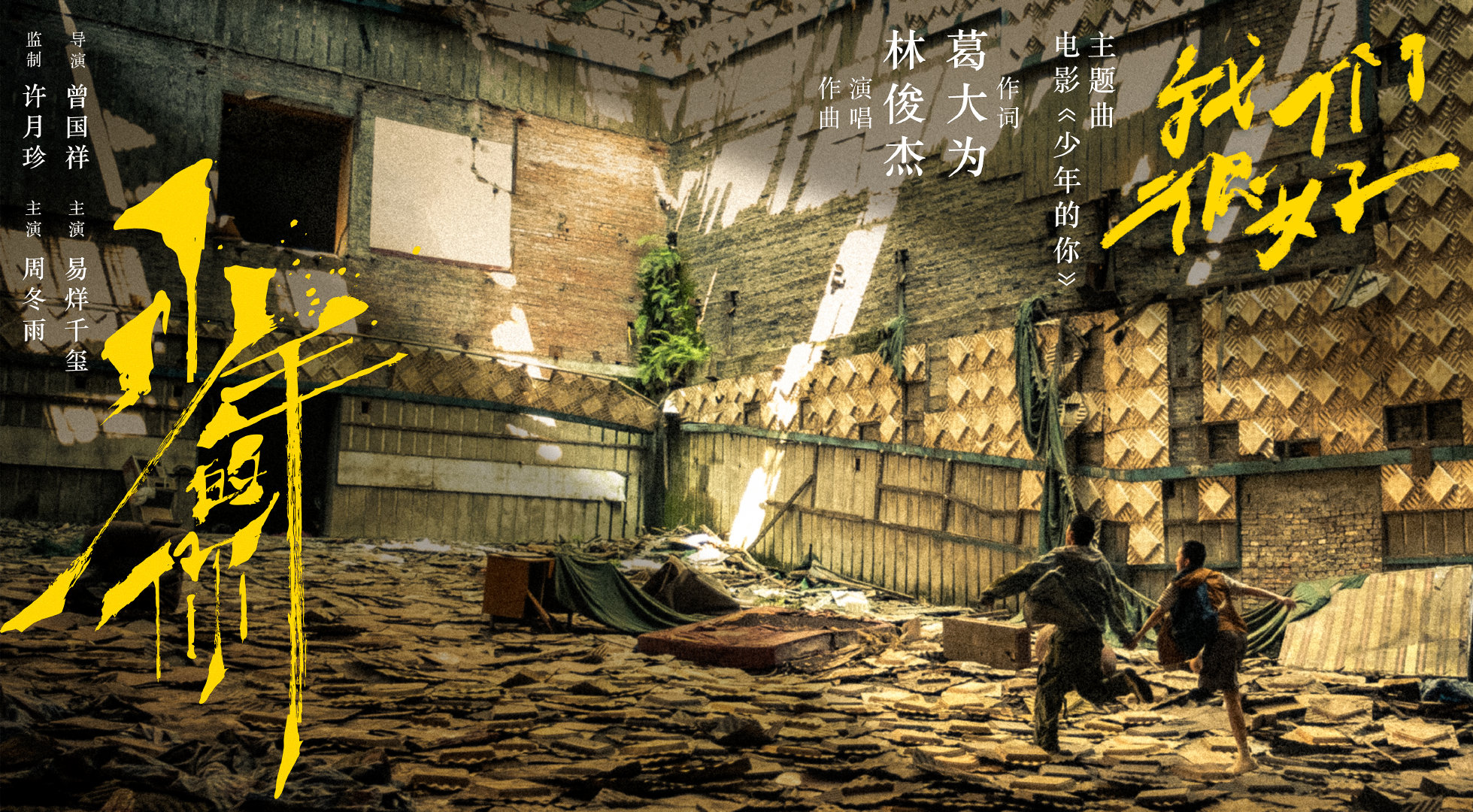
Derek Tsang’s Soul Mate followup stars Zhou Dongyu as a bullied young woman bonding with a bad boy played by boyband superstar Jackson Yee. Review.
The Man Standing Next (Woo Min-ho, 2020) – South Korea
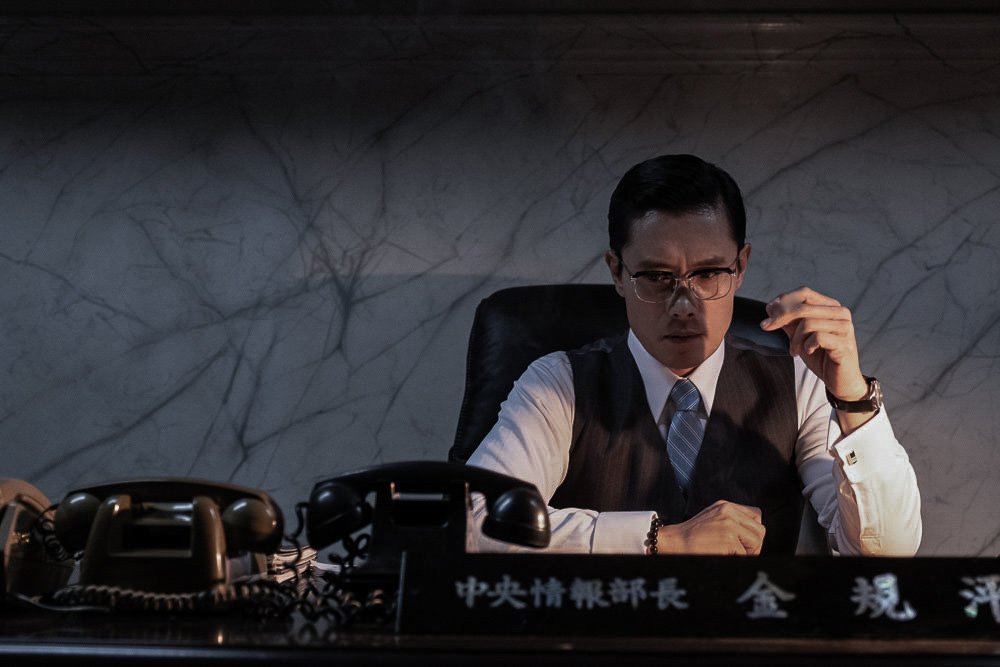
Woo Min-ho re-examines the assassination of President Park Chung-hee through the lens of 70s conspiracy thriller. Review.
Roh (Soul) (Emir Ezwan, 2019) – Malaysia
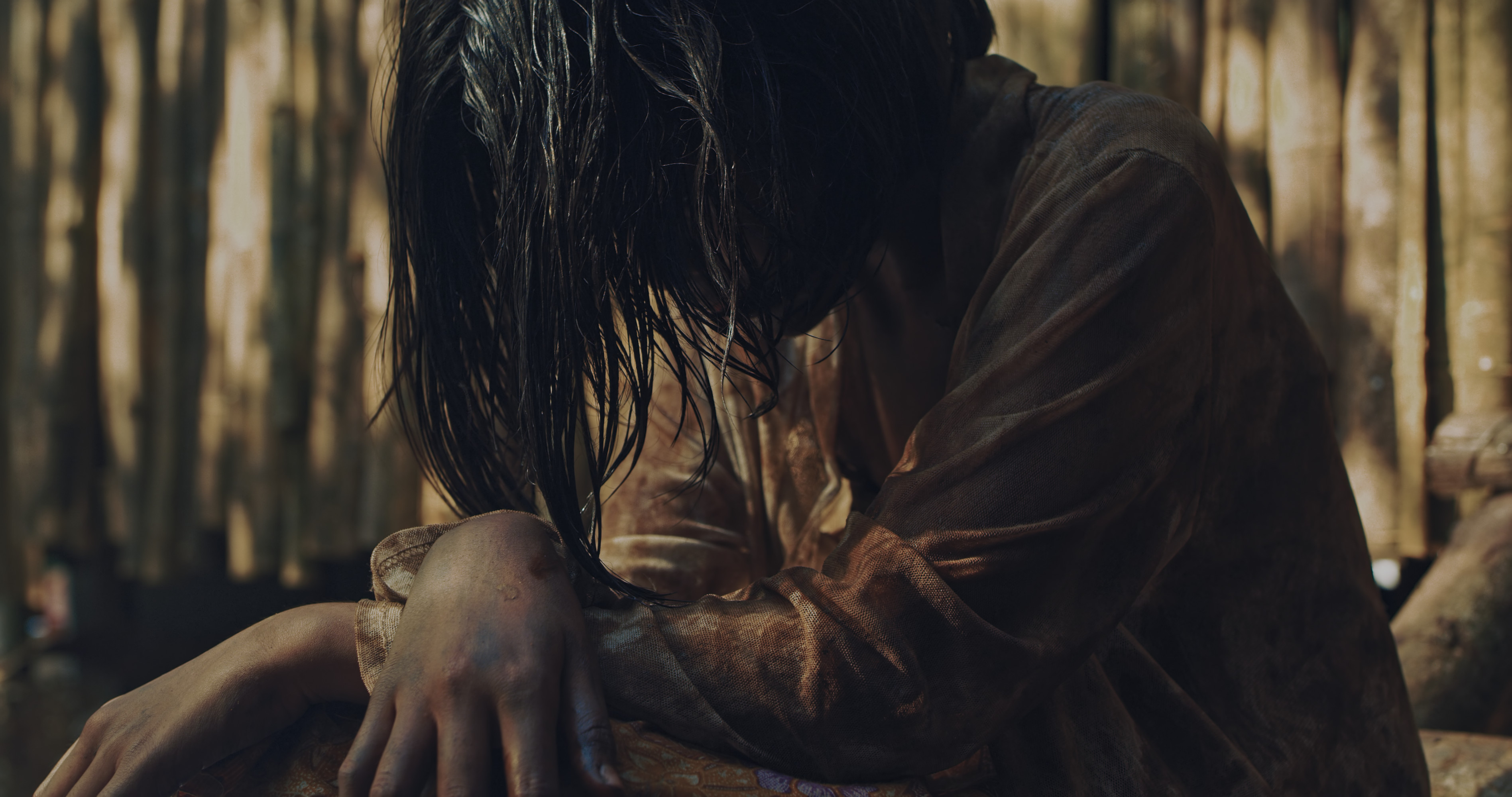
A single-mother and her two children find themselves beset by darkness after taking in a little girl who wandered out of the jungle in Emir Ezwan’s atmospheric folk horror. Review.
Lincoln Yards Drive-in:
Lincoln Yards Drive-in is located at 1684 N. Throop Street. Films will be shown at sunset on mostly Thurs/Fri/Sat/Sun nights. Each film will be shown once only. Total capacity: 40 vehicles per screening Only.
Thursday, April 15: CENTERPIECE One Second Champion (Chiu Sin Hang, 2020) – Hong Kong
A single father takes to the boxing ring after developing the ability to see one second into the future.
Friday, April 16: Dear Tenant (Cheng Yu-chieh, 2020) – Taiwan
A gay single father raising his late partner’s son faces a custody battle when his mother-in-law dies and the boy’s uncle returns from abroad after discovering that he intends to adopt him and take over the family property.
A dejected real estate agent, a young woman hoping to lose weight to run with her idol, and a retired PE teacher trying to keep a promise to his late wife find direction in running in Lik Ho’s sporting drama.
Sunday, April 18: One Summer Story (Shuichi Okita, 2020) – Japan
A high school girl embarks on a summer adventure of self discovery tracking down her estranged birth father in Shuichi Okita’s heartwarming coming-of-age drama. Review.
Thursday, April 22: Black Light (Bae Jong-dae, 2020) – South Korea, Free Admission, Advance RSVP is required
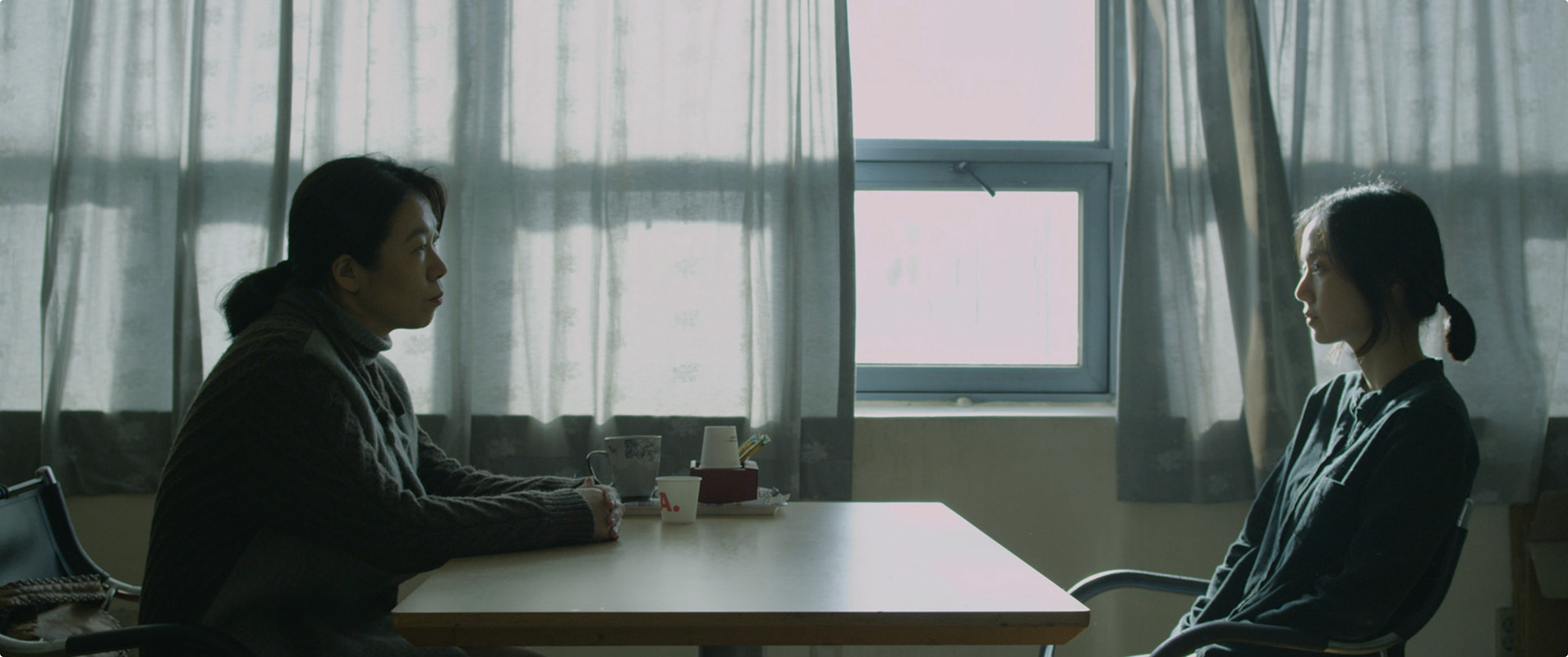
Two women working at the same factory are brought together by the discovery their husbands were involved in a fatal car crash, one passing away and the other remaining in a coma leaving his wife to raise their teenage daughter alone.
Friday, April 23: Moving On (Dan-bi Yoon, 2019) – South Korea, Free Admission, Advance RSVP is required
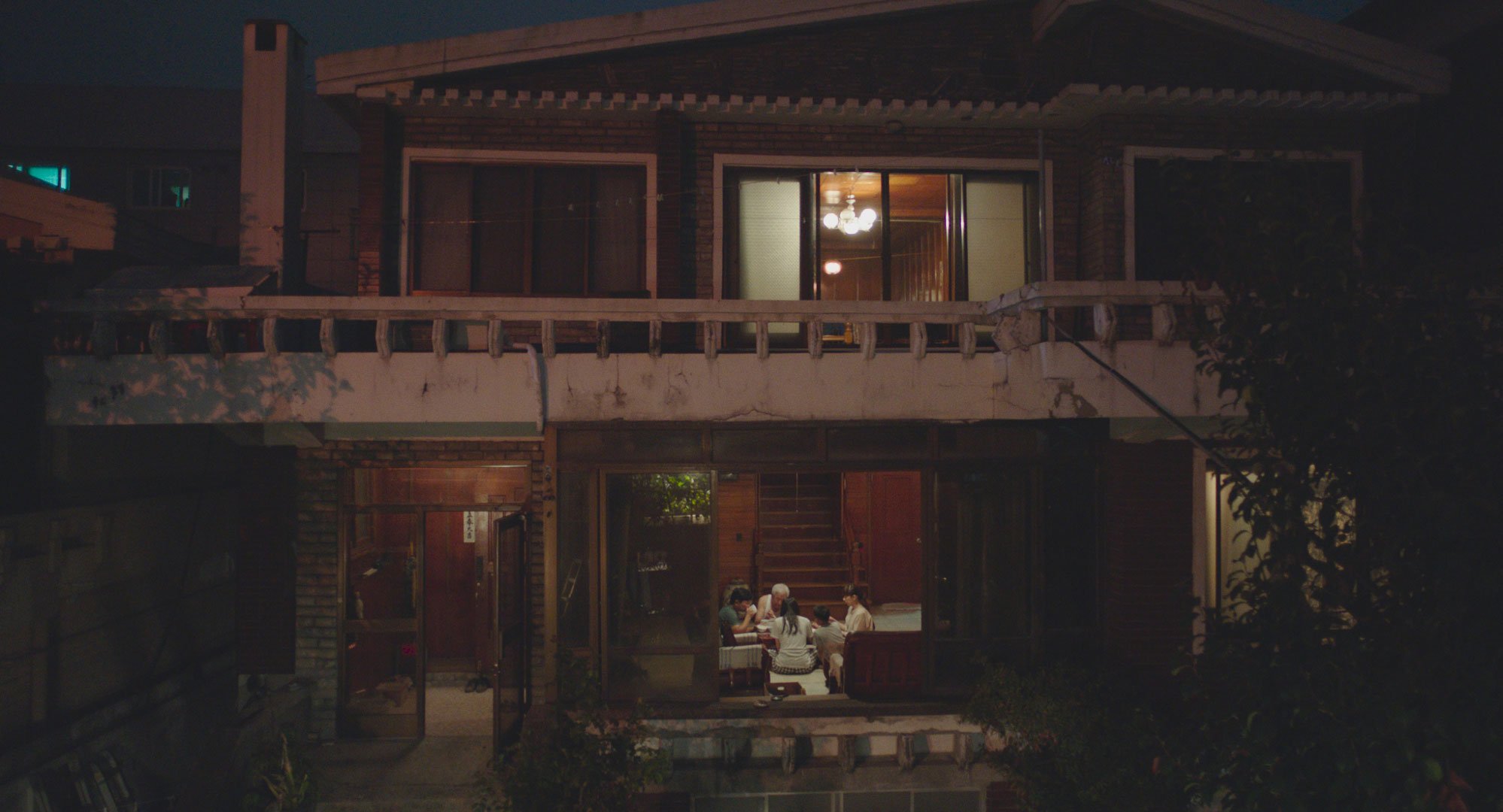
A young girl learns a few harsh lessons about the adult world during a summer at grandpa’s in Yoon Dan-bi’s sensitive coming-of-age drama. Review.
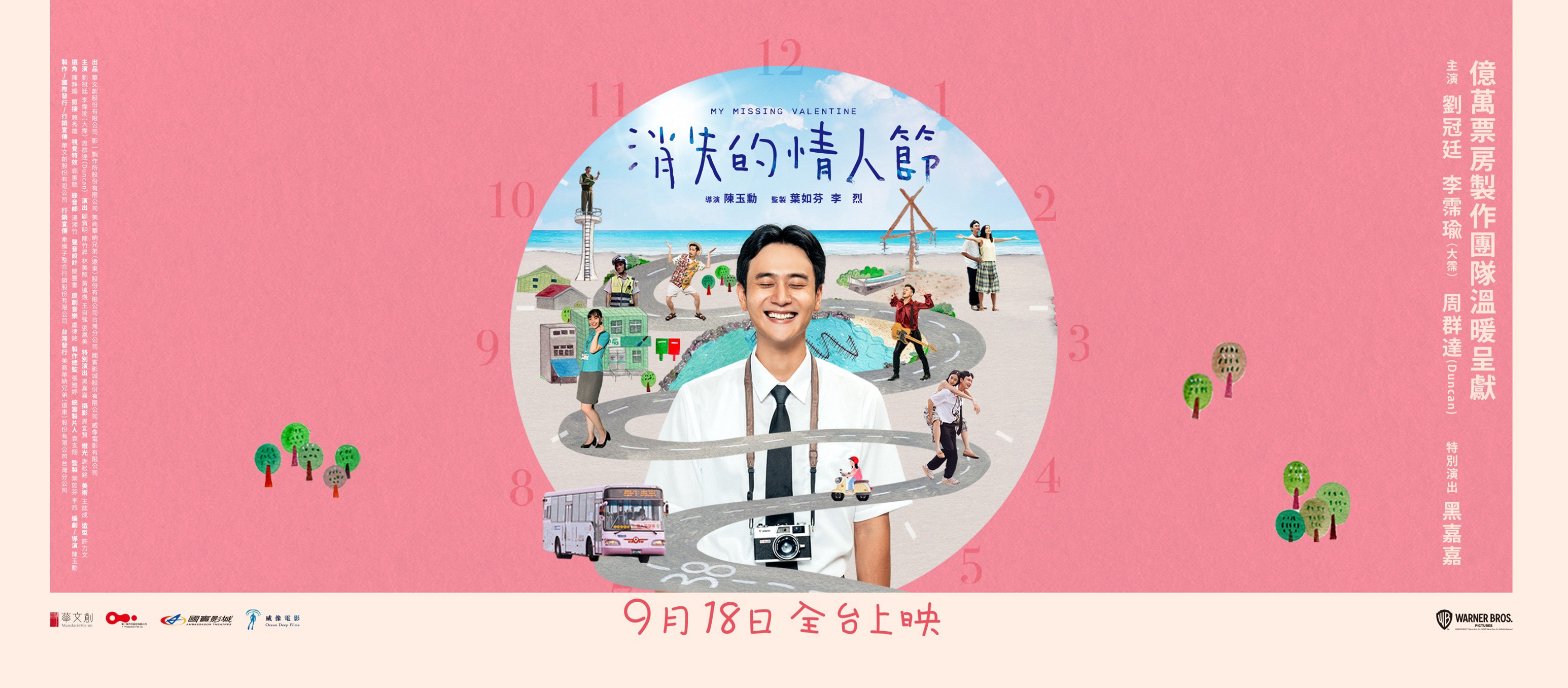
A woman always in a hurry meets a dashing man on the way home from work and they agree to meet up for a special Valentine’s Day date but when she wakes up the next morning she discovers that Valentine’s Day has already passed…
Sunday, April 25: Fanfare (Lee Don-ku, 2019) – South Korea, Free Admission, Advance RSVP is required
A young woman is abducted by armed robbers after they raid the coffee bar she was hanging out in on Halloween killing the barista in the process
Saturday, May 1 CLOSING NIGHT Ready O/R Knot (Anselm Chan, 2020) – Hong Kong
Romantic comedy in which a couple together for five years have conflicting views on marriage and go to great lengths to defend their respective positions!
Asian Pop-Up Cinema Season 12 runs online March 15 – April 30, via Smart Cinema USA April 1 to 15, and at Lincoln Yards Drive-in April 15 to May 1. Full details for all the films as well as ticketing links can be found on the official website and you can also keep up with all the latest news by following Asian Pop-up Cinema on Facebook, Twitter, Instagram, and Vimeo.
“You can run but not from yourself” a gruff but sympathetic farmer explains to a fugitive young couple, astutely perhaps understanding the quality of their flight. Less a lovers on the run romantic fantasy than a gentle character study in trauma and insecurity, Bunji Sotoyama’s Soirée (ソワレ) finds its two wounded youngsters struggling to find safety and security in an increasingly indifferent society in which they are perhaps expected to care for an older generation they may feel has long since abandoned them.
Aspiring actor Shota (Nijiro Murakami) for instance has been participating in a spate of “It’s Me!” scams targeting the older generation in which they are convinced that their grandson has been involved in some sort of trouble and is in desperate need of money. We can see by the ambivalent look on his face that he hates himself for his “role” in this sordid piece of modern day drama but also that it plays into his self-destructive conviction that he is no good and cannot achieve conventional success. His need for slapdash, quick fix solutions is further driven home by the coach at his acting class who gives him a very public dressing down for coming in unprepared, insisting that he’ll never move anyone until he gets some real life experience and engages with the text.
While Shota takes an envelope from an anxious grey-haired old lady, Takara (Haruka Imou), a withdrawn young woman working at a nursing home, gently brushes another’s hair only for her to suddenly disappear while Takara hums a comforting lullaby. We witness her nervousness at the unexpected ring of the doorbell and the panic attacks when some of the older gentlemen mistakenly grab at her, later realising they are each responses to a deep-seated trauma as revealed by a letter telling her that her estranged father who had been in prison for long term abuse is about to be released.
The pair eventually meet when Shota returns to his hometown with an acting troupe hired to put on a play at the home though things get off to an ominous start when one of the old ladies suddenly collapses while working with the actors, the head of the troupe rather cynically musing on DNR orders and the desires of some absentee children to keep their parents alive in order to continue receiving their pension. These contradictory impulses, Takara’s warmth and compassion towards the elderly people in her care and Shota’s wilful exploitation of their weakness, is brought home when Takara’s father suddenly returns, barges his way into her home asking for a fresh start claiming to have paid his debt, and then proceeds to rape her all over again. Discovered mid-act by Shota who had come to collect her for the local festival, Takara eventually stabs her father with a pair of dressmaking scissors in order to protect him, the pair thereafter finding themselves on the run.
Coming to her senses, Takara intends to hand herself in but is convinced by Shota to make a run for it. “Why do the ones who struggle most get hit worst, why do the weakest always lose?” he ironically asks her, “We weren’t born to be hurt”. Yet their contradictory qualities are only further highlighted as they try to chart a new course for themselves. The pair find temporary refuge with a pair of plum farmers who take pity on them thinking they are a young couple eloping as apparently they once were, only Shota later makes a half-hearted attempt to rob them which he quickly gives up on being challenged by the sympathetic husband. In the next town, Takara determines to look for work while Shota tries to make money through bicycle races and pachinko, chastened by her admonishment on finding employment that it’s possible to support oneself without cheating others.
Somewhat tritely, Shota tries to tell her that God never burdens you with more than you can bear, while the older woman at the plum farm also offers that plums are all the sweeter for their suffering during a harsh winter dangerously playing into a notion of internalised shame that told Takara she would blossom into the kindest soul who ever lived once her suffering was over only to leave her feeling empty and despoiled as if she somehow deserved everything that happened to her. Shota’s troubles are by comparison small, his conservative brother irritatedly telling him he should accept he has no talent and get a real job, while he too perhaps thinks he is empty inside and therefore incapable of moving anyone just as his director told him. Finding salvation in mutual acceptance they begin to see the “way out” only for their essential connection to be threatened by its very existence.
A melancholy character study through the legacy of trauma and toxicity of internalised shame, Sotoyama’s occasionally ethereal drama takes on the qualities of a fable through the repeated allusions to princess Kiyohime and her doomed love for the wandering monk Anchin yet he is careful enough to hold out a ray of hope for each of the wounded lovers in their apparently fated connection even as they struggle to find refuge in an often hostile society.
“I want to move on” a grieving young woman explains, though perhaps ironically heading in the wrong direction. A youthful take on learning to live with loss, Our 30-Minute Sessions (サヨナラまでの30分, Sayonara made no 30-bun) finds a group of college hopefuls shattered by the unexpected death of a charismatic friend leaving them each lost, moving on in one sense but treading water in another uncertain what to do with the unfulfilled potential of their adolescent memories. Yet, through ghostly intervention, what they eventually realise is that nothing’s ever really lost, the echoes of those memories merely add to the great symphony life and all you can do in the end is learn to play along with it.
That’s something introverted college student Sota (Takumi Kitamura) has however struggled with, unable to emerge from the trauma of losing his mother at a young age. As we first meet him, he’s subjected to a painful group interview for a regular salaryman job at which they ask about the memories he’s made with his university friends but rather than come up with a convincing lie, Sota honestly tells them he has no friends and that’s a good thing because it means he’s free to dedicate himself to work 100%. As expected, he gets a rather brutal rejection text before he’s even reached the lift, pausing only to rudely but perhaps accurately decline an invitation to join a WhatsApp group with the other hopefuls for the reason that it’s “pointless” because they’re unlikely to meet again.
Sota doesn’t like to share his space with other people, but after noticing a walkman abandoned at a disused swimming pool finds himself a permanent host to Aki (Mackenyu), recently deceased lead singer of up-and-coming college band Echoll. Unlike Sota, Aki is charismatic and outgoing, every inch the rock star but less cocky than aggressively caring. It pains him that the thing he left unfinished has fallen apart in his absence and that all his friends seem to have given up their dreams and aspirations in life. For unknown reasons it seems that when Sota presses the play button on the walkman, it allows Aki to take over his body for the length of a single side of a cassette tape temporarily lending him the swagger and verve hitherto missing in his life even if he claimed not to particularly have missed them.
In fact, Sota quite enjoys the arrangement because it means he doesn’t quite exist for the time the tape is playing, other people are no threat to him in his literal invisibility. Yet over time, a conflict obviously develops especially as the main thrust of Aki’s mission is healing his former girlfriend’s broken heart. Having lost her love of music, Kana (Sayu Kubota) has spent the last year largely inside working her way through a book of daily soup recipes that only her mother tastes. She claims she’s “moved on”, but in reality has done anything but caught in a kind of limbo unable to let go of her guilt and memories of lost love while conflicted as she bonds with the shy and introverted Sota himself it turns out also a frustrated musician.
A poignant reminder of Aki’s unfinished business as he and his friends attempt to find a degree of accommodation with loss the Japanese title translates more closely to “30 minutes to goodbye”, but there’s also something in the Japanese for playback (再生) equating to “again life” as it grants the late singer a temporary resurrection if one that lasts only the length of a set list. Perhaps a hipsterish affectation, the love of the outdated analogue recording mechanism, besides its practical advantages, provides a tangible proof of life albeit a fallible one in which every attempt to replay necessarily weakens integrity. Yet as a veteran later puts it, no matter how many times the tape is erased and overwritten, traces of previous recordings remain becoming in a sense just one of many layers that add depth and richness to the quality of the whole.
The bandmates begin to realise that starting over doesn’t mean forgetting Aki or betraying his memory, they don’t have to leave him behind but can in a sense take him with them in the memories they share while Sota eventually begins to see the joy in human interaction and the power of connecting through music shedding his introversion in the knowledge that not all friendships are inauthentic and even if someone makes an early exit they leave traces of themselves behind on which others can build. A stylistically interesting take on the band movie with a fantastic soundtrack of convincing college rock hits, Our 30-Minute Sessions is a classic coming-of-age drama but one dedicated perhaps less to the art of moving on than to that of moving forward adding new notes to an ever expanding symphony of life.
Though Japanese society is often regarded as comparatively liberal, that liberality can sometimes reflect a superficial politeness and respect of discretion more than true acceptance. Though several prefectures have now made local provision for same sex unions, Japan lacks a basic anti-discrimination law at the national level protecting the rights of LGBTQ+ people and has often been slow to accommodate social change especially when it comes to the organisation of the family unit. The journey of the two men at the centre of Rikiya Imaizumi’s his, a sequel to the TV drama of the same name set some years earlier, perhaps travels at a rapid pace from internalised homophobia to the acceptance of identity and foundation of a home but mirrors the path of society at large as it edges its way towards the truly liberal in which all are free to live in the way they choose.
Beginning with an ending, Imaizumi opens in the “past” as Shun (Hio Miyazawa), now an isolated young man living alone in the country, dwells on ancient heartbreak as his first love Nagisa (Kisetsu Fujiwara) abruptly breaks up with him as they prepare to graduate from university. We subsequently discover that Shun got a regular salaryman job but remained in the closet only for rumours to circulate around him at work forcing him to endure the casual homophobia of his co-workers at the compulsory nomikai all the while denying his true identity. This seems to be the reason that he’s taken up the offer of cheap rural housing designed to bring the young back to the depopulated countryside and has been largely keeping himself to himself, growing his own produce and deliberately keeping the locals at arms’ length. All that starts to change, however, when Nagisa suddenly turns up on his doorstep with his six-year-old daughter Sora (Sakura Sotomura) in tow.
Though not exactly overjoyed, Shun allows the pair to stay but remains conflicted unsure what it is Nagisa wants from him and also fearful of his new life being derailed should the local community discover what it is that he’s so obviously in hiding from. Nagisa, meanwhile, apparently broke up with him for the same reasons, afraid to continue into his adult life as an openly gay man eventually travelling to Australia where he drifted into a relationship with a Japanese woman, Rena (Wakana Matsumoto), working as an interpreter with whom he later conceived a child and formed a conventional family. Struggling with himself he tried to maintain the facade through casual relationships with men, but discovered that he couldn’t make it work and unlike Shun decided the only way out of his predicament was to embrace his sexuality and attempt to live a more authentic life with the man he never stopped loving.
Having pursued contradictory solutions to the same problem, the two men find themselves still in some senses at odds even as they reunite in their obvious love for each other. Nagisa envisages for them a family life raising Sora together and with the help of his sympathetic, supportive lawyer intends to have his conviction vindicated by a verdict in law but his former wife, while not openly hostile if obviously hurt and feeling humiliated in having been deceived, wishes to retain custody of her daughter even though she was not the primary caregiver. The court battle opens a veritable can of worms in a fiercely patriarchal, conformist society, Nagisa’s lawyer reminding him that he has an uphill battle because society inherently believes that women are better suited to childrearing. Rena’s lawyer throws the homophobic book at them, describing the relationship between the two men as “eccentric”, implying it cannot be other than harmful to Sora not least because of the bullying and social stigma she may face as a daughter raised by two fathers. Even the judge agrees that the situation is “not exactly normal”, though in this he may have a point in the fact that Nagisa had been a househusband and his wife the breadwinner, still an extraordinarily unusual family setup in a society in which women are expected to shoulder the domestic burden sacrificing their careers in the process.
Indeed, it’s this same paradox that Nagisa’s female lawyer eventually throws back at Rena, that she cannot claim to adequately care for her daughter while working especially as she is a freelancer whose hours are often unpredictable. Rena had been reluctant to involve her family because of the shame of admitting her marriage has failed and for the reason it has but is later forced to ask her mother for childcare assistance only to receive a curt “I told you so” which speaks volumes as to the quality of their relationship. Meeting in a coffeeshop Rena looks at her mother looking askance with mild though unvoiced disgust at two men holding hands, reflecting both on her unforgiving austerity and her relationship with her granddaughter. The two women obviously differ when it comes to childrearing philosophy, Rena not wanting her daughter to suffer in the same way she has suffered because of her mother’s unforgiving conservatism and is extremely worried on being called to the school and told that Sora, who had previously been so cheerful and outgoing, has become sullen and withdrawn.
Yet Sora is perhaps the force which allows each of her parents to accept themselves for who they are and embrace their true identities. Worried that she might be a burden to her mother who often drinks and appears to resent her for interfering with her work, Sora wonders why everyone can’t just get along and live together happily. She sees nothing “weird” in her father’s new relationship, though perhaps fails to understand why the four of them might not be able to live together as a family. Supported by Sora, Shun begins accept himself for himself, eventually coming out to the community and finding them entirely unbothered by his revelation bearing out the commonly held belief that small rural communities are often far more liberal than the famously conservative capital. Filled with a sense of love and mutual support, his presents a perhaps idealistic view of the modern society but an infinitely hopeful one as the three adults resolve to be kinder to themselves and others as they move forward together into a happier, more authentic existence.
“You wrote that a man should be pure and honest” a conflicted editor reminds his friend, “yes”, he replies, “but that was fiction.” Osamu Dazai is not particularly remembered for his sense of humour, but Farewell: Comedy of Life Begins with a Lie (グッドバイ~嘘からはじまる人生喜劇~, Goodbye, Uso kara Hajimaru Jinsei Kigeki) adapted from a play by Keralino Sandrovich (Crime or Punishment?!?) inspired by his final and in fact unfinished novel Goodbye is a dark-hearted farce grafting ‘30s screwball comedy onto an ironic satire of heartless post-war capitalism through the prism of one man’s emotional cowardice.
As the black and white newsreel-style opening informs us, literary magazine editor Tajima (Yo Oizumi) made a bit of money on the black market amid post-war chaos but is beginning to feel conflicted about his Tokyo existence especially after receiving a postcard from his small daughter Sachiko in provincial Aomori whom he hasn’t seen since her infancy. His problem is that he’s an inveterate womaniser with several mistresses on the go at once who ironically all already know that he’s a married man, to that extent “honest” at least, but remain unaware of each other. Suddenly wanting to reform his image and become a proper father to his little girl, he’s realising he ought to sort out his problematic love life but Tajima is also the sort of man who can’t bear unpleasantness and is too frightened to break up with his lady friends in case they cry. His writer friend, Rengyo (Yutaka Matsushige), comes up with a cunning ruse – find a pretty woman to pretend to be his long absent wife returned and the mistresses will most likely retreat voluntarily. Tajima decides to do just that on catching sight of a beautiful lady through a peephole in the gents at a bathhouse only she turns out to be someone he already knows, manly black-markeeter Kinuko (Eiko Koike) who secretly loves dressing up in the latest fashions.
Kinuko is in a sense everything Tajima is not. An abandoned child, she’s learned to take care of herself and is strong both physically and emotionally. She agrees to help him with his nefarious plan because he offers to pay her handsomely, feeding her well in her copious desire for food which perhaps indicates her strong desire to live in a society where many are starving. She’s a black-marketeer because that’s all that’s left for her to be and perhaps has made her peace with exploiting the desperation of others in the knowledge that they also need the service she provides. In any case, she won’t let herself be trampled, frequently getting into fights with male dealers and later throwing Tajima off a balcony when he follows some bad advice from Rengyo and attempts to seduce her in the hope that then he wouldn’t have to pay her for participating in his scheme to rid himself of extraneous women.
Yet it’s also clear that it’s women who are most at the mercy of the times, Tajima’s first mistress being a heartbroken war widow (Tamaki Ogawa) making a living as a florist who later attempts suicide after saying “Goodbye” to Tajima and the possibility of romantic salvation from post-war hopelessness (though her involvement with him does perhaps eventually lead her to that). The second mistress is a young painter (Ai Hashimoto) who approached him for work on the magazine attempting to support herself while her brother (Sarutoki Minagawa) remained in a Siberian labour camp, and the third is a self-assured doctor (Asami Mizukawa) looking perhaps for company though seemingly aware that Tajima is a weak-willed, unreliable man. His wife, Shizue (Tae Kimura), meanwhile, has become fed up with waiting for him to accept his male responsibility as a husband and father and unbeknownst to him his plans to keep her looked after may have backfired.
Yet strangely Kinuko finds herself falling for the “pathetic” Tajima without quite knowing why while he perhaps begins to accept that maybe what he needs is a capable woman to look after him because he is after all too cowardly to look after himself. He’s fond of saying that the war changed everything for everyone, but she points out that her life has always been one of scrappy survival and now perhaps they are all equal in that. The post-war world however seems to be in permanent decline, an associate of Tajima’s (Gaku Hamada) eventually becoming accidentally rich, buying a suburban mansion, dressing in a garish white suit and snarling with a mouth full of gold teeth as he advances that money is everything and can even love can be bought. In this at least it turns out he may be wrong. Taking a “detour” allows Tajima to shed his commitment phobia and finally say “Goodbye” to post-war limbo in embracing both a desire to live and the possibility of enduring love.
“I only want to have a normal life” a wronged woman complains on discovering that it’s almost impossible to escape the tyranny of the celestial realm and most particularly if you are a goddess. Released in 1999, Lotus Lantern (宝莲灯, Băo Lián Dēng) apparently took over four years to produce requiring 150,000 animation cells and 2000 painted backgrounds, and like much of the Shanghai Animation Film Studio’s output is inspired by a well-known folktale celebrating filial love and in fact featuring the Monkey King himself in a small role. Unlike the studio’s earlier work however and despite its roots in Chinese folklore, Lotus Lantern perhaps owes much more to Disney’s ‘90s renaissance than it does to the nation’s animation history.
Animated in a classic 4:3, the tale opens with a voiceover as a scarf elegantly falls to Earth and into the arms of a young man. Defying her brother Yang Jian’s (Jiang Wen) wishes, the goddess Sanshengmu (Xu Fan) has chosen to leave the realm of the immortals to be with the man she loves taking the famed Lotus Lantern with her in an attempt to evade his control. He however finds her and attacks the pair with his eye lasers. Sanshengmu’s lover is killed but she gives birth to a son, Chenxiang (at 7: Yu Pengfei / at 14: Yang Shuo), and lives happily with him in the mortal realm for seven years until the flame in the Lotus Lantern is extinguished allowing Yang Jian to track her down and kidnap Chenxiang to force her to return. She tries to bargain with her brother but as she later puts it Heaven Temple lacks compassion and so he imprisons her underneath a mountain and tells Chenxiang his mother is dead. Chenxiang does not believe him and is determined to get the Lotus Lantern back, especially after a cryptic visit from the God of Land hints the same fate as befell the Monkey King, who has since become a Buddha, may have befallen his mother.
First and foremost a tale of filial love and devotion, Lotus Lantern is also another subversively anti-authoritarian rebuke against heartless celestial tyranny. We learn than Sanshengmu’s mother also loved a mortal, yet her brother refuses to forgive her for this apparent transgression against the law of heaven, burying her under a mountain while vowing to raise her son as his own in accordance with filial piety. Meanwhile, he’s also quietly terrorising a community of non-Han Chinese trying to force them to carve a colossal statue of him by kidnapping the chief’s daughter Ga Mei (Ning Jing) and keeping her in Heaven Temple as a maid. Yet Yang Jian isn’t the only problem. The God of Land tells Chenxiang to seek out the Monkey King (Chen Peisi) for advice on busting out of a mountain, but now that he’s become a Buddha Sun Wukong has no interest in helping. Indifferent to all things, he believes suffering is a path to enlightenment and sees no reason to help Chenxiang alleviate his by showing him how to rescue his mother.
Then again, the mortal world’s not much better. The first person Chenxiang meets on his quest turns out to be a dodgy priest who claims he knows where to find the Monkey King and can even help Chenxiang with his training but predictably ends up kidnapping his pet monkey and exploiting it as part of a fairground act even members of the crowd complain is cruel and distasteful. Nevertheless, after reuniting with his monkey buddy Chenxiang trudges on looking for a way to release his mother from under the mountain, finally moving the Monkey King by needling him about his own sense of maternal abandonment in his apparently parentless genesis. In this unsteady world, it seems to say, the only true thing is a boy’s love for his mother though a conflict perhaps arises after another seven year jump reunites Chenxiang with Ga Mei who has been returned to her tribe and probably should be his love interest if he were not currently fixated on his filiality.
Yet as the disembodied voice of his mother reminds him, only by embracing true love which is what Heaven Temple lacks can Chenxiang finally defeat it. Borrowing heavily from Western animation and particularly from classic Disney, Lotus Lantern may in some senses seem old fashioned even for 1999 in its still frame pans and unconvincing effects, but perhaps reflects a desire to take Hollywood on at its own game as the studio found itself needing to commercialise its output especially in its series of musical montages featuring a contemporary pop songs performed by top Mandopop stars while the faces of the A-list voice acting cast are also showcased during the end credits. The approach apparently paid off, Lotus Lantern proved a huge domestic hit and is credited with reinvigorating the Chinese animation industry which had gone into decline in the market-orientated ‘90s. Complete with adorable monkey sidekick there’s certainly no doubting its mass appeal in its warmhearted, family-friendly take on filial devotion.
Lotus Lantern is currently available to stream in the UK as part of the Chinese Cinema Season.
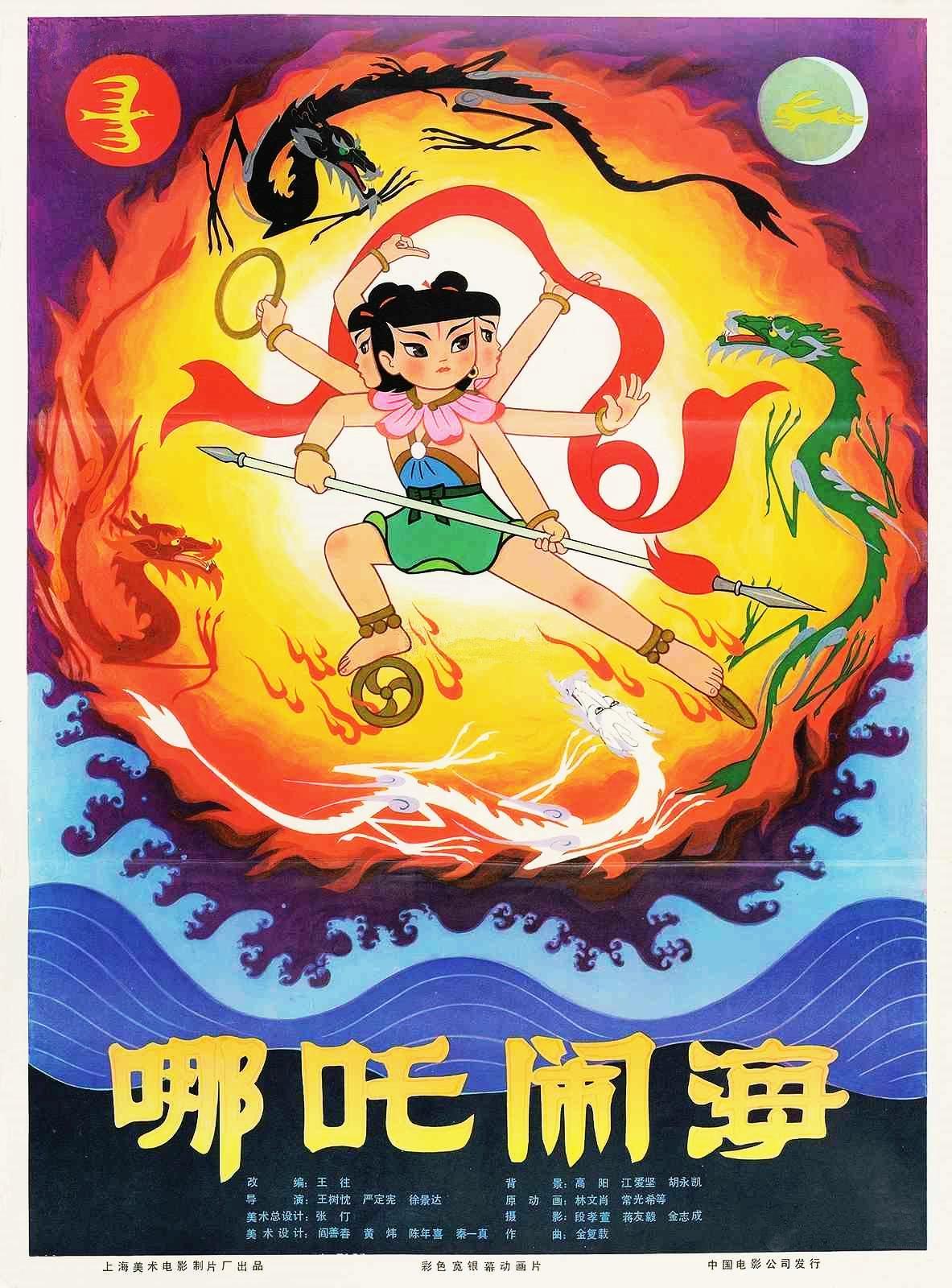
Chinese animation had entered a golden age in the mid-1950s. That however came to an abrupt end with the advent of the Cultural Revolution which saw most studios shut down and many cartoons banned for insufficiently reflecting socialist values or like Monkey King: Havoc in Heaven having subversively seditious themes. Nezha Conquers the Dragon King (哪吒闹海, Nézha Nào Hǎi), released in 1979, was the first feature completed by the Shanghai Animation Film Studio when production resumed following the end of the Cultural Revolution. Like Havoc in Heaven, Nezha Conquers the Dragon King is also inspired by classic Chinese mythology and features a rebellious hero standing up to oppression in defence of ordinary people at the mercy of corrupt authority.
As in the classic legend, General Li’s wife has been pregnant for three years only to give birth to a weird fleshy egg that he splits with his sword revealing a lotus flower from which emerges a strange child already capable of walking and talking though little more than an inch high. Luckily, a wise sage soon arrives describing himself as “only an old man who likes to fight for justice and joke around”, and gives Nezha a pill that allows him to grow to a more normal height for a child of around seven. Master Taiyi also gifts him a scarf and golden ring before telling him to visit the Golden Light Cave if he ever runs into trouble.
Meanwhile, the kingdom is currently experiencing a period of instability because of an ongoing drought caused by the dragon lord of the sea Ao Guang, one of four dragon lords (dare we say a “gang of four”) who just love causing trouble in the mortal realm because they’re awful. To appease Ao Guang, the people have sacrificed a banquet of luxury food, dumping it into the ocean to be conveyed to the Crystal Palace by turtle and stingray minions but all Ao Guang does is complain about the noise of the people protesting before asking an underling to remind General Li that he only wants sacrifices of small children. The sea warrior, however, jumps the gun by snatching one of Nezha’s friends whom he’d allowed to ride his magical deer on the seashore. As expected, Nezha doesn’t like that and gives the sea warrior a telling off though he fails to rescue his friend. Matters quickly escalate as Ao Guang sends his son Ao Bing to sort out Nezha but Nezha kills him in dragon form and strips out his spine to use as a whip so as you can imagine there is a sharp decline in diplomatic relations.
Though children’s animation in this era was perhaps darker and bloodier the world over, it has to be said that the world of Nezha is especially extreme. Not only does Nezha use his enemy’s spine as a weapon, but his own father later tries to kill him to appease Ao Guang while he himself makes a brutal and unexpected act of self sacrifice in an attempt to protect his realm and his family from his apparently failed attempt to resist Dragon oppression. The problem, however, remains with the corrupt authority of the Dragon Lords who continue to expect child sacrifice as part of a celestial protection scheme. Thinking they’ve won, the Dragon Lords organise a huge feast at the Crystal Palace all while there is discord in the kingdom. Only the unexpected reappearance of Nezha, now complete with his fiery wheels, can challenge their corrupt rule and free the people from their oppression.
Though less sophisticated in terms of animation style and more highly stylised, influenced both by social realist art and classical ink painting, Nezha like Havoc in Heaven also makes fantastic use of Peking Opera from the score to the choreography of the battle scenes as Nezha leverages his spear against the swirling Dragon threat. It is also, however, likely to prove disturbing to younger viewers especially in its unexpectedly visceral scene of child suicide not to mention dragon dismemberment and talk of child sacrifice. Nevertheless, it’s surprising that such themes could return so immediately after the end of the Cultural Revolution even if it’s true that Nezha, less mischievous than holding an extreme love of justice, challenges corruption rather than the system as he protects the people from overreaching elites.
Nezha Conquers the Dragon King is currently available to stream in the UK as part of the Chinese Cinema Season.
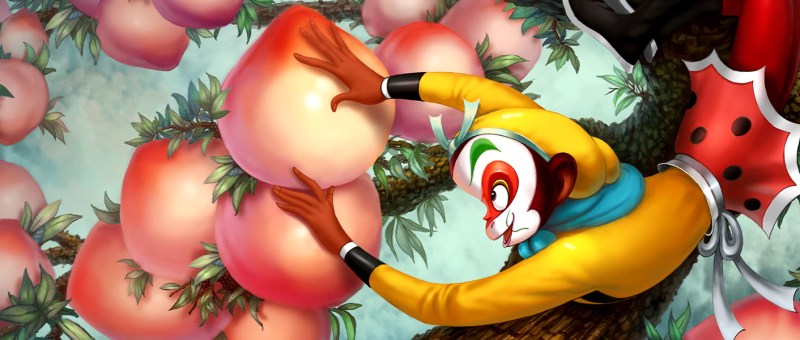
The late 1950s to mid-1960s would come to be known as a golden age of Chinese animation ushered in by the pioneering Shanghai Animation Film Studio under the aegis of Wan Laiming who along with his brothers had produced China’s very first animated feature Princess Iron Fan in 1941. Monkey King: Havoc in Heaven (大闹天宫, Dànào Tiāngōng) was conceived soon after Iron Fan’s release but its production was derailed firstly by the continuing Sino-Japanese War and then by the Chinese Civil War that eventually brought Mao Zedong to power. Produced in two parts released in 1961 and 1964 but screened together only in 1965, the film would ironically prove to be the studio’s last before being closed down during the Cultural Revolution.
Most particularly in this context, the story of Sun Wukong might seem ill-advised even in its definitive cultural capital adapted like Princess Iron Fan from the well-known Journey to the West. The Monkey King as all know is a mischievous scamp forever causing trouble because of his resistance to following the accepted rules of mainstream society, something one might think anathema to a rigid, increasingly authoritarian regime. Yet in the Wans’ characterisation, Sun Wukong is also a good, socialist hero in the guise of a chaotic Robin Hood robbing the Heavens not for himself but to share with all the little monkeys waiting for his return on The Mountain of Flowers and Fruits certain that such luxuries should not be limited to the gods alone and seeking to redistribute them on Earth (if only among his friends).
Even so, at the heart of the story is a challenge to the celestial authoritarianism of the Jade Emperor and the godly elites who live quite literally in another realm. Lamenting that he is unable to train the little monkeys properly because he can’t get his hands on a weapon befitting his majesty, Sun Wukong is advised to swim to the underwater palace of the East China Sea Dragon and ask him to find something suitable, which he does, but nothing proves up to the talents of the great Monkey King. Finally, hoping to get rid of him, the Dragon King shows Sun Wukong the Gold Cudgel which calms the sea and tells him he can have it if he can take it away. Annoyingly, the Cudgel responds exactly to Sun Wukong’s magic and becomes his trademark giant staff leaving the Dragon King with a problem he can only take to the Jade Emperor. Thereafter succeeds a continuing debate as to how to deal with the Monkey King problem which begins with the decision to tempt Sun Wukong to Heaven by offering him a fancy title and position so they can hopefully keep an eye on him.
This is perhaps a minor irony and element of subversive satire amid the corruptions of a newly collectivist society in which flattery and title inflation are becoming a persistent problem. Put in charge of the stables, Sun Wukong immediately sets all the horses free which is less of a problem than it sounds and considerably improves conditions for all, only it annoys the austere Horse General who makes the mistake of revealing to Sun Wukong that he’s not really “in charge” at all, sending him right back down to the mountains where he offends the gods by appointing himself “Great Sage Equal to Heaven” in an affront not only to their majesty but the celestial order itself. Some still feel appeasement is the way, that humouring Sun Wukong by pretending to respect his made-up title and convincing him to come back with a better position is the best way to minimise his rebellion but they fail to learn their lessons. On being told he can’t eat the fruit in his garden until a banquet is held and then discovering he’s the only one not invited and everyone is merely humouring him with The Great Sage stuff Sun Wukong is once again offended, deciding he’ll go anyway and then getting extremely drunk and trashing the whole place.
For this some feel he must die, but Sun Wukong refuses to expire even surviving being baked alive in a pot. Drawing inspiration from classic Peking Opera, the Wan brothers allow Sun Wukong to defeat each of the gods’ various challengers using both his cunning and agility in a series of beautifully choreographed action sequences which leave him standing defiant a thorn in the side of authoritarian power if perhaps one with his heart in the right place, living for the anarchic joy of sharing all his spoils with the ordinary monkeys of the Mountain of Flowers and Fruit. The 2012 restoration of the film keeps both halves together but also reformats the aspect ratio from the original 4:3 to a “modern” widescreen in addition to giving it a 3D makeover. Nevertheless, the flawless and inventive animation along with beautifully painted backgrounds drawing inspiration from classic ink paintings coupled with the use of Peking Opera instrumentation and choreography lend the film a charmingly timeless quality while the subversive themes of resistance to rigid authoritarianism seem to take on new import most particularly in the present day.
Monkey King: Havoc in Heaven is currently available to stream in the UK as part of the Chinese Cinema Season.
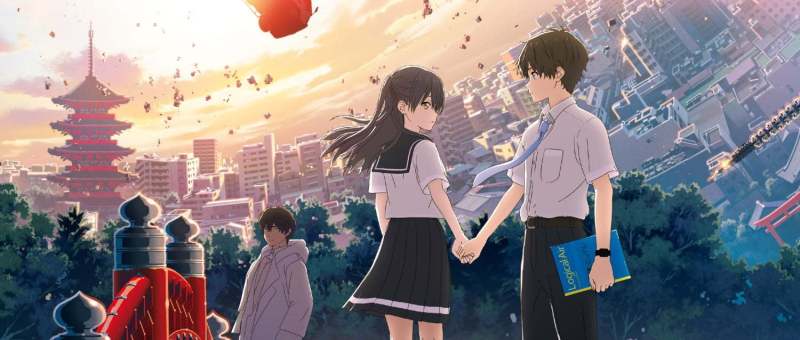
“Hello World” is a phrase familiar to many as the first line of text given to a new program. It signals firstly that the code is functioning correctly, but also expresses a sense of excitement and positivity as if a new entity were standing on the shores of an unfamiliar land eager for adventure. Tomohiko Ito’s sci-fi-inflected anime carefully places the phrase not at its beginning but at its conclusion, affirming that the hero has managed to step into himself, discover his place, and come to an understanding that grants him a sense of agency and possibility in a brand new world that is in a sense of his own creation and choosing.
Before all that, however, Naomi Katagaki (Takumi Kitamura) is a textbook “regular high school boy” who fears he is just an extra in his own life quietly reading away at the back of the classroom and last in line in the dinner queue. Reading a self-help book on becoming more assertive helps less than he might have hoped, but two changes are slowly introduced into his life albeit passively the first being he is press-ganged onto the library committee and the second that he is approached by a strange man who claims to be himself a decade older. Future Naomi (Tori Matsuzaka) claims not to have come from another time but from “reality”, explaining that the world Naomi currently inhabits is a simulacrum designed to perfectly preserve the city of Kyoto as a digital archive housed inside supercomputer Alltale which has infinite memory. His older self tells him that he is fated to fall in love with classmate Ruri (Minami Hamabe) but she will then be killed by a lightning strike at a festival in three months’ time. Though their actions will have no effect on the “real” world, Future Naomi claims it’s enough for him to “save” Ruri even if it’s only virtually seemingly caring little that he will in fact be completely ruining the Chronicle Kyoto project by introducing a note of the inauthentic perfectly primed for the butterfly effect.
In any case, what Naomi eventually discovers is that you can’t always trust “yourself” especially if you’re apparently merely data and therefore perhaps infinitely expendable. Young Naomi doesn’t seem particularly fazed by the revelation that his world is not “real”, and is perhaps overly trusting of his new mentor’s guidance following his instructions to the letter in accordance with the “Ultimate Manual” he’s been given to facilitate his romance with Ruri whom he originally claims not to fancy because like many immature teenage boys he only likes “cute” girls like transfer student Misuzu (Haruka Fukuhara) who literally sparkles while Ruri is like him a wallflower obsessed with books, shy and with an aloof, slightly intense aura. What Future Naomi offers him is pure male adolescent fantasy wish fulfilment in gifting him both the means for romantic success and literal superpowers in the form of the Hand of God which allows him to conjure objects from the digital world and will apparently help to save Ruri from her cruel fate.
The universe, however, has other plans. Soon enough he’s being chased by the forces of order, Homeostasis System Droids, trained to eliminate and correct inconsistencies in data appearing as oversize policemen in kitsune masks. Nothing in Naomi’s world makes much concrete sense, even as he’s been told he’s the creation of a simulacrum. Why would Future Naomi fetch up three months before the accident to train him rather than simply altering code, why would someone bother to create these universal super powers, and what exactly are the connections between this world and the “real” from which Future Naomi claims to have come? Some of this might well be explained by a final twist which turns everything we thought we knew upside down, implying perhaps that the gaps and contradictions we see are down to the vagaries of analogue rather than digital memory mixed with trauma both physical and emotional. Nevertheless, it turns out that Naomi’s mission is less to save Ruri than to save himself twice over, allowing Future Naomi to find an accommodation with the traumatic past while essentially giving birth to a “new world” of adulthood in which he is the fully actualised protagonist rather than the bit-playing extra he’s always believed himself to be.
Featuring character designs by Kyoto Animation stalwart Yukiko Horiguchi, Hello World’s 3D animation fusion of 2D reality and the digital realm makes for interesting production design as Naomi’s world eventually crumbles around him in multi-coloured pixel while he’s chased by giant neon hands under an angry red sky. Nevertheless, its wilful incoherence often proves frustrating even if its myriad plot holes might be explained in part by the final revelation which itself introduces another note of bafflement in its parting scene. Asking some minor questions about the collection, use, and storage of personal data, archival practice, the limits of digital technology, and the nature of “reality”, Hello World is nevertheless a coming of age romance at heart in which the hero saves himself twice over while learning to rediscover a sense of wonder in future possibility.