The Prayer (간호중, Min Kyu-dong, 2020)

“I’m just wondering if they all live with nothing to live for and whether it has any meaning to live like that. And if I am no different.” a beleaguered daughter muses contemplating her own future while caring for her mother (Moon Sook) who has been bedridden in a coma for the last decade. A perhaps controversial advocation for euthanasia, Min Kyu-dong’s expansion of his entry into the SF8 series The Prayer (간호중, Ganhojung) offers a timely exploration of the nature of empathy, the limits of AI technology, the ageing society, and the destructive effects of inequality as mankind’s children find themselves wracked by the existential pain of human suffering. 

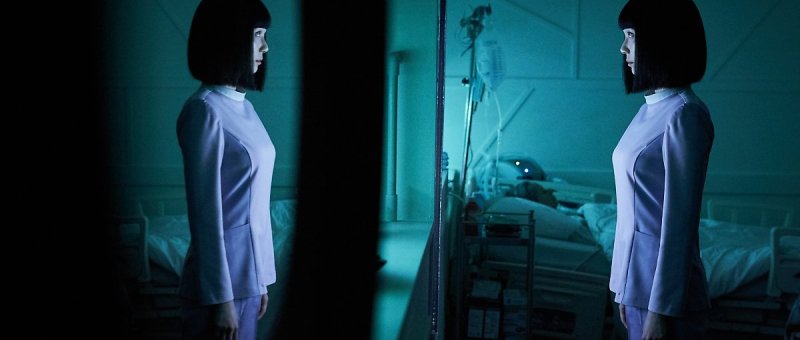
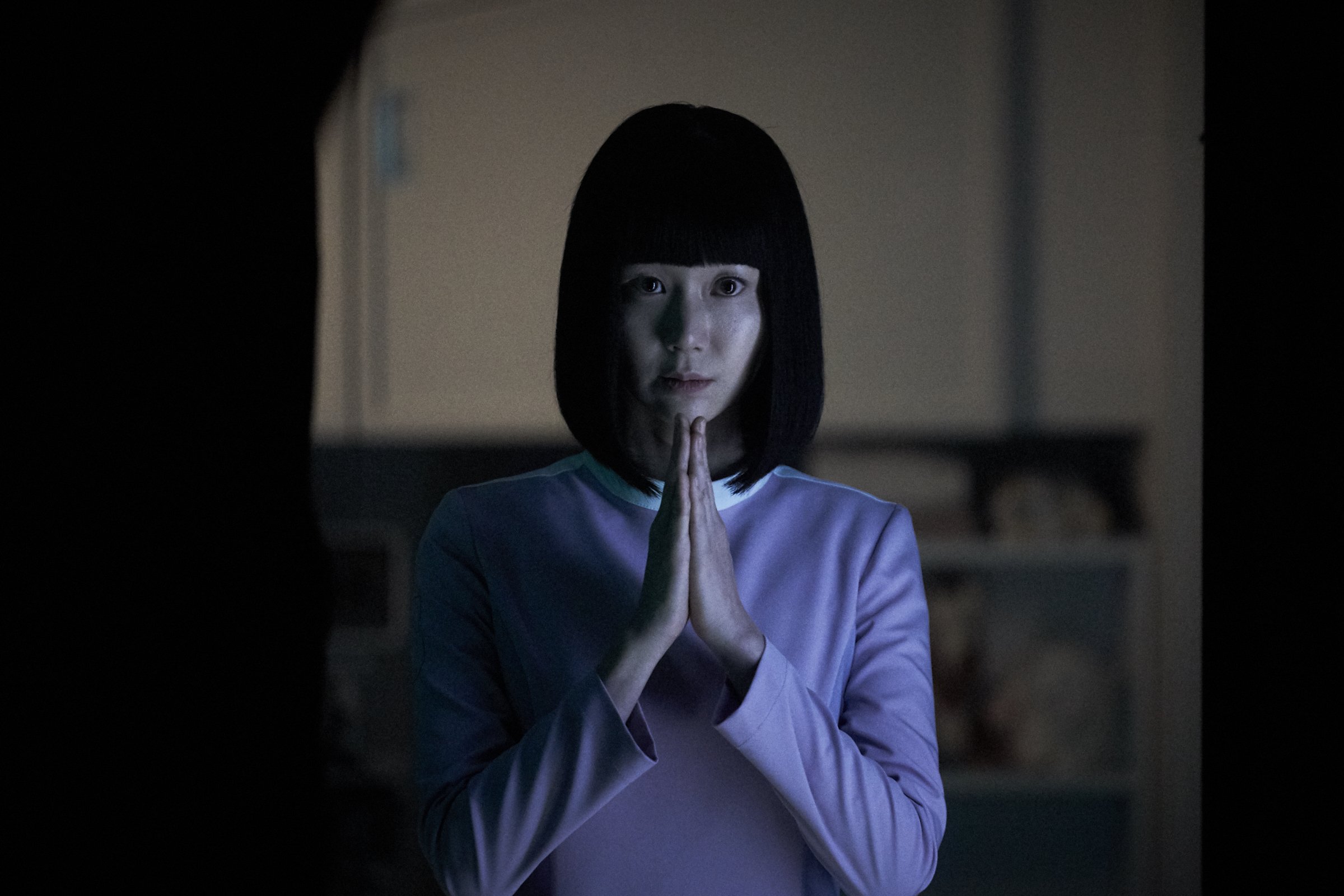
Set in the near future in which high schools are bulldozed to build additional care centres, The Prayer revolves around the relationship between the melancholy Jung-in (Lee Yoo-young) worrying if prolonging her mother’s life in this way is really what she’d want, and the robotic care nurse she’s hired to look after her, Ho-joong (also Lee Yoo-young). As we discover, Jung-in has taken advantage of the offer to have herself listed alongside her mother as a target for care leaving Ho-joong with an ironic conflict torn between her duty to look after Jung-in’s mother and witnessing the toll caring for her is taking on Jung-in who frequently expresses depressive thoughts and potentially suicidal ideations. 

In order to provide comfort to patients, the androids are designed with the same face as the primary guardian, meaning Jung-in is in someways in dialogue with herself while Ho-joong becomes increasingly confused in her imperfect, in some ways childish, application of human empathy. Fixated on Jung-in with a devotion which turns towards the romantic, she comes to the logical conclusion that in order to save her secondary patient the obvious choice is to sacrifice the first but has seemingly no understanding of the effect that may have on Jung-in who may be worn out and emotionally drained but would obviously feel responsible should anything happen to her mother at the hands of the robot nurse she hired because she has developed unintended feelings towards her. 

The extent of Ho-joong’s “feelings” are indeed at the heart of the matter as evidenced by her strange conversations with a well-meaning nun, Sister Sabina (Ye Soo-Jung), who is originally dismissive unwilling to recognise that a manmade creation may also desire access to God. As incongruous as it sounds, Ho-joong’s awakening spirituality positions her as uniquely human and as trapped as one of her patients, tormented by the pain of being alive and finally confined to table on which she claims to be experiencing near torture at the hands of those seeking to understand her “malfunction”. Her German manufacturers locate the fault in her advanced language processing unit, as if the problem were that she understands too well when perhaps it’s more that her empathy is based in a different metric and prone to misunderstand the irrationality of human impulses towards guilt and love. 

That’s also the problem with the unit next door owned by Mrs. Choi (Yum Hye-ran) whose husband (Yoon Kyung-ho) seems to be suffering from advanced dementia which often causes him to become violent or unpredictable. Unlike Jung-in, however, Mrs. Choi could only afford a basic model which offers little in the way of empathy nor will it care for her. Consequently, she appears to be overburdened with her husband’s care, doing laundry and tidying up after his frustrations cause him to trash his hospital room. The machine offers her only censure while the duty of care ironically prevents her from attending to her own health. Seeking help she turns to the manufacturer who bluntly tells her she doesn’t understand how to operate the machine and advises she ask her kids to teach her, only it appears that Mrs. Choi may have had a child in the past from whom she has become estranged and is otherwise all alone. Older than Jung-in, she despairs for the quality of her life and has no one to protect or care for her, pushing her towards a dark decision. 

Both women wonder if life is worth living if it means living like this, but have very different options open to them given their economic disparity. Having learned to feel pain, Ho-joong begs to be freed of it, positions now reversed as Sister Sabina becomes her caregiver. She accuses the nun of hypocrisy, that she allows her suffer by refusing to end her pain in order to preserve her own conscience in insisting to do so would be a “sin”. “What do I go through this pain for!” Ho-joong cries as if throwing herself into a fiery pit of existential torment while a cold authority insists she must continue to suffer. Min makes a powerful if perhaps controversial argument for the right to end one’s own suffering at a time of one’s own choosing if also leaning uncomfortably into the burdens of care as Mrs Choi and Jung-in too struggle with themselves while trying to do what’s best for those they love, but ultimately discovers a kind of serenity as his robot nurse encounters the spiritual and with it a release form the pain of living. 


The Prayer streamed as part of this year’s New York Asian Film Festival. It will also screen in London on 22nd October as part of this year’s London East Asia Film Festival.
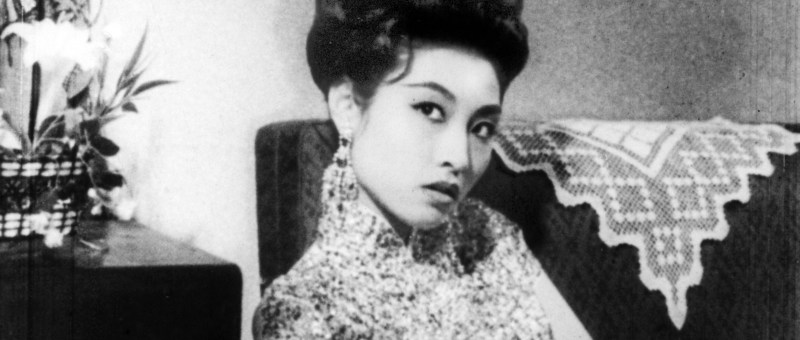
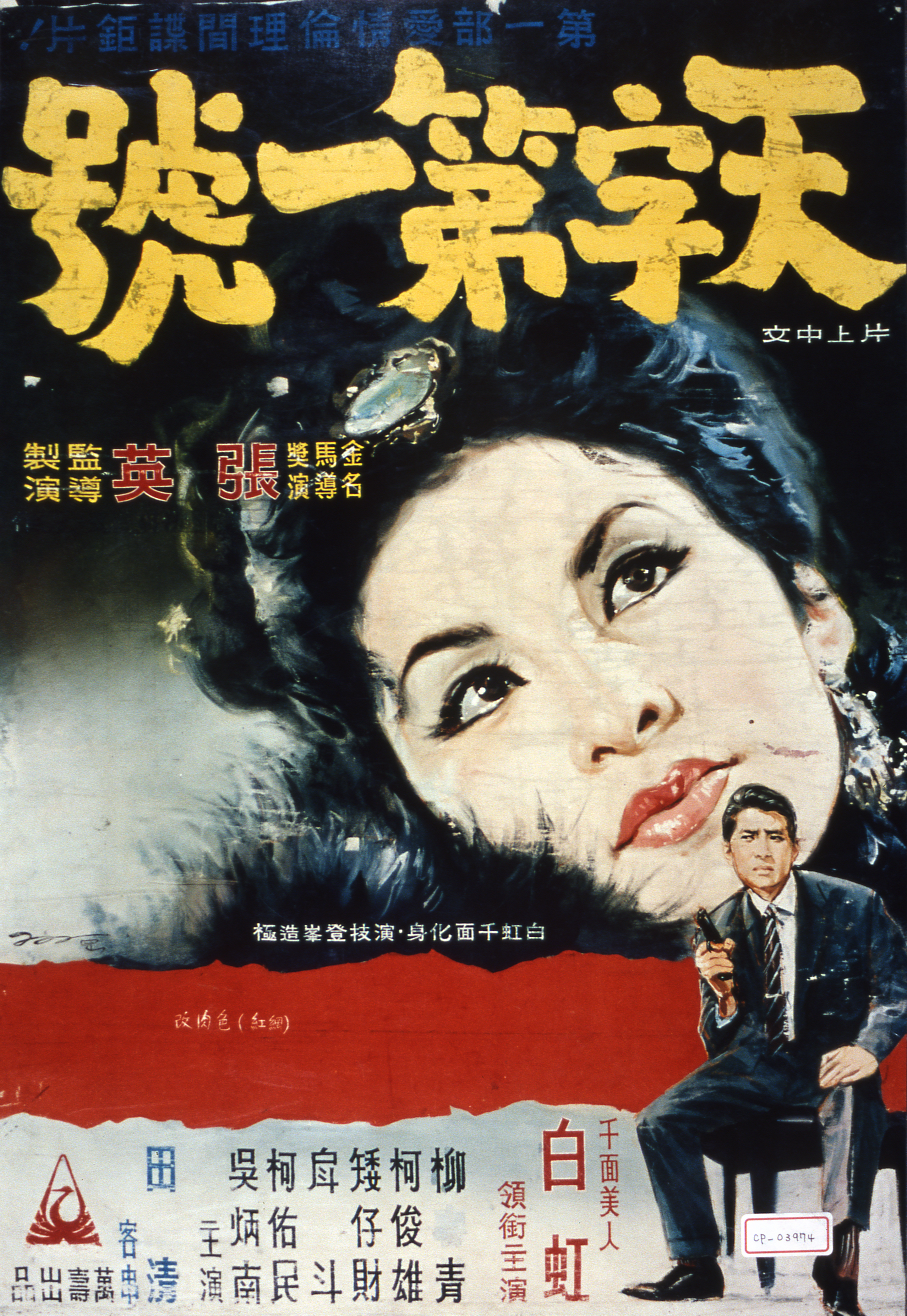
The Best Secret Agent (天字第一號, Chang Ying, 1964)

“The Japanese have destroyed our family. You must avenge me” a dying father instructs his daughter, his words somewhat ironically echoing the ideology of the ruling regime in hinting at the national trauma of exile and separation. Arriving in the wake of Bond mania, Chang Ying’s The Best Secret Agent (天字第一號) is, incongruously enough, a Taiwanese-language remake of an earlier film from 1945 set in Shanghai amid the Anti-Japanese Resistance movement, but at heart is less a tale of espionage and intrigue than a romantic melodrama in which a capable woman sacrifices romantic love for the patriotic and filial while perhaps subversively finding true freedom and independence. 

As Tsui-ying’s (Pai Hung) father (Ko Yu-Min) later explains, not wishing to be enslaved they fled from the Japanese but are forced to degrade themselves with public performances in the market square, the old man stooping to beating his daughter when the show fails to please the audience. A kindhearted man from the crowd, Ling-yun (Ko Chun-Hsiung), comes to her defence but Tsui-ying forgives her father blaming the Japanese for the misfortune which has befallen them. Soon after, Tsui-ying’s father is killed during an airstrike using his dying breath to ask for vengeance. After becoming a nightclub singer in Shanghai, Tsui-ying ends up running into Ling-yun again and the pair fall in love but she is also working as a spy and is ordered to break up with him in order to capitalise on the attraction a prominent collaborator, Chao-chun (Tien Ching), feels for her. Reluctantly she obeys, Ling-yun going abroad to study while she eventually becomes Chao-chun’s wife only to discover some years later that Chao-chun is actually Ling-yun’s uncle. 

The central melodrama revolves around the impossible love of Tsui-ying for Ling-yun, a love that she must willingly sacrifice in order to fulfil her role as a daughter both to her literal father and to her country. There is also however a degree of awkward comedy in Ling-yun’s continual discomfort that he must now refer to Tsui-ying as his aunt, their love now a further taboo in taking on a quasi-incestuous quality. Continually pained, she must keep her cover identity intact unable to explain to Ling-yun why she left him, encouraging him to think of her as a cold and heartless woman while watching him romancing his cousin, Ai-li (Liu Ching), whom she has come to genuinely care for as a maternal figure despite there being very little difference between them in age. 

What she apparently doesn’t know despite being a cunning mastermind is that almost everyone in her house is also a spy. As the famed Heaven No. 1, Tsui-Ying plays the cooly elegant wife of a diplomat cosying up to the Japanese but her activities perhaps owe more to the Basil Rathbone Sherlock Holmes movies than they do to the ever popular Bond, a late montage sequence showing her in a series of disguises from a wise old man to anonymous soldier and cheerful shoeshine boy while an early slapstick set piece sees the Resistance hide a pistol inside a roast duck in order to assassinate the Japanese advisor at dinner, the plan almost foiled by Chao-chun’s fiddling with the lazy Suzan. 

Everything is indeed the fault of the Japanese, but it’s Chao-chun, the collaborator who is the true villain even in his bumbling cluelessness, a quality also reflected in his idiot police chief Captain Wan who consistently fails to capture any Resistance members despite Chao-chun repeatedly ordering him to. In another bumbling piece of verbal humour, Captain Wan (Hu Tou) simply repeats the speech he’s just had criticising him for incompetence verbatim to his own subordinates while not doing much of anything himself. They are both, fairly obviously, outclassed by Tsui-ying playing the part of the clueless society bride lounging around in her furs and mediating in-house disputes while simultaneously plotting to bring them both down once they’ve outlived their usefulness. Though she is forced to give up what is most important to her, her love for Ling-yun, what she discovers is perhaps a transgressive sense of freedom and independence in her life as a master spy not otherwise available to an ordinary woman as she pursues her revenge for the death of her father.

Nevertheless, she is also orphaned both literally and metaphorically forced into a life of wandering. The separation of the lovers, blamed on the Japanese, is symbolic of that between the two Chinas as echoed in Tsui-ying’s melancholy love song and no doubt appealing to the prevailing ideology of the ruling regime save for the implication of fatalism as Tsui-ying and Ling-yun pursue exile in opposing directions. Even so with its fantastically compelling heroine, ironic humour, and atmosphere of intrigue tempered with melancholy romance, The Best Secret Agent more than lives up to its name as the master spy effortlessly completes her primary mission even if sacrificing her heart in the process. 


The Best Secret Agent streams in the UK 25th to 31st October as part of this year’s Taiwan Film Festival Edinburgh.

Trailer (Traditional Chinese subtitles only)

Early Spring (早春, Yasujiro Ozu, 1956)

By the mid-1950s, Japan’s economy was beginning to improve but now that the desperation that went with hunger had dissipated it freed those who’d managed to climb out of post-war privation to wonder just what the point of their ceaseless toil was. Yasujiro Ozu’s primary subject matter remained the modern family, but 1956’s Early Spring (早春, Soshun) sees him heading in a darker direction as he weighs up the delusions of the salaryman dream and discovers that whichever way you swing it, life is disappointing. 

So it seems to be for salaryman Shoji (Ryo Ikebe). He and Masako (Chikage Awashima) married for love a long time ago, but it’s clear that there is distance in their relationship. They sleep in the same room but their futons are slightly too far apart, and the few words they exchange with each other in the morning are terse in the extreme. The truth is that for many a salaryman for whom long hours and interoffice bonding sessions are compulsory, work is the new family. Wives are welcome to join the Sunday hiking outings but it seems few do. Masako too declines, telling her mother she felt it to be too expensive, already irritated with her husband’s irresponsible spending on mahjong games and drinking with friends. 

Money is certainly a constant worry for her and as we learn from her mother they’re behind on the rent despite it being “very cheap”. Masako had made a visit home in part to ask for another loan, which her mother seems reluctant to give, offering her daughter a takeout of the oden her restaurant sells which is first declined but then accepted. Her mother also flags up the other problem in their marriage which is that they sadly lost a child in infancy and have had no more. Sorrow may have killed their love, but the fact her husband stays out all hours and wastes the little money he earns while failing to win promotions only makes the situation worse. 

As for Shoji, he is becoming very aware of the delusions of the “salaryman dream”. He is one of thousands of men identically dressed in white shirts and grey trousers that board the packed rush hour trains every day heading into the city. His life is one of pointless drudgery and its only victory is that keeps hunger from the door, not even quite stretching to a roof over his head. “All that’s waiting for us is disillusion and loneliness” according to a veteran salaryman growing close to his retirement and realising that he has little left to live on, his dream of buying a small stationary shop all but unobtainable. He was dead set against his own son joining the ranks of the salaryman, but in the end failed to prevent it.

It is perhaps this sense of frustration and impotence that draws Shoji into an affair with a younger woman, Chiyo (Keiko Kishi), who is admittedly very pretty but seems to hold little interest for him aside from her youth and beauty. Chiyo openly pursues her older colleague, declaring that she doesn’t care he has a wife but has come to hate her after the first time they slept together. Shoji meanwhile remains guilty and conflicted. He evidently continues seeing Chiyo, lying to Masako that he’s visiting a sick friend, but otherwise regards her as an irritation. When his co-workers figure out what’s going on they try to stage an intervention, but Shoji doesn’t show up and Chiyo angrily denies everything before arriving at Masako’s looking for Shoji only this time he really is out visiting a sick friend. 

Miura (Junji Masuda), the sick friend, is a true believer in the salaryman dream. Now that he’s ill, he misses the packed trains and elevators, not to mention his old workplace friends. All he wants is to be well enough to return to the office and his predicament perhaps has Shoji thinking that at least he has his health and things aren’t so bad for him after all. Masako, meanwhile, turns to other women for advice. The woman across the way recounts how she caught her husband out with his mistress and made a scene that’s rendered him docile and obedient ever since (a rare man in an Ozu film putting his socks neatly in the laundry basket and hanging up his own coat rather than throwing it on the floor for his wife to deal with). Her widowed friend is more sanguine, admitting that caution is necessary but it’s a little dark to envy the life of a widow for its “freedom”, while her mother thinks she’s overreacting because that’s just how men are in this generation or any other. 

Shoji’s old mentor agrees that “everyone’s disappointed” and all that remains is to try and make the most of it, but still he sees that Shoji has been reckless and inconsiderate in his treatment of both women. He avoids his wife because of the emotional distance between them born of grief, and only really has an affair with Chiyo because it was easier than refusing her. He didn’t even enjoy it, and doubtless it did not quite quell the sense of despair he feels with the utter pointlessness of the “salaryman dream”. Masako, in turn, is disappointed with married life, with her husband’s emotional cowardice, and with her own lack of options. Ultimately, Ozu sides with the mother, not quite condoning Shoji’s behaviour while perhaps excusing it as a direct consequence of dullness of his life while forcing Masako to accept complicity in her husband’s weakness. They may reunite, the stressors of their Tokyo life from the high cost of living to the lure of mahjong now absent, but there is a sense of futility in their eventual insistence that they will “make it work” through starting over in a new place while gazing at the train that, they assume, will eventually carry them back to the city and all of its false promises of a brighter future. 


Early Spring screens 19th/20th/21st October & 20th/23rd November at London’s BFI Southbank as part of BFI Japan. It is also available to stream in the UK via BFI Player and in the US via Criterion Channel.

The Dishwasher Squad (洗碗天團, Shum Sek-yin, 2021)

“Help those in need, then what about me?” asks the cynical hero of screenwriter Shum Sek-yin’s directorial debut, The Dishwasher Squad (洗碗天團). Another in the recent series of films exploring attitudes to disability in contemporary Hong Kong, Shum’s breezy comedy sees two self-centred businessmen with some extremely outdated and often quite offensive views decide that the only way to recover from being scammed into buying a moribund business is by exploiting the vulnerable only to eventually reawaken to their humanity if only perhaps to a degree. 

After Kyun’s (Richie Jen Hsien-chi) business fails, his best friend Lun (Ekin Cheng) comes up with a plan to buy out the industrial dishwashing plant owned by the friend of a friend who is apparently keen to sell because he wants to emigrate to Canada with his son who has learning difficulties. Strangely, on that very day, Kyun seems to find himself repeatedly running into disabled people for whom he seems to have little to no respect often using offensive language and even stealing an extra cookie from a young man with Down’s Syndrome collecting money for charity. Kyun seems fairly smug about each of these problematic encounters as if congratulating himself for getting one over on those he sees as lesser than himself. Unfortunately for him, however, while he thought he was conning the factory owner by telling him they planned to use the place to help the needy, the factory owner was actually conning him seeing as the business isn’t viable and is in fact riddled with debts. Not only that, all the staff were casual employees leaving Kyun and Lun with a huge problem seeing as they have legally binding contracts to fulfil and no staff to fulfil them. 

That’s one reason he eventually hatches on a cynical plan to take advantage of a government scheme to become a “Social Enterprise” in order to gain a subsidy by employing a majority of marginalised employees who might otherwise find it difficult to secure regular employment. Working with a local social worker (Hedwig Tam), he agrees to employ a young woman with autism and two men with learning difficulties along with another woman trying to rebuild her life after leaving prison. Aside from access to the subsidy, the main draw for Kyun is that he assumes he won’t have to pay them very much or even at all, getting the two men to work for free during their “probationary” period and thereafter attempting to fire one of them before it comes to an end. To bolster the work force, Kyun also recruits a series of undocumented South Asian migrants for much the same reasons assuming they will have little desire to make a fuss over their pay or conditions. 

Nevertheless, through close contact with each of his staff members Kyun finally begins to develop a sense of humanity though it’s unfortunate that his ability to recognise his employees as fellow humans only comes with a realisation that they are “useful” to him after all as they each and for varying reasons become attached to their new jobs and the atmosphere at the factory. It has to be said, however, that Shum’s otherwise positive message of people over profit is undercut by the series of fat jokes aimed at a female worker who at one point is seen eating from an automatic pet feeder, while a scene featuring an improvised stomach pump after an employee accidentally ingests detergent is also perhaps in poor taste even if hinting at the depths Kyun is prepared to sink to in order to protect his business interests.

Despite having bonded with his employees in a genuine sense of camaraderie, Kyun is still intent on exploiting his workforce and continues to see himself as superior if having developed a little more of a moral compass. Even so, he has perhaps developed the desire to run an honest business built on trust and compassion rather than greed and deception even if he hasn’t quite got there yet while reaffirming his friendship with Lun as they find themselves on a more even footing after a brief falling out. Mixing mild social issue themes regarding the difficulties faced by those marginalised by the contemporary society with lighthearted humour and a lot of heart, The Dishwasher Squad eventually argues for doing right by each other even if not everyone feels the same way. 


The Dishwasher Squad has its World Premiere on Oct. 17 at ChiTown Drive-in as part of the 13th Season of Asian Pop-Up Cinema.

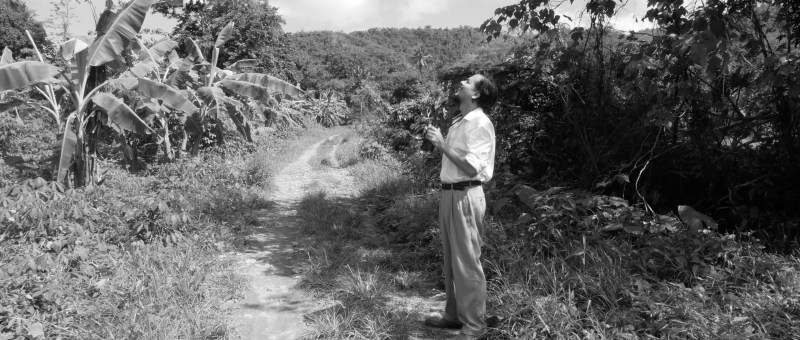
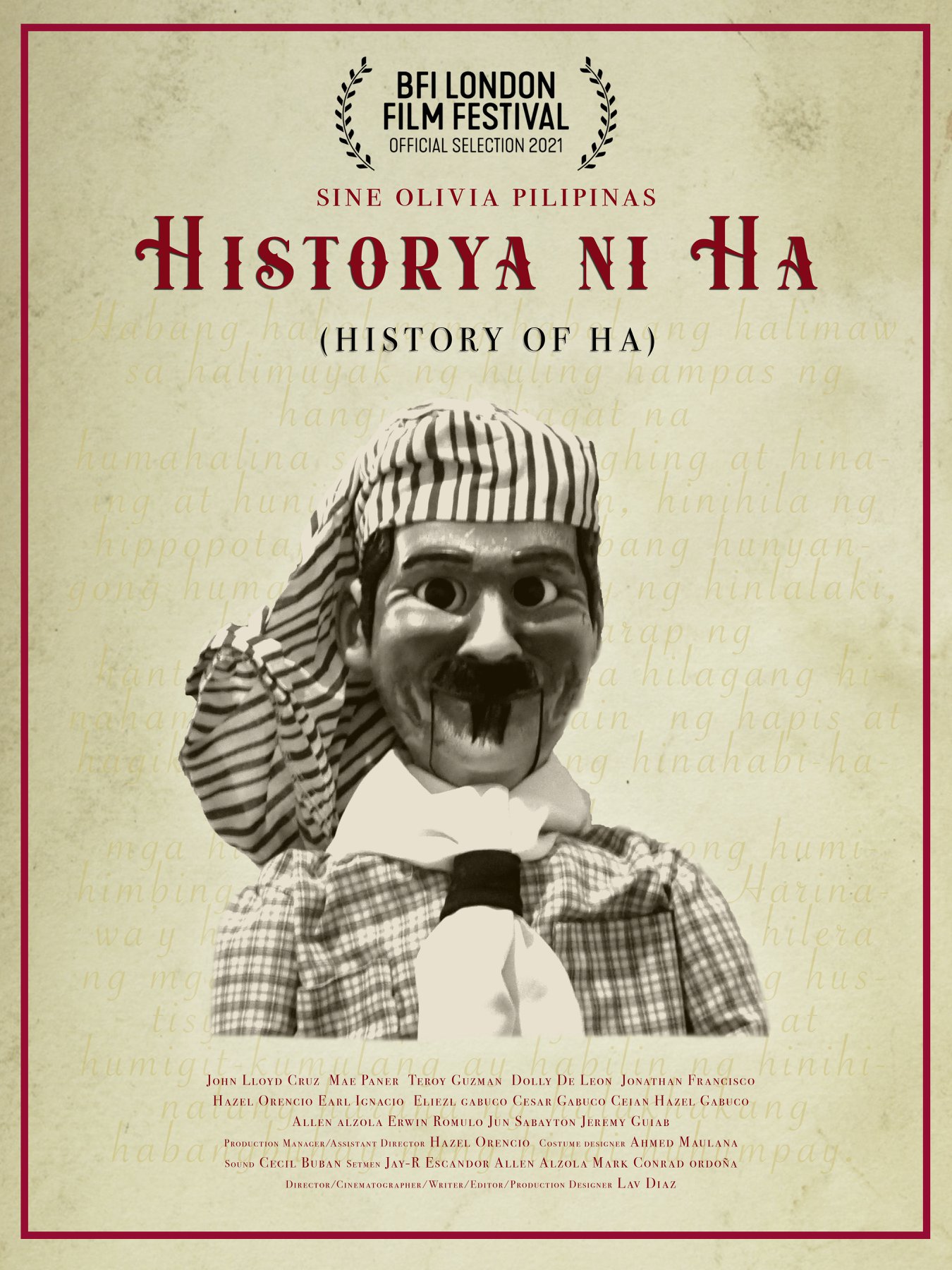
History of Ha (Historya ni Ha, Lav Diaz, 2021)

“We became victims of our time but I won’t let this situation destroy me” a wandering poet finally writes in a letter to his lost love, finding again a sense of purpose though having perhaps surrendered his illusions. Shot in a crisp monochrome and set ostensibly in 1957 but bearing several small anachronisms which bring us closer to the present day, Lav Diaz’ 4-hr absurdist fable History of Ha (Historya ni Ha) finds an exile returning in the hope of a more peaceful future only to find his dreams of a simple life dashed while the land is once again in turmoil. An exploration of lingering feudalism, its links to dangerous demagoguery, and the ease with which populist leaders manipulate despair, Diaz’ timely drama sees its hero once again a self-exile but resolving at least to sow the seeds of a better future in work and education. 

Four years previously, disillusioned marxist poet Hernando (John Lloyd Cruz) was arrested with the Socialists after the failure of the Huk Rebellion and has since been touring Asia as a successful vaudeville act in the company of his ventriloquist puppet, Ha. Having saved enough money, he’s retired from showbiz and is heading home to marry his sweetheart, Rosetta, to whom he is writing while on the boat. The first sign of trouble begins, however, when Hernando is approached by a journalist who happens to be a fan and invites him to dine with a congressman. President Magsaysay, the anti-communist president backed by the US, is missing later to be declared dead in a plane crash. Though presumably no fan of Magsaysay, Hernando worries for his country recalling a song penned by a civil servant suggesting that should Magsaysay die democracy would go with him. 

The journalist is equally ambivalent, describing Magsaysay’s rise as a mix of reality and myth making, a cycle he fears will repeat itself endlessly in the history of the Philippines in which “the masses will vote for false prophets and leaders”. Hernando, meanwhile, discovers on his arrival home that not everything is as he left it. Though Rosetta had been writing to him earnestly throughout his travels, his twin sister Hernanda (Gabuco Eliezl) tells him that following the death of her mother she has become a prisoner of her father’s house and is to be married to a local nobleman in payment of a debt. Her final letter confirms this to be true, instantly shattering his belief in future possibility while raging against the lingering feudalism of the post-war nation. “I’ve accepted that as long as a powerful few possesses the vast lands of this barrio the poor will remain sinking in poverty and helplessness” , he explains heading out on an aimless journey no longer speaking directly but only through his dummy, Ha. 

Ha becomes in a sense his alter ego, voicing what he himself cannot say, but also giving rise to a sense of absurdity as those around him begin to invest in Ha’s personhood talking directly to him rather than Hernando while asking him incongruous questions even wondering if he might be hungry. Yet much of Ha’s monologuing is pure nonsense rhyme, and while the pair of them are alone he sometimes reflects Hernando’s inner cynicism suggesting he accept money from a pair of women he reluctantly agreed to help travel to a nearby fishing village from which they hope to gain passage to an island in the middle of a gold rush, one a nun intending to start a mission (Mae Paner) and the other a woman wanting to open a business (Dolly De Leon). A boy he’d met along the way, Joselito (Jonathan O. Francisco), had the same destination in mind, explaining that there was no other way to alleviate his family’s poverty. When they arrive at the village, however, they discover that the journalist’s prognosis was painfully true. The self-appointed leader of the settlement, Among Kuyang (Teroy Guzman), is a narcissistic populist harping on nationalism while mercilessly exploiting the desperation of the less fortunate in charging impossible sums for transportation. 

Ha advises the trio not to go, fearing that the island is dangerous, but fails to dissuade them, the difficulty of living under Among Kuyang’s repressive regime only increasing their desire to leave. Eventually he decides to help them by performing one of his old shows for Kuyang who turns out, uncomfortably, to be a fan, but worries he may have “saved them from the devil but delivered them to hell”. “It hurts how we let people like him rule over our country” another failed revolutionary laments, while Kuyang himself offers prophesies of Marcos and Duterte, echoing this ugly cycle of myth making and deception which just as he has weaponises desperation while doing nothing to alleviate it. Yet in his cynicism perhaps Hernando too is guilty of belittling the masses,  declaring them too ignorant to understand their oppression. “Their emptiness is not their fault, sacrifices are not enough to emancipate them.” he laments, while echoing the journalist that decades from now they’ll go on “enthroning despots and tyrants, leaders like Among Kuyang, leaders who are foolish, greedy, disrespectful, deranged”. 

Ironically enough he tries to be the “good cat” of the story Ha had told his niece and nephew, cautioning them against populist and consumerist fallacy in warning them not to walk into a golden cage and thereby lose their freedom, but to accompany the good cat to the shore and salvation. Hernando tries to save the trio from the lure of the island, sure it promises only fruitless exploitation, but fails to save them from Among Kuyang or from the true enemy which is ceaseless poverty, a sense of futility, and feudal privilege. “Gold is not the only solution to poverty” he’d told Joselito, but to him it was all that was left. Beginning and ending with a letter, Diaz’ absurdist parable follows its disillusioned hero through loneliness and tragedy but finally allows him to find the boat that grants him freedom if only in new purpose in undermining the roots of populism where they first propagate.


History of Ha made its World Premiere as part of this year’s BFI London Film Festival.

Original trailer (dialogue free)

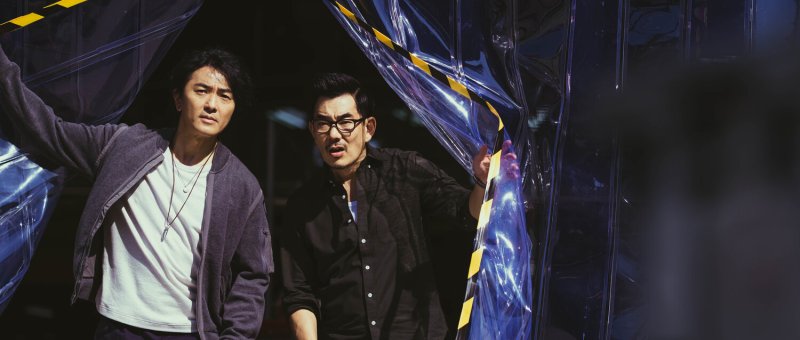
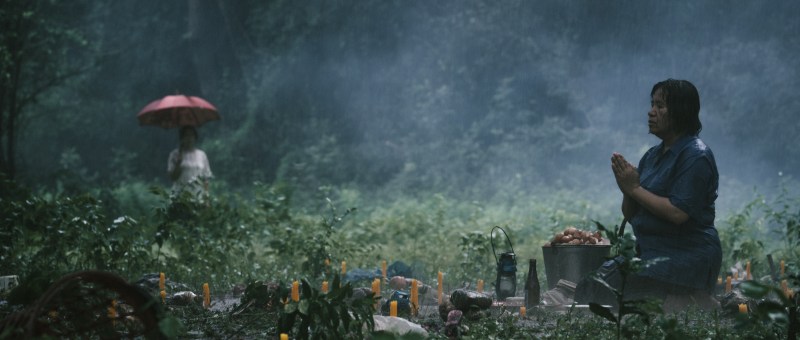
The Medium (ร่างทรง, Banjong Pisanthanakun, 2021)

A young woman finds herself caught between the contradictions of the modern Thailand in Banjong Pisanthanakun’s eerie forest-bound supernatural folk horror, The Medium (ร่างทรง). Produced by The Wailing’s Na Hong-jin and based on his original story, Banjong Pisanthanakun’s shamanistic drama is in many ways an exploration of the vagaries of faith but also of the price to be paid for abandoning the traditions of your nation and the slowly mounting karmic debt that visits itself solely on the young. 

A documentary film crew exploring indigenous religious practice has settled on shamaness Nim (Sawanee Utoomma) as a subject, getting her to provide a brief explanation of the area’s animist beliefs. According to her, there are good spirits and bad, those who protect and those intent on causing harm. As a conduit of the goddess Ba Yan, the local protective deity, she is able to intervene when the villagers need her help though only, she is keen to point out, where the problem stems from something “unseen”. She takes no money for her services, though sometimes people bring gifts, and is clear that she cannot treat conventional illnesses such as cancer only those a direct result of supernatural manipulation. 

Nim had not originally wanted to become a shamaness and at one point attempted to take her own life in order to escape it, but claims that after deciding to accept Ba Yan everything changed for the better and she’s since grown to like it because it allows her to help people as well as affording her a special status in the village. A maternal deity, Ba Yan only seeks female hosts and the original target had been Nim’s older sister Noi (Sirani Yankittikan) who went so far as to convert to Christianity in order to reject her. According to older brother Manit (Yasaka Chaisorn), the sisters have never got on, a degree of animosity between them obvious on attending the funeral of Noi’s husband Wiroj (Prapruttam Khumchat). Wiroj, however, a had traumatic family history of his own, his ancestors apparently having committed a terrible crime, while his grandfather was stoned to death by his employees, and his father burned his factory down for the insurance money later taking his own life. The couple’s son Mac (Poon Mitpakdee) was also tragically killed in a motorcycle accident some time previously.  

All of this might explain why Nim’s 20-something niece Mink (Narilya Gulmongkolpech) seems to be behaving strangely at the funeral, having too much to drink and kicking off at an uncle for supposedly insulting her. Witnessing other strange events, Nim starts to suspect that Mink is beginning to awaken as a shamaness and that Ba Yan is looking to move on, but whatever it is that’s troubling Mink may not be as benevolent as the protective deity. The clash between the sisters comes to represent a clash between tradition and modernity, ritualistic animist religion and Western Christianity, as mediated through the body of Mink a young urbanised woman working at a recruitment centre who thinks all this shaman stuff is backward and superstitious. Interviewed by the documentary crew she rolls her eyes and recalls a story of a so-called Doraemon Shaman who is compelled to sing the theme tune to the famous children’s cartoon about a blue robot cat from the future on entering a trance. 

As the film progresses, a series of questions arises in relation to the dubious ethics of the documentary film crew particularly in their decision to continue following Mink as her mental health deteriorates. Later events imply they did not edit this footage themselves, but the decision to film the aftermath of a suicide attempt seems unjustifiable as does the inclusion of CCTV footage featuring clearly recognisable people engaging in acts of intimacy even if admittedly in public places. 

In any case, the central question is how much faith you can have in things you can’t see, Noi ironically asking Nim how she knows Ba Yan is with her if they’ve never “met” while simultaneously refusing to ask herself the same question in regards to her Christian faith. Then again, we can’t be sure if Noi’s faith is “genuine” or solely a way of rejecting her traditional beliefs in order to shrug off the burden of shamanism. Even Nim finally admits that she no longer feels certain that she really is possessed by Ba Yan and not the victim of localised hysteria. Her final conclusion is that Mink’s illness is a result of Noi’s rejection of shamanism and only by convincing her to finally accept the goddess can they gain her assistance in freeing Mink from the ancestral curse and bad karma that have apparently made her a magnet for evil spirits. 

Having originally believed the spiritual pollution lay firmly in the present generation with the suggestion of an uncomfortable taboo, Nim later realises she’s been tricked and the problems lie far in the distant past if exacerbated by the karmic debts accrued by Wiroj’s immediate forbears. Noi’s reluctance to listen to her guidance, however, eventually leads to a series of escalating consequences, further bearing out the message that it was her own betrayal of her traditional beliefs that laid a spiritual trap for her daughter. Capturing a sense of eeriness in the Thai forests,  Banjong Pisanthanakun leans heavily into a sense of spiritual confusion and existential dread asking some key questions about the nature of faith, the costs of sophistication, and effects of failing to deal with the legacies of historical trauma while raising a sense of palpable evil in its demonic trickery. 


The Medium screened as part of this year’s BFI London Film Festival and will stream exclusively on Shudder in the US, Canada, UK, Ireland, Australia, and New Zealand from Oct. 14.

Teaser trailer (English subtitles)

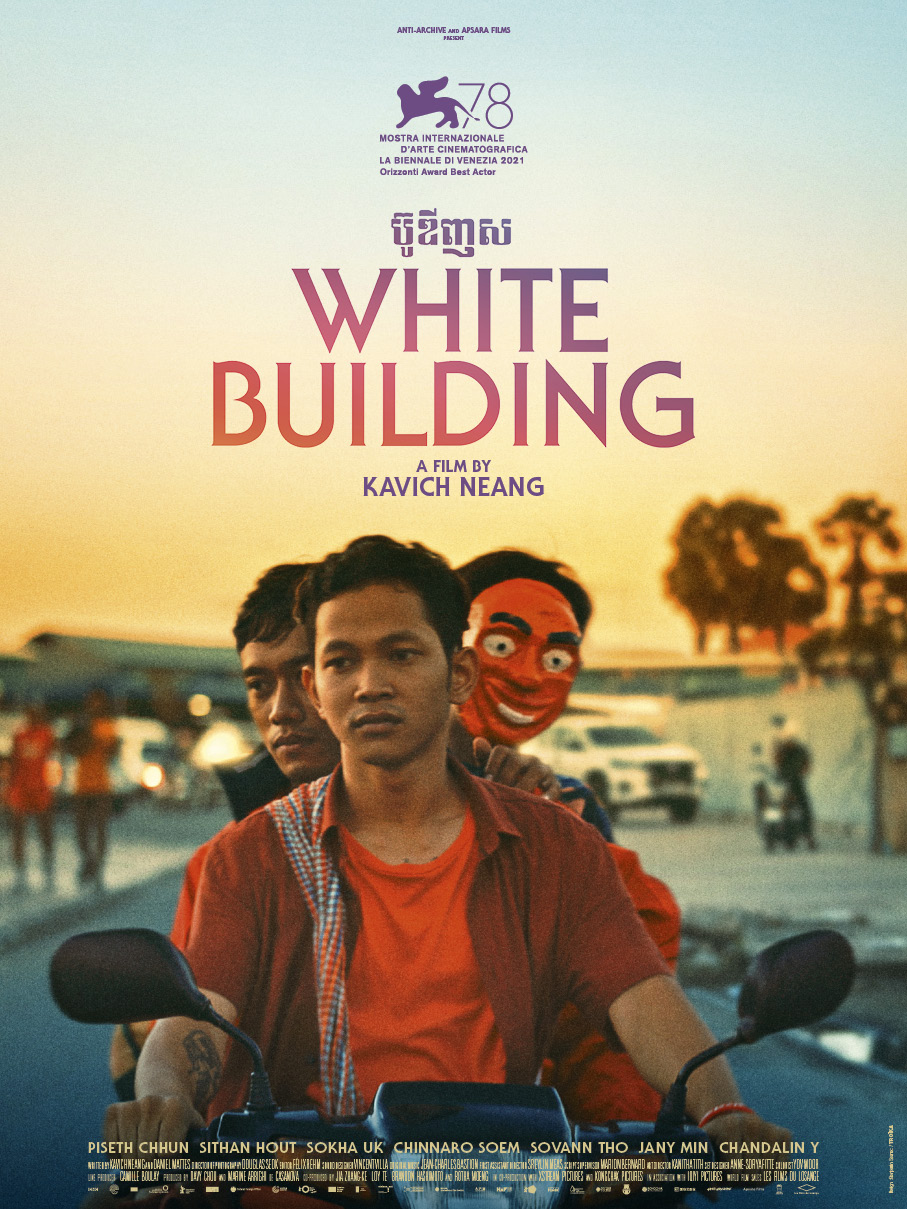
White Building (ប៊ូឌីញ ស, Kavich Neang, 2021)

“I never thought you’d all leave one by one” a disappointed mother laments, “I thought we’d live here all together” mourning the home she’s just lost while realising that it can never, in that sense at least, be remade. In his 2019 documentary Last Night I Saw You Smiling, Kavich Neang explored the slow destruction of Phnom Penh’s iconic White Building in which he had himself grown up. Revisiting it once again in his fiction feature debut titled simply White Building (ប៊ូឌីញ ស), Neang contemplates the radiating effects of forced displacement, the failed dreams of a more optimistic era, and the destructive power of rampant capitalism as young one man gradually sees his world dismantled all around him. 

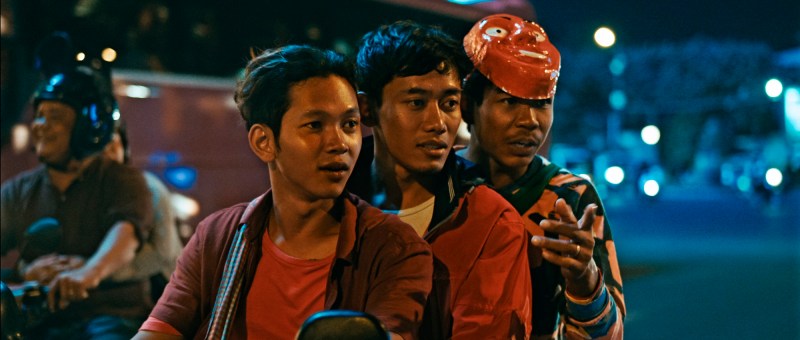
Young Nang (Piseth Chhun) prays to his household deity for protection from car accidents, which seems infinitely practical, but also success in an upcoming dance competition. Very much of the contemporary generation, Nang and his friends Ah Kha (Chinnaro Soem) and Tol (Sovann Tho) try their luck on TikTok as a street dance trio while picking up extra money convincing cabaret restaurant owners to allow them to perform. Their choice of music does not seem entirely appropriate for the candlelight dinner crowd, the boys appearing after a woman singing a melancholy love ballad and announcing they’ve come to show off “a new kind of hip hop dance”, but they are able to make enough for a few drinks and snacks especially after Nang cheekily announces that they are all orphans dancing to support their studies. This is obviously not true, though Nang will in one sense if not the literal soon find himself orphaned as friends and neighbours begin to move away, his community scattered when the famed White Building can avoid its inevitable demolition no longer. 

Built on reclaimed land, the iconic housing complex was completed in the early ‘60s as a symbol of a new and aspirant nation. It first began to fall into disrepair, equally symbolically, during the repressive years of the Khmer Rouge. The tenants began to return after the regime fell, the building once again a vibrant space populated by artists and civil servants, but the structure continued to deteriorate and was finally declared unsafe in 2015. Attempts to preserve the building for its architectural merits failed, and it was finally torn down two years later. For those who lived there, however, like Nang and his family, the White Building was home, where were they supposed to go now? Many of those who’d lived in the building for decades had been government employees, Nang’s father (Sithan Hout) a sculptor working for the ministry of culture. Yet now they seem to have been abandoned, left at the mercy of an increasingly capitalistic society. 

Still young, at first Nang does not seem to pay much attention to the political debates going on around him but witnesses the discord and divide among the residents as his father attempts to chair a community meeting to discuss the latest compensation offer from the developers who’ve bought the land the building sits on. Breaking a cultural taboo he tries to talk to his parents about their predicament, but they prefer not to explain themselves. The problem is that even with the latest increase, those in the smaller apartments in particular will struggle to find comparable accommodation in the contemporary city, effectively priced out of the centre and pushed back towards the periphery or further into the country. For many this means a wholesale reorganisation of their lives, requiring a change in employment or living circumstances, as well as the loss of community as families who’ve lived together for decades are scattered throughout the land. Many want to hold out for a fairer deal, but those in the bigger apartments are growing weary and minded to accept if only to begin moving forward. 

After Ah Kha leaves to live with family in France and Tol gives up dancing, Nang begins having nightmares about his broken dreams later haunted by an ominous image of his father in a suit turning and walking away from him down the now empty corridors of the decaying building. He discovers that his father is suffering from the complications of untreated diabetes, a disease which ravages him as the building continues to decline his eventual exit from it quite literally like losing a limb. Tired of arguing with her parents, Nang’s sister has already struck out on her own, her relationship with her mother apparently strained in part by the uncertainty that destabilises their home. The family is eventually forced back to its rural hometown, the parents contemplating the offer of land on a family farm further into the mountains while Nang knows that to seek his own future he must return to the city where his sister has already found him somewhere to live. Robbed of its home, the family is scattered. An ethereal voyage through a changing Phnom Penh, Kavich Neang’s unconventional coming-of-age drama finds its young hero mired in a world of collapse, navigating haunted corridors of perpetual unease and left finally only with confusion and anxiety if perhaps tempered by a new sense of freedom. 


White Building screened as part of this year’s BFI London Film Festival.

Clip (English subtitles)

Wheel of Fortune and Fantasy (偶然と想像, Ryusuke Hamaguchi, 2021)

It might be frightening, when you think of it, how much of life is dependent on coincidence. Chance encounters, some sparking lifelong connection others destined only for aching memory, are after all what life is all about. Given a little imagination, the heroes of Ryusuke Hamaguchi’s triptych of accidental meetings Wheel of Fortune and Fantasy (偶然と想像, Guzen to Sozo) each begin to work through their personal traumas, easing their loneliness in fleeting yet profound connections with others. “I’m glad I met you” one woman says to another, imagination and reality for a moment blurred as they role-play themselves towards a greater accommodation with the missed opportunities of the past. 

“Could you dare to believe in something less assuring than magic?” the anti-heroine of the first episode asks her former lover, undermining the central thesis in suggesting that sometimes coincidence is just that and everything else mere fantasy an attempt to convince oneself that life is grander than it is. Her friend, Tsugumi (Hyunri), excitedly tells her about the best night of her life born of a serendipitous meeting with a man who might be her soulmate but was also wounded, frightened of falling in love, still carrying the scars of betrayal after being cheated on two years previously.

What Tsugumi didn’t know is that Mieko (Kotone Furukawa) is the cheating girlfriend who broke the heart of her star-crossed lover Kazuaki (Ayumu Nakajima), but now Mieko’s sense of betrayal is two-fold. Tellingly, Mieko refers to her friend as “Gumi”, but to Kazuaki she’s the “Tsu” to his “Ka”, literally torn in two while Mieko both fears the loss of her friend and resents the love she herself discarded being picked up by another. The thought of the two of them, a perfect whole as she later admits, together near destroys her. When Kazuaki unwittingly invades their private space she has a choice, indulging in a moment of destructive fantasy which threatens to torpedo her friendship only for Hamaguchi to pull a Hong Sang-soo, zoom in and rewind, to allow her to make a more mature decision albeit one that leaves her exiled but allows a more positive path towards a freer future having let go of this brief moment of emotional trauma. 

But what if your emotional trauma is longer lasting, leaving you feeling isolated unable to understand why it is you’re not quite like everyone else and for some reason they won’t forgive you for it. Married housewife and mother Nao (Katsuki Mori) has gone back to college and is having an illicit affair with a much younger student but is frustrated not to be included in campus life in part blaming her sense of alienation on being so much older while also internalising a sense of discomfort that tells her it’s always been this way. Her lover, Sasaki (Shouma Kai), suggests it’s all her own fault, that she doesn’t know how to “go with the flow” and “puts up walls”. He meanwhile, is shallow and entitled, resentful towards a stuffy professor, Segawa (Kiyohiko Shibukawa), who held him back a year because his grades in French, a required subject, weren’t good enough.

To get back at him, he emotionally blackmails Nao into helping him set up a scandal but Segawa has a literal open door policy and their meeting eventually turns into something deeper even if Nao is forced to admit that a part of her craved this kind of seduction fantasy. Only Segawa, a distant, pensive man, meets her as an equal, tells her that he thinks her inability to go with the flow is no bad thing but a strength in that she lives by her own desires rather than those of an overly conformist society. An ironic mistake, however, later cheapens their profound connection spelling disaster for both while Sasaki it seems, as men like him often do, unfairly prospers plunging Nao into an even deeper sense of despair and self-loathing. “My own stupidity makes me want to cry” she confesses, offered hope only by another chance encounter with the unresolved past. 

Then again, do you actually need to meet to find resolution or is fantasy enough to overcome a sense of loss or missed opportunity? In the midst of a freak technological disaster in which the internet has been temporarily disabled, IT systems engineer Natsuko (Fusako Urabe) attends her 20-year high school reunion but the person she wanted to see wasn’t there. She thinks she sees her in fleeting moment passing each other on an escalator. The other woman seems to recognise her too, the pair of them caught in an escalator loop one chasing the other and thereafter visiting the other woman’s home. But as they talk they realise their chance encounter was mutual case of mistaken identity if one that exposes the similarities between them, connected Natsuko later puts it by an unfillable hole in the heart. Aya (Aoba Kawai), a middle-aged housewife, lives comfortably in a well-appointed suburban home but confesses herself wondering why she’s alive at all, feeling as if “time is slowly killing me”.

Not wanting to waste the “dramatic meeting” they role-play the conversation they might have had, Natsuko regretting having given up too easily on her high school love not wanting to cause her further pain but now realising that her care was mistaken, the pain was necessary for them both and its absence has condemned them to kind of limbo of unresolved longing and regret. Aya meanwhile reveals something else, a “boyish” friend for whom her feelings remain unclear though the final moment of connection in which she remembers her long forgotten name which literally translates as “hope” proves profoundly moving in the momentary connection between these two women, strangers but not, meeting by chance and bound by imagination each restoring something to the other if only in fantasy. 

A meditation on distance and intimacy, Hamaguchi’s series of empathetic character studies owes an obvious debt to Rohmer with a dash of Hong Sang-soo but is perhaps kinder allowing the randomness of life to provoke a gradual liberation in each of these wounded souls if only temporarily. The question might less be if you can believe in something less assuring than magic, than if you can learn to trust the strange mysticism of serendipity. 


Wheel of Fortune and Fantasy screened as part of this year’s BFI London Film Festival.

International trailer (English subtitles)

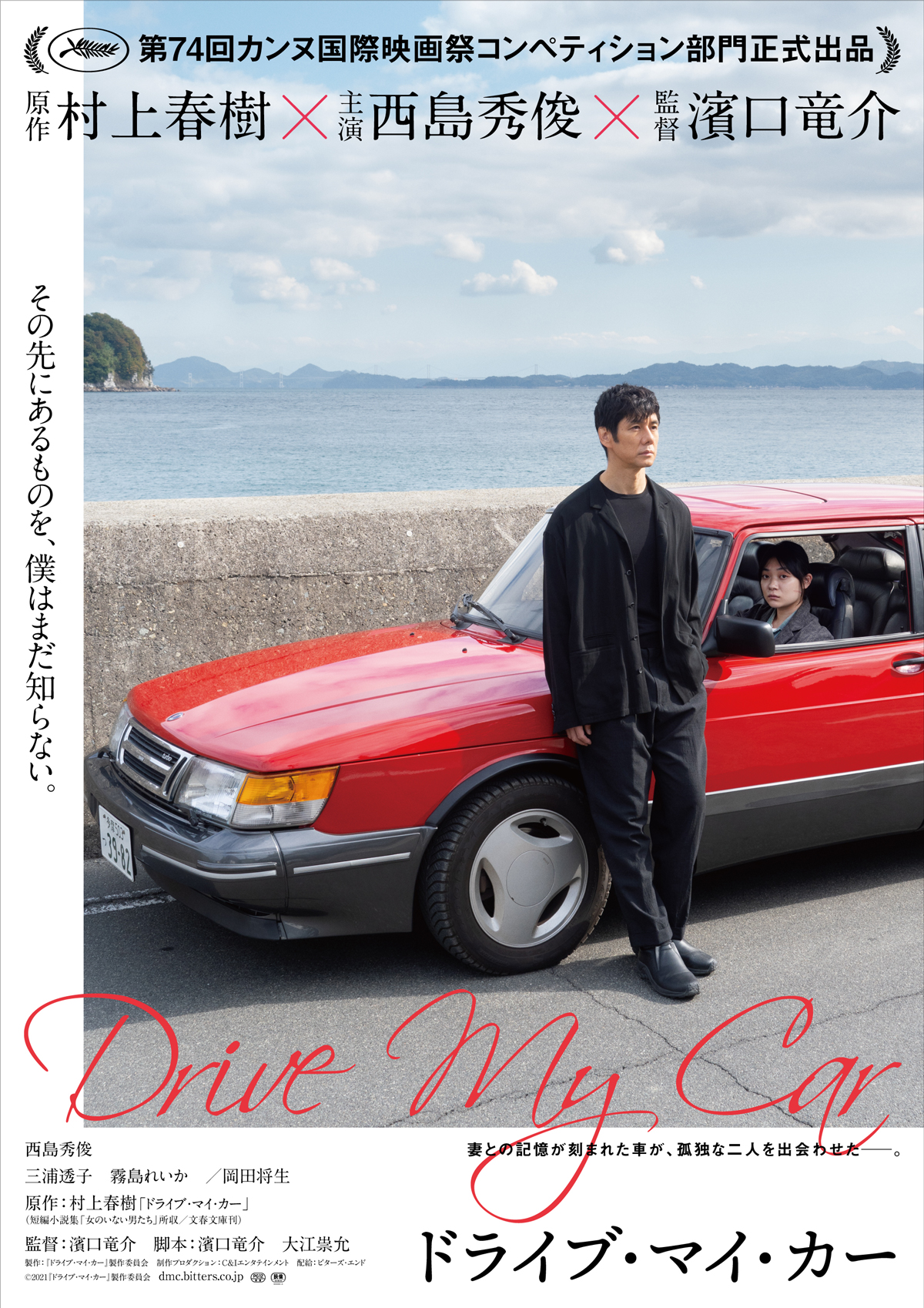
Drive My Car (ドライブ・マイ・カー, Ryusuke Hamaguchi, 2021)

“What can we do? we must live our lives” comes a constant refrain echoing the closing words of Chekhov’s Uncle Vanya offered by the self-sacrificing Sonya resolving to find joy in suffering if only in the promise of a better world to come. Freely adapted from a short story by Haruki Murakami, Ryusuke Hamaguchi’s profoundly moving Drive My Car (ドライブ・マイ・カー) is study in grief, loss, and how you learn to live after the world has ended but also of how we pull each through, finding new ways to communicate when words alone can’t help us. 

Words are, however, where we begin with a woman half in shadow an accidental Scheherazade spinning a bizarre tale of a high school girl’s first love. Oto (Reika Kirishima) claims the story is not about her, but as we’ll later discover in some ways it is if perhaps not literally. A long-married couple, this is part of their marital routine, screenwriter Oto telling stories to her theatre director husband Yusuke (Hidetoshi Nishijima) she asks him to remember and repeat back to her in the morning. Only one day, having accidentally stumbled in on his wife and her lover only to leave quietly saying nothing, Yusuke claims not to remember. She tells him she wants to talk, but he is afraid of what she’ll say and delays coming home, finding her collapsed in the hallway on his return having passed away from a cerebral haemorrhage. The story remains incomplete, a perpetual cliffhanger never to be resolved. 

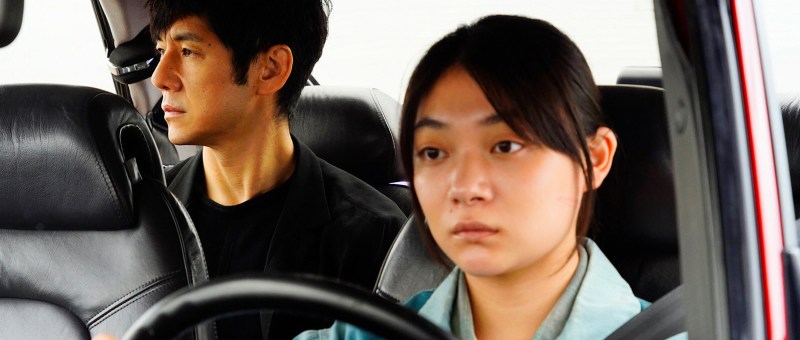
Two years later Yusuke is a haunted man still listening to the cassette tape Oto left for him of her reading all of the other lines of Chekhov’s Uncle Vanya save for those of the title character which he was to play himself. This time he’s been selected as an artist in residence at at a theatre in Hiroshima where he’ll once again stage Vanya in his signature multilingual performance style. He’s specifically asked for accommodation an hour’s drive away with the intention of maintaining his usual routine of listening to the tape on his way to rehearsal but, following previous incidents, the theatre has a policy of hiring their own drivers in this case a young woman, Misaki (Toko Miura), who eventually wins him over through her capability and care while, ironically, mimicking the very qualities he demands of his actors in her wounded stoicism. 

The car in a sense represents an inviolable space of intimacy, a space that Yusuke had been reluctant to allow anyone to enter, even Oto remarking on his discomfort with her in the driver’s seat as she took him to a doctor’s appointment where he learned he was losing the sight in his left eye, clarifying with the doctor that for the time being at least he’d be OK to drive himself. Misaki assumes he doesn’t want her to drive his car because she’s a young woman, but thereafter is careful to maintain distance respecting his space for her sake as much as his own mindful of her role as a “driver” until he begins to invite her in if originally more out of politeness or consideration than a desire for company. 

Misaki has her own story, a story she too is originally reluctant to share but in its way echoes his as someone trapped in grief and guilt ironically unable to move forward but driven by the quality of Oto’s voice and the ritualistic call and response implied by its lacunas. Too afraid of its implications to take the role himself, Yusuke casts Oto’s lover, Takatsuki (Masaki Okada) a young TV actor with impulse control issues whose career has apparently been ruined by scandal, as Vanya a man approaching 50 whose illusions are painfully shattered, forcing him to realise that he’s wasted his life on a futile ideal. The three of them, each eventually entering the confessional space of the car, share more than they might assume but it’s Takatsuki who holds the key revealing another piece of the puzzle with unexpected profundity that in its own way lays bare a truth Yusuke had been unwilling to see about his relationship with his wife, the shared grief that both bound and divided them, and the poetic import of her death. 

Rather than Vanya, the film’s prologue saw Yusuke perform in a multilingual production of Beckett’s Waiting for Godot, the author’s well-known phrase “I must go on, I can’t go on, I’ll go on” perhaps equally apt even as Yusuke moves slowly away from the role of Vanya before finally assuming that of Sonya in echoing her words while comforting the filial figure of Misaki even as she explains to him that as in Vanya the fault was not in his convictions but in himself that he couldn’t accept the contradictions of his wife and in that sense had not understood her or himself well enough to know he should have braved the hurt of confrontation. Yet as Takatsuki had said, you can’t ever really know another person, there’s always a part of them forever out of reach all you can do is try to make peace with your own darkness. 

For Yusuke communication occurs indirectly, through allegory or half-truth, and through the unspoken or unintelligible. His multilingual approach in which lines are read coldly at half-speed is intended to draw out the feeling that lies beneath them, the final most profound moment delivered in silence as a former dancer breaking free of her bodily inertia delivers Sonia’s closing monologue with all of its melancholy serenity in Korean sign language her arms draped angelically over Vanya’s shoulders in a gesture of the utmost comfort. Touching in its ambiguities, Hamaguchi’s quietly devastating emotional drama for all of its eerie uncanniness finally places its faith in simple human empathy as its haunted souls learn to live with loss finding in each other the strength to go on living.


Drive My Car screened as part of this year’s BFI London Film Festival.

International trailer (English subtitles)

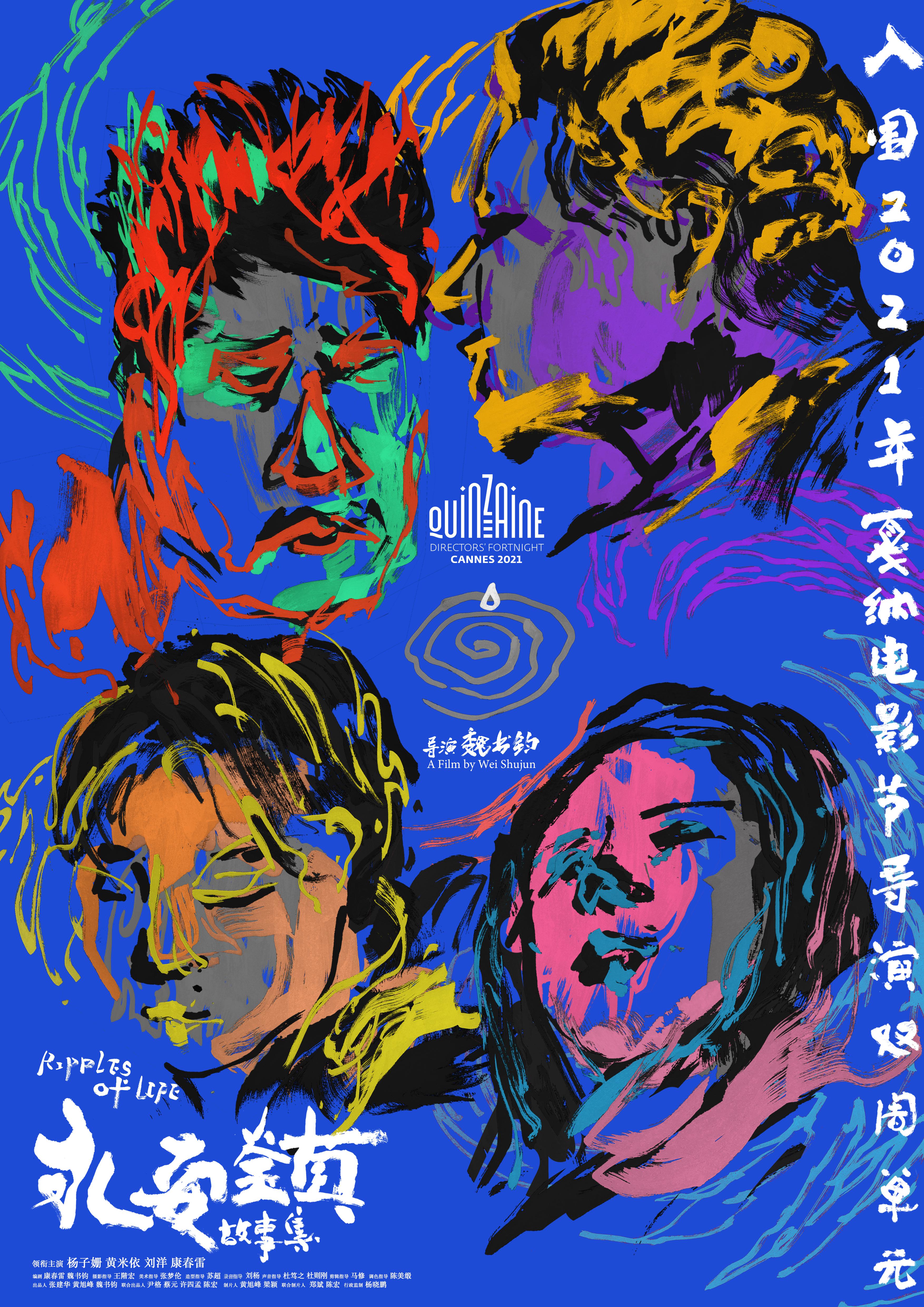
Ripples of Life (永安镇故事集, Wei Shujun, 2021)

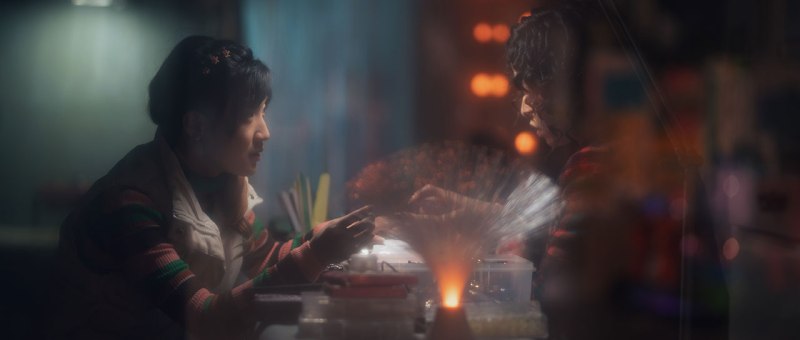
“I had to let it happen, I had to change” the rather incongruous voice of Madonna insists, finding a note of defiance on reaching the climactic “so I chose freedom” as the movie version of Don’t Cry for Me Argentina erupts over the closing minutes of Wei Shujun’s Ripples of Life (永安镇故事集, Yǒng’ān Zhèn Gùshi Jí). Like much of the film, the use of the song is ironic but still somehow poignant its repurposing perfectly expressing the interior lives of each our “characters” who are all in some way or another looking for escape or at least a way out of personal dissatisfaction while trying to film a movie about the inertia of life in a small town in rural China where nothing ever happens. 

Divided into three segments, Wei’s film is as much about the positioning of rural China as it is about “cinema”. A Beijing film crew descend on this provincial small town with their own preconceived notions of rural life, determined not to “romanticise” country living but nevertheless bending it to their will looking only for signifiers that align with their mental image of the hinterlands of their nation. Only latterly do they realise that for true authenticity the film should be in Hunanese, but none of them speak it which is a significant stumbling block in their efforts to overcome ongoing creative differences over the script. 

Wei is, in part, satirising the recent trend in Chinese indie cinema for gritty stories of rural poverty usually filmed with depressing naturalism determined to stress the harshness of life outside of the cities amid the nation’s ever increasing wealth divide. The first chapter in part does this too, later shifting away from early Jia Zhangke towards the neon yearning of Wong Kar-wai but always undercut with a sense of meta irony not least in its choice of heroine. The infinitely cornered Gu (Huang Miyi) longs for “a different life”, trapped in an unsatisfying marriage to a gruff man she accuses of working night shifts to get away from their toddler daughter whom she is forced to take to work with her while he constantly undermines all her parenting decisions based on articles sent by his mother. A woman at the market coos over the baby and asks when the next one’s due, Gu crestfallen realising she’s trapped in this small-town existence where nothing ever happens. But then the film crew begin to notice her, telling her she has a “real cinema face” and likening her to Kim Min-hee of whom she has never heard. Their admiration is again ironic, considering they were looking for the authentic face of rural China but taken with this cinematic vision, yet it’s also callous and cruel. They give her false hope, allowing her to dream as she puts on makeup and models costumes only to be forgotten once again when the “real” actress arrives, cast back into a life of quiet desperation. 

Perhaps this too is another unfair stereotype assuming that everyone from a small town longs for escape, but Gu’s story does indeed mimic the earlier parts of the screenplay for the film within the film which the director sees as a tale of a small-town woman’s awakening to independence and agency while the screenwriter Chunlei (Kang Chunlei) opts for an old-fashioned take on consumerist corruption. Shifting away from Gu towards formerly successful actress Chen Chen (Yang Zishan), the second arc pulls towards Chunlei as Chen Chen searches for escape from a rut in her career apparently having left her commercial agent to do more earnest work but doing not much of anything for the previous year. In another meta touch, she is from this rural backwater and like her character in the film chose to leave but now admits that sometimes she misses life in the country. As someone else puts it, city folk all want a return to simple rural life but can’t accept the reality of it which is why the plan to rejuvenate the area largely relies on tourism including the building of a waxwork museum of which Chen Chen is expected to be a notable inclusion as a local girl made good. 

Chen Chen’s image has once again been commodified, stripping her of power or agency over her name and face but on returning to Yong’an she is forced to realise that she is no longer of there, this place where nothing ever happens has already changed while she exists on a slightly different plane. Realising the maid covering her room is a childhood friend she cheerfully tries to reconnect but the woman is awkward and evasive, embarrassed perhaps to acknowledge that she is a mere hotel employee while Chen Chen has achieved her dreams of stardom. Attempts to reconnect with two other male friends similarly backfire, the first a typical provincial bureaucrat who uses her for official business without her consent while a meal with the other’s family proves even less joyful as she endures countless barbed comments from his snippy wife who eventually tries something similar in asking her to find a job for her son on the film. As she’s leaving he asks her the same question the screenwriter obsessed over, suggesting that she left for mercenary reasons only for her to answer that she didn’t want to live like his wife, or indeed like Gu, but wanted “a different life”. 

This battle between image and authenticity lies at the heart of the conflict between the director, a hipsterish festival darling with a sideline in hip hop, and the schlubby screenwriter himself perhaps trapped in the previous generation of Chinese filmmaking but also in his way more idealistic believing in cinema as an art form which can move the world rather than mere entertainment created for commercial gain. He accuses the director of hypocrisy, exploiting the arthouse aesthetic for critical credibility and with it a vision of rural China, while the director criticises him for his old-fashioned mentality in seeking melodrama over message. Shot in cooling blues their heated arguments are noticeably dispassionate, Wei even descending into some ironic iconography which sees the pair talking through their issues with a wise man film critic on a boat on a misty river. The ironic conclusion brings the whole affair full circle as the words of Madonna as Eva Peron come to speak for each of the protagonists, Gu now angrier, impatient as she shifts dishes while her husband idles nearby, and Chen Chen forced to pose next to a wax figure of herself during a launch ceremony for this film in which the script has yet to be “finalised”. “But nothing impressed me at all” the song continues, “I never expected it to” hinting at the contradictions of the modern China in the internalised defeatism of small-town dreams and the cynical filmmakers who exploit them. 


Ripples of Life screens on Oct 11 & 12 as part of this year’s BFI London Film Festival