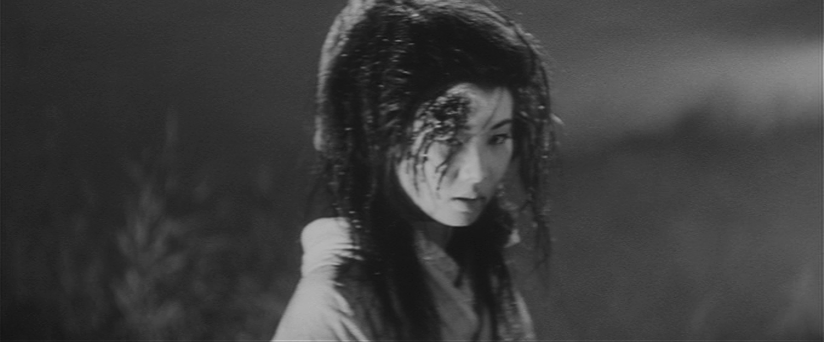
The Albino’s Trees (アルビノの木, Masakazu Kaneko, 2016)

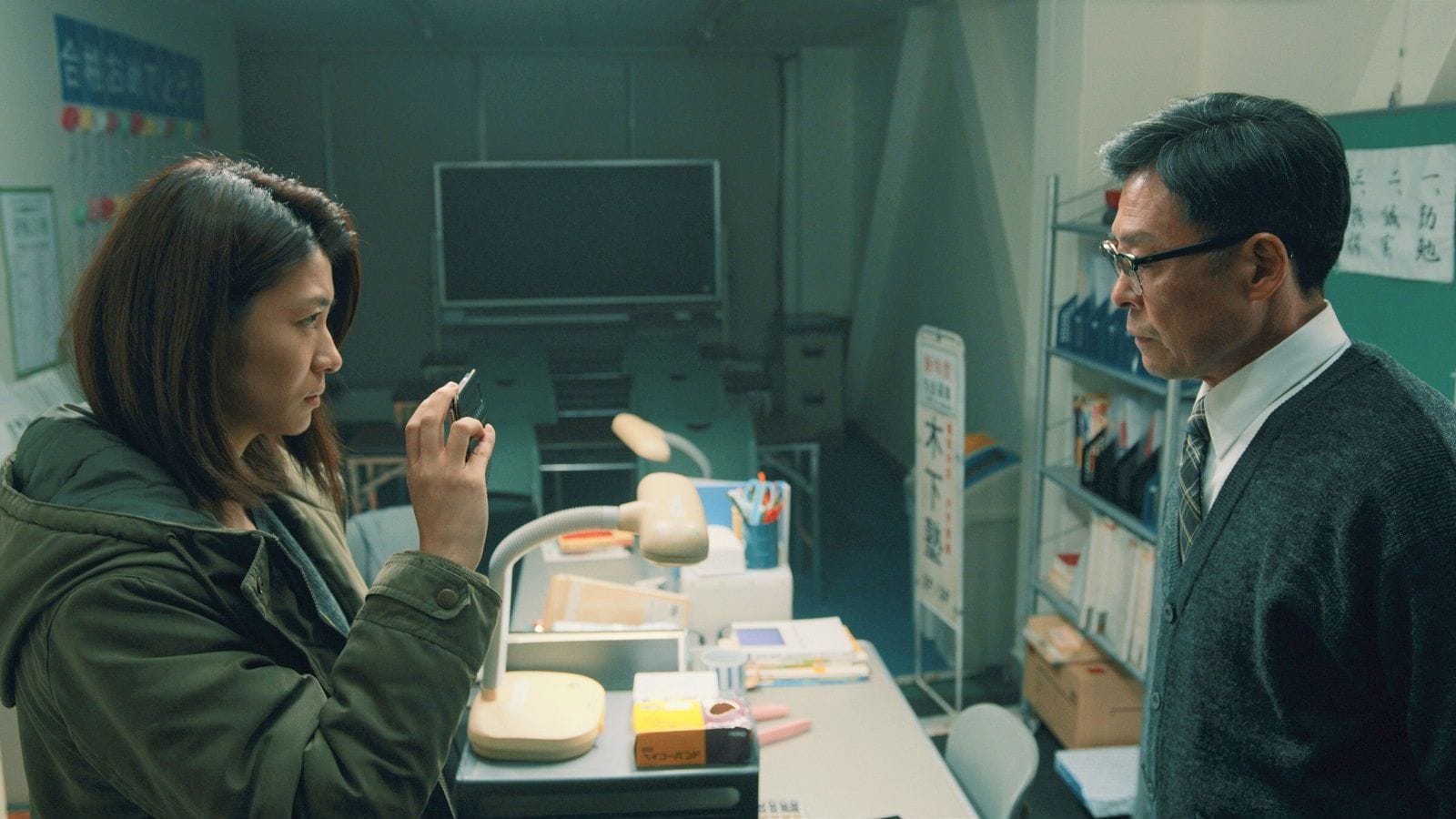
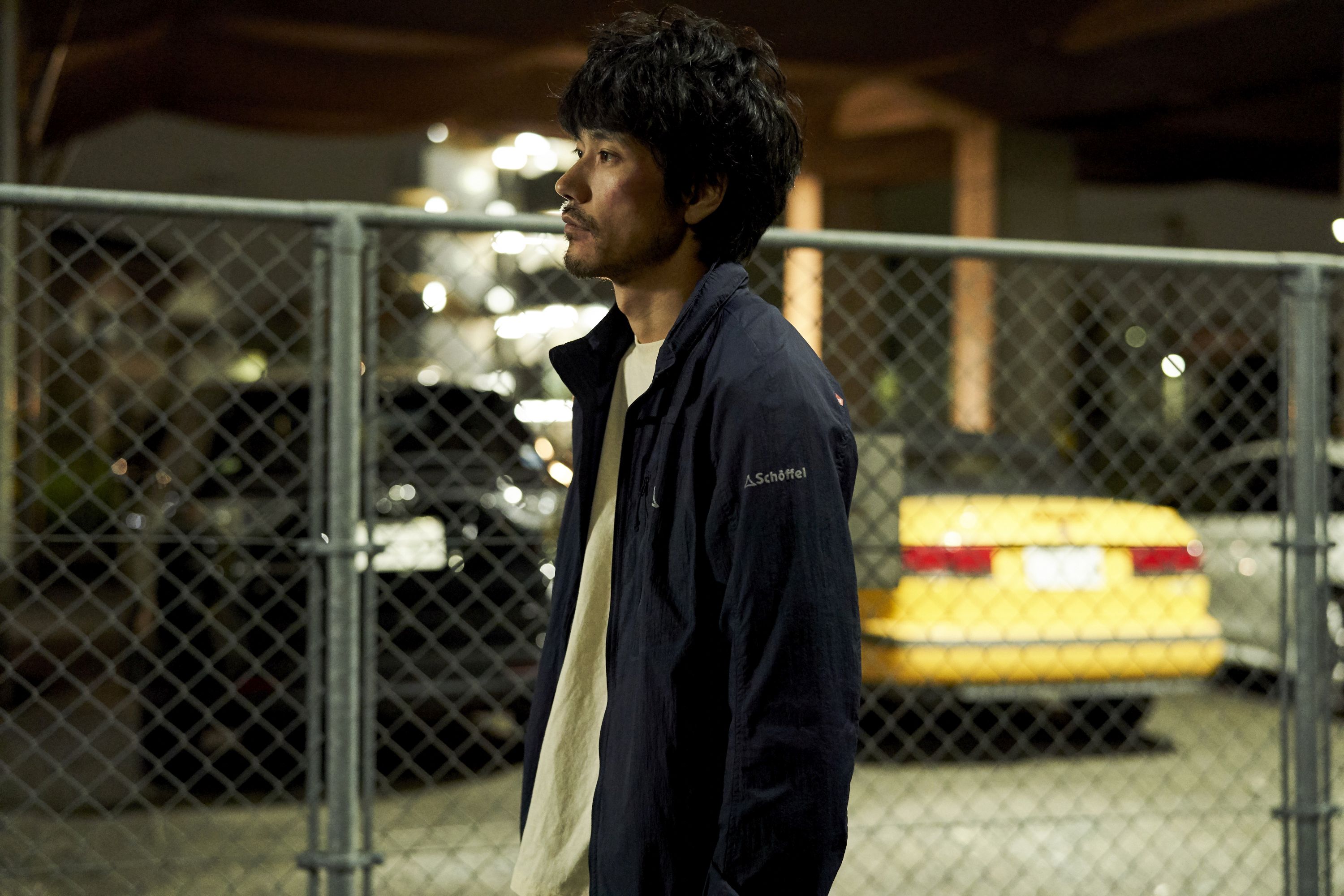
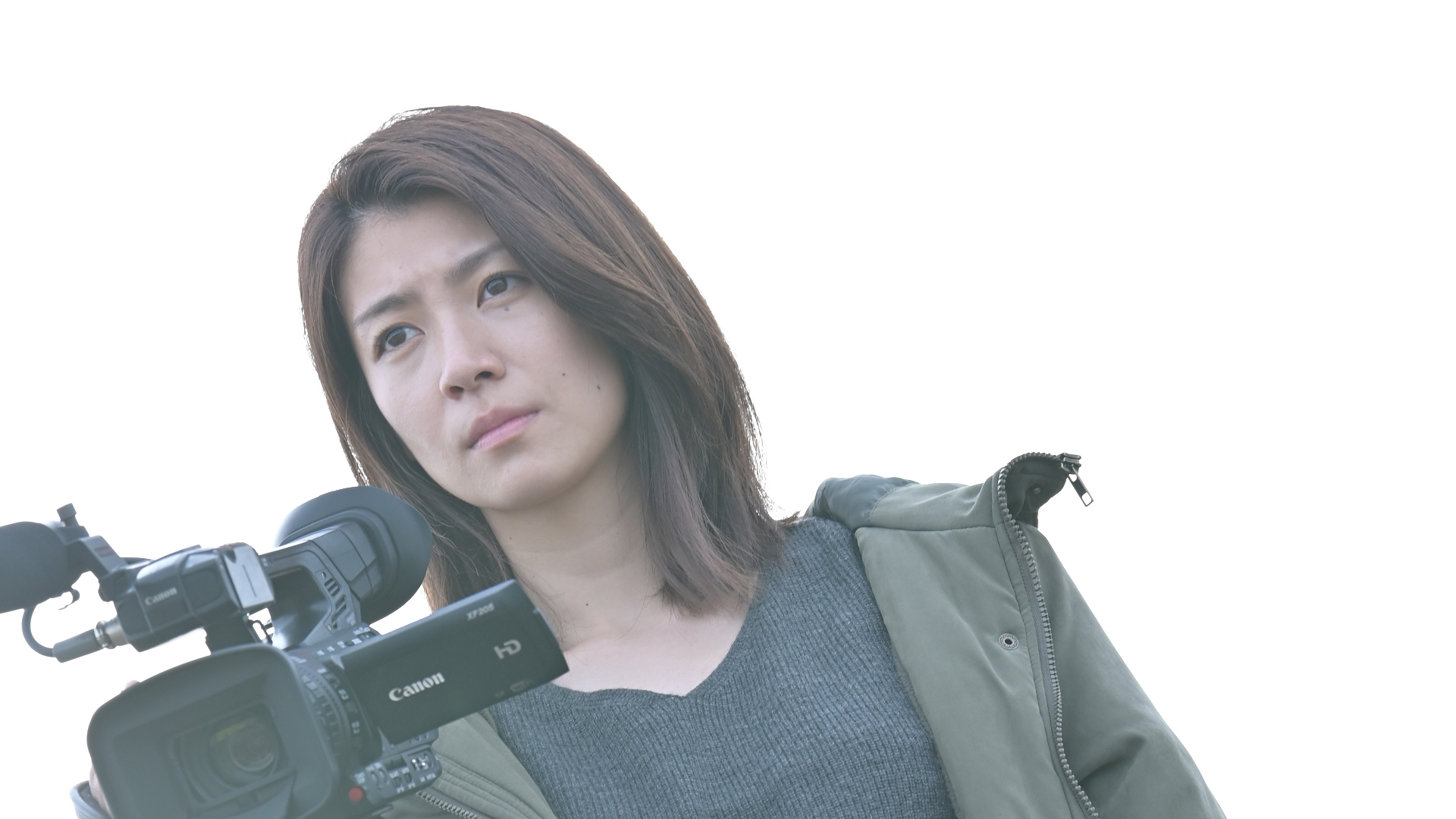
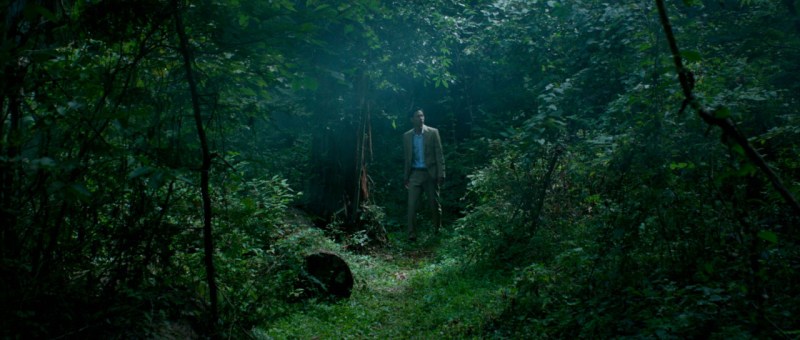
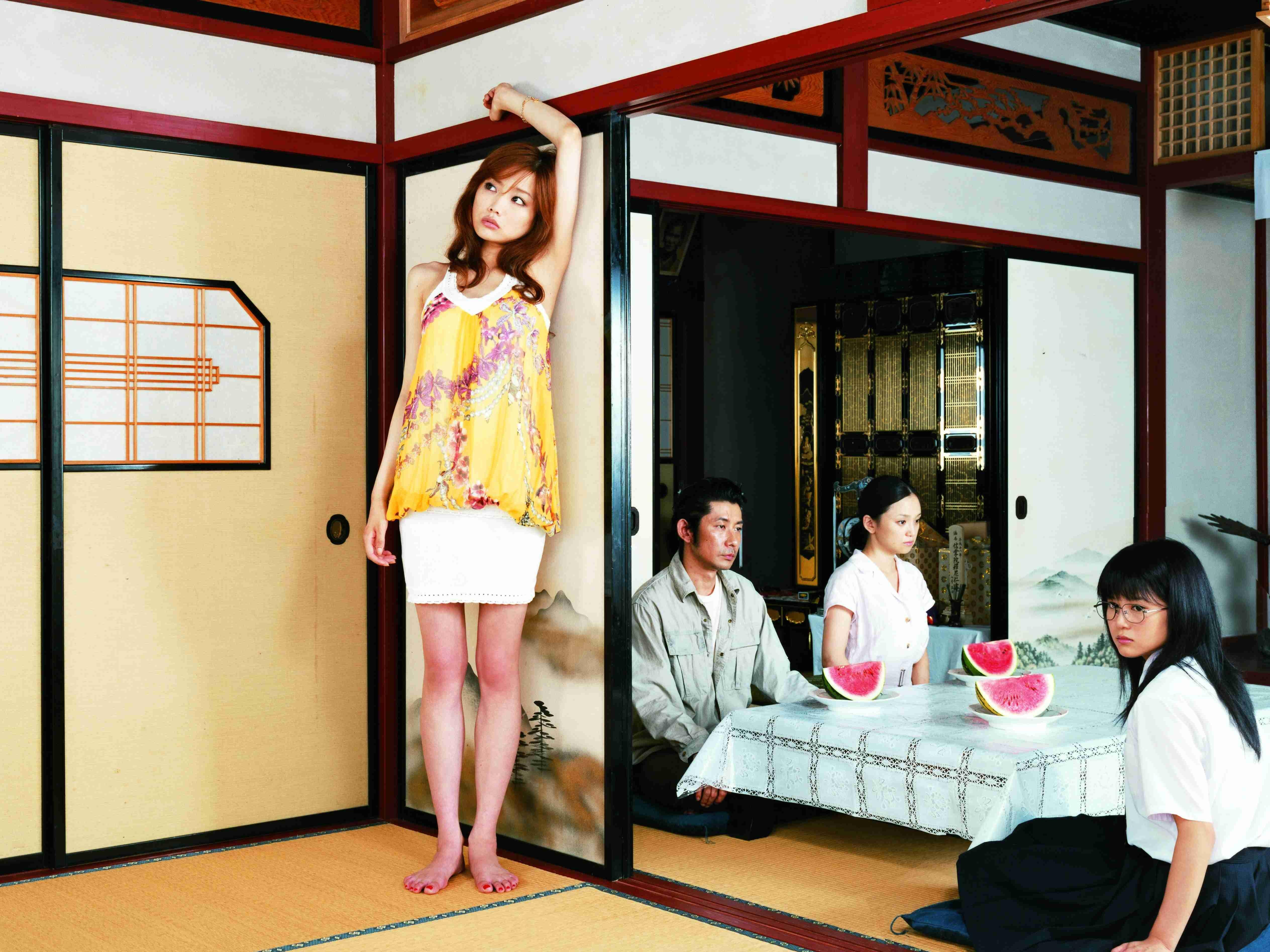
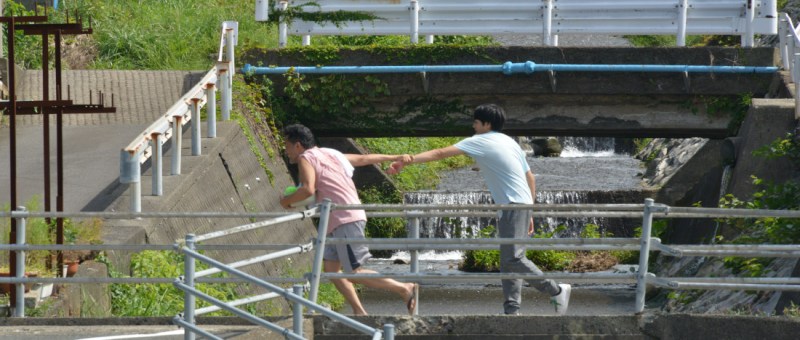
A young man is forced to face up to the nature of existential struggle when tasked with killing a god in Masakazu Kaneko’s meditation on land, modernity, and the taking of a life, The Albino’s Trees (アルビノの木, Albino no Ki). Filled with a sense of unease, Kaneko’s parabolic drama asks if it’s right to force others to live in the way you think is best, if it’s right to take the life of an animal simply because it’s inconvenient to you, and if it’s right to assume ownership over the natural landscape as if it’s yours to do with as you wish. To the young man at the film’s centre, these questions are ones he thinks he can’t afford to ask but is eventually confronted with in committing what to some may be an unforgivable transgression. 

Yuku (Ryohei Matsuoka) used to work in removals but times being what they are, his boss has taken a left turn accepting lucrative contracts working as animal control agents on behalf of local councils carrying out culls of wildlife deemed out of control. His colleague Imamori (Shuichiro Masuda) remains conflicted. He isn’t completely happy with this kind of work but has been persuaded that it’s necessary though it still seems cruel to him if not morally wrong to hunt and kill healthy animals solely for existing. Nemoto (Hiroyuki Matsukage), their boss, is keen for them to take on a well paid “confidential” job but with so little information the guys are reluctant, something about it seems shady. Nevertheless, with his mother seriously ill and needing money for medical treatment Yuku agrees as does Imamori only to discover that not even the local councillor who hired them wants to explain what the job is. 

The councillor does, however, begin to outline the economic history of the town once dependent on coal mining now pivoting towards innovative farming. With barely concealed disdain, he replies to Yuku’s inquiry as to whether the mountain in question is inhabited by briefly remarking on a traditional village on the other side the existence of which seems to fill him with such disgust one half wonders if Yuku’s contract job is even darker than it seems. He laments that they have “no desire to develop”, continuing to live a traditional rural existence rather than succumbing to the dubious conveniences of modernity. On meeting up with their contact (Hatsunori Hasegawa), another hunter living on the ridge, the pair discover that their assignment is to eliminate an albino deer because, according to the hunter, the council is nervous that some may assume its mutation hints at corruption in the soil endangering the stability of their eco farming project. The problem is that the villagers believe the albino deer to be an embodiment of the White Deer God that protects the mountain as part of their Shinto animist beliefs and have been protecting it by dismantling all his traps. Imamori declines to go through with the job, feeling that it’s wrong to kill the deer just because it was born different but thinking only of his mother Yuku is determined to do whatever it takes.  

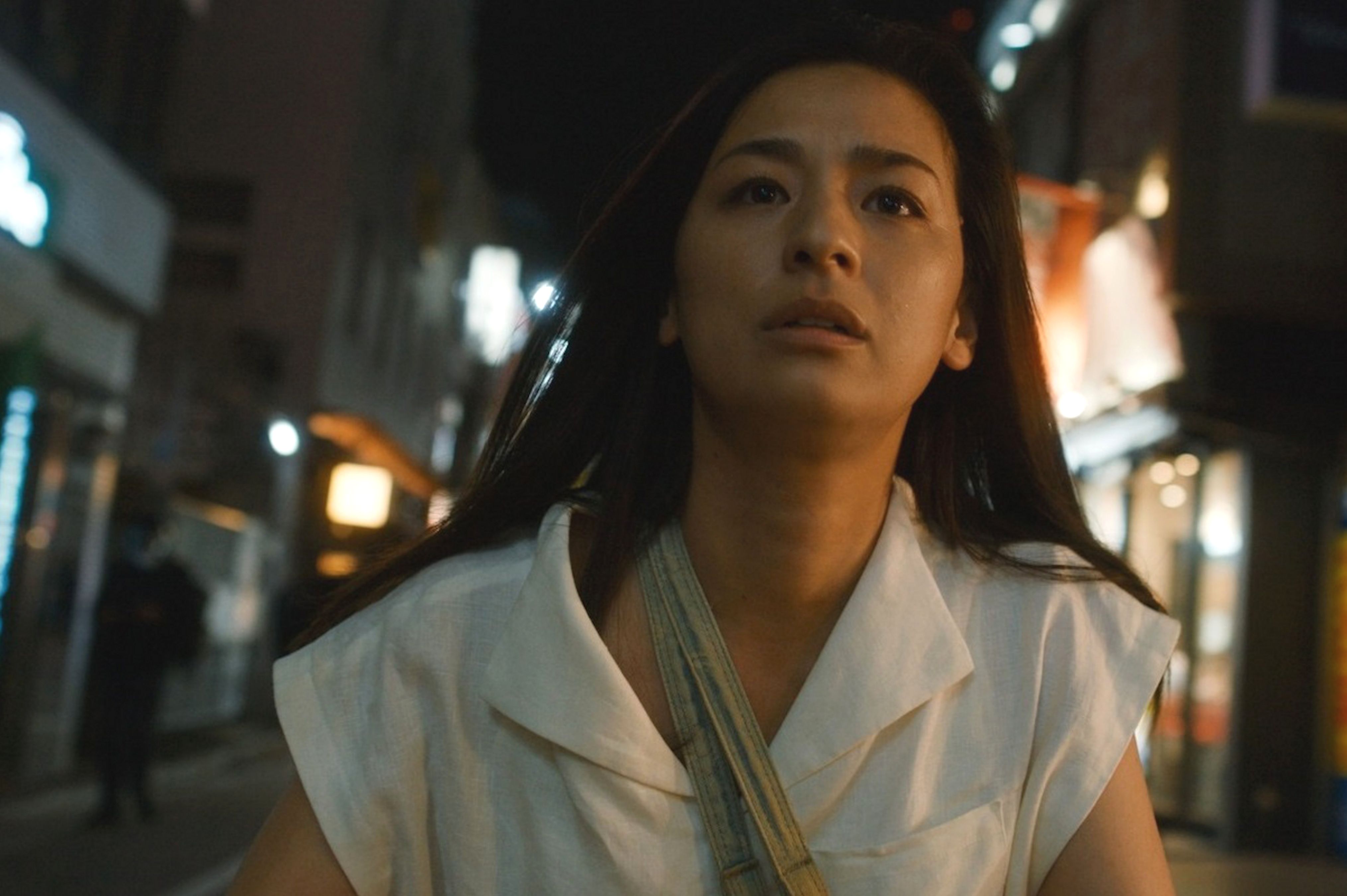
His dilemma is in a sense mirrored by that of Nagi (Kanako Higashi), a young woman from the village he rescues from an animal trap who tells him that she remains torn between the allure of modernity and a traditional rural existence. Yoichi (Yusuke Fukuchi), a young man making a living carving traditional wooden bowls, is determined to preserve ancient beliefs Yuku regards as backwards and superstitious convincing himself that killing the deer is also an act of liberation that will bring enlightenment to the villagers so that they won’t “need” to live in such an archaic and primitive way. But as Yoichi tries to explain to him, you can’t force people to conform to your own way of thinking, it’s not as if anyone is a prisoner here if they didn’t like it they’d leave as all of the other young people have already done. He asks him if a world in which you simply eliminate things which are “inconvenient” to you is one you really want to live in but Yuku isn’t here for such philosophical questions only baffled by what he sees as primitive superstition that stands in the way of progress. 

Yet, the village is largely untouched by the corruptions of the modern society. The water in its rivers is clean and sweet, the wood in its trees strong and beautiful. As Nagi explains to him, the White Deer God has given them permission to drink from these springs, and permission to harvest the trees. By contrast, there’s an unpleasant look of triumph in Yuku’s eyes as he shoots deer from a distance killing for no reason at all, man overcoming nature. He thinks only of his own survival, taking the lives of other living things in order to preserve his own, determined to save his mother but indifferent to the fates of others. When it comes to killing the white deer his hands shake, struck for the first time by the enormity of what he’s doing while literally preparing to kill a god. While Yoichi venerates and protects the natural environment in a process of symbiotic living, Yuku sides with those willing to exploit it for economic gain brainwashed into believing that living with the land is “backward” and that it’s only “natural” to eliminate “inconveniences” such as “vermin” which impede “modern life” in a capitalistic society. Capturing the natural beauty of the Japanese countryside Kaneko’s existential fable is filled with a quiet unease in the ambivalent relationship between man and landscape but also in the solipsistic struggle for survival that all too often defines human relationships. 


The Albino’s Trees streams in the US Dec. 3 to 23 as part of Japan Society New York’s Flash Forward series.

Original trailer (English subtitles)
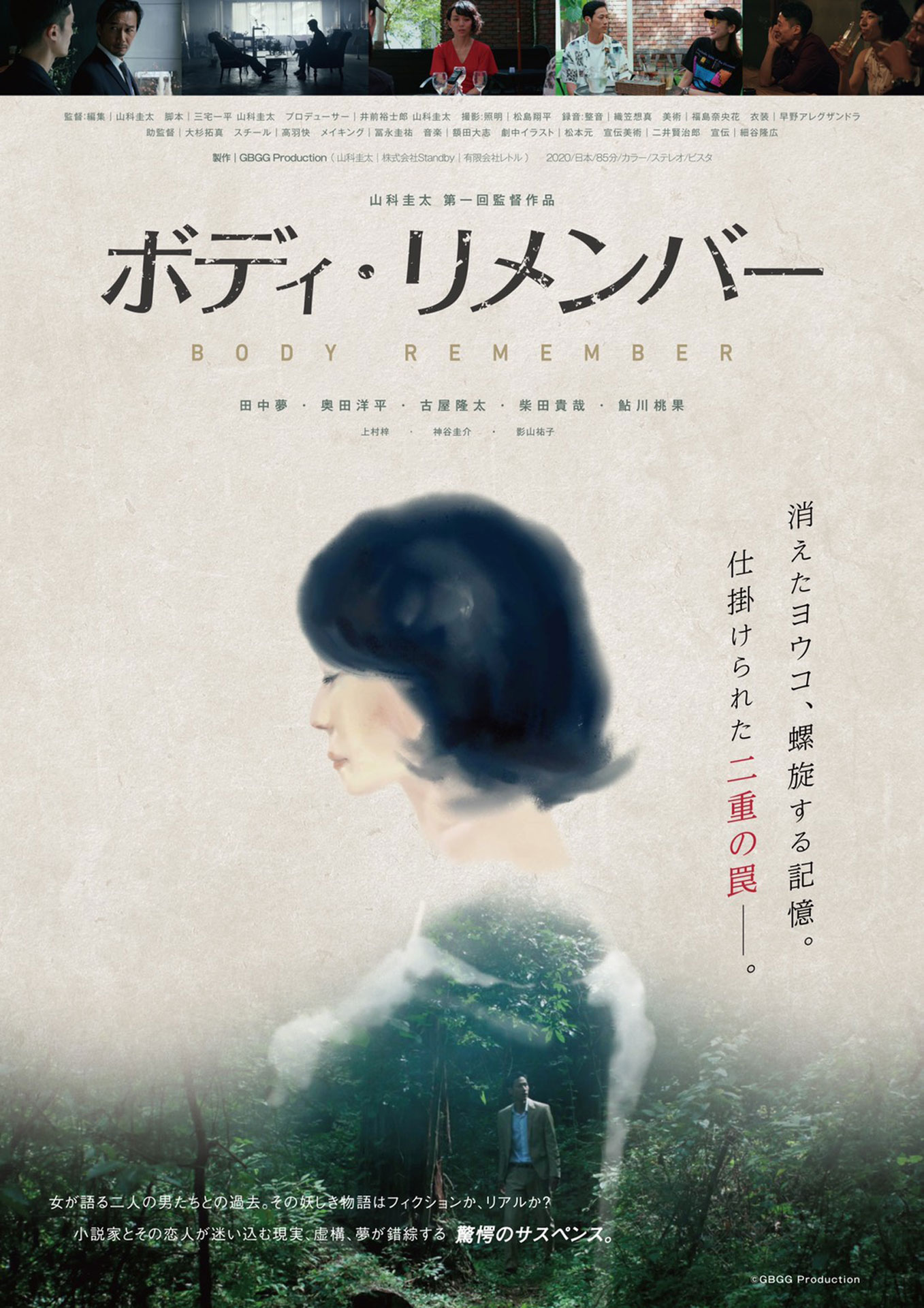
Fancy Dance (ファンシイダンス, Masayuki Suo, 1989)

Thematically speaking, the films of Masayuki Suo have two main focuses either dealing with esoteric ways of life in contemporary Japan such as sumo wrestling in Sumo Do Sumo Don’t, ballroom dancing in Shall We Dance?, and geisha in Lady Maiko, or pressing social issues such the operation of the justice system in I Just Didn’t Do It or euthanasia in A Terminal Trust. After making his debut with pink film Abnormal Family: Older Brother’s Bride, Suo’s first mainstream feature Fancy Dance (ファンシイダンス) belongs to the former category as a Bubble-era punk rocker finds himself entering a temple to honour a familial legacy. 

As the film opens, Yohei (Masahiro Motoki) is onstage singing a very polite and respectable version of a classic song, Wakamonotachi (lit. the young), made popular as the theme to a television drama in the mid-1960s, before suddenly turning around, the other half of his head already shaved continuing with the same song but now in an anarchic punk rock arrangement. The son of Buddhist temple, he is expected to become a monk and take over the family business but he’s also a young man coming of age in the ultra-materialist Bubble era raised in the city and with little inclination towards the ideals of Zen. In fact, we learn he’d long resisted the idea of entering a monastery and has only recently given in intending to stick it out for a year in order to please his parents and then return to to his Tokyo life. 

His hair reflects an inner duality, torn between his duty to take up Zen and his desire for personal freedom. Yet as he’s repeatedly told by his razor-wielding office lady girlfriend Masoho (Honami Suzuki), in the end he’s going to have to choose which from her point of view means choosing between her and the temple. Though there is obviously no prohibition on monks getting married, Yohei is the son of a monk after all, girlfriends are one of many things not really allowed during his initiatory period though as we’ll see the monastic life is often more about knowing how to game the system than it is about actually sticking to the rules. It’s a minor irony that temples, Buddhist or Shinto, are actually one of the most lucrative businesses in Japanese society and despite apparently rejecting material desire many monks are fantastically wealthy. Yohei’s fellow noviciate Eishun (Hikomaro) is dropped off by a young woman in a bright red sports car who turns out to be the daughter of a monk, Eishun only entering the temple to please her family so that he can marry her, committing himself out of love but also admitting it’s nice work if you can get it. 

Yohei’s brother Ikuo (Ken Ohsawa) is also fine with the idea of becoming a monk, describing it perhaps surprisingly as an “easy life”. Ikuo’s presence is initially a little irritating to Yohei, he only agreed because he was under the impression Ikuo had also declined to enter the temple and feels that he’s been tricked when he could have just let him train to take over the family “business”. The treatment they receive is often surprisingly harsh with a high level of physical violence administered by their superiors, in particular the more experienced Koki (Naoto Takenaka) who has it seems figured out how to break the rules in an acceptable fashion carrying on a secret romance with a young woman who often attends the temple while visiting hostess bars in the town in disguise, wearing a wig to cover his distinctive monastic hairstyle. Meanwhile, even the supposedly austere master of asceticism Shoei (Miyako Koda) has a secret stash of sweets in their room. The message seems to be that once you “graduate” from the junior ranks you too are free to interpret the tenets of a Zen life however you see fit. 

Yet despite himself, Yohei comes to appreciate the trappings of monasticism most particularly in its graceful movements and the aesthetic quality of the outfits. The temple may not be free of the consumerist corruptions of the Bubble era, but perhaps there is something it for a man like Yohei, a different kind of “freedom” than he’d envisioned but freedom all the same even within the constraints of a superficial asceticism. Masoho meanwhile rejects her own fancy dance in refusing to play the part of the conventional office lady no longer smiling sweetly cute and invisible but dressing in her own individual style and defiantly taking command of the room. The strains of Wakamonotachi recur throughout hinting at Yohei’s youthful confusion as he tries to decide on his path in or out of the temple while finding himself “swimming in a sea of desire between Masoho and Zen”, perhaps concluding that his own endless journey has only just begun.


Fancy Dance streams in the US Dec. 3 to 23 alongside Suo’s 2019 Taisho-era drama Talking the Pictures as part of Japan Society New York’s Flash Forward series.

Wakamonotachi TV drama theme by The Broadside Four (1966)

Music video for the updated theme from the 2014 TV drama remake (known as All About My Siblings) performed by Naotaro Moriyama

The New Morning of Billy the Kid (ビリィ★ザ★キッドの新しい夜明け, Naoto Yamakawa, 1986)

“Isn’t this style called surrealism?” a little girl asks, watching a WWII GI giving John Ford’s Monument Valley a post-modern makeover depicting John Lennon and a Martian in preparation for a live concert by hip girlband ZELDA. Arriving at the beginning of the Bubble era, Naoto Yamakawa’s 35mm commercial feature debut The New Morning of Billy the Kid (ビリィ★ザ★キッドの新しい夜明け, Billy the Kid no Atarashii Yoake) was the first film to be produced by the entertainment arm of department store chain Parco (along with record label Vap) which also distributed and draws inspiration from several stories by genre pioneer Genichiro Takahashi who at one point appears on screen proclaiming singer-songwriter Miyuki Nakajima, a version of whom appears as a character, as one of the three greatest Japanese poets of the age. What transpires is largely surreal, but also a kind of post-modern allegory in which the world is beset by the “anxiety and destruction” of salaryman society. 

Yamakawa opens in black and white and in Monument Valley in which only the figure of a young man in a cowboy outfit is in vivid colour while a voiceover from the American President warns that a savage band of gangsters is currently holding the world to ransom. Yet “Monument Valley” turns out to be only an image filling the wall of Bar Slaughterhouse, the cowboy, Billy the Kid (Hiroshi Mikami) stepping out of the painting having lost his horse and apparently in search of a job. The barman (Renji Ishibashi) is reluctant to give him one, after all he has six bodyguards already ranging from the legendary samurai Miyamoto Musashi to an anthropomorphism of Directory Enquiries, 104 (LaSalle Ishii). Nevertheless, after threatening to leave (through the front door) Billy asks for a job as a waiter instead in return for food and board while collecting the bounty for any gangsters he kills in the course of his duties. 

The bar is in some senses an imaginary place, or at least a space of the imagination, the sanctuary of “construction and creation” where half-remembered pop culture references mingle freely. In that sense it stands in direct opposition to the salaryman reality of Bubble-era Japan where everyone works all the time and the only interests which matter are corporate. Billy takes a liking to a young office lady, “Charlotte Rampling” (Kimie Shingyoji), who complains that she’s overcome with a sense of anxiety in the crushing sameness of her life, often woken by the sound of herself grinding her teeth that is when she’s not too tired to fall asleep. The “gangsters” which eventually crash in (literally) are businessmen and authority figures, one revealing as he raids the till that he’s a dissatisfied civil servant who determined that in order to become the best of the salarymen you need an “interesting” hobby so his is being in a gang. Another later gives a speech remarking again on this sense of inner anxiety that in their soulless desk jobs they’re moving further and further away from this world of “creation and construction”, and that the sacrifice of their individuality has provoked the kind of violent madness which enables this nihilistic “terrorist” enforcement of the corporatist society against which Miyuki (Shigeru Muroi), another of the bodyguards dressed as a retro 50s-style roller diner waitress, rebels through her poetry. 

Envisioned as a single set drama (save the bookending Monument Valley scenes apparently filmed on location in Arizona) Yamanaka’s drama is infinitely meta, in part a minor parody of Seven Samurai featuring a Miyamoto Musashi inspired by Kurosawa’s Kyuzo who was himself inspired by Miyamoto Musashi as the seven pop culture bodyguards stand guard over a saloon-style cafe bar beset by the forces of “order” turned modern-day bandits intent on crushing the artistic spirit in order to facilitate the rise of a boring salaryman corporate drone society. Yet for all of its absurdist humour, Harry Callahan (Yoshio Harada) telling a strange story about being a race horse, there is something quietly moving in Yamakawa’s ethereal transitions, the camera gently pulling back as a little girl who wanted to travel is suddenly surrounded by snow or the face of anxious young office lady fading into that of a prairie woman telling a bizarre tale of her life with a venomous snake. Equally a vehicle for girlband ZELDA whose music recurs throughout, the first stage number a hippyish affair set in a summer garden and the second an emo goth aesthetic more suited to what’s about to happen, Yamakawa’s zeitgeisty, post-modern drama is an advocation for the importance of the creative spirit if in another meta touch itself a rebellion against the corporate and consumerist emptiness of Bubble-era Japan. 


The New Morning of Billy the Kid streams worldwide 3rd to 5th December with newly prepared English subtitles alongside two of Yamakawa’s earlier shorts courtesy of Matchbox Cine.

Original trailer (English subtitles available via CC button)

Miyuki Nakajima’s debut single, Azami-jo no Lullaby (1975)

ZELDA’s Ogon no Jikan

Japan Society Film Announces Flash Forward: Debut Works and Recent Films by Notable Japanese Directors

Japan Society Film is back with another fantastic season streaming in the US Dec. 3 – 23 featuring the debut works of some of today’s most prominent Japanese directors alongside one of their more recent efforts. Meanwhile, they’ll also be hosting in-person screenings of two recently restored features from Sadao Yamanaka who passed away in 1938 aged only 28 after his military exemption was revoked and he was drafted to fight in Manchuria.

Focus on Sadao Yamanaka

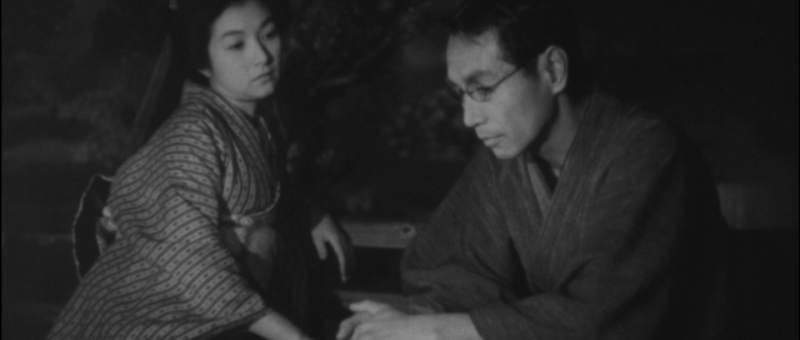
Tange Sazen and the Pot Worth a Million Ryo (Longest Version) (丹下左膳余話 百萬両の壺, Sadao Yamanaka, 1935)

A priceless pot containing a treasure map is accidentally given away and later used as a goldfish bowl by a child who is taken in by a tavern frequented by one-eyed, one-armed swordsman Tange Sazen while seemingly everyone else is desperately trying to find it.

Priest of Darkness (河内山宗俊, Sadao Yamanaka, 1936)

A feckless gambler brings trouble on himself by accidentally stealing a samurai’s knife and hides out in a tavern run by a “priest” while his sister (a young Setsuko Hara) desperately searches for him.

Online Screenings

Films listed below stream online December 3-23 at film.japansociety.org.

Debut Works and Recent Films (Online)

The Chef of South Polar (南極料理人, Shuichi Okita, 2009)

A family man chef is suddenly transferred to a remote Antarctic research station for a year-long project and finds himself going slowly mad alongside a team of eccentric scientists in the characteristically quirky debut from Shuichi Okita

Ora, Ora Be Goin’ Alone (おらおらでひとりいぐも, Shuichi Okita, 2020)

An older woman living alone (Yuko Tanaka) is visited by three strange sprites who talk to her in her native Tohoko dialect while she is called back into the past to meditate on former happiness and present regret in Shuichi Okita’s touching drama.

Fancy Dance (ファンシイダンス, Masayuki Suo, 1989)

A young man of the bubble era (Masahiro Motoki) is forced to undergo rigorous training to become a buddhist monk in order to take over his family temple but unexpectedly discovers both the joy of zen and that the monastic life isn’t quite as austere as it seems in the debut from Masayuki Suo.

Talking the Pictures (カツベン!, Masayuki Suo, 2019)

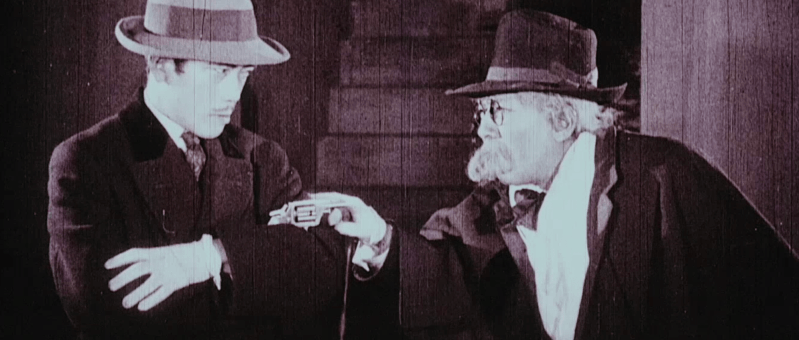
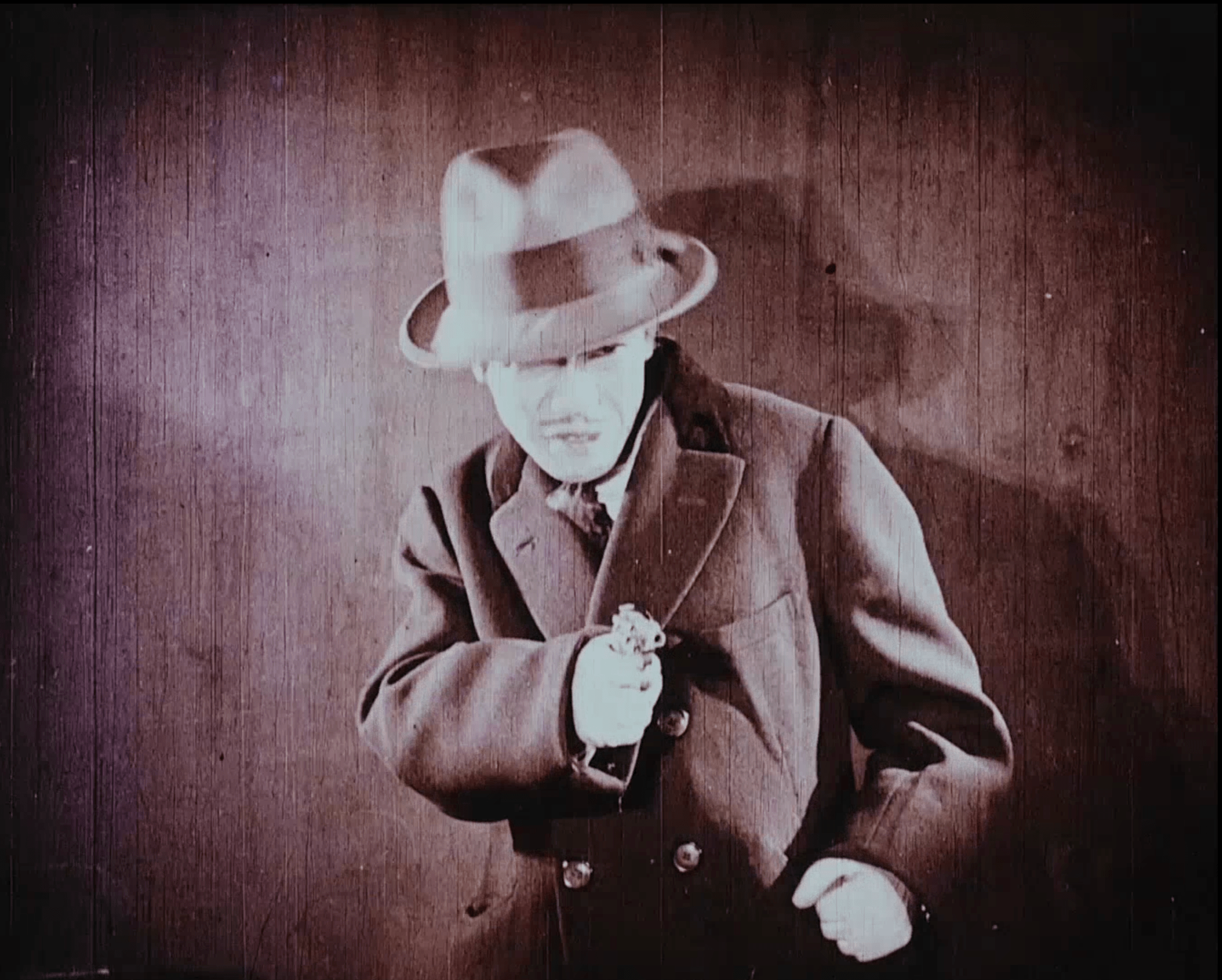
Masayuki Suo takes a look back to the classic days of silent pictures as a young man fleeing a life of crime tries to realise a lifelong ambition of becoming a legitimate benshi in this period comedy drama. Review.

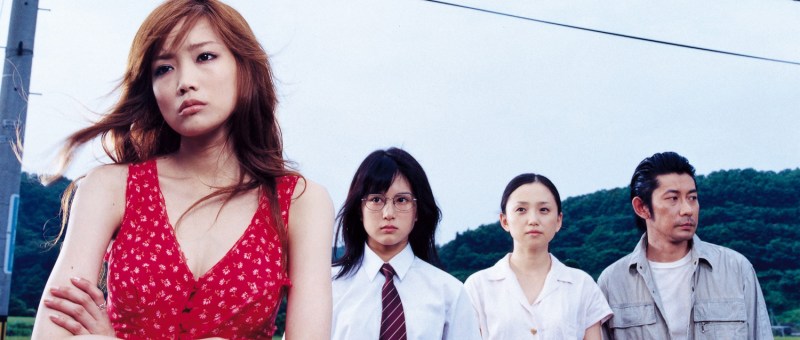
Harmful Insect (害虫, Akihiko Shiota, 2002)

A 13-year-old girl finds herself adrift after her father leaves and her mother attempts to take her own life, ostracised by the other girls at school who gossip about her relationship with a former teacher. She takes refuge in an awkward friendship with two other outcasts but discovers she is never really safe anywhere in this early indie drama from Akihiko Shiota starring a young Aoi Miyazaki.

Farewell Song (さよならくちびる, Akihiko Shiota, 2019)

A folk duo (Mugi Kadowaki & Nana Komatsu) on the verge of splitting up go on the road for their final tour where the intrusive presence of their male roadie (Ryo Narita) only further strains their already fracturing relationship in Akihiko Shiota’s intense drama. Review.

Knockout (どついたるねん, Junji Sakamoto, 1989)

Real life boxer Hidekazu Akai stars as a thoroughly unpleasant former champion trying to restart his career after life-threatening brain injury by undercutting his old boss and starting his own snooty gym but finally seeing the error of his ways thanks to a kindly veteran (Yoshio Harada) in Junji Sakamoto’s Osaka-set debut. Review.

The Projects (団地, Junji Sakamoto, 2016)

An elderly couple move into a danchi housing estate after closing their herbal medicines store but when the husband is not seen around and about for a considerable amount of time it leads to gossip, rumour, and suspicion in this warmhearted, slightly surreal Osakan comedy from Junji Sakamoto. Review.

Wild Berries (蛇イチゴ, Miwa Nishikawa, 2003)

The conventional life of an ordinary family founded largely on lies and silence is disrupted by bereavement and the unexpected return of a prodigal son in the debut feature from Miwa Nishikawa. Review.

The Long Excuse (永い言い訳, Miwa Nishikawa, 2016)

Adapting her own novel, Miwa Nishikawa’s 2016 drama stars Masahiro Mokotoki as a thoroughly self-absorbed yet insecure novelist who fears he’s become a hack best known for appearances on TV panel shows. When his wife is killed in a freak bus accident while he’s busy with his mistress, he’s finally forced to face himself on encountering the devastated family of his wife’s best friend who died alongside her. Review.

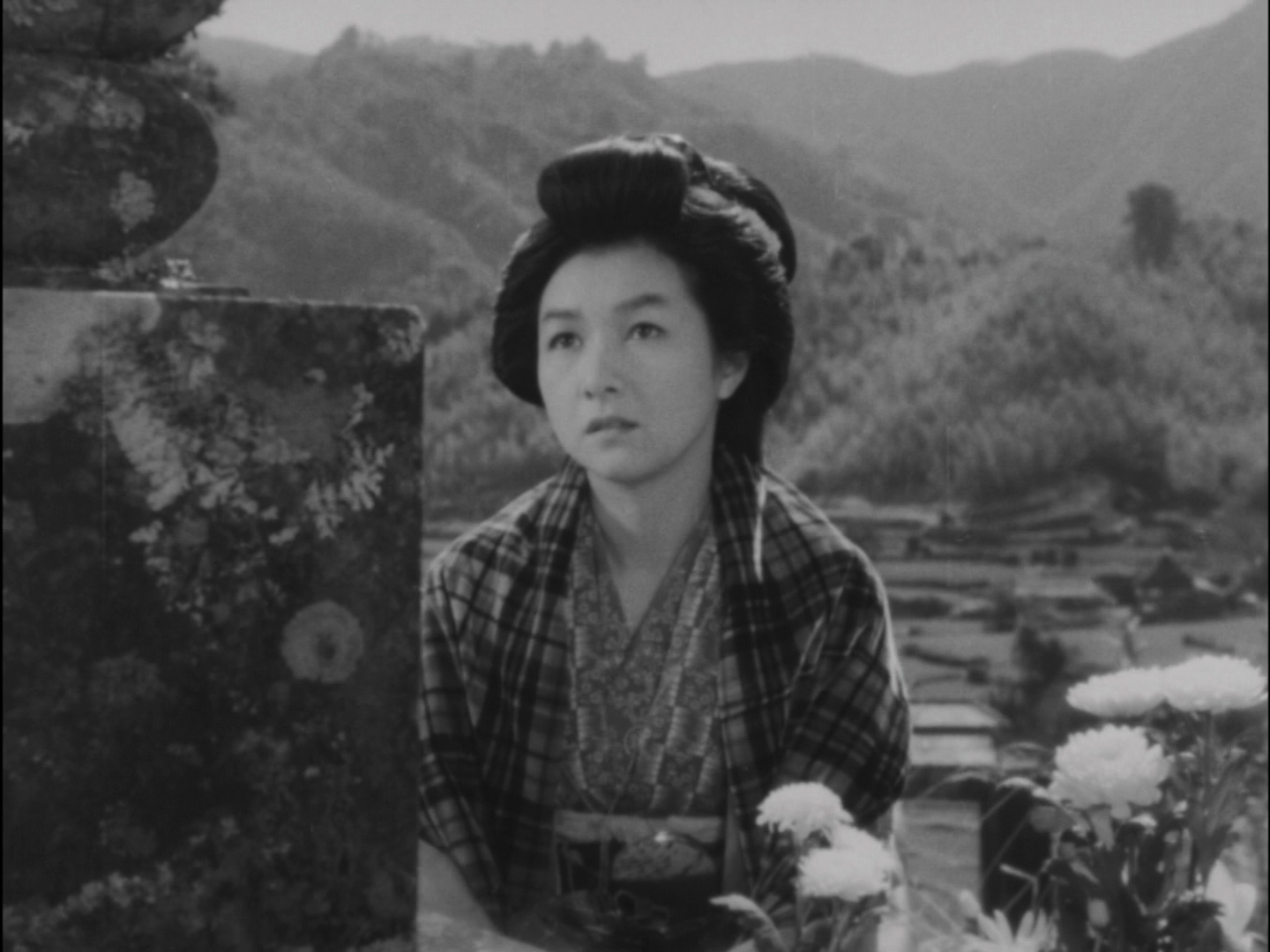
Suzaku (萌の朱雀, Naomi Kawase, 1997)

Naomi Kawase’s fiction debut follows a small family struggling under the weight of personal tragedy and the imminent extinction of traditional small-town life in the face of encroaching modernity.

Vision (ビジョン, Naomi Kawase, 2018)

Juliette Binoche stars as a woman in Japan in order to search for a rare herb while staying with Masatoshi Nagase’s gruff woodsman in the forests of Nara in this new age drama from Naomi Kawase.

Free Talks (Online)

Available Worldwide.

Flash Forward: Conversations with the Filmmakers

Interviews with each of the directors included in the Flash Forward strand: Mayasuki Suo, Junji Sakamoto, Naomi Kawase, Akihiko Shiota, Miwa Nishikawa, and Shuichi Okita.

Panel Discussion: Debut Works and Beyond

Discussion moderated by Aaron Gerow (Yale University) with panelists Takuya Tsunoda (Columbia University), Junko Yamazaki (UCLA) and Jasper Sharp (Arrow Films) focussing on the careers of the six Flash Forward directors.

Filmmakers on the Rise (Online)

All films are free to stream in the US December 3-23 at film.japansociety.org.

The Albino’s Trees  (アルビノの木, Masakazu Kaneko, 2016)

An apathetic young man working in animal control agrees to take on a secretive job to kill a rare albino deer regarded by some in a traditional village cut off from the outside world as sacred only to wonder if he made the right decision in Masakazu Kaneko’s poetic indie drama.

Blue Hour (ブルーアワーにぶっ飛ばす, Yuko Hakota, 2019)

Sick of workplace sexism and her dwindling career prospects, 30-ish Sunada (Kaho) takes a roadtrip home in the company of her best friend (Korean actress Shim Eun-kyung) in Yuko Hakoto’s freewheeling indie drama. Review.

A Boy Sato (サトウくん, Omoi Sasaki, 2017)

Sci-fi-inflected short in which a mysterious outsider returns to town and notices something not quite right.

Forgiven Children (許された子どもたち, Eisuke Naito, 2020)

An emotionally numbed teenager kills a classmate without really thinking about it and is subsequently acquitted of the crime in a juvenile court but even if he himself comes to feel remorse society refuses to forget in Eisuke Naito’s raw examination of the consequences of hate and the impossibility of redemption. Review.

Jesus (僕はイエス様が嫌い, Hiroshi Okuyama, 2019)

A young boy is uprooted from his Tokyo life when his grandfather dies and the family moves back to live with grandma in a remote mountain town. Already suffering a degree of culture shock, he is sent to a Christian school despite not being Christian and finds himself followed around by tiny Jesus who seems to grant him wishes yet when tragedy strikes he is forced to question his new faith. Review.

My Atomic Aunt (波の向こう, Kyoko Miyake, 2013)

London-based documentarian Kyoko Miyake explores the immediate effects of the Fukushima Nuclear Disaster through the story of her go-getting aunt who has lost not only her home but three businesses and the promise of a happy future alongside her family.

Flash Forward: Debut Works and Recent Films by Notable Japanese Directors streams online in the US Dec. 3 – 23 with in-person screenings of Tange Sazen and the Pot Worth a Million Ryo (Longest Version) on Dec. 11, and Priest of Darkness on Dec. 17. Tickets for the in-person screenings are available via the official website while $55 all-access passes for the online streaming are on sale until Dec. 2 with individual 3-day rentals priced at $10 available from Dec. 3. Full details for all the films are available via the official website while you can also keep up with all the year-round events by following Japan Society Film on Facebook, Instagram, and Twitter.

Hold Me Back (私をくいとめて, Akiko Ohku, 2020)

“Humans fly solo from the day we are born. You need to make an effort to be with someone” the heroine of Akiko Ohku’s latest chronicle of the contemporary woman’s inner loneliness, Hold Me Back (私をくいとめて, Watashi wo Kuitomete), is reminded. Like the heroine of Ohku’s mega hit Tremble All You Want, 31-year-old office worker Mitsuko (Non) is an introverted lonely soul through unlike the slightly older protagonist of My Sweet Grappa Remedies she is clearly much less happy with her single life than she likes to pretend often talking over her existential worries with an inner voice she refers to as “A” for “Answers”. 

As we first meet Mitsuko she’s taking part in a weekend workshop making fake food samples out of wax, later stopping off to pick up take out tempura on her way home because it saves stinking out her kitchen frying for one. She spends her free time thinking up things to do on her own on the weekends, but always seems to carry a degree of anxiety about her culturally taboo singledom. Having decided to try out a popular sandwich place, she finds herself leaving a nearby park because she feels awkward taking up a picnic table for four surrounded by couples and families on a day out. For similar reasons she nixes an idea to go to the beach, frightened she’d stand out as a lone woman. She finds herself asking A what she could do to make people like her more, clearly hungry for company but also afraid of it admitting it’s much easier to relax when she’s on her own and presumably free from the pressures of potential judgement.  

It’s potentially because of this awkwardness that she ends up in an ill-defined non-relationship with an equally diffident salaryman who often visits her office. The perfectly pleasant Tada (Kento Hayashi) is a young bachelor surviving off cutlets from a food stand in the neighbourhood where they both coincidentally live. Mitsuko tells a few fibs about her gourmet lifestyle but is actually a good cook though her probably made out of politeness invitation to make Tada dinner somewhat backfires as she finds herself cooking him “takeout”, preparing a meal while he waits awkwardly in her hallway before taking it home to eat on his own. A conversation with A reveals she does indeed have a crush on Tada and would like to ask him to stay but is fearful of ruining the non-relationship they already have if he should suddenly mention a girlfriend or refuse her invitation. 

Unrevealed even with her conversations with herself is a potential history of personal trauma, recalling a bad date with middle-aged dentist who told her he didn’t want to date a patient in public but had already booked a hotel room while getting handsy in the bar. On an onsen getaway she’s gifted by a friend who got it at wedding she doesn’t want to spend time thinking about, Mitsuko witnesses a comedian stage rushed by a pair of creepy guys and desperately wants to say something but finds herself unable. Talking it over with A she berates herself for her internal complicity with a patriarchal society, remembering all the times she let it go when a sleazy boss grabbed at her, an older co-worker who tried to convince her that it wasn’t OK eventually forced out of her job. She takes refuge in the fact her supportive female boss has managed to carve out a career for herself, believing she will eventually triumph over sleazy and incompetent men who take credit for the work done by their talented female subordinates but also assumes that Ms. Sawada (Hairi Katagiri) must be a lonely workaholic who sacrificed her personal life for the professional. 

An invitation from uni best friend Satsuki (Ai Hashimoto), meanwhile, who married an Italian and moved to Rome further deepens her sense of early life crisis, especially on discovering that Satsuki had neglected to mention that she was pregnant in any of their correspondence. It’s telling in a sense that A seems to desert her when she has someone “real” to talk to, absenting himself for the entirety of her time in Italy during which she realises that happy as she is Satsuki is also lonely living in an unfamiliar country and understandably anxious about the birth of her first child so far from home. Yet A’s frequent absences only exacerbate her fear of abandonment, after all if even her inner consciousness is jumping ship what possible hope is there for anyone else? 

But then as he tells her “You cannot escape being you”, her inner voice will always be there even if she doesn’t really need him anymore. “It was easier fighting loneliness alone” she exclaims in panic, suddenly getting cold feet about a possible step forward in terms of human intimacy, only later calming down after a final pep talk with A convinces her it’s worth the risk. Less surreal than Tremble All You Want while less rosy than My Sweet Grappa Remedies, Hold Me Back embraces its heroine’s internal vulnerabilities with a relatable realism as she tearfully asks the absent A “I’ll be OK this time, right?” before daring to find out come what may. 


Hold Me Back screens in Brisbane (Nov. 14), Melbourne (Nov. 20/24), and Sydney (Nov. 27 / Dec. 3) as part of this year’s Japanese Film Festival Australia.

Teaser trailer (English subtitles)
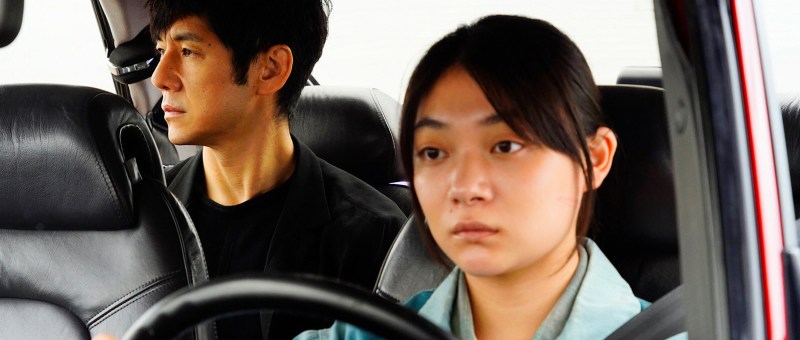
Seven Samurai (七人の侍, Akira Kurosawa, 1954)

An eclipse of the accepted order allows a temporary truce in the ongoing class conflict that defines feudal society in Akira Kurosawa’s seminal post-war historical epic, Seven Samurai (七人の侍, Shichinin no Samurai). Set in the late 16th century, the action takes place in a world on the brink of collapse. The Sengoku era is drawing to a close but is also in a moment of intense crisis which has left large numbers of highly skilled warriors essentially orphaned, wandering the land torn between their basic needs for food and shelter and their dignity as members of a theoretic aristocracy. 

Plagued by bandits, many of whom may be these orphaned swordsmen, a small village contemplates the unthinkable in hiring samurai, otherwise their oppressors and uniquely responsible for the chaos which surrounds them, for protection. “Land tax, forced labour, drought…and now bandits!” one woman exclaims shortly before suggesting they simply surrender all their grain and then hang themselves. As they can offer only expenses in the form of rice, the only samurai they can hope to recruit are already desperate, so hungry that they may be willing to deign to defending their social inferiors with whom they would not usually mix unwilling to accept that they are both victims of the inherently corrupt social order. This explains why the villagers’ early entreaties are met with such scorn and cynicism, either rudely rejected out of hand or ending only in deception. 

In this there is an echo of the world of 1954 which was beginning edge away from the chaos and privation of the immediate post-war society, bandits standing in for thieves and profiteers themselves a product of intense food insecurity. Yet here it’s desperation that allows a temporary merging of the world of lord and peasant, brokered finally by unexpected compassion on the part of a noble samurai who, in an act of extreme transgression, symbolically erases his elite status by shaving his head in order to save a child taken as a hostage by another desperate man. Kambei (Takashi Shimura) may be somewhat reduced in circumstances but refuses to give in to the immorality of the world around him, finally agreeing to help the villagers essentially out of a sense of pity willing to accept only the gift of sustenance moved by the villagers’ sacrifice in discovering that they give him the last of their white rice while subsisting only on millet. 

Yet having taken this step, the villagers remain uncertain they can really trust the men they’ve hired to protect them who are after all each trained in death. Later we discover that they have, like many of the time, occasionally finished off the odd lone samurai fleeing the battlefield in order to loot the bodies as a large stockpile of samurai armour later discovered by the samurai-pretender Kikuchiyo (Toshiro Mifune) testifies. On being confronted with this uncomfortable reality, the samurai fall silent knowing this armour was stripped from men much like themselves, but can ultimately offer little by way of defence when presented with an angry rant from Kikuchiyo who points out that they are themselves responsible in having created this world of chaos through their internecine quests for power. “In war you burn their villages, trample their fields, steal their food, work them like slaves, rape their women, and kill ‘em if they resist. What to you expect ‘em to do?”

When Kambei and the others first arrive in the village, there is no welcoming committee. The villagers all hide, frightened to leave their homes partly because of paranoia spread by widowed father Manzo (Kamatari Fujiwara) convinced that randy samurai are going ravish all of their daughters who will, doubtless, be overcome with awe by these sophisticated men of the elite. In an echo of Kambei’s transgression, Manzo forces something similar on his teenage daughter Shino (Keiko Tsushima), roughly cutting her hair while she cries and resists before dressing her up as a boy so that she’ll be safe from lusty samurai. The plan, however, backfires in that she later engages in a doomed romance with the young Katsuhiro (Isao Kimura). Their eventual union is the symbolic merging of the two worlds, a moment of eclipse in the usual hierarchy, but it’s born of the same impulses than brought Kambei and the others to the village. In fear and desperation, they behave as if there’s no tomorrow, only tomorrow must come and just as sun and moon must eventually move apart and resume their regular orbits so the relationship between Katsuhiro and Shino is an impossibility. 

Like Kambei, Katsuhiro had occupied a slightly liminal position because of his relative youth, neither boy nor man. He first encounters Shino while marvelling at the natural beauty of the forest, only to berate her for doing the same. “Is this any time for an able-bodied man to be picking flowers?”, he ironically asks her, yet he is repeatedly forced back towards conventional masculinity as marker of adulthood virtually ignoring her when tasked with carrying a dummy to the ridge, while she later returns the same gesture reassuming her femininity in joining the rice planting, a peasant woman once again. “What’s wrong with two people in love?” the wounded Rikichi (Yoshio Tsuchiya) asks Manzo, trying to smooth over this moment of cross-class crisis, only for Monzo to ask what he’s supposed to now his only daughter has become “damaged goods”, unfit for marriage in a fiercely patriarchal society in which it is impossible to survive without a husband. 

Katsuhiro cannot marry her, this sense of solidarity if not quite equality can be only temporary. Kambei himself admits as much as he reflects that the battle has been won but the victory belongs not to them but to the peasants, anticipating his a sense his own obsolescence the end of the Sengoku era bringing about a change in the nature of the samurai that two centuries later will lead to its abolition. Our sympathies might shift, witnessing Kambei’s obvious disapproval of the peasants’ relish in taking revenge on the bandits who have caused them so much misery in their own way perhaps perpetuating the cycle of violence and resentment that drives the feudal engine. One cannot help but pity him, displaced once again returning to a life of ceaseless wandering, his presence in the village now no longer necessary and in fact inappropriate. 

Returning to the world of 1954, there might be something a little uncomfortable in this lament for the death of the samurai who can have no place either in the modern society or in a peasant village in 1587, as there may be in the implication that the peasants are savage and vindictive while Kambei alone is good and kind even if the roots of his compassion lie in his willingness to literally sever himself from his elite status. The roles had in a sense been reversed, the samurai hired hands to peasant bosses, but the inversion can be only temporary. In insisting that only by protecting others can one hope to protect oneself, Kambei may be advocating for a more compassionate society but as much as he has attempted to remove himself from the class system he can not in the end overcome it. Nevertheless, in the gruelling battle scene that closes the film, all rain, mud, death and misery, Kurosawa himself deals the final blow to the samurai in the nihilistic futility of violence manifesting itself once again in the lingering feudalism of the mid-century society. 


Seven Samurai is re-released in UK cinemas in its recent 4K restoration as part of BFI Japan on 29th October.

BFI re-release trailer (English subtitles)
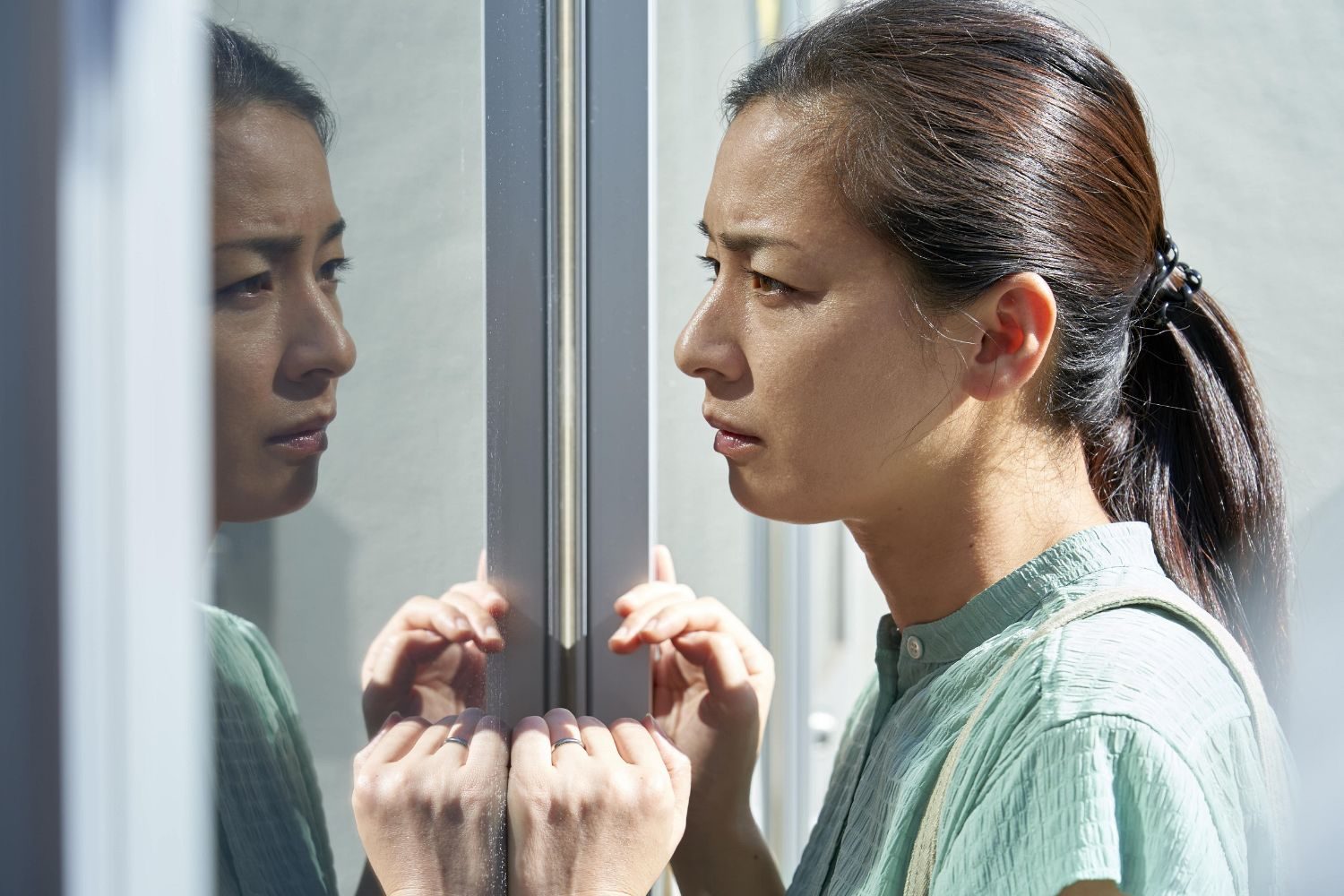
SUMODO ~The Successors Of Samurai~ (相撲道~サムライを継ぐ者たち~, Eiji Sakata, 2020)

“Every day is a traffic accident” according to a sumo wrestler describing the motion of two men colliding each trying to shove the other out of a protected area. Often regarded as a quintessentially Japanese combat sport, sumo has also come in for its share of misconceptions sometimes mocked or dismissed as a pastime popular mainly among the elderly or else a source of comedy in which in two large men clumsily grapple with each other. It’s precisely these unfair stereotypes that Eiji Sakata’s documentary SUMODO ~The Successors Of Samurai~ (相撲道~サムライを継ぐ者たち~, Sumodo ~Samurai o tsugu monotachi~) hopes to correct in gaining unprecedented access to the usually secretive world of professional sumo. 

He does this largely through focussing on two very different sumo stables and two key tournaments, one at New Year and the other in May. Though he interviews several of the rikishi at each, he adopts two main subjects who eventually clash in the ring but otherwise avoids clear narrative for an overview of what it’s like to live as a professional sumo wrestler in the present day which is to say a lifestyle that is largely unchanged over hundreds of years. Perhaps surprisingly, he even stops to appreciate the way in which a sumo tournament has also become something of a fashion show in which an audience comes expressly to appreciate the traditional kimono modelled by the rikishi as they make their way towards the auditorium. Living communally at the stable where they train, sumo wrestlers are expected to dress in traditional clothing at all times and wear their hair in a traditional style. 

Their diet is of course strictly monitored in order to help them maintain their weight. At the second of the stables, Takadagawa, food is a particular issue one rikishi stating that the high quality of the cuisine is one reason he chose to train there and while the chef explains that he keeps the vegetable content high and is keen to encourage healthy, nutritious eating the stable master is also determined that the meals be tasty rather than an austere exercise in body building. Sumo wrestlers do nevertheless eat quite a lot, the director perhaps regretting his decision to take the rikishi from the first stable Sakaigawa out for Korean barbecue when they literally eat the place out of its entire stock of meat generating a bill for US$8000 for under 50 people. 

Even so, despite their size the sumo wrestlers are necessarily extremely fit and spend much of their time deliberately building muscle. Whereas Sakaigawa is more traditional in its rather austere outlook, the master at Takadagawa, a former rikishi himself, explains that the sport has in a sense changed in keeping with the modern society in that he’s moved away from an aggressive coaching style that some might regard as bullying or harassment towards something kinder that values endurance and perseverance. The contrast is also visible in the choice of the two protagonists, Goeido being much more the traditional image of a sumo wrestler with his rather intense demeanour and emphasis on manly stoicism, whereas Ryuden is a surprisingly cheerful man with a joyful laugh and aura of serenity. 

Yet even Goeido describes the tournament process as mentally and physically exhausting despite fighting only one bout a day. At one particular tournament he tears a muscle in his upper arm but refuses to have it strapped unwilling to expose his area of weakness to an opponent later criticising younger wrestlers for making too much fuss over injury advising them that they should remain stoical without complaint like “true men”. Despite his more progressive coaching style, the master of Takadagawa says something similar in regarding injuries as tests from god or else a clear sign that more training is necessary. Ryuden himself suffered recurrent problems from a broken pelvis that saw him temporarily demoted but worked his way back to health by concentrating on “the basics”, later advising younger rikishi that there’s no hurry what’s important is to keep pushing through and avoid giving up too easily. The spirit of sumo, however, never changes at least according to the closing text. Illuminating the sport’s ancient history and ties to shinto ritual through a brief animated sequence, Sakata is most interested in the everyday lives of sumo wrestlers and the physical, emotional toll the sport can take on their lives as they push their bodies to the absolute limit of their capabilities. 


SUMODO ~The Successors Of Samurai~ screens in Canberra (Oct. 31), Perth (Nov. 7), Brisbane (Nov. 14), Melbourne (Nov. 20/23) and Sydney (Nov. 26/28) as part of this year’s Japanese Film Festival Australia.

Original trailer (English subtitles)
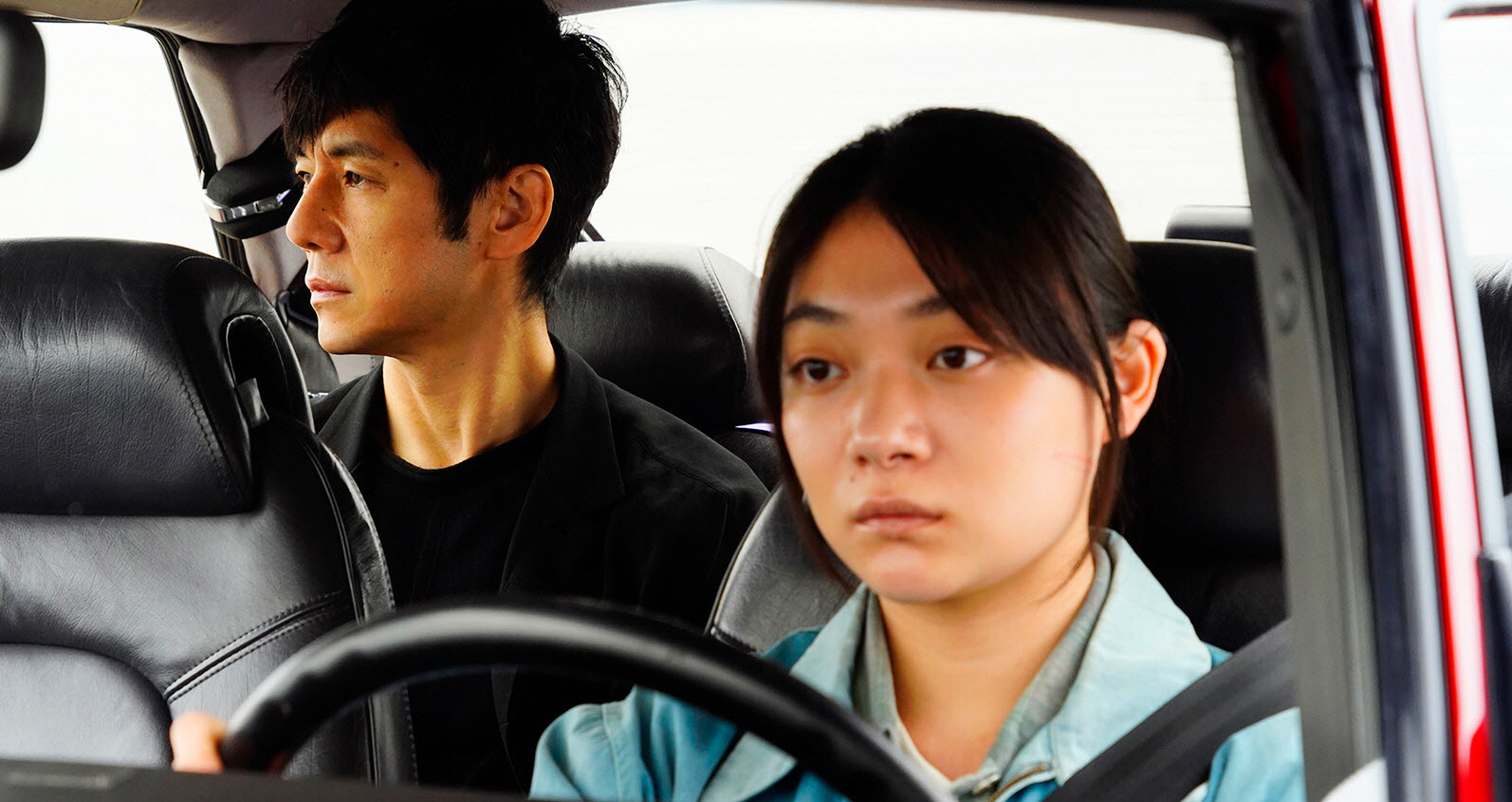
Zokki (ゾッキ, Naoto Takenaka, Takayuki Yamada, & Takumi Saitoh, 2020)

“Thanks to secrets carefully kept by people the world keeps turning” according to one of the many heroes of Zokki (ゾッキ), a series of intersecting vignettes adapted from the cult manga by Yoshiharu Tsuge and directed by three of Japan’s most prominent actor-directors, Naoto Takenaka (whose Nowhere Man also adapted Tsuge), Takayuki Yamada and Takumi Saitoh. According to the philosophical grandpa who opens the series of elliptical tales everyone has their secrets and without them you may die though each of the protagonists will in fact share their secrets with us if by accident or design. 

Seamlessly blended, the various segments slide into and around each other each taking place in a small rural town and primarily it seems around 2001 though as we’ll discover the timelines seem curiously out of joint as motifs from one story, a broken school window, an awkward moment in a convenience store, the retirement of a popular gravure model/AV actress etc, randomly appear in another. This is however all part of the overarching thesis that life is an endless cycle of joy and despair in which the intervals between the two gradually shrink as you age before ceasing to exist entirely. 

Or so says our first protagonist, Fujimura (Ryuhei Matsuda), a socially awkward man heading off on a random bicycling road trip in which he has no particular destination other than “south” or maybe “west” as he later tells a potential friend he accidentally alienates. Fujimura’s unspoken secret seems to link back to a moment of high school trauma in which he betrayed one burgeoning friendship in order to forge another by joining in with bullying gossip and eventually got his comeuppance. Meanwhile the reverse is almost true for Makita (Yusaku Mori) who relates another high school tale in which he overcame his loneliness by befriending Ban (Joe Kujo), another odd young man rejected by teachers and the other pupils for his often strange behaviour such as his tendency to shout “I want to die”. Ban claims to have heard a rumour that Makita has a pretty sister and Makita goes along with it, eventually having to fake his sister’s death in order to seal the lie only for Ban to find happiness in his adult life largely thanks to Makita’s act of deception. 

The broken window which brought them together turns up in another tale, that of Masaru (Yunho) whose adulterous father Kouta (Takehara Pistol) took him on a midnight mission to steal a punching bag (and some adult DVDs) from the local high school only to encounter a sentient mannequin/ghost who is later likened to the young woman from Fujimura’s past. Bar some minor embarrassment there’s no real reason the ghost sighting would need to be kept secret, the deception in this case more to do with Kouta’s affair and his subsequent departure from his son’s life only to make an unexpected return a decade later. The affair also makes him a target for fisherman Tsunehiko, the betrayed husband and one of the fisherman celebrating the birthday of a colleague along with an existentially confused Fujimura. Meanwhile, Fujimura’s fed up neighbour secretly writes a rude word on a note to himself instead of the usual “good morning” only to realise it’s been moved when he opens the local video store the next morning. 

Eventually coming full circle, Zokki insists what goes around comes around, everything really is “an endless cycle”, and that in the grand scheme of things secrets aren’t always such a bad thing. They keep the world turning and perhaps give the individual a sense of control in the necessity of keeping them if running with a concurrent sense of anxiety. The criss-crossing of various stories sometimes defying temporal logic hints at the mutability of memory while allowing the creation of a zany Zokki universe set in this infinitely ordinary small town in rural northern Japan. As the various protagonists each look for an escape from their loneliness, unwittingly spilling their secrets to an unseen audience, the endless cycle continues bringing with it both joy and sorrow in equal measure but also a kind of warmth in resignation. Beautifully brought together by its three directors working in tandem towards a single unified aesthetic, Zokki defies definition but rejoices in the strange wonder of the everyday in this “obscure corner of the world”.


Zokki streamed as part of this year’s New York Asian Film Festival. It will also screen in London on 24th October as part of this year’s London East Asia Film Festival.

Original trailer (no subtitles)
NYAFF intro

Early Spring (早春, Yasujiro Ozu, 1956)
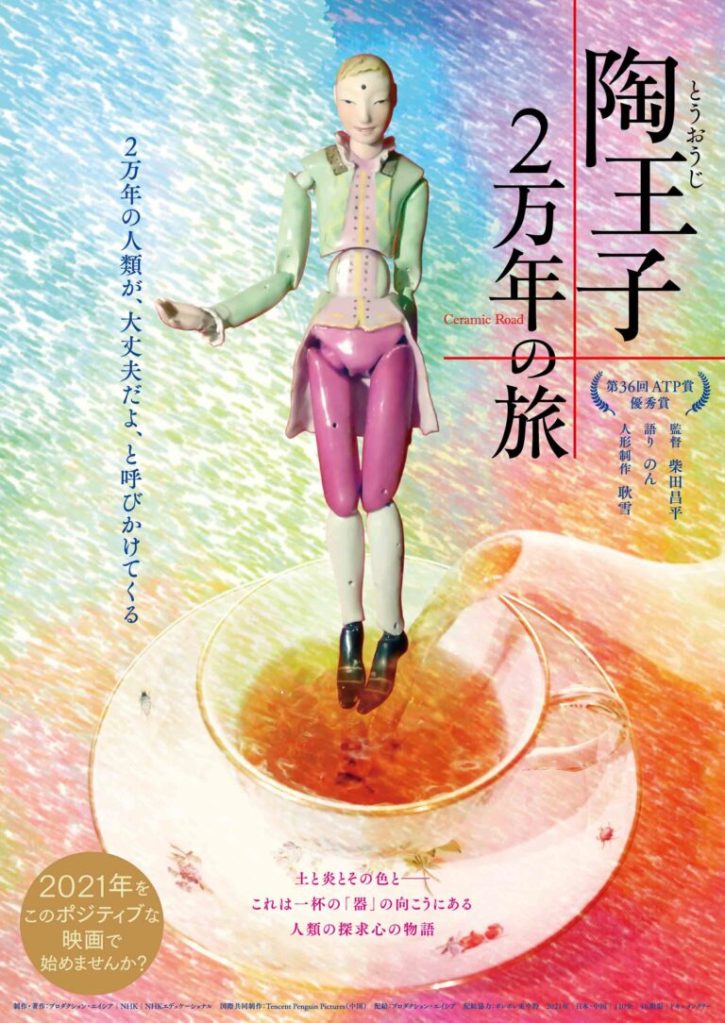
By the mid-1950s, Japan’s economy was beginning to improve but now that the desperation that went with hunger had dissipated it freed those who’d managed to climb out of post-war privation to wonder just what the point of their ceaseless toil was. Yasujiro Ozu’s primary subject matter remained the modern family, but 1956’s Early Spring (早春, Soshun) sees him heading in a darker direction as he weighs up the delusions of the salaryman dream and discovers that whichever way you swing it, life is disappointing. 

So it seems to be for salaryman Shoji (Ryo Ikebe). He and Masako (Chikage Awashima) married for love a long time ago, but it’s clear that there is distance in their relationship. They sleep in the same room but their futons are slightly too far apart, and the few words they exchange with each other in the morning are terse in the extreme. The truth is that for many a salaryman for whom long hours and interoffice bonding sessions are compulsory, work is the new family. Wives are welcome to join the Sunday hiking outings but it seems few do. Masako too declines, telling her mother she felt it to be too expensive, already irritated with her husband’s irresponsible spending on mahjong games and drinking with friends. 

Money is certainly a constant worry for her and as we learn from her mother they’re behind on the rent despite it being “very cheap”. Masako had made a visit home in part to ask for another loan, which her mother seems reluctant to give, offering her daughter a takeout of the oden her restaurant sells which is first declined but then accepted. Her mother also flags up the other problem in their marriage which is that they sadly lost a child in infancy and have had no more. Sorrow may have killed their love, but the fact her husband stays out all hours and wastes the little money he earns while failing to win promotions only makes the situation worse. 

As for Shoji, he is becoming very aware of the delusions of the “salaryman dream”. He is one of thousands of men identically dressed in white shirts and grey trousers that board the packed rush hour trains every day heading into the city. His life is one of pointless drudgery and its only victory is that keeps hunger from the door, not even quite stretching to a roof over his head. “All that’s waiting for us is disillusion and loneliness” according to a veteran salaryman growing close to his retirement and realising that he has little left to live on, his dream of buying a small stationary shop all but unobtainable. He was dead set against his own son joining the ranks of the salaryman, but in the end failed to prevent it.

It is perhaps this sense of frustration and impotence that draws Shoji into an affair with a younger woman, Chiyo (Keiko Kishi), who is admittedly very pretty but seems to hold little interest for him aside from her youth and beauty. Chiyo openly pursues her older colleague, declaring that she doesn’t care he has a wife but has come to hate her after the first time they slept together. Shoji meanwhile remains guilty and conflicted. He evidently continues seeing Chiyo, lying to Masako that he’s visiting a sick friend, but otherwise regards her as an irritation. When his co-workers figure out what’s going on they try to stage an intervention, but Shoji doesn’t show up and Chiyo angrily denies everything before arriving at Masako’s looking for Shoji only this time he really is out visiting a sick friend. 

Miura (Junji Masuda), the sick friend, is a true believer in the salaryman dream. Now that he’s ill, he misses the packed trains and elevators, not to mention his old workplace friends. All he wants is to be well enough to return to the office and his predicament perhaps has Shoji thinking that at least he has his health and things aren’t so bad for him after all. Masako, meanwhile, turns to other women for advice. The woman across the way recounts how she caught her husband out with his mistress and made a scene that’s rendered him docile and obedient ever since (a rare man in an Ozu film putting his socks neatly in the laundry basket and hanging up his own coat rather than throwing it on the floor for his wife to deal with). Her widowed friend is more sanguine, admitting that caution is necessary but it’s a little dark to envy the life of a widow for its “freedom”, while her mother thinks she’s overreacting because that’s just how men are in this generation or any other. 

Shoji’s old mentor agrees that “everyone’s disappointed” and all that remains is to try and make the most of it, but still he sees that Shoji has been reckless and inconsiderate in his treatment of both women. He avoids his wife because of the emotional distance between them born of grief, and only really has an affair with Chiyo because it was easier than refusing her. He didn’t even enjoy it, and doubtless it did not quite quell the sense of despair he feels with the utter pointlessness of the “salaryman dream”. Masako, in turn, is disappointed with married life, with her husband’s emotional cowardice, and with her own lack of options. Ultimately, Ozu sides with the mother, not quite condoning Shoji’s behaviour while perhaps excusing it as a direct consequence of dullness of his life while forcing Masako to accept complicity in her husband’s weakness. They may reunite, the stressors of their Tokyo life from the high cost of living to the lure of mahjong now absent, but there is a sense of futility in their eventual insistence that they will “make it work” through starting over in a new place while gazing at the train that, they assume, will eventually carry them back to the city and all of its false promises of a brighter future. 


Early Spring screens 19th/20th/21st October & 20th/23rd November at London’s BFI Southbank as part of BFI Japan. It is also available to stream in the UK via BFI Player and in the US via Criterion Channel.

I’m Flash! (Toshiaki Toyoda, 2012)

A conflicted cult leader’s existential crisis plays havoc with the “family business” he’s unwillingly inherited in Toshiaki Toyoda’s ironic contemplation of life, death, and everything in-between, I’m Flash!. Taken from a Sheena & The Rokkets song, the slightly awkward title refers not to the hero’s taste for visible wealth, but to the briefness of life. Shot in the wake of the 2011 earthquake, Toyoda apparently intended the film to “shake off death” but ultimately casts off only its shadow while suggesting once again that “death is the ultimate salvation” and the only true path to freedom. 

As the film opens, “guru” Rui (Tatsuya Fujiwara) literally collides with destiny as the bright red sports car he’s driving meets a motorcyclist coming in the other direction. The unnamed cyclist (Tasuku Emoto) is killed instantly and thereafter callously forgotten while the girl in the passenger seat next to him (Kiko Mizuhara) who’d he’d only met that evening in a bar is now in a coma with no indication of when or if she may wake up. Rui is shaken, however, most in being confronted with the real world cost of his phoney religion something which he has perhaps been ignoring in order to continue living his life. “If you want to make serious money there’s nothing better than religion” he’d cynically joked, playing the playboy enjoying the attention his gurudom grants him, particularly with the opposite sex, while living a life of undeserved luxury built on exploiting the vulnerability of others. 

Yet as we come to realise his troubles are not only moral or spiritual but personal in realising that he is but a puppet of his own organisation which is in reality run by his pragmatic mother (Michiyo Okusu) and hard-nosed sister (Mayu Harada) to whose marketing genius he attributes the cult’s recent success. One of three bodyguards hired to protect him quips that Rui is “kind of like a mob boss”, and he’s not far off except that Rui is only the face of the organisation with no real power to affect change. The cult, which runs under the slogan “Life is Beautiful”, was apparently founded by his grandfather and can only be inherited through the male line but Rui later discovers that both his grandfather and father whose skulls sit in his ossuary may have died unnatural deaths suggesting perhaps that they too came to experience this same sense of existential impotence or fell victim to the machinations of others. Feeling emasculated, Rui was forced to become the guru when his middle sister decided to transition, joining older sister Sakura and his mother as part of the matriarchal governing body while refusing the burden Rui must now carry. 

“Everyone needs something to cling to” Rui’s mother rationalises, justifying herself that the members of the cult would merely have joined another organisation if not theirs. Veteran hitman Kamimura (Shigeru Nakano) says something similar when the bodyguards are asked to switch sides and take Rui out of the picture, insisting that if they don’t do it someone else will. Rui’s decision to dissolve the church sparked by his meeting with the girl in the bar creates a serious business problem for his mother and sisters, yet reflecting he realises that he had plenty of opportunities to change his life and let each of them pass him by. “Is life supposed to be enjoyable?” zen hitman/bodyguard Fujiwara (Ryuhei Matsuda) answers when Rui asks him if he’s happy living on the sidelines, but it’s he alone who seems to see the value of living in the present ironically embodying the cult’s central messages that it’s only the fear of death that prevents one living a happy life while also correcting Rui’s minder that the contemplation of mortality shouldn’t be as “effortless” as the solutions they offer profess.  

Rui’s only escape lies in the ocean, in a sense diving into life while swimming towards the sun in search of rebirth while Fujiwara asks himself if he’s completely free if the world is but a fleeting dream and after death everything disappears as if it never existed. The guru may have fallen victim to his own philosophy, looking for salvation in death while perhaps selfishly prioritising his own liberation rather than destroying the corrupt system of which he was a part and in which he will simply be replaced. “Not at any time will the illusion of hope be destroyed” according to an ethereal voiceover casting doubt over its own message of positivity even while its hero swims toward the light. 


I’m Flash! is released on blu-ray in the UK on 18th October as part of the Toshiaki Toyoda: 2005 to 2021 box set courtesy of Third Window Films accompanied by a typically insightful commentary from Tom Mes.

Original trailer (English subtitles)