YEAH (Yohei Suzuki, 2018)

Yeah still 2Following a series of high profile shorts in international festivals, Yohei Suzuki’s debut feature Ow became something of a cult hit in its surreal, sci-fi leaning tale of an unemployed young man who becomes transfixed by a mysterious round object that suddenly appears in his room, entering a kind of suspended animation which later claims several of his friends and family. Four years on Suzuki’s back with a second feature, but one which runs a scant 45 minutes. The enthusiastically titled “YEAH” takes a similarly surreal approach in dissecting the effects on ongoing national decline on the nation’s youth through the actions of a strange young woman who floats like a ghost through her rapidly disintegrating world.

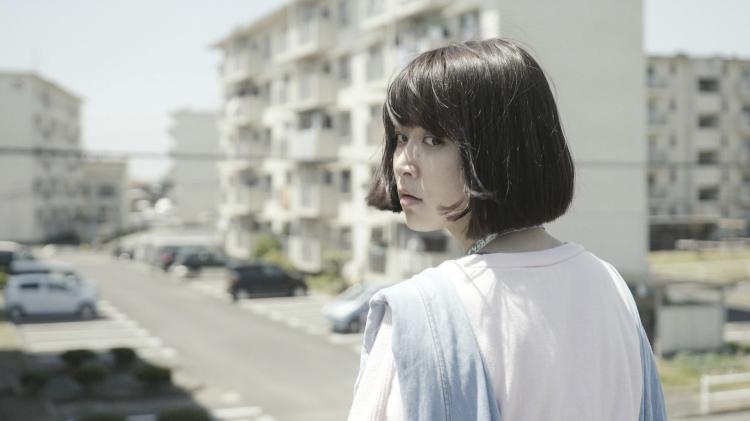
There’s something a bit different about Ako. When we meet her, she appears to be in the middle of a difficult breakup with a scarecrow. Holding on to the bottom of a sleeve attached to a jacket which is being worn by a dressmaker’s mannequin, Ako laments that she likes how he doesn’t talk but hates not seeing him. Eventually she switches her attentions to a nearby tree which she praises for its constant services on behalf of “Man-kind”. Looking for her mother and sister, Ako wanders into other people’s apartments and confuses local shop keepers, carrying around a pot of coriander she’s collected for its cuteness and cradling it as if it were a baby. She hallucinates strange visions of a scary man and is taken to a mental hospital by another who seems to be her brother but is released back into his care only to wander off and meet another girl just like her who later confesses that she is, in fact, a bean and though she was at first frightened by her realisation, is OK with it now.

Set in Mito in rural Ibaraki, YEAH takes place entirely within a rundown housing estate. Ako, wandering around in wellies, is a lone figure in this oddly quiet settlement. Local teens hang out in the central courtyard where the grass is dying and the swings and climbing frames long rusty from underuse. A classic danchi with dingy open staircases, no lifts, and long corridors the atmosphere is one of decline and defeat. A symbol of an economic leap forward, farmlands giving way to a displaced urban populace, the estate could not be more out of step with modern times as the young make their way towards cities or back towards the land, forever abandoning this awkward liminal space which seems to have been eclipsed by a change in the economic weather.

Women like Ako are, perhaps, a kind of ghost – floating about unseen and unheeded, left with nothing other to do than go slowly mad in a world which is dying all around them. Rejected by the other young people on the estate who use her as a kind of entertainment, Ako literally slips in and out of the conscious world, disappearing from one place only to appear in another still carrying her beloved plant around with her. Lamenting that her home is gone and everything she loved has been taken away, Ako is left only with her worshipful devotion to “Atchy-ma” who “shines the light” on her, and a fierce love of the industry of plant life which works so tirelessly to maintain the environment human beings are so keen to destroy. 

Suzuki’s approach is surreal and obscure, making frequent use of dissolves and superimpositions to capture the various ways Ako is literally lost to or eliminated by her environment. Ako exclaims that she still doesn’t get “YEAH”, because she is “Japanese after all”, but keeps trying anyway, screaming into a void in search of some kind of light while those around her continue in similarly idle pursuits which, while less unusual, lack her otherwise idealistic sense of purpose.


Available to stream on Festival Scope until 20th February as part of their International Film Festival Rotterdam tie-up.

Hibari Ohako: Ojo Kichisa (ひばり十八番お嬢吉三, Yasushi Sasaki, 1960)

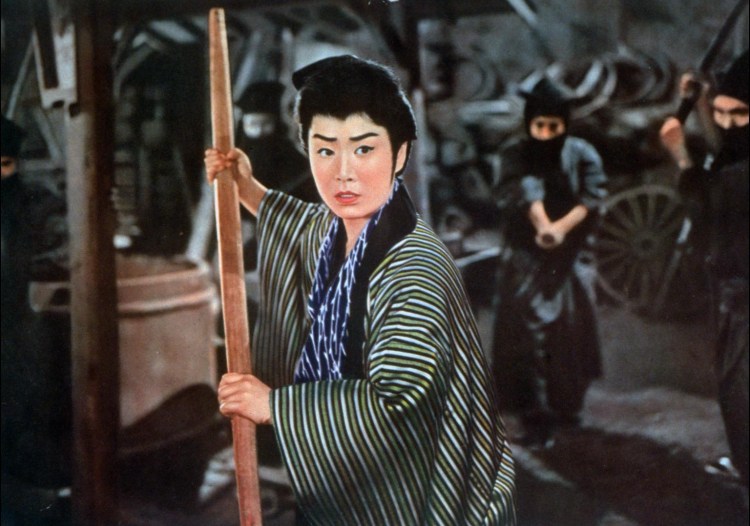
Ojo Kichisa still 1Following Benten Kozo, Ojo Kichisa (ひばり十八番お嬢吉三, Hibari Obako Ojo Kichisa) is the second in a small series of movies starring Hibari Misora in a tale adapted from a well known kabuki play and featuring a cross dressing hero/heroine. This time around Misora plays a young woman dressing as a man for the purposes of revenge who eventually meets up with two men sharing the same “Kichisa” name – a lord (Obo), and a priest (Osho), to form a brotherhood of three including her “Ojo” as in “young lady”. Together they fight the injustices of the feudal world (which are myriad) whilst helping Ojo Kichisa get revenge on the men who murdered her parents forcing her into a precarious life of self preservation.

Beginning with Misora singing the title song of the three Kichisa, the action then switches to a small drinking house where a young woman gets herself into trouble with a bossy samurai who accuses her of spilling sake on him. Though the woman, Otose (Eiko Maruyama), apologises profusely, the samurai threatens to make her pay with her body. Fortunately Ojo Kichisa strides in and fights the samurai into submission, temporarily saving the day. Unfortunately, the samurai come back later brandishing a loan agreement Otose’s father had signed and demand immediate repayment or they will take Otose in its stead.

Once again the feudal world is one of intense unfairness and corruption in which the samurai class abuse their privilege to oppress the ordinary men and women of the Edo era. The samurai who takes such extreme offence at Otose’s possible slip-up has no real reason to do so other than expressing his superiority and once humiliated by Ojo Kichisa feels himself duty bound to double down. The samurai order looks after its own and so his underlings spring into motion to manipulate Otose’s family into giving her up. The two loan sharks gleefully celebrate their good luck, confessing that a major reason for lending money to the needy is for occasions such as this – not only for the interest but for the leverage in getting the desired outcome in ongoing schemes.

Meanwhile, there is a bigger game at play concerning the new finance minister and local governor. The governor accepts “gifts” from a shopkeeper hoping to be promoted onto the council whilst subtly hinting that more “gifts” might be an idea while he needs to be turning a blind eye to the smuggling that’s currently going on in town. Of course, the governor turns out to be involved in Ojo Kichisa’s mission too and is currently being blackmailed by an old acquaintance who once helped him steal a famous sword from its rightful owner.

Another of Misora’s frequent cross-dressing roles, Ojo Kichisa starts out as male but is later revealed to be female having adopted male dress to survive in male dominated Edo and pursue revenge on those who rendered her an orphan. After losing her parents, Ojo Kichisa and her young brother Sannosuke (Takehiko Kayama) were travelling in search of relatives when they were abducted by slave traders and separated. Presumably, both managed to escape at some point and have been living by their wits vowing revenge and reunification but apparently largely untouched by the darkness of feudal society.

The darkness is something which gets pushed into the background in this otherwise comedic tale of the little guy standing up to corrupt elites. The three Kichisas each represent various areas of society – the priest, the noble lord who hates the cruelty of his class, and the elegant lady, Ojo. Obo Kichisa (Tomisaburo Wakayama), the lord with a conscience, is committed to protecting the weak and fighting injustice everywhere he sees it, but it’s not long before pretty much everyone has decided the governor has to go thanks to his inherently corrupt approach to governing in which he’s all about take and never about give, neglecting the townspeople under his care and prioritising his personal gain.

Hibari Misora sings the title song twice – at the opening and closing, as well as another insert song but her brother Sannosuke also gets an opportunity to showcase his singing his voice in a mild departure from the star vehicle norm (actor Takehiko Kayama was also Misora’s real life brother). As in Benten Kozo, Wakayama takes on the bulk of the heroic fighting but Misora gives it her all in the many fight scenes in which she too gets to defeat injustice and rescue maidens to her heart’s content. A straightforward jidaigeki idol movie, Ojo Kichisa is unremarkable in many ways but nevertheless another entertaining example of Misora’s talent for playing ambiguous gender roles.


Glasgow Film Festival to Screen Third Murder, Mary and the Witch’s Flower

The Third Murder still 2The Glasgow Film Festival returns from 21st February to 4th March 2018 bringing the latest in world cinema to Scottish screens. East Asian offerings are not quite as plentiful as in previous years but the festival will see Scottish premieres of the latest from Hirokazu Koreeda, the hotly anticipated first movie from Studio Ponoc, and the new restoration of a Chinese classic.

Attack on Titan : The Roar of Awakening

Attack on Titan - The Roar of AwakeningManga and anime phenomenon Attack on Titan has been taking the world by storm over the last couple of years, even packing in a pair of disappointing live action movies. The Roar of Awakening is a “compilation movie” of the TV anime’s second season which is to say it re-edits the 11 half hour episodes into one two hour movie. If you don’t know anything about Attack on Titan, this probably isn’t the best place to start but in short the series takes place in a fictional European city where humanity has taken to living behind giant walls to protect themselves from man eating giants known as Titans. The screening of The Roar of Awakening will take place in an immersive secret location accompanied by various other events over approx. 6hrs.

Picked up for UK distribution by Anime Limited.

Junk Head

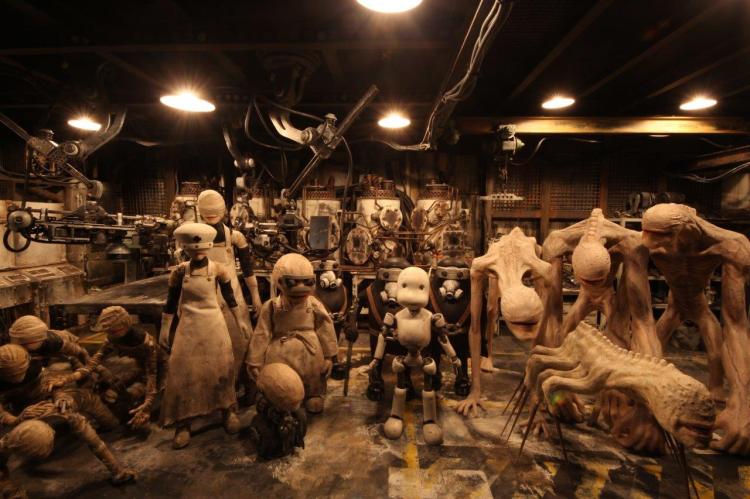
junk head still 1Takahide Hori’s beautifully designed stop-motion animation follows the adventures of a robot “God” as he (?) descends the various levels of underground existence looking for a cure for humanity’s ongoing decline… Review.

Legend of the Mountain

legend of the mountain still 1Recently restored by the Taiwan Film Institute, King Hu’s Legend of the Mountain follows a Sung Dynasty scholar tasked with translating a set of Buddhist scriptures which are said to have power over the spirits of the dead. To do so he travels to an isolated monastery in the mountains where he is assailed by the forces of evil who want to steal the scriptures for themselves…

Distributed in the UK by Eureka Entertainment.

Let’s Decorate the Promised Flowers in the Farewell Morning – Maquia: When the Promised Flower Blooms

Maquia still 1Note: Glasgow Film Festival appears to be screening the film under a literal translation, according to the film’s UK distributor Anime Limited, the official English language title is Maquia: When the Promised Flower Blooms.

Animated by P.A. Works, Maquia is the directorial debut from screenwriter Mari Okada (Anthem of the Heart) and follows the titular heroine – a young girl from a mysterious village where people live for hundreds of years and maintain their teenage appearances for life. Forced to leave her village, the girl finds an abandoned baby boy and decides to raise him but while she remains forever young he grows older by the day…

Picked up for UK distribution by Anime Limited.

Marlina the Murderer in Four Acts

marlina the murderer in four acts still oneA feisty widow takes to the road in search of vengeance after her ranch is raided and she is attacked by bandits in this festival favourite Eastern western from Indonesia.

Mary and the Witch’s Flower 
mary and the witch's flower still 1

When Marnie Was There director Hiromasa Yonebayashi adapts yet another classic English children’s book – Mary Stewart’s The Little Broomstick, as the first venture for would be Ghibli successors, Studio Ponoc.

Distributed by Altitude Films, Mary and the Witch’s Flower will be screened both dubbed and subbed.

The Seen and Unseen

the seen and the unseen still 1The second film from Kamila Andini, The Seen and Unseen follows one half of a pair of twins as she deals with the deteriorating health of her brother…

The Third Murder

third murder horizontal poster

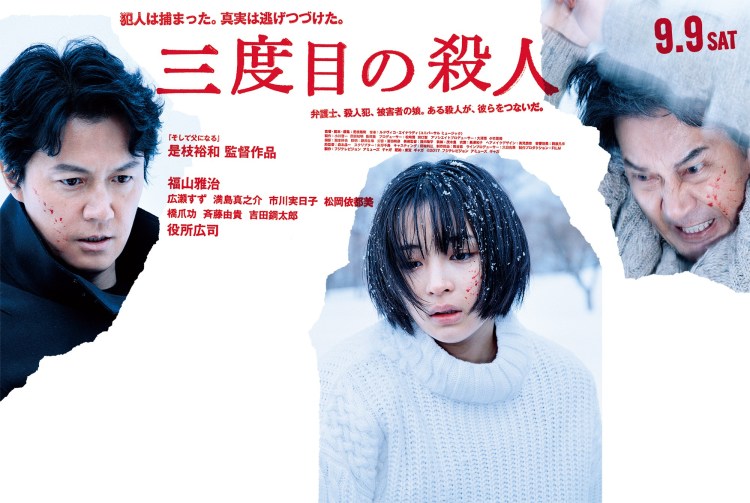
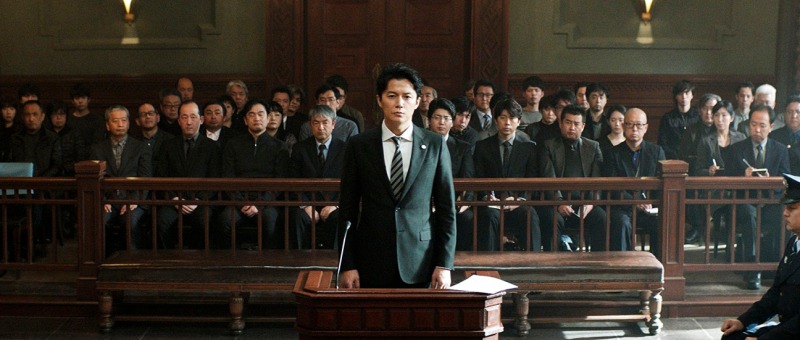
Hirokazu Koreeda makes a rare detour from the family drama for a high stakes legal thriller in which a veteran lawyer takes on the seemingly impossible task of defending a murder suspect who has already served time for violent crime and freely confesses his guilt, but the more the lawyer looks into the case the less confident he feels that his client is telling the truth.

Picked up for UK Distribution by Arrow Films.

Vampire Clay

vampire clay still 1The debut feature from SFX makeup artist Soichi Umezawa, B-movie horror Vampire Clay takes place in an isolated art school in which the students start going mysteriously missing…could cursed clay really be to blame?

Glasgow Film Festival takes place from 21st February to 4th March at Glasgow Film Theatre. You can find the complete programme as well as full details for all the films, screening times, and ticketing information on the official website, and you can also keep up with all the latest news via the festival’s Facebook Page, Twitter account, and Instagram Channel.

Secret Reunion (의형제 / 義兄弟, Jang Hoon, 2010)

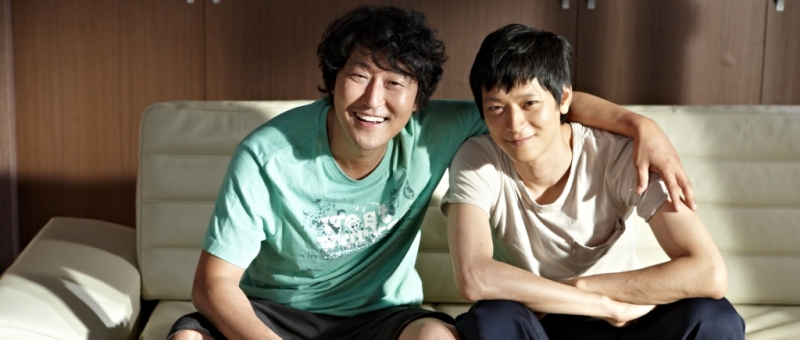
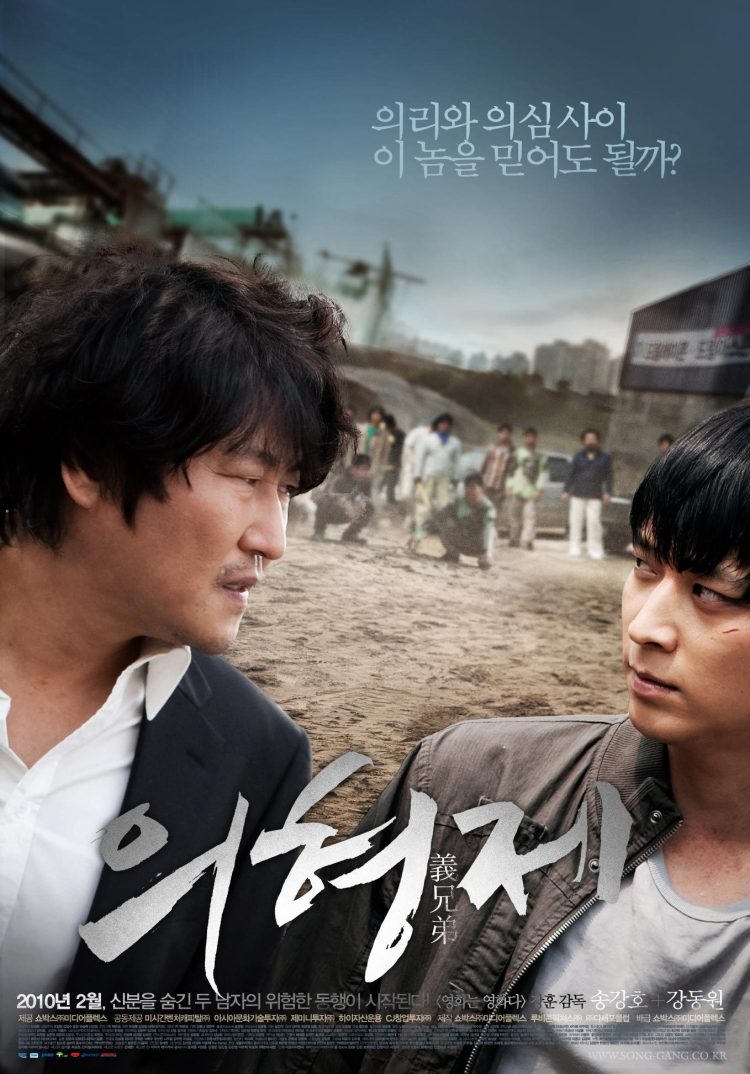
secret reunion posterStrangely enough, North Koreans in South Korean films are often marked by a naive nobility, filled with all the “goodness” that is otherwise so absent from the hypocritical egalitarianism of the nation that raised them. Jang Hoon’s Secret Reunion (의형제 / 義兄弟, Uihyeongjae) is a perfect example of the ongoing trend in its direct contrasting of a pure hearted North Korean operative betrayed by his comrades, and the cynical NIS officer who turns to a shady career in the private sector when a botched operation gets him fired. An interesting look at North/South relations, Secret Reunion is equal parts buddy cop comedy and probing thriller but places the heartfelt connection between its perfectly mirrored protagonists firmly at its centre.

North Korean agent Song (Gang Dong-won) reads a bedtime story to his unborn child over a telephone whilst preparing for an operation south of the border, while NIS officer Lee (Song Kang-ho) bickers with his wife about their daughter’s education. Song, along with another agent, Tae-soo (Yoon Hee-seok), is to meet a top North Korean hitman known as Shadow (Jeon Kuk-Hwan) and assist in his mission to take out a prominent North Korean defector. Horrified by Shadow’s abrupt murder of the target’s wife and mother-in-law, Song draws on Shadow in defence of the man’s young son whom Shadow has also marked for death and places himself in the firing line in the process but is “saved” when Lee and the NIS turn up following a tip-off from Tae-soo who has betrayed them. Lee and Song briefly catch sight of each other but the operation is a bust which allows both Shadow and Song to escape whilst causing mass civilian casualties from stray police bullets and general panic.

Six years later Lee, fired from the NIS and divorced by his wife, spots Song again during his shady line of work as a finder of missing persons which often sees him tracking down runaway mail order brides from Vietnam. Unable to go home after being branded a traitor, Song is living as a casual labourer under a false South Korean identity. Unbeknownst to Lee he recognises the NIS agent but is unaware Lee has recognised him, especially when he offers him a job at his “company”. Song, intrigued, accepts in the hope of getting enough money together to bring his family to the South while Lee is hoping Song will lead him to Shadow and path back into the NIS but despite their best efforts the two men begin to develop a deep and warm understanding of each other even whilst working at cross purposes.

Song and Lee are indeed mirror images. When we first meet Song he’s eagerly embracing his role as a father and lamenting the fact that he cannot be with his pregnant wife while promising to be home soon. Lee, by contrast, argues with his wife over the phone and abruptly hangs up to go back to police business. Neither man is able to have the close and loving relationship with their daughters they would like – Song because he cannot return home and worries for the safety of his family, and Lee because his wife has remarried and moved to England. Lee’s loss of family is a personal failure first and foremost, but also a consequence of the botched operation in which Song escaped – hence Lee’s desire to capture Song is also part payback for ruining his life, but one which is frustrated by his gradual awakening to Song’s uncomplicated pureheartedness and identification with his own separation from his wife and child.

Song’s nobility is used against him by the heartless North Korean hitman, Shadow, who decries the “pathetic Southerners ruled by emotion” and warns Song that the “Great Nation cannot tolerate someone so fragile” when taken to task over his heartless murder of the defector’s South Korean family members. Lee, the NIS agent, resorts to barely legal immorality when stripped of his authority in becoming a finder of missing persons. The work largely involves tracking down trafficked women who’ve been tricked into coming to South Korea to marry rich and handsome men but often find themselves shackled to cruel husbands who regard them as slaves to be beaten and tortured. Yet Lee sends them back, knowing exactly what will happen to them when he does – something which Song refuses to allow. Despite coming from a brutalising regime, Song has retained his innate humanity, battles injustice and (tries to) protect the weak where Lee, a police officer in a (recently) democratic developed nation, quips about the nature of capitalism being learning to find happiness in stealing the wealth of others and is content to make himself complicit in a system he otherwise does not condone.

Despite their differences the two men come to see themselves in the other, discovering the better qualities of an “enemy” and becoming conflicted in anticipating the day when they will eventually have to confront the secrets they’ve been keeping. Jang keeps the tension high as Lee and Song play each other while Shadow dances around in the background, presumably playing a game which is entirely his own. Nevertheless the bonds of brotherhood between North and South are firmly repaired in Lee and Song’s eventual transition to blood brothers, restoring their severed familial connections whilst building and strengthening new ones.


International trailer (English subtitles)

Wilderness Takes Best Film Prize at 60th Blue Ribbon Awards

wilderness poster

The Blue Ribbon Awards, awarded solely by film critics and writers, has announced its list of winners for 2017 ahead of the star studded ceremony which will take place in Tokyo on 8th February.

Individual Awards

Best Film: Wilderness

Best Director: Kazuya Shiraishi (Birds Without Names)

Best Actor: Sadao Abe (Birds Without Names)

Best Actress: Yui Aragaki (Mix)

Best Supporting Actor: Yusuke Santamaria (Wilderness / The Stand-In Thief)

Best Supporting Actress: Yuki Saito (The Third Murder)

Best Newcomer: Shizuka Ishibashi (The Tokyo Night Sky is Always the Densest Shade of Blue)

Top 10

In addition to its set of individual award winners, the committee also names its ten best pictures of the year which are presented in no particular order.

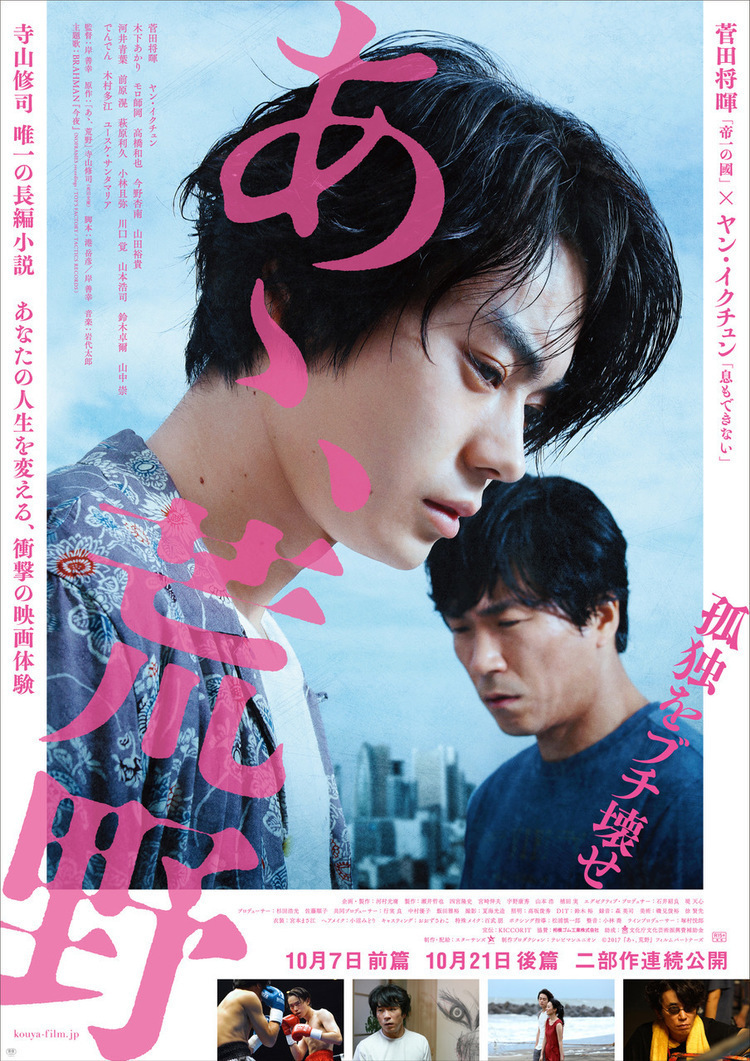
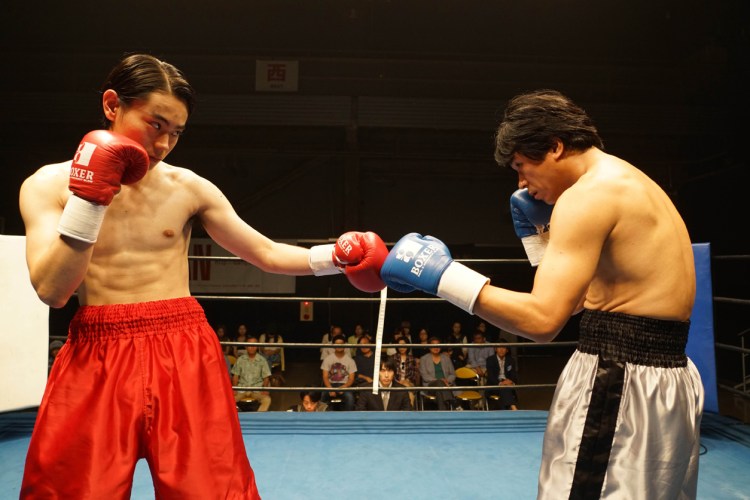
Wilderness (あゝ、荒野)

wilderness still 1Adapted from the 1966 novel by Shuji Terayama and released in two parts, Yoshiyuki Kishi’s A Double Life followup follows two men who find unexpected friendship while looking for release in the boxing ring.

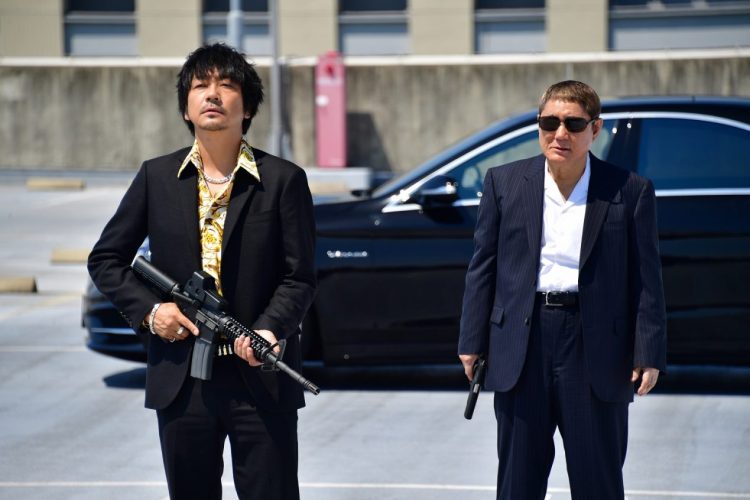
Outrage Coda (アウトレイジ 最終章)

outrage coda stillThe third and presumably final instalment in the Outrage series, Coda sees actor/director Takeshi Kitano return to the role of Otomo now in exile in South Korea in an attempt to avoid ongoing gang strife at home.

The Tokyo Night Sky is Always the Densest Shade of Blue (夜空はいつでも最高密度の青色だ)

THE TOKYO NIGHT SKY IS ALWAYS THE DENSEST SHADE OF BLUE stillA love/hate letter to Tokyo, Yuya Ishii’s The Tokyo Night Sky is inspired by a collection of poems by Tahi Saihate and follows two lonely city souls as they struggle with their place in a society which they often feel has no place for them. Review.

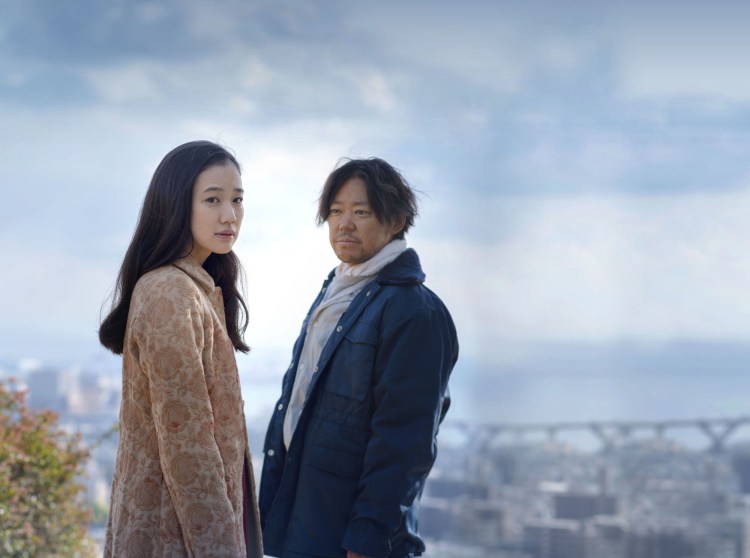
Birds Without Names (彼女がその名を知らない鳥たち)

birds without names still 2Dawn of the Felines director Kazuya Shiraishi returns to the world of mystery in a tale of dark romance and destructive desires. Yu Aoi stars as a young woman, Towako, living with an older man (played by Sadao Abe) whom she despises but tolerates because he continues to support her. Towako, however, cannot forget a violent ex-lover who has been missing for the last eight years. Screening in the upcoming Japan Foundation Touring Film Programme.

Close-Knit (彼らが本気で編むときは,)

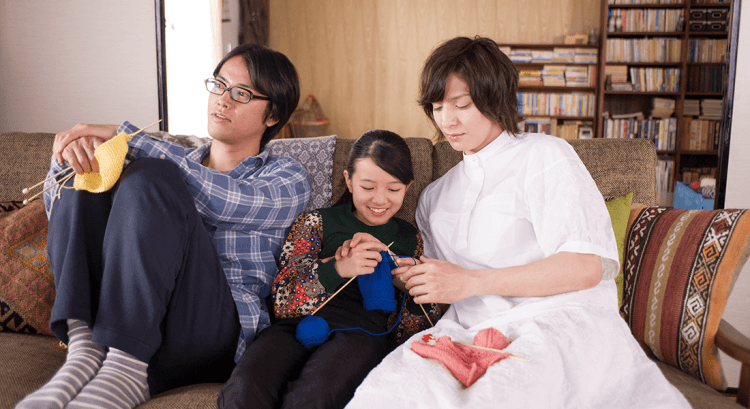
close-knit still 1A departure of sorts from the director’s earlier career, Close-Knit drops the whimsy but not the heart in telling a story of changing family dynamics and pleading for a kinder, more understanding world where all are free to live the way they choose without let or hinderance. Review.

Let Me Eat Your Pancreas (君の膵臓をたべたい)

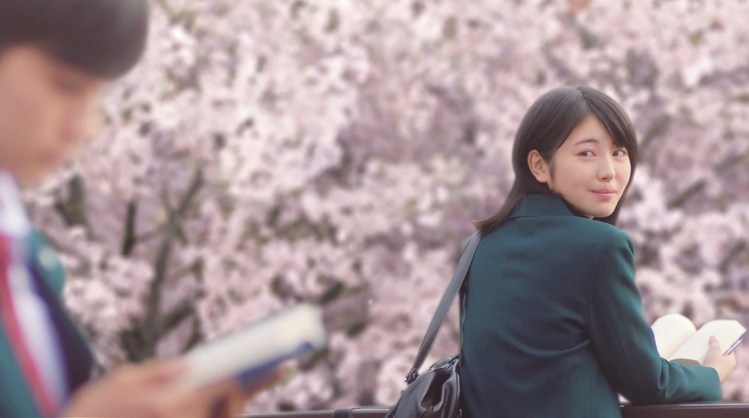
let me eat your pancreas still 1Sho Tsukikawa adapts Yoru Sumino’s novel in which the unnamed protagonist finds a classmate’s diary and discovers that she is suffering with a terminal illness. The only person to know of her condition outside of her immediate family, the protagonist commits himself to fulfilling her last wishes while she still has time.

Gukoroku – Traces of Sin (愚行録)

gukoroku stillSatoshi Tsumabuki stars as a mild-mannered reporter investigating the murder of a model family while supporting his younger sister (Hikari Mitsushima) who is currently in prison charged with child neglect. Less a murder mystery than a dark social drama, the world of Gukoroku is one defined by unfairness in which pervasive systems of social inequality have destroyed the precious harmony the same society praises so highly. Review.

March Comes in Like a Lion (3月のライオン)

March comes in like a lion horizontal

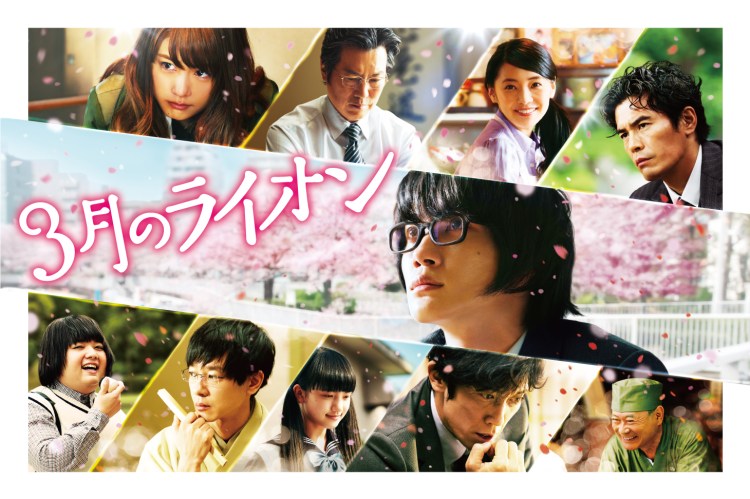
Shogi is definitely back in fashion at the present moment. Keishi Ohtomo adapts Chica Umino’s popular manga in which an orphaned young man struggles with the regular problems of adolescence whilst also attempting to conquer the famously difficult world of this fiendish game. Review.

The Third Murder (三度目の殺人)

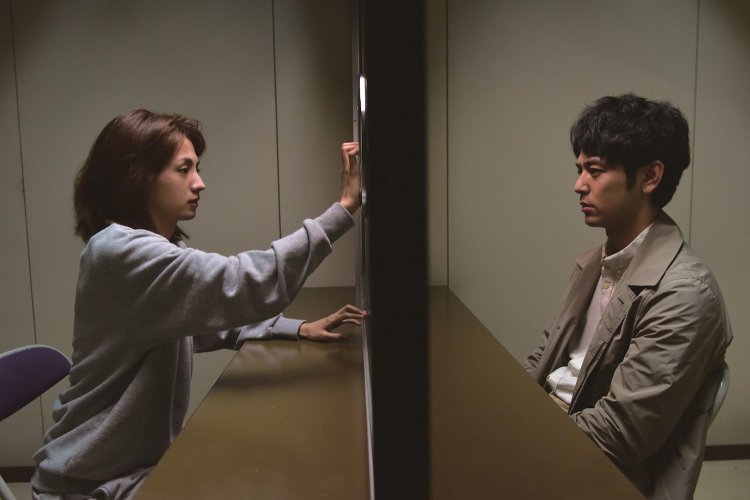
third murder horizontal posterHirokazu Koreeda makes a rare detour from the family drama for a high stakes legal thriller in which a veteran lawyer takes on the seemingly impossible task of defending a murder suspect who has already served time for violent crime and freely confesses his guilt, but the more the lawyer looks into the case the less confident he feels that his client is telling the truth.

Teiichi: Battle of Supreme High (帝一の國)

teiichi stillProlific young actor Masaki Suda stars in Akira Nagai’s adaptation of the manga by Usamaru Furuya in which Japan’s political future is decided at an elite military boarding school. Review.

Source: Eiga Natalie

Respeto (Alberto Monteras II, 2017)

https://www.respetomovie.com/

https://www.respetomovie.com/“Respect” is a thorny issue, is it something which is conferred from a position of inferiority, an acceptance of equality, or taken by force? Should the older generation be “entitled” to the respect of the young simply for having been born earlier, lived longer, and have less time left, and should the state also be “entitled” to the respect of its citizens even if it abuses that respect? Respeto is the debut feature from Alberto (Treb) Monteras II but like much Philippine cinema it comes with heavy baggage as its scrappy youngster attempts to come of age in the hip hop dens of the Pandacan slums where all around him the increasingly oppressive Duterte regime brings back terrible memories for a generation only once removed from his own which paid a heavy price to rid themselves of a tyranny they now see returning.

Hendrix (Abra), a scrappy teen living with his older sister and her boyfriend who prides himself for his magnanimity in supporting his lover’s annoying kid brother, says he has the “mind of a gangster” and longs to prove himself in the underground rap battling world which represents a kind of escape from the harshness of his everyday existence. Hip hop maybe the music of the oppressed, but there’s little politicking in arcane world of petty gangsters and drugged up thugs. This is a world of humiliation – the rappers rap about rapping, about how their rhymes are sweeter than their opponent’s, how their opponent is weak and they are strong. Despite an often careful honing of a craft, this rap is vacuous – a misuse of words that could serve real purpose to do little more than replace the act of physical violence with macho male posturing.

This is certainly a very male, macho world. Inducted into the rap battle scene, Hendrix is tricked into battling an old veteran, Jambalaya – a larger lady with an intimidating presence, but all he can come up with is a steady stream of misogynistic fat jokes, badly delivered, before he wets himself live on stage. Jambalaya quite rightly destroys him with an elegantly delivered takedown which subtly suggests everything he’s just said is completely beneath him and is therefore doubly insulting. Hendrix is humiliated, as the loser of the battles is intended to be, but he’s slow to realise that the game itself is already a betrayal of its own power.

Having stolen the money to participate in the rap battle from Mondo (Brian Arda), his sister’s dodgy boyfriend, Hendrix hits on an extreme solution to pay him back – robbing the secondhand bookshop run by an old man, Doc (Dido De La Paz), seemingly suffering with the early stages of dementia. The plan fails because Hendrix and his buddies aren’t exactly master criminals, but as a result they find themselves tasked with having to repair the damage while Doc, mildly outraged by the youth of the day, begins to see enough potential in the obviously bright yet stubborn young man to want to try to save him.

What occurs between them is somewhere between a war of words and a war for words. Doc, now an old man, was an activist poet during the Marcos regime who lost a wife and child to its brutality. In the end, his words were not enough but unlike those of the rap battlers of Pandacan, they were both beautiful and filled with purpose. Doc’s verses were, in a sense, intended to humiliate a regime – in this they are not so different from Hendrix’s rhymes, but they failed to take the place of violence. A man of words faced with the possibility of revenge, Doc was not strong enough to resist but bought himself only more anguish in a single act of primal rage that soon forged another link in a chain stretching out in both directions across an eternity.

Peppered throughout, radio broadcasts make frequent reference to a debate surrounding the long delayed burial of former dictator Ferdinand Marcos who died in exile in 1989. The older generation fought an oppressive regime and thought they’d won only for their children to betray the revolution they gave birth to – literally in Doc’s case as his son became a corrupt policeman who abuses his power to humiliate those whose should “respect” he ought to earn through continued service. Rendered powerless by their oppressive environments, both Doc and Hendrix sought to reclaim their self respect by asserting their voice, but in the end their words find only empty air. Somehow awed by ancient technology, the kids find an old record of a Marcos era protest song in Doc’s bookshop and realise they already know the words. The singer, seemingly a young person, begs to be left out the political storm, not to be dragged into a war he sees as nothing to do with him, but an escape from this unending cycle of violence seems unlikely while words remain weightless.


Available to stream online via Festival Scope until 20th February 2018 as part of its International Film Festival Rotterdam tie-up.
Original trailer (English subtitles)

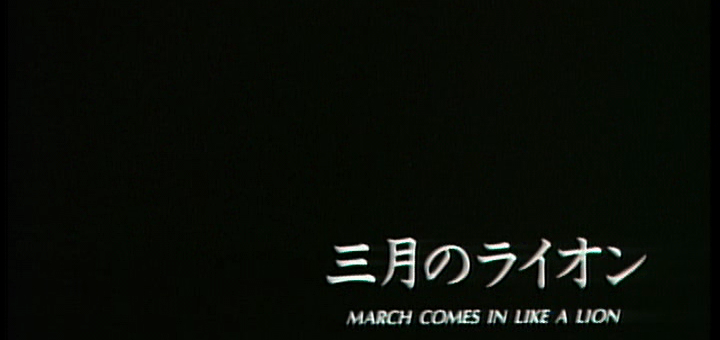
March Comes in Like a Lion (三月のライオン, Hitoshi Yazaki, 1992)

March comes in like a lionIce in the heart of summer pins its hopes on spring in the second feature from Hitoshi Yazaki. Afternoon Breezes, Yazaki’s debut, chronicled forbidden love becoming dangerous obsession as a naive young woman falls for her straight roommate but has no mechanism by which to expresses herself in a society that deems her feelings so taboo as to not quite have the words to describe them. March Comes in Like a Lion (三月のライオン, Sangatsu no Lion) again focusses on an illicit connection but this time an incestuous one in which a strange young woman realises a life long crush on her older brother by telling him that she is his girlfriend after he wakes up from a coma with amnesia.

Natsuko (lit. summer’s child) told her brother, Haruo (lit. boy of spring), that she would one day be his wife when she was just seven and he eight. Years later, Haruo (Cho Bang-ho) has been involved in a motorcycle accident and lost his memory. Natsuko (Yoshiko Yura) seizes her chance. Taking the name of “Ice”, she tells her brother that she is his lover and they live together in a barely furnished apartment on the upper floor of a tenement building. Maintaining the ruse, Ice nurses Haruo back to health, watching his progression day by day and dreading the moment he might finally remember who she really is.

Ice has rented the apartment for two months only – putting an expiry date on her true love dream. She’s done this mostly to avoid taking her brother back to their childhood home, fearing it might jog his memory and wanting avoid the prying eyes of friendly neighbours they’ve known all their lives. Her love is, by the common values of her society, against nature yet Ice surrenders to it anyway, fully expecting the “storm” of March between the seasons of ice and flowers. Flowers here may be warmth or death, but Ice is prepared to wait for her heart to melt and become the summer once again.

The early ‘90s was a time of walls falling, for good or ill, though the Tokyo Ice inhabits is a cold and frozen place. One of loneliness and confusion where busyness has given way to ennui and listless lethargy. Natsuko (and Ice too) has been surviving on casual prostitution, swiping the fashionable clothes of a client to give to Haruo and bestowing on him his curiously mad hatter-like appearance, as if he’d just stepped out of a silent movie. Ice walks around with all her worldly goods stored inside a giant cool box which emits dry ice every time she opens it. She has a compulsion for eating ice lollies and fondling the fridge freezer that is the only appliance in the sparse apartment apart from a circus-like ceiling lamp which rests on its top. Ice does not really want to melt, she tries to keep herself cool, resisting the heat of passion which may reduce her frozen paradise to watery tears, but knows that her present life is but a dream, a lingering state of limbo which must one day end.

While Ice keeps things cool, Haruo gets a job in demolition. Post-bubble the city is failing, crumbling ominously to the ground. Where once there was life and creation, now there is only death and decay. Mirroring his sister, Haruo takes things apart and throws them away but becomes oddly fascinated by the looking glass. Looking at himself, through himself, Haruo searches for the keys to his existence. As his relationship with Ice becomes physical, his mind begins to turn. Haruo regains the power of speech, remembers there was someone he loved, and awakens to the coming spring.

Ice wants to know her love can last – she looks for proof everywhere. An elderly couple – she cutting his hair while he remains less steady, still in love forty years later. The housewife next-door sending her husband off to work in the middle of the night and talking of children. Polaroids and fairy tales, white rabbits and magic girls – her world is fantasy, she is Alice adrift in Wonderland. Natsuko dares to dream a dream of love in a world which is collapsing before her eyes yet she does for a time at least win it. Filled with whimsical poetry and beautifully composed images and set to a nostalgic folk score by Bolivian Rockers, March Comes in Like a Lion is a tender, touching romance made all the stranger and sadder for its unusual genesis.


Short scene from the film (English subtitles)

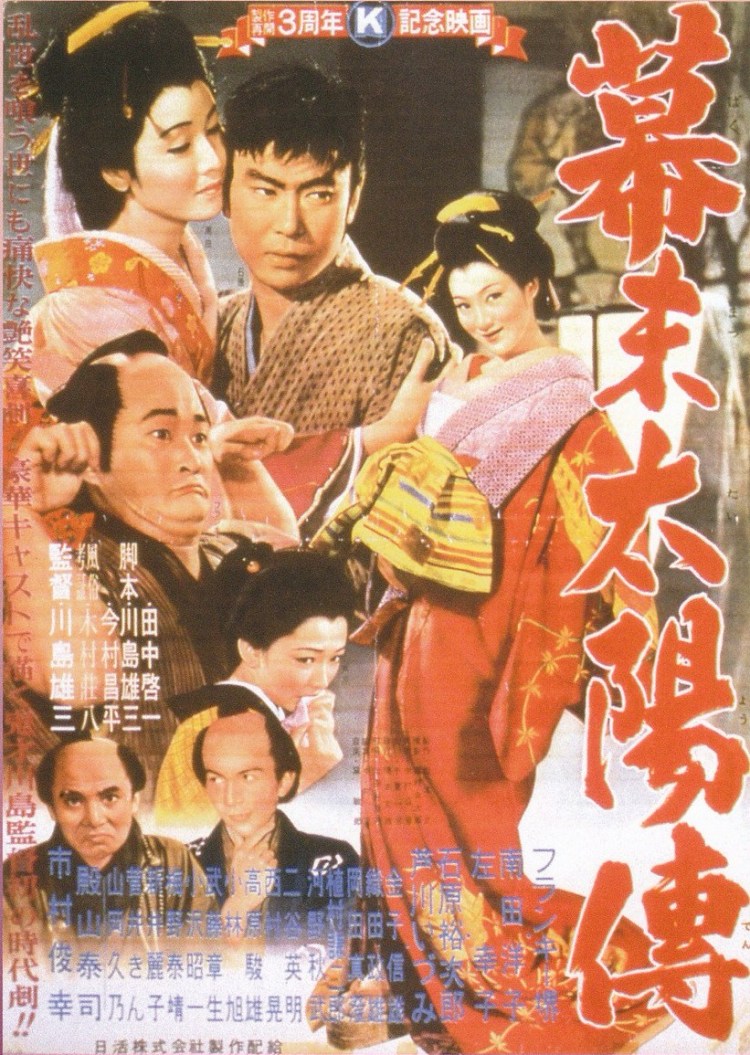
Bakumatsu Taiyoden (幕末太陽傳, Yuzo Kawashima, 1957)

bakumatsu taiyoden posterMany things were changing in the Japan of 1957. In terms of cinema, a short lived series of films known as the “Sun Tribe” movement had provoked widespread social panic about rowdy Westernised youth. Inspired by the novels of Shintaro Ishihara (later a right-leaning mayor of Tokyo), the movement proved so provocative that it had to be halted after three films such was the public outcry at the outrageous depictions of privileged young people indulging in promiscuous sex, drugs, alcohol, and above all total apathy – frivolous lives frittered away on self destructive pleasures. The Sun Tribe movies had perhaps gone too far becoming an easy source of parody, though the studio that engineered them, Nikkatsu, largely continued in a similar vein making stories of youth gone wild their stock in trade.

Yuzo Kawashima, a generation older than the Sun Tribe boys and girls, attempts to subvert the moral outrage by reframing the hysteria as a ribald rakugo story set in the last period of intense cultural crisis – the “Bakumatsu” era, which is to say the period between the great black ships which forcibly re-opened Japan to the outside world, and the fall of the Shogunate. The title, Bakumatsu Taiyoden (幕末太陽傳), literally means “legend of the sun (tribe) in the Bakumatsu era”, and, Kawashima seems to suggest, perhaps things now aren’t really so different from 100 years earlier. Kawashima deliberately casts Nikkatsu’s A-list matinee idols – in particular Yujiro Ishihara (the brother of Shintaro and the face of the movement), but also Akira Kobayashi and familiar supporting face Hideaki Nitani, all actors generally featured in contemporary dramas and rarely in kimono. Rather than the rather stately acting style of the period drama, Kawashima allows his youthful cast to act the way they usually would – post-war youth in the closing days of the shogunate.

They are, however, not quite the main draw. Well known comedian and rakugo performer Frankie Sakai anchors the tale as a genial chancer, a dishonest but kindly man whose roguish charm makes him an endearing (if sometimes infuriating) character. After a post-modern opening depicting contemporary Shinagawa – a faded red light district now on its way out following the introduction of anti-prostitution legislation enacted under the American occupation, Kawashima takes us back to the Shinagawa of 1862 when business was, if not exactly booming, at least ticking along.

Nicknamed “The Grifter”, Saiheiji (Frankie Sakai) has picked up a rare watch dropped by a samurai on his way to plot revolution and retired to a geisha house for a night of debauchery he has no intention of actually paying for. Though he keeps assuring the owners that he will pay “later” when other friends turn up with the money, he is eventually revealed to be a con-man and a charlatan but offers to work off his debt by doing odd jobs around the inn. Strangely enough Saiheiji is actually a cheerful little worker and busily gets on with the job, gradually endearing himself to all at the brothel with his ability for scheming which often gets them out of sticky situations ranging from fake ghosts to customers who won’t leave.

Saiheiji eventually gets himself involved with a shady group of samurai led by Shinshaku Takasugi (Yujiro Ishihara) – a real life figure of the Bakumatsu rebellion. Like their Sun Tribe equivalents these young men are angry about “the humiliating American treaty”, but their anger seems to be imbued with purpose albeit a destructive one as they commit to burning down the recently completed “Foreign Quarter” as an act of protest-cum-terrorism. The Bakumatsu rebels are torn over the best path for future – they’ve seen what happened in China, and they fear a weak Japan will soon be torn up and devoured by European empire builders. Some think rapid Westernisation is the answer – fight fire with fire, others think showing the foreigners who’s boss is a better option (or even just expelling them all so everything goes back to “normal”). America, just as in the contemporary world, is the existential threat to the Japanese notion of Japaneseness – these young samurai are opposed to cultural colonisation, but their great grandchildren have perhaps swung the other way, drunk on new freedoms and bopping away to rock n roll wearing denim and drinking Coca Cola. They too resent American imperialism (increasingly as history would prove), but their rebellions lack focus or intent, their anger without purpose or aim.

Kawashima’s opening crawl directly references the anti-prostitution law enacted by the American occupying forces – an imposition of Western notions of “morality” onto “traditional” Japanese culture. In a round about way, the film suggests that all of this youthful rebellion is perhaps provoked by the sexual frustration of young men now that the safe and legal sex trade is no longer available to them – echoing the often used defence of the sex trade that it keeps “decent” women, and society at large, safe. Then again, the sex trade of the Bakumatsu era is as unpleasant as it’s always been even if the familiar enough problems are played for laughs – the warring geisha, the prostitute driven in desperation to double suicide, the young woman about to be sold into prostitution against her will in payment of an irresponsible father’s debt, etc. One geisha has signed engagement promises with almost all her clients – it keeps the punters happy and most of them are meaningless anyway. As she says, deception is her business – whatever the men might say about it, it’s a game they are willingly playing, buying affection and then seeming hurt to realise that affection is necessarily false and conditional on payment of the bill.   

Playing it for laughs is, however, Kawashima’s main aim – asking small questions with a wry smile as Saiheiji goes about his shady schemes with a cleverness that’s more cheeky than malicious. He warns people they shouldn’t trust him, but in the end they always can because despite his shady surface his heart is in the right place. Warned he’ll go to hell if he keeps on lying his way though life, Saiheiji laughs, exclaims to hell with that – he’s his own life to live, and so he gleefully runs away from the Bakumatsu chaos into the unseen future.


Masters of Cinema release trailer (English subtitles)

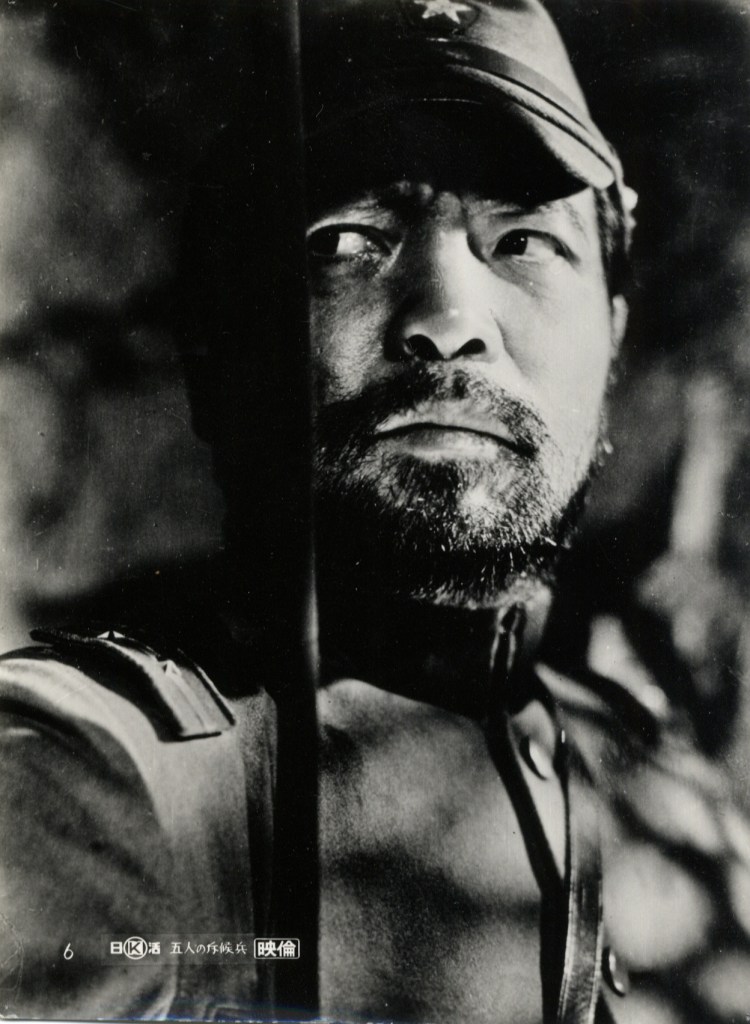
Five Scouts (五人の斥候兵, Tomotaka Tasaka, 1938)

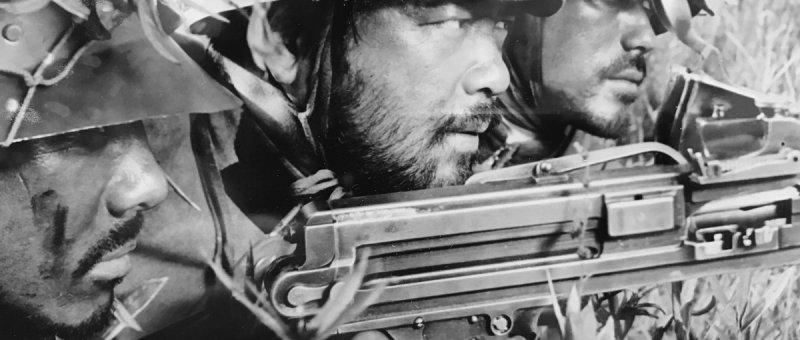
five scouts still 3War, in Japanese cinema, had been largely relegated to the samurai era until militarism took hold and the nation embarked on wide scale warfare mixed with European-style empire building in the mid-1930s. Tomotaka Tasaka’s Five Scouts (五人の斥候兵, Gonin no Sekkohei) is often thought to be the first true Japanese war film, shot on location in Manchuria and trying to put a patriotic spin on its not entirely inspiring central narrative. Like many directors of the era, Tasaka is effectively directing a propaganda film but he neatly sidesteps bold declarations of the glory of war for a less controversial praise of the nobility of the Japanese soldier who longs to die bravely for the Emperor and lives only to defend his friends.
The film opens with an exciting action sequence playing behind the titles featuring impressive scenes of battle with mortar shells exploding while soldiers run over trenches before entrenching themselves with a light machine gun. Eventually the day is won – after a fashion. Having lost 120 men, the 80 surviving of the 200 strong company settle-in to a fortified position awaiting further orders.

The excitement of the battlefield soon gives way to behind the lines boredom. Danger lurks around every corner, but there is work to be done. The men dig trenches, clean their weapons, draw water, cook and eat but they also try to live, chatting or enjoying the “spoils of war” which in this case amount to stolen watermelons and captured ducks. In quiet moments they dream of sukiyaki and of home, but are content in each other’s company and as cheerful as it’s possible to be given the seriousness of their circumstances.

When two enemy soldiers are detected on the perimeter, a squad of five scouts is sent out to investigate but find themselves lost in the confusing Chinese terrain and eventually come under heavy fire. Worryingly enough, only one of the soldiers makes it back in good time with the others remaining unaccounted for until they eventually arrive save one who no one can remember seeing since the beginning of the attack and whose helmet has been found in an abandoned trench.

Tasaka refuses to glorify the business of war. What the men experience is rain and mud and sorrow, not an exultation in male virility and the politics of strength. He does however fulfil his propaganda requirements in demonstrating the army’s dedication to the Emperor. The commanding officer’s final rousing speech reminds his troops that now is the time they are expected to “repay the benevolence of the Emperor” whilst also emphasising that the hopes and dreams of the Japanese people are invested in them and, even if their families at home are worried for their safety, they are also proud of their sons fighting proudly for their homeland so far away from home.

The men too display the appropriate level of patriotic fervour, breaking off to wave at a Japanese plane before dragging out a giant banner to show their support and each remaining committed to serving even when physically compromised. One soldier with a bullet lodged in his arm, violently rejects the idea of going to a field hospital even though there is a strong chance that his arm will need to be amputated if they do not remove the bullet in due time. The soldier pleads to be allowed to stay on the front line, claiming that he does not mind losing an arm if it means he gets to stay and help his comrades. His comrades, touched by his dedication, nevertheless urge him to get his arm seen to by subtly suggesting that his desire to remain on the frontline is a kind of vanity when his effectiveness is compromised. His arm, technically speaking, does belong to the army and the Emperor after all. Another soldier, not so lucky, exclaims he can see Japan as he lays dying, singing the first verse of the national anthem before finally giving up the ghost.

As the men march off towards the final battle following the rousing speech from their commander who warns that many will die, they do so melancholically rather than with eagerness to sacrifice themselves on an imperial altar. Tasaka stages the battle scenes with impressive realism, drawing inspiration from news reel footage to capture the immediacy and energy of the live battlefield, filming on location behind the lines in Manchuria for added effect. The behind the lines sequences are intentionally less dynamic and conventionally captured, allowing the tedium and the anxiety of a soldier’s life of waiting to take centre-stage. Tasaka’s film may seem naive and perhaps lacks the initial impact of the shock of seeing such visceral action scenes portrayed on screen for the first time, but it is also mildly subversive in its subtle rejection of the militarist lust for glory even whilst heaping praise on the ideal soldier’s love of Emperor, comradeship, and strong sense of duty and honour.


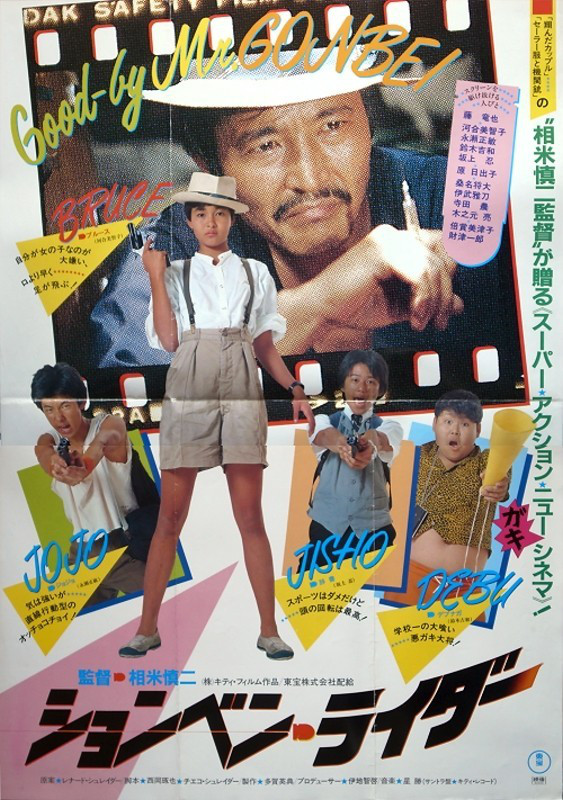
P. P. Rider (ションベンライダー, Shinji Somai, 1983)

PP rider poster

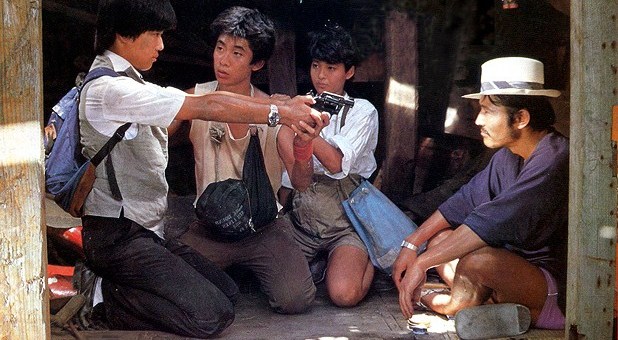
Despite a brief resurgence following a retrospective at Tokyo Filmex followed by another at Edinburgh International Film Festival, Shinji Somai remains frustratingly underrepresented in the West. Though his career is more varied than most give him credit for, encompassing the melancholy pink film Love Hotel and masculinity drama The Catch among others, Somai is justifiably most closely associated with his youth films. Running from the artier Typhoon Club and The Friends to the rabidly populist in the Kadokawa idol movies Sailor Suit and Machine Gun and Tokyo Heaven, Somai’s work is unique in managing to catch hold of a zeitgeist, capturing the essence of the contemporary teenager more or less in the way they saw themselves rather than the way they were generally seen by adults. Like many Japanese teen movies of the ‘80s, the world of P.P. Rider (ションベンライダー, Shonben Rider) is essentially a safe one. Our three protagonists get themselves mixed up in some dark and shady business but they are never afraid, do not lose heart, and face danger with only contempt and determination.

Somai opens with one of his trademark long takes which whirls around from two suspicious looking yakuza types to a bunch of kids playing around in the school swimming pool. One of the kids, a rotund boy who goes by the nickname Debunaga (his full name being Nobunaga (like the historical tyrant) Deguchi, ‘Debu” essentially meaning “fat”) is being a bit of a twit and having a go at one of our heroes, JoJo (Masatoshi Nagase). Debunaga (Yoshikazu Suzuki) then tries to “drown” JoJo’s friend Jisho (lit. “Dictionary”) (Shinobu Sakagami), before the third member of the trio arrives, an androgynous girl who goes by the name of Bruce (Michiko Kawai). Bruce neatly dispatches the petty high school punks while a teacher, Arane (Hideko Hara), attempts to shift some bosozoku bikers who’ve invaded school property.

Meanwhile, the petty yakuza get on with their plan. They’ve come to kidnap Debunaga, his pharmacist dad apparently has a sideline in drug dealing, but before they can grab him, Debunaga is kidnapped by entirely different kidnappers! Our three heroes, JoJo, Jisho, and Bruce are very annoyed about this because they didn’t get a proper chance to get even with him. Accordingly, they decide the best way to make use of their summer holiday is to rescue Debunaga themselves and make sure they get their revenge before the kidnappers do him in.

P.P. Rider means exactly you think it means, except it doesn’t quite mean anything at all aside from perfectly capturing the strange mix of childish jokes and serious crime that defines the movie’s tone. The atmosphere is absurd and ironic, the kids distrust adult authority and attempt to define their own nascent personalities by effectively rejecting them by using nicknames, dressing in highly codified ways, and either conforming to or subverting social codes as they see fit. Amusingly enough, the trio take a brief pause in the middle of their quest to get haircuts and change outfits, after which they emerge dressed in each other’s clothes as if implying they are almost interchangeable. 

In keeping with most Japanese youth dramas, parents are an entirely off screen presence. Adult input comes from two very different directions (plus the occasional interventions of bumbling beat cop Tanaka), a down-at-heels yakuza called Gombei (Tatsuya Fuji), and the kids’ teacher, Arane. Gombei, a drug-addled gangster, is hardly an ideal role model (especially when he tries to drown Bruce and attacks Jisho with a samurai sword), but he does eventually take the kids under his wing with JoJo picking up the classic deputy role in learning the yakuza ropes. Arane, by contrast begins by letting them down. Harried by the bosozoku she tells the kids to buzz off when they try to talk to her, telling them that she’s off to hot springs town Atami and they’d best come back next term. Nevertheless she eventually becomes an integral part of their group, assisting in the quest and helping to rescue Debunaga while the strange finale plays out before her impassive eyes.

The kids didn’t really want to save Debunaga, and are conflicted when they eventually locate him, but in the end it’s friendship which wins out as they each celebrate their various roles in the successful rescue whilst lamenting the relative lack of care they’ve received from adults and authority figures aside from Arane and Gombei. Absurdist and ironic, P.P. Rider is a strange children’s odyssey in which the adolescent teens head out on a dark and dangerous adventure but live in the relative safety of the world and so nothing very bad is going to happen to them despite the terrible things they eventually witness. Classical long takes jostle alongside Somai’s mobile camera, random intertitles, and frequent breaks for pop music (this is an idol movie after all) in a frenzy of post-modern gags but somehow it all just works, and does so with wit and charm.


Opening scene (no subtitles)

Interview with actor Masatoshi Nagase from the Tokyo Filmex screening in 2011 (Japanese only, no subtitles)

Michiko Kawai’s main titles song – Watashi, Takanna Koro