
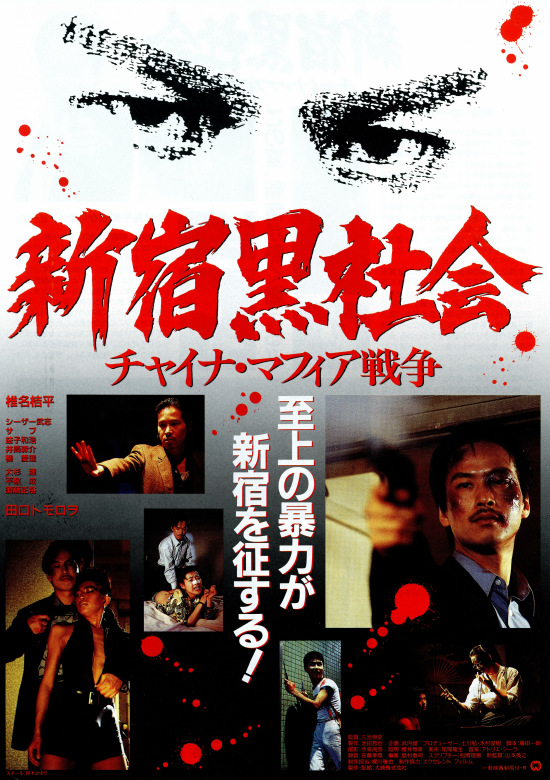
 These days Takashi Miike is known as something of an enfant terrible whose rate of production is almost impossible to keep up with and regularly defies classification. Pressed to offer some kind of explanation to the uninitiated, most will point to the unsettling horror of Audition or the audacity of the controversial Ichi the Killer whilst looking askance at the totally unexpected craziness of Yatterman or the child friendly Ninja Kids!!!. Before he was the gleefully unpredictable festival favourite, Miike, like many of his contemporaries, had made a name for himself in V-cinema, often with violent tales of modern day yakuza. Shinjuku Triad Society (新宿黒社会 チャイナ・マフィア戦争, Shinjuku Kuroshakai: China Mafia Senso) was Miike’s first venture into the mainstream theatrical world but retains his V-cinema focus with additional intent.
Set in the shady, sleazy, noir-tinted world of ‘90s Shinjuku, Shinjuku Triad Society opens with a voice-over from one of its central players telling us that this is a love story – sickening and sweet, as real love is. The action kicks off with this same character, a rent boy, Zhou, attempting to evade a police raid, slitting the throat of a regular street cop on his way out. Zhou is the lover of an unpredictable member of the Taiwanese mafia, Wang (Tomorowo Taguchi), who is creating several problems in the underground crime world both within Triad circles and with the local yakuza. Half Chinese policeman, Tatsuhito Kiriya (Kippei Shina), has been landed with the case but things begin to get personal when he discovers that his younger brother, Yoshihito, has been hired as a junior lawyer working directly for Wang’s gang.
Yakuza films often have a very strong homosocial atmosphere, emphasising the fraternal bonds between men but Shinjuku Triad Society is especially notable for its inclusion of explicit male homosexuality within the gangster underworld. If yakuza films are family dramas with funerals instead of weddings, Miike uses this intense male bonding as a comment on the wider nature of the family with an added focus on the place of the foreign in Japanese society. Wang and Tatsuhito are not so far removed in their desire to rebuild their own family unit, partly as a kind of protective measure against the world around them in which their Chinese heritage becomes a perpetual barrier. Wang has done this as the head of his own clan and with his lover Zhou at his side whereas Tatsuhito is intent on restoring his birth family by “rescuing” his brother from the clutches of the “Dragon’s Claw”.
Tatsuhito’s brother is, of course, a grown man who has the right to become a member of the underworld family, rejecting the blood ties to his policeman brother and doting parents if that is what he wants no matter what his brother might feel about it. Tatsuhito is disturbed to discover that Yoshihito has become Wang’s lover, even if he claims to be using him in order to progress his career. Both brothers threaten each other at gun point with Yoshihito exclaiming “if you don’t like the way I am, just kill me” which Tatsuhito refuses to do though it remains unclear if his brother’s sexuality is objectionable to him or merely a facet of his rejection of the values Tatsuhito holds dear.
Sexuality becomes a weapon as Zhou manoeuvres and manipulates through provoking and satisfying sexual desire. These are, however, consensual relationships even if a part of a wider, transactional game whereas anal rape is actively being employed as a police interrogation tactic (with a somewhat surprising spin). Even Tatsuhito, whose partner mocks him for a supposed dedication to being a “regular” cop, unwilling to take bribes or give in to corruption, himself engages in this behaviour anally raping a female prostitute from whom he wishes to extract information. Playing into the film’s darker themes of the interplay between sex, violence, and transaction, the prostitute instantly falls in love with him. Tatsuhito is clearly no saint even at the film’s beginning, but even so he continues to fall still further, seemingly outraged on discovering the true purpose of Wang’s “philanthropy” in his Taiwanese homeland, but doing relatively little about it other than adding it to the growing list of reasons why Wang must die. Eventually crossing the line from law enforcer to law breaker in the most taboo of ways, Tatsuhito finds himself rewarded even if his boss seems to be aware and in approval of what he’s done.
Tatsuhito may succeed in some of his aims, even if he has to exile himself from the family he was trying repair in the process though the closing voice over makes clear that he gains little in the long run and becomes nothing more than marginalia in the long, sad history of Shinjuku’s violent backstreets. Starting as he means to go on, Miike is entirely unafraid to step into some very uncomfortable areas, not least the way non-Japanese and those with partial Japanese heritage are regarded in the society of the time as well as the way these attitudes are filtered through recent Japanese history. Tatsuhito finds himself conflicted, choosing Japan in choosing the police but finding that it often fails to recognise him as its own son, whereas Yoshihito, in a sense, chooses China in associating himself with the Taiwanese gangsters. This central opposition of order and criminality is itself uncomfortable, but then undermined by the unorthodox nature of the local yakuza. Often strange and eerie, Shinjuku Triad Society takes place in a noirish world where there is no guiding morality – one to which Miike would often return though perhaps never with so much biting irony, where the absence of hope continues to imply its possibility.
Original trailer (English subtitles)
 Lav Diaz is many things but he’s not especially known for his brevity. Elegy to the Visitor From the Revolution (Elehiya Sa Dumalaw Mula Sa Himagsikan) is something of a departure in that regard as it runs a scant eighty minutes but is, nevertheless, imbued with the director’s constant themes of loss, melancholy and despair conveyed across a tripartite structure peopled by three very different yet interconnected sets of characters. To say “only” eighty minutes long, yet Elegy to the Visitor From the Revolution first began as a one minute short, intended to form a part of Nikalexis.MOV – an omnibus dedicated to the memory of film critics Alexis Tioseco and Nika Bohinc tragically killed during a home invasion. Diaz’ film, however, outgrew its origins to become a stand alone feature in its own right.
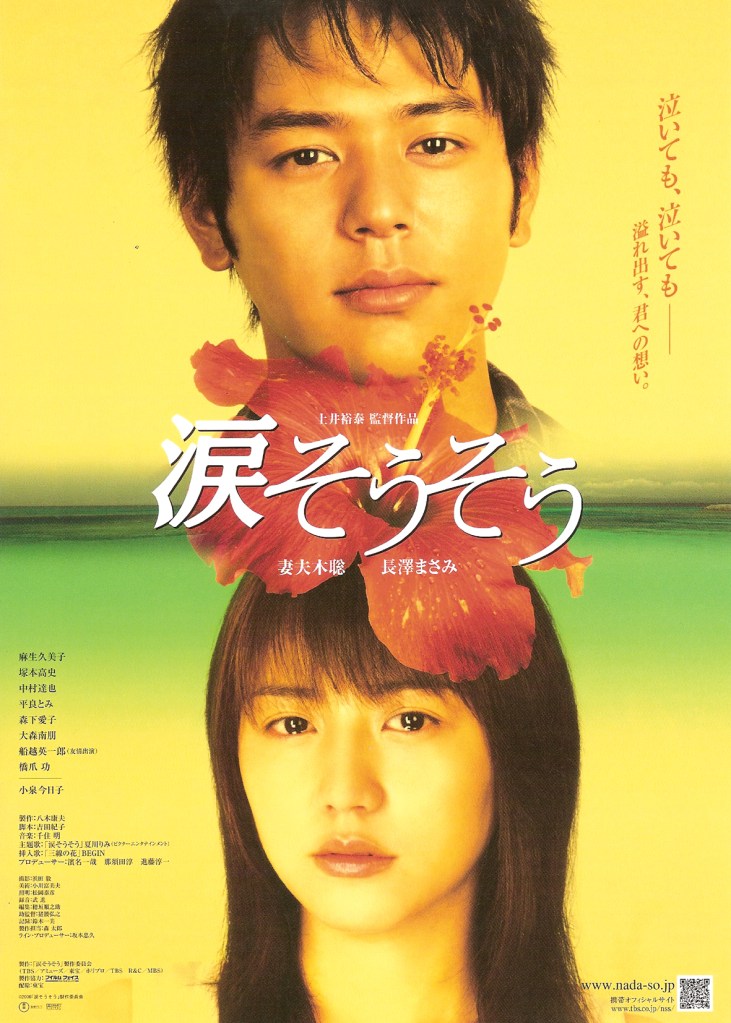 Coming in at the end of the “pure love” boom, Nobuhiro Doi’s second feature, Tears for You (涙そうそう, Nada So So) is presumably named to tie in with his smash hit debut
 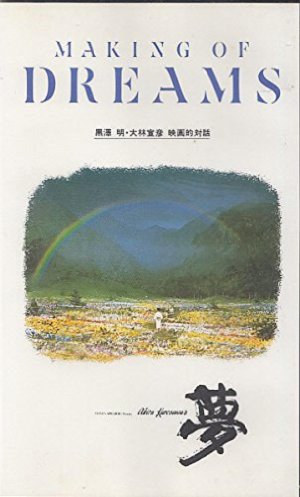 You might think there could be no more diametrically opposed directors than Akira Kurosawa – best known for his naturalistic (by jidaigeki standards anyway) three hour epic Seven Samurai, and Nobuhiko Obayashi whose madcap, psychedelic, horror musical Hausu continues to over shadow a far less strange career than might be expected. However,
 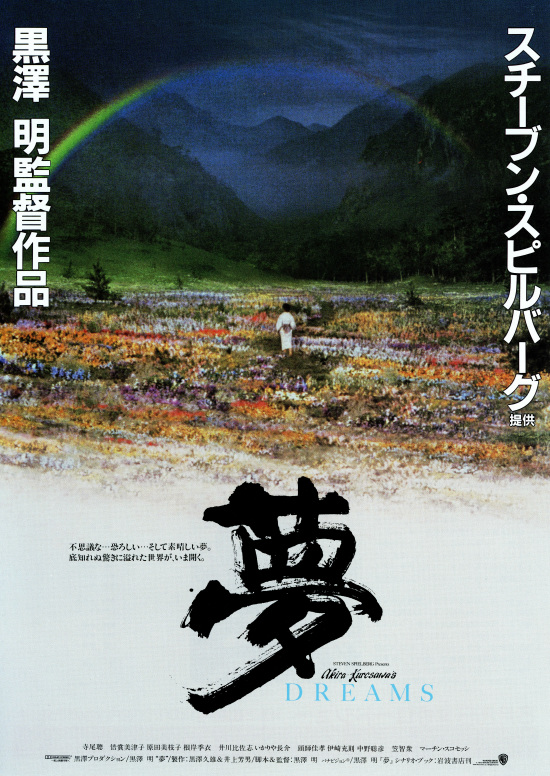 Despite a long and hugely successful career which saw him feted as the man who’d put Japanese cinema on the international map, Akira Kurosawa’s fortunes took a tumble in the late ‘60s with an ill fated attempt to break into Hollywood. Tora! Tora! Tora! was to be a landmark film collaboration detailing the attack on Pearl Harbour from both the American and Japanese sides with Kurosawa directing the Japanese half, and an American director handling the English language content. However, the American director was not someone the prestigious caliber of David Lean as Kurosawa had hoped and his script was constantly picked apart and reduced.
 One of the very earliest films to address female same sex love in Korea, Ashamed (yes, really, but not quite – we’ll get to this later, 창피해, Changpihae, retitled Life is Peachy for US release) had a lot riding on it. Perhaps too much, but does at least manage to outline a convincing, refreshingly ordinary failed love romance even if hampered by a heavy handed structuring device and a lack of chemistry between its leading ladies.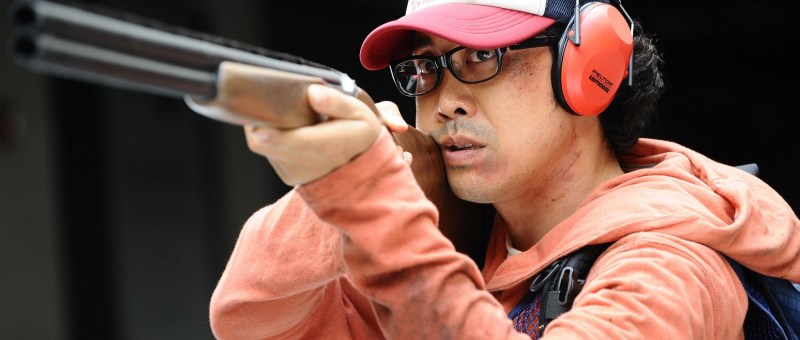
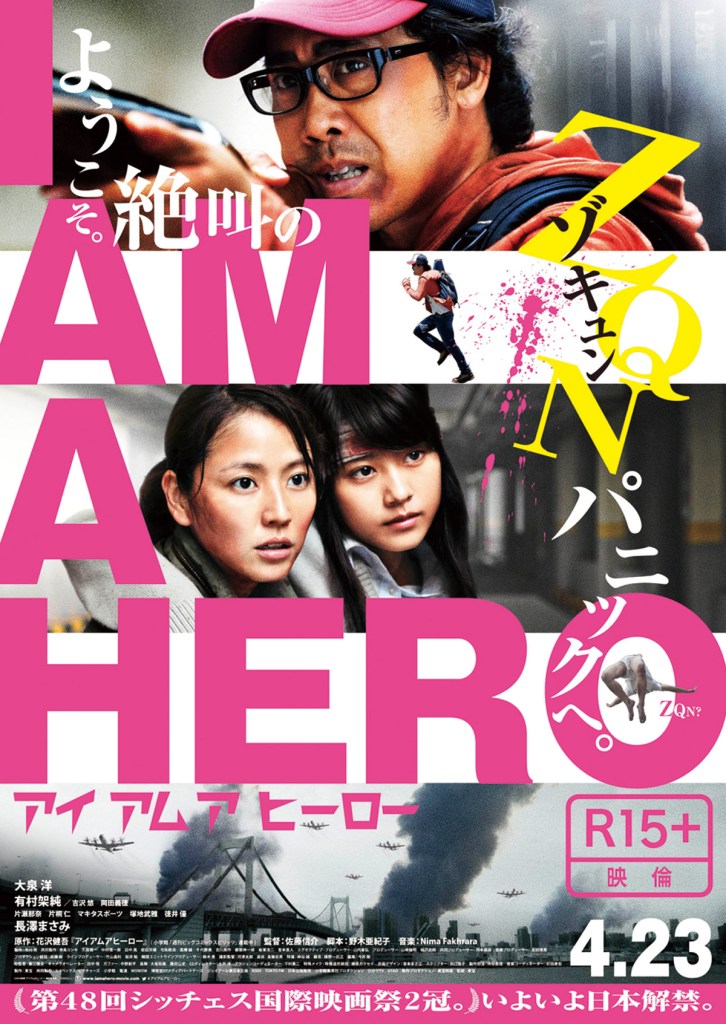 Japan has never quite got the zombie movie. That’s not to say they haven’t tried, from the arty Miss Zombie to the splatter leaning exploitation fare of Helldriver, zombies have never been far from the scene even if they looked and behaved a littler differently than their American cousins. Shinsuke Sato’s adaptation of Kengo Hanazawa’s manga I Am a Hero (アイアムアヒーロー) is unapologetically married to the Romero universe even if filtered through 28 Days Later and, perhaps more importantly, Shaun of the Dead. These “ZQN” jerk and scuttle like the monsters you always feared were in the darkness, but as much as the undead threat lingers with outstretched hands of dread, Sato mines the situation for all the humour on offer creating that rarest of beasts – a horror comedy that’s both scary and funny but crucially also weighty enough to prove emotionally effective.
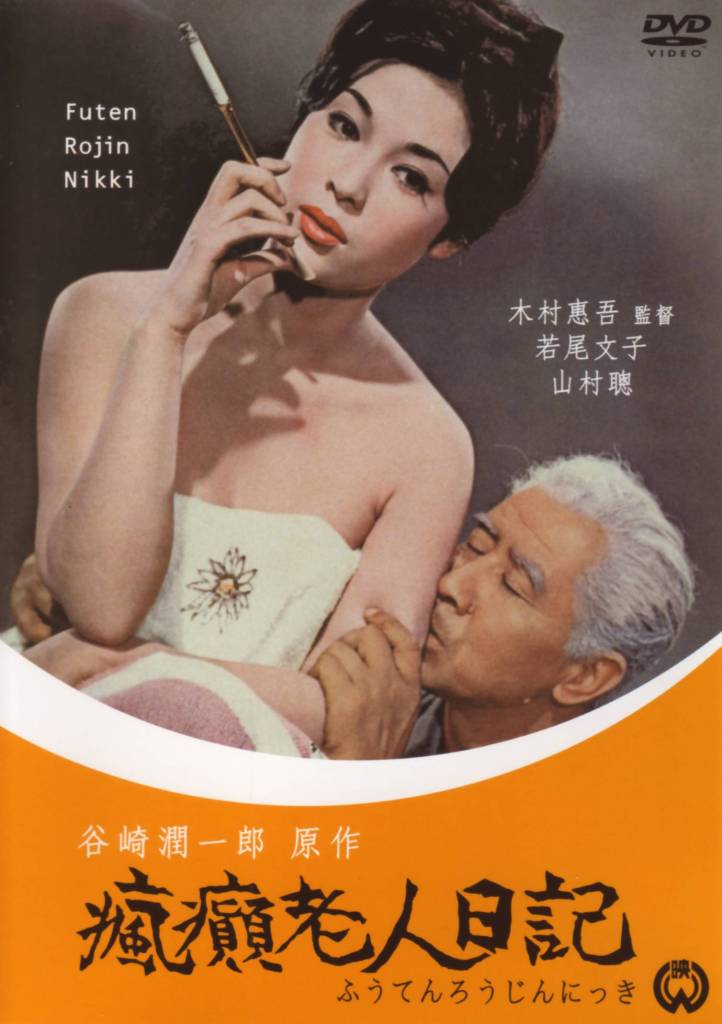 Junichiro Tanizaki is giant of Japanese literature whose work has often been adapted for the screen with
  Terra Formars – Terror for Mars? It’s all about terror in the quest for terra and reform in Takashi Miike’s bug hunt extravaganza adaptation of Yu Sasuga and Kenichi Tachibana’s manga. In fact, much of the plot is more or less the same as Aliens, but our motley crew is not a crack team of space marines headed by a recently awoken from stasis super survivor who proves unexpectedly dextrous in a robotic forklift exoskeleton, but a collection of human “bugs”, parasitical criminals who’ve each been made an offer they can’t refuse. High budget and boasting a starry cast, Terra Formars (テラフォーマーズ) definitely falls into the throwaway Miike category and proves curiously dull despite its ridiculous set up, but then if you happen to be into bugs there’s really a lot to like here.
 “Why is there so much madness and too much sorrow in the world? Is happiness just a concept? Is living just a process to measure man’s pain?” asks a key character towards the end of this eight hour film, but he might as well be speaking for the film itself as its director, Lav Diaz, delivers another long form state of the nation address. This is a ruined land peopled by ghosts, unable to come to terms with their grief and robbing themselves of their identities in an effort to circumvent their pain. Raw yet lyrical, Diaz’s lament seems wider than just for his damaged homeland as each of its sorrowful, disillusioned warriors attempts to reacquaint themselves with world devoid of hope.
 Windows on Worlds