 Yukio Mishima’s Temple of the Golden Pavilion has become one of his most representative works and seems to be one of those texts endlessly reinterpreted by each new generation. Previously adapted for the screen by Kon Ichikawa under the title of Enjo in 1958, Yoichi Takabayashi’s 1976 ATG adaptation Temple of the Golden Pavilion (金閣寺, Kinkakuji) moves away from Ichikawa’s abstract examination of the tragic idealist towards the more heated concerns of the day in its dissection of one man’s continued frustrations and his subsequent literal desire to burn the world.
According to Mizoguchi’s father (Yusaku Terashima), Kinkakuji – the Golden Pavilion, is the purest, most beautiful object the world has ever seen. After his father’s death, Kinkakuji becomes Mizoguchi’s (Saburo Shinoda) touchstone and it’s enough for him simply to be near it. Becoming a monk at a nearby temple, Mizoguchi comes under the care of an older priest who had been a friend of his father’s and is determined to look after his interests.
Interfering with his love for the temple is the spectre of a local girl, Uiko (Yoshie Shimamura), from his home town who spurned his affections due to his ugliness, stammer, and difficulty with communication. Mizoguchi’s resentment grows inside him until he begins to pray for Uiko’s death. Tragically, Uiko is indeed killed by her lover, a deserter from the army, after she first betrayed and then tried to warn him about the encroaching military police. Uiko and Kinkakuji become inextricably linked as each time Mizoguchi finds a woman willing to sleep with him, thoughts of Uiko and the temple cloud his mind, preventing him from fulfilling his sexual desires leading him to become obsessed with the idea of arson. The temple is less something too beautiful for an ugly world, than a too perfect mirror for Mizoguchi’s own faults and inadequacies, a constant reminder of the rest of the world’s baseness to which Mizoguchi would like to drag it down.
Quite clearly mentally disturbed from the outset, Mizoguchi is remains obsessed with the prophecies from his divination sticks and experiences various flashbacks to the often traumatic events of his past, all the while offering glimpses of his strange philosophy through his often poetic voice over. Largely friendless thanks to his unapproachable nature, Mizoguchi bonds with the softening influence of a fellow student at the monastery Tsurukawa (Toshio Shiba), but later falls under the spell of the cynical student Kashiwagi (Katsuhiko Yokomitsu) who uses his own disabilities to manipulate the sympathies of various women in order to sleep with and and then exploit them.
Through Kashiwagi’s tutelage, Mizoguchi begins to have more success with women but his original failure with Uiko and his attachment to the temple prevent him from fully venting his desires. Mizoguchi is also carrying a deeper seated resentment after witnessing his mother having sex with another man, seemingly with his father’s knowledge. Unable to reconcile his sexual desires with his feelings towards women by whom he feels rejected, both by his mother’s betrayal and because of his own internalised consciousness of his lack of looks and strange behaviour, Mizoguchi becomes increasingly frustrated, both sexually and politically.
With the end of the war came a new era, the old gods fell – the Emperor is but a man, but now men rule in this “strange” new democracy. Yet, in real terms, Mizoguchi feels no more empowered than he was before. Trapped inside this closing circle of impotence, Mizoguchi fantasises about murdering his mentor, the temple priest, who has since lost faith in him thanks to his cruel and unthinking behaviour. Killing the priest would change nothing, or so Mizoguchi thinks. The temple is eternal, but if he burns it, does he burn the tyranny of eternity? Calling on the ancestral spirits to destroy this venal world but receiving no reply, Mizogichi invokes Uiko and starts a new revolution born in flames designed to bring power to the powerless, burn the ignorant world away and begin again free of the temple’s tyrannous perfection.
Takabayashi’s approach is a surreal one in which Mizoguchi’s delusions are manefested as reality, climaxing as the creature atop the temple’s ornate apex suddenly begins to beat its wings. Shooting in 4:3 and switching into black and white as Mizoguchi relives painful memories, but remaining in colour for his embellished dreams of them, the atmosphere is an uncertain one which drifts from fantasy to reality without warning. Very much a youth movie of the day, the 1976 The Temple of the Golden Pavillion is less an abstract contemplation of the place of beauty in a world of ugliness, than a story of self destructive male insecurity as sexual and political impotence drive a man to destroy the symbol of his oppression. Dark and cynical as the times which produced it, Takabayashi’s Temple is an ugly tale, but a good lesson in the results of failing to listen to unheard voices.
Original trailer (no subtitles)
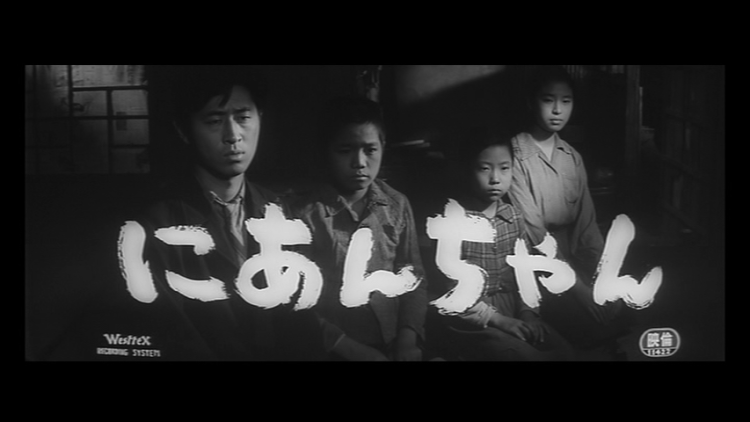 Like most directors of his era, Shohei Imamura began his career in the studio system as a trainee with Shochiku where he also worked as an AD to Yasujiro Ozu on some of his most well known pictures. Ozu’s approach, however, could not be further from Imamura’s in its insistence on order and precision. Finding much more in common with another Shochiku director, Yuzo Kawashima, well known for working class satires, Imamura jumped ship to the newly reformed Nikkatsu where he continued his training until helming his first three pictures in 1958 (Stolen Desire, Nishiginza Station, and Endless Desire). My Second Brother (にあんちゃん, Nianchan), which he directed in 1959, was, like the previous three films, a studio assignment rather than a personal project but is nevertheless an interesting one as it united many of Imamura’s subsequent ongoing concerns.
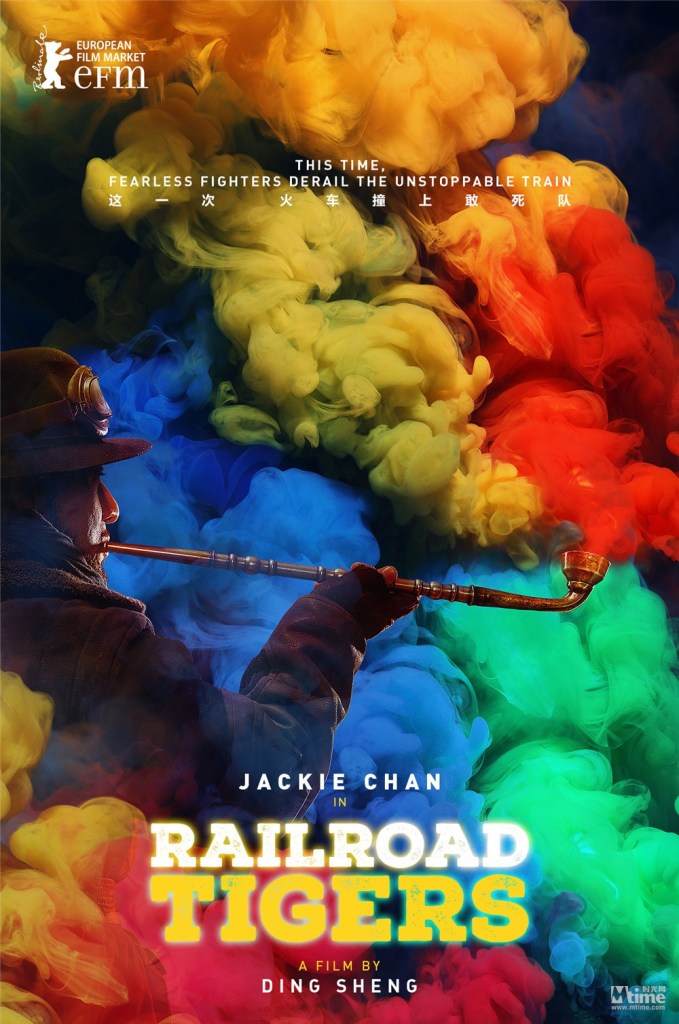 Trains! They seem to be the latest big thing in Chinese cinema, but at least Railroad Tigers (铁道飞虎, Tiědào Fēi Hǔ) has more rolling stock on offer than the disappointingly CGI enhanced effort which formed the finale of
  Looking at the poster and its “A Most “Oshare” Movie” tagline, you’d assume Cats in Park Avenue (公園通りの猫たち, Koendori no Nekotachi) to be a very stylish story about some fashionable felines living on an uptown street comparable to the famous New York landmark but the title is entirely coincidental as it’s a literal translation of the Japanese and just means the cats live on a street near the park. These cats are full on alley cats, scrappy and free, roaming the rooftops of Shibuya and not giving a damn about whatever it is cats are supposed to do. Ostensibly a throw away young adult movie about a group of dance students and their obsession with a gang of local street cats, Cats in Park Avenue takes on a surprisingly individualist message as the virtues of freedom and validity of life outside the mainstream are resolutely reinforced through cute animation and nonsensical musical sequences.
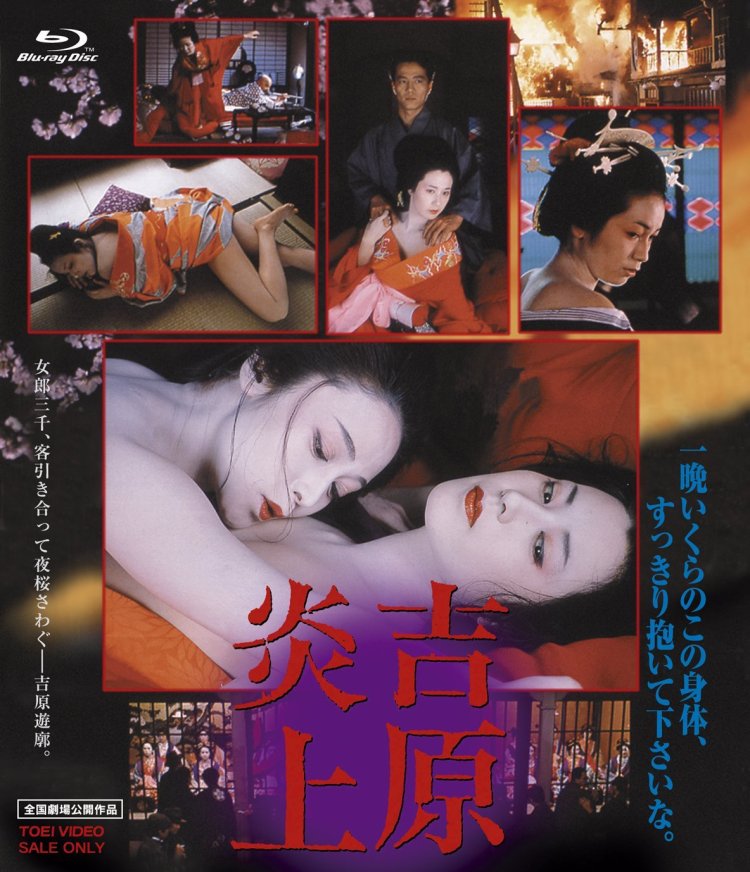 Hideo Gosha maybe best known for the “manly way” movies of his early career in which angry young men fought for honour and justice, but mostly just to to survive. Late into his career, Gosha decided to change tack for a while with a series of female orientated films either remaining within the familiar gangster genre as in Yakuza Wives, or shifting into world of the red light district as in Tokyo Bordello (吉原炎上, Yoshiwara Enjo). Presumably an attempt to get past the unfamiliarity of the Yoshiwara name, the film’s English title is perhaps a little more obviously salacious than the original Japanese which translates as Yoshiwara Conflagration and directly relates to the real life fire of 1911 in which 300 people were killed and much of the area razed to the ground. Gosha himself grew up not far from the location of the Yoshiwara as it existed in the mid-20th century where it was still a largely lower class area filled with cardsharps, yakuza, and, yes, prostitution (legal in Japan until 1958, outlawed in during the US occupation). The Yoshiwara of the late Meiji era was not so different as the women imprisoned there suffered at the hands of men, exploited by a cruelly misogynistic social system and often driven mad by internalised rage at their continued lack of agency.
 If there is a frequent criticism directed at the always bankable director Yoji Yamada, it’s that his approach is one which continues to value the past over the future. Recent years have seen him looking back, literally, in terms of both themes and style with remakes of films by two Japanese masters – Ozu in his Tokyo Story homage Tokyo Family, and Kon Ichikawa in Her Brother. While he chose to update both of those pieces for the modern day, 2008’s
 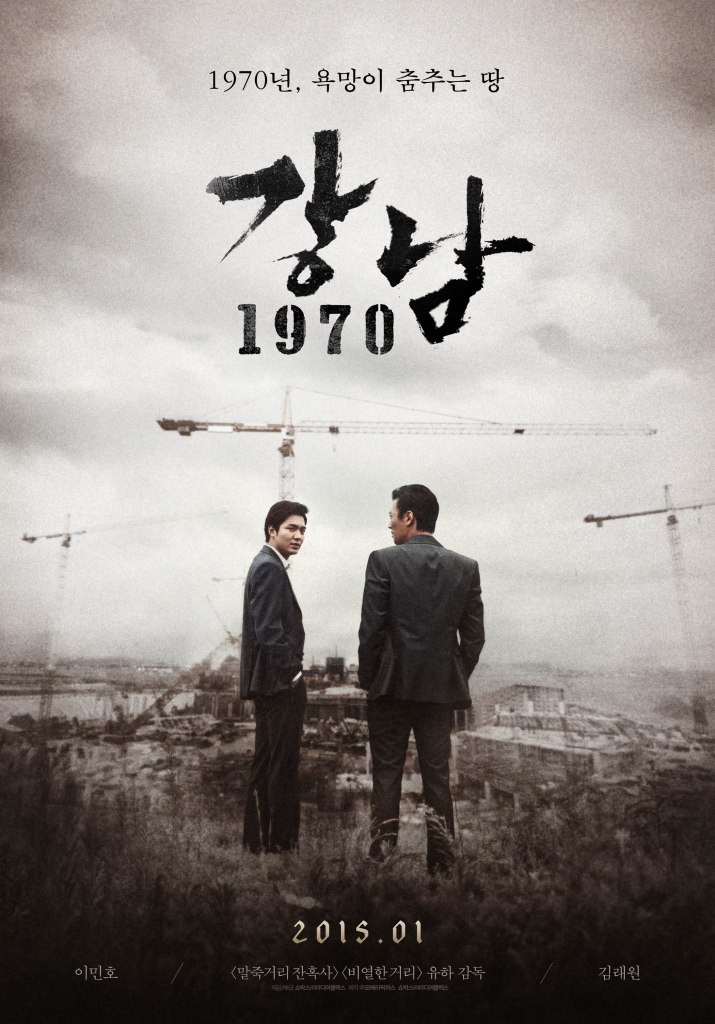 Yoo ha takes us back to the 1970s for some Gangnam Blues (강남 1970, Gangnam 1970) in a sorry tale of fatherless men caught up in dangerous times of ambition and avarice, very much at the bottom of the heap and about to be eclipsed by the “new world” currently under construction. Back then, Gangnam really was all just fields, owned by farmers soon to be cheated out of their ancestral lands by enterprising gangsters engaged in a complicated series of land grab manoeuvres, anticipating the eventual expansion of the bursting at the seams capital. Far from the shining city of today, Gangnam was a wasteland frontier town, the sort of place where a man can make a name for himself trading on his wits and his fists alone.
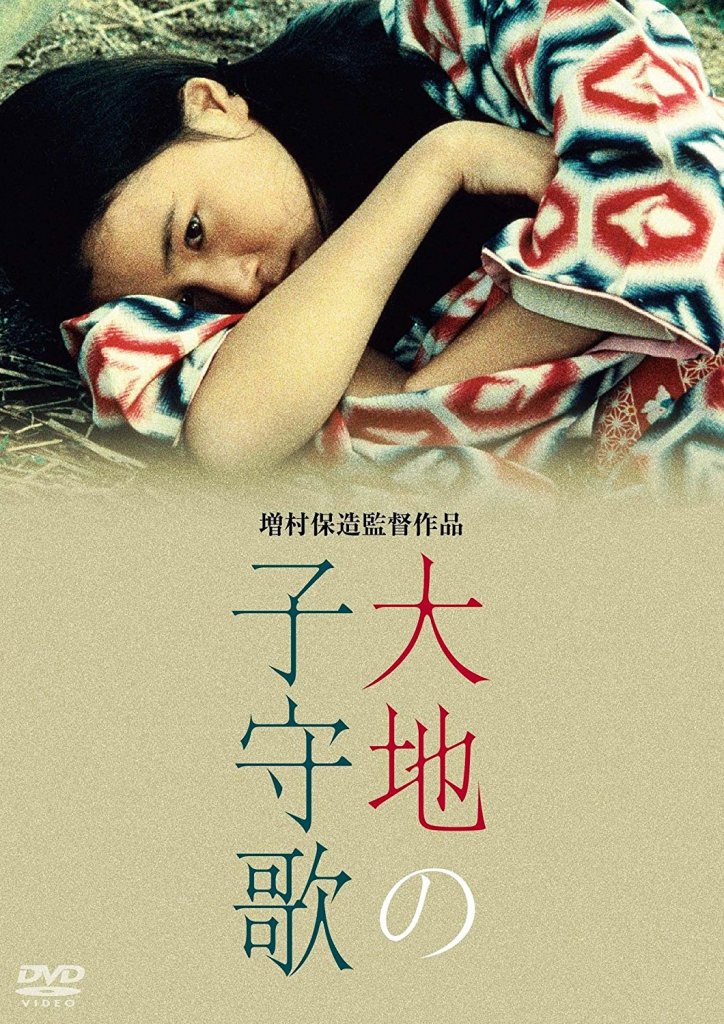 Yasuzo Masumura is best remembered for his deliberately transgressive, often shockingly grotesque critiques of Japanese society and its conformist overtones. Lullaby of the Earth (大地の子守歌, Daichi no Komoriuta) is one of his few completely independent features, filmed after the bankruptcy of Daiei where Masumura had spent the bulk of his early years. As such, it is quite an exception in terms of his wider career both in terms of its production and in its earthy, spiritual themes. Adapted from the 1974 novel by Kukiko Moto, Lullaby of the Earth is the story of an abandoned and betrayed woman but one who also draws her strength from the Earth itself.
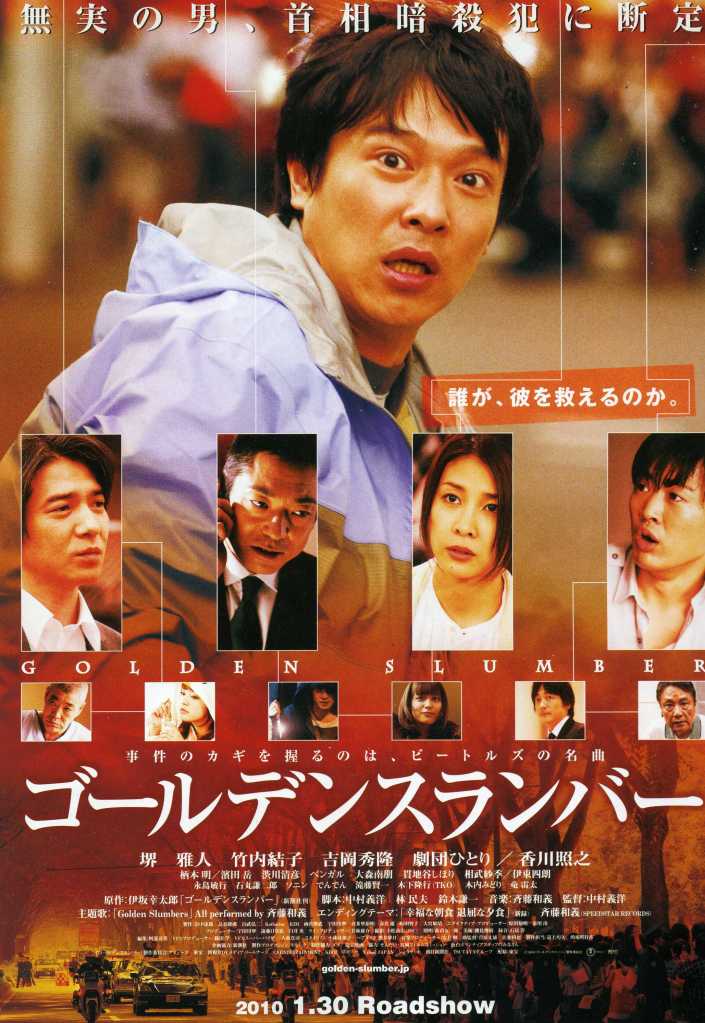 Yoshihiro Nakamura has made a name for himself as a master of fiendishly intricate, warm and quirky mysteries in which seemingly random events each radiate out from a single interconnected focus point. Golden Slumber (ゴールデンスランバー), like
 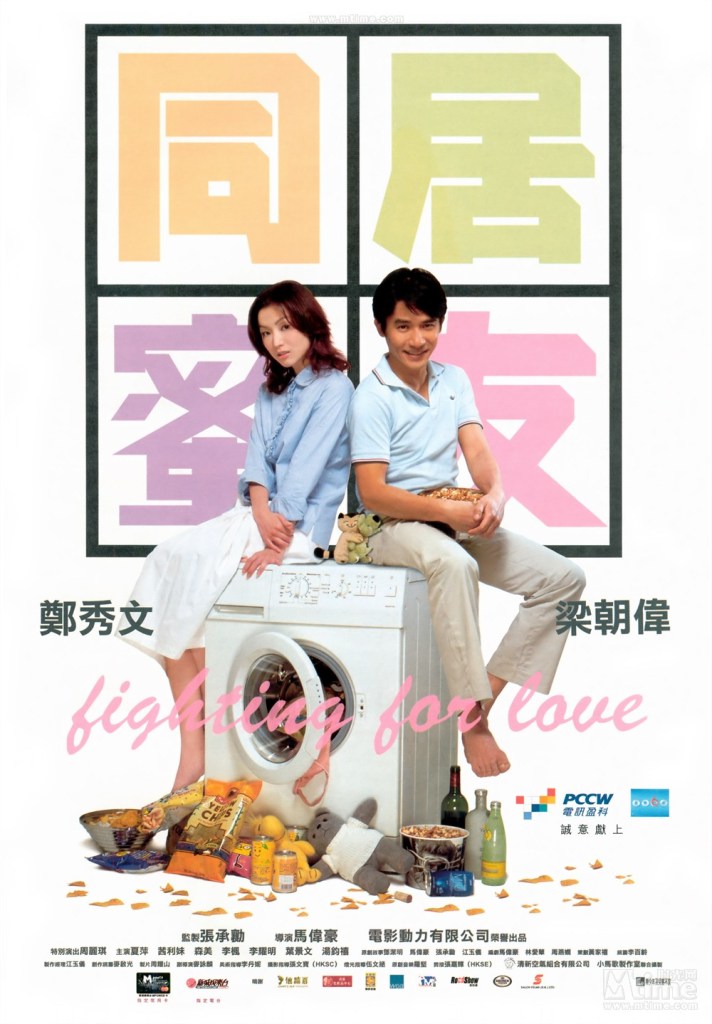 Tony Leung Chiu-wai may have just won a best actor prize in Cannes, but that didn’t stop him getting right back on the HK treadmill with the run of the mill rom-com, Fighting for Love (同居蜜友). Reuniting director Jack Ma with Feel 100% star Sammi Cheng, Fighting for Love is the kind of wacky, thrown together romantic comedy that no one really makes any more (not that that’s altogether a bad thing). Still, even if the film is over reliant on its two leads to overcome the overabundance of subplots, it also makes use of their sparky chemistry to keep things moving along.
 Windows on Worlds