 It’s a strange paradox that in a land defined by corruption of the legal system, your only hope my lie in a new trial. So it is for the hero of Kim Tae-yun’s latest film. Inspired by a real life miscarriage of justice (a case which was in fact still continuing at the time of filming), New Trial (재심, Jaesim) takes aim at everything from social inequality to unscrupulous lawyers and abuse of police power. A teenager pays dearly for being in the wrong place at the wrong time, not only losing 10 years of his life but the entire possibility of his future now that he’s forever branded a criminal. That’s aside from leaving his ageing (now blind mother) alone with no means of support and the additional burden of trying to clear her son’s name.
In the year 2000, reckless teen Hyeon-woo (Kang Ha-Neul) gets himself mixed up in the stabbing of a taxi driver. Despite sticking around to do his civic duty, he gets arrested, tried, talked into a false plea bargain confession and serves 10 years behind bars. Hyeon-woo might have been released after serving his time but he’s not the carefree kid he was before. Sullen, angry, and an ex-con without qualifications, he can’t find a job and has the additional burden of trying to care for his now blind mother. Even if he technically confessed to the crime because his conviction was inevitable and he wanted to get out faster so his mother wasn’t left alone, Hyeon-woo has his hopes permanently fixed on a retrial so he can clear his name once and for all.
Enter shady lawyer Park Jun-young (Jung Woo). Park is not your usual pick for a social justice case. He became a lawyer for the big bucks and macho posturing. After he loses a big case, incurs numerous debts, and is left by his wife and child, Park joins a big firm on a pro-bono basis, hoping to pick up a big client, impress them and get another permanent position. Thus he stumbles on Hyeon-woo’s case and, given the notoriety of the incident, thinks there may be some mileage in it.
Park may start off as the cynical, winner takes all school of legally savvy but morally bankrupt attorney but the more he looks into Hyeon-woo’s case the angrier he finds himself getting. Not only was Hyeon-woo betrayed by the police who knew the identity of the real killer but chose to scapegoat a poor boy instead, but he was also ordered to pay vast sums in compensation to the victim’s family. Saddled with an irreparable debt for a crime he did not commit, Hyeon-woo has reason for his passive aggressive defeatism and lack of faith in Park but gradually begins to come back to life when provided with real hope of achieving his goal of a new trial.
Yet much of the drama revolves around the two as they negotiate an uneasy trust. Hyeon-woo has been let down before by men in who said they could help only to make a speedy exit taking Hyeon-woo’s hard won money and faith in the future with them. Park starts off claiming Hyeon-woo’s guilt or innocence is an irrelevant detail, all that matters to him is winning the case and thereby getting his career back on track. Flitting through periods of winning and losing faith in each other the two are eventually able to come together in their common goal, each working for justice not just for Hyeon-woo but for all the other Hyeon-woos betrayed by political and judicial corruption.
The real life case which inspired New Trial is still not settled but the man who inspired the originally slippery Park has gone on to become Korea’s new trial king – coming to the rescue of those who find themselves at the mercy of shady forces and railroaded into paying for something they did not do. Park finds few allies in his new quest for social justice, and none among the ranks of the swanky lawyer elites he was so desperate to join, but every movement needs a leader and perhaps this one starts with a man called Park and a massive change of heart.
New Trial was screened at the 19th Udine Far East Film Festival
Original trailer (English subtitles)
 Each year the Nippon Connection film festival runs a retrospective programme alongside its collection of recent indie and mainstream hits. The subject for this year’s strand is Nikkatsu’s Roman Porno. Heading into the 1970s, Japanese cinema was in crisis mode as TV poached cinema audiences who largely stayed away from the successful genres of the 1960s including the previously popular youth, action, and yakuza movies which had been entertaining them for close to 20 years. Daiei, one of the larger studios known for glossy, big budget prestige fare alongside some lower budget genre offerings went bust in 1971, Shochiku kept up its steady stream of melodramas, but Nikkatsu found another solution. Taking inspiration from the “pink film” – a brand of soft core, mainstream pornography shown in specialised cinemas and made to exacting production standards, they created “Roman Porno” which made sex its selling point, but put big studio resources behind it, bringing in better actors and innovative directors to lend an air of legitimacy to its purely populist ethos.
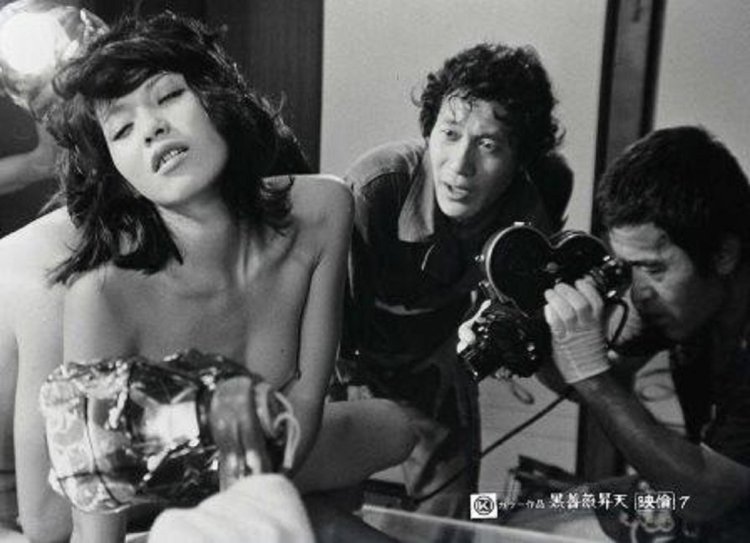 Ecstacy of the Black Rose is a more comedic effort than most of Kumashiro’s output and takes an ironic look at the genre as a put upon director gets fed up when his leading actress falls pregnant and becomes obsessed with finding a woman whose moans he overheard at the dentist’s.
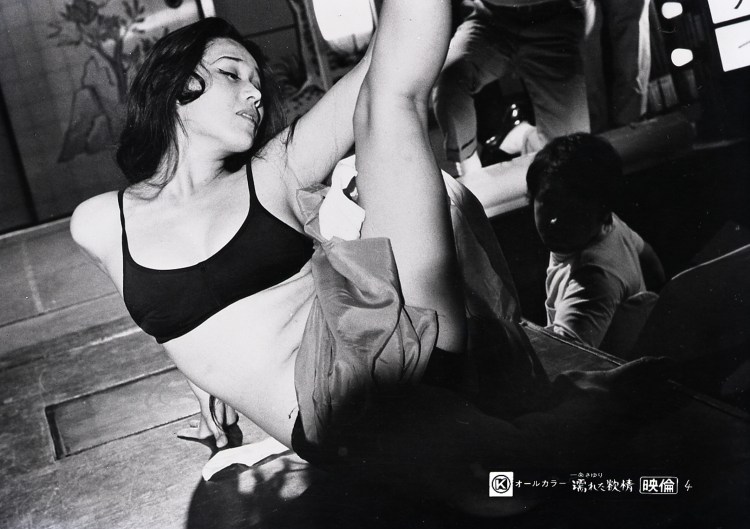 Following Desire received a Kinema Junpo award for best screenplay as well as the best actress prize for Hiroko Isayama who plays a stripper intent on taking down her rival for the top spot!
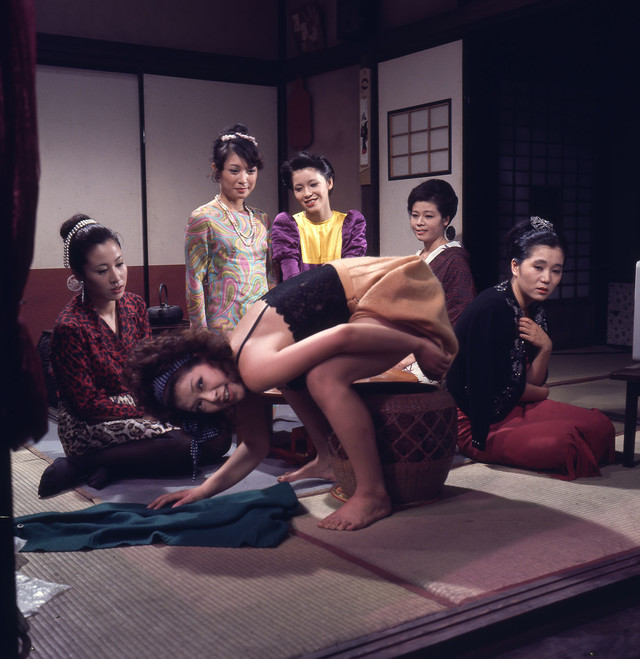 Kumashiro’s Tamanoi Street of Joy takes place on the last day of legal prostitution in 1958 and follows the girls as they mark the occasion in their own particular ways.
 Further proving Kumashiro’s critical stature, Twisted Path of Love was among Kinema Junpo’s 1999 list of the greatest Japanese films of the 20th century. The story of a young man who returns to his hometown but attempts to shed his identity, burning a hole in the conventional village life through sex and violence, Twisted Path of Love also displays Kumashiro’s interesting use of common censorship techniques for artistic effect.
 Often regarded as Kumashiro’s masterpiece, The Woman with the Red Hair picked up a Kinema Junpo best actress award for Junko Miyashita, as well as ranking fourth in their annual best of the year list. The story centres on construction worker Kozo who, along with friend Takao, rapes his boss’ daughter who subsequently becomes pregnant. While she asks Takao to marry her, Kozo embarks on an affair with the mysterious red-haired woman.
 Another of Kumashiro’s most well-regarded Roman Porno, The World of the Geisha takes place in a geisha house in 1918 and examines the various tensions which exist between the women themselves and their customers who have come to the house to escape external political concerns. The film again demonstrates Kumashiro’s tendency to ironic commentary as he tampers with intertitles to make a point about censorship.
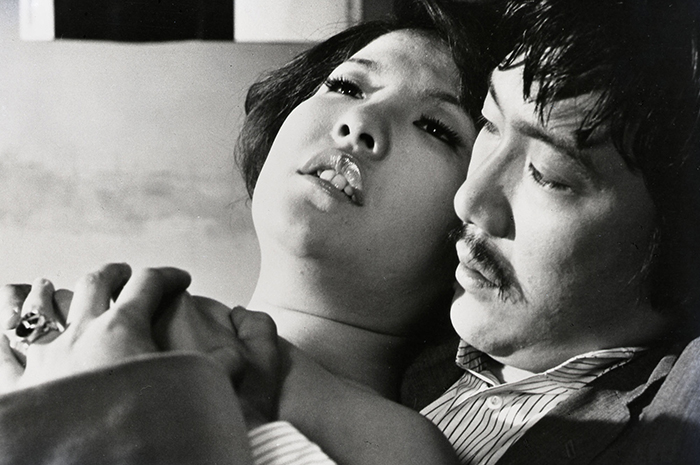 Night of the Felines provides the inspiration for Kazuya Shirashi’s reboot Dawn of the Felines and follows the comical adventures of three prostitutes.
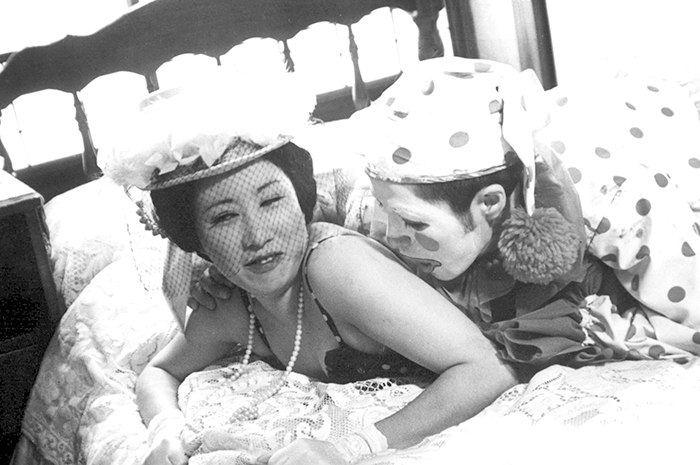 Stroller in the Attic is among the best known in the Roman Porno canon and adapts an Edogawa Rampo short story about a ’20s boarding house filled with eccentric guests.
 Inspired by the same real life case as In the Realm of the Senses, Noburu Tanaka’s Sada and Kichi takes a more lurid look at the strange case of Abe Sada who strangled her lover after a brief affair and then cut off his genitals to wear as a kind of talisman.
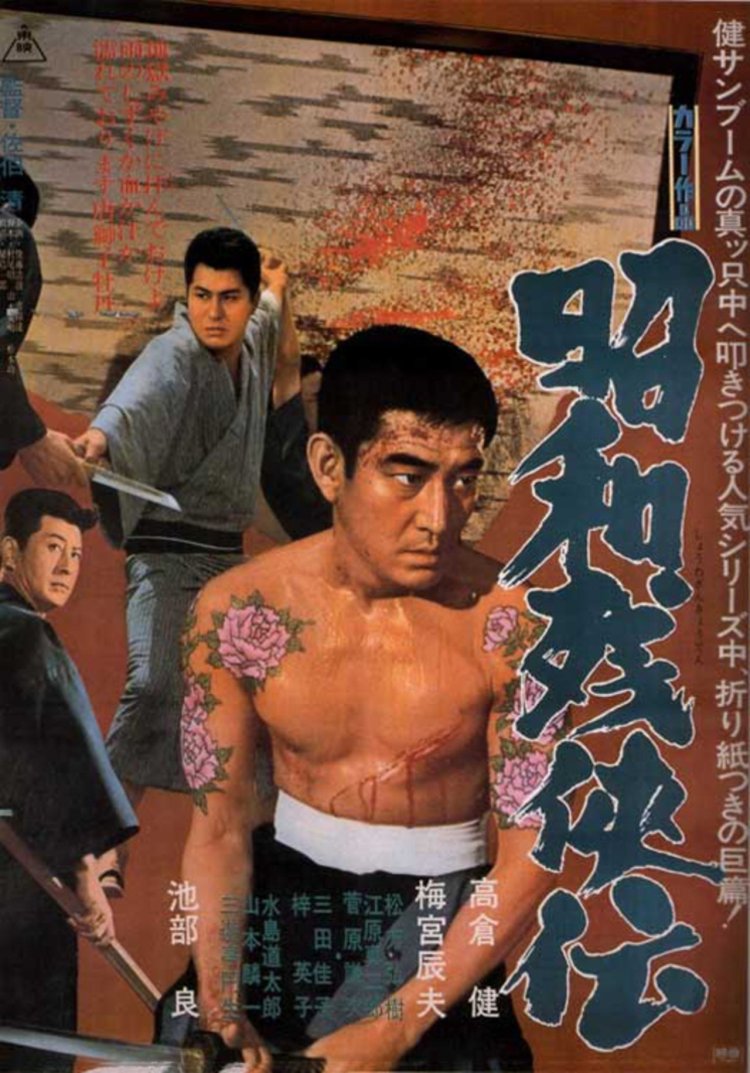 Brutal Tales of Chivalry (昭和残侠伝, Showa Zankyo-den) – a title which neatly sums up the “ninkyo eiga”. These old school gangsters still feel their traditional responsibilities deeply, acting as the protectors of ordinary people, obeying all of their arcane rules and abiding by the law of honour (if not the laws of the state the authority of which they refuse to fully recognise). Yet in the desperation of the post-war world, the old ways are losing ground to unscrupulous upstarts, prepared to jettison their long-held honour in favour of a dog eat dog mentality. This is the central battleground of Kiyoshi Saeki’s 1965 film which looks back at the immediate post-war period from a distance of only 15 years to ask the question where now? The city is in ruins, the people are starving, women are being forced into prostitution, but what is going to be done about it – should the good people of Asakusa accept the rule of violent punks in return for the possibility of investment in infrastructure, or continue to struggle through slowly with the old-fashioned patronage of “good yakuza” like the Kozu Family?
 Like the rest of the world, China, or a given generation at least, may be finding itself at something of a crossroads. The past few years have seen a flurry of coming of age dramas in which the melancholy and middle-aged revisit lost love from their youth but Derek Tsang’s Soul Mate (七月与安生, Qīyuè yǔ Anshēng) seems to be speaking to an older kind of melodrama in its examination of passionate friendship pulled apart by time, tragedy, and unspoken emotion. The story is an old one, but Tsang tells it well as its twin heroines maintain their intense, elemental connection even whilst cruelly separated.
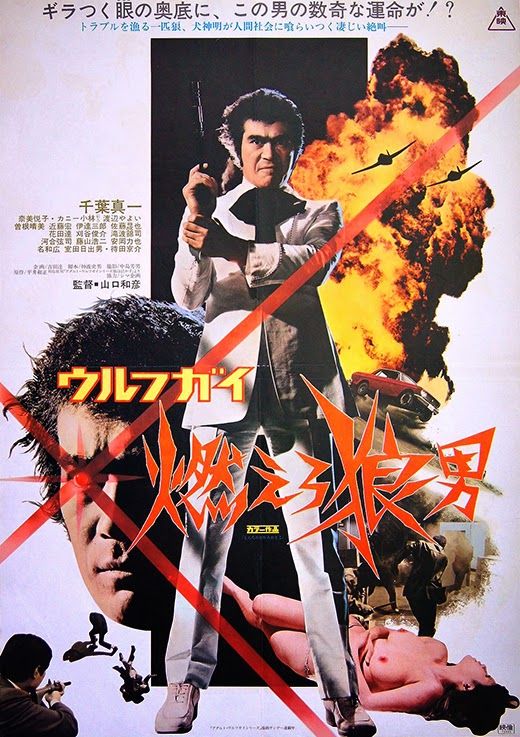 Universal’s Monster series might have a lot to answer for in creating a cinematic canon of ambiguous “heroes” who are by turns both worthy of pity and the embodiment of somehow unnatural evil. Despite the enduring popularity of Dracula, Frankenstein (dropping his “monster” monicker and acceding to his master’s name even if not quite his identity), and even The Mummy, the Wolf Man has, appropriately enough, remained a shadowy figure relegated to a substratum of second-rate classics. Kazuhiko Yamaguchi’s Wolf Guy (ウルフガイ 燃えよ狼男, Wolf Guy: Moero Okami Otoko, AKA Wolfguy: Enraged Lycanthrope) is no exception to this rule and in any case pays little more than lip service to werewolf lore. An adaptation of a popular manga, Wolf Guy is one among dozens of disposable B-movies starring action hero Sonny Chiba which have languished in obscurity save for the attentions of dedicated superfans, but sure as a full moon its time has come again.
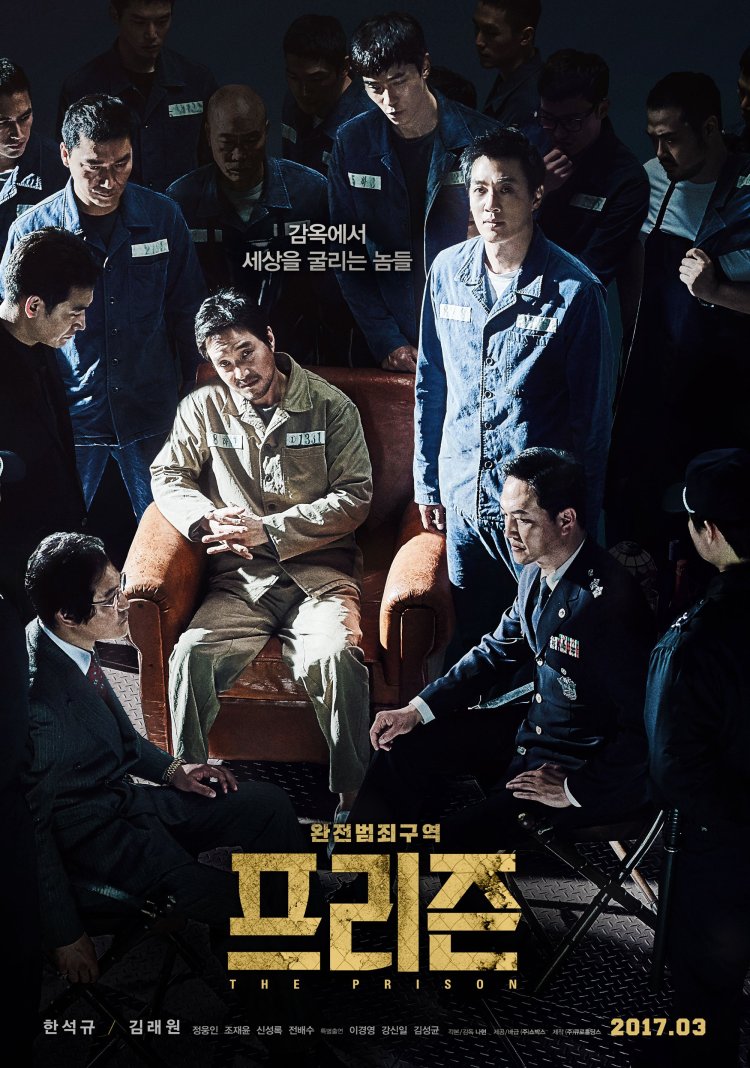 Prison can be a paradise if you’re doing it right, at least if you’re a top gangster in the movies. Na Hyun’s The Prison (프리즌) paints an interesting picture of incarceration and the way it links into his nation’s infinitely corrupt power structures. When investigators wonder why a crime spree suddenly came to an end, one of the frequently offered explanations is that the perpetrator was most likely arrested for another crime but what if you could turn this obviously solid alibi to your advantage and get those already behind bars to do your dirty work for you?
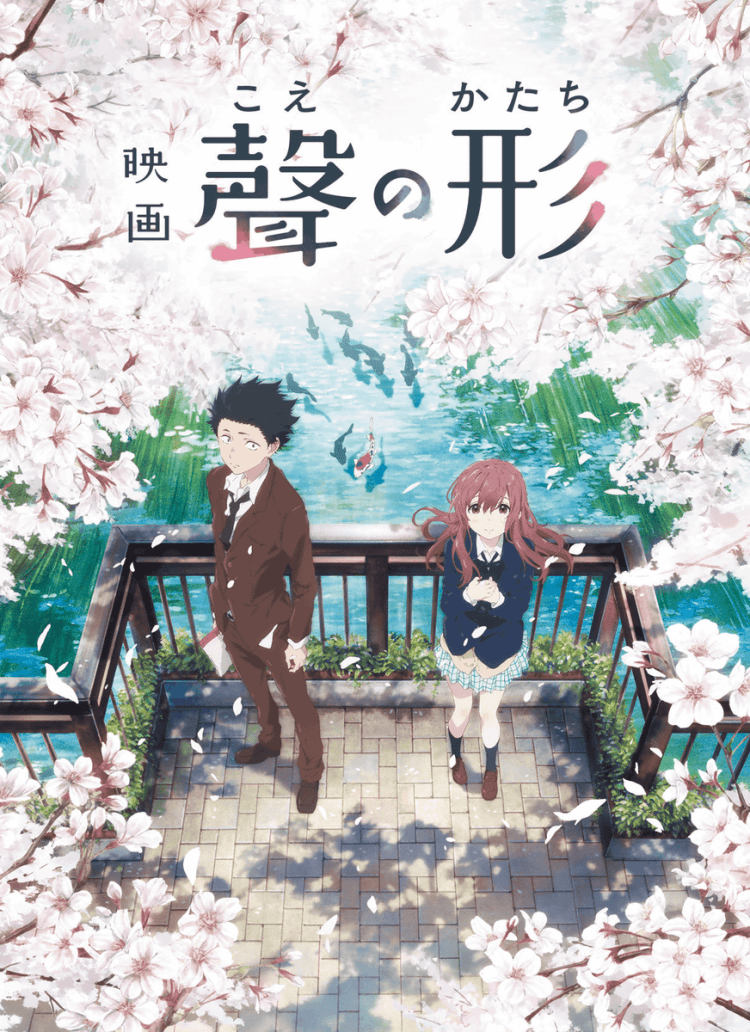 Nippon Connection aims to showcase all sides of Japanese cinema from the mainstream to arthouse and documentary and this, of course, includes animation.
 A hit at festivals around the world, A Silent Voice is a poignant tale about guilt, redemption, and attitudes to disability.
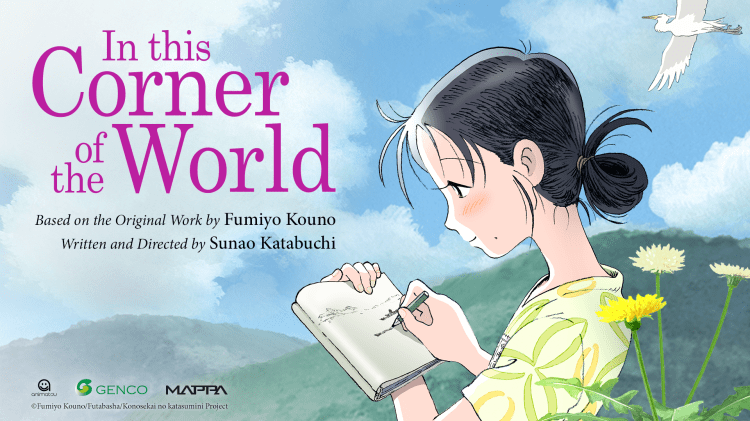 Mai Mai Miracle’s Sunao Katabuchi returns with the multi-awardwinning In This Corner of the World – a coming of age story set in Hiroshima before and after the atomic bomb.
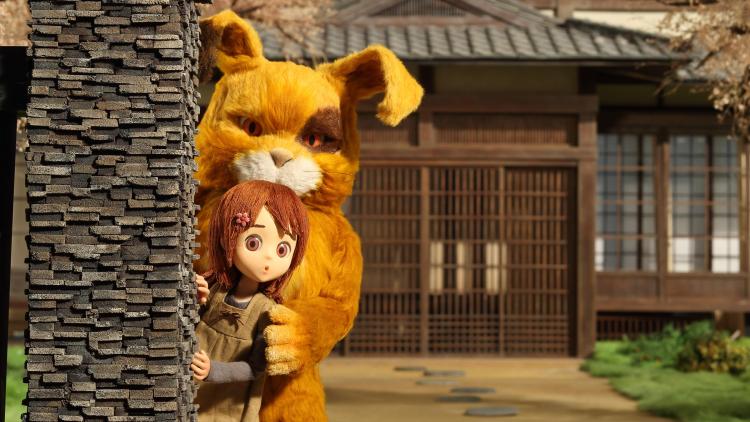 Chieri and Cherry is a charming puppet animation in which Chieri, who has recently lost her father, develops an intense bond with her stuffed toy, Cherry. Travelling to her grandmother’s house for her father’s funeral, Chieri experiences a fantastic adventure which helps her to cope with grief and fear of the future.
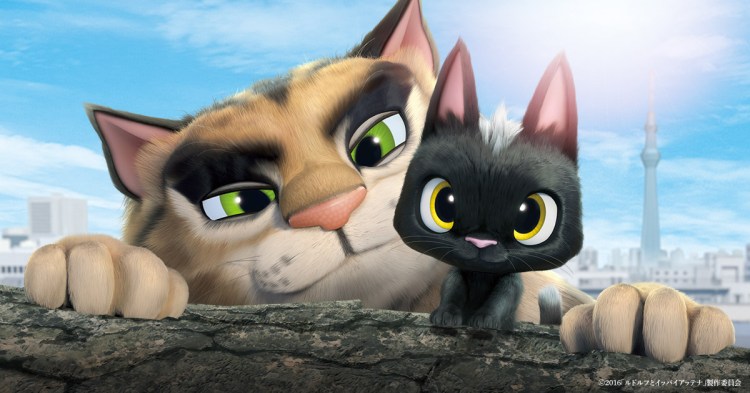 Rudolf the Black Cat stars titular black cat Rudolf from Gifu who ends up accidentally homeless in Tokyo!
 Poetic Landscapes – Recent Gems in Japanese Animation is a selection of some of the best in recent short animated films curated by Catherine Munroe Hotes.
 Tokyo University of the Arts: Animation – a selection of animated graduation films from Tokyo University of the Arts.
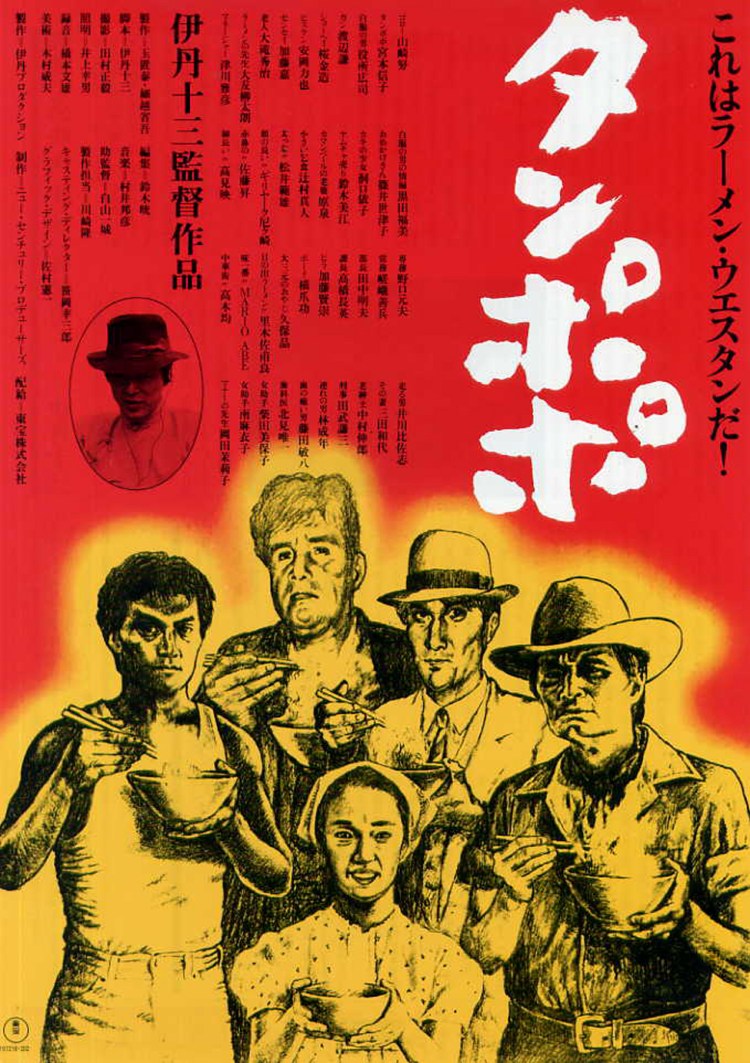 Some people love ramen so much that the idea of a “bad” bowl hardly occurs to them – all ramen is, at least, ramen. Then again, some love ramen so much that it’s almost a religious experience, bound up with ritual and the need to do things properly. A brief vignette at the beginning of Juzo Itami’s Tampopo (タンポポ) introduces us to one such ramen expert who runs through the proper way of enjoying a bowl of noodle soup which involves a lot of talking to your food whilst caressing it gently before finally consuming it with the utmost respect. Ramen is serious business, but for widowed mother Tampopo it’s a case of the watched pot never boiling. Thanks to a cowboy loner and a few other waifs and strays who eventually become friends and allies, Tampopo is about to get some schooling in the quest for the perfect noodle whilst the world goes on around her. Food becomes something used and misused but remains, ultimately, the source of all life and the thing which unites all living things.
 Nippon Connection returns for 2017 in just under a week’s time and to whet your appetite for all the amazing films about to shown in Frankfurt from May 23 – 28, the festival has re-launched its very own
  Feng Xiaogang, often likened to the “Chinese Spielberg”, has spent much of his career creating giant box office hits and crowd pleasing pop culture phenomenons from World Without Thieves to Cell Phone and You Are the One. Looking at his later career which includes such “patriotic” fare as Aftershock, Assembly, and
