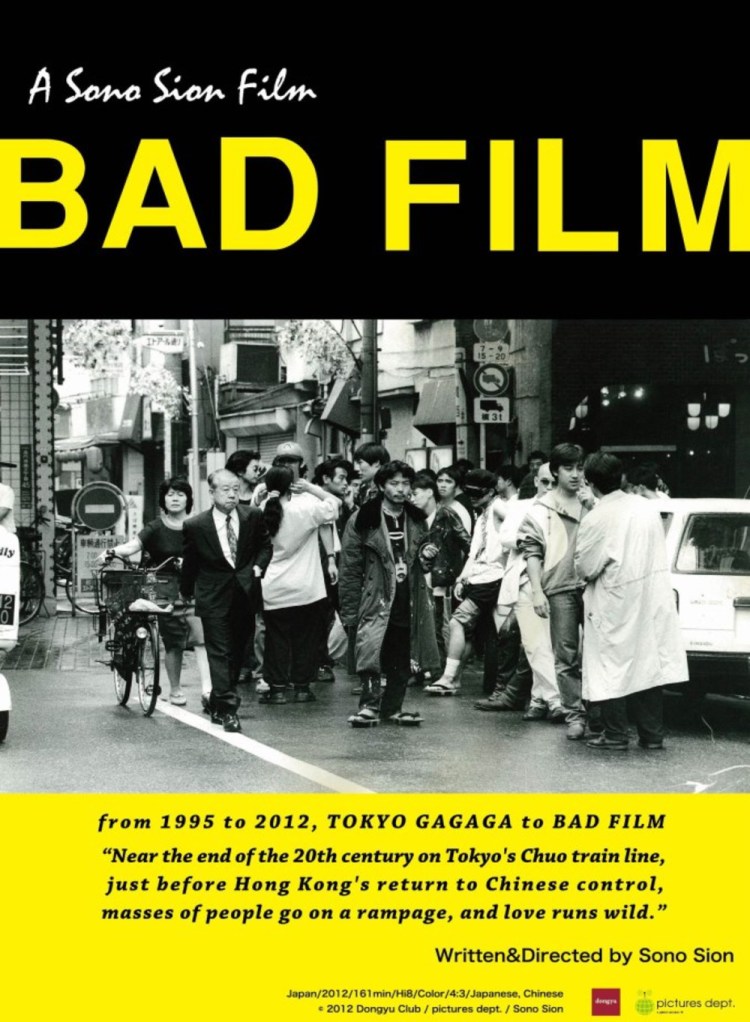
 The recently prolific Sion Sono actually has a more sporadic film career dating back to the early 1980s though most would judge his real breakthrough to 2001’s Suicide Club. Back in the ‘90s Sono was most active as the leader of anarchic performance art troupe Tokyo Gagaga. Taking inspiration from the avant-garde theatre scene of the 1960s, Tokyo Gagaga took to the streets for flag waving protests and impressive, guerrilla stunts. Bad Film is the result of one of their projects – shot intermittently over a year using the then newly accessible Hi8 video rather the traditionally underground 8 or 16mm, Bad Film is near future set street story centring on gang warfare between the Chinese community and xenophobic Japanese petty gangsters with a side line in shifiting sexual politics.
Momentous things were at play in 1997, not least amongst them the looming handover of Hong Kong when it would cease to operate under British rule and embark upon the “one country, two systems” era with ultimate authority passing to Beijing. Fascism has bloomed in Tokyo with intense anti-foreigner activity targeting all non-Japanese including those from other areas of Asia. By 1997, the yakuza have infiltrated the fascist infrastructure and amped up gang violence between the Chinese community and the ultra-nationalist Japanese.
Fast forward a little and the Chinese and Japanese groups have managed to iron out some of their differences largely thanks to a different kind of divide which ultimately proves a unifying factor – many of the men and women on either side are gay and are sick of the prevailing “hetero hegemony”. Eventually the gay contingent manages to assume control of their respective factions and enact the gay alliance. This is very successful and brings peace and love to the city but unfortunately two members of opposing factions just can’t get over their cultural differences and are prepared to go to great lengths to restart the Japan/China gang war.
Sono shot the entirety of the movie back in 1995 ending up with around 150 hours before abandoning the project for financial reasons. In 2012 Sono re-edited his existing footage into something resembling a feature length film. The project was designed to make use of the entire Tokyo Gagaga company (over 2000 people took part) and was shot guerrilla style with no permits or warnings (you can see at least one face blurred out during their city centre protests). This goes someway to explaining why the narrative diverges unexpectedly at random junctures and the voiceover is there largely to corral the footage into some kind of coherent structure aided by the occasional on screen text. It’s a “Bad Film” in that it’s not quite a film at all but an activist’s poetic documentation of his artistic street warfare even including going so far as to include a justification for the visibility of the cameraman.
Hi8 was what it was – a convenient low-res format for the domestic market. Bad Film is not a pretty film, it looks rough and low rent though that often works in its favour and the film takes on a considered aesthetic that is never concerned with trying to be more than it is. Consequently, it makes the most of its roughness to bring out the grungy, time capsule-esque atmosphere that it’s looking looking for. Sono also experiments with fish eye lenses, odd angles and hand held multi-camera chaos to bring the streets to life. His world is weird, and it’s filmed weird, but it always makes sense in terms of its own particular look.
The action turns on the unexpected love story between two women – one Japanese, and one Chinese, and despite all of the resulting chaos and carnage, the final image we’re left with is one of love. The forces of destruction are those who cannot abandon their hate to live in harmony, subverting this very force for peace and using it to wreak vengeance. Sono launches into absurd mode at full throttle and, as per usual, it’s hard to tell when he’s in earnest and when just being facetious. Bad Film is, loosely speaking, an anti-prejudice themed performance art piece documenting the passion and commitment of the Tokyo Gagaga collective. An interesting case of a belated “director’s cut” Bad Film is necessarily an imperfect beast, but perhaps all the more interesting for it.
Opening sequence (no subtitles)
 Chinese cinema screens are no stranger to the event movie, and so a Chinese remake of the much loved 1997 Hollywood rom-com My Best Friend’s Wedding (我最好朋友的婚礼, Wǒ Zuì Hǎo Péngyǒu de Hūnlǐ) arrives right on time for Chinese Valentine’s Day. Purely by coincidence of course! However, those familiar with the 1997 Julia Roberts starring movie may recall that My Best Friend’s Wedding is a classic example of the subverted romance which doesn’t end with the classic happy ever after, but acts as a tonic to the sickly sweet love stories Hollywood is known for by embracing the more realistic philosophy that sometimes it just really is too late and you have to accept that you let the moment get away from you, painful as that may be.
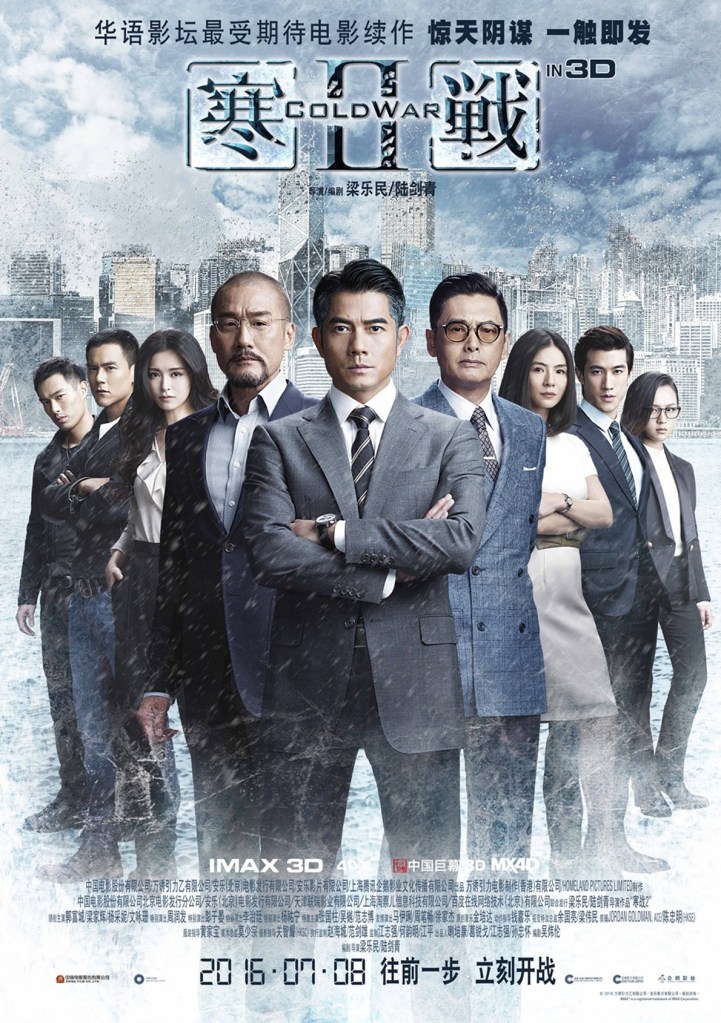 Cold War 2 (寒戰II) arrives a whole four years after the original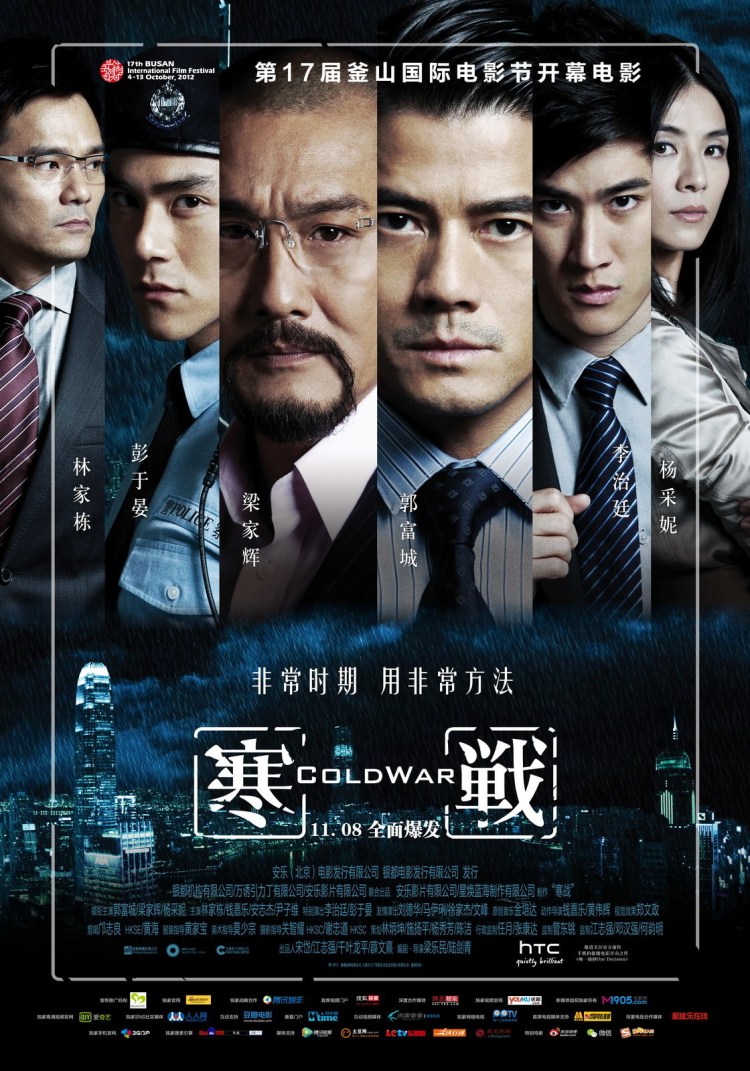
 Often, people will try to convince of the merits of something or other by considerably over compensating for its faults. Therefore when you see a movie marketed as the X-ian version of X, starring just about everyone and with a budget bigger than the GDP of a small nation you should learn to be wary rather than impressed. If you’ve followed this very sage advice, you will fare better than this reviewer and not find yourself parked in front of a cinema screen for two hours of non-sensical European fantasy influenced epic adventure such as is League of Gods (3D封神榜, 3D Fēng Shén Bǎng).
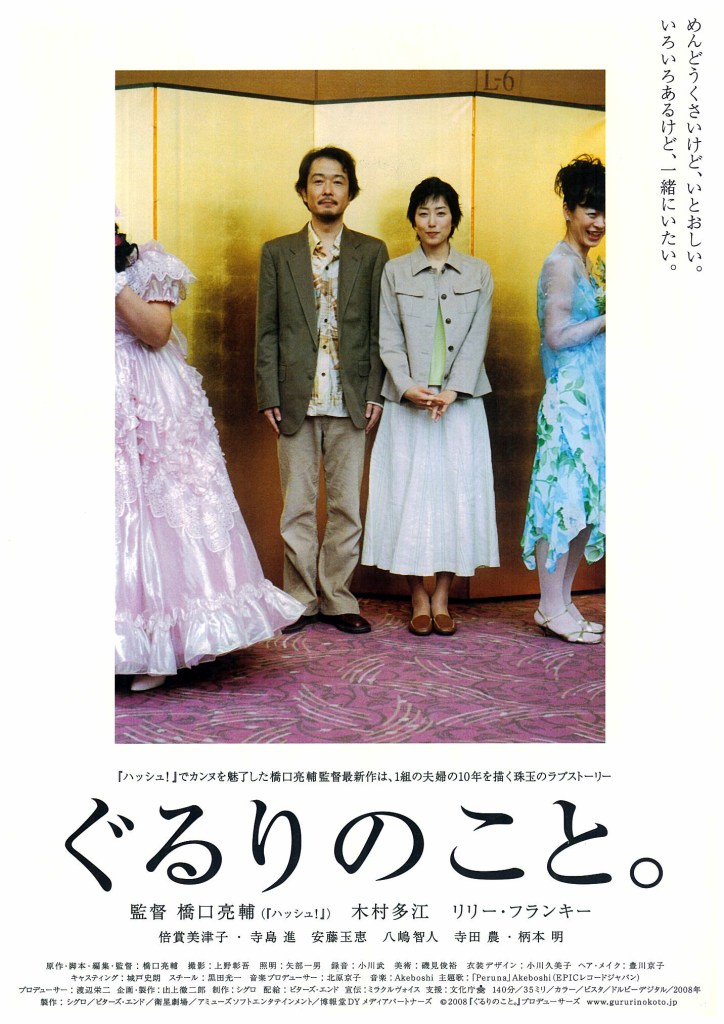 Ryosuke Hashiguchi returns after an eight year absence with All Around Us (ぐるりのこと。Gururi no Koto) and eschews most of his pressing themes up this by point by opting to depict a few “scenes from a marriage” in post-bubble era Japan. Set against the backdrop of an extremely turbulent decade which was plagued by natural disasters, terrorism, and shocking criminal activity Hashiguchi shows us the enduring love of one ordinary couple who, finding themselves pulled apart by tragedy, gradually grow closer through their shared grief and disappointment.
 The family drama is a mainstay of Japanese cinema, true, but, it’s a far wider genre than might be assumed. The rays fracture out from Ozu through to
 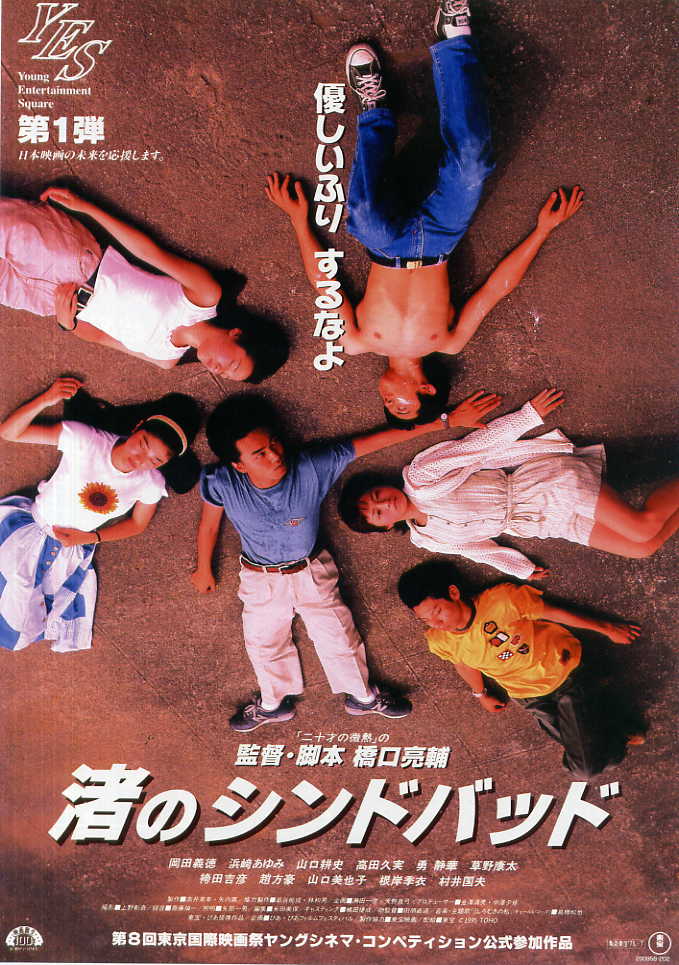 Adolescent romance is complicated enough at the best of times but the barriers are ever higher if you happen to be gay in a less than tolerant society. Ryosuke Hashiguchi’s second feature Like Grains of Sand (渚のシンドバッド, Nagisa no Sinbad) takes a slight step back in time from
 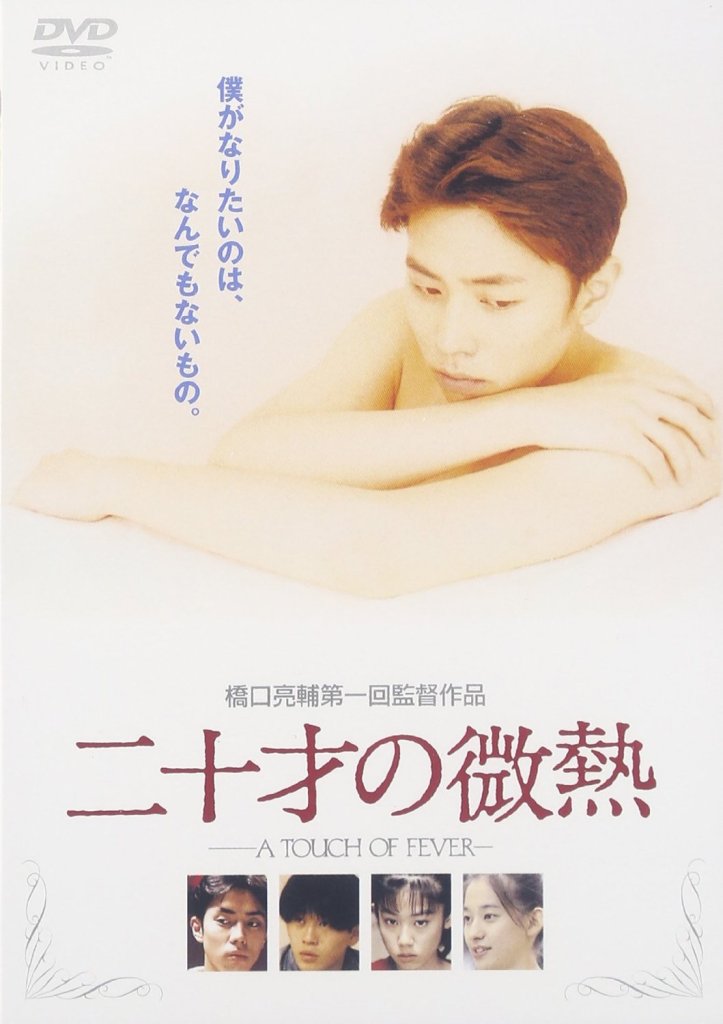 Ryosuke Hashiguchi’s debut feature A Touch of Fever (二十才の微熱, Hatachi no Binetsu) proved a surprise box office hit in Japan and is also credited for helping to bring male homosexuality into the mainstream. A no-budget movie shot on 16mm, A Touch of Fever is the story of two ordinary boys each going about their everyday lives whilst also beginning to understand themselves in terms of their sexualities, mirroring each other perfectly in their inner confusion.
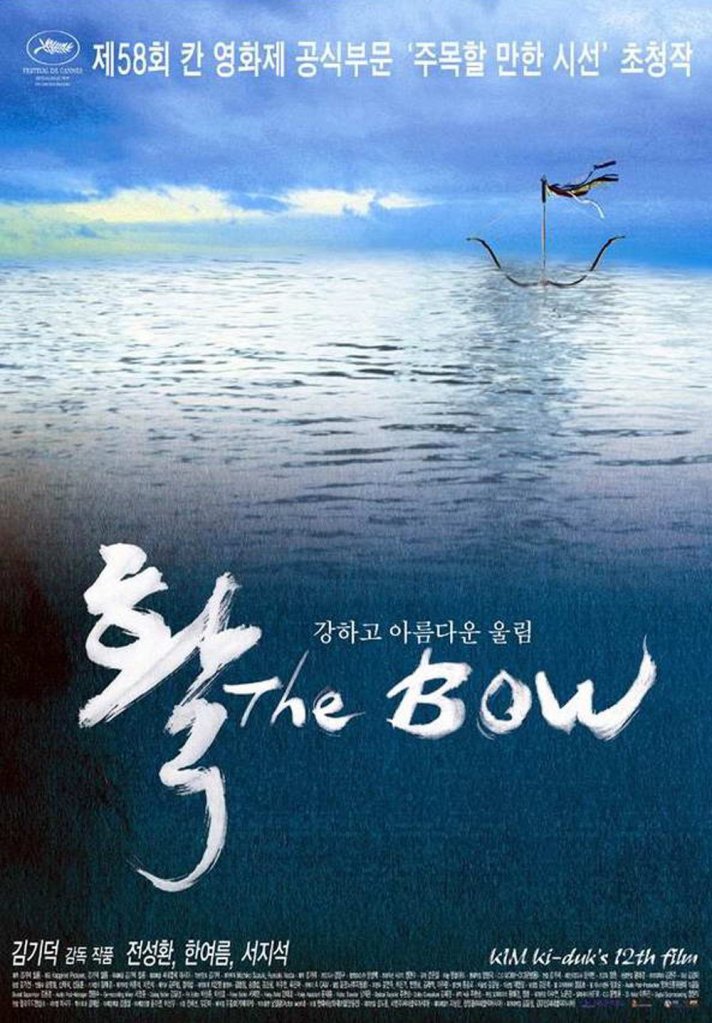 Kim Ki-duk is not known for his conventional approach to morality but even so his 12th feature, The Bow (활, Hwal), takes things to a whole new level of uncomfortable complexity. While nowhere near as extreme as some of Kim’s other work, The Bow takes the form of a fable as an old man and a young girl remain locked inside a mutually dependent relationship which, one way to another, is about to change forever.
